
Author: mdierolf

  • The Fortress in the Storm: A Deep Dive into JPMorgan Chase (JPM) as the Dow Enters Correction Territory

    The Fortress in the Storm: A Deep Dive into JPMorgan Chase (JPM) as the Dow Enters Correction Territory

    Today is March 30, 2026. As the Dow Jones Industrial Average (DJIA) slips into correction territory—defined as a 10% decline from its recent November 2025 highs—investors are frantically recalibrating their portfolios. In times of systemic stress, the market often retreats to its "fortress." For the global banking sector, that fortress has a singular name: JPMorgan Chase (NYSE: JPM).

    While growth-heavy tech stocks and speculative ventures are currently bearing the brunt of the Dow’s slide, JPMorgan Chase stands as a pillar of institutional stability. Led by the longest-tenured CEO in major banking, Jamie Dimon, the firm is navigating a complex macro environment defined by stabilizing interest rates, a cooling labor market, and a renewed regulatory landscape. This research feature dives deep into why JPM remains the "ultimate defensive play" and how its diversified engine is built to thrive even as its peers falter.

    Historical Background

    The history of JPMorgan Chase is, in many ways, the history of American capitalism. The firm’s roots trace back to 1799 with the founding of The Manhattan Company, but its modern identity was forged by John Pierpont Morgan, who famously stabilized the U.S. financial system during the Panic of 1907.

    The contemporary iteration of the bank was shaped through a series of massive consolidations, most notably the 2000 merger of J.P. Morgan & Co. and Chase Manhattan Corp. Under Jamie Dimon’s leadership since 2005, the bank became the "lender of last resort" during the 2008 Financial Crisis, acquiring Bear Stearns and Washington Mutual. Most recently, in May 2023, the bank once again stepped into the breach to acquire First Republic Bank during the regional banking crisis, further cementing its role as the stabilizer of the American financial system. Today, JPM is the largest bank in the United States by assets, totaling nearly $4 trillion.

    Business Model

    JPMorgan Chase operates a highly diversified "universal banking" model across four primary segments, ensuring that when one sector faces headwinds, others provide a lift.

    1. Consumer & Community Banking (CCB): This is the heart of the retail operation, serving nearly 80 million consumers and 6 million small businesses. Revenue is driven by mortgage lending, credit cards (where JPM is a market leader), and traditional deposit taking.
    2. Corporate & Investment Bank (CIB): A global powerhouse in investment banking, market-making, and treasury services. JPM consistently ranks #1 in global investment banking fees, serving corporations, governments, and institutional investors.
    3. Commercial Banking (CB): Focuses on middle-market companies, providing credit, financing, and real estate services. This segment has benefited immensely from the firm’s data-driven approach to client acquisition.
    4. Asset & Wealth Management (AWM): With assets under management (AUM) reaching a record $4.6 trillion by early 2026, this segment provides steady, fee-based income from high-net-worth individuals and institutional clients.

    Stock Performance Overview

    Over the last decade, JPM has significantly outperformed its primary peers, Bank of America (NYSE: BAC) and Citigroup (NYSE: C).

    • 10-Year Performance: JPM has delivered a total return (including dividends) exceeding 280%, nearly double the return of the KBW Bank Index over the same period.
    • 5-Year Performance: The stock navigated the post-COVID inflation surge and the 2022-2023 rate hiking cycle with resilience, posting a 65% gain as Net Interest Income (NII) skyrocketed.
    • 1-Year Performance: As of March 2026, JPM is down roughly 4% from its 52-week high—a notable outperformance compared to the broader Dow, which has dropped 10.5%. This relative strength highlights JPM’s "safe-haven" status during the current correction.

    Financial Performance

    The firm’s financial results for the 2025 fiscal year were record-breaking, setting a high bar for 2026.

    • Net Income: JPM reported $57.5 billion in net income for 2025, driven by a normalization of the investment banking environment and strong consumer credit performance.
    • Net Interest Income (NII): Despite the Federal Reserve’s pivot toward a more neutral rate environment in late 2025, JPM’s NII remains robust, with management guiding for $104.5 billion in 2026.
    • Efficiency Ratio: JPM maintains an efficiency ratio in the low 50s, showcasing its ability to control costs while investing billions in technology.
    • Capital Strength: The Common Equity Tier 1 (CET1) ratio stands at a formidable 15.3%, allowing the bank to authorize a $50 billion share buyback program for 2026, providing a significant floor for the stock price.

    Leadership and Management

    The "Dimon Premium" is a well-documented phenomenon in JPM’s valuation. At 70 years old, Jamie Dimon remains the most influential voice in global finance. However, succession planning has taken center stage in 2026.

    The board has elevated Marianne Lake (CEO of Consumer & Community Banking) and Jennifer Piepszak (Co-CEO of CCB) as the primary contenders for the top spot. Both are highly regarded by Wall Street for their operational rigor. In late 2025, long-time lieutenant Daniel Pinto retired, clearing the path for the next generation. While Dimon is expected to remain as Executive Chairman well into 2027, the "deep bench" of leadership is a key reason institutional investors remain comfortable with the stock.

    Products, Services, and Innovations

    Innovation at JPMorgan is not a side project; it is a $17 billion annual line item.

    • AI and Machine Learning: By 2026, JPM has integrated "GenAI" across its fraud detection and personalized wealth advisory platforms. The bank estimates that AI-driven efficiencies could contribute over $2 billion in annual value by the end of the decade.
    • Digital Wealth: The integration of First Republic’s high-touch service with JPM’s digital platform has created a "hybrid" advisory model that is currently gaining market share from boutique wealth firms.
    • Payments Modernization: Through its "Onyx" blockchain platform, JPM is processing billions in cross-border payments, reducing settlement times from days to seconds.

    Competitive Landscape

    In the "Bulge Bracket" arena, JPM’s scale is its greatest weapon.

    • Vs. Bank of America (NYSE: BAC): While BAC is a formidable domestic competitor, JPM’s superior global investment banking footprint gives it a more diversified revenue stream.
    • Vs. Citigroup (NYSE: C): Citi is still in the latter stages of its multi-year reorganization. While Citi offers a higher dividend yield and "deep value" potential, JPM offers far superior Returns on Tangible Common Equity (ROTCE), currently hovering around 22% compared to Citi’s 12%.
    • Vs. Fintech: Companies like Block (NYSE: SQ) and PayPal (NASDAQ: PYPL) once threatened to disintermediate big banks. However, JPM’s massive tech spend and "Chase Media Solutions" (its retail media network) have allowed it to co-opt many fintech features while maintaining the security of a regulated deposit base.

    Industry and Market Trends

    The banking sector in 2026 is defined by the "Normalization Era." Following years of volatile interest rates, the yield curve is finally un-inverting, which historically benefits bank lending margins.

    Furthermore, the rise of Private Credit has become a double-edged sword. While private lenders are competing for mid-market loans, JPM has responded by launching its own dedicated private credit unit, leveraging its massive balance sheet to win back deals that had migrated to shadow banking.

    Risks and Challenges

    No fortress is impregnable. JPM faces three primary risks in 2026:

    1. Commercial Real Estate (CRE): While JPM’s exposure is lower as a percentage of its total book compared to regional banks, a systemic collapse in office valuations remains a "black swan" risk for the entire sector.
    2. Regulatory Capital (Basel III): While the final "Basel III Endgame" rules were softer than initially feared, they still require JPM to hold significantly more capital than it did five years ago, which could slightly dampen long-term ROE.
    3. Credit Normalization: After years of ultra-low delinquencies, credit card and auto loan defaults are beginning to "normalize" toward pre-pandemic averages, requiring higher loss provisions.

    Opportunities and Catalysts

    • Share Buybacks: The $50 billion buyback authorization is one of the largest in corporate history, providing a massive tailwind for Earnings Per Share (EPS) growth in 2026.
    • International Expansion: JPM is aggressively expanding its commercial banking presence in Southeast Asia and Europe, targeting "disrupted" local markets where incumbents are slow to digitize.
    • The First Republic Synergy: 2026 marks the first year the bank will realize the full cost synergies of the First Republic acquisition, which is expected to add an incremental $500 million to the bottom line annually.

    Investor Sentiment and Analyst Coverage

    Wall Street remains overwhelmingly "Overweight" on JPM. Of the 28 major analysts covering the stock, 22 maintain a Buy or Strong Buy rating. The consensus view is that JPM is the "best-in-class" operator that justifies its premium valuation (currently trading at roughly 1.7x Price-to-Book, compared to the industry average of 1.1x). Institutional ownership remains high at 72%, with major inflows from "flight-to-quality" funds as the Dow correction intensifies.

    Regulatory, Policy, and Geopolitical Factors

    As a Global Systemically Important Bank (G-SIB), JPM is under constant scrutiny. In 2026, the focus has shifted toward Antitrust in Financial Services. Regulators are closely watching JPM’s dominant market share in credit cards and deposits.

    Geopolitically, the bank’s significant operations in China and the Middle East remain a source of complexity. Any escalation in trade tensions could impact the Corporate & Investment Bank's ability to facilitate cross-border M&A and capital markets activity.

    Conclusion

    As the Dow Jones Industrial Average enters correction territory, JPMorgan Chase (NYSE: JPM) serves as a reminder that scale, diversification, and a "fortress balance sheet" are the ultimate hedges against market volatility. While the stock is not immune to a broader sell-off, its 15.3% CET1 ratio and $100 billion+ NII guidance suggest it is better positioned than almost any other financial institution in the world.

    For the long-term investor, JPM is less of a "bank stock" and more of a "compounding machine." The 2026 outlook suggests that while the macro environment is cooling, JPM’s internal engines—AI integration, wealth management growth, and aggressive share repurchases—are just starting to heat up. Investors should watch the upcoming Q2 earnings call for updates on the succession timeline and the impact of the 2026 buyback program.


    This content is intended for informational purposes only and is not financial advice.
  • The $200 Billion Gamble: Inside Amazon’s (AMZN) 2026 AI Supercycle

    The $200 Billion Gamble: Inside Amazon’s (AMZN) 2026 AI Supercycle

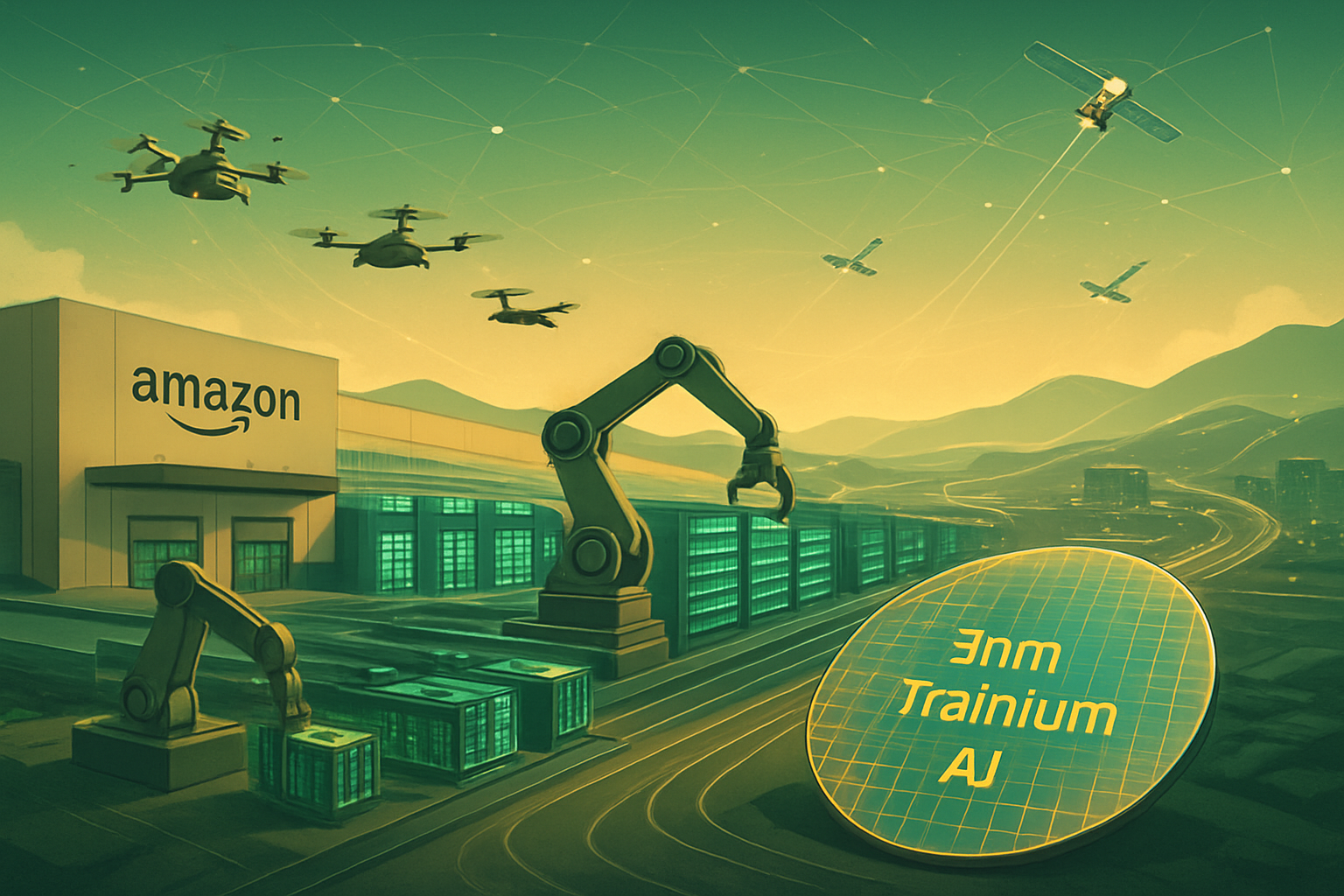
    As of March 30, 2026, Amazon.com, Inc. (NASDAQ: AMZN) finds itself at a defining crossroads that echoes its most ambitious—and controversial—periods of the past. After a year of record-breaking profitability in 2025, the company has pivoted into what analysts are calling the "Great AI Build-out." With a staggering $200 billion capital expenditure guidance for the 2026 fiscal year, Amazon is betting its future on a vertically integrated AI stack, ranging from proprietary 3nm silicon to global satellite internet via its "Amazon Leo" project. While the market’s immediate reaction has been one of "capex sticker shock," the underlying narrative remains the same: Amazon is sacrificing short-term liquidity to secure a dominant position in the next two decades of compute infrastructure.

    Historical Background

    Founded in 1994 by Jeff Bezos as an online bookstore in a Seattle garage, Amazon’s history is a relentless sequence of transformations. What began as a retail disruptor evolved into a logistical juggernaut, a cloud pioneer with the 2006 launch of Amazon Web Services (AWS), and a digital media powerhouse.

    The company’s most significant shifts have always been marked by periods of massive internal investment that the market initially doubted. From the multi-billion dollar build-out of its fulfillment network in the early 2010s to the $13.7 billion acquisition of Whole Foods in 2017, Amazon has consistently doubled down on capital-intensive "flywheels." Today, under the leadership of Andy Jassy, the company has completed its latest pivot: transitioning from a provider of third-party cloud tools to a manufacturer of the very silicon and intelligence that powers the global economy.

    Business Model

    Amazon’s business model in 2026 is a complex ecosystem of four primary engines:

    1. Cloud Infrastructure (AWS): The highest-margin segment, now providing not just storage and compute, but a full Generative AI lifecycle including foundational models (Bedrock) and custom chips.
    2. Global Retail (1P & 3P): A massive marketplace driven by Prime memberships. In 2025, the retail wing reached peak efficiency through regionalization and warehouse robotics.
    3. Digital Advertising: A high-growth ($60B+ revenue) segment that leverages Amazon’s vast consumer data to place ads on its marketplace and Prime Video.
    4. Emerging Infrastructure: This includes the newly rebranded Amazon Leo (satellite internet) and Amazon’s health and pharmacy services.

    Stock Performance Overview

    As of March 30, 2026, AMZN shares are trading in the $199–$207 range. The stock’s trajectory reflects a tug-of-war between long-term growth and immediate free cash flow (FCF) concerns.

    • 1-Year Performance: -1.0%. The stock has pulled back roughly 20% from its 2025 highs following the announcement of the $200 billion capex plan.
    • 5-Year Performance: +29.6%. A steady climb that weathered the post-pandemic correction and was buoyed by the 2024 AI rally.
    • 10-Year Performance: +624.5%. Amazon remains one of the decade's premier wealth creators, significantly outperforming the S&P 500.

    Financial Performance

    Amazon’s 2025 fiscal year was a masterclass in operational efficiency. The company reported:

    • Revenue: $716.9 billion, a 12% year-over-year increase.
    • Net Income: A record $77.7 billion.
    • Operating Margins: North American retail margins surged to 8%, driven by the deployment of the "Proteus" autonomous robots. AWS maintained robust 35% margins.
    • The Capex Surge: The pivot to a $200 billion 2026 capex budget has temporarily depressed FCF expectations, a move that management defends as necessary for "Silicon Sovereignty."

    Leadership and Management

    CEO Andy Jassy has fully stepped out of Jeff Bezos's shadow, establishing a reputation as a "disciplined builder." Under his tenure, the company has become more focused on margins and internal efficiencies than the experimental "wild west" era of the late 2010s.

    • Matt Garman (CEO of AWS): Taking over in 2024, Garman has steered AWS toward custom silicon (Trainium/Inferentia) to reduce reliance on external vendors.
    • Doug Herrington (CEO of Worldwide Amazon Stores): Credited with the "Regionalization" of the US logistics network, which halved shipping times while reducing costs.

    Products, Services, and Innovations

    Innovation in 2026 is centered on "Vertical AI Integration."

    • Trainium3 Silicon: Built on a 3nm process, Amazon’s newest AI chip is claiming a 40% cost advantage over third-party GPUs for large-scale model training.
    • Amazon Bedrock: This platform has become the "OS of AI," allowing enterprises to swap between models (Anthropic, Meta, Amazon’s own Titan) with ease.
    • Amazon Leo (formerly Kuiper): With over 200 satellites in orbit, the service began offering "Leo Ultra" (1 Gbps) internet to remote enterprise and AWS customers in March 2026.

    Competitive Landscape

    Amazon faces a multi-front war:

    • Cloud: Microsoft (25% market share) and Google Cloud (13%) are closing the gap on AWS (31%). Microsoft’s partnership with OpenAI remains a formidable threat in the enterprise application layer.
    • Retail: Walmart (WMT) has successfully mirrored Amazon’s logistics efficiency, while budget players like Temu and Shein continue to pressure the low-end consumer segment.
    • AI Hardware: While Amazon is moving toward its own chips, it must still maintain a delicate partnership with NVIDIA (NVDA) to satisfy demand for H100 and Blackwell GPUs.

    Industry and Market Trends

    The "Generative AI Phase 2" is the dominant trend of 2026. The market has moved past the hype of "chatbots" and into "inference at scale." Enterprises are now looking for the cheapest, most efficient way to run AI models daily, rather than just training them. This favors Amazon’s Inferentia chips and AWS’s sprawling data center footprint. Additionally, "Sovereign AI"—where nations require data and compute to remain within borders—has opened new revenue streams for AWS's government-cloud divisions.

    Risks and Challenges

    • Capex Overbuild: There is a non-trivial risk that the $200 billion investment in 2026 creates "ghost data centers" if AI demand cools.
    • Regulatory Scrutiny: The FTC's landmark antitrust case, led by Chair Lina Khan, continues to loom over the company, focusing on "Project Nessie" and the alleged "Buy Box" self-preferencing.
    • Labor Relations: As Amazon automates more of its fulfillment with robotics, tensions with labor unions and regulatory bodies regarding workplace safety and displacement remain high.

    Opportunities and Catalysts

    • Prime Video Advertising: The full integration of AI-driven, non-intrusive ads into Prime Video is expected to add $10 billion to the bottom line by 2027.
    • Healthcare: Amazon Pharmacy’s integration with One Medical is finally showing signs of scale, offering a "Prime-like" experience for healthcare.
    • Custom Silicon Revenue: Amazon’s chip business is now a $10B+ annual run-rate business, offering higher margins than traditional third-party software resale.

    Investor Sentiment and Analyst Coverage

    Wall Street remains divided. "Bulls" see the 2026 capex as a visionary land grab similar to the 2006 AWS launch. "Bears" argue that Amazon is becoming a "utility company" with diminishing returns on capital. Current consensus is a "Moderate Buy," with a 12-month price target averaging $245, suggesting significant upside once the capex cycle matures. Institutional ownership remains high at over 60%, led by Vanguard and BlackRock.

    Regulatory, Policy, and Geopolitical Factors

    Geopolitically, Amazon is navigating the "Chip Wars." Its move into 3nm chip design makes it reliant on TSMC (TSM) in Taiwan, exposing it to regional tensions. Domestically, the EU’s Digital Markets Act (DMA) has forced Amazon to change how it uses seller data, creating a potential headwind for its private-label brands.

    Conclusion

    Amazon in 2026 is a company that has chosen to embrace the volatility of innovation. By committing $200 billion to AI and satellite infrastructure, it is attempting to build the "backbone" of the next digital era. While the stock may face short-term pressure as free cash flow is diverted to data centers and custom silicon, the underlying strength of its 31% cloud market share and its newly efficient retail engine provide a safety net. For the long-term investor, the key question is not whether Amazon is spending too much, but whether any other company can afford to keep up.


    This content is intended for informational purposes only and is not financial advice.

  • The Yellow Iron Renaissance: How AI and Infrastructure Fueled Caterpillar’s (CAT) Historic Surge

    The Yellow Iron Renaissance: How AI and Infrastructure Fueled Caterpillar’s (CAT) Historic Surge

    As of March 30, 2026, the industrial landscape has undergone a profound transformation. What was once dismissed as a "legacy" machinery company has emerged as a linchpin of the artificial intelligence revolution. Caterpillar Inc. (NYSE: CAT), headquartered in Irving, Texas, has spent the last two years defying the gravity of typical economic cycles.

    The narrative surrounding Caterpillar has shifted from "the company that builds roads" to "the company that powers the digital frontier." Driven by an unprecedented surge in data center construction and a sustained domestic infrastructure supercycle, Caterpillar’s stock has reached valuations once reserved for high-growth software firms. This article examines the strategic pivot, the leadership transition, and the fundamental drivers that have turned yellow iron into digital gold.

    Historical Background

    The story of Caterpillar is one of constant adaptation. Founded in 1925 through the merger of the Holt Manufacturing Company and the C. L. Best Tractor Co., the company’s "Caterpillar" trademark dates back to the early 1900s when Benjamin Holt replaced wheels with wooden tracks to prevent tractors from sinking into soft California soil.

    Throughout the 20th century, Caterpillar became synonymous with global development, from the construction of the Hoover Dam to the building of the U.S. Interstate Highway System. However, the company’s modern transformation began in the post-2008 era, as it aggressively diversified into energy and transportation (E&T). This strategic foresight laid the groundwork for its current dominance in power generation, a segment that has become the crown jewel of its 2026 portfolio.

    Business Model

    Caterpillar operates through three primary segments, supported by a robust financial products arm:

    1. Energy & Transportation (E&T): This segment provides reciprocating engines, turbines, and related services for oil and gas, power generation, marine, and rail. In 2026, this is the company’s fastest-growing engine of revenue, fueled by data center backup and primary power needs.
    2. Construction Industries: Focused on machinery for infrastructure, forestry, and building construction. This remains the company’s high-volume backbone, currently buoyed by the tail-end of the U.S. Infrastructure Investment and Jobs Act (IIJA).
    3. Resource Industries: Primarily serving the mining sector. With the global transition to green energy requiring massive increases in copper, lithium, and nickel mining, this segment has moved from deep cyclicality to steady, long-term growth.
    4. Financial Products (Cat Financial): Providing retail and wholesale financing, this segment ensures that Caterpillar’s global dealer network—the company's primary competitive moat—remains liquid and capable of supporting customers in over 190 countries.

    Stock Performance Overview

    The performance of CAT stock over the past decade is a tale of two halves. For years, the stock traded as a classic cyclical, fluctuating with commodity prices and interest rates.

    • 10-Year Horizon: Investors who held CAT from 2016 through early 2026 have seen total returns exceeding 500%, far outstripping the broader industrial sector.
    • 5-Year Horizon: The stock broke out significantly in late 2021 as the "Infrastructure Supercycle" took hold, but the real acceleration began in 2024.
    • Recent Outperformance: In 2025, CAT shares surged a staggering 62%. By February 2026, the stock reached an all-time high of $775.00. While it has moderated slightly to the $720 range as of March 30, 2026, the stock’s re-rating from a P/E of 15x to nearly 35x reflects its new status as a secular "AI infrastructure" play.

    Financial Performance

    Caterpillar’s fiscal year 2025 results, reported in early 2026, were nothing short of historic. The company recorded total revenue of $67.6 billion, the highest in its 100-year history.

    Key metrics for investors to note:

    • Adjusted EPS: $19.06 (down slightly from 2024 due to tariff pressures, but still remarkably strong).
    • Free Cash Flow (ME&P): $9.5 billion, enabling $7.9 billion in shareholder returns via dividends and buybacks.
    • Backlog: As of March 2026, the order backlog stands at a record $51 billion, providing visibility into late 2027 revenue.
    • Valuation: Trading at a P/E ratio of ~33x–40x, the market is currently pricing in sustained growth in the Energy & Transportation segment that outweighs traditional cyclical risks.

    Leadership and Management

    A pivotal moment for Caterpillar occurred on May 1, 2025, when Jim Umpleby transitioned to Executive Chairman, handing the CEO reigns to Joe Creed. Creed, a Caterpillar veteran, has focused on "disciplined execution" during a period of high geopolitical volatility.

    The leadership’s strategy remains focused on three pillars established under Umpleby: Services, Electrification, and Autonomy. By 2025, services revenue reached $24 billion, moving the company toward its goal of $28 billion by late 2026. This shift toward higher-margin, recurring service revenue has been critical in stabilizing the company's bottom line.

    Products, Services, and Innovations

    Caterpillar’s current innovation pipeline is focused heavily on the "behind-the-meter" power crisis facing AI data centers.

    • G3516 Series Engines: These natural gas generator sets have become the industry standard for fast-response backup power in hyperscale data centers.
    • The Monarch Deal: In early 2026, Caterpillar secured a landmark 2-gigawatt (GW) order for a compute campus in West Virginia, proving that CAT can act as a primary power provider when local grids fail to meet AI's energy appetite.
    • Autonomous Mining: CAT’s Command for Hauling system has now moved over 6 billion tonnes autonomously, maintaining a significant technological lead over competitors.

    Competitive Landscape

    While Caterpillar remains the global heavyweight, the landscape is shifting:

    • Komatsu: The Japanese rival remains a strong second but has struggled in 2025-2026 with higher logistics costs and slower recovery in Chinese markets.
    • John Deere (NYSE: DE): Once a close peer, Deere has diverged recently. While CAT soared on infrastructure and power, Deere faced a 30% drop in North American farm income in 2025, leading to significant stock underperformance compared to CAT.
    • The "Moat": Caterpillar’s true competitive advantage remains its dealer network. With over 2,500 dealer locations globally, the ability to provide parts and service within 24 hours in remote mining or construction sites is a barrier to entry that Chinese competitors like SANY and XCMG have yet to overcome in Western markets.

    Industry and Market Trends

    The dominant trend of 2026 is the "Bring Your Own Power" (BYOP) movement. As AI data centers require 5x to 10x more power than traditional facilities, utility companies are struggling to upgrade grids fast enough. This has turned Caterpillar into a de facto utility-infrastructure provider.

    Simultaneously, the Energy Transition is fueling the Resource Industries segment. The "Green Metals" boom—the need for copper and lithium—has kept mining equipment demand at near-record levels, even as traditional coal mining equipment demand slowly tapers.

    Risks and Challenges

    No investment is without risk, and Caterpillar faces three primary headwinds in 2026:

    1. Tariff Pressures: The company estimated a $2.6 billion impact from new trade tariffs in late 2025 and early 2026, which has begun to squeeze margins in the Construction segment.
    2. Valuation Risk: With a P/E ratio doubling its historical average, any miss in earnings or a slowdown in data center capex could lead to a sharp correction.
    3. Interest Rates: While infrastructure demand is high, prolonged high interest rates have dampened the residential construction market, making CAT heavily reliant on federal and corporate mega-projects.

    Opportunities and Catalysts

    The primary catalyst for 2026 remains the continued rollout of AI-specific infrastructure.

    • Vertiv Partnership: A 2025 strategic partnership with Vertiv to integrate power solutions with cooling infrastructure has streamlined the deployment of AI campuses, making CAT a preferred partner for tech giants.
    • Hydrogen and Battery Electric: Caterpillar is expected to launch its first commercially available hydrogen-powered large-scale generator in late 2026, opening a new "zero-emission" market for data centers under pressure to meet ESG goals.

    Investor Sentiment and Analyst Coverage

    Wall Street sentiment on CAT is currently divided between "Value" and "Growth" analysts.

    • The Bulls: Argue that CAT is a "secular growth story" masquerading as an industrial, justifying the 35x P/E multiple due to its role in the AI build-out.
    • The Bears: Warn that the stock is priced to perfection and that the "AI hype" has inflated an otherwise cyclical business.
      As of March 2026, institutional ownership remains high, with major shifts from industrial-focused funds to "thematic" tech and infrastructure ETFs.

    Regulatory, Policy, and Geopolitical Factors

    Caterpillar is deeply affected by global trade policy. The ongoing "Infrastructure Supercycle" in the United States is largely a product of the IIJA, which continues to provide a "multi-year floor" for domestic demand. However, geopolitical tensions and new tariffs on imported steel and components remain a significant operational hurdle. Furthermore, strict new EPA standards for diesel engines are pushing the company to accelerate its R&D into alternative fuels faster than some competitors.

    Conclusion

    Caterpillar Inc. enters mid-2026 as a company that has successfully bridged the gap between the heavy-industrial past and the high-tech future. By leveraging its dominance in power generation to meet the insatiable energy demands of the AI era, it has achieved a market valuation that few would have predicted five years ago.

    For investors, Caterpillar represents a unique hybrid: a company with the stability of a 100-year-old giant and the growth catalysts of a tech enabler. While the current valuation demands "flawless execution" and the $2.6 billion tariff headwind is real, the record $51 billion backlog and the secular tailwinds of AI and infrastructure suggest that the "Yellow Iron" giant is far from finished with its record-breaking run.


    Disclaimer: This content is intended for informational purposes only and is not financial advice. Investing involves risk, and past performance is not indicative of future results. Consult with a financial advisor before making any investment decisions.

  • The Maranello Moat: Ferrari’s Luxury Resilience and the JPMorgan Bull Case for 2026

    The Maranello Moat: Ferrari’s Luxury Resilience and the JPMorgan Bull Case for 2026

    Date: March 30, 2026
    By: Financial Research Division

    Introduction

    As the global automotive landscape grapples with the volatile transition to electrification and shifting macroeconomic headwinds, one name remains essentially decoupled from the gravity of the broader market: Ferrari (NYSE: RACE). In early 2026, the Italian "Prancing Horse" continues to redefine the boundaries between high-performance automotive engineering and ultra-luxury goods. With a stock price that has consistently outperformed both the S&P 500 and the luxury sector at large, Ferrari is currently in the spotlight following a series of bullish upgrades from major institutions, most notably JPMorgan. As the company prepares for the late-2026 launch of its first fully electric vehicle, its "value over volume" strategy has created a backlog of demand that stretches into 2028, insulating the brand from the cyclical downturns that often plague its peers.

    Historical Background

    Founded in 1947 by Enzo Ferrari, the company’s origins are rooted deeply in the Scuderia Ferrari racing stable. Unlike many competitors who built cars to fund their lifestyles, Enzo famously built road cars only to fund his passion for racing. For decades, Ferrari operated under the umbrella of Fiat, which provided the financial stability needed to dominate Formula 1 and the supercar market. However, the most significant transformation in the company's modern history occurred in 2015, when it was spun off into an independent public company listed on the New York Stock Exchange. Under the late Sergio Marchionne, the IPO unlocked the brand's potential as a luxury play rather than a mere industrial manufacturer. Since then, Ferrari has meticulously maintained its exclusivity while expanding its margins through bespoke personalization and the introduction of new segments like the Purosangue.

    Business Model

    Ferrari’s business model is a masterclass in scarcity marketing. The company purposely produces fewer cars than the market demands, ensuring that a Ferrari remains one of the world’s most coveted assets. Revenue streams are diversified across four key pillars:

    1. Vehicle Sales: High-margin models ranging from the V12-powered 12Cilindri to the hybrid SF90 Stradale.
    2. Personalization: Programs like Atelier and Tailor Made allow customers to customize every detail of their car, often adding hundreds of thousands of dollars to the base price. In 2025, these services contributed record-breaking margins to the bottom line.
    3. Brand & Lifestyle: Licensing, merchandising, and theme parks (Ferrari World) that monetize the brand's global prestige.
    4. Racing: The Formula 1 team serves as the ultimate R&D lab and marketing engine, maintaining the brand’s "high-performance" DNA.

    The company's core philosophy is "Value over Volume," capping production (particularly of its SUV-styled Purosangue) to maintain residual value and brand equity.

    Stock Performance Overview

    Over the last decade, Ferrari (RACE) has evolved into one of the most reliable performers in the luxury space.

    • 1-Year Performance: The stock has seen a 15% gain as of March 2026, buoyed by record 2025 earnings and the successful ramp-up of the Purosangue.
    • 5-Year Performance: Investors have seen returns exceeding 160%, significantly outperforming the broader automotive sector.
    • 10-Year Performance: Since its IPO, Ferrari has proven to be a "generational" stock, with its valuation multiple (P/E ratio) consistently trading closer to luxury giants like Hermès (EPA: RMS) or LVMH (EPA: MC) than to traditional automakers like Ford or Volkswagen.

    Notable moves in 2024 and 2025 were driven by the "de-risking" of the EV transition, as investors realized Ferrari could command premium pricing for electric models just as it did for internal combustion engines (ICE).

    Financial Performance

    Ferrari’s fiscal 2025 results, released earlier this year, underscored its financial dominance.

    • Revenue: Reached €7.146 billion, a 7% year-over-year increase.
    • EBITDA: Reported at €2.772 billion with an industry-leading margin of 38.8%.
    • Net Profit: Stood at €1.600 billion, with diluted EPS rising to €8.96.
    • Free Cash Flow: Industrial free cash flow surged by 50% to €1.538 billion.
      The company’s balance sheet remains exceptionally strong, characterized by low leverage and a massive €3.5 billion share buyback program scheduled through 2030, signaling management's confidence in long-term cash generation.

    Leadership and Management

    Under CEO Benedetto Vigna—a physicist by training with a deep background in the semiconductor and tech industries—Ferrari has accelerated its digital and technological transformation. Vigna has been instrumental in leading the "e-building" project, a new state-of-the-art facility in Maranello that allows for the flexible production of ICE, hybrid, and electric vehicles on the same line. Chairman John Elkann, representing the Agnelli family’s controlling interest through Exor N.V., provides a steady hand in governance, ensuring that Ferrari’s long-term heritage is not sacrificed for short-term quarterly gains. The management's reputation for disciplined capital allocation is among the best in the global luxury sector.

    Products, Services, and Innovations

    Innovation at Ferrari is currently centered on the "Elettrica" (the working title for its first EV), slated for a late 2026 debut.

    • The First EV: Early technical disclosures suggest a four-motor setup producing over 1,000 bhp. Crucially, Ferrari has patented a "Torque Shift Engagement" system to amplify the acoustic vibrations of the electric motors, addressing the "soul" of the car in the absence of a V12 roar.
    • Purosangue: The brand’s first four-door vehicle remains the primary growth driver, with a waitlist extending into 2028.
    • Hybridization: Nearly 60% of current sales are now electrified (hybrids like the 296 GTB and SF90), proving that the customer base is ready for the transition.

    Competitive Landscape

    Ferrari occupies a unique niche that JPMorgan analysts describe as "tactile exclusivity." While competitors like Lamborghini (owned by Volkswagen Group) and Aston Martin (LON: AML) produce high-performance vehicles, they often lack the same level of pricing power and secondary market stability.

    • Lamborghini: Strong competition in the "super SUV" space, but Ferrari’s production caps on the Purosangue keep its exclusivity higher.
    • Porsche (ETR: P911): Operates at a higher volume and lower price point, making it a "premium" brand rather than an "ultra-luxury" brand.
    • McLaren: Continues to struggle with financial stability and reliability perceptions, leaving Ferrari as the clear leader in the supercar hierarchy.

    Industry and Market Trends

    The luxury market in 2026 is seeing a shift toward "Green Status" and "Physicality." Ultra-high-net-worth individuals (UHNWIs) are increasingly demanding sustainable performance without losing the tactile feel of a high-end machine. A notable trend in 2026 is the return of physical controls—buttons and switches engineered like luxury watches—as a rejection of the "all-screen" minimalist interiors popularized by Tesla and other mass-market EVs. Ferrari’s focus on cabin craftsmanship aligns perfectly with this trend.

    Risks and Challenges

    Despite its strengths, Ferrari is not without risks:

    • EV Execution: The late-2026 launch of the first EV is a "make or break" moment. Any failure to capture the "emotional" experience of a Ferrari in an electric format could damage brand equity.
    • Margin Compression: High R&D costs for electrification and the setup of the "e-building" could temporarily pressure margins.
    • Global Economy: While UHNWIs are resilient, prolonged geopolitical instability in key markets like Greater China could affect the demand for "personalizations," which are high-margin drivers.

    Opportunities and Catalysts

    The primary catalyst for the stock is the impending EV launch. If Ferrari can prove that its electric vehicles are just as desirable as its ICE models, the stock could see another significant rerating. Furthermore, the growth of the "Atelier" personalization program presents a massive opportunity to increase Average Selling Prices (ASP) without increasing production volume. JPMorgan has noted that the potential for Ferrari to increase its dividend or accelerate buybacks remains high given its robust free cash flow.

    Investor Sentiment and Analyst Coverage

    Sentiment among institutional investors remains overwhelmingly positive. JPMorgan’s March 2026 report maintained an Overweight rating with a price target of $447, citing Ferrari's "Veblen good" status—where demand increases as price increases. Analyst Jose Asumendi highlights that Ferrari is one of the few companies that can guide for nearly 40% EBITDA margins regardless of the global interest rate environment. Wall Street consensus remains a "Moderate Buy," with some analysts even more aggressive, targeting $475 based on the expected success of the 2026 EV.

    Regulatory, Policy, and Geopolitical Factors

    Ferrari faces the challenge of navigating the EU’s strict emissions mandates. However, the "E-fuels exception" negotiated by Germany and Italy provides a lifeline for Ferrari’s high-revving internal combustion engines. This allows the company to continue producing its iconic V12 engines for its most exclusive "Icona" series while transitioning the high-volume fleet to hybrid and electric. Compliance with global ESG standards is also being addressed through the carbon-neutral goals of the Maranello factory.

    Conclusion

    Ferrari enters the second half of the 2020s in a position of unprecedented strength. By blending its rich racing heritage with a forward-looking technological roadmap, the company has successfully transitioned from a car manufacturer to a global luxury icon. While the late-2026 EV launch presents an execution risk, the brand's resilience in the face of economic uncertainty and its massive order backlog provide a safety net that few companies can match. For investors, Ferrari represents a unique opportunity to own a piece of a "scarcity-driven" ecosystem that continues to defy traditional market logic. As JPMorgan suggests, the "Prancing Horse" still has plenty of room to run.


    This content is intended for informational purposes only and is not financial advice.

  • The Operating System of the AI Era: A Deep Dive into Palantir’s Expansion with Stellantis and Bain

    The Operating System of the AI Era: A Deep Dive into Palantir’s Expansion with Stellantis and Bain

    As of March 30, 2026, the global economy finds itself in the "implementation phase" of the Artificial Intelligence revolution. While 2023 and 2024 were defined by the speculative frenzy surrounding Large Language Models (LLMs), 2026 is defined by operational utility—the ability of enterprises to actually move the needle on their bottom lines using AI. At the center of this transition is Palantir Technologies (NYSE: PLTR).

    Once a shadowy defense contractor known for its work with the CIA, Palantir has undergone a radical transformation into a commercial powerhouse. This week, the company dominated headlines with the announcement of a massive five-year renewal and expansion of its partnership with Stellantis (NYSE: STLA) and a strategic deepening of its "force multiplier" alliance with Bain & Company. These moves signal a new era for Palantir: one where its Artificial Intelligence Platform (AIP) is no longer just an experimental tool but the fundamental operating system for the world’s most complex industrial and consulting ecosystems.

    Historical Background

    Founded in 2003 by Peter Thiel, Alex Karp, and others, Palantir was born from the "PayPal Mafia" with a specific mission: to provide the U.S. intelligence community with the data-integration tools necessary to prevent another 9/11. For the first decade of its existence, the company operated in near-total secrecy, building "Gotham" for government counter-terrorism.

    The pivot to the commercial sector began in earnest with the launch of "Foundry," a platform designed to solve the "data silo" problem for large enterprises. Palantir went public via a direct listing in September 2020, a move that invited intense scrutiny of its unconventional governance and reliance on government contracts. However, the 2023 launch of AIP—which integrated generative AI with Palantir’s proprietary "Ontology"—marked the company’s definitive transformation from a specialized software provider to a mainstream enterprise titan.

    Business Model

    Palantir’s business model has evolved from a high-touch, engineer-heavy consultancy model to a scalable software-as-a-service (SaaS) architecture. It operates through four primary platforms:

    • Gotham: Primarily for government/defense, enabling users to identify patterns hidden deep within datasets.
    • Foundry: The commercial operating system that creates a "digital twin" of an organization.
    • Apollo: The continuous delivery system that manages and deploys software across environments.
    • AIP (Artificial Intelligence Platform): The newest and fastest-growing segment, allowing LLMs to interact with private data in a secure, governed manner.

    The company generates revenue through multi-year subscriptions. Crucially, the "Bootcamp" sales model introduced in 2023 has significantly lowered customer acquisition costs, allowing clients to achieve "time-to-value" in days rather than months.

    Stock Performance Overview

    Palantir’s journey on the public markets has been a volatile odyssey. After debuting at around $10 in 2020, the stock became a "meme stock" darling in 2021, only to collapse during the 2022 tech rout as investors fled non-profitable growth companies.

    However, the 2024–2025 period saw a dramatic recovery. Following its inclusion in the S&P 500 and consecutive quarters of GAAP profitability, PLTR has outperformed the broader Nasdaq significantly. Over the past five years, the stock has delivered a compounded annual growth rate (CAGR) exceeding 35%, driven by the explosion in commercial revenue. As of today, March 30, 2026, the stock is trading near record highs, buoyed by the "AIP tailwind" and the massive contract expansions with Stellantis and Bain.

    Financial Performance

    Palantir’s recent financial results reflect a company hitting its stride. For the full year 2025, Palantir reported total revenue of $4.48 billion, a 56% increase year-over-year. The standout metric was U.S. Commercial Revenue, which surged 109% to $1.465 billion.

    Key financial highlights for Q4 2025 include:

    • Net Income (GAAP): $609 million, marking its seventh consecutive quarter of GAAP profitability.
    • Rule of 40 Score: An astounding 127% (combining revenue growth and profit margin).
    • Cash Reserves: A "war chest" of $7.2 billion with zero debt, providing immense flexibility for potential M&A or further R&D.
    • Guidance: For FY 2026, the company has guided for revenue of approximately $7.2 billion, suggesting that the growth acceleration is far from over.

    Leadership and Management

    CEO Alex Karp remains one of the most distinctive figures in Silicon Valley. A PhD in social theory, Karp has eschewed traditional tech "bro" culture in favor of a philosophy-driven approach to software. His strategy centers on "defending the West" and providing "sovereign" software solutions that don't compromise ethics for profit.

    The leadership team has been strengthened recently with a focus on scaling the sales force, moving away from the "software sells itself" mantra of the early 2010s. The board, still influenced by co-founder Peter Thiel, remains focused on long-term technological dominance rather than short-term quarterly smoothing.

    Products, Services, and Innovations

    The current "star" of the portfolio is AIP. Unlike standalone chatbots, AIP allows companies to build "agents" that can actually execute business processes.

    The expansion with Stellantis highlights a new innovation: "Commodity Cognition." By using AIP, Stellantis has moved beyond simple supply chain tracking to an automated decision-making engine. If a parts shortage is detected in a Mediterranean port, the Palantir-powered system doesn't just alert a human; it analyzes logistics costs, production schedules, and market demand to autonomously re-route the supply chain. This move from "insight" to "action" is the hallmark of Palantir’s 2026 innovation pipeline.

    Competitive Landscape

    Palantir operates in a unique space between pure-play data warehouses like Snowflake (NYSE: SNOW) and cloud giants like Microsoft (NASDAQ: MSFT) or Amazon (NASDAQ: AMZN).

    While Snowflake focuses on data storage and SQL-based analytics, Palantir focuses on the "Ontology"—the semantic layer that explains how data relates to the real world. Microsoft’s Azure AI tools are more modular, requiring significant internal development. Palantir’s edge remains its "out-of-the-box" capability for complex, messy, and highly regulated industries. However, the rise of "agentic" AI from startups like Anthropic and OpenAI’s enterprise wing remains a competitive threat that Palantir must monitor.

    Industry and Market Trends

    The "Agentic AI" trend is the dominant macro driver in 2026. Enterprises are no longer satisfied with AI that can write emails; they want AI that can manage a factory floor. This plays directly into Palantir’s strengths.

    Furthermore, the "reshoring" of manufacturing to the U.S. and Europe has created a desperate need for operational efficiency. In a high-interest-rate environment, the "marginal gains" provided by software-driven efficiency are often the difference between a profitable quarter and a loss.

    Risks and Challenges

    Despite the optimism, Palantir faces significant risks:

    • Valuation: With a P/E ratio hovering around 230x, the stock is "priced for perfection." Any slight deceleration in growth could trigger a massive sell-off.
    • Concentration: While the commercial sector is growing, a large portion of revenue still comes from a handful of massive "whale" contracts like Stellantis.
    • Ethical Scrutiny: Palantir’s involvement in military and border enforcement remains a flashpoint for critics, potentially limiting its talent pool or causing ESG-focused institutional investors to divest.

    Opportunities and Catalysts

    The Bain & Company partnership is perhaps the largest untapped catalyst. By training over 1,500 Bain consultants to deploy Palantir software, the company has essentially outsourced its sales and implementation to one of the world’s most prestigious consulting firms. This "force multiplier" effect allows Palantir to reach the C-suite of the Fortune 500 without the overhead of a massive internal sales department.

    The upcoming Q2 2026 earnings report is expected to show the first full quarter of impact from the Stellantis renewal, which analysts believe could lead to a significant guidance raise.

    Investor Sentiment and Analyst Coverage

    Wall Street sentiment has shifted from skeptical to "cautiously bullish." UBS recently raised its price target to $200, citing Palantir’s "asymmetrical advantage" in the enterprise AI market.

    Retail sentiment remains high, with the "Palantirian" community on platforms like X and Reddit providing a strong floor for the stock. However, institutional ownership has also increased, signaling that the "smart money" is finally buying into Karp’s long-term vision of Palantir as the "essential infrastructure of the modern world."

    Regulatory, Policy, and Geopolitical Factors

    Geopolitics continues to be a tailwind for Palantir. As global tensions rise, the demand for "sovereign AI"—AI that is built and hosted within the borders of a nation or an alliance—has skyrocketed. Palantir’s steadfast commitment to Western interests has made it the partner of choice for the U.S. Department of Defense and its allies.

    Furthermore, the EU AI Act and similar regulations in the U.S. play into Palantir’s hands. The company’s platforms were built from the ground up with data privacy and auditability in mind, making compliance easier for its clients compared to those using "black box" AI models.

    Conclusion

    The expanded partnerships with Stellantis and Bain & Company, announced this week, are more than just contract renewals; they are a validation of Palantir’s entire strategic pivot. By integrating AIP into the very fabric of global manufacturing and management consulting, Palantir is cementing its position as the indispensable backbone of the AI era.

    For investors, Palantir remains a high-risk, high-reward proposition. The valuation is undeniably steep, but the growth in U.S. commercial revenue and the efficiency of the "Bootcamp" model suggest a company that is finally scaling its legendary technology. As we move further into 2026, the question is no longer whether Palantir’s software works—it’s how much of the global economy it will eventually run.


    This content is intended for informational purposes only and is not financial advice.

  • The Titan of Reliability: A Deep-Dive Research Feature on Chevron (CVX) Amidst a New Global Energy Era

    The Titan of Reliability: A Deep-Dive Research Feature on Chevron (CVX) Amidst a New Global Energy Era

    As of March 30, 2026, the global energy landscape is undergoing a profound reassessment. While the "energy transition" remains a long-term goal for many nations, the immediate priority has pivoted sharply toward energy security. In this volatile environment, Chevron Corporation (NYSE: CVX) has emerged as a titan of reliability. Amidst a significant spike in Brent crude prices—surpassing $112 per barrel this month following escalations in the Middle East—Chevron’s strategic positioning in the Americas has made it a preferred vehicle for investors seeking stability. This deep-dive examines how the California-born, Houston-based super-major navigated the turbulent mid-2020s to solidify its position as a cash-flow powerhouse and a critical player in both fossil fuels and emerging low-carbon technologies.

    Historical Background

    Chevron’s history is a mirror of the American oil industry itself. Tracing its lineage back to the Pacific Coast Oil Company in 1879, it eventually became Standard Oil Co. (California), one of the "Seven Sisters" that dominated the global petroleum industry for much of the 20th century. A defining moment came in 1933 when the company won a concession to find oil in Saudi Arabia, leading to the formation of Aramco (in partnership with what is now ExxonMobil).

    The modern iteration of Chevron was forged through massive consolidations: the 1984 acquisition of Gulf Oil (the largest merger in history at the time), the 2001 merger with Texaco, and the 2005 acquisition of Unocal. Most recently, the 2025 integration of Hess Corporation marked another transformative chapter, shifting Chevron’s weight significantly toward high-margin offshore assets in Guyana and the resilient Bakken shale in North Dakota.

    Business Model

    Chevron operates a fully integrated energy model, categorized into two primary segments: Upstream and Downstream.

    • Upstream: This is the company’s primary engine, involving the exploration, development, and production of crude oil and natural gas. With the completion of the Hess acquisition in mid-2025, Chevron’s portfolio is now anchored by three pillars: the Permian Basin (unconventional shale), the Stabroek Block in Guyana (deepwater), and the TCO project in Kazakhstan.
    • Downstream: This segment focuses on refining crude oil into petroleum products like gasoline, jet fuel, and lubricants, as well as manufacturing petrochemicals through its CPChem joint venture.
    • New Energies: Established as a dedicated segment in recent years, this arm focuses on "profitable carbon reduction," including Carbon Capture, Utilization, and Storage (CCUS), hydrogen, and renewable fuels.

    Stock Performance Overview

    Over the last decade, Chevron’s stock has reflected the broader cyclicality of the energy sector, but with a notable trend of outperformance against its peers during periods of price volatility.

    • 1-Year Performance: In the past 12 months, CVX shares have surged approximately 22%, driven by the successful integration of Hess and the 2026 geopolitical risk premium that has sent oil prices to multi-year highs.
    • 5-Year Performance: Since the post-pandemic lows of early 2021, the stock has more than doubled. Investors have rewarded Chevron’s "capital discipline"—a refusal to overspend during boom cycles—resulting in massive share buybacks.
    • 10-Year Performance: Looking back to 2016, Chevron has transitioned from a company struggling with high-cost legacy projects to a lean, shale-focused operator. Total shareholder returns (including dividends) have consistently outperformed the S&P 500 Energy Index.

    Financial Performance

    Chevron’s 2025 fiscal year was a masterclass in operational efficiency. Despite oil prices averaging in the mid-$60s for much of 2025, the company reported a net income of $12.3 billion, bolstered by record production volumes of 3.2 million barrels of oil equivalent per day (boe/d).

    As of Q1 2026, the financial picture is even more robust:

    • Revenue Growth: Analysts expect 2026 revenue to exceed $220 billion if current price levels hold.
    • Margins: Upstream margins have expanded thanks to the $3 billion structural cost reduction program completed in late 2025.
    • Balance Sheet: With a debt-to-equity ratio of 0.22, Chevron maintains one of the strongest balance sheets in the industry, allowing it to fund both its dividend and capital expenditures from organic cash flow even at $50/bbl oil.
    • Valuation: CVX currently trades at a forward P/E of approximately 11.5x, a slight premium to the sector average, reflecting its "safe haven" status.

    Leadership and Management

    CEO Mike Wirth, who took the helm in 2018, has become the face of "pragmatic energy." His leadership is defined by a focus on "higher returns, lower carbon." In late 2025, Wirth completed the headquarters relocation from San Ramon, California, to Houston, Texas. This move was more than symbolic; it placed the executive team at the heart of the global energy hub and distanced the company from the adversarial regulatory environment of California.

    Supported by CFO Eimear Bonner and New Energies President Jeff Gustavson, Wirth has maintained a consistent message: the world needs more energy of all kinds, and Chevron will provide it with maximum capital efficiency.

    Products, Services, and Innovations

    While oil and gas remain the core products, Chevron’s innovation pipeline has pivoted toward the intersection of energy and technology.

    • AI Power Solutions: In a notable 2025 breakthrough, Chevron began marketing "low-carbon power-as-a-service" for AI data centers. By combining natural gas power generation with on-site CCUS, Chevron provides the 24/7 "firm" power that data centers require, which wind and solar struggle to provide.
    • Renewable Fuels: The expansion of the Geismar renewable diesel facility has positioned Chevron as a leader in the "hard-to-abate" heavy transport sector.
    • Drilling Tech: In the Permian, Chevron’s use of "Trimulfrac" technology—allowing the simultaneous fracturing of three wells—has reduced completion costs by an estimated 15% compared to 2023 levels.

    Competitive Landscape

    Chevron’s primary rival remains ExxonMobil (NYSE: XOM). While Exxon is significantly larger by market capitalization, Chevron is often viewed as the more "disciplined" of the two, with a higher dividend yield focus.

    • ExxonMobil: Has a larger footprint in Guyana and a more aggressive expansion into lithium mining.
    • European Majors (Shell, BP): These companies have faced investor pressure for fluctuating between "green" pivots and returning to oil; Chevron’s unwavering "oil-and-gas first" strategy has provided more clarity for traditional energy investors.
    • Strengths: Low break-even costs in the Permian and high-margin growth in Guyana.
    • Weaknesses: Exposure to geopolitical instability in Kazakhstan (TCO project).

    Industry and Market Trends

    The "Second Shale Gale" is currently underway. In 2025 and 2026, U.S. production has plateaued at around 13.5 million barrels per day, with the industry shifting from "growth at any cost" to "harvesting cash." This consolidation favors large-scale operators like Chevron who can use automated drilling and AI-driven reservoir modeling to squeeze more value from existing acreage.

    Simultaneously, "Global Energy Security" has replaced "ESG" as the dominant narrative in boardrooms. The realization that renewable supply chains are vulnerable to geopolitical friction has renewed interest in domestic North American energy production.

    Risks and Challenges

    • Geopolitical Volatility: While high prices boost earnings, the risk of supply disruptions in the Middle East or further sanctions on Russian and Iranian oil can create unpredictable market dynamics.
    • Regulatory Pressures: Despite the move to Texas, Chevron faces ongoing litigation from various states and municipalities regarding "climate damages."
    • Stranded Assets: If the global energy transition accelerates faster than anticipated by 2035, some of Chevron’s long-cycle offshore projects could face diminished returns.
    • Operational Risks: The complexity of deepwater drilling in Guyana and the logistical challenges of Kazakhstan remain persistent risks.

    Opportunities and Catalysts

    • Hess Synergies: Management expects to realize over $1 billion in annual cost savings by the end of 2026 as the two companies fully integrate their supply chains and back-office functions.
    • Guyana’s Stabroek Block: With new FPSO (Floating Production Storage and Offloading) vessels coming online in 2026, Chevron’s share of production from Guyana is expected to grow by 20% year-over-year.
    • Carbon Capture Commercialization: The Bayou Bend CCUS project in Texas is nearing its first commercial injection, which could create a new, steady "utility-like" revenue stream.

    Investor Sentiment and Analyst Coverage

    Wall Street remains broadly bullish on Chevron. As of March 2026, approximately 70% of analysts covering the stock maintain a "Buy" or "Overweight" rating.

    • Institutional Moves: Major asset managers have increased their holdings in CVX as a hedge against inflation and geopolitical risk.
    • Retail Sentiment: Chevron is a staple for income-focused retail investors. Its 39-year streak of dividend increases has earned it a "Dividend Aristocrat" status that provides a floor for the stock price during downturns.

    Regulatory, Policy, and Geopolitical Factors

    The current U.S. administration’s "all-of-the-above" energy policy, shaped by the energy crises of the early 2020s, has become more supportive of domestic production. However, Chevron must navigate complex international waters.

    • The Strait of Hormuz: The early 2026 blockade (now partially resolved) reminded the world of the fragility of global supply chains, making Chevron’s Western Hemisphere assets (Permian, Gulf of Mexico, Guyana, Brazil) more strategically valuable.
    • EPA Methane Fees: New regulations implemented in 2025 have increased the cost of production, but Chevron’s early investments in methane leak detection have given it a competitive advantage over smaller, less-equipped independents.

    Conclusion

    Chevron (NYSE: CVX) enters the second quarter of 2026 as a formidable force in the global economy. By successfully integrating Hess, hitting the million-barrel milestone in the Permian, and strategically pivoting its headquarters to the energy capital of the world, it has positioned itself for a future where energy security is paramount. While risks—ranging from geopolitical flares to regulatory headwinds—remain, Chevron’s "dual-track" strategy of maximizing fossil fuel returns while building a pragmatic low-carbon business provides a balanced path forward. For investors, Chevron represents a rare combination of defensive stability, high yield, and clear-eyed participation in the next phase of the energy evolution.


    This content is intended for informational purposes only and is not financial advice.

  • The Energy Safe-Haven: A Deep Dive into Exxon Mobil (XOM) in 2026

    The Energy Safe-Haven: A Deep Dive into Exxon Mobil (XOM) in 2026

    As of March 30, 2026, the global energy landscape is defined by a paradoxical mix of rapid technological evolution and old-world geopolitical volatility. In this high-stakes environment, Exxon Mobil Corporation (NYSE: XOM) has emerged not just as a survivor of the energy transition, but as the definitive "safe-haven" asset for institutional and retail investors alike.

    While the mid-2020s were expected to be the twilight of the fossil fuel era, a series of supply shocks—culminating in the regional instability across the Middle East in early 2026—has reaffirmed the critical importance of energy security. Exxon Mobil, through its aggressive consolidation of Western Hemisphere assets and its disciplined "molecule-led" transition strategy, has positioned itself as the anchor of the global energy supply chain. With its stock price reaching record highs and its production volumes hitting 40-year milestones, the company represents a unique intersection of legacy industrial power and forward-looking carbon management.

    Historical Background

    The story of Exxon Mobil is essentially the history of the modern energy industry. Its roots trace back to John D. Rockefeller’s Standard Oil Trust, founded in 1870. Following the 1911 Supreme Court-ordered breakup of Standard Oil, two of its largest descendants—Jersey Standard (Exxon) and Socony (Mobil)—grew into global powerhouses.

    The 1999 merger of Exxon and Mobil for $81 billion remains one of the largest corporate marriages in history, creating a "supermajor" with unparalleled scale. However, the company’s path hasn't always been linear. In 2020, amid the COVID-19 pandemic and crashing oil prices, Exxon was removed from the Dow Jones Industrial Average, a symbolic blow that many viewed as the end of Big Oil’s dominance.

    Under the leadership of Darren Woods, who became CEO in 2017, the company pivoted. Instead of chasing solar and wind "electrons" like its European peers, Exxon doubled down on "advantaged" oil and gas assets in Guyana and the Permian Basin, while simultaneously building a Low Carbon Solutions (LCS) business focused on carbon capture and hydrogen. This strategic bet paid off spectacularly during the energy crises of 2022 and 2024, leading to the landmark $60 billion acquisition of Pioneer Natural Resources, which closed in May 2024 and redefined the U.S. shale landscape.

    Business Model

    Exxon Mobil operates a fully integrated "well-to-wheel" business model, organized into three primary pillars as of 2026:

    1. Upstream: The engine of the company, focused on the exploration and production of crude oil and natural gas. Key growth drivers include the Stabroek Block in Guyana and the massive Midland Basin acreage in the Permian.
    2. Product Solutions: This segment combines the former Downstream (refining) and Chemical divisions. It focuses on high-value products like performance chemicals, lubricants, and low-emission fuels. By integrating refining with chemical production, Exxon achieves "molecular management," shifting output based on market demand (e.g., from gasoline to sustainable aviation fuel).
    3. Low Carbon Solutions (LCS): Formed in 2021, this segment has evolved from a startup within the giant to a commercial powerhouse. It sells "decarbonization-as-a-service" to heavy industry, utilizing carbon capture and storage (CCS), and is the home of the "Mobil Lithium" brand.

    Stock Performance Overview

    On March 30, 2026, XOM shares are trading near $170.99, reflecting a period of intense outperformance.

    • 1-Year Performance: The stock is up approximately 48% over the last 12 months. This surge was driven by the successful integration of Pioneer Natural Resources and a rotation into "safe-haven" energy stocks following the "Iran War Shock" of February 2026.
    • 5-Year Performance: XOM has delivered a staggering ~198% return since March 2021. Investors who bought during the 2020/2021 lows have seen their capital nearly triple, bolstered by a disciplined buyback program.
    • 10-Year Performance: Over the decade, the stock has gained ~105%. While the 2016–2020 period was characterized by stagnation and debt concerns, the 2021–2026 era has seen a massive re-rating of the stock as a dividend powerhouse and a growth play in the Permian.

    Financial Performance

    Exxon’s FY 2025 results, released in early 2026, underscore a company of immense scale and efficiency:

    • Revenue: $323.9 billion, maintaining its position as a top global revenue generator.
    • Net Income: $28.8 billion. While down from the historic highs of 2022–2023 due to normalized commodity prices, the quality of earnings has improved through lower unit-production costs.
    • Cash Flow from Operations: $52.0 billion, providing ample liquidity for both capital expenditures ($23–$25 billion) and shareholder returns.
    • Shareholder Returns: In 2025, Exxon returned $37.2 billion to shareholders through $17.2 billion in dividends and $20.0 billion in share repurchases.
    • Valuation: Despite the price surge, XOM trades at a forward P/E of approximately 12.5x, which remains attractive compared to the broader market, given its defensive qualities.

    Leadership and Management

    Darren Woods (Chairman and CEO) has solidified his reputation as a master strategist. Initially criticized for his skepticism of renewable power, Woods’ focus on "molecules over electrons" is now the industry standard.

    In February 2026, Neil Hansen took over as CFO, succeeding Kathy Mikells. Hansen is tasked with maintaining the company’s aggressive cost-reduction target of $20 billion by 2030.

    A major strategic move occurred in March 2026, when the Board of Directors announced the company would redomicile from New Jersey to Texas. This move aligns Exxon’s legal home with its operational headquarters in Spring, Texas, and is seen as a defensive maneuver against "hostile" regulatory environments in more liberal states, further cementing the company's "Texas-first" identity.

    Products, Services, and Innovations

    Exxon’s competitive edge in 2026 is driven by its proprietary technology:

    • Cube Development: In the Permian Basin, Exxon uses "cube development" to drill multiple wells from a single pad simultaneously, maximizing resource recovery and reducing environmental footprint.
    • Mobil Lithium: The Arkansas lithium project is slated for commercial launch in mid-2026. Using Direct Lithium Extraction (DLE), Exxon aims to become a top supplier for the EV battery market by 2030, leveraging its existing drilling and water-handling expertise.
    • Carbon Capture & Storage (CCS): With 9 million tonnes per annum (MTA) of CO2 under contract, Exxon is the world leader in large-scale CCS. Its Gulf Coast CCS hub provides a blueprint for decarbonizing the steel, cement, and chemical industries.

    Competitive Landscape

    The landscape has shifted from a battle of "Oil vs. Green" to a battle of "Execution."

    • Chevron (NYSE: CVX): Exxon’s closest U.S. peer. Following its acquisition of Hess, Chevron is Exxon’s primary partner/rival in Guyana. Both companies share a similar "molecule" strategy.
    • Shell (SHEL) and BP (BP): After years of focusing on renewable electricity, both European majors have pivoted back toward oil and gas and CCS in 2025–2026, effectively adopting the Exxon playbook to satisfy shareholders demanding higher returns.
    • National Oil Companies (NOCs): Entities like Saudi Aramco remain the largest producers, but Exxon's technological lead in deepwater and unconventional (shale) drilling gives it a "technological moat" that many NOCs cannot match.

    Industry and Market Trends

    The dominant trend in 2026 is Energy Dualism: the simultaneous demand for more hydrocarbons and fewer emissions.

    • Geopolitical Friction: The closure of the Strait of Hormuz in early 2026 sent oil prices toward $110/bbl, highlighting the value of Exxon’s Western Hemisphere assets (U.S., Guyana, Canada).
    • AI and Data Centers: The explosion of AI has increased demand for reliable, 24/7 power. Exxon is exploring "natural gas to data center" solutions, where gas power plants are paired with CCS to provide low-carbon baseload power for tech giants.

    Risks and Challenges

    • Regulatory Hostility: The EU’s new methane import rules (effective Feb 2026) and the U.S. Waste Emissions Charge ($1,500/ton of methane) present significant compliance costs.
    • Commodity Volatility: Despite the current "safe-haven" status, a global recession could suppress oil demand and test the company's $35/bbl breakeven projections.
    • Litigation: "Climate nuisance" lawsuits from various states and municipalities remain a long-term legal overhang, though the 2026 move to Texas provides some jurisdictional insulation.

    Opportunities and Catalysts

    • Guyana’s Uaru Project: Scheduled for startup in late 2026, this project will push Guyana’s total production capacity over 1.1 million bpd, adding significant high-margin barrels to the portfolio.
    • Lithium Monetization: The formal commercial launch of Mobil Lithium in mid-2026 could lead to a valuation re-rating as the market begins to price in Exxon as a "critical minerals" player.
    • M&A Potential: With a fortress balance sheet, Exxon is well-positioned to acquire smaller shale players or CCS startups if valuations soften.

    Investor Sentiment and Analyst Coverage

    Wall Street is overwhelmingly bullish on XOM as of March 2026. Bernstein and Morgan Stanley have both issued "Overweight" ratings, citing the company's "geographic insulation" from Middle East disruptions.

    Hedge fund activity has shown a notable rotation into Exxon, with many managers using XOM as a proxy for geopolitical insurance. Retail sentiment remains high, driven by the company's status as a "Dividend Aristocrat" with 43 consecutive years of dividend increases.

    Regulatory, Policy, and Geopolitical Factors

    The geopolitical landscape of 2026 is the strongest catalyst for Exxon's stock. The "Iran War Shock" of February 2026 disrupted approximately 20% of global oil transit, making non-OPEC, Western Hemisphere production a matter of national security.

    Domestically, the 2026 regulatory environment is a tug-of-war. While the U.S. EPA has faced rollbacks on certain carbon mandates, international pressure (specifically from the EU's Corporate Sustainability Reporting Directive) continues to force transparency in carbon accounting. Exxon’s leadership has been vocal in calling for "policy certainty" rather than "regulatory overreach."

    Conclusion

    Exxon Mobil in 2026 is a study in corporate resilience and strategic clarity. By rejecting the "electron" pivot of the early 2020s and doubling down on its core competencies in "molecular management," the company has transformed from a perceived dinosaur into a modern energy safe-haven.

    Investors should view XOM not just as a bet on oil prices, but as a bet on global energy complexity. The company’s dominance in the Permian and Guyana provides the cash flow, while its burgeoning Low Carbon Solutions and Lithium divisions provide the longevity. As long as the world requires reliable energy in an unstable geopolitical climate, Exxon Mobil remains the bedrock of the global energy portfolio.


    This content is intended for informational purposes only and is not financial advice.

  • Nike (NKE) at the Crossroads: Analyzing the 2026 Turnaround and Consumer Resilience

    Nike (NKE) at the Crossroads: Analyzing the 2026 Turnaround and Consumer Resilience

    As of March 30, 2026, the global athletic footwear and apparel market finds itself at a pivotal juncture, and no company embodies this tension more than Nike, Inc. (NYSE: NKE). Once the undisputed titan of the "athleisure" era, Nike is currently navigating the difficult "middle innings" of a multi-year turnaround strategy. Under the leadership of CEO Elliott Hill, who took the helm in late 2024, the company has spent the last 18 months attempting to dismantle the rigid Direct-to-Consumer (DTC) architecture of the previous regime in favor of a "Sport Offense" that prioritizes wholesale partnerships and technical performance.

    With an upcoming earnings report scheduled for tomorrow, March 31, 2026, investors are laser-focused on whether Nike’s "Win Now" strategy can finally stabilize its top line. Amidst a backdrop of geopolitical friction, significant tariff headwinds, and a "value gap" where consumers are trading down to more affordable or niche rivals, Nike’s upcoming report is being viewed as a litmus test for the resilience of the global consumer.

    Historical Background

    Nike’s journey began in 1964 as Blue Ribbon Sports, founded by Phil Knight and Bill Bowerman. Originally a distributor for Japanese shoemaker Onitsuka Tiger, the company transformed into Nike in 1971, launching its own line of footwear featuring the iconic "Swoosh." Throughout the 1980s and 90s, Nike redefined sports marketing, leveraging legendary athletes like Michael Jordan to turn athletic shoes into cultural artifacts.

    The company has survived multiple transformations: from a pure performance brand to a lifestyle juggernaut, and more recently, a digital-first retailer. However, the aggressive pivot toward Nike Direct in the early 2020s—while successful in capturing higher margins initially—led to a vacuum in physical retail stores and allowed nimble competitors like On and Hoka to seize shelf space. By late 2024, the board recognized the need for a veteran hand, appointing longtime Nike executive Elliott Hill to restore the brand’s "running DNA."

    Business Model

    Nike operates a complex, global ecosystem structured around three primary pillars: Footwear (the largest revenue driver), Apparel, and Equipment. Geographically, the business is segmented into North America, EMEA (Europe, Middle East, and Africa), Greater China, and APLA (Asia Pacific & Latin America).

    In 2026, the business model is undergoing a critical rebalancing. After years of prioritizing Nike.com and owned-and-operated stores, the company has pivoted back to a hybrid model. Nike now generates approximately 60% of its revenue through wholesale partners—a significant increase from 2023 levels—while maintaining a robust digital presence for high-margin "SNKRS" app drops and membership-exclusive products. The customer base remains broad, spanning elite professional athletes to "lifestyle" consumers, though the 2026 strategy has seen a renewed focus on the core "Everyday Runner."

    Stock Performance Overview

    The last five years have been a period of significant value destruction for Nike shareholders. As of March 30, 2026, NKE is trading in the $51.00 – $53.00 range, representing an eight-year low.

    • 1-Year Performance: The stock is down approximately 20% over the last 12 months, largely due to persistent weakness in the Chinese market and the high costs associated with Elliott Hill’s restructuring efforts.
    • 5-Year Performance: Down over 60% from its November 2021 peak of $177. The stock has underperformed the S&P 500 significantly as investors de-rated the company’s growth multiple.
    • 10-Year Performance: While Nike remains a long-term winner for legacy holders, the gains of the mid-2010s have been largely eroded, with the stock trading at levels not seen since 2017.

    Financial Performance

    Nike’s financial profile in early 2026 reflects a company in transition. In its most recent Q2 FY2026 report (ended November 30, 2025), Nike reported revenue of $12.43 billion, a modest 0.6% increase year-over-year. While this beat analyst estimates, it highlighted the sluggish growth environment.

    The upcoming Q3 FY2026 earnings (to be released March 31) are expected to be more painful. Analysts forecast an EPS of $0.29, a 45% drop from the prior year, primarily due to $300 million in pre-tax restructuring charges and inventory liquidation. Gross margins are currently hovering around 40.6%–41.4%. While debt remains manageable, the company’s cash flow has been diverted toward stabilizing its supply chain against a $1.0 billion to $1.5 billion annual tariff impact.

    Leadership and Management

    CEO Elliott Hill’s tenure has been characterized by a "Back to Basics" philosophy. Since returning to the company in 2024, Hill has replaced several key executives with Nike veterans, aiming to restore the brand’s culture of innovation. His "Win Now" strategy, launched in early 2025, moved Nike away from gender-based marketing silos and back toward sport-specific categories like Running, Basketball, and Football.

    Hill’s governance has been praised by wholesale partners like Foot Locker (NYSE: FL) and Dick’s Sporting Goods (NYSE: DKS), who have seen a resurgence in Nike "energy products" on their shelves. However, Wall Street remains in "wait and see" mode regarding whether Hill can reignite double-digit growth.

    Products, Services, and Innovations

    Innovation is the cornerstone of Nike’s 2026 defense. The company’s R&D efforts are currently focused on three areas:

    1. Running Recovery: After losing ground to competitors, Nike’s new Pegasus and Alphafly iterations have regained market share, with the running category seeing 20%+ growth in late 2025.
    2. Circular Economy: Nike has expanded its "Refurbished" program, where used sneakers are cleaned and resold, targeting the eco-conscious Gen Z demographic.
    3. Digital Integration: The Nike Training Club (NTC) app has been integrated into wearable technology to provide "Bio-Mechanical Feedback" for runners, creating a service-based ecosystem around its physical products.

    Competitive Landscape

    The competitive landscape in 2026 is more crowded than ever.

    • Adidas (ADDYY): The primary rival has gained significant ground with its "low-profile" lifestyle shoes and the Adizero performance line, now holding a nearly 2% global market share.
    • On Holding (NYSE: ONON) and Hoka (DECK): These brands have transitioned from niche performance players to mainstream powerhouses. Hoka’s "maximalist" cushioning remains the gold standard for older, affluent demographics.
    • Lululemon (NASDAQ: LULU): Continues to dominate the women’s premium apparel space, forcing Nike to discount its yoga and training lines to compete.

    Industry and Market Trends

    The 2026 retail environment is defined by "Consumer Polarization." While overall sporting goods spending has dipped by 9% globally due to persistent inflation, high-income consumers are spending more than ever on "Wellness as Status" activities like marathon training and luxury gym memberships. This trend benefits Nike’s premium tiers but hurts its high-volume, mid-tier products. Additionally, the "Value Gap" has become a major factor; consumers are increasingly questioning Nike's $160+ price points when "good enough" alternatives exist at lower prices.

    Risks and Challenges

    Nike faces a formidable array of risks:

    • China Exposure: Greater China revenue has declined for six consecutive quarters. Local brands like Anta and Li-Ning are successfully appealing to Chinese nationalism ("Guochao" trend).
    • Tariff Volatility: Changes in US-China trade policy are expected to cost Nike upwards of $1.5 billion annually in 2026.
    • Brand Fatigue: Years of over-reliance on "Retro" models like the Dunk and Jordan 1 have led to consumer saturation, necessitating a rapid shift to new silhouettes.

    Opportunities and Catalysts

    Despite the headwinds, several catalysts could drive a stock recovery:

    • 2026 FIFA World Cup: Taking place in North America in June 2026, this is arguably the biggest marketing event in Nike’s history. As a primary sponsor of the US and several top-tier national teams, Nike is expected to launch a massive product blitz.
    • Wholesale Re-acceleration: North American wholesale grew 24% in late 2025; continued momentum here could provide a higher floor for revenue.
    • Valuation: Trading at 22x forward earnings, Nike is at its cheapest valuation in nearly a decade, potentially attracting value investors and hedge funds.

    Investor Sentiment and Analyst Coverage

    Wall Street sentiment is currently "Cautiously Pessimistic." Most major banks maintain a "Hold" or "Equal-weight" rating, with price targets clustered around the $55-$60 range. Institutional investors have trimmed their positions over the last quarter, though retail "dip-buyers" have shown interest as the stock approached the $50 psychological floor. The general consensus is that Nike is a "show me" story—investors need to see consistent revenue growth before the multiple expands.

    Regulatory, Policy, and Geopolitical Factors

    Nike is currently navigating a minefield of geopolitical issues. The US-China relationship remains the single largest external variable. Furthermore, new EU sustainability laws taking effect in 2026 require strict reporting on supply chain labor and carbon footprints. Nike has invested heavily in "Nike Move to Zero" to comply with these regulations, but the transition has added significant operational complexity and cost.

    Conclusion

    Nike enters its Q3 FY2026 earnings report at a crossroads. The "Hill Turnaround" has succeeded in repairing fractured wholesale relationships and revitalizing the running category, but these internal victories have yet to offset the macro-economic reality of a weakening Chinese consumer and rising trade barriers.

    For investors, the key to the March 31 earnings will not just be the EPS number—which is expected to be low—but the guidance for the 2026 World Cup season. If Nike can demonstrate that its innovation pipeline is finally outpacing its legacy inventory issues, the current $50 price level may be remembered as a generational entry point. However, if China continues to slide and the "Value Gap" widens, Nike’s path back to its $100+ glory days will be a long, uphill marathon.


    This content is intended for informational purposes only and is not financial advice.

  • The Second Giant: A Deep-Dive into Rocket Lab’s Path to Space Dominance (2026)

    The Second Giant: A Deep-Dive into Rocket Lab’s Path to Space Dominance (2026)

    As of March 30, 2026, the global space economy is no longer a speculative frontier but a critical pillar of national security and telecommunications. At the heart of this industrial shift is Rocket Lab (Nasdaq: RKLB), a company that has successfully transcended its origins as a small-satellite "launch-only" provider to become a vertically integrated space powerhouse. Rocket Lab is currently in the spotlight following a string of high-stakes successes: a landmark mission for the European Space Agency (ESA) and a massive expansion of its hypersonic flight program. While SpaceX continues to dominate heavy-lift logistics, Rocket Lab has carved out a high-margin niche as the premier partner for "tailored" space missions and rapid-response defense applications, making it a central figure for institutional and retail investors alike.

    Historical Background

    Founded in 2006 by New Zealander Peter Beck, Rocket Lab began with a singular, audacious goal: to democratize access to space. Unlike many of its contemporaries that burned through capital with little to show, Rocket Lab achieved early technical credibility with the launch of Ātea-1 in 2009. The company’s defining moment came with the development of the Electron rocket, a carbon-composite vehicle powered by the 3D-printed, electric-pump-fed Rutherford engine. Since its first orbital success in 2018, Electron has become the world’s most frequently launched small orbital rocket. In 2021, the company went public via a SPAC merger with Vector Acquisition Corp, providing the capital necessary to begin its most ambitious projects: the medium-lift Neutron rocket and a massive expansion into satellite component manufacturing.

    Business Model

    Rocket Lab operates a two-pronged business model that provides both high-growth potential and recurring revenue stability.

    • Launch Services: This includes the veteran Electron rocket and the HASTE (Hypersonic Accelerator Suborbital Test Electron) platform. While launch provides the brand visibility, it is increasingly becoming a "loss leader" or "entry point" for deeper customer relationships.
    • Space Systems: This segment is the company’s true engine of profitability. It designs and manufactures everything from reaction wheels and solar panels to entire satellite buses (like the Photon). By early 2026, Space Systems accounted for a staggering 74% of the company’s $1.85 billion backlog. This vertical integration allows Rocket Lab to capture more value from every mission than a pure-play launch provider could.

    Stock Performance Overview

    Rocket Lab’s journey on the Nasdaq has been a volatile climb.

    • 10-Year Context: In 2016, Rocket Lab was a private venture-backed startup. Its valuation has grown from a sub-$100 million "moonshot" to a multi-billion-dollar public entity.
    • 5-Year Performance: Since its 2021 debut at approximately $10 per share, the stock has weathered the "SPAC winter" and high interest rate environments. After bottoming out in early 2024, the stock rallied through 2025 as the Space Systems revenue began to outpace R&D burn.
    • 1-Year Performance: Over the last twelve months, RKLB has outperformed the broader aerospace and defense sector, buoyed by the $190 million HASTE block-buy and the successful ESA "Celeste" mission. However, delays in the Neutron program (now set for Q4 2026) have created "buy-the-dip" opportunities for long-term bulls.

    Financial Performance

    In the fiscal year 2025, Rocket Lab reported record annual revenue of $602 million, a 38% increase year-over-year. The company’s financial health is bolstered by a $1.85 billion backlog, providing nearly three years of revenue visibility at current rates. While the company is still navigating the high CAPEX requirements of the Neutron rocket and Archimedes engine development, its cash burn has moderated. Q1 2026 guidance suggests a revenue run rate approaching $800 million annually. Gross margins in the Space Systems division remain healthy at over 30%, though consolidated margins are occasionally squeezed by the heavy R&D spend on the "Hungry Hippo" fairing and automated carbon-composite manufacturing lines.

    Leadership and Management

    CEO Peter Beck remains the visionary and technical soul of the company. Known for his "engineering-first" philosophy and frequent public updates, Beck has maintained a level of transparency that has earned high marks for corporate governance. The leadership team was further strengthened in 2025 with veterans from traditional defense primes, signaling the company's intent to compete for massive "Level 1" government contracts. The board's strategy has been one of "aggressive pragmatism"—investing heavily in the future (Neutron) while ensuring the current product (Electron) remains the market standard.

    Products, Services, and Innovations

    Rocket Lab’s current lineup is led by Electron, which achieved 21 successful missions in 2025 alone. However, the most significant recent innovation is HASTE, a suborbital version of Electron used for hypersonic testing. In March 2026, Rocket Lab launched the DART AE for Hypersonix, a 3D-printed scramjet vehicle that reached speeds over Mach 5. On the horizon is Neutron, a reusable medium-lift rocket designed to challenge SpaceX’s Falcon 9. Neutron’s unique "Hungry Hippo" design, where the fairing stays attached to the first stage, represents a radical departure from traditional rocket architecture aimed at lowering refurbishment costs and increasing turnaround speed.

    Competitive Landscape

    Rocket Lab sits in a unique position. It is too large and successful to be compared to the struggling "SPAC-era" startups like Astra or Virgin Orbit, yet it is still dwarfed by SpaceX (Exchange: PRIVATE) in terms of total mass to orbit. Its primary competition in the small-sat space includes Firefly Aerospace and the increasingly active Chinese commercial sector. In the Space Systems realm, it competes with established giants like Northrop Grumman (NYSE: NOC) and Lockheed Martin (NYSE: LMT). Rocket Lab’s competitive edge lies in its "one-stop-shop" capability—customers can buy the satellite, the sensors, and the ride to orbit from a single vendor.

    Industry and Market Trends

    The "Proliferated LEO" (Low Earth Orbit) trend continues to be the primary macro driver. Both commercial entities (like Starlink and Kuiper) and military organizations (like the Space Development Agency) are moving away from single, massive satellites toward constellations of hundreds of smaller ones. This plays directly into Rocket Lab’s hand. Additionally, the urgent need for hypersonic testing—driven by geopolitical tensions with Russia and China—has turned suborbital flight into a high-priority, high-margin market that Rocket Lab currently leads.

    Risks and Challenges

    Despite recent successes, Rocket Lab is not without risks.

    • Execution Risk: The Neutron rocket is the company's future. Any further delays beyond Q4 2026 or a failure during the inaugural launch could severely impact the stock price and investor confidence.
    • Concentration Risk: A significant portion of the company’s revenue is tied to government and defense contracts. Any shift in U.S. or allied defense spending priorities could pose a threat.
    • Operational Risk: A single launch failure of the Electron rocket, while statistically likely over time, can cause temporary groundings and disrupt the launch manifest.

    Opportunities and Catalysts

    The remainder of 2026 holds several massive catalysts:

    1. Neutron "Hot Fire": Full-duration test firings of the Archimedes engine will be a major de-risking event.
    2. Hypersonics Expansion: Following the $190 million block buy, further HASTE contracts from international partners (UK MoD and Australia) are expected.
    3. ESA Celeste Follow-up: The success of the "Daughter Of The Stars" mission has positioned Rocket Lab for a larger slice of the multi-year European LEO navigation constellation.
    4. M&A Potential: With a strong balance sheet, Rocket Lab is well-positioned to acquire smaller component manufacturers to further deepen its vertical integration.

    Investor Sentiment and Analyst Coverage

    Wall Street remains largely bullish on RKLB, with a majority "Buy" or "Outperform" rating from analysts at major firms like Citigroup and Morgan Stanley. Institutional ownership has steadily increased as the company transitioned from a "speculative growth" play to a "defense and infrastructure" staple. Retail sentiment remains high, often driven by Peter Beck’s cult-like status among space enthusiasts, though the February 2026 tank test failure caused a temporary (and since recovered) dip in retail confidence.

    Regulatory, Policy, and Geopolitical Factors

    Rocket Lab benefits from a unique "Five Eyes" regulatory advantage. As a U.S. company with launch sites in both New Zealand and Virginia, it enjoys the protection of the U.S.-NZ Technology Safeguards Agreement (TSA). Recent visits from U.S. defense officials underscore the company’s role as a "trusted" provider in an era where supply chain security is paramount. However, international expansion requires navigating complex ITAR (International Traffic in Arms Regulations) restrictions and evolving FAA launch licensing frameworks.

    Conclusion

    Rocket Lab (Nasdaq: RKLB) has successfully evolved from a scrappy startup into a cornerstone of the modern space and defense industry. By March 2026, the company has proven that it is much more than a "small-launch" company; it is a critical manufacturer of the components that make space-based services possible. The successful ESA launch and the dominance of the hypersonics market provide a strong foundation for the future. While the path to Neutron’s first flight remains fraught with technical challenges, the company’s massive backlog and diversifying revenue streams suggest that Rocket Lab is no longer just chasing the stars—it is building the highway that leads to them. Investors should closely monitor Neutron development milestones as the ultimate indicator of whether Rocket Lab can truly challenge the established order of heavy-lift spaceflight.


    This content is intended for informational purposes only and is not financial advice.

  • The Nervous System of the Cloud: A Deep-Dive into Datadog (DDOG) in the Age of High Interest Rates

    The Nervous System of the Cloud: A Deep-Dive into Datadog (DDOG) in the Age of High Interest Rates

    As of March 30, 2026, the software-as-a-service (SaaS) sector is navigating a period of profound structural realignment. Following the "SaaSpocalypse" of early 2026—a market-wide correction that saw hundreds of billions in enterprise value evaporate—investors are no longer rewarding growth in a vacuum. In this high-stakes environment, Datadog, Inc. (NASDAQ: DDOG) has emerged as a critical bellwether for the health of the broader cloud ecosystem.

    Positioned at the intersection of cloud infrastructure, cybersecurity, and the burgeoning field of Generative AI (GenAI) observability, Datadog is more than just a monitoring tool; it is the "nervous system" for modern digital enterprises. However, with the Federal Reserve maintaining interest rates at a "higher-for-longer" stabilization point of roughly 3.64%, the valuation math for high-growth SaaS firms like Datadog has been fundamentally rewritten. This article explores how Datadog is balancing its history of hyper-growth with the modern mandate for fiscal discipline and AI-driven innovation.

    Historical Background

    Founded in 2010 by Olivier Pomel and Alexis Lê-Quôc, Datadog was born from a simple yet pervasive frustration: the "siloed" nature of development and operations teams. In the early days of cloud computing, these two groups often worked with disparate data sets, leading to finger-pointing during system outages. Datadog’s initial product offered a unified dashboard that broke down these silos, providing a single source of truth for metrics and events.

    The company’s growth trajectory accelerated with its initial public offering (IPO) in September 2019. Since then, Datadog has evolved from a niche infrastructure monitoring tool into a comprehensive observability and security platform. Key milestones include the expansion into Log Management (2018), Application Performance Monitoring (APM), and more recently, Cloud Security. This evolution has allowed Datadog to transition from a "point solution" to a mission-critical platform that rivals established legacy giants.

    Business Model

    Datadog operates on a high-velocity, land-and-expand business model driven by a multi-product platform strategy. Unlike many legacy software companies that rely on rigid annual contracts, Datadog utilizes a consumption-based pricing model that aligns its revenue with the actual cloud usage of its customers.

    The company’s revenue streams are diversified across several key segments:

    • Infrastructure Monitoring: The core offering that tracks the health of servers, containers, and databases.
    • APM & Log Management: Higher-margin "expansion" products that provide deep visibility into code performance and system logs.
    • Cloud Security: A rapidly growing segment that integrates security signals directly into the DevOps workflow.
    • AI Observability: A new tier launched in 2024-2025 to monitor LLM performance and token costs.

    By early 2026, Datadog’s "platform stickiness" has become its greatest asset. Data shows that 84% of its customers now use two or more products, while over a third (33%) have integrated six or more, creating high switching costs and robust net revenue retention (NRR).

    Stock Performance Overview

    Datadog’s stock history has been a rollercoaster, mirroring the broader market's appetite for risk.

    • 1-Year Performance: Over the past 12 months, DDOG has been highly volatile. After reaching an all-time high of $199.72 in November 2025, the stock faced a sharp correction during the February 2026 sector rotation. It currently trades in the $114–$118 range, down significantly from its peak but up roughly 15% from its mid-2024 lows.
    • 5-Year Performance: On a five-year horizon, Datadog remains a standout performer, having significantly outpaced the S&P 500 and the IGV Software ETF, despite the massive drawdowns of 2022 and 2026.
    • Notable Moves: The stock's sensitivity to the 10-year Treasury yield remains its defining characteristic. Whenever interest rate expectations shift upward, DDOG—given its high multiple—tends to sell off more aggressively than the broader market.

    Financial Performance

    For Fiscal Year 2025, Datadog reported revenue of $3.43 billion, representing a 28% year-over-year increase. While this marks a deceleration from the 40%+ growth rates of its early years, it places Datadog in an elite group of "efficient growers."

    Key financial highlights include:

    • Profitability: The company has successfully scaled its free cash flow (FCF), generating $915 million in FY 2025 (a 27% margin).
    • Margins: Non-GAAP operating margins have stabilized between 22% and 24%, as the company benefits from its "land-and-expand" sales efficiency.
    • Valuation: Despite the recent price correction, Datadog trades at a forward P/E of approximately 60x, reflecting the high premium investors still place on its dominant market position and AI potential.

    Leadership and Management

    The leadership team, led by CEO Olivier Pomel, is highly regarded for its technical depth and disciplined execution. Unlike many SaaS founders who exit shortly after an IPO, both Pomel and Lê-Quôc remain at the helm, providing a level of strategic continuity that is rare in the high-churn world of tech.

    Under their guidance, Datadog has maintained a reputation for "product-led growth." The management team has consistently prioritized R&D (spending roughly 29% of revenue on research) over aggressive sales and marketing, a strategy that has served them well in a more cost-conscious interest rate environment.

    Products, Services, and Innovations

    The most significant innovation in Datadog’s recent history is the Bits AI Suite. Launched to address the complexity of modern cloud environments, Bits AI acts as an autonomous "SRE (Site Reliability Engineer) Agent" that can investigate incidents, suggest fixes, and even automate routine maintenance.

    Other key innovations include:

    • LLM Observability: As enterprises integrate Generative AI, Datadog’s specialized tools track "token spend," prompt latency, and model drift, ensuring that AI deployments are both performant and cost-effective.
    • Cloud-Native Application Protection (CNAPP): By merging security with observability, Datadog allows developers to identify vulnerabilities at the "code-level" before they become production-level threats.

    Competitive Landscape

    The "Observability Wars" of 2026 have narrowed down to three primary fronts:

    1. The Specialized Challenger: Dynatrace (NYSE: DT) remains Datadog’s closest rival, particularly within the legacy Fortune 500. While Dynatrace is often praised for its "Davis AI" automation, Datadog is generally viewed as more flexible and developer-friendly.
    2. The Consolidated Giant: The merger of Cisco (NASDAQ: CSCO) and Splunk has created a formidable competitor with deep pockets and a massive installed base. However, integrating the two platforms has proven difficult, allowing Datadog to pick off dissatisfied customers.
    3. Open Source: Tools like OpenTelemetry and Grafana provide a lower-cost alternative for basic monitoring, pressuring Datadog to continuously innovate on high-value features like autonomous remediation to justify its premium pricing.

    Industry and Market Trends

    The 2026 SaaS landscape is defined by "The Rule of 40" evolving into the "Rule of 50." In an environment where the 10-year Treasury yield hovers around 4%, investors demand a combined growth and profit margin of at least 50% for top-tier valuations.

    Two major trends are shaping the sector:

    • Cloud Rationalization: Enterprises are no longer expanding their cloud footprints blindly. "FinOps"—the practice of optimizing cloud spend—is now a standard corporate function, making Datadog’s cost-tracking tools more relevant than ever.
    • Agentic AI Shift: Software is moving from "assistants" to "agents." This shift is disrupting traditional per-seat pricing models. Datadog’s consumption-based model is well-positioned for this transition, as it bills based on data volume and infrastructure scale rather than human user count.

    Risks and Challenges

    Despite its strengths, Datadog faces significant headwinds:

    • Macro Sensitivity: If the economy enters a recession in late 2026, cloud spending—though resilient—will inevitably slow down.
    • Valuation Risk: At 60x forward earnings, the stock has no room for error. Even a slight miss on guidance or a small dip in NRR can trigger double-digit percentage sell-offs.
    • Vendor Consolidation: As CIOs look to reduce their "vendor sprawl," Datadog must prove it can replace multiple security and monitoring tools to remain a "must-have" platform.

    Opportunities and Catalysts

    • AI Workload Explosion: Every new LLM application requires monitoring. As companies move AI models from "experimentation" to "production" in 2026, Datadog stands to capture significant "tax" on that new compute.
    • Security Cross-Selling: Security currently represents a minority of Datadog's revenue. If the company can successfully up-sell its Cloud SIEM and CNAPP products to its existing 27,000+ customers, it could unlock a massive new growth engine.
    • M&A Potential: With over $2 billion in cash and equivalents, Datadog is in a strong position to acquire smaller, distressed AI or security startups that struggled to raise capital in the high-rate environment.

    Investor Sentiment and Analyst Coverage

    Wall Street remains largely bullish but cautious on price entry points. The consensus rating for DDOG is currently a "Moderate Buy."

    • Institutional Moves: Large hedge funds have been seen "trimming" positions in early 2026 following the SaaSpocalypse, rotating into cheaper "Value" software plays like Salesforce or Oracle.
    • Retail Sentiment: On platforms like Reddit and X, Datadog is often cited as a "quality at a high price" play. Retail investors have been more active in buying the recent dips, betting on the long-term AI tailwinds.

    Regulatory, Policy, and Geopolitical Factors

    Datadog’s global expansion faces a patchwork of regulatory hurdles:

    • Data Sovereignty: Laws like Europe’s GDPR and India’s Data Protection Act require Datadog to maintain local data centers and strict data residency protocols, increasing operational complexity.
    • AI Governance: Proposed AI regulations in the US and EU may require more transparency in how "Bits AI" makes automated decisions, potentially slowing down some product rollouts.
    • Geopolitics: While Datadog has limited exposure to China, any escalation in trade tensions could impact its supply chain for the hardware components (GPUs) that its cloud providers rely on.

    Conclusion

    Datadog enters the second half of 2026 as a leaner, more profitable version of its former self. While the "easy money" era of 2021 is a distant memory, the company has successfully adapted to a world where interest rates and operational efficiency dictate market value.

    For investors, the case for Datadog rests on its status as an "AI-Infrastructure" play disguised as a SaaS company. If the company can continue to transition its customers from manual monitoring to autonomous, AI-driven remediation, its high valuation may yet be justified. However, in an environment where capital is no longer free, the margin for error is razor-thin. Investors should watch for the Q3 2026 earnings report, specifically the growth in the "Security" and "AI Observability" segments, as the true indicators of the company's long-term terminal value.


    This content is intended for informational purposes only and is not financial advice. Today's Date: March 30, 2026.