Author: mdierolf

  • The Tech-Powered Retail Giant: A Comprehensive Research Deep-Dive into Walmart (WMT) in 2026

    The Tech-Powered Retail Giant: A Comprehensive Research Deep-Dive into Walmart (WMT) in 2026

    Date: March 25, 2026

    Introduction

    In the spring of 2026, Walmart Inc. (Nasdaq: WMT) stands as a testament to the power of digital transformation. Long categorized as a legacy "big-box" retailer, the company has successfully pivoted into a high-tech, omnichannel ecosystem that rivals the world’s most advanced platform companies. With its recent transition from the New York Stock Exchange to the Nasdaq in late 2025, Walmart signaled to the global markets that it is no longer just a seller of goods, but a leader in AI-driven commerce, advertising, and automated logistics. As of today, Walmart remains the world’s largest employer and a bellwether for the global consumer economy, currently navigating a pivotal leadership transition and a massive surge in high-margin service revenue.

    Historical Background

    Founded in 1962 by Sam Walton in Rogers, Arkansas, Walmart was built on the revolutionary "Everyday Low Price" (EDLP) model. Walton’s strategy focused on rural markets where competition was thin, allowing the company to build a dominant regional footprint before expanding nationally.

    The company went public in 1970 and spent the next three decades perfecting the art of supply chain management and inventory logistics. By the 1990s, the introduction of the "Supercenter"—combining a full grocery store with general merchandise—solidified Walmart’s position as the dominant force in American retail. Over the last decade, under the leadership of Doug McMillon, the company underwent a "digital-first" transformation, acquiring Jet.com in 2016 and aggressively investing in Flipkart and PhonePe to capture the burgeoning Indian market.

    Business Model

    Walmart’s business model has evolved into a diversified engine with three primary revenue streams:

    1. Omnichannel Retail: Selling physical goods through Walmart U.S., Walmart International, and Sam’s Club. This remains the core volume driver, with grocery accounting for over 50% of U.S. sales.
    2. Membership and Services: Walmart+ and Sam’s Club memberships provide recurring, high-margin revenue and foster customer loyalty.
    3. The "New" Walmart: This includes Walmart Connect (advertising), data monetization, and fulfillment services. This segment is the company’s fastest-growing and most profitable, as it leverages Walmart’s 250 million weekly customer visits to sell targeted advertising to third-party brands.

    Stock Performance Overview

    The last two years have been transformative for Walmart shareholders. Following a historic 3-for-1 stock split in February 2024, the stock has defied the "boring retail" stereotype:

    • 1-Year Performance: Up approximately 42%, significantly outperforming the S&P 500 as the market rewarded Walmart’s margin expansion.
    • 5-Year Performance: The stock has more than doubled, driven by the successful integration of e-commerce and the scaling of its advertising business.
    • Post-Split Momentum: Since the split price of ~$60 in early 2024, the stock has surged to its current level of $122.05, representing a ~105% gain in roughly 25 months.

    Financial Performance

    Walmart’s Fiscal Year 2026 (ending January 31, 2026) was a record-breaker. The company reported total revenue of $713.2 billion, a 4.7% increase year-over-year. While top-line growth was steady, the bottom line was the real story:

    • Net Income: Reached $21.89 billion, up 12.6% from FY2025.
    • E-commerce: Global e-commerce sales crossed the $150 billion threshold, with U.S. online growth accelerating to 27%.
    • Margins: Operating margins expanded as high-margin advertising and membership fees now account for roughly one-third of total operating income.
    • Balance Sheet: Walmart maintains a fortress-like balance sheet, utilizing strong cash flows to fund $10 billion in annual automation CAPEX while continuing its 50-year streak of dividend increases.

    Leadership and Management

    On February 1, 2026, Walmart entered a new era with John Furner taking the helm as President and CEO, succeeding Doug McMillon. Furner, who previously led Walmart U.S., is credited with the successful "Store of the Future" rollout and the integration of e-commerce into the store workflow.

    The leadership bench is deeply technical. David Guggina, the new head of Walmart U.S., transitioned from a background in e-commerce and supply chain automation, signaling that the company’s future is built on robotics and "agentic commerce"—where AI assistants handle the replenishment of household goods autonomously.

    Products, Services, and Innovations

    Walmart is currently at the forefront of several technological frontiers:

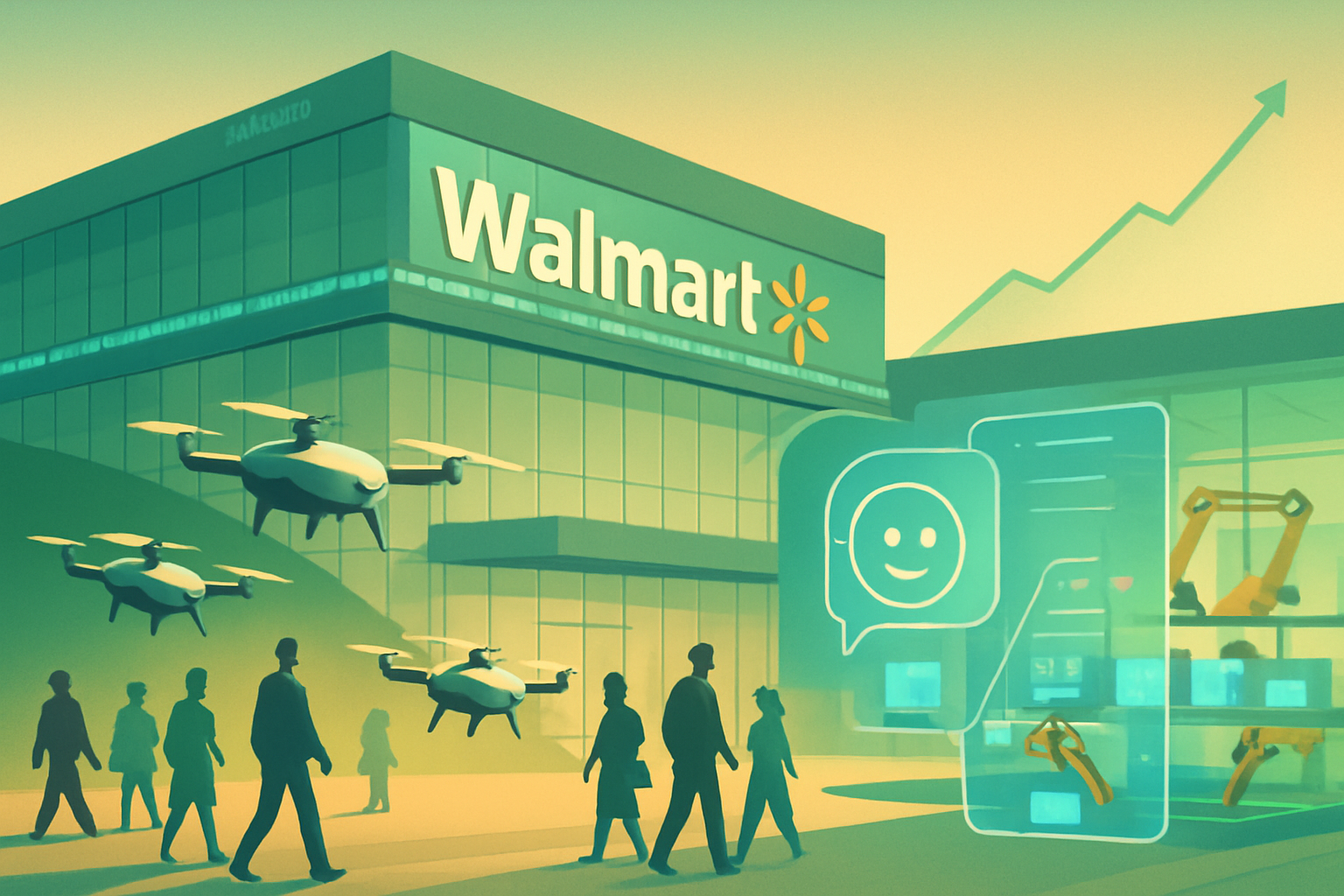
    • Sparky AI: A proprietary conversational AI assistant integrated with Google Gemini, allowing customers to shop through natural dialogue.
    • Shoppable TV: Following the 2024 Vizio acquisition, Walmart has turned millions of smart TVs into direct-to-consumer storefronts via the Vizio SmartCast OS.
    • Automation: As of 2026, nearly 65% of Walmart stores are serviced by automated fulfillment centers, utilizing robotics to triple the speed of order processing.
    • Drone Delivery: Walmart now operates the largest retail drone delivery network in the U.S., capable of reaching over 10 million households with 30-minute delivery times.

    Competitive Landscape

    While Amazon.com, Inc. (Nasdaq: AMZN) remains the primary rival in the digital space, Walmart holds a significant advantage in "phygital" retail. Walmart's physical proximity to 90% of the U.S. population allows it to use stores as fulfillment hubs, a cost advantage Amazon struggles to replicate in the grocery sector.

    In the warehouse club space, Costco Wholesale Corp. (Nasdaq: COST) remains a formidable competitor, though Sam’s Club has gained ground by leveraging Walmart’s superior technology stack for "Scan & Go" checkout and digital-native member experiences.

    Industry and Market Trends

    Two macro trends are currently favoring Walmart:

    1. Value-Seeking High Earners: High interest rates and persistent inflation in services have driven households earning over $100,000 to shop at Walmart for groceries, expanding the company’s total addressable market (TAM).
    2. Retail Media Expansion: As third-party cookies disappear, Walmart’s first-party data (knowing exactly what people buy) has become "gold" for advertisers, fueling the rapid growth of Walmart Connect.

    Risks and Challenges

    Despite its dominance, Walmart faces headwinds:

    • Labor Relations: As the nation’s largest private employer, Walmart is highly sensitive to wage inflation and unionization efforts.
    • International Volatility: While Flipkart is thriving, other international markets remain lower-margin and subject to currency fluctuations.
    • Regulatory Scrutiny: The Federal Trade Commission (FTC) continues to monitor Walmart’s data privacy practices and its influence over the grocery supply chain.

    Opportunities and Catalysts

    • Agentic Commerce: If Walmart’s AI can successfully automate "the weekly grocery run" for millions, it will lock in a level of recurring revenue previously unseen in retail.
    • IPO Potential: Investors are closely watching for potential spin-offs of Flipkart or PhonePe in India, which could unlock billions in shareholder value.
    • Healthcare Expansion: While Walmart scaled back physical clinics in 2024, its pharmacy and digital health play remains a massive untapped opportunity.

    Investor Sentiment and Analyst Coverage

    Wall Street is overwhelmingly bullish. As of March 2026, roughly 85% of analysts covering WMT have a "Buy" or "Strong Buy" rating. Hedge funds have increased their positions throughout 2025, viewing Walmart as both a defensive play in volatile markets and a growth play on AI and advertising. The consensus price target currently sits near $140, implying further upside.

    Regulatory, Policy, and Geopolitical Factors

    Walmart is a key player in the "Inflation Reduction" conversation. Its ability to keep food prices low is a matter of national economic policy. Geopolitically, the company has worked aggressively to diversify its supply chain away from China, shifting significant sourcing to India and Southeast Asia to mitigate potential tariff risks or trade disruptions.

    Conclusion

    Walmart Inc. has successfully navigated the most difficult transition in retail history: moving from the physical past to the digital future without losing its core identity as the low-price leader. By leveraging its physical footprint as a technical asset and high-margin services as a profit engine, Walmart has evolved into a diversified tech-retail giant. For investors, Walmart offers a unique combination of defensive stability and tech-driven growth potential. As John Furner begins his tenure, the market will be watching to see if his "Agentic Era" can keep the momentum going in an increasingly automated world.


    This content is intended for informational purposes only and is not financial advice.

  • The AI Metamorphosis: A Deep Dive into Paychex, Inc. (PAYX) in 2026

    The AI Metamorphosis: A Deep Dive into Paychex, Inc. (PAYX) in 2026

    As of today, March 25, 2026, the landscape of Human Capital Management (HCM) has undergone a seismic shift, driven by rapid artificial intelligence integration and high-stakes consolidation. At the center of this transformation stands Paychex, Inc. (NasdaqGS: PAYX), a stalwart of the American payroll industry that has recently reinvented itself.

    Long perceived as a "steady-eddie" dividend play catering primarily to small businesses, Paychex has spent the last 24 months aggressively pivoting toward the mid-market and enterprise segments. The catalyst for this shift was the landmark 2025 acquisition of Paycor, which effectively fused Paychex’s massive scale and service infrastructure with a modern, cloud-native technology stack. Today, Paychex is no longer just a payroll processor; it is a technology-first HCM powerhouse grappling with a complex macroeconomic environment where falling interest rates are challenging its historical "float" revenue model even as AI offers unprecedented margin expansion opportunities.

    Historical Background

    The Paychex story is a classic American entrepreneurial saga. Founded in 1971 by B. Thomas Golisano with just $3,000 and a vision to bring professional payroll services to the neglected small-business sector, the company began in Rochester, New York. Golisano’s insight was simple but profound: small businesses faced the same regulatory complexities as large corporations but lacked the resources to manage them.

    Paychex went public in 1983, and for the next four decades, it became a compounding machine. The company’s growth was defined by steady geographical expansion and a series of strategic pivots. In the 1990s, it transitioned from paper checks to digital processing; in the 2010s, it embraced the Professional Employer Organization (PEO) model, allowing small businesses to pool their employees to gain the bargaining power of a large corporation for health insurance and benefits. The 2018 acquisition of Oasis Outsourcing solidified its position as a top-tier PEO provider, setting the stage for the current era of technology-led growth under the leadership of John Gibson.

    Business Model

    Paychex operates through a high-margin, recurring revenue model split into two primary segments:

    1. Management Solutions (approx. 75% of revenue): This core segment encompasses payroll processing, tax filing, and HR technology. Following the integration of the Paycor platform, this segment now serves a broader range of clients, from "mom-and-pop" shops to mid-market firms with thousands of employees. Revenue is generated through per-employee-per-month (PEPM) fees and administrative charges.
    2. PEO and Insurance Solutions (approx. 25% of revenue): In this segment, Paychex acts as a co-employer for its clients’ workers. This allows Paychex to provide comprehensive benefits packages, workers' compensation insurance, and 401(k) administration.

    A critical, though often overlooked, component of the Paychex business model is Interest on Funds Held for Clients (The Float). Paychex collects tax and payroll funds from clients several days before they are due to employees or the government. During this window, Paychex invests these billions of dollars in short-term, investment-grade securities, keeping the interest for itself.

    Stock Performance Overview

    Paychex has historically been a darling of income-oriented investors, though the last year has been a period of consolidation and adjustment.

    • 1-Year Performance (-20%): Over the past 12 months, the stock has faced headwinds. The heavy capital expenditure required for the Paycor integration and the market's anticipation of Federal Reserve rate cuts—which directly impact "float" revenue—led to a rotation out of the stock.
    • 5-Year Performance (+41%): Despite the recent dip, the five-year trajectory remains positive, reflecting the company’s resilience through the post-pandemic labor shortage and its successful digital transformation.
    • 10-Year Performance (+220%): On a decade-long horizon, Paychex has been an exceptional performer. Including dividends, the total return has outperformed many traditional "Big Tech" peers, demonstrating the power of a dominant market position and disciplined capital management.

    Financial Performance

    The fiscal year 2025 (ending May 31, 2025) was a year of transition. Paychex reported total revenue of approximately $5.6 billion, a 6% increase year-over-year. While GAAP diluted EPS saw a slight 2% decline to $4.58 due to one-time acquisition costs, Adjusted Diluted EPS grew 6% to $4.98.

    Entering the second half of fiscal 2026, the outlook is significantly more aggressive. Management has guided for total revenue growth of 16.5% to 18.5%. This spike is attributed to the full-year contribution of the Paycor acquisition and the cross-selling of Paychex’s insurance products to Paycor’s existing client base. Operating margins remain robust at over 40%, although they are currently under slight pressure as the company scales its AI infrastructure.

    Leadership and Management

    John B. Gibson, Jr. has served as President and CEO since October 2022. Gibson’s tenure has been marked by a move away from the traditional "service-first" model toward an "innovation-first" strategy. He is supported by Bob Schrader, a CFO known for conservative financial forecasting and a focus on maintaining Paychex’s "Dividend Aristocrat" trajectory.

    The leadership team's governance reputation is high, characterized by transparency and a "slow and steady" approach to M&A. However, the Paycor deal was a departure from this norm, signaling a more aggressive stance in the fight for the mid-market. The board remains heavily weighted toward financial and operational expertise, with a growing focus on cybersecurity and data privacy experts.

    Products, Services, and Innovations

    The crown jewel of Paychex’s current offering is Paychex Flex, an all-in-one HCM platform. In late 2025, the company introduced "Agentic AI" modules within Flex. These AI agents can now handle complex payroll inquiries, adjust tax withholdings, and manage shift scheduling via natural language interfaces with minimal human intervention.

    Key innovations include:

    • Predictive Analytics: Using data from over 700,000 clients to help businesses predict employee turnover before it happens.
    • Compliance-as-a-Service: A generative AI tool that monitors local, state, and federal labor law changes in real-time, automatically updating client handbooks and payroll rules.
    • Paycor Synergy: The integration of Paycor’s API-first architecture has allowed Paychex to offer much deeper integrations with third-party software like Slack, Microsoft Teams, and specialized ERP systems.

    Competitive Landscape

    The HCM market is a battle of the giants.

    • ADP (Nasdaq: ADP): The primary competitor. While ADP has a massive global footprint and dominates the Fortune 500 space, Paychex has traditionally won on personalized service for smaller firms. The gap between the two is narrowing as Paychex moves up-market.
    • Paycom (NYSE: PAYC): A formidable tech-forward rival. Paycom’s "Beti" automated payroll tool set the standard for employee-driven payroll, a standard Paychex is now matching with its new AI suite.
    • Paylocity (Nasdaq: PCTY): Paylocity remains a favorite for younger, high-growth tech companies. Paychex’s acquisition of Paycor was a direct defensive move to prevent Paylocity from capturing more of the mid-market share.

    Industry and Market Trends

    Three macro trends are currently shaping the industry:

    1. The AI Efficiency Frontier: As payroll becomes more automated, the "service" element is shifting from data entry to strategic consulting.
    2. Labor Complexity: With remote and hybrid work becoming permanent, companies are dealing with "nexus" issues—employees working in multiple states with different tax and labor laws. This complexity makes third-party providers like Paychex more essential.
    3. Monetary Policy Pivot: After years of high rates, the Federal Reserve’s move toward a lower-rate environment is a double-edged sword: it encourages business expansion (more hiring) but shrinks the interest earned on the float.

    Risks and Challenges

    • Float Revenue Sensitivity: A 100-basis-point drop in interest rates can impact Paychex’s operating income by roughly 4%. If rates fall faster than expected in 2026, it could lead to earnings misses.
    • Integration Risk: Merging the Paycor and Paychex technology stacks is a multi-year project. Any significant technical glitches could lead to client churn in the highly competitive mid-market.
    • Cybersecurity: As a repository for millions of Social Security numbers and bank accounts, Paychex is a prime target for state-sponsored and criminal cyberattacks.

    Opportunities and Catalysts

    • Margin Expansion through AI: By automating the 24/7 service desk with AI agents, Paychex can significantly reduce its head-count-to-client ratio, driving higher long-term margins.
    • PEO Expansion: The PEO market is still under-penetrated. As healthcare costs continue to rise, more small businesses are expected to join Paychex’s PEO to leverage its scale.
    • International Potential: While primarily a domestic player, the modern Paycor stack provides a scalable foundation for potential European or Latin American expansion.

    Investor Sentiment and Analyst Coverage

    Wall Street currently views Paychex as a "Show Me" story. Analysts are generally "Hold" or "Sector Perform" rated, waiting to see if the Paycor acquisition yields the promised synergies. Institutional ownership remains high, with giants like Vanguard and BlackRock holding significant stakes, attracted by the company’s consistent dividend growth and low beta. Retail sentiment is mixed, with some investors concerned about the short-term stock price decline and others viewing it as a generational buying opportunity for a high-quality income asset.

    Regulatory, Policy, and Geopolitical Factors

    The regulatory environment remains a tailwind for Paychex. The expiration of the Employee Retention Tax Credit (ERTC) removed a temporary revenue boost but also simplified the compliance landscape. New Department of Labor rules regarding overtime and independent contractor classification continue to drive businesses toward the safety of professional HCM providers. Geopolitically, Paychex is largely insulated as its operations are almost entirely based in the United States, making it a "safe haven" during periods of global trade tension.

    Conclusion

    Paychex is a company in the midst of a sophisticated metamorphosis. It is successfully navigating the transition from a traditional service-led business to a modern AI-powered technology platform. While investors must weigh the short-term impact of falling interest rates on float revenue and the execution risks of the Paycor integration, the underlying fundamentals—high recurring revenue, a dominant market position, and a culture of fiscal discipline—remain intact. For the patient investor, Paychex represents a bet on the enduring complexity of the American labor market and the company's ability to automate the solution to that complexity.


    This content is intended for informational purposes only and is not financial advice.
  • The Precision Machine: A Deep Dive into Cintas Corporation (CTAS) and the 2026 Service Economy

    The Precision Machine: A Deep Dive into Cintas Corporation (CTAS) and the 2026 Service Economy

    As of March 25, 2026, Cintas Corporation (NASDAQ: CTAS) stands as a titan of the North American business services sector, a "quality compounder" that has consistently defied the traditional gravity of the industrial economy. Long perceived as a humble "laundry and uniform" company, Cintas has successfully pivoted into a high-tech logistics and safety powerhouse.

    The company is currently at a historic crossroads. Earlier this month, Cintas announced a definitive agreement to acquire its primary rival, UniFirst (NYSE: UNF), in a blockbuster $5.5 billion deal. If approved by regulators, the merger would solidify Cintas’s dominance, giving it control over nearly 50% of the North American uniform rental market. With its shares trading at a premium valuation and its digital transformation entering a new phase of AI-driven optimization, Cintas is the focal point for institutional investors looking for stability and scale in an increasingly fragmented service economy.

    Historical Background

    The story of Cintas is a classic American "rags-to-riches" narrative, quite literally. Founded in 1929 by Richard "Doc" Farmer and his wife Amelia, the company began as Acme Industrial Laundry during the height of the Great Depression. The business model was born out of necessity: the couple collected old, grease-soaked rags from Cincinnati factories, laundered them, and resold them back to the same industries.

    In 1959, their grandson, Richard T. "Dick" Farmer, joined the family business after graduating from Miami University. He recognized that while rags were a steady business, the future lay in outfitting the workers themselves. He transformed the company into a national uniform rental provider, rebranding as Cintas in the early 1970s. The company went public in 1983, a pivotal moment that provided the capital necessary for an aggressive multi-decade acquisition strategy. Today, under the leadership of CEO Todd Schneider and Executive Chairman Scott Farmer, Cintas maintains the "Farmer Family" culture of "positive discontent"—a philosophy that encourages every "employee-partner" to relentlessly seek incremental improvements in every route, every wash cycle, and every customer interaction.

    Business Model

    Cintas operates a highly resilient, subscription-style business model centered on the "route" system. Its revenue is diversified across three primary pillars:

    1. Uniform Rental and Facility Services (~78% of Revenue): This core segment provides managed uniform programs, floor mats, and restroom supplies (towels, soaps, and sanitizers). It is built on high-retention contracts that create predictable, recurring cash flows.
    2. First Aid and Safety Services (~12% of Revenue): The fastest-growing division, providing van-based delivery of PPE, first aid kits, and emergency equipment like AEDs. Growth here is driven by the increasing complexity of workplace safety regulations.
    3. Fire Protection Services: A high-margin "cross-sell" opportunity where Cintas technicians inspect and maintain fire extinguishers, sprinkler systems, and emergency lighting.

    The genius of the Cintas model lies in "route density." By serving multiple needs (uniforms, mats, first aid, and fire) for a single customer through a single stop, Cintas maximizes the profitability of every gallon of fuel and every hour of labor.

    Stock Performance Overview

    Over the past decade, CTAS has been one of the standout performers in the S&P 500. Following a strategic 4-for-1 stock split in late 2024, the stock has continued to attract retail and institutional interest.

    • 1-Year Performance: As of March 2026, the stock has seen a moderate pullback of approximately 7% over the last 12 months. This "breather" follows a parabolic run in 2024–2025, as investors priced in the company's record-breaking margins and AI initiatives.
    • 5-Year Performance: Long-term shareholders have enjoyed a total return of approximately 123%, significantly outperforming the broader industrial sector.
    • 10-Year Performance: Over the last decade, CTAS has delivered a staggering 780% total return, driven by consistent earnings beats and a disciplined program of dividend increases and share buybacks.

    Financial Performance

    Cintas’s financial profile is characterized by "best-in-class" margins. In its most recent Q2 FY2026 report (ended November 30, 2025), the company reported:

    • Revenue: $2.80 billion, representing a 9.3% year-over-year increase.
    • Operating Margin: A record-high 23.4%, a testament to the company's successful SAP S/4HANA migration and AI-driven route optimization.
    • Earnings Per Share (EPS): FY2026 guidance was recently raised to $4.81 – $4.88.
    • Gross Margin: Maintaining a robust 50.4%, Cintas has been able to pass through inflationary costs in labor and materials to its customers, demonstrating significant pricing power.

    The company’s balance sheet remains strong, though the proposed $5.5 billion UniFirst acquisition will temporarily increase leverage. Analysts expect Cintas to prioritize debt reduction post-merger, given its history of rapid de-leveraging.

    Leadership and Management

    Todd M. Schneider, who took the helm as CEO in June 2021, has been the primary architect of Cintas's "Digital Overhaul." Unlike his predecessors who focused largely on physical expansion, Schneider has prioritized "software-defined logistics."

    The leadership team is supported by Executive Chairman Scott Farmer, ensuring that the long-term vision of the Farmer family remains intact. The governance reputation of Cintas is high; the company is often cited for its "Employee-Partner" culture, which has resulted in lower-than-average turnover in an industry plagued by labor shortages. In 2026, Schneider’s strategic acumen was further validated by his appointment to the board of PPG Industries, signaling his growing influence in the broader industrial landscape.

    Products, Services, and Innovations

    Cintas is no longer just a laundry company; it is an AI-powered logistics firm. Key innovations driving the business in 2026 include:

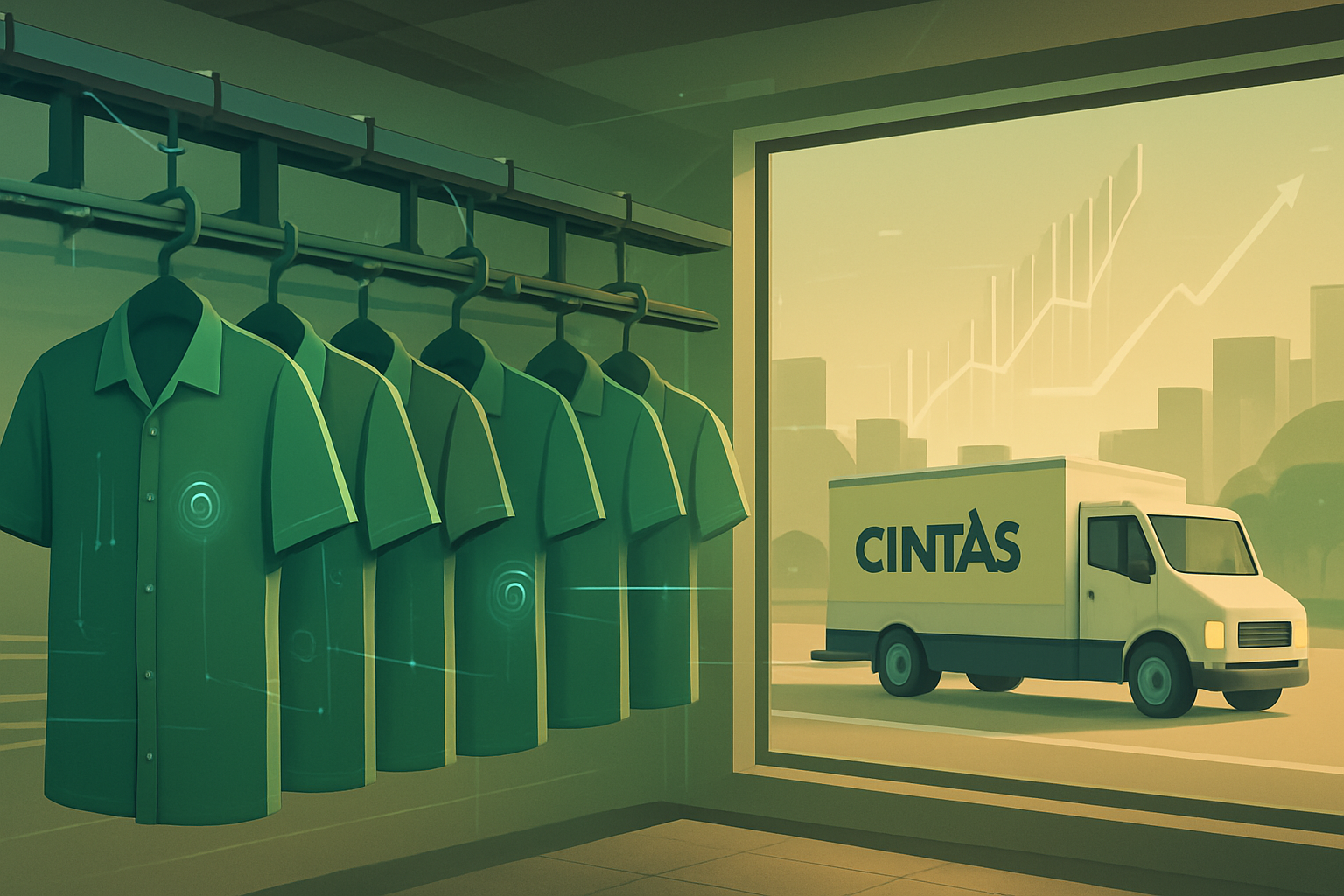
    • TruCount RFID: Every rental garment is now embedded with a high-durability RFID chip. This system provides 99.9% delivery accuracy, virtually eliminating "lost garment" disputes and allowing customers to track their inventory in real-time via the MyCintas portal.
    • Vertex AI Integration: Partnering with Google Cloud, Cintas has deployed generative AI to its 40,000+ partners. Its "Internal Knowledge Center" allows field reps to access complex safety and compliance data instantly, increasing on-site efficiency.
    • SmartData Platform: This proprietary analytics engine predicts customer needs. Sales reps use "Next Best Product" algorithms to suggest safety equipment or facility upgrades based on specific industry trends and OSHA data, significantly boosting cross-selling revenue.

    Competitive Landscape

    The competitive landscape of 2026 is dominated by the looming Cintas-UniFirst merger.

    • UniFirst (UNF): Historically the "primary challenger," UniFirst’s acquisition by Cintas would remove its most significant competitor in terms of national scale.
    • Vestis (NYSE: VSTS): The former uniform division of Aramark, Vestis remains the only other major national player. However, it continues to struggle with margins in the 10-12% range, roughly half of what Cintas achieves.
    • Local Providers: While thousands of "mom-and-pop" laundries still exist, they are increasingly unable to compete with Cintas’s technological suite (RFID tracking) and the breadth of its safety and fire services.

    Industry and Market Trends

    Three macro trends are currently favoring Cintas:

    1. Labor Outsourcing: As companies struggle to hire and retain in-house cleaning and maintenance staff, they are increasingly outsourcing "Facility Services" (mats, restrooms, mops) to Cintas.
    2. Safety Compliance: Stricter OSHA (Occupational Safety and Health Administration) enforcement in the mid-2020s has turned safety from a "nice-to-have" into a mandatory, outsourced service for many mid-sized manufacturers.
    3. Hygiene Standards: Higher post-pandemic expectations for facility cleanliness have become permanent features of the commercial landscape, benefiting Cintas’s restroom and chemical service lines.

    Risks and Challenges

    Despite its dominance, Cintas faces several critical risks:

    • Antitrust Scrutiny: The proposed $5.5 billion acquisition of UniFirst is under intense review by the FTC and DOJ. Regulators are concerned that a "Big Two" (Cintas and Vestis) would limit competition, especially in specific regional markets.
    • Valuation Premium: Trading at a P/E ratio of approximately 40x, Cintas is priced for perfection. Any slowdown in organic growth or failure to achieve the $375 million in projected synergies from the UniFirst deal could lead to a significant stock correction.
    • Labor Costs: As a service business with 11,000+ routes, Cintas is highly sensitive to wage inflation and the cost of healthcare for its large workforce.

    Opportunities and Catalysts

    • Synergy Capture: If the UniFirst deal closes, Cintas expects to "tech-enable" UniFirst’s legacy operations, moving them onto the SAP S/4HANA platform and realizing massive logistical efficiencies.
    • Healthcare Expansion: Cintas has successfully moved into the healthcare vertical (scrubs, lab coats, and specialized laundry), which currently accounts for ~8% of revenue but has double-digit growth potential.
    • AI-Powered Sales: The continued rollout of the "SmartData" engine is expected to drive higher "revenue per stop," which is the most profitable form of growth for the company.

    Investor Sentiment and Analyst Coverage

    Wall Street sentiment remains a "Moderate Buy." While analysts admire the company's operational excellence, there is ongoing debate about its high valuation. Large institutional holders like Vanguard and BlackRock remain committed, viewing CTAS as a "core" industrial holding that provides stability during economic volatility. Recent retail sentiment on platforms like X and Reddit has cooled slightly due to the stock's 1-year stagnation, but dividend-growth investors continue to praise Cintas's status as a "Dividend Aristocrat."

    Regulatory, Policy, and Geopolitical Factors

    Cintas is largely insulated from international geopolitical shocks as its operations are concentrated in North America. However, domestic policy is a major factor:

    • Environmental Policy: Industrial laundries are water and energy-intensive. Cintas’s ESG initiatives—including a 9% reduction in water consumption and the rollout of electric step-vans for urban routes—are critical for maintaining its standing with ESG-conscious institutional funds.
    • Wage Laws: Changes in federal or state minimum wages directly impact Cintas’s cost structure, although the company has historically proven capable of passing these costs to customers through contract escalators.

    Conclusion

    In March 2026, Cintas Corporation remains the gold standard for operational efficiency in the industrial service sector. The company has transformed itself from a traditional laundry business into a technology-driven logistics juggernaut. While the stock's high valuation and the regulatory hurdles of the UniFirst acquisition present near-term risks, the underlying "compounding machine" remains intact. For investors, Cintas is a play on the continued outsourcing of business services and the power of AI to optimize the "last mile" of industrial delivery. Watch the FTC’s decision on the UniFirst merger closely—it will define the next decade of Cintas’s growth trajectory.


    This content is intended for informational purposes only and is not financial advice.

  • The Pet Economy’s Digital Standard-Bearer: A Deep Dive into Chewy, Inc. (CHWY)

    The Pet Economy’s Digital Standard-Bearer: A Deep Dive into Chewy, Inc. (CHWY)

    Date: March 25, 2026

    Introduction

    In the volatile landscape of e-commerce, few companies have managed to cultivate the level of brand loyalty and operational precision seen at Chewy, Inc. (NYSE: CHWY). Known for its white-glove customer service—ranging from handwritten holiday cards to custom pet portraits—Chewy has transitioned from a niche pet food provider into a comprehensive pet-parenting ecosystem. As of early 2026, the company stands at a critical juncture: it is no longer just a digital storefront for kibble, but a burgeoning healthcare provider and an international logistics powerhouse. With its recent push into physical veterinary clinics and a successful initial rollout in Canada, Chewy is testing whether its high-touch digital model can translate into the physical and global arenas.

    Historical Background

    Founded in 2011 by Ryan Cohen and Michael Day, Chewy was built on a simple but radical premise: providing the personalized service of a local "mom-and-pop" pet shop at the scale of the internet. By 2017, its rapid growth caught the eye of PetSmart, which acquired the company for $3.35 billion—the largest e-commerce acquisition at the time.

    The partnership was short-lived in its original form. Under the leadership of Sumit Singh, who took the helm in 2018, Chewy professionalized its operations and prepared for its 2019 IPO. The company officially spun off from PetSmart in 2020, just as the COVID-19 pandemic catalyzed a massive surge in pet adoptions and a shift toward online shopping. This "pet boom" accelerated Chewy’s growth by years, though it also set a high bar for future performance that the company has spent the last three years navigating.

    Business Model

    Chewy’s business model is anchored by its "Autoship" program, which accounts for approximately 78% to 80% of its net sales. This subscription-like service allows customers to schedule regular deliveries of food, treats, and medications, creating a predictable, high-visibility revenue stream that is the envy of traditional retailers.

    The company operates through three primary segments:

    1. Consumables: The core business, consisting of pet food and treats.
    2. Hard Goods: Discretionary items like crates, toys, and beds.
    3. Chewy Health: A high-margin vertical including a full-scale online pharmacy, telehealth services ("Connect with a Vet"), and pet insurance through its CarePlus program.

    By integrating these segments, Chewy creates a "moat" around its customers, making it a one-stop shop for every stage of a pet’s life.

    Stock Performance Overview

    The journey for CHWY shareholders has been a rollercoaster. After reaching an all-time high of approximately $118 in early 2021 during the peak of the "stay-at-home" trade, the stock faced a multi-year Correction. By 2023 and early 2024, shares were trading in the $15–$25 range as growth normalized and interest rates pressured growth-stock valuations.

    However, 2025 marked a period of stabilization and recovery. The stock benefited from a "flight to quality" as Chewy proved its ability to generate consistent GAAP profitability and positive free cash flow. In mid-2024, the stock experienced a bout of extreme volatility following a disclosed stake by retail icon Keith Gill (known as "Roaring Kitty"), but as of March 2026, the stock has decoupled from "meme" sentiment, trading on fundamental metrics like EBITDA margin expansion and the scaling of its vet clinic network.

    Financial Performance

    Based on the most recent full-year results for fiscal 2025, Chewy has demonstrated a clear shift from "growth at all costs" to "profitable scale."

    • Revenue: For the fiscal year ending in early 2026, revenue surpassed $12.5 billion, representing steady single-digit growth.
    • Margins: Adjusted EBITDA margins have expanded to nearly 5%, driven largely by the transition to fully automated fulfillment centers.
    • Profitability: The company has maintained GAAP net income profitability for over two years, a significant milestone that has invited institutional investment back into the fold.
    • Cash Flow: Chewy remains capital-efficient, using its growing free cash flow to fund its expansion into Canada and the build-out of its physical vet practices without taking on significant new debt.

    Leadership and Management

    CEO Sumit Singh continues to receive high marks for his operational discipline. A former Amazon executive, Singh has focused on "efficiency through technology." Under his leadership, Chewy has opened several automated fulfillment centers that are 50% more productive than their legacy counterparts.

    The management team has also been praised for its conservative approach to international expansion. Rather than a global blitz, the 2023–2025 rollout into Canada was surgical, focusing on the Greater Toronto Area to ensure logistics and customer service standards remained intact. This "measured growth" strategy has become a hallmark of Singh’s tenure.

    Products, Services, and Innovations

    Innovation at Chewy is currently focused on the "humanization of pets" and the premiumization of pet care. Key developments include:

    • Chewy Vet Care: The launch of physical veterinary clinics in 2024 has grown into a significant network. These clinics provide a physical touchpoint for the brand and feed the pharmacy business.
    • Private Brands: Labels like American Journey and Frisco continue to expand, offering Chewy higher margins than third-party brands.
    • Chewy Ads: The company has matured its sponsored ads business, allowing vendors to bid for placement on the site, which represents a high-margin revenue stream with little incremental cost.

    Competitive Landscape

    Chewy operates in an intensely competitive environment:

    • Amazon (AMZN): The primary rival for convenience and price. Amazon’s scale is unmatched, but Chewy competes by offering specialized pet knowledge and a pharmacy experience that Amazon has yet to replicate with the same level of depth.
    • Walmart (WMT): A threat in the value-conscious segment. Walmart has integrated pet services into its stores, challenging Chewy for the "omnichannel" consumer.
    • Petco (WOOF): While Petco has struggled with its balance sheet, its physical presence for grooming and immediate-need services remains a competitive advantage in the brick-and-mortar space.

    Industry and Market Trends

    The pet industry remains one of the most resilient sectors of the economy. The "humanization" trend—where pets are treated as family members—ensures that spending on pet health and nutrition is largely inelastic. Even during inflationary periods, pet parents are more likely to cut their own discretionary spending than to downgrade their pet's food or skip a vet visit. Furthermore, the rise of pet insurance and telehealth is extending the average lifespan of pets, thereby lengthening the "customer lifetime value" for companies like Chewy.

    Risks and Challenges

    Despite its strengths, Chewy faces several headwinds:

    1. Macroeconomic Sensitivity: While food is non-discretionary, the "hard goods" segment (toys, beds) remains sensitive to consumer spending power.
    2. Slowing Household Growth: The post-pandemic "trough" in pet adoptions has made it more expensive to acquire new active customers (CAC), forcing the company to rely more on increasing the "share of wallet" from existing customers.
    3. Execution Risk: Moving into physical clinics involves real estate and staffing challenges that are fundamentally different from running an e-commerce platform.

    Opportunities and Catalysts

    • International Scaling: Success in Canada provides a blueprint for potential moves into Western Europe or other high-pet-spend markets.
    • Ad Revenue Expansion: As Chewy’s data on pet health and behavior becomes more sophisticated, its advertising platform becomes more valuable to CPG (Consumer Packaged Goods) companies.
    • B2B Services: Providing software and pharmacy fulfillment services to independent veterinarians could open a new revenue vertical.

    Investor Sentiment and Analyst Coverage

    Wall Street sentiment toward CHWY is currently "Cautiously Optimistic." Most analysts have moved away from the "growth stock" valuation models of 2021, now valuing the company as a "specialty retailer with tech-like margins." Institutional ownership remains high at over 90%, suggesting that large funds view Chewy as a long-term winner in the pet space. The "Roaring Kitty" episode of 2024 served as a reminder of the stock's popularity with retail traders, but institutional stability has since returned.

    Regulatory, Policy, and Geopolitical Factors

    As Chewy expands its pharmacy and clinical footprint, it faces a complex web of state-level regulations regarding veterinary medicine and tele-triage. Additionally, the FDA’s oversight of pet food safety remains a constant factor. Geopolitically, Chewy’s supply chain is less exposed than general retailers to China-U.S. tensions, as a large portion of its pet food is manufactured domestically, though "hard goods" still rely heavily on overseas manufacturing.

    Conclusion

    As of March 2026, Chewy, Inc. has successfully navigated the post-pandemic hangover to emerge as a leaner, more diversified entity. By shifting focus toward the high-margin healthcare sector and automating its logistics, the company has proven that its customer-first philosophy is compatible with a focus on the bottom line. For investors, the "low-hanging fruit" of the e-commerce shift has been picked; the next chapter of growth will depend on the successful execution of the Chewy Vet Care clinics and the ability to fend off encroaching competition from retail giants. Chewy is no longer a "growth story" in the speculative sense—it is a foundational player in the $150 billion pet economy.


    This content is intended for informational purposes only and is not financial advice.

  • The AI Infrastructure Paradox: A Deep Dive into Super Micro Computer (SMCI) in 2026

    The AI Infrastructure Paradox: A Deep Dive into Super Micro Computer (SMCI) in 2026

    As of today, March 25, 2026, the landscape of the artificial intelligence infrastructure market has reached a critical juncture. At the center of this whirlwind is Super Micro Computer, Inc. (NASDAQ: SMCI), a company that has become a lightning rod for both extreme investor optimism and deep-seated regulatory skepticism. Once the darling of the 2024 AI surge, Supermicro has spent the last two years navigating a gauntlet of accounting scandals, auditor shifts, and fierce margin wars. This article examines the current state of SMCI, evaluating whether its technical lead in liquid cooling can outweigh its complex governance history.

    Historical Background

    Founded in 1993 by Charles Liang, his wife Sara Liu, and Wally Liaw, Supermicro began as a modest operation in San Jose, California. From its inception, the company eschewed the traditional "one-size-fits-all" server model in favor of a "Building Block Solutions" approach. This modular strategy allowed the company to assemble customized servers from a vast library of motherboards, chassis, and power supplies, drastically reducing time-to-market for new technologies.

    For two decades, Supermicro operated as a high-growth but relatively niche player in the data center space. Its pivot toward "Green Computing" in the mid-2000s—focusing on power efficiency and thermal management—proved prescient. When the generative AI boom ignited in late 2022, Supermicro’s ability to rapidly integrate high-power chips from NVIDIA (NASDAQ: NVDA) into specialized, high-density racks propelled it from a secondary hardware vendor to a primary architect of the AI era.

    Business Model

    Supermicro’s business model is built on three pillars: customization, speed, and rack-scale integration. Unlike traditional competitors who sell individual servers, Supermicro increasingly sells entire "plug-and-play" data center racks.

    1. AI and Graphics Solutions: This is the company's primary growth engine, comprising servers optimized for deep learning and large language model (LLM) training.
    2. Storage and Enterprise: Specialized storage systems for high-frequency trading and cloud service providers.
    3. Direct Liquid Cooling (DLC): As modern GPUs consume upwards of 1,000 watts each, traditional air cooling has become obsolete. Supermicro’s in-house DLC technology allows it to deliver pre-configured, liquid-cooled racks that are more energy-efficient and quieter than air-cooled alternatives.

    Its customer base is a mix of "Tier-2" cloud providers (such as CoreWeave and Lambda Labs), enterprise giants, and emerging "Sovereign AI" projects funded by national governments.

    Stock Performance Overview

    The stock performance of SMCI over the last several years has been a study in market volatility.

    • 10-Year Horizon: Investors who held SMCI for a decade have seen life-changing returns, as the stock rose from obscure mid-cap levels to a peak market capitalization exceeding $60 billion in early 2024.
    • 5-Year Horizon: Driven by the AI gold rush, the stock experienced a parabolic move starting in 2023, peaking at a split-adjusted high of approximately $118 in March 2024.
    • 1-Year Horizon (2025-2026): The last 12 months have been grueling. Following a governance crisis in late 2024 and early 2025, the stock fell sharply. As of March 25, 2026, shares are trading in the $20–$22 range, reflecting a significant "governance discount" despite record-breaking revenue figures.

    Financial Performance

    Supermicro’s recent financial results present a striking paradox. For the most recent quarter ending December 2025, the company reported record revenue of $12.68 billion, a testament to the insatiable demand for NVIDIA’s Blackwell architecture.

    However, the "bottom line" tells a different story. Gross margins, which historically sat between 16% and 18%, have compressed to a razor-thin 6.4% in early 2026. Management has attributed this to "survival pricing"—a strategic decision to aggressively undercut competitors like Dell Technologies (NYSE: DELL) to retain market share during its 2024-2025 listing crisis. While the company remains profitable, its cash flow has been strained by the high cost of maintaining a massive inventory of expensive GPUs.

    Leadership and Management

    Founder Charles Liang remains the central figure at Supermicro. His technical vision is widely credited for the company's current market position. However, his leadership style has come under intense scrutiny. Following the resignation of auditor Ernst & Young (EY) in late 2024, the board underwent a significant overhaul to appease regulators.

    In March 2026, co-founder Wally Liaw resigned from the board following a federal indictment related to alleged export control violations. To stabilize the ship, the company has bolstered its compliance team, appointing DeAnna Luna as acting Chief Compliance Officer. While these moves have helped the company stay listed on the Nasdaq, investor trust in the executive suite remains fragile.

    Products, Services, and Innovations

    The crown jewel of Supermicro’s current lineup is the GB200 NVL72 rack, a liquid-cooled system that clusters 72 GPUs into a single logical unit. The company’s R&D focus is currently shifting toward the "Rubin-era"—NVIDIA’s next-generation architecture expected to ramp up in late 2026.

    Supermicro’s competitive edge lies in its manufacturing scale for liquid cooling. By producing over 2,000 DLC-equipped racks per month, they have achieved economies of scale that allow them to offer liquid cooling at a price point that was previously unattainable for many enterprise customers.

    Competitive Landscape

    The "AI Server War" has consolidated into a three-way battle between Supermicro, Dell, and Hewlett Packard Enterprise (NYSE: HPE).

    • Dell: Utilizing its world-class supply chain and deep relationships with Fortune 500 companies, Dell has regained significant ground in 2025, often winning contracts based on its reputation for reliability and post-sale support.
    • HPE: With its acquisition of Juniper Networks, HPE is focusing on integrated networking-plus-compute solutions, positioning itself as a "one-stop shop" for sovereign AI clouds.
    • Supermicro’s Position: Supermicro remains the "speed leader," often being the first to ship systems with the newest chips, though it lacks the global service footprint of its larger rivals.

    Industry and Market Trends

    The primary macro driver is the transition from air-cooled to liquid-cooled data centers. As power consumption per rack climbs toward 100kW and beyond, liquid cooling is no longer an option—it is a requirement. Furthermore, the shift toward "Sovereign AI" has created a new market of government-backed data centers that prioritize domestic control over infrastructure, a trend that Supermicro has actively pursued in the Middle East and Southeast Asia.

    Risks and Challenges

    Supermicro faces three primary risks:

    1. Governance and Regulatory Risk: The company remains under the shadow of a Department of Justice probe into its accounting practices and export control compliance.
    2. Margin Compression: If "survival pricing" becomes the new normal, Supermicro may struggle to generate the capital necessary for future R&D cycles.
    3. Supply Chain Concentration: The company is heavily dependent on NVIDIA. Any shift in NVIDIA’s allocation strategy could have a devastating impact on Supermicro’s revenue.

    Opportunities and Catalysts

    The upcoming launch of the Vera Rubin platform in late 2026 represents the next major catalyst. These chips will require even more advanced thermal management, playing directly into Supermicro’s strengths in DLC. Additionally, any resolution of the federal investigations—even one involving a fine—could act as a "clearing event" that removes the uncertainty currently weighing on the stock price.

    Investor Sentiment and Analyst Coverage

    Sentiment on Wall Street is deeply divided. Institutional investors have largely stayed on the sidelines or reduced positions following the 2024 auditor resignation, waiting for "clean" audits from the new auditor, BDO USA. Conversely, retail sentiment remains high, driven by the company’s massive revenue growth and the belief that the "worst is over" regarding its regulatory troubles. Analysts currently maintain a consensus "Hold," with price targets widely dispersed between $15 and $45.

    Regulatory, Policy, and Geopolitical Factors

    Geopolitics are a double-edged sword for SMCI. While the company benefits from U.S. government subsidies for domestic tech manufacturing, it faces tightening export controls on high-end AI chips to China and other "restricted" regions. Recent allegations regarding the circumvention of these rules have led to increased oversight from the Department of Commerce, adding another layer of compliance cost to the company’s operations.

    Conclusion

    Super Micro Computer, Inc. remains one of the most complex stories in the technology sector. On one hand, it is a master of high-performance engineering, delivering the liquid-cooled infrastructure that makes modern AI possible. On the other, it is a company struggling to professionalize its governance after years of "founder-led" management and accounting controversies.

    For investors, SMCI represents a high-stakes bet on the future of thermal management in the data center. While its current valuation reflects deep skepticism, its role in the upcoming "Rubin-era" suggests that Supermicro is far from obsolete. The coming year will determine if the company can transform its record-breaking revenues into sustainable, high-margin profits—and finally leave its regulatory shadows behind.


    This content is intended for informational purposes only and is not financial advice.

  • The Internet of Value: A Comprehensive Research Feature on Circle Internet Group (NYSE: CRCL)

    The Internet of Value: A Comprehensive Research Feature on Circle Internet Group (NYSE: CRCL)


    Date: March 25, 2026

    Introduction

    As of March 2026, the financial world finds itself at a pivotal crossroads where traditional banking rails and decentralized ledgers are finally merging. At the center of this transformation is Circle Internet Group, Inc. (NYSE: CRCL). Known primarily as the issuer of the USD Coin (USDC), Circle has evolved from a niche crypto startup into a cornerstone of global digital liquidity. Following its blockbuster IPO in June 2025, the company has become a bellwether for the "Internet of Value," a paradigm where money moves as seamlessly as data. Today, Circle is more than just a stablecoin provider; it is an infrastructure giant positioned to redefine how businesses and governments settle transactions in a 24/7 global economy.

    Historical Background

    Founded in 2013 by Jeremy Allaire and Sean Neville, Circle’s journey began not with stablecoins, but as a consumer-facing Bitcoin wallet and peer-to-peer payments app. However, the volatility of Bitcoin made it an unreliable medium for everyday commerce. This realization led to the company's 2018 pivot: the launch of USDC in partnership with Coinbase.

    The goal was to create a "programmable dollar" that combined the stability of the U.S. greenback with the speed of blockchain technology. Over the next seven years, Circle navigated the "crypto winter" of 2022-2023 and the regional banking crisis of early 2023—events that tested its reserve management and regulatory resilience. By the time it reached the public markets in mid-2025, Circle had shed its image as a speculative crypto firm, re-emerging as a highly regulated, audited financial powerhouse with deep ties to the traditional banking system.

    Business Model

    Circle’s business model is a unique hybrid of an asset manager, a payments processor, and a software provider. Its revenue streams are currently divided into three primary categories:

    1. Reserve Interest Income: This remains the lion's share of Circle's revenue (approximately 95% as of FY2025). Circle holds billions in reserves—primarily short-term U.S. Treasuries and cash—to back its stablecoins. As it earns the "spread" on these high-quality assets, it effectively operates as a high-margin treasury manager.
    2. Transaction and Service Fees: Through "Circle Mint" and its enterprise treasury tools, the company charges fees for large-scale minting, redemption, and cross-border settlement services.
    3. Developer and Web3 Services: Circle provides a suite of APIs, programmable wallets, and the Cross-Chain Transfer Protocol (CCTP). These tools allow developers to integrate USDC directly into their applications, creating a "toll-booth" effect on the movement of digital value.

    Stock Performance Overview

    Since its IPO on June 5, 2025, at an initial price of $31.00, CRCL has been one of the most talked-about stocks on the NYSE.

    • Launch and Growth: The stock saw a steady climb throughout late 2025, fueled by the widespread adoption of the EU’s MiCA (Markets in Crypto-Assets) regulation, which favored regulated issuers like Circle.
    • 2026 Peak: In mid-March 2026, shares hit an all-time high of $132.84 following a landmark integration announcement with Intuit Inc. (NASDAQ: INTU).
    • Recent Volatility: Just yesterday, March 24, 2026, the stock suffered a sharp 20.11% correction, dropping toward $101.17 due to rumors of a restrictive new amendment to the "Clarity Act" in the U.S. Senate.
    • Current Standing: As of today, March 25, 2026, CRCL has shown remarkable resilience, rebounding to approximately $124.50 as institutional investors "bought the dip," viewing the regulatory news as a short-term hurdle rather than a fundamental threat.

    Financial Performance

    Circle’s FY2025 financial results signaled a company entering its "maturity phase." The firm reported $2.75 billion in total revenue, a 64% increase year-over-year. While it posted a modest net loss of $70 million for the full year 2025—largely due to aggressive R&D and IPO-related stock compensation—the fourth quarter (Q4 2025) marked a significant milestone: its first quarter of GAAP profitability with $133 million in net income.

    With a cash position of $1.2 billion (separate from its stablecoin reserves) and USDC circulation stabilizing between $75 billion and $80 billion, Circle’s balance sheet is arguably the strongest in the digital asset sector. Investors are currently paying a premium for its growth potential, with a valuation hovering around $25 billion.

    Leadership and Management

    Circle is led by Jeremy Allaire, a seasoned tech entrepreneur who previously founded Brightcove. Allaire’s strategy has been defined by "radical transparency" and a pro-regulation stance, often clashing with the more libertarian ethos of the broader crypto world.

    In early 2026, the company bolstered its board by appointing Kirk Koenigsbauer, a former Microsoft executive, signaling a shift toward enterprise-grade software and cloud integration. The management team is rounded out by seasoned veterans from the Treasury Department and top-tier global banks, reinforcing Circle’s reputation as the "grown-up" in the room of digital finance.

    Products, Services, and Innovations

    While USDC is the flagship, Circle’s innovation pipeline is robust:

    • EURC: Its Euro-backed stablecoin has become the dominant regulated Euro digital asset in the EU.
    • The Arc Blockchain: Launched in 2025, "Arc" is Circle’s compliance-first Layer 1 blockchain. It is designed specifically for institutional Real-World Asset (RWA) tokenization, such as digital bonds and commercial paper.
    • CCTP (Cross-Chain Transfer Protocol): This "teleportation" technology allows USDC to move across 30+ different blockchains without the security risks of traditional "bridges," making it the liquidity layer for the entire decentralized finance (DeFi) ecosystem.

    Competitive Landscape

    Circle operates in a "winner-takes-most" market but faces distinct rivals:

    • Tether (USDT): The incumbent giant. While Tether has higher circulation, it remains offshore and lacks the regulatory transparency that institutional investors demand. Circle is winning the "flight to quality" among Western corporations.
    • PayPal Holdings, Inc. (NASDAQ: PYUSD): PayPal’s entry into stablecoins represents a direct threat in the retail and merchant space. However, Circle’s deep integration into the developer and DeFi layers gives it a significant "moat."
    • Tokenized Bank Deposits: Major banks like J.P. Morgan are developing internal ledgers, but these are often "walled gardens," whereas Circle’s USDC is universally interoperable.

    Industry and Market Trends

    The macro environment in 2026 is defined by the "Tokenization of Everything." From real estate to U.S. Treasuries, assets are moving onto ledgers for 24/7 settlement and fractional ownership. Circle sits at the intersection of this trend. Additionally, the decline of the "T+2" settlement cycle in traditional finance is making the 24/7/365 nature of stablecoins an operational necessity for global corporate treasuries.

    Risks and Challenges

    Despite its success, Circle faces three primary risks:

    1. Interest Rate Sensitivity: Because Circle earns revenue on reserve yields, a rapid pivot to zero-interest-rate policy (ZIRP) by the Federal Reserve would significantly compress its margins.
    2. Regulatory "Clarity": The ongoing debate over the Clarity Act in the U.S. could limit Circle's ability to offer "yield" or interest-bearing features to USDC holders, potentially slowing adoption.
    3. Technological Obsolescence: If Central Bank Digital Currencies (CBDCs) are launched with public-facing features, they could theoretically compete with private stablecoins.

    Opportunities and Catalysts

    The biggest near-term catalyst is the potential for direct integration with the Fedwire system, which would allow Circle to hold reserves directly at the Federal Reserve, eliminating third-party banking risk. Furthermore, the expansion of its partnership with Visa Inc. (NYSE: V) for merchant settlement could drive USDC transaction volume from billions to trillions annually.

    Investor Sentiment and Analyst Coverage

    Wall Street is currently divided on CRCL. "Value" analysts worry about its dependence on interest rates, while "Growth" analysts view Circle as the "Visa of the 21st Century." Following the dip on March 24, ARK Invest notably increased its position, signaling a strong "buy" sentiment among tech-focused institutional investors. Retail sentiment remains bullish but volatile, highly reactive to any headlines from Washington D.C.

    Regulatory, Policy, and Geopolitical Factors

    Circle has leaned into regulation as a competitive advantage. Its success in Europe under MiCA has provided a blueprint for global expansion. However, in the U.S., the company remains a political football. The geopolitical factor cannot be ignored; the U.S. government increasingly views regulated stablecoins like USDC as a tool to maintain the dollar’s global dominance in a digital age, providing Circle with a degree of "geopolitical protection."

    Conclusion

    Circle Internet Group, Inc. (CRCL) is no longer a speculative play on the price of Bitcoin; it is a foundational infrastructure play on the modernization of the global financial system. While regulatory headlines like those surrounding the Clarity Act will continue to cause short-term turbulence, Circle’s "compliance-first" moat and its pivot toward diversified software revenue make it a unique asset.

    For investors, the key metric to watch over the next 12 months will not just be USDC circulation, but the growth of non-interest income. If Circle can successfully transition into a service-based platform for the world’s largest corporations, it may well justify its current "tech-multiple" valuation.


    This content is intended for informational purposes only and is not financial advice.

  • The Digital Junkyard King: A 2026 Research Deep Dive into Copart, Inc. (CPRT)

    The Digital Junkyard King: A 2026 Research Deep Dive into Copart, Inc. (CPRT)

    As of March 25, 2026, the automotive salvage industry stands at a technological and economic crossroads. At the center of this ecosystem is Copart, Inc. (Nasdaq: CPRT), a company that has transformed from a regional scrap yard operator into a global technology powerhouse. Often described as the "eBay of salvage," Copart provides online auction and vehicle remarketing services, connecting insurance companies, banks, and fleet operators with dismantlers, recyclers, and enthusiasts worldwide.

    In early 2026, Copart remains a focal point for industrial and tech investors alike. While the company has historically been a "darling" of the compounder community—delivering staggering multi-year returns—recent shifts in insurance claim volumes and a tightening competitive landscape with RB Global have brought a new level of scrutiny to its high-multiple valuation.

    Historical Background

    The Copart story is a classic American entrepreneurial saga. Founded in 1982 by Willis J. Johnson in Vallejo, California, the company began as a single salvage yard. Johnson’s vision was to consolidate a fragmented industry of local "junkyards" into a professionalized corporate network. Copart went public in 1994, providing the capital necessary for an aggressive acquisition strategy that eventually spanned the United States.

    The most pivotal moment in the company’s history occurred in 2003 with the launch of VB2 (Virtual Bidding Second Generation), which transitioned the company from physical, live auctions to a purely online platform. This "digital-first" move was decades ahead of its peers, allowing Copart to scale without the constraints of physical auction capacity and giving global buyers access to local salvage. By 2013, the company upgraded to VB3, a browser-based technology that eliminated the need for plugins, further cementing its lead in the digital auction space.

    Business Model

    Copart operates a remarkably efficient, high-margin business model centered on transaction fees. The company does not typically own the vehicles it auctions; instead, it acts as a bailee, taking possession of "total loss" vehicles from insurance companies and selling them on a consignment basis.

    Revenue is generated through several streams:

    • Seller Fees: Charged to insurance companies and other vehicle providers for processing and auctioning cars.
    • Buyer Fees: Tiered fees charged to the winning bidder based on the sale price.
    • Value-Added Services: Income from towing, title processing, storage, and vehicle inspections.
    • Yard Management Tech: Licensing proprietary software like Caselogic to third parties.

    The company’s "moat" is built on two pillars: its massive network of over 200 physical locations (land ownership is a core strategic asset) and its massive global buyer base, which creates a liquidity fly-wheel that competitors struggle to replicate.

    Stock Performance Overview

    Over the last decade, CPRT has been one of the top-performing stocks in the Nasdaq-100. As of March 25, 2026, the 10-year performance stands at an incredible 1,170% return, far outpacing the broader markets.

    However, the more recent performance tells a story of consolidation. Over the past 12 months, the stock has experienced a correction of approximately 30%, retreating from its all-time highs reached in late 2024. This dip follows a period of hyper-growth (2021–2023) where pandemic-driven used car price inflation sent auction values to record levels. The 5-year CAGR now sits at a more modest 3.5%, reflecting a market that is currently digesting lower insurance unit volumes and normalizing car prices.

    Financial Performance

    Despite the recent stock price volatility, Copart’s financial fundamentals remain exceptionally strong. For the fiscal year ending July 31, 2025, the company reported revenue of $4.65 billion (up 9.7% YoY) and net income of $1.6 billion.

    The company’s margins are the envy of the industrial sector:

    • Gross Margin: 45.2%
    • Net Profit Margin: 33.4%
    • EBITDA Margin: ~42%

    Perhaps most notable is Copart’s "fortress balance sheet." As of January 2026, the company maintains a cash position of $5.1 billion with zero long-term debt. This capital allows Copart to be aggressively counter-cyclical, acquiring land and competitors while peers face higher borrowing costs.

    Leadership and Management

    The transition of leadership at Copart has been a masterclass in corporate succession. In April 2024, Jeff Liaw became the sole CEO, succeeding Jay Adair (who remains Executive Chairman). Liaw joined the company in 2016 and is credited with modernizing Copart’s financial strategy and accelerating international expansion.

    The management team is known for its "owner-operator" mentality. Executive Chairman Jay Adair and founder Willis Johnson (Chairman Emeritus) still hold significant equity stakes, aligning their interests closely with long-term shareholders. The governance reputation is one of extreme capital discipline and a focus on "high-quality" growth rather than short-term earnings beats.

    Products, Services, and Innovations

    In 2026, Copart is no longer just an auction house; it is a data and AI firm. Key innovations include:

    • AI-Driven Coding: Automated damage assessment that helps insurers predict the "total loss" threshold faster and more accurately.
    • Automated Title Processing: Leveraging blockchain and digital integrations with state DMVs to reduce the "cycle time" of getting a salvaged car to auction.
    • VB3 Evolution: The auction platform now supports real-time multi-currency transactions and AI-translated descriptions for buyers in over 190 countries.
    • EV Battery Logistics: Specialized handling and storage for electric vehicle batteries, addressing the unique safety and environmental needs of the growing EV salvage market.

    Competitive Landscape

    The industry is essentially a duopoly between Copart and RB Global (NYSE: RBA), the latter of which acquired Copart's long-time rival IAA in 2023.

    While Copart has historically held the upper hand in technology and margins, RB Global has become a more formidable competitor in 2025 and 2026. Recent data suggests RB Global has "clawed back" some market share from major carriers like Progressive, who have sought more transparent service-level data. Currently, Copart maintains roughly 50% of the U.S. insurance salvage market, while RB Global holds approximately 35%. The remaining market is split among smaller regional players.

    Industry and Market Trends

    Three major trends are shaping the salvage landscape in 2026:

    1. Vehicle Complexity: Modern cars are packed with ADAS (Advanced Driver Assistance Systems) sensors. A minor bumper hit that used to cost $1,000 to fix now requires $5,000 in sensor calibrations, pushing the total loss rate to a record 22.8%.
    2. The EV Paradox: While EVs have fewer moving parts, they are "totaled" at a higher rate due to the extreme cost of battery replacement and a lack of certified repair technicians.
    3. Age of Fleet: The average age of cars on U.S. roads has hit an all-time high of nearly 13 years, creating a steady supply of older "end-of-life" vehicles for the auction platform.

    Risks and Challenges

    • Volume Headwinds: In early 2026, U.S. insurance units declined by 2.8%, as some carriers saw fewer claims due to improved safety technology and shifting driving habits.
    • Autonomous Technology: Long-term, the rise of Level 4 and Level 5 autonomous driving could theoretically eliminate the accidents that provide Copart’s "inventory."
    • Land Scarcity: Copart requires massive amounts of industrial-zoned land near major metros. Regulatory hurdles and rising real estate costs make new yard acquisition increasingly expensive.

    Opportunities and Catalysts

    • International Expansion: Germany is a massive untapped market where Copart is scaling rapidly. Brazil and the Middle East also represent significant "pure sale" opportunities (non-insurance units).
    • M&A Potential: With $5.1 billion in cash, Copart is primed for a major acquisition. Analysts speculate on potential moves into adjacent logistics or data analytics firms.
    • Non-Insurance Growth: Expanding into heavy equipment, motorcycles, and powersports auctions provides a runway for growth outside of the traditional auto insurance cycle.

    Investor Sentiment and Analyst Coverage

    As of March 2026, Wall Street sentiment is "cautiously optimistic." The consensus rating is a Hold, with a median price target of $44.00.

    Analysts at firms like Baird remain long-term bulls, citing the fortress balance sheet and the "total loss" secular tailwind. Conversely, firms like Barclays have expressed concern over RB Global’s resurgence and the short-term volume dip in insurance units. Institutional ownership remains high, with heavyweights like Vanguard and BlackRock holding core positions, viewing CPRT as a defensive "quality" play in a volatile industrial environment.

    Regulatory, Policy, and Geopolitical Factors

    Copart must navigate a complex web of environmental and salvage laws. In the U.S., state-level "Right to Repair" laws and changes in title branding (e.g., what constitutes a "salvage" vs. "junk" title) can impact the resale value of vehicles.

    Geopolitically, Copart benefits from the global demand for affordable used parts. Trade policies that facilitate the export of salvaged vehicles to developing nations in Eastern Europe, Africa, and Latin America are crucial for maintaining high average selling prices (ASPs) at auction.

    Conclusion

    Copart, Inc. (Nasdaq: CPRT) enters the second half of the 2020s as a titan that is temporarily cooling off. Its business model is fundamentally one of the most robust in the industrial sector, characterized by high barriers to entry, massive margins, and a debt-free balance sheet.

    For the long-term investor, the current 2026 consolidation may represent a classic "valuation reset" for a high-quality compounder. While short-term volume fluctuations and a revitalized competitor in RB Global present real challenges, the structural trend toward vehicle complexity and rising total loss rates continues to act as a powerful tailwind. Investors should watch for the deployment of the company’s $5 billion cash pile and the continued execution of its international strategy as the primary catalysts for the next leg of growth.


    This content is intended for informational purposes only and is not financial advice. Today's Date: March 25, 2026.

  • The Testing Wall: A Comprehensive Analysis of FormFactor, Inc. (FORM) in the HBM4 Era

    The Testing Wall: A Comprehensive Analysis of FormFactor, Inc. (FORM) in the HBM4 Era

    As of March 25, 2026, the semiconductor industry finds itself at a critical juncture where the bottleneck to artificial intelligence (AI) performance is no longer just the design of the GPU, but the ability to manufacture and test the complex memory stacks that feed it. At the heart of this "testing wall" stands FormFactor, Inc. (NASDAQ: FORM), a specialized leader in essential test and measurement technologies. While the headlines often focus on the chip designers, FormFactor has quietly become an indispensable gatekeeper of quality and yield for the world’s most advanced processors and High Bandwidth Memory (HBM). With its stock recently hitting record highs and a strategic pivot toward domestic U.S. manufacturing, FormFactor is currently in sharp focus for institutional investors seeking "pick-and-shovel" plays in the maturing AI infrastructure cycle.

    Historical Background

    Founded in 1993 by Dr. Igor Khandros, FormFactor began with a singular focus: reinventing the way semiconductor wafers are tested. Its breakthrough came with the development of MicroSpring™ technology—tiny, flexible interconnects that allowed for reliable electrical contact with microscopic chips on a wafer. The company went public on the NASDAQ in 2003, navigating the volatile post-dot-com era by focusing on the DRAM (memory) market.

    Over the next two decades, FormFactor underwent a series of strategic transformations. It aggressively expanded its portfolio through acquisitions, most notably the 2016 purchase of Cascade Microtech, which catapulted the company into the "Systems" segment (analytical probes). By the early 2020s, the company had shifted from a pure-play memory test provider to a diversified leader in advanced probe cards for logic, foundry, and specialty applications like 5G and automotive. Its most recent chapter, beginning in 2024, has been defined by a divestiture of its Chinese manufacturing assets and a massive reinvestment in HBM-focused capacity in the United States.

    Business Model

    FormFactor’s business model is built on high-precision consumable components and specialized hardware. It operates primarily through two segments:

    1. Probe Cards (81% of Revenue): This is the company's "razor blade" business. These custom-engineered cards contain thousands of MEMS (Micro-Electro-Mechanical Systems) probes that contact a wafer to test chips before they are packaged. Because every new chip design requires a new, custom probe card, FormFactor benefits directly from the industry’s rapid pace of innovation rather than just high unit volumes.
    2. Systems (19% of Revenue): This segment provides analytical probe stations used in R&D and university labs to characterize new materials and designs. Recently, this has expanded into "Cryogenic Systems" to support the nascent quantum computing industry.

    The customer base is highly concentrated among the world’s largest chipmakers, including Intel, TSMC, Samsung, and SK Hynix. This provides FormFactor with deep visibility into the multi-year roadmaps of the industry's titans.

    Stock Performance Overview

    As of late March 2026, FormFactor has been a standout performer in the Philadelphia Semiconductor Index (SOX).

    • 1-Year Performance: The stock has surged approximately 226% over the last 12 months, rising from a low of $22.58 to an all-time high of $107.50 in February 2026. This move was fueled by the HBM3E and HBM4 testing ramp.
    • 5-Year Performance: After a painful 52% drawdown during the 2022 semiconductor cyclical downturn, the stock staged a massive multi-year recovery. Investors who held through the 2022 trough have seen their positions more than double.
    • 10-Year Performance: Since 2016, FormFactor has delivered a "10-bagger" return (roughly 1,000%), transforming from a $10 micro-cap memory supplier to a mid-cap industry leader with a multi-billion dollar valuation.

    Financial Performance

    Fiscal Year 2025 was a record-breaking year for FormFactor. The company reported revenue of $785.0 million, a historic high. While GAAP net income stood at $54.4 million ($0.69 per share), the non-GAAP figures—which analysts watch more closely—showed a robust $101.5 million ($1.30 per share).

    Key financial indicators for 2025-2026 include:

    • Gross Margins: Recovered to 39.3% in 2025, with Q4 reaching 42.2% as new manufacturing efficiencies took hold.
    • Cash Flow: The company maintains a strong balance sheet with over $300 million in cash and equivalents, used primarily for R&D and the construction of its new $140 million facility in Texas.
    • Valuation: Trading at a forward P/E of over 130x (GAAP), the stock is currently "priced for perfection," reflecting the high expectations for the HBM4 rollout in late 2026.

    Leadership and Management

    CEO Mike Slessor has been at the helm since 2014, providing a decade of stable, technical leadership. Slessor is widely credited with diversifying the company’s revenue streams beyond the volatile DRAM market. In 2025, the company appointed Aric McKinnis as CFO to manage the capital expenditures required for the U.S. expansion.

    The management team is known for a "conservative-forward" strategy—maintaining high R&D spend during downturns to ensure they have the technology ready when the market recovers. Recent board transitions in early 2026 indicate a shift toward more specialized expertise in quantum hardware and advanced packaging.

    Products, Services, and Innovations

    Innovation at FormFactor is currently centered on the "Three Pillars" of future computing:

    1. HBM4 Testing: As memory stacks move to 16-high dies, the complexity of testing increases exponentially. FormFactor’s MEMS microsprings are the industry standard for testing these vertical stacks.
    2. 2nm Logic Probing: As TSMC and Intel move to 2nm nodes, the test points on a wafer are closer together than ever. FormFactor’s "fine-pitch" technology is one of the few capable of making reliable contact at these dimensions.
    3. Quantum Cryogenics: The March 2026 launch of the Flatiron™ Dilution Refrigerator marks FormFactor’s move into "Desktop Quantum" testing, allowing researchers to validate quantum bits (qubits) at millikelvin temperatures.

    Competitive Landscape

    FormFactor operates in a high-barrier-to-entry "premium duopoly" alongside its Italian rival, Technoprobe.

    • FormFactor’s Edge: Traditionally dominates the Memory (DRAM/HBM) segment and holds a strong position in U.S.-based logic customers.
    • Technoprobe’s Edge: Historically stronger in the Foundry/Logic space with European and some Asian customers.
    • Strategic Alliances: In 2025, both companies received strategic investments from ATE (Automated Test Equipment) leader Advantest. This "co-opetition" ensures that FormFactor’s probe cards are perfectly integrated with the testers used by major fabs.

    Industry and Market Trends

    The "Heterogeneous Integration" trend is the primary macro driver for 2026. As chipmakers stop trying to make one giant chip and instead move to "chiplets" (multiple smaller chips connected in one package), the number of test points increases.
    Furthermore, the "AI Arms Race" has shifted from compute to bandwidth. High Bandwidth Memory (HBM) is the most test-intensive component in an AI server. Because a single bad die can ruin an entire HBM stack, manufacturers are spending more on "known good die" (KGD) testing—a direct tailwind for FormFactor.

    Risks and Challenges

    • Customer Concentration: A significant portion of revenue comes from a handful of giants (Intel, TSMC, Samsung). A delay in their 2nm or HBM4 roadmaps could severely impact FormFactor.
    • Valuation Sensitivity: With a P/E ratio exceeding historical norms, the stock is highly sensitive to any earnings "misses" or guidance revisions.
    • Geopolitical Risk: Despite the China divestiture, a large portion of FormFactor's business is tied to the stability of the Taiwan Strait and the Korean Peninsula.

    Opportunities and Catalysts

    • HBM4 Mass Production: The transition from HBM3E to HBM4 in late 2026 is expected to be a major earnings inflection point.
    • Texas Expansion: The new Farmers Branch facility is expected to go online by early 2027, potentially qualifying the company for further CHIPS Act tax credits and subsidies.
    • Silicon Photonics: The rise of optical interconnects (moving data with light) presents a new market for FormFactor’s optical testing systems.

    Investor Sentiment and Analyst Coverage

    Wall Street remains generally bullish on FORM, with a consensus "Buy" rating.

    • Bulls argue that FormFactor is the cleanest way to play the "yield improvement" story in AI memory.
    • Bears argue that the current stock price has already "pulled forward" several years of growth.
      Institutional ownership remains high, with major funds like BlackRock and Vanguard maintaining large positions, while specialized tech hedge funds have increased their stakes in anticipation of the 2026-2027 HBM4 cycle.

    Regulatory, Policy, and Geopolitical Factors

    FormFactor has become a poster child for the "Decoupling" strategy. By selling its Chinese operations (FRT) in 2024 and utilizing the Texas Semiconductor Innovation Fund (TSIF) and the U.S. CHIPS Act, the company has aligned itself with Western industrial policy. While this reduces geopolitical risk, it has increased operational costs in the short term as they build higher-cost manufacturing capacity in the United States. Recent 2026 export rule adjustments have provided a more predictable "case-by-case" framework for selling to non-Chinese Asian customers, reducing regulatory uncertainty.

    Conclusion

    FormFactor, Inc. enters the second half of the decade as a pivotal player in the global semiconductor ecosystem. It has successfully navigated the transition from a volatile memory-cycle stock to a high-growth AI infrastructure play. For investors, the company offers a unique combination of a "consumable" business model and leadership in the most challenging technical frontiers of testing. However, with its stock price at historic levels, the margin for error is slim. Investors should closely watch the HBM4 production yields and the progress of the Texas facility ramp-up throughout 2026 as the primary barometers of FormFactor’s continued ascent.


    This content is intended for informational purposes only and is not financial advice.

  • The Zillow Transformation: From Search Portal to Housing Super App (Research Feature)

    The Zillow Transformation: From Search Portal to Housing Super App (Research Feature)

    As of March 25, 2026, Zillow Group, Inc. (NASDAQ: Z) finds itself at a pivotal junction in its twenty-year history. Once primarily known as a digital "window-shopping" portal for real estate enthusiasts, the Seattle-based tech giant has spent the last half-decade aggressively reinventing itself. After the high-profile 2021 failure of its iBuying division, Zillow has emerged as a leaner, more focused entity, pivoting toward a "Housing Super App" model that seeks to capture every dollar of the residential transaction. With the company reporting its first full year of GAAP profitability in 2025, investors are now weighing whether Zillow’s dominance in consumer traffic can finally be converted into consistent, high-margin terminal value.

    Historical Background

    Founded in 2006 by former Microsoft and Expedia executives Rich Barton and Lloyd Frink, Zillow disrupted the real estate industry by making the "Zestimate"—a proprietary home valuation tool—publicly accessible. This transparency broke the information monopoly held by traditional brokerages. For its first decade, Zillow scaled rapidly, acquiring rivals like Trulia and StreetEasy to consolidate its position as the leading real estate portal.

    However, the company’s history is marked by a massive strategic detour. In 2018, Zillow launched "Zillow Offers," entering the iBuying space to purchase homes directly from consumers. The experiment ended in disaster in late 2021, leading to an $881 million write-down and the layoff of 25% of its workforce. Since 2022, the company has refocused on its core strength: being the "front door" of real estate, using its massive audience to funnel leads into a highly integrated ecosystem of mortgage, rental, and software services.

    Business Model

    Zillow’s current business model is built on four primary pillars designed to extract value from the approximately $100 billion in real estate commissions and fees generated annually in the United States.

    1. Residential (Premier Agent): This remains the company’s largest revenue driver. Zillow sells leads and software (like Follow Up Boss) to high-performing real estate agents.
    2. Rentals: A high-growth segment that has expanded to include a massive database of multi-family and single-family listings, generating revenue through listing fees and lead generation for property managers.
    3. Mortgages (Zillow Home Loans): Zillow is increasingly focusing on "attach rates," attempting to convert its 250 million monthly active users into mortgage customers.
    4. Software and Services: This includes ShowingTime (a tour-scheduling platform) and advanced AI tools sold to the broader real estate industry.

    Stock Performance Overview

    The stock performance of Zillow Group (NASDAQ: Z) over the last decade reflects the company's "boom and bust" cycles.

    • 10-Year Horizon: Investors who held through the 2016–2021 period saw astronomical gains as Zillow reached a peak of nearly $200 per share in early 2021, only to see those gains evaporate during the iBuying collapse.
    • 5-Year Horizon: The last five years have been a story of painful consolidation and slow recovery. After bottoming out in 2022, the stock has traded in a volatile range between $35 and $65, as the market waited for proof of the "Super App"'s viability.
    • 1-Year Horizon: Over the past 12 months, the stock has shown signs of life, outperforming the S&P 500's real estate sector. The catalyst was the 2025 announcement of GAAP profitability and a massive $1.25 billion share repurchase program initiated in early 2026.

    Financial Performance

    In the fiscal year 2025, Zillow reached a historic milestone: GAAP profitability. Total revenue grew 16% year-over-year to $2.6 billion, driven largely by a 39% surge in the Rentals segment. Adjusted EBITDA reached $622 million, demonstrating the operating leverage inherent in its platform model.

    Crucially, Zillow Home Loans grew 53% in 2025, significantly outperforming the broader mortgage market which remained constrained by high interest rates. While the company still carries a manageable debt load, its cash position remains strong, allowing for the aggressive buyback strategy that has recently bolstered investor confidence.

    Leadership and Management

    In August 2024, Zillow underwent a significant leadership change, naming Jeremy Wacksman as CEO. Wacksman, a long-time Zillow veteran, succeeded co-founder Rich Barton, who remains Co-Executive Chairman. Under Wacksman, the management team has shifted focus from "growth at any cost" to "transactional efficiency."

    The board remains heavily influenced by founders Barton and Frink, providing a sense of continuity. Governance experts generally praise the team for its transparency regarding the iBuying failure, though some institutional investors remain cautious about the concentrated voting power held by the founders through dual-class shares.

    Products, Services, and Innovations

    Innovation in 2026 is centered on AI and vertical integration. The "Zillow Preview" feature, launched in early 2026, utilizes a proprietary Large Language Model (LLM) to provide exclusive "Coming Soon" listings to Zillow users before they hit the MLS (Multiple Listing Service).

    The company’s "Enhanced Markets" strategy—now active in over 40 major U.S. metros—integrates touring (via ShowingTime), financing (via Zillow Home Loans), and agent matching into a single, seamless digital experience. This integration has resulted in a 44% "attach rate" in these markets, proving that Zillow can successfully cross-sell financial services to its search audience.

    Competitive Landscape

    Zillow’s dominance is being challenged primarily by CoStar Group (NASDAQ: CSGP), which has poured hundreds of millions into its residential portal, Homes.com. However, as of early 2026, CoStar has begun to scale back its marketing spend in response to investor pressure for profitability, leaving Zillow with a comfortable lead in monthly active users (250 million vs. Homes.com’s 115 million).

    Redfin (NASDAQ: RDFN) remains a niche competitor, particularly after its acquisition by Rocket Companies in late 2025. While Redfin offers lower fees, its reach is limited to its own brokerage footprint, whereas Zillow functions as an industry-wide platform.

    Industry and Market Trends

    The U.S. housing market in 2026 continues to struggle with the "lock-in effect," where homeowners with 3% mortgage rates are reluctant to sell, keeping inventory low. However, Zillow has successfully decoupled its growth from total transaction volume by increasing its take-rate on the transactions that do occur.

    Furthermore, the rise of AI in real estate is accelerating. Zillow is using AI to automate lead qualification, reducing the workload for its Premier Agents and increasing the quality of the connections it sells.

    Risks and Challenges

    Despite recent successes, Zillow faces significant headwinds:

    • Inventory Stagnation: If mortgage rates remain elevated through 2027, the lack of inventory could eventually cap the growth of the Premier Agent business.
    • Execution Risk: The "Super App" strategy requires flawless technical execution and high consumer trust. Any friction in the mortgage or closing process could drive users back to traditional, localized brokers.
    • Commission Compression: While the NAR settlement has not yet crashed agent fees, long-term pressure on commissions could reduce the marketing budgets of Zillow’s primary customers: the agents.

    Opportunities and Catalysts

    • Rental Market Dominance: The transition to a "renter nation" in some demographics has made Zillow’s rental portal a massive profit center with significant pricing power.
    • M&A Potential: With a strong balance sheet, Zillow is well-positioned to acquire smaller fintech or "proptech" firms that can enhance its mortgage or title insurance capabilities.
    • AI Monetization: Beyond lead gen, Zillow could license its real estate-specific LLMs to other sectors of the economy, creating a new SaaS revenue stream.

    Investor Sentiment and Analyst Coverage

    Wall Street sentiment toward Zillow in Q1 2026 is "cautiously optimistic." The consensus rating is a Moderate Buy, with an average price target of $77.50. Analysts from firms like Benchmark have issued high targets of $110, citing the company's transition to a high-margin software and services model.

    Institutional ownership remains stable, with Vanguard and BlackRock holding significant stakes. However, some growth-oriented funds (like Fidelity) have recently trimmed positions, waiting for more evidence that the company can sustain GAAP profitability in a low-volume housing market.

    Regulatory, Policy, and Geopolitical Factors

    The regulatory environment remains the "wild card" for Zillow. The fallout from the 2024 National Association of Realtors (NAR) settlement continues to be monitored by the Department of Justice (DOJ). While Zillow has proven resilient thus far, any future federal regulations that mandate further changes to buyer-agent compensation could disrupt the Premier Agent revenue model. On the macro front, Federal Reserve policy regarding interest rates remains the single largest external driver of Zillow’s stock price.

    Conclusion

    Zillow Group (NASDAQ: Z) has successfully navigated the most turbulent period in its history. By exiting the capital-intensive iBuying business and doubling down on its "Housing Super App" vision, the company has finally reached the promised land of GAAP profitability. In 2026, Zillow is no longer just a search portal; it is a critical piece of infrastructure for the American real estate industry.

    For investors, Zillow offers a unique "tech-play" on real estate recovery. While macro risks regarding inventory and interest rates persist, Zillow’s ability to grow revenue in a stagnant market suggests a powerful competitive moat. The key for the next 18 months will be the continued expansion of "Enhanced Markets" and the successful integration of AI to further automate the home-buying journey.


    This content is intended for informational purposes only and is not financial advice.

  • The Digital Derrick: A Deep Dive into SLB’s Global Energy Transformation (NYSE: SLB)

    The Digital Derrick: A Deep Dive into SLB’s Global Energy Transformation (NYSE: SLB)

    As of March 25, 2026, SLB (NYSE: SLB) stands as a case study in corporate evolution. Once known strictly as Schlumberger, the world’s largest oilfield services provider, the company has spent the last several years aggressively rebranding and restructuring itself into a "global technology company driving energy innovation."

    In the current market environment, SLB is a focal point for investors because it sits at the intersection of two massive secular trends: the ongoing need for traditional hydrocarbon efficiency and the rapid scaling of the "New Energy" economy. While recent weeks have seen the stock face pressure due to heightened geopolitical tensions in the Middle East, the company's pivot toward digital AI services and carbon-neutral technologies has fundamentally altered its risk-reward profile. Today, SLB is less a barometer for rig counts and more a play on the digitalization of global energy infrastructure.

    Historical Background

    The SLB story began in 1926 when brothers Conrad and Marcel Schlumberger founded the Electric Prospecting Company in France. Their breakthrough invention—wireline logging—allowed geologists to "see" downhole by measuring electrical resistance, a revolutionary leap that birthed the modern oilfield services (OFS) industry.

    Over the next century, the company became synonymous with technical excellence and global reach. It expanded from France to the United States and eventually to every major oil-producing basin on Earth. Key transformations included the acquisition of Smith International and M-I SWACO in 2010, which solidified its dominance in drilling and fluids, and the 2016 merger with Cameron International, which brought massive subsea and surface production capabilities. In late 2022, the company officially rebranded to SLB, signaling a shift away from being "just an oil company" and toward a future defined by decarbonization and digital performance.

    Business Model

    SLB operates a diversified, high-tech business model organized into four primary segments, increasingly focused on recurring revenue and capital-light services:

    1. Production Systems (The Growth Engine): Following the transformative 2025 acquisition of ChampionX, this has become SLB’s largest segment. It focuses on chemicals, artificial lift, and subsea technologies (via the OneSubsea joint venture) that help operators maximize output from existing wells.
    2. Digital & Integration (The Margin Leader): This segment houses the DELFI cognitive E&P environment and "Tela," an agentic-AI assistant launched in 2025. It boasts the highest margins in the company (approx. 35% EBITDA) and is the primary vehicle for SLB’s foray into AI data center cooling and management.
    3. Well Construction (The Cyclical Core): This remains the traditional heart of the company, providing drilling fluids, equipment, and services. Under current management, the focus has shifted toward high-margin international and offshore markets.
    4. Reservoir Performance: This segment provides technologies for reservoir imaging and pressure management, essential for optimizing long-term asset value for National Oil Companies (NOCs).

    Stock Performance Overview

    The last decade has been a rollercoaster for SLB shareholders.

    • 10-Year Horizon: Looking back to 2016, the stock suffered through the multi-year downturn in oil prices and the COVID-19 crash of 2020, where it bottomed out near $13.
    • 5-Year Horizon: From 2021 to early 2026, the stock saw a significant recovery as the world emerged from the pandemic and energy security became a global priority.
    • 1-Year Horizon: Over the past year, performance has been more muted. After peaking in late 2023, the stock has traded in a range between $45 and $60. As of late March 2026, the price sits near $50.51, weighed down by a recent Q1 2026 pre-announcement regarding Middle East disruptions, but supported by robust share buybacks and a growing dividend.

    Financial Performance

    SLB’s financial health in 2026 reflects a company focused on "Returns over Revenue."

    • Latest Earnings (FY 2025): SLB reported total revenue of $35.71 billion. While slightly lower than 2024 due to North American market softening, the integration of ChampionX provided a significant buffer.
    • Margins: Adjusted EBITDA margins have expanded toward 25%, driven by the higher-margin Digital and Production segments.
    • Cash Flow and Debt: Free Cash Flow (FCF) reached $4.1 billion in 2025. The company’s balance sheet remains investment-grade, with management prioritizing a leverage ratio (Net Debt/EBITDA) below 1.5x.
    • Shareholder Returns: For 2026, SLB has committed to returning over $4 billion to shareholders through dividends (currently $0.295 per share quarterly) and aggressive share buybacks.

    Leadership and Management

    CEO Olivier Le Peuch, a Schlumberger veteran who took the helm in 2019, has been the architect of the "New SLB." His strategy, often termed the "Returns-Focused Framework," has been praised by analysts for its discipline. Unlike previous eras where SLB chased market share at any cost, Le Peuch has divested low-margin businesses and focused on capital-light digital services. Under his tenure, the company has moved toward a decentralized structure that allows local teams to respond faster to National Oil Company (NOC) requirements, which currently represent the bulk of SLB's growth.

    Products, Services, and Innovations

    Innovation is the primary differentiator for SLB.

    • AI and Digital: The DELFI platform has become the industry standard for cloud-based subsurface analysis. In 2025, SLB announced a major pivot into "Data Center Solutions," using its industrial cooling and power management expertise to serve the AI infrastructure boom—a business it expects to hit $1 billion in annual revenue by year-end 2026.
    • OneSubsea: A joint venture that has revolutionized subsea production by integrating SLB’s tech with Aker Solutions and Subsea7.
    • New Energy: SLB’s "New Energy" division is no longer speculative. Its Clayton Valley lithium project in Nevada has proven a 96% recovery rate using Direct Lithium Extraction (DLE), and its Carbon Capture and Storage (CCS) joint venture with Aker Carbon Capture is currently executing several large-scale industrial projects.

    Competitive Landscape

    SLB remains the undisputed leader in the "Big Three" oilfield services group, alongside Halliburton (NYSE: HAL) and Baker Hughes (NASDAQ: BKR).

    • Vs. Halliburton: Halliburton is more heavily leveraged to the North American hydraulic fracturing market. SLB’s advantage lies in its massive international footprint (80%+ of revenue) and its superior offshore technology.
    • Vs. Baker Hughes: Baker Hughes has pivoted toward industrial energy technology and LNG. SLB competes directly here but maintains a stronger lead in the actual drilling and production segments.
    • Competitive Edge: SLB’s R&D budget consistently outpaces its peers, allowing it to maintain a "technological moat" in deepwater and high-pressure/high-temperature environments.

    Industry and Market Trends

    The OFS sector in 2026 is defined by the "Digital-Energy Nexus."

    • The Offshore Renaissance: Higher oil prices and energy security concerns have led to a multi-year upcycle in deepwater drilling in Brazil, Guyana, and West Africa—areas where SLB dominates.
    • Shift to Production: As global oil basins age, the focus is shifting from finding new oil to squeezing more out of existing fields, benefiting SLB's Production Systems segment.
    • Energy Transition: Major oil companies are under pressure to lower their carbon footprints, creating a massive market for SLB’s emission-monitoring and carbon-capture services.

    Risks and Challenges

    Despite its strengths, SLB faces significant headwinds:

    • Geopolitical Risk: SLB has massive exposure to the Middle East. Recent conflicts in early 2026 have disrupted operations in key regions, leading to the aforementioned Q1 earnings impact.
    • Cyclicality: While the company is diversifying, it is still ultimately dependent on the capital expenditure (CAPEX) cycles of major oil companies. A global recession that crashes oil prices below $60 would inevitably hurt SLB.
    • Execution Risk: Integrating a large acquisition like ChampionX while simultaneously scaling a new Data Center business is a complex managerial task.

    Opportunities and Catalysts

    • AI Data Centers: If SLB can successfully capture even 5% of the cooling market for AI data centers, it would represent a massive high-margin revenue stream unrelated to oil prices.
    • Lithium Commercialization: A full-scale launch of its Nevada DLE plant in late 2026 could re-rate the stock as a "green minerals" play.
    • ChampionX Synergies: Management expects $400 million in annual cost and revenue synergies from the merger, which should begin hitting the bottom line in late 2026.

    Investor Sentiment and Analyst Coverage

    Wall Street currently holds a "Moderate Buy" consensus on SLB.

    • Institutional Support: Major institutions like Vanguard and BlackRock remain the largest shareholders, viewing SLB as a "best-of-breed" industrial pick.
    • Analyst Views: Bulls (like those at Bernstein and Citi) argue that the stock is undervalued given its 17.5% Return on Equity (ROE) and that the recent geopolitical dip is a buying opportunity. Bears express concern about the slow pace of the CCS market and the premium valuation compared to more domestic-focused peers.

    Regulatory, Policy, and Geopolitical Factors

    SLB is navigating a complex regulatory web. In the U.S., the Inflation Reduction Act (IRA) continues to provide tailwinds for the company’s CCS and hydrogen projects. Globally, however, the company faces "scope 3" emission regulations and increasing pressure to divest from certain frontier markets. Geopolitically, SLB’s ability to maintain relationships with both Western Supermajors and Eastern National Oil Companies is its greatest asset and its greatest liability, as it must constantly balance compliance with shifting sanctions and trade policies.

    Conclusion

    SLB in 2026 is no longer the Schlumberger of 2016. It has successfully navigated a decade of volatility by doubling down on technology, international markets, and capital discipline. While the company remains tethered to the global energy cycle, its expansion into AI infrastructure and new energy minerals provides a diversification cushion that its predecessors lacked. For investors, the "new" SLB offers a unique proposition: a 2.3% dividend yield, aggressive buybacks, and exposure to the energy transition, all packaged within the most technologically advanced operator in the industrial world. The coming year will be a test of whether these new ventures can scale fast enough to offset the perennial risks of the oil patch.


    This content is intended for informational purposes only and is not financial advice.