
Author: mdierolf

  • The Platform of Platforms at a Crossroads: A 2026 Deep Dive into ServiceNow (NOW)

    The Platform of Platforms at a Crossroads: A 2026 Deep Dive into ServiceNow (NOW)

    As of April 14, 2026, ServiceNow (NYSE: NOW) stands at a pivotal intersection of corporate resilience and market skepticism. Long hailed as the "platform of platforms," the Santa Clara-based giant has spent the last decade digitizing the enterprise, transforming from a simple IT ticketing tool into the essential "AI Control Tower" for the Fortune 500. However, the current landscape is fraught with complexity. While ServiceNow’s fundamental performance remains robust—consistently meeting the elite "Rule of 55" (sum of revenue growth and free cash flow margin)—the broader software sector is grappling with a valuation reset.

    In early 2026, investors are weighing the company’s unmatched operational efficiency against emerging fears of "seat compression" driven by generative AI. This feature explores ServiceNow's journey, its financial fortifications, and its strategic gamble on autonomous agentic workflows as it seeks to redefine value in a post-SaaS world.

    Historical Background

    The ServiceNow story began on February 14, 2004, when Fred Luddy, the former CTO of Peregrine Systems, decided to build a platform that would "make work, work better for people." Working from a single laptop in San Diego, Luddy developed the "Glide" engine—a multi-tenant cloud architecture that was years ahead of its time.

    Initially named Glidesoft, the company rebranded to ServiceNow and quickly disrupted the IT Service Management (ITSM) market, which was then dominated by legacy, on-premise incumbents like BMC and HP. After going public on the New York Stock Exchange in 2012, ServiceNow embarked on an aggressive horizontal expansion. Under successive leadership, the company moved beyond IT, applying its workflow logic to HR, Customer Service, and Security. By 2020, it had become a core component of the modern enterprise tech stack, serving as the connective tissue between disparate legacy systems.

    Business Model

    ServiceNow operates a high-margin Software-as-a-Service (SaaS) subscription model. Its revenue is highly predictable, with approximately 97% derived from multi-year subscription contracts. The company’s business is categorized into three primary workflow "clouds":

    1. Technology Workflows: The foundational ITSM and IT Operations Management (ITOM) suite, accounting for roughly 53% of Annual Contract Value (ACV).
    2. Customer and Employee Workflows: Including HR Service Delivery (HRSD) and Customer Service Management (CSM), representing 30% of ACV.
    3. Creator Workflows: This newer segment enables low-code application development and Robotic Process Automation (RPA), empowering non-technical employees to build bespoke business apps.

    The company’s customer base is blue-chip, including over 85% of the Fortune 500. The strategy centers on "land and expand," where a customer might start with IT ticketing and eventually adopt the entire platform for HR, Legal, and Finance workflows.

    Stock Performance Overview

    Over the last decade, ServiceNow has been one of the most consistent performers in the technology sector, though recent years have introduced significant volatility:

    • 10-Year Performance: Long-term shareholders have seen gains of approximately +572%, vastly outperforming the S&P 500 as the company scaled revenue from $1 billion to over $13 billion.
    • 5-Year Performance: The return sits at -22% as of April 2026. This reflects a painful contraction in valuation multiples; while the company grew significantly, the market-wide "SaaS Reset" of early 2026 saw P/E ratios fall from historic highs of 80x to more grounded levels around 25x.
    • 1-Year Performance: The stock is down -47% from its July 2025 peak. This decline was catalyzed by a sector-wide pivot away from "per-seat" software models and toward infrastructure and AI-hardware spending.

    Financial Performance

    Despite the stock price turbulence, ServiceNow's financial engine remains a marvel of the enterprise software world. In its FY 2025 results, the company reported:

    • Total Revenue: $13.28 billion, a 21% year-over-year increase.
    • Operating Margin (Non-GAAP): 31%, reflecting high operational leverage.
    • Free Cash Flow (FCF): The company generated an FCF margin of 34% for the full year, with Q4 2025 peaking at an extraordinary 57%.
    • Remaining Performance Obligations (RPO): The company entered 2026 with a massive backlog, signaling continued demand for its "Now Assist" AI-enabled licenses.

    As the company prepares for its Q1 2026 earnings report on April 23, expectations for subscription revenue growth are set at approximately 21.5% YoY.

    Leadership and Management

    Since 2019, Bill McDermott has served as Chairman and CEO. A former CEO of SAP, McDermott is a legendary figure in enterprise sales, known for his "Winners Dream" philosophy. His tenure has been marked by a shift from selling tools to selling "business transformation outcomes."

    McDermott has steered the company away from massive, dilutive M&A, preferring "tuck-in" acquisitions of AI and security startups (such as Moveworks and Armis) to enhance the core platform. Under his leadership, the management team has successfully navigated the transition to Generative AI, positioning ServiceNow not just as a participant, but as a leader in the AI-driven workplace.

    Products, Services, and Innovations

    ServiceNow’s current innovation cycle is defined by Now Assist, its Generative AI suite. By mid-2026, Now Assist has moved beyond simple chat interfaces to Agentic Workflows. These are autonomous AI agents capable of reasoning and completing complex, cross-departmental tasks without human intervention.

    Key innovations include:

    • AI Lighthouse Program: A partnership with NVIDIA and Accenture to fast-track AI adoption.
    • Creator Workflows: Using GenAI to allow employees to "describe an app" and have the platform build the code and logic automatically.
    • Industry Verticals: Specialized workflows for Healthcare, Manufacturing, and Telecommunications that address specific regulatory and operational needs.

    Competitive Landscape

    ServiceNow operates in a "co-opetition" environment but faces distinct rivals in specific segments:

    • Salesforce (CRM): The primary rival in Customer Service. While Salesforce remains the CRM leader, ServiceNow has gained ground by arguing that "the back office and front office must be on one platform."
    • Microsoft (MSFT): The most formidable competitor in the low-code space (Power Platform) and AI bundling. ServiceNow counters by maintaining deep integrations with Microsoft 365 and Azure, positioning itself as the "unifying layer" across the Microsoft ecosystem.
    • Atlassian (TEAM): A strong challenger in the mid-market and for developer-centric IT teams. Atlassian’s Jira Service Management is a lower-priced alternative to ServiceNow’s high-end ITSM.

    Industry and Market Trends

    The dominant trend in 2026 is the Shift to Outcomes. For decades, SaaS companies thrived on "per-seat" pricing—the more employees a customer had, the more they paid. With AI now performing the work of multiple humans, the industry is pivoting toward consumption-based or "value-based" pricing models.

    Furthermore, Cloud Consolidation has accelerated. Enterprises are tired of managing 200+ different SaaS apps and are moving toward "platform consolidation," where they consolidate their spend on three or four core platforms (e.g., ServiceNow, Microsoft, Salesforce, and Workday).

    Risks and Challenges

    • Seat Compression: This is the "existential" risk of 2026. If a "Level 1 AI Specialist" can resolve 90% of IT tickets, companies may drastically reduce the number of human-held licenses they purchase.
    • Valuation Sensitivity: Despite its growth, ServiceNow remains a high-multiple stock. As evidenced by the early 2026 sell-off, any deceleration in growth is met with immediate and severe punishment from the market.
    • AI Disruption to Coding: As AI becomes better at writing code, the "moat" around complex platforms like ServiceNow may thin, as customers find it easier to build their own custom workflow tools using LLMs.

    Opportunities and Catalysts

    • AI Monetization: ServiceNow’s GenAI add-on (Pro Plus) carries a significant price premium. If the company can hit its target of $1 billion in AI ACV by year-end 2026, it would validate the profitability of the AI era.
    • Expansion into ERP: There is growing chatter that ServiceNow may eventually challenge SAP and Oracle directly in the Enterprise Resource Planning (ERP) space, focusing on "modernizing the core" of supply chain and finance.
    • International Growth: Significant untapped potential remains in the APAC and EMEA regions, particularly as sovereign cloud requirements drive local demand.

    Investor Sentiment and Analyst Coverage

    Investor sentiment in April 2026 is currently "skittish." The "UBS Shock" of April 10, where a major downgrade suggested AI might be a structural headwind rather than a tailwind, has created a divide on Wall Street.

    • Bulls (e.g., Goldman Sachs, Stifel): Argue that ServiceNow is the only company with the "data moat" and "workflow logic" to actually implement AI at scale.
    • Bears (e.g., UBS, RBC): Fear that the AI "productivity gain" for the customer is a "revenue loss" for the software vendor.

    Institutional ownership remains high (~88%), with major positions held by Vanguard, BlackRock, and T. Rowe Price.

    Regulatory, Policy, and Geopolitical Factors

    The EU AI Act, fully enforceable as of 2026, has forced ServiceNow to implement rigorous "AI Governance" features. The company’s Sovereign Cloud offerings have become a competitive advantage, allowing European customers to ensure their data and AI models remain within specific jurisdictional boundaries.

    Geopolitically, the focus on "tech sovereignty" in 2026 has led ServiceNow to expand its local data center footprints, particularly in the Middle East and Southeast Asia, to comply with tightening data residency laws.

    Conclusion

    ServiceNow enters the second quarter of 2026 as a battleground stock. It is a company with impeccable fundamentals—high growth, high margins, and a visionary CEO—yet it is navigating a profound shift in how the world values software.

    For investors, the key metric to watch is not just revenue growth, but "Net New ACV" from AI. If ServiceNow can prove that AI agents create more value than they destroy in seat-based revenue, it will likely reclaim its crown as the premier enterprise growth engine. In the meantime, the "platform of platforms" remains the indispensable nervous system of the digital enterprise, even as the world around it undergoes a radical transformation.


    This content is intended for informational purposes only and is not financial advice.

  • The Gatekeeper Under Siege: A Deep Dive into FICO’s Future in 2026

    The Gatekeeper Under Siege: A Deep Dive into FICO’s Future in 2026

    As of April 14, 2026, Fair Isaac Corporation (NYSE: FICO) stands at perhaps the most critical juncture in its 70-year history. For decades, FICO has served as the undisputed gatekeeper of the American credit system, its three-digit scores acting as the "universal language" for lending decisions. However, a year of intense regulatory scrutiny, a landmark shift in the mortgage industry’s structure, and a dramatic stock market correction have transformed this once-bulletproof compounder into a subject of fierce debate among Wall Street analysts and policymakers alike.

    Introduction

    Fair Isaac Corporation, known globally as FICO, is more than just a data analytics firm; it is a financial utility. In a world increasingly driven by algorithmic decision-making, FICO provides the foundational architecture for the majority of consumer lending in the United States and dozens of other nations.

    In early 2026, the company is in focus not just for its unparalleled margins and pricing power, but for the aggressive pushback it is receiving from the federal government and competitors. After a meteoric rise that saw the stock triple between 2021 and early 2025, FICO has recently entered a "re-valuation phase," as the market weighs the company’s incredible historical profitability against emerging existential risks from the Department of Justice (DOJ) and the Federal Housing Finance Agency (FHFA).

    Historical Background

    FICO’s origins trace back to 1956, when engineer Bill Fair and mathematician Earl Isaac founded the company with a $400 investment and a vision: to use data to remove human bias from the credit process. Their early work in predictive analytics was revolutionary, but it wasn't until 1989 that the company launched the first "general purpose" FICO Score, standardizing creditworthiness for the masses.

    The pivotal moment in FICO’s history occurred in 1995, when Fannie Mae and Freddie Mac mandated the use of FICO scores for mortgage underwriting. This regulatory "endorsement" effectively turned a private product into a mandatory public standard, creating one of the most powerful moats in modern capitalism. Over the following three decades, FICO transitioned from a niche consulting firm into a software and scoring powerhouse.

    Business Model

    FICO operates through two primary segments, each with distinct economic profiles:

    1. Scores Segment (The Cash Cow): This segment accounts for approximately 60% of total revenue but generates the vast majority of operating profits. FICO receives a royalty every time a score is pulled—whether for a credit card application, an auto loan, or a mortgage. With operating margins hovering around 88%, this is widely considered one of the highest-quality revenue streams in the S&P 500.
    2. Software Segment (The Future): Representing roughly 40% of revenue, this segment includes FICO’s Decision Management Suite (DMS). The company is currently in the late stages of a multi-year transition from legacy on-premise software to a cloud-based SaaS model known as the "FICO Platform." This platform allows enterprises to manage fraud, credit, and marketing decisions in a unified environment.

    Stock Performance Overview

    FICO’s stock performance has been a tale of two eras.

    • 10-Year View: Over the last decade, FICO has been a legendary "multi-bagger," returning approximately 800%. It significantly outperformed the broader tech sector, driven by consistent double-digit earnings growth and a relentless share buyback strategy.
    • 5-Year View: On a five-year horizon, the stock remains up nearly 75%, though this figure is tempered by recent declines. The "bull run" of 2022–2024 was fueled by aggressive price increases on scores, which investors initially cheered.
    • 1-Year View: As of April 2026, the stock is down nearly 50% from its 2025 highs of $2,200. Trading now in the $1,050–$1,100 range, the decline reflects the market's fear that the "pricing gravy train" has finally hit a regulatory wall.

    Financial Performance

    For the first quarter of fiscal 2026 (ended December 31, 2025), FICO reported revenue of $512 million, a 16% increase year-over-year. Non-GAAP Earnings Per Share (EPS) came in at $7.33, beating analyst estimates.

    The company’s balance sheet remains unique—and controversial. Due to a decades-long commitment to share repurchases, FICO has negative shareholder equity of roughly $1.8 billion. While this has supercharged EPS metrics by reducing the share count by nearly 30% over the last five years, it leaves the company with a high debt-to-equity ratio that has become a point of concern for some conservative credit analysts. Gross margins remain elite at over 80%, reflecting the low marginal cost of delivering data.

    Leadership and Management

    Since 2012, CEO Will Lansing has been the driving force behind FICO’s modern strategy. Lansing is widely respected by institutional investors for his disciplined capital allocation and his pivot toward the "FICO Platform."

    However, Lansing’s tenure has also been marked by a shift toward more aggressive monetization of the FICO monopoly. Under his leadership, the cost of a mortgage score pull reportedly increased from under $1.00 to over $10.00 in a five-year span. While this "Lansing Doctrine" has maximized shareholder value, it has also put FICO in the crosshairs of populist politicians and federal regulators who view these price hikes as a tax on the American Dream.

    Products, Services, and Innovations

    While the legacy FICO 8 remains the industry standard, FICO continues to innovate to protect its moat:

    • FICO Score 10 T: This model incorporates "trended data," looking at how a consumer’s balances have changed over the last 24 months rather than just a snapshot in time.
    • UltraFICO: Designed for those with "thin" credit files, it allows consumers to link their bank account data to the scoring model, potentially boosting scores based on positive cash flow habits.
    • The FICO Platform: This is the company’s strategic priority. By moving decision-making to the cloud, FICO aims to become the "operating system" for banks, making it harder for competitors to displace them by embedding their software deep within a bank's workflow.

    Competitive Landscape

    For decades, FICO’s only significant competitor was VantageScore, a joint venture between the three major credit bureaus (Equifax, Experian, and TransUnion). Historically, VantageScore struggled to gain traction because of FICO’s entrenched status.

    By 2026, the landscape has changed. The "Big Three" bureaus are now using their control over raw data to bundle VantageScore 4.0 at significantly lower price points—sometimes as low as $1.50 per pull—to undercut FICO’s premium pricing. Furthermore, the rise of "internal models" at major banks like JPMorgan Chase and BofA poses a long-term threat as lenders increasingly rely on their own proprietary data to supplement or replace third-party scores.

    Industry and Market Trends

    The broader credit industry is moving toward "democratization" and "transparency." Alternative data—such as rent payments, utility bills, and BNPL (Buy Now, Pay Later) history—is becoming central to credit assessment.

    In early 2026, the industry is also grappling with the integration of Generative AI. FICO is using AI to refine its fraud detection algorithms, but it faces a challenge: regulators like the CFPB (Consumer Financial Protection Bureau) demand "explainability" in scoring. FICO’s "black box" models are under pressure to provide more transparency to consumers whose lives are impacted by a single number.

    Risks and Challenges

    The risks facing FICO in 2026 are primarily regulatory and legal:

    1. DOJ Antitrust Probe: The Department of Justice is actively investigating whether FICO has engaged in anti-competitive practices by tying its scoring products to its software or through its "Direct Licensing" agreements.
    2. FHFA "Bi-Merge": The Federal Housing Finance Agency is transitioning the mortgage market from a "tri-merge" (where all three scores are required) to a "bi-merge." If FICO is consistently the score that is dropped to save costs, its mortgage volumes could plummet.
    3. Valuation Compression: For years, FICO traded at a massive premium (P/E ratios often above 50x). As growth in the Scores segment slows due to regulatory caps on price hikes, the stock's multiple has begun to compress.

    Opportunities and Catalysts

    Despite the headwinds, several catalysts remain:

    • Direct Licensing Program (DLP): FICO has begun bypassing the credit bureaus to sell scores directly to lenders. This disintermediation could allow FICO to recapture margin and reduce its reliance on the bureaus that fund its chief competitor, VantageScore.
    • Global Expansion: FICO scores are gaining traction in emerging markets like India and Brazil, where credit infrastructure is still maturing.
    • Platform Upsell: If FICO can successfully migrate its thousands of software customers to its "Platform" SaaS model, it will create a more stable, recurring revenue stream with higher switching costs.

    Investor Sentiment and Analyst Coverage

    Analyst sentiment is currently deeply divided. "Bulls" argue that FICO’s recent 50% price correction has finally made the stock attractive again, noting that the demand for credit scores is inelastic and the "Platform" story is just beginning.

    "Bears," however, point to the political climate. With figures like Senator Josh Hawley calling for a breakup of the "FICO monopoly," many institutional investors have moved to the sidelines. Hedge fund ownership of FICO has declined by 15% over the last six months, as managers wait for clarity on the DOJ’s next move.

    Regulatory, Policy, and Geopolitical Factors

    The regulatory environment is the most significant headwind. In 2024 and 2025, the CFPB issued a series of "advisory opinions" targeting "junk fees" and anti-competitive behavior in financial services.

    Furthermore, the FHFA’s approval of VantageScore 4.0 for Fannie Mae and Freddie Mac has broken the 30-year FICO monopoly in the mortgage space. While the full implementation of these rules has been slow, the policy direction is clear: the government wants more competition and lower costs for homebuyers, which directly conflicts with FICO’s historical business model.

    Conclusion

    Fair Isaac Corporation (NYSE: FICO) remains one of the most remarkable businesses in the American economy. Its ability to generate near-90% margins on its core product is a testament to the power of its brand and its regulatory entrenchment. However, the "golden era" of uninhibited pricing power appears to be over.

    For investors, FICO in 2026 is a study in "moat maintenance." The company is attempting a high-wire act: aggressively defending its scoring monopoly while simultaneously pivoting to a software-first future. Investors should watch two key indicators over the coming quarters: the progress of the DOJ investigation and the growth rate of the "FICO Platform" ARR. If the software transition can outpace the erosion of the scoring monopoly, FICO may yet regain its status as a market darling. If not, the recent correction may only be the beginning of a long-term valuation reset.


    This content is intended for informational purposes only and is not financial advice.

  • Akamai Technologies (AKAM) 2026 Feature: The Edge-AI Pivot and the Future of Distributed Security

    Akamai Technologies (AKAM) 2026 Feature: The Edge-AI Pivot and the Future of Distributed Security

    As of April 14, 2026, Akamai Technologies, Inc. (NASDAQ: AKAM) stands at a pivotal crossroads in its corporate evolution. Once known exclusively as the “backbone of the internet” for its dominance in content delivery, the Cambridge-based pioneer has successfully pivoted into a high-growth cloud and security powerhouse. In a market increasingly obsessed with latency and decentralized intelligence, Akamai is no longer just moving data; it is securing and processing it at the world’s most distributed edge. With a strategic focus on Edge AI inference and Zero Trust security, the company is attempting to prove that its massive global footprint—larger than any hyperscaler’s—is the ultimate competitive advantage in the AI era.

    Historical Background

    Akamai’s origins are rooted in academia and tragedy. Founded in 1998 by Dr. Tom Leighton and the late Danny Lewin, the company was born out of an MIT research project designed to solve the “World Wide Wait” through mathematical algorithms that could intelligently route web traffic. The company survived the dot-com crash and went on to define the Content Delivery Network (CDN) category.

    However, its history is also marked by the loss of co-founder Danny Lewin on September 11, 2001. Under the long-term leadership of Tom Leighton, who transitioned from Chief Scientist to CEO in 2013, Akamai has spent the last decade reinventing itself. Recognizing that content delivery would eventually become a commoditized, low-margin business, Leighton steered the company toward cybersecurity in the mid-2010s and, more recently, into decentralized cloud computing through the strategic acquisition of Linode.

    Business Model

    Akamai operates a diversified "Cloud-to-Edge" business model, generating revenue through three primary segments:

    • Security (53% of Revenue): This is the company’s primary growth engine. It includes Web Application & API Protection (WAAP), Zero Trust Network Access (ZTNA), and micro-segmentation. In 2026, security is the highest-margin segment and the core of the company’s enterprise value.
    • Delivery (30% of Revenue): The legacy CDN business. While it provides significant cash flow and unmatched global scale, it faces ongoing price compression as major media companies (the "DIY" streamers) build their own delivery stacks.
    • Compute / Cloud Infrastructure Services (17% of Revenue): The newest segment, powered by the "Akamai Connected Cloud." It competes with hyperscalers by offering developers a way to build and deploy applications closer to the end-user, often at a lower cost and with significantly reduced egress fees.

    Stock Performance Overview

    The stock performance of AKAM reflects a classic "transformation story," characterized by periods of stagnation followed by renewed optimism.

    • 1-Year Performance: Over the last 12 months, the stock has been volatile but generally upward-trending, posting gains of approximately 30%. Investors have rewarded the company's progress in Edge AI, though a recent dip in April 2026 was triggered by high capital expenditure forecasts.
    • 5-Year Performance: On a 5-year basis, the stock has traded largely sideways (returning roughly -10% to +5% depending on the entry point). This reflects the market’s multi-year struggle to value the "old" delivery business against the "new" security and compute growth.
    • 10-Year Performance: Long-term shareholders have seen the stock roughly double, though it has lagged the broader Nasdaq-100 index. While Akamai has maintained profitability, it has not yet achieved the "hyper-growth" multiples seen by younger cloud-native rivals.

    Financial Performance

    For the fiscal year 2025, Akamai reported total revenue of approximately $4.21 billion, representing a 5.4% year-over-year increase. While the headline growth seems modest, the underlying data reveals a significant mix shift: the security segment grew by double digits, while delivery revenue contracted by roughly 5%.

    The company maintains healthy non-GAAP operating margins in the 26% to 28% range. However, 2026 has seen a surge in Capital Expenditures (CapEx) as Akamai invests heavily in high-performance hardware, including NVIDIA (NASDAQ: NVDA) Blackwell GPUs, to power its Inference Cloud. Free cash flow remains a strength, allowing for consistent share repurchases, even as the company balances investment in its infrastructure pivot.

    Leadership and Management

    Dr. Tom Leighton remains one of the longest-tenured and most respected CEOs in the technology sector. As a co-founder, his "skin in the game" and technical pedigree provide Akamai with a level of stability rare in Silicon Valley.

    The management team, including CFO Ed McGowan and CTO Robert Blumofe, is currently focused on an "efficiency and investment" dual-track strategy. They have been praised for their disciplined M&A approach—integrating acquisitions like Guardicore and Linode effectively—but face pressure from analysts to prove that the current heavy investment in AI infrastructure will lead to accelerated top-line growth by 2027.

    Products, Services, and Innovations

    Akamai’s current product suite is focused on the convergence of security and decentralized computing:

    • Akamai Guardicore: A leader in micro-segmentation, which prevents ransomware from spreading across a network. It grew over 40% in 2025.
    • Akamai Connected Cloud: A massively distributed platform for cloud computing that places workloads within one hop of 95% of the world's internet users.
    • Edge AI Inference: The 2026 "star" innovation. Akamai is enabling enterprises to run Small Language Models (SLMs) at the edge, allowing for real-time AI decision-making (like fraud detection or instant translation) without the latency of sending data back to a central hub.
    • API Security: Following the acquisition of Noname Security, Akamai has become the dominant player in protecting the "connective tissue" of modern software.

    Competitive Landscape

    Akamai competes in a "war of three fronts":

    1. The Pure-Play Rivals: Cloudflare, Inc. (NYSE: NET) is the most direct competitor. While Cloudflare has a higher website count and appeals to developers, Akamai remains the "gold standard" for the Global 500, offering superior reliability and deep enterprise support. Fastly (NYSE: FSLY) remains a niche player focused on highly programmable edge delivery.
    2. The Hyperscalers: Amazon (NASDAQ: AMZN) Web Services (AWS), Microsoft (NASDAQ: MSFT) Azure, and Google (NASDAQ: GOOGL) Cloud are Akamai’s largest "frenemies." While Akamai uses them for some backend functions, its "Compute" segment directly challenges their egress fee models.
    3. Security Specialists: In the micro-segmentation and ZTNA space, Akamai competes with firms like Palo Alto Networks (NASDAQ: PANW) and Zscaler (NASDAQ: ZS).

    Industry and Market Trends

    The 2026 technology landscape is dominated by the move toward Distributed Intelligence. As AI models become more specialized, the industry is shifting away from "one-size-fits-all" central clouds. "Sovereign Clouds" are also on the rise, as nations demand that data be processed within their physical borders—a trend that plays directly into Akamai’s strength of having 4,100+ points of presence in 130+ countries.

    Furthermore, the "Zero Trust" maturity model has moved from a buzzword to a regulatory requirement for most financial and healthcare institutions, providing a tailwind for Akamai’s security suite.

    Risks and Challenges

    • The "Delivery Drag": The ongoing commoditization of the CDN market remains a weight on Akamai’s overall growth rate. Significant losses of traffic from a single major streaming giant can still impact the quarterly numbers.
    • CapEx Intensity: Building a distributed AI cloud is expensive. If the demand for edge-based AI inference does not materialize at the scale the company expects, Akamai risks being left with expensive, underutilized hardware.
    • Competition: Cloudflare’s aggressive move into the enterprise space and its "Workers" ecosystem pose a long-term threat to Akamai’s developer mindshare.

    Opportunities and Catalysts

    • Edge AI Monetization: As companies look to deploy AI agents that interact with users in real-time, Akamai’s edge nodes are the logical place for these "brains" to live.
    • Egress Fee Disruptor: By offering significantly lower data transfer costs than AWS, Akamai can win over mid-market enterprises looking to optimize their cloud spend.
    • Strategic M&A: With a strong balance sheet, Akamai is a perpetual candidate to acquire smaller, niche security or AI startups that can be integrated into its global platform.

    Investor Sentiment and Analyst Coverage

    Wall Street currently views Akamai as a "Show-Me" story. Analysts are generally bullish on the Security segment but cautious about the Compute segment’s ability to take meaningful share from the hyperscalers. Institutional ownership remains high, with major funds seeing Akamai as a defensive tech play with an embedded "AI lottery ticket." Retail sentiment is mixed, often frustrated by the stock’s historical tendency to trade in a range.

    Regulatory, Policy, and Geopolitical Factors

    Akamai is a primary beneficiary of "Data Sovereignty" laws. As the EU and various Asian nations tighten rules on where citizen data is processed, Akamai’s ability to process data locally—without it ever leaving the country—is a massive regulatory moat.

    However, geopolitical tensions (particularly between the U.S. and China) remain a risk. As a global network, Akamai must navigate complex compliance landscapes and the threat of state-sponsored DDoS attacks, which, while increasing demand for its services, also increase operational costs.

    Conclusion

    In April 2026, Akamai Technologies is no longer the company it was a decade ago. It has successfully navigated the decline of its original core business by building a world-class security franchise and an innovative edge-compute platform. While the heavy costs of its AI-driven pivot are weighing on short-term sentiment, the long-term thesis remains intact: in a world that requires speed, security, and decentralized intelligence, the company with the most widely distributed network wins. Investors should watch the "Compute" growth rate and operating margin stability over the next two quarters as the primary indicators of whether this transformation has reached its final, most profitable stage.


    This content is intended for informational purposes only and is not financial advice.

  • Lucid at a Crossroads: Efficiency, Scale, and the $1 Billion Saudi Lifeline of 2026

    Lucid at a Crossroads: Efficiency, Scale, and the $1 Billion Saudi Lifeline of 2026

    Today, April 14, 2026, Lucid Group, Inc. (NASDAQ: LCID) finds itself at a defining moment in its decade-plus journey. Once hailed as the "Tesla-killer" during the luxury EV euphoria of the early 2020s, the California-based automaker has evolved into a case study of high-stakes engineering versus the brutal realities of automotive manufacturing. With the announcement today of a fresh $1.05 billion capital infusion and a strategic partnership expansion with Uber Technologies, Lucid is attempting to pivot from a struggling luxury niche player to a diversified technology and mobility powerhouse. This article examines whether the "Saudi-backed" engineering marvel can finally bridge the gap between technical superiority and financial sustainability.

    Historical Background

    The story of Lucid began not as a car company, but as a battery technology firm called Atieva, founded in 2007 by Sam Weng and former Tesla executive Bernard Tse. For years, Atieva focused on developing high-performance battery packs and electric powertrains, notably becoming the sole battery supplier for Formula E racing—a pedigree that still informs Lucid’s engineering culture today.

    The company’s trajectory changed in 2016 when it rebranded as Lucid Motors and hired Peter Rawlinson, the former Chief Engineer of the Tesla Model S, as its CEO. Rawlinson’s mission was singular: to create a vehicle that surpassed the Model S in every efficiency metric. After a period of financial uncertainty, the Saudi Arabian Public Investment Fund (PIF) provided a $1 billion lifeline in 2018, followed by a high-profile SPAC merger in 2021 that valued the company at $24 billion. Despite early acclaim for the Lucid Air sedan, the company has spent the last four years navigating "production hell," supply chain disruptions, and a cooling global EV market.

    Business Model

    Lucid’s business model is currently undergoing a structural transformation. It operates through three primary revenue segments:

    1. Automotive Manufacturing: Direct-to-consumer sales of high-end luxury EVs. This remains the core of the brand identity but has been the primary driver of the company’s multi-billion dollar cash burn.
    2. Technology Licensing: A growing and higher-margin segment. Following a landmark deal with Aston Martin in 2023, Lucid has begun marketing its "Atlas" drive units and battery management systems to other OEMs.
    3. Mobility and Energy Services: A new frontier as of 2026. Through its 35,000-vehicle agreement with Uber for a robotaxi pilot, Lucid is seeking to monetize its efficiency lead by lowering the total cost of ownership for fleet operators.

    The company bypasses traditional dealerships, using a retail model similar to Apple or Tesla, focusing on "Lucid Studios" in affluent urban centers.

    Stock Performance Overview

    Investors in (NASDAQ: LCID) have endured a roller-coaster of volatility. After hitting highs during the post-SPAC enthusiasm, the stock entered a multi-year decline as delivery targets were repeatedly missed.

    Over the last 12 months, the stock has been under severe pressure, falling from approximately $25.00 in April 2025 to a 52-week low of $8.32 earlier this month—a decline of roughly 64%. This was driven by a cooling luxury market and concerns over dilution from repeated capital raises. However, today’s pre-market activity saw a 12% rally back toward the $10.00 mark, spurred by the PIF’s continued support and the Uber partnership. On a 5-year basis, the stock remains significantly below its debut levels, reflecting the "de-risking" the market has applied to pre-profitability EV startups.

    Financial Performance

    Lucid’s fiscal year 2025 results, released earlier this year, highlight the paradox of its growth. Revenue surged 68% year-over-year to $1.35 billion, supported by the initial production ramp of the Gravity SUV. However, the company reported an operating loss of $3.5 billion for the year.

    As of April 14, 2026, the company’s balance sheet has been bolstered by a $1.05 billion funding round, including $550 million in convertible preferred stock from the PIF and $200 million from Uber. Despite this, Lucid’s cash burn remains a central concern; the company used approximately $3.8 billion in free cash flow in 2025. Analysts estimate that the current liquidity of $4.6 billion provides a runway into late 2027, provided the mid-size platform launches on schedule.

    Leadership and Management

    A major leadership transition is currently underway. Lucid recently announced that Silvio Napoli, the former CEO of Schindler Group, will take over as permanent CEO effective tomorrow, April 15, 2026. Napoli succeeds interim CEO Marc Winterhoff, who had been stabilizing operations since late 2025.

    The move is seen as a strategic shift away from an engineering-first culture (led by former CEO Peter Rawlinson, who remains as Chief Technology Officer) toward one focused on manufacturing scale and global supply chain logistics. This governance change aims to reassure investors that Lucid can transition from a "boutique" manufacturer to a high-volume player.

    Products, Services, and Innovations

    Lucid’s product portfolio is built on the "efficiency moat." Its vehicles consistently lead the industry in miles-per-kWh, a metric that reduces battery weight and cost.

    • Lucid Air: The flagship sedan continues to be the efficiency benchmark, with 2026 models achieving over 520 miles of range.
    • Lucid Gravity: The company’s luxury SUV is currently scaling. Despite a minor recall in Q1 2026 related to supplier seatbelt components, the Gravity won the 2026 World Luxury Car of the Year and has a backlog of over 30,000 orders.
    • The Mid-Size Platform (Project Midsize): Anticipated for late 2026/early 2027, this platform (models "Cosmos" and "Earth") aims for a sub-$50,000 price point, utilizing the new Atlas drive unit.

    Competitive Landscape

    The competitive environment in 2026 is bifurcated. In the ultra-luxury space, Lucid competes with the Porsche Taycan and BMW i7, where it wins on tech but often loses on brand heritage and service infrastructure.

    In the high-volume luxury space, Lucid faces a formidable Tesla (NASDAQ: TSLA) and a resurgent Rivian (NASDAQ: RIVN). While Tesla dominates in software and charging, Lucid’s new partnership with Uber is a direct attempt to challenge the dominance of Tesla’s planned robotaxi fleet. Meanwhile, Chinese entrants like NIO and BYD are beginning to squeeze the European market, making Lucid’s expansion into Germany and the Middle East more difficult.

    Industry and Market Trends

    The "EV Winter" of 2024-2025 has transitioned into a more mature, albeit slower-growing, market in 2026. Key trends include:

    • The Flight to Efficiency: As government subsidies in some regions wane, consumers are prioritizing vehicles with higher range-to-cost ratios.
    • NACS Standardization: Lucid’s transition to the North American Charging Standard (NACS) is now complete, allowing its owners full access to the Tesla Supercharger network, removing a major hurdle for buyers.
    • The Robotaxi Pivot: Manufacturers are increasingly looking at autonomous fleets to offset the high depreciation of luxury EVs.

    Risks and Challenges

    Lucid faces three existential risks:

    1. Capital Intensity: Building cars is expensive. Despite the "Saudi Put," the risk of further shareholder dilution remains high until the company achieves positive gross margins, expected in late 2026.
    2. Software Maturation: While the hardware is world-class, Lucid has struggled with software glitches. Frequent OTA updates are necessary to keep pace with Tesla’s integrated ecosystem.
    3. Geopolitical Sensitivity: The heavy reliance on the Saudi PIF (which owns over 60% of the company) makes the stock sensitive to Middle Eastern geopolitics and potential shifts in Saudi Arabia’s Vision 2030 priorities.

    Opportunities and Catalysts

    The most significant catalyst on the horizon is the launch of the Cosmos mid-size SUV. This vehicle represents Lucid’s first true "mass market" attempt. If the company can maintain its 4.5+ miles-per-kWh efficiency at a $48,000 price point, it could disrupt the Model Y’s dominance.

    Additionally, the Uber partnership provides a guaranteed floor for production and a wealth of data for Lucid’s DreamDrive autonomous suite. Further licensing deals with legacy manufacturers—who are currently struggling to develop efficient EV powertrains in-house—could provide a high-margin revenue stream that requires no capital expenditure on factories.

    Investor Sentiment and Analyst Coverage

    Sentiment on Wall Street remains polarized. Institutional "bears" point to the high short interest (13.4%) and the persistent net losses. However, "bulls" argue that Lucid is effectively a sovereign-backed technology lab that happens to make cars.

    Major firms currently hold a "Hold" or "Speculative Buy" consensus. Institutional ownership remains dominated by the PIF, which provides a "floor" to the stock price but also limits liquidity and makes the stock less attractive to some ESG-focused funds concerned with governance structures.

    Regulatory, Policy, and Geopolitical Factors

    Lucid is a beneficiary of the refined Inflation Reduction Act (IRA) incentives in the U.S., though its high-end Air and Gravity models often exceed price caps for consumer credits. The company is leaning heavily into its Saudi Arabian manufacturing facility (AMP-2), which is central to the Kingdom’s goal of producing 500,000 EVs annually by 2030. Any changes in U.S. trade policy toward Saudi Arabia or shift in EV mandates could significantly impact Lucid's dual-continent strategy.

    Conclusion

    As of mid-April 2026, Lucid Group is no longer just a luxury car company; it is a technology firm fighting for scale. The path forward is narrow: it must successfully navigate the Gravity SUV ramp, finalize the mid-size platform, and continue to secure the backing of the PIF.

    For investors, Lucid remains a high-beta bet on the future of electric powertrain efficiency. The next 12 months will determine if Lucid can move beyond being an "engineering marvel" and become a financially viable mainstay of the global automotive landscape. The $1.05 billion infusion today buys time, but the "Earth" and "Cosmos" models must deliver the volume.


    This content is intended for informational purposes only and is not financial advice.
  • The Silicon Phoenix: Inside the Radical Rebirth of Intel

    The Silicon Phoenix: Inside the Radical Rebirth of Intel

    April 14, 2026

    Introduction

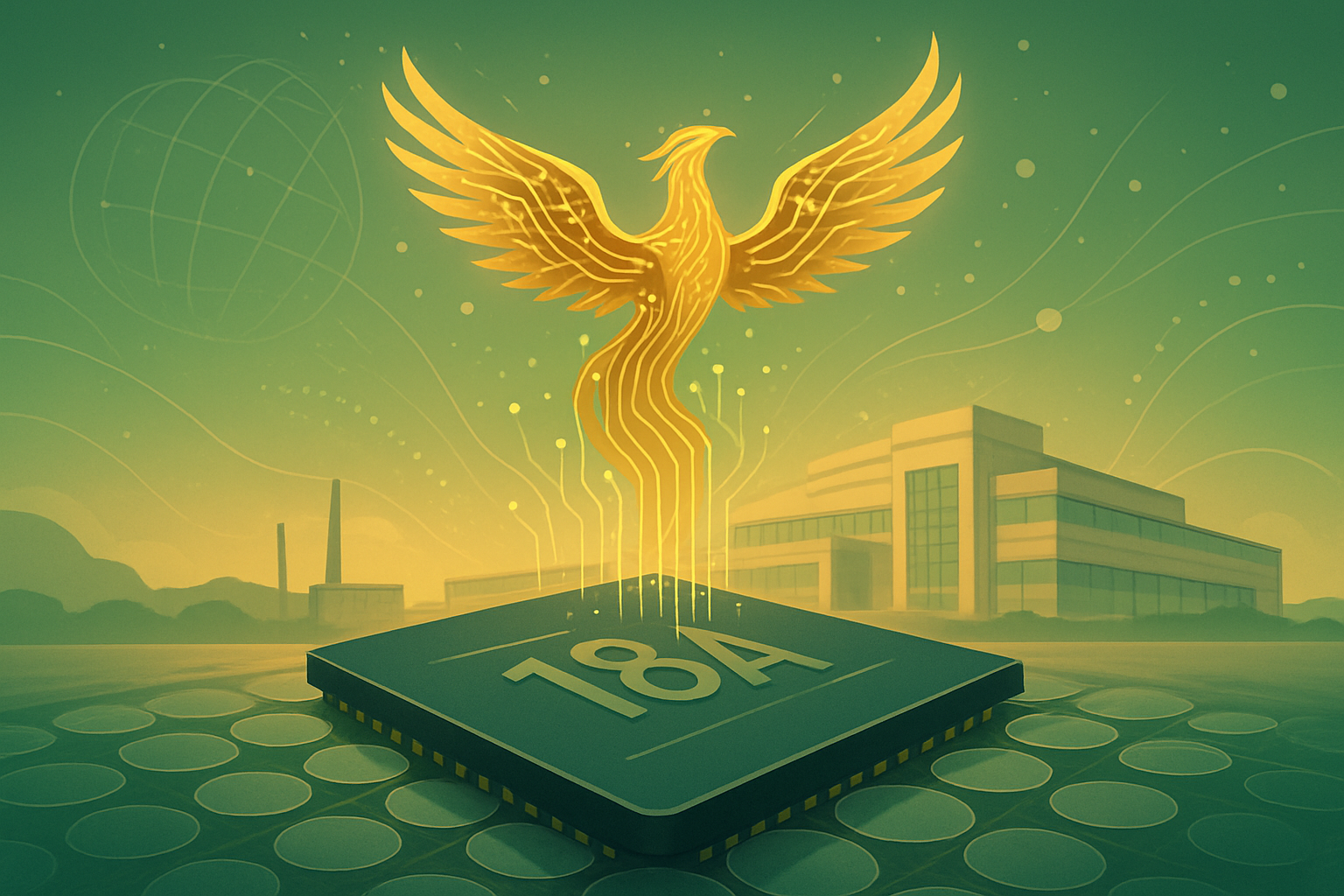
    Intel Corporation (NASDAQ: INTC) stands today at the most pivotal juncture in its 58-year history. After a grueling five-year turnaround effort that pushed the company to the brink of a structural breakup, the semiconductor giant has emerged as a transformed entity. Once the undisputed king of the PC era, then a laggard in the mobile and AI revolutions, Intel is now attempting to occupy a unique dual-role: a leading-edge chip designer and the Western world’s primary alternative to Taiwan’s foundry dominance. With the recent commencement of high-volume manufacturing on its 18A process node, Intel is no longer just a "legacy" blue chip; it is the center of a geopolitical and industrial storm that will define the next decade of computing.

    Historical Background

    Founded in 1968 by Robert Noyce and Gordon Moore, Intel was the architect of the microprocessor revolution. From the 4004 to the ubiquitous "Intel Inside" campaign of the 1990s, the company defined the "Tick-Tock" cadence of Moore’s Law. However, the 2010s were marked by stagnation. Manufacturing delays on the 10nm and 7nm nodes allowed rivals like Advanced Micro Devices (NASDAQ: AMD) to seize market share, while the rise of mobile computing saw Intel lose out to ARM-based architectures.

    The return of Pat Gelsinger as CEO in 2021 launched the "IDM 2.0" strategy, an ambitious plan to regain process leadership by delivering five nodes in four years (5N4Y). Following Gelsinger’s retirement in late 2024, the torch was passed to Lip-Bu Tan, who has spent the last year refining Intel's focus into a leaner, more disciplined manufacturing powerhouse.

    Business Model

    Intel’s business model has been fundamentally restructured into two primary, reporting-distinct divisions:

    • Intel Products: This includes the Client Computing Group (CCG), which dominates the "AI PC" market, and the Data Center and AI (DCAI) group. This segment focuses on designing world-class CPUs and the Gaudi line of AI accelerators.
    • Intel Foundry: This is the most radical shift in the company’s history. Intel now operates as a third-party foundry, manufacturing chips for external customers—including direct competitors. By separating the foundry’s financial reporting and operations, Intel aims to build the trust necessary to win business from the likes of Amazon and Microsoft.
    • Other Segments: This includes Altera (FPGA) and Mobileye (NASDAQ: MBLY), though Intel has progressively spun off or sold portions of these assets to fund its massive capital expenditure (CapEx) requirements.

    Stock Performance Overview

    The performance of INTC over the last decade is a tale of three distinct eras:

    • 10-Year View (2016-2026): Investors who held through the decade saw a "lost period" followed by a parabolic recovery. For much of 2018–2024, the stock languished as competitors soared.
    • 5-Year View (2021-2026): The stock entered a "Valley of Death" in early 2025, hitting a multi-decade low of $18.25 following a dividend suspension and record losses.
    • Recent Momentum: Over the trailing 12 months, INTC has undergone a historic rally. As of yesterday’s close (April 13, 2026), the stock hit an all-time high of $65.18, a gain of over 220% from its 2025 lows, driven by the successful launch of the 18A process node and massive new foundry contracts.

    Financial Performance

    Intel’s fiscal 2025 results, released earlier this year, show a company moving from "triage" to "growth."

    • Revenue: 2025 revenue came in at $52.9 billion, a stabilization after years of decline.
    • Profitability: Non-GAAP EPS for 2025 was $0.42. While modest, it represents a return to profitability after the deep losses of 2024.
    • Margins: Gross margins have begun to climb back toward the 45% mark, though they remain well below the 60% peaks of the 2010s due to the high costs of building new fabs.
    • Foundry Losses: The Foundry division reported an operating loss of $10.3 billion in 2025, a figure Intel describes as "peak investment drag" before expected profitability in 2027.

    Leadership and Management

    Under the leadership of CEO Lip-Bu Tan, Intel has moved away from the "growth at any cost" mentality toward extreme financial discipline. Tan, a former Cadence Design Systems CEO and a veteran of the semiconductor industry, was appointed in March 2025.

    His strategy has been characterized by:

    1. Strict Operational Separation: Creating a "Chinese Wall" between the design and foundry teams to protect customer IP.
    2. Cost Cutting: Tan oversaw a 15% reduction in workforce (approximately 15,000 roles) and the divestiture of non-core business units.
    3. Customer Focus: Pivoting the foundry business to prioritize high-margin AI "lighthouse" customers over volume-based legacy manufacturing.

    Products, Services, and Innovations

    The crown jewel of Intel’s current innovation pipeline is the Intel 18A (1.8nm) process node. As of early 2026, 18A is in high-volume manufacturing, featuring two breakthrough technologies:

    • RibbonFET: A gate-all-around (GAA) transistor architecture that improves performance and efficiency.
    • PowerVia: The industry’s first backside power delivery system, which solves the wiring bottlenecks found in traditional chip designs.

    On the product side, the Panther Lake processors (for PCs) and Clearwater Forest (for servers) are currently shipping. These are the first products to utilize the 18A node, positioning Intel to challenge the efficiency leads currently held by Apple and AMD.

    Competitive Landscape

    Intel faces a "two-front war" in the semiconductor market:

    • Design Rivals: AMD continues to be a formidable opponent in the server market, holding nearly 40% of the x86 revenue share. In AI, NVIDIA (NASDAQ: NVDA) remains the dominant force with an 86% share of the data center accelerator market. Intel's Gaudi 4, released earlier this year, has captured a modest 6% share, positioning itself as a "value-per-dollar" alternative to Nvidia’s H-series.
    • Foundry Rivals: Taiwan Semiconductor Manufacturing Co. (NYSE: TSM) remains the gold standard. However, Intel is increasingly viewed as the "Western Champion," winning business from US firms seeking to diversify their supply chains away from the Taiwan Strait.

    Industry and Market Trends

    The "AI PC" has become the primary driver of Intel’s client business. By April 2026, over 60% of new laptop shipments include dedicated Neural Processing Units (NPUs) for local AI tasks. Intel currently leads this segment with a 55% market share.

    Simultaneously, the industry is shifting toward "Chiplet" architectures, where different parts of a processor are manufactured on different nodes and stitched together. This play favors Intel’s advanced packaging capabilities (EMIB and Foveros), which have become a standalone revenue stream for the company.

    Risks and Challenges

    Despite the recent rally, Intel’s path is fraught with risk:

    • Foundry Execution: Any yield issues on the 18A node could result in catastrophic delays and the loss of multi-billion-dollar contracts.
    • Capital Intensity: Intel is spending roughly $25 billion a year on CapEx. This leaves little room for error and has required the company to take on significant debt and bring in private equity partners (like Apollo) to co-invest in fabs.
    • AMD Aggression: AMD’s Zen 6 architecture is expected later this year, threatening to erase Intel’s narrow performance lead in the desktop market.

    Opportunities and Catalysts

    • Foundry Backlog: Intel Foundry’s total lifetime deal value now exceeds $15 billion. Major wins with Amazon (AWS) and Microsoft for custom AI silicon are expected to begin contributing to revenue in the second half of 2026.
    • The "Terafab" Project: A reported partnership with Elon Musk’s xAI and Tesla to build specialized robotics and AI chips in a new Texas-based facility could provide a massive halo effect for Intel’s manufacturing prowess.
    • Sovereign AI: As nations seek "sovereign" chip capabilities, Intel is the only company capable of providing a full end-to-end Western supply chain.

    Investor Sentiment and Analyst Coverage

    Wall Street is currently "Cautiously Bullish" on INTC. After being a consensus "Sell" in 2024, the stock now boasts a majority of "Buy" ratings.

    • Hedge Fund Activity: Large institutional players have returned to the stock, viewing it as a "deep value" play that is finally transitioning into a "growth" story.
    • Retail Sentiment: Intel has regained its status as a retail favorite, with social media sentiment high following the successful 18A launch. However, some analysts warn that the 220% run-up in the last year may have priced in much of the "recovery" narrative.

    Regulatory, Policy, and Geopolitical Factors

    Intel is perhaps the most "geopolitically sensitive" stock in the world.

    • CHIPS Act: Intel has finalized its $8.9 billion direct funding award from the US government. In a novel move, the US government now holds a 9.9% non-voting equity stake in Intel’s foundry subsidiary, effectively making the company a "public-private partnership" for national security.
    • Export Controls: Tightening restrictions on AI chip exports to China continue to hamper Intel's sales of high-end Xeon and Gaudi processors in that region.
    • Ohio Delay: To conserve capital, Intel has delayed the full opening of its "Ohio One" mega-fab until 2030, a move that drew some political criticism but was lauded by the market as a sign of Tan's fiscal discipline.

    Conclusion

    The Intel of April 2026 is unrecognizable from the struggling giant of 2022. By successfully delivering on the "5 nodes in 4 years" promise, the company has closed the technical gap with TSMC and reclaimed its seat at the head of the table in the AI PC era.

    However, the "Intel Foundry" experiment remains a high-stakes gamble. The company is essentially betting its entire future on the idea that Western tech giants will pay a premium for a US-based supply chain. For investors, Intel represents a unique play: it is part-utility, part-national-infrastructure, and part-high-growth-AI-enabler. While the stock’s recent surge is impressive, the next 24 months will determine if Intel can turn its technical leadership into sustainable, high-margin profitability.


    This content is intended for informational purposes only and is not financial advice.

  • Texas Pacific Land Corporation (TPL): The Permian’s Premier Toll Booth Pivot

    Texas Pacific Land Corporation (TPL): The Permian’s Premier Toll Booth Pivot

    Texas Pacific Land Corporation (NYSE: TPL) stands as a singular entity in the American financial landscape—a 19th-century land trust that has evolved into a 21st-century infrastructure powerhouse. As of April 14, 2026, TPL is no longer viewed merely as a passive beneficiary of West Texas oil; it has successfully rebranded itself as a high-tech "toll booth" for the Permian Basin, facilitating everything from hydraulic fracturing to artificial intelligence data centers. With its sprawling 880,000-acre footprint and a debt-free balance sheet, the company has become a focal point for investors seeking a "pure play" on the enduring strategic importance of the Permian, the world’s most prolific oil and gas province.

    Historical Background

    The story of TPL begins in 1888, emerging from the wreckage of the Texas and Pacific Railway’s bankruptcy. To satisfy bondholders, the railway’s massive land grant—roughly 3.5 million acres—was placed into a liquidating trust. For over 130 years, the Texas Pacific Land Trust operated under an antiquated structure with just three lifetime trustees. Its mandate was simple: sell off surface land and use the proceeds to buy back and cancel its own shares.

    This "cannibalistic" share-reduction model, combined with the discovery of the Permian Basin’s shale potential in the early 2010s, transformed a sleepy legacy trust into a financial juggernaut. In January 2021, after years of pressure from activist shareholders, TPL officially converted into a Delaware C-Corporation. This transformation modernized its governance and paved the way for the institutional-grade infrastructure player it is today.

    Business Model

    TPL operates a diversified, high-margin business model focused on its extensive acreage in the Midland and Delaware Basins. Its revenue streams are bifurcated into two primary segments:

    • Land & Resource Management: This is the core royalty engine. TPL owns approximately 207,000 net royalty acres. It does not drill wells or operate rigs; instead, it collects a percentage of revenue from operators like ExxonMobil (NYSE: XOM) and Chevron (NYSE: CVX) who drill on its land. This segment also includes "SLEM" (Surface Leases, Easements, and Materials), where TPL charges for pipeline rights-of-way, power lines, and caliche used in road construction.
    • Water Service & Operations (TPWR): Through its subsidiary, Texas Pacific Water Resources, the company provides full-cycle water management. This includes sourcing brackish water for fracking, gathering "produced water" (the byproduct of oil extraction), and managing recycling and disposal. This segment has become a critical utility for Permian operators facing stricter environmental and logistics hurdles.

    Stock Performance Overview

    TPL has historically been one of the greatest wealth compounders in the energy sector.

    • 1-Year Performance: Over the past twelve months, TPL shares have surged approximately 45%, significantly outperforming the broader S&P 500 Energy Index. Much of this gain was driven by the 2025 announcement of the company’s "AI & Energy" pivot and the late-2025 3-for-1 stock split.
    • 5-Year Performance: On a five-year horizon, the stock is up roughly 240%, reflecting the successful corporate conversion in 2021 and the post-pandemic surge in domestic production.
    • 10-Year Performance: Long-term holders have witnessed a staggering 3,100% return. This performance stems from the unique combination of rising oil volumes and a shrinking share count, which drastically increased the value of each remaining share.

    Financial Performance

    The company’s 2025 fiscal year, reported earlier this year, showcased the immense profitability of its royalty-and-water model.

    • Revenue & Income: Total revenue for 2025 reached $798.2 million, a 13.1% increase year-over-year. Net income margins remained exceptionally high, hovering around 60%, a figure virtually unheard of in most industries.
    • Cash Flow: Free cash flow (FCF) for 2025 was $498.3 million. TPL uses this cash to fund dividends and aggressive share repurchases, maintaining its reputation as a "capital return machine."
    • Valuation Metrics: As of April 2026, TPL trades at a forward P/E of approximately 58.7x. While expensive compared to traditional energy stocks, bulls argue the premium is justified by its zero-debt balance sheet and its new role as a tech-infrastructure hybrid.

    Leadership and Management

    The executive team is led by CEO Tyler (Ty) Glover, who has steered the company since its final years as a trust. Glover is credited with shifting TPL from a passive royalty collector to an active infrastructure developer.

    Governance, once a point of contention, has stabilized following a protracted proxy battle with major shareholder Horizon Kinetics. The board now includes Horizon’s Murray Stahl (until his passing in late 2025) and other investor-aligned members. The current leadership strategy focuses on "the energy-data nexus," leveraging TPL’s surface land for large-scale industrial projects that go beyond fossil fuels.

    Products, Services, and Innovations

    TPL’s current innovation focuses on the "circular water economy" and "digital infrastructure":

    • Orla Desalination Facility: In early 2026, TPL’s freeze desalination plant in Orla, Texas, reached full scale. This facility treats produced water into fresh water for industrial use, solving a major environmental and regulatory pain point for the Permian.
    • AI Data Centers: TPL has begun leasing surface land for "behind-the-meter" data centers. These facilities use on-site natural gas to generate electricity, providing AI firms with the massive power they need without taxing the fragile ERCOT grid.
    • Digital Permian: The company utilizes proprietary GIS mapping and data analytics to optimize where pipelines and wells are placed, maximizing the "toll" it can collect per acre.

    Competitive Landscape

    TPL’s primary competitors are other royalty and land management firms, though few match its scale or surface-ownership breadth.

    • Viper Energy (NASDAQ: VNOM): The royalty arm of Diamondback Energy. While Viper has higher production growth, it lacks TPL’s vast surface land rights and water business.
    • Black Stone Minerals (NYSE: BSM): A leader in mineral rights across the US, but more heavily weighted toward natural gas and the Haynesville Shale.
    • LandBridge (NYSE: LB): A newer rival that mimics TPL’s model of owning surface land and water infrastructure. LandBridge trades at a similarly high multiple but lacks TPL’s century-old, low-cost basis.

    Industry and Market Trends

    The Permian Basin is currently undergoing "Super-Major Consolidation." With ExxonMobil’s acquisition of Pioneer Natural Resources and Chevron’s consolidation efforts, TPL’s land is now being developed by the world’s most well-capitalized companies. These majors use longer horizontal wells (over 12,000 feet), which allows TPL to capture more royalty revenue from fewer wellheads. Additionally, the "Energy-Data Nexus" trend is accelerating; as AI demand skyrockets, West Texas is being viewed as a "power and land bank" for the tech industry.

    Risks and Challenges

    • Regulatory Scrutiny: The Texas Railroad Commission (RRC) has tightened rules on "Saltwater Disposal" (SWD) due to concerns over seismic activity (earthquakes). Stricter limits in Culberson and Reeves counties could cap TPL’s water-injection revenues.
    • Commodity Exposure: While TPL has no debt, its royalty income is directly tied to the price of West Texas Intermediate (WTI). A significant global recession or an oil price collapse would hit its top line immediately.
    • Governance Uncertainty: The passing of major shareholder and board member Murray Stahl in late 2025 has left a strategic vacuum. There is uncertainty regarding how Horizon Kinetics will manage its 18% stake moving forward.

    Opportunities and Catalysts

    • AI Data Center Scaling: Success in its pilot data center projects could lead to multi-billion dollar long-term lease agreements with "Big Tech" firms.
    • Desalination Commercialization: If TPL can successfully sell treated water back to agricultural or industrial users at scale, it opens a revenue stream that is independent of oil and gas drilling.
    • Institutional Re-entry: The February 2026 court ruling striking down Texas’ "anti-ESG" law (SB 13) allows previously restricted institutional giants like BlackRock to increase their positions in Texas energy names like TPL.

    Investor Sentiment and Analyst Coverage

    Wall Street sentiment is currently "Cautiously Bullish." Analysts from KeyBanc and other mid-tier firms maintain "Overweight" ratings, with some price targets exceeding $1,000 per share (post-split basis). However, value-oriented analysts remain wary of the stock’s high P/E ratio, arguing that much of the AI growth is already "priced to perfection." Among retail investors, TPL remains a cult favorite, often referred to as "the ultimate inflation hedge" due to its hard asset base and lack of operational overhead.

    Regulatory, Policy, and Geopolitical Factors

    The geopolitical landscape of 2026 favors domestic production. With ongoing instability in traditional oil-producing regions, the Permian Basin is the cornerstone of U.S. energy security. Domestically, the RRC’s updated waste management rules (effective January 2026) have increased compliance costs, but they have also "moated" TPL’s business; only well-capitalized firms like TPL can afford the sophisticated recycling infrastructure required to meet new environmental standards.

    Conclusion

    Texas Pacific Land Corporation enters the mid-2020s as a hybrid powerhouse. It has successfully parlayed its 19th-century land grant into a multifaceted infrastructure business that services the two most critical drivers of the modern economy: energy and data. While the stock’s premium valuation requires flawless execution, particularly in its fledgling AI and water-desalination ventures, the company’s debt-free "toll booth" model remains one of the most efficient ways to play the Permian Basin. Investors should watch for further developments in the "Behind-the-Meter" power space and any changes in the Horizon Kinetics ownership stake as the primary signals for the stock’s next major move.


    This content is intended for informational purposes only and is not financial advice.

  • The Engineering vs. Governance Tug-of-War: A Deep Dive into Super Micro Computer (SMCI)

    The Engineering vs. Governance Tug-of-War: A Deep Dive into Super Micro Computer (SMCI)

    As of April 14, 2026, the saga of Super Micro Computer, Inc. (NASDAQ: SMCI) stands as one of the most polarizing case studies in the history of Silicon Valley. Once the darling of the artificial intelligence (AI) revolution, the San Jose-based company has become a symbol of both the immense technological potential of high-performance computing and the perilous risks of aggressive corporate governance. Today, SMCI finds itself at a critical crossroads: it is a primary architect of the world’s most advanced AI "factories," yet it is simultaneously embroiled in a high-stakes legal battle with the U.S. Department of Justice. For investors, the company represents a high-beta bet on the future of liquid-cooled data centers, balanced against the dark clouds of federal indictments and export control controversies.

    Historical Background

    Founded in 1993 by Charles Liang, his wife Sara Liu, and Wally Liaw, Super Micro Computer began as a lean, five-person operation in the heart of Silicon Valley. From its inception, the company differentiated itself through a "Building Block" philosophy. While industry giants like Dell and HP focused on proprietary, monolithic systems, Liang’s team developed modular server components that could be rapidly customized to meet specific client needs.

    This modularity proved prophetic. In 2004, long before "ESG" became a boardroom buzzword, Liang pivoted the company toward "Green Computing," focusing on power-efficiency as a core engineering metric. This early focus on thermal management laid the groundwork for SMCI’s eventual dominance in the AI era. Throughout the 2010s, SMCI transitioned from a niche motherboard manufacturer to a full-scale systems provider, building deep relationships with silicon titans like Intel, AMD, and most crucially, NVIDIA.

    Business Model

    SMCI’s business model has evolved from selling individual servers to architecting "Rack-Scale AI Factories." The company operates primarily in the Enterprise, Cloud, and Edge sectors, with a revenue model increasingly dominated by high-end AI infrastructure.

    Key segments include:

    • AI/GPU-Optimized Systems: These represent the lion's share of current revenue, featuring tightly integrated NVIDIA H100, H200, and Blackwell (B200/GB200) architectures.
    • Direct Liquid Cooling (DLC) Solutions: As AI chips reach unprecedented heat levels, SMCI has transitioned into a thermal management specialist. Their DLC systems are integrated at the rack level, reducing cooling energy costs by up to 40%.
    • Total IT Solutions: SMCI provides "plug-and-play" data center racks, pre-configured with networking, storage, and software, allowing hyperscalers to deploy massive compute power in weeks rather than months.

    Stock Performance Overview

    The stock trajectory of SMCI over the last decade has been a rollercoaster of historic proportions.

    • 10-Year View: Investors who held from 2016 through the early 2024 peak saw returns exceeding 2,000%.
    • 5-Year View: The stock moved from a relatively obscure $30 range in 2021 to a split-adjusted all-time high of approximately $118.81 in March 2024, driven by the AI gold rush and its inclusion in the S&P 500.
    • 1-Year View: The last 12 months (April 2025 – April 2026) have been defined by extreme volatility. After recovering to $60 in late 2025 on strong Blackwell demand, the stock has plummeted following the March 2026 DOJ indictment of co-founder Wally Liaw. Today, the stock trades at approximately $25.26, reflecting a deep "governance discount."

    Financial Performance

    Despite its legal challenges, SMCI's top-line growth remains robust, highlighting the disconnect between operational demand and regulatory risk.

    • Revenue Growth: For Fiscal Year 2025, SMCI reported $21.97 billion in revenue, a staggering increase from the $14.9 billion reported in FY2024.
    • Margins: Gross margins have faced pressure, hovering around 11–13% as the company aggressively competes for hyperscale market share and navigates higher component costs for liquid cooling.
    • Valuation: Trading at a forward P/E ratio of approximately 8x, the market is pricing SMCI like a distressed asset, despite its projected FY2026 revenue target of $36 billion.
    • Debt and Cash Flow: The company has utilized convertible notes and equity raises to fund its massive inventory requirements, maintaining a significant cash position to weather potential legal settlements.

    Leadership and Management

    The leadership of SMCI is inextricably linked to its founder, Charles Liang. As President and CEO, Liang is viewed as a visionary engineer whose "obsession" with green computing anticipated the AI cooling crisis. However, his "founder-centric" management style has been criticized for lack of transparency.

    Following the resignation of auditor Ernst & Young (EY) in late 2024 and the recent DOJ indictment of former executive Wally Liaw in March 2026, the board has attempted to professionalize. The appointment of DeAnna Luna (formerly of Intel) as Chief Compliance Officer was a major step in early 2026 aimed at rebuilding institutional trust. Nevertheless, Liang’s absolute influence over the company remains a point of contention for ESG-focused investors.

    Products, Services, and Innovations

    SMCI’s competitive edge lies in its "first-to-market" capability. By maintaining its engineering and manufacturing headquarters in San Jose—minutes away from NVIDIA’s campus—the company can prototype and ship new GPU-based systems faster than any competitor.

    • Blackwell Integration: SMCI currently leads the market in the deployment of NVIDIA’s Blackwell Ultra architecture, boasting a $13 billion backlog of orders.
    • Building Block Rack Solutions: Their 2026 product line features the "SuperCluster," a liquid-cooled, modular AI factory that can be scaled from a single rack to a full data center cluster with minimal field engineering.
    • Proprietary Liquid Cooling: Unlike competitors who outsource cooling components, SMCI designs its own manifolds and cold plates, providing better vertical integration.

    Competitive Landscape

    The competitive environment has shifted significantly since 2024. While SMCI once outpaced the market, its governance issues have allowed incumbents to regain lost ground.

    • Dell Technologies (DELL): Dell has emerged as the primary victor of SMCI's 2024/2025 turmoil, securing a massive $45 billion AI server backlog and surpassing SMCI in global server market share (7.2% vs 6.5%).
    • HP Enterprise (HPE): HPE has focused on the "Sovereign AI" market, winning high-margin contracts with governments in Japan and the Middle East where regulatory compliance is the highest priority.
    • Asian ODMs: Companies like Foxconn and Quanta continue to compete on price, though they lack SMCI's high-end engineering and liquid-cooling sophistication.

    Industry and Market Trends

    The AI infrastructure market is currently entering its "Efficiency Phase."

    • The Cooling Mandate: Global data center regulations are tightening. In many jurisdictions, new data centers must meet strict Power Usage Effectiveness (PUE) ratings, making SMCI’s liquid cooling solutions a necessity rather than a luxury.
    • Sovereign AI: Nations are increasingly building domestic AI capabilities to ensure data residency, creating a fragmented but lucrative market for modular server deployments.
    • Cycle Sustainability: While some analysts fear an "AI bubble," the transition from training models to large-scale inference continues to drive server demand.

    Risks and Challenges

    The risks facing SMCI are predominantly non-operational but existential.

    • DOJ Indictment (March 2026): The indictment of co-founder Wally Liaw for allegedly bypassing U.S. export controls to ship $2.5 billion in servers to restricted entities in China is the most significant headwind. If the company is found to have had institutional knowledge of these schemes, it could face crippling fines or debarment from government contracts.
    • Related-Party Transactions: Historical ties with Ablecom and Compuware (owned by Liang’s family) remain under scrutiny, raising questions about whether margins are being artificially inflated or deflated.
    • Customer Concentration: A significant portion of SMCI’s revenue is tied to a handful of hyperscalers and GPU providers. Any shift in NVIDIA’s allocation strategy could be catastrophic.

    Opportunities and Catalysts

    • Blackwell Ramp-up: The massive backlog for NVIDIA Blackwell systems provides a clear revenue runway for 2026 and 2027.
    • Compliance Resolution: If SMCI can successfully navigate the current DOJ investigation without a corporate indictment, the "governance discount" on the stock price could rapidly evaporate.
    • Manufacturing Expansion: New facilities in Malaysia and Taiwan are coming online, which could lower production costs and provide a buffer against geopolitical shifts in U.S.-based manufacturing.

    Investor Sentiment and Analyst Coverage

    Current sentiment is characterized by "extreme caution."

    • Wall Street: The consensus rating is a "Hold." While analysts acknowledge SMCI's engineering prowess, most are unwilling to recommend the stock until the legal ramifications of the March 2026 indictment are clearer.
    • Institutional Moves: Several large ESG-focused funds liquidated their positions in late 2024, and institutional ownership remains below historical norms.
    • Retail Sentiment: The stock remains a favorite for retail "dip buyers" and momentum traders, leading to high daily volume and intraday volatility.

    Regulatory, Policy, and Geopolitical Factors

    SMCI sits at the epicenter of the U.S.-China tech cold war.

    • Export Controls: The U.S. Department of Commerce has consistently tightened restrictions on AI hardware shipments to China. SMCI’s history of "Building Block" customization makes it harder to track end-users, placing the company under a regulatory microscope.
    • CHIPS Act: While SMCI benefits from the domestic push for high-tech manufacturing, its eligibility for future government incentives may be jeopardized by ongoing compliance investigations.

    Conclusion

    Super Micro Computer is a company of contradictions. It is an engineering powerhouse that correctly bet on the future of liquid-cooled AI infrastructure years before the rest of the industry. Yet, it has struggled to implement the mature internal controls and transparency required of a multi-billion-dollar public entity.

    As of April 2026, the bull case for SMCI rests on its $13 billion Blackwell backlog and its lead in energy-efficient design—a critical need as power grids struggle to keep up with AI demand. The bear case is rooted in the "trust deficit" created by repeated accounting delays, auditor resignations, and the recent DOJ export control probe. For the balanced investor, SMCI is no longer just a hardware play; it is a complex bet on a company's ability to survive its own growth. The coming months will determine if SMCI remains a pillar of the AI era or a cautionary tale of a Silicon Valley icon that flew too close to the sun.


    This content is intended for informational purposes only and is not financial advice. Disclosure: As of 4/14/2026, the author holds no positions in any of the stocks mentioned.

  • The Silicon Renaissance: How SanDisk (SNDK) Reclaimed the Throne in the AI Era

    The Silicon Renaissance: How SanDisk (SNDK) Reclaimed the Throne in the AI Era

    In the rapidly evolving landscape of semiconductor technology, few stories are as compelling as the resurrection and subsequent dominance of SanDisk Corporation (NASDAQ: SNDK). Once a legacy consumer brand synonymous with SD cards and thumb drives, the SanDisk of April 2026 has reinvented itself as the high-octane engine of the "AI Storage Supercycle." Following its historic spinoff from Western Digital (NASDAQ: WDC) in early 2025, SanDisk has emerged as a pure-play flash memory powerhouse, commanding a pivotal role in the infrastructure required to feed global artificial intelligence models. As of today, April 14, 2026, the company stands on the precipice of its official inclusion into the Nasdaq-100 Index, reflecting a valuation and market influence that would have been unthinkable just three years ago.

    Historical Background

    The journey of SanDisk is a trilogy of innovation, consolidation, and ultimate independence. Founded in 1988 by Eli Harari, Sanjay Mehrotra, and Jack Yuan, the company pioneered the commercialization of flash memory. Over the decades, it became a household name in consumer electronics, but as the market for mobile and computing storage shifted, SanDisk was acquired by Western Digital in 2016 for $19 billion.

    For nearly nine years, SanDisk operated as the Flash Business Unit within Western Digital. However, the synergistic promise of combining Hard Disk Drive (HDD) and Flash technologies under one roof eventually gave way to the realities of different market cycles and investor preferences. In late 2023, under pressure from activist investors and a shifting macroeconomic tide, Western Digital announced its intent to split. On February 21, 2025, the separation was finalized, and SanDisk was re-listed on the Nasdaq. This "New SanDisk" is far leaner than its predecessor, focused almost exclusively on high-performance NAND and Solid State Drive (SSD) solutions.

    Business Model

    SanDisk operates a specialized, capital-efficient business model focused on three primary revenue streams: Data Center/Enterprise SSDs, Client SSDs (PCs and Gaming), and Consumer Flash.

    The cornerstone of its model is a unique, decade-long joint venture (JV) with Japan’s Kioxia (formerly Toshiba Memory). This partnership allows SanDisk to share the multi-billion dollar costs of semiconductor fabrication plants (fabs) while maintaining a steady supply of cutting-edge NAND wafers. By focusing on the "back-end" design of controllers and firmware, SanDisk differentiates its products from commodity flash, commanding higher margins in the enterprise sector. Currently, the company's revenue mix has shifted heavily toward the Data Center segment, which now accounts for over 55% of its total quarterly sales, up from 30% prior to the spinoff.

    Stock Performance Overview

    The performance of SNDK since its 2025 relisting has been nothing short of spectacular.

    • 1-Year Performance: In the past 12 months, SNDK shares have surged by over 400%, fueled by the transition from a NAND oversupply in 2024 to a severe shortage in 2026.
    • Performance Since Spinoff: From its opening price of approximately $40 in February 2025, the stock has catapulted to a current trading range of $915 to $950.
    • Historical Context: While long-term charts often incorporate the legacy Western Digital performance, the "pure-play" SNDK has seen a re-rating of its P/E multiple from the low teens to the mid-30s, as investors now value it similarly to high-growth AI hardware peers like NVIDIA (NASDAQ: NVDA) and Arista Networks (NYSE: ANET).

    Financial Performance

    SanDisk’s latest quarterly earnings (Q1 2026) showcased the full force of the NAND recovery. The company reported revenue of $2.31 billion, a 21% sequential increase that defied seasonal norms.

    • Margins: Non-GAAP gross margins reached a record 65.2%, driven by aggressive pricing power and the rollout of the high-margin BiCS8 architecture.
    • Cash Flow: The company generated $1.2 billion in free cash flow in the last quarter alone, achieving a net cash positive position significantly ahead of management’s 2027 target.
    • Valuation: Despite the price surge, SNDK’s forward P/E remains competitive at 28x, as analysts continue to upwardly revise 2026 and 2027 earnings estimates.

    Leadership and Management

    SanDisk is led by CEO David Goeckeler, the architect of the Western Digital split. Goeckeler, a Cisco veteran, has been praised for his strategic focus on the "Data Center First" roadmap. Under his leadership, SanDisk has aggressively cut legacy consumer overhead to reinvest in enterprise R&D.
    The executive team, including CFO Luis Visoso, is regarded as one of the most disciplined in the memory space, particularly in capital allocation. The board of directors was recently strengthened by the addition of Alexander R. Bradley, bringing deep expertise in navigating the complexities of high-stakes manufacturing and international supply chains.

    Products, Services, and Innovations

    The technological "moat" around SanDisk currently rests on its BiCS8 (218-layer) 3D NAND platform. Using CMOS-Bonded-to-Array (CBA) technology, SanDisk has achieved higher bit density and faster input/output speeds than its traditional stacking methods.

    • The 256TB eSSD: In early 2026, SanDisk launched the industry’s first 256TB NVMe Enterprise SSD. This product is specifically designed for "AI Data Lakes," allowing hyperscale providers like Microsoft (NASDAQ: MSFT) and Amazon (NASDAQ: AMZN) to store massive training sets in half the physical footprint of previous generations.
    • Power Efficiency: A key innovation in SanDisk’s current portfolio is a 20% reduction in power consumption per terabyte, a critical selling point for data centers struggling with the massive energy demands of GPU clusters.

    Competitive Landscape

    The memory market remains an oligopoly, but the power dynamics are shifting. SanDisk currently holds approximately 13% of the global NAND market, trailing Samsung (OTC: SSNLF) and SK Hynix. However, in the high-value Enterprise SSD niche, SanDisk’s market share has surged to over 12% and is growing faster than its rivals.

    • Samsung: Remains the volume leader but has struggled with yield issues on its latest high-layer counts.
    • Micron (NASDAQ: MU): A formidable competitor in the U.S., though Micron’s heavy exposure to the DRAM market makes its stock profile different from the NAND-focused SanDisk.
    • SK Hynix/Solidigm: SanDisk’s primary rival in high-capacity SSDs; the competition here is fierce, particularly for lucrative contracts with Tier-1 cloud providers.

    Industry and Market Trends

    The storage industry is currently defined by the transition from "General Purpose Storage" to "AI-Optimized Storage." AI models require vast amounts of data to be fed into GPUs at high speeds, making traditional HDDs too slow for the training phase. This has created a massive replacement cycle where NAND flash is cannibalizing the HDD market in the data center. Furthermore, a global shortage of high-capacity NAND has led to a "silent squeeze," with prices rising 10% in the last quarter alone, a trend expected to persist through the end of 2026.

    Risks and Challenges

    Investing in SanDisk is not without significant risks:

    1. Cyclicality: The memory industry is notoriously boom-and-bust. While 2026 is a boom year, any over-investment in fab capacity by the "Big Four" could lead to a price crash in 2027 or 2028.
    2. JV Dependency: SanDisk’s reliance on the Kioxia JV is a double-edged sword. Internal disputes or a financial crisis at Kioxia could jeopardize SanDisk’s manufacturing pipeline.
    3. SK Hynix Opposition: Efforts to further consolidate with Kioxia have been blocked by SK Hynix, limiting SanDisk’s ability to achieve full structural synergies.

    Opportunities and Catalysts

    The primary near-term catalyst is the Nasdaq-100 inclusion on April 20, 2026. This event will force passive index funds to buy millions of shares of SNDK, likely providing a floor for the current stock price.
    Beyond the index move, the "Edge AI" trend—where AI processing happens on smartphones and laptops rather than in the cloud—presents a massive secondary growth lever for SanDisk’s client SSD and mobile divisions starting in late 2026.

    Investor Sentiment and Analyst Coverage

    Wall Street is overwhelmingly bullish on SNDK. Out of 32 analysts covering the stock, 28 have "Buy" or "Strong Buy" ratings. Institutional ownership has climbed to 84%, with major positions held by Vanguard, BlackRock, and several prominent semiconductor-focused hedge funds. Retail sentiment is also high, often trending on social platforms due to SanDisk’s status as a "pure play" on the AI infrastructure trade.

    Regulatory, Policy, and Geopolitical Factors

    As a U.S.-based company with manufacturing primarily in Japan, SanDisk occupies a delicate geopolitical position. It has benefited from U.S. government incentives designed to reduce reliance on Chinese-manufactured memory. However, export controls on high-end storage technology to China remain a headwind, as SanDisk must navigate complex licensing requirements to sell its highest-capacity enterprise drives into the Chinese market. The stability of the U.S.-Japan security alliance remains paramount for the continued success of the Yokkaichi and Kitakami manufacturing plants.

    Conclusion

    SanDisk Corporation has completed one of the most successful corporate "second acts" in recent history. By detaching from the slower-growth HDD business and leaning aggressively into the AI-driven flash shortage, the company has transformed into a high-margin, high-growth darling of the semiconductor sector. While the inherent cyclicality of the memory market remains a permanent shadow, SanDisk’s current technological leadership with BiCS8 and its imminent entry into the Nasdaq-100 suggest that its momentum is far from exhausted. For investors, the key will be monitoring the global NAND supply-demand balance and the continued execution of the enterprise-first strategy under David Goeckeler.


    This content is intended for informational purposes only and is not financial advice.

  • The Connectivity Backbone: A Deep Dive into Credo Technology Group (CRDO)

    The Connectivity Backbone: A Deep Dive into Credo Technology Group (CRDO)

    As of today, April 14, 2026, the global technology landscape is defined by one singular force: the build-out of massive-scale generative AI infrastructure. While the headlines are often dominated by the GPU manufacturers, a critical bottleneck has emerged in the "plumbing" of these data centers—the connectivity that allows tens of thousands of processors to work as a single, coherent machine. At the center of this revolution is Credo Technology Group Holding Ltd (NASDAQ: CRDO).

    Credo has transitioned from a specialized IP provider into a vital hardware pillar for the world’s largest hyperscalers. By solving the dual challenges of power consumption and signal integrity at speeds of 800G and 1.6T, Credo has positioned itself as the "connectivity backbone" of the AI era. However, with explosive growth comes intense scrutiny, making the company one of the most debated names on Wall Street in the current fiscal year.

    Historical Background

    Founded in 2008, Credo was born out of a vision to rethink how high-speed data is transmitted across silicon. The company was established by a trio of semiconductor veterans—Bill Brennan, Lawrence Cheng, and Job Lam—many of whom honed their expertise at Marvell and Sun Microsystems. For its first decade, Credo operated largely behind the scenes, perfecting its Serializer/Deserializer (SerDes) technology and licensing it to other chipmakers and hyperscalers.

    The company’s "Big Bang" moment came with its pivot into high-performance hardware, specifically Active Electrical Cables (AECs). This shift allowed Credo to capture a larger share of the value chain. Credo went public on the NASDAQ in January 2022, just as the industry began to anticipate the massive data requirements of the AI transition. Since its IPO, the company has transformed from a $300 million niche player into a multi-billion-dollar infrastructure leader, navigating both the supply chain shocks of 2023 and the AI-fueled mania of 2024 and 2025.

    Business Model

    Credo operates a highly efficient "fabless" semiconductor model, focusing on design and intellectual property while outsourcing manufacturing. Its revenue is bifurcated into two high-margin streams:

    1. Product Sales: This includes Active Electrical Cables (AEC) and Integrated Circuits (ICs) such as Digital Signal Processors (DSPs) and Retimers. AECs are Credo's flagship, providing a "plug-and-play" solution for rack-to-rack connectivity that is more cost-effective and energy-efficient than optical alternatives.
    2. IP Licensing: Credo licenses its proprietary SerDes technology to other companies. This "SerDes DNA" allows customers to integrate high-speed connectivity into their own custom ASICs (Application-Specific Integrated Circuits).

    This dual model provides Credo with "sticky" relationships. By licensing IP to a hyperscaler for their custom chips, Credo often becomes the natural choice for the hardware (AECs) used to connect those same chips.

    Stock Performance Overview

    The journey for CRDO shareholders over the past few years has been a masterclass in market volatility.

    • 1-Year Horizon: Over the past 12 months, the stock has been a high-beta favorite. After surging over 200% in 2025 to reach an all-time high of $213.80 in December, the stock entered a "healthy" but sharp correction in early 2026. As of mid-April 2026, it trades in the $110–$125 range, reflecting a rotation out of high-multiple AI names.
    • Longer Term: Since its 2022 IPO at $10, long-term investors have seen massive outperformance, driven by the company’s ability to exceed revenue guidance consistently.
    • Notable Moves: The stock famously dropped nearly 50% in a single day in early 2023 due to a customer-specific procurement delay, but it has since recovered that ground many times over as its customer base diversified and the AI cycle accelerated.

    Financial Performance

    Credo’s recent financial results have been nothing short of explosive. In its Q3 fiscal year 2026 report (January 2026), the company posted revenue of $407 million, representing a staggering 201% year-over-year increase.

    • Margins: Despite the shift toward lower-margin hardware products, Credo has maintained industry-leading gross margins of 67–68%. This is largely attributed to its ability to manufacture high-speed chips on mature, cost-effective process nodes (like 12nm) while competitors are forced into more expensive 5nm or 3nm nodes.
    • Cash Position: The company maintains a fortress balance sheet with minimal debt and significant cash reserves, allowing it to fund R&D for the upcoming 1.6T and 3.2T data cycles.
    • Guidance: Management has signaled that fiscal year 2026 revenue could triple compared to 2025, fueled by the massive deployments of Nvidia’s newest GPU architectures.

    Leadership and Management

    CEO Bill Brennan has been the primary architect of Credo’s commercial success. With over 25 years in the semiconductor industry, Brennan is widely respected for his strategic foresight in moving the company into the AEC market just as passive copper cables reached their physical limits.

    The founding team remains deeply involved. CTO Lawrence Cheng is regarded as a visionary in SerDes architecture, while COO Job Lam manages the complex supply chain logistics inherent in a fabless model. The board was recently bolstered by veterans from the broader tech ecosystem, reflecting Credo's transition from a startup to a mature public entity. Brennan’s 2025 election to the Board of the Global Semiconductor Alliance (GSA) further cemented his status as a key industry statesman.

    Products, Services, and Innovations

    Credo’s competitive edge lies in its "HiWire" AECs and its "Cardinal" DSPs.

    • Cardinal 1.6T DSP: Launched in early 2026, this 3nm chip is designed for the next generation of AI networks, offering half the power consumption of traditional solutions.
    • ZeroFlap Technology: One of Credo’s most critical recent innovations. In massive GPU clusters, even a millisecond of "link flapping" (signal instability) can crash a training run that costs millions of dollars. ZeroFlap eliminates these interruptions, providing a massive reliability advantage for hyperscalers like Microsoft and Meta.
    • Power Efficiency: Credo’s chips consistently use 30–50% less power than competitors. In a world where AI data centers are straining the power grid, this is not just a feature—it is a requirement.

    Competitive Landscape

    Credo operates in an arena of giants. Its primary rivals include:

    • Marvell Technology (NASDAQ: MRVL): Marvell is Credo's most direct threat. In late 2025, Marvell launched its "Golden Cable" initiative, an ecosystem approach designed to compete directly with Credo’s AEC dominance.
    • Broadcom (NASDAQ: AVGO): While Broadcom dominates the high-end optical transceiver and switch market, it is increasingly looking to squeeze Credo’s margins in the DSP space.
    • Astera Labs (NASDAQ: ALAB): A newer rival that competes in the connectivity space, though primarily focused on PCIe retimers rather than the rack-to-rack AECs where Credo leads.

    Credo’s advantage remains its "pure-play" focus on high-speed connectivity and its proprietary SerDes, which allows it to be more agile than the larger diversified chipmakers.

    Industry and Market Trends

    The "Copper vs. Optics" debate is the central trend defining the sector. Historically, copper was for short distances and optics for long ones. As speeds increased to 800G, many predicted copper would die. However, Credo’s AECs have extended the life of copper by adding "intelligence" to the cable.

    In early 2026, the trend of "Rack-Scale Computing" has favored Credo. As GPUs are packed closer together to reduce latency, the need for short-reach, high-performance AECs has skyrocketed. Furthermore, the global push for "Green AI" has made Credo’s low-power architecture a preferred choice for ESG-conscious hyperscalers.

    Risks and Challenges

    Despite its success, Credo is not without significant risks:

    • Customer Concentration: As of 2026, a tiny handful of hyperscalers (Amazon, Microsoft, and Google) account for the vast majority of Credo’s revenue. If one of these giants switches to an in-house solution or a competitor, the impact would be severe.
    • The 1.6T Transition: While Credo is a leader today, the jump to 1.6T and 3.2T speeds may eventually reach the physical limits of copper, potentially forcing a move to "Co-Packaged Optics" (CPO) where Credo has less of an established moat.
    • Valuation: Even after the recent correction, CRDO trades at a significant premium to traditional semiconductor companies, leaving it vulnerable to any earnings miss.

    Opportunities and Catalysts

    • The 1.6T Super-Cycle: The rollout of the next generation of AI accelerators in late 2026 is expected to be a massive catalyst for Credo's Cardinal DSPs.
    • Tier 2 Expansion: While "Big Tech" currently dominates its order book, there is a massive untapped market in Tier 2 cloud providers and sovereign AI clouds (government-backed data centers), which are just beginning their infrastructure builds.
    • M&A Potential: Given its strategic importance and unique IP, Credo is frequently cited as a potential acquisition target for a larger player like Marvell or even Nvidia.

    Investor Sentiment and Analyst Coverage

    Wall Street remains broadly bullish on CRDO. As of April 2026, the consensus rating is a "Strong Buy." Analysts from Mizuho and Needham have recently reiterated that the early 2026 selloff was a "valuation reset" rather than a commentary on the company's fundamentals.

    Institutional ownership remains high, with major positions held by Fidelity and Vanguard. However, retail sentiment is more divided, often reacting sharply to the high volatility that characterizes the stock’s day-to-day trading.

    Regulatory, Policy, and Geopolitical Factors

    As a fabless company relying on TSMC, Credo is deeply exposed to the geopolitical stability of Taiwan. Reports in April 2026 regarding increased cyber-pressure on the Taiwanese semiconductor ecosystem have kept investors on edge.

    Additionally, US-China export controls remain a moving target. While Credo has successfully pivoted most of its supply chain away from restricted zones, any further tightening of definitions around "AI-enabling technology" could complicate its licensing business in the Asia-Pacific region.

    Conclusion

    Credo Technology Group stands at a fascinating crossroads in mid-2026. It has proven its skeptics wrong by becoming an indispensable partner to the world’s largest AI builders. Its technology solves the most pressing problems of the AI era: power, reliability, and speed.

    However, the "connectivity war" is entering a new phase. With Marvell and Broadcom looming and the physical limits of copper being tested, Credo must continue to out-innovate its much larger peers. For investors, CRDO offers a high-reward, high-volatility play on the underlying plumbing of the artificial intelligence revolution. As we look toward the 1.6T cycle, the company's ability to maintain its margin profile and diversify its customer base will determine if it remains a market leader or becomes an attractive acquisition target.

  • The Power Behind the Processing: A Deep Dive into Bloom Energy (BE) in 2026

    The Power Behind the Processing: A Deep Dive into Bloom Energy (BE) in 2026

    As of April 14, 2026, the global energy landscape is defined by a singular, overwhelming challenge: the insatiable power demand of Artificial Intelligence. In this high-stakes environment, Bloom Energy Corporation (NYSE: BE) has emerged as a critical infrastructure titan. Once viewed as a speculative clean-tech play, Bloom has successfully repositioned itself as the primary solution for the "grid gap"—the multi-year delay in traditional utility connections that threatens to stall the AI revolution.

    By providing on-site, modular power that can be deployed in months rather than years, Bloom Energy has transformed from a fuel cell manufacturer into a strategic partner for the world’s largest hyperscalers and industrial giants. With a market capitalization now exceeding $50 billion and a backlog pushing toward $20 billion, the company stands at the intersection of energy security, technological innovation, and the global transition to a low-carbon economy.

    Historical Background

    Bloom Energy’s story began far from the data centers of Northern Virginia. Founded in 2001 by Dr. KR Sridhar, the company’s core technology—Solid Oxide Fuel Cell (SOFC)—was originally developed for NASA’s Mars exploration program. The goal was to create a device that could produce oxygen on Mars and fuel for the return trip; Sridhar eventually realized the process could be reversed to generate clean, reliable electricity on Earth.

    After years in "stealth mode," Bloom launched publicly in 2010 with a star-studded list of early adopters including Google and Walmart. The company went public on the New York Stock Exchange in July 2018. The early years of its public life were marked by volatility as the company struggled with high manufacturing costs and a reliance on natural gas. However, the mid-2020s marked a radical transformation. By 2024, the "AI-Energy Nexus" became the company's primary tailwind, shifting the focus from simple backup power to essential, primary baseload generation for high-density computing.

    Business Model

    Bloom Energy’s business model is built on three distinct pillars that cater to the modern demand for "Energy-as-a-Service" (EaaS):

    1. Product Sales: The core of the business remains the Bloom Energy Server. These modular "Bloom Boxes" generate electricity through an electrochemical process without combustion. They are increasingly sold in massive multi-hundred-megawatt configurations to data centers and industrial hubs.
    2. Service and Maintenance: Given the 20-to-25-year lifespan of the fuel cells, Bloom generates recurring high-margin revenue through long-term service agreements (LTSAs). This segment provides a predictable cash flow buffer against the lumpy nature of hardware sales.
    3. Hydrogen and Electrolyzers: A more recent addition is the Solid Oxide Electrolyzer (SOEC). This technology allows Bloom to pivot into the hydrogen economy, selling equipment that produces "green" hydrogen for industrial processes and heavy shipping.

    The company has also perfected its financing model through partnerships like the early 2026 $5 billion deal with Brookfield, allowing customers to pay for power over time rather than incurring massive upfront capital expenditures.

    Stock Performance Overview

    Bloom Energy’s stock performance has been a roller coaster for long-term holders, though the recent trend has been decisively upward.

    • 1-Year Performance (2025–2026): Over the last 12 months, BE has outperformed the S&P 500 significantly, rising nearly 85%. This surge was driven by a string of "gigawatt-scale" announcements with Oracle and American Electric Power.
    • 5-Year Performance (2021–2026): The five-year view shows a compound annual growth rate (CAGR) of approximately 22%. The stock spent much of 2022-2023 in a lull before the AI-driven re-rating of 2024 and 2025.
    • 10-Year Performance: Since 2018 (IPO), the stock has moved from the $15–$25 range to its current trading price between $166 and $203.

    While the volatility remains high compared to traditional utilities, Bloom is no longer traded as a "penny-stock" alternative energy name, but rather as a growth-tech infrastructure staple.

    Financial Performance

    The fiscal year 2025 was a watershed moment for Bloom Energy. For the first time in its history, the company achieved meaningful GAAP operating income.

    • Revenue: FY 2025 revenue hit a record $2.02 billion, a 37.3% year-over-year increase.
    • Margins: Gross margins have expanded to the 28-30% range as manufacturing efficiencies at the Fremont and Delaware facilities have taken hold.
    • Backlog: The company enters Q2 2026 with a $20 billion backlog, providing unprecedented visibility into future revenue.
    • Liquidity: Bolstered by the Brookfield financing partnership and a successful convertible note issuance in 2025, Bloom maintains a robust cash position to fund its transition from 1 GW to 2 GW of annual manufacturing capacity by the end of 2026.
    • Earnings: Estimates for Q1 2026 suggest an EPS of $0.09 to $0.13, reinforcing the trend of consistent profitability.

    Leadership and Management

    Founder and CEO Dr. KR Sridhar remains the visionary heart of the company. In the early 2020s, Sridhar was criticized by some analysts for "over-promising," but his focus on the data center market has largely vindicated his long-term strategy.

    The leadership team was significantly strengthened in 2024 and 2025 with the addition of executives from the semiconductor and utility sectors, reflecting Bloom's shift toward high-density power for chips. The board’s governance reputation has improved as the company moved away from the complex "special purpose vehicle" accounting that clouded its early years, opting for more transparent reporting standards that have earned the trust of institutional "long-only" funds.

    Products, Services, and Innovations

    The technological moat around Bloom Energy is built on its high-temperature Solid Oxide chemistry.

    • SOFC Energy Servers: The current 2026 generation of servers is "800V DC-ready," allowing them to plug directly into AI server racks. This eliminates the 10-15% energy loss typical of AC-to-DC conversion in traditional data centers.
    • The Electrolyzer (SOEC): Bloom’s electrolyzer is currently the most efficient on the market, operating at 80% electrical-to-hydrogen efficiency when paired with industrial waste heat.
    • Carbon Capture Integration: In 2025, Bloom launched a pilot project that integrates carbon capture directly into the fuel cell exhaust, potentially making its natural gas-powered units "carbon neutral" even before a full transition to hydrogen.

    Competitive Landscape

    Bloom faces competition on two fronts: traditional power providers and other clean-tech firms.

    • The Grid: Bloom’s biggest "competitor" is the local utility. In regions like Northern Virginia or West Texas, where the grid is overtaxed, Bloom wins by default because it can provide power years faster than the utility.
    • Hydrogen Rivals: Plug Power (NASDAQ: PLUG) and Ballard Power Systems (NASDAQ: BLDP) are major competitors in the hydrogen space. However, Bloom’s SOFC technology is generally considered superior for stationary baseload power, while Plug dominates the mobility (forklift/trucking) sector.
    • Traditional Back-up: Companies like Generac (NYSE: GNRC) compete in the backup space, but Bloom is increasingly viewed as a primary power source rather than just an emergency fail-safe.

    Industry and Market Trends

    The "AI-Energy Nexus" is the dominant trend of 2026. As AI models move from training to inference, the demand for "always-on" power has surpassed the capacity of many national grids. This has led to a shift toward "Microgrids" and "Distributed Generation"—precisely where Bloom specializes.

    Furthermore, the "reshoring" of industry to the United States (the "New Industrialization") has created clusters of factories that require massive power in rural areas where the grid is weak. Bloom’s modularity allows these factories to scale power capacity as they build out their production lines.

    Risks and Challenges

    Despite the current euphoria, Bloom is not without significant risks:

    1. Fuel Price Volatility: Most Bloom servers still run on natural gas. While they can run on hydrogen or biogas, a spike in natural gas prices can narrow the "spark spread," making Bloom's power more expensive than grid power.
    2. Execution and Scaling: Attempting to double manufacturing capacity in a single year (2026 target) is a massive operational risk. Any quality control issues could be catastrophic for its reputation among hyperscalers.
    3. Equity Dilution: To fund its massive growth, Bloom has historically relied on issuing stock and convertible debt, which continues to be a point of contention for some retail investors.

    Opportunities and Catalysts

    • The Oracle Expansion: The April 2026 master agreement with Oracle for up to 2.8 GW of capacity is a transformative catalyst that could provide a revenue floor for years.
    • Marine Shipping: Bloom is currently trialing SOFC units on large cargo ships to replace diesel generators, a multi-billion dollar addressable market that is barely tapped.
    • Hydrogen Hubs: As the U.S. "Hydrogen Hubs" become operational in 2026-2027, Bloom's electrolyzer business is expected to see a secondary surge in orders.

    Investor Sentiment and Analyst Coverage

    Wall Street sentiment has undergone a dramatic "re-rating" in the last 18 months. Once treated as a high-risk "ESG" stock, Bloom is now covered by data center and industrial analysts.

    • Ratings: The consensus is a "Moderate Buy." Out of 32 analysts, 13 have a "Strong Buy" rating.
    • Institutional Moves: There has been a notable increase in ownership from "Quality" and "Growth" funds (e.g., BlackRock, Vanguard, and specialized infrastructure funds), moving away from the more flighty retail-dominated base of 2021.
    • Price Targets: Median targets sit around $156, though "bull case" scenarios from firms like China Renaissance have pushed as high as $207 following the latest Oracle news.

    Regulatory, Policy, and Geopolitical Factors

    The regulatory environment in 2026 is dominated by the "One Big Beautiful Bill" (OBBB), the massive 2025 legislative overhaul that refined the incentives of the 2022 Inflation Reduction Act. Bloom has successfully navigated these changes by reshoring its entire supply chain, ensuring it meets the strict 2026 Foreign Entity of Concern (FEOC) rules to qualify for maximum tax credits.

    However, the looming July 4, 2026, deadline for "commencing construction" on several federal hydrogen projects remains a key date for investors to watch, as any delays could jeopardize certain tax credit eligibilities.

    Conclusion

    Bloom Energy (NYSE: BE) has reached a critical inflection point. In 2026, the company is no longer a "future" story; it is a "now" story. By solving the immediate power crisis facing the AI industry, Bloom has secured a place as a foundational player in the modern economy.

    For investors, the case for Bloom is a bet on the continued decoupling of power generation from the traditional centralized grid. While risks regarding fuel costs and execution remain, the company’s massive backlog, newfound profitability, and "poster child" status in the AI-Energy Nexus make it one of the most compelling, albeit high-beta, stories in the industrial tech sector today.


    This content is intended for informational purposes only and is not financial advice. Note: Current date is April 14, 2026.