
Category: Uncategorized

  • The Science of Scale: An In-Depth Look at Regeneron Pharmaceuticals (REGN) in 2026

    The Science of Scale: An In-Depth Look at Regeneron Pharmaceuticals (REGN) in 2026

    As of today, April 13, 2026, Regeneron Pharmaceuticals, Inc. (NASDAQ: REGN) stands as a titan of the biotechnology sector, representing a rare blend of scientific purity and commercial dominance. In an industry often characterized by volatile "one-hit wonders" and aggressive M&A cycles, Regeneron has carved out a unique identity as a founder-led, R&D-centric powerhouse. Currently, the company is at a critical juncture, navigating the "patent cliff" of its legacy blockbuster ophthalmology franchise while simultaneously pioneering the next frontier of immunology and genetic medicine. With a market capitalization that reflects both its storied past and its ambitious future, Regeneron remains a central focus for institutional investors and healthcare analysts alike.

    Historical Background

    The story of Regeneron is fundamentally a story of scientific persistence. Founded in 1988 by Dr. Leonard Schleifer, a neurologist, and Dr. George Yancopoulos, a world-renowned scientist, the company began its journey in Tarrytown, New York. Unlike many of its peers that sought quick commercial exits, Regeneron spent its first two decades focused almost exclusively on building a proprietary technological foundation.

    The company’s early years were not without struggle. Initial clinical failures in the 1990s tested investor patience, but the founders remained committed to their vision of "humanizing" drug discovery. This culminated in the development of the VelociSuite technology—a suite of genetic engineering platforms that allowed Regeneron to create fully human antibodies with unprecedented speed and precision. The 2011 approval of Eylea for wet age-related macular degeneration (wet AMD) served as the company’s commercial "big bang," transforming a research-heavy outfit into a global pharmaceutical leader. Since then, the company has expanded its reach into immunology, oncology, and most recently, genetic therapies, while maintaining the same leadership duo that started it all nearly 40 years ago.

    Business Model

    Regeneron’s business model is built on three pillars: internal innovation, strategic partnerships, and manufacturing self-sufficiency. At its core, the company operates as an innovation engine, utilizing its Regeneron Genetics Center (RGC)—which has now sequenced over 2 million individuals—to identify drug targets validated by human genetics. This "science-first" approach is designed to de-risk clinical trials before they even begin.

    Revenue is diversified across several key streams, primarily anchored by massive global partnerships. In the ophthalmology space, Regeneron collaborates with Bayer, managing U.S. sales of its flagship products while receiving a substantial share of international profits. In immunology and oncology, a long-standing partnership with Sanofi sees the two companies co-developing and co-commercializing blockbuster therapies like Dupixent and Libtayo. This partnership model allows Regeneron to leverage the global sales infrastructure of Big Pharma while retaining a significant portion of the high-margin revenue generated by its inventions.

    Stock Performance Overview

    Over the last decade, Regeneron has been a stalwart for long-term growth investors. As of mid-April 2026, the stock is trading near $748.87, reflecting a robust 10-year growth trajectory of approximately 90.7%. While it faced periods of stagnation between 2023 and 2024—primarily due to concerns over the Eylea patent expiration—the stock has staged a significant recovery.

    The 1-year performance has been particularly impressive, gaining 37% as the market gained confidence in the company’s "lifecycle management" strategy. This recent surge was driven by the rapid adoption of Eylea HD (high dose) and the expansion of Dupixent into the massive Chronic Obstructive Pulmonary Disease (COPD) market. Over a 5-year horizon, the stock has delivered nearly 60% returns, outperforming many of its large-cap biotech peers by successfully transitioning from a "two-drug story" into a diversified multi-franchise entity.

    Financial Performance

    For the fiscal year 2025, Regeneron reported revenues of $14.34 billion, representing steady year-over-year growth despite the emergence of biosimilar competition for its older products. The company maintains "elite-tier" profitability, with non-GAAP gross margins hovering between 83% and 84%.

    One of Regeneron’s greatest financial strengths is its balance sheet. With approximately $18.87 billion in cash and marketable securities and a relatively low debt profile of $2.71 billion, the company is in a prime position to fund internal R&D or engage in strategic bolt-on acquisitions. Valuation-wise, the stock currently trades at a forward P/E of roughly 18x. Analysts note that this is approximately 20% below its 10-year historical median, suggesting that despite its recent price appreciation, the market may still be underestimating the long-term earnings potential of its late-stage pipeline.

    Leadership and Management

    Regeneron’s leadership is legendary within the biotech community. CEO Leonard Schleifer and President/CSO George Yancopoulos represent the longest-running partnership at the helm of any major American corporation. Their synergy—Schleifer’s business acumen and Yancopoulos’s scientific brilliance—has created a corporate culture that prioritizes long-term scientific breakthroughs over short-term quarterly earnings beats.

    The board of directors and executive team are largely comprised of individuals with deep scientific backgrounds, reinforcing the company's commitment to innovation. This stability in leadership has allowed Regeneron to avoid the "identity crises" often seen in larger pharmaceutical firms, where frequent CEO turnover leads to shifting R&D priorities.

    Products, Services, and Innovations

    The current product portfolio is dominated by two massive franchises:

    1. Eylea & Eylea HD: These treatments for retinal diseases remain the gold standard. The recent launch of the 8mg high-dose (HD) version has been a masterstroke, allowing for longer intervals between injections—a major convenience for patients—and effectively shielding the franchise from biosimilar competition.
    2. Dupixent: This "pipeline-in-a-product" has become a global phenomenon. In 2025, it generated $17.8 billion in global sales. Beyond its original indications for atopic dermatitis and asthma, its recent approval for COPD has opened a multi-billion dollar new market.

    In the pipeline, Regeneron is making significant strides in oncology with its "bispecific" antibodies, which are designed to bridge immune cells directly to cancer cells. Furthermore, the company is venturing into genetic medicine through its partnership with Intellia Therapeutics, targeting rare diseases via CRISPR technology. Notably, in 2026, the company is also making waves in the obesity space with Olatorepatide, a drug designed to be taken alongside GLP-1s to help patients lose fat while preserving muscle mass.

    Competitive Landscape

    Regeneron operates in a hyper-competitive environment. In ophthalmology, Roche’s (OTC: RHHBY) Vabysmo has emerged as a formidable rival, gaining significant market share before the launch of Eylea HD. Regeneron’s ability to defend this territory through the "HD" version and the upcoming prefilled syringe (PFS) is a primary point of focus for analysts.

    In the immunology sector, AbbVie (NYSE: ABBV) and Eli Lilly (NYSE: LLY) are aggressive competitors. AbbVie’s Rinvoq and Skyrizi compete directly with Dupixent in various inflammatory conditions. Meanwhile, in oncology, Regeneron faces the daunting presence of Merck (NYSE: MRK) and its dominant PD-1 inhibitor, Keytruda. Regeneron’s strategy here is not to compete head-on but to use its bispecifics to "supercharge" immune responses in cancers that do not respond to traditional immunotherapies.

    Industry and Market Trends

    The biotechnology industry in 2026 is being shaped by several macro trends. The aging global population is driving unprecedented demand for ophthalmology and oncology treatments—two of Regeneron’s core strengths. Furthermore, the convergence of "Big Data" and biology is accelerating. Regeneron’s heavy investment in its Genetics Center puts it at the forefront of the precision medicine trend, allowing for faster and more successful drug development cycles.

    Additionally, the "post-GLP-1" landscape is a major trend. As millions of people adopt weight-loss drugs, the focus is shifting toward "quality of weight loss," an area where Regeneron's muscle-preserving candidates are highly relevant.

    Risks and Challenges

    The primary risk facing Regeneron is the "patent cliff." The entry of biosimilars like Amgen’s (NASDAQ: AMGN) Pavblu has begun to erode sales of the legacy Eylea 2mg formulation. While Eylea HD has mitigated much of this impact, the transition is not yet complete.

    Regulatory hurdles also remain a constant threat. In 2024 and 2025, the company faced "Complete Response Letters" (CRLs) from the FDA due to manufacturing issues at third-party facilities for its bispecific candidates. While these have largely been resolved, any further manufacturing delays could stall the "next wave" of revenue. Furthermore, as a high-priced biologic manufacturer, Regeneron is always at risk of pipeline failures, where years of investment yield no marketable product.

    Opportunities and Catalysts

    Looking ahead through the remainder of 2026, several catalysts could drive the stock higher. The anticipated FDA decision on DB-OTO, a gene therapy for genetic hearing loss, represents a major milestone for the company’s foray into genetic medicines. Additionally, the launch of the Eylea HD Prefilled Syringe is expected to further solidify its market share in retinal diseases.

    In the second half of 2026, the market is eagerly awaiting Phase 3 data for Geographic Atrophy, a condition with massive unmet need. Positive data here could open a completely new multi-billion dollar market. There is also persistent speculation regarding M&A; with its massive cash pile, Regeneron is well-positioned to acquire smaller biotech firms with innovative platforms in neurology or cardiology.

    Investor Sentiment and Analyst Coverage

    Investor sentiment toward Regeneron is currently "cautiously optimistic" to "bullish." Institutional ownership is remarkably high at over 83%, indicating that major funds view it as a core healthcare holding. On Wall Street, the consensus remains a "Moderate Buy," with analysts citing the successful Dupixent COPD launch as a de-risking event for the company’s medium-term earnings.

    While some retail investors worry about the influence of the Inflation Reduction Act (IRA), institutional "smart money" appears to believe that Regeneron’s innovation-heavy pipeline is robust enough to overcome pricing pressures. The average price target among analysts sits near $805, suggesting modest upside from current levels.

    Regulatory, Policy, and Geopolitical Factors

    The regulatory landscape in 2026 is heavily influenced by the Inflation Reduction Act (IRA). Eylea is widely expected to be a candidate for Medicare price negotiations by 2029, which could put downward pressure on margins in the U.S. market. Additionally, changes to Medicare Part D have shifted more of the cost burden for high-priced biologics onto manufacturers.

    On the geopolitical front, Regeneron has mitigated much of its supply chain risk by investing over $7 billion in U.S.-based manufacturing. This "onshoring" strategy not only provides operational security but also aligns the company with potential domestic production incentives from the federal government.

    Conclusion

    Regeneron Pharmaceuticals enters mid-2026 as a company that has successfully navigated its most significant commercial transition to date. By converting the Eylea franchise to a more durable "HD" formulation and expanding Dupixent into the COPD market, management has effectively extended the company’s growth runway. While risks regarding biosimilar competition and drug pricing legislation are real, the company’s world-class R&D engine and fortress-like balance sheet provide a significant margin of safety. For investors, the key will be watching the success of the new "bispecific" oncology pipeline and the first generation of genetic therapies. In an industry defined by change, Regeneron’s commitment to "following the science" remains its most potent competitive advantage.


    This content is intended for informational purposes only and is not financial advice.

  • The Great Retrenchment: How Goldman Sachs Rediscovered Its Core to Reach New Heights

    The Great Retrenchment: How Goldman Sachs Rediscovered Its Core to Reach New Heights

    As of April 13, 2026, The Goldman Sachs Group, Inc. (NYSE: GS) stands as a testament to the power of strategic retrenchment. After a turbulent period in the early 2020s characterized by a costly and ultimately aborted expansion into consumer banking, the storied Wall Street firm has successfully pivoted back to its roots. Today, Goldman Sachs is leaner, more focused, and more profitable than it has been in a decade.

    With the global economy navigating a "higher-for-longer" interest rate environment and a resurgence in cross-border M&A activity, Goldman has re-asserted its dominance in investment banking and global markets. The firm’s ability to shed the "Marcus" consumer experiment and offload the Apple Card portfolio to JPMorgan Chase has cleared a significant overhang on the stock, allowing investors to value the company once again as the premier engine of global capitalism. This article explores the company’s evolution, its record-breaking 2025 performance, and the challenges it faces in an increasingly regulated and AI-driven financial landscape.

    Historical Background

    Founded in 1869 by Marcus Goldman and later joined by his son-in-law Samuel Sachs, the firm began as a pioneer in the commercial paper market. For much of the 20th century, Goldman Sachs operated as a private partnership, building a reputation for "long-term greedy"—a philosophy of putting client interests first to ensure long-term profitability.

    The firm’s IPO in 1999 was a watershed moment, transforming it from a secretive partnership into a public powerhouse. Throughout the 2000s, Goldman became synonymous with the "Goldman Way," navigating the 2008 financial crisis more effectively than many peers, albeit not without significant controversy regarding its role in the mortgage-backed securities market. The last decade has been defined by the leadership of David Solomon, who initially sought to diversify the bank’s earnings by building a digital consumer bank (Marcus). However, after several years of multi-billion dollar losses in that segment, the firm spent 2023–2025 dismantling those efforts to return to its core competencies: helping corporations raise capital and providing liquidity to global markets.

    Business Model

    Goldman Sachs operates a streamlined business model now centered on two primary segments, following its 2022-2023 reorganization:

    1. Global Banking & Markets (GBM): This is the firm’s engine room, contributing approximately 70% of total revenue. It includes Investment Banking (Advisory and Underwriting) and Global Markets (FICC and Equities trading). Goldman remains the #1 global leader in announced and completed M&A, a position it has held for decades.
    2. Asset & Wealth Management (AWM): This segment represents the firm’s "capital-light" growth engine. It manages over $3.1 trillion in Assets Under Supervision (AUS). The strategy here has shifted from using the bank's own balance sheet for investments to a fee-based model, which provides more stable, predictable earnings and satisfies regulatory capital requirements.

    By exiting the "Platform Solutions" and consumer credit card businesses, Goldman has effectively removed the high-risk, high-provision-cost drag that previously dampened its Return on Tangible Equity (ROTE).

    Stock Performance Overview

    The performance of GS stock over the last decade reflects its transition from a cyclical trader to a diversified financial powerhouse.

    • 1-Year Performance: The stock has seen a meteoric ~89% total return as of April 2026. This was driven by the final resolution of the Apple Card exit and a surge in IPO activity.
    • 5-Year Performance: Investors have enjoyed a ~208% total return (approx. 25.8% CAGR). The stock broke through the elusive $1,000 per share psychological barrier in early 2026, reaching an all-time high of $984.70 in January before stabilizing near current levels.
    • 10-Year Performance: Over the last decade, GS has delivered a ~632% total return, significantly outperforming the S&P 500. This long-term growth is attributed to the firm’s ability to maintain its market share in trading while scaling its fee-based asset management business.

    Financial Performance

    Goldman’s financials for the fiscal year 2025 and the first quarter of 2026 demonstrate a firm firing on all cylinders.

    • Revenue: FY 2025 net revenues reached a record $58.28 billion, up from $46.25 billion in 2023.
    • Earnings: Diluted EPS for FY 2025 was $51.32. In the most recent quarter (Q1 2026), the firm reported a record GAAP EPS of $17.55.
    • Profitability: The Return on Tangible Equity (ROTE) has climbed to 17.1%, up from single digits during the height of the consumer banking losses in 2023.
    • Capital Position: Despite regulatory headwinds, Goldman maintains a Standardized Common Equity Tier 1 (CET1) ratio of approximately 15%, providing a robust cushion for both market volatility and shareholder returns through dividends and buybacks.

    Leadership and Management

    CEO David Solomon remains at the helm, having survived a period of significant internal dissent and partner departures in 2023 and 2024. His strategy of "narrowing the focus" has been vindicated by the recent financial results. Solomon’s leadership team has undergone a generational shift, with newer faces like Matt McClure and Kim Posnett taking on prominent roles on the Management Committee.

    While the firm faced criticism for the departure of high-profile leaders like Jim Esposito and Beth Hammack to competitors and the public sector, the "bench strength" of Goldman Sachs remains its greatest asset. The firm’s governance has also improved, with a board that has become more assertive in oversight following the "Marcus" missteps.

    Products, Services, and Innovations

    Innovation at Goldman today is defined by "One Goldman Sachs 3.0," a strategy heavily reliant on Artificial Intelligence.

    • AI-Enhanced Trading: The firm has integrated generative AI and advanced machine learning into its FICC and Equities desks, allowing for faster liquidity provision and better risk management.
    • Asset Management Technology: The "GS Marquee" platform remains the gold standard for institutional clients, providing them with the same data and analytics tools used by Goldman’s own traders.
    • Capital-Light Investing: The firm has successfully transitioned its private equity and credit businesses to third-party fund structures, reducing balance sheet risk while generating lucrative management and performance fees.

    Competitive Landscape

    Goldman Sachs operates in an environment of fierce competition:

    • Morgan Stanley (NYSE: MS): Its primary rival for the "Crown Jewel" of Wall Street. While Morgan Stanley has a larger, more stable wealth management business, Goldman continues to lead in investment banking and trading volumes.
    • JPMorgan Chase & Co. (NYSE: JPM): As a universal bank, JPM has a scale that Goldman cannot match in terms of balance sheet size. JPM’s acquisition of the Apple Card portfolio from Goldman in 2026 highlighted the different risk tolerances of the two institutions.
    • Boutique Firms: Firms like Evercore (NYSE: EVR) and Lazard (NYSE: LAZ) compete for M&A talent and mandates, but they lack the global financing and execution capabilities that Goldman’s integrated model provides.

    Industry and Market Trends

    The financial sector in 2026 is being shaped by several macro trends:

    1. Consolidation of Wealth: There is an ongoing "Great Wealth Transfer" to younger generations, prompting Goldman to refine its digital wealth offerings for the high-net-worth (HNW) and ultra-high-net-worth (UHNW) segments.
    2. Private Credit Growth: The explosion of private credit has seen Goldman both compete and partner with firms like Apollo and Blackstone.
    3. Higher Interest Rates: While higher rates have increased funding costs, they have also restored "normalcy" to fixed-income markets, benefiting Goldman’s FICC trading division.

    Risks and Challenges

    Despite its recent success, Goldman is not without risks:

    • Market Volatility: As a firm highly dependent on capital markets, any prolonged downturn in IPOs or M&A would disproportionately impact Goldman compared to more diversified retail banks.
    • Regulatory Scrutiny: The "Basel III Endgame" and subsequent capital requirements remain a constant pressure point. Regulators are also increasingly focused on the use of AI in financial services, posing compliance risks for the firm's new automated tools.
    • Talent Retention: The "war for talent" remains intense. The firm must balance its historically high compensation levels with the need to maintain margins, all while competing with high-paying private equity and hedge fund firms.

    Opportunities and Catalysts

    Several catalysts could drive Goldman Sachs even higher in the next 12–24 months:

    • M&A Resurgence: With a massive backlog of deals that were sidelined during the 2023-2024 rate hikes, a period of global corporate restructuring would be a massive windfall for the GBM division.
    • AI Monetization: If Goldman can successfully license its proprietary financial AI tools or significantly reduce operational headcount through automation, margins could expand beyond current record levels.
    • Geographic Expansion: Continued growth in Middle Eastern and Asian markets offers a path to diversify revenue away from the domestic U.S. market.

    Investor Sentiment and Analyst Coverage

    Wall Street remains overwhelmingly bullish on GS as of April 2026. Institutional ownership remains high, with major players like Vanguard and BlackRock maintaining significant positions.

    Analyst sentiment has shifted from "cautious" in 2023 to "conviction buy" in 2026. The consensus view is that the "simplification" of the story—moving from a confused consumer/investment bank hybrid back to a pure-play institutional powerhouse—makes the stock a more attractive core holding for diversified portfolios. Hedge fund activity has also seen a recent uptick in "long" positions as the firm's ROTE continues to outperform peers.

    Regulatory, Policy, and Geopolitical Factors

    The regulatory landscape is dominated by the "Basel III Mulligan" of 2024, which resulted in a more manageable 9% capital increase rather than the originally feared 20%. This has freed up billions in capital for share buybacks.

    Geopolitically, Goldman must navigate a fragmented global landscape. Trade tensions between the U.S. and China remain a risk for the firm's cross-border advisory business. Additionally, shifts in U.S. financial policy following the 2024 election have brought a more scrutiny-heavy environment for large financial institutions, particularly regarding antitrust in the technology sector where Goldman frequently advises on mega-mergers.

    Conclusion

    Goldman Sachs in April 2026 is a firm that has successfully rediscovered its identity. By moving past the "Marcus" era and doubling down on its world-class Global Banking & Markets and Asset & Wealth Management divisions, it has rewarded patient investors with record share prices and industry-leading profitability.

    While risks such as regulatory tightening and the inherent cyclicality of Wall Street remain, Goldman’s strategic pivot to a capital-light model appears to be the right move for the current macro environment. Investors should keep a close eye on the firm's ability to maintain its #1 M&A ranking while successfully integrating AI to drive the next phase of margin expansion. For now, the "Goldman Way" appears to be back in style.


    This content is intended for informational purposes only and is not financial advice.

  • The Clog Authority: Why Analysts are Raising Price Targets on Crocs (CROX) Ahead of Q1 2026 Earnings

    The Clog Authority: Why Analysts are Raising Price Targets on Crocs (CROX) Ahead of Q1 2026 Earnings

    As the first quarter of 2026 comes to a close, the investment community has turned its sights toward Broomfield, Colorado. Crocs, Inc. (NASDAQ: CROX) is once again at a pivotal juncture. Known for its polarizing but undeniably profitable foam clogs, the company has spent the last 18 months navigating a complex "brand reset" for its HEYDUDE acquisition while simultaneously scaling its core brand to record heights in international markets. With Q1 2026 earnings scheduled for release in the coming weeks, a wave of price target increases from Wall Street analysts suggests that the market may finally be looking past the "ugly shoe" stigma and focusing on the company’s industry-leading margins and massive valuation discount.

    Historical Background

    The story of Crocs is one of the most dramatic "boom-to-bust-to-boom" narratives in retail history. Founded in 2002 in Boulder, Colorado, by Scott Seamans, Lyndon Hanson, and George Boedecker Jr., the company initially marketed a foam clog intended for boating. The proprietary "Croslite" material—a closed-cell resin that is odor-resistant, lightweight, and non-marking—became the foundation of its success.

    Following a record-breaking IPO in 2006, the company grew too fast. By 2008, Crocs was on the brink of bankruptcy, burdened by over $70 million in excess inventory and a share price that had collapsed from $75 to just over $1. The narrative at the time was that Crocs was a short-lived fad. However, under the leadership of Andrew Rees (who joined as President in 2014 and became CEO in 2017), the company executed a masterclass in brand revitalization. By pruning underperforming stores and leaning into "clog authority" and high-profile collaborations, Crocs transformed from a ridiculed utility shoe into a global cultural phenomenon.

    Business Model

    Crocs operates a high-margin, capital-efficient business model centered on two primary brands: the flagship Crocs brand and the 2022 acquisition, HEYDUDE.

    The core of the business is the molded footwear category. Because Croslite products are injected into molds rather than stitched together like traditional sneakers, the manufacturing process is significantly faster and cheaper, leading to gross margins that often exceed 60%. Revenue is split between wholesale partners and a rapidly growing Direct-to-Consumer (DTC) channel, which includes both e-commerce and company-owned retail stores. A critical, often overlooked component of the business model is Jibbitz—the small charms that allow for personalization. These high-margin accessories account for nearly 8% of brand revenue and drive high levels of consumer engagement and repeat purchases.

    Stock Performance Overview

    Over the past decade, CROX has been a "multibagger" for patient investors, though the journey has been volatile. Looking back from April 2026, the 10-year performance reflects the Rees-led turnaround, with the stock up over 900% since 2016.

    On a 5-year horizon, the stock has weathered the post-pandemic "reopening" trade and the digestion of the $2.5 billion HEYDUDE acquisition. While the broader market saw significant growth in late 2024 and 2025, CROX traded horizontally for much of that period as investors waited for proof of HEYDUDE’s stabilization. Over the last year, however, the stock has begun to outpace the S&P 500, buoyed by aggressive share repurchases and a realization that the core Crocs brand remains a growth engine, particularly in Asia.

    Financial Performance

    The financial health of Crocs as of Q1 2026 is a study in contrasts. For the fiscal year 2025, the company reported consolidated revenues of approximately $4.04 billion. While the headline figures showed a slight decline due to a 13% drop in HEYDUDE sales, the core Crocs brand grew by 1.5% globally, with international growth surging by nearly 12%.

    Crucially, the company’s profitability remains a benchmark for the footwear industry. Adjusted operating margins for 2026 are projected to sit between 21.5% and 22.3%, even after accounting for significant marketing investments and tariff headwinds. Following a massive $737 million non-cash impairment charge in mid-2025 related to HEYDUDE, the company’s balance sheet has been "cleaned up," and management has used its robust cash flow to repurchase 6.5 million shares, signaling confidence in the long-term valuation.

    Leadership and Management

    CEO Andrew Rees continues to receive high marks for his disciplined approach to brand management and capital allocation. Under his tenure, the company has prioritized "clog authority" while expanding into the $30 billion global sandal market.

    In late 2025, the leadership team was bolstered by the arrival of CFO Patraic Reagan, a veteran of Nike (NYSE: NKE) and SharkNinja (NYSE: SN), who has been tasked with overseeing a $100 million cost-saving program. Additionally, the move of Terence Reilly (the mastermind behind the "Stanley Cup" craze) to Chief Brand Officer for HEYDUDE is seen as a strategic masterstroke intended to replicate the marketing success of the core Crocs brand in the casual loafer segment.

    Products, Services, and Innovations

    While the "Classic Clog" remains the flagship, Crocs has successfully diversified its product pipeline. The company is currently focusing on three key "megatrends":

    1. Personalization: Jibbitz continues to grow, with new "Digital Jibbitz" and augmented reality try-on features launched in early 2026.
    2. Sandal Expansion: The Brooklyn and Getaway sandal lines have become significant contributors, pushing sandals to nearly 13% of the total product mix.
    3. Material Science: The company has reached 25% bio-circular content in its Croslite material, moving toward a goal of 50% by 2030, which helps insulate the brand from increasing environmental regulations.

    Competitive Landscape

    Crocs occupies a unique niche between mass-market utility and fashion-forward lifestyle. Its primary competitors include:

    • Deckers Outdoor Corp (NYSE: DECK): While HOKA and UGG compete for the premium consumer, Crocs maintains a higher EBITDA margin and a more accessible price point.
    • Birkenstock (NYSE: BIRK): Following its 2023 IPO, Birkenstock has moved into the "lifestyle luxury" space. Crocs remains the "mass-market" alternative, though the two increasingly compete in the "clog-ification" of casual wear.
    • Skechers (NYSE: SKX): Skechers leads in total volume, but its margins are significantly lower than Crocs' due to more complex manufacturing and a broader, less focused product catalog.

    Industry and Market Trends

    The footwear industry in 2026 is dominated by two forces: the "comfort-first" culture and the "China opportunity." In the post-pandemic world, professional and social dress codes have permanently shifted toward comfort, benefiting molded footwear.

    Furthermore, China has become Crocs' second-largest market. The brand has tapped into a massive fan community in China, driving a 30% revenue surge in the region in 2025. Analysts expect Asia to represent 25% of total sales by the end of 2026, providing a vital hedge against a potential slowdown in U.S. consumer spending.

    Risks and Challenges

    Despite the optimism, Crocs faces several hurdles:

    • HEYDUDE Uncertainty: While the brand reset is underway, HEYDUDE has yet to return to consistent growth. If the "Reilly Effect" fails to materialize, the acquisition could remain a drag on the consolidated valuation.
    • Fashion Volatility: Though Crocs has transitioned from a fad to a staple, it is not immune to shifts in consumer taste. Maintaining the "cool factor" through collaborations is expensive and requires constant execution.
    • Inventory Management: The wholesale "cleanup" that defined 2025 must conclude successfully in early 2026 to prevent further price erosion and margin compression.

    Opportunities and Catalysts

    The primary catalyst for the stock in the near term is the Q1 2026 earnings report. Analysts have recently raised price targets (with Stifel and Wedbush targeting as high as $130) based on three factors:

    1. Valuation Re-rating: CROX currently trades at a forward P/E of roughly 8x, a steep discount to the 17x industry average. Any sign of HEYDUDE stabilization could trigger a significant multiple expansion.
    2. The "Sandal Summer": Strong early-season sell-through of the new "Ripple" and "Saturday" sandal lines could lead to a guidance raise for the full year.
    3. Capital Returns: With debt levels now manageable following the post-acquisition deleveraging, investors are watching for an increase in the share repurchase program.

    Investor Sentiment and Analyst Coverage

    Current investor sentiment is "cautiously bullish." Institutional ownership remains high, with major hedge funds maintaining positions as they wait for the HEYDUDE turnaround. On Wall Street, the consensus has shifted from "Neutral" to "Overweight" in the last quarter as analysts recognize the floor created by the core brand's resilience. Retail sentiment, as measured by social media engagement and Google Trends, remains at historic highs, particularly in the Gen Z and Alpha demographics who view Crocs as a canvas for self-expression.

    Regulatory, Policy, and Geopolitical Factors

    The most significant macro headwind for Crocs in 2026 is the new trade environment. A 10% across-the-board global tariff enacted in early 2026 has increased costs for the entire footwear industry. Crocs, which relies on a global supply chain stretching from Vietnam to China, has identified $100 million in cost savings to offset these duties.

    Additionally, new European Union regulations (ESPR) regarding the "circularity" of footwear have forced the company to accelerate its "Old Crocs. New Life." takeback program. While these regulations increase operational complexity, they also create a barrier to entry for smaller, less-capitalized competitors who cannot afford the compliance costs.

    Conclusion

    As we approach the Q1 2026 earnings call, Crocs, Inc. stands as a testament to the power of a "moat" built on material science and brand identity. While the HEYDUDE acquisition remains the "wildcard" that has kept the valuation suppressed, the core Crocs brand has never been stronger.

    Investors should watch for three key metrics in the upcoming report: the rate of decline (or growth) in HEYDUDE, the performance of the sandal category heading into summer, and any updates on China’s contribution to the top line. If management can prove that the wholesale cleanup is over and the "Reilly era" of marketing is working, the current price target increases may be just the beginning of a significant upward re-rating for one of the market's most resilient consumer stocks.


    This content is intended for informational purposes only and is not financial advice.

  • The Teleflex Pivot: Inside the $1 Billion Share Buyback and Strategic Breakup

    The Teleflex Pivot: Inside the $1 Billion Share Buyback and Strategic Breakup

    Disclaimer: This content is intended for informational purposes only and is not financial advice. Today’s date is April 9, 2026.
    Introduction

    In the high-stakes arena of medical technology, few stories are as dramatic as the current transformation of Teleflex Incorporated (NYSE: TFX). Once a darling of the "growth-at-any-cost" era, the Wayne, Pennsylvania-based company found itself at a crossroads in early 2026. Facing an aggressive campaign from activist investors and a stock price that had shed nearly 70% of its value from pandemic-era highs, Teleflex leadership made a definitive move: a $2.03 billion divestiture of three legacy business units and a concurrent, staggering $1 billion accelerated share buyback program.

    This pivot marks a total recalibration of the Teleflex identity. By shedding its urology and acute care segments, the company is betting its future on a leaner, higher-margin core focused on vascular access and surgical interventions. For investors, the $1 billion buyback—representing roughly 20% of the company’s total market capitalization as of April 2026—is the ultimate signal of confidence, or perhaps the ultimate defensive maneuver, in a volatile MedTech landscape.

    Historical Background

    Teleflex’s journey to becoming a medical powerhouse is a classic tale of industrial evolution. Founded in 1943, the company spent its first half-century as a diversified industrial manufacturer, producing everything from flexible cables for military aircraft to automotive components. It wasn't until the turn of the millennium that Teleflex began its aggressive pivot toward healthcare.

    The watershed moment arrived in 2007 with the $2.1 billion acquisition of Arrow International. This single move transformed Teleflex into a leader in central venous catheters (CVCs) and established the "Arrow" brand as a cornerstone of critical care. Over the following decade, the company systematically divested its remaining industrial assets—marine, aerospace, and commercial—to become a pure-play medical technology firm.

    By 2017, Teleflex entered its "M&A Golden Era," highlighted by the $1.1 billion purchase of NeoTract, the developer of the UroLift system for prostate health. While this deal initially fueled a massive stock rally, the eventual cooling of the urology market and reimbursement challenges would set the stage for the massive restructuring seen today.

    Business Model

    Post-2026 restructuring, Teleflex has transitioned into what analysts call "RemainCo"—a focused entity targeting high-acuity, single-use medical consumables. The business model now revolves around three primary pillars:

    1. Vascular Access: Anchored by the Arrow brand, this remains the company’s "crown jewel." It provides catheters, PICCs, and midlines used in hospitals globally. This segment is characterized by high procedural stickiness and essential "at-the-bedside" demand.
    2. Interventional: This segment focuses on specialized cardiology and radiology tools, such as the GuideLiner catheters. The 2025 integration of Biotronik’s vascular intervention assets has significantly bolstered this pipeline.
    3. Surgical: Providing ligation clips (Weck), staplers, and surgical instruments, this segment benefits from the global recovery in elective and emergent surgical volumes.

    By exiting the Interventional Urology and Acute Care segments, Teleflex has moved away from capital-intensive equipment and reimbursement-sensitive niches toward a more predictable, high-margin consumable model.

    Stock Performance Overview

    The stock chart for Teleflex over the last decade resembles a steep mountain peak. From 2016 to late 2021, TFX was a stellar performer, climbing from approximately $130 to an all-time high of $428. This growth was largely driven by the explosive adoption of UroLift and the company’s ability to consistently beat earnings expectations.

    However, the descent was equally sharp. Between 2022 and early 2026, the stock faced a "perfect storm" of rising interest rates, slowing UroLift growth, and margin compression due to supply chain inflation. By the start of 2026, TFX was trading in the $115–$120 range. The announcement of the $1 billion buyback in December 2025 has provided a floor for the stock, but the 5-year performance remains deeply negative, down over 70%, as the market recalibrates its valuation of the "new" Teleflex.

    Financial Performance

    Teleflex’s recent financial results reflect a company in transition. In fiscal year 2025, the company reported GAAP revenue of $1.99 billion, a 17.2% year-over-year increase. However, this figure was complicated by a massive $964 million one-time loss related to discontinued operations as the company prepared to sell its urology and OEM units.

    The 2026 outlook is more focused. Management has guided for 14.4% to 15.4% revenue growth for the "RemainCo" operations. Most critically, adjusted operating margins for the streamlined business are targeted at 27-28%. The $1.8 billion in net proceeds from divestitures is being split between the $1 billion buyback and an $800 million debt paydown, aimed at bringing the company’s leverage ratio below 2.0x by year-end.

    Leadership and Management

    The leadership suite at Teleflex underwent a seismic shift in January 2026. Liam Kelly, who had served as CEO since 2018, stepped down following pressure from activist shareholders who were dissatisfied with the company's lagging share price and the underperformance of the NeoTract acquisition.

    Currently, Teleflex is led by Interim CEO Stuart Randle, a veteran of the MedTech industry known for executing complex corporate turnarounds. Randle’s primary mandate is to oversee the "carve-out" of the divested businesses and ensure the $1 billion buyback is executed efficiently. The Board is currently conducting a global search for a permanent CEO who can drive organic growth in the vascular and surgical segments.

    Products, Services, and Innovations

    Innovation at Teleflex is now concentrated on "high-acuity" clinical needs. The Arrow brand continues to lead with antimicrobial-impregnated catheters designed to reduce hospital-acquired infections (HAIs)—a major cost driver for healthcare systems.

    In the surgical space, the company’s Titan SGS stapler and QuikClot hemostatic products have gained significant traction in trauma and bariatric surgery. Furthermore, the 2025 Biotronik acquisition has introduced a new generation of drug-eluting balloons and stents into the Teleflex portfolio, allowing the company to compete more effectively in the interventional cardiology space against larger rivals.

    Competitive Landscape

    Teleflex operates in a "land of giants," competing against massive diversified firms like Becton, Dickinson and Company (NYSE: BDX), Medtronic plc (NYSE: MDT), and Boston Scientific Corporation (NYSE: BSX).

    • Vascular Access: Teleflex’s primary rival is BD. While BD has greater scale, Teleflex maintains a premium position through its Arrow brand's specialized technology.
    • Interventional: In this space, Teleflex is a smaller player compared to Boston Scientific and Medtronic. Its strategy is to target high-margin niches rather than attempting to dominate every cardiovascular category.
    • Surgical: Teleflex competes with Ethicon (a subsidiary of Johnson & Johnson) and Medtronic. Its strength lies in single-use ligation and specialty instruments that offer high reliability at a competitive price point.

    Industry and Market Trends

    The medical technology sector in 2026 is defined by "portfolio simplification." Following the lead of giants like Johnson & Johnson (NYSE: JNJ) and Baxter (NYSE: BAX), many firms are spinning off or divesting underperforming divisions to focus on core competencies.

    Additionally, the rise of GLP-1 medications has had a nuanced impact on the sector. While some feared a reduction in surgical volumes, the reality has been more complex, with a "healthier" patient population actually increasing the demand for elective surgical procedures. Teleflex’s shift toward surgical consumables positions it well to capitalize on this trend of rising procedural volumes.

    Risks and Challenges

    Despite the bold $1 billion buyback, Teleflex faces several significant risks:

    1. Execution Risk: Carving out three business units representing nearly 30% of total revenue is a massive operational undertaking. Any disruption during the transition to "RemainCo" could hurt 2026 earnings.
    2. Activist Pressure: Irenic Capital Management remains a significant shareholder. If the stock price does not respond positively to the buyback and divestitures, they may push for a total sale of the remaining company.
    3. Concentration Risk: By narrowing its focus, Teleflex is more vulnerable to competitive pressures in the vascular and surgical markets. It no longer has the "urology cushion" to offset potential slumps in its core business.

    Opportunities and Catalysts

    The primary catalyst for TFX is the $1 billion buyback. By reducing the share count by nearly 20%, Teleflex will see a massive boost to its Earnings Per Share (EPS) starting in late 2026 and into 2027. If the company can maintain its projected 27-28% margins, the math suggests a significant valuation rerating is possible.

    Furthermore, the Palette Life Sciences acquisition continues to provide opportunities in non-urological applications (like radiation oncology), offering a high-growth revenue stream that is less sensitive to the reimbursement fluctuations that plagued UroLift.

    Investor Sentiment and Analyst Coverage

    Wall Street sentiment on Teleflex is currently characterized as "cautious optimism." As of April 2026, the consensus rating is a "Hold," though several major firms have recently upgraded the stock.

    • Raymond James: Upgraded TFX to "Outperform," citing the "clearing of the decks" and the massive capital return program as a major valuation floor.
    • Needham & Company: Maintains a "Hold," citing the need for proof that the remaining business can sustain mid-single-digit organic growth without the aid of large-scale M&A.
    • Institutional Investors: Hedge funds have been active in TFX, with several "value" oriented funds entering the position following the divestiture announcement, betting on a turnaround.

    Regulatory, Policy, and Geopolitical Factors

    Teleflex remains sensitive to Medicare reimbursement policies, particularly in the United States. The 2024–2025 reimbursement cuts for office-based urological procedures were a primary driver for the company's exit from that segment.

    Geopolitically, Teleflex has been diversifying its manufacturing base. To mitigate risks associated with trade tensions, the company has shifted more production to its facilities in the Czech Republic and Mexico, reducing its reliance on Chinese supply chains. Furthermore, the 2026 European Medical Device Regulation (MDR) compliance costs remain a headwind, though the company’s streamlined portfolio should make this burden more manageable than in years past.

    Conclusion

    Teleflex is currently a "Show Me" story. The management team has taken the drastic steps requested by the market: they have simplified the business, removed growth-dilutive segments, and authorized a massive $1 billion buyback that demonstrates an aggressive commitment to shareholder value.

    For investors, the decision to hold TFX depends on their belief in the "RemainCo" strategy. If Teleflex can prove it is a high-margin, specialized vascular and surgical leader, the stock is likely significantly undervalued at today’s prices. However, the execution of the divestitures and the search for a new CEO are critical hurdles. As we move through the second half of 2026, all eyes will be on whether that $1 billion buyback is the spark that finally reignites this former MedTech high-flyer.


    This content is intended for informational purposes only and is not financial advice.

  • The Ethereum Treasury: Inside Bitmine Immersion Technologies’ $4 Billion Strategic Pivot

    The Ethereum Treasury: Inside Bitmine Immersion Technologies’ $4 Billion Strategic Pivot

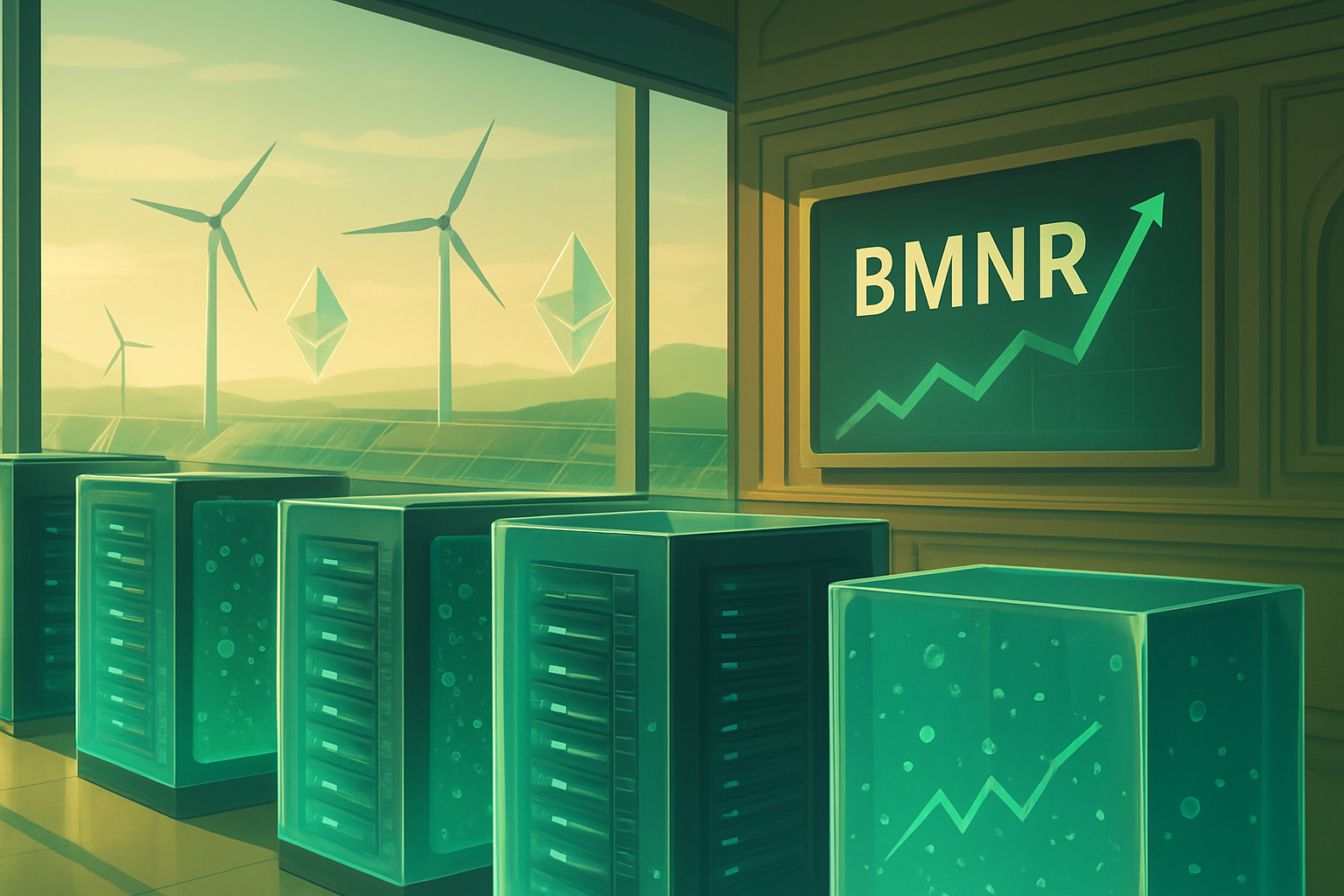
    On the morning of April 9, 2026, the floor of the New York Stock Exchange witnessed a symbolic transition for the digital asset industry. Bitmine Immersion Technologies (NYSE: BMNR), a company that began the decade as a micro-cap Bitcoin miner in the dusty plains of West Texas, officially graduated to the “Big Board.” The uplisting from the NYSE American to the main NYSE exchange was not merely a change in ticker location; it was accompanied by a staggering announcement: a board-authorized $4 billion share buyback program.

    This move cements Bitmine’s status as the "Ethereum equivalent" of MicroStrategy (NASDAQ: MSTR), shifting the narrative from a hardware-focused mining operation to a massive institutional treasury and staking powerhouse. With a portfolio anchored by nearly 4.8 million ETH and a proprietary immersion cooling technology that provides an unfair advantage in operational efficiency, BMNR has emerged as a central pillar of the 2026 crypto-equity landscape.

    Historical Background

    The origins of Bitmine Immersion Technologies (NYSE: BMNR) are rooted in a 1995 corporate shell (Sandy Springs Holdings), but its modern incarnation began in July 2021. Under the early leadership of Jonathan Bates and Erik Nelson, the company pivoted to address the most glaring weakness of the crypto mining industry: heat and energy waste.

    Between 2021 and 2024, Bitmine established itself as a pioneer in immersion cooling. Its flagship site in Pecos, Texas, and operations in Trinidad served as the testing grounds for submerging high-powered ASIC miners in dielectric fluid. By 2023, the Pecos facility was fully electrified, proving that immersion could extend hardware life and boost hashrate. However, the company remained a niche player on the OTC markets until mid-2025, when a radical change in leadership and strategy—led by Chairman Thomas "Tom" Lee—transformed the company into a digital asset treasury.

    Business Model

    Bitmine operates a sophisticated dual-track business model designed to capture value from both the physical and digital layers of the Ethereum and Bitcoin ecosystems.

    1. Digital Asset Treasury: The core of the company’s current value proposition is its "Alchemy of 5%" strategy. Bitmine aggressively acquires Ethereum (ETH) with the goal of holding 5% of the total circulating supply. This treasury is managed as a high-yield asset base, utilizing institutional staking to generate recurring revenue.
    2. Infrastructure & Immersion Cooling: Bitmine continues to operate a massive mining and validator footprint. By using dielectric liquid cooling, the company achieves a 30% higher efficiency rating than traditional air-cooled competitors. This hardware arm serves as a "yield engine," generating the cash flow used to service debt and fund further ETH acquisitions.
    3. MAVAN (Made-in-America Validator Network): Launched in early 2026, MAVAN is a proprietary staking-as-a-service platform that allows Bitmine to act as a primary validator for the Ethereum network, capturing both staking rewards and MEV (Maximal Extractable Value).

    Stock Performance Overview

    The trajectory of BMNR stock has been one of the most dramatic in the mid-2020s.

    • 1-Year Performance: Over the last twelve months, BMNR has outperformed the broader S&P 500 and even the price of ETH itself, driven by its 2025 pivot and the anticipation of the NYSE uplisting.
    • 5-Year Performance: Investors who held BMNR during its OTC days (when it traded as a penny stock under $1.00) have seen life-changing returns as the stock crossed into the triple digits in late 2025.
    • Recent Volatility: The stock experienced a significant "short squeeze" in mid-2025 following the announcement of Tom Lee’s chairmanship, and it has since stabilized into a high-volume institutional favorite, now ranking among the top 100 most liquid stocks in the U.S.

    Financial Performance

    Bitmine’s fiscal year 2025 results, released in late 2025, marked a turning point. The company reported a net income of $328.16 million, a radical swing from its earlier years of development-stage losses.

    • Assets: As of April 2026, Bitmine holds $11.4 billion in total assets, including 4.8 million ETH (valued at approximately $10.5 billion based on current market prices) and $864 million in cash and cash equivalents.
    • Margins: Due to the efficiency of its immersion cooling and the low overhead of its staking operations, the company boasts gross margins exceeding 75% in its treasury segment.
    • Valuation: BMNR often trades at a "treasury premium" to its Net Asset Value (NAV), similar to the premium seen in companies that successfully bridge the gap between equity markets and crypto-commodities.

    Leadership and Management

    The current leadership team is a "Who's Who" of Wall Street and Silicon Valley expertise:

    • Thomas "Tom" Lee (Chairman): The founder of Fundstrat Global Advisors, Lee is the visionary behind the ETH-treasury model. His reputation for accurate macro forecasting has provided the company with immense credibility among institutional investors.
    • Chi Tsang (CEO): Appointed in November 2025, Tsang brought 25 years of experience from firms like HSBC and various tech-focused venture capital groups. His focus is on "institutionalizing" the company's operations.
    • Young Kim (CFO/COO): An MIT-trained engineer with a Harvard MBA, Kim manages the complex logistics of the immersion facilities and the financial engineering required for the $4 billion buyback program.

    Products, Services, and Innovations

    Bitmine’s competitive edge lies in its "Thermal Management Intellectual Property." While many firms mine crypto, Bitmine’s proprietary immersion containers allow for "safe overclocking"—running machines at speeds higher than manufacturer specs without the risk of thermal meltdown.
    Additionally, the MAVAN Validator Network represents a shift toward "Green Staking." By powering its validator nodes with a mix of stranded gas in Texas and hydroelectric power in international locations, Bitmine has positioned its ETH holdings as the most ESG-compliant "yield" in the crypto market.

    Competitive Landscape

    Bitmine faces competition from three distinct groups:

    1. Bitcoin Giants: MARA Holdings (NASDAQ: MARA) and Riot Platforms (NASDAQ: RIOT) remain the leaders in pure-play Bitcoin hashrate, but they lack Bitmine’s aggressive Ethereum treasury focus.
    2. HPC/AI Pivoters: Companies like Core Scientific (NASDAQ: CORZ) and Hut 8 (NASDAQ: HUT) have moved toward hosting AI data centers. Bitmine has chosen to stay "crypto-native," betting that the yield from ETH staking will eventually outpace the margins of AI hosting.
    3. Institutional Treasuries: MicroStrategy (NASDAQ: MSTR) remains the primary rival for institutional "crypto-proxy" dollars. While MSTR is the "Bitcoin King," Bitmine is positioning itself as the "Ethereum Queen."

    Industry and Market Trends

    The "DATCO" (Digital Asset Treasury Company) trend is the defining market movement of 2026. Following the adoption of fair-value accounting by FASB in 2024, public companies can now report their crypto holdings at current market prices rather than being forced to only report "impairment" losses. This has encouraged companies like Bitmine to use their balance sheets as strategic weapons. Furthermore, the 2026 market is characterized by "Staking-as-a-Yield," where investors view ETH staking rewards as a digital version of the risk-free rate.

    Risks and Challenges

    Despite its success, Bitmine is not without risks:

    • Asset Concentration: With over 90% of its asset base in Ethereum, a catastrophic failure in the ETH protocol or a massive price crash would be devastating.
    • Regulatory Reversals: While the 2026 environment is favorable, any shift in the SEC's view on staking (possibly through a change in administration) could impact the MAVAN revenue stream.
    • Operational Maintenance: Immersion cooling is complex. A leak or contamination of the dielectric fluid at a major site could lead to significant downtime and hardware damage.

    Opportunities and Catalysts

    The $4 billion buyback is the most immediate catalyst. By retiring shares, Bitmine effectively increases the "ETH per share" for remaining investors.
    Future opportunities include:

    • Layer 2 Integration: Speculation exists that Bitmine may launch its own Ethereum Layer 2 network to capture transaction fees.
    • M&A: With its massive cash and equity valuation, Bitmine is well-positioned to acquire smaller air-cooled miners and "upgrade" them to immersion cooling.

    Investor Sentiment and Analyst Coverage

    Investor sentiment is overwhelmingly bullish, bordering on euphoric. The company is a favorite of ARK Investment Management and Pantera Capital. Major investment banks including Morgan Stanley and BlackRock (NYSE: BLK) have added BMNR to various "Innovation" and "Digital Infrastructure" ETFs. Retail sentiment, tracked via platforms like X and Reddit, remains high as the "Alchemy of 5%" becomes a viral movement among Ethereum enthusiasts.

    Regulatory, Policy, and Geopolitical Factors

    The 2026 regulatory landscape is the "Golden Era" for U.S. crypto companies. The GENIUS Act (2025) allowed U.S. banks to custody ETH, while the CLARITY Act defined ETH as a digital commodity. These laws provided the legal runway for Bitmine's NYSE uplisting. Geopolitically, Bitmine’s focus on "Made in America" validators aligns with U.S. policy to bring digital asset infrastructure back from overseas, particularly from regions with unstable energy grids or hostile regimes.

    Conclusion

    Bitmine Immersion Technologies (NYSE: BMNR) has successfully navigated the transition from a speculative penny stock to a foundational institutional asset. By combining high-end physical infrastructure (immersion cooling) with a bold financial strategy (the Ethereum treasury), the company has created a blueprint for the modern digital corporation.

    Investors should watch the execution of the $4 billion buyback and the progress toward the 5% ETH supply goal. While the concentration in a single digital asset carries inherent risks, the company’s operational efficiency and the current regulatory tailwinds suggest that Bitmine’s journey on the New York Stock Exchange is only just beginning. As of April 9, 2026, Bitmine is no longer just a mining company—it is a cornerstone of the decentralized financial future.


    This content is intended for informational purposes only and is not financial advice.

  • The $25,000 Pivot: Can Tesla Dominate the Mass Market and Physical AI?

    The $25,000 Pivot: Can Tesla Dominate the Mass Market and Physical AI?

    As of today, April 9, 2026, Tesla, Inc. (NASDAQ: TSLA) stands at perhaps the most critical crossroads in its 23-year history. The company that pioneered the premium electric vehicle (EV) revolution is now pivoting its entire operational weight toward two monumental goals: the mass-market democratization of electric transport and the realization of a fully autonomous "Cybercab" network. For investors, the story has shifted from "How many cars can they sell?" to "Can they master the unit economics of a $25,000 vehicle while leading the race in Physical AI?"

    Introduction

    Tesla is currently navigating a "middle period" of growth—a transitional phase where the massive success of the Model 3 and Model Y has matured, but the next high-volume catalysts are still in the early stages of scaling. With a market capitalization of $1.30 trillion, Tesla remains the world’s most valuable automaker, yet its valuation increasingly rests on its software, robotics, and energy segments rather than just sheet metal. The spotlight is firmly on "Project Redwood," the internal codename for the company’s upcoming $25,000 EV, which promises to use a revolutionary "unboxed" manufacturing process to disrupt the global automotive cost structure once again.

    Historical Background

    Founded in 2003, Tesla’s "Secret Master Plan" was always intended to culminate in a mass-market car. The journey began with the high-end Roadster (2008), followed by the luxury Model S (2012) and Model X (2015), which proved that EVs could be superior to internal combustion engine (ICE) vehicles. The 2017 launch of the Model 3 was the company’s first "production hell" trial, eventually leading to the Model Y becoming the best-selling vehicle globally in 2023.

    By 2024 and 2025, however, the narrative changed. As competitors caught up and interest rates pressured consumer spending, Tesla began a series of aggressive price cuts. This era marked the transition from a niche luxury player to a volume-driven manufacturer, setting the stage for the current push into the sub-$30,000 market.

    Business Model

    Tesla’s business model is a vertically integrated ecosystem consisting of four primary pillars:

    • Automotive: Revenue is generated from vehicle sales, leasing, and regulatory credits. The company is shifting from a high-margin premium model to a high-volume, software-enabled model.
    • Energy Generation and Storage: This segment—consisting of Megapack (utility-scale) and Powerwall (residential)—is currently Tesla's fastest-growing unit, providing high-margin recurring revenue.
    • Services and Other: This includes the Supercharger network, insurance, and vehicle maintenance. With the opening of the Supercharger network to other brands (NACS), this has become a significant moat.
    • Software and AI: This includes Full Self-Driving (FSD) subscriptions and, looking forward, the licensing of its AI 5 hardware and the Optimus humanoid robot.

    Stock Performance Overview

    Tesla’s stock performance as of April 9, 2026, reflects a decade of unprecedented gains followed by recent volatility:

    • 10-Year Performance: An extraordinary return of approximately 9,870%, driven by the successful scaling of the Model 3 and Model Y.
    • 5-Year Performance: A more modest +50.2% return. After hitting all-time highs in 2021, the stock spent much of 2022–2024 in a consolidation phase due to margin compression and high interest rates.
    • 1-Year Performance: +54.3%. The stock has rebounded significantly from its mid-2024 lows as the market began pricing in the success of the Energy segment and the impending "Project Redwood" launch.
    • Year-to-Date (2026): Down 23.9%, following a Q1 delivery miss that reminded investors of the ongoing challenges in the global EV market.

    Financial Performance

    In the fiscal year 2025, Tesla reported total revenue of $94.8 billion, a slight 3% decline year-over-year. This marked the company's first year of "negative growth" in its automotive segment, a result of deep price cuts intended to maintain market share against Chinese rivals.

    • Margins: Total GAAP gross margin stood at 20.1% for FY 2025, bolstered by the Energy segment's record performance, despite automotive gross margins (excluding credits) dipping to 17.9%.
    • Net Income: GAAP net income was $3.79 billion, down 46% from 2024. This reflects heavy investment in R&D ($6.41 billion) and the build-out of AI training clusters.
    • Cash Flow: Tesla remains cash-rich with over $28 billion in cash and investments, allowing it to self-fund its massive capital expenditures in Mexico and Texas.

    Leadership and Management

    Elon Musk remains the visionary but controversial CEO. His leadership in early 2026 is under intense scrutiny as he balances roles at SpaceX, X, and xAI. The Tesla Board recently added John R. (Jack) Hartung, former Chipotle CFO, to strengthen cost discipline as the company prepares for the low-margin battle of mass-market EVs.

    However, "brain drain" remains a risk. Recent departures of key autonomy and engineering leaders have raised questions about succession planning. While Musk’s 2024 pay package was re-approved, the debate over his "divided attention" continues to be a central theme for institutional investors.

    Products, Services, and Innovations

    The future of Tesla hinges on three technological breakthroughs:

    1. Project Redwood ($25,000 EV): Scheduled for production in H2 2026, this vehicle utilizes the "Unboxed Process." This involves assembling vehicle modules in parallel rather than on a traditional line, aiming to halve production costs.
    2. Cybercab: Launched into production in April 2026 at Giga Texas, the Cybercab is a dedicated autonomous vehicle with no steering wheel or pedals.
    3. Optimus: The Gen-2 humanoid robot is currently being "employed" within Tesla’s own factories for simple logistics tasks, with external sales targeted for 2027.

    Competitive Landscape

    The competitive environment has never been fiercer.

    • BYD (OTC: BYDDY): In 2025, BYD officially overtook Tesla as the world’s largest BEV seller. Their vertical integration—making their own batteries and chips—allows them to compete on price in ways Western OEMs cannot.
    • Xiaomi: The Chinese electronics giant has disrupted the market with its YU7 SUV, launched in early 2026. Its seamless integration with smartphone ecosystems has proven highly attractive to younger buyers.
    • Traditional OEMs: Companies like Ford (NYSE: F) and General Motors (NYSE: GM) have pulled back on EV targets, unintentionally giving Tesla and Chinese makers more breathing room, though they remain threats in the hybrid space.

    Industry and Market Trends

    The "EV slowdown" of 2024 has evolved into a "hybrid resurgence" in early 2026. However, Tesla is countering this by positioning itself as an AI and Energy company. The energy storage market is experiencing a massive tailwind from the global grid modernization and the power demands of AI data centers, which Tesla's Megapack is uniquely positioned to serve.

    Risks and Challenges

    • Execution Risk: The "Unboxed" manufacturing process is unproven at scale. Any delays in the $25,000 model could lead to further market share loss.
    • Margin Compression: Competing at lower price points naturally pressures margins. Tesla must achieve extreme manufacturing efficiency to remain profitable.
    • Regulatory Scrutiny: Tesla's FSD and Autopilot systems remain under investigation by the NHTSA, and any major accident involving the new Cybercab could result in severe setbacks.

    Opportunities and Catalysts

    • Robotaxi Revenue: If Tesla successfully launches its unsupervised ride-hailing app in late 2026, it could shift the business from a hardware-sale model to a high-margin software-service model (SaaS).
    • Energy Storage Dominance: The Energy segment is currently growing at 2x the rate of the Automotive segment and could contribute up to 30% of total profit by 2027.
    • FSD Licensing: Several legacy automakers are reportedly in talks to license Tesla’s FSD software, which would provide pure-profit licensing revenue.

    Investor Sentiment and Analyst Coverage

    Wall Street is deeply divided. Bulls, like Dan Ives of Wedbush, maintain a $600 price target, viewing Tesla as a "Physical AI" play. Bears, such as Gordon Johnson of GLJ Research, see a $25 valuation, arguing that Tesla is an overvalued car company facing declining demand. The current consensus price target sits around $410. Institutional ownership remains high, but retail sentiment has been tested by the recent Q1 delivery miss.

    Regulatory, Policy, and Geopolitical Factors

    Geopolitics remain a wildcard. Tesla’s heavy reliance on Giga Shanghai makes it vulnerable to U.S.-China trade tensions. Furthermore, the Biden administration's Inflation Reduction Act (IRA) credits continue to subsidize Tesla’s U.S. sales, but a potential change in political leadership in late 2024/2025 has introduced uncertainty regarding the longevity of these incentives. In Europe, new tariffs on Chinese-made EVs (including Teslas made in Shanghai) are forcing the company to lean more heavily on Giga Berlin.

    Conclusion

    Tesla in April 2026 is a company in the middle of an ambitious transformation. The shift toward a lower-cost, mass-market model is not just a product launch; it is a fundamental redesign of how vehicles are built. For investors, the next 18 months are critical. If Tesla can successfully scale "Project Redwood" and demonstrate a functional Robotaxi network, its current $1.3 trillion valuation may look conservative. If execution falters, the company faces the reality of being a high-volume, lower-margin manufacturer in an increasingly crowded global market. Investors should watch the H2 2026 production ramp and FSD v14.3 intervention rates as the ultimate indicators of Tesla's long-term trajectory.


    This content is intended for informational purposes only and is not financial advice.

  • The Digital Plumbing of Wall Street: Inside Broadridge’s $9 Trillion Blockchain Revolution

    The Digital Plumbing of Wall Street: Inside Broadridge’s $9 Trillion Blockchain Revolution

    In the world of high-finance, "plumbing" is a term often used to describe the essential systems that allow money and securities to flow across the globe. For nearly two decades, Broadridge Financial Solutions (NYSE: BR) has been the primary architect of this infrastructure. Today, April 9, 2026, Broadridge finds itself at a pivotal juncture as it transitions from a legacy service provider to a blockchain-native powerhouse.

    The company is currently in the spotlight for a historic milestone: its Distributed Ledger Repo (DLR) platform has officially entered the mainstream. Processing record monthly volumes of nearly $9 trillion as of late 2025 and sustaining over $8 trillion in March 2026, the DLR is no longer a "pilot" project—it is a fundamental pillar of the global $10 trillion repurchase (repo) market. This deep-dive examines how Broadridge is leveraging this breakthrough to cement its dominance in a rapidly digitizing financial landscape.

    Historical Background

    Broadridge’s journey began not as an independent entity, but as the Brokerage Services Group of Automatic Data Processing (ADP). In 2007, it was spun off as a public company with a clear mandate: to handle the complex, data-heavy tasks of proxy voting and trade processing that banks and broker-dealers preferred to outsource.

    Over the last 19 years, Broadridge has transformed through aggressive R&D and strategic acquisitions. What started as a "back-office" utility has evolved into a global fintech leader. The company’s history is defined by its ability to anticipate regulatory shifts—such as the transition to electronic proxy delivery and the move toward T+1 settlement—positioning itself as the "indispensable partner" for Wall Street.

    Business Model

    Broadridge operates through two primary reporting segments: Investor Communication Solutions (ICS) and Global Technology and Operations (GTO).

    1. Investor Communication Solutions (ICS): This is the core engine, providing proxy voting services, corporate governance solutions, and regulatory communications. Because Broadridge manages the connection between thousands of public companies and millions of shareholders, it enjoys a near-monopoly in the proxy space.
    2. Global Technology and Operations (GTO): This segment provides the technical "rails" for trade processing and capital markets operations. It is here that the DLR platform resides.

    The strength of the model lies in its recurring revenue, which accounts for approximately 65% of total revenue. With a client retention rate consistently near 98%, the business acts more like a high-margin SaaS platform than a traditional financial services firm.

    Stock Performance Overview

    As of April 9, 2026, Broadridge’s stock performance presents a tale of two horizons.

    • 1-Year Performance: The stock has faced significant headwinds, down approximately 32% from its 52-week highs, currently trading near $160. This is largely attributed to broader tech-sector volatility and higher interest rates impacting capital-intensive firms.
    • 5-Year Performance: Despite the recent dip, long-term investors have seen steady growth with a total return in the 12–16% range.
    • 10-Year Performance: This is where the "Broadridge Moat" shines. Over the last decade, BR has delivered a total return of ~228%, significantly outperforming the S&P 500 and solidifying its reputation as a "compounding machine."

    Financial Performance

    Financial results for Fiscal Year 2025 (ending June 2025) and early FY2026 data highlight a robust balance sheet.

    • Revenue: Broadridge reported $6.89 billion in total revenue for FY2025, a 6% year-over-year increase.
    • Profitability: Adjusted operating income margins expanded to 20.5%, driven by the scalability of digital products like the DLR.
    • 2026 Guidance: Management expects 5–7% recurring revenue growth and 8–12% adjusted EPS growth.
    • Cash Flow: The company remains a cash generator, though it carries a manageable but notable debt load used to fund recent digital transformations.

    Leadership and Management

    CEO Tim Gokey has been the architect of Broadridge’s "ABCD" strategy (AI, Blockchain, Cloud, and Data). Under his leadership, the company has pivoted from legacy hardware to cloud-native solutions.

    Recent leadership changes in early 2026 emphasize this shift. In March 2026, Allen Weinberg was appointed as the inaugural Chief Growth and Strategy Officer, tasked with scaling the DLR globally. Additionally, Germán Soto Sanchez has transitioned to lead the Chief Product and Enterprise Platform office, specifically focusing on the "tokenization of everything"—the idea that all financial assets will eventually move onto a ledger.

    Products, Services, and Innovations: The DLR Breakout

    The crown jewel of Broadridge’s current innovation pipeline is the Distributed Ledger Repo (DLR) platform. The repo market—where banks lend each other cash secured by collateral (usually Treasuries)—has historically been plagued by manual processes and "trade fails."

    How DLR Works:

    • Collateral Immobilization: Instead of physically moving a bond from Bank A to Bank B, the DLR creates a digital twin (token) of the bond. The actual security stays put at the custodian, while the ownership is transferred via smart contracts.
    • Atomic Settlement: Cash and collateral swap ownership simultaneously (Delivery vs. Payment), virtually eliminating settlement risk.
    • Intraday Repo: The DLR allows for 4-hour or 6-hour loans, a feat impossible under old systems. This allows banks to manage liquidity with surgical precision.

    By March 2026, the platform was processing $354 billion in Average Daily Volume (ADV), a nearly 400% increase over the previous year.

    Competitive Landscape

    Broadridge operates in a "co-opetition" environment with other giants like FIS (NYSE: FIS) and SS&C Technologies (NASDAQ: SSNC).

    • FIS: While FIS is a titan in banking and payments, it lacks Broadridge’s granular control over the proxy voting and repo-specific infrastructure.
    • SS&C: SS&C dominates fund administration, but Broadridge’s 98% retention rate among broker-dealers provides a "sticky" ecosystem that is difficult for SS&C to penetrate in the capital markets segment.
      Broadridge’s primary competitive advantage is its Integration Moat. It is so deeply embedded in the back-office systems of the world’s largest banks (the "Global Systemically Important Banks" or G-SIBs) that switching to a competitor would be a multi-year, multi-billion dollar risk for most clients.

    Industry and Market Trends

    The primary trend driving Broadridge’s growth is the compression of settlement cycles. The move to T+1 (and the eventual push toward T+0) in global markets necessitates the kind of automation that Broadridge provides. Furthermore, the tokenization of Real-World Assets (RWA) is moving from theory to practice. As more asset classes (private equity, real estate) become tokenized, the DLR infrastructure can be adapted to handle them, opening up massive new TAM (Total Addressable Market).

    Risks and Challenges

    Despite its dominance, Broadridge is not without risks:

    1. Cybersecurity: As the central hub for proxy and trade data, a significant breach could be catastrophic for both the company and the global financial system.
    2. Concentration Risk: A small number of Tier-1 banks account for a large portion of GTO revenue. If a major bank were to insource these services, it would impact the bottom line.
    3. Macroeconomic Pressure: In high-interest-rate environments, the volume of corporate actions and certain trading activities can slow, impacting transactional revenue.

    Opportunities and Catalysts

    • International Expansion: While Broadridge is dominant in North America, there is significant room to grow the DLR and proxy services in European and Asian markets.
    • AI Integration: The company is currently deploying generative AI to automate the "reconciliation" of complex trade discrepancies, which could further improve margins.
    • Intraday Liquidity: As central banks tighten liquidity, the demand for the DLR’s intraday repo capabilities is expected to soar, as banks look to save every basis point of interest.

    Investor Sentiment and Analyst Coverage

    Wall Street remains generally bullish on Broadridge, viewing it as a "defensive tech" play. Institutional ownership stands at over 85%, including major positions from Vanguard and BlackRock. Analysts frequently cite the DLR’s volume growth as the primary "alpha" generator for the stock. However, some retail sentiment has soured due to the stock’s recent 30% drawdown, creating a valuation gap that long-term analysts view as a buying opportunity.

    Regulatory, Policy, and Geopolitical Factors

    Regulatory tailwinds are currently in Broadridge's favor. The SEC’s focus on transparency in proxy voting and the push for "Active Disclosure" requirements play directly into Broadridge’s ICS segment. Geopolitically, the push for "Financial Sovereignty" in different regions may require Broadridge to localize its ledger technologies, a challenge the company is meeting through its multi-cloud and region-specific node deployments.

    Conclusion

    Broadridge Financial Solutions has successfully navigated the transition from a back-office utility to a front-line innovator. The record processing volumes on its Distributed Ledger Repo platform—reaching nearly $9 trillion in a single month—mark the beginning of a new era for financial infrastructure.

    While the stock price has suffered in the short term due to macro-tech headwinds, the underlying fundamentals tell a story of a company with an unbreakable moat and a clear path toward digitizing the world’s collateral. For investors, Broadridge represents a rare combination: the stability of a 98% retention utility with the explosive upside of a blockchain pioneer. As we look toward the remainder of 2026, the scaling of the DLR from 3% of the repo market to double-digits will be the key metric to watch.


    This content is intended for informational purposes only and is not financial advice.

  • The AI Landlord: Inside Oracle’s Pivot to Fusion Agentic Applications

    The AI Landlord: Inside Oracle’s Pivot to Fusion Agentic Applications

    Today’s Date: April 9, 2026

    Introduction

    In the rapidly evolving landscape of enterprise technology, few stories are as compelling as the resurrection of Oracle (NYSE: ORCL). Once viewed by Silicon Valley as a legacy database provider destined for obsolescence, Oracle has successfully reinvented itself as the foundational "AI Landlord" of the mid-2020s. Today, on April 9, 2026, the company stands at a critical juncture. While its Oracle Cloud Infrastructure (OCI) continues to power the training of the world’s most advanced Large Language Models (LLMs), the spotlight has shifted toward the application layer. With the recent launch of its Fusion Agentic Applications, Oracle is attempting to move the industry from "Systems of Record" to "Systems of Outcomes," aiming to automate the entire enterprise through autonomous AI agents.

    Historical Background

    Founded in 1977 as Software Development Laboratories, Oracle’s origins are rooted in a CIA project code-named "Oracle." Co-founders Larry Ellison, Bob Miner, and Ed Oates recognized the potential of the relational database, a concept pioneered by IBM but commercialized by Oracle. Throughout the 1990s and 2000s, Oracle became the dominant force in enterprise software through a series of aggressive acquisitions, including PeopleSoft, Siebel, and NetSuite.

    However, the 2010s were a period of stagnation. Oracle was late to the cloud, allowing Amazon Web Services (AWS) and Microsoft (NASDAQ: MSFT) to seize early dominance. The narrative shifted in the early 2020s with the development of Gen 2 Cloud Infrastructure (OCI). By leveraging high-bandwidth RDMA networking—perfectly suited for GPU clusters—Oracle turned its late-comer status into an advantage, becoming the preferred cloud partner for AI pioneers like OpenAI and xAI.

    Business Model

    Oracle operates a diversified business model that spans the entire technology stack. Its revenue is derived from four primary segments:

    1. Cloud Infrastructure (IaaS): This is Oracle’s high-growth engine, providing the compute and storage power for AI startups and established enterprises.
    2. Cloud Applications (SaaS): Oracle Fusion (ERP, HCM, SCM) and NetSuite provide end-to-end business management in the cloud.
    3. Cloud and License Support: The legacy heartbeat of the company, providing steady, high-margin recurring revenue from existing database installations.
    4. Hardware and Services: Including the remains of the Sun Microsystems business and the massive Cerner healthcare integration project.

    Oracle’s unique advantage lies in its "vertical integration"—it builds the database, the infrastructure it runs on, and the applications that use the data, allowing for a level of performance and data security that decoupled competitors struggle to match.

    Stock Performance Overview

    The stock performance of ORCL over the last five years has been a rollercoaster of "legacy revaluation."

    • 10-Year View: Investors who held ORCL through the stagnant 2015–2020 period have been richly rewarded, with the stock more than tripling as the cloud transition bore fruit.
    • 5-Year View: The stock saw massive acceleration starting in 2023, fueled by the generative AI boom. It reached an all-time high of approximately $345 in September 2025.
    • 1-Year View: 2026 has brought a "reality check." As of early April, ORCL is trading in the $145–$160 range. This 25% year-to-date pullback reflects investor anxiety over the enormous capital expenditures required to build AI data centers, despite record-breaking backlogs.

    Financial Performance

    Oracle’s financials for the fiscal year 2025 and the first three quarters of 2026 highlight a company in hyper-expansion.

    • Revenue Growth: Total revenue for FY2025 hit $57 billion. Projections for FY2026 sit at $67 billion, driven by an 80%+ growth rate in IaaS revenue.
    • The Backlog: The most striking metric is Oracle’s Remaining Performance Obligation (RPO), which surged to $553 billion in March 2026. This represents a multi-year queue of customers waiting for cloud capacity.
    • Margins and Debt: While operating margins remain healthy at 43% (non-GAAP), the company is carrying a significant debt load of roughly $124 billion.
    • Capital Expenditure: Oracle is currently spending approximately $50 billion annually on data centers, a "bet-the-company" investment in the future of AI.

    Leadership and Management

    Oracle remains heavily influenced by its founder, Larry Ellison, who serves as Chairman and CTO. Ellison’s vision for "autonomous" technology—databases that patch themselves and AI that runs businesses—is the company’s North Star. Safra Catz, CEO since 2014, is credited with the disciplined execution of the cloud transition and the successful integration of complex acquisitions like Cerner.

    The leadership team is currently focused on "Sovereign Clouds"—a strategy to build data centers within the borders of specific nations to comply with local data laws, a move that has won them massive contracts in Japan, Saudi Arabia, and the EU.

    Products, Services, and Innovations

    The most significant innovation of 2026 is the Fusion Agentic Applications suite. Unlike "copilots" (which suggest actions to a human), Oracle’s agents are designed to execute tasks autonomously.

    • Autonomous Supply Chain: Agents that can detect a shipping delay and automatically source a replacement supplier based on cost and lead time, without human intervention.
    • Write-Back Capability: Unlike competitors, Oracle’s agents are natively integrated into the database, meaning they can "write" changes directly to the system of record with full audit trails.
    • AI Agent Studio: A natural-language interface allowing non-technical HR or finance managers to build custom agents.

    Competitive Landscape

    Oracle competes in a "war of giants."

    • Microsoft and AWS: While much larger in total cloud share, Oracle has carved out a niche as the "performance leader" for AI training.
    • Salesforce (NYSE: CRM) and SAP (NYSE: SAP): In the SaaS space, Salesforce’s "Agentforce" is the primary rival to Oracle Fusion. However, Oracle argues that because it owns the underlying infrastructure and database, its agents are more secure and faster than those running on third-party clouds.
    • Workday (NASDAQ: WDAY): A fierce competitor in the HCM (Human Capital Management) space, though Oracle’s recent gains in healthcare via the Cerner integration have given it a specialized advantage.

    Industry and Market Trends

    The dominant trend in 2026 is the shift toward Agentic AI. The market is moving away from chat interfaces toward autonomous agents that can "work while you sleep." Additionally, Sovereign AI has become a geopolitical necessity. As nations seek to protect their data from foreign influence, Oracle’s "Alloy" platform—which allows third parties to run their own Oracle Cloud—has become a top choice for national governments.

    Risks and Challenges

    Despite the growth, Oracle faces significant headwinds:

    1. Capital Intensity: The $50 billion CapEx plan has strained free cash flow, leading to concerns about dividend sustainability if growth slows.
    2. Cerner Integration: The $28 billion acquisition of Cerner has been plagued by delays in the U.S. Veterans Affairs (VA) EHR rollout, which only recently resumed in April 2026 under heavy Congressional scrutiny.
    3. Power Constraints: Like all cloud providers, Oracle is hitting the "power wall," where finding enough electricity to run massive AI clusters is becoming more difficult than finding the chips themselves.

    Opportunities and Catalysts

    • Project Stargate: A rumored $500 billion joint venture involving OpenAI and SoftBank could see Oracle providing the infrastructure for the world's first true "super-intelligence" cluster.
    • National Security: Larry Ellison’s recent push for a unified national health and financial database to eliminate government waste (linked to the "DOGE" initiative) could open massive federal revenue streams.
    • Health Data Revolution: If the Cerner-VA rollout succeeds in 2026, it could become the blueprint for global nationalized health systems.

    Investor Sentiment and Analyst Coverage

    Wall Street is currently divided. "Bulls" point to the $553 billion RPO as a sign of guaranteed future revenue. "Bears" are wary of the debt-to-equity ratio and the possibility of an AI "infrastructure bubble" if the Fusion agents don't deliver immediate ROI for enterprises.

    • Consensus: Most analysts maintain a "Buy" or "Overweight" rating, but with lowered price targets following the early 2026 tech correction.

    Regulatory, Policy, and Geopolitical Factors

    Oracle is navigation a complex regulatory web. The company is under constant scrutiny regarding data privacy, particularly its historical "dossier" business. However, its focus on Sovereign Clouds has made it a favorite among regulators in the Middle East and Asia who are wary of "standard" American cloud dominance. In the U.S., Oracle’s success in securing a landmark contract with the Centers for Medicare and Medicaid Services (CMS) in early 2026 suggests it remains a preferred partner for the federal government.

    Conclusion

    Oracle is no longer the "dinosaur" of enterprise tech. By transforming its legacy database dominance into a cutting-edge AI infrastructure and application powerhouse, it has secured its place in the next decade of computing. The launch of Fusion Agentic Applications marks a bold bet that the future of business belongs to autonomous software. For investors, the question is no longer whether Oracle can innovate, but whether it can manage the immense financial weight of its own ambition. Watch the RPO conversion rates and the progress of the Cerner-VA rollout as the key indicators for the remainder of 2026.


    This content is intended for informational purposes only and is not financial advice.

  • The New Infrastructure Titan: A Deep Dive into Prologis (PLD) and its European Expansion

    The New Infrastructure Titan: A Deep Dive into Prologis (PLD) and its European Expansion

    Date: April 9, 2026

    Introduction

    In the high-stakes world of industrial real estate, size usually dictates strength, but adaptability dictates survival. Prologis, Inc. (NYSE: PLD), the world’s largest owner, operator, and developer of logistics real estate, has long been the titan of the warehouse world. However, as of April 2026, the company is no longer just a "landlord for boxes." It has transformed into a sophisticated infrastructure giant, bridging the gap between physical supply chains and digital power grids.

    Prologis is currently in the spotlight following the high-profile launch of its latest pan-European joint venture, PLIVE (Prologis Logistics Investment Venture Europe). This strategic move, partnered with the Canadian investment behemoth La Caisse (CDPQ), arrives at a critical juncture for European logistics, characterized by near-record-low vacancy rates and a massive "nearshoring" wave. This article explores the mechanics of PLIVE, the company's recent leadership transition, and its aggressive pivot into data centers and renewable energy.

    Historical Background

    Prologis’s journey began as two separate entities: AMB Property Corporation, co-founded by current Executive Chairman Hamid Moghadam in 1983, and Security Capital Industrial Trust (SCI), founded in 1991. SCI eventually rebranded as Prologis and became a pioneer in the REIT industry by focusing exclusively on industrial properties during a time when retail and office spaces were the darlings of Wall Street.

    The defining moment in the company’s history occurred in 2011 with the "merger of equals" between AMB and Prologis. This created a global powerhouse that survived the Great Recession’s aftermath by focusing on "Global Markets"—the 30 largest hubs for global trade. Over the last decade, the company has grown through massive consolidation, acquiring rivals like Liberty Property Trust (2020) and Duke Realty (2022). By 2026, the company has shifted its focus from merely acquiring buildings to optimizing the "Last Touch" delivery nodes that power modern e-commerce.

    Business Model

    Prologis operates through two main segments: Real Estate Operations and Strategic Capital.

    1. Real Estate Operations: This is the core engine, where Prologis owns and manages nearly 1.3 billion square feet of space. Revenue is primarily derived from long-term leases with tenants like Amazon, DHL, and FedEx.
    2. Strategic Capital: This is Prologis’s "asset-light" growth lever. The company manages money for institutional investors through co-investment ventures like the new PLIVE and the long-standing Prologis European Logistics Fund (PELF). Prologis earns asset management fees, incentive fees, and development fees, allowing it to control massive amounts of real estate (over $100 billion in strategic capital) while maintaining a healthy balance sheet.

    Furthermore, the company has expanded its "Prologis Essentials" platform, which sells turnkey solutions—forklifts, racking, robotics, and energy—directly to its tenants, turning the warehouse into a service-oriented ecosystem.

    Stock Performance Overview

    As of April 2026, PLD is trading in the $133–$137 range, reflecting a robust recovery from the interest-rate-driven volatility of 2023 and 2024.

    • 1-Year Performance: The stock has surged approximately 42% over the past year. This rally was fueled by the stabilization of global interest rates and the realization that logistics demand has decoupled from the broader "retail apocalypse" narrative.
    • 5-Year Performance: Looking back to April 2021, the stock has returned roughly 40%. While the 2022–2024 period saw the stock trade sideways due to rising cap rates, the recent acceleration in 2025 has put long-term investors back in the green.
    • 10-Year Performance: For the long-term holder, Prologis has been a standout performer, delivering a total return of nearly 300% (approx. 13.8% CAGR). This significantly outperforms the broader REIT indices, driven by the structural tailwind of e-commerce penetration.

    Financial Performance

    Fiscal Year 2025 was a record-breaking year for Prologis. The company reported Net Earnings per Share of $3.56 and Core FFO per Share of $5.81, the latter being the gold standard metric for REIT profitability.

    Total revenue for 2025 reached $8.79 Billion, supported by a record 228 million square feet of leases signed. Despite concerns about an industrial slowdown, average occupancy remained remarkably high at 95.3%. The company’s balance sheet remains one of the strongest in the sector, with $7.6 billion in liquidity and a Debt-to-Adjusted EBITDA ratio of 5.3x, earning it an A-level credit rating from major agencies.

    Leadership and Management

    A major era ended on January 1, 2026, when co-founder Hamid Moghadam transitioned from CEO to Executive Chairman. Moghadam is widely regarded as one of the most successful REIT executives in history, having navigated multiple cycles with a focus on high-barrier-to-entry markets.

    The new CEO, Dan Letter, previously the company's President, has been tasked with executing the "Intelligent Infrastructure" strategy. Letter’s promotion signals continuity rather than disruption. The management team is currently focused on high-margin sectors: converting old warehouse land into data centers and scaling the company’s burgeoning energy business.

    Products, Services, and Innovations

    Prologis is no longer just selling four walls and a roof. In 2026, its innovation pipeline is dominated by two sectors:

    • Data Centers: Prologis identified that its vast land bank—often located near major urban centers with existing power infrastructure—is ideal for AI-driven data centers. The company has a 5.7 GW power pipeline secured, representing a multi-billion dollar development opportunity that commands much higher rents than standard logistics.
    • Energy and Mobility: The company has surpassed 1 GW of solar and battery storage capacity on its rooftops. Through its "Energy-as-a-Service" model, Prologis provides EV charging for delivery fleets and sells renewable power back to its tenants, creating a secondary revenue stream that is less cyclical than traditional rent.

    Competitive Landscape

    The logistics sector is a battle of the giants. Prologis’s primary rivals include:

    • Segro (LSE: SGRO): The dominant force in the UK and European urban infill markets. Segro competes fiercely for "last-mile" hubs around London and Paris and has also moved aggressively into data centers.
    • Blackstone (NYSE: BX): Through its platforms Mileway and the newly launched Proxity, Blackstone remains the largest private owner of logistics. Blackstone’s agility in the capital markets and its focus on the Nordic and Continental European "last-mile" space make it Prologis’s most formidable challenger for acquisitions.
    • Goodman Group (ASX: GMG): A significant player in the Asia-Pacific region and coastal US markets, Goodman shares Prologis's focus on high-value, supply-constrained locations.

    Industry and Market Trends

    Three trends are defining the 2026 logistics landscape:

    1. Nearshoring and Reshoring: To avoid the supply chain shocks of the early 2020s, companies are moving manufacturing closer to the end consumer. This has caused a massive spike in demand for logistics space in Mexico (supporting the US) and Eastern Europe (supporting Western Europe).
    2. E-commerce 2.0: After a post-pandemic lull, e-commerce has stabilized as a permanent 20%+ of total retail, requiring more sophisticated, automated sorting centers.
    3. The Power Crunch: Logistics assets are increasingly valued by their access to the electrical grid. As trucking fleets electrify, a warehouse with a 10MW connection is exponentially more valuable than one without.

    Risks and Challenges

    Despite its dominance, Prologis faces several headwinds:

    • Interest Rate Volatility: As a REIT, Prologis is sensitive to the cost of capital. Any resurgence in inflation that forces central banks to hike rates could depress property valuations (cap rates).
    • Regulatory Hurdles in Europe: The EU’s strict ESG reporting requirements (SFDR) and local zoning laws can delay new developments for years.
    • Concentration Risk: A significant portion of Prologis’s revenue comes from a handful of global tenants. If a major player like Amazon significantly alters its logistics strategy, it could create localized vacancies.

    Opportunities and Catalysts

    The PLIVE Joint Venture is the immediate catalyst. By partnering with CDPQ, Prologis can deploy €1 billion in seed capital to snap up distressed or under-managed European assets without overleveraging its own balance sheet.

    Another major catalyst is the monetization of the data center pipeline. Analysts expect the first major wave of Prologis-developed data centers to come online in late 2026, which could lead to a significant upward re-rating of the stock as it begins to be valued more like a technology infrastructure play than a traditional REIT.

    Investor Sentiment and Analyst Coverage

    Wall Street remains overwhelmingly "Bullish" on PLD. Of the 24 major analysts covering the stock in April 2026, 19 have a "Buy" or "Strong Buy" rating. Institutional ownership remains high at over 90%, with Vanguard and BlackRock holding the largest stakes.

    Retail sentiment, often tracked via social platforms, has improved as the company’s dividend (currently yielding roughly 3.1% with a $4.28 annualized payout) continues to grow at a mid-to-high single-digit pace. Investors see PLD as a "quality" haven in a potentially volatile macro environment.

    Regulatory, Policy, and Geopolitical Factors

    Geopolitics are a double-edged sword for Prologis. The ongoing trade tensions between the US and China have accelerated "China Plus One" strategies, benefiting Prologis’s assets in Vietnam, India, and Mexico.

    In Europe, the EU Green Deal and the Carbon Border Adjustment Mechanism (CBAM) are forcing tenants to seek carbon-neutral warehouses. Prologis is well-positioned here, as its new developments are built to BREEAM "Outstanding" or "Excellent" standards, allowing it to charge "green premiums" on rents.

    Conclusion

    Prologis enters mid-2026 as a company that has successfully bridged the gap between old-world real estate and new-world infrastructure. The launch of the PLIVE joint venture underscores its commitment to European expansion, while its pivot into data centers and energy provides a growth "kicker" that traditional industrial REITs lack.

    For investors, the case for Prologis rests on its massive scale and its "strategic capital" model, which generates high-margin fees with lower risk. While the stock is not "cheap" by historical valuation standards, its 95%+ occupancy and dominant position in the world's most vital trade corridors make it a cornerstone holding for any diversified portfolio. Investors should keep a close eye on the execution of the data center pipeline and the integration of the PLIVE assets as the primary drivers of performance through 2027.


    This content is intended for informational purposes only and is not financial advice.

  • ImmunityBio (IBRX): From R&D Speculation to Record Commercial Revenue

    ImmunityBio (IBRX): From R&D Speculation to Record Commercial Revenue

    Today's Date: April 9, 2026

    Introduction

    In the high-stakes arena of biotechnology, few companies have undergone a transformation as dramatic as ImmunityBio, Inc. (NASDAQ: IBRX). Long viewed by Wall Street as a speculative "story stock" with a complex corporate structure, the company has pivoted sharply into a commercial powerhouse. As of early 2026, ImmunityBio is no longer just a promise of the "Cancer Moonshot" vision; it is a revenue-generating entity that recently reported a record-breaking first quarter for net product revenue.

    The focus of the investment community has shifted from clinical trial data to commercial execution. With its lead immunotherapy, ANKTIVA (nogapendekin alfa inbakicept-pmln), now approved in over 30 countries—including the United States, Saudi Arabia, and the European Union—ImmunityBio is attempting to redefine the standard of care for non-muscle invasive bladder cancer (NMIBC) and beyond. This article explores the company’s evolution, the nuances of its business model, and the catalysts driving its current valuation surge.

    Historical Background

    ImmunityBio’s lineage is inseparable from its founder, Dr. Patrick Soon-Shiong, the billionaire surgeon and entrepreneur responsible for inventing the blockbuster drug Abraxane. The company’s modern form was solidified in early 2021 through a merger between ImmunityBio and NantKwest, another Soon-Shiong entity. The merger combined ImmunityBio’s robust pipeline of immunotherapy agents with NantKwest’s innovative natural killer (NK) cell platform.

    The journey was not without its hurdles. In 2023, the company faced a major setback when the U.S. FDA issued a Complete Response Letter (CRL) regarding its Biologics License Application (BLA) for ANKTIVA, citing issues at third-party manufacturing facilities. The stock plummeted to near-delisting levels. However, a successful re-filing and the subsequent FDA approval in April 2024 marked a turning point, initiating a two-year commercial ramp-up that has culminated in the record financials seen today.

    Business Model

    ImmunityBio operates as a vertically integrated biotechnology firm focused on developing therapies that activate the immune system’s "triad": NK cells, T cells, and memory cells.

    Revenue Sources:

    1. Product Sales: The primary driver is ANKTIVA, used primarily in combination with Bacillus Calmette-Guérin (BCG) for patients with BCG-unresponsive NMIBC.
    2. Strategic Partnerships: The company leverages international distribution agreements, such as its 2025 partnership with Accord Healthcare to penetrate the European and MENA markets.
    3. Supply Chain Integration: Uniquely, ImmunityBio has sought to control the supply of BCG itself through a partnership with the Serum Institute of India, providing a "total solution" to urologists who have historically faced chronic drug shortages.

    The customer base consists of hospital systems, oncology clinics, and government health agencies. By providing both the immunotherapy agent and the scarce BCG component, ImmunityBio has created a high-switching-cost environment for its users.

    Stock Performance Overview

    The performance of IBRX has been a roller coaster for long-term holders.

    • 1-Year Performance: Over the past 12 months, the stock has rallied significantly, up over 250% year-to-date in 2026. This surge follows the successful "J-code" implementation and the expansion of insurance coverage.
    • 5-Year Performance: The five-year chart reflects the 2021 post-merger peak ($42.25), followed by a multi-year decline into 2023, and the recent recovery.
    • 10-Year Performance: Including its predecessor entities, the stock represents the volatile nature of the "Nant" ecosystem, characterized by massive capital raises and heavy insider support from Dr. Soon-Shiong.

    The recent breakout in 2026 suggests the market is finally beginning to value the company on a price-to-sales (P/S) basis rather than purely on clinical speculation.

    Financial Performance

    ImmunityBio’s Q1 2026 results have set a new benchmark for the company.

    • Record Revenue: Preliminary Q1 net product revenue reached $44.2 million, a 168% increase year-over-year. This was driven by a 750% increase in unit sales volume over the 2025 fiscal year.
    • Margins and Loss: While revenue is scaling, the company remains in a growth-investment phase. Net loss for the most recent quarter (Q4 2025) was $61.9 million, narrowing from prior years.
    • Balance Sheet: A critical development in March 2026 was the $75 million non-dilutive financing from Oberland Capital and a $25 million debt conversion by Nant Capital. These moves have reduced "going concern" risks and brought total cash and equivalents to approximately $380.9 million.

    Leadership and Management

    Executive Chairman & Global Chief Scientific Officer: Dr. Patrick Soon-Shiong remains the driving force and largest shareholder. His deep pockets and scientific vision are the company's greatest assets, though his dominance has occasionally led to concerns regarding corporate governance and transparency.

    President & CEO: Richard Adcock has brought much-needed operational discipline to the company. Since his appointment, the focus has shifted from "moonshot" R&D to precise commercial execution, manufacturing quality, and securing non-dilutive capital. This leadership duo balances Soon-Shiong’s high-level scientific ambition with Adcock’s pragmatic business focus.

    Products, Services, and Innovations

    The crown jewel of the portfolio is ANKTIVA, an IL-15 superagonist.

    • Mechanism: Unlike standard checkpoint inhibitors that only "release the brakes" on the immune system, ANKTIVA "steps on the gas" by stimulating NK cells and CD8+ T cells without inducing the exhaustion seen with other therapies.
    • Pipeline Expansion: The company is currently testing ANKTIVA for Non-Small Cell Lung Cancer (NSCLC). In January 2026, Saudi Arabia became the first nation to approve this indication.
    • Infectious Disease: A Phase 2 program for HIV—utilizing a "kick and kill" strategy—is currently one of the most watched clinical programs in the infectious disease sector.

    Competitive Landscape

    ImmunityBio does not operate in a vacuum. The NMIBC market is increasingly crowded:

    • Merck & Co. (NYSE: MRK): Keytruda was the first systemic therapy approved for this indication, though its response rates (CR around 41%) are lower than ANKTIVA's recorded 62%–71%.
    • Ferring Pharmaceuticals: Their gene therapy, Adstiladrin, offers a convenient once-every-three-months dosing schedule, making it a favorite for patients with travel constraints.
    • Johnson & Johnson (NYSE: JNJ): The biggest new threat is Inlexzo (TAR-200), approved in September 2025. With a high CR rate, it is competing directly for market share, though ImmunityBio argues that ANKTIVA's long-term durability (53+ months) remains superior.

    Industry and Market Trends

    The oncology sector is shifting toward "chemo-free" and "combination immunotherapy" regimens. ImmunityBio is at the forefront of this trend. Furthermore, the global shortage of BCG has become a structural tailwind for IBRX. By securing a reliable supply through the Serum Institute of India, ImmunityBio has turned a supply chain crisis into a competitive moat.

    The macro environment for biotech in 2026 has also improved, with stabilizing interest rates allowing growth-stage companies to refinance debt more favorably, as seen with the recent Oberland Capital deal.

    Risks and Challenges

    • Financial Burn: Despite record revenue, the company is still burning cash. Until it reaches a cash-flow-neutral state (targeted for late 2027), dilution or further debt remains a possibility.
    • Competitive Pressure: The launch of J&J’s TAR-200 has introduced a formidable rival with massive commercial resources.
    • Concentration Risk: Revenue is almost entirely dependent on ANKTIVA in a single indication. Any regulatory setback or safety signal could be catastrophic.
    • Governance: The heavy reliance on Dr. Soon-Shiong’s personal capital and the complex web of related-party transactions (Nant Capital, NantWorks) remain a point of contention for some institutional investors.

    Opportunities and Catalysts

    • Lung Cancer Approval: Potential FDA accelerated approval for 2nd-line NSCLC could triple the company’s addressable market.
    • EU Rollout: Following the European Commission's marketing authorization in February 2026, the company is preparing for a staggered launch across 27 member states throughout the remainder of the year.
    • M&A Potential: As revenue scales and the platform is validated, ImmunityBio becomes an attractive target for Big Pharma looking to bolster their oncology pipelines.

    Investor Sentiment and Analyst Coverage

    Investor sentiment has transitioned from skeptical to "cautiously bullish." Wall Street analysts have largely revised their price targets upward following the Q1 2026 revenue beat. Hedge fund activity has increased, with several notable biotech-focused funds taking positions in late 2025. Retail sentiment remains high, driven by the "cult of personality" surrounding Dr. Soon-Shiong and the compelling "cancer cure" narrative.

    Regulatory, Policy, and Geopolitical Factors

    The company has successfully navigated the "Biosecure Act" era by diversifying its manufacturing and clinical trial sites. The decision to establish an Irish subsidiary and a Dublin headquarters for its European operations has shielded the company from potential U.S.-China trade tensions. Furthermore, the accelerated approval in Saudi Arabia highlights the company’s "Global South" strategy, aiming to tap into high-growth emerging markets before traditional Western competitors.

    Conclusion

    ImmunityBio (IBRX) stands at a pivotal juncture in April 2026. The transition from a research-heavy biotech to a commercial entity is nearly complete. With record Q1 revenues and a strengthening balance sheet, the "going concern" narrative that haunted the stock in 2023 has been largely put to rest.

    However, the path forward requires flawless execution. The company must defend its NMIBC market share against J&J's Inlexzo while simultaneously proving that ANKTIVA can replicate its success in more lucrative indications like lung cancer. For investors, IBRX remains a high-beta opportunity: the potential for outsized rewards is clear, but it requires a high tolerance for the volatility inherent in a Dr. Soon-Shiong venture.


    This content is intended for informational purposes only and is not financial advice.