
Blog

  • The Maker’s Dilemma: A 2026 Deep Dive into Etsy, Inc. (ETSY)

    The Maker’s Dilemma: A 2026 Deep Dive into Etsy, Inc. (ETSY)

    As of February 19, 2026, Etsy, Inc. (NASDAQ: ETSY) finds itself at a critical crossroads. Once the undisputed champion of the "maker movement" and a pandemic-era stock market darling, the Brooklyn-based e-commerce platform is currently navigating a period of profound identity recalibration. Trading near a multi-year low of approximately $45 per share—a staggering descent from its 2021 peak of nearly $300—Etsy is no longer just fighting for growth; it is fighting to prove its unique value proposition in an increasingly crowded and price-sensitive global market.

    The company’s current relevance stems from its ambitious "Gift Mode" pivot and its recent strategic divestitures, including the sale of Depop and Reverb. While the broader e-commerce sector has stabilized following the post-pandemic correction, Etsy has struggled with a contracting active buyer base and aggressive competition from low-cost Chinese giants. This feature examines whether Etsy’s lean-and-mean "Gifting" strategy can restore its former glory or if the platform is destined to remain a niche "cash cow" for long-term value seekers.

    Historical Background

    Etsy was founded in 2005 in a Brooklyn loft by Robert Kalin, Chris Maguire, and Haim Schoppik. Its mission was simple yet radical: to provide a marketplace for handmade and vintage goods that felt like a "local craft fair" on a global scale. In an era dominated by the growing homogenization of retail, Etsy became the "anti-Amazon," a haven for artisans and a destination for consumers seeking items with a human story.

    The company’s Initial Public Offering (IPO) in April 2015 valued it at nearly $2 billion. However, its early years as a public company were marred by inefficiency and a lack of technical focus. The turning point came in 2017 when activist investors pushed for a leadership change, leading to the appointment of Josh Silverman as CEO. Silverman famously trimmed the workforce by 15% and overhauled the site’s search engine and infrastructure. This lean period set the stage for the explosive growth of 2020-2021, when Etsy became the primary destination for personalized masks and home office decor, propelling its market capitalization briefly above $30 billion.

    Business Model

    Etsy operates a capital-light, two-sided marketplace model. Unlike traditional retailers, Etsy holds no inventory; instead, it provides the technology, payment processing, and marketing tools for independent sellers to reach a global audience. Its revenue is bifurcated into two primary segments:

    1. Marketplace Revenue (~72% of total): This includes a 6.5% transaction fee on every sale (including shipping), a $0.20 listing fee, and "Offsite Ads" fees. The Offsite Ads program is mandatory for high-volume sellers, where Etsy takes a 12%–15% cut of any sale driven by its external advertising on search engines and social media.
    2. Services Revenue (~28% of total): This high-margin segment comprises Etsy Ads (internal search placement), Etsy Payments (processing fees), and the sale of shipping labels.

    By early 2026, Etsy’s "Take Rate"—the percentage of Gross Merchandise Sales (GMS) it captures as revenue—has climbed to an industry-leading ~22%, signaling a shift toward aggressive monetization of its existing ecosystem.

    Stock Performance Overview

    The decade-long trajectory of ETSY stock has been a masterclass in volatility:

    • 10-Year Horizon: Investors who bought in 2016 and held through 2021 saw returns exceeding 1,500%. However, most of those gains have since evaporated.
    • 5-Year Horizon: The stock is down significantly from its 2021 high. The "pandemic pull-forward" effect created a valuation bubble that burst as interest rates rose and consumer spending shifted toward travel and services.
    • 1-Year Horizon (2025-2026): The past 12 months have been particularly grueling. After starting 2025 near $75, the stock has bled value, dropping nearly 40% to its current $45 range. Just yesterday, February 18, 2026, a significant downgrade from Goldman Sachs sent shares down another 4%, as analysts voiced concerns over a shrinking active buyer count.

    Financial Performance

    Etsy's fiscal year 2025 results, finalized in early 2026, paint a picture of a company with strong margins but stagnant top-line volume.

    • Revenue: $2.88 billion in 2025, a modest 2.7% increase year-over-year.
    • Gross Merchandise Sales (GMS): $12.5 billion, representing a slight 0.8% decline from 2024. This "negative growth" in volume is the primary concern for Wall Street.
    • Net Income: $163 million for 2025, down from $303 million in 2024, largely due to restructuring costs and the impact of divesting sub-brands.
    • Balance Sheet: Following the $1.2 billion sale of Depop to eBay announced in early 2026, Etsy’s cash position has bolstered significantly, providing a buffer for share buybacks and R&D.

    Leadership and Management

    CEO Josh Silverman remains at the helm, alongside CFO Rachel Glaser. Silverman’s reputation among investors is that of a "disciplined operator." He has resisted the urge to diversify into unrelated categories, instead doubling down on the core Etsy experience.

    However, management has faced criticism for "squeezing" the seller base. Fee increases in 2022 and the mandatory nature of Offsite Ads led to a brief seller "strike." Silverman’s strategy for 2026 focuses on efficiency over expansion, as evidenced by the divestitures of Reverb and Depop, signaling a return to the "One Etsy" philosophy.

    Products, Services, and Innovations

    The crown jewel of Etsy’s current innovation pipeline is "Gift Mode," launched in early 2024 and significantly enhanced in late 2025 with GPT-4 integration.

    • AI-Driven Search: Gift Mode allows users to input details about a recipient (e.g., "A sister who loves brutalist architecture and gardening") and receive highly curated, human-centric suggestions.
    • The Gifting Teaser: A 2025 update allows buyers to send a digital "teaser" of a gift if the handmade item won't arrive in time, mitigating Etsy’s perennial disadvantage: shipping speed.
    • Seller Tools: Etsy has also rolled out advanced AI tools that help sellers optimize their titles and tags, a move designed to improve search relevancy and conversion rates.

    Competitive Landscape

    Etsy is currently caught in a "barbell" competitive environment.

    • The Upper End (Amazon): Amazon (NASDAQ: AMZN) Handmade continues to lurk as a threat, offering Prime's 2-day shipping. While Etsy’s platform is more "soulful," Amazon’s logistical superiority is a constant drain on Etsy's conversion rates for non-gift items.
    • The Lower End (Temu/Shein): The rise of PDD Holdings' (NASDAQ: PDD) Temu and Shein has decimated the market for cheap, mass-produced jewelry and accessories—categories that once thrived on Etsy. Management has responded by tightening "handmade" requirements to differentiate Etsy from these ultra-fast-fashion players.
    • Resale Competition: By selling Depop back to eBay (NASDAQ: EBAY), Etsy has conceded the Gen-Z second-hand apparel market to focus entirely on the artisan/craft niche.

    Industry and Market Trends

    The broader e-commerce landscape in 2026 is defined by "Personalization at Scale." Consumers are increasingly weary of algorithmic mass-consumption and are seeking "quality over quantity." This trend favors Etsy's core mission. However, macro headwinds including persistent (though cooling) inflation and high housing costs have squeezed the discretionary "treating" budget that Etsy typically occupies.

    Additionally, the "experience economy" continues to take share from physical goods. Etsy is attempting to bridge this gap by positioning its goods as "meaningful gifts" that count as an emotional experience rather than just another plastic object.

    Risks and Challenges

    • Active Buyer Churn: The most significant risk is the decline in active buyers, which dropped to 86.5 million in late 2025. If Etsy cannot attract new "heads" to the platform, its ability to grow revenue through fee hikes will eventually hit a ceiling.
    • "Enshittification" Concerns: Long-time users and sellers complain that the platform is being overrun by drop-shippers and mass-produced items from Alibaba, diluting the "handmade" brand equity.
    • Regulatory Scrutiny: Increased focus on the "gig economy" and independent contractor status could eventually impact how Etsy interacts with its 7 million+ sellers.

    Opportunities and Catalysts

    • The Gifting Market: The global gifting market is estimated at over $200 billion. If Etsy can successfully brand itself as the "Gifting Destination," it can command higher margins and more frequent repeat purchases.
    • M&A and Buybacks: With $1.8 billion in cash (post-divestiture), Etsy is in a prime position to aggressively buy back its own shares at these depressed valuations, potentially boosting Earnings Per Share (EPS).
    • International Expansion: While strong in the US and UK, Etsy still has significant "white space" in Western Europe and parts of Asia where the maker movement is burgeoning.

    Investor Sentiment and Analyst Coverage

    Market sentiment is currently "cautiously bearish." The consensus rating among the 30+ analysts covering the stock is a "Hold."

    The February 18, 2026, Goldman Sachs downgrade to "Sell" was a major blow, with the firm citing a "lack of visibility on GMS growth" as the primary driver. Conversely, some value-oriented hedge funds have begun nibbling at the stock, citing its high Free Cash Flow (FCF) yield and the "cleaner" balance sheet following the Depop sale. Retail sentiment remains divided between "loyalists" who believe in the brand and "skeptics" who view it as a 2020 relic.

    Regulatory, Policy, and Geopolitical Factors

    Etsy faces ongoing pressure from the Inform Consumers Act and similar global transparency laws aimed at curbing the sale of counterfeit goods. Compliance costs for small sellers have risen, which could inadvertently drive some artisans off the platform.

    Geopolitically, Etsy is less exposed to China-US trade tensions than competitors like Temu or Amazon, as the majority of its sellers are domestic to their respective regions (US, UK, Germany). However, any global recession would disproportionately hit Etsy’s purely discretionary product categories.

    Conclusion

    Etsy in 2026 is a company in the midst of a radical simplification. By shedding its secondary acquisitions and focusing intensely on AI-powered gifting, Josh Silverman is attempting to turn Etsy into a high-margin, specialized search engine for the "meaningful" economy.

    For investors, the thesis is binary: If you believe Etsy’s active buyer decline is a temporary post-pandemic hangover that can be reversed by "Gift Mode," the stock at $45 represents a generational value opportunity. If, however, you believe the platform has permanently lost its "handmade" soul to mass-market competitors, the current price may just be a waystation on a further decline. The coming four quarters will be the ultimate test of whether "Keep Commerce Human" is a viable business strategy or a beautiful sentiment in a world dominated by logistics and low prices.


    This content is intended for informational purposes only and is not financial advice.

  • The Wayfair Pivot: Navigating the “New Normal” of Home Furnishings (NYSE: W)

    The Wayfair Pivot: Navigating the “New Normal” of Home Furnishings (NYSE: W)

    Date: February 19, 2026

    Introduction

    Wayfair Inc. (NYSE: W) stands today as a symbol of the post-pandemic corporate transformation. Once the poster child for "growth at all costs" e-commerce, the Boston-based furniture giant has spent the last 24 months aggressively retooling its business model to prioritize profitability over sheer volume. As of today, February 19, 2026, the company finds itself in the spotlight following its Q4 2025 earnings release. While the numbers show a company that has successfully achieved positive free cash flow and a massive turnaround in adjusted EBITDA, a sharp 11% dip in the stock price today highlights the market's lingering skepticism regarding the long-term durability of the home goods sector.

    Historical Background

    Founded in 2002 by Niraj Shah and Steve Conine as CSN Stores, the company began as a collection of over 200 niche websites selling everything from birdhouses to barstools. In 2011, the founders made the high-stakes decision to consolidate these disparate brands into a single destination: Wayfair.

    The company went public on the New York Stock Exchange in 2014, and for the next several years, it became a market darling by capturing a massive share of the shift from offline to online furniture shopping. The COVID-19 pandemic served as a massive accelerant, driving revenues to record highs as consumers stuck at home overhauled their living spaces. However, the subsequent "hangover" in 2022 and 2023—marked by high inflation and a stagnant housing market—forced the company to confront its lack of GAAP profitability, leading to multiple rounds of layoffs and a total strategic reset known internally as "Wayfair 2.0."

    Business Model

    Wayfair operates a primarily asset-light, drop-ship model, acting as a massive digital marketplace that connects over 21 million active customers with 20,000+ suppliers. The company does not manufacture its own goods; instead, it manages a sophisticated proprietary logistics network called CastleGate, which allows it to handle the "middle mile" and "last mile" of bulky furniture delivery—a segment where Amazon (NASDAQ: AMZN) has historically struggled.

    The business is segmented into five distinct brands:

    1. Wayfair: The mass-market flagship.
    2. Joss & Main: "Transitional" and trend-forward styles.
    3. AllModern: Minimalist and mid-century modern.
    4. Birch Lane: Classic and traditional designs.
    5. Perigold: The luxury and high-end showroom.

    Additionally, Wayfair has rapidly expanded its Retail Media business, selling advertising space on its platform to its 20,000+ suppliers, a high-margin revenue stream that has become a cornerstone of its current profitability.

    Stock Performance Overview

    The stock performance of Wayfair (NYSE: W) over the last decade has been a rollercoaster for investors:

    • 10-Year View: Since its IPO, the stock has seen multiple cycles. It rose steadily through the 2010s before the exponential 2020-2021 rally.
    • 5-Year View: Investors who bought at the March 2021 peak of $345 saw a devastating decline as the stock crashed below $25 in late 2022.
    • 1-Year View: 2025 was a recovery year, with shares surging over 100% at one point as the company proved it could generate cash.
    • Current Move: After peaking near $120 in January 2026, the stock has retracted following today’s earnings report, currently trading in the $81–$85 range as investors digest cautious guidance for the first half of 2026.

    Financial Performance

    In the fiscal year 2025, Wayfair reported total net revenue of $12.5 billion, a 5.1% year-over-year increase. The most critical development, however, was in the profit margins. Non-GAAP Adjusted EBITDA reached $743 million, nearly doubling from the previous year.

    Perhaps most importantly, the company generated $329 million in non-GAAP Free Cash Flow in 2025. This marks a definitive break from the years of heavy cash burn. However, the balance sheet remains a point of contention for bears: Wayfair still carries a negative shareholders' equity of approximately $2.8 billion and a substantial debt load, though it has successfully managed to push out maturities and reduce interest expenses through recent refinancing efforts.

    Leadership and Management

    Co-founder and CEO Niraj Shah remains the driving force behind the company’s "maniacal cost discipline" strategy. Alongside co-founder Steve Conine (who focuses on the technology and product side), Shah has successfully transitioned the culture from one of "growth-at-all-costs" to a focus on efficiency.

    Under their leadership, Wayfair exited the German market in January 2025 to focus on the more profitable regions of the U.S., U.K., and Canada. While management has faced criticism for the severity of layoffs in 2023-2024, the current lean operational structure is largely credited for the 2025 financial turnaround.

    Products, Services, and Innovations

    Innovation at Wayfair is currently focused on the "Omnichannel" experience. In May 2024, the company opened its first large-format flagship store in Wilmette, Illinois. The success of this 150,000-square-foot store—drawing over 720,000 visitors in its first year—has provided a blueprint for 2026 and beyond.

    On the digital front, Wayfair is a leader in applying Agentic AI. The company’s 2025 partnership with Google has integrated "agentic checkout" features, where AI shopping assistants help customers visualize furniture in their actual rooms and manage complex logistics through natural language. Furthermore, the newly revamped Wayfair Rewards program has boosted repeat purchase rates, with 80% of current orders coming from repeat customers.

    Competitive Landscape

    Wayfair operates in a $500 billion+ total addressable market that is highly fragmented.

    • The Giants: Amazon and Walmart (NYSE: WMT) remain the biggest threats in terms of price and delivery speed for smaller home goods.
    • The Specialists: IKEA remains the dominant omnichannel rival, though Wayfair’s new physical flagships are aimed directly at IKEA’s market share.
    • The Distressed: Beyond Inc. (NYSE: BYON), formerly Overstock, is attempting a comeback after acquiring the Bed Bath & Beyond brand, but currently operates at a fraction of Wayfair's scale.
    • The Advantage: Wayfair’s competitive edge lies in its "specialized logistics" for large parcels (couches, vanities), which the generalist retailers often avoid due to the high damage rates and logistical complexity.

    Industry and Market Trends

    The home furnishings market is heavily tied to the housing cycle. After two years of stagnation, 2026 is seeing a modest recovery as the Federal Reserve has begun an easing cycle, with interest rates settling toward the 3.25% range.

    There is also a clear "bifurcation" in consumer spending. High-income households are still spending on luxury upgrades (benefiting Wayfair’s Perigold brand), while middle-income consumers remain value-conscious, seeking promotions. The shift toward "Hybrid Retail"—where customers research online but want to touch and feel items in a store—is the defining trend of the current year.

    Risks and Challenges

    Despite the turnaround, several risks persist:

    1. Macro Sensitivity: Furniture is a highly discretionary purchase. If the economy cools or inflation remains "sticky," Wayfair’s growth could stall.
    2. Balance Sheet: With negative equity and substantial debt, the company has a thin margin for error if it returns to a cash-burning state.
    3. Founder Selling: Continued periodic stock sales by the founders for liquidity have occasionally weighed on investor sentiment.
    4. Supply Chain: Potential new tariffs on imported furniture remain a wildcard for margins.

    Opportunities and Catalysts

    • Physical Expansion: With the Wilmette store proving that physical locations drive a "halo effect" (boosting online sales in a 100-mile radius), upcoming flagship openings in Atlanta and Denver represent significant growth levers.
    • Wayfair Professional: The B2B segment, serving interior designers and contractors, remains an under-penetrated and high-margin opportunity.
    • Margin Expansion: As the Retail Media business scales, it should continue to provide high-margin "accidental" revenue that flows straight to the bottom line.

    Investor Sentiment and Analyst Coverage

    Wall Street maintains a "Moderate Buy" consensus on Wayfair as of early 2026. Bulls point to the free cash flow generation and the success of the physical retail pilot as proof of the "Wayfair 2.0" thesis. Bears, however, are vocal about the today’s cautious guidance and the company’s struggle to reach GAAP net income. Current price targets average around $107, representing significant upside from today’s $81 price point, assuming the company can weather the mid-year macro headwinds.

    Regulatory, Policy, and Geopolitical Factors

    Wayfair’s exit from the German market in 2025 significantly reduced its exposure to European regulatory complexities, but it remains focused on U.S. consumer safety standards and trade policy. With a significant portion of its supplier base sourcing from Asia, any escalation in trade tensions or new import tariffs could force Wayfair to pivot its sourcing—a task its large supplier base makes possible but not painless.

    Conclusion

    Wayfair Inc. (NYSE: W) enters 2026 as a leaner, more disciplined, and more focused organization than at any point in its history. The transition from an online-only "growth engine" to an omnichannel "profitable player" is well underway. While the market’s reaction to today’s earnings highlights that the path to recovery is rarely a straight line, the company’s focus on high-margin media, loyalty programs, and physical flagships provides a clear roadmap. For investors, the key will be watching whether the housing market recovery provides the necessary tailwind to turn Adjusted EBITDA into consistent GAAP Net Income.


    This content is intended for informational purposes only and is not financial advice.
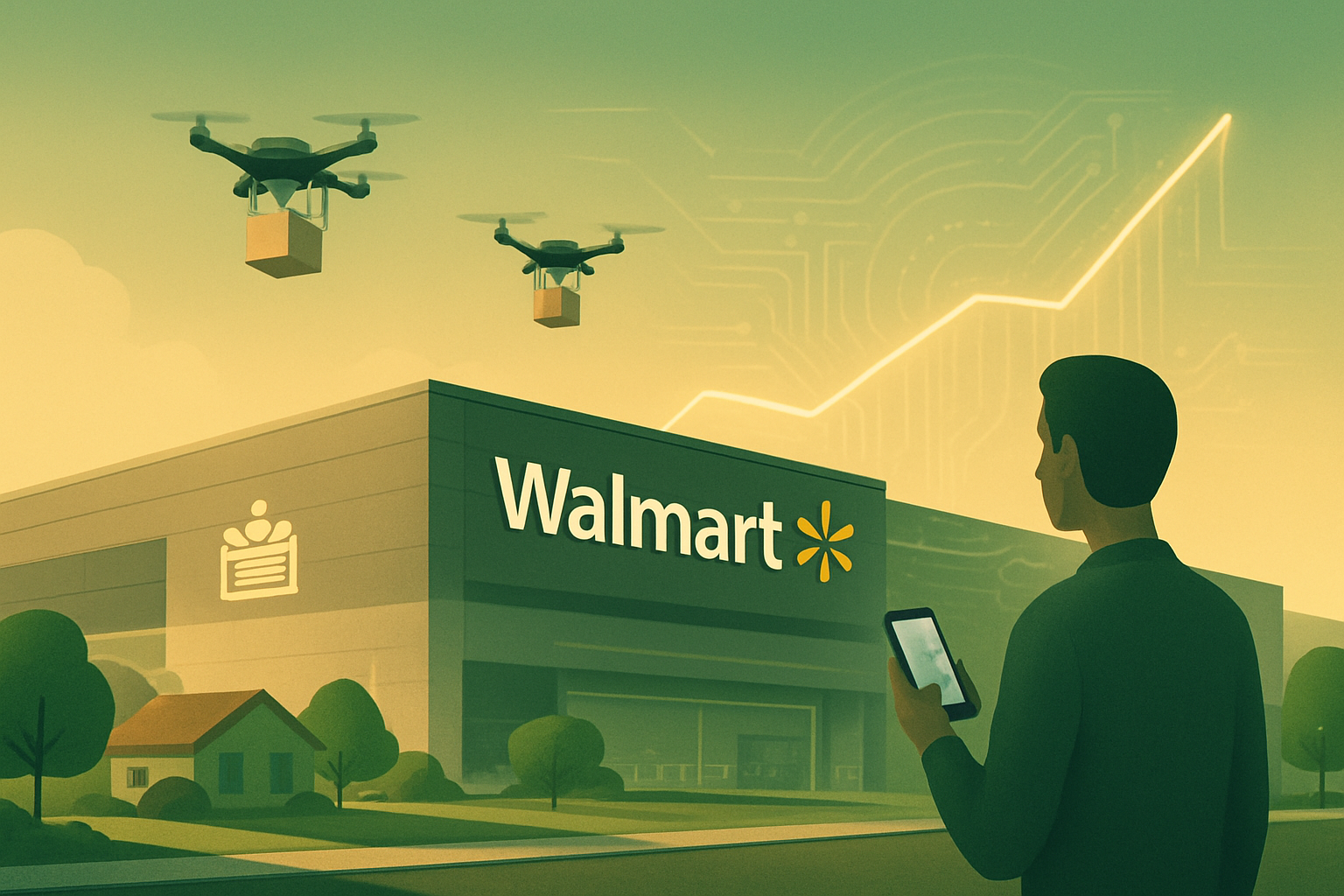
  • Walmart (WMT): The $1 Trillion Transformation into a Tech-Retail Powerhouse

    Walmart (WMT): The $1 Trillion Transformation into a Tech-Retail Powerhouse

    As of February 19, 2026, Walmart Inc. (NYSE: WMT) stands at a historic crossroads. After decades of being defined by its massive physical footprint and "Everyday Low Price" (EDLP) philosophy, the world’s largest retailer has officially evolved into a tech-driven omnichannel powerhouse. Having recently crossed the $1 trillion market capitalization threshold, Walmart is no longer just competing for grocery bags—it is fighting for digital dominance, advertising dollars, and high-margin service revenue. This report examines the fundamental shift in Walmart’s business model and its investment outlook for 2026 and beyond.

    Historical Background

    Founded by Sam Walton in 1962 in Rogers, Arkansas, Walmart’s early mission was simple: offer the lowest prices to rural communities that were underserved by larger department stores. The company went public in 1970 and spent the next three decades expanding aggressively, becoming the largest retailer in the world by the early 1990s.

    The most significant transformation, however, began in the mid-2010s under Doug McMillon. Recognizing the existential threat posed by Amazon.com (NASDAQ: AMZN), Walmart invested billions in e-commerce infrastructure, acquired Jet.com in 2016, and revamped its supply chain. By the 2020s, Walmart had integrated its 4,700+ U.S. stores into "local fulfillment centers," blurring the lines between physical and digital shopping.

    Business Model

    Walmart operates through three primary segments:

    1. Walmart U.S.: The largest segment, accounting for roughly 68% of revenue, focused on retail, grocery, and pharmacy.
    2. Walmart International: Operations in 19 countries, with a heavy focus on high-growth markets like India (via Flipkart and PhonePe) and Mexico (Walmex).
    3. Sam’s Club: A membership-only warehouse club that competes directly with Costco (NASDAQ: COST).

    The "Alternative Profit Flywheel":
    In 2026, Walmart’s business model has shifted toward high-margin services. While retail remains the core, the company now generates significant profit from:

    • Advertising (Walmart Connect): Using first-party shopper data to sell ads to suppliers.
    • Data Ventures: Selling insights to brands about consumer behavior.
    • Fulfillment Services (WFS): Charging third-party sellers to store and ship their goods.
    • Membership Fees: Recurring revenue from the Walmart+ program.

    Stock Performance Overview

    Walmart’s stock has seen a dramatic re-rating over the last decade:

    • 1-Year Performance: The stock has outperformed the S&P 500, buoyed by the $1T market cap milestone and the successful integration of Vizio’s advertising technology.
    • 5-Year Performance: WMT has seen a steady climb, accelerated by the 3-for-1 stock split in February 2024, which increased retail investor participation.
    • 10-Year Performance: Investors have enjoyed a total return exceeding 250%, as the market transitioned from valuing Walmart as a "slow-growth retailer" to a "compounding tech-retail leader."

    Financial Performance

    Walmart’s Fiscal Year 2026 results (ending Jan 31, 2026) demonstrated remarkable resilience:

    • Revenue: Reached a record $713.2 billion, up 4.7% year-over-year.
    • Adjusted EPS: Reported at $2.64, beating analyst expectations.
    • Operating Income: Grew at a faster rate than sales (5.4% growth), a key metric proving that automation and advertising are boosting the bottom line.
    • Cash Flow: Generated $41.6 billion in operating cash flow, allowing for a 53rd consecutive year of dividend increases (now $0.99 annually) and a new $30 billion share repurchase program.
    • Valuation: The stock currently trades at a forward P/E of approximately 44x, a premium that reflects its "defensive growth" status but raises questions about near-term upside.

    Leadership and Management

    The 2026 transition to John Furner as CEO represents a "continuity of vision." Furner, a 33-year Walmart veteran, was the architect of the "Store of the Future" initiative. He is supported by CFO John David Rainey, whose background at PayPal and United Airlines has been instrumental in shifting Walmart’s financial narrative toward tech and margins. The board remains heavily influenced by the Walton family, who control nearly 40% of the company, ensuring a long-term strategic horizon that prioritizes stability over quarterly volatility.

    Products, Services, and Innovations

    Innovation in 2026 is centered on "Agentic Commerce":

    • Generative AI: Walmart’s "Sparky" AI assistant now handles complex shopping missions (e.g., "Plan a keto-friendly birthday party for 10 people for under $200").
    • Drone Delivery: In partnership with Wing, Walmart now offers 30-minute drone delivery from 150+ stores in major metro areas.
    • Shoppable TV: Following the acquisition of Vizio, Walmart has integrated its checkout directly into the SmartCast OS, allowing viewers to buy products directly from commercials.
    • Automation: By late 2026, 75% of Walmart’s stores will be serviced by automated distribution centers, significantly reducing logistics costs.

    Competitive Landscape

    Walmart remains in a fierce battle with three primary rivals:

    • Amazon: While Amazon dominates pure e-commerce, Walmart’s 4,700 stores serve as local hubs that allow for cheaper and faster grocery delivery—a sector where Amazon still struggles for scale.
    • Costco: Costco leads in membership loyalty, but Walmart’s digital experience and Walmart+ program are narrowing the gap.
    • Target (NYSE: TGT): Target has struggled with discretionary spending lulls, whereas Walmart’s heavy grocery mix (nearly 60% of U.S. sales) provides a more defensive hedge against inflation.

    Industry and Market Trends

    The "Bifurcated Consumer" is the dominant trend of 2026. Low-income households are struggling with the cumulative effects of inflation, while high-income households are seeking value. Walmart has successfully captured both ends of the spectrum. Furthermore, the "Retail Media" trend is exploding, with Walmart Connect leading the way as brands shift spending away from traditional TV toward platforms where they can see an immediate "closed-loop" sale.

    Risks and Challenges

    • Discretionary Spending: While groceries sell well, sales of "wants" (electronics, home goods) remain muted, which carries higher profit margins.
    • Labor Friction: The aggressive push toward AI and warehouse automation has led to corporate layoffs and friction with labor advocates.
    • Tariff Exposure: Proposed and implemented tariffs on imports from China and Southeast Asia threaten Walmart’s "Everyday Low Price" model, potentially forcing price hikes.
    • Valuation Risk: At 44x earnings, the stock is "priced for perfection," leaving little room for error in execution.

    Opportunities and Catalysts

    • India Monetization: The expected mid-2026 IPO of PhonePe (India’s leading payments app) could unlock billions in value for Walmart shareholders.
    • Vizio Synergy: The full integration of Vizio’s ad platform is expected to accelerate Walmart Connect’s growth to 30%+ annually.
    • Market Share Gains: Continued "trade-down" from affluent shoppers provides a new, sticky customer base that Walmart can upsell into its membership and financial services.

    Investor Sentiment and Analyst Coverage

    Wall Street remains broadly optimistic, with a consensus "Moderate Buy" rating. Analysts from firms like Mizuho and RBC have raised price targets to the $135–$145 range. Hedge funds have treated Walmart as a "safe haven" during recent market volatility, viewing it as a defensive stock with the growth characteristics of a tech firm. However, some value-oriented analysts caution that the current valuation is historically stretched.

    Regulatory, Policy, and Geopolitical Factors

    Walmart is under increased scrutiny from the FTC regarding "Robinson-Patman Act" violations—allegations that large retailers use their scale to demand unfairly low prices from suppliers that smaller competitors cannot access. Internationally, Walmart must navigate India’s complex FDI (Foreign Direct Investment) rules, which frequently change the landscape for its Flipkart and PhonePe subsidiaries.

    Conclusion

    Walmart in 2026 is a far cry from the "discount store" of the 20th century. It has successfully leveraged its physical proximity to 90% of the U.S. population to build a digital ecosystem that rivals the world’s largest tech companies. For investors, Walmart offers a unique combination of defensive stability (grocery dominance) and aggressive growth (advertising and AI). While the current valuation requires a belief in continued flawless execution, Walmart’s pivot to a high-margin service model suggests that its journey to $1 trillion may only be the beginning of a new chapter in retail history.


    This content is intended for informational purposes only and is not financial advice. Today's Date: February 19, 2026.

  • Apple in 2026: The AI Supercycle and the Evolution of a $4 Trillion Giant

    Apple in 2026: The AI Supercycle and the Evolution of a $4 Trillion Giant

    As of February 17, 2026, Apple Inc. (NASDAQ:AAPL) stands at a pivotal juncture in its nearly 50-year history. Traditionally celebrated as the world’s premier hardware innovator, the Cupertino-based giant is currently deep in the throes of a fundamental metamorphosis: transitioning into a "Premium AI Utility." Following the successful launch of the iPhone 17 series and the subsequent rollout of "iOS 26," Apple has successfully silenced critics who once claimed the company was trailing in the generative artificial intelligence (GenAI) race. With a market capitalization that has flirted with the $4 trillion mark in early 2026, Apple’s relevance today is defined by its ability to integrate complex agentic AI into the daily lives of over two billion active device users.

    Historical Background

    Founded in 1976 by Steve Jobs, Steve Wozniak, and Ronald Wayne, Apple’s journey began in a garage with the Apple I. The company’s trajectory has been marked by era-defining product cycles: the Macintosh in 1984, the iPod in 2001, and the iPhone in 2007. After Steve Jobs’ passing in 2011, Tim Cook took the helm, shifting the company’s focus toward operational excellence, supply chain optimization, and the expansion of the Services ecosystem. By the early 2020s, Apple had successfully transitioned from a hardware-dependent firm to one where high-margin Services (App Store, iCloud, Apple Music) provided a stable floor for valuation, even during hardware stagnation. The current 2024–2026 era is being viewed by historians as the "Intelligence Pivot," where AI became the glue binding the entire ecosystem together.

    Business Model

    Apple’s business model is a masterclass in vertical integration and ecosystem "lock-in." The company generates revenue through five primary segments:

    • iPhone: Remains the primary engine, accounting for over 50% of total revenue.
    • Services: The fastest-growing high-margin segment, including advertising, cloud services, and digital content.
    • Mac & iPad: Productivity-focused hardware powered by proprietary Apple Silicon (M-series chips).
    • Wearables, Home, and Accessories: Including the dominant Apple Watch and AirPods lines.
    • Spatial Computing: A nascent category currently led by the Vision Pro and the rumored upcoming "Vision Air."

    The core of the model is the "walled garden"—a seamless interoperability between devices that makes the cost of switching to a competitor (like Android) prohibitively high for the consumer.

    Stock Performance Overview

    Apple’s stock has demonstrated remarkable resilience and growth over the last decade:

    • 10-Year Horizon: Since 2016, AAPL has delivered a staggering return of over 900%, driven by massive share buybacks and the expansion of Services.
    • 5-Year Horizon: Investors have seen the stock more than double, navigating the post-pandemic supply chain crisis and the 2022 inflationary environment.
    • 1-Year Horizon: Over the past 12 months (Feb 2025 – Feb 2026), the stock has surged approximately 35%, significantly outperforming the S&P 500. This rally was catalyzed by the "AI Supercycle" and record-breaking Q1 2026 earnings that proved Apple Intelligence was driving hardware upgrades at a faster rate than the 5G transition of 2020.

    Financial Performance

    In its most recent fiscal Q1 2026 report (released late January), Apple posted a record $143.8 billion in revenue, a 16% year-over-year increase. Diluted earnings per share (EPS) grew 19% to $2.84.

    • Margins: Gross margin reached an impressive 48.2%, aided by the high-end mix of iPhone 17 Pro models and a Services gross margin of 76.5%.
    • Cash Position: Apple’s "cash fortress" remains unrivaled, with operating cash flow hitting $53.9 billion in a single quarter.
    • Capital Return: The company returned $32 billion to shareholders in the last quarter, maintaining its status as one of the world’s most aggressive "buyback machines."
    • Valuation: As of February 2026, AAPL trades at a Forward P/E of approximately 32x, a premium to its historical average but justified by analysts due to its recurring Services revenue and AI-driven growth.

    Leadership and Management

    Under CEO Tim Cook, Apple has prioritized privacy, sustainability, and incremental but high-impact innovation. The leadership team remains stable, with key figures like COO Jeff Williams (often cited as a potential successor) and Greg "Joz" Joswiak (SVP of Worldwide Marketing) steering the ship. The board of directors, which includes veterans like Al Gore and Monica Lozano, has maintained a focus on ESG goals, including the ambitious "Apple 2030" plan to be carbon neutral across the entire supply chain. Cook’s governance is characterized by a "wait and perfect" approach to new technologies, which has been successfully applied to the AI rollout.

    Products, Services, and Innovations

    The current product lineup is headlined by the iPhone 17 series, which introduced the "iPhone 17 Air"—a ultra-thin flagship that has captured the premium market.

    • Apple Intelligence (iOS 26): The software ecosystem now features "Siri 2.0," an agentic AI capable of performing complex multi-app tasks (e.g., "Siri, find the PDF my accountant sent last Tuesday and summarize the tax liabilities into a Note").
    • Vision Pro & Spatial Computing: While the first-generation Vision Pro faced headwinds due to its $3,499 price tag, R&D has pivoted toward a more affordable "Vision Air" and AR-enabled smart glasses, expected to launch in late 2026 or 2027.
    • Apple Silicon: The transition to the 2nm process for M5 and A19 chips has given Apple a significant lead in on-device AI processing power per watt.

    Competitive Landscape

    Apple faces multi-front competition:

    • Hardware Rivals: Samsung continues to lead in volume, while Huawei has made a significant comeback in the high-end Chinese market.
    • AI Rivals: Google (Alphabet) and Microsoft remain formidable in cloud-based GenAI, though Apple’s "On-Device" privacy-first approach is a unique differentiator.
    • Wearables: Meta Platforms (NASDAQ:META) remains the primary competitor in the XR (Extended Reality) space, with its Quest line maintaining a lead in the budget-friendly VR market.

    Industry and Market Trends

    Three macro trends are currently shaping Apple’s trajectory:

    1. The Shift to the Edge: Moving AI processing from the cloud to the device ("Edge AI") to enhance privacy and reduce latency.
    2. Supply Chain Diversification: Apple continues to shift production away from China toward India and Vietnam to mitigate geopolitical risks.
    3. Sustainability Mandates: Global regulations are forcing tech giants to adopt circular economies; Apple’s focus on recycled materials is now a competitive advantage in the EU market.

    Risks and Challenges

    Despite its dominance, Apple is not without risks:

    • Hardware Saturation: Smartphone replacement cycles have lengthened to nearly 4 years in many developed markets.
    • Vision Pro Adoption: The sluggish sales of the first-gen spatial computer suggest that the "next big thing" after the iPhone is not yet a guaranteed success.
    • AI Hallucinations and Privacy: As Siri becomes more agentic, the risk of AI errors or data breaches increases, potentially damaging Apple’s "Privacy" brand pillar.

    Opportunities and Catalysts

    • Health Tech: Further integration of non-invasive glucose monitoring or advanced sleep apnea detection in Apple Watch could unlock massive healthcare revenue.
    • The "Siri 2.0" Revenue Model: Rumors suggest a "Siri Premium" subscription tier could be introduced by 2027, adding another high-margin Services stream.
    • India’s Expansion: As India’s middle class grows, it is expected to become Apple's third-largest market by 2028.

    Investor Sentiment and Analyst Coverage

    Wall Street remains largely bullish, with 80% of analysts carrying a "Buy" or "Strong Buy" rating on AAPL as of February 2026. Institutional ownership remains high, with Vanguard and BlackRock holding significant stakes. Retail sentiment is bolstered by the "Apple Intelligence" narrative, with social media buzz focusing on the convenience of the new AI features. However, some "value" investors express concern over the current P/E ratio, arguing that much of the AI growth is already "priced in."

    Regulatory, Policy, and Geopolitical Factors

    Regulatory headwinds are Apple’s most persistent threat:

    • U.S. DOJ Lawsuit: The landmark antitrust case initiated in 2024 is currently in the discovery phase, with a trial expected in 2027. The focus remains on "green bubbles" and App Store exclusivity.
    • European Union (DMA): Apple continues to negotiate with the European Commission over the Digital Markets Act. While it won a victory in early 2026 regarding Apple Maps not being a "gatekeeper," it still faces pressure to allow third-party app stores with lower commission fees.
    • U.S.-China Relations: Any escalation in trade tensions could impact both Apple’s manufacturing hub and its massive consumer base in Greater China.

    Conclusion

    Apple Inc. enters the mid-2020s not just as a hardware company, but as an indispensable AI ecosystem provider. By leveraging its massive install base and proprietary silicon, Apple has successfully turned the "AI threat" into a "supercycle catalyst." While regulatory challenges in the U.S. and EU pose long-term structural risks, the company’s unparalleled cash flow and brand loyalty provide a significant margin of safety. For investors, the key metric to watch in 2026 will be the continued growth of Services and the successful transition of Siri from a voice assistant into a fully functional autonomous agent.


    This content is intended for informational purposes only and is not financial advice.

  • The AI Reality Check: A Deep-Dive Into Microsoft’s $100 Billion Infrastructure Bet

    The AI Reality Check: A Deep-Dive Into Microsoft’s $100 Billion Infrastructure Bet

    As of February 17, 2026, Microsoft Corp. (NASDAQ: MSFT) stands as the undisputed bellwether for the artificial intelligence (AI) era. After a decade-long transformation under CEO Satya Nadella, the company has evolved from a legacy software provider into a vertically integrated AI powerhouse. However, the narrative in early 2026 has shifted from pure wonder at AI’s potential to a rigorous "reality check" regarding the cost of leadership. With a market capitalization hovering around $3 trillion, Microsoft remains at the center of the global technology landscape, balancing massive infrastructure investments with the challenge of converting AI hype into sustainable bottom-line growth.

    Historical Background

    Founded in 1975 by Bill Gates and Paul Allen, Microsoft’s journey is defined by three distinct eras. The first, the "Windows Era," saw the company achieve a near-monopoly on personal computing. The second, under Steve Ballmer, focused on enterprise dominance but struggled to capture the mobile and search revolutions. The third and current era began in 2014 when Satya Nadella took the helm. Nadella’s "Cloud First, Mobile First" strategy pivoted the company toward Azure, turning a lagging server business into a cloud titan. By 2023, the pivot accelerated into an "AI First" strategy, catalyzed by a multi-billion-dollar partnership with OpenAI, which effectively reset the competitive landscape of Silicon Valley.

    Business Model

    Microsoft operates through a highly diversified revenue model, categorized into three primary segments:

    • Intelligent Cloud: Centered on Azure, this is the company’s primary growth engine, providing public, private, and hybrid cloud services and AI infrastructure.
    • Productivity and Business Processes: This includes the Microsoft 365 suite (Office, Teams), LinkedIn, and Dynamics 365. Revenue here is increasingly driven by "Copilot" AI subscriptions.
    • More Personal Computing: Encompassing Windows OEM, Surface devices, Xbox gaming (including the massive Activision Blizzard acquisition), and search/advertising (Bing).

    This ecosystem creates a "virtuous cycle" where data from productivity tools feeds into AI models hosted on Azure, which are then sold back to the same enterprise customers.

    Stock Performance Overview

    Microsoft has been a generational wealth creator, though its recent performance reflects the broader market's digestion of high valuations.

    • 1-Year Performance: Down 1.74%. The stock has faced a minor correction as investors weigh the $100 billion+ annual CapEx against the pace of AI monetization.
    • 5-Year Performance: Up 71.6%. MSFT has significantly outperformed the S&P 500, driven by the massive expansion of Azure and the initial AI surge of 2023-2024.
    • 10-Year Performance: Up 790.7%. This phenomenal growth underscores the success of the cloud transition, which saw the stock rise from roughly $50 in 2016 to over $400 today.

    Financial Performance

    Financial results for the first half of fiscal year 2026 (ended December 31, 2025) highlight both immense scale and increasing costs.

    • Revenue (FY2025): $281.7 billion, a 15% year-over-year increase.
    • Net Income (Q2 FY2026): Reported at $38.5 billion, though this was bolstered by a $7.6 billion one-time gain from OpenAI’s recapitalization into a Public Benefit Corporation.
    • Operating Margins: While historically high (above 40%), margins are under pressure due to a 66% year-over-year increase in Capital Expenditure (CapEx).
    • Cash Flow: Microsoft remains a cash-generating machine, with free cash flow supporting both its massive AI investments and its consistent dividend and buyback programs.

    Leadership and Management

    The leadership team is widely regarded as one of the best in the technology sector.

    • Satya Nadella (CEO): Now focused on the long-term architectural shift toward "Agentic AI."
    • Judson Althoff (CEO of Commercial Business): Recently promoted to oversee 75% of total revenue, Althoff is the primary architect of Microsoft’s enterprise sales strategy.
    • Amy Hood (CFO): Known for her disciplined capital allocation and transparent communication regarding the "build-ahead" nature of AI infrastructure.
    • Kathleen Hogan: Leads the new Office of Strategy and Transformation, aimed at streamlining internal operations for the AI era.

    Products, Services, and Innovations

    Microsoft’s innovation pipeline is currently dominated by Copilot, its AI assistant integrated across every software layer.

    • Azure AI Services: Allowing developers to build proprietary models using Microsoft’s infrastructure.
    • GitHub Copilot: With 4.7 million paid subscribers, it is the most successful commercial AI tool to date.
    • Custom Silicon: To reduce dependence on third-party chips, Microsoft has ramped up production of its Maia AI Accelerator and Cobalt CPU, optimizing Azure's performance and cost-efficiency.
    • Gaming: Following the Activision Blizzard deal, Microsoft is leveraging AI to transform game development and cloud gaming delivery.

    Competitive Landscape

    The "Cloud Wars" have entered a new, AI-centric phase.

    • Azure vs. AWS: While Amazon (NASDAQ: AMZN) still holds the largest total market share (approx. 28-32%), Azure is growing faster (38-39% YoY vs. AWS’s 24%).
    • Google Cloud: Alphabet (NASDAQ: GOOGL) remains a formidable third, competing heavily on foundational models (Gemini) and data analytics.
    • NVIDIA: While a partner, NVIDIA (NASDAQ: NVDA) also competes for the "AI budget" of enterprises, and Microsoft’s move into custom silicon creates a complex "frenemy" dynamic.

    Industry and Market Trends

    Three major trends are currently shaping Microsoft’s environment:

    1. Agentic AI: The shift from "chatbots" to "autonomous agents" that can perform complex workflows without human intervention.
    2. Sovereign Cloud: Governments increasingly demand that data and AI models stay within national borders, a trend Microsoft is addressing through its specialized regional data centers.
    3. Infrastructure Scaling: The industry is moving toward "gigawatt-scale" data centers, requiring massive energy investments and specialized cooling technologies.

    Risks and Challenges

    Despite its dominance, Microsoft faces several headwinds:

    • The CapEx Burden: The company is projected to spend up to $121 billion in FY2026 on AI infrastructure. If the expected productivity gains for enterprises do not materialize into higher seat counts for Copilot, the stock could face a significant de-rating.
    • AI Monetization Lag: Currently, only about 3.3% of the Microsoft 365 commercial base are paid Copilot users. Bridging the gap from "trial" to "essential tool" is the company's biggest hurdle.
    • Dependency on OpenAI: While the partnership is strong, any internal instability at OpenAI or regulatory forced-separation would be catastrophic.

    Opportunities and Catalysts

    • The 50 Million Seat Target: Analysts believe that if Microsoft can reach 50 million Copilot seats (approx. 11% penetration) by 2027, the revenue from AI software alone will exceed $15 billion annually.
    • Azure AI Workloads: AI-related services already contribute 10 percentage points to Azure’s growth. As more companies move their data to the cloud to "prepare for AI," Azure's core business benefits.
    • M&A Potential: With a massive cash pile, Microsoft remains a candidate for acquiring smaller, specialized AI startups to bolster its vertical applications in healthcare or finance.

    Investor Sentiment and Analyst Coverage

    Wall Street remains largely "Bullish," though the tone has become more "Wait-and-See" regarding margins.

    • Institutional Ownership: MSFT remains a "top-three" holding for almost every major pension and mutual fund.
    • Analyst Ratings: The consensus remains a "Buy," with price targets generally ranging from $450 to $510.
    • Retail Sentiment: While retail investors are enthusiastic about AI, there is growing chatter on social platforms regarding the stock's high P/E ratio relative to its immediate earnings growth.

    Regulatory, Policy, and Geopolitical Factors

    Microsoft is under the most intense scrutiny since the 1990s:

    • FTC Probe (2026): The U.S. Federal Trade Commission is currently investigating Microsoft’s cloud licensing practices and whether the bundling of Copilot and Security software is anti-competitive.
    • EU Digital Markets Act (DMA): As a designated "Gatekeeper," Microsoft must ensure its platforms are interoperable with rivals, a constant compliance challenge that limits some ecosystem "lock-in" strategies.
    • Geopolitics: Restrictions on AI chip exports to China and the need for localized AI infrastructure in the Middle East and Europe are complicating the company's global supply chain.

    Conclusion

    Microsoft enters the mid-2020s as a company with immense power and equally immense responsibility. It has successfully out-maneuvered nearly every competitor in the first phase of the AI revolution. However, the next 18 months will be defined by execution rather than vision. Investors should watch three key metrics: the growth rate of Azure (specifically the "AI contribution" percentage), the conversion rate of Copilot trials into paid enterprise seats, and the management of capital expenditure. If Microsoft can prove that its $100 billion infrastructure bet can generate double-digit returns, it will likely remain the foundational stock of the modern era.


    This content is intended for informational purposes only and is not financial advice.

  • Cisco’s AI Pivot Faces a Margin Reality Check: A Deep Dive into the Networking Giant’s Future

    Cisco’s AI Pivot Faces a Margin Reality Check: A Deep Dive into the Networking Giant’s Future

    On February 17, 2026, the technology sector is grappling with the aftershocks of a seismic shift in the networking landscape. Cisco Systems (NASDAQ: CSCO), long considered the "plumbing of the internet" and a primary bellwether for global enterprise spending, has recently sent shockwaves through the market. Despite reporting record-breaking revenue for its second fiscal quarter, a significant downward revision in gross margin guidance triggered an 11.6% single-session plunge—the sharpest one-day decline for the company in nearly four years.

    This "margin squeeze" has refocused investor attention on a critical tension within the networking industry: while the demand for Artificial Intelligence (AI) infrastructure is skyrocketing, the cost of the advanced components required to build it is rising even faster. For Cisco, a company in the final stages of a multi-year transformation from a hardware vendor to a software and subscription powerhouse, this latest volatility serves as a stark reminder that legacy operational risks still loom large, even in an AI-accelerated world.

    Historical Background

    Founded in 1884 by Stanford University computer scientists Leonard Bosack and Sandy Lerner, Cisco Systems essentially pioneered the concept of the local area network (LAN) being used to connect distant computers over a multiprotocol router system. The company went public in 1990 and became the ultimate poster child for the dot-com era, briefly becoming the most valuable company in the world in March 2000 with a market capitalization of $555 billion.

    Following the 2000 crash, Cisco spent over a decade reinventing itself. Under the long-term leadership of John Chambers and more recently Chuck Robbins, the company shifted its focus from simple switches and routers to "integrated solutions." This involved aggressive M&A—most notably the $28 billion acquisition of Splunk in 2024—and a concerted effort to move customers toward recurring subscription models to smooth out the cyclicality of hardware buying patterns.

    Business Model

    Cisco’s business model is currently a hybrid of traditional high-margin hardware and rapidly growing software services. The company categorizes its operations into several key segments:

    1. Networking: The core legacy business, including switches, routers, and wireless hardware. This segment is increasingly focused on the "Silicon One" architecture.
    2. Security and Observability: Following the Splunk acquisition, this has become Cisco’s primary growth engine. It combines Splunk’s data analytics with Cisco’s proprietary security software (Talos).
    3. Collaboration: Tools like Webex and specialized hardware for hybrid work.
    4. Services: Technical support and professional services that maintain long-term customer relationships.

    The shift toward Annual Recurring Revenue (ARR) is the cornerstone of the modern Cisco strategy. By early 2026, software subscriptions and services represent approximately 53% of total revenue, a milestone that has significantly altered the company’s valuation profile.

    Stock Performance Overview

    Over the last decade, CSCO has transitioned from a "value" play to a "dividend growth" stock, and more recently, a "software-pivot" candidate.

    • 1-Year Performance: Volatile. The stock had gained 15% through late 2025 on AI enthusiasm before the recent 11.6% drop erased much of those gains.
    • 5-Year Performance: Moderate growth of approximately 28%, trailing the broader S&P 500 tech sector, largely due to the "inventory indigestion" phase following the COVID-19 pandemic.
    • 10-Year Performance: Solid but steady. Including dividends, Cisco has provided a reliable return for long-term holders, though it has consistently been outperformed by high-growth rivals like Arista Networks (NYSE: ANET).

    The current price action reflects a market that is unsure whether to value Cisco as a high-growth AI infrastructure play or a mature, margin-constrained hardware giant.

    Financial Performance

    In its Q2 FY2026 report (released last week), Cisco reported revenue of $15.35 billion, exceeding analyst expectations. However, the forward-looking guidance for Q3 and Q4 was the primary catalyst for the stock's recent decline.

    • Gross Margins: Management lowered Q3 margin guidance to 65.5%–66.5%. The culprit is "ballooning memory costs," specifically a 50%+ spike in DRAM prices which are essential for high-performance AI networking gear.
    • Revenue Growth: FY2026 guidance remains at $61.2B–$61.7B, representing an 8.5% year-over-year increase.
    • Valuation: The stock currently trades at a P/E ratio of roughly 28x, elevated compared to its historical 18x average, reflecting the market’s premium on the Splunk integration and AI potential.
    • Dividends: Cisco remains a powerhouse of capital return, with a current yield of 2.4% and over $15 billion in remaining share buyback authorization.

    Leadership and Management

    Chuck Robbins, CEO since 2015, has staked his legacy on the "Software-First" pivot. While he has been praised for successfully integrating Splunk and pivoting the company toward AI, the recent guidance miss has put his management team under intense scrutiny.

    The board of directors has been active in overseeing the "Secure AI Factory" initiative, a joint venture with NVIDIA (NASDAQ: NVDA). CFO Scott Herren has been credited with maintaining a strong balance sheet throughout the Splunk acquisition, though he now faces the difficult task of managing inflationary pressures in the supply chain without sacrificing R&D spending.

    Products, Services, and Innovations

    Cisco’s innovation pipeline is currently dominated by two pillars:

    1. Silicon One G300: Launched in early 2026, this 102.4 Tbps chip is Cisco’s direct answer to the bandwidth demands of LLM (Large Language Model) training. It claims to be 28% faster than previous generations in completing AI "jobs."
    2. Splunk + AppDynamics: The integration of these two platforms allows Cisco to offer "full-stack observability." This means a customer can monitor everything from the physical health of a router to the performance of a specific application and the security of the data flowing between them—all in one dashboard.

    Competitive Landscape

    Cisco no longer enjoys the near-monopoly it held in the 1990s. The landscape is split:

    • Arista Networks (ANET): Arista has become the preferred choice for many hyperscale cloud providers (Meta, Microsoft). While Cisco is catching up in AI networking, Arista still holds a significant lead in high-speed data center switching market share.
    • HPE-Juniper (NYSE: HPE): Following Hewlett Packard Enterprise’s acquisition of Juniper Networks in late 2025, a new "No. 2" has emerged. This combined entity is aggressively targeting Cisco’s campus and core routing customers with a unified AI-driven management platform.

    Industry and Market Trends

    The networking sector is currently defined by the "AI Infrastructure Gold Rush." Enterprises are diverting budgets away from general-purpose networking to buy AI-specific clusters. However, this trend has created a "barbell" effect:

    • The High End: Massive demand for AI switches and chips.
    • The Low End: Sluggish demand for traditional office networking as hybrid work persists.

    Additionally, the "component cycle" has returned. As AI chips and memory modules see record demand, supply chains are tightening, leading to the margin compression that recently hit Cisco’s stock.

    Risks and Challenges

    • Supply Chain Costs: As seen in the Feb 2026 guidance, Cisco is highly sensitive to component pricing. If DRAM and specialized ASIC costs remain high, margins will continue to suffer.
    • Integration Risk: While the Splunk deal is finalized, fully merging two massive corporate cultures and product stacks takes years. Any friction here could lead to customer churn.
    • Concentration Risk: Cisco is heavily reliant on "hyperscalers" for its AI growth. If these few large customers pause their infrastructure build-out, Cisco has few other places to go for that level of volume.

    Opportunities and Catalysts

    • AI Bookings Growth: Cisco reported $2.1 billion in AI infrastructure orders in Q2 FY2026 alone. If they can exceed their full-year target of $5 billion, the market may overlook short-term margin pressures.
    • Sovereign AI: Many governments (particularly in the EU and Middle East) are building their own "national" AI clouds. Cisco’s "Secure AI" branding makes it a preferred partner for these security-conscious entities.
    • Post-HPE/Juniper Churn: As HPE integrates Juniper, some customers may seek a "pure-play" or more stable alternative, providing Cisco with a window to grab market share in the enterprise space.

    Investor Sentiment and Analyst Coverage

    Wall Street is currently divided on Cisco.

    • The Bulls: Argue that the margin squeeze is temporary and that the "New Cisco" (Software + AI) is fundamentally more valuable than the "Old Cisco" (Hardware).
    • The Bears: Point to the 11.6% drop as proof that Cisco is still a hardware company at its core, subject to the same old supply chain headaches and cyclical downturns.

    Institutional ownership remains high (over 70%), but there has been notable "sympathy selling" in the sector, with hedge funds trimming positions in both Cisco and Arista until component costs stabilize.

    Regulatory, Policy, and Geopolitical Factors

    The ongoing "decoupling" between the US and Chinese tech ecosystems continues to impact Cisco. While Cisco has largely exited the Chinese market, the supply chain remains global. US-led restrictions on high-end AI chips have also created a complex regulatory environment for Cisco’s "Silicon One" exports.

    Furthermore, the DOJ’s scrutiny of the HPE-Juniper merger in 2025 has set a precedent for stricter antitrust oversight in the networking space, likely limiting Cisco’s ability to make further large-scale acquisitions in the near term.

    Conclusion

    Cisco Systems stands at a crossroads. The recent guidance-driven share price collapse highlights the volatility inherent in the company’s transition. While the Splunk acquisition and the surge in AI infrastructure orders provide a clear path toward a software-centric future, the company remains tethered to the harsh realities of hardware supply chains.

    Investors should watch the AI booking numbers and gross margin recovery in the coming quarters. If Cisco can prove that its AI chips provide enough value to pass on component cost increases to customers, the recent drop may be viewed in hindsight as a generational buying opportunity. However, if margins remain under pressure while rivals like Arista and the new HPE-Juniper aggressively compete for market share, Cisco’s path to a "tech-giant" valuation will remain uphill.


    This content is intended for informational purposes only and is not financial advice.

  • Intel’s Redemption Arc: Inside the x86 Giant’s AI and Foundry Gambit

    Intel’s Redemption Arc: Inside the x86 Giant’s AI and Foundry Gambit

    As of February 17, 2026, Intel Corporation (Nasdaq: INTC) finds itself at the most critical juncture in its 58-year history. After a tumultuous 2024 that saw the company removed from the Dow Jones Industrial Average and report a staggering $18.7 billion net loss, the "Silicon Giant" is currently in the throes of a high-stakes transformation. Under the leadership of CEO Lip-Bu Tan, who took the helm in early 2025, Intel is attempting to execute a "double pivot": reclaiming its throne as the world’s leading semiconductor manufacturer through its "Intel Foundry" business while simultaneously defending its core processor dominance against an onslaught of AI-native competitors.

    While the stock experienced a "Guidance Shock" in late January 2026—plummeting 17% after conservative Q1 forecasts—investor interest remains at a fever pitch. The narrative has shifted from whether Intel can survive to how quickly it can scale its revolutionary 18A (1.8nm) process node. With landmark manufacturing deals from the likes of Apple and Microsoft now on the books, Intel is no longer just a chipmaker; it is positioning itself as the Western hemisphere’s primary alternative to TSMC.

    Historical Background

    Founded in 1968 by semiconductor pioneers Robert Noyce and Gordon Moore, Intel was the architect of the digital age. Moving from its early days in memory chips to the invention of the microprocessor, the company established a decades-long hegemony with the x86 architecture. The "Intel Inside" campaign of the 1990s made it a household name, and for nearly 30 years, it was the undisputed leader in both design and manufacturing.

    However, the 2010s marked a period of stagnation. Missteps in the mobile market and chronic delays in transitioning to 10nm and 7nm processes allowed rivals like Advanced Micro Devices (Nasdaq: AMD) and Taiwan Semiconductor Manufacturing Co. (NYSE: TSM) to erode its lead. By the time Pat Gelsinger returned as CEO in 2021, Intel had lost its manufacturing "crown." Gelsinger’s "Five Nodes in Four Years" (5N4Y) strategy was a desperate sprint to catch up—a sprint that laid the groundwork for the 18A node that dominates today’s headlines.

    Business Model

    Intel’s business model has been fundamentally restructured into two distinct, yet symbiotic, entities: Intel Products and Intel Foundry.

    1. Intel Products: This remains the primary revenue driver, consisting of the Client Computing Group (CCG), Data Center and AI (DCAI), and Network and Edge (NEX). It focuses on designing CPUs for PCs and servers, as well as AI accelerators like the Gaudi series and the newly launched Falcon Shores GPUs.
    2. Intel Foundry: This is the capital-intensive arm of the company, operating as a standalone business. It offers manufacturing, advanced packaging, and "system-on-chip" services to external customers. By opening its fabs to rivals and third parties, Intel aims to utilize its massive capacity to generate high-margin recurring revenue, similar to the TSMC model.

    Stock Performance Overview

    Intel's stock performance has been a saga of volatility and underperformance relative to the broader semiconductor sector (SOXX).

    • 1-Year Performance: After a modest recovery throughout 2025, the stock has faced a 12% decline year-to-date in 2026, largely due to the January "Guidance Shock."
    • 5-Year Performance: The stock remains significantly below its 2021 highs, trailing the S&P 500 and drastically underperforming Nvidia (Nasdaq: NVDA), which has benefited more directly from the generative AI boom.
    • 10-Year Performance: Long-term shareholders have seen nearly flat capital appreciation, though the company’s recent restructuring and "18A" progress have led some analysts to suggest that the stock has finally found a structural bottom.

    Financial Performance

    The fiscal year 2025 marked a return to non-GAAP profitability for Intel, with an EPS of $0.42 on revenue of $52.9 billion. This was a welcome relief after the disastrous 2024, but the balance sheet remains a concern.

    • Margins: Gross margins have stabilized in the 35-38% range, still far below the 60%+ levels seen in Intel's "Golden Age."
    • Debt and Capex: To fund its "Fab 52" and "Fab 62" expansions in Arizona, Intel has maintained high capital expenditure, supported by over $8.5 billion in U.S. CHIPS Act grants and $11 billion in loans.
    • Valuation: Currently trading at a price-to-earnings (P/E) ratio that reflects a "turnaround discount," many value investors see Intel as a massive contrarian play on domestic manufacturing.

    Leadership and Management

    The departure of Pat Gelsinger in December 2024 signaled the Board's demand for faster operational efficiency. The appointment of Lip-Bu Tan as CEO in March 2025 brought a "ruthless restructuring" mindset to the company. Tan, a semiconductor legend who previously transformed Cadence Design Systems, has focused on:

    • Slashing non-core R&D.
    • Prioritizing "Engineering over Marketing."
    • Securing major foundry contracts (notably the Apple 18A-P deal in late 2025).
      Tan is credited with stabilizing the "Intel Foundry" brand, though he faces immense pressure to improve the yield rates of the new 18A node throughout 2026.

    Products, Services, and Innovations

    Intel's 2026 product roadmap is built around the 18A process node, which utilizes two "world-first" technologies: RibbonFET (a new transistor architecture) and PowerVia (backside power delivery).

    • Panther Lake (Core Ultra Series 3): Launched in early 2026, these chips are the backbone of the "AI PC" era, featuring an NPU (Neural Processing Unit) that delivers twice the performance of the previous generation.
    • Falcon Shores: Intel’s unified GPU architecture designed to compete directly with Nvidia's Blackwell and Rubin architectures in the data center.
    • Advanced Packaging: Intel’s Foveros technology remains a competitive edge, allowing the company to stack chiplets from different manufacturers into a single package—a service increasingly in demand for custom AI chips.

    Competitive Landscape

    Intel faces a "war on two fronts":

    • Foundry Rivalry: It is chasing TSMC and Samsung. While Intel has a lead in backside power delivery (PowerVia), TSMC’s 2nm node (N2) remains the industry benchmark for yield and efficiency.
    • Design Rivalry: In the data center, Nvidia remains the "800-pound gorilla" of AI. In the PC market, AMD continues to gain share in the enthusiast and server (EPYC) segments, while Qualcomm (Nasdaq: QCOM) is making inroads into the Windows-on-Arm laptop market.

    Industry and Market Trends

    Three macro trends are currently driving Intel's narrative:

    1. The AI PC Cycle: The industry expects a massive PC refresh in 2026 as businesses and consumers upgrade to hardware capable of running local LLMs (Large Language Models).
    2. Sovereign AI: Governments globally are subsidizing domestic chip production to ensure supply chain security, a trend that directly benefits Intel’s U.S. and European fab projects.
    3. High-NA EUV Lithography: Intel is the first company to deploy ASML’s (Nasdaq: ASML) High-NA EUV machines in high-volume manufacturing, a technological gamble that could pay off in 2027.

    Risks and Challenges

    • Yield Rates: The 18A node is complex. If yields do not reach the 80%+ range by mid-2026, the Foundry business will struggle to be profitable.
    • China Exposure: As a significant portion of Intel’s revenue still comes from China, ongoing trade restrictions and "de-risking" policies pose a constant threat to its top line.
    • Execution Risk: Intel has a history of over-promising and under-delivering on manufacturing timelines. Any delay in the "Clearwater Forest" Xeon ramp-up would be devastating.

    Opportunities and Catalysts

    • Apple Foundry Deal: The late-2025 announcement that Apple will use Intel Foundry for future silicon is the ultimate "seal of approval" that could bring other major tech giants (Meta, Alphabet) into the fold.
    • CHIPS Act Milestones: Finalizing the disbursement of billions in government funds provides a non-dilutive capital cushion.
    • Jaguar Shores: The upcoming 2026/2027 AI accelerator could prove to be a viable, low-cost alternative for inference-heavy AI workloads.

    Investor Sentiment and Analyst Coverage

    Wall Street is currently "cautiously optimistic" but remains in a "show me" mode.

    • Institutional Sentiment: Hedge funds have been increasing "bottom-fishing" positions in INTC, betting on the foundry spin-off potential.
    • Retail Sentiment: Retail chatter on platforms like Reddit and X is divided, with many praising the "patriotic" investment in U.S. manufacturing while others remain scarred by the 2024 crash.
    • Analyst Ratings: The consensus remains a "Hold," with price targets widely dispersed between $30 and $55, depending on 18A yield projections.

    Regulatory, Policy, and Geopolitical Factors

    Intel is perhaps the most "geopolitically sensitive" stock in the world today. It is the primary beneficiary of the U.S. CHIPS and Science Act, making it a "National Champion" for the United States. However, this status comes with strings attached, including restrictions on expanding capacity in "countries of concern" like China. The outcome of ongoing trade negotiations and the stability of the Taiwan Strait remain the biggest external wildcards for Intel’s valuation.

    Conclusion

    The Intel of February 2026 is a company caught between a storied past and a potentially dominant future. The "Guidance Shock" of early 2026 serves as a reminder that the road to redemption is paved with high costs and execution hurdles. However, with the 18A node now in high-volume manufacturing and the world’s most valuable company, Apple, listed as a future foundry customer, the structural foundations for a comeback are in place.

    Investors should watch two things above all: 18A yield reports and the progress of the Falcon Shores GPU ramp. If Lip-Bu Tan can prove that Intel can manufacture chips as reliably as TSMC while maintaining its x86 market share, Intel will not just be a turnaround story—it will be the definitive comeback of the decade.


    This content is intended for informational purposes only and is not financial advice.

  • The Roku Resurgence: Navigating Profitability and the Post-Walmart Era

    The Roku Resurgence: Navigating Profitability and the Post-Walmart Era

    As of February 17, 2026, Roku, Inc. (Nasdaq: ROKU) has reclaimed its position as a central protagonist in the global streaming narrative. Once dismissed by skeptics as a "COVID-era relic" destined to be crushed by tech giants, Roku has spent the last 24 months engineering a remarkable fundamental turnaround. The company is currently the subject of intense market scrutiny following its Q4 and Full-Year 2025 financial update released last week.

    While the broader markets have been navigating a period of macroeconomic recalibration, Roku’s stock recently experienced a dramatic double-digit surge, fueled by a "profit shock" that saw the company report its first full year of GAAP net income in nearly half a decade. This resurgence comes at a critical juncture: the streaming industry is shifting its focus from raw subscriber growth to sustainable monetization through advertising and sophisticated platform services. Roku’s ability to navigate the loss of its primary retail partner, Walmart, while simultaneously scaling its active user base to over 90 million households, makes it one of the most compelling—and volatile—stories in the technology and media sector today.

    Historical Background

    Founded in 2002 by Anthony Wood—the man credited with inventing the Digital Video Recorder (DVR) during his time at ReplayTV—Roku’s origins are inextricably linked to the birth of modern streaming. The company initially operated as an internal project within Netflix, known as "Project Griffin," intended to be a dedicated player for Netflix’s nascent streaming service. However, Reed Hastings spun the company off in 2008 to ensure Netflix could remain platform-neutral.

    Roku’s early years were defined by its hardware: simple, affordable streaming sticks and boxes that converted "dumb" TVs into "smart" ones. By 2014, the company pivoted toward an "OS-first" strategy, licensing its Roku Operating System (OS) to television manufacturers like TCL and Hisense. This move transformed Roku from a hardware vendor into a gatekeeper.

    The company went public in September 2017 at $14 per share, and its stock price famously skyrocketed during the 2020-2021 pandemic lockdowns, peaking near $480. However, the subsequent "streaming correction" of 2022 and 2023 saw the stock lose over 80% of its value as advertising markets cooled and competition intensified. The story of 2024 and 2025 has been one of disciplined cost-cutting and aggressive ad-tech innovation to reclaim that lost ground.

    Business Model

    Roku operates a classic "razor and blade" business model, segmented into two primary divisions: Devices and Platform.

    1. Devices (The Razor): Roku sells streaming players and, more recently, its own branded "Roku Pro Series" TVs. This segment typically operates at near-zero or negative gross margins. The strategic goal is not hardware profit, but "household acquisition"—getting the Roku OS into as many living rooms as possible.
    2. Platform (The Blade): This is where the real money is made. Once a user is in the Roku ecosystem, the company generates revenue through:
      • Advertising: Selling video ad spots on The Roku Channel (its free, ad-supported streaming service or FAST) and within other apps on the platform.
      • Content Distribution: Taking a cut (typically 20-30%) of subscription fees for services like Disney+ or Max when users sign up via the Roku interface.
      • Billing and Data: Providing payment processing and leveraging first-party viewer data to help advertisers target specific demographics.

    As of the latest reports, the Platform segment accounts for nearly 88% of total revenue and the vast majority of gross profit, illustrating Roku's evolution into a high-margin digital advertising firm.

    Stock Performance Overview

    The trajectory of ROKU stock has been a roller coaster for long-term investors.

    • 1-Year Performance: Over the past 12 months, ROKU has outperformed the Nasdaq 100, rising approximately 42%. This was driven by a series of earnings beats and the successful launch of its "Howdy" SVOD service in late 2025.
    • 5-Year Performance: On a 5-year basis, the stock remains significantly below its 2021 all-time highs. However, it has established a strong support floor near the $60-$70 range, which it successfully tested during the market volatility of early 2024.
    • Recent Moves: Following the February 12, 2026, earnings release, the stock surged 14% in a single session. This move was particularly notable because it occurred on high volume, suggesting institutional "re-risking" into the name after the company proved it could remain profitable despite losing the Walmart "Onn" house-brand contract.

    Financial Performance

    Roku’s Fiscal Year 2025 results, presented in early 2026, were a watershed moment.

    • Revenue: Total net revenue hit $4.74 billion, a 15% year-over-year increase.
    • Profitability: The company achieved a Net Income of $88.4 million for the full year 2025. This reversal from a $129.4 million loss in 2024 was the primary catalyst for the recent stock price jump.
    • Key Metrics:
      • Active Accounts: Surpassed 90.2 million, adding 10 million net new households in a single year.
      • ARPU (Average Revenue Per User): Stabilized at $41.20, showing resilience even as the ad market shifted toward programmatic buying.
      • Cash Flow: Free cash flow reached a record $510 million, providing a significant war chest for future M&A or R&D.
    • Valuation: Despite the recent rally, Roku trades at a Price-to-Sales (P/S) ratio of roughly 3.1x, which many analysts consider attractive compared to its historical average of 8x-10x during the growth years.

    Leadership and Management

    Anthony Wood remains the firm’s visionary leader, serving as Chairman and CEO. Wood is known for his "Switzerland" strategy—keeping the Roku platform open and neutral to all streaming apps, whether they are rivals like Amazon Prime Video or partners like Netflix.

    In 2025, Roku promoted Dan Jedda to the dual role of COO and CFO. This move was widely interpreted by Wall Street as a commitment to operational efficiency. Under Jedda’s watch, Roku has significantly reduced its headcount growth and tightened its marketing spend, focusing instead on high-ROI ad-tech investments. The management team has successfully rebuilt its reputation for "under-promising and over-delivering," a stark contrast to the guidance misses seen in 2022.

    Products, Services, and Innovations

    Innovation at Roku has moved beyond the streaming stick.

    • Roku Pro Series TVs: Launched in mid-2025, these flagship Mini-LED sets have allowed Roku to compete directly in the premium hardware market, featuring AI-driven "Smart Picture Max" technology.
    • "Howdy" SVOD Service: In a bold move, Roku launched its first-party, ad-free subscription service in 2025. Priced at $2.99/month, it offers a curated library of premium content, serving as a high-margin recurring revenue stream.
    • Roku Ads Manager: This is perhaps the most significant recent innovation. It is a self-serve platform that allows small and medium-sized businesses to buy TV ads as easily as they buy Facebook ads.
    • Ad-Tech Integration: In 2025, Roku officially opened its inventory to "The Trade Desk," a major shift from its previous "walled garden" approach. This allows larger brands to use their own data to target Roku viewers, greatly increasing the liquidity and pricing of Roku's ad spots.

    Competitive Landscape

    Roku operates in an "arena of giants." Its primary competitors include:

    • Big Tech (Amazon, Google, Apple): Amazon’s Fire TV and Google TV are Roku’s most direct OS rivals. While Apple TV remains a premium niche player, Amazon and Google leverage their massive cloud and retail ecosystems to bundle services.
    • TV OEMs (Samsung, LG, Vizio/Walmart): Samsung (Tizen) and LG (webOS) remain formidable because they control the hardware manufacturing. The most significant recent shift was Walmart’s $2.3 billion acquisition of Vizio, which effectively ended Roku’s dominance as the OS provider for Walmart’s "Onn" brand TVs.
    • Competitive Edge: Roku’s advantage is its singular focus. Unlike Amazon or Google, Roku does not have a competing retail or search business that might conflict with its media partners. This neutrality makes it the preferred partner for many third-party streaming apps.

    Industry and Market Trends

    The "FAST" (Free Ad-supported Streaming TV) trend has been a massive tailwind for Roku. As consumers grow weary of "subscription fatigue"—the rising costs of multiple monthly fees—they are flocking to free, ad-supported options. The Roku Channel is now a top-5 app on its own platform by reach.

    Another key trend is the "Shoppable Ad." Roku has pioneered partnerships where viewers can buy products directly from their TV screen using their Roku Pay account. This "lower-funnel" advertising is highly attractive to brands looking for measurable sales rather than just "brand awareness."

    Risks and Challenges

    Despite the recent financial triumphs, Roku faces several structural risks:

    1. Concentration of Hardware Sales: The loss of Walmart’s house-brand business (to Vizio) is a major blow. Roku must now rely more heavily on its own branded TVs and partnerships with Best Buy and Target to maintain its lead in "new account" growth.
    2. Ad Market Cyclicality: As a platform heavily dependent on advertising, Roku is highly sensitive to shifts in the macroeconomy. A recession could see marketing budgets slashed, directly impacting Roku’s bottom line.
    3. Content Costs: While Roku avoids the multi-billion dollar content spends of Netflix, maintaining "The Roku Channel" still requires significant licensing fees. Balancing content quality with profitability is a constant tightrope walk.

    Opportunities and Catalysts

    • International Expansion: Roku is still in the early stages in markets like Mexico, Brazil, and the UK. International ARPU currently lags far behind the U.S., representing a massive untapped monetization opportunity.
    • Programmatic Ad Growth: By opening its inventory to third-party demand-side platforms (DSPs) like The Trade Desk, Roku could see a significant uplift in ad fill rates and pricing in 2026.
    • M&A Potential: With over $2 billion in cash and a profitable trajectory, Roku is well-positioned to acquire smaller content libraries or specialized ad-tech firms to bolster its ecosystem.

    Investor Sentiment and Analyst Coverage

    The sentiment surrounding Roku has shifted from "Bearish" in 2023 to "Cautiously Optimistic" in 2026. Following the recent earnings beat, several major Wall Street firms upgraded the stock to "Buy," citing the company’s ability to generate GAAP profit.

    Institutional ownership remains high, with major players like ARK Invest (Cathie Wood) maintaining significant positions, viewing Roku as the "operating system of the living room." Retail sentiment, as measured by social media chatter, has turned bullish as the stock price began to break out of its multi-year consolidation pattern.

    Regulatory, Policy, and Geopolitical Factors

    Roku is subject to increasing scrutiny regarding data privacy. With the expansion of privacy laws in the U.S. (like the CCPA in California) and internationally, Roku’s ability to track viewer behavior for targeted advertising faces higher compliance hurdles.

    Additionally, the company’s supply chain for hardware remains exposed to geopolitical tensions in East Asia, where most of its TVs and streaming sticks are manufactured. Any significant trade disruption or increase in tariffs could squeeze the margins of its Devices segment further.

    Conclusion

    Roku’s journey from a niche hardware maker to a profitable, 90-million-household platform is one of the more resilient stories in modern tech. The "significant price movement" seen in February 2026 is a reflection of the market finally pricing in Roku's fundamental shift toward GAAP profitability and operational discipline.

    For investors, the key will be watching whether Roku can maintain this momentum without the "Walmart engine." If the company can successfully pivot to its own-brand TVs and leverage its new ad-tech partnerships to grow ARPU, the current valuation may still have significant room to run. However, in the high-stakes world of the streaming wars, Roku must continue to innovate at the speed of its "Big Tech" rivals to ensure it doesn't just remain a gateway, but becomes the destination itself.


    This content is intended for informational purposes only and is not financial advice.

  • DoorDash (DASH) Deep Dive: Dominance, Diversification, and the Deliveroo Integration

    DoorDash (DASH) Deep Dive: Dominance, Diversification, and the Deliveroo Integration

    As of today, February 17, 2026, DoorDash (NASDAQ: DASH) stands as the undisputed titan of the North American delivery landscape, commanding a market share that has effectively sidelined its domestic competition. With its Q4 2025 earnings report scheduled for release tomorrow, investors and analysts are bracing for what could be a watershed moment for the company. Once viewed as a pandemic-era beneficiary whose growth would inevitably stall, DoorDash has instead transformed into a diversified logistics and advertising powerhouse. This research feature explores the company’s evolution from a Stanford dormitory project to a global platform poised to redefine the "everything delivery" category.

    Historical Background

    Founded in 2013 by Tony Xu, Stanley Tang, Andy Fang, and Evan Moore, DoorDash began its journey as "Palo Alto Delivery." The founders, then students at Stanford University, personally delivered the first orders to understand the logistical pain points of local merchants. Their insight was simple but profound: while pizza and Chinese food had delivery infrastructure, the vast majority of local businesses did not.

    By late 2013, the company rebranded as DoorDash and began a rapid expansion across the United States. Its 2020 IPO was one of the most anticipated of the decade, occurring at the height of the COVID-19 pandemic when delivery services became a societal lifeline. Since then, the company has transitioned through multiple phases: from aggressive market share acquisition to operational efficiency, and most recently, into a multi-vertical global platform through the landmark acquisitions of Wolt (2022) and Deliveroo (2025).

    Business Model

    DoorDash operates a three-sided marketplace connecting merchants, consumers, and "Dashers" (delivery drivers). Its revenue model is diversified across several streams:

    • Marketplace Commissions: Percentage-based fees charged to merchants for every order.
    • Service and Delivery Fees: Fees paid by consumers for logistics and platform usage.
    • DashPass Subscription: A $9.99/month loyalty program that offers $0 delivery fees, driving high order frequency.
    • Advertising (DoorDash Ads): A high-margin segment where merchants and brands pay for sponsored listings and performance marketing.
    • White-Label Logistics (Drive): Providing delivery infrastructure for businesses’ own websites and apps.

    The company has successfully moved beyond prepared food into grocery, convenience, alcohol, and retail, effectively increasing the total addressable market (TAM) and order density per geographic zone.

    Stock Performance Overview

    Since its December 2020 IPO at $102 per share, DASH has experienced significant volatility.

    • 1-Year Performance: Over the past 12 months, the stock has rallied approximately 45%, buoyed by resilient consumer spending and the successful integration of international assets.
    • 5-Year Performance: After peaking near $250 in late 2021 and subsequently crashing below $50 during the 2022 growth-stock selloff, the stock has staged a remarkable recovery. Currently trading near $265, long-term investors from the IPO have seen a 160% gain, significantly outperforming the broader tech indices over the same period.
    • 10-Year Context: While the company has not yet been public for 10 years, its trajectory from a private startup to a $100B+ market cap entity represents one of the most successful scaling stories in recent Silicon Valley history.

    Financial Performance

    DoorDash enters the final stretch of its 2025 fiscal year in its strongest financial position to date.

    • Revenue: FY 2025 revenue is estimated between $12.8B and $13.3B, a 25% year-over-year increase.
    • Earnings Expectations (Q4 2025): Consensus estimates for tomorrow’s report suggest revenue of ~$4.0B and EPS between $0.58 and $1.29.
    • Margins: Adjusted EBITDA margins have expanded to approximately 3.0% of Gross Order Value (GOV). The advertising business, which reached a $1 billion annual run-rate in late 2024, is the primary engine behind this margin expansion.
    • Gross Order Value (GOV): Management has guided for a combined merchant sales and Dasher earnings figure to exceed $100 billion by the end of 2026.

    Leadership and Management

    CEO and co-founder Tony Xu remains the driving force behind DoorDash’s "relentless execution" culture. Xu is widely respected by Wall Street for his disciplined approach to capital allocation and his ability to maintain a founder-led innovation pace at a massive scale.

    The leadership team, including CFO Ravi Inukonda, has shifted its focus from growth-at-all-costs to sustainable GAAP profitability. The board of directors is composed of seasoned veterans from the technology and retail sectors, ensuring a balanced perspective as the company expands into physical logistics and advertising.

    Products, Services, and Innovations

    DoorDash’s "Innovation Pipeline" is currently focused on three pillars:

    1. New Verticals: DashMart, the company’s owned-and-operated dark stores, and partnerships with retailers like The Home Depot (NYSE: HD) and Lowe’s (NYSE: LOW).
    2. Advertising Platform: Utilizing deep consumer data to offer "off-platform" performance marketing via the 2025 Symbiosys acquisition.
    3. Autonomous Delivery: Through "DoorDash Dot," the company’s internal R&D unit, and a partnership with Waymo, DoorDash is testing autonomous sidewalk robots and self-driving vehicles to reduce long-term labor costs.

    Competitive Landscape

    DoorDash’s dominance in the U.S. is unprecedented:

    • DoorDash: 67% market share.
    • Uber Eats (NYSE: UBER): 23% market share.
    • Grubhub (owned by JET): <10% market share.

    While Uber remains a formidable rival with a global footprint and its own "One" subscription, DoorDash has maintained its lead by focusing more deeply on suburban markets and building superior logistics for non-restaurant categories like grocery. Internationally, the acquisition of Deliveroo in late 2025 has given DoorDash a critical foothold in the UK and UAE, directly challenging Uber Eats on a global stage.

    Industry and Market Trends

    The delivery sector is undergoing a massive consolidation phase. Small players are being absorbed, and the "Big Two" (DoorDash and Uber) are moving toward a duopoly in most Western markets. Key trends include:

    • The Convergence of Retail and Delivery: Consumers increasingly expect 30-minute delivery for everything from batteries to dog food.
    • AI-Native Platforms: DoorDash is rolling out an AI-native global tech stack in 2026 to personalize the "discovery" phase of shopping.
    • Shift to Subscription: DashPass (26 million subscribers) is becoming the standard for frequent users, creating a high barrier to entry for new competitors.

    Risks and Challenges

    Despite its dominance, DoorDash faces significant headwinds:

    • Regulatory Labor Costs: Cities like New York and Seattle have implemented minimum wage floors for gig workers, which has forced DoorDash to raise consumer fees, potentially impacting order volume.
    • Consumer Sentiment: In an inflationary environment, delivery remains a discretionary expense. Any significant macro downturn could lead to "DashPass" cancellations and lower order frequency.
    • Integration Risk: The $3.9 billion Deliveroo acquisition is still in its early stages; any failure to realize synergies could weigh on 2026 earnings.

    Opportunities and Catalysts

    • Deliveroo Synergy: If DoorDash can successfully port its advertising platform to Deliveroo’s 7 million active users, EBITDA could see a massive lift in 2026.
    • Grocery Penetration: Grocery delivery remains under-penetrated compared to restaurants. DoorDash’s new "Inventory Strategy" via DashMart Fulfillment could unlock this segment.
    • Advertising Maturity: Analysts project ad revenue to reach $2.6 billion by 2027, which would likely lead to a re-rating of the stock as a "platform" company rather than just a logistics firm.

    Investor Sentiment and Analyst Coverage

    Wall Street maintains a "Strong Buy" consensus on DASH, with a median price target of $278. Institutional ownership is high, with major positions held by Vanguard, BlackRock, and T. Rowe Price. Retail sentiment on platforms like Reddit and X (formerly Twitter) remains cautiously optimistic, with many traders viewing the upcoming earnings as a potential "breakout" event that could push the stock toward $300.

    Regulatory, Policy, and Geopolitical Factors

    The regulatory environment is the company’s most volatile factor.

    • United States: State-level battles over "independent contractor" status continue, though the 2024-2025 period saw more compromise-based legislation (like California’s Prop 22 model).
    • European Union: The EU Platform Work Directive, set for full enforcement in December 2026, could force a reclassification of workers in several European markets, significantly increasing operational costs. DoorDash is actively lobbying for a "third category" of worker that preserves flexibility while offering benefits.

    Conclusion

    As DoorDash prepares to report its Q4 2025 results tomorrow, the company is no longer just a food delivery app—it is a global logistics infrastructure layer. Its 67% U.S. market share provides a massive moat, and its pivot into high-margin advertising is beginning to bear fruit in the bottom line. However, the shadow of European regulatory changes and the complexity of the Deliveroo integration remain the primary hurdles for 2026. For investors, the focus should remain on DashPass retention and the pace of advertising growth; if these remain strong, DoorDash appears well-positioned to maintain its leadership in the "on-demand economy."


    This content is intended for informational purposes only and is not financial advice.

  • The Empire of the Connected Trip: A Deep Dive into Booking Holdings (BKNG) Ahead of 2026 Earnings

    The Empire of the Connected Trip: A Deep Dive into Booking Holdings (BKNG) Ahead of 2026 Earnings

    As we approach the release of the fourth-quarter and full-year 2025 financial results on February 18, 2026, Booking Holdings Inc. (NASDAQ: BKNG) finds itself at a critical crossroads. After a year of record-breaking travel demand and strategic pivots toward artificial intelligence, the company’s stock has recently faced a technical correction, retreating approximately 17% from its late-2025 highs.

    Despite this short-term volatility, Booking remains the undisputed titan of the global online travel agency (OTA) space. With a market capitalization that dwarfs its primary rivals and a footprint that spans over 220 countries, the company is currently testing the limits of its "Connected Trip" vision—an ambitious effort to integrate every aspect of travel into a single, AI-powered ecosystem. For investors, the upcoming earnings call is not just about the numbers; it is a pulse check on the resilience of global leisure travel in a normalizing post-pandemic economy.

    Historical Background

    The story of Booking Holdings is one of the most successful examples of a "pivot and conquer" strategy in corporate history. Founded in 1997 as Priceline.com, the company gained early fame during the dot-com era with its "Name Your Own Price" bidding system for hotel rooms and airfare, championed by its iconic spokesperson, William Shatner.

    While Priceline survived the dot-com crash, its true transformation occurred in 2005 with the $135 million acquisition of a small Amsterdam-based startup called Booking.com. At the time, it was an overlooked deal, but it proved to be one of the most lucrative acquisitions in tech history. Booking.com’s simple, commission-based "agency model"—where travelers paid at the hotel rather than upfront—appealed to the fragmented European market and quickly fueled global expansion.

    Over the following two decades, the company aggressively acquired key players, including Agoda (Asia expansion), KAYAK (metasearch), OpenTable (dining), and Rentalcars.com. In 2018, reflecting the dominance of its flagship brand, the parent company officially rebranded from The Priceline Group to Booking Holdings. Today, the company has transitioned from a collection of silos into an integrated travel powerhouse.

    Business Model

    Booking Holdings operates a multifaceted business model that generates revenue primarily through three streams:

    1. Agency Revenues: The traditional core of the business, where Booking acts as a facilitator for reservations. The company earns a commission from the service provider (hotel, car rental, etc.) after the traveler stays or uses the service.
    2. Merchant Revenues: A rapidly growing segment where Booking acts as the "merchant of record," processing payments directly from travelers. This model, which now accounts for roughly 68% of gross bookings, allows for greater control over the customer experience and facilitates the "Connected Trip" by bundling different services.
    3. Advertising and Other: Revenue generated through KAYAK’s travel meta-search results and OpenTable’s reservation fees and marketing services for restaurants.

    The company’s customer base is truly global, with a particularly dominant market share in Europe. Unlike its competitor Airbnb, Inc. (NASDAQ: ABNB), which focuses heavily on unique alternative accommodations, Booking offers a hybrid inventory of over 2.5 million properties, including traditional hotels and apartments.

    Stock Performance Overview

    Over the long term, BKNG has been a stellar performer for shareholders, though 2026 has introduced a narrative of consolidation.

    • 10-Year Horizon: The stock has delivered a cumulative return of approximately 278.9%, representing a compounded annual growth rate of 15.1%.
    • 5-Year Horizon: Despite the total shutdown of global travel in 2020, the stock has nearly doubled, rising 92.7% as it successfully navigated the recovery phase.
    • 1-Year Horizon: The performance has been more tempered, down roughly 16.7% year-over-year as of February 2026. After reaching an all-time high of $5,839 in late 2025, the stock fell to the $4,135–$4,284 range in early 2026. This decline is largely attributed to technical selling and a shift in investor sentiment regarding the cyclical peak of the travel sector.

    Financial Performance

    Booking’s financial engine remains highly efficient, characterized by industry-leading margins and massive free cash flow.

    Based on preliminary data for the full year 2025:

    • Revenue: Projected to reach $26.54 billion, a 12% increase over 2024.
    • Earnings Per Share (EPS): Forecasted at $227.19 (Adjusted), marking a 21% YoY growth.
    • Q3 2025 Snapshot: The company reported a record 323 million room nights booked in the third quarter alone, with gross bookings hitting $49.7 billion.
    • Margins: The EBITDA margin expanded by 180 basis points in 2025, driven by an aggressive efficiency program that sought to shave $500 million in annual operating costs.

    The company’s balance sheet remains robust, used primarily for aggressive share buybacks—a hallmark of management’s capital allocation strategy.

    Leadership and Management

    Glenn Fogel, who has been with the company for 26 years and CEO since 2017, is widely credited with the successful integration of the "Connected Trip" strategy. Fogel’s leadership is defined by a pragmatic, data-driven approach.

    Under his tenure, the company has avoided "growth at all costs," focusing instead on high-margin merchant services and the development of in-house fintech capabilities. In late 2025, Fogel initiated a significant organizational restructuring aimed at streamlining the company’s workforce and reinvesting those savings into "Agentic AI"—AI that can act on behalf of the user rather than just providing information.

    Products, Services, and Innovations

    The focus of 2025 and early 2026 has been the "AI-ification" of the travel booking process.

    • The AI Trip Planner: Now fully integrated into the Booking.com mobile app in over 10 countries, this tool uses generative AI to build complex itineraries based on conversational prompts.
    • Agentic AI: Management has teased the next evolution of their AI stack—agents that can proactively rebook a traveler if a flight is delayed or handle complex refund negotiations without human intervention.
    • The Connected Trip: This remains the crown jewel of their innovation pipeline. By offering flights (through a partnership with Gotogate), insurance, car rentals, and attractions in one flow, Booking is increasing its "share of wallet" per traveler.

    Competitive Landscape

    The OTA market is a three-way battle for global dominance:

    1. Booking Holdings vs. Expedia Group, Inc. (NASDAQ: EXPE): While Expedia holds a slight edge in the domestic U.S. market, Booking dominates international travel. Booking’s superior marketing efficiency and higher margins have traditionally allowed it to trade at a premium valuation compared to Expedia.
    2. Booking Holdings vs. Airbnb: Airbnb remains the leader in the "alternative accommodation" category with a ~25% global market share. However, Booking has been closing the gap, with alternative accommodations now representing over 30% of its total room night growth.
    3. Google (Alphabet Inc.): The "silent" competitor. Google Travel continues to be a major gatekeeper for traffic, forcing OTAs to spend billions annually on search engine marketing (SEM).

    Industry and Market Trends

    The travel sector in 2026 is navigating several macro shifts:

    • Normalization of Demand: The "revenge travel" surge of 2022–2024 has settled into a more predictable, mid-single-digit growth pattern.
    • Asia’s Resurgence: The Asian market, particularly China and Southeast Asia, has become the primary growth engine for 2025/2026. Booking is leveraging Agoda to capture this localized demand.
    • Experiences Over Goods: Consumer spending continues to favor experiential travel (concerts, sports, luxury dining) over physical retail, a trend that benefits Booking’s OpenTable and "Attractions" segments.

    Risks and Challenges

    • Regulatory Scrutiny: As a designated "gatekeeper" under the EU’s Digital Markets Act (DMA), Booking.com faces strict rules regarding data portability and "rate parity." It can no longer prevent hotels from offering cheaper rates on their own sites, which could potentially pressure Booking’s commission take-rate.
    • Macro Sensitivity: Travel is inherently cyclical. Any significant global economic downturn or escalation in geopolitical tensions (particularly in Europe or the Middle East) would immediately impact booking volumes.
    • Search Engine Dependence: The company remains heavily dependent on Google for customer acquisition. Any changes to Google’s search algorithms or an increase in the cost of ad auctions poses a margin risk.

    Opportunities and Catalysts

    • AI Conversion Gains: Even a 1% increase in conversion rates driven by more accurate AI recommendations could translate into hundreds of millions of dollars in incremental revenue.
    • Payments & Fintech: By processing more of its own payments, Booking can offer "Buy Now, Pay Later" (BNPL) options and manage FX spreads, creating a high-margin revenue stream independent of hotel commissions.
    • Under-Penetrated Markets: Significant runway remains for expansion in the U.S. and Latin America, where Booking is currently under-indexed relative to its European dominance.

    Investor Sentiment and Analyst Coverage

    Despite the recent stock price correction, Wall Street remains largely optimistic. Out of 37 major analysts covering the stock:

    • 28 maintain a "Buy" or "Strong Buy" rating.
    • The average price target stands at $6,171, suggesting an upside of over 40% from current levels.

    Institutional sentiment is bolstered by the company’s aggressive share repurchase program, which continues to provide a floor for the stock price. Retail chatter on platforms like Substack and X (formerly Twitter) has been more cautious, citing the technical "head-and-shoulders" pattern on the chart, but long-term fundamentalists view the current dip as a rare entry point into a "quality at a reasonable price" (GARP) play.

    Regulatory, Policy, and Geopolitical Factors

    The primary regulatory hurdle remains the European Union. In early 2026, Booking submitted its latest compliance report under the DMA. Regulators are currently investigating whether Booking’s search results "self-preference" its own services over direct hotel listings.

    Additionally, evolving sustainability mandates in Europe are forcing OTAs to provide more transparent carbon footprint data for flights and hotels. While this adds a layer of compliance cost, it also offers Booking an opportunity to differentiate itself with a "Green Travel" tier, appealing to the eco-conscious Gen Z and Millennial demographic.

    Conclusion

    Booking Holdings enters the final stretch of February 2026 as a leaner, more technologically advanced version of its former self. While the 17% stock correction in early 2026 has shaken some short-term traders, the fundamental story remains intact: record revenues, expanding margins, and a clear path toward AI-driven travel orchestration.

    Investors should watch the February 18 earnings report for two key signals: 2026 guidance on room night growth and updates on the efficiency program's impact on bottom-line margins. If Glenn Fogel can demonstrate that the "Connected Trip" is not just a vision but a measurable driver of repeat customer behavior, the current "discount" in the stock price may soon be a memory. In the high-stakes world of global travel, Booking Holdings remains the house that most often wins.


    This content is intended for informational purposes only and is not financial advice.