
Tag: AGI

  • Arm Holdings (ARM): The AGI Pivot and the Meta Alliance

    Arm Holdings (ARM): The AGI Pivot and the Meta Alliance

    As of March 26, 2026, the global semiconductor landscape is witnessing a seismic shift. Arm Holdings plc (Nasdaq: ARM), once known primarily as the silent architect behind the world’s smartphone processors, has emerged as a direct powerhouse in the Artificial General Intelligence (AGI) era. This week, the company captured the market's full attention with the official launch of its inaugural production silicon—the Arm AGI 910 series CPU—and a strategic alliance with Meta Platforms, Inc. (Nasdaq: META) that promises to redefine how Large Language Models (LLMs) are deployed from the data center to the palm of a hand. No longer content with merely providing blueprints, Arm is now a front-line competitor in high-performance computing, signaling a new chapter in its 35-year history.

    Historical Background

    Arm’s journey began in 1990 as a joint venture between Acorn Computers, Apple (Nasdaq: AAPL), and VLSI Technology. Its "Reduced Instruction Set Computing" (RISC) architecture was originally designed for the ill-fated Apple Newton, but its low power consumption eventually made it the gold standard for the mobile revolution.

    The company was taken private by SoftBank Group (OTC: SFTBY) in 2016 for $32 billion. Following a blocked acquisition attempt by Nvidia (Nasdaq: NVDA) due to regulatory hurdles, Arm returned to the public markets in September 2023 at an IPO price of $51 per share. Since then, under the leadership of CEO Rene Haas, the company has aggressively pivoted away from general-purpose mobile IP toward specialized high-performance computing (HPC) and AI-centric architectures.

    Business Model

    Arm’s business model has undergone a profound transformation. Traditionally, the company relied on a two-pronged approach:

    1. Licensing: Charging upfront fees to companies for access to its IP.
    2. Royalties: Collecting a percentage of the selling price for every chip shipped containing Arm technology.

    By 2026, a third pillar has emerged: Compute Subsystems (CSS) and Direct Silicon. Through CSS, Arm provides "ready-to-tape-out" designs, significantly reducing time-to-market for hyperscalers like Amazon (Nasdaq: AMZN) and Google (Nasdaq: GOOGL). Furthermore, with the launch of the AGI 910 series, Arm has begun selling its own branded silicon for the first time, capturing the full manufacturing margin rather than just a royalty fee—a move that fundamentally alters its revenue profile and competitive standing.

    Stock Performance Overview

    Since its 2023 IPO, Arm has been one of the most explosive performers in the tech sector.

    • 1-Year Performance: In the past 12 months, the stock has surged 68%, fueled by the rollout of the Armv9 architecture and the expansion into the data center.
    • Post-IPO Horizon: From its $51 debut in late 2023 to its current price of $157.07 on March 26, 2026, the stock has gained approximately 208%.
    • Market Context: Arm’s market capitalization now exceeds $160 billion. While it experienced volatility in early 2025 during a broader tech correction, its "AI-first" pivot has allowed it to decouple from traditional smartphone cycles and trade at premium multiples reminiscent of Nvidia’s early AI growth phase.

    Financial Performance

    Arm’s fiscal year 2025 results (ending March 31, 2025) showcased a business firing on all cylinders.

    • Revenue: Record annual revenue of $4.01 billion, representing 24% year-over-year growth.
    • Margins: The company maintains an industry-leading gross margin of 96-97% on its IP business, with non-GAAP operating margins holding steady at 41% despite the heavy R&D spend required for the AGI CPU launch.
    • Profitability: Net profit for the final quarter of FY2025 grew by over 300%, driven by the adoption of Armv9, which commands nearly double the royalty rate of the older Armv8 architecture.
    • Cash Flow: Arm remains in a strong net-cash position, allowing it to fund its foray into direct silicon manufacturing without Dilutive capital raises.

    Leadership and Management

    CEO Rene Haas has been the primary architect of Arm’s "Compute Subsystems" strategy. Since taking the helm in 2022, Haas has shifted the culture from an engineering-first licensing firm to a commercially aggressive silicon partner. His leadership team, including CFO Jason Child, has focused on "value-based pricing," moving away from flat licensing fees toward a model where Arm captures a larger share of the total system value. The board, still heavily influenced by SoftBank (which retains a majority stake), has supported this high-stakes move into direct hardware competition.

    Products, Services, and Innovations

    The centerpiece of Arm’s current innovation is the AGI 910 CPU, built on TSMC’s 3nm process.

    • Architecture: It features 136 Neoverse V3 cores and is designed specifically for "Agentic AI"—systems that require constant reasoning and autonomous decision-making rather than simple data processing.
    • Performance: With 800 GB/s of memory bandwidth and native CXL 3.0 support, the AGI 910 is built to eliminate the bottlenecks often found in traditional x86 server architectures.
    • Mobile Innovation: On the consumer side, the C1-Ultra core (part of the Cortex family) introduces Scalable Matrix Extension 2 (SME2), allowing smartphones to run LLMs locally with 172% more efficiency than 2024 models.
    • Software Stack: The KleidiAI library, an open-source initiative, ensures that AI developers can write code once and have it run optimally across all Arm-based hardware, from wearables to supercomputers.

    Competitive Landscape

    Arm occupies a unique, yet increasingly combative, position:

    • vs. x86 (Intel/AMD): Arm continues to gain ground in the data center, now holding roughly 20% of the cloud server market. Its superior performance-per-watt is a critical advantage as data centers hit power-consumption ceilings.
    • vs. RISC-V: The open-source RISC-V architecture is Arm’s most significant long-term threat, particularly in China and in low-cost IoT applications. However, Arm’s robust software ecosystem and "plug-and-play" CSS offerings provide a moat that RISC-V has yet to replicate.
    • vs. Nvidia: While Arm and Nvidia are partners (Nvidia uses Arm CPUs in its Grace Hopper units), the AGI 910 series puts Arm in indirect competition for the "head node" of the AI server rack.

    Industry and Market Trends

    The semiconductor industry in 2026 is dominated by two trends: Sovereign AI and Edge Inference.
    Governments are increasingly investing in domestic AI infrastructure to ensure data privacy and national security, often choosing Arm’s customizable architecture for these projects. Simultaneously, the focus of AI is shifting from "training" (massive GPU clusters) to "inference" (running models on devices). This shift plays directly into Arm’s strengths in energy efficiency and ubiquitous mobile presence.

    Risks and Challenges

    Despite its recent triumphs, Arm faces significant headwinds:

    • Concentration Risk: A significant portion of Arm’s growth is tied to a handful of hyperscalers. If companies like Amazon or Meta eventually move toward entirely in-house architectures (bypassing Arm's CSS), revenue could stagnate.
    • China Exposure: Arm China remains a complex and potentially volatile entity. Geopolitical tensions between the US and China regarding high-end chip exports continue to threaten a vital portion of Arm's royalty stream.
    • Valuation: Trading at high double-digit price-to-earnings (P/E) multiples, the stock has "priced in" a near-perfect execution of its AI strategy. Any miss in AGI CPU adoption could lead to a sharp correction.

    Opportunities and Catalysts

    The Meta Partnership is perhaps the most significant catalyst in Arm's recent history. By optimizing Meta’s Llama 4 models (Scout, Maverick, and Behemoth) natively for Arm silicon, the two companies are creating a vertical stack that could become the "Windows" of the AI era.
    Upcoming earnings reports will be closely watched for the first signs of revenue from the AGI 910 series. Furthermore, the expansion of "Windows on Arm" in the PC market provides a massive, largely untapped royalty pool if it can finally unseat x86 dominance in the enterprise laptop segment.

    Investor Sentiment and Analyst Coverage

    Wall Street remains overwhelmingly bullish on ARM. Analysts from major firms like Goldman Sachs and Morgan Stanley have consistently raised price targets, citing Arm as the "essential toll-taker" of the AI economy. Institutional ownership has surged, with major hedge funds rotating out of legacy hardware and into Arm as a more diversified AI play. Retail sentiment is equally high, driven by the company’s visibility in the consumer electronics space.

    Regulatory, Policy, and Geopolitical Factors

    As a UK-based company listed in the US and owned by a Japanese conglomerate, Arm sits at the center of a geopolitical triangle. The UK government has designated Arm a "strategic national asset," providing incentives for domestic R&D. Conversely, US export controls on 3nm technology and advanced AI IP to "non-aligned" nations limit Arm’s total addressable market in certain regions. Compliance with these evolving "Tech Wall" policies remains a top-tier operational priority for the legal team.

    Conclusion

    Arm Holdings has successfully navigated the transition from a mobile-centric IP provider to a central pillar of the AGI infrastructure. The launch of the AGI 910 series and the deep integration with Meta’s Llama ecosystem demonstrate a company that is no longer waiting for the future to happen but is actively building it. While the risks of valuation and geopolitical friction are real, Arm’s 99% dominance in mobile and its rapid ascent in the data center make it an indispensable player in the semiconductor sector. For investors, the key will be watching whether the "Direct Silicon" move yields the high margins Arm has promised, or if it introduces capital complexities that the company hasn't previously had to manage.


    This content is intended for informational purposes only and is not financial advice.

  • Alamos Gold (AGI): A Deep Dive into the New King of Mid-Tier Gold Producers

    Alamos Gold (AGI): A Deep Dive into the New King of Mid-Tier Gold Producers

    As of March 23, 2026, the global gold mining sector is navigating a period of significant structural shifts. Amidst high bullion prices and increasing geopolitical instability, Alamos Gold Inc. (NYSE/TSX: AGI) has emerged as a standout performer in the mid-tier producer category. While many of its peers have struggled with rising input costs and jurisdictional risks, Alamos has methodically executed a "buy and build" strategy that has transformed it into a dominant North American gold powerhouse. With a clear path to producing 1 million ounces of gold annually by 2030 and a fortress-like balance sheet, the company is currently a primary focus for institutional investors seeking low-risk exposure to the precious metals bull market.

    Historical Background

    Founded in 2003 by John McCluskey and Chester Millar, Alamos Gold began its journey as a junior explorer focused on the Mulatos district in Sonora, Mexico. For its first decade, the company was primarily known as a single-asset producer. However, the 2015 merger with AuRico Gold marked a pivotal transformation, bringing the world-class Young-Davidson mine in Ontario into the portfolio.

    The company’s strategic trajectory accelerated in 2017 with the acquisition of Richmont Mines, which added the high-grade Island Gold mine. These moves shifted the company’s geographic weighting toward Canada—a Tier-1 mining jurisdiction. By mid-2024, the acquisition of Argonaut Gold and its Magino mine further consolidated the company’s "Island Gold District," creating one of the largest and lowest-cost mining complexes in Canada. This evolution from a junior Mexican producer to a diversified, low-cost Canadian leader is one of the most successful scaling stories in modern mining.

    Business Model

    Alamos Gold operates a disciplined, "counter-cyclical" business model. The company specializes in acquiring high-quality assets during market downturns, optimizing them through technical expertise, and funding expansions through internal cash flow rather than dilutive equity raises.

    The revenue model is straightforward: the extraction and sale of gold bullion. However, the company’s competitive advantage lies in its asset quality. By focusing on long-life mines in stable jurisdictions (approximately 80% of net asset value is currently in Canada), Alamos reduces the "jurisdictional discount" that plagues peers operating in high-risk regions. The company’s integrated model at the Island Gold District—where it shares infrastructure and milling capacity across multiple deposits—demonstrates its focus on operational synergy to drive down All-In Sustaining Costs (AISC).

    Stock Performance Overview

    As of today, March 23, 2026, Alamos Gold is trading near its all-time highs. Looking back, the performance highlights a decade of consistent outperformance:

    • 1-Year Performance: The stock has risen approximately 41% over the past 12 months, significantly outperforming the VanEck Gold Miners ETF (GDX). This was driven by record gold prices and the successful integration of the Magino mine.
    • 5-Year Performance: With a return of over 400% since 2021, AGI has transitioned from a mid-tier laggard to a sector leader.
    • 10-Year Performance: Investors who held AGI since the 2016 lows have seen gains approaching 900%.

    Notable moves in early 2026 were sparked by the Phase 3+ expansion progress at Island Gold and the resolution of long-standing legal disputes in Turkey, which cleared a path for a cleaner valuation multiple.

    Financial Performance

    In its most recent financial reports for fiscal year 2025 and preliminary Q1 2026 data, Alamos has delivered record-breaking results. Revenue for 2025 reached $1.81 billion, a testament to the company’s ability to capture the upside of $2,300+/oz gold prices.

    • Margins: The company maintains a top-quartile AISC, targeting sub-$1,100/oz consolidated costs by 2028.
    • Debt & Cash: As of year-end 2025, Alamos held a net cash position of $423 million, making it one of the few debt-free producers in its peer group.
    • Cash Flow: Free Cash Flow (FCF) for 2025 hit a record $352 million. This robust liquidity allowed for a 60% dividend increase to $0.16 per share annually, signaling management's confidence in long-term profitability.

    Leadership and Management

    John A. McCluskey, the co-founder and CEO, remains at the helm after more than 23 years. McCluskey is widely regarded as one of the most disciplined capital allocators in the mining industry. Under his leadership, the management team has avoided the "growth at any cost" trap that led many competitors to over-leverage during the previous gold cycle.

    The leadership team, including CFO Greg Fisher and COO Luc Guimond, is noted for its technical conservative bias, often under-promising and over-delivering on production targets. The board’s governance reputation is strong, highlighted by high ESG scores and a commitment to "safe" mining practices that have become a prerequisite for ESG-focused institutional capital.

    Products, Services, and Innovations

    The "product" is pure-play gold, but the "innovation" lies in the extraction process. Alamos is currently implementing a Phase 3+ Shaft expansion at Island Gold, which utilizes automated hauling and state-of-the-art ventilation systems. This expansion, expected to be fully operational by Q4 2026, will significantly reduce the carbon footprint per ounce of gold produced.

    Furthermore, the company has integrated advanced AI-driven exploration techniques in the Lynn Lake district of Manitoba. These innovations have allowed Alamos to identify high-grade targets with greater precision, extending the life of mines without the need for massive new drilling campaigns.

    Competitive Landscape

    Alamos competes primarily against other mid-tier producers such as B2Gold (NYSE: BTG), Iamgold (NYSE: IAG), and Eldorado Gold (NYSE: EGO).

    • Strength: AGI’s primary advantage is its Canadian focus. While peers like B2Gold have higher production, they carry significant geopolitical risk in West Africa.
    • Market Share: While small compared to seniors like Agnico Eagle (NYSE: AEM), Alamos is increasingly viewed as the "next Agnico" due to its similar focus on low-risk, high-margin Canadian assets.
    • Weakness: The main competitive pressure comes from the rising costs of labor and energy in Canada, which can erode the jurisdictional premium if not managed carefully.

    Industry and Market Trends

    The gold industry in early 2026 is defined by "peak inflation" and a "de-dollarization" trend among global central banks. This has provided a sustained floor for gold prices.

    • Consolidation: The sector is undergoing massive consolidation (e.g., Newmont/Newcrest). Alamos has positioned itself as a consolidator rather than a target, though its clean balance sheet makes it a perennial acquisition candidate for "Big Gold."
    • Supply Chain: Supply chain disruptions that plagued the 2021-2023 period have largely normalized, though the scarcity of skilled mining engineers in North America remains a structural challenge for the industry.

    Risks and Challenges

    Despite its strong performance, Alamos faces several headwinds:

    • Operational Execution: The ramp-up of the Magino mill to 20,000 tonnes per day is a complex technical challenge. Any delays in reaching nameplate capacity by late 2026 could hurt the stock.
    • Mexico Policy: The Mexican government’s recent "General Water Law" and potential bans on open-pit mining pose regulatory hurdles for the Mulatos district, though the company’s move toward underground mining (PDA project) mitigates some of this risk.
    • Currency Fluctuations: A strong Canadian Dollar (CAD) against the USD can compress margins, as the majority of the company’s costs are in CAD while revenue is in USD.

    Opportunities and Catalysts

    Several catalysts are expected to drive value through the remainder of 2026:

    1. Island Gold Phase 3+: The completion of the shaft expansion in late 2026 is the most significant operational catalyst in the company’s history.
    2. Lynn Lake Construction: Resumed in Spring 2026, the development of this project provides a clear path to production growth in 2028.
    3. M&A Potential: With over $400 million in cash, Alamos is well-positioned to acquire distressed junior developers in the Abitibi region of Canada.
    4. Turkey Resolution: The final payment milestones from the $470 million sale of Turkish assets to Tümad Madencilik in late 2025/2026 will further bolster the cash position.

    Investor Sentiment and Analyst Coverage

    Wall Street sentiment remains overwhelmingly "Bullish." Most major analysts have maintained "Outperform" or "Buy" ratings on AGI, citing its peer-leading growth profile and low-risk profile. Institutional ownership is high, with major positions held by VanEck, BlackRock, and Fidelity. Retail sentiment, often reflected in precious metals forums, views AGI as a "blue-chip" gold miner—a stock to hold for long-term compounding rather than short-term speculation.

    Regulatory, Policy, and Geopolitical Factors

    The Canadian federal government’s "Critical Minerals Strategy" indirectly benefits gold miners by improving infrastructure and permitting timelines in the northern regions where Alamos operates. Conversely, the company’s operations in Mexico are subject to the evolving nationalist mining policies of the current administration. However, by resolving the $1 billion arbitration claim in Turkey through a negotiated sale in late 2025, Alamos has effectively eliminated its largest geopolitical "black swan" risk, allowing the market to value the company based on its core North American assets.

    Conclusion

    Alamos Gold stands at a crossroads of maturity and growth. On March 23, 2026, the company is no longer just another mid-tier miner; it is a highly efficient, cash-generating machine with a premium geographic footprint. While the integration of the Magino asset and the evolving regulatory landscape in Mexico require careful monitoring, the company’s track record of disciplined growth and its "net cash" position offer a safety margin rarely found in the volatile mining sector. For investors, the story of Alamos Gold is one of execution—turning high-grade Canadian ore into consistent shareholder value.


    This content is intended for informational purposes only and is not financial advice.
  • Deep Dive: Knowledge Atlas (HKEX: 2513) — The GLM Architect and China’s AGI Race

    Deep Dive: Knowledge Atlas (HKEX: 2513) — The GLM Architect and China’s AGI Race

    Introduction

    In an unprecedented milestone for the global AI industry, Knowledge Atlas Technology Joint Stock Co., Ltd. (HKEX: 2513) — branded internationally as z.ai and domestically as Zhipu AI — became the world’s first pure-play foundation model developer to go public on January 8, 2026. With a $6.6 billion IPO valuation and a market cap exceeding $19 billion by mid-February, the company has emerged as a cornerstone of China’s “New Quality Productive Forces” initiative and a critical player in the race toward Artificial General Intelligence (AGI).

    Zhipu AI’s flagship contribution is the GLM (General Language Model) series, a family of large language models distinguished by a unique blank-filling training objective and 2D positional encoding — architectural innovations that differentiate it from both GPT-style decoders (e.g., OpenAI) and encoder-decoder frameworks (e.g., T5). Its GLM-4.7 model outperforms GPT-4o and Claude 4 Sonnet on SWE-bench Verified, while the upcoming GLM-5 promises 745B parameters and deep multi-step reasoning.

    This deep dive explores the company’s historical roots at Tsinghua University, its model-driven business model, its aggressive hardware sovereignty strategy in the face of U.S. sanctions, and its positioning in one of the world’s most dynamic AI ecosystems. We analyze its financial trajectory, competitive landscape, regulatory headwinds, and the investor frenzy that followed its landmark IPO — providing a comprehensive framework for understanding Zhipu AI’s present impact and future potential.


    Historical Background

    Founding and Academic Genesis (2019–2021)

    Zhipu AI traces its lineage to the Knowledge Engineering Group (KEG) at Tsinghua University. In 2019, Professor Tang Jie and Professor Li Juanzi — leaders in natural language processing and knowledge representation — spun off a research project aimed at closing the performance gap between Chinese and English models in large-scale pre-training. Their core hypothesis: standard GPT-style causal decoding suffered from token-level bias against Chinese, a language with dense meaning-per-character and complex semantics.

    The solution was the General Language Model (GLM) architecture, introduced in 2021. Unlike BERT (encoder-only) or GPT (decoder-only), GLM used an autoregressive blank infilling objective: it masked continuous spans of tokens and reconstructed them sequentially, using 2D positional embeddings to distinguish between input and generation phases. This unified architecture delivered strong performance on both natural language understanding (NLU) and generation (NLG), laying the foundation for future dominance.

    The first open-sourced milestone came in August 2022: GLM-130B, a bilingual (Chinese/English) 130B-parameter model trained on 400B tokens. With MIT-style openness (though under early usage restrictions), GLM-130B became a popular choice for Chinese researchers and developers seeking an alternative to GPT-3.

    Commercialization and the Rise of the AI Tigers (2023–2024)

    In 2023, Zhipu AI launched ChatGLM-6B, a compact, GPU-friendly variant optimized for consumer hardware. Its Apache 2.0 license and 6GB VRAM requirement democratized large-model development across China, catalyzing an ecosystem of startups, governments, and enterprises building on top of its APIs and frameworks.

    The financial and strategic inflection point arrived in mid-2023: Zhipu raised RMB 2.5 billion (US$342M) in Series B funding, led by Meituan, Alibaba, and Tencent — the “Big Three” Chinese tech platforms. This round cemented Zhipu’s status as the “oldest” among China’s “Six AI Tigers,” positioning it to compete directly with Baidu (ERNIE) and Alibaba (Qwen) in the enterprise B2B market.

    The Sovereign AI Pivot and IPO (2025–2026)

    The U.S. Department of Commerce’s January 2025 addition of Zhipu AI to the Entity List marked a turning point. Cut off from NVIDIA H100/H200 chips, the company accelerated its “sovereign AI” strategy — retraining flagship models like GLM-Image and GLM-4.6 entirely on Chinese hardware (Huawei Ascend 910C, Cambricon MLU, Moore Threads MTT S800).

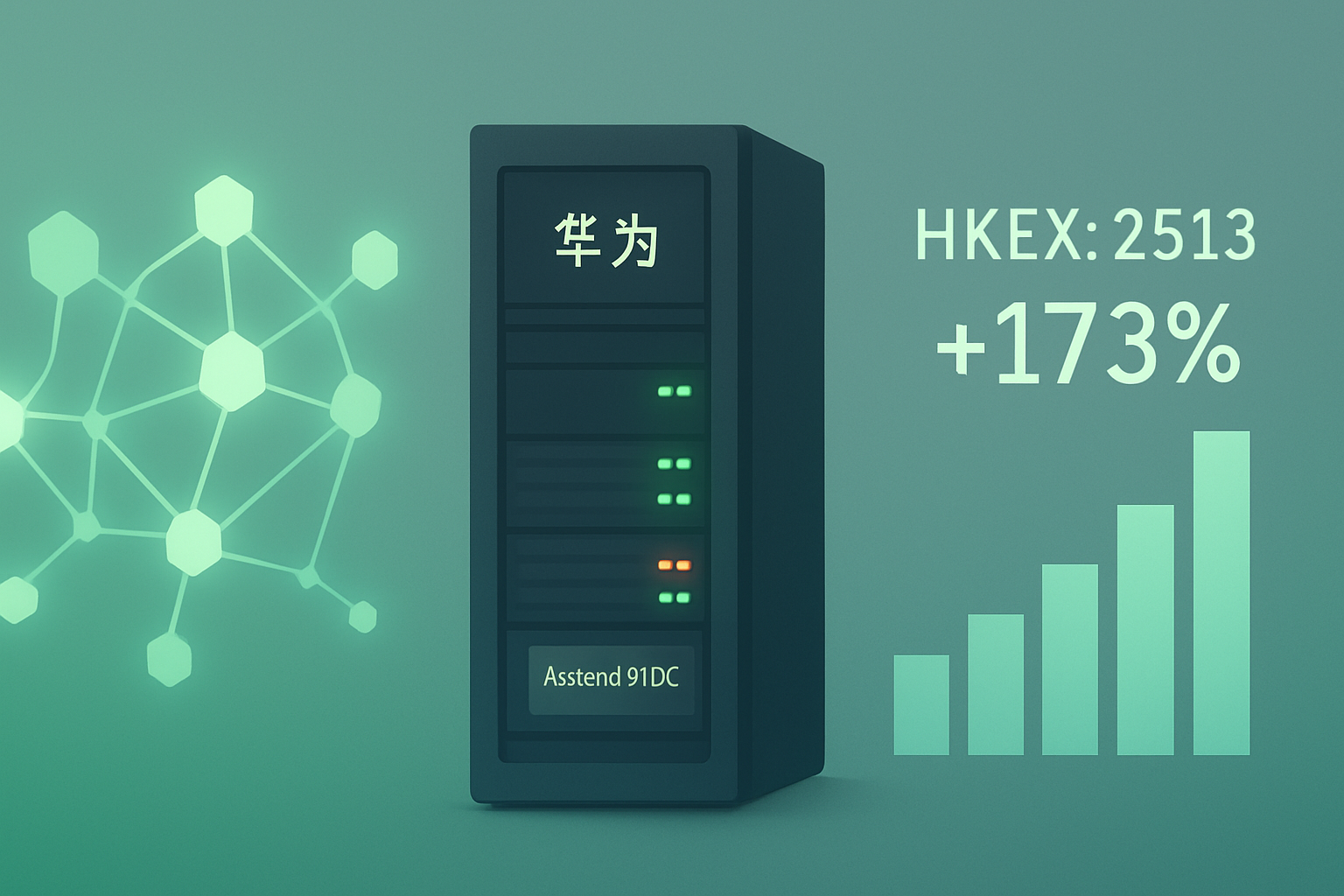
    This operational pivot paid off: by December 2025, Zhipu had filed for an IPO on the Hong Kong Stock Exchange. On January 8, 2026, it debuted at HK$116.20, raising $558 million in the largest AI foundation model IPO to date. Post-IPO, the stock surged 173% in one month, peaking at HK$317.80, driven by a combination of retail enthusiasm, cornerstone investor backing, and a JPMorgan “Overweight” rating with a HK$400 price target.


    Business Model

    Zhipu AI operates a Model-as-a-Service (MaaS) business model, targeting enterprise and developer markets with a tiered monetization strategy.

    Revenue Streams

    • Enterprise B2B (≈95% of 2024 revenue):
      • On-prem/Privatized Cloud: High-margin deployments for state-owned enterprises (SOEs), government agencies, and financial institutions. Revenue for 2024: RMB 263.7M (84.5% of total).
      • API & SDK Licenses: Per-call or annual enterprise API access; 30-fold YoY growth in 2024.
    • Consumer B2C (≈5% of 2024 revenue):
      • Zhipu Qingyan App: Free chatbot with optional premium features.
      • GLM Coding Plan: $3/month subscription for developers; 150,000+ users by Q1 2026.
      • Developer Tools: MIT-licensed model weights, AutoGLM agent framework.

    Pricing and Unit Economics

    • Gross Margins (2024): 56% overall — but 80%+ for on-premise, versus 0–5% for public API (due to compute subsidies).
    • Burn Efficiency: 70% of R&D spend (RMB 1.55B in 2024) covered compute and cloud infrastructure. Zhipu’s edge lies in algorithmic efficiency: its MoE models (e.g., GLM-4.7: 355B total, 32B active) achieve high accuracy with fewer active parameters, reducing inference costs.

    Go-to-Market Strategy

    Zhipu employs a “dual-track” GTM approach:

    1. Enterprise “Top-Down”: Direct sales teams embedded with SOEs and provincial governments; contracts often bundled with hardware (Ascend servers) and support services.
    2. Developer “Bottom-Up”: Open-source models, aggressive API pricing, and integration with popular dev tools (Cursor, Cline, VS Code) to drive organic adoption.

    Stock Performance Overview

    Period Stock Price (HKD) Change vs. IPO Market Cap (HKD)
    IPO Price (Jan 8, 2026) HK$116.20 HK$57.89B
    First Close HK$131.50 +13.2% HK$74.12B
    Jan 16 Peak (Interim) HK$202.40 +74.3% HK$110.06B
    Feb 9 ATH HK$287.80 +147.7% ~HK$135.6B
    Feb 10 Close HK$317.80 +173.5% ~HK$150.1B
    • Retail Demand: IPO oversubscribed 1,159x; 20% allocation to retail.
    • Institutional Backing: Cornerstone investors included Taikang Life, JSC International, and GF Fund.
    • Benchmark Comparison: Outperformed the Hang Seng Tech Index (HSTECH), which fell ~1.7% in the same period.

    Financial Performance

    Metric (RMB Millions) FY2022 FY2023 FY2024 H1 2025
    Total Revenue 57.4 119.2 (est.) 312.4 190.9
    YoY Revenue Growth ~108% ~162% 325% (vs H1 2024)
    Gross Margin ~48% ~52% 56% 51.5%
    Net Loss (97.0) (580.0) (2,470.0) (2,360.0)
    R&D Spend 84.0 410.0 2,200.0 1,590.0
    Cash & Equivalents ~400 ~1,200 2,740.0 2,550.0
    Valuation (Pre-IPO) $1.0B $2.8B $4.0B $6.6B (IPO)

    Key Insights

    • R&D Intensity: R&D spending equaled 705% of total 2024 revenue, with 70% allocated to compute infrastructure.
    • Runway: Pre-IPO, Zhipu had ~8–10 months of runway (burn rate: RMB 300M/month).
    • Use of IPO Proceeds: 70% to R&D (GLM-5 and beyond), 10% to MaaS optimization, 10% to global expansion.

    Leadership and Management

    Executive Team

    • CEO & Executive Director: Dr. Zhang Peng — Tsinghua PhD, former KEG researcher. Known for rational, research-first leadership and a focus on AGI as the ultimate goal.
    • Co-founder & Non-exec Director: Prof. Li Juanzi — Professor at Tsinghua, continues to lead foundational research through the KEG Lab.
    • Chairman & Co-founder: Dr. Liu Debing — Former Technicolor (China) executive; oversees state-level alignment and corporate governance.
    • Chief Scientist: Prof. Tang Jie — Architect of the GLM design; now focuses on long-term model roadmap and AGI theory.

    Board Composition (2026)

    Name Role Background
    Liu Debing Chairman & Exec Dir Co-founder, Tsinghua engineer
    Zhang Peng Exec Dir CEO, former KEG researcher
    Li Juanzi Non-exec Dir Co-founder, Tsinghua Professor
    Yang Qiang Independent Non-exec Dir HKUST AI expert (Transfer Learning, Federated Learning)
    Xie Deren Independent Non-exec Dir Tsinghua Accounting Professor
    Li Jiaqing Non-exec Dir Legend Capital representative

    Governance and Strategy

    Zhipu AI is widely recognized as a “national champion” aligned with China’s 15th Five-Year Plan and “New Quality Productive Forces” initiatives. Its governance emphasizes compliance (CAC, MIIT, CSRC), data security (PIPL), and hardware sovereignty (Ascend, Cambricon). The leadership has publicly emphasized “cognitive supremacy” over raw scale, positioning Zhipu’s path to AGI as algorithmic — not just computational — advancement.


    Products, Services, and Innovations

    The GLM Model Series: Evolution and Capabilities

    Model Release Parameters Context License Key Innovation
    GLM-1 2021 10B 1K Academic Blank-filling objective, 2D position encoding
    GLM-130B Aug 2022 130B 2K MIT First bilingual (ZH/EN) model; open-source
    ChatGLM-6B Mar 2023 6.2B 2K Apache 2.0 GPU-friendly for local inference
    GLM-4 Jan 2024 ~100B+ 128K Proprietary “All Tools” (web, Python, image gen)
    GLM-4.5 Jul 2025 355B (MoE) 128K MIT “Thinking Mode” hybrid reasoning
    GLM-4.7 Dec 2025 400B (MoE) 200K MIT SOTA on SWE-bench, coding, math
    GLM-4.7-Flash Jan 2026 31B (MoE) 128K MIT Runs on consumer GPUs (RTX 3090)
    GLM-5 Feb 2026 745B (MoE) 256K+ Anticipated DSA (Deep Reasoning Architecture), AGI Stage 1

    z.ai Platform (Global Brand, 2025–2026)

    • Bigmodel.cn: API platform; 2.7 million paying developers and 12,000+ enterprise clients.
    • Zhipu Qingyan: Consumer app with video calling and multimodal input.
    • AutoGLM: First mobile agent capable of navigating app UIs (e.g., WeChat, Didi, Meituan) to execute multi-step tasks.
    • GLM-Image: First SOTA image generation model trained solely on Huawei Ascend 910C chips.

    Intellectual Property and R&D

    • Over 300 patents filed in China (as of Q4 2025), covering 2D positional encoding, blank-filling training, and MoE routing.
    • 70% of funding post-IPO dedicated to Frontier AGI Research, with emphasis on multi-turn agentic reasoning and self-supervised self-critique.

    Competitive Landscape

    Company Model Series Strength Weakness
    Zhipu AI (Z.ai) GLM MoE efficiency, hardware sovereignty, MIT licensing, SOTA coding (GLM-4.7) Low B2C conversion, high compute costs
    Baidu ERNIE 4.5/5.0 Search + knowledge graph integration, deep Chinese idiomatic fluency Slower inference, weaker tool use
    Alibaba Qwen 3/3.5 Massive multilingual coverage (119+), high-throughput 1M+ context Less focus on agentic workflows
    DeepSeek V3/R1 Aggressive pricing, strong math (AIME), venture backing Less enterprise deployment, unprofitable
    Tencent HunYuan Enterprise + gaming ecosystem integration Limited transparency, proprietary stack

    Market Position

    • China Market Share (IDC, 2024): ~18% — ranked #3 (after Baidu and Alibaba).
    • Global LLM Positioning: Among top 10 foundation models by open weights and closed performance (per Hugging Face Leaderboard).
    • Unique Edge: Only model family trained entirely on Chinese hardware at SOTA scale (GLM-4.7, GLM-5).

    Industry and Market Trends

    • New Quality Productive Forces: China’s national policy prioritizes AI that boosts industrial efficiency — Zhipu’s SOE and manufacturing deployments align perfectly.
    • Model Compression & Edge Deployment: Zhipu’s GLM-4.7-Flash targets 2026 consumer hardware; Samsung Galaxy S25 (China) includes Zhipu’s edge model.
    • Global South Expansion: Zhipu leads the “Alliance for Independent Large Model Co-construction” with ASEAN and Belt & Road nations.
    • MoE Dominance: Most 2025–2026 releases (GLM-4.5+, Qwen 3.5, ERNIE 5.0) use MoE — Zhipu’s first-mover advantage in MoE training on Ascend chips is critical.
    • Compute Price War: DeepSeek’s aggressive API pricing (Q4 2025) pressured Zhipu’s public cloud margins, driving Zhipu to double down on high-margin enterprise contracts.

    Risks and Challenges

    • U.S. Entity List (Jan 2025): Bans Zhipu from NVIDIA H100/H200 and U.S. cloud inference; forces reliance on lower-efficiency domestic chips.
    • Profitability Lag: Net loss of RMB 2.47B in 2024; R&D burn remains >700% of revenue. Path to breakeven is 2027–2028.
    • Geopolitical Decoupling: Limited ability to deploy GLM-5 in U.S./EU markets; restricted model export under China’s Export Control Law.
    • Regulatory Scrutiny (China): CAC-mandated security assessments for every model update; PIPL compliance for user data.
    • Valuation Volatility: Current P/S of 150x (2024) and 39x (2025E) leaves stock vulnerable to earnings disappointment.

    Opportunities and Catalysts

    • GLM-5 Launch (Feb 2026): Anticipated to rival GPT-5 in AGI-stage reasoning — potential catalyst for 30–50% stock re-rating.
    • SOE Procurement Mandates: 70% of government AI spending must use “First Batch” domestic models — Zhipu holds largest share.
    • Hardware Partnerships: Huawei (Ascend), Cambricon, and Moore Threads offer subsidized compute vouchers; Zhipu receives MIIT “AI Tiger” subsidies covering ~30% of power costs.
    • Global Developer Adoption: MIT licensing and open weights accelerate integrations in OpenRouter, Hugging Face, and ASEAN cloud providers.
    • Runway Extension: IPO proceeds extend runway to >36 months; capital allows aggressive R&D without secondary dilution.

    Investor Sentiment and Analyst Coverage

    Analyst Ratings (Post-IPO, as of Feb 10, 2026)

    Firm Rating Price Target (HKD) Note
    JPMorgan Overweight 400 “Top pick for global AI value creation”
    Goldman Sachs (Asia) Buy 42.50 “Proprietary Knowledge Graph LLM” advantage
    Morgan Stanley Overweight 38.00 Enterprise integration in GBA
    HSBC Global Research Hold 31.00 Compute cost concerns

    Institutional & Retail Activity

    • Cornerstone Investors (5.8 months lock-up): Taikang Life, JSC International, GF Fund (~68.6% of offering).
    • Hedge Funds: 3W Fund (3.8% long), WT Asset Management (added 1.2M shares Jan 2026).
    • Retail Sentiment: 1,159x oversubscription; StockStreet and LittleWhitePanda bullish, though caution noted at HK$36 resistance.

    Finterra-Style Metrics (Est.)

    Metric Value
    Implied FY2026 P/E 33.5x
    P/S (2025E) 9.2x
    EV/EBITDA 24.5x
    Implied EPS (FY26) HK$1.12
    Cash Runway >36 months (post-IPO)

    Regulatory, Policy, and Geopolitical Factors

    • U.S. Entity List (Jan 2025): Blocked H100/H200 access; forced domestic chip migration (Ascend 910C).
    • China CAC Regulations: GenAI Service Measures (2023) and TC260-003 (2024) mandate model registration, human-in-the-loop safety testing, and keyword filtering.
    • Export Control Law (2025): Model weights classified as “restricted exports” — GLM-5 can only be hosted on Chinese mainland or Hong Kong servers.
    • Cross-Border Data Flow (2025 Updates): Tightened for model weights; Zhipu uses “Hong Kong Gateway” to host APIs while core compute remains in mainland.
    • Policy Dividends:
      • “AI Tiger” Support (MIIT): Grants cover ~30% of compute costs.
      • East Data West Compute (东数西算): Zhipu’s clusters in Gansu/Guizhou use cheap hydroelectric power.

    Conclusion

    Knowledge Atlas (HKEX: 2513) is not merely a stock — it is a national infrastructure play. Its GLM models represent a rare case where algorithmic innovation (blank-filling, 2D positional encoding) translated directly into market leadership and operational sovereignty. The company has turned U.S. sanctions into a catalyst for domestic silicon adoption, and its focus on MoE efficiency positions it well for a future where compute scarcity — not abundance — defines competitive advantage.

    Investors face a binary narrative: either Zhipu’s high burn and valuation will be justified by GLM-5’s AGI breakthrough and SOE dominance, or the stock will correct toward more traditional SaaS multiples in a maturing AI market. Key watchpoints for the next 90 days include:

    • GLM-5 performance benchmarks (C-Eval, AIME, SWE-bench)
    • Enterprise renewal rates and avg. contract value (ACV) growth
    • MIIT subsidies and Ascend chip yield improvements

    At its current price, Zhipu offers explosive upside if AGI milestones are hit — but substantial risk if hardware bottlenecks or regulatory shifts slow execution. For investors with a multi-year horizon and high-risk tolerance, the company remains a compelling, high-conviction proxy for the global AI arms race — one that may well define the next decade of tech leadership.


    This article is for informational purposes only and is not financial advice. Finterra does not hold positions in any securities mentioned. Data as of February 10, 2026.