
Tag: AI Hardware

  • Broadcom’s AI Ascent: A Deep-Dive Analysis Ahead of Q1 2026 Earnings

    Broadcom’s AI Ascent: A Deep-Dive Analysis Ahead of Q1 2026 Earnings

    As of today, March 5, 2026, Broadcom Inc. (NASDAQ: AVGO) stands at the undisputed epicenter of the global artificial intelligence infrastructure. While Nvidia (NASDAQ: NVDA) captured the early headlines of the generative AI revolution with its H100 and Blackwell GPUs, Broadcom has quietly become the "architect of the back-end." By providing the high-speed networking switches and custom silicon (ASICs) that allow tens of thousands of GPUs to function as a single massive computer, Broadcom has cemented its status as a critical bottleneck—and a primary beneficiary—of the AI era.

    Following its Q1 2026 earnings report released just hours ago, the company has once again defied gravity. With AI-related revenue now accounting for nearly half of its semiconductor sales and the integration of VMware finally bearing high-margin fruit, Broadcom represents a unique hybrid of aggressive hardware growth and steady, recurring software cash flows.

    Historical Background

    Broadcom’s journey is a masterclass in corporate evolution. The modern entity is the result of a 2016 merger between Avago Technologies and the original Broadcom Corporation. Avago itself was a spin-off of Agilent Technologies, which trace its lineage back to Hewlett-Packard.

    The transformative figure in this history is Hock Tan, who became CEO of Avago in 2006. Under his leadership, the company embarked on a relentless acquisition strategy, targeting "franchise" businesses—market leaders in niche technology categories with high barriers to entry. Key milestones include the $37 billion acquisition of Broadcom in 2016, the $19 billion purchase of CA Technologies in 2018, and the $10.7 billion acquisition of Symantec’s enterprise security business in 2019. However, the most pivotal move was the $69 billion acquisition of VMware, which closed in late 2023, signaling Broadcom’s definitive shift toward becoming a diversified infrastructure giant.

    Business Model

    Broadcom operates through two primary segments: Semiconductor Solutions and Infrastructure Software.

    1. Semiconductor Solutions (approx. 70-75% of revenue): This segment provides the "plumbing" for data centers, telecommunications, and consumer electronics. Its product lines include Ethernet switching and routing (Tomahawk and Jericho series), custom AI accelerators (ASICs), fiber optic components, and wireless chips for smartphones (notably for Apple Inc.).
    2. Infrastructure Software (approx. 25-30% of revenue): This segment is now dominated by VMware, alongside CA Technologies and Symantec. Broadcom’s model here is to focus on the "VMware Cloud Foundation" (VCF), moving customers from perpetual licenses to high-value subscription models.

    Broadcom’s customer base is highly concentrated among "Hyperscalers" (Google, Meta, Microsoft) and Tier-1 OEMs, creating deep design-win cycles that last for years.

    Stock Performance Overview

    Broadcom has been one of the most consistent "compounders" in the technology sector over the last decade.

    • 10-Year Performance: AVGO has significantly outperformed the S&P 500 and the Nasdaq-100, driven by aggressive M&A and dividend growth.
    • 5-Year Performance: The stock saw a massive acceleration starting in late 2023 as the market began to price in its AI networking dominance.
    • 1-Year Performance: Over the past 12 months, the stock has risen over 60%, buoyed by a 10-for-1 stock split in mid-2024 that increased retail accessibility and its inclusion in nearly every major AI-themed ETF.
    • Recent Action: As of this morning, March 5, 2026, shares are trading up 8% following a "beat and raise" Q1 earnings report, reclaiming ground lost during a brief semiconductor sector rotation in early 2026.

    Financial Performance

    Broadcom’s financial profile is characterized by industry-leading margins and massive free cash flow (FCF).

    • Q1 2026 Results: Reported revenue of $19.31 billion, beating consensus estimates.
    • Profitability: The company maintains adjusted EBITDA margins near 60%. Post-VMware integration, gross margins in the software segment have hit a staggering 93%.
    • Cash Flow: Broadcom generated over $5 billion in FCF in the last quarter alone, much of which is being directed toward a $10 billion share buyback program and a robust dividend.
    • Valuation: Despite the stock's run-up, it continues to trade at a premium to historical averages (approx. 28x forward earnings), reflecting its perceived "safety" relative to more volatile chipmakers.

    Leadership and Management

    CEO Hock Tan is widely regarded as one of the most effective capital allocators in technology. His "Broadcom Playbook" involves identifying essential technologies, cutting non-core R&D, and focusing on the top 1,000 global customers.

    While Tan's management style has sometimes been criticized for being "ruthless" regarding cost-cutting and price hikes (particularly post-VMware), the board of directors remains fully supportive, given the consistent delivery of shareholder value. The leadership team is lean, with a heavy emphasis on operational efficiency and a decentralized engineering structure that allows individual product divisions to innovate rapidly.

    Products, Services, and Innovations

    In 2026, Broadcom’s innovation is centered on two pillars: Custom Silicon and Next-Gen Networking.

    • AI ASICs: Broadcom is the primary partner for Google’s TPU (Tensor Processing Unit) and Meta’s MTIA chips. These custom chips are designed specifically for the companies' proprietary AI models, offering better performance-per-watt than general-purpose GPUs.
    • Networking: The Tomahawk 5 and 6 switching silicon are the gold standard for AI data centers, enabling the massive data throughput required for Large Language Model (LLM) training.
    • Silicon Photonics: Broadcom is a leader in integrating optical interconnects directly into the chip package, a "holy grail" for reducing energy consumption in data centers.

    Competitive Landscape

    Broadcom faces distinct rivals in its different segments:

    • Networking: Nvidia (with its Spectrum-X Ethernet and InfiniBand) is the primary threat, attempting to bundle its chips with its own networking gear. Marvell Technology (NASDAQ: MRVL) is a close second in the custom ASIC and optical space.
    • Software: VMware faces competition from open-source alternatives like Nutanix and cloud-native solutions from AWS and Azure, though its "installed base" moat remains deep.
    • Wireless: In the smartphone space, Broadcom competes with Qualcomm (NASDAQ: QCOM), though its specialized RF filters and Wi-Fi 7 chips currently hold a technical edge.

    Industry and Market Trends

    The semiconductor industry has shifted from a "PC/Smartphone" era to an "AI/Data Center" era. Broadcom is benefiting from three macro trends:

    1. The Shift to Ethernet: As AI clusters scale to hundreds of thousands of GPUs, the industry is moving away from proprietary interconnects like InfiniBand toward open, high-performance Ethernet—Broadcom’s home turf.
    2. Hyperscale Self-Sufficiency: Big Tech firms (Google, Meta, OpenAI) increasingly want to design their own chips to reduce reliance on Nvidia. Broadcom is their preferred partner for this "co-design" model.
    3. Hybrid Cloud: Despite the rush to the public cloud, large enterprises are retaining "on-prem" data centers for security, a trend that sustains the VMware ecosystem.

    Risks and Challenges

    • Customer Concentration: A significant portion of revenue comes from just a few customers, including Apple and Google. Any shift in their procurement strategies would be material.
    • Regulatory Scrutiny: Broadcom’s dominant market position in switching has attracted the attention of the FTC and EU regulators. Additionally, the VMware acquisition was under heavy scrutiny for over a year, and future M&A may face higher hurdles.
    • China Exposure: Approximately 30% of Broadcom’s revenue is tied to China, either through direct sales or supply chain integration. Continued US-China trade tensions remain a persistent "headline risk."

    Opportunities and Catalysts

    • The OpenAI "Titan" Project: Rumors in early 2026 suggest Broadcom has secured a multi-billion dollar deal to design a custom inference chip for OpenAI.
    • VMware Synergy Realization: As the "perpetual-to-subscription" transition finishes in late 2026, analysts expect a massive surge in software operating income.
    • Terabit Switching: The upcoming transition to 1.6T and 3.2T networking speeds in 2026–2027 will require a total refresh of data center hardware, favoring Broadcom’s R&D lead.

    Investor Sentiment and Analyst Coverage

    Sentiment on Wall Street remains overwhelmingly bullish. Following the March 5 earnings beat, several major banks (Goldman Sachs, J.P. Morgan) raised their price targets, citing "unprecedented visibility" into the AI pipeline through 2027. Institutional ownership is high, with Vanguard and BlackRock holding significant stakes. Among retail investors, Broadcom is viewed as a "Blue Chip AI" play—offering less volatility than Nvidia but higher growth than traditional tech stalwarts like IBM or Cisco.

    Regulatory, Policy, and Geopolitical Factors

    Broadcom is deeply impacted by the CHIPS Act and US export controls. While it benefits from incentives to build out domestic capacity, it is restricted from selling its most advanced AI switching silicon to certain Chinese entities. Geopolitically, the company has successfully navigated these waters by diversifying its packaging and testing facilities across Southeast Asia (Malaysia, Vietnam) to mitigate risks associated with Taiwan.

    Conclusion

    Broadcom Inc. enters the mid-point of 2026 as a formidable engine of the digital economy. It has successfully navigated the complexities of a massive software acquisition while simultaneously riding the strongest hardware tailwind in decades.

    For investors, the key to the Broadcom story is consistency. While other AI players face "boom or bust" cycles, Broadcom’s dual-threat model—custom AI silicon and high-margin recurring software—provides a unique safety net. As the market digests today's Q1 earnings, the focus will remain on whether the company can maintain its 80% market share in networking as Nvidia attempts to invade its territory. For now, Hock Tan’s machine shows no signs of slowing down.


    This content is intended for informational purposes only and is not financial advice.

  • The Silicon Pivot: Inside Meta Platforms’ $60 Billion Gamble to Own the AI Future

    The Silicon Pivot: Inside Meta Platforms’ $60 Billion Gamble to Own the AI Future

    As of February 27, 2026, Meta Platforms (NASDAQ: META) has completed one of the most audacious strategic pivots in corporate history. Once defined by social networking and later by a polarizing bet on the "Metaverse," the company is now fundamentally an AI infrastructure powerhouse. While the world's attention was once fixed on the "Year of Efficiency" in 2023, the Meta of 2026 is defined by a "Decade of Dominance" in artificial intelligence.

    The company is currently the center of investor focus following a series of staggering hardware maneuvers designed to break its reliance on a single silicon provider. With a multi-billion dollar TPU leasing agreement with Google (NASDAQ: GOOGL) and a monumental $60 billion partnership with AMD (NASDAQ: AMD), Meta is rewriting the playbook for how a software-first company secures its future in a hardware-constrained world.

    Historical Background

    Founded in a Harvard dorm room in 2004, the evolution of Meta—originally Facebook—has been characterized by ruthless adaptation. The 2012 mobile transition, the high-stakes acquisitions of Instagram and WhatsApp, and the 2021 rebrand to Meta Platforms each marked a new era.

    However, the most significant shift occurred in late 2022 and early 2023. Facing a post-IDFA (Apple's App Tracking Transparency) advertising slump and mounting pressure from TikTok (owned by ByteDance), CEO Mark Zuckerberg steered the company toward open-source AI. The release of the Llama (Large Language Model Meta AI) series turned Meta into the de facto standard for open AI development, a move that effectively commoditized the proprietary models of competitors while cementing Meta’s place at the center of the AI ecosystem.

    Business Model

    Meta’s business model remains anchored in its "Family of Apps" (FoA), which includes Facebook, Instagram, Messenger, and WhatsApp. Despite its shift toward AI, approximately 98% of its revenue is still generated through digital advertising.

    However, the nature of that advertising has changed. By 2026, Meta’s ad engine is almost entirely autonomous, using generative AI to create, test, and optimize creative assets in real-time for millions of advertisers. This has driven record high returns on ad spend (ROAS), particularly on Instagram Reels and the newer "Threads" ad platform.

    The secondary segment, Reality Labs, remains the R&D arm for future hardware, including Quest headsets and the burgeoning Ray-Ban Meta smart glasses line. While still loss-making, Reality Labs is increasingly viewed not as a "metaverse" play, but as the hardware interface for Meta’s pervasive AI agents.

    Stock Performance Overview

    Over the past decade, Meta has been a volatile but high-performing asset.

    • 10-Year View: Since early 2016, the stock has risen over 600%, surviving the catastrophic 2022 drawdown where it lost nearly 75% of its value.
    • 5-Year View: The stock has seen a CAGR of approximately 25%, fueled by the post-2023 recovery and the AI-driven multiple expansion.
    • 1-Year View: In the last 12 months, META has outpaced the S&P 500, rising roughly 45% as of February 2026, currently trading in the $740 range. The stock hit an all-time high earlier this month following the announcement of its massive AMD deal and a blowout Q4 2025 earnings report.

    Financial Performance

    Meta’s fiscal year 2025 results, released in January 2026, were nothing short of historic.

    • Revenue: $200.97 billion, a 22% increase year-over-year.
    • Net Income: $60.46 billion, reflecting strong operational leverage despite massive infrastructure spending.
    • Earnings Per Share (EPS): $23.49 for the full year.
    • Capital Expenditures (CapEx): In 2025, Meta spent $72 billion on data centers and servers. For 2026, the company stunned analysts by raising its CapEx guidance to a range of $115 billion to $135 billion.
    • Margins: Operating margins sat at 41% in 2025, down from the 48% peaks of the previous year, reflecting the heavy "AI tax" the company is paying to build out its clusters.

    Leadership and Management

    Mark Zuckerberg remains the controlling force of the company, holding the majority of voting shares. His leadership has evolved from the "Move Fast and Break Things" mantra to a more disciplined, long-term architectural focus.

    Supporting him is CFO Susan Li, who has been credited with maintaining rigorous cost controls in non-AI departments, and CTO Andrew "Boz" Bosworth, who oversees the technical integration of AI into both the apps and Reality Labs. The board has recently seen the addition of several high-profile semiconductor and energy executives, reflecting Meta’s new operational priorities: chips and power.

    Products, Services, and Innovations

    Meta’s product pipeline is currently dominated by the "Llama 4" ecosystem, which includes the Behemoth model—a 2-trillion parameter model used to train smaller, more efficient agents.

    • Meta AI: Now integrated into every aspect of the Family of Apps, Meta AI serves as a personal assistant, shopping concierge, and content creator for over 3.5 billion daily active users.
    • Ray-Ban Meta "Display" Glasses: Launched at CES 2026, these glasses feature a miniaturized lens display and use a neural wristband (EMG) for gesture control, moving Meta closer to the "post-smartphone" era.
    • MTIA (Meta Training and Inference Accelerator): Meta’s custom silicon program is hitting its stride. MTIA-2 is currently being deployed, with MTIA-3 (built on TSMC’s 3nm process) expected by late 2026.

    Competitive Landscape

    Meta competes on multiple fronts:

    • Advertising: Its primary rivals remain Alphabet (NASDAQ: GOOGL) and Amazon (NASDAQ: AMZN), though Meta’s AI-driven targeting has recently gained market share from smaller players.
    • AI Models: In the "Model Wars," Meta’s open-source Llama competes directly with OpenAI (backed by Microsoft (NASDAQ: MSFT)) and Anthropic. Meta’s strategy is to be the "Linux of AI," making it the industry standard for developers.
    • Hardware: Meta is increasingly a competitor to its own suppliers. While it remains Nvidia's (NASDAQ: NVDA) largest customer, its shift toward AMD and Google TPUs signals a strategic withdrawal from Nvidia’s total ecosystem lock-in.

    Industry and Market Trends

    The semiconductor supply chain is the most critical macro factor for Meta in 2026. The "GPU famine" of 2023-2024 has transitioned into a "Power Famine." Meta has invested heavily in proprietary energy projects, including small modular reactors (SMRs), to power its massive data centers in the U.S. and Europe.

    Furthermore, there is a clear trend toward "Edge AI"—running models locally on devices rather than in the cloud. Meta’s heavy investment in AR glasses and its lightweight Llama "Scout" models position it at the forefront of this shift.

    Risks and Challenges

    • CapEx Oversupply: There is a growing fear among investors that Meta (and its peers) are overbuilding AI capacity. If the revenue from AI-driven ads doesn't scale to match the $130 billion CapEx, a significant valuation correction is possible.
    • The "Nvidia Tax" vs. Execution Risk: Diversifying to AMD and internal silicon is risky. If AMD’s software stack (ROCm) or Meta’s internal MTIA chips fail to deliver the expected TFLOPS-per-watt, Meta could fall behind OpenAI/Microsoft in model training.
    • Reality Labs Burn: The division lost $16 billion in 2025. While investors are currently tolerant due to high ad profits, that patience is not infinite.

    Opportunities and Catalysts

    • The $60 Billion AMD Deal: This partnership is a game-changer. By securing 6 gigawatts of AMD Instinct compute (MI450 architecture) and taking a 10% stake in AMD, Meta has secured its hardware roadmap through 2028 at a lower cost-per-unit than Nvidia.
    • Google TPU Leasing: Utilizing Google’s TPUs allows Meta to run PyTorch workloads with extreme efficiency, providing a "buffer" while its own MTIA chips scale.
    • WhatsApp Monetization: The integration of AI agents into WhatsApp for business remains a massive, largely untapped revenue lever.

    Investor Sentiment and Analyst Coverage

    Wall Street remains broadly bullish on Meta, with a consensus "Buy" rating. Analysts from Goldman Sachs and Morgan Stanley have recently raised price targets to the $850 range. The sentiment is driven by Meta's "vertical integration" story—controlling everything from the silicon and the model to the social platform and the hardware device. However, some value-oriented funds have trimmed positions, citing the high CapEx-to-Revenue ratio.

    Regulatory, Policy, and Geopolitical Factors

    Meta faces a dual-threat regulatory environment in 2026.

    • European Union: The Digital Markets Act (DMA) enforcement has become "strict." Meta is currently fighting an EU challenge regarding its data-sharing practices between Instagram and WhatsApp.
    • United States: The FTC’s ongoing antitrust case, which seeks to divest Instagram and WhatsApp, remains a "black swan" risk, though many legal experts believe a full breakup is unlikely under the current administration.
    • Geopolitics: Meta’s reliance on TSMC (NYSE: TSM) for its custom MTIA chips makes it highly sensitive to cross-strait tensions in Taiwan.

    Conclusion

    Meta Platforms has successfully navigated the transition from a social media company to an AI infrastructure titan. By aggressively diversifying its hardware stack through massive deals with AMD and Google, and by pushing the boundaries of custom silicon with MTIA, Meta has insulated itself against the volatility of the GPU market.

    For investors, the story is one of high-risk, high-reward. Meta is betting the entire company—over $100 billion in annual investment—on the belief that AI will be the foundational layer of all future human interaction. While regulatory and execution risks remain, Meta’s sheer scale, massive cash flow, and strategic hardware pivots make it the definitive "Alpha" of the AI era. Investors should watch for the first deployments of the Helios/AMD architecture in H2 2026 as the next major indicator of the company’s technical execution.


    This content is intended for informational purposes only and is not financial advice.

  • The Architect of the AI Factory: A Deep Dive into Dell Technologies (DELL) as AI Demand Surges

    The Architect of the AI Factory: A Deep Dive into Dell Technologies (DELL) as AI Demand Surges

    As of February 26, 2026, Dell Technologies (NYSE: DELL) stands at the epicenter of a historic shift in global computing. Once primarily known as a legacy provider of personal computers and enterprise storage, the Round Rock, Texas-based titan has successfully reinvented itself as the cornerstone of the "AI Factory." With the explosion of generative AI and large-scale model training, Dell has leveraged its massive supply chain and deep enterprise relationships to become a dominant player in the AI hardware space. Today, the company is in sharp focus as it prepares to report its Q4 Fiscal Year 2026 earnings, with investors eagerly watching to see if the surge in AI server demand can offset macroeconomic headwinds and margin pressures.

    Historical Background

    The story of Dell Technologies is one of the most remarkable transformations in American corporate history. Founded in 1984 by Michael Dell in his University of Texas dorm room with just $1,000, the company revolutionized the industry with its "direct-to-consumer" business model, bypassing retail middlemen to offer customized PCs at lower prices.

    After becoming a public powerhouse in the 1990s, the company faced a shifting landscape in the 2010s as mobile computing and cloud services challenged the traditional PC market. In 2013, Michael Dell and Silver Lake Partners took the company private in a $24 billion deal—the largest leveraged buyout in tech history at the time—to restructure away from the public eye. During this period, Dell executed the massive $67 billion acquisition of EMC Corporation in 2016, a move that integrated world-class storage and virtualization (via a majority stake in VMware) into its portfolio. Dell returned to the public markets in late 2018 (NYSE: DELL), emerging as a simplified, end-to-end infrastructure giant.

    Business Model

    Dell operates a diversified business model split primarily into two reporting segments:

    • Infrastructure Solutions Group (ISG): This high-growth segment includes servers, storage, and networking. It is the current engine of Dell’s AI ambitions, housing the PowerEdge server line and sophisticated storage solutions required for massive data sets.
    • Client Solutions Group (CSG): This segment covers the traditional PC business, including commercial and consumer laptops, desktops, and peripherals. While mature, it provides significant cash flow and a massive installed base for "AI PC" upgrades.

    The company earns revenue through direct hardware sales, recurring software licenses, and an expanding suite of professional services (APEX) that allows customers to consume Dell infrastructure through a cloud-like, consumption-based model.

    Stock Performance Overview

    Dell’s stock has undergone a significant re-rating by the market over the last decade, transitioning from a "value" play to a "growth" play driven by AI infrastructure.

    • 1-Year Performance: As of February 2026, the stock has seen a 6.8% return over the past twelve months. While modest compared to 2024’s massive gains, it reflects a period of consolidation as investors digested concerns over hardware margins.
    • 5-Year Performance: Dell has delivered a staggering 219.8% total return (approx. 26.5% CAGR), significantly outperforming the broader S&P 500 index.
    • 10-Year Performance: Long-term investors have seen a 920.7% total return (approx. 27.4% CAGR). An initial $1,000 investment at the time of its 2016 EMC integration would be worth over $10,000 today, underscoring the success of Michael Dell’s long-term vision.

    Financial Performance

    Heading into the Q4 FY2026 earnings announcement, Dell’s financials reflect a company scaling at breakneck speed.

    • Revenue Growth: Analysts project Q4 revenue between $31.0 billion and $32.0 billion, a roughly 32% increase year-over-year.
    • Earnings per Share (EPS): Non-GAAP EPS is expected at $3.53, up from $2.68 a year prior.
    • Margins: A key metric for investors has been gross margin, which sat near 20.4% in late 2025. While high-volume AI server sales drive revenue, the high cost of components—specifically HBM (High Bandwidth Memory) and GPUs from NVIDIA (NASDAQ: NVDA)—has put pressure on profitability.
    • Backlog: Dell exited the previous quarter with a massive $18.4 billion AI server backlog, a figure that continues to grow as sovereign nations and large enterprises scramble for computing power.

    Leadership and Management

    Dell’s leadership remains its greatest asset. Michael Dell, the Chairman and CEO, remains highly active, steering the company’s strategic focus toward the "AI Factory." He is supported by Jeff Clarke, Vice Chairman and COO, who is widely regarded as the architect of Dell’s world-class supply chain. Clarke’s ability to secure scarce components and deploy full-rack AI solutions within 24 to 36 hours has given Dell a significant operational lead over rivals. In late 2025, David Kennedy was officially named permanent CFO, bringing stability to the finance department after a period of transition. The management team is viewed as disciplined, shareholder-friendly, and highly effective at capital allocation.

    Products, Services, and Innovations

    Innovation at Dell is currently centered on the PowerEdge XE9680, its flagship AI-optimized server. This platform supports the latest chips from NVIDIA and Advanced Micro Devices (NASDAQ: AMD) and is designed for the most demanding generative AI workloads.
    Beyond servers, Dell is pioneering the AI PC—laptops equipped with Neural Processing Units (NPUs) that allow AI tasks to run locally rather than in the cloud. Furthermore, Dell's APEX platform has evolved into a comprehensive "multicloud" ecosystem, allowing enterprises to manage their data seamlessly across private hardware and public clouds, a critical capability as data privacy laws tighten globally.

    Competitive Landscape

    Dell competes in a crowded but consolidating field:

    • Hewlett Packard Enterprise (NYSE: HPE): Dell’s primary rival in the enterprise space. While HPE is strong in "Private AI" and networking (via its acquisition of Juniper Networks), Dell currently holds a higher market share in total AI server volume (approx. 20% vs HPE’s 15%).
    • Super Micro Computer (NASDAQ: SMCI): A high-growth "pure-play" competitor known for liquid cooling and speed. While Super Micro was an early mover in AI, Dell’s global service and support network has allowed it to win "sovereign AI" contracts that require long-term maintenance.
    • Lenovo (OTC: LNVGY): A formidable competitor in the PC and standard server market, though it has trailed Dell in high-end AI server deployments in the Western markets.

    Industry and Market Trends

    The "second wave" of AI adoption is the defining trend of 2026. While the first wave was dominated by "neoclouds" and hyperscalers, the second wave involves Sovereign AI (nations building their own localized AI infrastructure) and Enterprise AI (companies integrating AI into every department). Additionally, a massive PC refresh cycle is underway as hundreds of millions of enterprise laptops purchased during the 2020-2021 pandemic reach their end-of-life, just as AI-capable hardware becomes the new standard.

    Risks and Challenges

    Despite the growth, Dell faces several headwinds:

    • Margin Compression: The mix shift toward AI servers, which currently carry lower margins than traditional storage and software, remains a concern for Wall Street.
    • Component Costs: Rising prices for DRAM and HBM memory can erode profits quickly if Dell cannot pass costs on to customers.
    • Macroeconomic Sensitivity: While AI is a priority, high interest rates and a cooling global economy could lead some enterprises to delay broader IT spending outside of AI.

    Opportunities and Catalysts

    • Sovereign AI Deals: Governments are increasingly viewing AI infrastructure as a matter of national security, leading to multi-billion dollar "nation-scale" contracts.
    • Blackwell Integration: The rollout of NVIDIA’s Blackwell architecture throughout 2026 is expected to spark a new cycle of server upgrades.
    • Storage Recovery: As companies store the massive amounts of data generated by AI, Dell’s high-margin storage business is expected to see a significant "pull-through" effect.

    Investor Sentiment and Analyst Coverage

    Wall Street remains broadly bullish on Dell. The consensus rating is a Strong Buy, with a median price target of approximately $160. Bullish analysts point to the "five-quarter pipeline" of AI demand, which reportedly exceeds the current backlog by several multiples. Institutional ownership remains high, with major funds viewing Dell as a more reasonably valued alternative to "pure-play" AI stocks that trade at much higher multiples of earnings.

    Regulatory, Policy, and Geopolitical Factors

    Geopolitics play a massive role in Dell’s operations. In January 2026, the U.S. imposed a 25% tariff on advanced AI chips not destined for domestic supply chains, complicating Dell’s international logistics. To mitigate this, Dell has aggressively pursued a "China Plus One" strategy, shifting 50% of its production capacity to Vietnam, India, and Mexico by the end of 2026. Furthermore, tightening U.S. export controls on high-end GPUs require Dell to navigate a complex licensing landscape when selling to clients in certain regions.

    Conclusion

    Dell Technologies has successfully navigated the transition from a PC company to a vital architect of the AI era. With a record backlog, a visionary founder at the helm, and a supply chain that is the envy of the industry, the company is well-positioned for the "second wave" of enterprise AI adoption. However, investors must weigh this growth against the reality of margin compression and a complex geopolitical environment. As the Q4 FY2026 results unfold, the key question will not be whether demand exists, but how efficiently Dell can convert its massive $18.4 billion backlog into bottom-line profitability. For the long-term investor, Dell remains a core play on the physical infrastructure that makes the AI revolution possible.


    This content is intended for informational purposes only and is not financial advice.

  • Coherent Corp. (COHR) 2026 Deep-Dive: The 1.6T Networking Supercycle and the Anderson Turnaround

    Coherent Corp. (COHR) 2026 Deep-Dive: The 1.6T Networking Supercycle and the Anderson Turnaround

    As of February 23, 2026, the global technology sector has shifted its gaze from the "GPU gold rush" to the "connectivity bottleneck." In this new era of artificial intelligence infrastructure, few companies occupy a more critical position than Coherent Corp. (NYSE: COHR). Once a fragmented conglomerate of industrial lasers and specialized materials, Coherent has undergone a radical transformation over the last 20 months under new leadership, emerging as the premier provider of the optical transceivers and photonic components that allow AI data centers to breathe.

    With the 1.6T (Terabit per second) networking cycle now in full swing, Coherent is no longer just a component supplier; it is viewed by Wall Street as a foundational engine of the AI revolution. Today, we examine how the company navigated the volatility of early February and why its strategic pivot toward high-speed networking has made it one of the most watched stocks of the 2026 fiscal year.

    Historical Background

    The Coherent of 2026 is a product of ambitious consolidation. Its roots lie in II-VI Incorporated, a company founded in 1971 that specialized in engineered materials and optoelectronic components. Over decades, II-VI grew through aggressive acquisitions, culminating in the 2022 transformative merger with Coherent, Inc., a pioneer in the laser industry. The combined entity took the Coherent name, signaling a shift toward a more unified brand identity.

    However, the initial years following the merger were marked by high debt and a complex portfolio that spanned across disparate industries like dental equipment, aerospace, and semiconductor manufacturing. The true "modern" era of Coherent began in June 2024 with the appointment of Jim Anderson as CEO. Anderson, arriving from Lattice Semiconductor, initiated a "speed-to-market" strategy that streamlined the company’s focus toward the burgeoning AI data center market, marking the most significant strategic shift in the company's 50-year history.

    Business Model

    Coherent operates a vertically integrated model that is unique in the photonics industry. While many competitors outsource their laser chips or specialize only in transceiver assembly, Coherent controls the entire value chain—from the growth of advanced materials like Indium Phosphide (InP) and Silicon Carbide (SiC) to the design of sophisticated optical modules.

    The company's revenue is primarily derived from three segments:

    • Networking: The high-growth engine, providing optical transceivers (800G and 1.6T) that connect GPUs in massive clusters.
    • Lasers: Serving industrial manufacturing, microelectronics (OLED displays), and medical markets.
    • Materials: Producing engineered substrates and components for power electronics and sensing.

    This vertical integration allows Coherent to capture higher "dollar content" per data center rack, as they produce both the internal laser chips and the external pluggable modules.

    Stock Performance Overview

    As of February 23, 2026, COHR has been one of the standout performers of the mid-2020s.

    • 1-Year Performance: The stock is up approximately 85%, driven by the massive ramp of 1.6T transceivers and successful divestitures of non-core assets.
    • 5-Year Performance: After a period of stagnation and debt-related pressure following the 2022 merger, the stock has broken out to new all-time highs, significantly outperforming the PHLX Semiconductor Index (SOX).
    • 10-Year Performance: Long-term shareholders who held through the II-VI transition have seen a compounded annual growth rate (CAGR) exceeding 20%, though the journey was marked by significant cyclical volatility.

    Notable moves in early February 2026 included a sharp 18% "flash dip" caused by concerns over AI algorithm efficiency (the "DeepSeek shock"), which has since been largely retraced as analysts reaffirmed the structural demand for bandwidth.

    Financial Performance

    Financial results for the second quarter of fiscal year 2026 (ended December 2025) showcased the success of the Anderson turnaround.

    • Revenue: Reached a record $1.69 billion for the quarter, an 18% increase year-over-year.
    • Margins: Non-GAAP gross margins have stabilized at 41%, up from 36% just two years ago, reflecting a shift toward higher-value AI products.
    • Profitability: Non-GAAP EPS for the most recent quarter was $1.29, beating the consensus estimate of $1.15.
    • Debt Management: A key focus for management, the company reduced its debt by over $400 million in the 2025 calendar year, primarily through the divestiture of its Aerospace and Defense division and strong free cash flow.

    Leadership and Management

    Jim Anderson’s leadership has been a primary catalyst for investor confidence. Since taking the helm in June 2024, Anderson has replaced several key executives with a lean management team focused on "operational excellence." His strategy involves rigorous portfolio pruning—exiting businesses where Coherent cannot be #1 or #2—and accelerating R&D cycles.

    The board of directors has also evolved, adding expertise in cloud computing and semiconductor operations. This shift in governance has moved Coherent away from its reputation as a "family-run" industrial firm toward a modern, high-tech powerhouse with clear shareholder alignment.

    Products, Services, and Innovations

    Innovation in 2026 is centered on the 1.6T optical transceiver. As AI models require ever-larger clusters of GPUs, the physical copper wiring used in the past has become a bottleneck. Coherent’s 1.6T solutions utilize advanced Silicon Photonics and Electro-absorption Modulated Lasers (EML) to move data at the speed of light with minimal power consumption.

    A massive competitive edge emerged in late 2025 with the ramp of Coherent's 6-inch Indium Phosphide (InP) wafer line in Sherman, Texas. By transitioning from 4-inch to 6-inch wafers, Coherent has significantly lowered the per-unit cost of the laser chips that go into every transceiver, creating a manufacturing moat that competitors like Lumentum are still racing to match.

    Competitive Landscape

    The primary rival remains Lumentum Holdings Inc. (NYSE: LITE). In the 2026 market, the competition is a "clash of philosophies."

    • Lumentum remains a favored "pure-play" component provider with a dominant market share in EML laser chips.
    • Coherent wins on vertical integration and scale. By selling the entire transceiver module to hyperscalers like Google, Meta, and Microsoft, Coherent captures more revenue per connection.

    Secondary competition comes from Innolight in China, though geopolitical trade barriers and the shift toward "Made in America" supply chains for critical AI infrastructure have favored Coherent’s domestic manufacturing footprint.

    Industry and Market Trends

    The "AI Networking Supercycle" is the dominant trend of 2026. Industry analysts estimate that for every $1 spent on AI compute (GPUs), approximately $0.15 to $0.20 is now spent on networking and connectivity—a ratio that has doubled since 2023.

    Additionally, the rise of "Liquid Cooling" in data centers has changed the physical requirements for optical transceivers, requiring them to operate in harsher thermal environments. Coherent’s expertise in advanced materials has allowed it to lead in "hardened" optical modules designed for the next generation of liquid-cooled AI pods.

    Risks and Challenges

    Despite the bullish narrative, Coherent faces several hurdles:

    1. China Exposure: While reducing its reliance, Coherent still maintains significant manufacturing and sales exposure in China, making it vulnerable to ongoing trade tensions and export controls.
    2. Cyclicality: The industrial laser and OLED display markets remain highly cyclical and sensitive to global GDP growth, which can drag on the high-growth Networking segment.
    3. The "Efficiency" Risk: As demonstrated in early February 2026, breakthroughs in AI software that require less hardware could lead to sudden shifts in investor sentiment, even if the long-term infrastructure trend remains intact.

    Opportunities and Catalysts

    Looking forward into the remainder of 2026, several catalysts remain:

    • OFC 2026 Conference: The upcoming Optical Fiber Communication conference in March is expected to be a showcase for Coherent’s 3.2T transceiver roadmap.
    • Silicon Carbide (SiC) Expansion: As the electric vehicle (EV) market enters a second wave of adoption, Coherent’s SiC substrate business is poised for a recovery, providing a diversified growth engine.
    • M&A Potential: With a cleaner balance sheet, rumors have begun to circulate about Coherent potentially acquiring specialized software-defined networking firms to further integrate their hardware stack.

    Investor Sentiment and Analyst Coverage

    Wall Street sentiment is overwhelmingly positive, with the median price target sitting at $250.00 as of late February. Major institutional investors, including Vanguard and BlackRock, have increased their positions over the last two quarters.

    Analyst notes frequently highlight the "Anderson Premium," suggesting that the CEO’s track record of execution at Lattice is being applied successfully here. Retail sentiment remains high, often fueled by Coherent’s proximity to the "NVIDIA ecosystem."

    Regulatory, Policy, and Geopolitical Factors

    Coherent is a major beneficiary of the U.S. CHIPS and Science Act. Its investment in the Sherman, Texas facility received federal support, aligning the company with the national priority of "reshoring" critical high-tech manufacturing. However, this also puts Coherent in the crosshairs of potential retaliatory measures from Beijing, particularly regarding its supply of engineered materials used in the Chinese telecom sector.

    Conclusion

    Coherent Corp. has successfully transitioned from a complex materials company to a focused leader in the AI networking space. By early 2026, the company has proven that it can execute on a massive scale, leveraging its vertical integration and the "Anderson Era" operational improvements to outpace the broader market.

    While the "DeepSeek shock" of early February served as a reminder of the volatility inherent in the AI sector, the fundamental demand for faster connectivity remains the most compelling tailwind in the technology industry. For investors, the key will be monitoring the 1.6T ramp and the company's ability to maintain its margin expansion as competition from Lumentum and Asian manufacturers intensifies. As it stands on February 23, 2026, Coherent is no longer just a participant in the AI story—it is the very fiber that holds it together.


    This content is intended for informational purposes only and is not financial advice.
  • The AI Industrial Giant: A Deep-Dive Research Feature on Super Micro Computer (SMCI)

    The AI Industrial Giant: A Deep-Dive Research Feature on Super Micro Computer (SMCI)

    The date is January 14, 2026. After a tumultuous two-year period defined by stratospheric growth, governance crises, and a fundamental shift in the economics of data centers, Super Micro Computer, Inc. (NASDAQ: SMCI) stands at a critical crossroads. Once the darling of the AI boom, then the target of intense regulatory scrutiny, the San Jose-based server specialist has transitioned into a new phase of its corporate life: the era of the "AI Industrial Giant."

    Introduction

    Super Micro Computer (NASDAQ: SMCI) remains one of the most polarizing and essential names in the global technology infrastructure. As of early 2026, the company serves as the primary physical architect for the generative AI revolution, providing the high-density server racks required to house NVIDIA (NASDAQ: NVDA) Blackwell and Vera Rubin GPUs.

    The story of SMCI over the last 18 months has been one of survival and scale. After narrowly avoiding a Nasdaq delisting in early 2025 and navigating a bruising audit transition, the company has stabilized its operations. However, the investment thesis has shifted significantly. No longer viewed as a high-margin "software-like" growth play, SMCI is now recognized as a high-volume, low-margin hardware utility—a "picks and shovels" provider that has sacrificed short-term profitability to capture a dominant share of the burgeoning liquid-cooling market.

    Historical Background

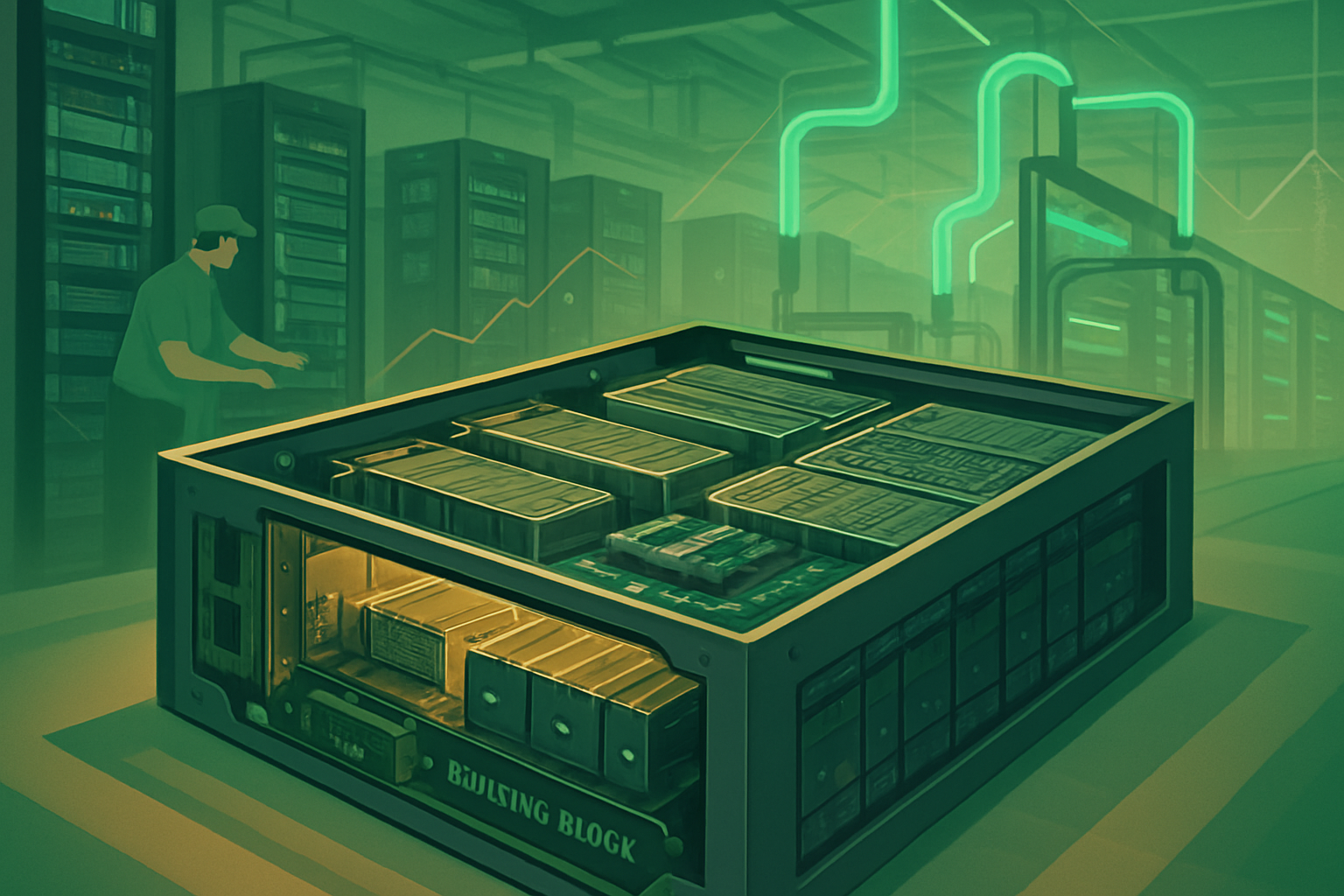
    Founded in 1993 by Charles Liang and his wife, Sara Liu, Super Micro began as a humble motherboard and chassis manufacturer in Silicon Valley. From its inception, the company differentiated itself through a "Building Block Solutions" philosophy—a modular approach to server design that allowed for rapid customization.

    While competitors like Dell Technologies (NYSE: DELL) and Hewlett Packard Enterprise (NYSE: HPE) focused on enterprise services and standardized hardware, Liang stayed focused on engineering-led "green computing." This focus on thermal efficiency proved prophetic. When the AI explosion began in late 2022, SMCI was the only vendor capable of integrating thousands of power-hungry GPUs into cohesive, energy-efficient racks at the speed required by hyperscalers like Meta and xAI.

    Business Model

    SMCI’s business model revolves around the design, manufacture, and sale of high-performance server and storage solutions based on open architecture. Its revenue is primarily derived from three segments:

    1. AI and High-Performance Computing (HPC): This segment now accounts for over 70% of total revenue, comprising full-rack solutions integrated with NVIDIA, AMD, and Intel AI accelerators.
    2. Enterprise and Cloud: Traditional data center servers and storage arrays.
    3. Edge and IoT: Emerging ruggedized servers for localized processing.

    The company utilizes a "Twin-Server" and multi-node architecture that allows for higher density than traditional rack designs. Most importantly, SMCI has vertically integrated its manufacturing, with massive facilities in San Jose, Taiwan, and Malaysia, allowing it to move from chip arrival to finished rack delivery in as little as a few weeks.

    Stock Performance Overview

    The stock performance of SMCI is a study in extreme volatility.

    • 10-Year View: Long-term shareholders remain the big winners. Even after the 2024 correction, the stock is up over 1,500% from its 2016 levels.
    • The 2024-2025 Roller Coaster: Following a 10-for-1 stock split in late 2024, the shares hit a nadir in the $15-$18 range (post-split) amid fears of accounting fraud and the resignation of its auditor, Ernst & Young.
    • Early 2026 Status: As of mid-January 2026, the stock has stabilized in the $32.00 to $36.00 range. The market has priced in the "governance discount," but the stock has found a floor thanks to record-breaking revenue and a massive $13 billion order backlog.

    Financial Performance

    In its most recent fiscal reporting for 2025, SMCI showcased a "growth at all costs" financial profile.

    • Revenue: Reached an all-time high of approximately $22.4 billion, a staggering leap from the $14.9 billion reported in FY2024.
    • Margins: This is the primary point of contention for analysts. Gross margins, which once sat near 18%, have compressed to 9.1% in the latest quarter. SMCI has intentionally lowered prices to ward off competition from Dell and HPE.
    • Debt and Liquidity: To fund the purchase of expensive GPUs, SMCI secured a $2.0 billion revolving credit facility in late 2025. While debt has increased, the company's cash flow from operations has finally turned positive as inventory turnover improved.

    Leadership and Management

    Founder and CEO Charles Liang remains the driving force behind the company. Despite calls for his resignation during the 2024 audit crisis, Liang’s deep engineering knowledge and relationship with NVIDIA’s Jensen Huang made him arguably "too essential to fire."

    To appease regulators and investors, the board underwent a significant overhaul in 2025. The appointment of Scott Angel, a former Deloitte veteran, as an independent director and the hiring of a new CFO (expected to be finalized by Q1 2026) have helped restore some institutional confidence. However, the leadership remains heavily centralized under Liang, which continues to be a point of concern for governance-focused investors.

    Products, Services, and Innovations

    SMCI’s "crown jewel" in 2026 is its Direct Liquid Cooling (DLC) technology. As GPU power consumption has climbed toward 1,000W-1,200W per chip with the Blackwell and Rubin architectures, traditional air cooling has reached its physical limits.

    SMCI has moved from being a server company to a "thermal management" company. Its DLC-2 racks can reduce data center power consumption for cooling by up to 40%. By January 2026, SMCI is producing roughly 5,000 racks per month, with nearly 45% of those being liquid-cooled—the highest ratio in the industry.

    Competitive Landscape

    The competition has intensified as the "AI Server Land Grab" matures.

    • Dell Technologies (NYSE: DELL): Dell has leveraged its superior enterprise sales force to claw back market share, particularly with Fortune 500 companies that require high-touch support.
    • Hewlett Packard Enterprise (NYSE: HPE): HPE has focused on the "Sovereign AI" market, winning large government contracts in Europe and the Middle East.
    • ODM Direct: Hyperscalers like Microsoft and Google are increasingly designing their own servers and using Asian ODMs (Original Design Manufacturers) like Quanta and Foxconn to build them, bypassing SMCI for their internal silicon needs.

    Industry and Market Trends

    The "Power Wall" is the defining trend of 2026. Data centers are no longer constrained by chip availability, but by the availability of electricity. SMCI's focus on energy efficiency aligns perfectly with this constraint. Additionally, the market is shifting from Training (building models) to Inference (running models). This favors SMCI’s modular architecture, which can be quickly reconfigured for lower-latency inference tasks.

    Risks and Challenges

    Despite its recovery, SMCI faces three significant risks:

    1. Regulatory Overhang: The Department of Justice (DOJ) probe initiated in late 2024 remains open. While the company’s special committee found no fraud, a potential fine or mandated structural change remains a "black swan" risk.
    2. NVIDIA Dependency: SMCI’s fortunes are inextricably linked to NVIDIA’s product cycle. Any delay in the Vera Rubin launch or a shift in NVIDIA's "preferred partner" status would be catastrophic.
    3. Commoditization: As Dell and HPE scale their AI offerings, SMCI may find it impossible to raise margins, permanently capping its valuation multiple.

    Opportunities and Catalysts

    • Vera Rubin Launch: The upcoming transition to the Rubin platform in late 2026 provides another "first-to-market" window for SMCI.
    • Sovereign AI Expansion: SMCI’s new Malaysia facility is strategically positioned to capture demand from Southeast Asian nations building domestic AI clusters.
    • Edge AI: The launch of ruggedized, liquid-cooled edge servers for hospitals and autonomous factories represents a new, higher-margin revenue stream.

    Investor Sentiment and Analyst Coverage

    Sentiment remains "cautiously optimistic" but disciplined. Wall Street analysts have largely moved SMCI from "Growth" to "Value/Cyclical" categories. Hedge fund ownership, which saw a mass exodus in late 2024, has partially returned as the 10-K filings were normalized. Retail sentiment remains high, driven by SMCI’s continued status as a high-beta play on the AI sector.

    Regulatory, Policy, and Geopolitical Factors

    Geopolitics are a double-edged sword for SMCI. U.S. export controls on high-end GPUs to China have limited a historically strong market for the company. Conversely, the "CHIPS Act" and various domestic manufacturing incentives in the U.S. and Taiwan have provided subsidies that help offset the costs of SMCI’s localized production model.

    Conclusion

    As of January 14, 2026, Super Micro Computer has successfully weathered the storm of 2024, proving that its engineering prowess and manufacturing speed are too valuable for the AI ecosystem to lose. It has transitioned from a speculative rocket ship into a foundational utility of the digital age.

    For investors, the 2026 version of SMCI requires a different mindset: the days of 1,000% annual gains are likely over, replaced by a story of volume, execution, and thermal efficiency leadership. The key metric to watch over the coming year will not be revenue growth—which remains robust—but the stabilization of gross margins. If SMCI can prove it can maintain its 10-12% market share without further eroding its profitability, it will likely see a re-rating of its current valuation.


    This content is intended for informational purposes only and is not financial advice.