Tag: AI PCs

  • The Edge AI Pivot: A Deep-Dive Into Qualcomm (QCOM) in 2026

    The Edge AI Pivot: A Deep-Dive Into Qualcomm (QCOM) in 2026

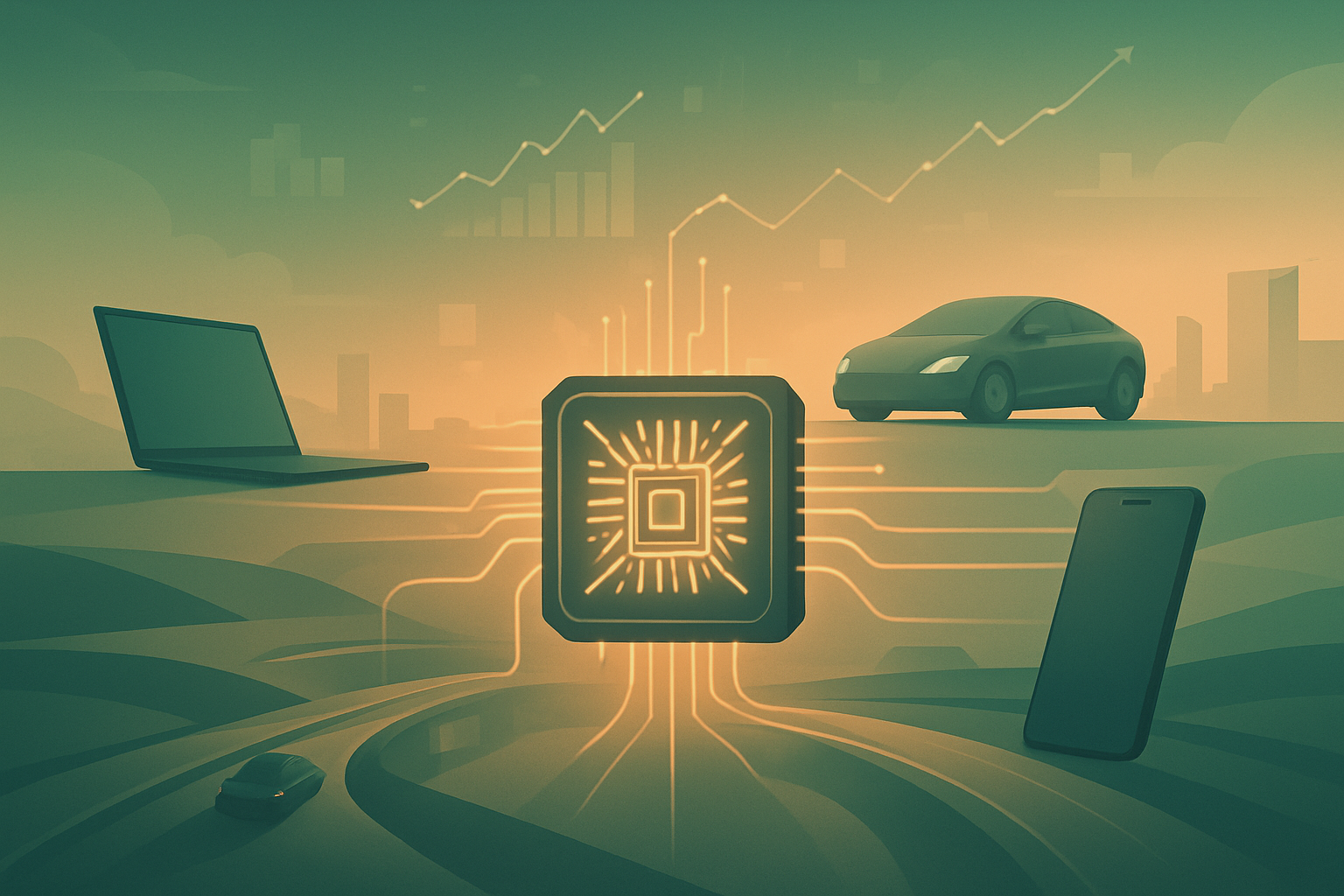
    As of February 5, 2026, Qualcomm Incorporated (NASDAQ: QCOM) stands at a pivotal crossroads in its 40-year history. Long celebrated—and occasionally scrutinized—as the undisputed king of smartphone connectivity, the San Diego-based titan is currently executing one of the most ambitious corporate pivots in the semiconductor industry. Under the banner of "The Intelligent Edge," Qualcomm is aggressively migrating its high-performance, low-power architecture into PCs, automobiles, and industrial IoT, aiming to decouple its future from the maturing smartphone market.

    With its most recent quarterly earnings reported just yesterday, the company remains a focal point for investors. While the numbers showcase a powerhouse in transition, a mix of record-breaking automotive revenue and a cautious near-term outlook has ignited a fresh debate on Wall Street: Can Qualcomm’s diversification into AI PCs and software-defined vehicles outpace the looming loss of its most lucrative customer, Apple?

    Historical Background

    Founded in 1985 by Irwin Jacobs and six colleagues, Qualcomm’s origins were rooted in a radical belief in Code Division Multiple Access (CDMA) technology. At a time when the world was settling on TDMA standards, Qualcomm’s proprietary digital wireless technology became the bedrock of 2G and 3G networks. This early technical victory established a lucrative licensing model that would define the company for decades.

    Throughout the 2010s, Qualcomm transitioned into the 4G LTE era as a dominant force, though not without controversy. It faced a series of high-profile antitrust battles in the U.S., Europe, and China over its "no license, no chips" policy. A defining moment came in 2018 when the company successfully fended off a hostile takeover attempt by Broadcom, followed by a major settlement with Apple in 2019. These events cleared the path for Qualcomm to lead the 5G rollout, eventually leading to the current era where generative AI and diversified computing have become the new frontier.

    Business Model

    Qualcomm operates primarily through two segments: Qualcomm CDMA Technologies (QCT) and Qualcomm Technology Licensing (QTL).

    1. QCT (Semiconductors): This is the engine of the company, representing approximately 85% of total revenue. It develops and supplies integrated circuits and system software for smartphones, laptops, and cars. Within QCT, the "Snapdragon" brand has become synonymous with premium mobile experiences.
    2. QTL (Licensing): This high-margin segment holds the vast portfolio of patents essential to cellular standards (3G, 4G, 5G, and emerging 6G). Even if a manufacturer does not use Qualcomm chips, they typically must pay a royalty to Qualcomm for using its patented wireless technologies.

    Recent shifts have seen QCT further subdivided into Handsets, Automotive, and IoT (which includes PCs and Industrial applications), reflecting the company's diversification strategy.

    Stock Performance Overview

    Over the last decade, Qualcomm has been a rewarding but volatile journey for shareholders.

    • 10-Year Horizon: Investors who held since 2016 have seen substantial gains, driven by the 5G super-cycle and the expansion of the "Snapdragon" ecosystem.
    • 5-Year Horizon: The stock benefited from the post-pandemic digital acceleration and the 2023-2024 AI rally, though it has faced periodic corrections due to smartphone saturation.
    • 1-Year Horizon: As of February 5, 2026, the stock is trading around the $150 mark. Over the past 12 months, it has largely moved in tandem with the broader semiconductor index (SOX), though it has recently underperformed peers like Nvidia due to its heavy exposure to the Chinese consumer market and the impending Apple modem transition.

    Financial Performance

    In its latest earnings report for Q1 2026 (ended December 2025), Qualcomm reported:

    • Revenue: $12.3 billion, a record quarterly high.
    • Non-GAAP EPS: $3.50, beating analyst estimates.
    • Net Income: Driven by strong premium handset sales and a 27% year-over-year jump in Automotive revenue.

    However, the company’s guidance for the current quarter (Q2 2026) was surprisingly conservative, projecting revenue between $10.2 billion and $11.0 billion. Management cited a temporary shortage in high-bandwidth memory (HBM) and LPDDR5X components, which has forced some handset partners to delay production schedules. Despite this, Qualcomm's balance sheet remains robust, with a commitment to returning capital to shareholders through consistent dividend growth and opportunistic buybacks.

    Leadership and Management

    Since taking the helm in 2021, CEO Cristiano Amon has been the architect of the "One Technology Roadmap." Amon’s strategy is built on the premise that the technologies developed for the smartphone—high-speed connectivity, low-power NPU (Neural Processing Unit), and efficient graphics—are the same technologies needed for the next generation of PCs and cars.

    Amon is widely respected for his technical depth and aggressive pursuit of new markets, specifically his move to acquire Nuvia in 2021, which provided the custom CPU cores now powering the Snapdragon X Elite PC chips. The board of directors is generally viewed as stable, with strong governance ratings, though they remain under pressure to prove that the "diversification" narrative can fully offset the eventual loss of Apple's modem business.

    Products, Services, and Innovations

    Qualcomm's current product lineup is increasingly focused on "On-Device AI."

    • Snapdragon 8 Elite: The flagship mobile platform, which as of 2026, runs localized Large Language Models (LLMs) with over 15 billion parameters directly on the device.
    • Snapdragon X2 & X2 Plus: The second generation of PC processors aimed at the Windows on Arm (WoA) ecosystem. These chips are challenging the long-standing Intel/AMD x86 dominance by offering superior battery life and dedicated AI hardware for Microsoft’s Copilot+ features.
    • Snapdragon Digital Chassis: A suite of cloud-connected platforms for telematics, the digital cockpit, and ADAS (Advanced Driver Assistance Systems).
    • AI200 Accelerator: A new foray into edge servers, launched at CES 2026, designed to handle AI workloads at the "near edge" (retail stores, warehouses) without the latency of the central cloud.

    Competitive Landscape

    Qualcomm faces a multi-front war with formidable rivals:

    • MediaTek: The primary rival in the mobile space. While Qualcomm dominates the premium tier, MediaTek’s Dimensity 9500 series has made significant inroads into the "flagship-killer" segment, offering comparable AI performance at lower price points.
    • Apple (NASDAQ: AAPL): Transitioning from customer to competitor. Apple has begun deploying its in-house 5G modems (C1 chip) in lower-end devices as of early 2026, with a total phase-out of Qualcomm modems expected by 2027/2028.
    • Nvidia (NASDAQ: NVDA): While Nvidia rules the data center, it is increasingly encroaching on the "Edge AI" and Automotive spaces where Qualcomm has traditionally been strong.
    • Intel (NASDAQ: INTC): The incumbent in the PC market. Intel’s "Lunar Lake" and subsequent architectures are fighting back against Qualcomm's ARM-based PC expansion.

    Industry and Market Trends

    The semiconductor industry in 2026 is defined by the "AI-ification" of every device.

    1. Generative AI at the Edge: There is a massive industry push to move AI processing away from expensive data centers and onto local devices for privacy and latency reasons. Qualcomm is the primary beneficiary of this trend.
    2. Software-Defined Vehicles (SDVs): Cars are increasingly becoming "smartphones on wheels." This shift plays directly into Qualcomm's strengths in connectivity and cockpit virtualization.
    3. Memory Constraints: A broader industry trend in 2026 is the tight supply of advanced memory, which has become a bottleneck for the AI-enabled hardware rollout.

    Risks and Challenges

    Qualcomm’s path is fraught with significant "tail risks":

    • China Exposure: Roughly 65% of Qualcomm's revenue is tied to the Chinese ecosystem. Any escalation in trade tensions or a resurgence of domestic Chinese chip alternatives (like Huawei’s HiSilicon) poses a direct threat.
    • The "Apple Gap": Apple accounts for a significant portion of QCT revenue. While Qualcomm is diversifying, the sheer volume of iPhone shipments is difficult to replace entirely.
    • Regulatory Scrutiny: In late 2025, China’s SAMR launched an investigation into Qualcomm’s acquisition of Autotalks, signaling continued regulatory pressure in its largest market.

    Opportunities and Catalysts

    • The AI PC Super-Cycle: If Windows on Arm reaches a "tipping point" in 2026, Qualcomm could see its PC revenue grow from a rounding error to a multi-billion dollar pillar.
    • Automotive Backlog: With a design-win pipeline of $45 billion, much of Qualcomm's future automotive revenue is already "contracted" but not yet realized. As these vehicles hit the road in 2026 and 2027, revenue recognition will accelerate.
    • 6G Standards: As the world begins to define 6G, Qualcomm’s massive patent portfolio ensures it will remain the "toll booth" for wireless connectivity well into the 2030s.

    Investor Sentiment and Analyst Coverage

    Analyst sentiment as of February 2026 is "cautiously optimistic." The consensus remains a "Moderate Buy."

    • Bulls argue that Qualcomm is the most undervalued "AI play" in the market, trading at a significant discount to Nvidia and AMD despite having a similar technological moat in Edge AI.
    • Bears point to the declining smartphone replacement rates and the geopolitical fragility of the China-centric supply chain.
    • Institutional Activity: Major hedge funds have maintained stable positions, though some rotation has been observed out of QCOM and into "pure-play" AI infrastructure stocks.

    Regulatory, Policy, and Geopolitical Factors

    Qualcomm is a "geopolitical football." As a leader in both AI and 5G, it is at the heart of the U.S. "CHIPS Act" and export control policies.

    • U.S. Policy: The company benefits from incentives to bring advanced design and packaging back to U.S. soil.
    • China Policy: Conversely, Beijing’s push for "chip independence" is a long-term headwind. The current SAMR probe is viewed by many as a tactical move in the broader trade negotiations between Washington and Beijing.

    Conclusion

    Qualcomm in early 2026 is a company defined by a bold transition. It has successfully moved past the "modem-only" era to become a diversified compute leader, with its technology now powering everything from the world's most intelligent smartphones to the latest AI PCs and electric vehicles.

    For investors, the story is one of timing. In the short term, the company faces "digestion" issues—memory shortages and the gradual exit of Apple. However, for those with a three-to-five-year horizon, Qualcomm represents one of the most efficient ways to play the "Edge AI" revolution. Whether Qualcomm can trade its "mobile" multiple for a higher "AI" multiple will depend entirely on its execution in the PC and Automotive sectors over the next 18 months.


    This content is intended for informational purposes only and is not financial advice.

  • The Great Re-Invention: Can Intel Reclaim the Silicon Crown?

    The Great Re-Invention: Can Intel Reclaim the Silicon Crown?

    Date: January 19, 2026
    Sector: Semiconductors
    Focus: Intel Corporation (NASDAQ: INTC)

    Introduction

    As we enter the first month of 2026, the global semiconductor landscape looks fundamentally different than it did just two years ago. At the heart of this shift is Intel Corporation (NASDAQ: INTC), a company that has spent the last five years in a high-stakes, multi-billion-dollar race against obsolescence. Once the undisputed king of silicon, Intel spent much of the early 2020s reeling from manufacturing delays, loss of market share to AMD, and a missed opportunity in the initial AI training gold rush.

    Today, however, the narrative has shifted. Intel is no longer just a chipmaker; it is a "National Champion" for the United States, a critical component of domestic economic and national security. With the imminent release of its Q4 2025 earnings and the high-volume production of its revolutionary 18A process node, Intel stands at a crossroads. This deep dive explores whether the "IDM 2.0" gamble has finally paid off and what the "AI PC" era means for the company's future.

    Historical Background

    Founded in 1968 by Robert Noyce and Gordon Moore, Intel was the architect of the digital age. Under the legendary leadership of Andy Grove, the company adopted an "only the paranoid survive" mantra, which fueled its dominance in the 1990s and early 2000s through the "Wintel" (Windows + Intel) partnership.

    However, the 2010s were marked by strategic missteps. Intel famously declined to produce the processor for the original iPhone, a decision that essentially locked them out of the mobile revolution. This was followed by a decade of manufacturing stagnation, where Intel’s "Tick-Tock" development cycle broke down at the 10nm and 7nm stages, allowing competitors like Taiwan Semiconductor Manufacturing Company (TSMC) to seize the technological lead. By the time Pat Gelsinger returned as CEO in 2021, Intel was a company in crisis—losing server market share to AMD and watching NVIDIA become the world's most valuable chipmaker.

    Business Model

    Intel has fundamentally restructured its business into two distinct, yet synergistic, arms:

    1. Intel Product: This segment focuses on the design of processors for PCs (Client Computing Group), Data Centers (Data Center and AI), and Networking. The focus here has shifted toward "AI PCs"—devices capable of running complex AI models locally.
    2. Intel Foundry: This is the manufacturing arm, now operating as a wholly-owned subsidiary with its own independent financial reporting. Intel Foundry aims to be the world’s second-largest foundry by 2030, serving external customers like Microsoft, Amazon, and even rivals like NVIDIA for advanced packaging.

    This "IDM 2.0" model allows Intel to use its own factories to build its chips (ensuring supply) while also profiting from the global demand for third-party chip manufacturing.

    Stock Performance Overview

    Intel’s stock trajectory over the last decade has been a volatile "U-shaped" curve.

    • 10-Year Horizon: Investors who held INTC for a decade have seen significant underperformance compared to the S&P 500 and the Philadelphia Semiconductor Index (SOX). The stock spent years range-bound as the company struggled with manufacturing.
    • 5-Year Horizon: The 2021–2024 period was painful, with the stock hitting multi-decade lows in late 2024 (dipping below $20) as the company slashed its dividend and laid off 15% of its workforce.
    • 1-Year Horizon (2025): 2025 was the year of the "Intel Rebound." The stock rose over 100% from its 2024 lows, reaching the $50 mark in early 2026. This recovery was fueled by successful milestones in the 18A process node and massive subsidies from the U.S. CHIPS Act.

    Financial Performance

    Intel is scheduled to report its Q4 and full-year 2025 earnings on January 22, 2026.

    • Q4 2025 Preview: Analysts expect revenue between $13.3 billion and $13.9 billion. The market is looking for an Earnings Per Share (EPS) of $0.08—modest, but a sign of stability after the heavy losses of the previous year.
    • Margin Recovery: One of the most watched metrics is gross margin. After dipping into the 20s during 2024, margins have expanded to approximately 38.2% as of late 2025, driven by higher-margin AI PC chips (Core Ultra) and improved factory utilization.
    • Balance Sheet: Intel remains capital-intensive. While it carries significant debt from factory expansions in Ohio and Arizona, its cash position has been bolstered by an $8.9 billion direct equity investment from the U.S. government in late 2025.

    Leadership and Management

    In a surprising turn of events in early 2025, Pat Gelsinger transitioned to an emeritus role, and Lip-Bu Tan—the former CEO of Cadence Design Systems and a legendary semiconductor veteran—was appointed CEO.

    Tan’s leadership has been characterized by a "Foundry-First" mentality and ruthless financial discipline. He has successfully navigated the structural separation of the Foundry business, a move that helped win over major customers like Apple, who previously hesitated to work with a direct competitor. The board’s governance has been praised for finally providing the clarity needed to execute the manufacturing roadmap.

    Products, Services, and Innovations

    Intel's competitive edge in 2026 rests on two pillars:

    1. Intel 18A (1.8nm class): This process node is the first to use RibbonFET (Gate-All-Around) and PowerVia (backside power delivery) in high-volume manufacturing. By beating TSMC to the market with backside power, Intel has reclaimed the title of "technological leader" for the first time in a decade.
    2. Panther Lake (Core Ultra Series 3): Launched at CES 2026, Panther Lake is Intel’s flagship AI PC processor. Built on the 18A node, it offers 120 TOPS (Trillions of Operations Per Second) of AI performance and battery life exceeding 25 hours.
    3. Gaudi 3 & 4: While Intel still trails NVIDIA in high-end AI training, its Gaudi accelerators have found a niche as a "price-to-performance" alternative for enterprises building private AI clouds.

    Competitive Landscape

    Intel faces a three-front war:

    • AMD (NASDAQ: AMD): In the data center, AMD is a titan. As of early 2026, AMD’s EPYC processors hold nearly 40% of the server market, and AMD's Data Center revenue recently eclipsed Intel's for the first time.
    • NVIDIA (NASDAQ: NVDA): NVIDIA owns the AI training market. Intel is not trying to beat NVIDIA at the top end but is instead partnering with them for advanced packaging services through Intel Foundry.
    • Qualcomm (NASDAQ: QCOM) & Apple (NASDAQ: AAPL): These companies lead the ARM-based efficiency race. However, Intel’s Panther Lake has largely closed the power-efficiency gap, making x86 relevant again in the thin-and-light laptop segment.

    Industry and Market Trends

    The semiconductor industry in 2026 is defined by "Silicon Sovereignty." Nations are no longer comfortable relying on a single geography (Taiwan) for advanced chips. This "China + 1" strategy has funneled billions into Intel’s US-based fabs.

    Furthermore, the AI PC Cycle is in full swing. Estimates suggest that 60% of all laptop shipments in 2026 will be "AI-capable," requiring the high-performance NPUs (Neural Processing Units) that Intel has integrated into its latest silicon.

    Risks and Challenges

    • Execution Risk: While 18A is in high-volume manufacturing, keeping yields high is difficult. Any stumble in the 14A (1.4nm) roadmap could send the stock back to 2024 levels.
    • Market Share Erosion: AMD’s momentum in the server market is difficult to stop. Intel must prove that its "Clearwater Forest" Xeon chips can stop the bleeding.
    • China Exposure: Ongoing export controls on high-end AI and manufacturing equipment to China continue to limit Intel’s total addressable market in one of the world’s largest tech hubs.

    Opportunities and Catalysts

    • Foundry Customer Wins: Rumors are swirling that Intel Foundry will officially announce a massive 18A partnership with Apple for 2027 M-series chips. If confirmed in the Q4 call, this would be a "paradigm shift" event.
    • The Windows 10 Refresh: As Windows 10 reaches the end of extended support, a massive corporate refresh cycle is expected in 2026, which will benefit Intel’s Client Computing Group.
    • Spin-off Potential: If Intel Foundry continues to gain external customers, a full IPO or spin-off of the foundry business could unlock massive shareholder value.

    Investor Sentiment and Analyst Coverage

    Wall Street is "cautiously bullish." For the first time in five years, the majority of analysts have moved from "Hold" to "Buy" on INTC. Institutional investors, including major hedge funds, have rebuilt their positions, betting on the "National Champion" thesis. Retail sentiment remains mixed, as many long-term holders are still recovering from the 2021–2024 downturn, but the "Panther Lake" benchmarks have generated significant tech-community hype.

    Regulatory, Policy, and Geopolitical Factors

    Intel is the primary beneficiary of the U.S. CHIPS and Science Act. Beyond the $8.5 billion in grants, the U.S. government’s decision to take a 9.9% equity stake in the company has effectively "de-risked" Intel from a bankruptcy or hostile takeover perspective. However, this also means Intel is subject to intense regulatory oversight and must align its strategy with U.S. national security interests, which can sometimes conflict with short-term profit maximization.

    Conclusion

    Intel enters 2026 as a company transformed. The "Dark Ages" of 2024 appear to be in the rearview mirror, replaced by a focused, dual-engine strategy that leverages both its design prowess and its newly reclaimed manufacturing leadership.

    Investors should watch the January 22nd earnings call with two questions in mind: First, are 18A yields stable enough to maintain the promised gross margin recovery? And second, can Intel Foundry land a "whale" customer that isn't the U.S. government? If the answer to both is yes, Intel may finally be ready to reclaim its crown as the bedrock of the American technology industry.


    This content is intended for informational purposes only and is not financial advice.
  • The Silicon Renaissance: A Deep Dive into Intel’s 2026 Turnaround (INTC)

    The Silicon Renaissance: A Deep Dive into Intel’s 2026 Turnaround (INTC)

    As of January 14, 2026, Intel Corporation (Nasdaq: INTC) finds itself at a pivotal "inflection point" that many industry veterans are calling the "Silicon Renaissance." After a brutal 2024 that saw the company’s valuation crater and the retirement of its visionary but beleaguered CEO, Pat Gelsinger, Intel has emerged in early 2026 as a leaner, more disciplined, and strategically vital entity.

    The narrative surrounding Intel has shifted from a question of survival to a test of execution. With its high-stakes "18A" process node now in high-volume manufacturing and a new leadership team focused on operational rigor, Intel is no longer just a chipmaker; it has become the "National Champion" of Western semiconductor manufacturing. This article explores the company’s recent financial recovery, the impact of significant government intervention, and the long-term outlook for a stock that has staged one of the most remarkable rebounds in recent market history.

    Historical Background

    Intel’s story is the story of Silicon Valley itself. Founded in 1968 by Robert Noyce and Gordon Moore—the man behind "Moore’s Law"—Intel pioneered the microprocessor, beginning with the 4004 in 1971. For decades, the company maintained a vice-like grip on the computing world through its x86 architecture and the "Intel Inside" branding campaign.

    Under the leadership of Andy Grove in the 1980s and 90s, Intel mastered the "Tick-Tock" manufacturing model, alternating between new chip architectures and smaller transistor sizes. However, this dominance bred complacency. The 2010s were marked by significant missteps: missing the mobile revolution (losing out to ARM-based designs) and facing debilitating delays in transitioning to 10nm and 7nm manufacturing. These delays allowed Advanced Micro Devices (Nasdaq: AMD) to seize market share and Taiwan Semiconductor Manufacturing Co. (Nasdaq: TSM) to claim the crown of process leadership.

    Business Model

    Intel operates a unique "IDM 2.0" (Integrated Device Manufacturer) model, which was significantly restructured in 2025 to create a firewall between its internal product groups and its manufacturing business.

    1. Intel Products: This remains the primary revenue driver, split into the Client Computing Group (CCG), which focuses on PC and laptop processors, and the Data Center and AI (DCAI) group.
    2. Intel Foundry: Rebranded as a separate reporting entity, this segment operates as a merchant foundry, manufacturing chips for Intel and external customers. By early 2026, this segment has begun to focus on high-margin, leading-edge nodes (18A) rather than high-volume, low-margin legacy chips.
    3. Altera and Mobileye: Intel has moved toward partial divestitures or IPOs of these subsidiary units (Altera for FPGAs and Mobileye for autonomous driving) to simplify its balance sheet and focus on core logic and manufacturing.

    Stock Performance Overview

    Intel’s stock performance has been a tale of two extremes. Over the 10-year horizon, INTC has significantly underperformed the S&P 500 and the PHLX Semiconductor Index (SOX), reflecting years of lost market share and manufacturing delays.

    However, the 1-year performance tells a different story. In 2025, INTC was one of the top performers in the tech sector, surging over 80% from its late-2024 lows. This rally was driven by the "de-risking" of its balance sheet and the successful "power-on" of its 18A node. As of mid-January 2026, shares are trading in the $44–$48 range, a recovery that has restored over $100 billion in market capitalization since the 2024 trough.

    Financial Performance

    Intel's late 2025 earnings signaled a dramatic turnaround in fundamental health.

    • Revenue Growth: In Q3 2025, Intel reported revenue of $13.7 billion, a 3% year-over-year increase, marking a return to growth after a period of contraction.
    • Margins: Perhaps the most critical metric, non-GAAP gross margins recovered to 40.0% in late 2025, up from the sub-20% levels seen during the height of its manufacturing transition.
    • Valuation: Despite the stock rally, Intel trades at a forward P/E ratio that is significantly lower than NVIDIA (Nasdaq: NVDA) or AMD, as the market still applies a "turnaround discount" until foundry yields reach maturity.
    • Debt and Cash Flow: The company has aggressively cut costs, including a 15% workforce reduction in 2024-2025, which has stabilized free cash flow.

    Leadership and Management

    Following the retirement of Pat Gelsinger in December 2024, the board appointed Lip-Bu Tan as CEO in early 2025. Tan, the former CEO of Cadence Design Systems, is widely respected for his operational discipline and deep understanding of the semiconductor ecosystem.

    While Gelsinger was the "architect" of the comeback plan, Tan is viewed as the "builder." His strategy has been to prioritize financial returns and foundry customer acquisition. The current leadership team has successfully shifted the culture from one of "engineering at any cost" to "manufacturing for profit," a change that has been warmly received by institutional investors.

    Products, Services, and Innovations

    The cornerstone of Intel’s 2026 product lineup is the 18A process node. This node introduced two breakthrough technologies:

    • RibbonFET: A Gate-All-Around (GAA) transistor architecture that increases performance and reduces power leakage.
    • PowerVia: The industry's first implementation of backside power delivery, which improves chip efficiency by separating power and signal wires.

    In the consumer market, Panther Lake CPUs (launched at CES 2026) are leading the "AI PC" revolution with an integrated Neural Processing Unit (NPU) capable of 120+ TOPS (Trillion Operations Per Second). In the data center, Clearwater Forest is Intel’s first high-volume 18A server chip, designed to compete with AMD’s EPYC line in cloud efficiency.

    Competitive Landscape

    Intel faces a "three-front war":

    • In Manufacturing: It competes with TSMC and Samsung. While TSMC still leads in volume and yield, Intel’s 18A has allowed it to claim a "feature lead" in power delivery for the first time in a decade.
    • In CPUs: AMD remains a fierce rival. While Intel has narrowed the gap in laptops, AMD’s "Venice" EPYC chips still hold a significant edge in data center market share.
    • In AI: NVIDIA dominates the training market. Intel has strategically pivoted, choosing to partner with NVIDIA to manufacture certain components while positioning its own Gaudi 3 accelerators as a cost-effective alternative for AI inference.

    Industry and Market Trends

    The semiconductor industry in 2026 is defined by "Sovereign AI" and "AI PCs." Countries are increasingly funding domestic manufacturing to reduce reliance on Taiwan, a trend that directly benefits Intel’s US-based fabs. Simultaneously, the shift toward edge AI—running AI models locally on PCs rather than in the cloud—is driving a major hardware refresh cycle, providing a tailwind for Intel’s Client Computing Group.

    Risks and Challenges

    Despite the recent success, Intel is not without significant risks:

    • Yield Risk: While 18A is in production, achieving the high yields (70%+) necessary for massive profitability remains a challenge.
    • Capital Intensity: Building state-of-the-art fabs requires tens of billions of dollars. If revenue growth stalls, the debt load could become unsustainable.
    • Execution Missteps: Any delay in the upcoming 14A node (planned for 2027) could erase the hard-won confidence of foundry customers.

    Opportunities and Catalysts

    • Foundry "Whale" Customer: Rumors persist that a major hyperscaler (Amazon or Google) or a consumer giant (Apple) may announce a long-term manufacturing deal for 18A/14A in 2026.
    • AI PC Supercycle: If AI-enabled software becomes a "must-have" for enterprises, the upgrade cycle for Intel-powered laptops could exceed expectations.
    • CHIPS 2.0: Potential new legislation in 2026 or 2027 could provide further operational subsidies for US-based manufacturing.

    Investor Sentiment and Analyst Coverage

    Sentiment toward Intel has transitioned from "Bearish" to "Cautiously Optimistic." As of January 2026, the consensus rating is a Hold/Buy, with many analysts upgrading the stock as gross margins stabilized. Institutional ownership has increased, with several large hedge funds taking "turnaround" positions in late 2025. However, retail sentiment remains volatile, often reacting sharply to any news regarding foundry yields or geopolitical tensions.

    Regulatory, Policy, and Geopolitical Factors

    Intel is now inextricably linked to US national security. In August 2025, the U.S. Department of Commerce converted billions in grants into a 9.9% direct equity stake in Intel. This effectively makes the U.S. government a "silent partner," ensuring that Intel will not be allowed to fail. However, this also subjects the company to intense regulatory scrutiny regarding its operations in China and its executive compensation.

    Conclusion

    Intel Corporation enters 2026 as a radically different company than it was two years ago. The "Silicon Renaissance" is real, but it is still in its early stages. By successfully launching 18A and stabilizing its leadership, Intel has moved out of the "emergency room" and into a period of "rehabilitation."

    For investors, Intel represents a unique play on the reshoring of American manufacturing and the AI PC cycle. While it lacks the explosive growth potential of NVIDIA, its "de-risked" valuation and strategic importance to the U.S. government provide a compelling narrative. The key factor to watch in 2026 will be the announcement of external foundry customers—the ultimate validation of Intel’s transition to a world-class manufacturing powerhouse.


    This content is intended for informational purposes only and is not financial advice.