
Tag: AI Power Demand

  • The Grid of the Future: An In-Depth Research Feature on PPL Corporation (NYSE: PPL)

    The Grid of the Future: An In-Depth Research Feature on PPL Corporation (NYSE: PPL)

    As of February 20, 2026, the global energy landscape is undergoing a tectonic shift, driven by the dual pressures of aggressive decarbonization and the insatiable power demands of artificial intelligence (AI) and hyperscale data centers. At the center of this transformation stands PPL Corporation (NYSE: PPL), a utility giant that has spent the last five years methodically reinventing itself. Once a sprawling international holding company with assets as far-flung as the United Kingdom, PPL is now a streamlined, pure-play U.S. regulated utility serving approximately 3.5 million customers across Pennsylvania, Kentucky, Virginia, and Rhode Island.

    In an era where "grid reliability" has become a matter of national security and economic competitiveness, PPL has emerged as a leader in technological integration. With a focus on high-growth infrastructure and a strategic pivot toward supporting the 24/7 power needs of the digital economy, PPL is no longer viewed by Wall Street as a "stodgy" income play, but rather as a critical infrastructure backbone for the mid-Atlantic and New England regions.

    Historical Background

    Founded in 1920 as Pennsylvania Power & Light (PP&L), the company was born from the merger of eight smaller utilities in Allentown, Pennsylvania. For much of the 20th century, it operated as a classic vertically integrated utility, powering the industrial heartland of the Northeast.

    The late 1990s and early 2000s marked a period of diversification and international expansion. Following Pennsylvania’s deregulation of electricity generation in 1996, PPL expanded into competitive energy markets and even the United Kingdom, acquiring Western Power Distribution. However, the volatility of competitive markets led to a multi-year strategic pivot beginning in 2015. Under the guidance of current CEO Vincent Sorgi, PPL spun off its competitive generation business (which became Talen Energy) and eventually sold its U.K. assets to National Grid in 2021 for £7.8 billion.

    The acquisition of Rhode Island Energy in 2022 completed this transformation. By early 2026, PPL has successfully repositioned itself as a fully regulated entity, insulating its earnings from commodity price swings and focusing entirely on rate-regulated transmission and distribution (T&D) and vertically integrated operations in Kentucky.

    Business Model

    PPL Corporation operates through three primary regulated segments, each providing a stable, predictable revenue stream:

    • PPL Electric Utilities (Pennsylvania): A pure-play transmission and distribution utility serving 1.4 million customers in central and eastern Pennsylvania. Because Pennsylvania is a "choice" state, PPL does not own the generation here, instead earning its returns on the massive infrastructure required to deliver power and maintain one of the nation's most advanced smart grids.
    • Louisville Gas and Electric and Kentucky Utilities (LG&E and KU): Serving 1.3 million customers across Kentucky and parts of Virginia, this segment remains vertically integrated. It owns approximately 7,500 MW of generation capacity, ranging from aging coal units to burgeoning solar and natural gas facilities.
    • Rhode Island Energy: The newest addition to the portfolio, providing electric and gas services to 770,000 customers in Rhode Island. This segment serves as PPL's gateway to the New England clean energy market, focusing on offshore wind integration and grid modernization in a high-density coastal environment.

    Stock Performance Overview

    Over the past decade, PPL’s stock has reflected its complex corporate evolution.

    • 10-Year View: The stock faced significant headwinds between 2015 and 2020 as the market weighed the risks of its U.K. exposure and the transition away from competitive generation.
    • 5-Year View: Since the 2021 announcement of the U.K. sale and the Rhode Island acquisition, PPL has outperformed many of its peers in the Utilities Select Sector SPDR Fund (XLU). The market has rewarded PPL’s "de-risking" strategy.
    • 1-Year View: As of February 2026, PPL has seen a steady 12% climb over the trailing 12 months. This outperformance is largely attributed to the company's aggressive capitalization on the "data center trade" in Pennsylvania and successful rate case outcomes in Kentucky.

    Financial Performance

    In the full-year 2025 earnings report released on February 20, 2026, PPL demonstrated a robust financial trajectory. The company reported ongoing earnings of $1.81 per share, marking a 7.1% increase over 2024 results.

    Key financial highlights include:

    • Revenue: Annual revenue reached $8.5 billion, supported by increased electricity consumption and infrastructure riders.
    • Capital Investment: PPL is currently executing a $23 billion capital plan (2026–2029), the largest in its history.
    • Balance Sheet: With a debt-to-equity ratio of ~1.15, PPL maintains one of the strongest balance sheets in the utility sector, allowing it to borrow at favorable rates despite the "higher-for-longer" interest rate environment of 2024-2025.
    • Dividends: PPL recently raised its quarterly dividend to $0.2850 per share, yielding approximately 3.1%. Management has reiterated a dividend growth target of 6% to 8% annually through 2029.

    Leadership and Management

    CEO Vincent Sorgi, who took the helm in 2020, is widely credited with the "Modern PPL" strategy. His tenure has been defined by operational excellence and the "Scalable Playbook"—a management philosophy that takes the advanced automation technologies pioneered in Pennsylvania and applies them to the newer Kentucky and Rhode Island territories.

    The management team, including CFO Joseph Bergstein, has earned a reputation for "regulatory diplomacy," maintaining constructive relationships with commissions in three very different political environments (blue Rhode Island, purple Pennsylvania, and red Kentucky). Governance scores remain high, with a board of directors that has been refreshed to include expertise in cybersecurity and renewable energy integration.

    Products, Services, and Innovations

    PPL has transitioned from a traditional "poles and wires" company to a technology-first energy provider. Key innovations include:

    • AI-Driven "Self-Healing" Grid: PPL’s Pennsylvania grid utilizes automated sensors and AI to reroute power in milliseconds during a fault, significantly reducing the duration and frequency of outages.
    • DERMS (Distributed Energy Resource Management System): This platform allows PPL to manage thousands of customer-owned solar installations and batteries as a single "virtual power plant," enhancing grid stability.
    • Blackstone Infrastructure Partnership: To meet the massive power needs of data centers in Pennsylvania without burdening residential ratepayers, PPL has engaged in innovative joint ventures to build out transmission and generation-support infrastructure.

    Competitive Landscape

    While PPL operates as a regulated monopoly in its service territories, it competes for investor capital against utility giants like NextEra Energy (NYSE: NEE) and Duke Energy (NYSE: DUK).

    • Strengths: PPL has lower "merchant risk" (exposure to market prices) than many peers due to its fully regulated nature. Its T&D-heavy mix in Pennsylvania provides higher-margin growth than traditional generation-heavy models.
    • Weaknesses: Compared to NextEra, PPL has a smaller renewable development arm. However, its focus on "wires" is often seen as a safer play during periods of high commodity volatility.

    Industry and Market Trends

    Two primary trends are shaping PPL’s future in 2026:

    1. The Data Center Explosion: Pennsylvania has become a premier destination for AI data centers due to its proximity to fiber hubs and relatively stable geology. PPL is currently managing a pipeline of over 20 GW of active service requests from hyperscalers.
    2. Electrification of Everything: The push for electric vehicles (EVs) and heat pumps is driving a steady increase in base-load demand, counteracting the historical trend of energy efficiency leading to flat demand growth.

    Risks and Challenges

    No utility is without risk. For PPL, the primary concerns include:

    • Interest Rate Sensitivity: Utilities are often viewed as "bond proxies." If the Federal Reserve maintains high rates throughout 2026, the relative attractiveness of PPL’s dividend may diminish.
    • Kentucky Coal Transition: Political resistance in Kentucky (e.g., Senate Bill 4) has created hurdles for the retirement of aging coal plants. Navigating the transition to cleaner natural gas and solar while satisfying local legislative demands remains a delicate balancing act.
    • Extreme Weather: While PPL's grid is resilient, the increasing frequency of "once-in-a-century" storms poses a constant threat to operations and cost recovery.

    Opportunities and Catalysts

    The most significant catalyst for PPL is the Infrastructure Investment and Jobs Act (IIJA) and the Inflation Reduction Act (IRA). PPL has been aggressive in securing federal grants for grid resilience and EV charging corridors. Furthermore, any further regulatory clarity on "data center surcharges" could provide a windfall for PPL, allowing it to charge premium rates for the massive grid upgrades required by tech giants.

    Investor Sentiment and Analyst Coverage

    Wall Street is currently bullish on PPL. As of February 2026, the analyst consensus is a "Buy", with an average price target of $40.11. Institutional investors, including Vanguard and BlackRock, have maintained or increased their positions, viewing PPL as a "defensive growth" stock—offering the safety of a utility with the growth profile of an infrastructure play. Retail sentiment is also positive, driven by the company's commitment to consistent dividend hikes.

    Regulatory, Policy, and Geopolitical Factors

    The regulatory environment remains the "make or break" factor for PPL.

    • In Pennsylvania, the Public Utility Commission (PUC) remains constructive, recently approving DER management riders.
    • In Kentucky, the Public Service Commission (PSC) recently granted a $187 million revenue increase for LG&E and KU, with an authorized ROE of 9.775%, providing clarity for the next several years.
    • In Rhode Island, policy is focused on the "Act on Climate," which mandates net-zero emissions by 2050. This creates a massive opportunity for PPL to invest in the T&D infrastructure needed to support offshore wind.

    Conclusion

    PPL Corporation represents a compelling intersection of traditional utility stability and modern technological growth. By shedding its international assets and focusing on high-tech U.S. infrastructure, the company has positioned itself to profit from the massive energy demands of the AI era. While risks regarding interest rates and Kentucky's coal politics persist, PPL’s $23 billion capital plan and industry-leading grid technology provide a formidable "moat." For the long-term investor, PPL offers a rare combination: a healthy dividend yield backed by a high-growth rate-base that is essential to the 21st-century economy.


    This content is intended for informational purposes only and is not financial advice.

  • Targa Resources Corp. (TRGP): The Midstream Powerhouse Powering the AI Infrastructure Boom

    Targa Resources Corp. (TRGP): The Midstream Powerhouse Powering the AI Infrastructure Boom

    The energy landscape in early 2026 is defined by a singular, insatiable demand: reliable, scalable power for the artificial intelligence revolution. At the heart of this infrastructure super-cycle sits Targa Resources Corp. (NYSE: TRGP), a Houston-based midstream powerhouse that has transitioned from a steady utility-like operator into an aggressive growth engine. As of February 19, 2026, Targa’s strategic dominance in the Permian Basin and its sophisticated natural gas liquids (NGL) value chain have pushed its stock to record heights, making it a focal point for institutional investors and macro analysts alike.

    Introduction

    Targa Resources Corp. is currently one of the most vital links in the North American energy chain. While many midstream companies have focused on defensive positioning, Targa has spent the last three years executing a "wellhead-to-water" strategy that integrates gas gathering, processing, and global export capabilities. In 2026, the company is in focus not just for its role in traditional energy, but as a critical enabler of the AI-driven "data center boom." By providing the natural gas feedstock required for on-site power generation at hyperscale data centers, Targa has de-risked its long-term volume outlook, decoupling its growth from the volatility of spot commodity prices.

    Historical Background

    Founded in 2003 with backing from private equity firm Warburg Pincus, Targa’s journey began with the strategic acquisition of Dynegy Midstream Services in 2005. This initial move provided the NGL foundation upon which the company would build its empire. A transformative moment occurred in 2015 with the $7.7 billion acquisition of Atlas Pipeline Partners and Atlas Energy, which cemented Targa’s footprint in the Permian Basin.

    Historically, Targa operated under a Master Limited Partnership (MLP) structure, but in 2016, it underwent a critical corporate simplification. By folding its partnership units into a single C-Corp entity, Targa modernized its governance and improved its access to capital—a move that proved prescient as the industry shifted toward self-funding and institutional-grade reporting.

    Business Model

    Targa’s business model is built on high-barrier-to-entry infrastructure that earns fee-based revenue at multiple points along the value chain. The company operates through two primary segments:

    1. Gathering and Processing (G&P): Targa owns the largest gathering footprint in the Permian Basin. It collects raw natural gas from producers like Exxon Mobil Corp. (NYSE: XOM) and Chevron Corp. (NYSE: CVX), stripping out impurities and separating "wet" NGLs from "dry" methane.
    2. Logistics and Transportation (L&T): This is the company’s "crown jewel." It transports NGLs via its Grand Prix and Speedway pipeline systems to its massive fractionation complex in Mont Belvieu, Texas. Here, NGLs are broken down into ethane, propane, and butane for domestic industrial use or export through Targa's LPG terminals on the Gulf Coast.

    By controlling the entire path of a molecule from the Permian to the global market, Targa captures "stacked" margins that its smaller competitors cannot match.

    Stock Performance Overview

    As of mid-February 2026, TRGP is trading near all-time highs of approximately $226 per share.

    • 1-Year Performance: The stock has surged over 45%, significantly outperforming the S&P 500 and the broader Alerian Midstream Index.
    • 5-Year Performance: Investors have seen a staggering 600%+ return since the 2020 pandemic lows, driven by disciplined capital allocation and the 2022 acquisition of Lucid Energy.
    • 10-Year Performance: Targa has evolved from a volatile $30 stock in 2016 to a large-cap leader, reflecting its transition from a high-leverage MLP to a blue-chip infrastructure play.

    Financial Performance

    Targa’s fiscal 2025 results, reported earlier this month, were nothing short of record-breaking.

    • Adjusted EBITDA: Reached $4.96 billion in 2025, with 2026 guidance set between $5.4 billion and $5.6 billion.
    • Net Income: Surged 47% year-over-year to $1.92 billion in 2025.
    • Dividend Growth: The board recently authorized a 25% increase in the annual dividend to $5.00 per share, supported by a payout ratio that remains conservative relative to peers.
    • Debt Profile: Targa has maintained a leverage ratio of roughly 3.0x, a stark contrast to the 5.0x+ levels seen a decade ago, earning it a solid investment-grade credit rating.

    Leadership and Management

    Under the leadership of CEO Matthew J. Meloy, Targa has cultivated a reputation for operational excellence and shareholder friendliness. Meloy, who rose through the ranks from CFO, is credited with the company’s "Permian-first" strategy. In March 2025, the promotion of Jennifer R. Kneale to President further solidified the team. Kneale has been the architect of Targa’s capital return program, balancing massive infrastructure investments with share buybacks and dividend hikes. Governance experts frequently cite Targa’s management for their transparency and ability to hit project deadlines in a difficult regulatory environment.

    Products, Services, and Innovations

    Targa’s innovation is increasingly found in its "smart infrastructure." The company has deployed AI-driven "digital twins" of its processing plants, such as the Yeti and Falcon II facilities, to optimize energy efficiency and detect leaks in real-time.

    A significant innovation is Targa's leadership in Acid Gas Injection (AGI). In 2025, the company’s Driver AGI #1 well in Midland County became a flagship project, sequestering 950 metric tons of CO2 and hydrogen sulfide per day. This technology not only lowers Targa’s carbon footprint but also allows it to process "sour gas" that competitors are forced to reject, giving Targa a unique competitive edge in the Delaware Basin.

    Competitive Landscape

    Targa competes in the "Super-Midstream" category against titans like Enterprise Products Partners L.P. (NYSE: EPD), Energy Transfer LP (NYSE: ET), and Kinder Morgan, Inc. (NYSE: KMI).

    • Versus EPD: While Enterprise remains the king of fractionation volume, Targa’s growth rate is significantly higher due to its tighter concentration in the high-growth Permian.
    • Versus ET: Energy Transfer has a larger geographic footprint, but Targa’s cleaner corporate structure and higher dividend growth have made it more attractive to "growth-at-a-reasonable-price" (GARP) investors in 2026.
    • Market Share: Targa currently handles approximately 25% of all natural gas processing in the Permian Basin, a dominant share that provides significant pricing power.

    Industry and Market Trends

    Two major macro trends are propelling Targa forward in 2026:

    1. AI Power Demand: Hyperscalers like Microsoft Corp. (NASDAQ: MSFT) and Amazon.com, Inc. (NASDAQ: AMZN) are increasingly seeking "behind-the-meter" natural gas power solutions to avoid backlogged electrical grids. Targa’s pipelines are the "extension cords" for these data centers.
    2. Global NGL Demand: As developing nations shift from coal to cleaner-burning LPG for cooking and heating, Targa’s export terminals are operating at 100% capacity to meet demand from Asia and South America.

    Risks and Challenges

    Despite its momentum, Targa faces several headwinds:

    • Capital Intensity: Building pipelines like the $1.6 billion Speedway project requires massive upfront capital. Any significant delay or cost overrun could impact short-term cash flows.
    • Commodity Price Sensitivity: While 90% of Targa’s business is fee-based, the remaining 10% is exposed to NGL prices. A collapse in global oil or gas prices could indirectly lower producer activity, reducing the volumes flowing through Targa’s pipes.
    • Environmental Oversight: While the current regulatory climate is more flexible, potential future shifts in EPA methane enforcement remain a long-term compliance risk.

    Opportunities and Catalysts

    • The Apex Pipeline: Currently under construction, this 2 Bcf/d natural gas pipeline is expected to be a major earnings catalyst when it enters service in late 2026.
    • M&A Potential: Following the $1.25 billion acquisition of Stakeholder Midstream in early 2026, analysts expect Targa to continue targeting "bolt-on" assets that add Carbon Capture and Storage (CCS) capabilities.
    • LNG Feedgas: As new Gulf Coast LNG terminals come online in 2026 and 2027, Targa is perfectly positioned to serve as the primary supplier of feedgas.

    Investor Sentiment and Analyst Coverage

    Wall Street remains overwhelmingly bullish on TRGP. Consensus ratings are currently a "Strong Buy," with an average price target of $255. Institutional ownership is high, with The Vanguard Group and BlackRock, Inc. (NYSE: BLK) holding roughly 22% of the company combined. Retail sentiment has also shifted; once viewed as a "boring" income stock, TRGP is now discussed in growth circles as a play on the "physical layer" of the AI revolution.

    Regulatory, Policy, and Geopolitical Factors

    The policy environment in early 2026 has been a tailwind. Recent FERC (Federal Energy Regulatory Commission) updates have streamlined interstate pipeline permitting, and the EPA’s 2025 decision to extend methane compliance deadlines has saved Targa millions in immediate retrofit costs. Geopolitically, the continued reliance of Europe and Asia on U.S. energy exports has turned midstream infrastructure into a matter of national security, providing Targa with a level of "geopolitical insulation" that many other sectors lack.

    Conclusion

    Targa Resources Corp. enters 2026 as a rare hybrid: a high-yield dividend grower with the explosive volume potential of a tech-enabler. By securing the Permian Basin and pivoting to meet the energy needs of the AI sector, management has built a fortress-like business model. Investors should watch for the successful commissioning of the Apex Pipeline and any further integration of carbon sequestration assets. While the energy transition continues, the "Golden Age of Midstream" appears to be in full swing, and Targa is leading the charge.


    This content is intended for informational purposes only and is not financial advice.
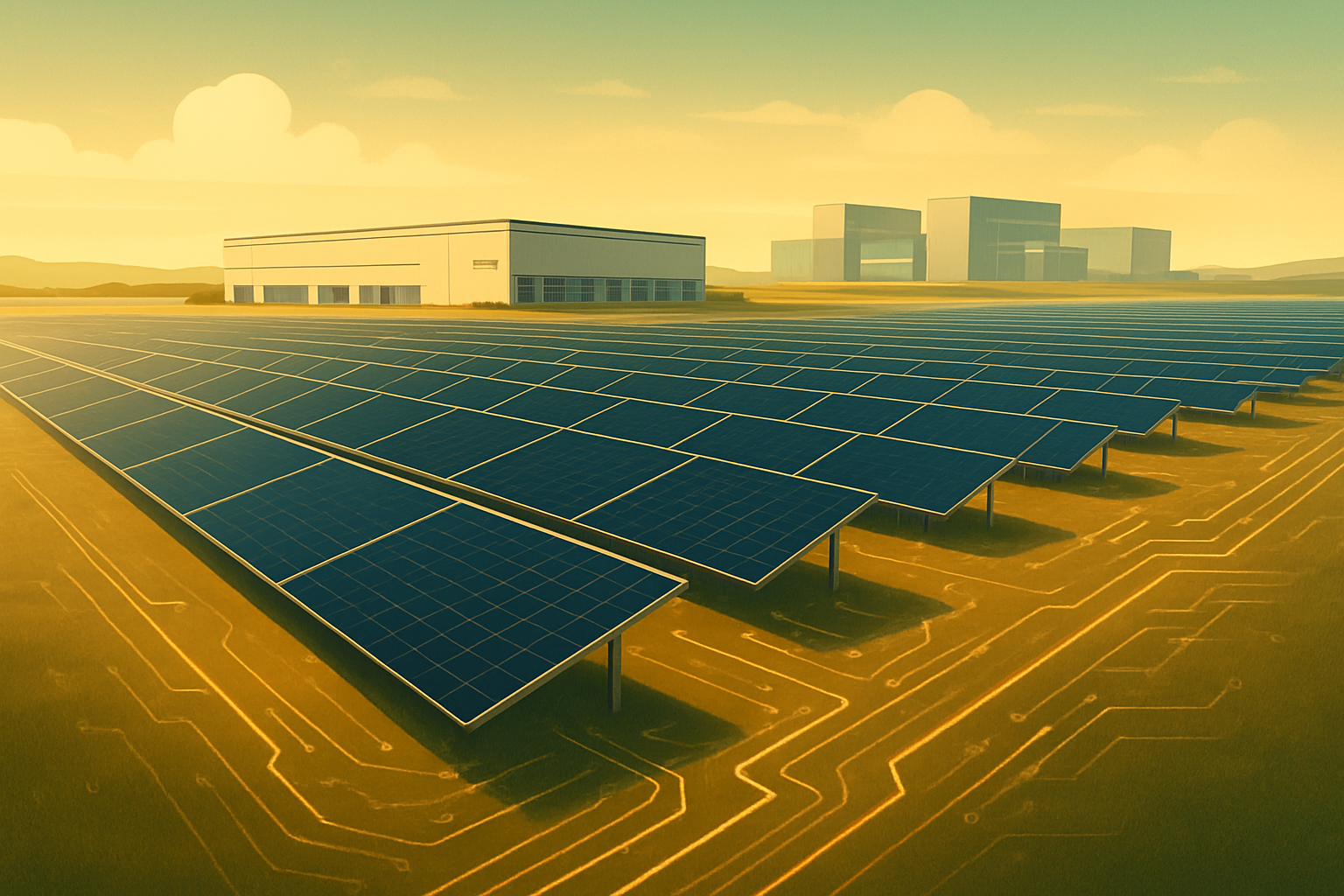
  • First Solar (FSLR): The Titan of Thin-Film and the Future of American Energy

    First Solar (FSLR): The Titan of Thin-Film and the Future of American Energy

    As of January 22, 2026, First Solar, Inc. (NASDAQ: FSLR) stands as the undisputed titan of the American renewable energy sector. While the broader solar industry has often been characterized by extreme cyclicality and intense price competition from overseas, First Solar has carved out a unique, high-margin fortress. Today, the company is in the spotlight not just as a solar panel manufacturer, but as a critical infrastructure play for the artificial intelligence (AI) revolution. With data centers consuming unprecedented amounts of electricity, First Solar’s "Made in America" thin-film modules have become the gold standard for tech giants seeking carbon-free power. This deep dive explores how a company once considered a niche alternative to silicon has become a cornerstone of both U.S. industrial policy and the global energy transition.

    Historical Background

    Founded in 1999 in Tempe, Arizona, First Solar’s journey is one of technological defiance. While 95% of the global solar market consolidated around crystalline silicon (c-Si) technology, First Solar bet its future on Cadmium Telluride (CdTe) thin-film semiconductors.

    In its early years, the company was primarily known for large-scale utility projects, often acting as both the manufacturer and the developer (EPC). However, the mid-2010s brought a period of painful restructuring. Facing a deluge of low-cost Chinese silicon imports, First Solar made the radical decision to exit the project development business and pivot to a pure-play manufacturing model. This transformation, accelerated under current leadership, focused on scaling its proprietary technology and aggressively reshoring its supply chain to the United States—a move that looked risky a decade ago but proved visionary following the passage of the Inflation Reduction Act (IRA) in 2022.

    Business Model

    First Solar’s business model is built on three pillars: technological differentiation, vertical integration, and a focus on the utility-scale market.

    • Non-Silicon Advantage: By using CdTe, First Solar avoids the volatile polysilicon supply chain. Its manufacturing process transforms a sheet of glass into a finished solar module in roughly four hours, significantly faster than the multi-stage silicon manufacturing process.
    • Vertical Integration: Unlike many competitors who assemble components from various global suppliers, First Solar controls the entire production process within a single facility. This reduces logistics costs and ensures traceability—a key requirement for complying with U.S. labor and trade laws.
    • Customer Base: The company sells almost exclusively to utility-scale developers and "hyperscalers" (Amazon, Google, Microsoft). These customers value First Solar for its long-term reliability and the "domestic content" bonuses they receive on federal tax credits by using U.S.-made hardware.

    Stock Performance Overview

    Over the past decade, FSLR has evolved from a volatile "green tech" speculative play into a disciplined industrial powerhouse.

    • 10-Year Horizon: Investors who held FSLR through the mid-2010s experienced significant turbulence, but those who entered during the 2020-2022 pivot have seen multi-bagger returns.
    • 5-Year Horizon: The stock has outperformed the Invesco Solar ETF (TAN) by a wide margin, driven by the realization that First Solar is insulated from the pricing wars affecting silicon-based peers.
    • 1-Year Horizon: As of January 2026, the stock is trading in the $240–$280 range, up approximately 45% year-over-year. The rally in late 2025 was fueled by the "AI energy crunch" narrative, as investors re-rated the stock from a "utility supplier" to an "AI infrastructure beneficiary."

    Financial Performance

    The 2025 fiscal year was the most profitable in First Solar’s history. In its most recent quarterly reports leading into 2026, the company showcased:

    • Revenue Growth: Q3 2025 net sales hit $1.6 billion, nearly double the previous year, with full-year 2026 revenue projected to surpass $6.3 billion.
    • Margins: Gross margins have expanded to a staggering 45%+. This is largely due to the Section 45X Advanced Manufacturing Production Credits, which provide roughly $0.17 per watt in direct subsidies for U.S.-made modules.
    • Backlog: The company boasts a contracted backlog of 54.5 GW, extending through 2030. Essentially, First Solar has already "sold" its entire production capacity for the next four years.
    • Cash Position: With a robust balance sheet and minimal debt, the company has begun monetizing its tax credits, selling over $1.5 billion in credits to third parties to fund its multi-billion dollar expansion in Alabama and Louisiana.

    Leadership and Management

    CEO Mark Widmar, who took the helm in 2016, is widely regarded as the architect of First Solar’s modern success. Widmar’s strategy has been defined by "selective growth"—refusing to compete in the low-margin residential market and instead doubling down on the U.S. utility sector.

    Under Widmar’s leadership, the management team has maintained a reputation for conservative guidance and operational excellence. Recently, the board has authorized a more aggressive stance on Intellectual Property (IP), filing patent infringement suits against Chinese competitors. This signals a shift from a defensive posture to an offensive one, protecting the company’s "thin-film moat" in the global market.

    Products, Services, and Innovations

    The cornerstone of the company’s 2026 portfolio is the Series 7 module.

    • Series 7 Features: Optimized for the U.S. market, the Series 7 offers 20% efficiency—a record for thin-film technology. It features a unique galvanized steel back-rail that slashes installation time and reduces the amount of steel required for racking, lowering the total "Balance of System" (BOS) cost for developers.
    • R&D Pipeline: First Solar continues to invest heavily in tandem cells—combining CdTe with perovskites—to push efficiency beyond 25% in the coming years. Its dedicated R&D center in Lake Township, Ohio, is the largest of its kind in the Western Hemisphere.

    Competitive Landscape

    The global solar market is currently split into two camps: First Solar and "the rest."

    • The Rest: Massive Chinese firms like JinkoSolar, LONGi, and Trina Solar dominate the global silicon market. They benefit from massive scale but suffer from overcapacity, razor-thin margins, and intensifying trade barriers in the U.S. and Europe.
    • The First Solar Advantage: In the U.S. market, First Solar is essentially in a league of its own. High anti-dumping duties (some exceeding 500%) on Southeast Asian imports have priced out many silicon competitors. Furthermore, First Solar’s modules perform better in high-heat environments (like the U.S. Southwest), giving them a technical edge in real-world energy yield.

    Industry and Market Trends

    The dominant trend of early 2026 is the "AI Power Crunch."
    The rapid expansion of AI data centers has created a massive, inelastic demand for 24/7 carbon-free energy. Hyperscalers are no longer just looking for the cheapest solar panels; they are looking for "de-risked" supply chains. First Solar’s ability to provide high-volume, domestic, ESG-compliant modules makes them the preferred partner for firms like Amazon and Microsoft. This has led to a shift in the market where solar is increasingly viewed as a "must-have" industrial input rather than a discretionary green investment.

    Risks and Challenges

    Despite its dominance, First Solar is not without risks:

    • Policy Risk: The primary concern in 2026 is the potential for shifts in U.S. energy policy. While the IRA’s Section 45X credits are popular for creating "Red State" jobs, any repeal or significant modification would immediately impact First Solar’s bottom line.
    • Raw Material Supply: While First Solar avoids polysilicon, it is dependent on Tellurium, a rare byproduct of copper mining. Any disruption in global copper production could affect Tellurium pricing.
    • Technology Leapfrogging: While CdTe is currently superior in many utility applications, a breakthrough in low-cost, high-efficiency silicon (like next-gen TOPCon) could eventually close the gap.

    Opportunities and Catalysts

    • Direct-Supply Agreements: Reports in early 2026 suggest First Solar is negotiating direct, multi-year supply deals with major chipmakers and data center operators, moving away from traditional middle-man developers.
    • International Expansion: The new facility in India (Tamil Nadu) provides a beachhead in one of the world’s fastest-growing energy markets, offering a hedge against U.S. policy changes.
    • Tax Credit Monetization: The ability to sell tax credits for cash provides First Solar with a "self-funding" mechanism for its future factories, reducing the need for dilutive equity raises.

    Investor Sentiment and Analyst Coverage

    Wall Street is currently "Overweight" on FSLR, with many analysts reclassifying it as a "Growth" stock rather than "Value." Institutional ownership remains high, with major funds like BlackRock and Vanguard viewing it as a core ESG and infrastructure holding. Retail sentiment is also bullish, driven by the stock’s inclusion in "AI Infrastructure" thematic ETFs. Analyst price targets as of January 2026 average around $285, with some bulls calling for $320 if the company secures more direct-to-hyperscale contracts.

    Regulatory, Policy, and Geopolitical Factors

    The geopolitical environment is First Solar’s strongest tailwind. The U.S.-China trade war has only intensified, with bipartisan support for "decoupling" critical energy infrastructure from Chinese influence. The "Domestic Content" bonus under the IRA provides an additional 10% tax credit to project owners who use American-made components, a requirement that is nearly impossible to meet without First Solar modules. This regulatory "moat" is perhaps the most significant barrier to entry for any competitor attempting to challenge First Solar’s U.S. dominance.

    Conclusion

    As we look at the energy landscape on January 22, 2026, First Solar (NASDAQ: FSLR) has successfully transitioned from a solar pioneer to an American industrial icon. By betting on a unique technology and a domestic supply chain, the company has insulated itself from the commodity traps that have ensnared its global rivals. With a multi-year backlog and a pivotal role in powering the AI-driven future, First Solar is no longer just a "green energy" stock—it is a strategic asset. Investors should remain mindful of political risks regarding the IRA, but the company’s operational momentum and technological moat suggest that its "Golden Era" is only just beginning.


    This content is intended for informational purposes only and is not financial advice. Today's Date: January 22, 2026.

  • The Architect of Electrification: A Deep-Dive into Quanta Services (PWR) in 2026

    The Architect of Electrification: A Deep-Dive into Quanta Services (PWR) in 2026

    As of January 22, 2026, the global conversation surrounding artificial intelligence (AI) has shifted from software capabilities to the physical constraints of the electrical grid. At the epicenter of this "Great Electrification" stands Quanta Services (NYSE: PWR). Once viewed as a cyclical construction and maintenance firm for utilities, Quanta has transformed into a critical strategic partner for the world’s largest tech hyperscalers and utility providers.

    With a market capitalization now exceeding $70 billion and a stock price hitting record highs, Quanta is no longer just a contractor; it is the architect of the infrastructure required to power the 21st century. Whether it is building the high-voltage transmission lines necessary to move renewable energy across state lines or installing the complex liquid cooling systems inside AI-optimized data centers, Quanta’s influence is pervasive. This deep-dive examines the historical evolution, financial prowess, and future catalysts that have made PWR a cornerstone of modern industrial portfolios.

    Historical Background

    Quanta Services was founded in 1997 through the consolidation of several regional specialty contracting firms. The vision of its founders, led by John Colson, was to create a national powerhouse capable of providing outsourced services to electric utilities that were beginning to deregulate. Quanta went public on the New York Stock Exchange in 1998, positioning itself as a "one-stop shop" for infrastructure needs.

    For its first two decades, the company focused on scale and geographical reach. However, the true transformation began in 2016 when Earl C. "Duke" Austin, Jr. took the helm as CEO. Austin, a fourth-generation utility contractor, shifted the company’s focus from being a mere vendor to a strategic solutions partner. Under his tenure, Quanta aggressively expanded its capabilities through massive acquisitions, most notably the $2.7 billion purchase of Blattner Holding Company in 2021, which cemented Quanta’s dominance in renewable energy infrastructure. By early 2026, the company has successfully integrated over 200 operating units into a cohesive, global infrastructure giant.

    Business Model

    Quanta’s business model is built on three primary pillars, with a unique "self-perform" strategy that sets it apart from competitors. Unlike firms that outsource labor to third parties, Quanta performs approximately 85% of its work using its own craft-skilled workforce.

    1. Electric Power Infrastructure: This is the company's "bread and butter," encompassing the design, installation, and maintenance of transmission and distribution networks. This segment benefits from long-term, multi-year Master Service Agreements (MSAs) with regulated utilities.
    2. Renewable Energy Infrastructure: Through its Blattner acquisition, Quanta is the leading contractor for large-scale solar, wind, and energy storage projects in North America.
    3. Underground Utility and Infrastructure: This segment focuses on pipeline and communications infrastructure, including the installation of fiber optics and the "hardening" of natural gas distribution systems.

    The diversification into "load centers"—specialized facilities like data centers and semiconductor fabs—has recently become a fourth de facto segment, blending electrical and mechanical services to meet the extreme power density requirements of modern computing.

    Stock Performance Overview

    Over the past decade, PWR has transitioned from a steady performer to a high-growth "compounder."

    • 10-Year View: In January 2016, Quanta was trading at roughly $20 per share (split-adjusted). Today, as of January 22, 2026, the stock is trading near an all-time high of $480.93, representing a staggering 2,300% return over ten years.
    • 5-Year View: The acceleration began in earnest around 2021. The stock has outperformed the S&P 500 significantly, fueled by the passage of the Infrastructure Investment and Jobs Act (IIJA) and the Inflation Reduction Act (IRA).
    • 1-Year View: Over the last 12 months, the stock has risen by approximately 42%. This "alpha" was driven by the market's realization that AI growth is fundamentally a power-generation and grid-transmission story, for which Quanta is the primary beneficiary.

    Financial Performance

    Quanta’s financial trajectory reflects the "super-cycle" in infrastructure spending. For the full year 2025, Quanta is projected to report record-breaking consolidated revenues of approximately $28 billion.

    • Backlog: Perhaps the most critical metric for investors, Quanta’s total backlog reached a record $39.2 billion at the end of Q3 2025. This provides the company with multi-year revenue visibility and protects against short-term economic downturns.
    • Earnings: Adjusted Diluted EPS for 2025 is estimated to land between $9.90 and $10.50, a significant jump from the $6.03 seen in 2024.
    • Margins: Despite inflationary pressures on labor, Quanta has maintained double-digit Adjusted EBITDA margins in its power and renewable segments, thanks to its scale and ability to pass through costs in many utility contracts.
    • Cash Flow: The company has shifted toward high free-cash-flow conversion, enabling it to fund its "string-of-pearls" acquisition strategy without over-leveraging its balance sheet.

    Leadership and Management

    Duke Austin’s leadership is widely regarded as the "secret sauce" behind Quanta’s outperformance. His deep roots in the industry have fostered a culture that prioritizes specialized labor and safety. Austin has famously argued that "skilled labor is the ultimate currency," leading the company to invest hundreds of millions in training facilities like the Lazy Q Ranch in Texas.

    The management team is characterized by stability and operational expertise. The Board of Directors includes veterans from the utility, energy, and technology sectors, providing a balanced perspective on the converging worlds of power and AI. Governance ratings for the company remain high, with a focus on long-term capital allocation rather than short-term quarterly beats.

    Products, Services, and Innovations

    Quanta’s edge lies in its ability to execute projects that are too large or complex for regional players.

    • Grid Hardening: Utilizing proprietary technologies to reinforce the grid against extreme weather and wildfires—a growing demand in California and the Gulf Coast.
    • SunZia Project: Quanta is currently completing the SunZia Wind & Transmission project, the largest clean energy infrastructure project in U.S. history, which will deliver 3,000 megawatts of wind power from New Mexico to Arizona.
    • Data Center Cooling: Through the 2025 acquisition of Dynamic Systems, Quanta has integrated advanced mechanical and liquid cooling capabilities, essential for AI servers that run significantly hotter than traditional hardware.
    • Digital Twins: Quanta uses advanced LiDAR and drone technology to create digital twins of utility networks, allowing for predictive maintenance and more efficient grid upgrades.

    Competitive Landscape

    Quanta operates in a fragmented industry but is the undisputed "gorilla" in the North American market.

    • Direct Competitors: Includes MasTec (NYSE: MTZ) and MYR Group (NASDAQ: MYRG). While MasTec has a strong presence in communications and renewables, Quanta’s scale in high-voltage transmission is often seen as superior.
    • Engineering & Construction (E&C) Rivals: Firms like EMCOR Group (NYSE: EME) and Comfort Systems USA (NYSE: FIX) compete with Quanta in the mechanical and electrical (M&E) space for data centers.
    • Competitive Advantage: Quanta’s "self-perform" model and its 60,000+ strong workforce create a massive barrier to entry. In an era of acute labor shortages, the firm that owns the labor owns the market.

    Industry and Market Trends

    The "Big Three" trends driving Quanta’s growth are:

    1. AI-Driven Power Demand: Hyperscalers are projected to double their power consumption by 2030. Quanta provides the "last mile" of high-capacity power to these sites.
    2. Grid Resilience: Extreme weather events have forced utilities to spend billions on "system hardening" (e.g., undergrounding lines, upgrading transformers).
    3. The Energy Transition: Moving from centralized coal/gas plants to decentralized wind and solar requires a complete overhaul of the transmission grid, a task that falls squarely on Quanta’s shoulders.

    Risks and Challenges

    No investment is without risk. Quanta faces several headwinds:

    • Labor Scarcity: Despite its training efforts, the aging workforce in the trades remains a long-term challenge.
    • Regulatory Hurdles: Large-scale transmission projects like SunZia can face years of permitting delays at the state and federal levels.
    • Commodity Volatility: Fluctuations in the price of copper, steel, and aluminum can impact project margins if not properly hedged.
    • Interest Rates: While much of Quanta’s work is regulated and essential, higher interest rates increase the cost of capital for the utilities that are Quanta’s primary customers.

    Opportunities and Catalysts

    • M&A Potential: Quanta continues to hunt for "string-of-pearls" acquisitions, particularly in the European market where grid modernization is lagging.
    • EV Infrastructure: As the U.S. continues to build out its EV charging network, Quanta is well-positioned to handle the high-voltage installations required for "fast-charging" hubs.
    • Nuclear Renaissance: With renewed interest in Small Modular Reactors (SMRs), Quanta could see a significant new revenue stream in connecting these reactors to the grid.

    Investor Sentiment and Analyst Coverage

    Wall Street remains overwhelmingly bullish on PWR. Major firms like Goldman Sachs and J.P. Morgan maintain "Buy" or "Overweight" ratings, often citing Quanta as the best "pure play" on the electrification of the economy. Institutional ownership remains high, with giants like Vanguard and BlackRock holding significant stakes. Retail sentiment has also shifted, with many viewing Quanta as a safer, "picks-and-shovels" way to play the AI boom compared to volatile chip stocks.

    Regulatory, Policy, and Geopolitical Factors

    The regulatory environment remains a tailwind. The Inflation Reduction Act (IRA) provides long-term tax credits for renewable energy and grid storage, offering a decade of policy certainty. Furthermore, the 2025-2026 focus on "energy independence" in the U.S. has led to bipartisan support for permitting reform, which could accelerate the approval of Quanta’s large-scale transmission projects. Geopolitically, the push to "near-shore" semiconductor manufacturing in the U.S. (CHIPS Act) has created a boom in high-tech factory construction—another key market for Quanta’s specialized services.

    Conclusion

    Quanta Services (NYSE: PWR) has evolved into an indispensable titan of the industrial sector. By positioning itself at the intersection of utility maintenance, renewable energy integration, and AI infrastructure, the company has managed to capture the secular growth of the modern era while maintaining the stability of a regulated utility partner.

    As of January 2026, the company’s record $39 billion backlog and strategic expansion into data center cooling suggest that the growth story is far from over. While investors must remain mindful of labor constraints and regulatory delays, Quanta’s "self-perform" model and visionary leadership make it a bellwether for the future of the American grid. For those looking to invest in the physical foundations of the AI revolution, Quanta Services remains the gold standard.


    This content is intended for informational purposes only and is not financial advice.

  • Power, Intelligence, and Integration: A Deep Dive into NRG Energy (NRG) in 2026

    Power, Intelligence, and Integration: A Deep Dive into NRG Energy (NRG) in 2026

    Date: January 22, 2026

    Introduction

    As of early 2026, the energy landscape in the United States has undergone a fundamental shift, moving from a commodity-driven utility model to a high-stakes race for grid reliability and technological integration. At the center of this transformation is NRG Energy (NYSE: NRG), a company that has successfully shed its image as a legacy power generator to become a diversified leader in essential home services and reliable energy. With the recent closing of its massive acquisition of LS Power’s generation portfolio and the full integration of Vivint Smart Home, NRG is now positioned as a unique hybrid of a tech-enabled retailer and a dominant power producer. In a market obsessed with the “AI power supercycle,” NRG stands out not just for the megawatts it produces, but for the millions of consumers it controls at the “edge” of the grid.

    Historical Background

    Founded in 1989 as a subsidiary of Northern States Power Company, NRG’s history is a case study in corporate resilience and strategic pivots. The company faced a near-existential crisis in the early 2000s, filing for Chapter 11 bankruptcy in 2003 following the fallout of the Western U.S. energy crisis. Emerging from restructuring, it spent years as a massive independent power producer (IPP) under the leadership of David Crane, who aggressively pushed into renewables.

    However, the modern NRG was truly born in 2017. Under pressure from activist investors, including Elliott Management, the company launched a comprehensive “Transformation Plan.” This multi-year initiative involved divesting billions in non-core assets and slashing debt by $13 billion. The most radical shift occurred in 2023 with the $2.8 billion acquisition of Vivint Smart Home, a move that baffled many utility purists but laid the groundwork for NRG’s current “consumer energy” platform.

    Business Model

    NRG operates a highly integrated business model that bridges the gap between wholesale power generation and retail consumer services. The company’s revenue is derived from three primary segments:

    1. Retail Electricity: Through leading brands like Reliant, Direct Energy, and Green Mountain Energy, NRG serves approximately 8 million customers. It is the largest retail provider in the Texas (ERCOT) market, benefiting from high brand loyalty and sophisticated pricing strategies.
    2. Smart Home (Vivint): This segment provides security, automation, and energy management solutions. By bundling these services with electricity plans, NRG has achieved record-high customer retention rates and lower acquisition costs.
    3. Generation Fleet: Following the 2025 LS Power acquisition, NRG’s fleet has expanded to approximately 25 gigawatts (GW). The portfolio is now heavily weighted toward flexible, quick-start natural gas plants, which are critical for stabilizing grids heavily dependent on intermittent renewables.

    Stock Performance Overview

    NRG has been one of the standout performers in the utility and energy space over the last decade. As of January 2026, the stock has delivered a staggering 5-year total return of over 315%, vastly outperforming the S&P 500 and the Utilities Select Sector SPDR (XLU).

    • 1-Year Performance: The stock rose over 40% in 2025, driven by the surge in demand from AI data centers and the successful financing of new gas-fired plants in Texas.
    • 10-Year Trend: Long-term investors have seen NRG transition from a volatile, debt-laden IPP into a steady cash-flow machine, with the stock price reflecting its re-rating from a utility multiple to a higher-growth energy-tech multiple.

    Financial Performance

    Financial discipline has become the hallmark of the current management team. For the fiscal year 2025, NRG is expected to report an Adjusted EPS of approximately $8.08, a significant jump from 2024 levels.

    • Revenue Growth: Revenue has seen steady mid-single-digit growth, bolstered by the “stickiness” of the Vivint platform.
    • Cash Flow: The company maintains a robust Free Cash Flow before Growth (FCFbG) profile, targeting over $2 billion annually.
    • Capital Allocation: NRG remains committed to its framework of returning 80% of excess cash to shareholders via dividends and buybacks, though it is currently prioritizing debt reduction to return to investment-grade metrics following the LS Power deal.

    Products, Services, and Innovations

    NRG is at the forefront of “grid edge” innovation. Its most notable advancement is the development of Virtual Power Plants (VPPs). By leveraging the 2 million interconnected homes in the Vivint ecosystem, NRG can orchestrate thousands of smart thermostats and batteries to reduce load during peak demand, effectively creating a “dispatchable” resource without building a single new power plant. Furthermore, its partnership with GE Vernova to deploy advanced gas turbines ensures that NRG’s physical generation remains some of the most efficient and low-emission in the fossil-fuel category.

    Competitive Landscape

    NRG competes in a “Big Three” landscape of deregulated energy giants, alongside Vistra Corp. (NYSE: VST) and Constellation Energy (NASDAQ: CEG).

    • Vistra: Known for its massive nuclear and gas mix, VST is NRG’s primary rival in Texas.
    • Constellation: The leader in carbon-free nuclear power, CEG often commands a higher valuation premium due to its pure-play green energy profile.
    • NRG’s Edge: Unlike its peers, NRG owns the “last mile” of the consumer relationship through Vivint. While Vistra and Constellation sell bulk power to tech giants, NRG is building a moat around the residential consumer, making it less susceptible to wholesale price fluctuations.

    Industry and Market Trends

    The “Demand Supercycle” is the dominant theme of 2026. The explosion of AI data centers has created an insatiable need for 24/7 “firm” power. While renewables are growing, they cannot yet provide the baseload stability required by hyperscalers like Microsoft or Amazon. This has led to a renaissance for natural gas generation. Additionally, the “consumerization of energy”—where users actively manage their consumption via apps and smart devices—has moved from a niche hobby to a mainstream necessity as power prices remain volatile.

    Risks and Challenges

    Despite its strong positioning, NRG faces significant hurdles:

    • Leverage: The LS Power acquisition was a multi-billion dollar bet that increased NRG’s debt load. Any prolonged period of high interest rates could weigh on the balance sheet.
    • Regulatory Volatility: The ERCOT market in Texas is subject to frequent political scrutiny. Changes to market design or price caps can have outsized impacts on NRG’s retail margins.
    • Commodity Exposure: While hedged, NRG’s earnings are still sensitive to natural gas prices and extreme weather events (e.g., Winter Storm Uri-type scenarios) which can cause massive price spikes in wholesale markets.

    Opportunities and Catalysts

    The primary catalyst for 2026 is the full realization of synergies from the LS Power integration, which is expected to add hundreds of millions to EBITDA. Furthermore, NRG is aggressively pursuing data center co-location agreements, where it can provide dedicated power directly to AI facilities at premium rates. The Texas Energy Fund, which provides low-interest loans for new dispatchable generation, is another tailwind; NRG has already secured $562 million to build its new Cedar Bayou facility.

    Investor Sentiment and Analyst Coverage

    Wall Street remains broadly bullish on NRG, with several analysts raising price targets toward the $200 range in early 2026. Institutional investors, including Vanguard and BlackRock, have maintained significant positions, viewing NRG as a “value” play compared to the more expensive Constellation Energy. The consensus “Strong Buy” rating reflects confidence in the company’s ability to generate cash while transitioning into a tech-centric service provider.

    Regulatory, Policy, and Geopolitical Factors

    NRG’s operations are heavily influenced by state-level policies in Texas and federal oversight by the Federal Energy Regulatory Commission (FERC). The current political climate favors “dispatchable” energy, providing a favorable backdrop for NRG’s gas-heavy fleet. However, evolving environmental regulations regarding carbon capture and methane emissions remain a long-term compliance cost that the company must navigate.

    Conclusion

    NRG Energy’s journey from a 2003 bankruptcy to a 2026 power and tech powerhouse is a testament to the value of strategic evolution. By integrating generation, retail, and smart home technology, the company has created a diversified ecosystem that is uniquely resilient to the shifts of the energy transition. For investors, NRG represents a sophisticated way to play the AI-driven power boom—offering a combination of infrastructure-backed stability and tech-driven growth. As the company transitions to new leadership under Robert Gaudette, the market will be watching closely to see if NRG can maintain its disciplined capital return while continuing to lead the “consumerization” of the American grid.


    This content is intended for informational purposes only and is not financial advice.

  • First Solar (FSLR): The AI-Driven Energy Powerhouse of 2026

    First Solar (FSLR): The AI-Driven Energy Powerhouse of 2026

    As of January 16, 2026, the global energy transition has entered a transformative new phase where "Clean Tech" and "Artificial Intelligence" are no longer separate sectors, but deeply symbiotic industries. At the center of this convergence is First Solar, Inc. (NASDAQ: FSLR), a company that has evolved from a niche solar manufacturer into a cornerstone of American industrial strategy.

    The recent surge in investor interest, punctuated by a significant price target hike from UBS, underscores a fundamental shift in how the market values First Solar. No longer viewed simply through the lens of decarbonization, the company is now being re-rated as a critical infrastructure play for the AI era.

    Historical Background

    The story of First Solar begins with the "Glass Genius" of Ohio, Harold McMaster. An inventor with over 100 patents, McMaster founded Solar Cells Inc. (SCI) in 1990. While the rest of the world focused on silicon, McMaster bet on Cadmium Telluride (CdTe), a semiconductor that could be deposited in a thin film on glass.

    In 1999, the company was acquired by True North Partners, an investment firm led by Michael Ahearn and backed by the Walton family. Rebranded as First Solar, the company went public on the NASDAQ in 2006. By 2009, it achieved a historic milestone: becoming the first solar manufacturer to reduce production costs to below $1.00 per watt.

    The mid-2010s were a period of "creative destruction." In 2016, under the leadership of then-new CEO Mark Widmar, the company made the bold decision to skip its "Series 5" product entirely to accelerate the development of "Series 6." This strategic pivot transformed First Solar from a company that built solar farms (EPC services) into a pure-play technology and manufacturing powerhouse.

    Business Model

    First Solar’s business model is built on vertical integration and technological differentiation. Unlike its competitors, who assemble modules from silicon cells often sourced from multiple suppliers, First Solar transforms a sheet of glass into a finished solar module in a single integrated process that takes roughly four hours.

    Revenue Sources:

    • Module Sales: The vast majority of revenue comes from the sale of Series 6 and Series 7 modules to utility-scale developers and independent power producers.
    • Tax Credit Monetization: Under the IRA, the company earns significant "45X" manufacturing credits, which it has successfully monetized to fund further expansion.

    The company focuses exclusively on the utility-scale market, avoiding the volatile residential rooftop sector. This allows for long-term supply agreements and a massive order backlog that currently stretches into the late 2020s.

    Stock Performance Overview

    Over the last decade (2016–2026), FSLR has been a barometer for the health of the domestic solar industry.

    • 10-Year Horizon: A decade ago, the stock struggled near $30–$50 as it restructured. Investors who held through the 2016 pivot have seen the stock rise nearly 500%.
    • 5-Year Horizon: The 2022 passage of the IRA served as a massive "step-change," moving the stock from the $70 range to consistent levels above $150.
    • 1-Year Horizon: Entering 2026, FSLR has shown remarkable strength, trading between $230 and $270. This recent rally was sparked by the realization that AI power demand would require domestic solar at a scale never before seen.

    Financial Performance

    First Solar’s recent financial results reflect a company in its "golden era" of profitability.

    • Revenue Growth: Revenue climbed from $4.21 billion in 2024 to an estimated $5.55 billion in 2025. Consensus for 2026 sits at approximately $6.3 billion.
    • Earnings Power: Earnings per share (EPS) have seen explosive growth. From $12.02 in 2024, projections for 2026 reach as high as $26.00 per share.
    • Margins: Gross margins have expanded to a sector-leading 40%–45%, largely due to the Section 45X tax credits, which provide roughly $0.17 per watt for domestic manufacturing.
    • Backlog: As of January 2026, the company boasts a contracted backlog of over 50 gigawatts (GW), meaning nearly all production through 2029 is already sold.

    Leadership and Management

    CEO Mark Widmar has been at the helm since 2016 and is widely regarded as one of the most effective executives in the renewable space. Widmar’s strategy has been defined by "discipline over growth." He resisted the urge to follow the industry into silicon and instead doubled down on CdTe technology.

    The leadership team is noted for its strong relationship with Washington. Widmar has been a vocal advocate for American energy independence, helping shape the policy environment that now protects the company from foreign subsidized competition. The board of directors remains focused on "capacity management," ensuring that the company does not over-expand during cyclical peaks.

    Products, Services, and Innovations

    The flagship product is the Series 7 module. Launched in late 2023 and scaled through 2025, the Series 7 represents a major leap forward:

    • Bifacial Technology: The Series 7 is natively bifacial, meaning it captures sunlight on both the front and back, increasing energy yield by up to 15% in certain environments.
    • Mounting Innovation: It features an integrated back-rail system that reduces installation time and costs for large-scale developers.
    • CuRe Technology: First Solar has introduced "Copper Replacement" (CuRe) technology, which improves the long-term stability and degradation rates of the modules.

    Looking ahead, the company’s R&D center in Ohio is working on Perovskite-CdTe tandems, a "next-generation" solar cell that could push efficiency well beyond 25%, potentially rendering current silicon technologies obsolete.

    Competitive Landscape

    The solar industry is a geopolitical battlefield. First Solar’s primary competitors are the "Big Four" Chinese silicon giants: Jinko Solar, Trina Solar, JA Solar, and LONGi.

    However, First Solar occupies a "protected moat" for several reasons:

    1. Technology: By using CdTe instead of Silicon, they have zero exposure to the Xinjiang polysilicon supply chain, which is subject to U.S. import bans (UFLPA).
    2. Trade Policy: New AD/CVD (Anti-Dumping and Countervailing Duties) petitions filed in 2025 against Chinese-linked manufacturers in Southeast Asia have further insulated First Solar's pricing power.
    3. Customer Preference: U.S. utility companies and tech hyperscalers are increasingly prioritizing "supply chain security" and "domestic content," where First Solar has no equal.

    Industry and Market Trends

    The dominant trend of 2025–2026 is the AI Power Crunch. Data centers are projected to consume nearly 10% of total U.S. electricity by 2030. Because Microsoft, Amazon, and Google have committed to 100% renewable energy, they cannot simply pull power from the coal-heavy grid. They need new, utility-scale solar projects.

    Furthermore, the "electrification of everything"—from EVs to heat pumps—continues to drive structural demand for solar. In this environment, the bottleneck is no longer demand, but rather the supply of reliable, domestically produced modules.

    Risks and Challenges

    Despite the bullish narrative, First Solar is not without risks:

    • Political Risk: While the IRA is law, a change in U.S. administration or a shift in Congressional priorities could lead to efforts to repeal or dilute the 45X tax credits.
    • Technical Limits: CdTe technology currently has lower theoretical efficiency limits compared to the most advanced silicon cells (like TOPCon or HJT).
    • Execution Risk: The company is managing a massive multi-state expansion. Any delays in the Alabama or Louisiana ramps could impact 2026 earnings.
    • Pricing Pressure: If global silicon prices crash significantly, even with tariffs, First Solar may face pressure to lower its premium pricing.

    Opportunities and Catalysts

    • UBS Price Target Hike: Recently, UBS analysts increased their price target to $285, specifically citing First Solar as an "AI beneficiary." This has prompted a rotation of "growth" capital into the stock.
    • Louisiana Capacity: The Iberia Parish facility, which opened in late 2025, is expected to reach full capacity by mid-2026, providing a significant boost to volume.
    • Data Center Partnerships: Rumors of direct-supply agreements with major tech hyperscalers could serve as a major "de-risking" event for the stock’s long-term valuation.

    Investor Sentiment and Analyst Coverage

    Wall Street is currently "overwhelmingly bullish" on FSLR. As of January 2026, the stock holds a "Strong Buy" consensus. Institutional ownership is high, at approximately 87%, led by giants like Vanguard and BlackRock.

    Investor chatter has shifted from "Will they survive the Chinese onslaught?" to "How many more factories can they build?" Retail sentiment is also rising, as the "AI Infrastructure" tag makes the company more appealing to a broader range of investors beyond the traditional "green" or "ESG" funds.

    Regulatory, Policy, and Geopolitical Factors

    The geopolitical environment remains First Solar’s strongest tailwind. The U.S. government’s focus on "de-risking" from China has made First Solar a "national champion" of sorts.

    Furthermore, the Domestic Content Bonus within the IRA incentivizes developers to use U.S.-made modules to earn an additional 10% tax credit. Because First Solar is the only manufacturer that can provide a fully domestic, thin-film solution at scale, it effectively controls the market for these bonus-eligible projects.

    Conclusion

    First Solar (NASDAQ: FSLR) has successfully transitioned from a specialized solar manufacturer to a vital component of the modern energy-industrial complex. By January 2026, the company has proven that its CdTe technology is not just a viable alternative to silicon, but a strategic asset in an era of AI-driven power demand and geopolitical fragmentation.

    With a sold-out backlog, industry-leading margins protected by the IRA, and a clear path toward 14 GW of domestic capacity, the bull case for First Solar remains compelling. While political shifts and technological competition are ever-present risks, the "straight line" from AI data centers to First Solar’s production lines suggests that the company’s recent price target hikes from firms like UBS may only be the beginning of its next phase of growth. Investors should watch the ramp-up of the Louisiana facility and any potential "AI-exclusive" supply deals as the next major catalysts for the stock.


    This content is intended for informational purposes only and is not financial advice