Tag: AI

  • The AI Energy Nexus: A Deep Dive into Meta Platforms’ (META) 2026 Strategy

    The AI Energy Nexus: A Deep Dive into Meta Platforms’ (META) 2026 Strategy

    Today’s Date: January 19, 2026

    Introduction

    As we enter 2026, Meta Platforms (NASDAQ: META) has successfully navigated one of the most complex corporate transformations in modern history. Once written off by many analysts during the "metaverse winter" of 2022, the company has reinvented itself not just as a social media giant, but as a vertically integrated artificial intelligence and infrastructure powerhouse. Under the unwavering leadership of Mark Zuckerberg, Meta is currently at the center of a global technological arms race, driven by unprecedented capital expenditures in AI and a pioneering energy strategy that has turned the tech titan into a major player in the nuclear power sector.

    Meta's current relevance stems from its dual-track success: maintaining an iron grip on the digital advertising market through AI-optimized targeting while simultaneously building the "compute factories" of the future. With its open-source Llama models setting industry standards and its hardware division pivoting toward sleek, AI-integrated wearables, Meta is no longer just a platform; it is becoming the foundational intelligence layer for the digital economy.

    Historical Background

    The journey of Meta Platforms began in 2004 in a Harvard dorm room, but its current iteration was truly forged in the fires of 2021-2023. The company’s founding story as Facebook is well-documented, marked by aggressive acquisitions of Instagram (2012) and WhatsApp (2014) that cemented its mobile dominance. However, the 2021 rebrand from Facebook to Meta Platforms signaled a high-stakes pivot toward the metaverse—a move that initially met with investor skepticism and a plummeting stock price.

    The "Year of Efficiency" in 2023 proved to be the pivotal turning point. By slashing costs, streamlining middle management, and refocusing on its core advertising business, Meta regained its financial footing. This discipline allowed the company to pivot rapidly when the Generative AI revolution took hold. By 2024 and 2025, Meta had successfully integrated AI across its "Family of Apps," transforming Reels into a TikTok-competitive powerhouse and launching the open-source Llama LLM (Large Language Model) series, which disrupted the proprietary models of OpenAI and Google.

    Business Model

    Meta’s business model remains primarily anchored in its Family of Apps (FoA), which includes Facebook, Instagram, Messenger, WhatsApp, and Threads. Over 98% of its revenue continues to be generated through digital advertising. However, the mechanics of this model have evolved. Meta now utilizes proprietary AI "Advantage+" tools to automate the creative and placement process for advertisers, significantly increasing the Return on Ad Spend (ROAS).

    A second, emerging segment of the business is Business Messaging, primarily through WhatsApp. In early 2026, WhatsApp has transitioned from a simple messaging tool to a comprehensive commerce platform where businesses handle customer service, sales, and logistics through AI agents.

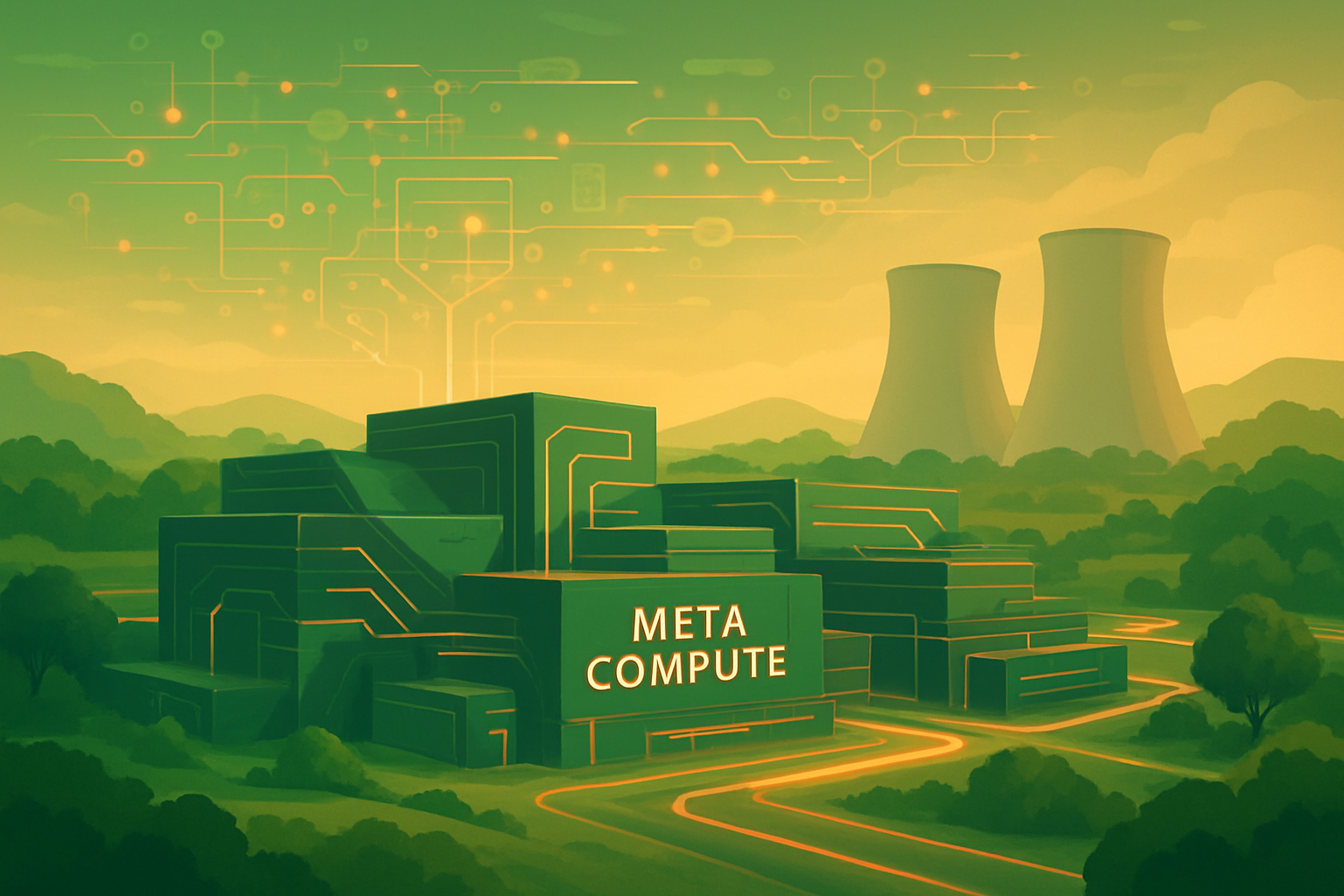
    Lastly, Reality Labs remains the research and development arm focused on the long-term vision of augmented reality (AR) and virtual reality (VR). While still operating at a loss, this segment is increasingly focused on "Meta Compute"—selling AI processing power and licensing software for the next generation of smart glasses.

    Stock Performance Overview

    Over the last decade, META has been one of the top-performing stocks in the S&P 500, despite significant volatility.

    • 10-Year Performance: Investors who held META through the 2016-2026 decade have seen returns exceeding 600%, outperforming the broader tech sector.
    • 5-Year Performance: The stock reflects a "V-shaped" recovery. After crashing to near $90 in late 2022, it surged to new all-time highs in 2024 and 2025, recently trading in the $650-$700 range as of early 2026.
    • 1-Year Performance: In 2025, META stock rose by approximately 35%, driven by the successful rollout of Llama 4 and the announcement of its massive nuclear energy partnerships, which eased concerns about power-constrained growth.

    Financial Performance

    Meta’s financial profile in early 2026 is characterized by massive revenue and even larger capital investments.

    • Revenue: For the full year 2025, Meta reported revenue of approximately $195 billion, with analysts projecting $235 billion for 2026.
    • Margins: Operating margins have stabilized around 40%, a testament to the company’s ability to monetize AI-driven engagement.
    • CapEx: This is the most scrutinized metric. Meta’s capital expenditure is projected to exceed $100 billion in 2026, up from ~$72 billion in 2025. This capital is flowing into specialized H100/H200 and Blackwell GPU clusters, and proprietary silicon (MTIA – Meta Training and Inference Accelerator).
    • Valuation: Trading at a forward P/E of roughly 24x, Meta is priced more attractively than some of its "Magnificent Seven" peers, despite its heavier infrastructure spending.

    Leadership and Management

    Mark Zuckerberg remains the controlling force behind Meta, holding roughly 61% of voting power through dual-class shares. His management style has evolved from the "Move Fast and Break Things" era to a more disciplined, long-term strategic approach.

    • Susan Li (CFO): Li has earned Wall Street’s respect for her transparent communication regarding CapEx and her focus on "efficiency-driven growth."
    • Javier Olivan (COO): Olivan oversees the operational integration of AI across the product suite, focusing on infrastructure and monetization.
    • Andrew "Boz" Bosworth (CTO): Bosworth leads the Reality Labs division and the pivot toward AI-integrated wearables like the Ray-Ban Meta glasses.

    Products, Services, and Innovations

    The product roadmap for 2026 is dominated by Llama 4, Meta’s latest flagship AI model. Unlike its predecessors, Llama 4 is "agentic," meaning it can perform complex, multi-step actions on behalf of the user—such as planning a multi-city vacation or managing a corporate budget—within the Meta ecosystem.

    In hardware, Meta has abandoned the heavy "Quest 4" headset in favor of "Puffin," a lightweight wearable that resembles traditional glasses but offers high-end AR capabilities by offloading processing to a pocket-sized "compute puck." Furthermore, the Ray-Ban Meta smart glasses have become a massive consumer success, integrating a multimodal AI assistant that can see and hear the world alongside the user.

    Competitive Landscape

    Meta’s competitive position has shifted in 2026. In the advertising space, it is currently gaining ground against Alphabet Inc. (NASDAQ: GOOGL). For the first time, Google’s total US ad market share fell below 50% in late 2025, while Meta’s share climbed to 23%.

    In AI, Meta’s "Open Source" strategy with Llama has forced competitors like OpenAI and Microsoft (NASDAQ: MSFT) to lower their prices, effectively making Llama the "Linux of AI." However, the company faces stiff competition from TikTok (ByteDance) in the short-video space and from Apple (NASDAQ: AAPL) in the high-end wearables and privacy-preserving AI markets.

    Industry and Market Trends

    The "Compute War" has entered a new phase in 2026: the Energy Era. As AI models require exponential increases in power, tech giants are no longer just competing for chips, but for electricity. The shift toward sovereign AI—where countries and companies want to own their own data centers and models—has favored Meta’s strategy of building massive, independent "AI Factories."

    Risks and Challenges

    • CapEx Overhang: The most significant risk is whether the $100B+ annual investment in AI will yield a proportional return. If the "AI Bubble" cools, Meta could be left with billions in depreciating hardware.
    • Reality Labs Burn: Despite the success of smart glasses, Reality Labs continues to lose over $15 billion annually. Some investors remain wary of this long-term drain on cash flow.
    • Regulatory Scrutiny: The FTC continues to pursue antitrust actions against Meta, and the EU’s Digital Markets Act (DMA) remains a persistent hurdle for data sharing and cross-platform integration.

    Opportunities and Catalysts

    • Nuclear Strategy: Meta has secured 6.6 GW of nuclear power through 2035 via partnerships with Vistra and Constellation Energy. This ensures its AI centers will have 24/7 carbon-free power, a massive competitive advantage as grid constraints limit rivals.
    • WhatsApp Monetization: The transition of WhatsApp into a "super-app" for business is still in its early innings, representing a multibillion-dollar untapped revenue stream.
    • Orion AR: The developer launch of the Orion AR glasses in 2026 could set the stage for a paradigm shift in computing, potentially replacing the smartphone by the 2030s.

    Investor Sentiment and Analyst Coverage

    Wall Street remains generally bullish on META, with approximately 85% of analysts maintaining a "Buy" rating. Institutional ownership remains high, with Vanguard and BlackRock holding significant stakes. Sentiment has shifted from "caution regarding the metaverse" to "optimism regarding AI dominance." Retail sentiment, often tracked on platforms like X and Reddit, has also improved as Zuckerberg’s public image has softened into that of a "tech statesman."

    Regulatory, Policy, and Geopolitical Factors

    Meta faces a fragmented global regulatory landscape. In the US, the debate over Section 230 and child safety online continues to drive legislative proposals. Geopolitically, Meta's exclusion from the Chinese market remains a limitation, but it also insulates the company from some of the supply chain risks associated with US-China trade tensions. The company’s focus on "Sovereign AI" has made it a key partner for governments in Europe and the Middle East looking to deploy AI without relying on closed American or Chinese proprietary models.

    Conclusion

    As of January 2026, Meta Platforms stands as a behemoth that has successfully bridged the gap between social media and the next frontier of artificial intelligence. By placing a massive bet on the physical infrastructure of AI—exemplified by its $100 billion CapEx and its strategic pivot to nuclear energy—Meta is positioning itself to be the indispensable utility of the AI age.

    While the "Reality Labs" losses and regulatory headwinds remain persistent risks, Meta’s core advertising engine is more efficient than ever, and its open-source AI strategy has given it a unique leverage over the entire tech ecosystem. For investors, the key metric to watch over the next 24 months will be the ROI on "Meta Compute" and the successful transition of Llama from a research darling to a commercial titan.


    This content is intended for informational purposes only and is not financial advice.

  • Apple (AAPL) Deep Dive: The AI Frontier and the $4 Trillion Horizon

    Apple (AAPL) Deep Dive: The AI Frontier and the $4 Trillion Horizon

    Date: January 19, 2026

    Introduction

    As of January 2026, Apple Inc. (NASDAQ: AAPL) finds itself at a historic crossroads. For nearly two decades, the company’s narrative was defined by the iPhone—a singular hardware marvel that reshaped global communication. Today, however, Apple is transitioning from a hardware-first titan into an artificial intelligence (AI) and services powerhouse. With a market capitalization hovering near $3.8 trillion, the Cupertino giant is no longer just selling devices; it is selling a private, integrated AI lifestyle. This deep dive explores how Apple managed to overcome 2024’s stagnation to post record 2025 results, and why the next 24 months—defined by "Apple Intelligence" and the iPhone 18 cycle—will determine the stock's long-term trajectory.

    Historical Background

    Founded in 1976 by Steve Jobs, Steve Wozniak, and Ronald Wayne, Apple’s journey is one of the most storied in corporate history. From the early success of the Apple II and the revolutionary Macintosh to the company’s near-bankruptcy in the mid-1990s, the narrative changed forever with Jobs' return in 1997. The subsequent decade saw an unprecedented string of hits: the iMac, iPod, and the 2007 debut of the iPhone.

    Under Tim Cook’s leadership since 2011, Apple transformed from an innovation-led "hit maker" into an operational masterclass. Cook leaned into the "Walled Garden" strategy, building a Services ecosystem (iCloud, App Store, Apple Music) that turned a one-time hardware sale into a multi-year subscription relationship. By the early 2020s, Apple’s silicon transition (M-series chips) further decoupled its hardware performance from industry-standard components, cementing its competitive moat.

    Business Model

    Apple’s business model is a masterclass in vertical integration. The company controls the hardware, the operating system (iOS/macOS), the silicon, and the distribution channel (App Store).

    1. iPhone: The primary revenue driver, contributing roughly 50% of total sales.
    2. Services: The high-margin growth engine, encompassing the App Store, Apple Pay, Apple TV+, and iCloud. Services now boast a gross margin exceeding 75%.
    3. Wearables, Home, and Accessories: Including the Apple Watch and AirPods, which command significant market share in the hearables and wearables categories.
    4. Mac and iPad: Mature segments that have seen a resurgence due to Apple Silicon's efficiency.
    5. The "Walled Garden": The core of the model is ecosystem lock-in. Once a user is "blue-bubbled" into iMessage and owns multiple devices, the switching cost becomes prohibitively high.

    Stock Performance Overview

    Apple’s stock performance has been a beacon of consistency for long-term investors:

    • 1-Year Performance: AAPL has climbed approximately 30% over the last 12 months, fueled by the "AI Supercycle" narrative and the successful launch of the iPhone 17.
    • 5-Year Performance: Investors have seen returns exceeding 180%, significantly outperforming the S&P 500.
    • 10-Year Performance: Apple has delivered nearly 800% returns, transforming from a hardware stock into a staple of every institutional portfolio.
      As of today, January 19, 2026, the stock is trading near $255.53, up from the $180–$190 range seen in early 2024.

    Financial Performance

    Apple’s fiscal year 2025 (ended September 2025) was a record-breaking period that silenced skeptics.

    • Total Revenue: $416.2 billion, up 6% year-over-year.
    • Net Income: $112.01 billion, an all-time high.
    • Services Revenue: Crossed the $100 billion milestone for the first time ($109.2 billion).
    • Cash Flow: Apple continues to generate massive operating cash flow, allowing it to return over $100 billion to shareholders annually through dividends and buybacks.
    • Valuation: Trading at a forward P/E of approximately 32x, Apple commands a premium over the broader market, reflecting its perceived safety and AI potential.

    Leadership and Management

    The question of succession is at the forefront of investor minds in early 2026.

    • Tim Cook: Now 65, Cook has hinted at a transition toward a Board Chairman role. His tenure has been marked by a 10x increase in market value.
    • The Heir Apparent: John Ternus, Senior VP of Hardware Engineering, is currently the frontrunner for the CEO role. Ternus is credited with the successful Apple Silicon transition and the refined design language of the iPhone 17.
    • New Blood: Recent hires, including Jennifer Newstead (General Counsel) and Amar Subramanya (VP of AI), signal a shift toward more aggressive regulatory defense and AI development.

    Products, Services, and Innovations

    The spotlight in early 2026 is on Apple Intelligence.

    • The AI Rollout: Following a multi-phase launch in 2025, Siri is now receiving its "full context" upgrade in iOS 26.4. This allows Siri to understand onscreen content and navigate third-party apps with high precision.
    • Google Gemini Integration: In a pragmatic move, Apple partnered with Alphabet (NASDAQ: GOOGL) to provide cloud-based LLM capabilities for Siri, while Apple’s on-device models handle private tasks.
    • iPhone 17 Air: Launched in late 2025, this "ultra-slim" model has seen mixed results. While praised for its design, early 2026 sales data suggests consumers are gravitating back to the "Pro" models for better battery and camera performance.
    • iPhone 18 & Foldables: Supply chain rumors suggest the iPhone 18 (late 2026) will feature under-display Face ID, while a "Book-style" foldable iPad/iPhone hybrid is expected to debut in Q4 2026.

    Competitive Landscape

    Apple faces a two-front war:

    1. Hardware Rivals: Samsung (KRX: 005930) continues to lead in foldable hardware, while Huawei has reclaimed significant market share in China with its HarmonyOS ecosystem.
    2. AI Rivals: In the "Intelligence" era, Apple is competing with Microsoft (NASDAQ: MSFT) and Meta (NASDAQ: META). While Microsoft leads in enterprise AI, Apple’s advantage is "Private Cloud Compute," which ensures user data is never stored or accessible by Apple.

    Industry and Market Trends

    • The Rise of AI PCs: The MacBook line remains the gold standard for "AI laptops" due to the high-bandwidth memory architecture of the M4 and M5 chips.
    • Component Inflation: A major headwind in 2026 is the rising cost of memory (NAND/DRAM). Analysts expect these costs to rise 40-70% this year, potentially forcing Apple to hike iPhone 18 prices by $100.
    • The Pro-ification of the Consumer: More users are opting for "Pro" devices, increasing Average Selling Prices (ASP) and offsetting slower unit growth.

    Risks and Challenges

    • Regulatory Scrutiny: The DOJ’s antitrust case and the EU’s Digital Markets Act (DMA) threaten the "Walled Garden." If Apple is forced to allow third-party app stores globally, its Services margins could contract.
    • Supply Chain Vulnerability: Despite efforts to move production to India and Vietnam, Apple remains heavily dependent on China for its most complex Pro models.
    • Valuation Compression: At 32x earnings, any miss in iPhone growth or AI adoption could lead to a significant multi-quarter correction.

    Opportunities and Catalysts

    • The Foldable Market: A successful "iPhone Fold" launch in late 2026 could trigger another massive upgrade cycle.
    • Health Tech: Rumors of non-invasive glucose monitoring in the Apple Watch Series 12 could disrupt the multi-billion dollar diabetes management market.
    • AI Monetization: Analysts expect Apple to launch a "Siri Premium" subscription later in 2026, bundling advanced AI features with iCloud+.

    Investor Sentiment and Analyst Coverage

    Wall Street remains overwhelmingly bullish, though some "valuation bears" exist.

    • Bull Case (Wedbush): Dan Ives maintains a $350 price target, arguing that Apple's installed base of 2.2 billion devices is an "unbeatable AI distribution channel."
    • Bear Case (Barclays): Some analysts worry that "AI hype" has outpaced actual revenue growth, suggesting a fair value closer to $210 until Services growth accelerates further.
    • Institutional Moves: Hedge funds remain overweight on AAPL, viewing it as a "defensive growth" play in a volatile macro environment.

    Regulatory, Policy, and Geopolitical Factors

    The geopolitical landscape is fraught with risk. In early 2026, the Indian government’s antitrust investigation into the App Store could result in a fine based on global turnover. Meanwhile, the EU’s DMA has forced Apple to open up NFC chips and notification systems to rivals, though Apple continues to cite security concerns to delay full compliance. Investors must watch for any escalations in US-China trade tensions, which could impact the import of critical components.

    Conclusion

    Apple Inc. in 2026 is a company in the middle of a profound transformation. While the iPhone remains its financial heartbeat, the company's future value is tied to its ability to turn "Apple Intelligence" into a recurring, indispensable utility. For investors, Apple offers a unique blend of safety, massive share buybacks, and high-margin growth. However, the looming CEO transition and the mounting regulatory pressure in Europe and the US are the primary risks to monitor. If Apple can successfully navigate the iPhone 18 cycle and the launch of its first foldable, the $4 trillion market cap is not just a possibility—it is an inevitability.


    This content is intended for informational purposes only and is not financial advice. Investing in the stock market involves risk.

  • Nvidia (NVDA): The $5 Trillion Engine of the AI Era (2026 Deep Dive)

    Nvidia (NVDA): The $5 Trillion Engine of the AI Era (2026 Deep Dive)

    Date: January 19, 2026

    Introduction

    As of January 2026, NVIDIA Corp. (NASDAQ: NVDA) stands not just as a semiconductor manufacturer, but as the foundational infrastructure provider for the modern global economy. Now valued at a staggering $4.8 trillion, Nvidia’s journey from a niche graphics card maker to the world’s most influential technology company is complete. In early 2026, the market's focus has shifted from the initial "AI land grab" to the "deployment and inference" phase. With the Blackwell architecture currently in peak production and the highly anticipated Rubin platform on the horizon, Nvidia remains the primary barometer for global artificial intelligence sentiment.

    Historical Background

    Founded in 1993 by Jensen Huang, Chris Malachowsky, and Curtis Priem in a San Jose Denny’s, Nvidia’s original mission was to bring 3D graphics to the gaming and multimedia markets. The launch of the GeForce 256 in 1999—the world’s first GPU—redefined the industry. However, the company’s true transformation began in 2006 with the release of CUDA (Compute Unified Device Architecture). By allowing researchers to use GPUs for general-purpose computing, Nvidia laid the groundwork for the deep learning revolution. The 2012 "AlexNet" breakthrough, which used Nvidia GPUs to dominate an image recognition contest, served as the catalyst for the current AI era, pivoting the company's focus toward the data center.

    Business Model

    Nvidia operates a "full-stack" accelerated computing model. While it is known for its silicon, its business model integrates hardware, networking (via the Mellanox acquisition), and software (CUDA, AI Enterprise, and NIMs).

    • Data Center (90% of Revenue): This segment provides the AI factories of the world, including GPUs like the H200 and Blackwell series, alongside high-speed networking solutions like InfiniBand and Spectrum-X Ethernet.
    • Gaming (~8% of Revenue): The GeForce RTX line remains the gold standard for PC gaming and creative professionals, now increasingly utilized for "local" AI tasks on AI PCs.
    • Professional Visualization: Serves the design and digital twin markets through the Omniverse platform.
    • Automotive: Focuses on the DRIVE platform for autonomous vehicle development, representing a long-term growth lever.

    Stock Performance Overview

    Nvidia’s stock performance has been nothing short of historic.

    • 10-Year Horizon: Investors who held NVDA through the last decade have seen returns exceeding 35,000%, fueled by the transition from gaming to crypto-mining and finally to generative AI.
    • 5-Year Horizon: The stock has seen a parabolic move since the launch of ChatGPT in late 2022, with multiple stock splits (the most notable being the 10-for-1 split in 2024) making the shares accessible to retail investors.
    • 1-Year Performance: In 2025, NVDA rose approximately 85%, outperforming the S&P 500 and the Philadelphia Semiconductor Index (SOX) as the "Blackwell" cycle exceeded even the most bullish expectations.

    Financial Performance

    In early 2026, Nvidia is concluding a record-breaking Fiscal Year 2026.

    • Revenue Growth: Analysts project total FY2026 revenue to hit $215 billion, a massive leap from the $130.5 billion reported in FY2025.
    • Margins: Gross margins remain exceptionally high at approximately 74-75%, a testament to the company’s pricing power and the scarcity of its Blackwell systems.
    • Valuation: Despite its massive market cap, NVDA trades at a forward P/E ratio of approximately 35x, which many analysts argue is "fair" given its projected earnings growth of over 50% for the upcoming year.
    • Cash Flow: The company generates tens of billions in free cash flow, much of which is being directed toward aggressive share buybacks and R&D.

    Leadership and Management

    Co-founder and CEO Jensen Huang remains the face of Nvidia and the broader AI movement. Known for his "no-one-on-one" management style and a "flat" organizational structure, Huang has successfully navigated the company through several near-death experiences (most notably in the late 90s). His vision for "Sovereign AI"—the idea that every nation needs its own AI infrastructure—has opened up a multi-billion-dollar market of state-sponsored data centers. The management team is highly regarded for its execution, particularly in managing the complex supply chains involving TSMC and HBM (High Bandwidth Memory) suppliers.

    Products, Services, and Innovations

    Nvidia’s product lifecycle has accelerated to a one-year cadence.

    • Blackwell (B200/GB200): The current flagship, offering a 30x performance increase for LLM inference compared to the H100. The "GB200 NVL72" rack has become the unit of measure for modern data centers.
    • Rubin Architecture: Announced at CES 2026, the Rubin platform (R100) is scheduled for 2H 2026. It will feature the Vera CPU and HBM4 memory, targeting the next generation of "Agentic AI."
    • Software & NIMs: Nvidia Inference Microservices (NIMs) are designed to make it easy for enterprises to deploy AI, creating a recurring software revenue stream that analysts estimate could reach $5 billion annually by 2027.

    Competitive Landscape

    While Nvidia maintains an estimated 90% share of the AI accelerator market, the competition is intensifying:

    • Advanced Micro Devices (NASDAQ: AMD): The Instinct MI450, launched in late 2025, has gained traction among "Tier 2" cloud providers looking for a more cost-effective alternative with massive HBM4 capacity.
    • Intel Corp (NASDAQ: INTC): With its Falcon Shores architecture and "Panther Lake" processors, Intel is competing aggressively for the "AI PC" and sovereign AI markets.
    • Custom Silicon (ASICs): Hyperscalers like Google (TPU) and Amazon (Trainium/Inferentia) continue to develop their own chips to reduce dependency on Nvidia, though they remain among Nvidia’s largest customers.

    Industry and Market Trends

    The "AI Summer" of 2023-2024 has evolved into the "Inference Era" of 2025-2026. The focus has shifted from training massive models (like GPT-5) to running trillions of smaller, specialized "agents" that perform real-world tasks. This shift favors Nvidia’s high-bandwidth systems. Furthermore, the "Sovereign AI" trend—nations building their own localized AI infrastructure—has become a primary driver of demand, decoupling Nvidia’s growth from just the "Big Tech" hyperscalers.

    Risks and Challenges

    Despite its dominance, Nvidia faces several significant risks:

    • Supply Chain Concentration: The company is heavily reliant on TSMC for fabrication and SK Hynix/Micron/Samsung for HBM memory. Any disruption in the Taiwan Strait would be catastrophic.
    • Concentration Risk: A handful of customers (Microsoft, Meta, Amazon, Google) still account for a large portion of revenue. Any "capex digestion" period by these giants would hit Nvidia’s top line.
    • Technical Complexity: As chips reach the physical limits of silicon, cooling and power delivery (liquid cooling) have become major engineering bottlenecks.

    Opportunities and Catalysts

    • The Rubin Launch: The transition to the Rubin architecture in late 2026 provides a clear catalyst for another upgrade cycle.
    • Automotive AI: As Level 3 and Level 4 autonomous driving systems move closer to mass adoption, Nvidia’s DRIVE platform could see a breakout year in 2026.
    • Enterprise AI: The vast majority of Fortune 500 companies are only now beginning to move AI projects from "pilot" to "production," creating a long tail of demand.

    Investor Sentiment and Analyst Coverage

    Wall Street remains overwhelmingly "Buy" rated on NVDA. Institutional ownership is at record highs, with hedge funds frequently using NVDA as their primary vehicle for AI exposure. While "retail chatter" on platforms like X and Reddit remains high, the volatility that characterized the stock in 2023 has lessened as it has become a staple of institutional portfolios and index funds.

    Regulatory, Policy, and Geopolitical Factors

    Geopolitics remains the most volatile variable for Nvidia in early 2026.

    • Trade Restrictions: Under the current U.S. administration’s policy updated in January 2026, Nvidia faces strict "volume caps" on exports to China, limiting sales to 50% of the volume sold to U.S. customers.
    • Tariffs: A new 25% tariff on certain semiconductor exports and imports has added cost pressure, though Nvidia has largely been able to pass these costs onto customers.
    • China’s Domestic Rise: Companies like Huawei and Biren are rapidly improving their domestic AI chips, threatening Nvidia’s long-term presence in the Chinese market, which once accounted for 20-25% of revenue and is now under 10%.

    Conclusion

    Nvidia enters the 2026 fiscal year-end in a position of unprecedented strength. While the "easy money" of the early AI hype has been made, the company’s transition to a one-year product cycle and its pivot toward software and networking have deepened its competitive moat. For investors, the key factors to watch in the coming months will be the production ramp of Blackwell Ultra, the first benchmarks of the Rubin architecture, and the evolving trade relationship between the U.S. and China. Nvidia is no longer just a chip company; it is the central processing unit of the global digital economy.


    This content is intended for informational purposes only and is not financial advice.

  • The Great Pivot: Tesla’s High-Stakes Transformation Amidst Arctic Trade Wars

    The Great Pivot: Tesla’s High-Stakes Transformation Amidst Arctic Trade Wars

    By Finterra Research Team
    Published: January 19, 2026


    Introduction

    As of early 2026, Tesla, Inc. (NASDAQ: TSLA) stands at a defining crossroads. Once the undisputed champion of the electric vehicle (EV) revolution, the company has spent the last 18 months aggressively rebranding itself as an artificial intelligence and robotics powerhouse. This shift comes at a volatile moment: global EV demand has cooled significantly, and a brewing trade war between the United States and Northern Europe—centered on Greenland’s mineral wealth—threatens to upend the global battery supply chain. With a market capitalization hovering near $1.46 trillion, Tesla is no longer just a car company; it is a trillion-dollar bet on the future of autonomous labor and mobility.

    Historical Background

    Founded in 2003 and led by Elon Musk since its early stages, Tesla’s journey is one of the most storied in corporate history. From the niche Roadster to the mass-market Model 3 and Model Y, Tesla successfully proved that EVs could be both desirable and profitable. The 2020-2022 period saw the company’s valuation explode, reaching the $1 trillion mark as it scaled production across three continents.

    However, the "Expansion Era" (2018–2023) has given way to the "Intelligence Era" (2024–Present). Following the global EV "price wars" of 2024, which eroded margins across the industry, Tesla pivoted focus toward the "Cyber" ecosystem—comprising the Cybertruck, the upcoming Cybercab (Robotaxi), and the Optimus humanoid robot. This transformation has tested investor patience, shifting the narrative from delivery volumes to software-driven recurring revenue.

    Business Model

    Tesla’s revenue model has evolved into a tripartite structure:

    1. Automotive: Sale and lease of the S3XY lineup and Cybertruck. While still the primary revenue driver, automotive gross margins have compressed to approximately 17% as of late 2025.
    2. Energy Generation and Storage: This segment—featuring Powerwall and Megapack—is Tesla’s fastest-growing business. In 2025, deployments reached a record 46.7 GWh, providing a critical buffer against slowing car sales.
    3. Services and AI Software: This includes Full Self-Driving (FSD) subscriptions, Supercharging revenue (now open to most OEMs), and the nascent Optimus-as-a-Service (OaaS) model.

    Stock Performance Overview

    Tesla’s stock performance has been a roller coaster for long-term holders.

    • 1-Year Performance: Down roughly 8%, as the market digests the 2025 delivery miss and the uncertainty of the April 2026 Cybercab launch.
    • 5-Year Performance: Up approximately 145%, significantly outperforming the S&P 500, though still well below its late-2021 highs.
    • 10-Year Performance: Up over 1,800%, a testament to the company’s disruptive impact on the global automotive industry.
      As of today, January 19, 2026, the stock trades at $437.50, reflecting a 9.5% pullback over the last 30 days.

    Financial Performance

    Tesla’s 2025 fiscal year was a period of consolidation. Total revenue for FY 2025 is estimated at $96.3 billion, a modest increase from 2024, hindered by a decline in annual deliveries (1.63 million units).

    AI-Generated 2026 Estimates:

    • Projected Revenue: $108.0 billion (+11% YoY).
    • Estimated EPS: $2.10.
    • Free Cash Flow: Forecasted at $4.1 billion, a decrease from previous years due to heavy CAPEX ($11.3 billion) allocated to Dojo supercomputing and Optimus manufacturing.
    • Valuation: Tesla trades at a forward P/E of roughly 208x, a "growth tech" multiple that assumes the successful monetization of FSD and Robotics.

    Leadership and Management

    Elon Musk remains the central figure, serving as CEO and "Technoking." His focus, however, is increasingly split between Tesla, X (formerly Twitter), and the rapid expansion of SpaceX. This "key person risk" remains a primary concern for institutional investors. Below Musk, the leadership team has stabilized, with Tom Zhu overseeing global production and Ashok Elluswamy leading the AI/FSD divisions. The board of directors continues to face scrutiny regarding governance, particularly following the contentious 2024-2025 compensation debates.

    Products, Services, and Innovations

    Tesla’s current innovation pipeline is dominated by two pillars:

    • Optimus (Gen 3): As of early 2026, Tesla has deployed over 1,000 Optimus units across its factories. The Gen 3 model, unveiled this month, features 50-actuator "V3 hands" capable of delicate assembly work.
    • FSD v14.2: The latest software iteration utilizes "reasoning-based neural networks," moving closer to the "Unsupervised FSD" milestone Musk has promised for late 2026.
    • Energy Storage: The Megapack has become the "gold standard" for utility-scale battery storage, with a multi-year backlog of orders from global grid operators.

    Competitive Landscape

    Tesla faces a two-front war:

    1. The EV Front: Chinese giants like BYD (OTC: BYDDY) and Xiaomi (OTC: XIACY) have flooded the global market (excluding the US) with high-quality, lower-cost EVs.
    2. The AI Front: In the race for autonomous driving, Tesla is competing with Waymo (owned by Alphabet; NASDAQ: GOOGL) and specialized AI hardware firms like Nvidia (NASDAQ: NVDA), which recently entered the autonomous software space.
      Tesla’s advantage remains its massive fleet of vehicles, which provides a data flywheel for training AI that competitors struggle to replicate.

    Industry and Market Trends

    The global EV market has entered a "plateau phase" in 2026. High interest rates throughout 2025 and the sunsetting of various regional subsidies have slowed consumer adoption. Conversely, the "Industrial Automation" trend is accelerating. As labor costs rise globally, the demand for humanoid robots like Optimus is projected to grow at a CAGR of 35% through 2030.

    Risks and Challenges

    The most pressing risk is the Arctic Trade Crisis. The U.S. government’s recent 10% tariff on European goods (set to rise to 25% in June) has created a diplomatic rift with Denmark and the EU. Because Tesla still relies on European-made precision components and is eyeing Greenland’s untapped lithium and rare earth reserves for its future "North American Supply Chain," this geopolitical tension could increase COGS (Cost of Goods Sold) by 4-6% in 2026.

    Opportunities and Catalysts

    • Cybercab Launch (April 2026): If Tesla demonstrates a truly driverless vehicle with a viable per-mile cost model, it could trigger a massive re-rating of the stock.
    • Optimus External Sales: Rumors suggest Tesla may begin taking external pre-orders for Optimus in H2 2026.
    • Dojo as a Service: The potential to rent out Tesla’s proprietary supercomputing power for third-party AI training remains a "sleeper" catalyst.

    Investor Sentiment and Analyst Coverage

    Wall Street is deeply divided. "Bulls" like Ark Invest maintain a price target north of $2,000, viewing Tesla as a diversified AI play. "Bears" point to the trailing P/E and declining automotive market share, arguing the stock should be valued closer to traditional tech firms like Apple (NASDAQ: AAPL), implying a price near $150. Retail sentiment remains high but fragile, heavily tied to Musk's public persona.

    Regulatory, Policy, and Geopolitical Factors

    The Greenland/European Trade Tension is the "black swan" of 2026. The U.S. push to secure Greenland’s critical minerals—against the wishes of Denmark and the EU—has led to retaliatory threats. Tesla is caught in the middle: it needs the minerals to satisfy Inflation Reduction Act (IRA) domestic content requirements, but it cannot afford a trade war with its second-largest market (Europe). Any disruption in the "Greenland Pipeline" for graphite or neodymium would be a significant blow to Tesla’s battery cost-reduction roadmap.

    Conclusion

    Tesla in 2026 is no longer a simple story of selling cars; it is a complex, high-stakes gamble on the convergence of energy, transport, and artificial intelligence. While the "Greenland Tensions" and margin compression present real threats, Tesla’s lead in real-world AI and energy storage gives it a defensive moat that legacy automakers cannot match. Investors should watch the April 2026 Cybercab unveiling and the February tariff escalations as the two most critical indicators for the stock’s trajectory in the coming year.


    This content is intended for informational purposes only and is not financial advice.

  • Silicon to Systems: A Deep-Dive into Synopsys (SNPS) and the AI Chip Revolution

    Silicon to Systems: A Deep-Dive into Synopsys (SNPS) and the AI Chip Revolution

    As of January 16, 2026, the global technology landscape is undergoing a radical shift from software-centric development to a "Silicon to Systems" paradigm. At the heart of this transformation sits Synopsys (NASDAQ: SNPS), a company that has evolved from a niche provider of chip-design tools into an industrial titan of engineering automation. With a market capitalization nearing $100 billion, Synopsys has captured investor attention through its recent blockbuster acquisition of Ansys and a series of quarterly earnings beats that underscore a critical reality: the more complex artificial intelligence (AI) chips become, the more the world depends on Synopsys. Today, the company is in focus not just for its software, but as the primary architect of the tools that allow the next generation of 2nm and 1.8nm (Angstrom) semiconductors to exist.

    Historical Background

    Founded in 1986 by Aart de Geus and a team from General Electric, Synopsys was born out of a revolutionary idea: logic synthesis. Before Synopsys, engineers drew chip schematics manually, a painstaking process that limited complexity. De Geus and his team pioneered technology that allowed engineers to describe hardware using high-level programming languages, which the software then "synthesized" into physical layouts.

    In 1987, the company moved to Mountain View, California, positioning itself at the epicenter of Silicon Valley. Over the following decades, Synopsys aggressively expanded its portfolio, moving into Verification (ensuring chips work before they are manufactured) and IP (licensing pre-designed blocks like USB or PCIe). The company’s history is defined by a consistent ability to anticipate the next "bottleneck" in chip design and solve it through internal R&D or strategic acquisitions.

    Business Model

    Synopsys operates a highly resilient, subscription-based business model. Its revenue streams are diversified across three primary pillars:

    1. Design Automation (EDA): This remains the core engine, providing the software environment used to design, simulate, and verify integrated circuits. Following the 2025 integration of Ansys, this segment now includes "multiphysics" simulation—analyzing thermal, structural, and fluid dynamics—expanding the business from chip design to full system engineering.
    2. Design IP: Synopsys is the world’s second-largest provider of semiconductor Intellectual Property (IP). They license "off-the-shelf" components that chipmakers integrate into their designs, significantly reducing time-to-market.
    3. Software Integrity (Divested/Transitioned): Historically, Synopsys provided security testing for software. However, in 2024 and 2025, management pivoted to focus exclusively on the hardware-software intersection, recently selling off the Processor IP business and the Software Integrity Group to concentrate on high-growth "interface" IP and system simulation.

    Stock Performance Overview

    Over the last decade, SNPS has been a standout performer in the S&P 500, significantly outperforming broader tech indices.

    • 10-Year View: The stock has seen a multi-bagger return, driven by the shift toward specialized silicon (ASICs) by companies like Google, Amazon, and Meta.
    • 5-Year View: Performance accelerated during the "AI Gold Rush" starting in 2023. As chip complexity exploded, the "tax" that Synopsys collects on every design increased.
    • 1-Year View: As of early 2026, the stock trades in the $500–$515 range. While it faced volatility in mid-2025 due to the financial overhang of the $35 billion Ansys acquisition, it has recovered sharply following a series of earnings beats in the second half of 2025.

    Financial Performance

    Synopsys' fiscal year 2025 (ended late 2025) was a landmark period. The company reported record annual revenue of approximately $7.05 billion, representing a 15% year-over-year increase. More impressively, the non-GAAP operating margins have trended toward the 40% target set by management.

    Key metrics from the latest reports include:

    • Non-GAAP EPS: $12.91 for FY 2025.
    • Backlog: A massive $11.4 billion, providing high visibility into future revenue.
    • 2026 Guidance: Management expects revenue to surge to between $9.56 billion and $9.66 billion, reflecting the first full year of consolidated results with Ansys.
    • Valuation: The stock carries a forward P/E of approximately 45x, reflecting high growth expectations and its dominant market position.

    Leadership and Management

    In January 2024, Sassine Ghazi succeeded long-time leader Aart de Geus as CEO, with de Geus transitioning to Executive Chair. Ghazi, a veteran with over 25 years at the company, has been characterized by a more aggressive and operationally focused leadership style. His "Silicon to Systems" strategy was the driving force behind the Ansys acquisition. Ghazi is widely credited with modernizing the company’s internal culture to be more agile, focusing on "agentic AI" and streamlining the portfolio to maximize shareholder returns.

    Products, Services, and Innovations

    The crown jewel of the current lineup is Synopsys.ai, the industry’s first full-stack AI-driven EDA suite.

    • DSO.ai: An autonomous AI tool that searches for the most efficient physical layout of a chip, achieving results in weeks that used to take teams of engineers months.
    • AgentEngineer: Launched in early 2026, this "agentic" framework uses autonomous AI agents to perform complex design rule checking, slashing development cycles for 2nm chips by an estimated 12 months.
    • Hardware Emulation (ZeBu): Large-scale hardware systems that allow customers to "boot" their software on a virtual version of a chip before the physical silicon even exists.

    Competitive Landscape

    Synopsys operates in a near-duopoly with its primary rival, Cadence Design Systems (NASDAQ: CDNS).

    • Synopsys Strengths: Dominance in digital design and a massive lead in Semiconductor IP. The Ansys merger gives them an edge in "multiphysics" (analyzing how heat affects a chip's structure), which is critical for 3D-stacked chips.
    • Cadence Strengths: Cadence remains highly competitive in functional verification and analog design, with a strong foothold in the PCB (Printed Circuit Board) design market.
    • Minor Players: Siemens EDA and various Chinese startups (like Empyrean) exist, but the "Big Two" control roughly 75–80% of the high-end EDA market.

    Industry and Market Trends

    Three trends are currently driving Synopsys’ growth:

    1. Angstrom Era (2nm/1.8nm): As chip features shrink to the size of atoms, physical effects like heat and interference become extreme. This forces chipmakers to spend more on sophisticated simulation software.
    2. Custom Silicon: Hyperscalers (Microsoft, NVIDIA, Tesla) are designing their own chips rather than buying off-the-shelf. These new players lack the decades of design experience that Intel or AMD have, making them more reliant on Synopsys' AI-driven tools.
    3. Physical AI: The need to design chips that power robots and autonomous vehicles requires "digital twins" of the physical world, a market Synopsys entered via Ansys.

    Risks and Challenges

    Despite its dominance, Synopsys faces several hurdles:

    • Integration Risk: Merging a $35 billion entity (Ansys) is fraught with cultural and operational challenges. Any delay in realizing "synergies" could weigh on the stock.
    • Valuation: Trading at over 40x forward earnings, the stock has "perfection" priced in. Any missed guidance or macro slowdown in chip R&D spending could lead to sharp pullbacks.
    • Cyclicality: While EDA is less cyclical than chip manufacturing, a prolonged global recession could lead to a freeze in new design starts, impacting long-term growth.

    Opportunities and Catalysts

    • NVIDIA Partnership: In late 2025, NVIDIA took a strategic stake in Synopsys to co-develop "Physical AI" tools. This partnership could open doors to industrial automation markets that were previously out of reach for Synopsys.
    • AI Monetization: As the company transitions to more "agentic" AI tools, it has the opportunity to shift from seat-based licensing to value-based or consumption-based pricing, potentially expanding margins further.
    • The "3D-IC" Revolution: The move toward stacking multiple chips on top of each other (3D Integrated Circuits) plays directly into Synopsys' new combined strengths with Ansys.

    Investor Sentiment and Analyst Coverage

    Wall Street remains overwhelmingly bullish on Synopsys, with roughly 82% of analysts carrying a "Buy" or "Strong Buy" rating. Recent notes from major firms like Loop Capital and Morgan Stanley emphasize that the "scarcity value" of Synopsys is increasing—there are very few companies that provide the essential infrastructure for the AI revolution. Institutional ownership remains high, with giants like Vanguard and BlackRock holding significant positions, though retail interest has spiked following the 2025 "AgentEngineer" reveal.

    Regulatory, Policy, and Geopolitical Factors

    Geopolitics remains a double-edged sword.

    • China: Synopsys derives a significant portion of its revenue from China. While the Ansys merger received clearance from Chinese regulators (SAMR) in mid-2025, ongoing US export controls on high-end EDA tools for advanced nodes (3nm and below) remain a persistent headwind.
    • US Policy: The CHIPS Act and similar European incentives for domestic semiconductor manufacturing are tailwinds, as they encourage more companies to start design projects on Western soil.

    Conclusion

    Synopsys has successfully navigated the transition from a specialized software provider to a mission-critical engineering platform. The integration of Ansys and the pioneering of autonomous AI design agents have widened its "moat" against competitors. While the stock's high valuation requires investors to have a long-term horizon, the company’s $11.4 billion backlog and its central role in the AI-driven "Angstrom Era" make it a cornerstone of the modern technology sector. Investors should watch the quarterly integration updates on the Ansys merger and the adoption rates of the new Synopsys.ai suite as the primary indicators of health in 2026.


    This content is intended for informational purposes only and is not financial advice.

  • The Tesla Metamorphosis: Navigating Volatility, AI, and the Semi Production Ramp in 2026

    The Tesla Metamorphosis: Navigating Volatility, AI, and the Semi Production Ramp in 2026

    Today’s Date: January 16, 2026

    Introduction

    Tesla, Inc. (NASDAQ: TSLA) enters 2026 at a critical crossroads. Long the poster child for the electric vehicle (EV) revolution, the company is now aggressively rebranding itself as an artificial intelligence and robotics powerhouse. This transition comes at a time of significant stock volatility and a fundamental shift in its core automotive business. While 2025 was marked by slowing delivery growth and increased competition from Chinese rivals like BYD, Tesla’s narrative is increasingly dominated by the "trinity" of its future: the fully autonomous Cybercab, the Optimus humanoid robot, and the long-awaited volume production of the Tesla Semi. As of mid-January 2026, Tesla remains one of the most polarizing and heavily traded stocks in the world, valued not just on the cars it sells today, but on the autonomous future it promises for tomorrow.

    Historical Background

    Founded in 2003 by Martin Eberhard and Marc Tarpenning—and famously led to global prominence by Elon Musk—Tesla's journey is a saga of near-bankruptcies and industry-disrupting triumphs. The 2008 Roadster proved EVs could be desirable; the Model S in 2012 proved they could be luxury leaders; and the Model 3 in 2017 brought EVs to the mass market. The company’s "Production Hell" period between 2017 and 2019 eventually gave way to a massive scaling phase, leading to the establishment of Gigafactories in Shanghai, Berlin, and Texas. By 2021, Tesla joined the exclusive trillion-dollar market cap club, forever altering the trajectory of the global automotive industry and forcing every major legacy manufacturer to pivot toward electrification.

    Business Model

    Tesla’s business model is a vertically integrated ecosystem that spans three primary segments:

    1. Automotive: The core revenue driver, encompassing the sale and leasing of the Model 3, Y, S, X, Cybertruck, and the newly ramping Semi. This also includes the growing "Automotive Services" segment, which features the Supercharger network—now the de facto charging standard in North America.
    2. Energy Generation and Storage: A high-growth segment focusing on Powerwall (residential), Megapack (utility-scale), and solar deployments. In 2025, this segment saw record margins as grid-scale storage demand surged globally.
    3. AI and Software (The "High-Margin" Future): This includes Full Self-Driving (FSD) subscriptions, which recently pivoted to a $99/month recurring model, and the projected licensing of FSD software to other automakers. This segment also houses the development of Optimus and Tesla’s Dojo supercomputer.

    Stock Performance Overview

    Tesla’s stock performance continues to be a "tale of two timelines." Over a 10-year horizon, TSLA has been a generational wealth creator, up over 1,500%. Over the last 5 years, it has outperformed the S&P 500 significantly, though with massive drawdowns. However, the last 12 months (2025–early 2026) have been a rollercoaster. After hitting a local bottom in early 2025, the stock rallied toward the $450 level as excitement for the Cybercab launch grew. Yet, volatility remains high; in just the first two weeks of 2026, the stock has swung between $430 and $447, sensitive to macro news regarding interest rates and Nvidia’s competitive AI announcements.

    Financial Performance

    In its most recent reporting cycles of late 2025, Tesla revealed a more mature, albeit pressured, financial profile. Total deliveries for 2025 reached approximately 1.64 million units—an 8.5% decline from 2024—marking a rare period of cooling demand. Consequently, automotive gross margins have stabilized around 16%–17%, down from the 25%+ peaks of 2021. Despite this, the company’s "fortress balance sheet" remains intact, with cash reserves exceeding $35 billion. Investors are currently focused on the Q4 2025 earnings call (slated for late January 2026), looking for signs that the higher-margin Energy and Software segments are beginning to offset the narrower margins on vehicle hardware.

    Leadership and Management

    Elon Musk remains the central figure of Tesla’s leadership, serving as CEO and "Technoking." However, his attention is famously divided between X (formerly Twitter), SpaceX, xAI, and Neuralink. This "key person risk" remains a primary concern for institutional investors. Supporting Musk is a lean executive team, including Tom Zhu (Automotive) and Vaibhav Taneja (CFO), who have been credited with maintaining operational discipline during the 2025 downturn. The board of directors continues to face scrutiny regarding governance, particularly following the high-profile legal battles over Musk’s compensation package, which remains a focal point for activist shareholders.

    Products, Services, and Innovations

    Innovation at Tesla is currently focused on three pillars:

    • The Semi Truck: Production at the Nevada Gigafactory expansion is finally hitting its stride in early 2026. The production-intent Semi is achieving efficiency rates of 1.72 kWh per mile, a figure that currently leads the industry for heavy-duty electric transport.
    • Optimus (Humanoid Robot): Now in its third generation, Optimus is being deployed within Tesla’s own factories for simple logistics tasks, serving as a live testbed for what Musk believes will eventually be Tesla’s most valuable product.
    • Cybercab: Revealed in late 2025 and slated for an April 2026 operational pilot, the Cybercab is Tesla’s purpose-built robotaxi, devoid of steering wheels or pedals, representing the ultimate goal of the company’s AI efforts.

    Competitive Landscape

    Tesla no longer operates in a vacuum. In the EV space, BYD Company Limited (OTC: BYDDY) surpassed Tesla in total volume in 2025, leveraging a massive cost advantage in battery production. In the luxury and truck segments, Rivian Automotive (NASDAQ: RIVN) and Hyundai Motor Company (OTC: HYMTF) have carved out significant niches. More critically, the competitive threat has shifted to AI. Nvidia Corporation (NASDAQ: NVDA) recently unveiled a "turn-key" autonomous driving platform at CES 2026, threatening to commoditize the very software advantage Tesla has spent a decade building.

    Industry and Market Trends

    The "EV Winter" of 2024–2025 has transitioned into a "Pragmatic Era." Global demand for pure EVs has plateaued in some markets as consumers wait for cheaper models and better infrastructure. Conversely, the AI boom has created a secondary market for Tesla’s expertise. We are seeing a massive trend toward "Software-Defined Vehicles" (SDV), where the car's value is determined by its digital capabilities rather than its horsepower. Additionally, the industrial sector is rapidly shifting toward autonomous logistics, creating a tailwind for the Tesla Semi.

    Risks and Challenges

    • Regulatory Scrutiny: Tesla’s FSD remains under intense investigation by the NHTSA and international regulators following several high-profile incidents in late 2025.
    • Product Delays: Tesla has a history of missing timelines; any delay in the April 2026 Cybercab launch or the rumored $25,000 "Model 2" could lead to a sharp valuation correction.
    • Margin Erosion: Ongoing price wars in China continue to eat into the profitability of Giga Shanghai, Tesla’s most productive plant.
    • FSD Commoditization: If Nvidia or Waymo successfully license their tech broadly, Tesla’s "moat" could evaporate.

    Opportunities and Catalysts

    • Semi Volume Ramp: The transition of the Semi from "pilot" to "volume" in Nevada could unlock a massive new revenue stream in the $700 billion trucking industry.
    • FSD Licensing: Rumors persist that a major legacy automaker (potentially Ford or VW) may finally sign a deal to license Tesla’s FSD software in 2026.
    • The "Model 2": A sub-$25,000 vehicle expected to be teased in Q2 2026 could reignite the mass-market growth story.
    • Optimus Commercialization: Any update on the external sale of Optimus units would likely trigger a massive shift in how the stock is valued by Wall Street.

    Investor Sentiment and Analyst Coverage

    Investor sentiment on Tesla is highly fragmented. "AI Bulls" like Dan Ives of Wedbush see a path to a $3 trillion market cap, viewing Tesla as the only AI company that also owns a massive physical manufacturing footprint. Conversely, "Valuation Bears" at firms like JPMorgan point to a P/E ratio that remains disconnected from current automotive earnings. Retail sentiment remains fiercely loyal, often viewing Tesla as a tech conglomerate rather than a car company. Institutional ownership has stabilized, but many funds have reduced their weightings due to the volatility seen in late 2025.

    Regulatory, Policy, and Geopolitical Factors

    Geopolitics play a massive role in Tesla’s 2026 outlook. The expiration of the $7,500 federal EV tax credit in the U.S. at the end of 2025 has created a temporary "delivery hangover" in early 2026. Furthermore, escalating trade tensions between the EU and China have forced Tesla to re-strategize its exports from Giga Shanghai to Europe. Domestically, the regulatory path for Level 4 autonomy (no driver required) remains a patchwork of state-by-state approvals, which could slow the nationwide rollout of the Cybercab.

    Conclusion

    As of January 16, 2026, Tesla is a company in the midst of its most daring transformation yet. The traditional business of selling cars has slowed, but the seeds of its AI and autonomous future are beginning to sprout. The success of the Tesla Semi production ramp in Nevada and the upcoming Cybercab launch will likely determine if 2026 is the year Tesla reclaims its undisputed crown or if it becomes a victim of its own lofty ambitions. For investors, Tesla remains a high-beta bet on the future of robotics and autonomy—one that requires a high tolerance for volatility and a long-term belief in Elon Musk’s overarching vision.


    This content is intended for informational purposes only and is not financial advice.

  • Snowflake (SNOW) Deep Dive: The AI Pivot and the Margin Paradox

    Snowflake (SNOW) Deep Dive: The AI Pivot and the Margin Paradox

    As of January 16, 2026, Snowflake Inc. (NYSE: SNOW) remains one of the most scrutinized stories in the enterprise software sector. Once the poster child for the "growth at all costs" era, the company has transitioned into a pivotal phase of its lifecycle: the AI-native pivot. In recent months, Snowflake has consistently delivered revenue beats that underscore its indispensability in the modern data stack. However, a recurring theme in its latest financial disclosures—a robust top-line performance paired with lower-than-expected margin guidance—has created a complex narrative for investors. This "AI Tax," characterized by heavy infrastructure investment to support generative AI workloads, is the central tension defining Snowflake’s current market valuation.

    Historical Background

    Founded in 2012 by Benoit Dageville, Thierry Cruanes, and Marcin Zukowski, Snowflake was built with a radical premise: a data warehouse designed natively for the cloud. At a time when legacy players like Oracle and Teradata were struggling to adapt, Snowflake’s architecture decoupled storage from compute, allowing for unprecedented scalability and cost-efficiency.

    The company emerged from stealth in 2014 and saw a meteoric rise under the leadership of Bob Muglia, followed by the "efficiency master" Frank Slootman. Its September 2020 IPO was the largest software debut in history, with the stock more than doubling on its first day of trading. Over the years, Snowflake transformed from a simple data warehouse into a "Data Cloud," a global network where thousands of organizations mobilize data with near-zero management.

    Business Model

    Unlike traditional SaaS companies that rely on fixed subscription fees, Snowflake operates on a consumption-based model. Customers purchase credits that are consumed based on their actual usage of the platform's compute, storage, and data transfer resources.

    Key Revenue Segments:

    • Product Revenue: Represents over 95% of total revenue, derived from the consumption of "Snowflake credits."
    • Professional Services: Includes consulting and training to help large enterprises migrate legacy workloads.

    This model allows Snowflake to grow alongside its customers. As a company ingests more data and runs more complex AI models, Snowflake’s revenue scales automatically. However, it also introduces volatility, as macro-economic headwinds can lead customers to "optimize" (i.e., reduce) their consumption.

    Stock Performance Overview

    Snowflake’s stock history is a study in extreme volatility:

    • 1-Year Performance (2025): The stock staged a recovery of approximately 43%, rebounding from a difficult 2024. This was driven by the successful rollout of Snowflake Cortex and stabilizing net revenue retention.
    • 5-Year Performance (2021-2026): Investors have had a rocky ride. After peaking at nearly $400 in late 2021, the stock suffered during the 2022-2023 tech rout. As of early 2026, the stock is trading significantly below its all-time highs but has established a firm floor around the $180-$210 range.
    • Since IPO: SNOW remains a "battleground stock." While its revenue has grown exponentially since 2020, the compression of valuation multiples has meant that long-term returns have lagged behind the triple-digit growth of the underlying business.

    Financial Performance

    In its most recent quarterly report (Q3 FY2026), Snowflake reported product revenue of $1.16 billion, a 29% year-over-year increase that comfortably beat analyst estimates. However, the stock's reaction was tempered by management’s guidance for the full fiscal year.

    The company lowered its non-GAAP operating margin outlook to the 8–9% range, down from previous internal targets of 10%+. This margin pressure is primarily attributed to two factors:

    1. AI Infrastructure Costs: Massive investments in NVIDIA-powered GPU clusters to power Snowflake Cortex.
    2. R&D Expansion: Under CEO Sridhar Ramaswamy, R&D headcount has grown as the company races to integrate Large Language Models (LLMs) into the core platform.

    Despite the margin squeeze, Free Cash Flow (FCF) remains a bright spot, with the company consistently generating positive FCF margins above 25%, aided by its "collect upfront, recognize later" billing model.

    Leadership and Management

    The appointment of Sridhar Ramaswamy as CEO in February 2024 marked a shift from the sales-centric "Slootman Era" to a product-centric "AI Era." Ramaswamy, the former head of Google’s ad business and co-founder of the AI search engine Neeva, brings deep technical expertise in machine learning.

    The leadership team has been further bolstered by the addition of AI luminaries through strategic acquisitions. The board remains highly regarded, featuring veteran tech executives who focus on long-term platform stability and corporate governance, particularly in the wake of the mid-2024 security incidents.

    Products, Services, and Innovations

    Snowflake is no longer just a place to store data; it is an engine to build AI.

    • Snowflake Cortex: A suite of managed AI services that allows users to run LLMs directly on their data using standard SQL. This "democratizes" AI for business analysts who aren't data scientists.
    • Snowflake Arctic: An enterprise-grade LLM launched in 2024 that uses a Mixture-of-Experts (MoE) architecture. It is designed specifically for complex enterprise tasks like SQL generation and coding.
    • Apache Iceberg Support: A critical strategic move that allows customers to keep their data in open-source formats while still using Snowflake’s high-speed compute engine. This "openness" has neutralized a major competitive threat from Databricks.

    Competitive Landscape

    Snowflake competes in a "war of architectures" against two primary groups:

    1. The Hyperscalers: Amazon (NASDAQ: AMZN) Web Services (Redshift), Google (NASDAQ: GOOGL) Cloud (BigQuery), and Microsoft (NASDAQ: MSFT) Azure (Fabric). These providers have the advantage of "bundling" and "free credits." Snowflake’s edge is its multi-cloud neutrality.
    2. Databricks: The private-market rival that has long championed the "Data Lakehouse." While Snowflake was historically stronger in SQL and BI, and Databricks in AI/ML, the two have converged. In 2026, the competition is primarily based on "Ease of Use" (Snowflake) vs. "Data Science Flexibility" (Databricks).

    Industry and Market Trends

    The "Data Gravity" trend continues to benefit Snowflake. As more data moves to the cloud, the cost and complexity of moving it back out (egress fees) make it "heavy." Snowflake’s strategy is to bring the AI to the data, rather than moving the data to an external AI model.

    Furthermore, the rise of Unstructured Data (PDFs, videos, call recordings) is a major tailwind. Snowflake's Document AI tool, which uses the Arctic-TILT model, allows enterprises to extract value from the 80% of their data that was previously "dark."

    Risks and Challenges

    • Margin Compression: The shift toward AI workloads is more compute-intensive and carries lower gross margins than traditional SQL data warehousing.
    • Stock-Based Compensation (SBC): Snowflake continues to use significant equity to attract top AI talent. This dilution remains a point of contention for institutional investors.
    • Security & Trust: After the credential-stuffing attacks of 2024, Snowflake must maintain a spotless record. Any further high-profile data breaches could erode the "safe haven" reputation of the platform.

    Opportunities and Catalysts

    • The Marketplace: Snowflake’s Data Marketplace allows companies to buy and sell datasets. As AI models require high-quality, third-party data for "fine-tuning," the Marketplace could become a high-margin revenue stream.
    • Transactional Workloads: With the launch of Unistore, Snowflake is moving into the transactional database market (OLTP), potentially cannibalizing market share from traditional database providers.
    • M&A Potential: With a strong cash balance, Snowflake is well-positioned to acquire smaller AI startups that provide niche capabilities in data observability or specialized LLM fine-tuning.

    Investor Sentiment and Analyst Coverage

    Wall Street is currently "cautiously optimistic" on SNOW. Analysts generally applaud the revenue growth and the speed of the AI pivot but are wary of the valuation (currently trading at ~12-14x Forward EV/Sales).

    Hedge fund interest remains high, with many seeing Snowflake as the "safest play" on the infrastructure layer of the AI boom. Retail sentiment is more fragmented, often reacting to the headline "margin miss" without fully accounting for the long-term ROI of AI R&D.

    Regulatory, Policy, and Geopolitical Factors

    As data sovereignty laws (like the EU’s GDPR and India’s DPDP Act) become more stringent, Snowflake’s Data Clean Rooms and Horizon governance tools become essential. These features allow global firms to comply with local laws while maintaining a unified global data strategy.

    Furthermore, any government regulation regarding "AI Safety" could favor Snowflake. By providing a "walled garden" for enterprise AI, Snowflake offers a more controlled and auditable environment than open-internet AI APIs, which appeals to highly regulated industries like banking and healthcare.

    Conclusion

    Snowflake’s journey into 2026 is defined by a strategic trade-off. The company is intentionally sacrificing short-term margin expansion to secure its position as the foundational "AI Data Cloud." For investors, the "revenue beat vs. lower margin guidance" reflects a management team that is prioritizing long-term market dominance over quarterly earnings optics.

    The success of this strategy hinges on whether Snowflake Cortex and Arctic can drive a meaningful "second wave" of consumption credits. If Snowflake can prove that it is the most efficient place to run enterprise AI, the current margin pressure will be viewed in hindsight as a necessary and brilliant investment. However, in an environment that increasingly prizes GAAP profitability, Snowflake must eventually show that its AI investments can lead to operating leverage.


    This content is intended for informational purposes only and is not financial advice.

  • NVIDIA (NVDA) 2026 Deep Dive: From the $5 Trillion Peak to the Rubin Era

    NVIDIA (NVDA) 2026 Deep Dive: From the $5 Trillion Peak to the Rubin Era

    The following research feature provides a comprehensive look at NVIDIA Corporation as of January 16, 2026.

    Introduction

    As we enter 2026, few companies in history have commanded the global stage like NVIDIA Corporation (NASDAQ: NVDA). Once a niche provider of graphics cards for PC gamers, NVIDIA has transformed into the primary architect of the "Intelligence Age." In October 2025, the company achieved a historic milestone, becoming the first corporation to reach a $5 trillion market capitalization, briefly displacing tech titans Apple and Microsoft as the most valuable company in the world.

    Today, NVIDIA sits at a critical juncture. The "AI Gold Rush" of 2023 and 2024 has matured into a phase of "Sustainable AI Infrastructure." With its Blackwell architecture now in full-scale deployment and the newly announced Vera Rubin platform on the horizon, NVIDIA is no longer just selling chips; it is selling the complete "AI Factory." This article explores the company’s recent fiscal triumphs, the impact of its strategic stock split, and the complex geopolitical landscape it navigates as it enters its fourth decade.

    Historical Background

    NVIDIA was founded in 1993 by Jensen Huang, Chris Malachowsky, and Curtis Priem over a meal at a Denny’s restaurant in San Jose, California. The trio’s initial vision was to bring 3D graphics to the gaming and multimedia markets. This journey was nearly short-lived; the company’s first product, the NV1, was a commercial failure that almost led to bankruptcy.

    The turning point came in 1999 with the release of the GeForce 256, marketed as the world's first GPU (Graphics Processing Unit). This innovation shifted computing tasks from the CPU to the GPU, revolutionizing the gaming industry. However, the most pivotal moment in NVIDIA’s history occurred in 2006 with the launch of CUDA (Compute Unified Device Architecture). CUDA allowed developers to use GPUs for general-purpose parallel processing, opening the door for scientific research, data analysis, and, eventually, deep learning.

    For over a decade, NVIDIA’s investment in CUDA was viewed with skepticism by Wall Street, as it required immense R&D spending without immediate revenue. That patience was rewarded in the early 2010s when the "Big Bang" of AI occurred, as researchers discovered that NVIDIA’s parallel processing power was uniquely suited for training neural networks. By 2022, with the launch of ChatGPT and the subsequent explosion in generative AI, NVIDIA’s decades of preparation met an unprecedented global demand.

    Business Model

    NVIDIA operates a high-margin, hardware-software integrated business model that focuses on accelerated computing. The company’s revenue is categorized into four primary segments:

    1. Data Center: The undisputed crown jewel, accounting for over 85% of total revenue. This segment includes sales of AI accelerators (H100, H200, B200), networking hardware (Mellanox InfiniBand), and enterprise software (NVIDIA AI Enterprise).
    2. Gaming: The company’s original core business, providing GeForce RTX GPUs for PCs and laptops. While overshadowed by AI, it remains a multi-billion dollar segment driven by the "prosumer" market and the growth of e-sports.
    3. Professional Visualization: Serving the design and manufacturing sectors through RTX workstation GPUs and the Omniverse platform, which enables industrial digitalization and "digital twins."
    4. Automotive and Robotics: A high-growth segment focused on the DRIVE platform for autonomous vehicles and the recently emphasized "Physical AI" through Project GR00T and Jetson Thor.

    NVIDIA’s competitive advantage lies in its "full-stack" approach. It doesn't just sell silicon; it provides the interconnects (NVLink), the networking (Spectrum-X), and the software libraries (cuDNN, TensorRT) that make the hardware useful. This ecosystem creates a massive "moat," making it difficult for customers to switch to competing hardware without rewriting their entire software stack.

    Stock Performance Overview

    NVIDIA’s stock performance over the last decade has been nothing short of legendary. To put its growth into perspective:

    • 10-Year Performance: An investment in NVDA ten years ago has yielded returns exceeding 25,000%, dwarfing the broader Nasdaq-100 and S&P 500.
    • 5-Year Performance: The stock is up approximately 1,100%, driven by the acceleration of cloud computing and the 2023 generative AI breakout.
    • 1-Year Performance (as of Jan 2026): Over the past 12 months, the stock has gained roughly 38.85%. While slower than the triple-digit gains of 2023, this reflects a "normalization" phase as investors look for sustained earnings growth rather than speculative expansion.

    In June 2024, NVIDIA executed a 10-for-1 stock split. At the time, shares were trading above $1,200. The split brought the share price down to the $120 range, significantly increasing liquidity and accessibility for retail investors and employees. Since that split, the stock has reached an all-time intraday high of $212.21 (October 2025), solidifying its position as a retail favorite and a staple in institutional portfolios.

    Financial Performance

    NVIDIA’s financial results for Fiscal Year 2025 (ended January 2025) and the preliminary projections for FY2026 illustrate a company experiencing vertical growth.

    • Revenue: For FY2025, NVIDIA reported a staggering $130.5 billion in revenue, a 114% increase year-over-year. As of January 16, 2026, analysts project full-year FY2026 revenue to cross the $200 billion threshold.
    • Margins: Gross margins have stabilized at a remarkable 73-75%. This level of profitability is almost unheard of in hardware manufacturing and highlights NVIDIA’s pricing power.
    • Earnings Per Share (EPS): Following the 10-for-1 split, EPS has continued to beat consensus estimates quarterly. In Q3 FY2026, NVIDIA reported a record net income of $31.9 billion.
    • Cash Flow: The company maintains a "fortress balance sheet" with over $50 billion in cash and cash equivalents, allowing for aggressive R&D and opportunistic share buybacks.

    Leadership and Management

    CEO and co-founder Jensen Huang remains the face and driving force of NVIDIA. Huang is widely regarded as one of the most effective tech CEOs of the 21st century, known for his signature leather jacket and his ability to anticipate market shifts a decade in advance.

    Under Huang’s leadership, NVIDIA maintains a unique organizational structure that lacks traditional middle management, favoring a "flat" hierarchy that encourages rapid communication and innovation. The executive team, including CFO Colette Kress, has been lauded for its disciplined capital allocation and its success in managing complex supply chain dynamics during the "chip wars" of the 2020s.

    Products, Services, and Innovations

    The transition from 2025 to 2026 has been marked by the shift from the Hopper (H100/H200) era to the Blackwell era.

    • Blackwell (B200/GB200): After resolving early yield issues in late 2024, Blackwell has become the standard for large-scale AI. The GB200 NVL72 system, which connects 72 GPUs into a single massive unit, has been adopted by every major cloud provider.
    • Vera Rubin Architecture: Announced at CES 2026, the Rubin platform is scheduled for late 2026 deployment. It will utilize HBM4 (High Bandwidth Memory 4) and 3nm process technology, focusing on power efficiency—a critical concern as data centers face electricity shortages.
    • Software and Services: NVIDIA’s software revenue is becoming a larger part of the story. NVIDIA AI Enterprise provides the "operating system" for AI, generating recurring revenue through per-GPU licensing fees.

    Competitive Landscape

    While NVIDIA remains dominant, the competitive field is more crowded in 2026 than ever before.

    • Advanced Micro Devices (NASDAQ: AMD): AMD’s MI325X and the newly released MI355X have gained significant traction. With higher memory capacities in certain configurations, AMD has captured roughly 10-12% of the data center GPU market, positioning itself as the primary alternative for cost-conscious buyers.
    • Hyperscale Custom Silicon: Amazon (AWS), Google, and Meta have significantly ramped up production of their own internal AI chips (Trainium, TPU, MTIA). While these companies remain NVIDIA's largest customers, they use their internal silicon for specific, high-volume workloads to reduce their "NVIDIA tax."
    • Intel (NASDAQ: INTC): Intel continues to struggle for relevance in the high-end AI training market but has found some success in the "Edge AI" and AI PC segments with its Gaudi accelerators and Lunar Lake processors.

    Industry and Market Trends

    Three major trends are currently shaping NVIDIA's market:

    1. Sovereign AI: Nations are increasingly viewing AI computing power as a national security asset. Countries like Japan, Saudi Arabia, and the UK are building domestic "AI Factories" using NVIDIA hardware, a segment that contributed over $20 billion to NVIDIA's FY2026 revenue.
    2. Inference vs. Training: The market is shifting from "training" models (building them) to "inference" (using them to answer queries). This requires a different kind of compute profile, which Blackwell was specifically designed to dominate.
    3. Physical AI and Robotics: The focus is moving from chatbots to robots that interact with the physical world. NVIDIA’s Project GR00T foundation model for humanoid robots is being integrated into hardware by dozens of robotics startups.

    Risks and Challenges

    Despite its success, NVIDIA faces formidable challenges:

    • Customer Concentration: A small handful of "Hyperscalers" (Microsoft, Meta, Google, Amazon) account for nearly half of NVIDIA’s data center revenue. If these companies pause their spending or shift more heavily to internal silicon, NVIDIA’s growth could stall.
    • Supply Chain Vulnerability: NVIDIA is heavily reliant on TSMC for fabrication and SK Hynix/Samsung for HBM memory. Any disruption in the Taiwan Strait or manufacturing bottlenecks could severely impact delivery timelines.
    • Energy Constraints: The massive power consumption of Blackwell-based data centers is causing grid strain globally. Regulatory or physical limits on data center expansion could throttle the total addressable market (TAM).

    Opportunities and Catalysts

    • The Rubin Cycle: The upcoming launch of the Vera Rubin architecture in late 2026 provides a clear catalyst for another upgrade cycle.
    • Automotive Integration: As Level 3 and Level 4 autonomous driving features become standard in luxury EVs, NVIDIA’s DRIVE Thor chip is poised to become a central component of the modern car.
    • Enterprise AI: Beyond the tech giants, the "next wave" of AI adoption is coming from traditional Fortune 500 companies (Healthcare, Finance, Retail) that are just beginning to integrate AI into their core operations.

    Investor Sentiment and Analyst Coverage

    Sentiment among Wall Street analysts remains overwhelmingly bullish, though more cautious regarding valuation than in 2024.

    • Price Targets: Current analyst price targets for NVDA range from $185 on the conservative end to $250 on the aggressive end, with a consensus around $230.
    • Institutional Ownership: Large institutions (Vanguard, BlackRock) remain the largest holders, while hedge funds have begun to rotate some profits into "AI-adjacent" sectors like utilities and power infrastructure.
    • Retail Chatter: NVDA remains a top-searched ticker on retail platforms, though the conversation has shifted from "How high can it go?" to "Is the growth sustainable?"

    Regulatory, Policy, and Geopolitical Factors

    The geopolitical landscape remains the most volatile variable for NVIDIA.

    • The "Chip Tax" Policy: In late 2025, the U.S. government shifted its stance on China exports. Under a new "Monetized Competition" framework, NVIDIA is permitted to sell older-generation chips (like the H200) to approved Chinese firms, but must pay a 25% revenue-sharing fee to the U.S. Treasury on those sales.
    • Export Restrictions: Cutting-edge architectures like Blackwell and Rubin remain strictly prohibited for export to China and several other regions, limiting NVIDIA’s access to the world’s second-largest economy.
    • Antitrust Scrutiny: Regulators in the EU and the U.S. continue to investigate NVIDIA’s dominance, particularly focusing on whether the company uses its software ecosystem and hardware supply to disadvantage competitors.

    Conclusion

    NVIDIA has successfully navigated the transition from a hardware component manufacturer to the essential infrastructure provider of the 21st century. Its $5 trillion valuation reflects its role as the "toll booth" for the artificial intelligence economy.

    As of January 16, 2026, the investment case for NVIDIA rests on its ability to execute the Blackwell rollout flawlessly and its successful pivot into "Physical AI" and robotics. While competition from AMD and custom internal silicon is intensifying, NVIDIA’s software moat and relentless innovation cycle (now on a one-year cadence) keep it several steps ahead. For investors, the key will be watching for signs of spending fatigue among its largest customers and monitoring the evolving regulatory "Chip Tax" landscape. NVIDIA is no longer a speculative play; it is the cornerstone of the global technological ecosystem.


    This content is intended for informational purposes only and is not financial advice.

  • The “Digital Labor” Era: A Deep-Dive into Salesforce’s Agentic Pivot

    The “Digital Labor” Era: A Deep-Dive into Salesforce’s Agentic Pivot

    Salesforce, the global leader in Customer Relationship Management (CRM) software, finds itself in a defining moment. For nearly 25 years, the San Francisco-based giant has dominated enterprise sales, service, and marketing clouds. However, as 2026 begins, the focus has shifted from managing data to deploying "digital labor." With the recent launch of Agentforce, a platform designed to deploy autonomous AI agents, Salesforce is betting its future on the idea that software should not just assist humans, but work alongside them as independent operators.

    The stock’s recent performance—trading around $241.00 after a sharp 7% drop on January 13, 2026—highlights the market's nervous anticipation. While financial fundamentals remain robust, with record-breaking operating margins, the company faces a dual challenge: defending its moat against "AI-first" startups like Anthropic and navigating a tightening global regulatory net for artificial intelligence.

    Historical Background

    Founded in 1999 by Marc Benioff and Parker Harris in a San Francisco apartment, Salesforce was the pioneer of the cloud computing era. By delivering software through a web browser on a subscription basis, it broke the traditional model of expensive, on-premise installations.

    The company’s history is marked by aggressive expansion. From its 2004 IPO to the late 2010s, Salesforce spent billions to build a "Customer 360" ecosystem. Key milestones include the $6.5 billion acquisition of MuleSoft (2018) for data integration, the $15.7 billion purchase of Tableau (2019) for analytics, and the blockbuster $27.7 billion acquisition of Slack (2021).

    In 2023, following pressure from activist investors, the company pivoted from a "growth-at-all-costs" mentality to a focus on operational efficiency. This maturation set the stage for its 2024-2025 transition into the "Agentic AI" era, where the goal is to weave generative and autonomous capabilities into every facet of the enterprise.

    Business Model

    Salesforce operates primarily through a subscription-based model, organized into several "Clouds":

    • Sales Cloud: The core CRM platform for managing pipelines and leads.
    • Service Cloud: Tools for customer support and field service.
    • Marketing & Commerce Clouds: Solutions for digital marketing and e-commerce.
    • Data Cloud: The high-growth "engine" that unifies disparate data sources to feed AI models.

    In 2025, Salesforce introduced a significant shift in its monetization strategy: Consumption-based pricing (Flex Credits). Instead of charging solely "per seat," Salesforce now increasingly charges for the "work" performed by its AI agents—measuring success by tasks completed or "conversations" held. This model aims to align Salesforce's revenue directly with the value and efficiency its AI provides to customers.

    Stock Performance Overview

    The last decade has been a rollercoaster for CRM shareholders.

    • 10-Year Horizon: From 2016 to 2026, the stock has grown significantly, rising from ~$70 to its current range in the mid-$240s, though it remains below its late-2024 all-time high of $367.
    • 5-Year Horizon: The stock suffered a brutal 2022 (down 48%) but staged a massive recovery in 2023. 2025 was a year of consolidation and correction, as the market grew skeptical of the immediate ROI on enterprise AI investments.
    • Recent Moves: The stock entered 2026 on a backfoot. A 7.1% plunge in mid-January was triggered by the release of "Cowork" by Anthropic, which investors feared could disintermediate traditional CRM workflows. However, technical support has historically held firm near the $225 level.

    Financial Performance

    Salesforce’s latest quarterly results (Q3 FY2026, reported December 2025) demonstrate a company that has mastered the art of profitability:

    • Revenue: $10.26 billion, up 9.1% year-over-year.
    • Operating Margins: A record-high 35.5% (Non-GAAP), up from sub-20% levels just three years ago.
    • Earnings Per Share (EPS): $3.25, significantly beating analyst expectations.
    • Full-Year Guidance: Management raised its FY2026 revenue target to approximately $41.5 billion.

    The company’s balance sheet is fortified by massive free cash flow, which has been utilized for an aggressive share buyback program, returning billions to shareholders to offset the dilution from historical acquisitions.

    Leadership and Management

    Marc Benioff remains the singular force at the helm as Chair and CEO. Known for his "V2MOM" (Vision, Values, Methods, Obstacles, Measures) management framework, Benioff has successfully steered the company through several technological paradigm shifts.

    The current leadership team has prioritized "Agentic Setup" and "Zero Copy" data architectures. While the company saw high-profile departures of co-CEOs and executives in years past (such as Bret Taylor), the current bench is seen as more unified around the "efficiency-first" mandate. Governance has also improved, with a more diverse and disciplined board following the 2023 activist entries.

    Products, Services, and Innovations

    The crown jewel of Salesforce’s current R&D is Agentforce. Unlike the chatbots of 2023, these "agents" are autonomous.

    • Slack Integration: As of January 2026, Slack has been transformed into a conversational interface for "digital labor." Users can now ask Agentforce to "draft a sales proposal based on the last three meetings and sync it with the legal team's template," and the agent executes the task across multiple clouds.
    • Data Cloud: This remains the foundation. By using "Zero Copy" technology, Salesforce allows enterprises to run AI on their data where it lives (e.g., in Snowflake or BigQuery) without the security risk of moving it.
    • Spring ’26 Release: The most recent update introduced "Agentic Analytics," allowing AI to not only report on data but proactively suggest and execute business strategy changes.

    Competitive Landscape

    Salesforce faces competition on three fronts:

    1. Traditional Titans: Microsoft (MSFT) remains the fiercest rival, with its "Copilot" deeply integrated into the Office 365 ecosystem. Oracle (ORCL) and SAP compete heavily in the back-office and ERP-integrated CRM space.
    2. AI Pure-Plays: Companies like Anthropic and OpenAI are increasingly moving into the "agent" space, potentially bypassing the need for a complex CRM interface altogether.
    3. Specialized SaaS: Niche players in marketing and service automation continue to chip away at specific verticals.

    Salesforce’s "moat" is its massive installed base and the "gravity" of the customer data it already hosts. Switching costs remain high, and the integration of Data Cloud makes it difficult for customers to leave for unproven AI startups.

    Industry and Market Trends

    The enterprise software sector in 2026 is dominated by the "Digital Labor Revolution." Enterprises are no longer satisfied with AI that summarizes text; they want AI that replaces headcount in low-complexity roles like tier-1 customer support or basic lead qualification. This shift toward "autonomous workflows" is the primary driver of IT spending in 2026.

    Risks and Challenges

    • Monetization Execution: Moving from a "per-seat" to a "consumption" model is risky. If AI agents make humans so efficient that companies need fewer seats, Salesforce must ensure its consumption fees more than offset the lost subscription revenue.
    • Market Disruption: "Agentic disintermediation" is a real threat. If an AI agent can find and manage customer data through a simple API, the need for a complex Salesforce UI may diminish.
    • Execution Risk: Integrating large acquisitions like Informatica (completed late 2025) while simultaneously rebuilding the core platform for AI is a massive technical undertaking.

    Opportunities and Catalysts

    • The Billion Agent Goal: Benioff’s stated goal is to have one billion AI agents running on Salesforce by the end of 2026. If achieved, the revenue from consumption "credits" could lead to a massive re-acceleration of growth.
    • Data Cloud Upsell: Only a fraction of Salesforce’s 150,000+ customers have fully implemented Data Cloud. This represents a multi-billion dollar "internal" growth opportunity.
    • M&A Synergy: The full integration of Informatica’s data management tools in 2026 could make Salesforce the "de facto" data backbone for the entire enterprise AI industry.

    Investor Sentiment and Analyst Coverage

    Wall Street remains "Moderately Bullish" on CRM.

    • Goldman Sachs and Barclays have maintained "Buy" ratings in early 2026, with price targets ranging from $330 to $338, suggesting roughly 30-40% upside.
    • Institutional Sentiment: Large hedge funds have largely stayed the course, encouraged by the high operating margins, though some have trimmed positions to rotate into "AI infrastructure" stocks (chips and power).
    • Retail Sentiment: Retail traders remain cautious, often reacting to headline-driven volatility regarding competition from the likes of Anthropic or OpenAI.

    Regulatory, Policy, and Geopolitical Factors

    Regulatory hurdles have become a permanent fixture of the Salesforce investment thesis:

    • EU AI Act: With the "High-Risk" tier of the EU AI Act taking effect in 2026, Salesforce must undergo rigorous auditing for its AI tools used in sensitive areas like hiring or credit scoring.
    • US State Laws: California’s new Automated Decision-Making Technology (ADMT) rules, effective January 1, 2026, require Salesforce to provide "opt-out" rights for AI profiling, adding architectural complexity.
    • Antitrust: Global regulators are closely watching the Informatica integration, concerned about "vertical foreclosure" where Salesforce might prioritize its own data tools over competitors.

    Conclusion

    Salesforce enters 2026 as a "blue-chip tech phoenix." It has successfully transitioned from a bloated growth story to a lean, highly profitable AI powerhouse. However, the path forward is not without peril. The company is in a race against time to prove that its "Agentforce" ecosystem provides more value than the generic AI agents being developed by big tech rivals and startups alike.

    For investors, the key metrics to watch in the coming quarters will be Data Cloud ARR growth and the adoption rate of Flex Credits. If Salesforce can successfully monetize the "digital labor" it is creating, the stock could see a significant re-rating toward its 2024 highs. If not, it risks becoming a legacy utility in an increasingly automated world.


    This content is intended for informational purposes only and is not financial advice. Today’s date is 1/14/2026.

  • Meta Platforms (META): The 2026 Deep-Dive – From Social Media to Superintelligence

    Meta Platforms (META): The 2026 Deep-Dive – From Social Media to Superintelligence

    As of January 14, 2026, Meta Platforms (NASDAQ: META) stands at a critical crossroads that few could have predicted just three years ago. Having successfully navigated the "Year of Efficiency" in 2023 and the subsequent "Year of AI" in 2024, the company has now entered what analysts call the "Year of Superintelligence." Today, Meta is no longer just a social media conglomerate; it is a full-stack artificial intelligence and infrastructure titan.

    While the broader technology sector has faced significant volatility due to fluctuating interest rates and shifting global trade policies, Meta has emerged as a surprisingly resilient defensive-growth play. The company’s ability to "industrialize" its advertising engine through AI has provided a robust cash-flow cushion, even as it commits to an unprecedented $100 billion capital expenditure program for 2026. Investors are currently weighing Meta’s lean operational structure against its massive bets on "agentic" AI and the next generation of wearable computing.

    Historical Background

    Founded in a Harvard dormitory in 2004 as "TheFacebook," the company’s trajectory has been defined by radical pivots and aggressive acquisitions. After going public in 2012, Facebook (as it was then known) secured its dominance through the acquisitions of Instagram (2012) and WhatsApp (2014), effectively cornering the mobile social networking market.

    The most profound transformation occurred in October 2021, when Mark Zuckerberg rebranded the company as Meta Platforms, signaling a shift toward the "metaverse." This transition was initially met with skepticism and a disastrous 2022, which saw the stock price plummet as Reality Labs' losses mounted and Apple’s (NASDAQ: AAPL) privacy changes gutted ad targeting. However, the subsequent 2023 "Year of Efficiency"—characterized by 21,000 layoffs and a return to engineering excellence—restored investor confidence and provided the financial discipline necessary for its current AI-first evolution.

    Business Model

    Meta’s business model remains centered on the attention economy, but its monetization levers have become far more sophisticated. The company operates in two primary segments:

    1. Family of Apps (FoA): This includes Facebook, Instagram, Messenger, and WhatsApp. Revenue is almost entirely derived from advertising. In early 2026, the "Advantage+" AI suite has become the primary driver, automating the entire ad-creation process for millions of small businesses.
    2. Reality Labs (RL): This segment focuses on augmented and virtual reality (AR/VR). While still operating at a multi-billion dollar loss, it has pivoted from purely "metaverse" software to AI-powered hardware, most notably the Ray-Ban Meta smart glasses.

    Meta has also begun diversifying its revenue through Business Messaging on WhatsApp, where it charges enterprises for customer service tools and "agentic" AI bots that handle transactions without human intervention.

    Stock Performance Overview

    Over the past decade, META has been a rollercoaster for shareholders:

    • 10-Year Performance: Despite the 2022 crash, Meta has delivered significant alpha, outperforming the S&P 500 as it scaled from a $200 billion company to a multi-trillion dollar entity.
    • 5-Year Performance: This period includes the post-pandemic surge, the 75% drawdown in 2022, and the "V-shaped" recovery of 2023-2024.
    • 1-Year Performance: In 2025, Meta’s stock rose approximately 14%. While respectable, it slightly underperformed peers like Nvidia (NASDAQ: NVDA) as investors grew wary of Meta’s ballooning capital expenditures.

    As of early 2026, Meta trades at approximately 20.5x forward earnings, a notable discount compared to the "Magnificent Seven" average of 28x, reflecting lingering concerns over its long-term R&D spending.

    Financial Performance

    Meta’s recent financial results reflect a company with high-octane growth and disciplined margins. In Q3 2025, Meta reported revenue of $51.24 billion, a 26% increase year-over-year.

    • Margins: Operating margins remain healthy at 40%, a testament to the cost-cutting measures that stayed in place post-2023.
    • Capital Expenditure: The 2026 CapEx budget is projected to exceed $100 billion, focused on building out "Meta Compute"—a network of data centers and the "Prometheus" supercluster designed to train Llama 5.
    • Cash Position: Meta maintains a "fortress balance sheet" with over $60 billion in cash and equivalents, allowing it to fund its AI roadmap without tapping expensive debt markets despite the 3.25% interest rate environment.

    Leadership and Management

    Mark Zuckerberg remains the undisputed architect of Meta’s strategy, holding a majority of voting power through dual-class shares. However, the leadership team saw a significant addition in mid-2025 with the appointment of Alexandr Wang as Chief AI Officer (CAIO).

    Wang, the founder of Scale AI, was brought in to lead the newly formed Meta Superintelligence Labs (MSL). This restructuring indicates a shift in management philosophy: Zuckerberg is moving away from being a "product CEO" and toward becoming an "infrastructure and AI CEO." The board of directors has also been refreshed with more voices from the semiconductor and energy sectors, reflecting the company’s new challenges in power procurement for AI.

    Products, Services, and Innovations

    The crown jewel of Meta’s current innovation pipeline is Llama 4, released in late 2025. Unlike its predecessors, Llama 4 is "agentic," meaning it can execute multi-step tasks—like planning a vacation, booking flights, and managing a budget—rather than just generating text.

    In hardware, the Ray-Ban Meta glasses have become a surprise hit, providing the company with a massive data advantage in "ego-centric" video (seeing the world through the user's eyes). Meta's secret weapon, the Orion AR glasses, is expected to see a limited commercial release later in 2026, potentially marking the beginning of the end for the smartphone era.

    Competitive Landscape

    The competitive landscape in early 2026 is defined by the "domestication" of TikTok. Following a complex divestment deal in late 2025, TikTok USDS is now a U.S.-controlled entity. While this has stabilized the platform, it has also slowed its algorithmic innovation, allowing Instagram Reels to gain market share.

    Meta’s primary rivals are now Alphabet (NASDAQ: GOOGL) in the AI-ad space and Amazon (NASDAQ: AMZN) in retail media. Additionally, decentralized platforms like Bluesky have gained traction among power users, forcing Meta to open "Threads" to the Fediverse to prevent a mass exodus of creators seeking platform interoperability.

    Industry and Market Trends

    The global advertising market is forecast to surpass $1 trillion in 2026. Meta is perfectly positioned to capture this growth as "Social Ad Spend" is expected to grow by 11.4%, significantly faster than the broader economy.

    A critical macro trend for 2026 is the "Energy-Compute Nexus." As AI models require exponential increases in power, Meta’s success is now as much about its ability to secure nuclear and renewable energy contracts as it is about software engineering.

    Risks and Challenges

    • CapEx-to-Revenue Risk: If the massive investment in AI does not yield a clear new revenue stream (beyond ad optimization) by late 2026, investors may lose patience, leading to a valuation contraction.
    • Regulatory "Splinternet": The EU’s Digital Markets Act (DMA) continues to squeeze Meta’s margins in Europe, forcing a "less personalized" ad model that reduces the effectiveness of its targeting.
    • AI Safety and Ethics: As Meta pursues "Superintelligence," the risk of catastrophic model failure or regulatory crackdown on "agentic" behavior remains high.

    Opportunities and Catalysts

    • WhatsApp Monetization: WhatsApp is currently the most under-monetized major social platform in the world. The rollout of AI agents for business could turn WhatsApp into a "super-app" similar to WeChat in China.
    • The "Catch-Up" Trade: Because Meta trades at a lower P/E ratio than its peers, any sign that Reality Labs is narrowing its losses could trigger a massive re-rating of the stock.
    • Prometheus Launch: The activation of the Prometheus supercluster in mid-2026 will likely set a new benchmark for AI performance, potentially putting Meta ahead of OpenAI in the open-source model race.

    Investor Sentiment and Analyst Coverage

    Wall Street remains "cautiously bullish" on Meta. Institutional investors, including Vanguard and BlackRock, have increased their holdings in 2025, viewing Meta as a "toll booth" for AI-powered commerce. However, retail sentiment on platforms like X and Reddit is more divided, with many users expressing "AI fatigue" regarding the integration of chatbots into every Instagram feature. Analyst consensus remains a "Strong Buy," with a median price target suggesting 15-20% upside for the year.

    Regulatory, Policy, and Geopolitical Factors

    In a landmark victory for Meta in November 2025, a U.S. District Court ruled against the FTC, stating that the government failed to prove Meta is a monopoly. This has largely removed the threat of a forced breakup of Instagram and WhatsApp for the foreseeable future.

    However, geopolitics remains a wildcard. Meta’s reliance on TSMC (NYSE: TSM) for its custom "MTIA" AI chips makes it vulnerable to any escalation in cross-strait tensions. Furthermore, new U.S. AI safety standards enacted in early 2026 require Meta to share more of its proprietary research with the government, potentially slowing its release cycles.

    Conclusion

    As we look through the lens of early 2026, Meta Platforms is a company that has traded its "move fast and break things" ethos for a strategy of "scale fast and build moats." Its response to macroeconomic volatility has been to double down on the one thing it does better than anyone: turning massive amounts of data into highly efficient advertising revenue.

    For investors, the central question is whether the $100 billion "AI bet" will culminate in a new computing paradigm or simply remain a very expensive way to sell more sneakers. In the short term, Meta’s valuation and cash-flow resilience make it a compelling holding, but its long-term destiny is now inextricably linked to the success of its Superintelligence Labs.


    This content is intended for informational purposes only and is not financial advice. Today's Date: January 14, 2026.