Note: This article is written from the perspective of March 23, 2026.
Introduction
As we move through the first quarter of 2026, United Airlines Holdings, Inc. (NASDAQ: UAL) stands at a pivotal crossroads. After a year of record-breaking revenues and the aggressive execution of its "United Next" strategy, the Chicago-based carrier has transformed itself from a legacy incumbent into a high-growth, premium-focused global powerhouse. With a fleet that is now the largest mainline operation in the world, United is no longer just competing for domestic market share; it is vying with Delta Air Lines for the title of the world’s most profitable premium airline. However, as of March 2026, new headwinds—ranging from a sudden spike in global oil prices to renewed regulatory scrutiny over maintenance—have brought the stock’s meteoric rise to a temporary halt, making it one of the most debated tickers on Wall Street today.
Historical Background
United’s journey began a century ago, tracing its roots to Varney Speed Lines in 1926. Over the decades, it grew through a series of landmark mergers, most notably the 2010 tie-up with Continental Airlines, which created what was then the world’s largest airline. For years, the "New United" struggled with integration issues, labor friction, and a reputation for middling service.
The true turning point came in 2020. While the COVID-19 pandemic devastated the industry, it provided the catalyst for a total strategic overhaul. Under the leadership of Scott Kirby, who became CEO in May 2020, United chose to "play offense." Rather than retiring its entire widebody fleet like some competitors, United kept its pilots and planes ready for a rapid international rebound. This contrarian bet laid the foundation for the "United Next" plan announced in 2021, a massive multi-year investment in new aircraft and upgraded interiors that is reaching its zenith in 2026.
Business Model
United operates a classic hub-and-spoke model, but with a distinct tilt toward international and long-haul travel. Its seven domestic hubs—Chicago, Denver, Houston, Los Angeles, Newark, San Francisco, and Washington, D.C.—serve as launchpads for a network that spans 388 destinations.
The business model is built on three pillars:
- Network Superiority: United generates approximately 60% of its passenger revenue from international markets, more than any other U.S. carrier.
- Premiumization: By aggressively expanding its Polaris (Business Class) and Premium Plus (Premium Economy) cabins, United has shifted its focus away from the price-sensitive "basic economy" segment and toward high-yield corporate and "premium leisure" travelers.
- MileagePlus: Far more than a loyalty program, MileagePlus is a multi-billion dollar financial engine. In 2025, the program was valued by analysts at roughly $20 billion, acting as a critical source of high-margin cash flow through co-branded credit card partnerships with Chase.
Stock Performance Overview
As of March 23, 2026, UAL is trading near $110, having retreated slightly from its January all-time high of $117.53.
- 1-Year Performance: The stock is up 25%, significantly outperforming the broader S&P 500 as the market finally priced in the margin expansion promised by the "United Next" strategy.
- 5-Year Performance: Up approximately 48%. This reflects the long climb out of the 2021 pandemic lows, characterized by a massive re-rating of the stock as earnings shifted from "recovery mode" to "record growth."
- 10-Year Performance: Up roughly 50%. Despite the lost years of 2020-2022, United has managed to deliver positive returns over the decade, though the journey has been marked by extreme cyclicality and high beta.
Financial Performance
United’s fiscal year 2025 results, released in January 2026, were nothing short of historic.
- Revenue: A record $59.1 billion, representing a 3.5% year-over-year increase despite capacity constraints in some regions.
- Earnings: The company reported a net income of $3.4 billion, with an adjusted EPS of $10.62. This was the first time United’s EPS consistently tracked in the double digits.
- Margins: Adjusted pre-tax margins reached 10.4%, narrowing the long-standing gap with Delta.
- Balance Sheet: United has successfully de-leveraged, bringing total debt down to $25 billion (from over $30 billion post-pandemic). With a net leverage ratio of 2.2x and $15.2 billion in total liquidity, the company enters the volatile 2026 energy market with a much stronger shield than in previous cycles.
Leadership and Management
CEO Scott Kirby remains the defining figure of United’s modern era. Known for his data-driven (and sometimes abrasive) approach, Kirby has been a vocal advocate for the airline industry’s consolidation into a "two-carrier" duopoly at the top (United and Delta).
The management team, including President Brett Hart and CFO Michael Leskinen, has focused on operational reliability and capital allocation. Under their tenure, United has been praised for its transparency regarding pilot shortages and air traffic control constraints. However, Kirby’s leadership is not without controversy; his aggressive public stances on industry issues have occasionally drawn the ire of regulators and labor unions.
Products, Services, and Innovations
Innovation in 2026 is centered on the "United Next" cabin experience and digital connectivity.
- The Signature Interior: By the end of 2025, nearly the entire mainline fleet was retrofitted with seatback entertainment at every seat, Bluetooth connectivity, and larger overhead bins.
- Starlink Wi-Fi: In early 2026, United began the fleet-wide rollout of SpaceX’s Starlink, offering free, high-speed internet that allows for live streaming and gaming at 35,000 feet—a move intended to leapfrog Delta’s Viasat-based offering.
- Future Tech: United’s venture capital arm, United Airlines Ventures, continues to fund next-gen tech. The airline is preparing for the 2027 delivery of Eve Air Mobility (eVTOL) aircraft, intended to ferry passengers from urban centers like Manhattan to Newark Liberty International Airport in under 10 minutes.
Competitive Landscape
The U.S. airline industry in 2026 is increasingly stratified. United’s primary rival is Delta Air Lines (NYSE: DAL), which has long held the crown for operational excellence and premium revenue. While Delta remains the leader in on-time performance, United has surpassed it in total capacity (Available Seat Miles) and international reach.
Against American Airlines (NASDAQ: AAL), United has carved out a clear advantage in high-yield international routes, while American remains more focused on a high-frequency short-haul domestic "Sun Belt" strategy. Among low-cost carriers, Southwest Airlines (NYSE: LUV) continues to struggle with the shift in consumer preference toward premium cabins, a trend that United has exploited by offering more "upsell" opportunities.
Industry and Market Trends
Three major trends are shaping the sector in 2026:
- The Premium Shift: Middle-class travelers are increasingly willing to pay for "extra legroom" or "premium economy," moving away from the ultra-low-cost model. United’s fleet is now built specifically to capture this "premium leisure" segment.
- Sustainability Mandates: With new carbon emissions regulations looming in Europe and the U.S., United has positioned itself as a leader in Sustainable Aviation Fuel (SAF). Its "Sustainable Flight Fund" now exceeds $200 million in investments.
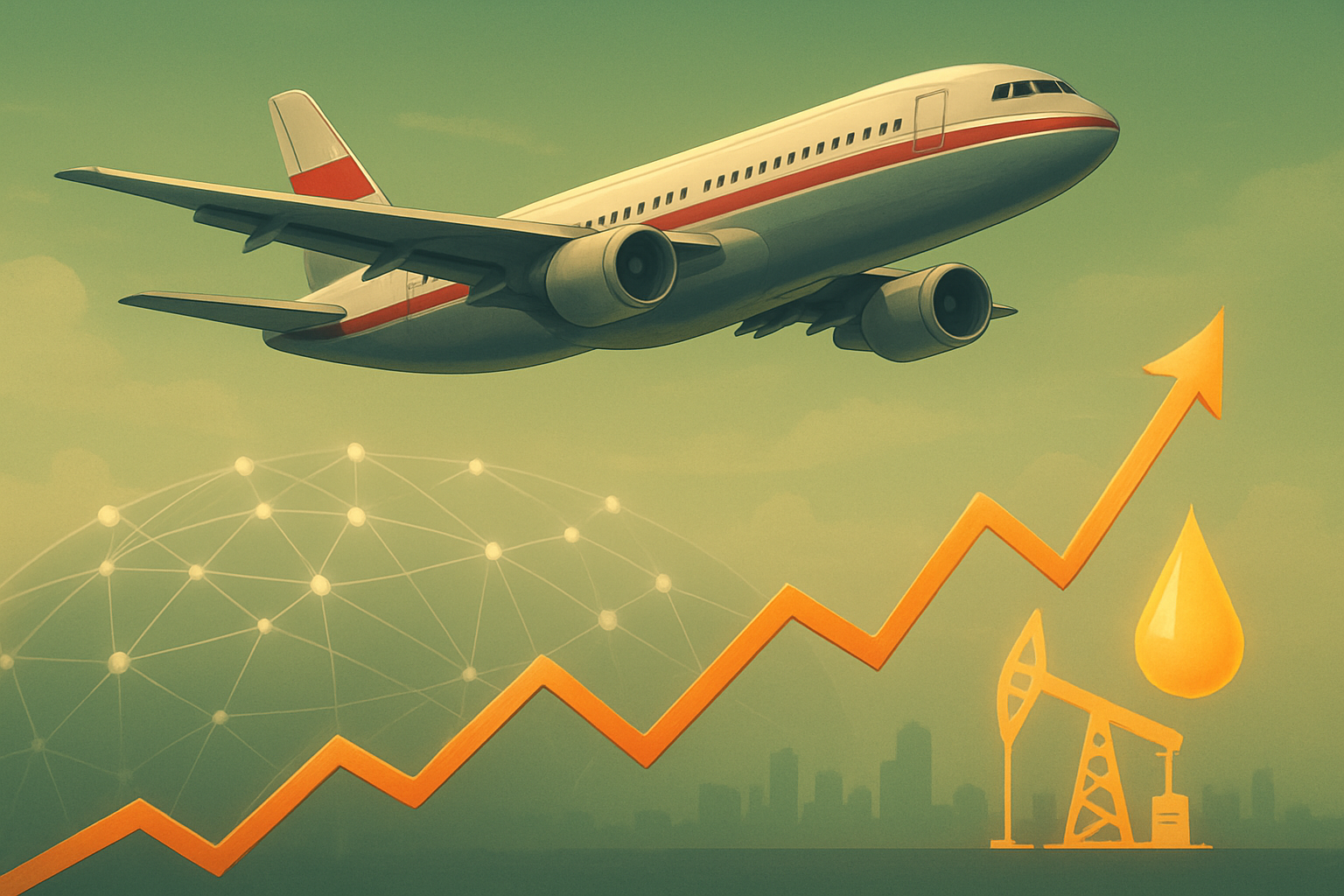
- The Energy Pivot: After a period of stability, oil prices spiked toward $170/barrel in early 2026 due to geopolitical tensions in the Middle East. This has forced United to cut "off-peak" capacity (Tuesday/Wednesday flights) to protect margins.
Risks and Challenges
Despite the strong fundamentals, United faces significant risks:
- Fuel Sensitivity: As a high-capacity carrier, United is acutely sensitive to jet fuel prices. The 2026 energy spike is the single biggest threat to its $12.00+ EPS guidance.
- Regulatory Scrutiny: Following a series of highly publicized maintenance incidents in 2024, United remains under a "microscope" from the FAA. A February 2026 federal audit criticized the FAA’s oversight of United as "insufficient," which could lead to more stringent (and costly) inspection protocols.
- Labor Relations: While a new contract with pilots is in place, United is still in the final, tense stages of negotiations with its flight attendants (AFA). A failure to reach a deal could lead to operational disruptions or significantly higher labor costs.
Opportunities and Catalysts
- Summer 2026 Expansion: United recently announced 14 new international routes for the upcoming summer season, including unique destinations like Santiago de Compostela, Spain. This "first-mover" advantage in niche international markets drives high margins.
- MileagePlus Overhaul: Effective April 2, 2026, United is overhauling its loyalty program to favor high-spending cardholders. This move is expected to drive a surge in co-branded credit card acquisitions, providing a boost to high-margin service revenue.
- Stock Buybacks: With debt levels now manageable, analysts are speculating that United may announce its first post-pandemic share repurchase program in late 2026.
Investor Sentiment and Analyst Coverage
Wall Street is broadly bullish on United. Currently, 18 out of 24 analysts covering the stock maintain a "Buy" or "Strong Buy" rating. The consensus view is that United is the "best way to play the global travel boom," with a valuation (currently trading at 9x forward earnings) that remains attractive compared to the broader tech-heavy indices. Institutional ownership remains high, with giants like Vanguard and BlackRock increasing their stakes in Q4 2025.
Regulatory, Policy, and Geopolitical Factors
Geopolitics remain the "X-factor" for United. Continued instability in Eastern Europe and the Middle East not only affects fuel prices but also forces the rerouting of lucrative long-haul flights, increasing flight times and costs. Domestically, the Department of Transportation (DOT) has become more aggressive regarding passenger rights and "junk fees." United has stayed ahead of this by being the first to eliminate change fees on most tickets, but the threat of new price-transparency mandates remains a concern for ancillary revenue.
Conclusion
United Airlines enters mid-2026 as a formidable engine of the global economy. Its "United Next" strategy has largely succeeded in modernizing the fleet and capturing the lucrative premium traveler. With record revenues and a disciplined approach to debt, the company’s structural story is the strongest it has been in decades.
However, investors must weigh this growth against the inherent volatility of the airline sector. The current fuel price surge and the pending flight attendant contract are real near-term hurdles. For those looking for a high-beta play on global connectivity and the "premiumization" of travel, UAL remains a compelling candidate, provided one can stomach the turbulence that inevitably comes with the territory.
This content is intended for informational purposes only and is not financial advice.