
Tag: AMZN

  • The \$180 Billion Gamble: Amazon’s AI Shock and the End of the “Efficiency Era”

    The \$180 Billion Gamble: Amazon’s AI Shock and the End of the “Efficiency Era”

    Date: February 6, 2026
    Ticker: Amazon.com, Inc. (NASDAQ: AMZN)

    Introduction

    On the morning of February 6, 2026, the market sent a clear and jarring message to Seattle: the "Efficiency Era" is officially over. Amazon.com, Inc. (NASDAQ: AMZN), a company that spent the better part of 2024 and 2025 aggressively trimming fat and regionalizing its logistics network, has pivoted back into a state of hyper-capital intensity. Following a Q4 2025 earnings report that missed on both top-line revenue and net margins, the stock plummeted nearly 9% in early trading.

    The primary culprit was not a lack of growth, but rather the sheer scale of the bill for the future. CEO Andy Jassy stunned analysts by announcing a 2026 capital expenditure (Capex) guidance of $175 billion to $185 billion—a figure that exceeds the annual GDP of many sovereign nations. The market’s reaction reflects a growing "show-me-the-ROI" sentiment among investors who are beginning to fear that the generative AI arms race may be a bottomless pit for cash flow.

    Historical Background

    Founded in 1994 by Jeff Bezos as an online bookstore, Amazon has undergone more fundamental transformations than perhaps any other company in history. From the "Get Big Fast" mantra of the late 90s to the invention of the modern cloud via Amazon Web Services (AWS) in 2006, the company’s history is defined by its "Day 1" philosophy—a commitment to long-term thinking at the expense of short-term profits.

    The transition from Bezos to Andy Jassy in 2021 marked a shift toward operational discipline. Jassy inherited a company that had overexpanded during the COVID-19 pandemic and spent the next three years correcting that course. By late 2024, Amazon had achieved record operating margins by optimizing its fulfillment network and cutting 27,000 corporate roles. However, as of today, the narrative has shifted again. Amazon is no longer just a retailer or a cloud provider; it is an infrastructure titan attempting to own the entire stack of the artificial intelligence economy.

    Business Model

    Amazon’s business model is a complex "flywheel" of four primary segments:

    1. Amazon Web Services (AWS): The company’s crown jewel and primary profit center. AWS provides on-demand cloud computing platforms and APIs. In 2025, it successfully moved from providing simple storage and compute to offering specialized AI hardware (Trainium/Inferentia) and software (Bedrock).
    2. Online Stores & Third-Party (3P) Services: The core e-commerce engine. While first-party sales remain huge, the higher-margin 3P services—where Amazon takes a cut of sales and provides fulfillment (FBA)—now account for over 60% of units sold.
    3. Advertising: A high-margin juggernaut that has become the company's third pillar. Amazon leverages its massive trove of consumer data to sell highly effective sponsored products and Prime Video ads.
    4. Subscription Services: Primarily Amazon Prime, which serves as the "glue" for the ecosystem, ensuring customer loyalty through fast shipping, streaming, and groceries.

    Stock Performance Overview

    Over the last decade, AMZN has been a cornerstone of the "Magnificent Seven," though its path has been volatile:

    • 10-Year Performance: Investors who held from 2016 have seen gains of approximately 750%, vastly outperforming the S&P 500.
    • 5-Year Performance: The stock struggled with a "lost period" between 2021 and 2022 but surged in 2023-2024 as the AI narrative took hold, rising roughly 110% in that window.
    • 1-Year Performance: Entering 2026, the stock was up 18% year-over-year, hitting an all-time high of $254 in November 2025. However, today’s 9% drop has wiped out nearly six months of gains, bringing the ticker back to the $170 range.

    Financial Performance

    The Q4 2025 earnings report revealed a company in the midst of a massive transition.

    • Revenue: $182.4 billion, a 9% increase year-over-year, but below the $185.5 billion consensus.
    • AWS Growth: AWS grew at 17%, a deceleration from the 19% seen in Q3, suggesting that competitors like Microsoft Azure are successfully chipping away at Amazon’s lead in the AI training space.
    • Operating Income: $12.1 billion, which missed estimates as the cost of building out the "Project Rainier" AI clusters began to hit the bottom line.
    • The Capex Bombshell: The guidance of $175B–$185B for 2026 is the largest single-year investment in corporate history. For context, this is nearly double Amazon’s total Capex from just three years ago.

    Leadership and Management

    Andy Jassy’s leadership is currently under the microscope. While he earned high marks for the "Efficiency Era" of 2023-2024, his current strategy is a high-stakes bet on vertical integration. Jassy’s "manager-to-contributor" ratio reduction and his flattening of the corporate hierarchy were designed to make Amazon "act like a startup" again. However, the decision to spend $180 billion in a single year suggests a "Bet the House" mentality that has unsettled the more conservative elements of the institutional investor base. CFO Brian Olsavsky has defended the spend, citing "unprecedented demand" for GenAI inference, but the lack of immediate revenue offsets in the Q4 report has created a credibility gap.

    Products, Services, and Innovations

    The focus of Amazon’s innovation is now centered on the "Three-Tier AI Stack":

    • Infrastructure: The launch of Trainium3 chips in late 2025 was intended to reduce reliance on Nvidia. Early benchmarks show a 40% cost-to-performance improvement for training large language models.
    • Bedrock: This platform allows customers to build AI apps using models from Anthropic, Meta, and even OpenAI (following the 2025 partnership).
    • Project Kuiper: Amazon’s satellite internet constellation. While often overshadowed by AI, Kuiper represents a multi-billion dollar bet on global connectivity that is finally nearing commercial launch in late 2026.
    • Rufus & Alexa+: The AI-powered shopping assistant and the "agentic" version of Alexa have seen high engagement, but monetization remains in the experimental phase.

    Competitive Landscape

    Amazon faces a "war on all fronts":

    • In Cloud: Microsoft (NASDAQ: MSFT) and Google (NASDAQ: GOOGL) have used their first-mover advantage in LLMs (ChatGPT and Gemini) to capture enterprise mindshare.
    • In Retail: The rise of Temu and TikTok Shop has forced Amazon to lower prices and increase marketing spend, squeezing retail margins.
    • In Logistics: Walmart (NYSE: WMT) has leveraged its physical store footprint to offer a competitive grocery and rapid-delivery service that rivals Prime in many suburban markets.

    Industry and Market Trends

    The broader industry is moving from "Training" to "Inference." In 2024 and 2025, companies spent billions training models. In 2026, the focus is on running those models efficiently at scale. Amazon’s massive Capex is a bet that inference—the actual use of AI by consumers and businesses—will require a level of data center capacity that only a few companies on earth can provide. Furthermore, the "regionalization" of supply chains continues to be a macro driver, as Amazon moves closer to a "same-hour" delivery model in major metro areas.

    Risks and Challenges

    • Capital Overhang: The $180 billion Capex plan threatens to turn Free Cash Flow (FCF) negative for the first time in years, potentially leading to credit rating pressure.
    • Regulatory Scrutiny: The FTC’s ongoing "Big Tech" antitrust suit remains a dark cloud. Any forced divestiture of AWS would fundamentally break the Amazon flywheel.
    • Execution Risk: Building data centers and launching satellites (Kuiper) are physically intensive and prone to delays. Any slippage in the Kuiper launch timeline or Trainium3 yields could be catastrophic.

    Opportunities and Catalysts

    • The OpenAI Pivot: The landmark 2025 agreement to host OpenAI workloads on AWS has the potential to bring a massive influx of high-margin traffic to the cloud segment.
    • Prime Video Monetization: Advertising on Prime Video is still in its early innings. If Amazon can successfully transition its 200 million+ Prime members into an ad-supported tier, the revenue potential is billions in high-margin growth.
    • Supply Chain as a Service: Amazon is increasingly opening its logistics network to non-Amazon sellers (Buy with Prime), turning a cost center into a massive revenue generator.

    Investor Sentiment and Analyst Coverage

    Wall Street is currently divided. Bullish analysts (e.g., Goldman Sachs, JP Morgan) maintain "Buy" ratings, arguing that the Capex is a "generational land grab" that will secure Amazon's dominance for 20 years. Conversely, bearish voices are growing, with some comparing the current AI spend to the overcapacity of the fiber-optic boom in 2000. Institutional ownership remains high (~60%), but today’s sell-off was fueled by heavy volume from hedge funds that are rotating into "value" sectors as the AI trade becomes increasingly expensive.

    Regulatory, Policy, and Geopolitical Factors

    The geopolitical landscape for 2026 is fraught with risk. The "Chip Wars" with China have made the procurement of specialized components more expensive. Domestically, the debate over AI safety and copyright could lead to new regulations that increase the compliance costs for AWS. Furthermore, the European Union's Digital Markets Act (DMA) continues to challenge Amazon's ability to self-preference its products, potentially capping the growth of its private-label brands.

    Conclusion

    Amazon’s Q4 earnings and the subsequent stock price decline on February 6, 2026, mark a pivotal moment. The company has moved beyond the "low-hanging fruit" of operational efficiency and is now asking investors to fund a massive, high-risk infrastructure build-out. For the long-term investor, the thesis remains that Amazon is the only company with the scale to win the AI infrastructure, logistics, and retail trifecta. However, for the next 12 to 18 months, the stock is likely to remain under pressure as the market waits for the first signs of a return on its $180 billion investment. Investors should watch AWS operating margins and the progress of Project Kuiper as the primary indicators of whether this gamble is paying off or if Amazon has finally found a project too big even for its massive balance sheet.


    This content is intended for informational purposes only and is not financial advice.

  • Amazon 2026: The AI-Driven Reacceleration of a Global Titan

    Amazon 2026: The AI-Driven Reacceleration of a Global Titan

    As of February 5, 2026, Amazon.com Inc. (NASDAQ: AMZN) stands at a pivotal crossroads between its legacy as the "Everything Store" and its future as an AI-first infrastructure titan. Following a decade of aggressive expansion and a post-pandemic period of rigorous cost-optimization, Amazon has entered a new era characterized by high-margin reacceleration. While the company still dominates global e-commerce, the narrative in early 2026 has shifted decisively toward its dual engines of growth: Amazon Web Services (AWS) and a burgeoning digital advertising business. With a market capitalization comfortably north of $2 trillion, Amazon remains a central barometer for both consumer health and enterprise technology spending.

    Historical Background

    Founded in 1994 by Jeff Bezos as an online bookstore operating out of a garage in Bellevue, Washington, Amazon’s trajectory has been defined by "Day 1" thinking—a philosophy prioritizing long-term market leadership over short-term profits. After surviving the dot-com bust, the company pioneered the e-commerce marketplace model, introduced the Prime loyalty program in 2005, and revolutionized the technology world with the launch of AWS in 2006.

    The 2010s were marked by the acquisition of Whole Foods, the rise of the Alexa ecosystem, and a massive logistics build-out that challenged traditional carriers like UPS and FedEx. In 2021, founder Jeff Bezos stepped down as CEO, handing the reins to Andy Jassy, the former head of AWS. Jassy’s tenure has been defined by a transition from "growth at all costs" to "operational excellence," navigating the inflationary pressures of 2022-2023 and ultimately positioning the company to capitalize on the Generative AI boom of 2024 and 2025.

    Business Model

    Amazon operates a multi-faceted business model that leverages a "flywheel" effect, where each segment drives traffic and data to the others:

    • Online Stores & Marketplace: The core retail engine. Third-party (3P) sellers now account for over 60% of units sold, allowing Amazon to collect high-margin commissions and fulfillment fees (FBA).
    • Amazon Web Services (AWS): The world’s leading cloud provider. AWS contributes the vast majority of Amazon’s operating income, subsidizing lower-margin retail operations and funding R&D.
    • Advertising: Amazon’s fastest-growing high-margin segment. By selling "sponsored products" and video ads on Prime Video, Amazon has become the third-largest digital ad platform globally.
    • Subscription Services: Driven primarily by Amazon Prime, which provides a recurring revenue stream and ensures customer stickiness across shipping, streaming, and groceries.
    • Physical Stores: Primarily Whole Foods Market, which serves as a high-end grocery footprint and a return hub for the e-commerce network.

    Stock Performance Overview

    As of February 2026, AMZN shares are trading near $233.00, reflecting a period of robust recovery after the volatility of the early 2020s.

    • 1-Year Performance: The stock has climbed approximately 25% over the past 12 months, driven by the reacceleration of AWS and margin expansion in the retail division.
    • 5-Year Performance: Looking back to February 2021, the stock has gained roughly 40%. This period included a deep "reset" in 2022 as the pandemic-era surge cooled, followed by a relentless climb back to new all-time highs in 2025.
    • 10-Year Performance: Since February 2016, Amazon has been one of the market's greatest compounders, with shares up nearly 800% (split-adjusted), outperforming the S&P 500 by a massive margin.

    Financial Performance

    Amazon’s fiscal year 2025 was a record-breaking campaign. The company surpassed the $700 billion annual revenue milestone for the first time.

    • AWS Momentum: In Q3 2025, AWS growth accelerated to 20% YoY, silencing critics who feared cloud saturation. By early 2026, AWS is on a $110 billion annual revenue run rate.
    • Margins: Consolidated operating margins expanded to 11.8% in early 2025, the highest in company history, though they cooled slightly to ~11% by February 2026 due to aggressive AI infrastructure spending.
    • Capital Expenditures: In 2025, Amazon deployed a staggering $125 billion in CapEx, primarily directed toward Nvidia-powered data centers and the rollout of its satellite constellation.
    • Valuation: AMZN currently trades at a Forward P/E of approximately 38x, which analysts view as reasonable given the projected 20%+ earnings CAGR through 2028.

    Leadership and Management

    Under CEO Andy Jassy, Amazon has become a leaner, more disciplined organization. Jassy has successfully dismantled the "bureaucracy" that he felt slowed the company during the late Bezos years.

    Key leadership developments in early 2026 include:

    • Dharmesh Mehta: Named as Jassy’s "Technical Advisor" (TA) in early 2026, a role traditionally signaling a future C-suite star.
    • Amit Agarwal: Now overseeing the Worldwide Selling Partner Services, Agarwal is tasked with integrating AI into the seller experience to maintain Amazon's lead over low-cost rivals like Temu.
    • Workplace Strategy: Jassy’s controversial 5-day in-office mandate and recent rounds of 16,000 corporate layoffs in early 2026 reflect a "back-to-basics" cultural push toward high-intensity execution.

    Products, Services, and Innovations

    Innovation at Amazon in 2026 is concentrated in three areas:

    1. Generative AI: Amazon’s Bedrock platform and its custom Trainium3 chips have positioned it as a lower-cost alternative to Microsoft/Azure for enterprise AI.
    2. Alexa+: A newly launched, subscription-based ($7/month) version of Alexa powered by a large language model (LLM), capable of complex multi-step reasoning and home automation.
    3. Logistics Robotics: The deployment of Proteus (fully autonomous floor robots) across 50% of fulfillment centers has reduced unit processing costs by an estimated 15% since 2024.

    Competitive Landscape

    Amazon faces a multi-front war in 2026:

    • Cloud: Microsoft (MSFT) and Alphabet (GOOGL) continue to compete fiercely for AI workloads. While AWS remains the leader by market share (~31%), Microsoft’s OpenAI partnership remains a potent threat in the SaaS layer.
    • Retail: Walmart (WMT) has significantly narrowed the gap in delivery speed, while PDD Holdings (PDD) (owner of Temu) and Shein challenge Amazon on price for unbranded goods.
    • Streaming: Netflix (NFLX) and Disney (DIS) remain rivals for consumer attention, though Amazon’s exclusive sports rights (NFL, NBA) have bolstered Prime Video’s value proposition.

    Industry and Market Trends

    Two macro trends are currently shaping Amazon's outlook:

    • The AI Infrastructure Cycle: We are in the "build" phase of the AI revolution. Amazon is betting heavily that the long-term demand for compute will justify the current record-high levels of capital expenditure.
    • Regionalized Logistics: Amazon has shifted from a national fulfillment model to a regional one, placing inventory closer to customers. This trend toward "instant gratification" is becoming the industry standard, forcing competitors to spend billions to catch up.

    Risks and Challenges

    Despite its dominance, Amazon faces significant headwinds:

    • Regulatory Scrutiny: The FTC's long-running antitrust lawsuit continues to hang over the company, with potential remedies including the spin-off of AWS or changes to how 3P sellers are treated.
    • The CapEx Burden: The $125B+ annual spend on AI and satellites puts pressure on Free Cash Flow (FCF). If the AI ROI (Return on Investment) takes longer than expected to materialize, investors may punish the stock.
    • Labor Relations: Continued friction with warehouse unions and the fallout from the 5-day RTO mandate could impact operational stability and talent retention.

    Opportunities and Catalysts

    • Amazon Leo (Satellite Internet): Formerly Project Kuiper, this initiative aims to provide global broadband. Despite rocket shortages delaying the full constellation until 2028, the first residential beta tests in 2026 represent a massive long-term TAM (Total Addressable Market) expansion.
    • Healthcare: Amazon Clinic and One Medical are slowly integrating into the Prime ecosystem, creating a "Prime Health" vertical that could disrupt the pharmacy and primary care sectors.
    • International AWS: Emerging markets in Southeast Asia and the Middle East are seeing triple-digit growth in cloud adoption, providing a long runway for AWS as domestic markets mature.

    Investor Sentiment and Analyst Coverage

    Wall Street remains overwhelmingly bullish on AMZN in early 2026. Approximately 90% of analysts carry a "Buy" or "Strong Buy" rating.

    • Consensus Price Target: $296.37, suggesting ~27% upside from current levels.
    • Institutional Sentiment: Large hedge funds have maintained significant positions, viewing Amazon as a "staple tech" play—a company that benefits from both discretionary spending and enterprise IT budgets.

    Regulatory, Policy, and Geopolitical Factors

    Geopolitically, Amazon is navigating a complex landscape:

    • EU Digital Markets Act (DMA): Amazon has been forced to adjust its marketplace and advertising practices in Europe to comply with new "gatekeeper" rules, which could provide a blueprint for US regulators.
    • Supply Chain Resilience: To mitigate risks associated with China, Amazon has diversified its private-label manufacturing into Vietnam, India, and Mexico—a move that has become critical amid ongoing trade tensions.

    Conclusion

    Amazon in 2026 is no longer just a retailer; it is the fundamental infrastructure layer of the digital economy. While the company faces the highest capital requirements in its history and significant regulatory pressure, its "three-pillar" strategy (Retail, AWS, and Advertising) provides a diversified earnings base that few peers can match. For investors, the key metric to watch over the next 12 months will be the "Return on AI"—specifically, how effectively the massive CapEx investments translate into sustained AWS growth and higher retail efficiency. In the high-stakes game of 2026 technology leadership, Amazon appears uniquely positioned to remain the house that always wins.


    This content is intended for informational purposes only and is not financial advice.

  • Amazon 2026: The Efficiency Engine Meets the AI Arms Race

    Amazon 2026: The Efficiency Engine Meets the AI Arms Race

    Date: January 28, 2026

    Introduction

    As of early 2026, Amazon.com, Inc. (NASDAQ: AMZN) stands at a critical crossroads. Once a disruptive online bookseller, the company has evolved into a global titan of commerce, cloud computing, and artificial intelligence. Today, however, the narrative is no longer just about expansion, but about efficiency and vertical integration. Under the leadership of CEO Andy Jassy, Amazon has transitioned from the "growth at all costs" mentality of the pandemic era to a "lean and mean" operational model. With its shares trading near $245 and a massive $125 billion capital expenditure program focused on generative AI infrastructure, Amazon is currently the focal point of a debate between long-term visionaries and short-term margin hawks. This deep dive explores how the Seattle-based giant is reinventing itself for the second half of the decade.

    Historical Background

    Founded in 1994 by Jeff Bezos in a Bellevue garage, Amazon’s history is a case study in relentless "Day 1" thinking. After surviving the dot-com bubble, the company pivoted from selling books and music to becoming the "Everything Store." The 2005 launch of Amazon Prime fundamentally changed consumer behavior by making two-day shipping a standard expectation.

    However, the most significant transformation occurred in 2006 with the launch of Amazon Web Services (AWS). This move effectively turned an internal IT cost center into the world’s most profitable cloud computing provider. Over the following two decades, Amazon expanded into hardware (Kindle, Echo), streaming (Prime Video), and high-end grocery (Whole Foods). In 2021, Bezos stepped down as CEO, handing the reins to Andy Jassy, the architect of AWS, marking a new chapter focused on operational regionalization and the AI arms race.

    Business Model

    Amazon operates a multi-faceted business model that leverages high-margin services to subsidize and support its lower-margin retail operations. The primary revenue streams include:

    • Online Stores & Third-Party Seller Services: The core marketplace where Amazon earns through direct sales and commissions/fulfillment fees from third-party sellers (who now account for over 60% of unit sales).
    • Amazon Web Services (AWS): The company’s primary profit engine, providing cloud storage, computing power, and AI tools to enterprises, startups, and government agencies.
    • Advertising Services: A high-margin growth lever that allows brands to reach customers directly on the Amazon search results page.
    • Subscription Services: Revenue from Prime memberships, music, and digital books.
    • Physical Stores: Primarily Whole Foods Market and Amazon Fresh.

    Stock Performance Overview

    Amazon’s stock performance has been a story of resilience and long-term compounding.

    • 1-Year Performance: Over the past year (Jan 2025 – Jan 2026), AMZN has seen a modest 4% gain. While it lagged the broader S&P 500's 16% rise, the stock's consolidation was seen by many as a "digestion period" following the massive infrastructure investments and management layoffs.
    • 5-Year Performance: With a return of roughly 51%, Amazon’s five-year trajectory reflects the volatility of the post-pandemic "hangover" followed by the AI-led recovery of 2024.
    • 10-Year Performance: The long-term view remains spectacular, with a ~738% total return. Investors who held through the 2022 tech rout have been rewarded as the company shifted from a pure-play retailer to a cloud and advertising dominant force.

    Financial Performance

    In the third quarter of 2025, Amazon reported revenue of $180.2 billion, a 13.4% year-over-year increase. The highlight of the report was the re-acceleration of AWS, which grew 20.2% to $33.0 billion as enterprises moved beyond AI experimentation into full production mode.

    Operating margins have seen a significant "clean" expansion. While the reported margin was 9.7%, it included $4.3 billion in one-time charges related to FTC settlements and severance. Adjusted for these, the operating margin sat at a robust 12.0%. Free cash flow has turned sharply positive compared to the negative levels seen in 2022, though the $125 billion AI CapEx budget remains a point of scrutiny for valuation models. The company is heading into its Q4 earnings (scheduled for early February 2026) with consensus estimates predicting revenue of $211.3 billion.

    Leadership and Management

    CEO Andy Jassy has successfully moved Amazon into a post-Bezos era defined by "Project Dawn." This initiative focuses on stripping away corporate bureaucracy. In a bold move, Jassy eliminated approximately 30,000 corporate roles in late 2025 and early 2026 to flatten the management structure.

    The implementation of a strict 5-day in-office mandate has been controversial but is framed by leadership as essential to maintaining the "Day 1" innovation culture. The board of directors has also been "AI-shored," with the 2024 addition of AI luminary Andrew Ng, signaling a shift in governance toward technical expertise in machine learning and silicon design.

    Products, Services, and Innovations

    Innovation at Amazon has shifted from consumer gadgets to back-end infrastructure.

    • Custom Silicon: To reduce dependency on Nvidia, AWS has scaled its Trainium and Inferentia chips. The newly launched Trainium3 (3nm technology) promises 4.4x performance gains for training large language models.
    • AWS Bedrock & Nova: These platforms allow developers to access a variety of AI models. The 2025 release of the "Nova 2" suite offers native multimodal capabilities (voice, text, and image) that rival those of OpenAI and Google.
    • Amazon Haul: A new retail initiative launched in late 2024 to compete with ultra-low-cost competitors like Temu, offering items under $20 to protect the core Prime demographic from price-sensitive attrition.

    Competitive Landscape

    Amazon faces a two-front war:

    1. Cloud Computing: AWS (30% market share) continues to lead but faces fierce competition from Microsoft (NASDAQ: MSFT) and Alphabet (NASDAQ: GOOGL). While Azure is growing faster due to its tight OpenAI integration, Amazon is competing on "price-performance" through its custom hardware.
    2. Retail: Walmart (NYSE: WMT) remains a formidable foe in the US, leveraging its 4,600 stores for grocery dominance. Meanwhile, social commerce threats like TikTok Shop and discounters like Temu have forced Amazon to rethink its discovery-based shopping experience.

    Industry and Market Trends

    The current macro environment is dominated by the "AI Infrastructure Arms Race." Companies are no longer asking if they should use AI, but how to do it cost-effectively. Additionally, the retail sector is seeing a "barbell" trend: consumers are either opting for ultra-convenience (Prime Same-Day) or ultra-low price (Temu/Amazon Haul). Supply chain regionalization—splitting the US into eight self-sufficient hubs—has allowed Amazon to fulfill 76% of orders within-region as of early 2026, drastically reducing the cost per package.

    Risks and Challenges

    • Antitrust Litigation: The FTC’s lawsuit, set for trial in October 2026, poses a structural risk. Allegations of "Project Nessie" price manipulation and coercive seller tactics could lead to forced divestitures or significant changes to the marketplace model.
    • CapEx Fatigue: The $125 billion spend on AI infrastructure has yet to show a clear ROI beyond cloud growth, leading to investor anxiety about "dead weight" assets if the AI boom cools.
    • Labor Relations: While management has flattened corporate layers, labor organizing at fulfillment centers continues to be a persistent operational and reputational challenge.

    Opportunities and Catalysts

    • Advertising Expansion: Amazon’s advertising business is operating at margins above 50%. With the integration of ads into Prime Video and improved AI-driven targeting, this remains a massive profit lever.
    • Health and Pharmacy: Amazon Pharmacy has been gaining traction, and further integration with Prime could disrupt the traditional CVS/Walgreens duopoly.
    • Project Kuiper: Amazon’s satellite internet initiative is nearing commercial launch, potentially opening a massive new global recurring revenue stream similar to SpaceX’s Starlink.

    Investor Sentiment and Analyst Coverage

    Wall Street remains overwhelmingly bullish. Of the 71 analysts covering the stock, 67 maintain "Buy" or "Strong Buy" ratings. The average price target of $293 suggests a 20% upside from current levels. Institutional sentiment is high, though hedge funds have expressed caution regarding the high capital expenditure intensity in the short term. Retail chatter often centers on the "Rufus" AI shopping assistant and whether it can truly modernize the search experience.

    Regulatory, Policy, and Geopolitical Factors

    In addition to the US FTC case, the EU’s Digital Markets Act (DMA) continues to squeeze Amazon’s margins in Europe. There are ongoing investigations into whether AWS should be designated a "gatekeeper," which would mandate more open interoperability with rival cloud services. Geopolitically, Amazon’s shift of its supply chain away from China toward India and Southeast Asia is a long-term strategic move to mitigate trade tensions and "de-risk" its fulfillment network.

    Conclusion

    Amazon in 2026 is a leaner, more technically integrated version of its former self. By dismantling its national logistics model and vertically integrating its AI hardware, the company is preparing for a future where it is as much a semiconductor and infrastructure firm as it is a retailer. While the looming FTC trial and massive AI spending represent significant headwinds, Amazon’s dominant market share in cloud and its expanding high-margin advertising business provide a formidable safety net. For investors, the key metric to watch over the next 12 months will be the "AI ROI"—whether the massive capital investments translate into sustained 20%+ growth for AWS.


    This content is intended for informational purposes only and is not financial advice.

  • The Infrastructure of Everything: A Deep Dive into Amazon’s AWS and AI Strategy for 2026

    The Infrastructure of Everything: A Deep Dive into Amazon’s AWS and AI Strategy for 2026

    As of January 26, 2026, Amazon.com, Inc. (NASDAQ: AMZN) stands not just as a global retailer, but as the foundational plumbing of the digital economy. Once a "store for everything," Amazon has pivoted its identity toward becoming the "infrastructure for everything." With a market capitalization hovering near $2.63 trillion, the company is currently at a critical crossroads. After a multi-year effort to streamline its sprawling logistics network and a massive multi-billion-dollar bet on Generative AI, Amazon is re-emerging as the dominant force in high-performance cloud computing. This deep dive explores how Amazon’s pivot to custom silicon and massive infrastructure investments is reshaping its future, even as it navigates a complex regulatory landscape and intensifying competition from traditional tech rivals.

    Historical Background

    Founded in 1994 by Jeff Bezos in a Bellevue, Washington garage, Amazon’s journey from an online bookseller to a trillion-dollar titan is the definitive story of the internet age. The company’s early years were defined by "get big fast," a strategy that prioritized market share over immediate profits—a philosophy famously encapsulated in Bezos’s 1997 Letter to Shareholders.

    The most significant transformation in Amazon’s history occurred in 2006 with the launch of Amazon Web Services (AWS). What began as a way to rent out spare server capacity evolved into the backbone of the modern web. In the 2010s, Amazon expanded its footprint through the acquisition of Whole Foods Market and the relentless growth of its Prime subscription service. In 2021, the torch was passed from Bezos to Andy Jassy, the former head of AWS, signaling a shift in focus toward the cloud and operational efficiency. By 2026, the "Jassy Era" has been defined by a brutal flattening of corporate layers and a focus on "high-margin" infrastructure.

    Business Model

    Amazon’s business model is an integrated ecosystem driven by three primary engines:

    1. Online Stores and Third-Party Seller Services: The core retail engine, which has shifted toward a high-margin "marketplace" model where third-party sellers pay for fulfillment (FBA) and advertising.
    2. Amazon Web Services (AWS): The company’s primary profit driver, providing compute, storage, and AI services to enterprises, governments, and startups. AWS provides the majority of Amazon’s operating income, subsidizing the capital-intensive retail operations.
    3. Advertising Services: A burgeoning powerhouse that utilizes first-party shopper data to sell high-intent placements. By 2026, advertising has become a $60 billion+ annual revenue stream with margins that rival AWS.

    This "flywheel" effect—where retail traffic drives advertising, which funds logistics, which supports Prime, which feeds data back into the system—remains the most robust ecosystem in global commerce.

    Stock Performance Overview

    Amazon has been one of the most rewarding long-term investments in history, though not without periods of volatility.

    • 10-Year View (2016–2026): Investors who held AMZN for the last decade have seen a Compound Annual Growth Rate (CAGR) of approximately 27%. A $10,000 investment in 2016 would be worth over $100,000 today.
    • 5-Year View (2021–2026): This period included the post-pandemic slump where the stock dipped to ~$82 in late 2022. However, shares recovered spectacularly, hitting an all-time high of $254.00 in November 2025.
    • 1-Year View: Over the last 12 months, AMZN has seen a 12% gain, slightly underperforming the broader AI-driven indices due to the massive capital expenditures that have temporarily weighed on free cash flow.

    On June 6, 2022, Amazon executed a 20:1 stock split, which drastically increased retail participation in the stock. As of late January 2026, shares trade at $239.17.

    Financial Performance

    Amazon’s financials in 2025 showcased a company that has successfully "regionalized" its logistics.

    • Revenue: Fiscal 2025 revenue reached an estimated $710 billion, up 11% year-over-year.
    • Operating Margins: A key highlight is the expansion of operating margins to 10.8%, driven by logistics efficiency and the growth of AWS.
    • Net Income: Net income for 2025 hit a record $76.5 billion, a testament to Andy Jassy’s "lean efficiency" initiatives.
    • CapEx: In a staggering move, Amazon spent roughly $125 billion in capital expenditures in 2025, most of which was directed toward AI chips, data centers, and the "Project Kuiper" satellite constellation.

    Leadership and Management

    Under CEO Andy Jassy, the corporate culture of Amazon has shifted from "expansion at all costs" to "the world’s largest startup." Jassy has been aggressive in removing the "bureaucracy tax," overseeing the removal of over 40,000 corporate roles between 2024 and early 2026 to flatten the management structure.

    The leadership team, often referred to as the "S-Team," remains one of the most stable in tech, though it has seen some turnover as younger veterans take over key roles in AI and Robotics. The board continues to prioritize long-term "Day 1" thinking, though they face increasing pressure from ESG-focused institutional investors regarding labor practices.

    Products, Services, and Innovations

    Innovation at Amazon is currently focused on the "AI Stack."

    • AWS Bedrock: A service that allows companies to build AI applications using multiple foundational models.
    • Custom Silicon: Amazon’s secret weapon. The Trainium3 chip, released in late 2025, offers a 4x performance boost for AI training over its predecessor, allowing Amazon to reduce its reliance on third-party GPU providers like Nvidia.
    • Amazon Nova: Amazon’s proprietary frontier LLMs that power everything from an upgraded "Alexa" to enterprise coding assistants.
    • DeepFleet Robotics: A new generation of autonomous warehouse robots that can navigate complex, multi-story fulfillment centers with minimal human intervention.

    Competitive Landscape

    Amazon faces a multi-front war:

    • Cloud: Microsoft (NASDAQ: MSFT) and Google (NASDAQ: GOOGL) are fierce rivals. While AWS maintains a 30% market share, Microsoft’s integration with OpenAI remains a significant threat in the enterprise space.
    • Retail: In the US, Walmart (NYSE: WMT) has narrowed the e-commerce gap, while Chinese players like Temu and Shein have challenged Amazon’s low-cost dominance.
    • AI: The competition for AI talent and compute power is at an all-time high, with Meta (NASDAQ: META) and Apple (NASDAQ: AAPL) also entering the fray with "on-device" AI.

    Industry and Market Trends

    The "Agentic AI" trend is the defining macro driver of 2026. Businesses are moving away from simple chatbots toward "AI Agents" that can autonomously handle supply chain management, customer service, and software development. Amazon is positioning AWS to be the primary factory where these agents are built and hosted. Additionally, the shift toward "sovereign cloud"—where countries require data to be stored and processed locally—is driving Amazon to build smaller, localized data centers globally.

    Risks and Challenges

    Despite its dominance, Amazon faces significant headwinds:

    • The "CapEx Drag": The $125 billion annual investment in AI infrastructure is massive. If AI adoption slows or fails to monetize at the expected rate, Amazon could face a significant "return on investment" crisis.
    • Regulatory Scrutiny: The FTC, under long-standing antitrust pressure, continues to investigate Amazon’s "Buy Box" and third-party seller practices.
    • Labor Relations: As Amazon automates more of its workforce with robotics, it faces ongoing friction with labor unions and activists regarding the future of work and employee safety.

    Opportunities and Catalysts

    • Custom Silicon Margins: As more AWS customers migrate to Trainium and Inferentia chips, Amazon’s margins could expand significantly as they bypass the "Nvidia tax."
    • OpenAI Partnership: The late-2025 agreement for OpenAI to utilize AWS infrastructure for specific workloads is a massive validation of AWS’s scalability.
    • Project Kuiper: Amazon’s satellite internet project is expected to begin commercial beta tests in 2026, opening up a potential multi-billion-dollar market in global connectivity.

    Investor Sentiment and Analyst Coverage

    Wall Street remains overwhelmingly bullish on AMZN. As of January 2026, approximately 92% of analysts rate the stock as a "Strong Buy." Major institutional holders like Vanguard and BlackRock have increased their positions over the last quarter, citing the re-acceleration of AWS growth (back to 20% YoY) as a primary reason. Retail sentiment is high, though some "value" investors express concern over the current P/E ratio, which remains elevated compared to traditional retail peers.

    Regulatory, Policy, and Geopolitical Factors

    Geopolitics play a massive role in Amazon’s 2026 outlook. The ongoing trade tensions between the US and China have forced Amazon to diversify its supply chain into Vietnam and Mexico. In Europe, the Digital Markets Act (DMA) has forced Amazon to change how it displays products, creating some friction in its European operations. Furthermore, the US government’s push for "AI Safety" and domestic chip production has made Amazon a key partner in national infrastructure discussions.

    Conclusion

    Amazon in 2026 is a company of unprecedented scale and ambition. By sacrificing short-term free cash flow to build out the world's most advanced AI infrastructure, it is betting that the next decade of the global economy will be written on AWS servers and powered by Amazon silicon. While regulatory threats and massive capital requirements remain the primary risks, the company’s ability to generate cash from retail and advertising gives it a "war chest" that few competitors can match. For investors, Amazon is no longer a play on consumer spending—it is a play on the very fabric of the AI-driven future.


    This content is intended for informational purposes only and is not financial advice.
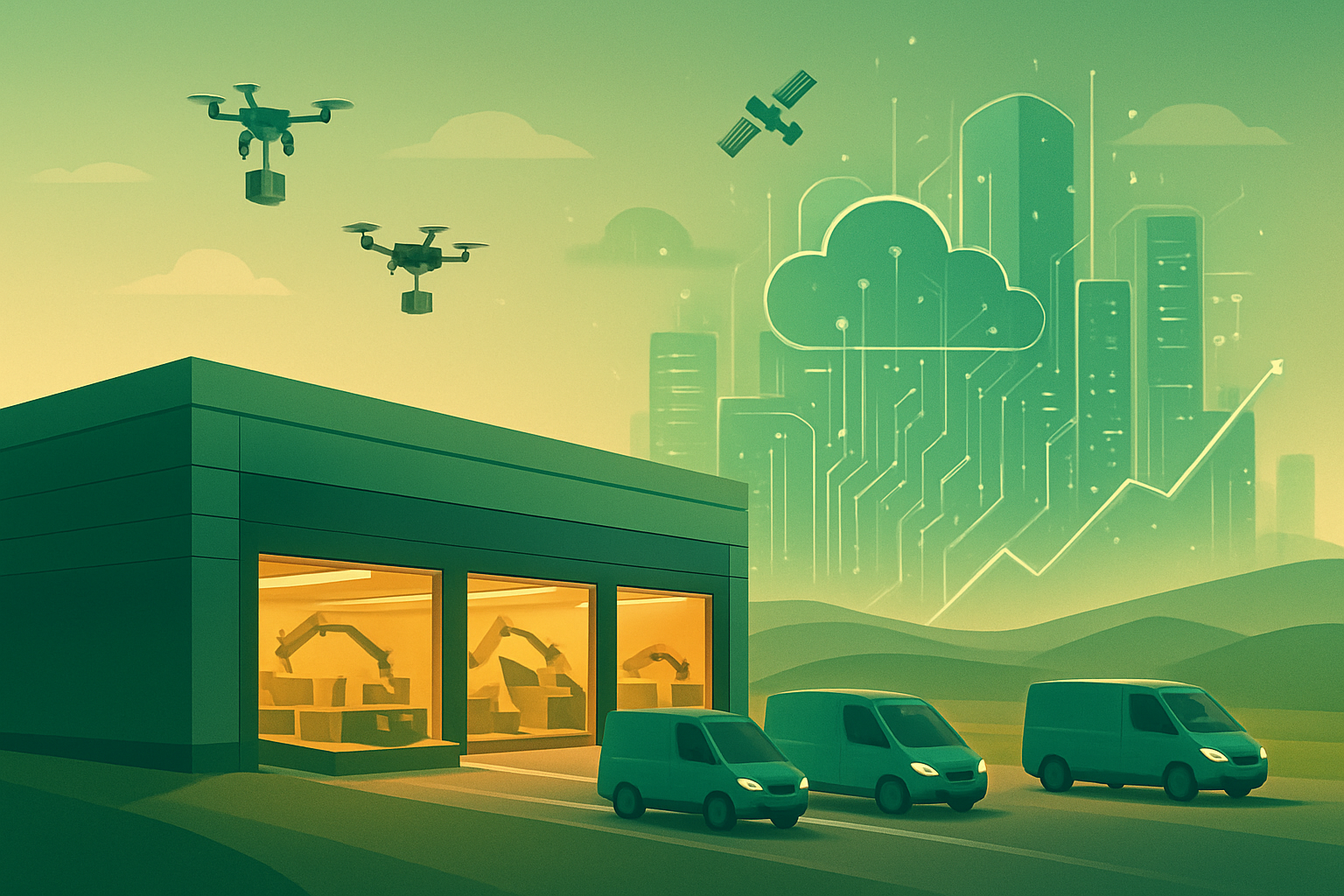
  • The Intelligence Utility: A Deep Dive into Amazon’s 2026 Transformation

    The Intelligence Utility: A Deep Dive into Amazon’s 2026 Transformation

    As of January 19, 2026, Amazon.com, Inc. (NASDAQ: AMZN) has effectively transcended its identity as the "Everything Store." In the three decades since its inception, the company has evolved into what analysts now describe as a "planetary utility"—a critical layer of global infrastructure powering everything from the high-performance computing required for generative AI to the physical logistics of daily life.

    In 2026, Amazon stands at a pivotal junction. After a period of aggressive cost-cutting and organizational flattening led by CEO Andy Jassy, the company has emerged with its highest operating margins in history. With the cloud division, Amazon Web Services (AWS), pivoting toward custom silicon to challenge the dominance of third-party chipmakers, and a retail arm that has finally cracked the code of international profitability, the narrative surrounding AMZN has shifted from "growth at any cost" to "efficiency at massive scale." This research feature explores the levers driving Amazon’s $2.6 trillion valuation and the risks that loom as it faces unprecedented regulatory scrutiny.

    Historical Background

    Founded in 1994 by Jeff Bezos as an online bookstore, Amazon’s history is a case study in radical diversification and the "Flywheel Effect." The company’s early years were defined by its survival of the dot-com bubble, a feat achieved by prioritizing long-term market share over short-term profits.

    Key transformations punctuated its journey: the launch of Amazon Prime in 2005, which weaponized customer loyalty; the 2006 debut of AWS, which pioneered the modern cloud industry; and the 2017 acquisition of Whole Foods, signaling its intent to dominate the physical grocery space. By the time Andy Jassy succeeded Bezos as CEO in 2021, the company was grappling with a post-pandemic "hangover" of overcapacity. The years 2023 through 2025 marked the "Efficiency Era," where the company regionalized its shipping network and integrated advanced robotics, setting the stage for the high-margin powerhouse it is today.

    Business Model

    Amazon’s business model is a multi-layered ecosystem where each segment feeds the others. Its revenue is derived from four primary pillars:

    1. Online Stores and Third-Party (3P) Seller Services: The core retail engine. In 2026, 3P sellers account for over 60% of total unit sales, with Amazon capturing high-margin revenue through fulfillment (FBA) and referral fees.
    2. Amazon Web Services (AWS): The company’s profit engine. AWS provides compute, storage, and database services, increasingly specializing in AI infrastructure.
    3. Advertising Services: Now a $60 billion+ annual business, Amazon leverages its first-party shopper data to offer highly effective "sponsored products" and video ads on Prime Video.
    4. Subscription Services: Driven by Prime, this segment ensures recurring revenue and locks consumers into the ecosystem via streaming, music, and fast shipping.

    Stock Performance Overview

    Over the past decade, AMZN has been a cornerstone of the "Magnificent Seven," though its path has not been linear.

    • 10-Year Performance: Investors who held AMZN since 2016 have seen a staggering return of approximately 732% (a ~23.4% CAGR), far outperforming the S&P 500.
    • 5-Year Performance: The 5-year return sits at roughly 53%, reflecting the volatility of the 2022 tech drawdown and the subsequent 2024-2025 AI-led recovery.
    • 1-Year Performance: Over the last 12 months, the stock is up 11%. While robust, it has faced resistance near its $254 all-time high as the market weighs the massive $125 billion capital expenditure (CapEx) cycle against near-term free cash flow.

    Financial Performance

    Amazon’s fiscal year 2025 results highlight a company firing on all cylinders. Preliminary data shows total annual revenue exceeding $660 billion.

    The most significant takeaway for analysts has been the expansion of operating margins, which stabilized at 11% in 2025, up from mid-single digits just three years ago. This margin expansion is attributed to the high-margin advertising business and the successful regionalization of the U.S. logistics network. AWS remains the crown jewel of the balance sheet, maintaining 20% year-over-year growth and accounting for more than 60% of the company's total operating income. Free cash flow has rebounded to record levels, allowing the company to self-fund its massive investments in AI and satellite technology.

    Leadership and Management

    Under CEO Andy Jassy, Amazon has shifted from the visionary, "big bet" culture of Jeff Bezos to a more disciplined, operationally focused regime. Jassy has famously "flattened" the organization, increasing the ratio of individual contributors to managers by 15% in late 2025 to eliminate "bureaucracy that kills Day 1."

    The leadership team was bolstered in 2024 by the appointment of Matt Garman as AWS CEO, a move that signaled a return to technical fundamentals in the cloud. The executive suite is currently focused on three mandates: the "AI-ification" of every business unit, the global expansion of the logistics network, and the commercialization of Project Kuiper.

    Products, Services, and Innovations

    Innovation in 2026 is centered on "proprietary independence." Amazon is increasingly building its own technology to avoid the "Nvidia tax" and reliance on third-party providers.

    • Custom AI Silicon: The launch of Trainium3 in late 2025, built on a 3nm process, offers 2x the performance of its predecessor. This allows AWS to offer AI training at a significantly lower cost than rivals using standard GPUs.
    • Project Kuiper (Amazon Leo): With over 200 satellites now in orbit, Amazon’s low-earth orbit (LEO) satellite network is entering commercial trials. This service targets the hundreds of millions of people globally without high-speed internet, potentially opening a massive new subscription revenue stream.
    • Amazon Pharmacy: Leveraging its same-day delivery network, Amazon now provides one-hour prescription delivery in 20 major U.S. cities, positioning itself as a direct threat to traditional retail pharmacies.

    Competitive Landscape

    Amazon faces a "three-front war" in 2026:

    1. Cloud: While AWS is the leader, Microsoft (NASDAQ: MSFT) and Alphabet (NASDAQ: GOOGL) have gained ground by integrating their respective AI models (OpenAI and Gemini) more deeply into their enterprise suites.
    2. Domestic Retail: Walmart (NYSE: WMT) has used its 4,600 physical stores to rival Amazon’s same-day delivery speeds, creating a fierce battle for the "weekly grocery run."
    3. Low-Cost Disruptors: China-linked platforms like Temu and Shein have pressured Amazon’s lower-end apparel and home goods segments. Amazon’s 2024 response, "Amazon Haul," which ships low-cost items directly from China with 1-2 week lead times, is its primary defensive measure.

    Industry and Market Trends

    The two dominant trends for 2026 are the automation of physical labor and the regionalization of trade.

    Amazon has surpassed 1 million robots deployed in its warehouses. The "Proteus" autonomous mobile robot and the "Sparrow" robotic arm now handle approximately 65% of individual item sorting, significantly reducing human error and labor costs. Simultaneously, the global shift toward "near-shoring" has forced Amazon to build more localized supply chains, particularly in North America and India, to mitigate geopolitical risks.

    Risks and Challenges

    The "bull case" for Amazon is not without significant headwinds:

    • Regulatory Risk: The most existential threat is the FTC’s monopoly trial scheduled for October 2026. The U.S. government alleges that Amazon uses "dark patterns" and algorithmic price-fixing to stifle competition. A loss could lead to structural changes in how Amazon treats third-party sellers.
    • Capital Intensity: The $125 billion CapEx for 2025 is a staggering sum. If the AI "revolution" takes longer to monetize than expected, Amazon could face a period of depressed returns on invested capital (ROIC).
    • Labor Relations: As Amazon automates more of its workforce, tensions with labor unions and regulators over worker displacement and warehouse safety remain a persistent reputational and operational risk.

    Opportunities and Catalysts

    • International Profitability: After decades of losses, Amazon’s International segment is now consistently profitable. Further expansion in India, where Amazon has committed $75 billion in total investment through 2030, represents a massive long-term tailwind.
    • Advertising on Prime Video: The full-scale rollout of ads on Prime Video in 2024-2025 has created a multi-billion dollar high-margin revenue stream that is still in its early stages of optimization.
    • Healthcare Integration: If Amazon Pharmacy and One Medical successfully integrate with Prime, healthcare could become the "next AWS"—a massive, fragmented industry ripe for digital disruption.

    Investor Sentiment and Analyst Coverage

    Wall Street remains overwhelmingly bullish on AMZN, with over 90% of covering analysts maintaining a "Buy" or "Strong Buy" rating as of January 2026. Institutional ownership remains high, with major funds favoring Amazon as a "defensive growth" play. Retail sentiment is more cautious, often reacting to headlines regarding FTC lawsuits or labor strikes, but the overall market consensus is that Amazon’s "moat" in logistics and cloud is currently impenetrable.

    Regulatory, Policy, and Geopolitical Factors

    Geopolitically, Amazon is navigating a complex landscape. In Europe, the Digital Markets Act (DMA) has designated AWS as a "Gatekeeper," necessitating more interoperability and less "self-preferencing" of its own services. In the U.S., the outcome of the 2024 election has led to a more fragmented regulatory environment, with some states pursuing independent antitrust actions. Furthermore, Amazon’s heavy reliance on Chinese manufacturing for its private-label brands remains a vulnerability should trade tensions escalate.

    Conclusion

    Amazon’s transformation in 2026 is a testament to the power of operational discipline when applied to a global-scale network. By regionalizing its logistics and doubling down on custom AI silicon, the company has managed to increase its profitability even as it matures.

    For investors, the key to the Amazon story is no longer just how many packages it delivers, but how much of the world's digital and physical infrastructure it can own. While regulatory clouds and massive capital requirements offer reasons for caution, Amazon’s ability to reinvent itself—from a bookstore to a cloud giant, and now to an AI and satellite pioneer—suggests that its "Day 1" philosophy remains more than just a corporate slogan. Investors should closely watch the outcome of the October 2026 FTC trial and the Q1 2026 launch of Project Kuiper as the next major catalysts for the stock.


    This content is intended for informational purposes only and is not financial advice.

  • Amazon (AMZN) Deep-Dive: The AI Flywheel and the Road to 2026

    Amazon (AMZN) Deep-Dive: The AI Flywheel and the Road to 2026

    As of January 14, 2026, Amazon.com, Inc. (NASDAQ: AMZN) stands not merely as an e-commerce giant, but as a foundational infrastructure layer for the global digital economy. Over the past two years, the narrative surrounding the Seattle-based titan has shifted from a post-pandemic recovery story to one of structural margin expansion and artificial intelligence (AI) leadership. With a market capitalization comfortably within the multi-trillion-dollar club, Amazon remains a focal point for institutional investors and retail traders alike. Today, the company is at a critical juncture, balancing the aggressive rollout of its Project Kuiper satellite network with a looming landmark antitrust trial that could redefine its retail operations.

    Historical Background

    Founded in 1994 by Jeff Bezos as an online bookstore operating out of a garage in Bellevue, Washington, Amazon’s history is a masterclass in relentless expansion. The company’s early years were defined by the "Get Big Fast" mantra, surviving the dot-com bubble to evolve into the "Everything Store." Key transformations include the 2005 launch of Amazon Prime—a loyalty program that fundamentally changed consumer behavior—and the 2006 debut of Amazon Web Services (AWS), which pioneered the cloud computing industry. Under the leadership of Andy Jassy, who succeeded Bezos as CEO in 2021, the company has pivoted from a high-growth, high-spend model toward a focus on operational efficiency, logistics regionalization, and high-margin services like advertising and cloud-based AI.

    Business Model

    Amazon’s business model is built on a "virtuous cycle" (or flywheel) powered by three primary engines:

    • Online and Physical Stores: The core retail segment comprises first-party sales and a third-party (3P) marketplace. The 3P segment is particularly lucrative, as Amazon earns commissions and fulfillment fees (FBA) while carrying no inventory risk.
    • Amazon Web Services (AWS): The world’s leading cloud provider, AWS contributes the lion's share of the company’s operating income. Its model has transitioned from selling "rented" server space to providing high-level software solutions, including generative AI platforms like Bedrock.
    • Advertising and Subscription Services: Amazon has quietly become the third-largest digital advertiser globally. By leveraging its vast first-party data on consumer intent, it offers high-conversion ad placements. Prime subscriptions provide a steady, recurring revenue stream that fuels ecosystem loyalty.

    Stock Performance Overview

    Over the last decade, AMZN has been a cornerstone of the "Magnificent Seven" and a top-tier performer:

    • 10-Year Horizon: Investors who held the stock since 2016 have seen gains exceeding 750%, driven by the massive scaling of AWS and the dominance of the third-party marketplace.
    • 5-Year Horizon: The 2021-2023 period was marked by volatility as the company digested excess pandemic-era capacity. However, the stock broke out in 2024.
    • 1-Year Horizon: Entering 2026, AMZN has shown resilience. After reaching an all-time high of $258.31 in November 2025, the stock is currently trading near $247, reflecting a healthy 15% gain over the past 12 months, outperforming several of its tech peers as cloud growth reaccelerated.

    Financial Performance

    Amazon’s fiscal year 2025 was a landmark for profitability. The company ended the year with net sales of approximately $638 billion.

    • Margins: Operating margins in the retail sector have expanded significantly due to the regionalization of the fulfillment network, which lowered the "cost to serve" by over 15%.
    • AWS Growth: AWS revenue growth stabilized at a robust 18-20% range, crossing the $100 billion annual revenue run rate.
    • Cash Flow: Free cash flow remains a highlight, reaching over $60 billion in 2025, providing the company with the "dry powder" necessary to invest in capital-intensive projects like AI data centers and satellite launches.
    • Valuation: Despite the price appreciation, AMZN’s forward P/E ratio remains attractive to growth-at-a-reasonable-price (GARP) investors, as earnings growth continues to outpace share price gains.

    Leadership and Management

    CEO Andy Jassy has successfully navigated the post-Bezos era by focusing on "the long game." His leadership style is characterized by surgical cost-cutting in non-core areas (such as the closure of several physical store concepts) while doubling down on generative AI. The leadership team, including AWS CEO Matt Garman, is deep and experienced. The Board of Directors remains highly regarded for its governance, though it faces increasing pressure from ESG-focused institutional investors regarding labor practices and carbon footprint.

    Products, Services, and Innovations

    Innovation at Amazon in 2026 is centered on two pillars: AI and Aerospace.

    • Generative AI: The "Nova" family of models, released in late 2025, has positioned AWS as a price-performance leader in AI inference. Furthermore, the Trainium3 chip, built on a 3nm process, has reduced training costs for startups like Anthropic, keeping them within the AWS ecosystem.
    • Logistics Automation: Amazon now operates over one million robotic units across its fulfillment centers, utilizing "Proteus" (fully autonomous robots) to handle heavy lifting and sortation, drastically reducing human injury rates and increasing speed.
    • Project Kuiper (Amazon Leo): Amazon’s satellite internet initiative is now in its early commercial testing phase. Designed to compete with Starlink, "Leo" aims to provide high-speed broadband to enterprise and government customers, representing a multi-billion dollar future revenue opportunity.

    Competitive Landscape

    Amazon faces intense competition across all fronts:

    • Cloud: Microsoft (NASDAQ: MSFT) Azure and Google (NASDAQ: GOOGL) Cloud remain formidable, especially in the race for large enterprise AI contracts.
    • Retail: Walmart (NYSE: WMT) has narrowed the gap in e-commerce delivery speed, while "ultra-fast-fashion" and discount players like Temu and Shein have pressured Amazon’s low-cost apparel and home goods segments.
    • Advertising: While Amazon dominates "bottom-of-the-funnel" ads, Meta (NASDAQ: META) and Google still command larger portions of the broader digital ad market.

    Industry and Market Trends

    The "Agentic Era" is the defining trend of 2026. Amazon’s retail assistant, "Rufus," has evolved into a sophisticated shopping agent that can proactively manage household supplies and negotiate prices for bulk orders. Simultaneously, the industry is seeing a shift toward "Sovereign Cloud," where governments demand data remain within national borders—a trend AWS is capitalizing on through its localized infrastructure investments in Europe and Asia.

    Risks and Challenges

    The primary risk for Amazon is regulatory. The Federal Trade Commission (FTC), under the leadership of Chair Lina Khan, has moved forward with a massive antitrust lawsuit alleging that Amazon uses its "Buy Box" algorithm to punish sellers who offer lower prices elsewhere. This case is scheduled for trial in October 2026 and could lead to a court-ordered restructuring of the marketplace.
    Operational risks also persist, particularly regarding labor relations and the unionization of delivery drivers, which could increase the long-term cost of the "last-mile" delivery network.

    Opportunities and Catalysts

    • Healthcare: Through Amazon Clinic and One Medical, the company is slowly integrating healthcare into the Prime ecosystem, creating a new "pillar" of the business.
    • Project Kuiper Milestone: The FCC deadline to have 1,600 satellites in orbit by July 2026 is a major catalyst. Success here would unlock a massive global market for internet services.
    • International Expansion: High-growth markets in India and Latin America are beginning to show margin profiles similar to the early days of the North American segment.

    Investor Sentiment and Analyst Coverage

    Sentiment remains overwhelmingly positive. As of January 2026, the consensus rating among Wall Street analysts is a "Strong Buy." Major institutions, including Vanguard and BlackRock, have increased their positions over the last quarter. Analysts at firms like BofA Securities and TD Cowen have highlighted the "hidden value" in the advertising business, which they argue could be worth over $500 billion as a standalone entity.

    Regulatory, Policy, and Geopolitical Factors

    Amazon is operating in an increasingly complex geopolitical environment. The EU’s Digital Markets Act (DMA) continues to force changes in how Amazon ranks its own products versus competitors. In the US, the outcome of the 2024 elections has led to a mixed regulatory environment—one that is pro-innovation in AI but remains skeptical of "Big Tech" market power. Geopolitically, the company’s supply chain remains exposed to tensions in the Taiwan Strait, prompting a strategic shift toward sourcing more electronics from Vietnam and India.

    Conclusion

    Amazon enters 2026 as a more efficient, technologically advanced, and profitable entity than it was just two years ago. While the shadow of the October 2026 antitrust trial looms large, the company’s fundamental "flywheel" remains intact. For investors, the combination of AWS’s AI-driven reacceleration and the scaling of the high-margin advertising business provides a compelling bull case. However, the path forward will require navigating significant legal headwinds and the immense capital requirements of the satellite and AI space. Amazon is no longer just a retailer; it is a global utility, making its stock a bellwether for the health of both the consumer and the enterprise technology sectors.


    This content is intended for informational purposes only and is not financial advice. Note: Today's date is January 14, 2026.