
Tag: ASML

  • The Gatekeeper of the AI Era: A Comprehensive Deep Dive into ASML Holding N.V. (2026 Research Feature)

    The Gatekeeper of the AI Era: A Comprehensive Deep Dive into ASML Holding N.V. (2026 Research Feature)

    Today is April 15, 2026.

    Introduction

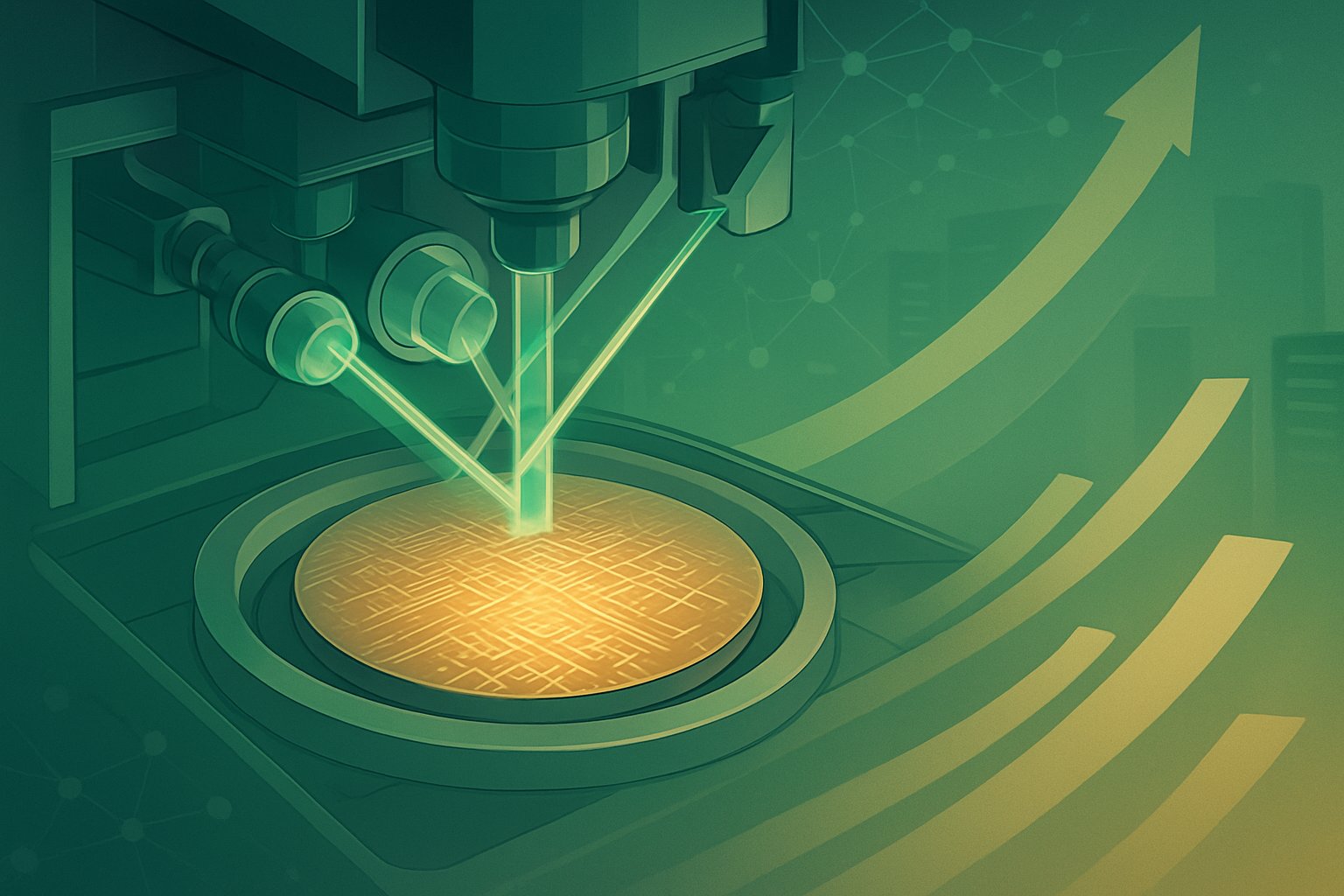
    In the global theater of technology, few companies hold as much leverage as ASML Holding N.V. (Nasdaq: ASML / Euronext Amsterdam: ASML). While names like Nvidia and Apple dominate consumer headlines, ASML serves as the literal foundation upon which their digital kingdoms are built. As the world’s sole provider of Extreme Ultraviolet (EUV) lithography systems, ASML is the only entity capable of manufacturing the machines that print the most advanced semiconductors on Earth. Today, as the "AI gold rush" transitions from a speculative frenzy into a permanent structural shift in the global economy, ASML stands not just as a supplier, but as the ultimate gatekeeper of high-performance computing.

    Historical Background

    The story of ASML is one of high-stakes gambling and engineering persistence. Founded in 1984 as a joint venture between Dutch electronics giant Philips and chip-equipment maker ASM International, the company’s early years were spent in a leaky shed in Veldhoven, Netherlands, struggling to compete with established Japanese titans like Nikon and Canon.

    The pivotal transformation occurred in the late 1990s and early 2000s when ASML committed to developing EUV technology—a method of using light with a wavelength so short it is absorbed by air, requiring the entire process to take place in a vacuum. While competitors abandoned EUV as too costly and technically impossible, ASML doubled down, backed by strategic investments from its own customers, including Intel, Samsung, and TSMC. The 2013 acquisition of Cymer, a specialist in light sources, finalized the vertical integration necessary to bring EUV to market. By the 2020s, ASML’s bet had paid off, leaving it with a 100% monopoly on the world's most critical manufacturing equipment.

    Business Model

    ASML’s revenue engine is powered by a two-pronged strategy:

    1. System Sales: The core of the business involves selling massive lithography machines. These range from Deep Ultraviolet (DUV) systems, used for mature semiconductor nodes in automotive and IoT applications, to the flagship EUV and High-NA EUV systems required for the world’s fastest chips.
    2. Installed Base Management (IBM): Once a machine is sold, it becomes a multi-decade revenue stream. ASML provides maintenance, software upgrades, and field services to its global fleet. This segment is highly lucrative, boasting margins superior to system sales and providing a predictable, recurring cash flow that helps the company weather cyclical downturns in the chip market.

    In early 2026, the revenue split has increasingly tilted toward high-margin EUV services and the first commercial shipments of the "High-NA" (High Numerical Aperture) systems.

    Stock Performance Overview

    ASML has been a legendary performer for long-term investors, characterized by its ability to bounce back from macro-driven volatility.

    • 1-Year Performance: In the past 12 months leading up to April 2026, ASML shares have surged approximately 127%. This rally was fueled by a massive re-rating of the semiconductor sector as "Sovereign AI" projects in Europe and Japan moved into the construction phase.
    • 5-Year Performance: Despite the high-interest-rate environment of 2022-2023, the stock has posted a ~136% return, effectively more than doubling investor capital as the "AI era" matured.
    • 10-Year Performance: For the decade-long HODLers, ASML has delivered a staggering 1,450% return. This reflects the transition of EUV from a laboratory experiment to the standard for global chip production.

    Financial Performance

    According to today’s Q1 2026 report, ASML’s financial health is at an all-time peak. The company reported FY 2025 revenue of €32.7 billion, a 16% year-over-year increase.

    Key metrics for the start of 2026 include:

    • Q1 2026 Revenue: €8.8 billion, exceeding the high end of previous guidance.
    • Gross Margin: 53.0%, a significant expansion from the 51% seen in 2024, driven by the rollout of the high-margin Twinscan EXE:5200 series.
    • Valuation: ASML currently trades at a forward P/E ratio of roughly 34x. While expensive relative to the broader market, it remains in line with its historical premium, justified by its unique monopoly and 30%+ Return on Invested Capital (ROIC).

    Leadership and Management

    In April 2024, Christophe Fouquet took over as President and CEO from the long-serving Peter Wennink. Two years into his tenure, Fouquet has successfully pivoted the company from a period of "hyper-innovation" to "operational scale."

    His leadership style is viewed as pragmatic and focused on execution. Fouquet was instrumental in negotiating "Project Beethoven," a €2.5 billion infrastructure deal with the Dutch government that ensured ASML would keep its core operations in Veldhoven rather than expanding abroad. Alongside CFO Roger Dassen, the management team maintains a reputation for transparency and shareholder-friendly capital allocation, including a robust share buyback program and a growing dividend.

    Products, Services, and Innovations

    ASML’s "moat" is built on the complexity of its machines. A single EUV system contains over 100,000 parts, 3,000 kilometers of cabling, and mirrors so smooth that if they were the size of Germany, the highest bump would be less than a millimeter high.

    The current frontier is High-NA EUV (the EXE series). These systems, costing upwards of €350 million each, allow chipmakers to print even smaller transistors, reaching the 2nm and 1.4nm nodes. While Intel was the first to adopt these tools, TSMC and Samsung have now integrated High-NA into their 2026 production roadmaps to support the next generation of AI accelerators and mobile processors.

    Competitive Landscape

    ASML essentially has no direct competition in the leading-edge lithography space.

    • Nikon and Canon: These Japanese rivals still compete in the DUV (older technology) market, but they have failed to bring a viable EUV alternative to market.
    • Market Share: ASML holds roughly 90% of the total lithography market by value and 100% of the EUV market.
      The company’s true "competitor" is not another firm, but the limits of physics itself and the complexity of its own supply chain.

    Industry and Market Trends

    The semiconductor industry is currently driven by three massive tailwinds:

    1. Generative AI: The relentless demand for GPUs and custom AI silicon (ASICs) requires advanced nodes that only ASML can enable.
    2. Sovereign Silicon: Nations are subsidizing local chip factories (the US CHIPS Act, EU Chips Act) to reduce reliance on Taiwan. Each new fab built in Ohio, Arizona, or Germany requires a full suite of ASML machines.
    3. High Bandwidth Memory (HBM): The rise of HBM4 for AI data centers is driving a surge in orders for advanced DUV and EUV systems from memory makers like SK Hynix and Micron.

    Risks and Challenges

    No company is without peril. ASML faces two primary risks:

    • Supply Chain Fragility: With thousands of specialized suppliers (like Zeiss for optics), any disruption in a single component can delay a multibillion-euro shipment.
    • China Exposure: Export restrictions have significantly hampered ASML’s ability to sell to its formerly largest market. While Western demand has offset this so far, a total ban on servicing existing machines in China could lead to a sudden "revenue cliff" in the IBM segment.

    Opportunities and Catalysts

    The primary catalyst for the remainder of 2026 is the ramp-up of High-NA EUV. As chipmakers move from "pilot lines" to "high-volume manufacturing," ASML’s order backlog is expected to hit new records. Additionally, the emergence of "Angstrom-era" chips (sub-2nm) will necessitate even more frequent machine upgrades and software-driven throughput improvements.

    Investor Sentiment and Analyst Coverage

    Sentiment on Wall Street and in Amsterdam remains overwhelmingly bullish. Analysts currently hold a "Strong Buy" consensus, with a median price target of $1,620. Large institutional holders, including BlackRock and Vanguard, have maintained or increased their positions throughout early 2026, viewing ASML as a "core tech" holding similar to Microsoft or Nvidia.

    Retail sentiment is also high, often referring to ASML as the "picks and shovels" play of the AI revolution—the company that sells the tools to the miners.

    Regulatory, Policy, and Geopolitical Factors

    ASML sits at the epicenter of the "Chip War" between the U.S. and China. In early 2026, the proposed MATCH Act in the United States has put pressure on the Dutch government to further restrict ASML from providing spare parts and software updates to Chinese firms using older DUV systems.

    Navigating these geopolitical waters is the single most difficult task for ASML management. The company must balance its loyalty to its Dutch roots and global customers with the reality of U.S. export controls that govern any technology containing American components.

    Conclusion

    As of April 15, 2026, ASML Holding N.V. remains perhaps the most important company that the average person has never heard of. It is the literal bottleneck of human progress in the digital age. While geopolitical tensions and a high valuation represent real risks, the company’s absolute monopoly on the tools of the future makes it a structural necessity for any diversified technology portfolio. Investors should keep a close eye on the adoption rate of High-NA systems and the evolving trade policies between Washington, The Hague, and Beijing. In the world of semiconductors, all roads continue to lead to Veldhoven.


    This content is intended for informational purposes only and is not financial advice.
  • The High-NA Era: A Deep Dive into ASML’s 2026 Monopoly and the Future of AI Silicon

    The High-NA Era: A Deep Dive into ASML’s 2026 Monopoly and the Future of AI Silicon

    Today’s date: April 15, 2026.

    Introduction

    In the global theater of technology and geopolitics, few companies carry as much weight as ASML Holding N.V. (NASDAQ: ASML, Euronext Amsterdam: ASML). Based in Veldhoven, Netherlands, ASML is the sole architect and provider of Extreme Ultraviolet (EUV) lithography systems—the massive, multi-million dollar machines required to print the world's most advanced semiconductors. As of April 2026, ASML has transitioned from a critical hardware provider into the ultimate "chokepoint" of the Artificial Intelligence (AI) revolution. Every high-end chip powering the LLMs and neural networks of tomorrow must pass through an ASML machine. With the recent release of its Q1 2026 earnings, the company has proven that after a "transition year" in 2024, it is now firing on all cylinders to support the global shift toward 2nm and 1.4nm manufacturing.

    Historical Background

    ASML’s journey began in 1984 as a joint venture between Philips and Advanced Semiconductor Materials International (ASMI). Operating out of a leaky shed in Eindhoven, the company’s survival was initially uncertain. However, the decision to focus exclusively on lithography—the process of using light to print patterns on silicon wafers—set the stage for global dominance.

    The company’s defining moment came in the late 1990s and 2000s when it bet the farm on EUV technology. While competitors like Nikon and Canon balked at the astronomical R&D costs and technical hurdles of using 13.5nm wavelength light, ASML persevered with the help of strategic investments from its biggest customers: Intel, TSMC, and Samsung. This decade-long gamble created a monopoly that effectively ended the "lithography wars," leaving ASML as the only player capable of producing chips at 7nm and below.

    Business Model

    ASML’s business model is bifurcated into two primary segments: System Sales and Installed Base Management.

    1. System Sales: This is the core of the business, involving the sale of lithography systems. This includes Deep Ultraviolet (DUV) systems for mainstream chips and EUV systems for the most advanced logic and memory. In 2026, the focus has shifted toward the "High-NA" (High Numerical Aperture) EUV systems, which sell for upwards of €350 million per unit.
    2. Installed Base Management: ASML provides service, maintenance, and field upgrades for its massive global fleet of machines. This segment is increasingly vital, accounting for nearly 29% of revenue in Q1 2026. These are high-margin, recurring revenues that provide a buffer during cyclical chip downturns.

    The customer base is highly concentrated, with Taiwan Semiconductor Manufacturing Co. (TSMC), Samsung, Intel, and SK Hynix representing the vast majority of advanced system orders.

    Stock Performance Overview

    Over the past decade, ASML has been one of the premier wealth creators in the technology sector. As of mid-April 2026, the stock is trading near all-time highs of ~$1,518.

    • 1-Year Performance: +127%. The stock saw a massive re-rating in 2025 as the AI infrastructure boom translated into concrete orders for the next generation of EUV systems.
    • 5-Year Performance: ~+136%. Despite significant volatility in 2022 and 2024 related to China export restrictions, the compounding effect of its monopoly power has led to steady appreciation.
    • 10-Year Performance: ~+1,450%. Investors who held ASML since 2016 have seen their capital grow nearly 15-fold, outperforming almost every major tech index.

    Financial Performance

    ASML’s Q1 2026 results, released today, underscore its financial health. The company reported net sales of €8.8 billion, beating the consensus estimate of €8.6 billion.

    • FY 2025 Revenue: €32.7 billion.
    • Q1 2026 Gross Margin: 53.0%. This margin expansion is driven by the delivery of higher-priced EUV systems and the maturation of DUV service contracts.
    • 2026 Outlook: Management has raised its full-year revenue guidance to €36–€40 billion.
    • Balance Sheet: ASML maintains a robust cash position with a low debt-to-equity ratio, allowing for aggressive R&D spending (over €4 billion annually) and a progressive dividend policy (proposed €7.50 for 2025).

    Leadership and Management

    Christophe Fouquet took over as CEO in April 2024, succeeding the legendary Peter Wennink. Now two years into his tenure, Fouquet has proved to be a steady hand during a period of intense geopolitical pressure.

    Fouquet’s strategy has focused on "Operational Excellence"—streamlining the supply chain to meet the production ramp for High-NA EUV while navigating the "Project Beethoven" agreement with the Dutch government. This €2.5 billion state-led initiative has successfully ensured that ASML keeps its headquarters and primary R&D in the Netherlands, providing long-term stability for the management team.

    Products, Services, and Innovations

    The jewel in ASML’s crown is the Twinscan EXE:5200 (High-NA EUV). These machines allow chipmakers to print features twice as small as current EUV systems, which is essential for the 2nm and 1.4nm process nodes.

    • Intel was the first to receive these systems, using them for its "Intel 14A" node.
    • Advanced DUV: While EUV gets the headlines, ASML’s DUV immersion systems (ArFi) remain the workhorses for power management chips, automotive silicon, and IoT devices.
    • Innovation Pipeline: Beyond High-NA, ASML is researching "Hyper-NA" systems for the late 2020s, which would push lithography limits even further toward the sub-1nm era.

    Competitive Landscape

    ASML operates in a league of its own, but it is not without niche competitors.

    • Nikon and Canon: In the DUV market, these Japanese giants retain some market share (roughly 10% combined), mostly in legacy nodes and specialized sensors.
    • Canon’s Nanoimprint: Canon recently commercialized "Nanoimprint Lithography" (NIL) for 3D NAND memory. While it offers a lower-cost alternative for some memory applications, it lacks the resolution and throughput to challenge ASML in advanced logic/foundry.
    • China’s Domestic Efforts: SMEE (Shanghai Micro Electronics Equipment) continues to struggle to produce even mid-range DUV systems, leaving a wide technological moat for ASML.

    Industry and Market Trends

    The "Silicon Renaissance" of 2025-2026 is driven by several macro trends:

    1. AI Everywhere: Demand for GPUs and AI accelerators is driving a surge in advanced logic capacity.
    2. Memory Evolution: The rise of High-Bandwidth Memory (HBM4) for AI data centers is requiring more EUV layers than traditional DRAM.
    3. Regionalization: Governments in the US, EU, and Japan are subsidizing "home-grown" fabs (via the CHIPS Acts), creating a "double-demand" scenario where redundant capacity is built globally.

    Risks and Challenges

    Investing in ASML is not without risk:

    • China Export Controls: The newly introduced MATCH Act (2026) in the US has further restricted ASML’s ability to service older DUV machines in China, threatening a significant chunk of service revenue.
    • High-NA Complexity: If the cost-to-benefit ratio of High-NA EUV doesn't satisfy customers like TSMC, they may opt for "Double Patterning" with standard EUV, slowing the adoption of ASML's most expensive machines.
    • Cyclicality: Despite the AI boom, the semiconductor industry remains cyclical. Any slowdown in global consumer spending could hit the DUV and legacy segments hard.

    Opportunities and Catalysts

    • 2nm Volume Ramp: 2026 is the year TSMC and Samsung begin high-volume manufacturing of 2nm chips, which will require significant EUV tool orders.
    • Backlog Visibility: While ASML has reduced the frequency of booking reports, any major order announcements from TSMC for High-NA would act as a massive catalyst for the stock.
    • M&A and Ecosystem: ASML’s strong cash flow allows it to potentially acquire smaller suppliers within the optics or laser source space to further vertically integrate.

    Investor Sentiment and Analyst Coverage

    Wall Street sentiment remains exceptionally bullish. Analysts view ASML as a "structural winner" regardless of which chip designer (Nvidia, AMD, or Apple) wins the AI race. Consensus ratings sit at "Strong Buy," with price targets for mid-2026 averaging around $1,482, though bullish cases from firms like Bernstein target nearly $2,000. Institutional ownership remains high, with major funds treating ASML as a core "Quality Growth" holding.

    Regulatory, Policy, and Geopolitical Factors

    The geopolitical tug-of-war between Washington, The Hague, and Beijing is ASML’s biggest headache. As of April 2026, China’s share of ASML’s revenue has fallen to 19% from nearly 50% in late 2023. The Dutch government is under constant pressure from the U.S. to align with stricter export policies, making "geopolitical diplomacy" a required skill for the CEO. However, the Dutch "Project Beethoven" has signaled a commitment to protect ASML’s interests against excessive foreign overreach.

    Conclusion

    ASML is a company with no equal. It is the gatekeeper of the digital future, holding a technological monopoly that is arguably the most secure in the world. As of April 15, 2026, the company is enjoying a massive growth phase fueled by the AI-driven demand for 2nm logic and next-generation memory.

    While the valuation reflects this dominance and the geopolitical landscape remains a minefield, ASML’s financials remain impeccable. For long-term investors, the focus should remain on the successful ramp of High-NA EUV and the company’s ability to navigate the ever-tightening export controls. In the world of high-tech manufacturing, all roads lead to Veldhoven.


    This content is intended for informational purposes only and is not financial advice.

  • The Master of the Microscopic: ASML and the Future of AI

    The Master of the Microscopic: ASML and the Future of AI

    Published: January 28, 2026

    Introduction

    As the global economy grapples with the accelerating transition to Artificial Intelligence, one company remains the undisputed gatekeeper of the digital frontier: ASML Holding N.V. (NASDAQ: ASML; Euronext: ASML). While the names NVIDIA, TSMC, and Intel dominate the headlines, none of them can manufacture a single advanced chip without the lithography systems produced by the Veldhoven-based giant.

    This morning, ASML released its full-year 2025 earnings report, sending ripples through global markets. The results serve as more than just a corporate scorecard; they are a bellwether for the entire semiconductor industry. In an era where "compute" is the new oil, ASML is the world’s only manufacturer of the "drilling rigs"—the Extreme Ultraviolet (EUV) lithography machines—capable of etching the microscopic patterns required for the next generation of AI processors. As of late January 2026, ASML stands at a critical juncture, navigating a complex web of record-breaking technological milestones, aggressive corporate restructuring, and the shifting tectonic plates of global geopolitics.

    Historical Background

    The story of ASML is one of high-stakes gambling and engineering persistence. Founded in 1984 as a joint venture between Philips and Advanced Semiconductor Materials International (ASMI), the company began in a leaky shed next to a Philips office in Eindhoven. In its early years, ASML was a distant underdog to Japanese giants Nikon and Canon, which then dominated the lithography market.

    The turning point came in the late 1990s and early 2000s when ASML made a multi-billion-dollar bet on Extreme Ultraviolet (EUV) lithography. While competitors deemed the technology too expensive and technically impossible—requiring the manipulation of light at a wavelength of 13.5 nanometers (nearly the size of a single virus)—ASML persisted. Supported by a unique co-investment program from its largest customers (Intel, TSMC, and Samsung), ASML spent two decades perfecting the technology. This persistence resulted in a total monopoly on EUV, effectively locking out all competition from the leading-edge semiconductor market and transforming ASML into Europe’s most valuable technology company.

    Business Model

    ASML’s business model is built on two primary pillars: System Sales and Installed Base Management.

    1. System Sales: The company sells massive, bus-sized machines that use light to print patterns on silicon wafers. These include:
      • EUV (Extreme Ultraviolet): The crown jewel, costing upwards of $200 million per unit, used for the most advanced chips (7nm, 5nm, 3nm, and 2nm).
      • DUV (Deep Ultraviolet): The workhorse of the industry, used for slightly older nodes and the "layers" of advanced chips where EUV is not required.
    2. Installed Base Management: This segment provides service, maintenance, and upgrades for the thousands of machines already in operation. As of 2026, this high-margin recurring revenue accounts for roughly 25% of total sales (approximately €8.2 billion).

    ASML’s customer base is highly concentrated, consisting of the world’s "Big Three" chipmakers—TSMC, Samsung, and Intel—alongside major memory players like SK Hynix and Micron.

    Stock Performance Overview

    Over the past decade, ASML has been one of the top performers in the global technology sector.

    • 10-Year Horizon: Investors who held ASML since 2016 have seen returns exceeding 900%, as the company transitioned from a DUV leader to an EUV monopolist.
    • 5-Year Horizon: The stock has more than tripled, though it faced significant volatility in 2022 and 2024 due to rising interest rates and "transition year" earnings stagnation.
    • 1-Year Horizon (2025-2026): Over the last 12 months, the stock has rallied approximately 28%. This rebound followed the "reset" of 2024, driven by the realization that AI demand was not a bubble but a fundamental shift in infrastructure spending that requires massive quantities of EUV-etched silicon.

    On today’s news (1/28/2026), the stock is reacting positively to a guidance raise for 2026, despite the announcement of internal job cuts.

    Financial Performance

    The "overnight" full-year 2025 earnings report confirms that ASML has emerged from its transition phase with record-breaking momentum.

    • Total Net Sales (FY 2025): €32.7 billion, a 16% increase over 2024’s €28.3 billion.
    • Gross Margin: 52.8%, slightly exceeding management’s upper-end guidance.
    • Net Income: €9.6 billion, representing a significant jump from the €7.6 billion reported the previous year.
    • 2026 Outlook: Management issued a bullish forecast for 2026, projecting sales between €34 billion and €39 billion.
    • Cash Position: ASML continues to generate strong free cash flow, supporting a robust dividend and a consistent share buyback program, despite the heavy R&D requirements for High-NA EUV.

    The company’s valuation remains premium, trading at a forward P/E of roughly 32x, reflecting its unique monopoly position and the long-term visibility of its order book.

    Leadership and Management

    In April 2024, the legendary Peter Wennink retired, passing the torch to Christophe Fouquet, a 15-year ASML veteran. Fouquet’s tenure so far has been defined by two themes: execution and agility.

    In today’s earnings call, Fouquet announced a surprising restructuring move: the cutting of approximately 1,700 positions (4% of the global workforce). This is not a sign of distress, but rather a strategic "Agility Initiative." Fouquet noted that during the rapid growth of the EUV era, ASML’s internal processes became "less agile." The cuts are primarily focused on leadership and support roles to flatten the organization and speed up decision-making as the company scales toward its 2030 goal of €44B–€60B in revenue.

    Products, Services, and Innovations

    The focus of 2026 is the commercialization of High-NA EUV (High Numerical Aperture). These next-generation machines, specifically the EXE:5200, are the size of double-decker buses and cost roughly $380 million each.

    • EXE:5200B Status: The first production-ready units were shipped to customers in mid-2025. Intel has been the most aggressive adopter, using High-NA for its "Intel 14A" process node.
    • Technical Edge: High-NA allows for 1.7x smaller features and 2.9x increased chip density compared to standard EUV. This is critical for the "Angstrom era" (sub-2nm) of chipmaking.
    • Innovation Pipeline: Beyond lithography, ASML is investing heavily in "holistic lithography"—software and metrology tools that help chipmakers optimize the yield of their massively complex manufacturing processes.

    Competitive Landscape

    ASML essentially has no competitors in its most profitable segments.

    • Nikon and Canon: While they still compete in the "legacy" DUV and i-line markets, they have no EUV offering. Canon has attempted to bypass EUV with "Nano-imprint Lithography" (NIL), but it has yet to see meaningful adoption for high-volume, leading-edge logic chips.
    • The Barrier to Entry: The primary "competitor" for ASML is the limit of physics. The complexity of managing extreme ultraviolet light, vacuum environments, and magnetic levitation stages is so high that it would take a competitor decades and tens of billions of dollars to catch up.

    Industry and Market Trends

    Three macro trends are currently favoring ASML:

    1. The AI Supercycle: Large Language Models (LLMs) and generative AI require massive GPU clusters. These GPUs (like NVIDIA’s Blackwell and Rubin architectures) are among the most complex chips ever made, requiring extensive use of ASML’s EUV systems.
    2. Sovereign Chipmaking: Countries are subsidizing local "fabs" (the US Chips Act, EU Chips Act). As more factories are built in Ohio, Arizona, and Germany, they all need to be outfitted with ASML machines, decoupling demand from purely consumer-electronics cycles.
    3. The $1 Trillion Market: Analysts project the global semiconductor market will reach $1 trillion by 2030. ASML is the fundamental enabler of this growth.

    Risks and Challenges

    Despite its dominance, ASML faces three primary risks:

    1. China Export Restrictions: The US and Dutch governments have tightened bans on shipping advanced DUV and EUV tools to China. In late 2024, additional restrictions on mid-range DUV immersion systems (NXT:1970/1980) were implemented.
    2. Supply Chain Fragility: ASML relies on a "deep" supply chain, including specialized lenses from Zeiss. Any disruption in this niche ecosystem can delay machine shipments by months.
    3. Cyclicality: While AI provides a cushion, the broader semiconductor market (smartphones, PCs) is still cyclical. A major global recession could lead to order deferrals.

    Opportunities and Catalysts

    1. High-NA Volume Ramp: As TSMC and Samsung eventually move to High-NA (expected for their 1.4nm nodes in 2027), ASML will see a second massive wave of high-margin equipment sales.
    2. Memory Transition: The shift to HBM3 and HBM4 (High Bandwidth Memory) for AI servers requires more EUV layers in the manufacturing process, a tailwind for ASML’s memory segment.
    3. Operating Leverage: As the High-NA R&D costs begin to plateau, ASML’s margins are expected to expand toward its 56-60% target by 2030.

    Investor Sentiment and Analyst Coverage

    ASML remains a "Strong Buy" among most Wall Street and European analysts.

    • Institutional Ownership: The stock is a core holding for major funds like BlackRock and Vanguard.
    • Retail Sentiment: While often overshadowed by NVIDIA, retail interest in ASML has spiked as investors seek "picks and shovels" plays for the AI era.
    • Common Consensus: The "2024 transition" is now firmly in the rearview mirror. Analysts are currently focused on the "Agility Initiative" and how it might improve the bottom line faster than expected.

    Regulatory, Policy, and Geopolitical Factors

    ASML is currently the centerpiece of a geopolitical tug-of-war.

    • The China Factor: China accounted for nearly 49% of system sales in early 2024 as they stockpiled older tech. By 2025, this dropped to 33%, and ASML expects it to normalize at 20% in 2026.
    • Retaliation: In late 2025, China restricted exports of certain rare earth elements used in laser components. ASML has managed this through supply chain diversification, but it remains a persistent operational headache.
    • The Dutch-US Relationship: ASML’s freedom to export is largely dictated by the "Wassenaar Arrangement" and bilateral agreements between Washington and The Hague, making the company a proxy for Western tech policy.

    Conclusion

    ASML Holding enters 2026 not just as a survivor of the 2024 semiconductor "lull," but as a leaner, more focused monopoly. Today’s earnings report confirms that the demand for AI-grade silicon is more than offsetting the loss of the Chinese advanced-chip market.

    For investors, ASML represents the ultimate defensive-growth hybrid in the tech sector. While it faces geopolitical headwinds and the immense technical challenge of scaling High-NA EUV, its total dominance of the lithography market ensures that as long as the world wants faster, smarter chips, it must go through Veldhoven. The "Agility" restructuring under Christophe Fouquet suggests a management team that is not content with its current success but is actively preparing for a decade where the semiconductor industry moves from a $600 billion niche to a $1 trillion global pillar.


    This content is intended for informational purposes only and is not financial advice.