As we enter 2026, Atlassian Corporation (NASDAQ: TEAM) stands at a pivotal crossroads in its 24-year history. Known globally for the ubiquitous Jira and Confluence platforms, the Australian software giant has successfully navigated one of the most complex architectural pivots in the SaaS sector: the transition from on-premise servers to a cloud-first, AI-integrated ecosystem.
Today, Atlassian is no longer just a suite of developer tools; it has positioned itself as the "System of Work" for the modern enterprise. With a market capitalization reflecting its status as a core pillar of the technology stack, the company is currently under intense scrutiny from Wall Street. Investors are weighing a massive $2.5 billion share buyback program and a transformative partnership with Amazon Web Services (AWS) against the looming threat that generative AI might disrupt its seat-based pricing model. This report explores whether Atlassian’s "flywheel" can continue to spin in an era of autonomous agents and consolidated IT budgets.
Historical Background
Founded in 2002 by University of New South Wales classmates Mike Cannon-Brookes and Scott Farquhar, Atlassian began with a $10,000 credit card limit and a radical vision: software that sells itself. By eschewing a traditional sales force in favor of a low-friction, self-service model, the company achieved profitability early and grew organically through developer word-of-mouth.
The company’s trajectory has been defined by key transformations. In 2015, its IPO on the NASDAQ marked the arrival of an Australian tech titan on the global stage. For nearly two decades, Cannon-Brookes and Farquhar operated as one of the most successful co-CEO pairings in history. However, 2024 marked the end of an era when Scott Farquhar stepped down to focus on philanthropy and family, leaving Mike Cannon-Brookes as the sole CEO.
The most recent historical milestone was the "Great Migration." In February 2024, Atlassian officially ended support for its Server products, forcing its massive user base to move to either the Cloud or the high-performance Data Center tier. This move, while initially controversial among long-time customers, paved the way for the company’s current high-margin, subscription-based financial profile.
Business Model
Atlassian’s business model is built on a "land and expand" flywheel. The company offers a broad range of products organized into three key markets:
- Software Development (Agile & DevOps): Anchored by Jira Software and Bitbucket.
- IT Service Management (ITSM): Driven by Jira Service Management (JSM).
- Work Management: Featuring Confluence, Trello, and the newly integrated Loom.
The revenue model is overwhelmingly subscription-based, accounting for over 90% of total turnover. Atlassian segments its customers by deployment:
- Cloud: The primary growth engine, where Atlassian hosts the data and provides frequent AI updates.
- Data Center: A self-managed subscription for large enterprises with strict regulatory or residency requirements.
A unique aspect of Atlassian's model is its high R&D spend (often exceeding 30% of revenue) and relatively low sales and marketing spend. Instead of "wining and dining" CIOs, Atlassian focuses on product-led growth, where individual teams adopt the tools for free or low cost, eventually scaling to enterprise-wide licenses.
Stock Performance Overview
Over the past decade, TEAM has been a high-beta darling of the growth sector.
- 10-Year Horizon: Investors who held from the early post-IPO days have seen astronomical returns, as the company grew from a niche developer tool into an enterprise essential.
- 5-Year Horizon: The stock experienced a massive surge during the 2020-2021 digital transformation boom, followed by a sharp correction in late 2022 as interest rates rose.
- 1-Year Horizon: Entering 2026, the stock has shown resilience. Following a volatile 2024, the shares stabilized in 2025 as the company demonstrated consistent 20%+ revenue growth and started executing its $2.5 billion buyback.
As of late January 2026, the stock is trading in a range that reflects a premium valuation, supported by robust free cash flow (FCF) but capped by broader macroeconomic concerns regarding IT spending.
Financial Performance
Atlassian’s financials as of early 2026 reveal a company that has traded breakneck growth for sustainable, high-margin profitability.
- Revenue: For FY2025, Atlassian reported total revenue of $5.22 billion, a 20% year-over-year increase. For FY2026, projections suggest a continuation of this trend, with Cloud revenue expected to grow at 22.5%.
- Margins: Non-GAAP gross margins remain industry-leading at approximately 85%. Operating margins have expanded to the 25% range as the company optimizes its cloud infrastructure.
- Cash Flow: Atlassian is a FCF powerhouse. In FY2025, it generated $1.42 billion in free cash flow, representing a 27% margin.
- The Buyback: In October 2025, the board authorized a $2.5 billion share repurchase program. This is a significant signal that management believes the stock is undervalued and is committed to returning capital to shareholders while offsetting dilution from stock-based compensation.
Leadership and Management
With Mike Cannon-Brookes now at the sole helm, the leadership focus has shifted toward "velocity" and "AI integration." The executive team has seen a recent infusion of new talent, most notably Tamar Yehoshua, who was appointed as Chief Product and AI Officer in late 2025.
However, the company is facing a transition in its finance department. Long-time CFO Joe Binz has announced his retirement effective June 30, 2026. The search for a new CFO is a critical focal point for investors, as the incoming executive will be tasked with balancing Atlassian’s aggressive R&D investments with the mandate for continued margin expansion.
Products, Services, and Innovations
The product roadmap in 2026 is dominated by "Atlassian Intelligence" and "Rovo."
- Atlassian Intelligence: This generative AI layer is now embedded across the entire suite, automating tasks like summarizing long Confluence pages or writing complex Jira queries using natural language.
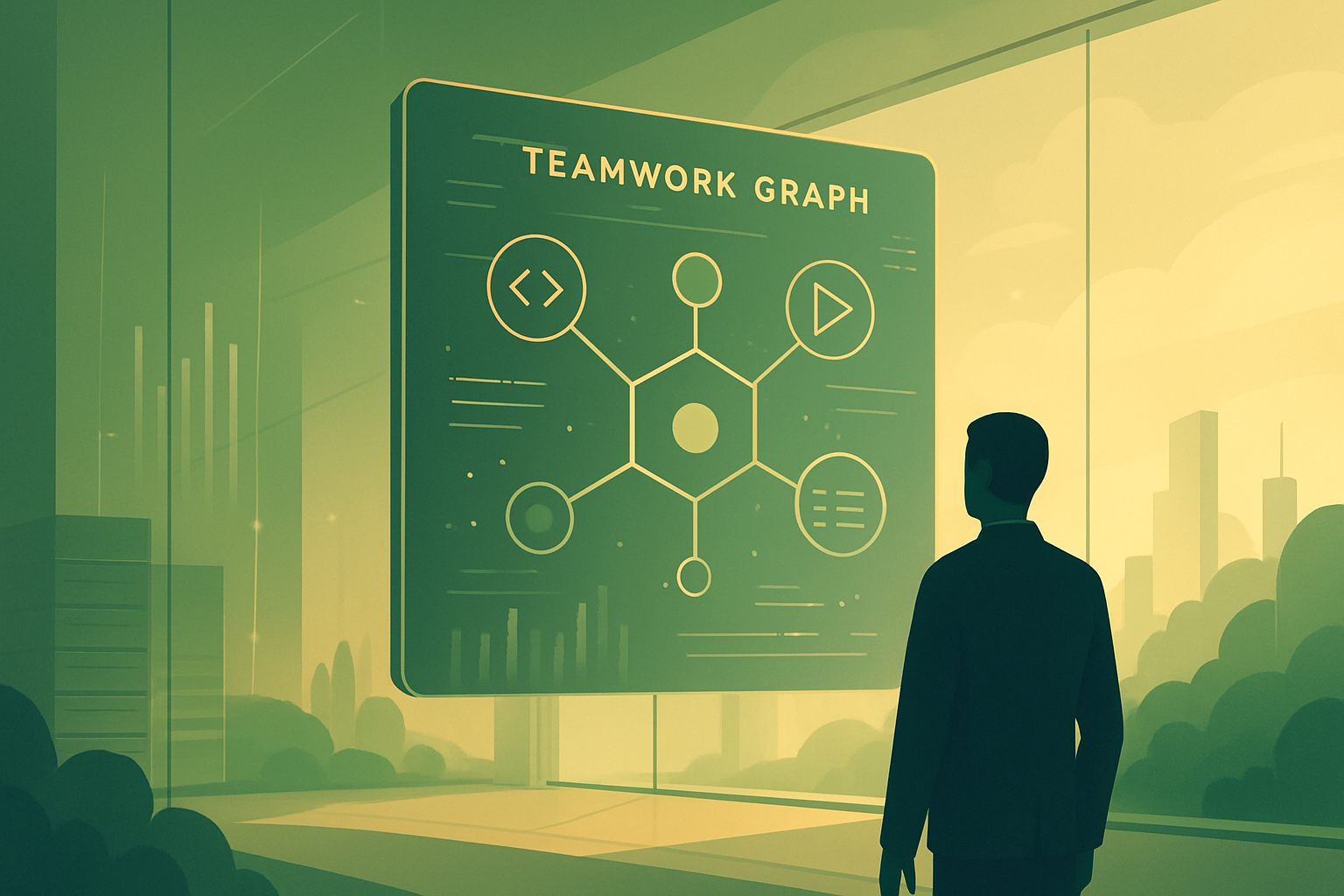
- Rovo: Launched as a new product in the 2024/25 cycle, Rovo is an AI-powered search and discovery tool. It allows teams to find information not just within Atlassian, but across Slack, Google Drive, and GitHub, using a proprietary "Teamwork Graph."
- Loom Integration: The $975 million acquisition of video-messaging platform Loom has been fully digested. Loom is now a core part of the "async" work strategy, with AI features that automatically turn video bug reports into documented Jira tickets.
Competitive Landscape
Atlassian operates in a crowded market, but its "System of Work" strategy provides a significant moat.
- ServiceNow (NYSE: NOW): The primary rival in the ITSM space. While ServiceNow dominates high-end enterprise IT, Atlassian's Jira Service Management is winning market share by offering a significantly lower total cost of ownership (TCO) and better integration with development teams.
- Microsoft (NASDAQ: MSFT): A constant threat. Microsoft’s Azure DevOps and GitHub compete with Bitbucket and Jira, while Microsoft Loop competes with Confluence. Atlassian’s advantage remains its "platform agnostic" nature, appealing to companies that don't want to be locked into the full Microsoft stack.
- Monday.com (NASDAQ: MNDY): A formidable competitor in the SMB and mid-market work management space. Monday.com’s ease of use is a challenge for Atlassian’s more complex Jira Software.
Industry and Market Trends
Two major trends are shaping Atlassian’s environment in 2026:
- Platform Consolidation: Enterprises are looking to reduce the number of vendors they use. Atlassian is benefiting from this by positioning itself as the single platform that connects developers, IT, and business teams.
- AI-Agentic Workflows: The industry is moving from "AI as a chatbot" to "AI as an agent." Atlassian’s Rovo Agents are at the forefront of this, capable of performing multi-step tasks like onboarding new employees or reviewing code.
Risks and Challenges
The "Bear Case" for Atlassian centers on three primary risks:
- The Seat-Count Threat: Some analysts fear that if AI agents become efficient enough, companies will need fewer human workers to perform the same tasks. Since Atlassian charges per user (seat), a long-term reduction in corporate headcount could hit revenue.
- Macroeconomic Pressure: While Atlassian tools are "sticky," a prolonged global slowdown could lead to smaller teams and slower seat expansion within existing customers.
- Execution Risk: The retirement of the CFO and the sole-CEO transition represent a shift in the corporate DNA that must be managed carefully to maintain the company’s unique culture.
Opportunities and Catalysts
The "Bull Case" is driven by several near-term catalysts:
- AWS Strategic Collaboration: The deepened partnership with AWS is a massive tailwind. By aligning their engineering and sales efforts, AWS and Atlassian are significantly reducing the friction for large enterprises to migrate their massive data sets to the cloud.
- AI Monetization: Unlike many peers, Atlassian has a clear path to AI monetization through Premium and Enterprise tiers, as well as the standalone Rovo license.
- Data Center Upsell: Thousands of customers are still on the "Data Center" tier. As Atlassian adds more AI-exclusive features to the Cloud, the incentive for these large customers to migrate—and pay higher prices—increases.
Investor Sentiment and Analyst Coverage
Wall Street sentiment as of January 2026 is "Cautiously Bullish." Major firms like Piper Sandler and Goldman Sachs maintain "Buy" or "Outperform" ratings, citing the company’s massive free cash flow and the potential of the AWS partnership.
However, firms like TD Cowen have expressed caution, pointing to the high valuation multiples (often trading at 10-12x EV/Revenue) which leave little room for error. Institutional ownership remains high, with major positions held by Vanguard, BlackRock, and several prominent tech-focused hedge funds.
Regulatory, Policy, and Geopolitical Factors
As an Australian-headquartered company with a significant U.S. presence, Atlassian must navigate a complex regulatory web.
- Data Sovereignty: New laws in Europe and India regarding where data is stored have forced Atlassian to invest heavily in "localized" cloud instances.
- AI Regulation: The EU AI Act and potential U.S. AI frameworks are being closely watched. Atlassian’s focus on "Responsible AI" is designed to get ahead of these regulations, ensuring their tools remain compliant for global enterprises.
- Taxation: As a global entity, changes in international corporate tax minimums could impact the net income of the company, though its high R&D credits in Australia provide some mitigation.
Conclusion
Atlassian (NASDAQ: TEAM) in 2026 is a company that has successfully traded its "scrappy startup" roots for "enterprise essential" status. The $2.5 billion buyback and the strategic AWS partnership are strong defensive and offensive signals, respectively. While the threat of AI-driven seat reduction is a valid long-term concern, Atlassian’s current momentum in the ITSM space and its rapid deployment of Rovo suggest it is evolving faster than its critics expect.
For investors, Atlassian represents a play on the "operating system of the modern corporation." It is a high-quality asset with top-tier margins, but it requires a high tolerance for the volatility inherent in high-growth software stocks. The key metrics to watch over the next 12 months will be the pace of Cloud migrations and the adoption rates of the Rovo AI platform.
Disclaimer: This content is intended for informational purposes only and is not financial advice. The author has no position in TEAM at the time of writing.