
Tag: Automotive Industry

  • The Hybrid Survivor: A Comprehensive Research Feature on CarMax, Inc. (KMX)

    The Hybrid Survivor: A Comprehensive Research Feature on CarMax, Inc. (KMX)

    As of April 14, 2026, the used automotive market is witnessing a profound transformation. At the center of this evolution stands CarMax, Inc. (NYSE: KMX), a company that redefined the car-buying experience three decades ago and is now attempting to do so again. After a tumultuous period characterized by pandemic-era inventory shortages, a subsequent "affordability crisis" fueled by high interest rates, and the rapid rise of digital-only competitors, CarMax is positioning itself as the ultimate hybrid survivor. This feature explores the company’s strategic pivot, its technological arsenal, and its current standing in a high-stakes retail landscape.

    Historical Background

    The story of CarMax began not in a garage, but in the boardroom of the consumer electronics giant Circuit City. In 1993, the retailer launched "Project X," an experimental venture aimed at bringing "big-box" transparency and scale to the fragmented, often-disreputable used car trade. The concept was revolutionary: no-haggle pricing, a massive selection of "certified" vehicles, and a customer-centric sales process.

    By the time CarMax was spun off as an independent public company in October 2002, it had already begun to disrupt the industry. Over the following two decades, it expanded from its Richmond, Virginia roots into a nationwide network of over 240 superstores. The company survived the 2008 financial crisis by leaning on its conservative lending arm, CarMax Auto Finance (CAF), and later capitalized on the 2020-2021 boom when used car prices hit historic highs.

    Business Model

    CarMax operates a vertically integrated, three-pronged business model that allows it to capture profit at multiple stages of the vehicle lifecycle:

    1. Retail Sales: This is the core engine, focusing on high-quality vehicles aged 0–10 years. CarMax differentiates itself through a 125+ point inspection process and a 30-day money-back guarantee.
    2. Wholesale Auctions: CarMax is one of the largest wholesale auction operators in the U.S. Vehicles that do not meet its retail standards—often older, high-mileage trade-ins—are sold to other dealers through its proprietary auction platform. This ensures a 100% "buy-in" rate for customer trade-ins, providing a competitive advantage in sourcing.
    3. CarMax Auto Finance (CAF): The company’s captive finance arm provides loans to roughly 40-45% of its retail customers. CAF is a high-margin segment that generates significant interest income and service fees, though it exposes the company to credit risk during economic downturns.

    Stock Performance Overview

    Over the last decade, KMX has been a barometer for the health of the American middle class.

    • 10-Year View: Since 2016, the stock has been a story of extreme cycles. It climbed from the mid-$50s to an all-time high of $154.85 in late 2021 as used vehicle demand exploded.
    • 5-Year View: The last five years have been more challenging. After the 2021 peak, the stock lost nearly 65% of its value by late 2022 as interest rates rose, eventually settling into a volatile recovery range.
    • 1-Year View: As of April 2026, KMX has stabilized in the $45–$55 range. The market is currently rewarding the company’s recent cost-cutting measures and its successful defense of market share against digital-native rivals like Carvana Co. (NYSE: CVNA).

    Financial Performance

    In its most recent fiscal reporting, CarMax showed signs of a "volume recovery" after two years of stagnation. Net revenue for the trailing twelve months stands near $27 billion. While unit sales were pressured in 2024 and 2025 by high borrowing costs, the company’s disciplined pricing has kept retail gross profit per unit (GPU) consistently above $2,200.

    Crucially, the "CAF Provision for Loan Losses" has begun to normalize as the 2026 economy stabilizes. The company’s debt-to-equity ratio remains manageable compared to more leveraged competitors, and a recent mandate to slash $300 million in annual SG&A (Selling, General, and Administrative) expenses has improved operating margins to 4.2%, up from a 2024 low of 3.1%.

    Leadership and Management

    2026 marks a new era for CarMax leadership. Following the long tenure of Bill Nash, the company recently appointed Keith Barr as CEO. Barr, formerly of the hospitality and tech sectors, was brought in with a specific mandate: accelerate the digital-first "omnichannel" experience and modernize the logistics network.

    The board of directors also underwent a significant refresh in early 2026, adding automotive and logistics veterans to satisfy activist investors, most notably Starboard Value, which took a stake in the company citing a need for better operational efficiency and "dynamic pricing" strategies.

    Products, Services, and Innovations

    Innovation at CarMax is currently focused on removing "friction" from the car-buying journey:

    • Skye 2.0: An AI-powered virtual assistant that handles up to 70% of the initial customer appraisal and financing paperwork through natural language processing.
    • Rhodes Co-pilot: An internal LLM tool used by sales associates to instantly navigate complex state-by-state title regulations and vehicle history reports.
    • EV Battery Scoring: Through a strategic partnership with Recurrent, CarMax now provides "Battery Health Scores" for all used electric vehicles, addressing the primary concern of used EV buyers: range degradation.
    • Omnichannel Integration: Customers can now start a purchase online, choose home delivery, or opt for a "seamless handoff" to a store associate for a test drive, a hybrid model that Carvana and traditional dealers have struggled to replicate perfectly at scale.

    Competitive Landscape

    The used car market remains a battleground between three distinct models:

    • The Digital Disruptor: Carvana (NYSE: CVNA) offers lower overhead but has struggled with debt and title processing issues. CarMax’s physical footprint gives it a "trust" advantage and a more reliable sourcing channel for trade-ins.
    • The Franchise Powerhouse: AutoNation, Inc. (NYSE: AN) benefits from high-margin service/parts and new-car manufacturer incentives. CarMax’s exclusive focus on used cars allows for greater inventory depth but lacks the "cushion" of a service-heavy business model.
    • The Independents: Local "mom-and-pop" dealers are losing share rapidly as they cannot compete with the data-driven pricing and nationwide logistics of a giant like CarMax.

    Industry and Market Trends

    The "Used Car Recession" of 2023-2025 appears to have bottomed out. Key trends for 2026 include:

    • The EV Surge: Used EVs are now a mainstream category. CarMax reports that the Tesla Model 3 and Ford Mustang Mach-E are among its fastest-turning units.
    • Affordability Normalization: As the Federal Reserve signals potential rate cuts later in 2026, the cost of financing—which hit 11% for some used car loans in 2024—is finally beginning to retreat.
    • Inventory Sourcing: With new car production fully recovered, the supply of 3-year-old "off-lease" vehicles is increasing, providing CarMax with the high-quality inventory it needs to drive retail volume.

    Risks and Challenges

    Despite the recovery, several risks remain:

    • Credit Quality: A significant portion of CarMax’s value is tied to its loan book. If the 2026 labor market softens, an uptick in defaults at CAF could erase retail profits.
    • Depreciation Spikes: Used car prices are still high relative to historical norms. A sudden "crash" in vehicle values would leave CarMax holding expensive inventory that it must sell at a loss.
    • Activist Pressure: While Starboard Value has pushed for improvements, their presence can sometimes lead to short-termism, such as excessive share buybacks at the expense of long-term R&D.

    Opportunities and Catalysts

    Investors are closely watching several potential catalysts:

    • Logistics Modernization: The recent investment in Carpool Logistics is expected to reduce CarMax’s vehicle transport costs by 15% by 2027.
    • Market Share Consolidation: As smaller dealers struggle with compliance costs, CarMax is well-positioned to acquire smaller regional players or simply capture their customers.
    • Proprietary Data Monetization: Through its acquisition of Edmunds, CarMax sits on a goldmine of consumer sentiment data that it has yet to fully monetize through high-margin advertising or data services.

    Investor Sentiment and Analyst Coverage

    Wall Street is currently "Cautiously Bullish" on KMX. Analysts from major firms like Goldman Sachs and JPMorgan recently upgraded the stock to "Buy" from "Hold," citing the aggressive cost-cutting under CEO Keith Barr. Institutional ownership remains high, with giants like BlackRock and The Vanguard Group holding significant stakes, though the retail sentiment remains split between those wary of the automotive cycle and those betting on CarMax’s technological moat.

    Regulatory, Policy, and Geopolitical Factors

    The primary regulatory headwind is the FTC’s "CARS Rule," which targets "junk fees" and "bait-and-switch" pricing. Paradoxically, this is a net positive for CarMax. Because its "no-haggle" model is already transparent, it faces far lower compliance costs than traditional "dealership-as-a-service" models, potentially acting as a regulatory barrier to entry for smaller competitors.

    Conclusion

    CarMax (NYSE: KMX) is no longer just a used car dealer; it is a data and logistics company that happens to sell cars. In April 2026, it stands as a battle-hardened survivor of one of the most volatile periods in automotive history. While the stock remains sensitive to interest rates and consumer credit health, its "omnichannel" platform and revamped leadership suggest a company ready to regain its crown as the undisputed king of the used car market. For investors, the play is a bet on the continued professionalization of the automotive trade and the power of a superior balance sheet in a high-interest-rate world.


    This content is intended for informational purposes only and is not financial advice.
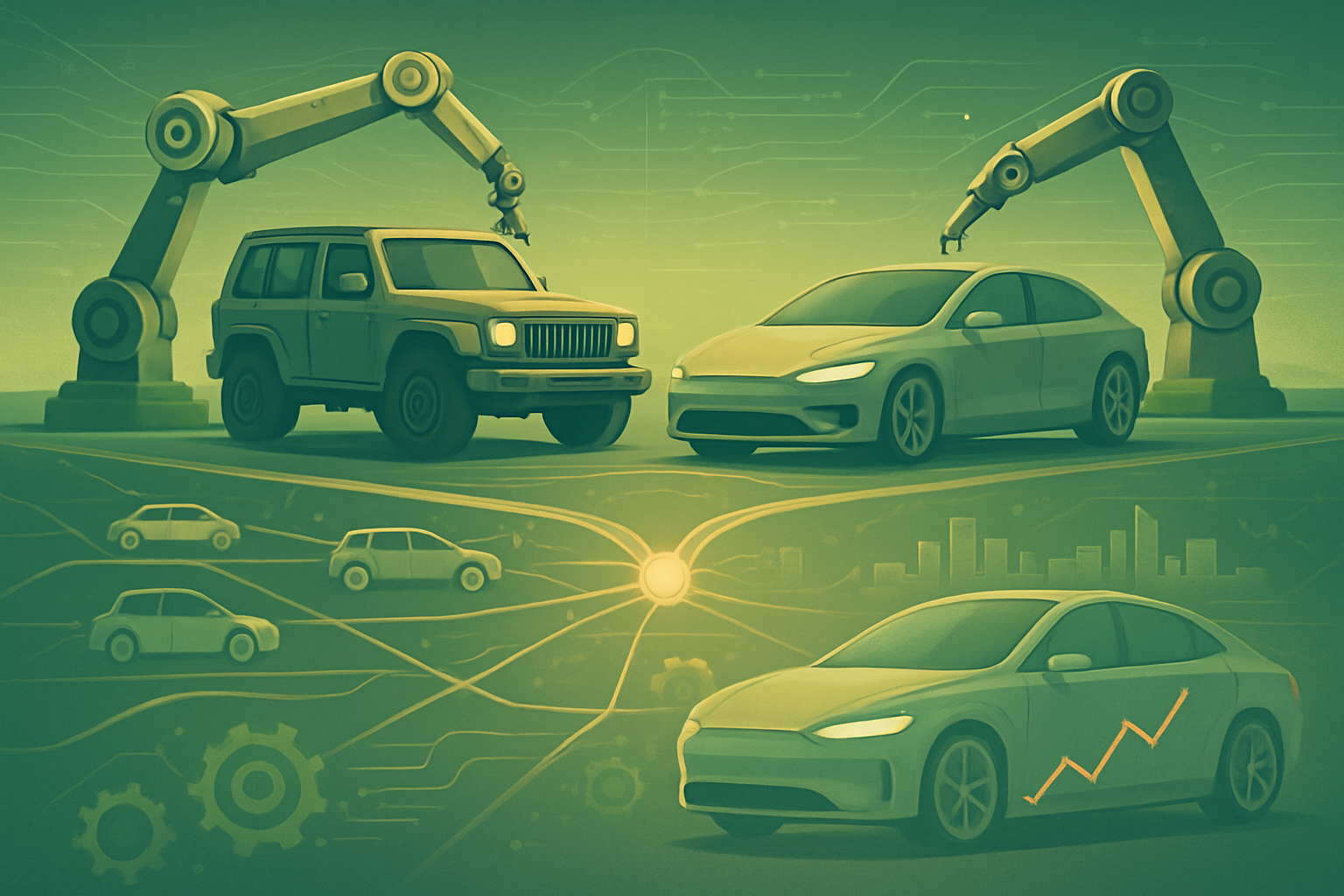
  • Industrial Intelligence: Stellantis’ High-Stakes AI Pivot with Palantir

    Industrial Intelligence: Stellantis’ High-Stakes AI Pivot with Palantir

    Date: March 30, 2026

    Introduction

    As the automotive industry navigates a "Darwinian" transition from internal combustion engines to software-defined mobility, Stellantis N.V. (NYSE: STLA) finds itself at a critical crossroads. Once hailed as the ultimate efficiency machine following the 2021 merger of PSA and FCA, the company spent 2025 weathering a perfect storm of bloated inventories, executive turnover, and a cooling global EV market. However, a central pillar of its recovery strategy is now coming into sharp focus: a deepened, multi-year strategic alliance with Palantir Technologies Inc. (NYSE: PLTR).

    On this day, March 30, 2026, the two companies announced a five-year expansion of their partnership, centered on the deployment of Palantir’s Artificial Intelligence Platform (AIP). This integration is no longer just an IT upgrade; it is an industrial survival strategy designed to transform Stellantis into a data-first enterprise capable of managing 14 iconic brands through the most volatile supply chain environment in a century.

    Historical Background

    The story of Stellantis began on January 16, 2021, with the 50-50 cross-border merger of the French PSA Group and the Italian-American Fiat Chrysler Automobiles. The merger was born out of necessity, aimed at achieving €5 billion in annual synergies to fund the crushing costs of electrification. Under the early leadership of Carlos Tavares, the architect of the deal, Stellantis quickly became the world’s fourth-largest automaker by volume, housing a portfolio that spans from the rugged Jeep and Ram trucks to the elegant Maserati and mass-market staples like Peugeot and Fiat.

    While the first three years of the merger saw record profits and high margins, the honeymoon ended in 2024. Aggressive cost-cutting and a focus on high-margin vehicles led to a buildup of unsold inventory in the United States and a loss of market share in Europe. By late 2024, the internal friction led to the sudden resignation of Carlos Tavares, marking the end of an era and the beginning of a massive strategic "reset" that continues today.

    Business Model

    Stellantis operates a massive, multi-brand ecosystem designed to cover every segment of the global automotive market. Its revenue is primarily derived from vehicle sales, spare parts, and increasingly, software-as-a-service (SaaS) features within its "connected" fleet.

    The business is organized into several key regions:

    • North America: The profit engine, dominated by Jeep and Ram.
    • Enlarged Europe: The volume core, led by Peugeot, Citroën, Fiat, and Opel/Vauxhall.
    • Middle East & Africa, South America, and China: Growth regions where the company maintains a localized manufacturing footprint.

    The core of the current business model is "Platform Sharing." Stellantis utilizes four global BEV-native platforms (STLA Small, Medium, Large, and Frame) that can support various propulsion systems—hybrid, electric, and internal combustion—allowing the company to pivot production based on regional demand.

    Stock Performance Overview

    The performance of STLA stock since its 2021 debut has been a "tale of two halves."

    • 2021–2023: Shares performed robustly, reaching all-time highs near $25 in early 2024 as the market rewarded Tavares’ efficiency gains and the company’s massive dividend yields.
    • 2024–2025: A precipitous decline followed. Shares plummeted over 40% in 2024 as profit warnings surfaced. The slide continued into early 2026 following the announcement of a massive €22.3 billion net loss for the 2025 fiscal year.
    • Current Standing: As of March 30, 2026, STLA is trading around $6.71, hovering near its 52-week low. For investors, the stock has transitioned from a growth-and-income play to a deep-value turnaround story, trading at a P/E ratio that suggests extreme market skepticism regarding its long-term recovery.

    Financial Performance

    The fiscal year 2025 was a year of reckoning for Stellantis. On February 26, 2026, the company reported:

    • Net Revenue: €153.5 billion, a 2% decline YoY.
    • Net Loss: A staggering €22.3 billion, largely due to a one-time €25.4 billion strategic charge. This charge was taken to "reset" the North American product lineup and write down legacy EV investments that no longer aligned with the new "Freedom of Choice" strategy.
    • Cash Flow: While operational cash flow remained positive at €10.2 billion, the heavy restructuring costs have put a temporary freeze on the aggressive share buyback programs of years past.
    • Balance Sheet: Despite the net loss, Stellantis maintains a strong liquidity position of over €45 billion, providing the runway needed for its 2026–2027 product offensive.

    Leadership and Management

    Following the departure of Carlos Tavares in December 2024, Stellantis entered a period of leadership transition. The company is currently steered by an interim executive committee led by Chairman John Elkann, a scion of the Agnelli family.

    The day-to-day strategic shift is being spearheaded by Antonio Filosa, who serves as the Chief Operating Officer for North America and CEO of Jeep. Filosa’s management style is seen as more collaborative and market-responsive than Tavares’ "top-down" efficiency model. The board is currently in the final stages of a global search for a permanent CEO, with an announcement expected before the May 2026 Investor Day.

    Products, Services, and Innovations

    The cornerstone of Stellantis' innovation is the integration of Palantir Technologies Inc. (NYSE: PLTR) Foundry and AIP platforms. This partnership has evolved into a comprehensive "Digital Twin" of the entire Stellantis enterprise.

    Key AI-driven innovations include:

    1. Supply Chain Resiliency: Using Palantir AIP to simulate thousands of "what-if" scenarios, allowing the company to reroute parts and adjust production schedules in real-time to avoid the assembly line stoppages that plagued 2024.
    2. Predictive Quality: By analyzing billions of data points from connected vehicles, Stellantis now identifies potential part failures months before they lead to recalls, significantly reducing warranty costs.
    3. The "Freedom of Choice" Fleet: Launching in 2026 is a new wave of vehicles across the STLA Large and Frame platforms. These include the new electric Ram 1500 REV and a series of "Multi-Energy" Jeep models that allow consumers to choose between hybrid and pure electric powertrains on the same vehicle architecture.

    Competitive Landscape

    Stellantis faces a two-front war. In North America, it competes with General Motors (NYSE: GM) and Ford Motor Company (NYSE: F) for dominance in the high-margin truck and SUV segments. In Europe and China, it faces intense pressure from Volkswagen AG (OTC: VWAGY) and the rising tide of Chinese automakers like BYD Company Limited (OTC: BYDDY) and Xiaomi (HKG: 1810).

    Unlike Tesla, Inc. (NASDAQ: TSLA), which has a vertical integration advantage in software, Stellantis is using the Palantir partnership to "out-data" its legacy peers. While GM and Ford have struggled with software bugs in their EV lineups, Stellantis is banking on its modular platform strategy to remain more flexible and cost-effective than its competitors.

    Industry and Market Trends

    The automotive industry in 2026 is defined by several macro shifts:

    • The Hybrid Resurgence: As pure EV adoption growth slowed in 2025, consumers have flocked to Plug-in Hybrids (PHEVs). Stellantis, once criticized for its slow EV rollout, now finds its hybrid-heavy portfolio perfectly positioned for this shift.
    • Software-Defined Vehicles (SDV): Cars are increasingly judged by their digital interfaces rather than their engines. Stellantis’ "SmartCockpit" project, powered by AI, aims to generate €20 billion in annual software-driven revenue by 2030.
    • Inventory Normalization: After the post-pandemic "supply shock," the industry has returned to a buyer's market, forcing OEMs to use AI tools for precision marketing and demand forecasting.

    Risks and Challenges

    The path to recovery is fraught with risks:

    • Labor Relations: Stellantis remains in a delicate dance with the United Auto Workers (UAW) in the US and unions in Italy/France. Continued plant "optimizations" could trigger further strikes.
    • Execution Risk: Transitioning 14 brands onto four new platforms while integrating a new AI infrastructure is a massive logistical undertaking.
    • Geopolitical Friction: Trade wars between the EU/US and China over EV subsidies could disrupt the global supply chain, particularly for battery materials.

    Opportunities and Catalysts

    • May 2026 Investor Day: This is the most anticipated event of the year. Management is expected to unveil a revised "Dare Forward 2030" plan, likely highlighting the efficiency gains from the Palantir AIP integration.
    • New CEO Announcement: A high-profile hire could provide the market with the confidence needed to re-rate the stock.
    • Margin Recovery: If the inventory "reset" of 2025 succeeds, Stellantis could see a sharp rebound in North American margins by H2 2026.

    Investor Sentiment and Analyst Coverage

    Current analyst sentiment is cautious but intrigued. The consensus rating on STLA is "Hold," with many analysts waiting for evidence that the 2025 losses were indeed a "one-time" event. Institutional investors have noted the "deep value" nature of the stock, while retail chatter on social platforms remains divided between those fearful of further declines and those eyeing the high potential for a recovery toward $10–$12.

    Palantir's involvement is a major "bull case" for tech-focused analysts, who see Stellantis as the primary case study for how a legacy industrial giant can successfully use AI to close the gap with tech-native competitors like Tesla.

    Regulatory, Policy, and Geopolitical Factors

    Stellantis must navigate a complex regulatory web. In the EU, tightening CO2 emission standards continue to push the company toward electrification. In the US, the outcome of the 2024 and 2025 policy shifts regarding the Inflation Reduction Act (IRA) has made domestic battery production critical.

    The company is heavily invested in "ACC" (Automotive Cells Company), its battery joint venture with Mercedes-Benz and TotalEnergies, which aims to secure a localized supply chain and insulate the company from Asian geopolitical risks.

    Conclusion

    Stellantis is a company in the midst of a radical metamorphosis. The massive losses of 2025 were a painful but perhaps necessary correction to a "merger-first" strategy that prioritized short-term cost-cutting over long-term market health. By doubling down on its partnership with Palantir and shifting toward a "Freedom of Choice" product strategy, Stellantis is betting that data-driven agility will be the ultimate competitive advantage.

    For investors, the current valuation offers a high-risk, high-reward entry point. If the AI-powered efficiency gains and the 2026 product wave take hold, Stellantis could emerge as the most resilient legacy automaker of the decade. However, the margin for error has never been thinner. The next 12 months will determine whether Stellantis is a titan in decline or a phoenix ready for its next ascent.


    This content is intended for informational purposes only and is not financial advice.

  • The Ford+ Pivot: Balancing ICE Profits with the Reality of Electrification in 2026

    The Ford+ Pivot: Balancing ICE Profits with the Reality of Electrification in 2026

    As of March 19, 2026, Ford Motor Company (NYSE: F) stands at a defining "moment of truth." After years of aggressive investment in a pure-battery electric future, the Dearborn-based automaker has spent the last twelve months executing a massive strategic reset. The company is currently navigating a complex transition characterized by "Powertrain Pluralism"—a strategy that balances its traditional internal combustion engine (ICE) dominance with a resurgent hybrid portfolio and a streamlined, more cost-effective approach to electrification. For investors, Ford represents a classic industrial giant attempting to reinvent its business model in real-time while maintaining the massive cash flows generated by its iconic truck franchise.

    Historical Background

    Founded by Henry Ford in 1903, the company revolutionized global manufacturing with the 1908 Model T and the implementation of the moving assembly line. Beyond its early history, Ford’s trajectory has been shaped by several key milestones that define its modern identity. In 1948, the introduction of the dedicated F-Series truck platform created a profit engine that has remained the best-selling vehicle line in America for nearly half a century.

    In the 21st century, Ford’s survival was famously secured by the 2006 "Way Forward" restructuring plan led by CEO Alan Mulally. By mortgaging nearly all corporate assets, including the iconic Blue Oval logo, Ford secured a $23.6 billion loan that allowed it to weather the 2008 financial crisis without the federal bailouts required by its domestic rivals, General Motors and Chrysler. This independence established a legacy of fiscal resilience that the company still leans on today as it faces the capital-intensive transition to software-defined vehicles.

    Business Model

    Ford’s business model is now structured into three distinct, customer-focused segments, supported by its captive financing arm:

    • Ford Blue: The traditional heart of the company, focusing on ICE and hybrid vehicles like the F-150, Explorer, and Bronco.
    • Ford Model e: The startup-style division dedicated to developing electric vehicles (EVs), digital platforms, and software-defined architectures.
    • Ford Pro: A high-margin segment catering to commercial and government customers with vehicles, telematics, and fleet management services.
    • Ford Credit (NYSE: F): The financial services arm that provides retail and dealer financing, serving as a critical source of liquidity and profit stability.

    This segmentation allows Ford to isolate the high-growth, high-loss nature of its EV development from the mature, cash-generating ICE and commercial businesses.

    Stock Performance Overview

    Ford’s stock performance reflects the volatility of a cyclical industry undergoing a structural shift. As of mid-March 2026, the stock trades in the $11.75 to $12.30 range.

    • 1-Year Performance: Up approximately 15.8%. The stock saw a late-2025 rally as investors cheered the company's pivot toward high-margin hybrids and the cancellation of unprofitable EV programs.
    • 5-Year Performance: Down roughly 8.2%. Despite the "EV euphoria" of early 2022 that saw shares touch $19, the reality of high capital expenditures and competitive pricing pressure from Tesla and Chinese manufacturers has weighed on the long-term price action.
    • 10-Year Total Return: Investors have seen a total return of ~50%, largely driven by Ford’s commitment to its dividend. For many long-term holders, Ford remains a "yield play" rather than a growth stock.

    Financial Performance

    Fiscal year 2025 was a year of "clearing the decks." Ford reported record total revenue of $187.3 billion, a testament to the enduring demand for its F-Series and Ford Pro offerings. However, the company posted a statutory net loss of $8.2 billion for the year. This loss was almost entirely due to a $19.5 billion non-cash impairment charge taken to restructure the Model e division and cancel several underperforming EV projects.

    On an adjusted basis, EBIT (Earnings Before Interest and Taxes) stood at $6.8 billion. The standout performer was Ford Pro, which generated an EBIT of $6.8 billion with margins exceeding 10%. Conversely, Ford Model e recorded an EBIT loss of $4.8 billion, though management notes that per-unit losses are beginning to narrow as the company shifts toward its new "Universal EV" platform. Ford Credit remained a pillar of strength, contributing $2.6 billion in earnings before taxes.

    Leadership and Management

    CEO Jim Farley continues to lead the "Ford+" strategy, though he faces significant pressure following the massive 2025 write-downs. Farley’s current approach is centered on "China-proofing" the company—developing low-cost EV platforms that can compete with the manufacturing efficiency of BYD and other Chinese OEMs.

    The leadership team has been bolstered by tech talent from Silicon Valley, focusing on software-as-a-service (SaaS) within the Ford Pro segment. Governance remains stable, with the Ford family maintaining a controlling interest through Class B shares, ensuring a long-term perspective that sometimes clashes with short-term Wall Street demands for immediate EV profitability.

    Products, Services, and Innovations

    Ford’s current product strategy is defined by flexibility. Following the "EV slowdown" of 2024–2025, Ford has doubled down on Extended Range Electric Vehicles (EREVs). These vehicles use a small internal combustion engine solely as a generator to charge the battery, offering the torque of an EV without range anxiety.

    • F-150 PowerBoost: The hybrid version of Ford’s flagship truck has become its fastest-growing powertrain.
    • BlueCruise: Ford’s hands-free driving technology continues to see high adoption rates, contributing to a 30% year-over-year growth in software subscription revenue within Ford Pro.
    • The "Universal EV" (UEV): A high-priority R&D project aimed at launching a $30,000 electric pickup by 2027, utilizing a new, simplified architecture designed for mass-market affordability.

    Competitive Landscape

    The competitive environment in 2026 is more crowded than ever.

    • Tesla (NASDAQ: TSLA): Remains the dominant EV player with a ~60% U.S. market share, utilizing its superior cost structure to wage a persistent price war.
    • General Motors (NYSE: GM): Successfully overtook Ford in 2025 as the #2 EV seller in the U.S., with its Ultium platform finally reaching scale.
    • BYD (HKG: 1211): Having surpassed Ford in total global unit sales in 2025, BYD represents the primary threat in international markets like Europe and South America, forcing Ford to retreat to its core North American strongholds.

    Industry and Market Trends

    The automotive sector in 2026 is defined by a "Hybrid Renaissance." As the initial wave of early EV adopters has been saturated, the broader consumer market is gravitating toward hybrids and EREVs as a middle ground. Additionally, the industry is shifting from a hardware-centric model to a "software-defined vehicle" model, where recurring revenue from features-on-demand and fleet management software (like Ford Pro’s telematics) becomes as important as the initial sale.

    Risks and Challenges

    • Capital Leverage: Ford carries a significant debt-to-equity ratio of approximately 3.5x, much of it tied to Ford Credit, but still a concern in a higher-for-longer interest rate environment.
    • Execution Risk: The pivot to the "Universal EV" platform must succeed to prevent Ford from being permanently relegated to a niche ICE-only player in a world of increasing carbon restrictions.
    • Labor Costs: The 2023 UAW contracts continue to exert upward pressure on manufacturing costs, making it difficult to compete on price with non-unionized competitors like Tesla or overseas manufacturers.

    Opportunities and Catalysts

    • Ford Pro Growth: The commercial segment remains an undervalued gem. Its high-margin software revenue and dominant market share in work trucks provide a buffer against consumer market volatility.
    • Shareholder Returns: In March 2026, Ford approved a 31.7 million share repurchase plan, signaling management's belief that the stock is undervalued following the 2025 impairment charges.
    • Dividend Yield: With a yield currently hovering near 4.7%, Ford remains an attractive option for income-focused investors.

    Investor Sentiment and Analyst Coverage

    Wall Street remains divided on Ford, with a consensus "Hold" rating. Bullish analysts, including those at BofA, point to a $17 price target based on the hidden value of Ford Pro. Bearish analysts focus on the ongoing multi-billion dollar losses in the Model e segment and the risk of falling behind in battery technology. Retail sentiment is largely driven by the dividend and brand loyalty to the F-Series, though many are wary of the stock’s lack of capital appreciation over the last decade.

    Regulatory, Policy, and Geopolitical Factors

    The regulatory environment took a dramatic turn in early 2026. The EPA’s recent rescission of certain greenhouse gas mandates has eased the immediate pressure on Ford to sell unprofitable EVs. However, the expiration of the $7,500 federal EV tax credit in late 2025 has created a demand vacuum that the company is currently trying to fill with hybrid incentives. Geopolitically, the 100% tariffs on Chinese EVs in the U.S. protect Ford’s home market, but the company faces stiff competition in every other global region where those tariffs do not apply.

    Conclusion

    Ford Motor Company is a study in industrial transition. By acknowledging the limitations of the "EV-only" path and pivoting toward hybrids and commercial services, the company has bought itself time to solve the profitability puzzle of electrification. For the conservative investor, the high dividend and the strength of the Ford Pro business offer a compelling safety net. However, for those seeking growth, Ford must prove that its upcoming "Universal EV" platform can truly compete with the efficiency of Tesla and the scale of Chinese rivals. As we move further into 2026, the success of the F-Series EREV and the continued expansion of software margins will be the key indicators of whether the "Ford+" plan can finally drive sustained shareholder value.


    This content is intended for informational purposes only and is not financial advice.

  • The Great Reset: Honda’s (HMC) Strategic Pivot and the ¥2.5 Trillion Reality Check

    The Great Reset: Honda’s (HMC) Strategic Pivot and the ¥2.5 Trillion Reality Check

    As of today, March 19, 2026, Honda Motor Co., Ltd. (NYSE: HMC) finds itself at the center of a profound strategic realignment. Once a pioneer of fuel-efficient internal combustion engines and a vocal proponent of an all-electric future, the Japanese industrial giant has spent the first quarter of 2026 executing what analysts are calling the "Great Reset." After a decade of chasing the "EV dream," Honda has pivoted back toward its roots in high-efficiency hybrids and motorcycle dominance, a move signaled by a massive ¥2.5 trillion ($15.7 billion) impairment charge announced just last week.

    For investors, Honda represents a complex case study in corporate pragmatism versus visionary risk. While its automotive division grapples with the high costs of transitioning technologies, its motorcycle and power products divisions remain global cash cows. This article explores whether Honda’s strategic retreat is a sign of weakness or a calculated maneuver to survive a volatile decade for the global mobility industry.

    Historical Background

    The story of Honda is one of engineering obsession and technical defiance. Founded in 1948 by Soichiro Honda—a man who preferred grease-stained overalls to executive suits—the company began by motorized bicycles in a war-torn Japan. By the 1960s, Honda had become the world’s largest motorcycle manufacturer, a title it still holds today.

    The company’s leap into the automotive world was equally audacious. In the 1970s, while Detroit struggled with the U.S. Clean Air Act, Honda developed the CVCC (Compound Vortex Controlled Combustion) engine. This innovation allowed the Honda Civic to meet strict emission standards without a catalytic converter, cementing the brand’s reputation for efficiency and reliability. Over the decades, Honda expanded into luxury with the Acura brand, power equipment, and even aviation with the HondaJet, always maintaining a culture of "The Power of Dreams" and independent engineering.

    Business Model

    Honda operates a diversified industrial ecosystem. Its revenue is derived from four primary segments:

    1. Motorcycles: The undisputed crown jewel. Honda holds nearly 40% of the global motorcycle market share. This segment is characterized by high margins (18%+ EBITDA) and massive volume, particularly in Southeast Asia and India.
    2. Automobiles: The largest revenue contributor, though currently facing margin pressure. Honda focuses on the "mass-premium" segment with global pillars like the Civic, Accord, and CR-V.
    3. Power Products: This includes everything from generators and outboard marine engines to the newly launched ProZision commercial electric lawn mowers.
    4. Financial Services: Honda provides financing to dealers and customers, acting as a critical support pillar for vehicle sales.
    5. HondaJet: A niche but prestigious segment representing the company’s technological pinnacle in light business aviation.

    Stock Performance Overview

    The performance of HMC stock reflects a company in a state of prolonged transition. As of March 19, 2026, the stock is trading at approximately $25.51.

    • 1-Year Performance: Down 16.06%. The stock has been punished by the market following the March 2026 announcement of massive write-downs and the cancellation of North American EV programs.
    • 5-Year Performance: Down 11.87%. Honda has largely traded sideways to down, failing to capture the "EV premium" that benefited companies like Tesla or the "Value Rally" that boosted Toyota.
    • 10-Year Performance: Down 1.93%. For long-term ADR holders, Honda has significantly underperformed the S&P 500, essentially acting as a dividend-paying value play rather than a growth vehicle.

    Financial Performance

    Honda’s financial narrative in 2026 is dominated by the "Big Write-Down." For FY 2025/2026, the company reported consolidated sales of ¥21.7 trillion ($136 billion), a record high driven by motorcycle sales and favorable currency tailwinds. However, the bottom line tells a different story.

    Honda issued a shock profit warning in early March 2026, projecting a net loss of between ¥270 billion and ¥570 billion ($1.7B – $3.6B). This is primarily due to ¥2.5 trillion in expenses related to the cancellation of the "0 Series" EV development in North America and a retreat from non-competitive joint ventures in China.

    Despite these losses, the company maintains a resilient free cash flow of ¥760 billion (pre-write-down), and its motorcycle division continues to deliver record operating profits. The debt-to-equity ratio remains high at 103.6%, reflecting the heavy capital requirements of the last three years of R&D.

    Leadership and Management

    CEO Toshihiro Mibe, who took the helm in 2021, is currently the most scrutinized man in the Japanese auto industry. Mibe initially gained fame for committing Honda to be 100% electric by 2040. However, his "Great Reset" of March 2026 shows a leader willing to admit miscalculations.

    The management team is now pivoting toward "Pragmatic Realism." The new strategy focuses on India and Southeast Asia as the primary growth engines, while downsizing the ambitious EV targets for North America in favor of a hybrid-first lineup. This governance shift has been met with a mix of relief from value investors and disappointment from ESG-focused funds.

    Products, Services, and Innovations

    While Honda has scaled back its North American EV ambitions, it remains an innovation powerhouse.

    • Hybrid Power: Honda’s dual-motor hybrid system is now standard across most of its North American lineup. Management aims for 2.2 million hybrid sales annually by 2030.
    • AFEELA (Sony Honda Mobility): The high-tech sedan remains in pre-production. While it showcases Honda's manufacturing and Sony’s software/entertainment prowess, it is increasingly viewed as a "halo" project rather than a volume driver.
    • Solid-State Batteries: Honda continues to invest heavily in its pilot line for all-solid-state batteries, viewing this as the "true" technological bridge that will make EVs viable in the late 2020s.
    • Two-Wheeler Electrification: Honda is currently building the world’s largest electric two-wheeler plant in India, aiming to dominate the transition of the "bottom of the pyramid" to clean energy.

    Competitive Landscape

    Honda is currently fighting a multi-front war:

    • The Hybrid Rivalry: Toyota remains the gold standard. While Honda’s hybrids are technically advanced, Toyota’s massive scale allows for better pricing power.
    • The China Threat: BYD and other Chinese manufacturers have eroded Honda’s market share in China, once a major profit center. This loss of competitiveness in China was a primary driver for the 2026 write-downs.
    • The Software Gap: Tesla and Chinese rivals are currently leading in software-defined vehicles (SDVs). Honda’s partnership with Sony is a direct attempt to close this gap.

    Industry and Market Trends

    The global automotive market in 2026 is characterized by "EV Fatigue" in the West and "Hyper-Competition" in the East. High interest rates and the expiration of early-adopter subsidies have cooled demand for pure battery-electric vehicles (BEVs) in the U.S. and Europe. Conversely, hybrid demand has skyrocketed as consumers seek reliability and fuel economy without "range anxiety." Honda’s shift back to hybrids aligns with this macro trend, though it risks falling behind if the BEV market suddenly accelerates again.

    Risks and Challenges

    • Technological Lag: By canceling the 0 Series, Honda risks being viewed as a "laggard" in the race for next-generation platforms.
    • Currency Volatility: As a major exporter, Honda is highly sensitive to the value of the Yen. Any significant strengthening of the Yen could further erode its thin automotive margins.
    • Geopolitical Squeeze: Honda’s heavy reliance on the U.S. market leaves it vulnerable to shifts in trade policy, particularly regarding the Inflation Reduction Act (IRA) and potential new tariffs on hybrid components.

    Opportunities and Catalysts

    • The India Gambit: India is poised to be Honda’s next great frontier. With a growing middle class and a clear path toward two-wheeler electrification, Honda’s established presence there is a massive competitive advantage.
    • Balance Sheet Cleansing: The 2026 write-downs, while painful, allow Honda to enter 2027 with a cleaner balance sheet and lower fixed costs.
    • Hydrogen Potential: Honda remains a leader in fuel cell technology, recently launching its CR-V e:FCEV. If the heavy-duty and commercial sectors shift toward hydrogen, Honda is perfectly positioned.

    Investor Sentiment and Analyst Coverage

    Investor sentiment is currently "cautiously skeptical." Following the mid-March strategic pivot, several major firms, including Morgan Stanley and CLSA, downgraded HMC to "Equalweight" or "Hold."

    The consensus among analysts is that while Honda is making the "right" long-term decision by cutting its losses in the EV space, the short-term pain of the ¥2.5 trillion write-down makes the stock a "wait-and-see" play. Retail chatter on platforms like X and Reddit shows a growing appreciation for Honda's reliability but a frustration with its stagnant stock price.

    Regulatory, Policy, and Geopolitical Factors

    Honda’s pivot was largely forced by the "unpredictable" regulatory environment in the United States. Changes to IRA eligibility and the cooling of ZEV (Zero Emission Vehicle) mandates in certain states made the massive investment in North American EV plants look increasingly risky.

    Furthermore, the escalating trade tensions between the West and China have forced Honda to "de-risk" its supply chain, a costly process that involves moving battery production away from Chinese-linked suppliers and toward domestic Japanese or U.S.-based partners.

    Conclusion

    Honda Motor Co., Ltd. (NYSE: HMC) enters the mid-point of 2026 as a company that has chosen reality over rhetoric. By taking a massive financial hit now to cancel underperforming EV projects, CEO Toshihiro Mibe is betting that the future belongs to those who dominate the hybrid and motorcycle markets today.

    For the value investor, Honda is an intriguing prospect: a global leader in engine technology and motorcycles, trading at a depressed valuation with a "cleansed" balance sheet. For the growth investor, however, the lack of a clear, high-volume EV path remains a major deterrent. Investors should watch for the performance of the motorcycle division in India and the initial reception of the AFEELA sedan in late 2026 as the next key indicators of Honda’s trajectory.


    This content is intended for informational purposes only and is not financial advice.

  • The $15.5 Billion Reset: A Deep Dive into Ford’s (F) 2026 Impairment and the Future of ‘Powertrain Pluralism’

    The $15.5 Billion Reset: A Deep Dive into Ford’s (F) 2026 Impairment and the Future of ‘Powertrain Pluralism’

    On March 13, 2026, the storied halls of Dearborn, Michigan, are grappling with a "moment of truth" that has sent ripples through the global automotive sector. Ford Motor Company (NYSE: F) has officially recorded a staggering $15.5 billion non-cash impairment charge related to its electric vehicle (EV) assets, signaling a dramatic retreat from the aggressive electrification targets set only three years ago.

    The announcement has triggered a sharp sell-off, leaving Ford shares underperforming relative to peers like General Motors (NYSE: GM) and Toyota Motor Corp (NYSE: TM), which have navigated the "hybrid-first" transition with more agility. As investors recalibrate their expectations for the American icon, this deep dive explores whether Ford's massive write-down is a sign of long-term structural weakness or a necessary "cleansing of the balance sheet" that paves the way for a more sustainable future.

    Historical Background

    Ford’s journey began in 1903 when Henry Ford revolutionized the world with the Model T and the moving assembly line. For over a century, the company defined the American industrial spirit, surviving the Great Depression and, famously, being the only "Big Three" Detroit automaker to avoid a government bailout during the 2008 financial crisis.

    However, the 21st century has presented a different kind of challenge. After a decade of focusing on high-margin SUVs and trucks, Ford launched "Ford+" in 2021—a plan to lead the electric revolution. Under the leadership of Jim Farley, the company split into three distinct units: Ford Blue (internal combustion), Ford Model e (electric), and Ford Pro (commercial). This structural gamble was designed to allow the company to move at the speed of a tech startup while maintaining the scale of a legacy titan. The $15.5 billion impairment in March 2026, however, suggests that the "tech startup" side of the business hit a wall of economic reality.

    Business Model

    Ford's current business model is a triad of specialized segments, each facing vastly different market conditions as of 2026:

    • Ford Blue: This segment manages the legacy internal combustion engine (ICE) and hybrid business. It remains the company's primary volume driver and a significant source of cash flow, anchored by the iconic F-Series trucks and Bronco SUVs.
    • Ford Model e: The EV division, now the focus of the $15.5 billion impairment. This unit oversees the development of battery-electric platforms and software. Following the cooling of the "EV fever" in late 2025, this segment has transitioned from a growth engine to a source of significant capital drag.
    • Ford Pro: The "crown jewel" of the company. Ford Pro provides vehicles, telematics, and maintenance services to commercial, fleet, and government customers. With high-margin software subscriptions and dominant market share in commercial vans (Transit) and trucks, Ford Pro is currently the primary reason the company remains EBIT-positive.

    Stock Performance Overview

    The stock performance of Ford (NYSE: F) in early 2026 has been characterized by high volatility and a widening gap between it and its peers.

    • 1-Year Performance: Down approximately 22%, largely due to the "EV subsidy cliff" of late 2025 and the subsequent impairment announcement.
    • 5-Year Performance: After a massive surge during the 2021-2022 EV boom where shares briefly touched $25, the stock has retreated to the low double digits, currently trading near $9.50.
    • 10-Year Performance: Investors who held Ford for a decade have seen a total return that lags significantly behind the S&P 500, with much of the value coming from dividends rather than capital appreciation.

    In March 2026 alone, Ford’s stock has fallen 14%, while Toyota has gained 5% on the back of its record-breaking hybrid sales.

    Financial Performance

    The $15.5 billion impairment has dealt a significant blow to Ford’s 2025-2026 GAAP earnings. While it is a non-cash charge, it reflects a sober reassessment of the value of Ford’s EV manufacturing plants, specialized tooling, and battery joint ventures.

    • Revenue: Despite the write-down, revenue remains resilient at approximately $175 billion annually, bolstered by strong pricing power in the Ford Pro and Ford Blue segments.
    • Margins: Ford Pro continues to boast double-digit margins (12-14%), whereas the Model e segment is reporting EBIT losses of nearly $4 billion for the year.
    • Cash Flow: Ford maintains a robust cash balance of over $25 billion, providing a "fortress" against the current downturn, though free cash flow has been pressured by ongoing capital expenditures in a "right-sizing" effort.
    • Valuation: Trading at a forward P/E ratio of approximately 5.8x, Ford looks "cheap" on paper, but the market is pricing in significant uncertainty regarding its long-term EV profitability.

    Leadership and Management

    CEO Jim Farley remains at the helm, but his "Ford+" strategy is under intense scrutiny. Farley has been praised for his transparency and for making the difficult call to cancel several high-profile EV projects—including the three-row electric SUV—to preserve capital.

    The management team has shifted focus toward "Powertrain Pluralism," a strategy that prioritizes hybrids and Extended Range Electric Vehicles (EREVs) over pure battery EVs in the near term. While the board has expressed support for Farley, investor pressure is mounting for a faster turnaround in the Model e segment's efficiency and a clearer path to profitability for the next-generation "Universal EV Platform" slated for 2027.

    Products, Services, and Innovations

    Ford's product lineup is currently a tale of two trajectories. The F-150 Hybrid and Maverick Hybrid are the current stars, with demand far outstripping supply. Conversely, the F-150 Lightning and Mustang Mach-E have faced inventory gluts as the initial wave of early adopters has been satisfied.

    Innovation is now focused on Ford Energy, a new unit launched to repurpose EV battery technology for commercial energy storage. Additionally, Ford is doubling down on its "BlueCruise" hands-free driving software, aiming to turn vehicle software into a recurring revenue stream. The goal is to reach 1 million software-active commercial units by the end of 2026.

    Competitive Landscape

    The competitive landscape in 2026 is increasingly polarized.

    • Toyota (NYSE: TM): The clear winner of the mid-2020s, Toyota’s "hybrid-heavy" strategy has paid off, allowing it to take market share while Ford and GM struggled with EV transitions.
    • General Motors (NYSE: GM): GM has navigated the current crisis slightly better than Ford by aggressively restructuring its China operations and focusing on "Ultium" platform flexibility.
    • Tesla (NASDAQ: TSLA): While Tesla has faced its own demand challenges, its cost structure remains superior to Ford’s.
    • Chinese Entrants: Companies like BYD (OTC: BYDDY) are posing an existential threat in global markets, forcing Ford to abandon several international EV initiatives to defend its home turf in North America.

    Industry and Market Trends

    The "EV Winter" of 2025-2026 was driven by three primary factors:

    1. The Subsidy Cliff: The expiration of major federal tax credits in late 2025 cooled consumer interest.
    2. Infrastructure Fatigue: Slow rollouts of reliable charging networks across the U.S. have led to "range anxiety 2.0."
    3. The Hybrid Bridge: Consumers are increasingly viewing hybrids as the "rational choice," offering 500+ miles of range without the charging headaches.

    Ford is now attempting to build a "bridge" over this transition period, moving away from high-priced luxury EVs toward affordable, smaller electric vehicles.

    Risks and Challenges

    • Capital Intensity: Building cars is expensive; building two types of cars (ICE and EV) simultaneously is nearly unsustainable.
    • Legacy Costs: Ford continues to carry heavy pension and labor costs (post-2023 UAW contracts) that its non-unionized competitors do not.
    • Inventory Risk: High interest rates in early 2026 have made carrying vehicle inventory more expensive for dealers, leading to pressure on Ford to increase incentives.
    • Brand Dilution: There is a risk that aggressive discounting on EVs could hurt the brand's premium perception in the truck and SUV markets.

    Opportunities and Catalysts

    • Ford Pro Growth: The commercial segment is a high-margin, sticky business that could eventually be spun off or valued as a standalone high-growth entity.
    • Next-Gen Platform: If Ford’s 2027 "Universal EV Platform" can hit the target price point of $30,000 with profitability, it could reclaim its lead in the mass market.
    • Battery Energy Storage (BESS): Using battery expertise for the grid rather than just cars offers a massive, less-cyclical revenue stream.
    • M&A Potential: With a low valuation and massive cash piles, Ford may be a candidate for strategic partnerships or acquisitions in the software space.

    Investor Sentiment and Analyst Coverage

    Sentiment in March 2026 is decidedly "Bearish-to-Neutral." Following the $15.5 billion impairment, several major Wall Street firms, including Morgan Stanley and Goldman Sachs, have downgraded the stock to "Neutral," citing a "lost half-decade" for EV returns.

    Institutional ownership remains high at roughly 53%, but hedge funds have been rotating out of Ford and into Toyota and GM. Retail sentiment is mixed; while "dividend chasers" appreciate the 5%+ yield, growth-oriented investors have largely abandoned the name in favor of pure-play AI or energy stocks.

    Regulatory, Policy, and Geopolitical Factors

    The geopolitical landscape remains a minefield. Changes in U.S. trade policy have made it difficult for Ford to source cheap batteries from China, forcing it into expensive joint ventures in the U.S. and Canada. Meanwhile, the regulatory environment in Europe has softened, with several nations pushing back their 2035 "ICE bans," providing Ford some breathing room for its traditional engine business but devaluing the billions it spent on European EV plants.

    Conclusion

    The $15.5 billion impairment is a painful admission of the "EV miscalculation" that defined the early 2020s. For Ford (NYSE: F), the path forward involves a return to its roots—dominance in trucks and commercial fleets—while slowly and more profitably integrating electric technology.

    Investors should watch the performance of the Ford Pro segment and the rollout of the 2027 platform. While the March 2026 slump is a clear signal of market disappointment, it also represents a total reset of expectations. At these valuation levels, Ford is no longer being priced as a high-growth tech leader, but as a resilient industrial survivor. For the patient investor, the question is not whether Ford will survive, but how efficiently it can transition from the "Engine of America" to the "Software and Energy Partner of American Business."


    This content is intended for informational purposes only and is not financial advice. Note: Today's date is March 13, 2026.

  • Honda’s Great Reset: $15 Billion Pivot and the End of the EV Euphoria

    Honda’s Great Reset: $15 Billion Pivot and the End of the EV Euphoria

    By Financial Research Desk
    Date: March 12, 2026

    Introduction

    As of March 12, 2026, the automotive world is witnessing a seismic shift in strategy from one of its most storied institutions. Honda Motor Co., Ltd. (NYSE: HMC) has long been synonymous with engineering excellence and fuel-efficient reliability. However, today the company stands at a crossroads, making headlines for a dramatic strategic pivot that has sent shockwaves through the markets. By canceling three flagship electric vehicle (EV) models and forecasting massive losses for the 2026 fiscal year, Honda is effectively signaling the end of its "all-in" EV euphoria. This deep-dive research article explores how a company once at the forefront of the hybrid revolution is now navigating a treacherous "EV winter" and what this means for investors and the future of mobility.

    Historical Background

    Founded in 1948 by the visionary engineer Soichiro Honda and the astute businessman Takeo Fujisawa, Honda’s journey began with auxiliary engines for bicycles. By 1959, it had become the world's largest motorcycle manufacturer, a title it still holds today. The company’s automotive breakthrough came in 1972 with the Civic, which introduced the CVCC engine—the first to meet stringent U.S. Clean Air Act standards without a catalytic converter.

    Honda’s history is defined by a "challenger spirit." It was the first Japanese automaker to manufacture cars in the United States (1982) and the first to launch a dedicated luxury brand, Acura (1986). In 1999, it beat its rivals to the North American market with the Insight, the first hybrid vehicle sold on the continent. This legacy of independent, engine-focused engineering has been both Honda’s greatest strength and, more recently, a source of friction as the industry shifted toward software-defined electric platforms.

    Business Model

    Honda operates a diversified mobility business divided into four primary segments:

    1. Automobiles (approx. 65% of revenue): The core segment, driven by global best-sellers like the Civic, Accord, and CR-V.
    2. Motorcycles (approx. 17% of revenue): Honda’s "crown jewel" in terms of profitability. With a global market share nearing 40%, this segment provides the cash flow necessary to fund R&D in other areas.
    3. Financial Services (approx. 15% of revenue): A steady source of income through retail lending, leasing, and insurance.
    4. Power Products and Others (approx. 3% of revenue): Including lawnmowers, marine engines, generators, and the HondaJet aviation business.

    The "Honda Way" has traditionally focused on internal combustion engine (ICE) efficiency and high-quality manufacturing, often preferring in-house development over large-scale mergers or acquisitions.

    Stock Performance Overview

    As of today, March 12, 2026, the performance of Honda (HMC) reflects a period of significant volatility and structural repricing.

    • 1-Year Performance: Down approximately 6.2%. The stock has struggled to regain its 2024 highs of nearly $35, currently trading near $27.54.
    • 5-Year Performance: The NYSE ADR has seen a decline of roughly 7.4%. While the Tokyo-listed shares (TYO: 7267) have fared better due to a weakening Yen, the dollar-denominated return for U.S. investors has been stagnant.
    • 10-Year Performance: Down nearly 18%. Over the last decade, Honda has significantly underperformed the S&P 500, as investors favored high-growth tech and pure-play EV stocks over traditional Japanese "value" industrials.

    The recent announcement of model cancellations has led to a sharp intraday dip, as the market digests the scale of the impending write-downs.

    Financial Performance

    Honda’s financial outlook for FY2026 has been drastically revised. The company now expects to record ¥2.5 trillion ($15.7 billion) in total expenses and write-downs related to its strategic "re-pivoting."

    • Earnings Revision: Previously forecasting a ¥300 billion profit, Honda now anticipates a net loss of between ¥270 billion and ¥570 billion for the fiscal year ending March 31, 2026.
    • Debt-to-Equity: Currently stands at approximately 103.6%, reflecting the capital-intensive nature of its transition.
    • Valuation: Despite the losses, Honda trades at a low Price-to-Sales (P/S) ratio of roughly 0.28x, indicating that the market is valuing its massive revenue stream with extreme caution.
    • Cash Flow: Free cash flow remains a bright spot at approximately ¥760 billion (pre-write-down), largely supported by the high margins of the motorcycle division.

    Leadership and Management

    Under the leadership of CEO Toshihiro Mibe, Honda initially committed to an aggressive 100% electrification goal by 2040. However, the "reality check" of 2026 has seen a more pragmatic approach take hold.

    • Toshihiro Mibe (CEO): An engineer by trade, Mibe is now tasked with managing the retreat without losing the company's innovative soul.
    • Noriya Kaihara (EVP & Chief Transformation Officer): Kaihara has become the public face of the strategic shift, emphasizing "profitability over pure volume" in the EV space.
    • Eiji Fujimura (CFO): Responsible for the "kitchen sink" approach to the FY2026 financials, ensuring that all losses are accounted for now to provide a cleaner slate for 2027.

    The board’s reputation for conservative governance is being tested as it navigates these massive write-offs.

    Products, Services, and Innovations

    The news of the day is the cancellation of three specific EV models that were intended to lead Honda’s charge in North America:

    1. Honda 0 Series Saloon: A futuristic, low-profile flagship sedan.
    2. Honda 0 Series SUV: A high-tech utility vehicle meant for the premium market.
    3. Acura RSX EV: A performance crossover intended to revive a beloved enthusiast nameplate.

    Despite these cancellations, Honda is not exiting innovation. The company is doubling down on next-generation hybrids and hydrogen fuel cell (FCEV) technology. Its collaboration with General Motors (NYSE: GM) on hydrogen fuel cells remains active, and the "Honda 0" philosophy—Thin, Light, and Wise—is being redirected toward more affordable hybrid applications.

    Competitive Landscape

    Honda faces a pincer movement in the global market:

    • The Hybrid King: Toyota Motor Corp (NYSE: TM) remains the dominant player, having correctly predicted the longevity of hybrids, thus avoiding the massive EV write-downs Honda is currently enduring.
    • The EV Titans: Tesla (NASDAQ: TSLA) and BYD (HKG: 1211) have achieved scale and software integration that Honda admits it has struggled to match. In China, Honda’s market share has eroded as local consumers favor the digital-first experience of BYD.
    • The Domestic Rivals: Nissan and Subaru are also navigating similar pivots, but Honda’s motorcycle division gives it a diversified revenue "moat" that its automotive-only rivals lack.

    Industry and Market Trends

    The "EV Winter" of 2025–2026 has been characterized by three main trends:

    1. Demand Fatigue: High interest rates and a lack of charging infrastructure have cooled consumer appetite for BEVs.
    2. The Hybrid Resurgence: Consumers are flocking back to hybrids as a "bridge" technology, a trend Honda aims to capitalize on by aiming for 2.2 million hybrid sales by 2030.
    3. Software-Defined Everything: The vehicle is no longer just an engine; it is a computer. Honda is racing to overhaul its digital architecture to compete with "smart" vehicles from China and Silicon Valley.

    Risks and Challenges

    • Operational Risk: The ¥2.5 trillion write-down is a massive hit to the balance sheet that could limit future R&D spending.
    • Regulatory Risk: If global emission standards (like Euro 7) tighten faster than Honda’s hybrid tech can accommodate, the company faces heavy fines.
    • Competitiveness in China: Honda’s inability to keep pace with Chinese tech integrated into vehicles could lead to a permanent loss of market share in the world’s largest auto market.
    • Tariff Exposure: Increasing trade friction between the U.S. and Japan poses a risk to Honda’s export-heavy model.

    Opportunities and Catalysts

    • Motorcycle Dominance: The 2-wheeler segment remains a "money printer" for Honda, especially in emerging markets like India and Southeast Asia.
    • Hybrid Expansion: A rapid pivot to hybrids could capture the current wave of consumer demand that Tesla cannot address.
    • Hydrogen Potential: If heavy-duty transport shifts toward hydrogen, Honda’s long-standing FCEV research could yield significant licensing or product revenue.
    • M&A or Partnerships: The current crisis may force Honda to form deeper alliances with other Japanese automakers to share development costs.

    Investor Sentiment and Analyst Coverage

    Analyst sentiment is currently "Hold" across most major desks. Following the March 12 announcement:

    • Ratings: Out of 8 major analysts, 6 maintain a "Hold," citing the uncertainty of the FY2026 turnaround.
    • Price Targets: The average target has drifted toward $25.00, reflecting concerns over near-term losses.
    • Institutional Sentiment: Large funds are watching the motorcycle division's resilience. If the motorcycle profits remain high, institutional "value seekers" may begin to accumulate HMC as a turnaround play later in 2026.

    Regulatory, Policy, and Geopolitical Factors

    The external environment has been a major driver of Honda’s retreat:

    • U.S. Policy Shift: The One Big Beautiful Bill Act (OBBBA) of 2025 effectively ended federal EV tax credits, replacing them with interest deductions for U.S.-made cars. This destroyed the business case for Honda’s planned EV imports.
    • Trade Barriers: A 10% global surcharge (Section 122) and a 15% reciprocal tariff between the U.S. and Japan have squeezed margins on imported parts and vehicles.
    • Euro 7 Standards: Beginning in November 2026, these new European rules will require strict compliance on non-exhaust emissions (brakes/tires), adding cost to every vehicle Honda sells in the EU.

    Conclusion

    Honda Motor Co.’s announcement on March 12, 2026, marks the end of an era of EV idealism and the beginning of a period of hard-nosed realism. The cancellation of flagship EV models and the projection of massive losses for FY2026 are painful, but they may represent a necessary "cleansing" of the balance sheet. By focusing on its high-margin motorcycle business and its proven hybrid technology, Honda is attempting to weather the "EV Winter" better than those who are purely reliant on battery power.

    For investors, HMC is currently a "wait-and-see" value proposition. The key to its recovery lies in whether it can successfully transition its legendary engineering prowess into the software and hybrid-first reality of the late 2020s. The road ahead is steep, but if history is any guide, Honda’s "challenger spirit" is most visible when its back is against the wall.


    This content is intended for informational purposes only and is not financial advice.

  • Ford in 2026: Navigating the Hybrid Bridge and the Software Frontier

    Ford in 2026: Navigating the Hybrid Bridge and the Software Frontier

    As of February 10, 2026, Ford Motor Company (NYSE: F) stands at a defining crossroads in its 123-year history. After a turbulent 2025 that saw the company navigate significant supply chain disruptions and a massive restructuring of its electric vehicle (EV) ambitions, Ford is currently the primary case study for "legacy" transition in the automotive sector. The company's "Ford+" strategy—dividing its operations into specialized internal combustion, commercial, and electric units—is now in its third full year of execution. While the industry once viewed Ford’s pivot to EVs as a headlong sprint, 2026 reveals a more nuanced, "hybrid-first" approach aimed at protecting margins while chasing a software-defined future.

    Historical Background

    Founded by Henry Ford in 1903, the Ford Motor Company didn't just build cars; it built the modern industrial world. From the introduction of the Model T in 1908 to the pioneering of the moving assembly line, Ford has historically been a disruptor of scale. The company survived the Great Depression, played a pivotal role in the "Arsenal of Democracy" during WWII, and revolutionized the American suburban lifestyle with the Mustang in 1964 and the F-Series trucks, which have been America’s best-selling pickup for nearly half a century.

    In more recent history, Ford’s 2006 "One Ford" plan under Alan Mulally allowed it to avoid the government-backed bankruptcies that claimed rivals GM and Chrysler. Today, under CEO Jim Farley, Ford is attempting a similar fundamental transformation, moving from a traditional hardware manufacturer to a digital services and sustainable energy company.

    Business Model

    Ford’s modern business model is built on three distinct, yet interdependent, segments:

    • Ford Blue: This segment focuses on the traditional internal combustion engine (ICE) and hybrid vehicles. It is the company’s primary profit engine, leveraging iconic brands like the F-150, Bronco, and Mustang to fund the company’s expensive transition elsewhere.
    • Ford Pro: A global leader in commercial vehicles and services. This unit sells work trucks and vans while increasingly generating high-margin recurring revenue through telematics, fleet management software, and charging solutions.
    • Ford Model e: The startup-style wing dedicated to electric vehicles. This segment handles EV platform development, battery technology, and software-defined vehicle (SDV) architecture.
    • Ford Credit: The financial services arm that provides dealer and customer financing, acting as a critical tool for sales support and a consistent contributor to the bottom line.

    Stock Performance Overview

    Ford’s stock performance leading into early 2026 has been a roller coaster for investors.

    • 1-Year Performance: Shares have surged between 47% and 58% over the past twelve months. This rally was sparked by the market’s positive reaction to Ford’s decision to scale back money-losing EV projects in favor of high-demand hybrid models.
    • 5-Year Performance: The stock has seen a more modest 15.6% gain since February 2021. While it reached a peak near $25 in early 2022 during the initial EV hype, it spent much of 2023 and 2024 in a consolidation phase.
    • 10-Year Performance: Long-term capital appreciation stands at approximately 18%. However, for many institutional and retail "income" investors, the total return has been bolstered by a reliable dividend, which currently yields approximately 4.4%.

    Financial Performance

    For the fiscal year 2025, Ford reported a complex set of financial results. Total revenue reached approximately $173 billion, a modest 1% increase year-over-year. However, Adjusted EBIT (Earnings Before Interest and Taxes) fell to between $6.0 billion and $6.5 billion, down significantly from the $10.2 billion seen in 2024.

    This decline was largely attributed to a "black swan" event: a catastrophic fire at the Novelis aluminum plant in September 2025, which disrupted the production of Ford’s most profitable vehicles—the aluminum-bodied F-Series trucks. Consequently, 2025 EPS (Earnings Per Share) sat at roughly $1.31. Despite these headwinds, the company maintained a healthy cash position, though its debt-to-equity ratio remains a point of concern for analysts at 3.56, reflecting the capital-intensive nature of its ongoing factory retooling.

    Leadership and Management

    CEO Jim Farley continues to lead Ford with a "brutally honest" communication style that has largely won over Wall Street. Since taking the helm, Farley has not shied away from admitting when the company’s EV projections were overly optimistic. His leadership team has been bolstered by key hires from the tech and logistics sectors, including Lisa Drake, who now heads the burgeoning Ford Energy division, and Alicia Boler Davis, who leads the highly successful Ford Pro unit.

    Farley’s strategy in 2026 is focused on "Universal Platforms"—standardizing vehicle architecture to slash manufacturing costs and compete with the lean cost structures of Chinese competitors like BYD.

    Products, Services, and Innovations

    Innovation at Ford is currently centered on three pillars:

    1. Hybrid Dominance: Ford has capitalized on the consumer shift toward "bridge" technology. In 2025, hybrid sales jumped 21.7%, with models like the Maverick Hybrid becoming some of the most sought-after vehicles in the U.S.
    2. Software-Defined Vehicles (SDVs): Ford is transitioning to "always-on" vehicles. Through Ford Pro, the company has surpassed 818,000 paid software subscriptions, offering fleet owners real-time data on driver behavior, fuel efficiency, and predictive maintenance.
    3. The Universal EV Platform: Following a massive $19.5 billion write-down in late 2025 on older EV designs, Ford is now developing a new, low-cost EV platform. This "skunkworks" project is aimed at delivering a $30,000 electric pickup (potentially a future Ranger variant) by 2027.

    Competitive Landscape

    The competitive environment in 2026 is radically different than it was five years ago.

    • Tesla (TSLA): remains the dominant EV player, but its market share is under pressure as its lineup ages and competitors like Ford offer more diverse truck and commercial options.
    • BYD: Farley has publicly identified China’s BYD as Ford’s "existential threat." BYD’s ability to produce high-quality EVs at a fraction of Western costs has forced Ford to rethink its entire vertical integration strategy.
    • General Motors (NYSE: GM): Ford’s perennial rival. Both companies are currently locked in a race to prove who can make EVs profitable first while milking the final decades of the ICE truck market.
    • Stellantis (STLA): Currently struggling with an inventory crisis and a late-to-the-game EV strategy, providing Ford an opportunity to grab market share in the commercial van space.

    Industry and Market Trends

    The "EV Fever" of 2021-2022 has cooled into a "Hybrid Reality" in 2026. Global markets are seeing a slowdown in pure battery-electric vehicle (BEV) adoption rates, leading to a resurgence in internal combustion and hybrid popularity. Furthermore, the industry is grappling with "Software Fatigue," where consumers and regulators are increasingly scrutinized for the data privacy implications of hyper-connected cars. Supply chains, while improved since the pandemic, remain fragile, particularly regarding high-end chips and battery minerals like lithium and cobalt.

    Risks and Challenges

    Ford faces several formidable risks:

    • Model e Losses: The EV division is expected to lose roughly $5 billion in 2025. Bridging the gap from these losses to profitability is Ford’s greatest financial hurdle.
    • Supplier Fragility: As evidenced by the Novelis fire, Ford’s dependence on specialized materials makes its production lines vulnerable to single points of failure.
    • Debt Load: With high interest rates persisting into 2026, servicing Ford’s massive debt while funding a multi-billion dollar transition is a delicate balancing act.
    • Labor Relations: Following the landmark 2023 UAW contracts, labor costs at Ford are significantly higher than those of non-unionized rivals like Tesla and Rivian.

    Opportunities and Catalysts

    Despite the risks, several catalysts could drive Ford higher:

    • Ford Pro Growth: The commercial segment is a "crown jewel" that remains undervalued by many investors. Its shift toward high-margin software services (aiming for 20% EBIT contribution) could lead to a valuation re-rating.
    • Energy Storage: The new Ford Energy unit is exploring Battery Energy Storage Systems (BESS) for residential and commercial use, potentially opening a new revenue stream.
    • Next-Gen Platforms: If the "Universal EV Platform" can successfully deliver a $30,000 electric truck, Ford could effectively "democratize" the EV market in the way the Model T did for ICE.

    Investor Sentiment and Analyst Coverage

    Wall Street remains cautious but respectful of Ford’s current trajectory. The consensus rating is a "Hold," with many analysts waiting for evidence of EV loss reduction before moving to a "Buy." However, the late-2025 write-downs were viewed by many institutional investors as a "clearing of the decks," removing long-standing uncertainties about the value of legacy assets. Retail sentiment remains high among "income" investors who prize the 4.4% dividend yield and the company’s iconic American brand status.

    Regulatory, Policy, and Geopolitical Factors

    The regulatory landscape in 2026 is a patchwork of contradictions. In the United States, a shift toward deregulation has led to a rollback of aggressive federal greenhouse gas mandates, giving Ford Blue more room to breathe. Conversely, China has implemented stricter energy-consumption standards, and the European Union—while softening its 2035 ICE ban—continues to push for rapid decarbonization. Geopolitically, the threat of tariffs on Chinese-made EVs remains a protective shield for Ford in its home market, though it complicates global sourcing for batteries.

    Conclusion

    Ford Motor Company in 2026 is a study in pragmatic transformation. By pivoting away from the "all-EV, all-the-time" narrative of the early 2020s and leaning into its traditional strengths in trucks, commercial fleets, and hybrids, Ford has stabilized its ship. Investors should watch the 2026 recovery of the Ford Blue production lines and the progress of the "Universal EV Platform." While the path to EV profitability remains steep, Ford’s ability to generate massive cash flow from its legacy and commercial businesses provides a safety net that many of its pure-play EV competitors simply do not have.


    This content is intended for informational purposes only and is not financial advice.

  • The Grey Goldmine: Why AutoZone’s 2026 Outlook is Defined by an Aging Fleet

    The Grey Goldmine: Why AutoZone’s 2026 Outlook is Defined by an Aging Fleet

    By [Your Name/Journalist Persona]
    Published: February 9, 2026

    Introduction

    As we move into the first quarter of 2026, the American automotive landscape is defined by a paradox: while technology inside vehicles has never been more advanced, the vehicles themselves have never been older. For AutoZone, Inc. (NYSE: AZO), this trend has transformed from a post-pandemic quirk into a structural goldmine. With the average age of light vehicles in the United States officially crossing the 13-year threshold this year, AutoZone finds itself at the epicenter of a "repair-not-replace" economy. This deep-dive analyzes how the Memphis-based retail giant is leveraging the oldest fleet in history to cement its dominance in the DIY and professional repair markets.

    Historical Background

    AutoZone’s journey began in 1979 when J.R. "Pitt" Hyde III opened the first "Auto Shack" in Forrest City, Arkansas. Hyde, a visionary who saw that the grocery store model of clean, organized retail could be applied to the often-grimy world of auto parts, laid the foundation for what would become a retail powerhouse.

    By 1987, the company changed its name to AutoZone and began its relentless expansion across the United States. A pivotal moment occurred in 1991 when the company went public on the New York Stock Exchange. However, the most defining transformation in its history was not a merger or a product launch, but the 1998 implementation of its share repurchase program. This signaled a shift toward a "share cannibal" strategy, where the company prioritizes using free cash flow to buy back its own stock over paying dividends, a move that has fundamentally shaped its stock price trajectory for over 25 years.

    Business Model

    AutoZone operates under a high-efficiency retail and distribution model designed to serve two distinct customer bases:

    1. Do-It-Yourself (DIY): Accounting for approximately 75% of sales, this segment caters to car owners who perform their own maintenance. This is AutoZone's traditional bread and butter, driven by high-margin private labels like Duralast.
    2. Commercial (DIFM – Do-It-For-Me): This is the company’s primary growth engine in 2026. Through its commercial programs, AutoZone delivers parts to professional garages and dealerships.

    The backbone of this model is the "Hub and Spoke" distribution system. AutoZone utilizes a network of "Mega-Hubs"—massive stores that carry up to 100,000 unique SKUs—to provide rapid delivery to smaller satellite stores. This ensures that even rare parts for 15-year-old vehicles are available within hours, a critical competitive advantage when a mechanic's bay is tied up.

    Stock Performance Overview

    AutoZone’s stock performance is a masterclass in long-term value creation through share count reduction.

    • 1-Year Performance: In the past 12 months, AZO has outperformed the S&P 500, buoyed by consistent quarterly earnings beats and the realization that the "aging fleet" tailwind is persistent.
    • 5-Year Performance: Since 2021, the stock has more than doubled. While other retailers struggled with the shift to e-commerce, AutoZone's "need-it-now" inventory kept it insulated from the Amazon effect.
    • 10-Year Performance: Looking back a decade, AZO has been a top-tier performer in the retail sector, driven by a share count that has shrunk by nearly 30% over that period.

    The stock often carries a high nominal price tag (regularly trading in the thousands of dollars), as management has historically resisted stock splits, preferring to maintain a focus on institutional and long-term investors.

    Financial Performance

    In the 2025 fiscal year, AutoZone reported net sales of approximately $18.94 billion. Despite the inflationary pressures that squeezed consumer wallets over the last 24 months, the company maintained an enviable operating margin of 19.6%.

    A key metric for 2026 is the company’s inventory turnover. By optimizing its supply chain through its 100+ Mega-Hubs, AutoZone has kept inventory levels lean while increasing availability. The company’s cash flow remains robust; in FY 2025, it utilized roughly $1.58 billion for share repurchases. Its debt-to-equity ratio is high by traditional standards, but because the company’s cash flow is so predictable and its interest coverage so strong, the credit markets continue to view AZO as a "blue-chip" borrower.

    Leadership and Management

    In January 2024, the torch was passed to Phil Daniele, who took over as CEO from long-time leader Bill Rhodes. Daniele, a 30-year veteran of the firm, has focused his first two years on "velocity." His strategy emphasizes getting parts from hubs to shops faster than O'Reilly or Advance.

    The management team is known for its "AutoZoner" culture—a disciplined, almost frugal approach to operations that prioritizes store-level execution. Under Daniele’s leadership, the company has also seen a push into digital modernization, improving the omnichannel experience so DIYers can "buy online, pick up in-store" (BOPIS) with zero friction.

    Products, Services, and Innovations

    AutoZone’s competitive edge lies in its Private Label Strategy. Brands like Duralast, Valucraft, and ProEligible offer higher margins for the company while providing value to the consumer. In 2026, the innovation focus has shifted toward:

    • ADAS Calibration Tools: As older cars with early Advanced Driver Assistance Systems (like lane-keep assist) enter the repair "sweet spot," AutoZone is providing the complex sensors and calibration tools required for these repairs.
    • Duralast Gold and Elite: Premium tiers that cater to the increasingly sophisticated components of late-model internal combustion engine (ICE) vehicles.
    • Enhanced Commercial Tech: A proprietary ordering platform for professional shops that integrates directly with shop management software.

    Competitive Landscape

    AutoZone exists in a "Big Three" oligopoly alongside O'Reilly Automotive (NASDAQ: ORLY) and Advance Auto Parts (NYSE: AAP).

    • O'Reilly (ORLY): Generally considered the strongest competitor, O'Reilly has historically had a stronger foothold in the dual-market (DIY and Commercial). In 2026, the gap between AZO and ORLY has narrowed as AZO's Mega-Hub strategy catches up.
    • Advance Auto Parts (AAP): Currently the "laggard," AAP spent much of 2025 restructuring and selling off assets (like Worldpac) to stabilize its balance sheet. This has allowed AutoZone to aggressively poach market share in the Northeast and Midwest.
    • E-commerce (Amazon/eBay): While a threat for simple parts (wipers, floor mats), they cannot compete with AutoZone’s 30-minute delivery to commercial shops for mission-critical parts like water pumps.

    Industry and Market Trends

    The most significant macro driver for 2026 is the Vehicle Sweet Spot. Vehicles enter their most profitable stage for AutoZone when they are between 6 and 14 years old.

    • New Car Prices: With the average new car still costing over $45,000 in early 2026, consumers are choosing to spend $1,500 on a major transmission or brake overhaul rather than taking on a 7% interest rate auto loan.
    • Complexity: Modern cars are more complex, which is a double-edged sword. It drives DIYers to seek more advice from "AutoZoners" in-store and pushes more complex work to professional shops, where AutoZone's commercial business thrives.

    Risks and Challenges

    Despite the tailwinds, 2026 is not without hurdles:

    • Currency Volatility: With a massive footprint in Mexico (880+ stores) and a growing presence in Brazil, fluctuations in the Peso and Real can impact reported earnings.
    • The EV Transition: While Battery Electric Vehicles (BEVs) have fewer moving parts to break, the transition is slower than predicted in 2020. However, the long-term risk remains that EVs require less traditional maintenance (no oil changes, spark plugs, or mufflers).
    • Labor Costs: Maintaining a knowledgeable workforce in 6,600+ U.S. stores remains expensive in a tight labor market.

    Opportunities and Catalysts

    • Brazil Expansion: Brazil represents a massive, fragmented market with a vehicle fleet even older than that of the U.S. If AutoZone can replicate its Mexico success there, it provides a decade-long growth runway.
    • Mega-Hub Rollout: The company is on track to reach 200 Mega-Hubs. Each new hub significantly boosts the same-store sales of all satellite stores in its radius.
    • Failure of Smaller Chains: High interest rates are squeezing "mom-and-pop" auto parts stores, allowing AutoZone to gain market share through attrition.

    Investor Sentiment and Analyst Coverage

    Wall Street remains broadly "Bullish" on AZO. Institutional ownership remains high (over 90%), as the company is a favorite for "quality" and "value" factor funds. Analysts frequently cite the company’s "recession-resistant" nature; when the economy dips, people stop buying new cars and start fixing old ones, making AutoZone a classic defensive play.

    Regulatory, Policy, and Geopolitical Factors

    In 2026, trade policy is a focal point. With a significant portion of aftermarket parts manufactured in Asia and Mexico, any changes in tariffs or the USMCA (United States-Mexico-Canada Agreement) could impact input costs. Additionally, "Right to Repair" legislation continues to be a tailwind, as it ensures that third-party shops (AutoZone's customers) can access the diagnostic data needed to fix modern vehicles.

    Conclusion

    As of February 9, 2026, AutoZone stands as a beneficiary of an American consumer who is holding onto their vehicle longer than ever before. The "13-year fleet" is not just a statistic; it is a fundamental shift in consumer behavior driven by vehicle durability and economic necessity. While the eventual rise of EVs poses a distant threat, the next five years for AutoZone look remarkably robust. Investors should keep a close eye on the pace of the Brazil expansion and the continued success of the Mega-Hub rollout as the primary indicators of whether this "share cannibal" can continue its decades-long feast.


    This content is intended for informational purposes only and is not financial advice.

  • The Great Recalibration: A Deep Dive into General Motors (NYSE: GM) in 2026

    The Great Recalibration: A Deep Dive into General Motors (NYSE: GM) in 2026

    Date: January 27, 2026

    Introduction

    In the volatile landscape of the global automotive industry, few stories are as compelling as the recent resurgence of General Motors (NYSE: GM). Once a symbol of industrial struggle following the 2008 financial crisis, GM has transformed itself into a lean, profit-generating powerhouse that is effectively bridging the gap between the internal combustion engine (ICE) era and the electrified future.

    As of late January 2026, GM finds itself at a critical inflection point. The company has just reported a significant Q4 earnings beat (on an adjusted basis) and announced a massive $6 billion share buyback program—its second such authorization in two years. This "return to realism" strategy, characterized by a pragmatic shift in its electric vehicle (EV) roadmap and a renewed focus on high-margin trucks and SUVs, has propelled the stock toward all-time highs. This article explores how GM’s leadership is navigating the transition from a legacy automaker to a "tech-integrated" mobility company while maintaining disciplined capital allocation.

    Historical Background

    Founded in 1908 by William C. Durant, General Motors was built on the premise of consolidation, acquiring dozens of independent automakers to create a multi-brand empire. For decades, it was the largest corporation in the world, defining the American middle class through brands like Chevrolet, Cadillac, Buick, and GMC.

    However, the 20th century ended with GM burdened by bloat and inefficiency, culminating in a government-backed Chapter 11 reorganization in 2009. This "New GM" emerged with a cleaner balance sheet and a tighter focus. Under the leadership of Mary Barra, who became CEO in 2014, the company has undergone further radical transformations: exiting unprofitable markets like Europe, shuttering the Holden brand in Australia, and committing tens of billions of dollars to an "All-Electric" future—a vision that is now being recalibrated to match the shifting demands of the 2026 consumer.

    Business Model

    GM operates through several primary segments, each playing a distinct role in its financial ecosystem:

    • GM North America (GMNA): The heart of the company, driven by high-margin full-size pickups (Silverado, Sierra) and large SUVs (Suburban, Tahoe). This segment subsidizes the company's R&D in new technologies.
    • GM International (GMI): Focused on growth markets, particularly South America and South Korea, after a major restructuring of its Chinese joint ventures.
    • GM Financial: The captive finance arm that provides retail lending and dealer financing, consistently contributing stable earnings.
    • Software and Services: A growing high-margin revenue stream focused on OnStar, in-vehicle software subscriptions, and fleet management tools.
    • Cruise: Formerly a standalone robotaxi venture, Cruise was integrated into GM's core engineering in 2025 to focus on Level 3 personal vehicle autonomy.

    Stock Performance Overview

    As of January 27, 2026, GM’s stock (NYSE: GM) is trading near $79.43, reflecting a remarkable period of outperformance compared to its Detroit rivals.

    • 1-Year Performance: +46.96%. The stock rallied as investors cheered the company's move to prioritize buybacks and abandon rigid EV targets in favor of high-margin hybrids.
    • 5-Year Performance: +49.24%. Despite the volatility of the pandemic and the EV "hype cycle" of 2021, GM has steadily built a floor under its valuation.
    • 10-Year Performance: +172.60%. Long-term holders have finally seen the "value trap" narrative break, as GM’s aggressive share count reduction has significantly boosted earnings per share (EPS).

    Financial Performance

    GM’s Q4 2025 earnings report, released today, highlights a sophisticated balancing act. While the company reported a GAAP net loss of $3.3 billion due to one-time charges related to EV capacity realignment, the underlying operations were robust.

    • EBIT-Adjusted: $2.8 billion for the quarter; $12.7 billion for the full year 2025.
    • Revenue: $185 billion for 2025, showing resilience despite a slight cooling in the broader auto market.
    • Free Cash Flow: Adjusted automotive free cash flow reached $10.6 billion, providing the dry powder for the newly announced $6 billion share buyback.
    • 2026 Outlook: GM issued strong guidance for the coming year, projecting net income between $10.3 billion and $11.7 billion, signaling that the worst of the EV write-downs are now in the rearview mirror.

    Leadership and Management

    Mary Barra’s tenure has been defined by "hard pivots." After a decade at the helm, she has earned a reputation for being willing to kill "darlings" to protect the balance sheet. Her leadership team, including CFO Paul Jacobson, has been praised by Wall Street for their "capital discipline"—a term rarely applied to Detroit automakers in previous decades.

    In late 2025, the hiring of Ronalee Mann to lead the integrated autonomous driving unit signaled a shift from speculative "robotaxi" dreams to practical, consumer-facing Level 3 autonomy (Super Cruise and Ultra Cruise). The board remains unified behind Barra, particularly as the company’s ICE margins remain at industry-leading levels.

    Products, Services, and Innovations

    GM's product strategy for 2026 is defined by "Flexibility."

    • The Hybrid Pivot: Reversing its 2020 stance, GM is reintroducing Plug-in Hybrids (PHEVs) for the 2027 model year, leveraging existing global architectures to meet consumer demand for range-extended vehicles.
    • Post-Ultium Era: While abandoning the "Ultium" brand name, GM continues to scale its battery technology, now utilizing a mix of chemistries (including lower-cost LFP batteries) to lower the entry price of models like the Equinox EV.
    • Software-Defined Vehicles (SDVs): The company is increasingly focused on its "Ultifi" software platform, aiming to generate billions in recurring revenue through over-the-air updates and enhanced safety features.

    Competitive Landscape

    GM faces a multi-front war:

    • Legacy Rivals: Ford Motor Company (NYSE: F) and Stellantis (NYSE: STLA) remain fierce competitors in the "Truck Wars," though GM has recently gained market share in the premium SUV segment.
    • EV Pure-Plays: Tesla (NASDAQ: TSLA) continues to dominate EV volumes, but GM’s scaling of the Silverado EV and GMC Sierra EV aims to capture the "working truck" market where Tesla's Cybertruck has remained a niche player.
    • Chinese Entrants: Companies like BYD pose a long-term threat in international markets, though high tariffs and regulatory barriers have largely kept them out of GM’s North American stronghold.

    Industry and Market Trends

    The "EV Winter" of 2024-2025 led to a sector-wide cooling of electrification timelines. In 2026, the trend is "Pragmatic Electrification." Supply chain regionalization—moving battery production to North America—is a major focus to comply with evolving domestic content requirements. Additionally, the cyclical nature of the auto industry is being tested by higher-for-longer interest rates, making GM Financial’s role in offering competitive lending rates more crucial than ever.

    Risks and Challenges

    • Operational Execution: Scaling battery production has been plagued by delays in the past. Any further hiccups in the revamped battery plants could hurt 2026 margins.
    • Regulatory Uncertainty: With shifting political climates, federal incentives for EVs remain a "wildcard." GM’s shift to hybrids is a hedge against the potential removal of EV tax credits.
    • Cruise Liability: While Cruise has been folded into the main business, any future safety incidents involving autonomous features could lead to significant legal and reputational damage.

    Opportunities and Catalysts

    • Share Buybacks: The 14% reduction in shares outstanding over the last year is a massive tailwind for EPS. The new $6 billion authorization could retire another 10-12% of the company at current valuations.
    • Premium Brand Expansion: Cadillac is seeing a renaissance, particularly in the Middle East and among younger domestic buyers, providing higher margins per unit.
    • Level 3 Autonomy: If GM can successfully launch "eyes-off" highway driving by late 2026, it could leapfrog competitors in the race for true consumer autonomy.

    Investor Sentiment and Analyst Coverage

    Wall Street has turned decidedly bullish on GM. The consensus "Strong Buy" rating reflects an appreciation for the company's "return to reality" regarding EV targets. Analysts at major firms have a median price target of $90.00, noting that GM’s P/E ratio remains attractive compared to both tech companies and high-growth EV players. Institutional investors have been net buyers, drawn by the combined 20% dividend increase and the aggressive buyback yield.

    Regulatory, Policy, and Geopolitical Factors

    Geopolitics continues to reshape GM’s footprint. The company has aggressively de-risked its supply chain from China, focusing on "friend-shoring" battery minerals from Canada, Australia, and South America. Domestically, GM is a major beneficiary of Department of Energy grants for battery plant retooling, though it must navigate strict labor requirements and environmental regulations that vary by state.

    Conclusion

    General Motors in 2026 is a company that has learned from the hubris of the early EV rush. By pivoting to a demand-driven model that includes hybrids, maintaining a vice-grip on the profitable truck market, and aggressively returning cash to shareholders, GM has redefined what a "legacy" automaker can be.

    Investors should watch for three things in 2026: the successful launch of the PHEV lineup, the performance of the newly integrated autonomous driving unit, and the pace of the $6 billion buyback. While risks in the global macro environment remain, GM’s fortress balance sheet and disciplined strategy position it as a formidable leader in the evolving mobility landscape.


    This content is intended for informational purposes only and is not financial advice.
  • The Lexus Standard: Inside Penske Automotive Group’s Pivot to Premium Dominance

    The Lexus Standard: Inside Penske Automotive Group’s Pivot to Premium Dominance

    January 26, 2026

    In the landscape of global automotive retail, few names carry the weight of Penske. While most observers associate the name with the roar of IndyCar engines or the yellow-and-black fleet of rental trucks, Penske Automotive Group (NYSE: PAG) has quietly transformed itself into a master class in diversified transportation services. As of early 2026, the company is at a critical inflection point, doubling down on high-margin luxury assets—specifically the Lexus brand—to insulate itself from a volatile global economy and the cyclical nature of the commercial freight market.

    Introduction

    Penske Automotive Group is currently one of the most closely watched stocks in the consumer discretionary sector. With a market capitalization that reflects its status as a Fortune 500 powerhouse, PAG operates a sprawling network of premium automotive and commercial truck dealerships across the United States, United Kingdom, Germany, and Italy.

    In recent months, the company has signaled a strategic shift toward "high-volume premium" consolidation. The headline news of January 2026—the announced acquisition of Lexus of Orlando and Lexus of Winter Park—follows a massive 2025 expansion that brought the world’s most productive Lexus dealership, Longo Lexus, under the Penske umbrella. This aggressive pursuit of the Lexus brand is not merely a expansion of the portfolio; it is a calculated hedge. In an era where electric vehicle (EV) demand has faced "reality checks" and luxury consumers remain resilient, PAG is positioning itself as the premier partner for brands that dominate the hybrid and high-reliability segments.

    Historical Background

    The story of PAG is inextricably linked to its Chairman and CEO, Roger S. Penske. The company’s roots trace back to the mid-20th century, but its current iteration began in 1999 when Penske Corporation took a controlling interest in what was then known as United Auto Group (UAG).

    Under Roger Penske’s leadership, the company was systematically rebuilt. He applied the same "Penske Way" principles that drove his racing teams to success: discipline, cleanliness, precision, and a relentless focus on the bottom line. The company moved away from budget-focused domestic brands and pivoted toward premium European and Japanese marques. By 2007, the company rebranded as Penske Automotive Group, signaling its intent to be a comprehensive transportation service provider rather than a simple car dealership. Over the last decade, PAG has further diversified, acquiring the Premier Truck Group and expanding its stake in Penske Transportation Solutions (PTS), creating a business model that is unique among its peers.

    Business Model

    Penske Automotive Group operates a multi-pillared business model that provides four distinct revenue streams, offering a level of diversification that competitors like AutoNation (NYSE: AN) or Lithia Motors (NYSE: LAD) struggle to match:

    1. Retail Automotive: This is the core engine, representing the majority of revenue. PAG focuses heavily on "luxury and premium" brands (BMW, Mercedes-Benz, Audi, and Lexus), which historically offer higher margins and more stable service-and-parts business.
    2. Commercial Truck Retail (Premier Truck Group): PAG is one of the largest retailers of Freightliner and Western Star trucks in North America. This segment services the logistics and infrastructure industries.
    3. Penske Transportation Solutions (PTS): PAG owns a 28.9% equity interest in PTS (which includes Penske Truck Rental). This provides a massive stream of "equity in earnings," offering exposure to the commercial leasing and logistics market without the full operational burden.
    4. Fixed Operations: This includes service, parts, and collision repair. This is the "hidden jewel" of the business model, as it accounts for a disproportionate share of gross profit and remains steady even when new car sales slow down.

    Stock Performance Overview

    Over the last decade, PAG has been a standout performer for long-term shareholders, characterized by consistent dividend growth and share price appreciation.

    • 10-Year Horizon: Since 2016, the stock has moved from the $40 range to its current level near $160, a roughly 300% increase excluding dividends.
    • 5-Year Horizon: The post-pandemic era saw a massive surge as vehicle margins expanded. PAG capitalized on inventory shortages better than most, with the stock more than doubling since early 2021.
    • 1-Year Horizon: In the last 12 months, the stock has traded in a range between $145 and $175. While the broader market faced headwinds from high interest rates in 2025, PAG’s aggressive buyback program and its pivot toward Lexus helped it outperform the retail sector average.

    As of today, January 26, 2026, the stock is trading around $159.36, maintaining a healthy valuation despite the broader pressures on the automotive industry.

    Financial Performance

    Penske’s financial health is defined by its "1.0x" leverage ratio—a remarkably low figure for a company in an acquisition-heavy industry.

    For the first nine months of fiscal 2025, PAG reported record revenue of $23.0 billion. Despite a cooling in the North American freight market which pressured the truck segment, the company’s net income rose to over $707 million. Earnings Per Share (EPS) for that period reached $10.66, reflecting a 5% year-over-year increase.

    Perhaps most impressive is the company’s dividend commitment. In October 2025, PAG increased its quarterly dividend to $1.38 per share, representing a yield of approximately 3.2%. This consistency has made it a favorite among institutional "income and growth" investors.

    Leadership and Management

    At 88 years old, Roger S. Penske remains one of the most active CEOs in the Fortune 500. His presence is a double-edged sword: while his leadership is legendary and his "human capital" is considered a primary asset, succession planning is a frequent topic of analyst inquiry.

    The bench, however, is deep. President Robert H. Kurnick, Jr. has been with the firm for decades, and CFO Shelley Hulgrave is widely respected for her conservative balance sheet management. Furthermore, the elevation of Greg Penske to Vice Chair has solidified the family’s long-term involvement, reassuring investors that the "Penske Way" will survive the founder’s eventual retirement.

    Products, Services, and Innovations

    Innovation at PAG is less about "flying cars" and more about digital integration and operational efficiency. The company’s "EasyWay" digital platform allows customers to complete nearly the entire purchase process online, a necessary adaptation in the post-pandemic retail environment.

    Furthermore, PAG has invested heavily in its service infrastructure. As vehicles become more complex (hybrid systems and Advanced Driver Assistance Systems), the proprietary diagnostic tools and certified technicians at Penske’s Lexus and BMW dealerships create a "moat" that independent repair shops cannot easily cross. The 2025 acquisitions of Longo Lexus and Lexus of Stevens Creek included state-of-the-art service bays designed specifically for the next generation of Toyota/Lexus hybrid and fuel-cell powertrains.

    Competitive Landscape

    The automotive retail space is highly fragmented but undergoing rapid consolidation. PAG’s primary rivals include:

    • AutoNation (NYSE: AN): Focuses more on the domestic U.S. market and has a larger used-car footprint.
    • Lithia Motors (NYSE: LAD): An aggressive "growth at all costs" player that has expanded into the UK to challenge Penske's dominance there.
    • Group 1 Automotive (NYSE: GPI): A close competitor in the luxury and UK markets.

    Penske’s competitive edge lies in its brand mix. While competitors often hold significant stakes in domestic brands (Stellantis, Ford, GM), Penske has pruned its portfolio to focus on "Tier 1" luxury. Lexus, in particular, is currently seen as the "gold standard" for reliability and hybrid technology, giving Penske a shield against the slower-than-expected transition to full battery electric vehicles (BEVs).

    Industry and Market Trends

    Three major trends are currently shaping the industry in early 2026:

    1. The Hybrid Resurgence: While the industry pushed for full electrification in 2022-2023, 2025 proved that consumers prefer the "bridge" of hybrids. Lexus, a leader in this space, has seen waiting lists grow while BEV inventories on other lots have swelled.
    2. Service as a Stabilizer: As new vehicle prices remain high, consumers are keeping cars longer, leading to record-breaking revenue in parts and service.
    3. The Freight Cycle: The commercial truck market in North America experienced a "freight recession" throughout 2025. Penske’s truck division (PTG) has had to lean on service and parts revenue to offset a decline in new truck sales volumes.

    Risks and Challenges

    No investment is without risk. For PAG, the primary concerns are:

    • Interest Rates: Dealerships rely on "floorplan financing" to hold inventory. While rates have stabilized, they remain significantly higher than the 2010-2020 average, eating into net margins.
    • Commercial Truck Volatility: A prolonged downturn in the logistics sector could drag on PTG’s earnings, even if the retail auto side remains strong.
    • The "Agency Model" in Europe: Some manufacturers (like Mercedes-Benz) have toyed with moving to an "agency model" where the manufacturer sets the price and the dealer takes a flat fee. This could potentially compress margins in Penske’s UK and German operations.

    Opportunities and Catalysts

    The "Lexus Strategy" is the clearest catalyst for 2026. By acquiring the highest-volume Lexus stores in California and Florida, PAG is capturing the most profitable slice of the luxury market. These acquisitions are expected to add over $2 billion in annualized revenue once fully integrated.

    Another catalyst is the potential for a rebound in the freight market. If U.S. manufacturing and consumer spending accelerate in the second half of 2026, the Premier Truck Group and the equity stake in PTS could provide a massive "earnings beat" that the market has not yet priced in.

    Investor Sentiment and Analyst Coverage

    Wall Street remains overwhelmingly bullish on PAG. As of late January 2026, the consensus rating is a "Buy" or "Strong Buy."

    Analyst firms like Barclays and BofA Securities have recently raised their price targets into the $185-$190 range. The logic is simple: in an uncertain economy, investors want to own the "best-in-class" operator with a bulletproof balance sheet. Institutional ownership remains high, with major funds viewing PAG as a stable proxy for both the consumer luxury and the industrial logistics sectors.

    Regulatory, Policy, and Geopolitical Factors

    PAG’s global footprint makes it sensitive to international policy:

    • UK ZEV Mandate: The UK’s aggressive Zero-Emission Vehicle (ZEV) mandate requires a certain percentage of sales to be electric. Penske’s large UK presence means it must navigate these shifting requirements carefully.
    • Trade Policy: Any shifts in tariffs on European or Japanese imports could impact the cost basis of its premium inventory.
    • U.S. Infrastructure Spending: Continued government investment in roads and bridges is a tailwind for the Premier Truck Group, as vocational trucks (dump trucks, mixers) remain in high demand.

    Conclusion

    Penske Automotive Group is no longer just a "car dealer." It is a diversified transportation powerhouse that has expertly navigated the turbulence of the mid-2020s. By aggressively acquiring "crown jewel" Lexus dealerships while maintaining a conservative 1.0x leverage ratio, Roger Penske has positioned the company to thrive regardless of whether the future is electric, hybrid, or hydrogen.

    For the investor, PAG offers a rare combination: a 3.2% dividend yield, a relentless share buyback program, and exposure to the most resilient segments of the consumer and industrial markets. While the freight market remains a near-term drag, the "Lexus Standard" that Penske is currently setting across its retail footprint provides a compelling case for continued outperformance in 2026 and beyond.


    This content is intended for informational purposes only and is not financial advice.