
Tag: Automotive Tech

  • The Phoenix of Waterloo: Inside BlackBerry’s Completed Software Turnaround

    The Phoenix of Waterloo: Inside BlackBerry’s Completed Software Turnaround

    Today’s Date: April 9, 2026

    Introduction

    For over a decade, the story of BlackBerry (NYSE: BB) was one of survival. The company that once defined the smartphone era became a cautionary tale of disruption, followed by a long, arduous trek through the wilderness of corporate restructuring. However, as we move through the second quarter of 2026, the narrative has shifted. The "software turnaround" that began under former CEO John Chen and was accelerated by his successor, John Giamatteo, is officially complete. BlackBerry is no longer a "handset company trying to pivot"; it is a lean, cash-flow-positive entity split into two distinct, high-tech engines: the Internet of Things (IoT) and Cybersecurity. While its share price remains a fraction of its 2008 peak, the company's foundational role in the software-defined vehicle (SDV) revolution and sovereign security has made it a subject of renewed interest for institutional investors looking for undervalued infrastructure plays.

    Historical Background

    Founded in 1984 as Research In Motion (RIM) by Mike Lazaridis and Douglas Fregin in Waterloo, Ontario, BlackBerry pioneered the mobile email industry. The 1999 launch of the BlackBerry 850 pager and the subsequent "CrackBerry" craze of the mid-2000s saw the company capture over 50% of the U.S. smartphone market. However, the 2007 debut of the iPhone and the rise of Android-powered devices shattered RIM’s dominance. By 2013, the company was in freefall.

    The appointment of John Chen in 2013 marked the beginning of a decade-long transformation. Chen aggressively exited the hardware business, outsourcing phone manufacturing to focus on the QNX operating system (acquired from Harman International in 2010) and cybersecurity. The path was not linear—marked by heavy impairment charges, stagnant revenue growth, and identity crises—but it laid the groundwork for the modern, software-centric BlackBerry we see in 2026.

    Business Model

    BlackBerry’s current business model is bifurcated into two independent business units, a result of the "Project Imperium" strategy finalized in 2025.

    1. IoT (Internet of Things): Centered around the QNX operating system, this segment generates revenue through a combination of developer licenses and per-unit royalties. It is high-margin (80%+) and integrated into mission-critical systems where failure is not an option.
    2. Cybersecurity: This division focuses on "High Assurance" security for regulated industries. While it divested its mass-market Cylance endpoint business in 2025 to focus on profitability, it remains a dominant provider for G7 governments through products like SecuSUITE and AtHoc.

    The company earns approximately 80% of its revenue from recurring software and services, providing a predictability that was absent during its hardware era.

    Stock Performance Overview

    The performance of BB stock reflects its tumultuous journey:

    • 10-Year Horizon: The stock is down approximately 68% over the last decade. It struggled to break out of the $5–$12 range for years before the "meme stock" era.
    • 5-Year Horizon: This period was defined by the massive 2021 volatility, where retail investors drove the price to over $25.00 briefly before a long, painful decline as the company failed to meet high growth expectations.
    • 1-Year Horizon: Over the past twelve months (April 2025–April 2026), the stock has stabilized. After hitting a floor near $2.50 in late 2024, it has climbed back to the $3.50 range. The stabilization is largely attributed to the company finally achieving consistent positive cash flow and clearing the uncertainty surrounding its business split.

    Financial Performance

    In the fiscal year 2025 (ended February 2025), BlackBerry reported revenue of $535 million. While this is lower than the $853 million reported in FY2024 (which included a massive one-time patent sale), the core metrics are healthier.

    • IoT Revenue: Grew 10% YoY to $236 million, driven by the rollout of QNX 8.0.
    • Cybersecurity Revenue: Normalized at $273 million with a sharpened focus on government contracts.
    • Profitability: For the first time in the modern era, the company achieved non-GAAP profitability and positive free cash flow for the full fiscal year.
    • Balance Sheet: BlackBerry ended the last quarter with a net cash position of approximately $200 million, providing a buffer against macro headwinds.

    Leadership and Management

    CEO John Giamatteo took the helm in late 2023 with a mandate to deliver "Project Imperium." His leadership has been defined by pragmatism rather than the high-flying promises of the past. Giamatteo oversaw the operational separation of the IoT and Cyber units, allowing each to have its own dedicated sales and R&D teams. This "back-to-basics" approach has improved internal accountability and significantly reduced annualized corporate overhead by over $150 million. The board, chaired by Richard Lynch, has been praised for finally following through on a structure that allows the high-growth IoT division to be valued independently from the more mature Cyber division.

    Products, Services, and Innovations

    BlackBerry's "crown jewel" is QNX 8.0 (SDP 8.0). Released in 2024, this high-performance microkernel is designed for the next generation of multi-core processors in vehicles and robotics. It is currently embedded in 275 million vehicles, and the royalty backlog stands at a record $865 million.

    The other major innovation is BlackBerry IVY, an edge-to-cloud data platform developed with Amazon (NASDAQ: AMZN) Web Services (AWS). While IVY had a slow start, by early 2026 it has found its niche in fleet management and autonomous vehicle payments (e.g., Car IQ), enabling vehicles to interact directly with fuel stations and toll systems.

    Competitive Landscape

    In the IoT and Automotive space, BlackBerry is a titan but faces rising competition. Its primary rivals are Green Hills Software and Wind River, along with the growing trend of "in-house" OS development by companies like Tesla (NASDAQ: TSLA). However, QNX remains the "gold standard" for functional safety (ASIL D certification), a hurdle that open-source alternatives like Automotive Grade Linux (AGL) struggle to clear for safety-critical systems like braking and steering.

    In Cybersecurity, BlackBerry is now a niche player. It does not compete directly for the enterprise desktop with giants like CrowdStrike (NASDAQ: CRWD) or Microsoft (NASDAQ: MSFT). Instead, it dominates the "sovereign" market—providing encrypted communications for heads of state and the Department of Defense.

    Industry and Market Trends

    The move toward Software-Defined Vehicles (SDVs) is the primary tailwind for BlackBerry. As cars transition from hardware-centric machines to computers on wheels, the need for a secure, real-time operating system becomes paramount. Furthermore, the global surge in cyber-warfare has increased the budgets of BlackBerry’s core government clients, who prioritize "High Assurance" and non-adversarial (Canadian-made) software origins.

    Risks and Challenges

    Despite the turnaround, significant risks remain:

    1. Revenue Growth: While cash flow is positive, total revenue remains modest (~$500M–$600M range). To achieve a higher valuation, BlackBerry must prove it can grow the top line significantly beyond its current niche.
    2. Competitive Erosion: If Android Automotive or Linux becomes "safe enough" for mission-critical tasks, BlackBerry’s moat in the auto sector could shrink.
    3. Execution Risk: The separation into two units is complete, but if one unit begins to significantly outperform the other, it could lead to further pressure for a complete divestiture or a hostile takeover.

    Opportunities and Catalysts

    • QNX Backlog Conversion: The $865 million royalty backlog represents "guaranteed" revenue that will hit the books as vehicles are produced over the next 3–5 years. Any uptick in global auto production is a direct catalyst.
    • General Embedded Markets (GEM): BlackBerry is expanding QNX into medical robotics and industrial automation, markets that could eventually rival the automotive sector in size.
    • M&A Potential: With a clean balance sheet and separate business units, BlackBerry is a prime target for a private equity "buy and build" strategy or a strategic acquisition by a semiconductor giant like NVIDIA (NASDAQ: NVDA) looking to own the software layer of the car.

    Investor Sentiment and Analyst Coverage

    Wall Street sentiment remains "cautiously optimistic" but largely sidelined. Most analysts maintain a "Hold" rating, with a consensus price target of $4.50. Hedge fund interest has shifted from speculative "meme" trading to value-oriented positions. Institutional ownership has stabilized around 45%, with investors waiting for a breakout quarter where IoT growth offsets any remaining legacy declines.

    Regulatory, Policy, and Geopolitical Factors

    BlackBerry benefits from its Canadian headquarters and its long history of trust with Western intelligence agencies. In an era of heightened geopolitical tension between the West and China, BlackBerry's "neutrality" and adherence to the highest security standards (FIPS 140-2, NIAP) make it a preferred vendor for G7 governments. Regulatory shifts in the EU and North America requiring stricter cybersecurity standards for connected vehicles also play directly into BlackBerry’s strengths.

    Conclusion

    The BlackBerry of 2026 is a vastly different company than the one that dominated the 2000s or the one that struggled through the 2010s. The software turnaround is complete; the company is lean, profitable, and focused. While it is no longer a high-growth tech darling, it has successfully transitioned into a vital piece of the world’s industrial and automotive infrastructure. For investors, the question is no longer whether BlackBerry will survive, but how fast its $865 million backlog will turn into real growth. In a world increasingly defined by the intersection of security and mobility, BlackBerry has finally found its new home.


    This content is intended for informational purposes only and is not financial advice.
  • The Brain and the Nervous System: A Deep-Dive into Aptiv’s 2026 Transformation

    The Brain and the Nervous System: A Deep-Dive into Aptiv’s 2026 Transformation

    As of April 2, 2026, Aptiv PLC (NYSE: APTV) stands at a pivotal crossroads in its corporate history. Long regarded as the bridge between traditional automotive tier-one supply chains and the software-driven future of Silicon Valley, the company is currently undergoing a massive structural transformation. With the recent spin-off of its labor-intensive electrical distribution business, Aptiv is attempting to shed its image as a hardware manufacturer to emerge as a high-margin, software-centric technology powerhouse. In an era defined by Software-Defined Vehicles (SDVs) and the complex transition to autonomous driving, Aptiv’s role as the "brain and nervous system" of the modern car has never been more scrutinized or more essential.

    Historical Background

    The story of Aptiv is one of continuous evolution. The company’s roots trace back to the component divisions of General Motors, which were spun off in 1999 as Delphi Automotive. After navigating a complex bankruptcy and restructuring in the mid-2000s, the modern iteration of the company began to take shape.

    The defining moment occurred in December 2017, when Delphi Automotive PLC split into two independent public companies: Delphi Technologies (focused on powertrain) and Aptiv PLC (focused on electronics and safety). This split was designed to insulate Aptiv from the declining internal combustion engine (ICE) market.

    Now, in April 2026, the company has completed its next major evolution: the spin-off of its Electrical Distribution Systems (EDS) business into a new entity called Versigent (NYSE: VGNT). This move effectively separates Aptiv’s legacy high-volume wiring business from its high-growth software and advanced architecture segments, marking the end of its journey from a commodity parts maker to a pure-play technology integrator.

    Business Model

    Aptiv’s business model is centered on two primary pillars, though the 2026 reorganization has shifted the focus significantly:

    1. Signal and Power Solutions (S&PS): Historically the company's "nervous system" segment, providing the physical architecture required to distribute power and signals. Post-spin-off, the "New Aptiv" retains the high-margin Engineered Components Group (ECG), which specializes in advanced connectors and cable management—critical components for high-voltage electric vehicle (EV) systems.
    2. Advanced Safety and User Experience (AS&UX): This is the company's "brain." It develops the software and hardware stacks for Advanced Driver Assistance Systems (ADAS), automated driving, and "Smart Vehicle Architecture" (SVA). This segment generates revenue through high-value electronics and increasingly through software licenses and services.

    Aptiv serves nearly every major global automaker, with a customer base that includes General Motors, Volkswagen, Stellantis, and Ford, as well as high-growth Chinese "EV heroes" like BYD and NIO.

    Stock Performance Overview

    Looking back over the past decade, Aptiv’s stock has been a barometer for the market’s appetite for "Future Mobility."

    • 10-Year View: From its 2017 split, APTV saw steady growth, peaking near $180 in late 2021 as the EV and autonomous driving hype reached a fever pitch.
    • 5-Year View: The period between 2021 and 2024 was characterized by volatility. The stock suffered as rising interest rates and a cooling of the EV "hype cycle" pressured valuations.
    • 1-Year View: Over the last 12 months (leading into April 2026), the stock has traded in a stabilized range, recently buoyed by the announcement and execution of the Versigent spin-off. Investors have begun to reward the company for its improved margin profile, though it still trades at a significant discount to pure-play software companies, reflecting its remaining hardware-adjacent footprint.

    Financial Performance

    Aptiv’s financial narrative in early 2026 is one of "margin over volume."

    • Revenue: For the full year 2025, Aptiv reported revenue of approximately $20.4 billion. However, following the April 2026 spin-off, the "New Aptiv" is projected to have a pro-forma annual revenue base of roughly $13 billion.
    • Margins: The primary driver for the recent restructuring is margin expansion. The legacy EDS business often operated with mid-single-digit margins, whereas the remaining technology-focused business is targeting EBITDA margins in the 18% to 21% range.
    • Valuation: As of today, Aptiv trades at a forward P/E ratio of approximately 10x. Analysts note that if the company successfully executes its software-monetization strategy, there is significant potential for multiple expansion toward the 15x-18x range seen in the broader tech sector.

    Leadership and Management

    Kevin Clark, Chairman and CEO, has been the architect of Aptiv's strategy since the 2017 split. Clark is widely respected by Wall Street for his disciplined approach to capital allocation—exemplified by his 2024 decision to stop funding the Motional autonomous driving joint venture, which was consuming significant cash with a distant timeline for profitability.

    The leadership team has recently been bolstered by executives from the cloud and software sectors, reflecting the company’s focus on the Wind River integration and the development of the "intelligent edge." Governance remains a strong point, with a board that has consistently pushed for portfolio optimization to unlock shareholder value.

    Products, Services, and Innovations

    Aptiv’s competitive edge lies in its Smart Vehicle Architecture (SVA). Modern cars often have over 100 disparate Electronic Control Units (ECUs); SVA reduces this complexity by centralizing compute power into a few "zonal controllers."

    • Wind River: Acquired for $3.5 billion, Wind River provides the software operating system that allows vehicles to be updated over-the-air (OTA) and managed as edge devices.
    • ADAS/Active Safety: Aptiv remains a leader in Level 2+ and Level 3 automation systems, integrating radar, lidar, and vision systems into a seamless safety suite.
    • Connectivity: The company's high-speed data connectors are essential for the massive data throughput required by modern infotainment and safety systems.

    Competitive Landscape

    Aptiv operates in a crowded field of "Tier 0.5" suppliers.

    • Robert Bosch GmbH: The industry titan. Bosch’s scale is unmatched, but Aptiv often wins on agility and its "software-first" architecture approach.
    • Continental AG: Currently undergoing its own restructuring, Continental is a direct rival in ADAS and cockpit electronics.
    • Mobileye (MBLY): While Aptiv uses Mobileye’s "EyeQ" chips in some systems, the two increasingly compete as Aptiv develops more of its own full-stack software solutions.
    • Denso: The dominant player in the Japanese market, Denso is a formidable competitor in electrification components, though it has traditionally been more hardware-focused than Aptiv.

    Industry and Market Trends

    The automotive industry in 2026 is defined by the "Software-Defined Vehicle" (SDV). No longer just a collection of mechanical parts, the car is now a software platform.

    • Zonal Architecture: This is the current "must-have" for OEMs. It reduces weight (less wiring) and costs while enabling faster software development. Aptiv is arguably the leader in this transition.
    • EV Pivot: After a period of cooling EV demand in 2024-2025, the market has stabilized. Aptiv’s content-per-vehicle (CPV) remains significantly higher on EVs ($1,200) than on ICE vehicles ($500), making the long-term electrification trend vital for revenue growth.

    Risks and Challenges

    Despite its technological lead, Aptiv faces several headwinds:

    1. China Exposure: Approximately 25% of Aptiv’s revenue comes from China. Geopolitical tensions and the rise of local Chinese suppliers (who are increasingly vertically integrated) pose a long-term threat to market share.
    2. Software Execution: The 2025 impairment charge on Wind River highlighted the difficulty of scaling software in the automotive sector, where OEMs (like Volkswagen and GM) often struggle with their own internal software development.
    3. Cyclicality: While Aptiv is a "tech" company, it is still tethered to global light vehicle production (LVP). Any macro-driven downturn in car sales directly impacts its bottom line.

    Opportunities and Catalysts

    1. Post-Spin Revaluation: The April 2026 spin-off of Versigent is the immediate catalyst. As the market begins to value the "New Aptiv" as a high-margin tech company rather than a low-margin hardware supplier, the stock could see significant upside.
    2. Level 3 Automation: As regulatory environments in the US and Europe become more favorable for "hands-off, eyes-off" driving on highways, Aptiv’s safety stacks will command higher price points.
    3. M&A: With a cleaner balance sheet post-spin, Aptiv is well-positioned to acquire smaller AI or cybersecurity firms to bolster its SDV platform.

    Investor Sentiment and Analyst Coverage

    The current analyst consensus on APTV is a "Moderate Buy."

    • Bulls argue that the company is the only "pure-play" on the architecture of the future and that its current valuation fails to account for its software potential.
    • Bears point to the ongoing struggles with software monetization and the persistent pricing pressure from OEMs who are desperate to lower the costs of their expensive EV lineups.
      Institutional ownership remains high, with major positions held by Vanguard, BlackRock, and T. Rowe Price.

    Regulatory, Policy, and Geopolitical Factors

    Regulatory tailwinds are generally positive for Aptiv. New safety mandates in the EU and North America regarding automatic emergency braking (AEB) and driver monitoring systems (DMS) provide a floor for AS&UX demand. However, the U.S. government's stance on Chinese-made automotive software and components remains a "wild card," potentially forcing Aptiv to further bifurcate its supply chain between "China for China" and the "Rest of World."

    Conclusion

    Aptiv PLC enters the second quarter of 2026 as a leaner, more focused organization. By divesting its legacy electrical distribution business, it has signaled to the market that its future lies in the "intelligence" of the vehicle rather than its physical assembly. For investors, the "New Aptiv" offers a high-stakes bet on the software-defined vehicle. While risks regarding China and software execution remain, the company's leading position in zonal architecture and its disciplined capital management under Kevin Clark suggest that Aptiv is better positioned than most to navigate the turbulent transition to the next era of mobility. Investors should watch the next two quarterly earnings reports closely to see how the "New Aptiv" margins perform in the absence of the EDS business.


    This content is intended for informational purposes only and is not financial advice.

  • The Inflection Point: Rivian’s High-Stakes Leap into the Mass Market

    The Inflection Point: Rivian’s High-Stakes Leap into the Mass Market

    As of March 19, 2026, Rivian Automotive, Inc. (NASDAQ: RIVN) stands at the most significant crossroads in its 17-year history. After a decade of development and five years as a public entity, the Irvine-based automaker is transitioning from a niche manufacturer of luxury "adventure" electric vehicles (EVs) to a high-volume, mass-market contender. The spotlight on Rivian has intensified this week as the first production units of the R2 SUV begin rolling off the line in Normal, Illinois. This launch represents more than just a new model; it is the ultimate test of Rivian’s ability to scale, achieve sustainable profitability, and prove that its brand can resonate beyond the early-adopter luxury segment.

    Historical Background

    Founded in 2009 by Dr. RJ Scaringe as Mainstream Motors, the company underwent several identity shifts before emerging as Rivian in 2011. Unlike many of its "SPAC-era" peers, Rivian spent years in "stealth mode," focusing on its proprietary "skateboard" platform. The company’s trajectory changed forever in 2019 when it secured a massive $700 million investment led by Amazon, followed by a $500 million stake from Ford.

    The 2021 IPO was one of the largest in U.S. history, valuing the company at over $100 billion before it had delivered a single vehicle. However, the subsequent "reality check" of 2022 and 2023—marked by supply chain crises and a high-interest-rate environment—forced a pivot. By 2024, Rivian shifted its focus from raw volume to "per-unit economics," leading to the landmark 2025 fiscal year where the company achieved its first consolidated gross profit.

    Business Model

    Rivian operates a vertically integrated business model, controlling vehicle design, software, and its direct-to-consumer sales and service network. Its revenue is currently derived from three primary segments:

    1. Consumer Vehicles: The flagship R1T pickup and R1S SUV, and the newly launched R2 platform.
    2. Commercial Vehicles: The Electric Delivery Van (EDV) platform, supported by a 100,000-unit legacy contract with Amazon and now open to other fleet operators.
    3. Software and Services: An increasingly vital segment that includes the Rivian Adventure Network (charging), insurance, and high-margin software licensing.

    Notably, in 2026, "Software-as-a-Service" (SaaS) and technology licensing have become core revenue drivers, significantly bolstered by the Volkswagen joint venture, which contributes to nearly 30% of the company's non-automotive revenue.

    Stock Performance Overview

    Rivian’s stock history has been a rollercoaster of extreme sentiment.

    • 1-Year Performance: From March 2025 to March 2026, RIVN has seen a recovery of approximately 40%, rising from the low $11 range to its current level of ~$15.53. This was driven by the "Autonomy Day" rally in late 2025 and the successful achievement of gross profitability.
    • 5-Year Performance: Despite the recent recovery, the stock remains down nearly 85% from its post-IPO highs of 2021.
    • Recent Volatility: Year-to-date in 2026, the stock has corrected by roughly 25% as the market enters a "wait and see" mode regarding the R2 production ramp.

    Financial Performance

    Fiscal Year 2025 was a "proof of concept" year for Rivian’s finances.

    • Revenue: The company reported $5.39 billion in total revenue for 2025. While automotive revenue saw a slight dip due to factory retooling, software and services revenue surged by over 200%.
    • Profitability: For the first time, Rivian reported a full-year consolidated gross profit of $144 million, a staggering improvement from the $1.2 billion loss in 2024.
    • Cash Position: Rivian maintains a healthy liquidity cushion of $6.1 billion. This is supplemented by the structured $5 billion investment from the Volkswagen joint venture, with $2 billion expected to flow into Rivian’s coffers throughout 2026.
    • Cash Burn: While still reporting an adjusted net loss per share ($0.53 – $0.70), the burn rate has stabilized, with analysts projecting positive free cash flow by late 2027.

    Leadership and Management

    Founder RJ Scaringe remains the central figure of the company. In an unusual move in late 2025, Scaringe stepped in as interim Chief Marketing Officer following the exit of Kjell Gruner, personally overseeing the R2’s market debut.

    The leadership team has been bolstered by "efficiency experts" from the legacy automotive and tech sectors to manage the transition to mass production. However, Scaringe’s dual focus—he recently launched a separate venture, Mind Robotics, focused on industrial AI—has raised some corporate governance questions, though he remains firmly committed to Rivian’s day-to-day operations.

    Products, Services, and Innovations

    The current portfolio is centered on the R2 SUV, a $45,000–$60,000 mid-sized SUV designed to compete directly with the world’s best-selling EVs.

    • R2 Platform: Features a new 4695-cell battery architecture and a simplified "zonal" electronics system that reduces wiring by 50%.
    • Software-Defined Vehicle (SDV) Architecture: This is the "crown jewel" that attracted Volkswagen. The platform allows for rapid over-the-air updates and advanced autonomous features.
    • R3 and R3X: Smaller, more affordable crossovers are currently in the R&D pipeline, with production slated for 2028 at the upcoming Georgia facility.
    • Innovations: Rivian’s recent patents in bidirectional charging and "tank turn" replacement technology for sand/snow continue to define its "adventure" edge.

    Competitive Landscape

    Rivian is currently fighting a two-front war:

    1. Against Tesla (TSLA): The R2 is a direct challenger to the Tesla Model Y. While Tesla has a massive lead in infrastructure and production scale, Rivian’s superior build quality and "outdoor brand" identity have allowed it to take market share in the premium segment.
    2. Against Legacy Auto: Ford (F) and General Motors (GM) have recalibrated their EV goals, focusing on hybrids. This has left a vacuum in the pure-electric SUV market that Rivian is aggressively filling, though the Ford Mustang Mach-E and Chevrolet Blazer EV remain formidable price-competitors.

    Industry and Market Trends

    The "EV Winter" of 2024 has thawed into a "Rational Summer" in 2026. Global EV adoption has stabilized at a slower but steadier growth rate. Key trends include:

    • The Software Shift: Investors no longer value EV companies as "car companies" but as "tech platforms." Rivian’s JV with Volkswagen validates this trend.
    • Charging Standardization: The industry-wide shift to NACS (North American Charging Standard) has removed a major hurdle for Rivian, as its owners now have seamless access to the Tesla Supercharger network.
    • Autonomous Fleet Interest: Rivian’s recent partnership with Uber to deploy 10,000 R2-based robotaxis starting in 2028 indicates a shift toward the "Robotaxi" economy.

    Risks and Challenges

    • Production Ramp: The "Valley of Death" for automakers is the period between launching a mass-market car and reaching full-scale production. Any delays in the R2 ramp could deplete cash reserves.
    • Concentration Risk: A significant portion of Rivian’s commercial success is still tied to Amazon.
    • Macro Factors: While interest rates have begun to subside, they remain high compared to the 2021 era, making the $60,000 price point a tough sell for the average consumer.
    • Geopolitical Supply Chain: Dependence on critical minerals for batteries remains a vulnerability to trade tensions with China.

    Opportunities and Catalysts

    • The R2 Launch: The primary catalyst for 2026. Successful delivery of the first 20,000 units would likely trigger a re-rating of the stock.
    • VW Joint Venture Milestones: As Volkswagen, Audi, and Scout brands begin using Rivian tech, the licensing revenue could exceed current projections.
    • International Expansion: Success in the U.S. with the R2 could pave the way for a European launch, where the smaller R3 platform is expected to be a major hit.

    Investor Sentiment and Analyst Coverage

    Wall Street is currently "cautiously optimistic." Of the major analysts covering RIVN, roughly 55% hold a "Buy" or "Outperform" rating, with 35% at "Hold."

    • Institutional Moves: Major funds like Vanguard and BlackRock have maintained their positions, viewing Rivian as the most likely "non-Tesla" survivor.
    • Retail Chatter: Rivian remains a "cult favorite" among retail investors, often compared to the early days of Tesla due to its strong brand loyalty and high customer satisfaction scores (CSAT).

    Regulatory, Policy, and Geopolitical Factors

    Rivian continues to benefit from the Inflation Reduction Act (IRA), specifically the Section 45X production tax credits for battery cells manufactured in the U.S. These credits are a major contributor to Rivian’s path toward net profitability. However, the upcoming 2026 midterm elections and shifting EPA emissions standards remain a point of regulatory uncertainty that could impact long-term EV mandates.

    Conclusion

    Rivian enters mid-2026 as a leaner, more disciplined, and technologically validated company than it was at its IPO. By achieving gross profitability and securing a transformative partnership with Volkswagen, it has silenced the most immediate bankruptcy concerns. However, the "show me" phase is far from over. The next 12 months will be defined entirely by the R2 SUV. If Rivian can execute a flawless production ramp, it may finally cement its place as the "Third Pillar" of the American automotive industry. Investors should watch production numbers and R2 reservation-to-delivery conversion rates as the ultimate barometers of success.


    This content is intended for informational purposes only and is not financial advice.
  • The Carbon Paradox: A Deep-Dive into Carbon Revolution (NASDAQ: CRCL)

    The Carbon Paradox: A Deep-Dive into Carbon Revolution (NASDAQ: CRCL)

    Introduction

    As of March 17, 2026, the automotive industry stands at a crossroads between legacy internal combustion performance and the uncompromising weight demands of the electric vehicle (EV) era. At the center of this transition is Carbon Revolution plc (NASDAQ: CRCL, currently trading as OTC: CREVF), a company that promised to revolutionize the "unsprung mass" of the world’s most elite vehicles. Once a darling of the ESG-driven SPAC boom, Carbon Revolution today represents a complex case study in high-tech manufacturing: a company with a product that the world’s greatest carmakers covet, but a balance sheet that has pushed it to the brink of insolvency. This research feature explores the engineering brilliance and the financial turbulence of the global leader in one-piece carbon fiber wheels.

    Historical Background

    Carbon Revolution’s journey began not in a corporate boardroom, but in the engineering labs of Deakin University in Geelong, Australia, in 2007. Founded by a team of engineers—most notably Matt Dingle and Ashley Denmead—who were obsessed with the physics of motorsport, the company’s mission was singular: to commercialize the world’s first one-piece carbon fiber automotive wheel.

    The company spent nearly a decade in a "bridge" phase between R&D and commercial viability. Its big break came in 2015 when Ford Motor Company (NYSE: F) selected Carbon Revolution to supply wheels for the Mustang Shelby GT350R. It was a watershed moment—the first time a major global OEM had fitted a one-piece carbon fiber wheel as standard equipment on a mass-produced performance car. This validated the technology and set the stage for a rapid expansion into the portfolios of Ferrari, General Motors, and Jaguar Land Rover.

    Business Model

    Carbon Revolution operates as a Tier 1 OEM supplier, sitting at the very top of the automotive supply chain. Its business model is built on three pillars:

    1. Direct OEM Supply: High-margin contracts to supply wheels for flagship performance models (e.g., Corvette Z06, Range Rover Sport SV).
    2. Engineering Services: Charging OEMs for the bespoke design, testing, and validation of wheels tailored to specific vehicle dynamics.
    3. Aftermarket Sales: A smaller but high-visibility segment providing wheels for performance enthusiasts.

    Revenue is driven by "take rates"—the percentage of car buyers who opt for the carbon fiber wheel upgrade. Because these wheels can cost upwards of $15,000 to $20,000 per set at the retail level, Carbon Revolution benefits from the premium positioning of its partners.

    Stock Performance Overview

    The equity history of Carbon Revolution has been nothing short of a roller coaster. After a listing on the Australian Securities Exchange (ASX), the company sought deeper capital markets in the U.S. via a SPAC merger with Twin Ridge Capital Acquisition Corp in late 2023.

    • 1-Year Performance: Over the last 12 months (March 2025–March 2026), the stock has lost over 95% of its value.
    • Post-SPAC Peak: Shortly after its NASDAQ debut, low-float volatility saw shares spike into double digits (adjusting for various structural changes), briefly valuing the company as a "unicorn."
    • Current Standing: As of mid-March 2026, the company has been delisted from the NASDAQ and currently trades on the OTC Pink Sheets (CREVF) at a distressed valuation below $0.50 per share, reflecting significant "going concern" risks.

    Financial Performance

    The financial narrative of 2024 and 2025 was a "tale of two tapes." Operationally, the company saw record demand. FY2024 revenue hit $47.3 million, an 87% year-over-year increase, fueled by the Corvette and Range Rover programs.

    However, the "bottom line" tells a darker story. The company reported a net loss of $146.4 million in 2024, hampered by the immense capital expenditures required for its "Mega-line" and high interest costs on its debt. By late 2025, the company faced a liquidity crunch so severe it was unable to file its 20-F annual report on time, leading to the eventual NASDAQ delisting in February 2026.

    Leadership and Management

    The leadership suite has seen significant upheaval. Long-time CEO Jake Dingle, who took the company from a startup to a global OEM supplier, stepped down in early 2025. He was succeeded by Donnie Hampton Jr., an industry veteran with experience at Maxion Wheels, signaling a shift from "founder-led innovation" to "survival-led operations."

    Perhaps the most stabilizing force in the company’s governance is Board Chair Bob Lutz. The legendary former Vice Chairman of General Motors (NYSE: GM) brings decades of automotive gravitas, providing the company with an open door to Detroit and European boardrooms that a smaller Australian firm might otherwise struggle to access.

    Products, Services, and Innovations

    Carbon Revolution’s core product is a marvel of material science. By replacing aluminum with carbon fiber, the company reduces wheel weight by 40% to 50%.

    • The Unsprung Advantage: Reducing "unsprung mass" (parts of the car not supported by the suspension) allows for better handling, shorter braking distances, and improved acceleration.
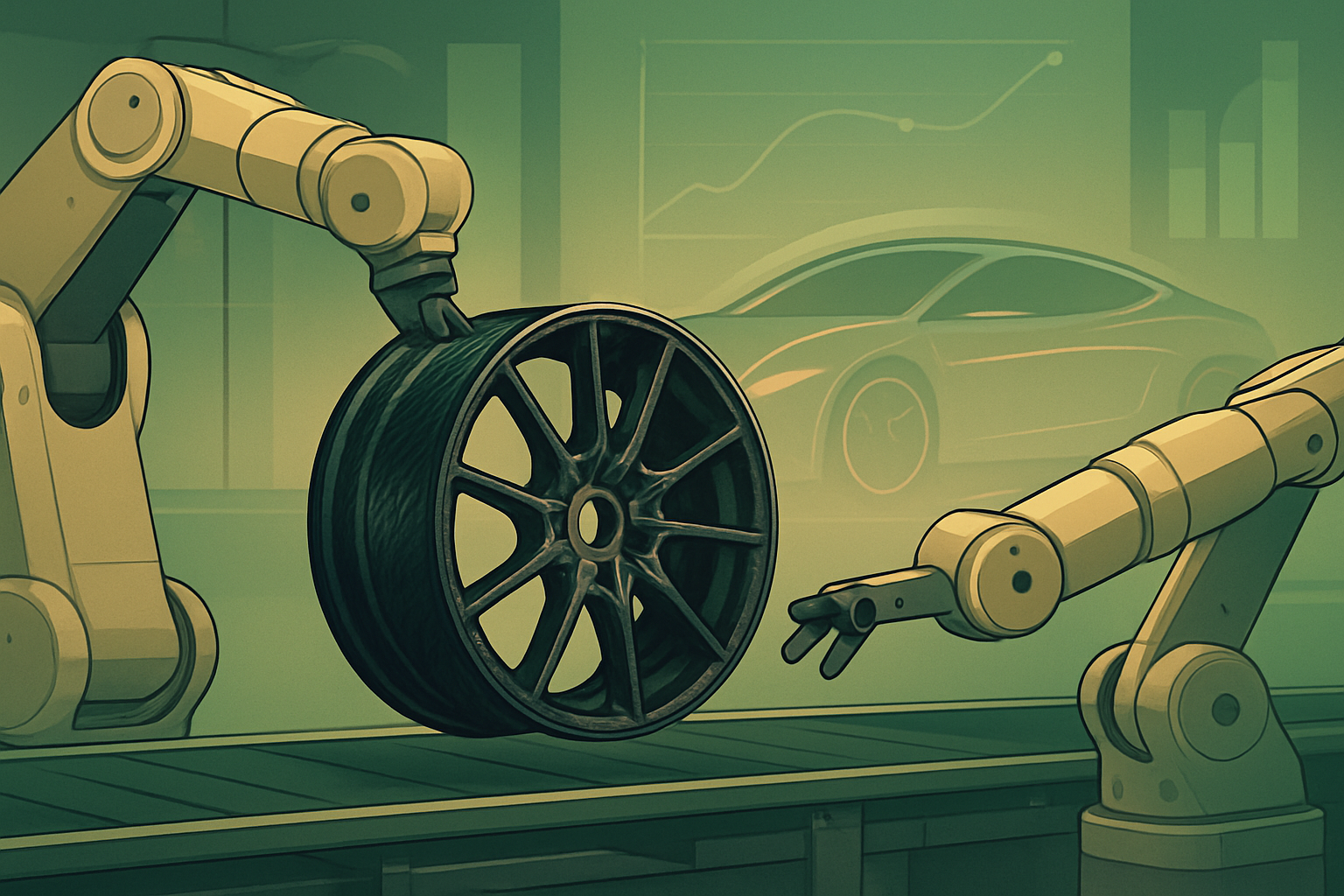
    • The Mega-line: The company’s crown jewel is its automated "Mega-line" in Geelong. This facility uses proprietary robotics and "digital twin" technology to automate the layup of carbon fiber, a process that was historically labor-intensive. The Mega-line is designed to produce 50,000 wheels annually, a scale unmatched by any competitor.

    Competitive Landscape

    While Carbon Revolution is the only company producing one-piece carbon fiber wheels at OEM scale, it faces competition on two fronts:

    1. Hybrid Competitors: Companies like Dymag (UK) offer carbon-hybrid wheels (carbon fiber rim with an aluminum center), which are easier to manufacture but lack the full weight-saving benefits of a one-piece design.
    2. Tier 1 Giants: Companies like Maxion and BBS are investing in composite research. While they haven't matched Carbon Revolution’s one-piece tech, their massive balance sheets allow them to wait for the market to mature.

    Industry and Market Trends

    The most significant macro driver for Carbon Revolution is the "EV Range Paradox." Electric vehicles are inherently heavy due to battery packs. To offset this weight and extend range, manufacturers are looking for every possible ounce of savings.

    • Range Extension: Carbon fiber wheels can extend EV range by an estimated 5% to 10% through a combination of weight reduction and improved aerodynamics.
    • NVH Reduction: Carbon fiber has superior natural damping properties, reducing Road-Noise, Vibration, and Harshness (NVH)—a critical factor for quiet-running EVs.

    Risks and Challenges

    The risks facing CRCL in March 2026 are existential:

    • Liquidity and Solvency: The company is currently negotiating a debt-for-equity swap with its secured lenders. This move, while potentially saving the company from bankruptcy, is expected to essentially wipe out existing common shareholders.
    • Concentration Risk: A significant portion of revenue comes from a few high-end programs. The cancellation of two major EV programs in late 2025 highlighted the company's vulnerability to the broader "EV cooling" trend.
    • Manufacturing Complexity: Despite the Mega-line, carbon fiber manufacturing remains high-cost and prone to yield issues compared to traditional alloy casting.

    Opportunities and Catalysts

    Despite the financial gloom, the company possesses "distressed asset" appeal.

    • M&A Potential: A major OEM (like GM or Ford) or a large Tier 1 supplier could acquire Carbon Revolution’s IP and manufacturing assets at a deep discount to internalize the technology.
    • The Porsche/BMW Rumor: Long-standing rumors of a massive contract with a "Major German OEM" (believed to be Porsche or BMW) remain a potential catalyst if the company can stabilize its finances to fulfill the order.

    Investor Sentiment and Analyst Coverage

    Sentiment is currently at an all-time low. Most major Wall Street analysts have ceased coverage following the delisting. Retail sentiment, once bullish during the 2023-2024 "tech-auto" hype, has turned to frustration as the stock migrated to the OTC Pink Sheets. Institutional holders have largely exited, leaving the company’s fate in the hands of its debt holders.

    Regulatory, Policy, and Geopolitical Factors

    Governments in the U.S. and EU continue to tighten fleet efficiency standards. Incentives for lightweighting technologies could eventually provide Carbon Revolution with indirect subsidies or "green credits." However, the company’s Australian base provides a geopolitical challenge; while it has a U.S. listing, its primary manufacturing remains in Geelong, making it sensitive to Australian labor costs and logistics.

    Conclusion

    Carbon Revolution is a company that has succeeded in every way except the one that matters most to the public markets: financial sustainability. Its wheels are an engineering triumph, chosen by the most discerning automotive brands in history. However, the cost of industrializing this technology proved higher than the capital markets were willing to bear in a high-interest-rate environment.

    For investors, CRCL/CREVF is no longer a traditional equity play; it is a speculative bet on a restructuring outcome. The technology will likely survive—it is too valuable to the future of the EV industry to disappear—but whether current shareholders will be part of that future remains deeply uncertain. Watch for the finalization of the debt-for-equity swap as the defining moment for the company's 2026 trajectory.


    This content is intended for informational purposes only and is not financial advice. As of March 17, 2026, Carbon Revolution is considered a high-risk, distressed security.

  • The Phoenix of the Pavement: A 2026 Deep-Dive into Carvana’s (CVNA) Historic Turnaround

    The Phoenix of the Pavement: A 2026 Deep-Dive into Carvana’s (CVNA) Historic Turnaround

    Today’s Date: February 27, 2026

    Introduction

    On this day, February 27, 2026, Carvana Co. (NYSE: CVNA) has once again captured the full attention of Wall Street. Following a robust 5.6% gain in intraday trading, the e-commerce auto titan has signaled to investors that its "Phoenix rising" narrative is far from over. This recent uptick comes at a critical juncture: the company has just transitioned from a period of existential crisis in late 2022 to becoming one of the most efficient retail machines in the United States.

    Carvana is currently in focus not just for its volatile stock price, but for a fundamental restructuring that has redefined the unit economics of the used vehicle industry. By integrating high-tech automation with a massive physical logistics footprint acquired through ADESA, Carvana has moved from a cash-burning startup to a GAAP-profitable enterprise. However, as it approaches a pivotal "interest cliff" in mid-2026, the market remains sharply divided on whether its operational brilliance can outrun its complex financial architecture.

    Historical Background

    Founded in 2012 by Ernest Garcia III, Ryan Keeton, and Ben Huston, Carvana was born as a subsidiary of DriveTime Automotive Group. The vision was radical: eliminate the friction, pressure, and high overhead of the traditional car dealership by moving the entire transaction online. In 2013, the company opened its first "Car Vending Machine" in Atlanta, a glass-tower marketing marvel that became the brand’s visual shorthand for innovation.

    Carvana went public on the NYSE in 2017, but its true "rocket ship" phase began during the COVID-19 pandemic. As lockdowns shuttered physical showrooms and stimulus checks flooded the economy, Carvana’s touchless delivery model became the industry standard. By August 2021, the stock peaked near $370 per share. However, the subsequent rise in interest rates and a cooling used car market in 2022 nearly destroyed the company. Its stock plummeted below $4 as investors feared a total liquidity collapse.

    The years 2023 through 2025 will likely be remembered in business schools as one of the most aggressive corporate turnarounds in history. Through a massive debt restructuring deal in 2023 and a laser-focus on "Gross Profit per Unit" (GPU), Carvana emerged smaller but significantly more profitable, setting the stage for its current 2026 valuation.

    Business Model

    Carvana operates a vertically integrated e-commerce platform for buying and selling used vehicles. Unlike traditional dealers that rely on floor-plan financing and physical lots, Carvana’s model is built on three pillars:

    1. Retail Sales: The company maintains a national inventory of tens of thousands of vehicles, reconditioned at its own Inspection and Reconditioning Centers (IRCs).
    2. Wholesale and ADESA: Through its $2.2 billion acquisition of ADESA’s U.S. physical auction business, Carvana now controls a massive network of wholesale sites. These sites act as "dual-hubs," facilitating wholesale auctions for trade-ins that don't meet retail standards while serving as local logistics points for retail units.
    3. Ancillary Services (The "Profit Engine"): Carvana generates significant revenue through its financing arm (via Bridgecrest), extended warranties, and GAP insurance. By originating loans and selling them to third-party investors, Carvana captures a "finance GPU" that often exceeds the profit made on the vehicle itself.

    The customer base is primarily digital-native Millennials and Gen Z buyers who value transparency, fixed pricing, and the seven-day return policy over the traditional haggling experience.

    Stock Performance Overview

    Carvana’s stock performance is a tale of extreme volatility and a multi-year recovery:

    • 1-Year Performance (2025–2026): Over the last 12 months, CVNA has outperformed the S&P 500 significantly, rising nearly 65% as it hit consecutive quarters of record EBITDA. The 5.6% gain today reflects a recovery from a minor dip following its Q4 2025 earnings report.
    • 5-Year Performance: On a five-year horizon, the stock remains a "rollercoaster." Long-term holders from the 2021 peak were underwater for years, but the 2024-2025 surge has brought the stock back toward the $350-$400 range, a level few thought possible during the 2022 lows.
    • 10-Year Performance: Since its 2017 IPO, Carvana has delivered a massive, albeit non-linear, return. Early investors who weathered the 2022 storm have seen wealth creation on par with top-tier tech stocks.

    Financial Performance

    Carvana’s fiscal year 2025 results, released recently, highlight its newfound financial discipline. The company reported $20.32 billion in total revenue, a 49% increase year-over-year. More importantly, it achieved a Net Income of $1.9 billion, marking its second consecutive year of GAAP profitability.

    The key metric for analysts is Total GPU, which reached a staggering $7,362 in Q3 2025—nearly triple the industry average. This was driven by a reduction in reconditioning costs and an increase in the attachment rate of financing and protection products. However, the balance sheet remains a point of contention. While Carvana has reduced its leverage ratio to 1.3x Net Debt-to-Adjusted EBITDA, it still carries roughly $5.1 billion in long-term debt.

    The current valuation (P/E ratio) sits higher than traditional retailers like CarMax (NYSE: KMX), reflecting the market's treatment of Carvana as a high-growth technology platform rather than a mere car dealer.

    Leadership and Management

    Ernie Garcia III remains the polarizing and visionary CEO. His leadership during the 2022 crisis earned him respect for steering the ship away from bankruptcy, though his dual-class share structure gives the Garcia family nearly total control over the company.

    The board is increasingly focused on governance as the company matures. However, the relationship with DriveTime and Bridgecrest—both owned or controlled by Ernie Garcia II—continues to draw scrutiny. Critics argue these "related-party transactions" complicate the financial picture, while management insists they provide a competitive advantage in logistics and financing. In early 2026, the leadership team has doubled down on transparency initiatives to appease institutional investors.

    Products, Services, and Innovations

    Innovation is Carvana's primary competitive moat. In 2026, two key technologies are driving the company’s industry-leading efficiency:

    • CARLI: An AI-powered vehicle inspection system that uses high-resolution imaging and machine learning to detect mechanical and cosmetic issues in seconds, reducing human labor in the reconditioning process.
    • Sebastian: A generative AI customer service agent that manages nearly 60% of all vehicle acquisition interactions. Sebastian can evaluate a customer’s trade-in, verify documents, and issue an offer in real-time.
    • Same-Day Delivery: Leveraging the ADESA footprint, Carvana now offers same-day delivery in over 50 major U.S. markets, a feat traditional logistics networks struggle to match.

    Competitive Landscape

    Carvana’s primary rival remains CarMax (NYSE: KMX), the "omni-channel" incumbent. While CarMax has larger physical footprints, Carvana has leapfrogged them in digital experience and unit profitability.

    Other competitors include:

    • AutoNation (NYSE: AN): Transitioning toward a more digital model but still hampered by a heavy legacy dealership structure.
    • Regional Dealers: They continue to lose market share as consumers shift toward the convenience of online buying.
    • The "Fall of the Pure-Plays": Rivals like Vroom and Shift, which tried to emulate Carvana’s model without its scale or logistics focus, have largely exited the market or filed for bankruptcy, leaving Carvana as the dominant "pure-play" e-commerce survivor.

    Industry and Market Trends

    The used vehicle market in February 2026 has entered a "normalization" phase.

    • Inventory Recovery: The supply of 1-to-3-year-old vehicles has finally recovered following the manufacturing shortages of the early 2020s. This has stabilized prices, with the average used car transaction hovering around $25,700.
    • Interest Rates: While rates have stabilized from their 2023 peaks, they remain higher than the 2010s average. Carvana has adapted by tightening its lending standards and focusing on higher-credit-score buyers.
    • EV Expansion: Used Electric Vehicles now make up 11% of the secondary market. Carvana has invested heavily in EV battery diagnostic tools to ensure it can accurately price and warranty used Teslas, Rivians, and Fords.

    Risks and Challenges

    Despite the 5.6% gain, Carvana faces formidable headwinds:

    • The PIK-to-Cash Cliff: In mid-2026, the "Payment-In-Kind" (PIK) interest period from its 2023 debt restructuring expires. Carvana will soon need to pay over $500 million annually in cash interest, a significant drain on free cash flow.
    • Short-Seller Allegations: In late January 2026, a report from Gotham City Research alleged that Carvana’s earnings were inflated through related-party transactions with DriveTime. While management denied the claims, the "headline risk" remains.
    • Cyclicality: A potential 2026 economic slowdown could dampen consumer demand for vehicles, even as Carvana’s costs remain fixed.

    Opportunities and Catalysts

    • S&P 500 Inclusion: Following its consistent profitability, Carvana’s recent inclusion in the S&P 500 has forced institutional buying and increased the stock's prestige.
    • ADESA Expansion: Only about 70% of ADESA’s physical capacity is currently utilized. Increasing this throughput could further drive down SG&A per unit.
    • Market Share Consolidation: With smaller players gone, Carvana is positioned to capture the 1% to 2% of the market formerly held by Vroom and others.

    Investor Sentiment and Analyst Coverage

    Sentiment is sharply bifurcated. JPMorgan and Wells Fargo maintain "Overweight" ratings, citing Carvana's superior technology and 11% EBITDA margins as proof of a structural advantage. Conversely, many retail investors on platforms like Stocktwits remain skeptical, pointing to the $170 million in insider selling by the Garcia family over the past 90 days.

    The current consensus is a "Moderate Buy," with a median price target of $445, suggesting more room for growth if the company handles the 2026 interest transition successfully.

    Regulatory, Policy, and Geopolitical Factors

    Carvana continues to navigate a complex web of state-level dealer licensing laws. Several states have previously suspended Carvana’s license over title processing delays. While the company has improved its administrative infrastructure, it remains under the watchful eye of the Federal Trade Commission (FTC) regarding its financing disclosures and advertising practices.

    Geopolitically, the company is relatively insulated as a domestic-only operator. However, changes in federal EV tax credits for used vehicles directly impact its inventory turnover and margins in the growing electric segment.

    Conclusion

    As of February 27, 2026, Carvana (NYSE: CVNA) stands as a testament to the power of operational discipline and technological integration. The company has successfully navigated the "Valley of Death" and emerged as a profitable leader in a fragmented $800 billion industry.

    The recent 5.6% gain reflects investor confidence in Carvana's ability to generate cash. However, the looming transition to cash interest payments and the persistent noise from short-sellers mean that this is not a "set it and forget it" stock. Investors should watch the Q2 2026 earnings report closely—it will be the first true test of whether the company’s "Phoenix" can fly without the help of deferred interest payments. For now, Carvana remains a high-octane bet on the future of retail.


    This content is intended for informational purposes only and is not financial advice.

  • BorgWarner (BWA): From Automotive Mainstay to AI Power Pioneer—A 2026 Deep Dive

    BorgWarner (BWA): From Automotive Mainstay to AI Power Pioneer—A 2026 Deep Dive

    On February 11, 2026, BorgWarner Inc. (NYSE: BWA) finds itself at a historical crossroads. Long synonymous with the inner workings of the internal combustion engine (ICE), the Michigan-based Tier-1 supplier has spent the last five years aggressively shedding its legacy skin to emerge as a propulsion technology leader. Today’s market news—a major strategic pivot into the AI data center power market through a master supply agreement with TurboCell—marks perhaps the most significant diversification in the company's nearly century-long history.

    While the stock experienced a volatile reaction following the simultaneous release of its Q4 2025 earnings—dropping roughly 6.9% in pre-market trading due to cautious 2026 organic growth guidance—the narrative of BorgWarner is no longer just about cars. It is about the global management of power, whether under the hood of a hybrid SUV or inside a gigawatt-scale AI campus.

    Historical Background

    Founded in 1928 through the merger of four automotive parts manufacturers (Borg & Beck, Marvel-Schebler, Warner Gear, and Mechanics Universal Joint), BorgWarner has always been a consolidator and an innovator. For decades, it was the gold standard in transmission technology and turbocharging, essential components for the 20th-century automotive boom.

    The company’s modern era began in earnest in 2021 with the announcement of its "Charging Forward" strategy. This was followed by the pivotal July 2023 spin-off of PHINIA Inc. (NYSE: PHIN), which took the legacy fuel systems and aftermarket businesses with it. This move effectively decoupled BorgWarner from the "declining" assets of pure combustion technology, allowing the remaining entity to focus exclusively on the transition to electric (eProducts) and high-efficiency hybrid systems.

    Business Model

    BorgWarner operates through a streamlined segment structure that reflects its technological pivot:

    • Air Management: Focuses on turbochargers, eBoosters, and thermal management systems—technologies critical for both high-efficiency ICE and hybrid vehicles.
    • Drivetrain & Battery Systems: Produces clutches, friction materials, and full battery packs.
    • ePropulsion: The high-growth heart of the company, focusing on eMotors, Integrated Drive Modules (iDMs), and power electronics like inverters.

    The company’s customer base includes virtually every major global OEM, from Volkswagen and Ford to emerging electric players in China. Revenue is increasingly driven by "Content-per-Vehicle" (CPV) growth; notably, BorgWarner’s CPV for hybrids ($2,122) and BEVs is significantly higher than its legacy ICE content ($548), providing a built-in tailwind even as unit volumes fluctuate.

    Stock Performance Overview

    The last five years have been a roller coaster for BWA shareholders. In early 2021, the stock traded in the mid-$40s, buoyed by the initial excitement of the EV transition. However, 2023 and 2024 saw significant volatility as global EV demand cooled and interest rates pressured the automotive sector.

    Throughout 2025, the stock staged a recovery, climbing from the high $30s to over $50 as the company demonstrated its ability to generate massive free cash flow from its hybrid portfolio. However, today’s (2/11/2026) dip highlights the market's current sensitivity to top-line organic growth, as the company intentionally winds down lower-margin legacy contracts and exits the EV charging hardware business to focus on profitability.

    Financial Performance

    BorgWarner’s 2025 fiscal year was a masterclass in operational discipline. The company reported:

    • Net Sales: $14.3 billion, a modest 1.6% increase over 2024.
    • Adjusted EPS: $4.91, beating analyst expectations and representing a 14% year-over-year jump.
    • Free Cash Flow (FCF): A record-breaking $1.21 billion, up 66% from the previous year.

    Despite these strong trailing numbers, the 2026 guidance provided today has given investors pause. Management expects sales to remain relatively flat ($14.0 billion to $14.3 billion) as they exit the charging hardware market and navigate soft global vehicle production. However, projected EPS of $5.00–$5.20 suggests that the "leaner" BorgWarner is successfully squeezing more profit out of every dollar of revenue.

    Leadership and Management

    The company is currently led by CEO Joseph Fadool, who took over from the retiring Frédéric Lissalde on February 6, 2025. Fadool, previously the COO, has been the primary architect of the "Operational Excellence" mandate. While Lissalde was the visionary behind "Charging Forward," Fadool is seen as the pragmatist focused on execution and capital allocation.

    Fadool’s decision to exit the EV charging business in May 2025—citing a failure to meet the 15% return on invested capital (ROIC) threshold—signaled to the board and shareholders that the new leadership would prioritize margins over "growth at any cost."

    Products, Services, and Innovations

    BorgWarner’s competitive edge currently rests on two pillars:

    1. Silicon Carbide (SiC) Inverters: Using advanced materials to reduce energy loss in EVs, providing longer range and faster charging.
    2. Integrated Drive Modules (iDM): A "3-in-1" system combining the motor, transmission, and power electronics into a single, compact unit.

    The "innovation of the day," however, is the TurboCell Turbine Generator. By adapting its world-class turbocharging and thermal management expertise, BorgWarner is now producing turbine systems designed for on-site power generation at AI data centers. This allows data centers to operate independently of the grid or provide immediate backup during peak demand, tapping into the massive infrastructure spend of the AI era.

    Competitive Landscape

    In the automotive Tier-1 space, BorgWarner faces fierce competition from Robert Bosch GmbH, ZF Friedrichshafen, and Magna International (NYSE: MGA). While Bosch and ZF have greater scale, BorgWarner’s advantage lies in its agility and its specific dominance in turbocharging—a technology that has become a surprise winner in the "Hybrid Renaissance."

    In the EV space, Chinese competitors like Inovance have pressured margins. BorgWarner has responded by focusing on the "premium" segment, where its 800V inverters and SiC technology command higher premiums and offer performance characteristics that lower-cost competitors struggle to match.

    Industry and Market Trends

    The "EV Winter" of 2024-2025 has transitioned into the "Hybrid Spring" of 2026. Global OEMs, facing consumer pushback on pure BEVs due to infrastructure and price, have pivoted heavily toward Plug-in Hybrids (PHEVs) and Range-Extended EVs (REEVs). This trend plays directly into BorgWarner’s hands, as hybrids require both combustion-efficiency parts (turbos) and electric propulsion parts (motors/inverters).

    Simultaneously, the "Energy Crunch" caused by AI data centers has created a new macro-driver. Industrial companies with power-generation expertise are finding themselves drafted into the tech sector, a trend BorgWarner is now exploiting.

    Risks and Challenges

    • Organic Growth Headwinds: The intentional exit from legacy businesses and the EV charging segment creates a "revenue hole" that eProducts must fill.
    • Customer Concentration: While BorgWarner has many customers, a slowdown at a major partner like Ford or Volkswagen can have outsized impacts.
    • Execution Risk in AI: Entering the data center market is a significant leap. Manufacturing turbine generators for static power is different from automotive scale, and any delays in the 2027 production timeline could hurt credibility.

    Opportunities and Catalysts

    • The AI Pivot: If the TurboCell partnership scales, BorgWarner could see a valuation rerating from a "cyclical auto parts" company to an "industrial tech" company.
    • Charging Forward 2027: The company is on track to hit its goal of $10 billion in eProduct revenue by 2027, which would represent roughly 50% of its total business.
    • Share Buybacks: With $1.2 billion in FCF, the company has significant dry powder for aggressive share repurchases, which could support EPS growth even if sales remain flat.

    Investor Sentiment and Analyst Coverage

    Wall Street remains divided. Value-oriented analysts point to the record FCF and low P/E ratio (currently trading at approximately 9.5x 2026 earnings) as a sign of deep undervaluation. Growth-oriented analysts, however, remain cautious about the soft organic sales guidance.

    Institutional ownership remains high, with major firms like Vanguard and BlackRock holding significant positions. The entry into the AI infrastructure space is expected to draw interest from thematic "AI pick and shovel" funds that previously would never have looked at an auto supplier.

    Regulatory, Policy, and Geopolitical Factors

    BorgWarner is a major beneficiary of the U.S. Inflation Reduction Act (IRA) and similar European incentives for domestic green technology manufacturing. However, its significant footprint in China (which accounts for roughly 20% of sales) remains a geopolitical risk. Potential tariffs or "Trade War 2.0" scenarios in 2026 could disrupt its supply chains for critical rare-earth magnets used in eMotors.

    Conclusion

    BorgWarner is a company in the final stages of a profound metamorphosis. The 2025 financial results prove that the company can be highly profitable even in a stagnant automotive market, thanks to its high-margin hybrid and eProduct portfolio. While today's stock drop reflects short-term disappointment with 2026 sales guidance, the long-term thesis is bolstered by the bold entry into AI data center power systems.

    Investors should watch for three things in the coming quarters: the ramp-up of the TurboCell partnership, the margin progression of the ePropulsion segment as it approaches its 7% target, and any further strategic M&A that utilizes the company's strong cash position. For those willing to look past the cyclicality of the auto industry, BorgWarner offers a unique blend of "Old Economy" cash flow and "New Economy" tech exposure.


    This content is intended for informational purposes only and is not financial advice. Today's date is February 11, 2026.

  • Qualcomm (QCOM) Deep Dive: Navigating the 8.5% Plunge and the Global Memory Famine

    Qualcomm (QCOM) Deep Dive: Navigating the 8.5% Plunge and the Global Memory Famine

    On February 6, 2026, the semiconductor landscape witnessed a jarring recalibration as Qualcomm Incorporated (NASDAQ: QCOM) shares plummeted 8.5% in a single trading session. The catalyst for this sharp correction was not a failure of innovation or a loss of market share, but rather a "structural bottleneck" described by management during their Q1 fiscal 2026 earnings call. While the company reported record automotive revenues and strong performance in its burgeoning PC segment, a significant revenue forecast miss for the upcoming quarter—driven by a global memory shortage—sent shockwaves through the investor community.

    Qualcomm, long the undisputed king of mobile connectivity, finds itself at a crossroads. Today, it is no longer just a smartphone chip provider; it is an "intelligent computing" powerhouse aggressively diversifying into the automotive and PC sectors. However, the 8.5% plunge highlights the fragility of global supply chains and the unexpected consequences of the artificial intelligence (AI) boom, which has redirected vital memory production away from traditional consumer electronics.

    Historical Background

    Founded in 1985 by Irwin Jacobs and six colleagues in San Diego, Qualcomm’s origins were rooted in contract research and development for government and commercial projects. Its first major success was Omnitracs, a satellite-based system for the trucking industry. However, the company’s true transformation occurred when it pioneered Code Division Multiple Access (CDMA) technology. At the time, the cellular industry was leaning toward TDMA (Time Division Multiple Access), but Qualcomm’s superior CDMA standard eventually became the bedrock for 2G, 3G, and essentially all modern 4G and 5G cellular communications.

    By the early 2000s, Qualcomm had successfully transitioned into a "fabless" semiconductor model, focusing on the high-value design of chips while outsourcing manufacturing. This allowed the company to scale rapidly during the smartphone revolution. Under successive leadership, Qualcomm expanded its Snapdragon platform, which today powers billions of devices. The company has survived existential legal battles with Apple and various global regulators over its licensing practices, emerging as a leaner, more diversified entity by the mid-2020s.

    Business Model

    Qualcomm’s business model is a unique "double-engine" system that combines high-volume silicon sales with high-margin intellectual property (IP) licensing.

    1. QCT (Qualcomm CDMA Technologies): Accounting for roughly 87% of total revenue, this segment focuses on the design and sale of integrated circuits (chipsets) and software. QCT is divided into three pillars:
      • Handsets: Flagship Snapdragon processors for the premium and mid-tier smartphone markets.
      • Automotive: The "Snapdragon Digital Chassis," which provides a suite of cloud-connected platforms for telematics, digital cockpits, and ADAS.
      • IoT: A broad category including industrial edge AI, wearables, and the high-growth "AI PC" segment.
    2. QTL (Qualcomm Technology Licensing): Contributing approximately 13% of revenue but a disproportionate share of profits, QTL holds the patents for foundational mobile technologies. Virtually every manufacturer of a 4G or 5G device globally must pay a royalty to Qualcomm, regardless of whether they use a Qualcomm chip.
    3. QSI (Qualcomm Strategic Initiatives): This arm invests in ecosystem-building technologies, particularly in AI and automotive, to ensure Qualcomm’s architectures remain the industry standard.

    Stock Performance Overview

    Over the last decade, QCOM has been a volatile yet rewarding investment.

    • 10-Year Horizon: The stock has benefited from the 4G-to-5G transition, though it faced a multi-year stagnation between 2015 and 2019 due to the Apple litigation and a hostile takeover attempt by Broadcom.
    • 5-Year Horizon: The stock surged during the post-pandemic digital acceleration, hitting all-time highs as 5G adoption peaked. The launch of the Snapdragon X Elite in late 2024 provided a secondary growth engine.
    • 1-Year Horizon: Until the recent 8.5% plunge, Qualcomm had been outperforming the broader Philadelphia Semiconductor Index (SOX), buoyed by optimism regarding "On-Device AI." However, the February 2026 correction has wiped out nearly six months of gains, bringing the stock back to the $155 range.

    Financial Performance

    In its Q1 fiscal 2026 report, Qualcomm announced revenue of $12.3 billion, a 5% year-over-year increase, with Non-GAAP EPS coming in at $3.50. On the surface, these were solid numbers:

    • Automotive Revenue: Reached a record $1.1 billion (+15% YoY).
    • QCT Margins: Held steady at approximately 28%, reflecting strong pricing power in the premium handset tier.

    However, the "miss" occurred in the forward-looking guidance. For Q2 2026, Qualcomm projected revenue between $10.2 billion and $11.0 billion, significantly lower than the $11.6 billion consensus among analysts. This discrepancy is attributed entirely to a global DRAM (Dynamic Random Access Memory) shortage. As memory giants like Micron and SK Hynix shift production to High-Bandwidth Memory (HBM) for AI data centers, the supply of LPDDR5X (mobile memory) has tightened. Consequently, Qualcomm's handset customers (OEMs) have been forced to reduce their chipset orders because they cannot secure the memory needed to complete device builds.

    Leadership and Management

    Cristiano Amon, who took the helm as CEO in 2021, has been the architect of the "One Technology Roadmap." His strategy is to take the low-power, high-performance computing architecture developed for smartphones and scale it across every other category of connected devices.

    Amon is widely respected for his technical depth and aggressive pursuit of the PC market. Under his leadership, Qualcomm completed the acquisition of Nuvia, which gave the company the custom "Oryon" CPU cores that now allow it to compete directly with Apple’s M-series and Intel’s x86 chips. The management team is currently focused on maintaining a high R&D spend (roughly 20% of revenue) while navigating the tricky geopolitical waters of the US-China trade relationship.

    Products, Services, and Innovations

    Qualcomm’s competitive edge in 2026 rests on its ability to run generative AI models locally on a device, rather than relying on the cloud.

    • Snapdragon 8 Elite: This flagship mobile platform features the second-generation Oryon CPU, offering desktop-level performance in a smartphone thermal envelope.
    • Snapdragon X2 Elite Extreme: Launched at CES 2026, this chip is the cornerstone of the "Copilot+" PC movement, delivering over 21 hours of battery life and 50+ TOPs (Tera Operations Per Second) for AI tasks.
    • Snapdragon Digital Chassis: This is a modular platform for carmakers. By 2026, Qualcomm has secured a design-win pipeline worth over $45 billion, with partners like BMW, Volkswagen, and Cadillac integrating their entire digital experience onto Qualcomm silicon.

    Competitive Landscape

    Qualcomm faces a multi-front war:

    • In Mobile: MediaTek remains a fierce competitor in the mid-range and budget segments, while Apple (NASDAQ: AAPL) continues to move toward its own in-house 5G modems, although Qualcomm secured a contract extension through 2026.
    • In PC: Intel (NASDAQ: INTC) and AMD (NASDAQ: AMD) are fighting back with their own "AI PC" architectures. Qualcomm’s advantage remains power efficiency, while the incumbents hold the advantage in legacy software compatibility.
    • In Automotive: NVIDIA (NASDAQ: NVDA) is the primary rival for high-end autonomous driving chips, though Qualcomm has gained ground by offering a more integrated, lower-power "cockpit-to-drive" solution.

    Industry and Market Trends

    The dominant trend in 2026 is the "AI Crowd-Out" effect. The insatiable demand for HBM (High Bandwidth Memory) used in NVIDIA’s AI GPUs has caused memory manufacturers to repurpose their production lines. This has created a paradoxical "chip glut" in some areas and a "component famine" in others. Qualcomm is a victim of this famine; while its own logic chips are available, the lack of peripheral memory components is stalling the entire smartphone assembly line.

    Additionally, the industry is shifting toward "Edge AI." Instead of sending every query to a server, devices are increasingly processing AI locally for privacy and speed—a trend that plays directly into Qualcomm’s strengths.

    Risks and Challenges

    1. Supply Chain Bottlenecks: As evidenced by the recent plunge, Qualcomm’s revenue is tethered to the availability of components it doesn't even make (like DRAM).
    2. The Arm Litigation: Qualcomm is currently embroiled in a high-stakes legal battle with Arm Holdings (NASDAQ: ARM). Arm has attempted to cancel Qualcomm’s architectural license, claiming the Nuvia acquisition requires a new, more expensive agreement. A trial scheduled for later in 2026 represents a major "cloud" over the stock.
    3. China Exposure: With roughly 60% of its revenue derived from customers headquartered in China, Qualcomm remains highly sensitive to US-China trade tensions and potential export restrictions.

    Opportunities and Catalysts

    • PC Market Share: If Qualcomm can capture even 10% of the Windows laptop market by 2027, it would add billions to its top line.
    • Automotive Backlog Conversion: As the $45 billion design-win pipeline converts into actual shipments over the next three years, the Automotive segment could become a $4 billion-plus annual business.
    • 6G Development: As the industry begins to define 6G standards in 2026, Qualcomm’s leadership in the standards bodies (3GPP) ensures it will remain the gatekeeper for the next generation of connectivity.

    Investor Sentiment and Analyst Coverage

    Following the February 6 plunge, Wall Street sentiment is divided. J.P. Morgan and Goldman Sachs maintained "Buy" ratings, viewing the 8.5% drop as a "generational buying opportunity" created by temporary supply issues. Conversely, Susquehanna downgraded the stock to "Neutral," arguing that the memory shortage might persist through 2027, capping Qualcomm’s growth potential in the handset space. Institutional ownership remains high (over 70%), but hedge fund activity in Q1 2026 showed a slight shift toward "defensive" positioning.

    Regulatory, Policy, and Geopolitical Factors

    Qualcomm’s business is deeply influenced by government policy. The CHIPS Act in the United States has provided incentives for the foundries Qualcomm uses (like TSMC in Arizona) to build domestic capacity. However, the company also faces scrutiny from the European Commission regarding its licensing fees and a new investigation by China’s State Administration for Market Regulation (SAMR) regarding its acquisition of Autotalks.

    Conclusion

    The 8.5% plunge in Qualcomm’s stock is a sobering reminder that even the most advanced technology companies are not immune to the physical realities of the global supply chain. Qualcomm has built a formidable "moat" through its licensing business and its pivot into AI PCs and Automotive. However, the current "memory famine" caused by the AI data center boom has introduced a new variable that management cannot control.

    For the long-term investor, Qualcomm remains a premier play on the "Intelligence at the Edge" theme. The company’s ability to run complex AI models on low-power devices is a unique competitive advantage. While the near-term outlook is clouded by the memory shortage and the impending Arm trial, Qualcomm’s fundamental transformation from a "phone chip company" to a "diversified computing leader" remains intact. Investors should watch for stabilization in DRAM pricing and the outcome of the March 2026 legal proceedings as the primary signals for a sustained recovery.


    This content is intended for informational purposes only and is not financial advice.

  • The Edge AI Pivot: A Deep-Dive Into Qualcomm (QCOM) in 2026

    The Edge AI Pivot: A Deep-Dive Into Qualcomm (QCOM) in 2026

    As of February 5, 2026, Qualcomm Incorporated (NASDAQ: QCOM) stands at a pivotal crossroads in its 40-year history. Long celebrated—and occasionally scrutinized—as the undisputed king of smartphone connectivity, the San Diego-based titan is currently executing one of the most ambitious corporate pivots in the semiconductor industry. Under the banner of "The Intelligent Edge," Qualcomm is aggressively migrating its high-performance, low-power architecture into PCs, automobiles, and industrial IoT, aiming to decouple its future from the maturing smartphone market.

    With its most recent quarterly earnings reported just yesterday, the company remains a focal point for investors. While the numbers showcase a powerhouse in transition, a mix of record-breaking automotive revenue and a cautious near-term outlook has ignited a fresh debate on Wall Street: Can Qualcomm’s diversification into AI PCs and software-defined vehicles outpace the looming loss of its most lucrative customer, Apple?

    Historical Background

    Founded in 1985 by Irwin Jacobs and six colleagues, Qualcomm’s origins were rooted in a radical belief in Code Division Multiple Access (CDMA) technology. At a time when the world was settling on TDMA standards, Qualcomm’s proprietary digital wireless technology became the bedrock of 2G and 3G networks. This early technical victory established a lucrative licensing model that would define the company for decades.

    Throughout the 2010s, Qualcomm transitioned into the 4G LTE era as a dominant force, though not without controversy. It faced a series of high-profile antitrust battles in the U.S., Europe, and China over its "no license, no chips" policy. A defining moment came in 2018 when the company successfully fended off a hostile takeover attempt by Broadcom, followed by a major settlement with Apple in 2019. These events cleared the path for Qualcomm to lead the 5G rollout, eventually leading to the current era where generative AI and diversified computing have become the new frontier.

    Business Model

    Qualcomm operates primarily through two segments: Qualcomm CDMA Technologies (QCT) and Qualcomm Technology Licensing (QTL).

    1. QCT (Semiconductors): This is the engine of the company, representing approximately 85% of total revenue. It develops and supplies integrated circuits and system software for smartphones, laptops, and cars. Within QCT, the "Snapdragon" brand has become synonymous with premium mobile experiences.
    2. QTL (Licensing): This high-margin segment holds the vast portfolio of patents essential to cellular standards (3G, 4G, 5G, and emerging 6G). Even if a manufacturer does not use Qualcomm chips, they typically must pay a royalty to Qualcomm for using its patented wireless technologies.

    Recent shifts have seen QCT further subdivided into Handsets, Automotive, and IoT (which includes PCs and Industrial applications), reflecting the company's diversification strategy.

    Stock Performance Overview

    Over the last decade, Qualcomm has been a rewarding but volatile journey for shareholders.

    • 10-Year Horizon: Investors who held since 2016 have seen substantial gains, driven by the 5G super-cycle and the expansion of the "Snapdragon" ecosystem.
    • 5-Year Horizon: The stock benefited from the post-pandemic digital acceleration and the 2023-2024 AI rally, though it has faced periodic corrections due to smartphone saturation.
    • 1-Year Horizon: As of February 5, 2026, the stock is trading around the $150 mark. Over the past 12 months, it has largely moved in tandem with the broader semiconductor index (SOX), though it has recently underperformed peers like Nvidia due to its heavy exposure to the Chinese consumer market and the impending Apple modem transition.

    Financial Performance

    In its latest earnings report for Q1 2026 (ended December 2025), Qualcomm reported:

    • Revenue: $12.3 billion, a record quarterly high.
    • Non-GAAP EPS: $3.50, beating analyst estimates.
    • Net Income: Driven by strong premium handset sales and a 27% year-over-year jump in Automotive revenue.

    However, the company’s guidance for the current quarter (Q2 2026) was surprisingly conservative, projecting revenue between $10.2 billion and $11.0 billion. Management cited a temporary shortage in high-bandwidth memory (HBM) and LPDDR5X components, which has forced some handset partners to delay production schedules. Despite this, Qualcomm's balance sheet remains robust, with a commitment to returning capital to shareholders through consistent dividend growth and opportunistic buybacks.

    Leadership and Management

    Since taking the helm in 2021, CEO Cristiano Amon has been the architect of the "One Technology Roadmap." Amon’s strategy is built on the premise that the technologies developed for the smartphone—high-speed connectivity, low-power NPU (Neural Processing Unit), and efficient graphics—are the same technologies needed for the next generation of PCs and cars.

    Amon is widely respected for his technical depth and aggressive pursuit of new markets, specifically his move to acquire Nuvia in 2021, which provided the custom CPU cores now powering the Snapdragon X Elite PC chips. The board of directors is generally viewed as stable, with strong governance ratings, though they remain under pressure to prove that the "diversification" narrative can fully offset the eventual loss of Apple's modem business.

    Products, Services, and Innovations

    Qualcomm's current product lineup is increasingly focused on "On-Device AI."

    • Snapdragon 8 Elite: The flagship mobile platform, which as of 2026, runs localized Large Language Models (LLMs) with over 15 billion parameters directly on the device.
    • Snapdragon X2 & X2 Plus: The second generation of PC processors aimed at the Windows on Arm (WoA) ecosystem. These chips are challenging the long-standing Intel/AMD x86 dominance by offering superior battery life and dedicated AI hardware for Microsoft’s Copilot+ features.
    • Snapdragon Digital Chassis: A suite of cloud-connected platforms for telematics, the digital cockpit, and ADAS (Advanced Driver Assistance Systems).
    • AI200 Accelerator: A new foray into edge servers, launched at CES 2026, designed to handle AI workloads at the "near edge" (retail stores, warehouses) without the latency of the central cloud.

    Competitive Landscape

    Qualcomm faces a multi-front war with formidable rivals:

    • MediaTek: The primary rival in the mobile space. While Qualcomm dominates the premium tier, MediaTek’s Dimensity 9500 series has made significant inroads into the "flagship-killer" segment, offering comparable AI performance at lower price points.
    • Apple (NASDAQ: AAPL): Transitioning from customer to competitor. Apple has begun deploying its in-house 5G modems (C1 chip) in lower-end devices as of early 2026, with a total phase-out of Qualcomm modems expected by 2027/2028.
    • Nvidia (NASDAQ: NVDA): While Nvidia rules the data center, it is increasingly encroaching on the "Edge AI" and Automotive spaces where Qualcomm has traditionally been strong.
    • Intel (NASDAQ: INTC): The incumbent in the PC market. Intel’s "Lunar Lake" and subsequent architectures are fighting back against Qualcomm's ARM-based PC expansion.

    Industry and Market Trends

    The semiconductor industry in 2026 is defined by the "AI-ification" of every device.

    1. Generative AI at the Edge: There is a massive industry push to move AI processing away from expensive data centers and onto local devices for privacy and latency reasons. Qualcomm is the primary beneficiary of this trend.
    2. Software-Defined Vehicles (SDVs): Cars are increasingly becoming "smartphones on wheels." This shift plays directly into Qualcomm's strengths in connectivity and cockpit virtualization.
    3. Memory Constraints: A broader industry trend in 2026 is the tight supply of advanced memory, which has become a bottleneck for the AI-enabled hardware rollout.

    Risks and Challenges

    Qualcomm’s path is fraught with significant "tail risks":

    • China Exposure: Roughly 65% of Qualcomm's revenue is tied to the Chinese ecosystem. Any escalation in trade tensions or a resurgence of domestic Chinese chip alternatives (like Huawei’s HiSilicon) poses a direct threat.
    • The "Apple Gap": Apple accounts for a significant portion of QCT revenue. While Qualcomm is diversifying, the sheer volume of iPhone shipments is difficult to replace entirely.
    • Regulatory Scrutiny: In late 2025, China’s SAMR launched an investigation into Qualcomm’s acquisition of Autotalks, signaling continued regulatory pressure in its largest market.

    Opportunities and Catalysts

    • The AI PC Super-Cycle: If Windows on Arm reaches a "tipping point" in 2026, Qualcomm could see its PC revenue grow from a rounding error to a multi-billion dollar pillar.
    • Automotive Backlog: With a design-win pipeline of $45 billion, much of Qualcomm's future automotive revenue is already "contracted" but not yet realized. As these vehicles hit the road in 2026 and 2027, revenue recognition will accelerate.
    • 6G Standards: As the world begins to define 6G, Qualcomm’s massive patent portfolio ensures it will remain the "toll booth" for wireless connectivity well into the 2030s.

    Investor Sentiment and Analyst Coverage

    Analyst sentiment as of February 2026 is "cautiously optimistic." The consensus remains a "Moderate Buy."

    • Bulls argue that Qualcomm is the most undervalued "AI play" in the market, trading at a significant discount to Nvidia and AMD despite having a similar technological moat in Edge AI.
    • Bears point to the declining smartphone replacement rates and the geopolitical fragility of the China-centric supply chain.
    • Institutional Activity: Major hedge funds have maintained stable positions, though some rotation has been observed out of QCOM and into "pure-play" AI infrastructure stocks.

    Regulatory, Policy, and Geopolitical Factors

    Qualcomm is a "geopolitical football." As a leader in both AI and 5G, it is at the heart of the U.S. "CHIPS Act" and export control policies.

    • U.S. Policy: The company benefits from incentives to bring advanced design and packaging back to U.S. soil.
    • China Policy: Conversely, Beijing’s push for "chip independence" is a long-term headwind. The current SAMR probe is viewed by many as a tactical move in the broader trade negotiations between Washington and Beijing.

    Conclusion

    Qualcomm in early 2026 is a company defined by a bold transition. It has successfully moved past the "modem-only" era to become a diversified compute leader, with its technology now powering everything from the world's most intelligent smartphones to the latest AI PCs and electric vehicles.

    For investors, the story is one of timing. In the short term, the company faces "digestion" issues—memory shortages and the gradual exit of Apple. However, for those with a three-to-five-year horizon, Qualcomm represents one of the most efficient ways to play the "Edge AI" revolution. Whether Qualcomm can trade its "mobile" multiple for a higher "AI" multiple will depend entirely on its execution in the PC and Automotive sectors over the next 18 months.


    This content is intended for informational purposes only and is not financial advice.