Tag: Automotive

  • Deep Dive: Versigent PLC (VGNT) – The Nervous System of the Electric Revolution

    Deep Dive: Versigent PLC (VGNT) – The Nervous System of the Electric Revolution

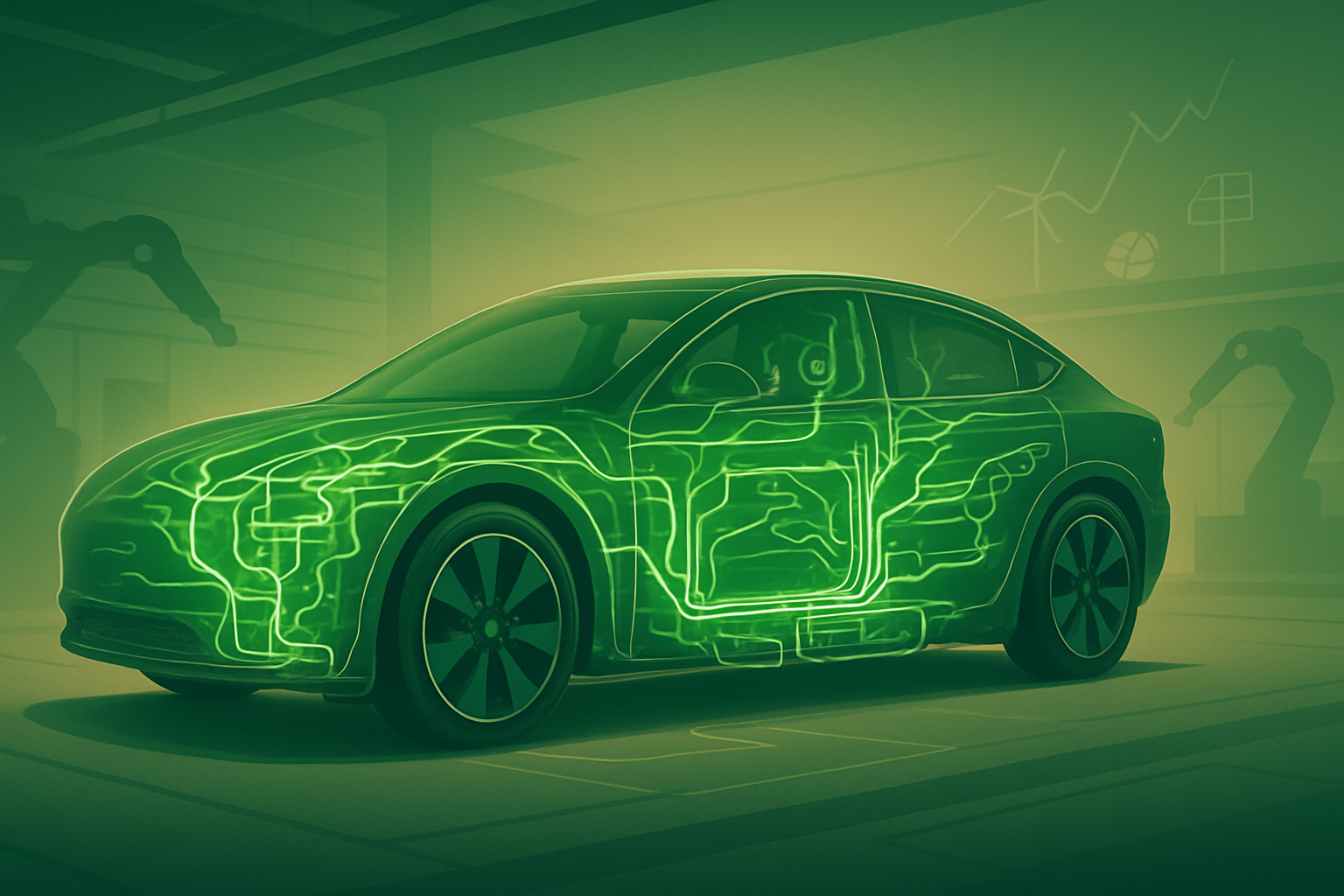
    On the morning of April 1, 2026, a new titan emerged on the New York Stock Exchange floor. Versigent PLC (NYSE: VGNT) began its life as an independent public entity, marking one of the most significant automotive sector spin-offs of the decade. Formed from the Electrical Distribution Systems (EDS) segment of Aptiv PLC (NYSE: APTV), Versigent represents the "nervous system" of the modern vehicle.

    While the name is new, the company is anything but a startup. It enters the market with nearly $9 billion in annual revenue and a lineage that stretches back to the dawn of the automotive age. As the industry pivots aggressively toward electric vehicles (EVs) and software-defined architectures, Versigent is being positioned by management as a pure-play leader in the physical infrastructure required to power the next generation of mobility.

    Historical Background

    Versigent’s journey to independence is rooted in the long history of the automotive supply chain. Its core operations originated within General Motors (NYSE: GM) as part of the Packard Electric division, which later became a foundational piece of Delphi Automotive. When Delphi rebranded as Aptiv in 2017, the company began a strategic pivot toward software and "active safety" (the "brain" of the car), while the electrical architecture segment (the "nervous system") continued to provide the steady cash flow and manufacturing backbone.

    In early 2025, Aptiv leadership determined that the market would better value the two entities separately. The goal was to allow Aptiv to trade as a high-growth technology stock, while Versigent could attract investors seeking steady cash flows and high-dividend potential from its market-leading manufacturing operations. The spin-off was finalized on April 1, 2026, making Versigent a standalone Swiss-domiciled company.

    Business Model

    Versigent operates as a global leader in power and signal distribution. Its business model revolves around the design and high-volume manufacturing of:

    • Wiring Harnesses: Complex, labor-intensive assemblies of wires that span the entire length of a vehicle.
    • Connection Systems: Precision-engineered terminals and connectors that link sensors, computers, and batteries.
    • Power Distribution Centers: The "fuse boxes" of the modern car, managing the flow of electricity from the battery to subsystems.
    • High-Voltage Solutions: Specialized cabling and charging components specifically designed for the massive electrical demands of battery electric vehicles (BEVs).

    The company follows a long-cycle contract model, often securing agreements with Original Equipment Manufacturers (OEMs) like Ford (NYSE: F), Stellantis (NYSE: STLA), and Volkswagen (OTC: VWAGY) years before a vehicle enters production.

    Stock Performance Overview

    As of today, April 2, 2026, Versigent is in its second full day of trading. The stock’s debut was marked by the typical volatility associated with major spin-offs. On April 1, VGNT opened at a "when-issued" price implied by the spin-off ratio but saw immediate downward pressure as index funds and institutional holders of Aptiv rebalanced their portfolios.

    VGNT closed its first day at $27.85, representing an initial market capitalization of approximately $2.26 billion. While this initial dip of nearly 9% might concern retail onlookers, analysts view it as a standard "mechanical" sell-off caused by Aptiv-focused growth funds shedding their new shares in a value-oriented manufacturing business.

    Financial Performance

    Versigent enters the public market with a robust financial profile inherited from its time as a division of Aptiv.

    • Pro-forma 2025 Revenue: $8.8 billion.
    • 2026 Guidance: Management has projected revenue between $9.1 billion and $9.4 billion, indicating a 4-7% growth rate.
    • Profitability: The company reported an adjusted EBITDA of $893 million in 2025, with a healthy EBITDA margin of roughly 10.1%.
    • Valuation: Trading at approximately 2.5x EV/EBITDA, Versigent is positioned as a "value play" compared to the higher multiples seen in pure-play software or semiconductor-heavy auto suppliers.

    The company holds a debt-to-equity ratio that is currently above its long-term target of 1.5x, a result of the capital structure established during the spin-off, but plans to use free cash flow to deleverage over the next 18 months.

    Leadership and Management

    Versigent is led by Joseph Liotine, a seasoned executive with a deep operational background. Liotine previously served as the Chief Operating Officer of Whirlpool Corporation, where he gained extensive experience managing global, high-complexity manufacturing footprints.

    Joining him is Thomas Ostermann as CFO. Ostermann brings deep automotive ties from previous senior roles at Stellantis and GM. The board of directors consists of a mix of former Aptiv executives and industrial specialists, signaling a strategy focused on "operational excellence"—code for aggressive cost-cutting and manufacturing automation to improve margins.

    Products, Services, and Innovations

    Versigent's competitive edge lies in its "High-Voltage Portfolio." As vehicles move from 12V to 400V and 800V systems for EVs, the requirements for shielding, heat dissipation, and connector reliability become exponentially more difficult.

    The company’s recent innovations include:

    • Smart Fuse Boxes: Power distribution units that use solid-state switching rather than mechanical fuses, allowing for software-controlled power management.
    • Weight-Reduction Cabling: Using aluminum and thin-walled insulation to reduce vehicle weight, a critical factor for extending EV range.
    • Automated Wire Termination: A push to automate the historically manual process of wiring harness assembly, which could provide a massive tailwind to margins if successfully scaled.

    Competitive Landscape

    Versigent is one of the "Big Three" in the global electrical architecture market.

    1. Yazaki Corporation: A privately held Japanese giant and the current market share leader.
    2. Sumitomo Electric: Another Japanese heavyweight with a diversified industrial base.
    3. Lear Corporation (NYSE: LEA): Versigent's closest public peer. Lear’s E-Systems segment competes directly for high-voltage contracts.

    While Yazaki and Sumitomo have strong relationships with Japanese OEMs like Toyota (NYSE: TM), Versigent is deeply embedded with North American and European manufacturers. Its primary weakness is a lower market share among the "New Gen" Chinese EV manufacturers, such as BYD (OTC: BYDDF) and Nio (NYSE: NIO).

    Industry and Market Trends

    The "Megatrend" favoring Versigent is the electrification of the powertrain. A battery electric vehicle contains roughly 2x to 2.5x the dollar value of electrical content compared to a traditional internal combustion engine (ICE) vehicle. As the global fleet transitions, Versigent’s "revenue per vehicle" naturally expands even if total vehicle units remain flat.

    However, the industry is also facing a shift toward "Zonal Architecture." Instead of miles of wiring running back and forth to a central computer, cars are being built with localized "zones." While this reduces the total amount of wiring, it increases the complexity and value of the connectors and zonal controllers that Versigent produces.

    Risks and Challenges

    • Labor Costs: Wiring harness assembly remains surprisingly manual. Versigent operates massive plants in low-cost regions like North Africa and Mexico. Any labor unrest or significant wage inflation in these areas poses a direct threat to margins.
    • Commodity Price Volatility: Copper is the lifeblood of Versigent’s products. While the company has "pass-through" agreements with most OEMs, there is often a lag between a spike in copper prices and the adjustment in customer pricing.
    • Geopolitical Friction: With manufacturing in over 25 countries, trade wars or regional instability (particularly in Eastern Europe or North Africa) could disrupt supply chains overnight.

    Opportunities and Catalysts

    • Margin Expansion: If Joseph Liotine can successfully implement the "Digital Factory" initiatives started at Aptiv, automating even 15% of the assembly process could lead to a 200-300 basis point improvement in EBITDA margins.
    • M&A Potential: As an independent entity with its own currency (stock), Versigent is expected to be an active consolidator of smaller, tier-2 connector companies.
    • Dividend Initiation: Analysts anticipate that the board will announce a quarterly dividend by late 2026, which would likely attract a new class of yield-seeking investors and provide a floor for the stock price.

    Investor Sentiment and Analyst Coverage

    Initial sentiment is "cautiously optimistic." RBC Capital Markets recently initiated coverage with a "Sector Perform" rating, noting that while the valuation is attractive, the company needs to prove it can win contracts with Chinese OEMs to secure long-term growth.

    Retail sentiment on platforms like Stocktwits and Reddit has been mixed, with many "accidental" shareholders (from the Aptiv spin-off) questioning whether to hold the new entity or sell. Institutional "smart money" has shown interest in Versigent’s free cash flow profile, viewing it as a safer, more tangible play on EVs than the pre-revenue EV startups that dominated headlines in years past.

    Regulatory, Policy, and Geopolitical Factors

    Versigent is a major beneficiary of government mandates like the U.S. Inflation Reduction Act (IRA) and the EU's Green Deal, which provide incentives for EV production and infrastructure. However, the company must also navigate increasingly stringent "Rules of Origin" in trade agreements like the USMCA, which dictate where components must be manufactured to qualify for duty-free status.

    Furthermore, as a Swiss-domiciled company with significant U.S. operations, Versigent faces a complex global tax landscape, particularly regarding the OECD’s global minimum tax initiatives.

    Conclusion

    Versigent PLC (VGNT) represents a fascinating intersection of old-world manufacturing and new-world technology. It is a century-old business dressed in a brand-new ticker symbol. For investors, the bull case is simple: Versigent is the indispensable plumber of the electric vehicle revolution, and its revenue per vehicle is set to double as the world abandons the internal combustion engine.

    However, the path forward is not without friction. Investors must weigh the company’s impressive scale and cash flow against the risks of labor inflation and its currently limited footprint in the high-growth Chinese market. As the dust settles from its April 1 debut, VGNT will likely transition from a "spin-off story" to a "margin story." If Liotine and his team can deliver on automation and EV contract wins, the current $27.85 entry point may eventually be seen as a ground-floor opportunity in a critical infrastructure play.


    This content is intended for informational purposes only and is not financial advice.

  • The Maranello Moat: Ferrari’s Luxury Resilience and the JPMorgan Bull Case for 2026

    The Maranello Moat: Ferrari’s Luxury Resilience and the JPMorgan Bull Case for 2026

    Date: March 30, 2026
    By: Financial Research Division

    Introduction

    As the global automotive landscape grapples with the volatile transition to electrification and shifting macroeconomic headwinds, one name remains essentially decoupled from the gravity of the broader market: Ferrari (NYSE: RACE). In early 2026, the Italian "Prancing Horse" continues to redefine the boundaries between high-performance automotive engineering and ultra-luxury goods. With a stock price that has consistently outperformed both the S&P 500 and the luxury sector at large, Ferrari is currently in the spotlight following a series of bullish upgrades from major institutions, most notably JPMorgan. As the company prepares for the late-2026 launch of its first fully electric vehicle, its "value over volume" strategy has created a backlog of demand that stretches into 2028, insulating the brand from the cyclical downturns that often plague its peers.

    Historical Background

    Founded in 1947 by Enzo Ferrari, the company’s origins are rooted deeply in the Scuderia Ferrari racing stable. Unlike many competitors who built cars to fund their lifestyles, Enzo famously built road cars only to fund his passion for racing. For decades, Ferrari operated under the umbrella of Fiat, which provided the financial stability needed to dominate Formula 1 and the supercar market. However, the most significant transformation in the company's modern history occurred in 2015, when it was spun off into an independent public company listed on the New York Stock Exchange. Under the late Sergio Marchionne, the IPO unlocked the brand's potential as a luxury play rather than a mere industrial manufacturer. Since then, Ferrari has meticulously maintained its exclusivity while expanding its margins through bespoke personalization and the introduction of new segments like the Purosangue.

    Business Model

    Ferrari’s business model is a masterclass in scarcity marketing. The company purposely produces fewer cars than the market demands, ensuring that a Ferrari remains one of the world’s most coveted assets. Revenue streams are diversified across four key pillars:

    1. Vehicle Sales: High-margin models ranging from the V12-powered 12Cilindri to the hybrid SF90 Stradale.
    2. Personalization: Programs like Atelier and Tailor Made allow customers to customize every detail of their car, often adding hundreds of thousands of dollars to the base price. In 2025, these services contributed record-breaking margins to the bottom line.
    3. Brand & Lifestyle: Licensing, merchandising, and theme parks (Ferrari World) that monetize the brand's global prestige.
    4. Racing: The Formula 1 team serves as the ultimate R&D lab and marketing engine, maintaining the brand’s "high-performance" DNA.

    The company's core philosophy is "Value over Volume," capping production (particularly of its SUV-styled Purosangue) to maintain residual value and brand equity.

    Stock Performance Overview

    Over the last decade, Ferrari (RACE) has evolved into one of the most reliable performers in the luxury space.

    • 1-Year Performance: The stock has seen a 15% gain as of March 2026, buoyed by record 2025 earnings and the successful ramp-up of the Purosangue.
    • 5-Year Performance: Investors have seen returns exceeding 160%, significantly outperforming the broader automotive sector.
    • 10-Year Performance: Since its IPO, Ferrari has proven to be a "generational" stock, with its valuation multiple (P/E ratio) consistently trading closer to luxury giants like Hermès (EPA: RMS) or LVMH (EPA: MC) than to traditional automakers like Ford or Volkswagen.

    Notable moves in 2024 and 2025 were driven by the "de-risking" of the EV transition, as investors realized Ferrari could command premium pricing for electric models just as it did for internal combustion engines (ICE).

    Financial Performance

    Ferrari’s fiscal 2025 results, released earlier this year, underscored its financial dominance.

    • Revenue: Reached €7.146 billion, a 7% year-over-year increase.
    • EBITDA: Reported at €2.772 billion with an industry-leading margin of 38.8%.
    • Net Profit: Stood at €1.600 billion, with diluted EPS rising to €8.96.
    • Free Cash Flow: Industrial free cash flow surged by 50% to €1.538 billion.
      The company’s balance sheet remains exceptionally strong, characterized by low leverage and a massive €3.5 billion share buyback program scheduled through 2030, signaling management's confidence in long-term cash generation.

    Leadership and Management

    Under CEO Benedetto Vigna—a physicist by training with a deep background in the semiconductor and tech industries—Ferrari has accelerated its digital and technological transformation. Vigna has been instrumental in leading the "e-building" project, a new state-of-the-art facility in Maranello that allows for the flexible production of ICE, hybrid, and electric vehicles on the same line. Chairman John Elkann, representing the Agnelli family’s controlling interest through Exor N.V., provides a steady hand in governance, ensuring that Ferrari’s long-term heritage is not sacrificed for short-term quarterly gains. The management's reputation for disciplined capital allocation is among the best in the global luxury sector.

    Products, Services, and Innovations

    Innovation at Ferrari is currently centered on the "Elettrica" (the working title for its first EV), slated for a late 2026 debut.

    • The First EV: Early technical disclosures suggest a four-motor setup producing over 1,000 bhp. Crucially, Ferrari has patented a "Torque Shift Engagement" system to amplify the acoustic vibrations of the electric motors, addressing the "soul" of the car in the absence of a V12 roar.
    • Purosangue: The brand’s first four-door vehicle remains the primary growth driver, with a waitlist extending into 2028.
    • Hybridization: Nearly 60% of current sales are now electrified (hybrids like the 296 GTB and SF90), proving that the customer base is ready for the transition.

    Competitive Landscape

    Ferrari occupies a unique niche that JPMorgan analysts describe as "tactile exclusivity." While competitors like Lamborghini (owned by Volkswagen Group) and Aston Martin (LON: AML) produce high-performance vehicles, they often lack the same level of pricing power and secondary market stability.

    • Lamborghini: Strong competition in the "super SUV" space, but Ferrari’s production caps on the Purosangue keep its exclusivity higher.
    • Porsche (ETR: P911): Operates at a higher volume and lower price point, making it a "premium" brand rather than an "ultra-luxury" brand.
    • McLaren: Continues to struggle with financial stability and reliability perceptions, leaving Ferrari as the clear leader in the supercar hierarchy.

    Industry and Market Trends

    The luxury market in 2026 is seeing a shift toward "Green Status" and "Physicality." Ultra-high-net-worth individuals (UHNWIs) are increasingly demanding sustainable performance without losing the tactile feel of a high-end machine. A notable trend in 2026 is the return of physical controls—buttons and switches engineered like luxury watches—as a rejection of the "all-screen" minimalist interiors popularized by Tesla and other mass-market EVs. Ferrari’s focus on cabin craftsmanship aligns perfectly with this trend.

    Risks and Challenges

    Despite its strengths, Ferrari is not without risks:

    • EV Execution: The late-2026 launch of the first EV is a "make or break" moment. Any failure to capture the "emotional" experience of a Ferrari in an electric format could damage brand equity.
    • Margin Compression: High R&D costs for electrification and the setup of the "e-building" could temporarily pressure margins.
    • Global Economy: While UHNWIs are resilient, prolonged geopolitical instability in key markets like Greater China could affect the demand for "personalizations," which are high-margin drivers.

    Opportunities and Catalysts

    The primary catalyst for the stock is the impending EV launch. If Ferrari can prove that its electric vehicles are just as desirable as its ICE models, the stock could see another significant rerating. Furthermore, the growth of the "Atelier" personalization program presents a massive opportunity to increase Average Selling Prices (ASP) without increasing production volume. JPMorgan has noted that the potential for Ferrari to increase its dividend or accelerate buybacks remains high given its robust free cash flow.

    Investor Sentiment and Analyst Coverage

    Sentiment among institutional investors remains overwhelmingly positive. JPMorgan’s March 2026 report maintained an Overweight rating with a price target of $447, citing Ferrari's "Veblen good" status—where demand increases as price increases. Analyst Jose Asumendi highlights that Ferrari is one of the few companies that can guide for nearly 40% EBITDA margins regardless of the global interest rate environment. Wall Street consensus remains a "Moderate Buy," with some analysts even more aggressive, targeting $475 based on the expected success of the 2026 EV.

    Regulatory, Policy, and Geopolitical Factors

    Ferrari faces the challenge of navigating the EU’s strict emissions mandates. However, the "E-fuels exception" negotiated by Germany and Italy provides a lifeline for Ferrari’s high-revving internal combustion engines. This allows the company to continue producing its iconic V12 engines for its most exclusive "Icona" series while transitioning the high-volume fleet to hybrid and electric. Compliance with global ESG standards is also being addressed through the carbon-neutral goals of the Maranello factory.

    Conclusion

    Ferrari enters the second half of the 2020s in a position of unprecedented strength. By blending its rich racing heritage with a forward-looking technological roadmap, the company has successfully transitioned from a car manufacturer to a global luxury icon. While the late-2026 EV launch presents an execution risk, the brand's resilience in the face of economic uncertainty and its massive order backlog provide a safety net that few companies can match. For investors, Ferrari represents a unique opportunity to own a piece of a "scarcity-driven" ecosystem that continues to defy traditional market logic. As JPMorgan suggests, the "Prancing Horse" still has plenty of room to run.


    This content is intended for informational purposes only and is not financial advice.

  • The Hybrid Pivot: Analyzing Honda’s Strategic Retreat and the India Gambit

    The Hybrid Pivot: Analyzing Honda’s Strategic Retreat and the India Gambit

    On March 12, 2026, Honda Motor Co., Ltd. (NYSE: HMC; TYO: 7267) sent shockwaves through the automotive industry by announcing the immediate cancellation of three major North American electric vehicle (EV) models originally slated for 2027 and 2028 production. This decision was accompanied by a significant revision of the company’s consolidated financial forecasts, marking one of the most aggressive strategic pivots in the company’s 78-year history.

    Once considered a latecomer to the battery-electric race that was desperately trying to catch up, Honda has now officially signaled a "Pragmatic Realignment." By slashing its North American EV pipeline and reallocating billions in capital toward its high-margin hybrid lineup and the burgeoning Indian market, Honda is betting that the "EV-only" future is arriving much later than regulators and competitors anticipated. This article provides a deep-dive analysis of Honda’s new trajectory, the financial implications of its March 12 decision, and what this means for investors in the "New Mobility" era.

    Historical Background

    Honda’s identity has always been rooted in engineering independence. Founded in 1948 by Soichiro Honda and Takeo Fujisawa, the company began as a manufacturer of auxiliary engines for bicycles. By the 1960s, it had become the world’s largest motorcycle manufacturer, a title it holds to this day.

    The company’s entry into the automotive world was defined by the CVCC (Compound Vortex Controlled Combustion) engine in the 1970s, which allowed the Honda Civic to meet stringent U.S. Clean Air Act standards without a catalytic converter. This "engineering first" culture led to the creation of iconic nameplates like the Accord and the launch of Acura—the first Japanese luxury brand—in 1986. Historically, Honda has avoided the massive cross-shareholding structures (keiretsu) common in Japan, preferring to maintain its autonomy, a trait that has both fueled its innovation and, at times, isolated it from the massive scale advantages of rivals like Toyota.

    Business Model

    Honda operates a diversified mobility business model built on four primary pillars:

    1. Automobiles (approx. 63% of revenue): Known for the Civic, CR-V, and Accord, this segment is currently undergoing a massive shift from internal combustion engines (ICE) to the e:HEV hybrid system.
    2. Motorcycles (approx. 19% of revenue): This is Honda’s "cash engine." With dominant market shares in Southeast Asia, India, and Brazil, the motorcycle segment typically accounts for over 50% of the group’s operating profit, providing the liquidity needed to fund automotive R&D.
    3. Power Products (Life Creation): This includes portable generators, outboard marine engines, and lawn equipment. Honda is currently electrifying this segment to align with global sustainability trends.
    4. Aero and Other: Centered on the HondaJet and GE Honda Aero Engines. While a small portion of revenue, it serves as a high-tech incubator for aerodynamics and materials science.

    Stock Performance Overview

    As of mid-March 2026, HMC stock has shown resilience despite the volatility of the broader auto sector.

    • 1-Year Performance: HMC has outperformed the S&P 500 Auto Index, gaining 12% as investors cheered the company’s focus on high-margin hybrids during the global "EV winter" of 2025.
    • 5-Year Performance: The stock has seen a 45% appreciation, largely driven by the record-breaking profitability of its motorcycle division and a disciplined buyback program.
    • 10-Year Performance: On a decade-long horizon, Honda has lagged behind tech-centric rivals like Tesla but has remained a staple for value investors, offering a consistent dividend yield ranging between 3% and 4.5%.

    The March 12 announcement led to a 4.2% jump in the stock price in Tokyo, as the market reacted positively to the "rationalization" of the EV strategy, which many feared would burn excessive cash.

    Financial Performance

    In the revised forecast issued on March 12, 2026, Honda adjusted its FY2026 outlook:

    • Operating Profit: Revised upward by 8% to ¥1.25 trillion. While the cancellation of EV models led to a one-time impairment charge of ¥110 billion, the reduction in planned CAPEX for 2026-2027 more than offset the loss.
    • Revenue: Expected to remain flat at ¥21.5 trillion, as lower EV volumes are replaced by higher-margin hybrid sales.
    • Margins: Automotive operating margins, which had dipped to 4.1% during the peak of EV R&D spending in 2024, are now projected to recover to 5.8% by year-end 2026.
    • Cash Flow: Free cash flow remains robust, supported by the motorcycle division, which continues to see 15%+ margins in emerging markets.

    Leadership and Management

    CEO Toshihiro Mibe, who took the helm in 2021, has transitioned from being an "EV Crusader" to a "Strategic Realist." Mibe, an engineer by training who previously led Honda R&D, initially pushed for a 100% EV/FCV (Fuel Cell Vehicle) lineup by 2040.

    However, his recent shift emphasizes "The Bridge Strategy." Mibe’s leadership is now characterized by capital discipline. The March 12 decision is seen as his signature move—acknowledging that while the destination remains electric, the path must be profitable. CFO Shinji Aoyama has also been instrumental in redirecting investment toward India, identifying it as the "next North America" for Honda’s scale.

    Products, Services, and Innovations

    The centerpiece of Honda’s current innovation is the e:HEV hybrid system. Unlike traditional hybrids, the e:HEV uses the electric motor to drive the vehicle most of the time, with the engine acting as a generator.

    • The "0 Series": While three models were cancelled, Honda is still proceeding with its flagship "0 Series" EV for 2026, which features a low-profile design and "thin" battery technology.
    • Solid-State Batteries: Honda continues to operate a pilot production line for all-solid-state batteries, aiming for mid-to-late 2020s implementation.
    • Hydrogen (FCEV): Honda remains one of the few global players (alongside Toyota and Hyundai) committed to hydrogen, recently launching the CR-V e:FCEV in select markets.

    Competitive Landscape

    Honda finds itself in a "pincer movement" between legacy giants and new entrants:

    • Toyota (TM): The primary rival. Toyota’s early and aggressive bet on hybrids has paid off, and Honda is now effectively following the Toyota playbook to protect its margins.
    • Tesla (TSLA): Tesla remains the cost leader in EVs. Honda’s decision to cancel models is an admission that it cannot currently match Tesla’s "Unboxed" manufacturing costs in the North American EV segment.
    • Chinese OEMs (BYD, Xiaomi): In the ASEAN and Indian markets, Chinese manufacturers are Honda’s biggest threat. To counter this, Honda is leveraging its 6,000+ motorcycle touchpoints in India to build an EV charging and service ecosystem.

    Industry and Market Trends

    The "Great EV Slowdown" of 2025-2026 has redefined the industry. Consumer anxiety over charging infrastructure and high interest rates have cooled demand for $50,000+ EVs.

    • The Hybrid Resurgence: Hybrids are no longer seen as "transitional" but as a long-term consumer preference.
    • The Rise of India: India has surpassed Japan as the world's third-largest auto market. Honda’s pivot recognizes that the next 100 million middle-class consumers will come from Delhi and Mumbai, not Detroit or Munich.

    Risks and Challenges

    • Regulatory Backlash: In the U.S. and EU, strict emissions targets remain. If Honda’s hybrid pivot isn't "green" enough, it faces billions in potential fines.
    • Software Lag: Honda continues to struggle with "Software-Defined Vehicle" (SDV) capabilities compared to Tesla and Chinese rivals.
    • The "China Exit": Honda’s sales in China have cratered (down 25% year-on-year in 2025). The company must manage a painful downsizing of its Chinese joint ventures.

    Opportunities and Catalysts

    • India’s "Activa" Moment for Cars: Honda’s brand equity in India (via the Activa scooter) is unparalleled. If it can translate this to its upcoming "Elevate" SUV series and small EVs, it could dominate the market.
    • Sony-Honda Mobility (Afeela): The joint venture with Sony provides a high-margin, tech-forward "halo" brand that could redefine Honda’s digital interior experience.
    • Aero Profitability: The HondaJet Echelon, set for 2028 certification, could turn the Aero segment into a meaningful profit contributor.

    Investor Sentiment and Analyst Coverage

    Wall Street sentiment has shifted from "Neutral" to "Overweight" following the March 12 announcement.

    • Goldman Sachs: Noted that Honda’s "return to capital discipline is a major de-risking event."
    • Morgan Stanley: Highlighted the India strategy as a "hidden gem" in Honda’s valuation.
    • Retail Sentiment: On platforms like Reddit and X, Honda is praised for its "reliability" and for "not forcing EVs," which resonates with a large segment of the North American car-buying public.

    Regulatory, Policy, and Geopolitical Factors

    • U.S. Inflation Reduction Act (IRA): Honda’s pivot to hybrids complicates its eligibility for some U.S. tax credits, which favor full EVs.
    • India’s PLI Scheme: Honda is a major beneficiary of India’s Production-Linked Incentive (PLI) scheme for advanced chemistry cells and automotive manufacturing.
    • Trade Tensions: As a Japanese company with a massive U.S. footprint, Honda is sensitive to any changes in the USMCA (United States-Mexico-Canada Agreement) rules regarding parts sourcing.

    Conclusion

    Honda’s decision on March 12, 2026, represents a "Great Recalibration." By sacrificing the optics of being an "EV leader" in the short term, the company is fortifying its balance sheet for the long haul.

    For investors, Honda offers a unique profile: the stability and cash flow of a dominant global motorcycle business, combined with a high-margin hybrid automotive strategy and a high-growth "call option" on the Indian market. While the risks of lagging in software and pure-EV technology remain, Honda’s management has proven they are willing to make the hard choices necessary to preserve shareholder value. In the volatile race to 2030, Honda has chosen the path of the marathon runner over the sprinter—a move that may ultimately prove to be the most "electrifying" decision of all.


    This content is intended for informational purposes only and is not financial advice.


    Finterra Editorial Team
    © 2026 Finterra Financial Media Group. All rights reserved.

  • Carvana’s Redemption: From the Brink of Bankruptcy to a High-Octane Digital Dominator

    Carvana’s Redemption: From the Brink of Bankruptcy to a High-Octane Digital Dominator

    As of February 20, 2026, the financial community continues to study the resurgence of Carvana Co. (NYSE: CVNA) as one of the most remarkable corporate turnarounds in modern retail history. Just over three years ago, the "Amazon of Cars" was teetering on the edge of bankruptcy, its stock price languishing below $5. Today, Carvana has not only survived but has emerged as a structurally leaner, highly profitable, and high-growth powerhouse that is on the verge of overtaking CarMax as the largest used car retailer in the United States. With its unique vertical integration, AI-driven operations, and the successful assimilation of the ADESA physical auction network, Carvana remains a central focus for growth investors and industry analysts alike.

    Historical Background

    Carvana’s journey began in 2012, founded by Ernie Garcia III, Ryan Keeton, and Ben Huston. The company was initially incubated as a subsidiary of DriveTime Automotive Group, a major used-car retailer owned by Garcia III’s father, Ernie Garcia II. This relationship provided Carvana with $100 million in seed funding and critical access to DriveTime’s existing inventory and logistics infrastructure.

    After spinning off from DriveTime in 2014, Carvana went public in April 2017 at an IPO price of $15 per share. The company’s vision was radical: a fully online car-buying experience, complete with high-tech "vending machines" that served as automated pickup points. During the COVID-19 pandemic, this digital-first model catapulted the company into hyper-growth, with its stock price peaking at over $370 in 2021. However, the subsequent rise in interest rates and cooling used car prices in 2022 led to a nearly 99% crash in its valuation, forcing a massive restructuring that paved the way for its current 2026 standing.

    Business Model

    Carvana operates an end-to-end e-commerce platform for buying and selling used vehicles. Its business model is built on three primary pillars:

    1. Retail Sales: Selling used cars directly to consumers via its website and app, with a 7-day money-back guarantee.
    2. Wholesale (ADESA): Since acquiring ADESA’s U.S. physical auction business in 2022, Carvana has integrated 27 "mega-centers" into its network, allowing it to capture margins by selling non-retail inventory to other dealers.
    3. Financial Services: A significant portion of Carvana’s profit comes from originating and selling auto loans, often through its relationship with Bridgecrest.

    By controlling the entire lifecycle—from vehicle acquisition and reconditioning to financing and delivery—Carvana captures "Gross Profit per Unit" (GPU) that significantly exceeds traditional dealership averages.

    Stock Performance Overview

    Carvana’s stock performance has been a textbook example of high-beta volatility:

    • 1-Year Performance: Over the last twelve months (Feb 2025 – Feb 2026), the stock has risen roughly 17%, trading at $332.79 today. This reflects a transition from "recovery mode" to "growth mode."
    • 5-Year Performance: Comparing today’s price to the February 2021 peak of $308.74, the stock has delivered a modest ~7.8% total return, illustrating the extreme "V-shaped" recovery from the 2022 lows of $4.
    • 10-Year Performance: Since its 2017 IPO at $15, the stock has appreciated by approximately 2,100%, significantly outperforming the S&P 500 over the same period.
      The stock reached a 52-week high of $486.89 in January 2026 before cooling slightly following its most recent quarterly report.

    Financial Performance

    In early 2026, Carvana reported fiscal year 2025 results that exceeded even the most bullish expectations:

    • Revenue: $20.32 billion for 2025, a 49% year-over-year increase.
    • Retail Units: The company sold 596,641 retail units in 2025, up 43% YoY.
    • Adjusted EBITDA: $2.24 billion, representing a record 11.0% margin.
    • Net Income: $1.895 billion, though this was aided by a $685 million non-cash tax benefit.
    • Balance Sheet: Perhaps most importantly, Carvana’s Net Debt-to-EBITDA has plummeted to 1.3x, down from over 17x in 2023. This deleveraging was achieved through aggressive debt buybacks and a record-breaking GPU.

    Leadership and Management

    The company is led by Ernie Garcia III, who has successfully transitioned from a CEO "under fire" during the 2022 liquidity crisis to the "visionary architect" of the company’s redemption. Despite his success, Garcia III maintains a dual-class share structure that grants the Garcia family majority voting control—a governance setup that remains a point of debate for some institutional investors.

    The leadership team has been praised for its execution of the "Step 2" and "Step 3" phases of the company's long-term plan: shifting from growth-at-all-costs to sustainable unit economics, and then back to profitable growth.

    Products, Services, and Innovations

    Carvana’s competitive edge lies in its "AI Brain," specifically two proprietary technologies:

    1. CARLI (AI-Driven Inspections): This computer vision platform automates vehicle reconditioning at the company’s Inspection and Reconditioning Centers (IRCs). By 2026, CARLI has reduced per-unit reconditioning costs by 45%.
    2. Sebastian: An AI-powered customer service agent that now handles 60% of vehicle acquisitions and 30% of retail purchases without human intervention.

    Additionally, the company has expanded its "Vending Machine" count to over 40 locations across the U.S., with newer 8-story towers serving as high-capacity fulfillment hubs and iconic marketing landmarks.

    Competitive Landscape

    Carvana has effectively "won" the online-only used car race. Its early competitors, Vroom and Shift, have either pivoted away from retail or ceased operations entirely.

    • CarMax (NYSE: KMX): While CarMax remains the largest retailer by total annual volume, its growth has stagnated. Analysts project that Carvana will surpass CarMax in quarterly retail unit sales by the end of 2026.
    • Traditional Dealers: Giants like AutoNation (NYSE: AN) and Lithia Motors (NYSE: LAD) continue to dominate in parts and service, but they have largely ceded the fully-digital shopper to Carvana’s platform.

    Industry and Market Trends

    The used car industry in 2026 is defined by a shift toward digital transparency and supply chain stabilization. After years of inventory shortages (2021-2023), used car supply has normalized, though pricing remains 20% higher than pre-pandemic levels. Carvana’s ability to source inventory directly from consumers (who often receive "Instant Offers" via the app) has allowed it to bypass expensive wholesale auctions for its most profitable retail units.

    Risks and Challenges

    Despite its recovery, Carvana is not without significant risks:

    1. Cash Interest Transition: The "Payment-In-Kind" (PIK) interest period from its 2023 debt restructuring is expiring. Carvana must now transition to paying cash interest on its billions in debt, which will be a crucial test for its free cash flow.
    2. Short-Seller Allegations: In January 2026, reports from firms like Gotham City Research alleged undisclosed related-party transactions between Carvana and DriveTime. While the company denies these, they have triggered new class-action investigations.
    3. Cyclical Sensitivity: A potential economic recession or a spike in interest rates remains a constant threat to auto sales volume.

    Opportunities and Catalysts

    The primary catalyst for Carvana is its "3 Million Unit North Star." Management believes their current infrastructure (including the 56 ADESA sites) can eventually support 3 million annual unit sales. If Carvana can achieve even half of this goal with its current 11% EBITDA margins, its valuation could see significant further expansion.

    Furthermore, the expansion of its ADESA Clear digital auction platform provides a high-margin revenue stream by allowing other dealers to trade inventory on Carvana’s technology stack.

    Investor Sentiment and Analyst Coverage

    Wall Street sentiment has shifted from "Skeptical" to "Moderate Buy." As of February 2026:

    • Consensus Rating: Moderate Buy / Outperform.
    • Institutional Ownership: Ownership remains high at over 100% of float, led by major holders like T. Rowe Price, Vanguard, and BlackRock.
    • Analyst Views: Optimistic analysts have set price targets as high as $700, while more conservative firms remain at $425, citing the company’s premium valuation relative to the broader retail sector.

    Regulatory, Policy, and Geopolitical Factors

    Carvana has largely navigated the regulatory hurdles that plagued it in 2022. It has modernized its title processing systems and worked with states like Illinois and North Carolina to pass "Home Delivery" laws that legalise digital car sales.
    Additionally, the FTC’s CARS Rule, which went into effect in recent years, has actually benefited Carvana; the rule’s requirement for transparent, upfront pricing plays into Carvana’s existing digital-first, "no-haggle" model, putting traditional dealers with opaque pricing at a disadvantage.

    Conclusion

    Carvana Co. stands today as a testament to the power of operational discipline and technological differentiation. By surviving a near-death experience in 2022 and leveraging the physical assets of ADESA with the digital "brain" of its AI systems, it has transformed into a highly efficient retail machine. While its debt burden and recent short-seller allegations warrant caution, the company’s trajectory toward market leadership in the $1 trillion U.S. used car industry is undeniable. Investors should watch the transition to cash interest payments in mid-2026 as the final confirmation of the company's long-term financial health.


    This content is intended for informational purposes only and is not financial advice.

  • Ford Motor Company (F) Deep Dive: Navigating the Hybrid Pivot and the Future of Ford Pro

    Ford Motor Company (F) Deep Dive: Navigating the Hybrid Pivot and the Future of Ford Pro

    Date: February 11, 2026

    Introduction

    Ford Motor Company (NYSE: F) finds itself at a critical crossroads today, following the release of its full-year 2025 earnings report. In a year defined by extreme volatility—ranging from massive supply chain disruptions to a fundamental pivot in its electric vehicle (EV) strategy—the Detroit giant has emerged with a narrative of resilience that is catching Wall Street off guard.

    Today’s focus centers on Ford’s ability to balance its legacy internal combustion engine (ICE) dominance with a pragmatic, hybrid-heavy approach to the future. As the company navigates a "tale of two businesses"—the highly profitable commercial segment and the struggling EV division—investors are weighing whether CEO Jim Farley’s "Ford+" plan is finally hitting its stride or if the heavy costs of transformation will continue to weigh on the stock’s long-term upside.

    Historical Background

    Founded by Henry Ford in 1903, the Ford Motor Company didn't just build cars; it built the modern industrial world. From the introduction of the Model T and the moving assembly line to the massive mobilization during World War II, Ford has survived every major economic cycle of the last 120 years.

    Key milestones include the 1964 launch of the Mustang, which defined the "pony car" era, and the 1948 introduction of the F-Series, which has been the best-selling truck in America for 49 consecutive years. In the late 2000s, Ford was the only one of the "Big Three" U.S. automakers to avoid a government-led bankruptcy, thanks to a massive $23.5 billion loan secured by Alan Mulally just before the credit markets froze. Today, under Jim Farley, the company is undergoing its most radical transformation since the assembly line: the split into distinct business units to tackle the digital and electric age.

    Business Model

    Ford operates through a sophisticated, segmented business model designed to maximize efficiency across different market needs:

    • Ford Blue: The "engine" of the company, focusing on traditional internal combustion and hybrid vehicles like the F-150, Bronco, and Maverick.
    • Ford Pro: A dedicated global business focused on commercial and government customers, providing not just vehicles (Transits, Super Duties) but also software-as-a-service (SaaS), charging, and financing.
    • Ford Model e: The high-growth, high-loss incubator for Ford’s electric vehicle and software-defined vehicle (SDV) technologies.
    • Ford Energy: A newly solidified unit in late 2025 focused on stationary battery storage and grid services.
    • Ford Credit: The captive finance arm that provides dealer and retail financing, acting as a significant source of profit and customer loyalty.

    Stock Performance Overview

    Ford’s stock (NYSE: F) has been a study in cyclicality and transition.

    • 1-Year Performance: 2025 was a standout year for Ford, with the stock delivering a total return of nearly 38%. This outperformance was driven by the "Hybrid Pivot" and strong results from Ford Pro, which reassured investors skeptical of the EV-only narrative.
    • 5-Year Performance: Over the last five years, Ford has outpaced several legacy peers but trailed the broader S&P 500. The stock saw a massive spike in 2021-2022 during the initial EV hype, followed by a multi-year consolidation as the realities of EV production costs set in.
    • 10-Year Performance: On a decade-long horizon, Ford has functioned primarily as an income stock. Price appreciation has been modest, but consistent dividends and occasional "special" dividends have provided a steady floor for long-term holders.

    Financial Performance

    Today's 2025 earnings data provides a complex financial picture. For the full year, Ford reported $187.3 billion in revenue. However, the company took a significant $19.5 billion pre-tax write-down related to the cancellation of its 3-row EV SUV and other first-gen EV programs.

    • Ford Pro remains the crown jewel, generating $6.8 billion in Adjusted EBIT in 2025 with margins holding at 10.3%.
    • Ford Model e reported an EBIT loss of $4.8 billion, showing that while losses are narrowing, the EV segment still consumes significant cash.
    • Dividends: Ford continues to be a favorite for yield-seekers, maintaining a $0.15 quarterly dividend supplemented by occasional special dividends, currently yielding roughly 5.2%.

    Leadership and Management

    CEO Jim Farley remains the architect of the Ford+ strategy. Known for his "car guy" passion and tech-forward vision, Farley has been lauded for his transparency regarding the "existential threat" from Chinese automakers. Joining him is Sherry House, the former Lucid CFO who took over as Ford's CFO in early 2025, tasked with aggressive industrial cost-cutting.

    The leadership’s current focus is "industrial fitness"—closing a $2 billion annual gap in warranty and quality costs compared to competitors. The board, still influenced by the Ford family, remains committed to the dual-class share structure which provides the family with 40% voting power, ensuring a focus on long-term stability over short-term market whims.

    Products, Services, and Innovations

    Ford’s product strategy for 2026 is defined by "Multi-Energy Choice."

    • Hybrid Leadership: Ford is now the #1 seller of hybrid trucks in the U.S. The F-150 and Maverick hybrids are the company's most sought-after products.
    • Extended-Range EVs (EREVs): Looking toward 2027, Ford is developing EREVs that use a small gas engine as a generator, promising 600+ miles of range for towing-heavy trucks.
    • BlueCruise: Ford’s hands-free driving technology continues to be a software revenue driver, with millions of miles logged and high subscription attach rates.
    • Universal EV Platform: A secret "skunkworks" team in California is finalizing a new low-cost platform designed to produce a $30,000 EV truck that can compete with Tesla and BYD on cost.

    Competitive Landscape

    Ford faces a pincer movement in the global market:

    1. The Chinese Threat: BYD and Xiaomi are producing high-quality, tech-heavy EVs at costs Ford cannot currently match.
    2. Tesla (TSLA): Tesla’s manufacturing efficiency and software integration remain the gold standard Ford is attempting to replicate via its "large unicasting" manufacturing shifts.
    3. Legacy Peers: General Motors (GM) and Stellantis (STLA) are also in transition, though Ford currently holds a distinct lead in the commercial vehicle space (Ford Pro) which provides a more stable profit margin than GM's retail-heavy mix.

    Industry and Market Trends

    The automotive industry in 2026 is grappling with "EV Reality." While the 2021-2023 era was defined by optimistic EV targets, the current market shows that consumers prefer hybrids and EREVs as transitionary steps. Additionally, the industry is shifting toward Software-Defined Vehicles (SDVs), where a car's value is increasingly determined by its software features and OTA (over-the-air) update capabilities rather than its physical parts.

    Risks and Challenges

    • Quality and Recalls: Ford remains plagued by high warranty costs. In 2025, recalls cost the company billions, a persistent issue that leadership has yet to fully solve.
    • Labor Costs: The 2023 UAW contract adds roughly $900 in cost per vehicle by 2026, making it harder to compete with non-unionized rivals like Tesla or foreign brands.
    • Supply Chain Fragility: A 2025 fire at an aluminum supplier cost Ford nearly $2 billion in EBIT, highlighting how a single disruption can derail an entire fiscal year.

    Opportunities and Catalysts

    • Ford Energy: The move into battery energy storage for data centers provides a new, high-margin revenue stream that decouples Ford from purely cyclical vehicle sales.
    • Software Monetization: As Ford Pro increases its software subscription base, it builds a recurring revenue model that warrants a higher valuation multiple.
    • The "Skunkworks" Launch: Any news regarding the launch of the $30,000 "Universal EV" in 2027 will be a major catalyst for the stock.

    Investor Sentiment and Analyst Coverage

    Analyst sentiment is currently "Cautiously Optimistic." Most major firms maintain a Hold or Sector Perform rating, with an average price target of $13.50. Bulls point to Ford Pro’s "cash cow" status and the 5%+ dividend yield, while bears remain concerned about the billions still being "burned" in the Model e division and the impact of legacy labor costs.

    Regulatory, Policy, and Geopolitical Factors

    The regulatory environment remains a moving target.

    • IRA Credits: Ford heavily relies on Inflation Reduction Act (IRA) credits for battery production, which are subject to political shifts in Washington.
    • Emissions Standards: Tightening EPA standards continue to push Ford toward electrification, even as consumer demand for pure EVs slows.
    • Trade Barriers: Increased tariffs on Chinese EVs provide a temporary protective shield for Ford in the U.S. market, but also risk retaliatory measures in global markets where Ford still operates.

    Conclusion

    As of February 11, 2026, Ford Motor Company is a business in the middle of an expensive but necessary evolution. By pivoting toward hybrids and commercial software services, Jim Farley has successfully steered the company away from the "EV cliff" that threatened its margins in 2024.

    For the conservative investor, Ford’s robust dividend and dominant position in the truck and commercial market offer a compelling value proposition. However, for those seeking rapid growth, the path remains obscured by high warranty costs and the daunting challenge of achieving EV profitability. Investors should keep a close eye on Ford’s ability to execute its "Universal EV Platform" and whether it can finally solve its persistent quality issues. Ford is no longer just a "car company"—it is a complex, multi-energy industrial experiment.


    This content is intended for informational purposes only and is not financial advice.

  • The Future of Intelligent Power: A Deep Dive into ON Semiconductor (onsemi)

    The Future of Intelligent Power: A Deep Dive into ON Semiconductor (onsemi)

    As of February 9, 2026, ON Semiconductor (Nasdaq: ON), now officially rebranded as onsemi, stands as a primary architect of the global energy transition. Once known as a broad-market supplier of commodity components, the Scottsdale, Arizona-based company has undergone one of the most aggressive structural transformations in the semiconductor industry. Today, onsemi is a specialized leader in intelligent power and intelligent sensing, focusing specifically on the high-growth "megatrends" of vehicle electrification, industrial automation, and the massive power requirements of AI-driven data centers.

    The company is currently in sharp focus as it navigates the transition from 150mm to 200mm Silicon Carbide (SiC) production—a technical leap that separates the market leaders from the laggards in the power semiconductor space. With AI GPUs demanding unprecedented levels of power density and electric vehicles (EVs) moving toward 800V architectures, onsemi's "EliteSiC" ecosystem has become a critical bottleneck for innovation, making it a central figure in the portfolios of institutional and retail investors alike.

    Historical Background

    The story of onsemi is one of strategic evolution. The company was born in 1999 as a spinoff of Motorola’s Semiconductor Components Group, focused primarily on discrete, logic, and standard analog devices. For its first decade, it operated as a high-volume, low-margin manufacturer.

    The transformation into a power powerhouse began with a series of calculated acquisitions:

    • SANYO Semiconductor (2011): This acquisition expanded its footprint in the Japanese market and automotive sector.
    • Fairchild Semiconductor (2016): A $2.4 billion deal that instantly vaulted onsemi into the top tier of global power semiconductor suppliers.
    • GT Advanced Technologies (2021): Perhaps the most pivotal move under current leadership, this acquisition secured the internal supply of Silicon Carbide (SiC) boules, allowing onsemi to control its supply chain from "substrate to system."

    Under the leadership of CEO Hassane El-Khoury, who took the helm in December 2020, the company shed its "commodity" identity. El-Khoury initiated a "Fab-Lite" to "Fab-Right" strategy, divesting underperforming manufacturing plants and doubling down on high-margin, differentiated technologies that are difficult for competitors to replicate.

    Business Model

    onsemi operates through three core business segments, each aligned with long-term secular growth drivers:

    1. Power Solutions Group (PSG): The largest revenue contributor, PSG provides high-performance power semiconductors (SiC, IGBTs, and MOSFETs). These are the "muscles" of an EV’s drivetrain and the high-efficiency components in solar inverters and AI server power supplies.
    2. Analog and Mixed-Signal Group (AMG): Reorganized in early 2024, this group focuses on the "brains" of power management. It develops gate drivers, DC-DC converters, and integrated circuits that manage the flow of electricity within complex systems like AI GPU racks.
    3. Intelligent Sensing Group (ISG): A world leader in automotive and industrial image sensors. onsemi currently holds over 60% of the market share for ADAS (Advanced Driver Assistance Systems) sensors. Its sensors are designed to provide the high-dynamic-range (HDR) data necessary for AI-driven autonomous driving platforms.

    The company’s model is increasingly vertically integrated, meaning they grow their own crystals, slice their own wafers, and package their own modules, ensuring higher quality control and better margins than competitors who rely on external substrate suppliers.

    Stock Performance Overview

    Over the past decade, onsemi has transformed from a cyclical laggard into a high-growth tech darling.

    • 10-Year Horizon: Investors who bought in 2016 have seen gains exceeding 900%, as the company successfully pivoted away from consumer electronics toward automotive and industrial markets.
    • 5-Year Horizon: The period from 2021 to 2026 has been characterized by high volatility but strong overall growth. The stock reached record highs in 2023, followed by a significant correction in 2024 as the EV market experienced a temporary "inventory digestion" phase.
    • 1-Year Horizon (2025-2026): Over the last 12 months, the stock has staged a robust recovery. As of February 2026, ON shares are trading in the $105–$120 range, up approximately 35% from the 2024 lows. This rally has been fueled by the company’s expansion into AI data center power and the successful ramp-up of its 200mm SiC production facility in Bucheon, South Korea.

    Financial Performance

    onsemi’s financials reflect a company prioritizing "structural profitability" over raw volume.

    • Revenue: After a slight contraction in 2024 (down to ~$7.8 billion), revenue has stabilized and is projected to grow toward $9 billion in the 2026 fiscal year.
    • Margins: A key metric for onsemi is its gross margin. Despite the capital-intensive nature of semiconductor manufacturing, the company has maintained non-GAAP gross margins above 45%. Its long-term target of 53% remains a focal point for analysts, expected to be reached by 2027 as 200mm SiC utilization hits its stride.
    • Capital Allocation: In late 2025, the board authorized a $6 billion share buyback program, signaling management's belief that the stock remains undervalued relative to its dominance in the SiC market.
    • Debt: The company maintains a healthy balance sheet with a net debt-to-EBITDA ratio well below 1.5x, providing flexibility for future M&A.

    Leadership and Management

    Hassane El-Khoury (President and CEO): Often described as a "turnaround specialist," El-Khoury has been the primary architect of onsemi’s modern identity. His "Fab-Right" strategy focused on divesting four older fabs and focusing internal production on 300mm silicon and 200mm SiC wafers.

    The leadership team is regarded as highly disciplined, with a reputation for meeting or exceeding margin guidance even in down cycles. Governance at onsemi is rated highly, with a board that has successfully balanced aggressive R&D spending (roughly 10% of revenue) with shareholder returns.

    Products, Services, and Innovations

    onsemi’s competitive edge lies in its EliteSiC brand. Silicon Carbide is superior to traditional silicon for high-voltage applications because it is more efficient, can operate at higher temperatures, and allows for smaller, lighter components.

    • 200mm SiC Wafers: In 2025, onsemi became one of the few companies to successfully mass-produce SiC on 200mm (8-inch) wafers. This transition increases the number of chips per wafer by roughly 80% compared to the older 150mm standard, drastically lowering the cost per chip.
    • Hyperlux Image Sensors: These sensors are optimized for AI. They feature "super-exposure" technology that allows cameras to see clearly in extreme lighting conditions, a necessity for Level 3 and Level 4 autonomous driving systems.
    • AI Data Center "Power Tree": As AI clusters require kilowatts of power, onsemi has innovated in vertical power delivery and Gallium Nitride (GaN) technologies to minimize energy loss from the grid to the GPU.

    Competitive Landscape

    The power semiconductor market is a "clash of titans":

    • STMicroelectronics (NYSE: STM): onsemi’s primary rival in the SiC space, with a strong foothold in European automotive (notably Tesla).
    • Infineon Technologies (OTC: IFNNY): The global leader in power semiconductors by total revenue, though onsemi is often viewed as more agile in the SiC transition.
    • Wolfspeed (NYSE: WOLF): A pure-play SiC materials leader. While Wolfspeed has a head start in material science, onsemi has outpaced them in high-volume device manufacturing and reliability.
    • Chinese Competitors: Firms like Sanan Optoelectronics are flooding the market with low-end SiC, but onsemi's focus on high-performance 800V EV modules provides a technical "moat" against commoditization.

    Industry and Market Trends

    The semiconductor industry is currently defined by three major trends that favor onsemi:

    1. The Shift to 800V EV Systems: To enable "fast charging" (10% to 80% in under 18 minutes), EVs are moving from 400V to 800V battery systems. This requires the high-voltage resilience that only SiC can provide.
    2. AI Power Infrastructure: AI data centers are expected to consume 10% of global electricity by 2030. onsemi’s ability to improve power efficiency by even 1-2% across a data center results in millions of dollars in energy savings for hyperscalers like Amazon and Microsoft.
    3. Regionalization of Supply Chains: There is a massive push to onshore chip production in the US and Europe, a trend onsemi is capitalizing on via government incentives.

    Risks and Challenges

    No investment is without risk, and onsemi faces several headwinds:

    • China's SiC Surge: Domestic Chinese capacity for SiC is growing rapidly. While onsemi leads in quality, a price war in the low-to-mid-tier industrial segment could squeeze margins.
    • EV Adoption Friction: If the transition to electric vehicles slows further due to high interest rates or charging infrastructure gaps, onsemi’s largest growth engine could stall.
    • Manufacturing Complexity: Moving to 200mm SiC is technically difficult. Any yield issues (the percentage of functional chips per wafer) at their new fabs could lead to earnings misses.

    Opportunities and Catalysts

    • Expansion into AI Cooling/Power: Beyond just chips, onsemi is exploring integrated liquid-cooling power modules for AI servers, a high-margin niche.
    • Energy Infrastructure: The global upgrade of the "smart grid" to handle renewable energy (solar/wind) requires massive amounts of the power semiconductors that onsemi specializes in.
    • Strategic M&A: With a strong cash position, onsemi is rumored to be looking at specialized AI software or Gallium Nitride (GaN) startups to further round out its "Intelligent Power" portfolio.

    Investor Sentiment and Analyst Coverage

    Wall Street remains generally bullish on onsemi, with a "Moderate Buy" consensus. Analysts from Goldman Sachs and Morgan Stanley have highlighted the company’s "structural margin expansion" as a reason for its premium valuation compared to traditional analog chipmakers like Texas Instruments (Nasdaq: TXN).

    Institutional ownership is high at approximately 95%, indicating that "smart money" views onsemi as a core long-term holding for exposure to the electrification of the global economy. Retail sentiment, while more volatile, often tracks the news cycle of major EV makers like Tesla and Rivian.

    Regulatory, Policy, and Geopolitical Factors

    onsemi is a strategic beneficiary of current geopolitical shifts:

    • US CHIPS Act: onsemi has secured significant federal funding to expand its manufacturing sites in East Fishkill, New York, and Mountain Top, Pennsylvania, reducing its reliance on Asian foundries.
    • EU Chips Act: The company’s $2 billion investment in the Czech Republic is bolstered by European subsidies aimed at securing a domestic supply of power electronics for the EU’s automotive industry.
    • Export Controls: Tightening US restrictions on the export of high-efficiency SiC technology to China act as a protective barrier for onsemi’s intellectual property and market share.

    Conclusion

    As of February 9, 2026, ON Semiconductor has successfully shed its past as a commodity chipmaker to become an indispensable pillar of the high-voltage future. By vertically integrating its Silicon Carbide supply chain and pivoting toward the power-hungry needs of AI data centers, management has insulated the company from many of the cyclical pressures that plague the broader semiconductor industry.

    While the "China factor" and the pace of EV adoption remain valid concerns, onsemi’s transition to 200mm manufacturing and its dominance in automotive sensing provide a robust moat. For investors, onsemi represents a high-conviction play on the fundamental thesis that the world of tomorrow will require more efficient power management than the world of today. The key to its future success will lie in its ability to maintain its technological lead in SiC while executing its "Fab-Right" efficiency gains.


    This content is intended for informational purposes only and is not financial advice.

  • General Motors in 2026: The High-Stakes Transformation of an American Icon

    General Motors in 2026: The High-Stakes Transformation of an American Icon

    Date: January 28, 2026

    Introduction

    As of early 2026, General Motors Company (NYSE: GM) stands at a defining crossroads in its 118-year history. Once viewed as a slow-moving legacy giant, GM has spent the last 24 months executing a rigorous "capital-first" strategy that has fundamentally shifted its market perception. While the broader automotive industry has struggled with a cooling electric vehicle (EV) market and high interest rates, GM recently shocked Wall Street by hitting all-time stock highs of $87.00 following its full-year 2025 earnings report. By "clearing the decks" through massive non-cash write-downs and doubling down on its profitable internal combustion engine (ICE) trucks and SUVs, GM has reclaimed its title as a blue-chip powerhouse, proving that the transition to a high-tech future does not have to come at the expense of current-day profitability.

    Historical Background

    Founded in 1908 by William C. Durant, General Motors was built as a holding company for various brands including Buick, Oldsmobile, and Cadillac. Under the legendary leadership of Alfred P. Sloan in the 1920s, GM pioneered the concept of "a car for every purse and purpose," establishing a ladder of brands that allowed consumers to trade up as they gained wealth. This model made GM the world’s largest automaker for 77 years (1931–2008).

    However, structural inefficiencies, legacy labor costs, and the 2008 financial crisis led to a government-backed Chapter 11 bankruptcy in 2009. The "New GM" that emerged was leaner and more focused. Under Mary Barra, who became the first female CEO of a major global automaker in 2014, the company moved away from global volume for volume's sake—exiting the European market by selling Opel/Vauxhall in 2017—to focus on its high-margin North American core and future-facing technologies like autonomous driving and electrification.

    Business Model

    GM operates a multifaceted business model centered on four primary segments:

    1. GM North America (GMNA): The company’s primary engine of profit, driven by the Chevrolet Silverado and GMC Sierra pickups, and the Cadillac Escalade.
    2. GM International (GMI): Focused largely on the Chinese market and South America. In China, GM operates through joint ventures with SAIC and Wuling.
    3. GM Financial: A captive finance arm that provides retail lending, leasing, and commercial dealer financing, which consistently contributes roughly $2 billion to $3 billion in annual earnings.
    4. Software and Services: A growing segment focused on "Software Defined Vehicles" (SDVs) and subscription-based revenue through services like Super Cruise and OnStar.

    The company has transitioned its manufacturing philosophy to the "Ultium" (now evolving into a more flexible battery strategy) platform, designed to underpin a wide range of EV models using common components to achieve economies of scale.

    Stock Performance Overview

    The stock performance of General Motors has been a story of resilience and late-cycle acceleration.

    • 1-Year Performance: In 2025, GM was a standout performer, surging nearly 50%. This rally was fueled by aggressive share buybacks and a market that rewarded GM's pivot from "EV at any cost" to "EV at the right cost."
    • 5-Year Performance: Over the last five years, GM has outperformed many of its legacy peers, including Ford Motor Company (NYSE: F), as it maintained higher margins and executed more disciplined capital allocation.
    • 10-Year Performance: On a decade-long horizon, GM’s returns were historically capped by the massive R&D spend required for the EV transition. However, the late-2024 to early-2026 period has seen the stock finally break out of its long-standing $30–$50 range.

    Financial Performance

    In its latest earnings report (Q4 2025), released on January 27, 2026, GM posted a complex but ultimately bullish set of numbers:

    • Net Income: Full-year 2025 net income was $2.7 billion. While this was down from 2024, the figure was heavily impacted by a $7.2 billion non-cash charge in Q4 2025, used to write down unused EV manufacturing equipment and reorganize the Cruise autonomous division.
    • EBIT-Adjusted: Removing the one-time charges, GM’s adjusted EBIT was a robust $12.7 billion.
    • Earnings Per Share (EPS): Q4 adjusted EPS of $2.51 beat analyst estimates of $2.28.
    • Valuation: Despite the stock rally, GM still trades at a relatively conservative forward P/E ratio compared to tech rivals, as the market weighs the long-term capital intensity of the auto sector.
    • Shareholder Returns: GM authorized a new $6 billion share repurchase program for 2026 and raised its dividend by 20% to $0.18 per share.

    Leadership and Management

    Mary Barra remains at the helm as Chair and CEO, having navigated the company through the most tumultuous decade in automotive history. Her leadership is characterized by "ruthless prioritization." In 2025, she made the difficult decision to pull back on the "all-in by 2035" EV pledge, introducing more plug-in hybrids (PHEVs) to meet consumer demand—a move that was initially criticized by ESG purists but lauded by investors for protecting the balance sheet.

    The management team, including CFO Paul Jacobson, has gained significant credibility for its transparency regarding capital allocation and its success in reducing the company's outstanding share count by over 25% since late 2023.

    Products, Services, and Innovations

    Innovation at GM is currently focused on three pillars:

    1. Flexible Electrification: Moving beyond the "Ultium" branding, GM is now integrating Lithium Iron Phosphate (LFP) battery technology to lower the entry price of EVs like the Chevrolet Equinox EV.
    2. Super Cruise: GM’s hands-free driving technology is widely considered the industry benchmark for safety and reliability. Subscriber numbers reached 620,000 in late 2025.
    3. BrightDrop: The commercial EV van business has been fully integrated into Chevrolet, streamlining operations and focusing on large-scale fleet customers like FedEx and Walmart.

    Competitive Landscape

    GM faces a three-front war in 2026:

    • The Domestic Rivals: Ford Motor Company (NYSE: F) continues to struggle with high warranty costs and slower EV adoption, allowing GM to maintain a superior margin profile.
    • The Tech Incumbent: Tesla (NASDAQ: TSLA) remains the volume leader in BEVs, but as its lineup ages, GM’s fresh portfolio of trucks and luxury Cadillacs is chipping away at Tesla’s high-end market share.
    • The Global Giant: BYD (OTC: BYDDF), the Chinese EV leader, represents the most significant long-term threat. While BYD is currently hampered by US tariffs, its mastery of the low-cost LFP supply chain keeps GM under constant pressure to innovate on cost.

    Industry and Market Trends

    The "EV Winter" of 2024–2025 led to a massive industry shift. Consumers have shown a preference for hybrid drivetrains over pure battery electric vehicles due to charging anxiety and price. GM’s late-2024 pivot to re-introduce hybrids into the North American market has proven prescient. Additionally, the industry is seeing a trend of "Software-Defined Vehicles," where manufacturers look to unlock recurring revenue through feature-on-demand subscriptions (e.g., heated seats or performance upgrades).

    Risks and Challenges

    • Labor Costs: The 2023 UAW contract significantly increased GM’s cost per vehicle. Any future labor unrest could severely impact North American margins.
    • China Exposure: GM’s profits from its China joint ventures have declined as local brands like BYD and Xiaomi gain dominance.
    • Technology Execution: The pivot of Cruise from robotaxis to personal autonomy is still in its early stages. Any safety failures in its Super Cruise or Ultra Cruise systems would be a massive reputational blow.

    Opportunities and Catalysts

    • LFP Battery Implementation: The shift to LFP cells in 2026/2027 is expected to reduce EV costs by up to $4,000 per vehicle, potentially making the EV segment profitable on a standalone basis.
    • Capital Allocation: With a $6 billion buyback authorized, the reduction in share count will likely continue to provide a tailwind for EPS growth even if top-line revenue remains flat.
    • Fleet Electrification: As companies move toward ESG targets, GM’s strong position in the commercial van and truck market provides a steady growth lever.

    Investor Sentiment and Analyst Coverage

    Wall Street sentiment on GM has shifted from "Hold" to "Strong Buy" throughout 2025. Analysts at major firms like Goldman Sachs and Morgan Stanley have praised GM’s "pragmatic approach" to electrification. Institutional ownership remains high, and the company has successfully attracted "Value" investors who are drawn to the dividend growth and the aggressive share repurchase strategy.

    Regulatory, Policy, and Geopolitical Factors

    GM is heavily influenced by the Inflation Reduction Act (IRA), which provides significant tax credits for domestic battery production. However, geopolitical tensions with China remain a risk, particularly regarding the supply chain for rare earth minerals used in motors. Furthermore, tightening EPA emissions standards through 2030 continue to mandate a gradual shift away from ICE vehicles, regardless of current consumer preference.

    Conclusion

    General Motors in 2026 is no longer just a "car company"—it is a disciplined capital-allocation machine. By acknowledging the limitations of the current EV market and focusing on its core strengths in trucks and software, the company has managed to achieve record stock prices while simultaneously restructuring for the future. For investors, GM offers a unique combination of "Value" (low P/E, high buybacks) and "Growth" (software and EV upside). The key metric to watch moving into mid-2026 will be the margin recovery in the North American segment as the $7.2 billion in 2025 write-downs begins to reflect a leaner, more efficient operation.


    Disclaimer: This content is intended for informational purposes only and is not financial advice. Investing in the stock market involves risk.