Tag: Autonomous Driving

  • Tesla (TSLA) in 2026: The Great Pivot from EVs to AI and Robotics

    Tesla (TSLA) in 2026: The Great Pivot from EVs to AI and Robotics

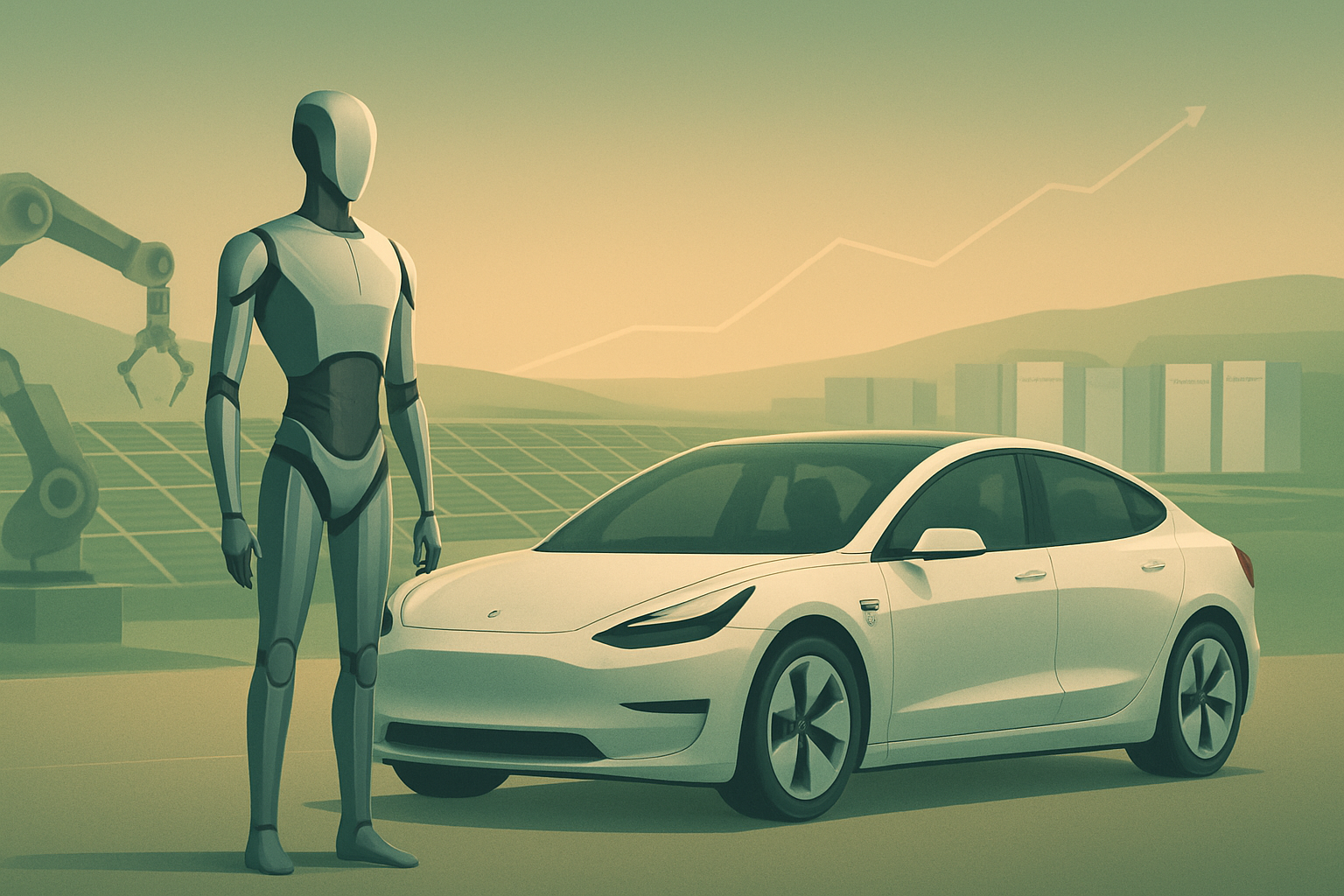
    As of April 1, 2026, Tesla, Inc. (NASDAQ: TSLA) finds itself at a historic crossroads. Long celebrated—and scrutinized—as the vanguard of the electric vehicle (EV) revolution, the company has spent the last 24 months aggressively rebranding itself as an "AI and Robotics" powerhouse. The transition hasn't been without turbulence. After a challenging 2025 that saw its first major annual delivery decline, Tesla is now banking on a trio of catalysts: the mass-market "Model 2," the commercialization of its Optimus humanoid robot, and the regulatory rollout of unsupervised Full Self-Driving (FSD).

    For investors, Tesla remains one of the most polarizing tickers on the market. It is a company that defies traditional automotive valuation, trading more like a high-growth software firm despite the capital-intensive realities of global manufacturing. In this deep-dive, we examine whether Tesla’s pivot to AI can restore the hyper-growth trajectory that defined its previous decade.

    Historical Background

    Founded in 2003 by Martin Eberhard and Marc Tarpenning—and fundamentally shaped by early investor and longtime CEO Elon Musk—Tesla's journey began with a singular "Master Plan": build a high-end sports car to prove EVs were viable, then use those profits to build increasingly affordable models.

    The 2008 Roadster proved the concept, but it was the 2012 launch of the Model S that disrupted the luxury sedan market. The "production hell" of the Model 3 ramp-up in 2017-2018 nearly bankrupted the company but ultimately scaled Tesla into the mainstream. By 2020, Tesla had achieved sustained profitability, leading to its inclusion in the S&P 500 and a trillion-dollar valuation peak in late 2021. The subsequent years, 2023 through 2025, were defined by price wars in China, the launch of the polarizing Cybertruck, and a strategic shift away from high-margin luxury toward volume and autonomous services.

    Business Model

    Tesla’s business model is vertically integrated to a degree rarely seen in modern industry. It currently operates through three primary segments:

    1. Automotive: The core driver, encompassing the sale and leasing of the Model 3, Y, S, X, and Cybertruck. Revenue is supplemented by regulatory credits sold to other OEMs.
    2. Energy Generation and Storage: This includes the Megapack (utility-scale storage), Powerwall (residential), and Solar Roof. As of 2026, this has become the fastest-growing segment by margin percentage.
    3. Services and Other: This covers Supercharging (now a global standard via NACS), in-app software purchases (FSD subscriptions), insurance, and vehicle service.

    Crucially, Tesla’s model is shifting toward a "razor and blade" strategy: selling hardware (cars) at lower margins to build an installed base for high-margin recurring revenue via FSD software and the burgeoning Robotaxi network.

    Stock Performance Overview

    Over the last decade, TSLA has been a generational wealth creator, though its path has been a rollercoaster:

    • 10-Year Performance: Despite recent volatility, long-term holders have seen gains exceeding 1,200%, vastly outperforming the S&P 500.
    • 5-Year Performance: The stock saw a parabolic rise in 2020-2021, followed by a significant correction in 2022 and 2024. As of early 2026, it is recovering from a "valuation reset" that occurred when automotive margins compressed in 2024.
    • 1-Year Performance: The stock has seen a 15% recovery over the last 12 months, driven by the successful pilot of "Unsupervised FSD" in select markets and the initial production of the $25,000 next-gen platform.

    Financial Performance

    Tesla’s recent financials reflect a company in transition. After a 2024 that saw operating margins dip to 7.2%, the 2025 fiscal year was a period of consolidation.

    • Revenue: 2025 revenue reached approximately $105 billion, a modest increase despite lower vehicle delivery volume, thanks to a 50% surge in Energy segment revenue.
    • Margins: Automotive gross margins (excluding credits) have stabilized around 17% in Q1 2026, up from the 16% lows of 2024, as the Cybertruck ramp-up reached scale.
    • Cash Position: Tesla maintains a fortress balance sheet with over $30 billion in cash and investments, allowing it to self-fund the massive "Project Redwood" (Model 2) expansion and the Houston Megafactory.
    • Valuation: Trading at a forward P/E of approximately 55x, Tesla remains expensive compared to Toyota (10x) but cheaper than its historic highs of 100x+.

    Leadership and Management

    Elon Musk remains the polarizing center of Tesla's leadership. While his focus is often split between X (formerly Twitter), SpaceX, and xAI, his "technoking" status at Tesla is currently focused on the AI-first transition.

    The leadership bench has seen notable shifts. Tom Zhu, Senior VP of Automotive, continues to oversee global production efficiency, while the board of directors remains under pressure to improve governance following the 2024 disputes over Musk’s compensation package. Despite the noise, Tesla’s engineering talent remains a top-tier magnet for AI and robotics specialists, keeping the innovation pipeline robust.

    Products, Services, and Innovations

    Tesla’s product lineup is currently undergoing its most significant refresh in a decade:

    • Model 2 (Project Redwood): Entering mass production in mid-2026, this $25,000 vehicle uses the "Unboxed" manufacturing process to reduce costs by 50%.
    • Cybertruck: Now at a 250,000-unit annual run rate, it has become a common sight on American roads and a significant revenue contributor.
    • Optimus (Gen 3): Tesla has deployed thousands of its humanoid robots internally. In early 2026, the company began taking "early-adopter" orders for external industrial customers.
    • FSD v14: The latest software update has moved to a completely neural-network-based stack for all driving environments, bringing the "interventions per mile" metric to an all-time low.

    Competitive Landscape

    The competition has never been more fierce. As of 2026:

    • BYD (SZSE: 002594): The Chinese giant surpassed Tesla in total BEV volume in 2025. BYD’s vertical integration in batteries gives it a cost advantage Tesla is only now matching with the Model 2.
    • Xiaomi (HKG: 1810): The smartphone maker’s entry into the EV space with the SU7 and MX11 has disrupted Tesla’s market share in China, offering superior "smart cockpit" features.
    • Legacy OEMs: Ford and GM have scaled back their aggressive EV targets to focus on hybrids, leaving Tesla to compete more directly with Hyundai and Kia in the mid-range EV segment.

    Industry and Market Trends

    The "EV adoption S-curve" hit a plateau in 2024-2025, but 2026 shows signs of a second wind. Global trends include:

    • NACS Dominance: Tesla’s North American Charging Standard is now the universal norm, turning the Supercharger network into a profitable "toll booth" for all EV drivers.
    • AI Inference at the Edge: The industry is moving toward "Software-Defined Vehicles." Tesla’s lead in hardware (AI5 chips) gives it an edge in processing power.
    • LFP Batteries: Lithium Iron Phosphate (LFP) has become the standard for mass-market cars due to lower costs and longer lifespans, a shift Tesla pioneered and now dominates.

    Risks and Challenges

    Tesla faces several "existential" risks:

    1. Regulatory Scrutiny: FSD remains under intense investigation by the NHTSA. Any high-profile failure of "Unsupervised" mode could lead to recalls or bans.
    2. Key Person Risk: The company’s valuation is inextricably linked to Elon Musk. Any further dilution of his focus or potential departure would likely trigger a massive valuation reset.
    3. Geopolitical Tensions: With a significant portion of production and demand in China, any escalation in US-China trade wars could disrupt Tesla’s "Giga Shanghai" operations.

    Opportunities and Catalysts

    • Robotaxi Launch: A dedicated Robotaxi unveiling (expected late 2026) could prove the viability of a high-margin ride-hailing service.
    • FSD Licensing: Tesla is reportedly in late-stage talks with two major legacy automakers to license its FSD software, which would provide pure-margin licensing revenue.
    • Energy Storage: The Megapack business is on track to represent 20% of Tesla’s total profit by 2027, providing a stable counter-cyclical hedge to auto sales.

    Investor Sentiment and Analyst Coverage

    Wall Street is divided. As of April 2026, the consensus is a "Hold."

    • Bulls (Wedbush, Ark Invest): Argue that Tesla is the world’s largest robotics company and that the current $1.2 trillion market cap is just the beginning of the "Autonomous Age."
    • Bears (GLJ Research): Contend that Tesla is a slowing car company trading at a tech multiple it can no longer justify as BYD eats its lunch.
    • Retail Sentiment: Remains high, with "Tesla stans" providing a floor for the stock price that traditional fundamentals often cannot explain.

    Regulatory, Policy, and Geopolitical Factors

    The regulatory environment is shifting. While the Inflation Reduction Act (IRA) tax credits in the US provided a tailwind through 2024, the potential for a political shift in the 2024/2025 election cycle has led to uncertainty regarding future subsidies. Additionally, the EU’s anti-subsidy probe into Chinese-made EVs has complicated Tesla’s export strategy from Giga Shanghai to Europe, forcing more reliance on Giga Berlin.

    Conclusion

    Tesla enters the second quarter of 2026 in a state of "controlled transformation." The days of easy 50% year-over-year growth in car sales are gone, replaced by a more complex, high-stakes bet on artificial intelligence and energy storage.

    For the long-term investor, the bull case rests on the successful ramp of the Model 2 and the wide-scale deployment of FSD. If Tesla can prove it is a robotics company first and an automaker second, its current valuation may look like a bargain in retrospect. However, if FSD remains "perpetually almost ready" and Chinese rivals continue to squeeze margins, the road ahead will be rocky. Tesla remains a high-beta play for those who believe in the future of autonomy, but it is no longer the only game in town.


    This content is intended for informational purposes only and is not financial advice.
  • The Great Pivot: Tesla’s High-Stakes Bet on AI Amidst Global EV Pricing Wars (March 2026 Deep-Dive)

    The Great Pivot: Tesla’s High-Stakes Bet on AI Amidst Global EV Pricing Wars (March 2026 Deep-Dive)

    As of March 30, 2026, Tesla, Inc. (NASDAQ: TSLA) stands at the most significant crossroads in its twenty-three-year history. The era of unchecked exponential growth in vehicle deliveries has transitioned into a complex narrative of industrial maturity, aggressive global price wars, and a high-stakes pivot toward artificial intelligence and autonomous robotics. Once defined solely by its mission to accelerate the world’s transition to sustainable energy through electric vehicles (EVs), Tesla is now increasingly viewed by Wall Street as an AI and software platform company that happens to manufacture hardware.

    This transition comes at a time of intense market scrutiny. After a bruising 2024 and 2025, where the global EV market faced a "demand plateau" and a brutal race to the bottom in pricing, Tesla has reinvented its strategic playbook. With the official launch of the "Cybercab" production line and the rollout of Full Self-Driving (FSD) version 14.3, the company is attempting to decouple its valuation from the cyclical automotive industry and reattach it to the recurring revenue potential of autonomous transport.

    Historical Background

    Founded in 2003 by Martin Eberhard and Marc Tarpenning, and catalyzed by the early investment and leadership of Elon Musk, Tesla’s journey is one of the most storied in corporate history. From the niche Roadster in 2008 to the luxury-defining Model S and Model X, the company spent its first decade proving that EVs could be desirable.

    The true transformation began with the Model 3 in 2017. Despite "production hell" that famously brought the company to the brink of bankruptcy, the Model 3—and later the Model Y—democratized high-performance electric transport. The early 2020s saw Tesla scale globally at a pace rarely seen in heavy industry, commissioning Gigafactories in Shanghai, Berlin, and Austin. By 2023, the Model Y had become the best-selling vehicle in the world, a feat once unthinkable for a purely electric platform. However, the subsequent years (2024–2025) forced a reckoning as legacy automakers and well-funded Chinese entrants flooded the market, shifting Tesla's focus from mere capacity expansion to cost optimization and software dominance.

    Business Model

    Tesla operates a vertically integrated business model that spans three primary segments:

    1. Automotive: The core driver of revenue, encompassing the sale and leasing of the Model 3, Y, S, X, and Cybertruck. This segment also includes the burgeoning "Next-Gen" platform (Cybercab). Tesla’s direct-to-consumer sales model bypasses traditional dealerships, allowing it to capture the full margin of the sale and control the customer experience.
    2. Energy Generation and Storage: This segment includes the sale of Powerwall (residential), Megapack (utility-scale), and solar products. In 2025, this became Tesla's fastest-growing division, providing a vital hedge against automotive volatility.
    3. Services and Other: This includes non-warranty after-sales vehicle services, used vehicle sales, retail merchandise, and most critically, Full Self-Driving (FSD) subscriptions. Analysts increasingly view FSD as a high-margin "Software-as-a-Service" (SaaS) play that could eventually rival the hardware business in profitability.

    Stock Performance Overview

    Tesla’s stock performance has remained one of the most volatile and debated subjects on Wall Street. As of today, March 30, 2026, TSLA is trading at approximately $361.83, giving it a market capitalization of $1.14 trillion.

    • 1-Year Performance: The stock is up 37.3% over the last 12 months, recovering from a "lost year" in 2024. This recovery was driven by the successful pilot of the autonomous Cybercab fleet in Austin.
    • 5-Year Performance: Despite significant drawdowns in 2022 and 2024, long-term investors have seen substantial gains. The stock has outperformed the S&P 500 significantly over this period, though the volatility remains nearly three times higher than the broader market.
    • Year-to-Date (2026): TSLA is down roughly 19.5% since January 1st. This recent dip reflects investor anxiety regarding a 9% year-over-year decline in 2025 vehicle deliveries and the looming uncertainty of regulatory approval for steering-wheel-less vehicles.

    Financial Performance

    The 2025 fiscal year was a period of "margin stabilization" for Tesla. Following a series of aggressive price cuts in 2023 and 2024, the company’s automotive gross margins (excluding regulatory credits) bottomed out at 15.4% in mid-2025 before recovering to 17.7% by the end of the year.

    • Revenue: Total 2025 revenue landed at $94.8 billion, a 3% decline from 2024, reflecting the impact of the global price war and high interest rates.
    • Net Income: GAAP net income fell to $3.8 billion in 2025 (down from $7.1 billion in 2024), weighed down by massive capital expenditures in AI infrastructure (Dojo supercomputer) and the ramp-up of the next-gen manufacturing line.
    • Cash Flow: Tesla remains cash-rich, finishing 2025 with over $28 billion in cash and investments. This provides a significant cushion for its R&D-heavy strategy.
    • Valuation Metrics: Trading at a forward P/E of ~132x, Tesla continues to be valued not as a car company, but as a technology conglomerate.

    Leadership and Management

    Elon Musk remains the singular face of Tesla. While his multi-company leadership (SpaceX, X, xAI) continues to be a point of contention for some institutional investors, his "Technoking" status is largely seen as the engine behind Tesla’s AI pivot.

    Operationally, the company has seen more stability recently under the leadership of Tom Zhu (Senior VP of Automotive), who has been credited with the successful supply chain optimizations that rescued margins in 2025. The management team has shifted its focus from "volume at any cost" to "efficiency and autonomy." However, concerns regarding key talent retention—specifically in the Autopilot and AI teams—remain a persistent risk factor.

    Products, Services, and Innovations

    The current Tesla portfolio is dominated by the refreshed "Juniper" Model Y and the "Highland" Model 3. However, the true innovation focus has shifted elsewhere:

    • The Cybercab: This purpose-built Robotaxi is Tesla’s "bet the company" product. Designed without pedals or a steering wheel, it utilizes the "Unboxed" manufacturing process, which Tesla claims reduces production costs by 50%.
    • Full Self-Driving (FSD) v14.3: This latest software iteration represents a major leap in "end-to-end" neural network reasoning. It is the first version to feature "Sentient Intent," allowing the vehicle to navigate complex human social cues in urban environments.
    • Optimus (Tesla Bot): While not yet a meaningful revenue driver, Optimus Gen-3 is currently being trialed for simple logistics tasks in the Fremont factory. Musk has suggested that the long-term value of Optimus could eventually exceed the automotive business.

    Competitive Landscape

    The competitive landscape in 2026 is vastly more challenging than it was five years ago. Tesla now faces a "two-front war":

    1. The China Challenge: BYD (OTC: BYDDY) has officially surpassed Tesla as the world’s largest BEV seller by volume, delivering 2.26 million units in 2025. Furthermore, tech giants like Xiaomi (OTC: XIACY) have entered the fray; the Xiaomi YU7 SUV recently outsold the Model Y in key Chinese metropolitan areas.
    2. Legacy Resilience: In North America and Europe, Ford (NYSE: F), General Motors (NYSE: GM), and Volkswagen (OTC: VWAGY) have retreated from aggressive EV-only targets in favor of hybrids, which has slowed the adoption rate of pure BEVs and pressured Tesla’s market share.

    Industry and Market Trends

    The global EV market has entered a "post-early adopter" phase. Consumers in 2026 are more price-sensitive and concerned about charging infrastructure than those in 2020. This has led to a resurgence in hybrids and a "wait-and-see" approach for many mainstream buyers.

    Additionally, the "NACS (North American Charging Standard)" transition is nearly complete, with almost all major automakers now using Tesla’s Supercharger network. While this provides Tesla with a recurring "toll booth" revenue stream, it has also removed one of the primary moats that once kept customers locked into the Tesla ecosystem.

    Risks and Challenges

    • China Geopolitics: With roughly 35-40% of its production and a significant portion of its sales tied to China, Tesla remains highly vulnerable to trade tensions and potential local regulatory favoritism toward domestic brands like BYD.
    • Regulatory Scrutiny: The U.S. National Highway Traffic Safety Administration (NHTSA) remains vigilant regarding FSD. Any major safety incident involving a driverless Cybercab could lead to a catastrophic fleet-wide grounding.
    • Execution Risk: The transition to the "Unboxed" manufacturing method is unproven at scale. Any delays in the April 2026 Cybercab ramp at Giga Texas could lead to a significant valuation correction.

    Opportunities and Catalysts

    • FSD Licensing: Several legacy OEMs are reportedly in "deep discussions" with Tesla to license FSD software. A single major licensing deal (e.g., with Ford or VW) would be a massive catalyst for the stock, validating Tesla’s "AI-as-a-Service" model.
    • Energy Storage Ramp: The utility-scale Megapack business is currently backlogged through 2027. This high-margin business is poised to become a larger percentage of total revenue.
    • Robotaxi Revenue: If Tesla successfully launches its proprietary ride-hailing app in Austin and Phoenix this summer, it will provide the first real-world data on the economics of an autonomous fleet.

    Investor Sentiment and Analyst Coverage

    Investor sentiment remains polarized. "AI Bulls" (such as Cathie Wood’s ARK Invest) maintain price targets north of $1,000, arguing that Tesla is an AI company with the world's largest real-world data set. "Auto Bears" point to declining vehicle delivery growth and a P/E ratio that is disconnected from the realities of the capital-intensive car industry.

    Hedge fund activity has been mixed in early 2026, with some rotating out of TSLA into "purer" AI plays like NVIDIA (NASDAQ: NVDA), while others are buying the dip in anticipation of the April Cybercab launch.

    Regulatory, Policy, and Geopolitical Factors

    The regulatory environment in 2026 is a patchwork of incentives and hurdles. In the U.S., the Inflation Reduction Act (IRA) continues to provide a tailwind for battery manufacturing, but potential shifts in political leadership in late 2026 pose a risk to EV subsidies.

    In Europe, anti-subsidy probes against Chinese EVs have paradoxically helped Tesla by leveling the playing field against BYD, but new environmental regulations at Gigafactory Berlin continue to hamper expansion efforts.

    Conclusion

    Tesla enters the second quarter of 2026 as a company in the midst of a profound identity shift. It has survived the initial onslaught of the global EV price war, but at the cost of the "hyper-growth" narrative that once propelled it to a $1 trillion valuation.

    For investors, the thesis for Tesla is no longer about how many cars it can sell, but how effectively it can monetize the "miles driven" through FSD and the "hours worked" through Optimus. The upcoming April 2026 production ramp at Giga Texas will be the ultimate litmus test. If Tesla can prove that its autonomous platform is both safe and profitable, the current valuation may look like a bargain. If not, the road back to its previous highs will be a long and arduous one.


    This content is intended for informational purposes only and is not financial advice.
  • The Physical AI Pivot: A Deep Dive into XPeng Inc. (XPEV) in 2026

    The Physical AI Pivot: A Deep Dive into XPeng Inc. (XPEV) in 2026

    March 20, 2026

    Introduction

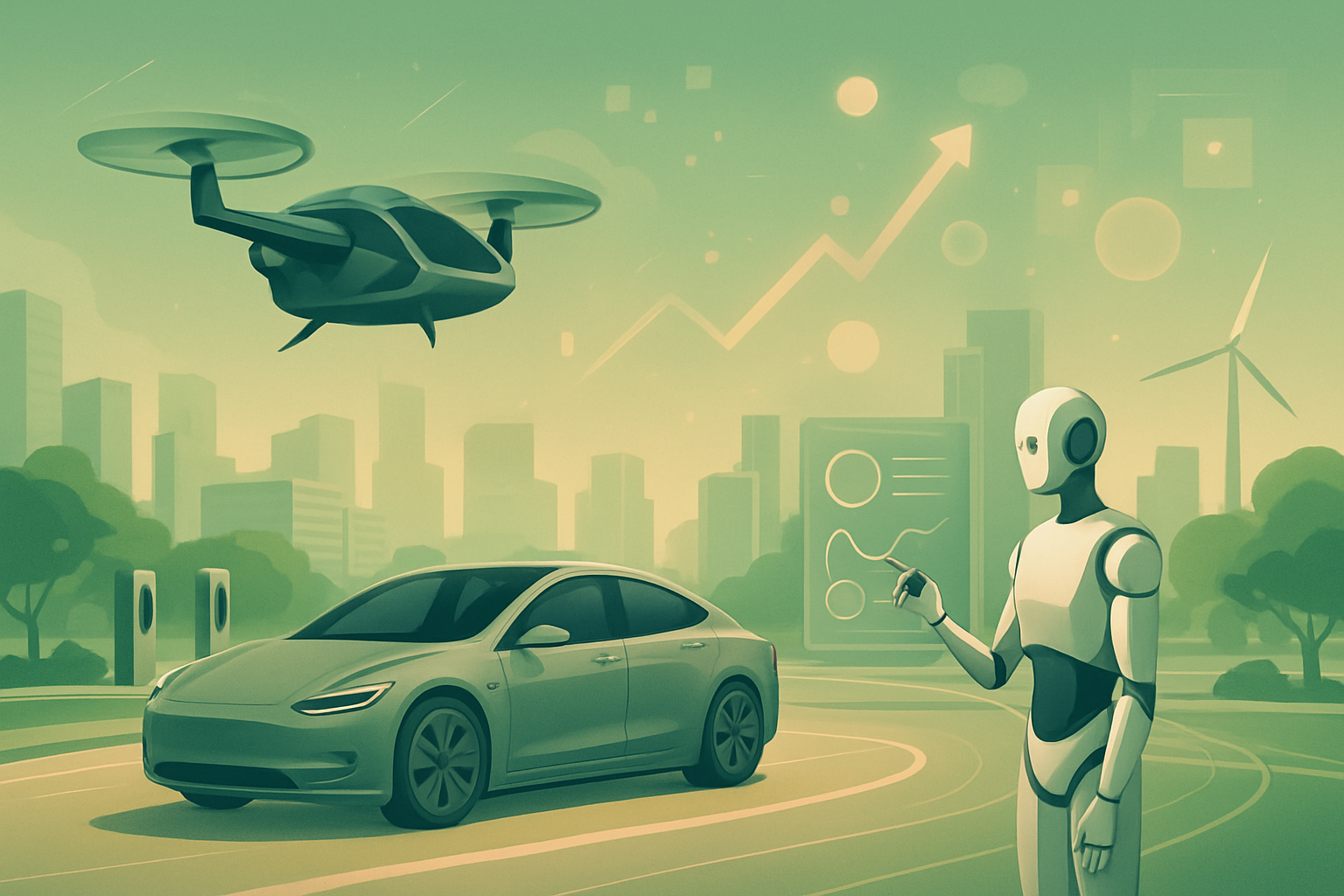
    In the rapidly evolving landscape of global mobility, few companies have undergone a transformation as profound as XPeng Inc. (NYSE: XPEV; HKEX: 9868). Once regarded simply as one of the "three musketeers" of Chinese electric vehicle (EV) startups alongside NIO and Li Auto, XPeng has spent the mid-2020s pivotally repositioning itself. By March 2026, the Guangzhou-based firm is no longer just an automaker; it has emerged as a "Physical AI" powerhouse. With a product portfolio that now spans mass-market EVs, luxury smart sedans, modular flying cars, and humanoid robotics, XPeng is at the center of a high-stakes bet that software, not hardware, will define the next decade of transportation.

    Historical Background

    Founded in 2014 by He Xiaopeng, Xia Heng, and He Tao, XPeng (Xiaopeng Motors) was born from the vision of merging internet-sector agility with automotive engineering. Early backing from e-commerce giant Alibaba and tech titan Foxconn provided the capital necessary to challenge established global players.

    The company’s journey has been a series of high-stakes pivots. After the successful launch of the G3 SUV in 2018 and the breakthrough P7 sedan in 2020, XPeng faced a near-existential crisis in 2022. Struggling with supply chain disruptions and a convoluted product lineup, the company underwent a massive internal restructuring in 2023. This "renaissance" was marked by the appointment of Wang Fengying—a veteran from Great Wall Motor—as President, which signaled a shift from pure R&D experimentation toward operational efficiency and manufacturing discipline.

    Business Model

    XPeng’s business model in 2026 is uniquely diversified compared to its domestic peers. While vehicle sales remain the primary revenue driver, the company has successfully monetized its technological intellectual property (IP).

    1. Vehicle Sales: A tiered brand strategy consisting of the premium XPeng brand (P7+, G9, X9) and the mass-market MONA (Made Of New AI) series.
    2. Technology Services: A high-margin revenue stream stemming from its strategic partnership with Volkswagen (OTC: VWAGY). XPeng earns technical service fees for providing its G9 platform and "China Electrical Architecture" (CEA) to the German giant.
    3. Software as a Service (SaaS): Revenue from its XNGP (XPeng Navigation Guided Pilot) subscriptions and AI-driven features.
    4. Future Frontiers: Emerging segments in AeroHT (flying cars) and XPeng Robotics, which are expected to begin contributing to the bottom line by late 2026.

    Stock Performance Overview

    The journey for XPEV shareholders has been nothing short of a roller coaster. Since its NYSE IPO in August 2020 at $15 per share, the stock has experienced extreme cycles:

    • The Mania (2020): Driven by the EV "gold rush," the stock peaked at an all-time high of $72.17 in November 2020.
    • The Trough (2022): Macroeconomic headwinds and delisting fears pushed the stock to a nadir of $6.41 in late 2022.
    • The Recovery (2024–2026): Following the Volkswagen investment in 2023 and the successful launch of the MONA brand in late 2024, the stock has stabilized. As of March 20, 2026, XPEV trades in the $18–$21 range, reflecting a more mature valuation based on narrowing losses and AI leadership rather than pure speculative growth.

    Financial Performance

    XPeng’s fiscal year 2025 marked a historic milestone: its first-ever quarterly net profit in Q4.

    • Revenue: Total 2025 revenue reached RMB 76.72 billion (~$10.97 billion), an 88% surge year-over-year.
    • Margins: Gross margins improved to 18.9%, a significant leap from the single digits seen in 2023. This was aided by the high-margin "tech fees" paid by Volkswagen.
    • Balance Sheet: With RMB 47.66 billion ($6.81 billion) in cash and equivalents, XPeng maintains one of the strongest liquidity positions among Chinese EV "insurgents," providing a cushion for its aggressive R&D into L4 autonomy and robotics.

    Leadership and Management

    Chairman and CEO He Xiaopeng remains the visionary heart of the company, often compared to Elon Musk for his obsession with end-to-end AI. However, the "secret sauce" behind XPeng’s 2025 turnaround is President Wang Fengying. Her focus on "anti-involution"—reducing internal waste and optimizing the supply chain—has allowed XPeng to remain price-competitive in China’s brutal EV market without sacrificing its long-term R&D goals. The board remains tightly aligned with a strategy that prioritizes "Smartness" over "Volume at any cost."

    Products, Services, and Innovations

    XPeng’s 2026 lineup is a testament to its "Physical AI" philosophy:

    • P7+ Sedan: The company’s flagship "AI Car," featuring the in-house Turing AI Chip which delivers 2250 TOPS of computing power—surpassing industry standards.
    • MONA M03: A mass-market success story that captured the sub-¥200,000 segment in 2025.
    • AeroHT "Land Aircraft Carrier": A 6×6 modular vehicle with a detachable flight module. Customer deliveries are slated for late 2026, with over 7,000 pre-orders already secured.
    • IRON Humanoid Robot: Currently training on XPeng’s own assembly lines, the IRON robot is scheduled for commercial release in late 2026, utilizing the same "VLA" (Vision-Language-Action) brain as the vehicles.

    Competitive Landscape

    In 2026, the competitive battlefield has shifted. While BYD (OTC: BYDDY) dominates in volume, XPeng’s primary rival for "tech supremacy" is now Xiaomi (OTC: XIACY).

    • Xiaomi vs. XPeng: Xiaomi’s SU7 and YU7 models have challenged XPeng on ecosystem integration. XPeng has responded by doubling down on "no-map" autonomous driving, where it still holds a perceived 6–12 month lead in urban navigation complexity.
    • Tesla (NASDAQ: TSLA): Tesla remains the global benchmark, but in the Chinese market, XPeng’s XNGP system is often cited by local users as more adapted to the chaotic, high-density urban environments of Beijing and Shanghai than Tesla's FSD.

    Industry and Market Trends

    The Chinese EV market has entered its "Post-Subsidy" era. By 2026, the government has transitioned from general purchase incentives to "AI Plus" initiatives. This policy shift favors companies like XPeng that develop domestic high-end semiconductors and autonomous software. Furthermore, the industry is seeing a trend toward "Extended Range" (EREV) models to solve range anxiety, a segment XPeng is now entering to compete with Li Auto (NASDAQ: LI).

    Risks and Challenges

    Despite its technical prowess, XPeng faces significant headwinds:

    • Geopolitical Friction: Increasing tariffs in the US and EU threaten XPeng’s international expansion plans, forcing a heavier reliance on the Middle East and SE Asia markets.
    • Financial Volatility: With a Beta of nearly 2.0, XPEV is highly sensitive to shifts in global risk sentiment.
    • Execution Risk: The simultaneous launch of flying cars and humanoid robots is an immense capital and managerial drain. Any failure in these "moonshot" projects could sour investor sentiment.

    Opportunities and Catalysts

    • L4 Autonomy (Q4 2026): XPeng has publicly targeted the fourth quarter of 2026 for the rollout of L4-capable software in select Chinese cities. Success here would be a "ChatGPT moment" for the automotive industry.
    • Volkswagen Expansion: Rumors persist that the VW partnership may expand beyond China, potentially giving XPeng a royalty-based entry into the European market.
    • Robot Sales: The successful commercialization of the IRON robot could open a multi-billion dollar B2B market entirely separate from passenger cars.

    Investor Sentiment and Analyst Coverage

    Wall Street remains "Cautiously Bullish" on XPEV. As of March 2026, the consensus rating is a Moderate Buy.

    • Bulls point to the 2025 profitability milestone and the "Physical AI" moat as reasons for a $30+ price target.
    • Bears argue that the Chinese price floor regulations and the "Altman Z-Score" (indicating potential financial distress in high-capex environments) warrant a "Wait and See" approach.

    Regulatory, Policy, and Geopolitical Factors

    China's 15th Five-Year Plan (2026–2030) has redefined NEVs as a mature industry, shifting focus toward "New Quality Productive Forces"—specifically AI and Robotics. XPeng is a direct beneficiary of this pivot, receiving state support for its Turing chip development. However, the company must navigate the "Clean Network" and data security laws that make exporting its advanced AI software to Western markets a complex legal challenge.

    Conclusion

    As of March 2026, XPeng Inc. stands at a crossroads. It has successfully navigated the "Valley of Death" that claimed many of its early peers, emerging as a leaner, more profitable, and technically superior entity. By anchoring its future in "Physical AI"—the convergence of EVs, robotics, and aviation—XPeng is positioning itself as a diversified technology conglomerate rather than a mere car manufacturer. For investors, XPEV represents a high-beta, high-reward play on the future of autonomous systems. The coming twelve months, marked by the delivery of flying cars and the push toward L4 autonomy, will determine whether XPeng becomes the "Apple of Mobility" or remains a niche innovator in a crowded field.


    This content is intended for informational purposes only and is not financial advice.
  • Baidu (BIDU) Q4 2025 Earnings Analysis: The AI Transformation Reaches a Tipping Point

    Baidu (BIDU) Q4 2025 Earnings Analysis: The AI Transformation Reaches a Tipping Point

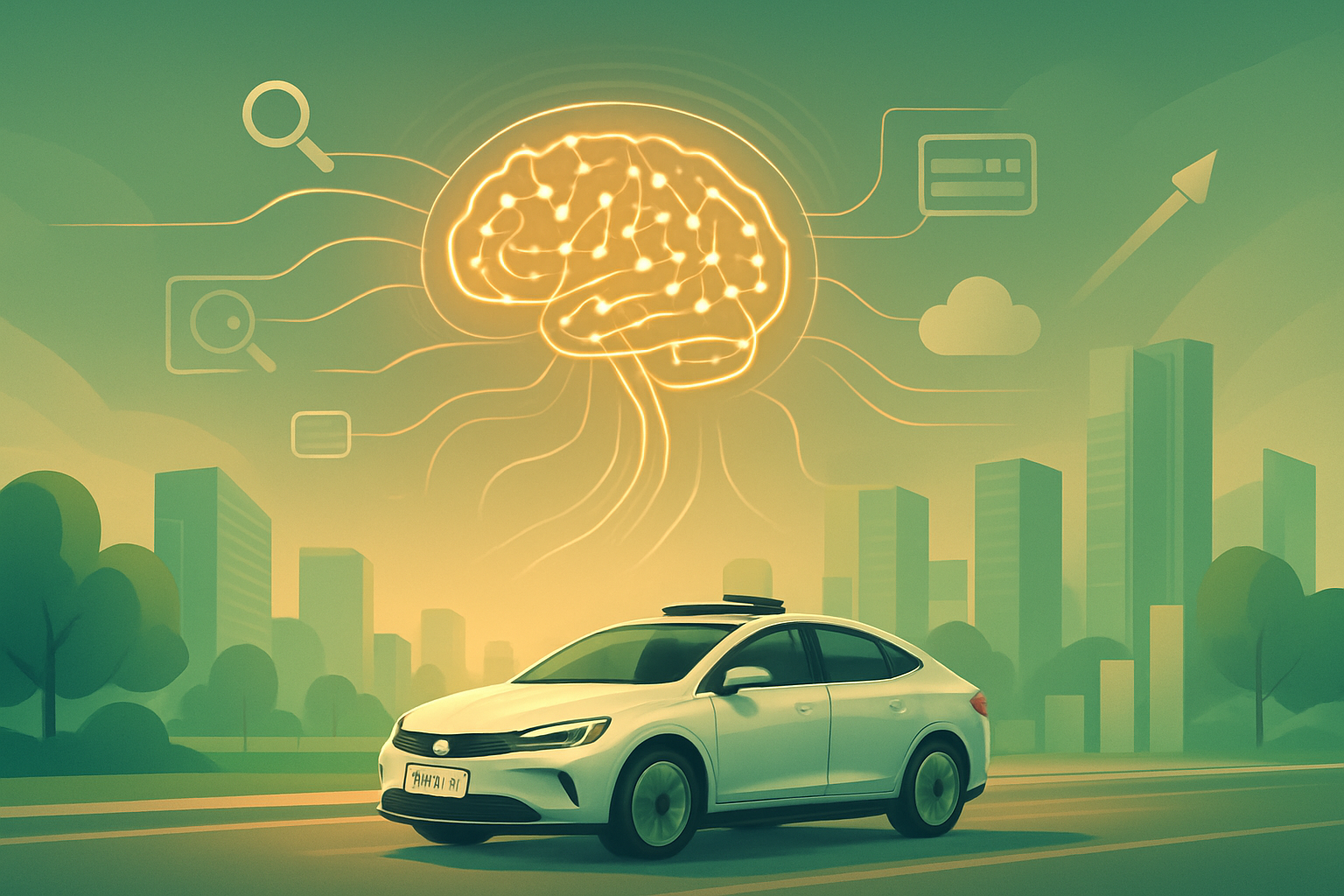
    As of today, February 26, 2026, Baidu, Inc. (NASDAQ: BIDU; HKEX: 9888) finds itself at a historic crossroads. Long labeled the "Google of China," the Beijing-based tech giant has spent the last decade aggressively attempting to shed its reputation as a legacy search engine provider to become a global leader in artificial intelligence (AI) and autonomous driving. Following the release of its Q4 2025 financial results earlier today, the company’s "AI-first" transformation is no longer a roadmap—it is the operational reality. With the successful scaling of its ERNIE LLM (Large Language Model) ecosystem and the international expansion of its Apollo Go robotaxi fleet, Baidu is positioning itself as the primary beneficiary of China’s "New Quality Productive Forces" economic mandate.

    Historical Background

    Founded in 2000 by Robin Li and Eric Xu, Baidu rose to dominance by mastering the complexities of the Chinese language in web search. After its 2005 IPO on the NASDAQ, it became one of the "BAT" trio (Baidu, Alibaba, Tencent) that defined the first two decades of the Chinese internet. However, the rise of mobile-first ecosystems like ByteDance’s Douyin and Tencent’s (OTC: TCEHY) WeChat created "walled gardens" that challenged Baidu’s search dominance. In response, Robin Li pivoted the company toward deep tech in the mid-2010s, investing billions into the PaddlePaddle deep learning framework, the Kunlun AI chip series, and the Apollo autonomous driving platform. This long-term bet, often criticized by investors during periods of stock stagnation, has finally begun to yield high-margin fruit in the current 2025-2026 cycle.

    Business Model

    Baidu operates through two primary segments: Baidu Core and iQIYI (NASDAQ: IQ).

    • Baidu Core: This is the engine of the company, comprising "Baidu Mobile Ecosystem" (Search, Feed, and the Baidu App), "Baidu AI Cloud," and "Intelligent Driving & Other Growth Initiatives." While search advertising still provides the majority of the company's cash flow, AI Cloud and autonomous driving now represent the primary growth drivers.
    • iQIYI: Often called the "Netflix of China," this subsidiary focuses on long-form video streaming. While it operates with its own management team, it synergizes with Baidu’s AI for content recommendation and advertising efficiency.
    • Customer Base: Baidu serves a dual market: hundreds of millions of retail users who use its search and ERNIE interfaces, and a rapidly growing B2B sector that relies on its AI Cloud for digital transformation and specialized LLM deployment.

    Stock Performance Overview

    Baidu’s stock performance has historically been a story of extreme volatility and "China discount" headwinds.

    • 1-Year Performance: 2025 was a standout year for BIDU, with shares rallying nearly 60% as the market re-rated the company from a "legacy search" firm to an "AI infrastructure" leader.
    • 5-Year Performance: Over the five-year horizon, the stock has struggled with regulatory crackdowns (2021-2022) and the post-pandemic economic slowdown in China. However, as of early 2026, it has recovered a significant portion of its 2021 highs.
    • 10-Year Performance: Long-term shareholders have experienced a "lost decade" in terms of capital gains compared to US peers, largely due to geopolitical tensions and the transition from PC to mobile. However, the current valuation reflects a much leaner, more technologically advanced company than the one seen in 2016.

    Financial Performance

    In the Q4 2025 results released today (Feb 26, 2026), Baidu reported a nuanced financial picture:

    • Revenue: Total revenue reached RMB 32.74 billion (~$4.68 billion). This was a modest 5% year-over-year increase, reflecting a "K-shaped" recovery where legacy search ads remained flat while AI Cloud and Apollo Go surged.
    • Profitability: The company delivered a significant bottom-line beat, with adjusted net income of RMB 10.62 per ADS. This was driven by aggressive cost optimization and the improving unit economics of its GenAI services.
    • Cash Flow & Capital Allocation: Operating cash flow turned strongly positive in the second half of 2025. In a move that surprised the market, Baidu announced its first-ever dividend policy and a $5 billion share repurchase program, signaling management's confidence in its long-term cash generation.

    Leadership and Management

    Robin Li remains the singular visionary at the helm, serving as Chairman and CEO. His tenure is marked by a refusal to chase short-term trends, instead focusing on "hard tech." Under his leadership, the management team has been restructured to prioritize AI integration across all product lines. The board has also seen an influx of members with deep expertise in semiconductors and global logistics, reflecting the company’s shift toward hardware (chips) and physical services (robotaxis).

    Products, Services, and Innovations

    Innovation is currently centered on two pillars:

    • ERNIE 5.0: Unveiled in late 2025, this "omni-modal" model has 2.4 trillion parameters and competes directly with the best Western models. It has achieved massive adoption, with daily API calls surpassing 1.6 billion.
    • Kunlunxin Chips: Baidu’s in-house AI chip unit is a critical component of its vertical integration. By designing its own silicon, Baidu has partially insulated itself from US export restrictions on high-end GPUs. The upcoming confidential IPO of Kunlunxin in Hong Kong is expected to unlock significant shareholder value.
    • Apollo Go: The world's largest autonomous ride-hailing service has now surpassed 20 million cumulative rides, with its 6th-generation RT6 vehicle reducing hardware costs to under $30,000 per unit.

    Competitive Landscape

    Baidu faces a multi-front war:

    • AI Models: It competes with Alibaba (NYSE: BABA) and its "Tongyi Qianwen" model, as well as several high-value Chinese startups like Moonshot AI.
    • Cloud: Alibaba Cloud and Tencent Cloud remain formidable rivals, though Baidu’s focus on "AI-native" cloud has allowed it to gain market share in the enterprise GenAI sector.
    • Autonomous Driving: Globally, Tesla (NASDAQ: TSLA) and Alphabet’s (NASDAQ: GOOGL) Waymo are the primary benchmarks. In China, local EV makers like XPeng (NYSE: XPEV) are also pushing into the autonomous space, though Baidu’s Apollo Go remains the leader in the specific robotaxi (Level 4) niche.

    Industry and Market Trends

    The "democratization of AI" is the defining trend of 2026. As LLM costs fall, Chinese enterprises are moving from experimentation to full-scale deployment. Furthermore, the Chinese government’s 15th Five-Year Plan has placed an unprecedented emphasis on "Digital China," providing subsidies and favorable policies for companies that can localize the AI supply chain. This macro environment acts as a massive tailwind for Baidu’s B2B and Cloud segments.

    Risks and Challenges

    Despite the technological progress, several risks loom:

    • Geopolitical Friction: Continued US restrictions on advanced semiconductor manufacturing equipment could eventually hamper Baidu’s ability to scale its internal chip production.
    • Ad Revenue Saturation: The Chinese consumer market remains cautious. If legacy advertising revenue continues to decline faster than AI revenue grows, it could lead to "valuation traps."
    • Regulatory Scrutiny: China’s domestic AI regulations regarding content safety and data privacy are among the strictest in the world, requiring constant compliance overhead.

    Opportunities and Catalysts

    • Kunlunxin Spin-off: The potential IPO of the AI chip unit could provide a massive one-time valuation boost.
    • Global Expansion: Apollo Go’s pilots in the Middle East and Europe (specifically London) represent the first major export of Chinese autonomous technology to the West.
    • Dividend Growth: If the dividend policy is sustained, it may attract a new class of "value" and "income" investors who previously avoided the volatile tech stock.

    Investor Sentiment and Analyst Coverage

    Wall Street currently holds a "Moderate Buy" consensus on BIDU. While many analysts praise the technical leadership, some remain skeptical of the "sum-of-the-parts" valuation. Institutional ownership has stabilized in 2026, with major hedge funds moving back into the name as a "play on the Chinese AI recovery." However, the 2.6% pre-market dip following today's earnings suggests that "perfection" is now priced in, and the company must continue to deliver high-margin growth to maintain its momentum.

    Regulatory, Policy, and Geopolitical Factors

    Baidu is perhaps the most "policy-aligned" of the major Chinese tech firms. Its focus on autonomous transport and domestic chips aligns perfectly with Beijing's self-reliance goals. However, the company remains caught in the crossfire of the US-China tech war. The 2026 landscape is defined by "dual-track" development: building a domestic-only supply chain for the China market while attempting to navigate Western safety standards for its international robotaxi ambitions.

    Conclusion

    Baidu’s Q4 2025 performance confirms that the company has successfully survived its transition period. It is no longer a search company with an AI hobby; it is an AI infrastructure powerhouse with a legacy search business that funds its R&D. For investors, the "Baidu of 2026" offers a unique proposition: a deep-value entry into the most advanced AI and autonomous driving ecosystem in Asia. While geopolitical risks and legacy ad-revenue pressures remain, the combination of a new dividend, a multi-billion dollar buyback, and the impending Kunlunxin IPO makes BIDU one of the most compelling, albeit complex, stories in the global technology sector.


    This content is intended for informational purposes only and is not financial advice.
  • The Intelligence Pivot: Li Auto’s Race to Reclaim the Premium Crown Through AI

    The Intelligence Pivot: Li Auto’s Race to Reclaim the Premium Crown Through AI

    As the global automotive industry navigates the "second half" of the electric vehicle (EV) revolution—transitioning from electrification to intelligent automation—Li Auto (Nasdaq: LI) finds itself at a critical juncture. Once the undisputed darling of the Chinese "New Forces," the company entered 2026 coming off a humbling 2025 that saw its delivery momentum challenged by the "Huawei effect" and a brutal domestic price war.

    Today, the narrative surrounding Li Auto has shifted. It is no longer just a manufacturer of range-extended family SUVs; it has rebranded itself as an AI powerhouse. With the full rollout of its end-to-end (E2E) autonomous driving large model and the integration of Vision-Language-Action (VLA) architecture, Li Auto is betting that "Silicon over Steel" will be the catalyst for its 2026 recovery.

    Historical Background

    Li Auto was founded in 2015 by Li Xiang, a serial entrepreneur who previously founded the successful automotive portal Autohome. Unlike its peers NIO and XPeng, which bet heavily on pure Battery Electric Vehicles (BEVs), Li Auto took a contrarian path by championing Extended-Range Electric Vehicles (EREVs).

    The company’s first model, the Li ONE, launched in 2019, solved the "range anxiety" that plagued early Chinese EV adopters by using a small gasoline engine to charge the battery. This pragmatic approach allowed Li Auto to reach profitability faster than any of its rivals. By 2023, the company had established a dominant lead in the premium family SUV segment, culminating in a record-breaking 2024 where it delivered over 500,000 vehicles and became the first emerging Chinese brand to reach 1 million cumulative sales.

    Business Model

    Li Auto’s business model is built on three pillars: Product Definition, Vertical Integration, and Extended Range Dominance.

    The company targets "premium family users," designing vehicles with features like "refrigerator-color TV-large sofa" configurations that have since become industry standards in China. Revenue is primarily derived from vehicle sales, supplemented by a growing software-as-a-service (SaaS) component through its AD Max autonomous driving subscriptions.

    In 2025, the company diversified its model into two streams:

    1. The L-Series (EREV): The high-margin bread and butter, including the L6, L7, L8, and flagship L9.
    2. The i-Series (BEV): A high-risk, high-reward push into pure electric power, led by the futuristic (and polarizing) Li MEGA MPV and the newly launched i6 and i8 SUVs.

    Stock Performance Overview

    Since its IPO on the Nasdaq in July 2020 at $11.50 per share, Li Auto’s stock (Nasdaq: LI) has been a volatile performer, reflective of the broader "China ADR" sentiment and the intense competition in the NEV (New Energy Vehicle) sector.

    • 1-Year Performance: The stock has struggled over the past 12 months, down approximately 14% as of early 2026, primarily due to a 2025 delivery miss and margin compression.
    • 5-Year Performance: Despite recent headwinds, long-term investors from the 2020-2021 era have seen significant gains, with the stock outperforming peers like NIO and XPeng due to Li Auto’s superior path to profitability and cash flow management.
    • 10-Year Performance: N/A (The company has been public for less than 6 years).

    Financial Performance

    The 2025 fiscal year was a "test of fire" for Li Auto’s balance sheet. After a stellar 2024 with 144.5 billion RMB in revenue and over 8 billion RMB in net income, 2025 saw a contraction.

    Preliminary data for FY 2025 suggests total revenue of approximately 113.1 billion RMB, an 18.8% year-over-year decline. Gross margins, which once sat comfortably above 21%, dipped to the 15-17% range in late 2025 as the company was forced to offer aggressive discounts to counter Huawei’s AITO M9. However, Li Auto maintains one of the strongest cash positions in the industry, with over 90 billion RMB in reserves, providing a massive "war chest" for its 2,560 TOPS in-house silicon development.

    Leadership and Management

    Li Xiang remains the visionary force behind the company. Often compared to Elon Musk for his product-centric obsession and active social media presence, Li has successfully cultivated a "product manager" culture within the firm.

    In 2025, the leadership team was reinforced with top-tier AI talent from global semiconductor firms to lead the "M-Project"—Li Auto’s in-house chip division. The governance reputation remains high among institutional investors who view Li Auto as the most "operationally disciplined" of the Chinese EV startups.

    Products, Services, and Innovations

    The core of the Li Auto 2026 thesis is the AI Driver Large Model. Moving away from traditional perception/planning modules, Li Auto has deployed a "One Model" end-to-end architecture.

    • MindVLA: This system unifies a 2.2-billion parameter Vision-Language Model (VLM) that allows the car to "reason." It can interpret complex scenarios, such as a traffic officer's hand signals or the intent of a pedestrian standing near a puddle.
    • M100 Silicon: The 2026 models are the first to feature the M100 in-house chip, capable of 2,560 TOPS. This allows for localized processing of the VLA model without relying on cloud latency.
    • Livis Chassis: The new 800V active chassis system in the 2026 L9 flagship allows for a "magic carpet" ride quality that uses AI to predict road irregularities 500 meters ahead.

    Competitive Landscape

    The competitive environment in 2026 is dominated by the "War of the Large Models."

    • AITO (Huawei): Currently Li Auto’s fiercest rival. Huawei’s ADS 4.0 system is considered the benchmark in China. The AITO M9 outsold the Li L9 for several months in 2025, forcing Li Auto into the current AI-first pivot.
    • Tesla (Nasdaq: TSLA): With FSD (Full Self-Driving) now officially operational in China, Tesla remains a formidable threat, though Li Auto’s LiDAR-integrated systems are currently performing with fewer interventions in dense urban "village-in-city" scenarios.
    • BYD (OTC: BYDDY): While BYD dominates the mass market, its premium brands (Yangwang and Fangchengbao) are beginning to nibble at Li Auto’s high-end market share.

    Industry and Market Trends

    The Chinese NEV market has entered a "survival of the fittest" phase. NEV penetration in China has crossed 50%, meaning growth is no longer about converting internal combustion engine (ICE) users, but about stealing market share from other EV players.

    The primary trend in 2026 is the "de-coupling" of hardware and software value. While the car's body is becoming a commodity, the "digital soul"—the AI model—is where the premium margin now resides. Li Auto’s move to make its AD Max hardware standard across its updated L-series reflects this shift.

    Risks and Challenges

    • Hardware Saturation: There is a risk that the "family SUV" design language has reached its limit, as evidenced by the delivery slowdown in 2025.
    • BEV Adoption: The Li MEGA’s slow start suggests that Li Auto’s brand power may not translate as easily to pure electric vehicles as it did to EREVs.
    • The "Huawei Shadow": Huawei’s massive ecosystem and R&D budget (exceeding 100 billion RMB annually) pose an existential threat to independent manufacturers like Li Auto.

    Opportunities and Catalysts

    • 2026 Recovery Target: Management has set a 550,000-unit delivery target for 2026. Reaching this would signal a definitive V-shaped recovery.
    • Overseas Expansion: Li Auto has historically focused solely on China. In 2026, the first "International Edition" models are expected to launch in the Middle East and Central Asia, opening a new growth lever.
    • AI Monetization: If the MindVLA system proves superior, Li Auto could potentially license its software stack to other Tier-2 manufacturers.

    Investor Sentiment and Analyst Coverage

    Wall Street remains cautiously optimistic. While firms like Morgan Stanley have praised Li Auto’s "relentless execution," others remain wary of the 2025 margin dip.

    Institutional ownership remains high, with major positions held by the likes of Baillie Gifford and BlackRock. Retail sentiment in China, often a precursor to stock movement, has improved following the successful Jan 2026 rollout of the "One Model" software update, which significantly improved urban navigation performance.

    Regulatory, Policy, and Geopolitical Factors

    Li Auto operates in a complex regulatory web. While the Chinese government continues to support the NEV transition through "Trade-in" subsidies, the company faces significant hurdles abroad.

    The 2026 geopolitical climate remains tense, with EU and US tariffs effectively locking Li Auto out of those markets for the foreseeable future. This has forced the company to double down on the domestic "Smart City" initiatives, aligning its AI development with China’s national "Vehicle-Road-Cloud" integration standards.

    Conclusion

    Li Auto enters February 2026 as a company in the midst of a profound transformation. The "delivery momentum" that once seemed effortless is now something it must fight for with every software update and every new BEV launch.

    The success of the new AI driver large model rollout is not just a feature—it is the company’s new foundation. If Li Auto can prove that its VLA architecture offers a safer, more human-like driving experience than Huawei or Tesla, it will likely reclaim its spot as the premium leader. However, the margin for error is razor-thin. For investors, the "watch items" for the remainder of 2026 are clear: quarterly gross margin stabilization and the reception of the new i-series SUVs in a saturated market.


    This content is intended for informational purposes only and is not financial advice. Today's Date: February 9, 2026.