Tag: Aviation Industry

  • Flying Higher: A Comprehensive Research Feature on United Airlines (UAL) in 2026

    Flying Higher: A Comprehensive Research Feature on United Airlines (UAL) in 2026

    As of March 9, 2026, the global aviation landscape has undergone a profound transformation, and at the center of this shift stands United Airlines Holdings, Inc. (NASDAQ: UAL). Once a legacy carrier struggling with labor relations and operational inconsistencies, United has reinvented itself over the last five years into an aggressive, premium-focused international powerhouse. Driven by its "United Next" strategy and a bold leadership team, the company is currently in focus for its record-breaking financial performance and its ambitious attempt to dethrone its rivals as the premier choice for high-yield business and international travelers. With the stock trading near multi-year highs, investors are closely watching whether United’s massive capital investments in fleet and technology will yield the sustained margins the airline has long promised.

    Historical Background

    The story of United Airlines is essentially the story of American commercial aviation itself. Its roots trace back to 1926 with Varney Air Lines, which won the first private airmail contract in U.S. history. By the late 1920s, William Boeing’s Boeing Air Transport began acquiring other airlines, including Varney, eventually forming United Air Lines in 1931 as a division of United Aircraft and Transport Corporation.

    Following the government-mandated breakup of aviation monopolies in 1934, United emerged as an independent entity. Over the decades, it became a pioneer, introducing the first flight attendants and the first modern airliner, the Boeing 247. The 1978 Airline Deregulation Act forced a radical pivot, leading to the acquisition of Pan Am’s Pacific routes in 1985, which established United’s dominance in Asia. The modern era of the company was defined by the 2010 "merger of equals" with Continental Airlines, a complex integration that took years to stabilize but ultimately created the expansive global network that defines the carrier today.

    Business Model

    United Airlines operates a classic hub-and-spoke business model, but with a unique emphasis on high-margin international and coastal markets. Its seven domestic hubs—Chicago, Denver, Houston, Los Angeles, Newark, San Francisco, and Washington, D.C.—are strategically positioned in the nation’s largest business centers.

    The company’s revenue streams are increasingly diversified:

    • Passenger Revenue: This remains the core, with a strategic shift toward premium cabins (Polaris, Premium Plus) which now account for a disproportionate share of total profitability.
    • Cargo: Leveraging its extensive widebody fleet, United remains a leader in belly-cargo capacity, a segment that proved vital during the post-pandemic supply chain disruptions.
    • Loyalty Programs: The MileagePlus program is a multi-billion-dollar asset, generating high-margin revenue through credit card partnerships (notably with JPMorgan Chase) and third-party sales.
    • Ancillary Services: Fees for baggage, seat selection, and on-board amenities continue to grow as United unbundles its "Basic Economy" product while upselling premium experiences.

    Stock Performance Overview

    Over the past decade, UAL has been a volatile but rewarding holding for those who timed the cycles correctly.

    • 1-Year Performance: As of early 2026, UAL has surged approximately 25% year-over-year. The stock broke out of its 2024 range as the "United Next" strategy began showing tangible margin expansion, currently trading near the $103 level.
    • 5-Year Performance: Since the dark days of 2021, the stock has nearly doubled. This recovery was fueled by the "United Next" announcement and a faster-than-expected return of international travel demand.
    • 10-Year Performance: Looking back to 2016, the stock reflects the industry’s "lost years" during the pandemic (2020–2022). While it has largely recovered, the 10-year chart is a testament to the extreme cyclicality of the airline sector, showing a slow climb, a precipitous drop, and the current aggressive recovery phase.

    Financial Performance

    United entered 2026 on its strongest financial footing in history. For the full year 2025, the company reported record operating revenue of $59.1 billion, a 3.5% increase year-over-year. Net income reached a milestone $3.4 billion, resulting in an adjusted earnings per share (EPS) of $10.62.

    Key financial metrics as of Q1 2026:

    • EPS Guidance: Management has issued a bullish 2026 target of $12.00 to $14.00.
    • Debt Profile: Total debt has been managed down to approximately $25 billion from pandemic highs.
    • Liquidity: The company maintains a robust liquidity cushion of $15.2 billion.
    • Capital Expenditure: United is in the midst of a massive CapEx cycle, with over $12 billion earmarked for 2026 to fund the delivery of 124 new aircraft.

    Leadership and Management

    The architect of United’s current trajectory is CEO Scott Kirby, who took the helm in May 2020. Kirby is widely regarded as one of the most brilliant—and aggressive—strategists in the industry. Known for his data-centric approach, he famously leaned into growth during the pandemic when competitors were retrenching.

    Kirby’s leadership team, including President Brett Hart and CFO Michael Leskinen, has focused on "upgauging"—replacing smaller regional jets with larger mainline aircraft to drive down unit costs (CASM). While Kirby’s outspoken nature has occasionally ruffled feathers in Washington and within labor unions, his "United Next" vision has gained significant credibility with Wall Street institutional investors.

    Products, Services, and Innovations

    Innovation at United in 2026 is centered on the "United Next" passenger experience.

    • The Signature Interior: Almost the entire narrowbody fleet now features seatback entertainment at every seat, larger overhead bins, and Bluetooth connectivity.
    • Starlink Connectivity: In a game-changing move, United began rolling out SpaceX’s Starlink gate-to-gate Wi-Fi in late 2025. By mid-2026, it is expected to offer the fastest, free internet in the skies, a major draw for business travelers.
    • Polaris Studio: On the international front, the new Polaris Studio on Boeing 787-9 aircraft offers enhanced privacy and space, aiming to set a new standard for business-class travel.
    • Sustainability: United remains a leader in Sustainable Aviation Fuel (SAF) investment, though the high cost of SAF remains a long-term hurdle for the industry.

    Competitive Landscape

    United has successfully differentiated itself from its peers, positioning itself in a "premium duopoly" alongside Delta Air Lines (NYSE: DAL).

    • vs. Delta: While Delta still leads in operational reliability, United has surpassed it in international capacity and total Available Seat Miles (ASMs).
    • vs. American Airlines (NASDAQ: AAL): United has gained a clear financial and strategic lead over American. In 2025, United’s $3.4 billion net income vastly outperformed American’s $111 million, as American struggled with a more domestic-centric network and higher debt service costs.
    • vs. Low-Cost Carriers (LCCs): Carriers like Southwest and Spirit have struggled in the 2025–2026 environment as United’s "Basic Economy" and superior hub network have successfully squeezed the budget players out of key markets.

    Industry and Market Trends

    The airline industry in 2026 is defined by "The Great Upgauging." Carriers are moving away from the 50-seat regional jet model, which has become uneconomical due to pilot shortages and high fuel costs. Instead, the focus is on "mid-market" aircraft like the Airbus A321neo and the Boeing 737 MAX 10.

    Furthermore, there is a clear trend toward "premiumization." Travelers are showing a sustained willingness to pay for more legroom and better service, a shift that United has capitalized on more effectively than almost any other airline.

    Risks and Challenges

    Despite the positive momentum, United faces significant headwinds:

    • Boeing Delivery Delays: Ongoing quality control issues at Boeing have delayed the certification of the MAX 10 until 2027, forcing United to lease more expensive aircraft and pivot its fleet strategy.
    • Regulatory Scrutiny: Following several high-profile maintenance incidents in 2024, the FAA has maintained heightened oversight of United’s operations.
    • Fuel Volatility: As a high-volume consumer of jet fuel, any geopolitical shock that spikes oil prices directly threatens United’s bottom line.
    • Labor Costs: While major pilot and flight attendant contracts are currently settled, the escalating cost of labor continues to put pressure on unit costs.

    Opportunities and Catalysts

    Several near-term catalysts could drive UAL stock higher:

    • A321XLR Launch: United’s first Airbus A321XLR deliveries in 2026 will allow the airline to fly thin transatlantic routes (e.g., Newark to secondary European cities) with much lower costs than widebody planes.
    • Deleveraging: If United uses its $2.7 billion+ in free cash flow to further pay down debt, credit rating upgrades could lower interest expenses and attract more conservative institutional investors.
    • China Recovery: As travel between the U.S. and China slowly returns to pre-pandemic levels, United’s historically dominant position in this market represents a major untapped revenue source.

    Investor Sentiment and Analyst Coverage

    Wall Street is currently "Overweight" on UAL. Major banks, including Morgan Stanley and J.P. Morgan, have cited United’s superior network and the "United Next" margin expansion as primary reasons for their bullish outlook. Institutional ownership remains high, with giants like Vanguard and BlackRock maintaining significant positions. Retail sentiment is also positive, bolstered by the highly visible "Starlink" rollout which has improved the brand's public image.

    Regulatory, Policy, and Geopolitical Factors

    The regulatory environment remains a complex theater for United.

    • Antitrust Policy: Following the blocked JetBlue-Spirit merger in 2024, the DOJ remains vigilant against further consolidation, meaning United must grow organically rather than through M&A.
    • Environmental Policy: Potential "Green Taxes" in Europe and domestic pressure to reduce carbon footprints are forcing United to invest heavily in carbon sequestration and electric vertical takeoff and landing (eVTOL) technology through its partner, Archer Aviation.
    • Geopolitics: Ongoing tensions in the Middle East and Eastern Europe continue to necessitate flight rerouting, increasing fuel burn and operational complexity on international routes.

    Conclusion

    United Airlines has successfully navigated the most turbulent period in aviation history to emerge as a leaner, more technologically advanced, and more profitable entity. Its transition from a "legacy" mindset to a "growth-and-premium" strategy under Scott Kirby has fundamentally changed its valuation floor. However, investors must weigh the company’s impressive earnings power against the risks of a heavy capital expenditure cycle and its reliance on Boeing’s recovery. As we look through the rest of 2026, United’s ability to execute its "United Next" interior retrofits and maintain its lead in international capacity will be the key determinants of whether the stock can sustain its triple-digit price tag.


    This content is intended for informational purposes only and is not financial advice.
  • Sky-High Ambitions: A Deep Dive into United Airlines Holdings (UAL) in 2026

    Sky-High Ambitions: A Deep Dive into United Airlines Holdings (UAL) in 2026

    Today’s Date: March 3, 2026

    Introduction

    As of early 2026, United Airlines Holdings, Inc. (NASDAQ: UAL) stands as a symbol of the radical transformation within the global aviation sector. Following a decade of consolidation and a pandemic-era crisis that threatened the very foundations of air travel, United has emerged not just as a survivor, but as an aggressive, premium-focused powerhouse. Under the banner of its "United Next" strategy, the Chicago-based carrier is currently executing one of the most ambitious fleet and product overhauls in aviation history.

    In a market once dominated by the cost-cutting "race to the bottom," United has pivoted toward a "premium-first" model, betting billions on larger aircraft, high-speed connectivity, and an expansive international network that rivals any global competitor. With record-breaking revenues reported in 2025 and a stock price that has shown resilience despite macroeconomic headwinds, UAL is a central focus for institutional investors looking to capitalize on the sustained boom in high-yield travel.

    Historical Background

    The story of United Airlines is inextricably linked to the birth of American commercial aviation. Founded on April 6, 1926, as Varney Air Lines, the company’s first flight carried mail rather than passengers. By the early 1930s, it became part of the United Aircraft and Transport Corporation (UATC), a massive vertical monopoly owned by William Boeing. The Air Mail Act of 1934 forced the breakup of this empire, resulting in the birth of the independent United Air Lines.

    Throughout the mid-20th century, United was a pioneer, introducing the first modern airliner (the Boeing 247) and the first female flight attendants. The 1980s and 90s marked an era of aggressive international expansion, notably with the 1985 acquisition of Pan Am’s Pacific Division and the 1991 purchase of its London Heathrow routes.

    However, the 21st century brought severe turbulence. The 9/11 attacks and rising costs led to a three-year Chapter 11 bankruptcy (2002–2006). The modern era of the company truly began in 2010 with the $8.5 billion "merger of equals" with Continental Airlines. This merger created a global giant, combining United’s transpacific and Midwestern dominance with Continental’s transatlantic and Latin American strengths.

    Business Model

    United operates a classic "hub-and-spoke" business model, which maximizes efficiency by funneling passengers through seven primary U.S. hubs: Chicago (ORD), Denver (DEN), Houston (IAH), Los Angeles (LAX), Newark (EWR), San Francisco (SFO), and Washington, D.C. (IAD).

    The company’s revenue is diversified across four primary streams:

    1. Passenger Revenue: The core business, increasingly segmented into "Basic Economy" to "United Polaris" (business class) to capture a wide range of price points.
    2. MileagePlus: United’s loyalty program is a high-margin powerhouse. Beyond driving customer retention, it serves as a massive financial asset; during the pandemic, United used the program as collateral to secure multibillion-dollar loans.
    3. United Cargo: One of the largest belly-cargo operations in the world, benefiting from United’s extensive widebody fleet.
    4. United Express: A network of regional carriers (like SkyWest and Mesa) that feed passengers from smaller markets into United’s major hubs.

    Stock Performance Overview

    Over the last decade, UAL’s stock has reflected the extreme cyclicality of the airline industry.

    • 10-Year View: The stock spent much of the mid-2010s climbing as the industry consolidated, only to be decimated in early 2020 by the COVID-19 pandemic.
    • 5-Year View: Since the 2021 lows, UAL has significantly outperformed many of its peers. The "United Next" announcement in mid-2021 served as a catalyst for a multi-year recovery.
    • 1-Year View: Entering March 2026, UAL has seen impressive gains. From March 2025 to March 2026, the stock climbed approximately 35%, driven by record earnings and successful deleveraging. As of today, March 3, 2026, UAL trades near $103.21, slightly off its January highs of $108.57 due to a recent uptick in crude oil prices, but still maintaining a strong upward trajectory compared to its 2024 levels.

    Financial Performance

    United’s financial health in 2026 is the strongest it has been in decades.

    • Revenue: The company reported a record $59.1 billion in revenue for the full year 2025.
    • Earnings: Adjusted Earnings Per Share (EPS) for 2025 reached $10.62. For 2026, management has issued an aggressive guidance range of $12.00 to $14.00 per share.
    • Margins: United is successfully expanding its pre-tax margins toward the double-digit territory (10-12%), a feat historically difficult for legacy carriers.
    • Debt and Liquidity: A major focus for investors has been United’s balance sheet. Total debt fell to approximately $25.0 billion by the end of 2025, down from pandemic peaks. With $15.2 billion in total liquidity, the company is well-positioned to fund its massive capital expenditure (CapEx) for new aircraft.

    Leadership and Management

    The architect of the modern United is CEO Scott Kirby, who took the helm in May 2020. Kirby is known for his data-driven, often aggressive approach to capacity and competition. Unlike peers who shrunk during the pandemic, Kirby maintained a "growth-first" mindset, preparing for a "structural change" in travel demand that he correctly predicted would favor premium international carriers.

    Working alongside CFO Michael Leskinen, the management team has earned a reputation for transparent, if bold, financial targets. Their strategy focuses on "mid-continent" hub dominance (Denver and Houston) and a massive shift toward larger "mainline" aircraft to drive down unit costs (CASM-ex).

    Products, Services, and Innovations

    United is currently in the middle of its "Signature Interior" rollout. By the end of 2026, nearly all narrowbody aircraft will feature:

    • Seatback Screens: A reversal of the previous industry trend toward "bring your own device."
    • Starlink Wi-Fi: In late 2025, United began a fleet-wide rollout of SpaceX’s Starlink, offering free, high-speed gate-to-gate Wi-Fi.
    • Polaris Studio: For 2026, the company is introducing "Polaris Studio" on new Boeing 787-9 Dreamliners—a business-class product with increased privacy and 25% more space.

    The company is also an industry leader in future tech, with significant investments in Archer Aviation (eVTOL electric air taxis) and sustainable aviation fuel (SAF) through its UAV Sustainable Flight Fund.

    Competitive Landscape

    United operates in a concentrated U.S. market dominated by the "Big Four."

    • Delta Air Lines (NYSE: DAL): United’s primary rival for the premium traveler. While Delta has traditionally held the crown for operational reliability, United has closed the gap in premium revenue and international reach.
    • American Airlines (NASDAQ: AAL): American remains the largest by passenger volume but has struggled with a more fragmented hub strategy and higher debt loads than United.
    • Southwest Airlines (NYSE: LUV): While primarily a domestic competitor, Southwest’s 2025 shift toward assigned seating and premium cabins confirms that United’s "premium-first" strategy is the winning play in the current macro environment.

    United’s unique edge lies in its international capacity. It is the largest U.S. carrier across both the Atlantic and Pacific, making it more leveraged to global economic growth than its domestically-focused peers.

    Industry and Market Trends

    The airline industry in 2026 is defined by "Premiumization." Post-pandemic travelers have shown a persistent willingness to pay for extra legroom, business class, and lounge access. Additionally, the industry is shifting toward "up-gauging"—replacing smaller 50-seat regional jets with 150+ seat mainline jets to solve pilot shortages and maximize hub efficiency.

    Supply chain constraints, particularly at Boeing, remain a persistent trend. United has navigated this by diversifying its order book with Airbus, specifically the A321XLR, which allows for long-haul "thin" routes (like Newark to smaller European cities) that were previously unprofitable.

    Risks and Challenges

    Despite the bullish narrative, United faces significant headwinds:

    • Fuel Volatility: As seen in early March 2026, spikes in crude oil prices directly impact the bottom line. United does not traditionally hedge fuel, leaving it exposed to geopolitical shocks.
    • Labor Costs: Successive rounds of pilot and flight attendant contracts have significantly increased the fixed cost base.
    • Debt Servicing: While decreasing, United’s $25 billion debt load requires substantial cash flow to service, especially if interest rates remain "higher for longer."
    • Boeing Delivery Delays: Continued certification delays for the Boeing 737 MAX 10 could throttle United’s planned capacity growth.

    Opportunities and Catalysts

    • The A321XLR Launch: The entry of this aircraft into the fleet in 2026 will allow United to dominate secondary European markets with much lower operating costs than widebody jets.
    • Loyalty Monetization: There is ongoing speculation that United could further monetize or "spin off" a portion of its MileagePlus program, following similar financial maneuvers in the tech and retail sectors.
    • China Recovery: As of 2026, transpacific travel to China is still recovering toward 2019 levels. A full normalization of U.S.-China flight frequencies represents a massive untapped revenue catalyst.

    Investor Sentiment and Analyst Coverage

    Wall Street is currently "Overweight" on UAL. Institutional ownership remains high, with major positions held by Vanguard and BlackRock. Analysts have a median price target of $132.56, suggesting significant upside from current levels. Sentiment is bolstered by the company’s "2026 EPS of $12+" target, which many analysts view as conservative if the "premium travel" trend holds. Retail sentiment, tracked through social chatter, is generally positive, focused on the improved "on-board experience" and the Starlink partnership.

    Regulatory, Policy, and Geopolitical Factors

    United operates under the strict oversight of the FAA and the Department of Transportation (DOT). Current 2026 policy focuses include:

    • Environmental Regulations: The "CORSIA" framework and potential domestic carbon taxes put pressure on United to accelerate its SAF (Sustainable Aviation Fuel) adoption.
    • Passenger Rights: The DOT has recently increased pressure on airlines regarding "junk fees" and mandatory compensation for delays, which could impact ancillary revenue.
    • Geopolitics: Tensions in the Middle East and the closure of Russian airspace continue to force longer, more expensive flight paths for certain international routes.

    Conclusion

    United Airlines Holdings, Inc. has successfully transitioned from a legacy carrier in crisis to a modern aviation juggernaut. Its "United Next" strategy is not just a marketing slogan but a fundamental restructuring of the fleet toward higher capacity and higher margins.

    For investors, the case for UAL rests on the management’s ability to execute this growth while managing a heavy CapEx cycle and navigating volatile fuel costs. As of March 3, 2026, United appears to be winning the "premium war." If the company meets its ambitious $12-$14 EPS target for the year, current valuations may look like a bargain in retrospect. However, as always in the airline sector, the horizon remains subject to the unpredictable winds of global macroeconomics and fuel prices.


    This content is intended for informational purposes only and is not financial advice.
  • JetForward: A Deep Dive into JetBlue Airways’ (JBLU) Post-Merger Transformation

    JetForward: A Deep Dive into JetBlue Airways’ (JBLU) Post-Merger Transformation

    As of January 27, 2026, JetBlue Airways (NASDAQ: JBLU) stands at a critical crossroads, navigating a transformative era that defines its post-merger-failure identity. Long celebrated as the "un-airline" for its customer-centric approach, JetBlue is currently fighting to reclaim its status as a consistently profitable carrier. Today’s focus is sharpened by the intersection of two major events: the release of the company’s Q4 2025 earnings and the operational chaos wrought by "Winter Storm Fern," which has paralyzed the Northeast corridor. This convergence serves as a microcosm of JetBlue’s broader struggle: balancing ambitious strategic pivots with the volatile operational realities of a highly concentrated geographic footprint.

    Historical Background

    Founded in 1998 by David Neeleman, JetBlue was envisioned as a low-cost carrier (LCC) that didn’t sacrifice the "humanity" of travel. Launching from its primary hub at New York’s John F. Kennedy International Airport (JFK) in 2000, the airline disrupted the industry with leather seats, free live television, and snacks that became iconic.

    Throughout the 2010s, JetBlue evolved from a pure LCC into a "hybrid" model. The 2014 launch of "Mint," its premium transcontinental service, was a watershed moment, proving that a boutique airline could compete with legacy carriers for high-yield business and leisure travelers. However, the last five years have been defined by strategic turbulence. The COVID-19 pandemic hit JetBlue’s urban hubs harder than most, and the subsequent years were dominated by two major regulatory defeats: the government-mandated dissolution of the "Northeast Alliance" (NEA) with American Airlines and the blocked $3.8 billion acquisition of Spirit Airlines. These setbacks forced a radical rethink of the company's trajectory, leading to the current "JetForward" era.

    Business Model

    JetBlue operates a unique hybrid business model that bridges the gap between ultra-low-cost carriers (ULCCs) and full-service legacy airlines. Its revenue streams are primarily divided into three categories:

    1. Leisure and VFR (Visiting Friends and Relatives): The core of its volume, particularly in Florida and the Caribbean.
    2. Premium Services (Mint): High-margin revenue from its lie-flat transcontinental and transatlantic offerings.
    3. Ancillary Revenue: Fees from "Even More Space" seating, baggage, and increasingly, its loyalty program and credit card partnerships.

    The company’s strategy has shifted from aggressive national expansion toward a "fortress" approach on the East Coast. By concentrating capacity in New York, Boston, Fort Lauderdale, and Orlando, JetBlue seeks to dominate specific high-demand corridors rather than competing on every domestic route.

    Stock Performance Overview

    Over the last decade, JBLU has been a volatile performer for shareholders.

    • 1-Year Performance: The stock has seen a modest 12% recovery from its 2024 lows, driven by the optimism surrounding the "JetForward" plan, though it continues to trade significantly below its pre-pandemic highs.
    • 5-Year Performance: The stock remains down over 45% since early 2021. The period was marked by the massive capital drain of the Spirit merger attempt and the operational inefficiencies that arose from the pandemic recovery.
    • 10-Year Performance: Long-term investors have seen a decline of nearly 60%, underperforming the broader S&P 500 and the NYSE Arca Airline Index (XAL).

    The market has priced in a "wait-and-see" premium, reflecting skepticism about the airline's ability to reach sustained profitability in a high-cost, high-competition environment.

    Financial Performance

    In its earnings report released today, January 27, 2026, JetBlue posted a Q4 2025 revenue of $2.24 billion, a 1.5% decrease year-over-year. The airline reported an adjusted loss of $0.49 per share, missing consensus estimates of a $0.42 loss.

    Key financial metrics from the FY 2025 report include:

    • Operating Margin: The adjusted operating margin remained negative at -2.1%, though this is an improvement from the -5.4% seen in 2024.
    • Liquidity: The company ended the year with $1.8 billion in cash and equivalents, bolstered by recent debt restructuring and aircraft sale-leaseback transactions.
    • Debt: Long-term debt remains a concern at approximately $5.2 billion, primarily tied to fleet renewal.
    • Cost Management: JetBlue achieved $305 million in incremental EBIT from its "JetForward" cost-savings initiatives in 2025, exceeding internal targets.

    Leadership and Management

    Joanna Geraghty took the helm as CEO in February 2024, becoming the first woman to lead a major U.S. airline. Her tenure has been characterized by "ruthless prioritization." Unlike her predecessors, who focused on scale, Geraghty has prioritized operational reliability and unit revenue (RASM).

    The management team has been restructured to focus on four pillars: Reliability, East Coast Network, Premium Products, and Financial Health. Geraghty’s reputation among investors is that of a disciplined operator, though she faces pressure from activist investors who have previously called for board changes. Her decision to pivot toward a partnership with United Airlines (the "Blue Sky" collaboration) is seen as a pragmatic response to the loss of the American Airlines alliance.

    Products, Services, and Innovations

    JetBlue continues to innovate to differentiate itself from ULCCs like Spirit or Frontier.

    • BlueHouse Lounges: A significant shift in strategy occurred in December 2025 with the opening of the first JetBlue lounge at JFK Terminal 5. This move signals a direct challenge to Delta and United for the premium traveler.
    • Mini Mint: A new "recliner-style" premium cabin is scheduled to begin installation in August 2026. This product aims to bridge the gap between standard economy and the lie-flat Mint suites on shorter-haul routes.
    • Sustainability: JetBlue remains a leader in Sustainable Aviation Fuel (SAF) procurement, though high costs continue to limit its impact on the bottom line.

    Competitive Landscape

    The competitive landscape for JetBlue has shifted dramatically in the last 12 months.

    • Legacy Carriers: Delta (DAL) and United (UAL) have become more aggressive in JetBlue’s home hubs, utilizing their massive international networks to lure away premium travelers.
    • The Spirit Vacuum: With Spirit Airlines currently navigating Chapter 11 bankruptcy, JetBlue has aggressively moved to capture market share in Fort Lauderdale (FLL). As of early 2026, JetBlue has reclaimed its position as the largest carrier at FLL, a move essential for its "JetForward" success.
    • Southwest Airlines (LUV): Competes heavily with JetBlue on Florida-Northeast routes, though Southwest’s own internal restructuring has provided JetBlue with a temporary window of opportunity.

    Industry and Market Trends

    The airline industry in 2026 is defined by "Premiumization." Travelers are increasingly willing to pay for more legroom, better service, and lounge access. JetBlue’s pivot toward premium offerings aligns with this trend. However, the industry is also grappling with chronic supply chain issues, specifically regarding engine manufacturers, which has limited capacity growth across the sector and propped up ticket prices.

    Risks and Challenges

    1. Operational Sensitivity to Weather

    The ongoing impact of "Winter Storm Fern" highlights JetBlue’s greatest operational risk: its geographic concentration. With 75% of its flight schedule cancelled over the last 48 hours, the airline faces a massive surge in re-accommodation costs and lost revenue. This storm alone is expected to shave 1-2 percentage points off Q1 2026 capacity guidance.

    2. Pratt & Whitney GTF Engine Issues

    The powder metal defect in the GTF engines continues to ground a portion of JetBlue’s A321neo and A220 fleets. While Pratt & Whitney provides compensation, the "opportunity cost" of grounded planes prevents JetBlue from fully capitalizing on high-demand seasons.

    3. Labor Costs

    Rising pilot and flight attendant wages remain a significant headwind, keeping the Cost per Available Seat Mile (CASM) stubbornly high.

    Opportunities and Catalysts

    • The "Blue Sky" Collaboration: The expanding partnership with United Airlines allows JetBlue to offer its customers a global reach without the capital expenditure of a merger. Reciprocal elite benefits launching in mid-2026 could significantly boost loyalty program retention.
    • A220 Efficiency: As more Airbus A220s enter the fleet, replacing the older E190s, JetBlue expects a 20% improvement in fuel burn per seat, which will be a major driver of margin expansion in late 2026 and 2027.
    • Florida Expansion: Capturing the high-yield leisure traffic in Florida as competitors retrench offers a clear path to RASM growth.

    Investor Sentiment and Analyst Coverage

    Wall Street remains cautiously optimistic but primarily "Neutral" on JBLU. Analysts at major firms like JPMorgan and Morgan Stanley have noted that while the "JetForward" plan is the right strategy, execution risks remain high. Institutional ownership has stabilized after a period of selling in 2024, with several hedge funds taking "value" positions, betting on a turnaround by 2027. Retail sentiment is mixed, often swayed by the immediate operational frustrations caused by weather events like the current winter storm.

    Regulatory, Policy, and Geopolitical Factors

    The regulatory environment remains stringent. The Department of Transportation (DOT) has increased its oversight of airline cancellations and consumer refunds, meaning the current winter storm disruptions will be under a microscope. Furthermore, the 2026 political climate has seen renewed debates over carbon taxes on aviation, which could pose a long-term risk to JetBlue’s domestic-heavy cost structure.

    Conclusion

    JetBlue Airways is currently a "show-me" story. The 1/27/2026 earnings report reveals a company that has successfully trimmed costs and identified its core strengths, yet remains vulnerable to the whims of the environment and legacy industry issues.

    The impact of "Winter Storm Fern" is a stark reminder that JetBlue’s path to profitability is not a straight line. Investors should watch three key metrics over the next 12 months: the successful rollout of the "Mini Mint" product, the reduction in aircraft-on-ground (AOG) due to engine issues, and the airline's ability to maintain its margin guidance despite the Q1 weather setbacks. If Geraghty can maintain operational discipline through these crises, JetBlue may finally emerge from the shadow of its failed merger era as a leaner, more profitable premium leisure powerhouse.


    This content is intended for informational purposes only and is not financial advice.
  • Deep Dive: Southwest Airlines (LUV) and the Great Operational Transformation of 2026

    Deep Dive: Southwest Airlines (LUV) and the Great Operational Transformation of 2026

    As of January 26, 2026, Southwest Airlines (NYSE: LUV) stands at the most significant crossroads in its 55-year history. Known for decades as the "Maverick" of the skies—a carrier that defied industry norms with open seating, a point-to-point network, and a refusal to charge for checked bags—Southwest is currently in the midst of a radical metamorphosis. This transition is not merely a marketing shift but a fundamental restructuring of its DNA, driven by a catastrophic operational failure in 2022, a bruising battle with activist investors in 2024, and a changing consumer appetite for premium travel.

    Tomorrow, January 27, 2026, marks the official launch of assigned seating across the Southwest network, ending an era that defined the airline's brand. As the company works to regain its footing and prove its operational resilience, investors are closely watching whether "the new Southwest" can maintain its cost-efficiency while capturing the high-margin revenue of legacy competitors.

    Historical Background

    The Southwest story began in 1971, founded by the legendary Herb Kelleher and Rollin King. Originally serving the "Texas Triangle" (Dallas, Houston, and San Antonio), the airline spent its first years fighting legal battles against established carriers that sought to ground it. This "underdog" mentality became the core of Southwest’s culture.

    Throughout the 1980s and 1990s, Southwest revolutionized the industry with its point-to-point model, avoiding the expensive "hub-and-spoke" systems favored by rivals like United Airlines (NASDAQ: UAL) and Delta Air Lines (NYSE: DAL). By flying only the Boeing 737, Southwest kept maintenance and training costs at industry-leading lows. This efficiency allowed for 47 consecutive years of profitability—a feat unmatched in aviation history. However, this success arguably led to complacency, as the airline’s backend technology failed to keep pace with its rapid national expansion.

    Business Model

    Southwest’s business model has traditionally rested on three pillars: high aircraft utilization, low complexity, and customer-friendly policies. Unlike legacy carriers, Southwest operates a point-to-point network, which allows for more direct flights between mid-sized cities.

    In late 2024 and throughout 2025, this model underwent a "hybridization." While still maintaining its 737-only fleet for operational simplicity, Southwest has introduced tiered pricing and ancillary revenue streams. The "Bags Fly Free" policy, once a sacred cow, was modified in May 2025 with the introduction of a "Basic" fare that charges for checked luggage, while "Choice" and "Premium" tiers maintain the free-bag perk. This shift represents a move away from a pure Low-Cost Carrier (LCC) model toward a segmented strategy designed to compete with both ultra-low-cost carriers and premium legacy brands.

    Stock Performance Overview

    Over the last decade, LUV has experienced a volatile journey:

    • 10-Year Performance: As of Jan 2026, the stock has returned approximately 23%. This significantly underperforms the S&P 500, which has surged over 180% in the same period. Much of this drag came from the 2020-2022 period.
    • 5-Year Performance: The stock is down approximately 5% over five years, still struggling to reclaim the highs seen before the COVID-19 pandemic and the 2022 operational crisis.
    • 1-Year Performance: In a sharp reversal, LUV is up roughly 35% over the past 12 months. This rally was ignited by the settlement with Elliott Investment Management in October 2024 and subsequent excitement regarding the revenue potential of assigned seating and premium cabins.

    Currently trading near $41.95, the stock is at a two-year high, reflecting investor optimism about the "Transformation Plan" led by the current management.

    Financial Performance

    Southwest’s recent financial results suggest a company in recovery. In its Q3 2025 earnings report, the carrier posted record revenue of $6.9 billion. For the full year 2025, EBIT (Earnings Before Interest and Taxes) is projected to land between $600 million and $800 million, a marked improvement from the break-even levels seen in early 2024.

    The company’s balance sheet remains one of the strongest in the industry, maintaining an investment-grade rating. However, cost per available seat mile (CASM) excluding fuel remains a concern, as labor costs have risen following new contracts for pilots and flight attendants. The push for assigned seating and "Extra Legroom" seats is expected to generate an incremental $1.5 billion in annual revenue by 2027, which analysts believe will be the primary driver for margin expansion.

    Leadership and Management

    The leadership at Southwest underwent a tectonic shift in late 2024. Following a campaign by Elliott Investment Management, long-time Executive Chairman Gary Kelly retired in November 2024. CEO Bob Jordan remained at the helm but is now supported by a heavily refreshed Board of Directors, including five members appointed by Elliott.

    Under Jordan, the management team has pivoted from a defensive posture to an aggressive modernization strategy. Chief Operating Officer Andrew Watterson has been credited with the "Tactical Operational Plan," which successfully overhauled the airline’s crew-scheduling software and winter weather preparedness, preventing a repeat of the 2022 "Holiday Meltdown."

    Products, Services, and Innovations

    The most visible innovations at Southwest are occurring within the cabin. For the first time, the airline is offering:

    1. Assigned Seating: Removing the "boarding scramble" that many corporate travelers cited as a reason for avoiding the carrier.
    2. Premium Seating: "Extra Legroom" seats with 35 inches of pitch are now available in the front of the aircraft and exit rows.
    3. Red-Eye Flights: Launched in 2025, these overnight flights allow Southwest to increase aircraft utilization by flying during hours when planes previously sat idle.
    4. Tech Resilience: The airline has replaced its legacy "SkySolver" system with a cloud-based network recovery engine that can re-route thousands of crew members in minutes during weather disruptions.

    Competitive Landscape

    The U.S. aviation market is currently split into two camps: the "Premium" giants (Delta and United) and the struggling "Ultra-Low-Cost Carriers" (Spirit and Frontier). Southwest is carving out a middle ground.

    By adding assigned seats and premium legroom, Southwest is directly targeting Delta and United’s "Economy Plus" customers. Meanwhile, by maintaining some free-bag options and a robust domestic network, it aims to remain more attractive than the "fee-heavy" ULCCs. Its primary competitive advantage remains its dominant market share in key cities like Dallas (Love Field), Chicago (Midway), and Las Vegas, where its point-to-point network offers more non-stop options than competitors.

    Industry and Market Trends

    The "Premiumization" of travel is the dominant trend of 2026. Post-pandemic, travelers have shown a willingness to pay more for comfort and reliability. This trend made Southwest’s old "one-class-fits-all" model obsolete. Additionally, the industry is grappling with Boeing (NYSE: BA) delivery delays. Because Southwest only flies the 737, any slowdown in Boeing’s production line directly limits Southwest’s ability to grow its capacity or retire older, less fuel-efficient aircraft.

    Risks and Challenges

    Despite the recovery, Southwest faces several headwinds:

    • Boeing Dependency: As a 737-only operator, Southwest is uniquely vulnerable to Boeing’s manufacturing hurdles. Delays in the 737 MAX 7 certification have already forced the airline to adjust its capacity forecasts for 2026.
    • Cultural Identity Crisis: Transitioning to assigned seating and charging for bags (in some tiers) risks alienating "Southwest Loyalists" who valued the airline’s simplicity.
    • Labor Costs: New union contracts have significantly raised the floor for operating expenses, meaning Southwest must maintain high load factors and premium yields to remain profitable.
    • Execution Risk: Tomorrow's launch of assigned seating is a massive logistical undertaking. Any technical glitches in the seat-assignment engine could result in immediate reputational damage.

    Opportunities and Catalysts

    • Ancillary Revenue: The move to assigned seating and premium rows is a massive revenue lever. If Southwest can achieve even 50% of the per-passenger ancillary revenue that United earns, it would result in a significant earnings beat.
    • Global Distribution: Southwest recently began listing its flights on major Global Distribution Systems (GDS) and aggregators like Expedia. This opens the door to high-spending corporate travelers who previously could not book Southwest through their company portals.
    • Network Optimization: The introduction of red-eye flights and better aircraft utilization provides a path to growth that doesn't rely solely on new aircraft deliveries.

    Investor Sentiment and Analyst Coverage

    Wall Street sentiment has shifted from "Skeptical" to "Cautiously Bullish" over the past year. Analysts from firms like J.P. Morgan and Morgan Stanley have upgraded the stock, citing the "Elliott-induced" urgency for change. The consensus 12-month price target currently sits around $48.00, suggesting room for further growth if the seating transition goes smoothly. Institutional ownership remains high, with Vanguard and BlackRock holding significant positions, while retail sentiment on platforms like Reddit has been mixed, with long-term "LUV fans" mourning the end of open seating while investors cheer the potential for dividends and buybacks.

    Regulatory, Policy, and Geopolitical Factors

    Southwest continues to operate under the watchful eye of the Department of Transportation (DOT). Following the 2022 meltdown, the DOT issued a record $140 million fine. While most of this has been settled, the airline remains under a "probationary" period where it must prove its passenger protection systems are robust.

    Additionally, environmental regulations are tightening. The push for Sustainable Aviation Fuel (SAF) will increase costs across the industry. Southwest has committed to replacing 10% of its total jet fuel consumption with SAF by 2030, a goal that requires significant capital investment in a currently undersupplied market.

    Conclusion

    Southwest Airlines enters 2026 as a company that has finally embraced the modern realities of aviation. The "operational resilience" that was tested and found wanting in 2022 has been fortified by a multi-billion dollar investment in technology and infrastructure. However, the true test begins now.

    Investors should watch the Q1 and Q2 2026 earnings closely for "Revenue per Available Seat Mile" (RASM) growth. If the new assigned seating and premium tiers are embraced by the public without a spike in operational costs, Southwest could reclaim its title as the "Gold Standard" of airline stocks. For now, it is a high-conviction turnaround story that has successfully weathered the storm but must now prove it can fly in a new, more competitive direction.


    This content is intended for informational purposes only and is not financial advice.
  • Navigating the Storm: A Deep-Dive Research Feature on American Airlines (AAL) in 2026

    Navigating the Storm: A Deep-Dive Research Feature on American Airlines (AAL) in 2026

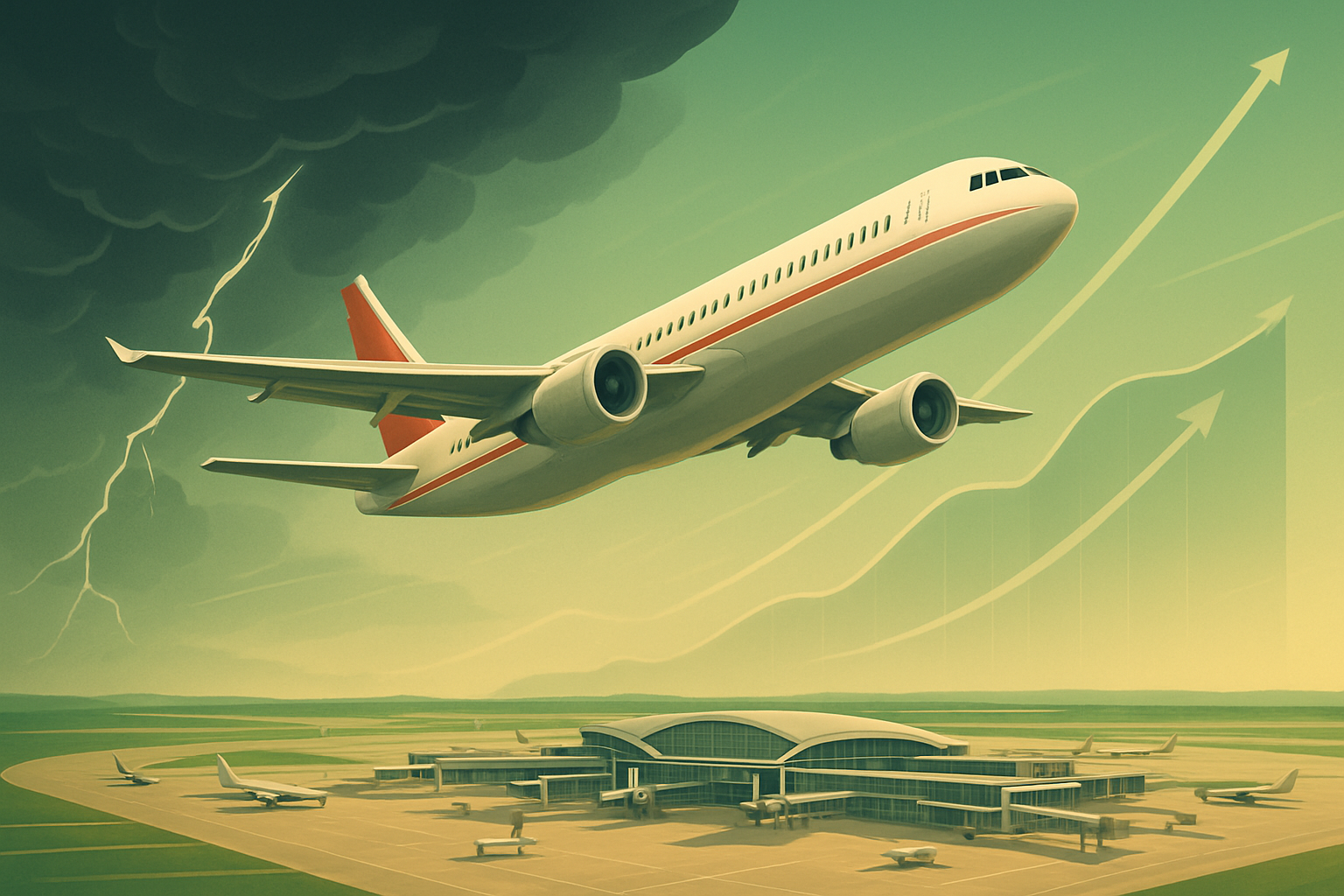
    As of January 26, 2026, American Airlines Group Inc. (NASDAQ: AAL) stands at a critical juncture in its post-pandemic evolution. Once characterized by the industry’s heaviest debt load and a series of strategic pivots that alienated corporate travel partners, the Fort Worth-based carrier has spent the last 24 months in a state of "operational righting." Under the leadership of CEO Robert Isom, American has prioritized a "back-to-basics" approach, emphasizing flight completion, debt reduction, and a renewed focus on its lucrative loyalty ecosystem. However, the airline remains uniquely exposed to the volatility of North American weather patterns, a reality underscored by the recent disruptions from Winter Storm Fern in early January 2026. This research feature examines the structural resilience of American Airlines, its financial trajectory, and the persistent challenge of maintaining a global schedule in an era of increasing climate instability.

    Historical Background

    The story of American Airlines is a microcosm of the American aviation industry itself—a history defined by aggressive consolidation and pioneering innovation. Founded in 1930 through the union of over 80 small carriers, American rose to prominence under the legendary leadership of C.R. Smith. The airline was a first-mover in many respects, from being the first to fly the Douglas DC-3 to co-developing the SABRE computerized reservation system in the 1960s.

    The modern iteration of the company was forged in the fires of the 2013 merger with US Airways. This $11 billion deal, completed while American was in Chapter 11 bankruptcy, created what was then the world's largest airline. In the subsequent decade, the company integrated two disparate fleets and cultures, ultimately moving its headquarters to a massive "Skyview" campus in Fort Worth. This transformation was meant to provide the scale necessary to compete with a resurgent Delta Air Lines (NYSE: DAL) and United Airlines Holdings (NASDAQ: UAL).

    Business Model

    American Airlines operates a classic hub-and-spoke business model, centered around primary "fortress hubs" in Dallas/Fort Worth (DFW), Charlotte (CLT), and Miami (MIA). These three hubs serve as the engine of the company’s domestic profitability, funneling passengers from smaller regional markets into high-frequency connection points.

    The company’s revenue streams are categorized into three primary segments:

    1. Passenger Revenue: The core business, increasingly bifurcated between premium long-haul travel and high-volume domestic leisure.
    2. Cargo: A smaller but vital component, particularly on trans-Atlantic and trans-Pacific routes.
    3. Loyalty (AAdvantage): Perhaps the company’s most valuable asset. Valued at over $20 billion, the AAdvantage program generates high-margin cash flow through the sale of miles to partners, most notably its exclusive 10-year co-branded credit card agreement with Citigroup (NYSE: C).

    Stock Performance Overview

    Over the past decade, AAL has been a volatile performer, often trailing its peers in total shareholder return.

    • 10-Year Horizon: Investors have seen significant erosion of value compared to the broader S&P 500, as the airline struggled with the dual burdens of merger integration and the COVID-19 pandemic.
    • 5-Year Horizon: The stock spent much of the 2021-2023 period in a "recovery rut," hampered by high leverage.
    • 1-Year Horizon: Entering 2026, AAL has shown signs of a rebound. After hitting a multi-year low of ~$10.92 in late 2023, the stock has traded in a range of $16 to $19 throughout 2025 and early 2026. This recovery is largely attributed to the company meeting its debt-reduction targets and abandoning a disastrous "direct-only" booking strategy that had stifled corporate sales in 2024.

    Financial Performance

    American’s 2025 fiscal year reflected a company balancing record demand with surging costs. The airline reported 2024 revenues of $54.2 billion, and while 2025 revenue remained strong, operating margins have been squeezed to approximately 8.0%.

    The most significant financial metric for AAL remains its balance sheet. At its peak in 2021, the company carried nearly $52 billion in total debt. Through aggressive capital allocation and disciplined spending, the company reduced this by $15 billion as of late 2024. As of today, January 26, 2026, total debt sits at approximately $36.8 billion. While this deleveraging is impressive, American still maintains a higher debt-to-capital ratio (approximately 119%) than Delta or United, making it more sensitive to interest rate fluctuations.

    Leadership and Management

    CEO Robert Isom, who took the helm in early 2022, has steered the company through a period of strategic correction. His leadership was tested in 2024 following the departure of Chief Commercial Officer Vasu Raja. Isom’s response was a decisive pivot back to traditional distribution channels, admitting that the previous strategy had "broken" the airline's relationship with corporate travel buyers.

    The current management team is focused on "reliability above all." This shift is designed to close the "reliability gap" between American and Delta, a metric that has historically allowed Delta to command a revenue premium.

    Products, Services, and Innovations

    To compete for high-value travelers, American has invested heavily in cabin modernization. The rollout of the Flagship Suite on Airbus A321XLR and Boeing 787-9 aircraft has significantly increased premium seat capacity. These suites feature privacy doors and lie-flat seats, positioning American to capture a larger share of the lucrative transcontinental and international business market.

    On the technological front, American has pioneered "Smart Gating" technology at DFW and CLT, which uses machine learning to reduce taxi times and ensure faster gate turns. This innovation is critical for maintaining the airline’s "13-bank" schedule at DFW—a high-density scheduling model that maximizes aircraft utilization but leaves little margin for error.

    Competitive Landscape

    The U.S. "Big Four"—American, Delta, United, and Southwest Airlines (NYSE: LUV)—control roughly 80% of the domestic market. American currently holds the largest domestic market share at approximately 20%.

    However, American's competitive position is a study in contrasts. While it dominates the South and Midwest through its DFW and CLT hubs, it faces fierce competition from United in the trans-Atlantic market and Delta in the premium domestic space. Southwest continues to challenge American in short-haul markets, though American’s extensive regional jet network (American Eagle) provides a level of connectivity to smaller cities that low-cost carriers cannot match.

    Industry and Market Trends

    The aviation sector in 2026 is defined by three macro trends:

    1. Premiumization: Leisure travelers are increasingly willing to pay for extra legroom and business-class amenities, a trend American is capitalizing on with its fleet reconfiguration.
    2. Sustainability: Increasing regulatory pressure to adopt Sustainable Aviation Fuel (SAF). American has signed several offtake agreements but faces significant supply chain hurdles in sourcing affordable SAF at scale.
    3. Labor Costs: Following the landmark pilot and flight attendant contracts of 2023-2024, labor now represents the single largest operating expense for the airline, outpacing fuel in many quarters.

    Risks and Challenges: The Weather Factor

    Weather remains the single greatest operational risk for American Airlines. Unlike United (with hubs in Newark and Chicago) or Delta (Atlanta and Minneapolis), American’s primary engine—DFW—is uniquely vulnerable to "convective activity" (severe thunderstorms) and winter ice.

    The recent Winter Storm Fern (January 2026) serves as a potent case study. The storm paralyzed DFW for four consecutive days, resulting in over 1,000 cancellations in a single weekend. For an airline operating a 13-bank schedule, a ground stop at DFW doesn't just affect Texas; it causes a "cascading failure" across the entire network, displacing crews and aircraft from London to Los Angeles. The financial cost of such disruptions is immense, often running into the hundreds of millions of dollars in lost revenue and passenger re-accommodation expenses.

    Opportunities and Catalysts

    Despite weather risks, several catalysts could drive AAL shares higher in 2026:

    • Loyalty Monetization: Further integration of the AAdvantage program into non-travel retail could unlock additional high-margin revenue.
    • International Expansion: The delivery of more Boeing 787 Dreamliners allows American to expand its footprint in high-growth markets like India and Southeast Asia.
    • Investment Grade Rating: If American can reduce total debt below $35 billion by 2027, it could see a credit rating upgrade, lowering its future borrowing costs.

    Investor Sentiment and Analyst Coverage

    Wall Street remains "cautiously optimistic" on AAL as of January 2026. The consensus rating is a "Moderate Buy," with an average 12-month price target of $17.60.

    Institutional investors, including Vanguard and BlackRock, remain the largest shareholders, but there has been a notable increase in retail "chatter" surrounding the stock's valuation. Investors view AAL as a "value play" compared to the premium-priced DAL, but many are waiting for sustained evidence that the company can maintain its 8%+ margins in the face of economic headwinds.

    Regulatory, Policy, and Geopolitical Factors

    The regulatory environment in 2026 is increasingly focused on consumer protection. The Department of Transportation (DOT) has implemented stricter rules regarding automatic refunds for canceled flights—a policy that directly impacts American's bottom line during major weather events. Geopolitically, fluctuations in oil prices driven by Middle Eastern tensions continue to be the "X-factor" in American’s fuel hedging strategy (or lack thereof, as American historically hedges less than its peers).

    Conclusion

    American Airlines Group Inc. enters 2026 as a more disciplined and operationally sound company than it was three years ago. The aggressive deleveraging and the strategic pivot back to corporate travel have stabilized the ship. However, the airline’s heavy reliance on its South-central hubs makes it the "canary in the coal mine" for climate-related operational disruptions.

    For investors, AAL represents a high-beta bet on the continued resilience of the American traveler. If the company can successfully navigate the operational minefield of unpredictable weather and maintain its debt-reduction trajectory, it may finally close the valuation gap with its peers. However, as Winter Storm Fern reminded the market, in the airline business, even the best-laid plans are often at the mercy of the clouds.


    This content is intended for informational purposes only and is not financial advice.

  • Turbulence and Transformation: A Deep Dive into United Airlines (UAL)

    Turbulence and Transformation: A Deep Dive into United Airlines (UAL)

    As of January 26, 2026, the global aviation industry is navigating a paradoxical landscape of record-breaking revenues and intensified operational volatility. At the center of this narrative is United Airlines Holdings, Inc. (Nasdaq: UAL), a carrier that has spent the last five years undergoing perhaps the most ambitious transformation in its century-long history.

    United is currently in the spotlight not just for its robust financial recovery, but for its resilience—and occasional vulnerability—in the face of extreme winter weather. The recent "Winter Storm Fern," which swept through the Midwest and Northeast just days ago, led to over 500 flight cancellations for the carrier, reigniting debates about the structural fragility of the U.S. hub-and-spoke system. Yet, despite these seasonal headwinds, United remains a favorite among Wall Street analysts due to its aggressive "United Next" fleet strategy and its pivot toward high-margin premium travel. This report provides a comprehensive deep dive into the business, financials, and future prospects of one of the world's most influential airlines.

    Historical Background

    United Airlines traces its lineage back to the very dawn of commercial flight. Founded as Varney Air Lines on April 6, 1926, the company initially flew airmail between Washington and Nevada. By the early 1930s, it was part of the United Aircraft and Transport Corporation, a massive aviation conglomerate led by William Boeing. However, the Air Mail Act of 1934 forced the separation of manufacturing and transport, birthing United Air Lines as an independent entity.

    The modern era of the company was defined by the 2010 "merger of equals" with Continental Airlines. This $8.5 billion deal combined United’s expansive trans-Pacific and domestic routes with Continental’s strong presence in Latin America and its critical Newark hub. More recently, the COVID-19 pandemic served as a pivotal "stress test." Under the leadership of CEO Scott Kirby, United took a contrarian approach during the downturn, securing massive liquidity and keeping its wide-body fleet intact to be ready for an international travel surge—a gamble that paid off handsomely in 2024 and 2025.

    Business Model

    United operates a classic hub-and-spoke model, with primary domestic hubs in Chicago (ORD), Denver (DEN), Houston (IAH), Los Angeles (LAX), Newark (EWR), San Francisco (SFO), and Washington D.C. (IAD). This network allows for thousands of daily connections across the globe.

    The company’s revenue streams are increasingly diversified:

    • Passenger Revenue: Shifting toward "premiumization," with United Polaris (business class) and United Premium Plus generating a disproportionate share of profits.
    • MileagePlus: One of the world’s most valuable loyalty programs, which serves as both a customer retention tool and a major source of cash flow through credit card partnerships (notably with JPMorgan Chase).
    • Cargo: Though normalized after the pandemic peak, United remains a top-tier international freight carrier.
    • Kinective Media: A new 2024/2025 initiative that leverages passenger data to create a high-margin retail media network, targeting travelers with personalized advertising.

    Stock Performance Overview

    Over the last decade, UAL stock has been a roller coaster, reflecting the inherent cyclicality of the airline sector.

    • 10-Year Horizon: The stock spent much of 2016–2019 trading in a range before the catastrophic 51.6% drop in 2020.
    • 5-Year Horizon: The recovery was slow until 2024, which became a "breakout year." Driven by the successful rollout of the United Next plan and a post-pandemic travel boom, shares surged 128.8% in 2024 alone.
    • Recent Performance: In 2025, the stock gained a steady 12.2%, stabilizing as the airline reached record revenue levels. As of late January 2026, UAL is trading between $108 and $118, approaching its all-time highs as investors price in continued margin expansion.

    Financial Performance

    For the full year 2025, United reported a staggering $59.1 billion in total operating revenue, a 3.5% increase over 2024. The airline's ability to drive profitability in a high-cost environment is evident in its adjusted diluted Earnings Per Share (EPS) of $10.62 for 2025.

    Key financial metrics for the 2025 fiscal year include:

    • Net Income: Robust growth supported by international demand.
    • Free Cash Flow: Generated $2.7 billion, which is being funneled back into the "United Next" aircraft orders.
    • Debt-to-EBITDA: United has made significant strides in deleveraging, though it carries more debt than rival Delta Air Lines due to its aggressive aircraft acquisition strategy.
    • Valuation: Despite the price surge, United continues to trade at a modest P/E ratio (approx. 10x-11x forward earnings), suggesting that the market still prices in significant industry risk.

    Leadership and Management

    Scott Kirby, CEO since May 2020, is widely regarded as the industry’s most outspoken and strategic thinker. His leadership style is data-driven and unapologetically aggressive, focused on long-term capacity growth rather than short-term cost-cutting.

    Kirby is supported by:

    • Brett Hart (President): Oversees the legal, government affairs, and corporate communications aspects of the business.
    • Andrew Nocella (Chief Commercial Officer): The architect of United’s network and pricing strategies.
    • Jarad Fisher (President of MileagePlus): A recent 2026 hire tasked with evolving the loyalty program into a broader tech and data ecosystem.

    The board has also been refreshed with leaders like Rosalind Brewer and Nike CFO Matthew Friend, signaling a focus on consumer technology and rigorous financial discipline.

    Products, Services, and Innovations

    United’s competitive edge currently rests on its technological and fleet upgrades:

    • United Next: This multi-year plan involves hundreds of new Boeing 737 MAX and Airbus A321neo aircraft featuring the "Signature Interior"—high-definition seatback screens, Bluetooth connectivity, and larger overhead bins.
    • Starlink Integration: In 2025, United began a massive rollout of SpaceX’s Starlink Wi-Fi. By January 2026, nearly the entire regional United Express fleet is equipped, offering passengers free, low-latency internet—a major differentiator against legacy competitors.
    • Sustainability: United is a leader in Sustainable Aviation Fuel (SAF) investment, aiming for net-zero emissions by 2050 without relying on traditional carbon offsets.

    Competitive Landscape

    United competes primarily with Delta Air Lines (NYSE: DAL) and American Airlines (Nasdaq: AAL) for premium domestic and international traffic.

    • Delta: Generally considered the industry benchmark for operational reliability and luxury, Delta often commands a higher stock multiple.
    • American: Stronger in Latin America but has struggled with a more fragmented hub strategy compared to United.
    • Low-Cost Carriers (LCCs): While Southwest and Frontier compete on price, United’s "Basic Economy" offering and superior network have helped it recapture market share from budget rivals.

    Industry and Market Trends

    The "Premiumization" of travel is the defining trend of 2026. Travelers are increasingly willing to pay for extra legroom, business class pods, and lounge access. United’s 12% year-over-year growth in premium cabin revenue in late 2025 highlights this shift.

    Additionally, the industry is grappling with the "Detour Tax"—the increased cost of flying around geopolitical conflict zones (e.g., Russian and Middle Eastern airspace). While this has raised fuel burn for certain international routes, the overall stabilizing of jet fuel prices around $88/barrel Brent has provided a tailwind for margins.

    Risks and Challenges

    The most visible risk remains operational vulnerability to weather. The impact of winter storms (like Fern in Jan 2026) highlights the fragility of United’s major hubs in Chicago, Newark, and Denver. While the airline has improved its "re-accommodation" software, mass cancellations still lead to significant financial "re-protection" costs and brand damage.

    Other risks include:

    • Supply Chain Delays: Boeing’s continued delivery fluctuations have pushed some "United Next" retrofits into 2027.
    • Labor Relations: As pilot and flight attendant contracts reset across the industry, upward pressure on wages remains a persistent margin headwind.
    • Geopolitics: Sudden closures of international corridors can disrupt United's industry-leading global network.

    Opportunities and Catalysts

    • International Expansion: With the delivery of more Boeing 787 Dreamliners in 2026, United is poised to add more non-stop routes to underserved markets in Africa and Southeast Asia.
    • Kinective Media Scaling: As the airline’s media network matures, it represents a high-margin, non-cyclical revenue stream that could decouple the stock from fuel price volatility.
    • Capital Allocation: Analysts are watching for the potential reinstatement of a dividend or more aggressive share buybacks in late 2026 as debt levels fall.

    Investor Sentiment and Analyst Coverage

    Wall Street is currently Moderately Bullish on United. As of January 2026, the consensus price target stands at approximately $134.94, suggesting nearly 20% upside.

    • UBS and TD Cowen have recently issued "Buy" ratings, citing United's international network and Starlink rollout as key catalysts.
    • Institutional Ownership: Large holdings by Vanguard, BlackRock, and Berkshire Hathaway (re-entry) suggest confidence in the long-term management strategy.
    • Retail Sentiment: While winter cancellations spark frustration on social media, the broader investor community views these as transitory compared to the record revenue prints.

    Regulatory, Policy, and Geopolitical Factors

    The U.S. Department of Transportation (DOT) has tightened rules regarding passenger refunds for canceled flights, which puts a higher financial premium on operational reliability during storm seasons. Furthermore, United is heavily impacted by bilateral flight agreements, particularly with China and India, where regulatory hurdles continue to limit capacity compared to pre-2020 levels.

    Conclusion

    United Airlines enters the first quarter of 2026 as a powerhouse of revenue and innovation, yet it remains a prisoner to the elements. The "United Next" transformation has successfully repositioned the carrier as a premium-focused global leader, and its 2025 financial results prove that the business model is working.

    However, investors must weigh the company’s massive growth potential against the operational risks of its Northern hubs and the capital-intensive nature of its fleet expansion. While winter storms like Fern provide a sobering reminder of the challenges inherent in aviation, United’s strategic shift toward high-margin technology (Starlink) and premium loyalty (MileagePlus) suggests a company that is finally learning to fly above the turbulence. For the long-term investor, UAL offers a compelling play on the global "Premiumization" of travel, provided one can stomach the occasional seasonal dip.


    This content is intended for informational purposes only and is not financial advice.

  • Delta Air Lines (DAL) 2026 Analysis: Premium Dominance Meets Winter Realities

    Delta Air Lines (DAL) 2026 Analysis: Premium Dominance Meets Winter Realities

    As of January 26, 2026, the aviation industry finds itself at a critical juncture, caught between the soaring highs of record-breaking premium travel demand and the brutal operational realities of an increasingly volatile climate. At the center of this narrative is Delta Air Lines (NYSE: DAL), a carrier that has spent the last decade reinventing itself as a high-margin, luxury-focused brand rather than a mere transportation utility.

    However, the current week has served as a sobering reminder of the "weather tax" inherent in the airline business. As Winter Storm Fern sweeps across the United States, paralyzing major hubs from Atlanta to New York, Delta’s operational resilience is being tested to its limits. This deep dive explores how the world’s most profitable airline navigates the dualities of 2026: a fortress-like balance sheet and a "Centennial" legacy, set against the backdrop of systemic labor inflation and the unpredictable wrath of winter.

    Historical Background

    Delta’s journey to the top of the global aviation hierarchy began in the unlikeliest of places: the cotton fields of Monroe, Louisiana. Founded in 1925 as Huff Daland Dusters, the world’s first aerial crop-dusting operation, the company officially became Delta Air Service in 1928. It moved its headquarters to Atlanta in 1941, a decision that would eventually create the busiest airport hub in the world.

    The company’s modern identity was forged through strategic consolidation, most notably the 2008 merger with Northwest Airlines. This move not only expanded Delta’s global footprint but also integrated a culture of operational discipline that would define the tenure of its recent leadership. By 2025, Delta celebrated its Centennial, marking 100 years of evolution from a small dusting fleet to a global behemoth with nearly 1,000 aircraft and a brand that commands a significant "unit revenue premium" over its peers.

    Business Model

    Delta’s business model in 2026 is less about selling "seats" and more about selling "segments." The company has effectively bifurcated its revenue into three high-margin pillars:

    1. Premium Travel: High-margin cabins, including Delta One, Premium Select, and Comfort+, now account for the majority of Delta's passenger revenue. In Q4 2025, premium revenue officially surpassed main cabin revenue for the first time in history, signaling a permanent shift in consumer behavior toward luxury.
    2. Loyalty and Fintech: Through its massive partnership with American Express, Delta has transformed into a financial services powerhouse. The SkyMiles program generated $8.2 billion in remuneration in 2025 alone. For every dollar spent on an Amex card, Delta earns a high-margin commission, making it a "royalty company" disguised as an airline.
    3. Ancillary Services and MRO: Delta TechOps, the airline's Maintenance, Repair, and Overhaul division, has become a standalone profit center. By servicing engines for other global carriers, Delta has diversified its income stream, providing a buffer against the cyclical nature of ticket sales.

    Stock Performance Overview

    As of the market close on January 23, 2026, Delta’s stock sat at $67.96. While the stock has seen a modest 1.96% gain over the last 12 months, its long-term trajectory tells a story of post-pandemic dominance.

    • 5-Year Performance: Delta is up approximately 79.58% since early 2021. This reflects the successful execution of its "premium-first" strategy and its ability to repair a balance sheet that was decimated during the COVID-19 era.
    • 10-Year Performance: With a total return of 67.30%, the stock has outperformed the broader NYSE Arca Airline Index. However, it has occasionally lagged the S&P 500, primarily due to the massive capital expenditures required for its fleet renewal program, including the recent multi-billion dollar order for Boeing 787-10 Dreamliners.

    The stock reached an all-time high of $72.31 in early January 2026, before the onset of Winter Storm Fern sparked a sector-wide sell-off.

    Financial Performance

    Delta’s Q4 2025 earnings, released on January 13, 2026, showcased a company at the peak of its financial powers. Operating revenue for the quarter hit a record $16.0 billion, contributing to a full-year revenue of $63.4 billion.

    • Profitability: Adjusted EPS for Q4 was $1.55, beating the consensus estimate of $1.53. The airline’s 10.5% operating margin remains the envy of the legacy carrier world.
    • Balance Sheet: Delta generated $4.6 billion in free cash flow in 2025. This liquidity allowed management to aggressively pay down debt, bringing adjusted net debt to $14.3 billion—a leverage ratio of 2.4x, down from nearly 5.0x during the pandemic lows.
    • Profit Sharing: Demonstrating its financial health, Delta announced it would distribute $1.3 billion in profit sharing to its employees in February 2026, the second-largest payout in company history.

    Leadership and Management

    CEO Ed Bastian, who has led the company since 2016, is widely regarded as the dean of the global airline industry. His "people-first" philosophy is often cited as the primary reason Delta has largely avoided the contentious labor relations that have plagued rivals like American Airlines (NASDAQ: AAL).

    Bastian’s current "Centennial Strategy" focuses on:

    • Fleet Modernization: Phasing out older, less efficient aircraft in favor of the Airbus A321neo and Boeing 787-10.
    • Vertical Integration: Utilizing the company’s Trainer refinery to mitigate fuel price volatility.
    • Digital Transformation: Investing in AI-driven operational recovery tools—investments that are currently being put to the ultimate test during the January 2026 storms.

    The management team is currently rounded out by President Glen Hauenstein, the architect of Delta’s network and revenue management system, and CFO Dan Janki, who is credited with the airline’s disciplined post-pandemic deleveraging.

    Products, Services, and Innovations

    Delta’s competitive edge is built on "brand consistency." Unlike competitors who have struggled with fluctuating service standards, Delta has invested heavily in the ground-to-air experience.

    • Innovation in Operations: Delta’s "Digital Twin" technology allows the Global Operations Control Center to simulate storm impacts hours before they happen. This tech was pivotal during Winter Storm Fern, allowing Delta to cancel 90% of flights at LaGuardia proactively, preventing thousands of passengers from becoming stranded at the terminal.
    • In-Flight Experience: Delta is nearing its goal of "Fast, Free Wi-Fi" on 100% of its global fleet. This is paired with the "Sync" platform, which personalizes the seatback screen experience based on a passenger’s SkyMiles profile.
    • Sustainability: Delta is currently the largest purchaser of Sustainable Aviation Fuel (SAF) in the U.S., a key component of its "Path to Net Zero" by 2050.

    Competitive Landscape

    The U.S. airline market has evolved into a two-tiered system, with Delta and United Airlines (NASDAQ: UAL) competing for the premium traveler, while American Airlines and low-cost carriers (LCCs) fight for the price-sensitive consumer.

    • Delta vs. United: United has been Delta’s most aggressive challenger, investing billions in widebody aircraft for international expansion. However, Delta maintains a superior domestic unit revenue premium (PRASM) and a more profitable loyalty partnership.
    • Delta vs. American: American Airlines remains the volume leader but trails Delta significantly in profit margins (1.1% vs 10.5%).
    • The LCC Threat: Low-cost carriers like Southwest and Frontier have seen their margins squeezed in 2025-2026 as travelers prioritize "experience" over the lowest price, a trend that plays directly into Delta's hands.

    Industry and Market Trends

    Three major trends are shaping the airline industry in early 2026:

    1. The "Premiumization" of Travel: Post-pandemic "revenge travel" has evolved into a structural shift. Travelers are now willing to pay 30-50% more for extra legroom and better service, even on short-haul flights.
    2. Labor Inflation: The "summer of strikes" in 2024 led to massive new contracts for pilots and flight attendants. For Delta, labor costs rose 11% in 2025, creating a high-cost floor that requires record-high fares to sustain profitability.
    3. Climate Volatility: Increasing frequency of "bomb cyclones" and ice storms has made operational reliability a key differentiator. Airlines that cannot recover quickly from weather events suffer not just financial losses but long-term brand erosion.

    Risks and Challenges

    Despite its strengths, Delta faces significant headwinds as 2026 begins:

    • Winter Storm Costs: Winter Storm Fern is estimated to cost the industry $300 million in lost revenue and recovery expenses in just one week. For Delta, the shutdown of hubs in Atlanta and New York will likely weigh on Q1 2026 non-fuel unit costs.
    • Unionization Efforts: While Delta pilots are unionized, the Association of Flight Attendants (AFA) is currently in the middle of a high-intensity drive to unionize Delta’s 30,000 cabin crew members. A successful drive would significantly alter Delta’s flexible labor model.
    • Fuel Prices: With Brent crude projected to hover around $115 per barrel in 2026 due to geopolitical tensions in the Middle East, fuel remains an unpredictable variable that could eat into Delta's margins.

    Opportunities and Catalysts

    • The "Amex $10B" Target: Management has set a goal of $10 billion in annual Amex remuneration by 2027. Reaching this milestone would provide Delta with a high-margin revenue stream that is largely decoupled from the price of jet fuel.
    • International Recovery: While domestic travel has plateaued, international demand—particularly to the South Pacific and Europe—is projected to grow at double-digit rates in 2026.
    • MRO Expansion: As global fleets age, the demand for Delta TechOps' services is at an all-time high. Expanding this segment could lead to a rerating of DAL stock from a "transportation" multiple to a "services" multiple.

    Investor Sentiment and Analyst Coverage

    Wall Street remains overwhelmingly bullish on Delta Air Lines. The consensus rating is a "Strong Buy," with price targets ranging from $84 (Jefferies) to $88 (Seaport Research).

    • Institutional Backing: Delta remains a favorite of institutional investors, who prize its "fortress" balance sheet and consistent cash flow.
    • Retail Sentiment: Retail investors have expressed some caution following recent insider selling by CEO Ed Bastian ($12.3 million in mid-January), but the general sentiment remains positive given the impending $1.3 billion profit-sharing payout.

    Regulatory, Policy, and Geopolitical Factors

    The regulatory environment in 2026 is increasingly complex.

    • Credit Card Interest Caps: The U.S. government is currently debating federal caps on credit card interest rates. If passed, these regulations could significantly impact the profitability of co-branded credit cards like the SkyMiles Amex, posing a direct threat to Delta’s most profitable revenue stream.
    • DOT Refund Rules: New Department of Transportation (DOT) rules enacted in 2025 mandate automatic cash refunds for significant flight delays or cancellations. During events like Winter Storm Fern, these rules could lead to higher out-of-pocket costs for Delta compared to previous years when flight credits were the standard.

    Conclusion

    Delta Air Lines enters 2026 as the gold standard of the aviation industry, yet it remains vulnerable to the age-old enemies of the airline business: weather and labor. The company’s pivot to a premium-focused, loyalty-driven business model has provided it with a financial cushion that its predecessors could only dream of. However, the chaos of Winter Storm Fern serves as a potent reminder that even the most sophisticated "digital twin" technology cannot fully negate the impact of an icing event at a major hub.

    For investors, Delta represents a "quality play" in a volatile sector. The key metrics to watch over the coming months will be the company’s ability to maintain its 10%+ margins in the face of $115/barrel oil and whether its premium revenue growth can continue to outpace labor inflation. While the winter storms of January 2026 may create a short-term dip in Q1 earnings, Delta’s structural advantages suggest it will remain the "flight to quality" for the foreseeable future.


    This content is intended for informational purposes only and is not financial advice.

  • Deep Dive: American Airlines Group Inc. (AAL) – Navigating the Centennial Pivot

    Deep Dive: American Airlines Group Inc. (AAL) – Navigating the Centennial Pivot

    By Financial Research Analyst | January 23, 2026

    As the global aviation industry enters a new era of "premiumization" and sustainability, American Airlines Group Inc. (NASDAQ: AAL) finds itself at a pivotal crossroads. Long characterized by its massive scale and equally massive debt load, the Fort Worth-based carrier has recently captured the market’s attention with a significant raise in its full-year profit outlook. Following a robust 2025 performance, the airline is pivoting from a volume-led strategy to a high-margin, premium-focused model to coincide with its 100th anniversary. With a management team doubling down on de-leveraging and loyalty monetization, AAL is no longer just an airline; it is a financial turnaround story flying at 35,000 feet.

    Historical Background

    American Airlines traces its lineage back to 1926 as a patchwork of nearly 80 small aviation companies. It wasn't until 1934 that it was unified under the American Airlines name. The company was an early pioneer of modern aviation, collaborating with Douglas Aircraft to create the DC-3—the first plane to prove that carrying passengers could be profitable without government mail subsidies.

    The most transformative moment in its recent history occurred in December 2013, when American Airlines merged with US Airways. The $11 billion deal, emerging from American's Chapter 11 bankruptcy, created the world’s largest airline at the time. This merger consolidated the "Big Three" U.S. legacy carriers, setting the stage for the current competitive landscape. Today, as the airline approaches its centennial in 2026, it operates as a global behemoth with primary hubs in Dallas/Fort Worth, Charlotte, and Miami.

    Business Model

    American Airlines operates a classic "hub-and-spoke" network, designed to funnel passengers from smaller regional airports through massive hubs to international destinations. Its revenue is primarily categorized into three streams:

    1. Passenger Revenue: The core business, spanning domestic and international travel across multiple cabins (Main Cabin, Premium Economy, and the new Flagship Suite®).
    2. AAdvantage Loyalty Program: Far more than a marketing tool, the loyalty program is a high-margin financial engine. Through co-branded credit card deals with partners like Citi and Barclays, AAL sells miles to banks, generating billions in high-margin cash flow.
    3. Cargo and Ancillary Services: Transporting freight and generating revenue from baggage fees, seat selections, and onboard amenities.

    A critical shift in the 2026 business model is the "Premiumization" of the fleet, where the airline is aggressively increasing the seat count of its higher-fare cabins to compete with luxury-leaning rivals like Delta Air Lines (NYSE: DAL).

    Stock Performance Overview

    The last decade has been a volatile journey for AAL shareholders. As of January 23, 2026, the stock is trading near $15.02.

    • 1-Year Performance: The stock has seen a modest recovery, up approximately 12% over the last 12 months as investors cheer debt reduction efforts.
    • 5-Year Performance: AAL has struggled to regain its pre-pandemic heights, remaining relatively flat compared to the broader S&P 500, as it grappled with the highest debt load in the industry.
    • 10-Year Performance: The long-term view is sobering, with a total return of approximately -60%. This reflects the capital-intensive nature of the industry and the dilutive effects of the pandemic-era financing.

    While it has significantly underperformed the "Premium Two" (Delta and United), the recent rally suggests a potential "catch-up" trade as the company’s financial health improves.

    Financial Performance

    In its latest January 2026 update, American Airlines raised its full-year profit outlook, buoyed by a strong holiday travel season and record-setting revenue.

    • Earnings: Management projected an adjusted Earnings Per Share (EPS) for 2026 near $2.00, a notable jump from previous years.
    • Revenue Growth: 2025 revenues hit record levels, often exceeding $14 billion per quarter, driven by a resurgence in business travel and resilient consumer spending.
    • Debt Reduction: This is the centerpiece of the AAL thesis. The company has reduced its total debt by $15 billion from its 2021 peak. As of early 2026, net debt stands at approximately $29 billion, its lowest level in a decade.
    • Valuation: Despite the debt, AAL trades at a forward P/E ratio significantly lower than its peers, reflecting a "debt discount" that management is working hard to erase.

    Leadership and Management

    CEO Robert Isom, who took the helm in 2022, has been the architect of the "Centennial Strategy." His leadership is characterized by operational discipline and a focus on reliability.

    • The Board: Chaired by Gregory D. Smith, a former Boeing CFO, the board is heavily weighted toward financial and industrial expertise.
    • Reputation: The current management has earned high marks for navigating complex labor negotiations—signing long-term contracts with pilots and flight attendants—but continues to face scrutiny over the airline's narrow margins compared to United Airlines Holdings (NASDAQ: UAL).

    Products, Services, and Innovations

    Innovation at American Airlines in 2026 is centered on the cabin experience and digital integration.

    • The Flagship Suite®: Rolled out on the new Boeing 787-9 and Airbus A321XLR aircraft, these suites feature sliding doors and direct aisle access, a direct attempt to win back high-spending business travelers.
    • Fleet Simplification: AAL has focused on a "younger and simpler" fleet, primarily using Boeing 737s and Airbus A320s for domestic routes to reduce maintenance costs.
    • Digital Transformation: The airline’s mobile app now serves as a comprehensive travel assistant, handling everything from rebooking during delays to tracking checked bags with real-time GPS sensors.

    Competitive Landscape

    American remains the largest airline by total departures, but it faces a two-front war:

    • The Premium Rivalry: Delta and United have successfully branded themselves as "premium" carriers, commanding higher ticket prices. American is currently fighting a "battle for Chicago" (ORD), where it is locked in a fierce expansion race with United to secure market dominance in the Midwest.
    • The Low-Cost Challenge: Southwest Airlines (NYSE: LUV) and ultra-low-cost carriers (ULCCs) pressure American on price in key Sun Belt markets like Dallas and Phoenix.

    American’s competitive edge lies in its AAdvantage program, which is valued at an estimated $24 billion to $30 billion—significantly higher than the airline's total market capitalization.

    Industry and Market Trends

    The aviation sector in 2026 is defined by three major trends:

    1. Sustainable Aviation Fuel (SAF): New mandates in the EU require a 2% SAF blend as of 2025, a cost that is beginning to reflect in international ticket prices.
    2. Supply Chain Friction: Delays in aircraft deliveries from Boeing and engine maintenance issues with Pratt & Whitney have constrained capacity, ironically helping airlines maintain high ticket prices due to limited seat supply.
    3. Leisure-Business Blending: The "bleisure" trend continues, with travelers opting for longer trips and higher-class seats, benefiting American's premium cabin strategy.

    Risks and Challenges

    Despite the raised outlook, several clouds remain on the horizon:

    • Leverage: Even with $15 billion in debt reduction, American's interest expenses exceed $400 million per quarter, leaving little room for error if a recession hits.
    • Labor Costs: New union contracts have significantly raised the floor for operating expenses.
    • Geopolitical Turmoil: The closure of Russian airspace and instability in regions like Latin America continue to disrupt international routes and increase fuel consumption through longer flight paths.

    Opportunities and Catalysts

    • Centennial Celebration: The 100-year milestone in 2026 provides a massive marketing window to re-brand and drive loyalty sign-ups.
    • Credit Card Revenue: A new co-branded deal with Citi is expected to generate $1.5 billion in annual pre-tax income starting in 2026, providing a high-margin floor to the company's earnings.
    • Sun Belt Growth: With hubs in high-growth cities like Charlotte and Dallas, AAL is perfectly positioned to capture the ongoing domestic migration to the southern U.S.

    Investor Sentiment and Analyst Coverage

    Wall Street sentiment is shifting from "Sell" to "Hold/Buy" as the debt-cleansing story gains traction.

    • Ratings: Analysts at UBS and TD Cowen recently raised price targets into the $19–$21 range.
    • Institutional Interest: Hedge funds have been cautiously adding to positions, viewing AAL as a high-beta play on a domestic travel boom. Retail chatter often centers on the valuation gap between AAL and its peers, with many seeing it as an "undervalued" giant.

    Regulatory, Policy, and Geopolitical Factors

    Regulatory oversight is at an all-time high. The FAA has recently issued new mandates regarding the Boeing 737 MAX 10 flight alerting systems, which AAL must comply with as it takes new deliveries. Furthermore, the 45Z Clean Fuel Production Tax Credit remains a critical legislative focus; American is lobbying for extensions to ensure SAF remains affordable. Geopolitically, the airline remains exposed to trade tensions with China, which impact both cargo revenue and aircraft orders.

    Conclusion

    American Airlines Group Inc. is a company in the midst of a profound transformation. By raising its profit outlook for 2026, management has signaled that the "debt-cleansing" phase is bearing fruit. While it still carries more leverage than its peers and faces intense competition in its primary hubs, the aggressive push into premium seating and the sheer power of the AAdvantage loyalty program provide a compelling case for recovery. For investors, the story of AAL in 2026 is one of resilience: a hundred-year-old giant learning to fly with leaner wings and a more profitable cabin.


    This content is intended for informational purposes only and is not financial advice.
  • Delta Air Lines (DAL) Deep Dive: Navigating the Premium Skies in 2026

    Delta Air Lines (DAL) Deep Dive: Navigating the Premium Skies in 2026

    As of January 22, 2026, Delta Air Lines (NYSE: DAL) stands at a pivotal juncture in its century-long history. Having just concluded its centennial year in 2025, the Atlanta-based carrier has transformed from a traditional transportation company into a diversified "premium lifestyle" brand. While the broader airline industry has historically been plagued by razor-thin margins and hyper-cyclicality, Delta has managed to decouple its performance from the pack. Today, the company is in focus not just for its operational reliability, but for its aggressive move to capture the "K-shaped" recovery, targeting affluent travelers whose demand for luxury and connectivity remains resilient even in the face of macroeconomic headwinds.

    Historical Background

    Delta's journey began far from the international hubs it dominates today. Founded in 1925 as Huff Daland Dusters, a crop-dusting operation in Macon, Georgia, it moved to Monroe, Louisiana, before settling in its iconic Atlanta headquarters in 1941. The company's modern era was defined by the 2008 merger with Northwest Airlines, a move that gave Delta the scale and the trans-Pacific reach needed to compete globally.

    Perhaps the most unconventional move in its history was the 2012 acquisition of the Trainer refinery in Pennsylvania. Critics at the time called it a distraction; today, it is viewed as a masterstroke of vertical integration that provides a unique hedge against volatile jet fuel prices. Over the last decade, Delta has focused on "premiumization"—systematically removing commodity-class seats in favor of high-margin Delta One and Premium Select cabins.

    Business Model

    Delta’s business model is no longer built solely on moving passengers from Point A to Point B. It is a three-pronged revenue engine:

    1. Premium Travel: As of early 2026, premium cabin revenue (Delta One, First Class, Delta Premium Select, and Delta Comfort+) has officially overtaken main cabin revenue as the primary driver of the top line.
    2. Loyalty and Services: The SkyMiles program, anchored by an exclusive multi-year partnership with American Express (NYSE: AXP), has become a high-margin cash cow. Delta also generates significant revenue through its MRO (Maintenance, Repair, and Overhaul) business, servicing engines for other airlines.
    3. Vertical Integration: The Monroe Energy refinery and a growing portfolio of international equity stakes (LATAM, Virgin Atlantic, Hanjin-KAL/Korean Air) create a global ecosystem that captures value at every stage of the travel journey.

    Stock Performance Overview

    Over the last decade, DAL has consistently outperformed the NYSE Arca Airline Index (XAL).

    • 1-Year Performance: The stock has seen a 22% rise over the past 12 months, fueled by record international demand and the successful rollout of free gate-to-gate Wi-Fi across its entire fleet.
    • 5-Year Performance: Looking back to the 2021 recovery period, Delta’s stock has nearly doubled, significantly outpacing peers like American Airlines (NASDAQ: AAL) as it aggressively repaired its balance sheet.
    • 10-Year Performance: Long-term investors have seen a CAGR of approximately 9%, excluding dividends. While the 2024 CrowdStrike tech outage caused a temporary 10% dip, the stock recovered fully within 120 days, showcasing the market’s confidence in Delta’s operational resilience.

    Financial Performance

    Delta’s 2025 fiscal year, which closed just weeks ago, was a record-breaker. The airline reported total operating revenue of $63.4 billion, a 3% increase over 2024.

    • Profitability: Pre-tax profit reached $5 billion, with an operating margin of 10.5%, the highest among legacy carriers.
    • Cash Flow: Free cash flow for 2025 was a robust $4.6 billion, allowing management to reduce net debt to $14 billion.
    • Valuation: Despite its premium performance, Delta trades at a forward P/E ratio of 7.8x, which many analysts argue is a significant discount compared to its non-airline loyalty peers like American Express.

    Leadership and Management

    CEO Ed Bastian, who has led the company since 2016, remains one of the most respected figures in aviation. His strategy focuses on "the three pillars": people, reliability, and brand. Under Bastian, Delta has maintained a culture of profit-sharing, distributing over $1 billion annually to employees in most years, which has historically helped the company stave off the same level of labor unrest seen at its competitors. In 2026, Bastian’s focus has shifted toward "The Digital Delta," integrating AI-driven scheduling and predictive maintenance to further widen the operational "moat."

    Products, Services, and Innovations

    Delta’s competitive edge in 2026 is driven by its technology and fleet investments:

    • The Connected Cabin: Delta now offers free, high-speed Viasat Wi-Fi on 100% of its active fleet, a move that has significantly increased SkyMiles registrations.
    • Biometric Boarding: "Delta Digital ID" has expanded to all major hubs, allowing passengers to check bags and clear security using only facial recognition.
    • Fleet Modernization: Just this month, Delta confirmed a landmark order for 30 Boeing 787-10 Dreamliners, signaling a strategic return to Boeing for its long-haul needs, while continuing to take delivery of the fuel-efficient Airbus A321neo.

    Competitive Landscape

    The U.S. "Big Three" have diverged in strategy.

    • United Airlines (NASDAQ: UAL): Delta’s fiercest competitor, United has also pivoted to a premium strategy and currently leads in international seat capacity.
    • American Airlines (NASDAQ: AAL): While American has the largest domestic network, its margins continue to lag behind Delta’s due to a higher debt load and less mature loyalty-driven revenue.
    • Southwest Airlines (NYSE: LUV): Once a major threat, the low-cost carrier model has struggled in the high-cost environment of 2025-2026, as travelers increasingly prefer the "bundled" amenities offered by Delta.

    Industry and Market Trends

    The aviation sector in 2026 is defined by three major trends:

    1. Premiumization: Travelers are increasingly willing to pay for "space and grace," a trend Delta pioneered.
    2. Sustainability: The industry is under immense pressure to adopt Sustainable Aviation Fuel (SAF). Delta has committed to replacing 10% of its jet fuel with SAF by 2030, though supply remains a challenge.
    3. Labor Costs: Pilot and flight attendant contracts reached record highs in 2024-2025, permanently elevating the industry's cost floor.

    Risks and Challenges

    Despite its strengths, Delta faces significant risks:

    • Fuel Volatility: While the Trainer refinery helps, a geopolitical spike in oil prices remains the greatest threat to earnings.
    • Labor Relations: As of early 2026, Delta's flight attendants remain a target for unionization efforts. A successful union drive could disrupt Bastian’s direct-relationship management model and increase operating costs.
    • Economic Sensitivity: While premium travelers are more resilient, a severe global recession would inevitably dent Delta’s $8.2 billion American Express revenue stream as consumer spending cools.

    Opportunities and Catalysts

    • The $10 Billion Goal: Delta’s management has set a target of $10 billion in annual remuneration from American Express by 2027. Reaching this milestone would provide a massive, high-margin cushion against economic downturns.
    • International Joint Ventures: The full integration of the LATAM joint venture is expected to yield significant synergies in 2026, as Delta captures a larger share of the growing South American business class market.
    • MRO Growth: Delta’s TechOps division is expanding into third-party maintenance for next-generation engines, a business that enjoys higher margins than flying.

    Investor Sentiment and Analyst Coverage

    Wall Street remains largely bullish on DAL. Of the 22 analysts covering the stock as of January 2026, 18 hold a "Strong Buy" or "Buy" rating. Institutional ownership remains high at over 70%, with major positions held by Vanguard and BlackRock. The prevailing sentiment is that Delta is "no longer just an airline," but a high-performance logistics and loyalty platform. However, some retail investors remain cautious about the cyclical nature of the industry and the high capital expenditures required for fleet renewal.

    Regulatory, Policy, and Geopolitical Factors

    The regulatory environment is tightening. The FAA has increased oversight following several industry-wide safety incidents in 2024. Additionally, new DOT (Department of Transportation) rules regarding passenger refunds and fee transparency have increased the administrative burden on airlines. Geopolitically, the closure of Russian airspace and tensions in the Middle East continue to add flight hours and fuel burn to certain international routes, though Delta’s diversified network has mitigated the impact compared to European carriers.

    Conclusion

    Delta Air Lines enters 2026 as the gold standard of the American aviation industry. By pivoting toward a premium-heavy business model and leveraging its massive loyalty partnership with American Express, the company has built a financial profile that looks more like a high-end retailer than a traditional airline.

    Investors should watch two key metrics in the coming months: the progress toward the $10 billion Amex revenue target and the successful integration of the new Boeing 787-10s into the fleet. While the airline industry will always be subject to the whims of the global economy and fuel prices, Delta’s "operational moat" and premium focus provide a level of safety rarely seen in this sector. For those looking for exposure to the travel and leisure space, Delta remains the most disciplined and strategically sound play on the board.


    This content is intended for informational purposes only and is not financial advice.

  • The Southwest Pivot: A Deep Dive into LUV’s High-Stakes Transformation (2026 Research Feature)

    The Southwest Pivot: A Deep Dive into LUV’s High-Stakes Transformation (2026 Research Feature)

    As of January 22, 2026, Southwest Airlines (NYSE: LUV) stands at perhaps the most significant juncture in its 55-year history. Once the renegade of the skies that democratized air travel with low fares and a "no-frills" philosophy, the Dallas-based carrier is currently in the middle of a radical identity shift. With the official launch of assigned seating and premium cabins scheduled for January 27, 2026, the company is attempting to shed its legacy constraints to compete in a market that increasingly rewards premium services and global connectivity.

    Historical Background

    Founded by Herb Kelleher and Rollin King in 1967 (beginning operations in 1971), Southwest Airlines began as a "Triangle" service between Dallas, Houston, and San Antonio. It famously fought legal battles just to take flight, eventually becoming the poster child for the benefits of the 1978 Airline Deregulation Act. For decades, Southwest was defined by its "Point-to-Point" network, its all-Boeing 737 fleet, and its unique open-seating policy.

    However, the 2020s brought unprecedented challenges. Following the industry-wide devastation of the COVID-19 pandemic, Southwest suffered a catastrophic operational "meltdown" in December 2022, which exposed aging infrastructure and led to a $140 million civil penalty. This event served as a catalyst for the modernization efforts currently reaching their zenith in 2026.

    Business Model

    Southwest’s business model is currently in a state of "hybridization." Historically a Low-Cost Carrier (LCC), it has evolved into a major network carrier. Its primary revenue source remains domestic passenger air transportation, but the "Southwest Way" is being rewritten:

    • The "New" Seating Model: Moving away from its iconic open seating, Southwest now offers assigned seats, including an "Extra Legroom" section comprising roughly one-third of the cabin.
    • Asset Utilization: To maximize its fleet, the airline recently introduced "redeye" flights, increasing aircraft utilization during off-peak hours.
    • Network Strategy: While still primarily point-to-point, Southwest has increasingly embraced "hubs" in cities like Denver, Chicago (Midway), and Baltimore to facilitate connections.
    • Bags Fly Free: In a rare nod to its heritage, Southwest maintains its "two free checked bags" policy, a key differentiator against rivals like American Airlines (NASDAQ: AAL) and Delta Air Lines (NYSE: DAL).

    Stock Performance Overview

    As of late January 2026, LUV shares are trading in the $42.00–$43.00 range.

    • 1-Year Performance: The stock has rallied approximately 35% over the last year, largely on the back of investor enthusiasm for the new revenue-generating seating tiers.
    • 5-Year Performance: The five-year trajectory remains slightly negative (-5%), reflecting the slow recovery from the pandemic and the 2022 operational crisis.
    • 10-Year Performance: With a return of roughly +20%, Southwest has significantly underperformed the broader S&P 500, illustrating its transition from a high-growth disruptor to a mature, high-cost incumbent.

    Financial Performance

    Fiscal Year 2025 was a year of record-breaking top-line growth coupled with razor-thin margins.

    • Revenue: The company reported record full-year revenue of approximately $28 billion.
    • Profitability: Despite record sales, net income was volatile. Southwest posted a net loss in Q1 2025 but returned to profitability in subsequent quarters. Full-year EBIT (Earnings Before Interest and Taxes) was approximately $500 million, constrained by a late-2025 federal government shutdown and a spike in jet fuel prices.
    • Balance Sheet: Southwest maintains one of the strongest balance sheets in the industry, with an investment-grade credit rating and significant liquidity, though debt levels have risen to fund fleet modernization.

    Leadership and Management

    The leadership suite at Southwest underwent a "trial by fire" in 2024 and 2025.

    • CEO Bob Jordan: Despite a fierce activist campaign by Elliott Investment Management in late 2024, Jordan remains CEO. He has secured his position by adopting many of the activist's demands, including the seating overhaul and board refreshment.
    • Board Reform: Following the retirement of long-time Chairman Gary Kelly in late 2024, the board was reduced to 13 members. Crucially, five directors nominated by Elliott—including former airline CEOs—now hold seats, shifting the focus toward aggressive margin expansion.

    Products, Services, and Innovations

    The January 2026 "Refresh" is the cornerstone of Southwest's current product offering.

    • Premium Cabin Tiers: The airline now offers "Extra Legroom" (5 inches of additional space), "Preferred" (front-of-cabin), and "Standard" seating.
    • In-Flight Experience: Significant R&D has been poured into upgraded Wi-Fi and in-seat power ports across the fleet, essential for attracting the business travelers the airline now targets.
    • Fleet Modernization: Southwest remains committed to an all-Boeing fleet, though it has had to delay the retirement of older 737-700s due to delivery delays of the newer, more efficient MAX models.

    Competitive Landscape

    Southwest currently ranks 3rd in U.S. domestic market share (~18%), trailing American Airlines and Delta.

    • The Profitability Gap: While Southwest competes for volume, its net margins (near 1.5% in 2025) significantly lag behind Delta (7%+) and United Airlines (NYSE: UAL).
    • Low-Cost Rivals: Southwest is also being squeezed from below by "Ultra-Low-Cost Carriers" (ULCCs) like Spirit and Frontier, though Southwest's superior brand loyalty and "bags fly free" policy provide a defensive moat.

    Industry and Market Trends

    The airline industry in 2026 is defined by "Premiumization." Travelers have shown a sustained willingness to pay for more space and better service, a trend Southwest was late to join but is now chasing. Additionally, "Bleisure" travel—combining business and leisure trips—has become the standard, requiring airlines to offer more flexible schedules and premium amenities.

    Risks and Challenges

    • Boeing Dependency: As an all-Boeing operator, Southwest is uniquely exposed to the manufacturer's ongoing quality control and delivery issues. The Boeing 737 MAX 7—critical for Southwest's smaller-market strategy—is still awaiting full-scale delivery in 2026.
    • Labor Costs: New labor contracts ratified in 2024/2025 have ballooned costs. Pilots received nearly 50% raises over four years, placing immense pressure on the airline to increase its "Revenue Per Available Seat Mile" (RASM).
    • Fuel Volatility: While Southwest was once a master of fuel hedging, its current advantage in this area has narrowed, leaving it vulnerable to geopolitical shocks.

    Opportunities and Catalysts

    • Assigned Seating Revenue: Analysts estimate that assigned seating and premium upgrades could generate over $1 billion in annual incremental revenue once fully scaled.
    • MAX 7 Certification: The anticipated mid-2026 certification of the MAX 7 would allow Southwest to optimize its network and reduce fuel burn by double digits compared to older aircraft.
    • International Expansion: The new seating configuration makes Southwest a more attractive partner for international codeshare agreements, potentially opening new revenue streams.

    Investor Sentiment and Analyst Coverage

    Wall Street maintains a "Wait and See" approach, with a consensus "Hold" rating.

    • Price Targets: Estimates are wide, ranging from a "bear case" of $24.00 to a "bull case" of $60.00.
    • Institutional Activity: Major institutional holders have expressed cautious optimism regarding the board's new composition, though hedge fund activity remains high as the market treats the January 27 launch as a "binary event" for the stock's future.

    Regulatory, Policy, and Geopolitical Factors

    Southwest remains under the microscope of the Department of Transportation (DOT) following its 2022 meltdown. Furthermore, the 2025 government shutdown served as a reminder of the industry's sensitivity to federal policy. Environmental regulations regarding Sustainable Aviation Fuel (SAF) also pose a long-term cost challenge, as Southwest seeks to meet its 2030 carbon reduction goals.

    Conclusion

    Southwest Airlines in 2026 is an airline in transition. By abandoning the open-seating model that made it famous, the company is making a high-stakes bet that it can retain its "Luv" brand while capturing the higher yields enjoyed by its legacy rivals. For investors, the next twelve months are critical. If the new premium seating model gains traction without alienating the core customer base, Southwest could see a massive re-rating of its stock. However, if labor costs and Boeing delays continue to eat into margins, the "Golden Age" of Southwest may truly be in the rearview mirror.


    This content is intended for informational purposes only and is not financial advice. Disclosure: At the time of writing, the author does not hold a position in NYSE: LUV.