
Tag: Blockchain

  • The Everything Exchange: A 2026 Deep Dive into Coinbase Global, Inc. (COIN)

    The Everything Exchange: A 2026 Deep Dive into Coinbase Global, Inc. (COIN)

    As of April 15, 2026, Coinbase Global, Inc. (NASDAQ: COIN) has transcended its origins as a simple gateway for Bitcoin to become the definitive infrastructure layer for the global on-chain economy. Once a bellwether for the volatile swings of "crypto winters," Coinbase is now increasingly viewed as a mission-critical financial technology powerhouse. With the regulatory "cloud" over the U.S. digital asset sector largely dissipated following a landmark 2025 legal resolution, the company is centralizing its efforts on becoming the world’s first "Everything Exchange"—a platform where equities, commodities, and digital assets trade seamlessly on a 24/7 basis.

    Historical Background

    Founded in 2012 by Brian Armstrong and Fred Ehrsam, Coinbase was born in an era when buying Bitcoin required technical expertise and significant risk. The company’s early mission was simple: make crypto easy to buy, sell, and store. Its 2021 direct listing on the NASDAQ marked a watershed moment for the industry, valuing the company at nearly $100 billion at its peak and signaling the "arrival" of crypto in mainstream finance.

    However, the journey since has been anything but linear. Coinbase navigated the spectacular collapse of rivals like FTX in 2022, weathered a multi-year enforcement action by the U.S. Securities and Exchange Commission (SEC), and survived the 2022-2023 crypto winter. These trials forced a strategic transformation. Between 2023 and 2025, Coinbase shifted from being a high-commission retail broker to a diversified institution-first infrastructure provider, launching its own blockchain (Base) and securing a dominant role in the U.S. Bitcoin and Ethereum ETF ecosystem.

    Business Model

    The Coinbase business model of 2026 is a study in revenue diversification. Historically dependent on retail transaction fees for over 90% of its revenue, the company has successfully pivoted toward a more stable, recurring income profile.

    1. Transaction Revenue: While still significant, especially during market volatility, transaction fees now account for roughly 55% of total revenue. This includes retail trading, institutional trading through Coinbase Prime, and a growing derivatives business.
    2. Subscription and Services: Representing approximately 45% of revenue, this segment includes:
      • Stablecoin Revenue: Interest income earned on the fiat reserves backing USDC, shared with partner Circle.
      • Blockchain Rewards: Commission on "staking" activities where users earn yield for securing networks like Ethereum and Solana.
      • Custodial Fees: Fees paid by institutional ETF issuers (like BlackRock and Franklin Templeton) for securing their underlying digital assets.
    3. On-Chain Revenue: A new and rapidly growing category, primarily consisting of sequencer fees from its Layer 2 network, Base. As transactions move on-chain, Coinbase captures a small "tax" on the activity within its ecosystem.

    Stock Performance Overview

    Over the past five years, COIN has been one of the most volatile yet rewarding large-cap stocks in the technology sector.

    • 1-Year Performance: As of mid-April 2026, the stock has shown resilience, trading near $184.10. While down from its late-2025 "Supercycle" highs of over $300, it remains up significantly from its early 2024 levels.
    • 5-Year Performance: Investors who held through the 2022 lows (where the stock dipped below $40) have seen a dramatic recovery. The stock has outperformed the S&P 500 over this period, though with significantly higher drawdowns.
    • Institutional Adoption: The performance has shifted from being driven by retail "hype" to being fueled by institutional inflows, as the stock is now a staple in many fintech and "future of finance" ETFs.

    Financial Performance

    Coinbase’s recent financial results underscore its operational efficiency. In 2024, the company recorded a blockbuster $6.56 billion in revenue, a 111% increase year-over-year, driven by the massive success of U.S. spot crypto ETFs.

    While 2025 saw a moderation to $7.20 billion in revenue as the market entered a "maturity phase," the company’s profitability remains robust. In early 2026, Q1 transaction revenue reached an estimated $420 million by mid-February, indicating that despite a cooling in token prices, trading activity remains structurally higher than in previous cycles. The company maintains a strong balance sheet with substantial cash reserves and a manageable debt profile, having aggressively optimized its cost structure during the 2023 lean years.

    Leadership and Management

    CEO Brian Armstrong remains the face and visionary of the company, consistently advocating for "economic freedom" through decentralization. His leadership is characterized by a "long-term" mindset, often ignoring short-term market noise to focus on building technical moats.

    The management team was bolstered in late 2025 with the promotion of Shan Aggarwal to Chief Business Officer, focusing on global expansion. COO Emilie Choi and CFO Alesia Haas continue to provide the operational and financial discipline that allowed the company to reach GAAP profitability in 2023 and maintain it through the subsequent cycle. The board’s reputation for governance has improved significantly following the successful navigation of U.S. regulatory challenges.

    Products, Services, and Innovations

    Coinbase's product suite in 2026 extends far beyond a simple trading app:

    • Base: A Layer 2 blockchain built on the OP Stack. It has become a premier destination for decentralized finance (DeFi) and "SocialFi" applications, boasting over 13 million monthly active users.
    • Coinbase Prime: The industry-standard institutional platform, providing custody, advanced trading, and financing for hedge funds and corporations.
    • Smart Wallets: A breakthrough innovation that eliminated the need for "seed phrases," allowing users to interact with on-chain apps using biometric authentication, significantly lowering the barrier to entry for retail users.
    • International Derivatives: Operating out of Bermuda, this exchange allows non-U.S. users to trade perpetual futures, a market significantly larger than spot trading.

    Competitive Landscape

    Coinbase faces competition on multiple fronts, but its "Trust Premium" remains its strongest competitive advantage.

    • Vs. Binance: While Binance (Exchange: BINANCE) remains the global leader in sheer volume, Coinbase has successfully captured the high-value institutional and U.S. regulated markets.
    • Vs. Robinhood (NASDAQ: HOOD): Robinhood has aggressively expanded its crypto offerings, often with lower fees. However, Coinbase maintains a lead in technical infrastructure, staking services, and deep integration with the on-chain "Web3" world.
    • Vs. Traditional Finance: Major banks like J.P. Morgan (NYSE: JPM) have entered the space, but many have chosen to partner with Coinbase (using "Coinbase as a Service") rather than build competing infrastructure from scratch.

    Industry and Market Trends

    The industry has shifted from "speculation" to "utility." The defining trend of 2026 is the Tokenization of Everything. Real-world assets (RWAs)—including US Treasuries, private equity, and real estate—are increasingly being issued and traded on-chain.

    Furthermore, the "Supercycle" of 2024-2025 has given way to a more mature market. Bitcoin is now a standard component of institutional 60/40 portfolios, and the correlation between crypto and tech stocks has tightened. The industry is also seeing a "unified liquidity" trend, where different blockchains are becoming more interoperable, a move spearheaded by Coinbase’s work on the Base network.

    Risks and Challenges

    Despite its growth, Coinbase is not without significant risks:

    • Market Volatility: A prolonged "crypto winter" or a macro-economic recession could severely depress transaction volumes and asset values.
    • Cybersecurity: As the custodian for over $300 billion in assets, Coinbase is a prime target for state-sponsored and independent hackers. A significant breach would be catastrophic for the "Trust Premium."
    • Execution Risk: The transition to an "Everything Exchange" puts Coinbase in direct competition with entrenched giants like ICE and NASDAQ, requiring a different level of regulatory and technical execution.

    Opportunities and Catalysts

    • USDC Adoption: If the US Dollar Coin (USDC) becomes a primary global settlement layer for cross-border payments, Coinbase’s stake in the ecosystem could be worth more than the exchange itself.
    • Equities Integration: The launch of 24/7 on-chain equity trading would allow Coinbase to capture a share of the massive global stock market volume.
    • M&A Activity: With a strong cash position, Coinbase is well-positioned to acquire smaller fintechs or distressed crypto startups to expand its geographic or technical footprint.

    Investor Sentiment and Analyst Coverage

    Wall Street sentiment on COIN is currently leaning "Bullish," with median price targets ranging from $285 to $300. Analysts at firms like J.P. Morgan and Bernstein have highlighted the "ETF Chokepoint" as a structural moat that ensures Coinbase remains profitable regardless of which specific token is performing well. Institutional ownership has reached record highs in 2026, with major positions held by Vanguard, BlackRock, and State Street, signaling that the stock is now a mainstream financial services play rather than a speculative tech bet.

    Regulatory, Policy, and Geopolitical Factors

    The regulatory environment has shifted from "hostile" to "structured."

    • Post-2024 U.S. Policy: The dismissal of the SEC’s unregistered exchange lawsuit in February 2025 marked the end of "regulation by enforcement."
    • The GENIUS Act (2025): This federal law provided a clear framework for stablecoins, providing the legal certainty necessary for mass corporate adoption of USDC.
    • MiCA in Europe: Coinbase’s early compliance with the Markets in Crypto-Assets (MiCA) regulation has allowed it to scale seamlessly across 26 European nations, capturing market share from unregulated offshore competitors.

    Conclusion

    Coinbase Global, Inc. has entered 2026 as a reformed and resilient leader of the digital age. By diversifying its revenue streams, winning critical regulatory battles, and building the "Base" layer of the next generation of the internet, the company has mitigated many of the existential risks that plagued its early years.

    For investors, Coinbase represents a high-beta play on the continued institutionalization of finance. While the stock will likely always be subject to the cyclical nature of digital assets, its transition into a core infrastructure provider suggests a more stable and lucrative long-term trajectory. Investors should closely monitor the growth of Base sequencer fees and the adoption of on-chain equities as the next major catalysts for the stock.


    This content is intended for informational purposes only and is not financial advice.
  • The Ethereum Treasury: Inside Bitmine Immersion Technologies’ $4 Billion Strategic Pivot

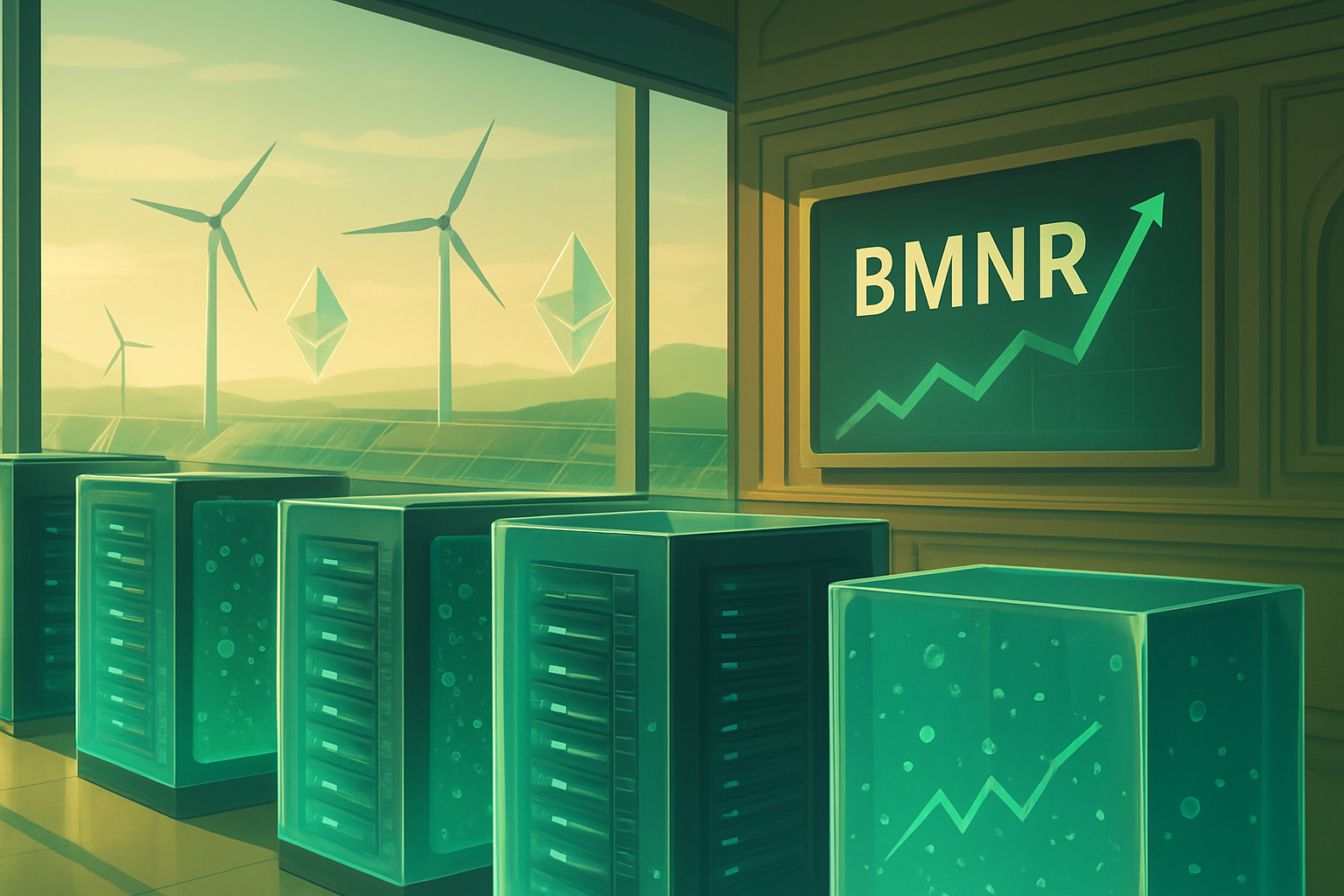
    The Ethereum Treasury: Inside Bitmine Immersion Technologies’ $4 Billion Strategic Pivot

    On the morning of April 9, 2026, the floor of the New York Stock Exchange witnessed a symbolic transition for the digital asset industry. Bitmine Immersion Technologies (NYSE: BMNR), a company that began the decade as a micro-cap Bitcoin miner in the dusty plains of West Texas, officially graduated to the “Big Board.” The uplisting from the NYSE American to the main NYSE exchange was not merely a change in ticker location; it was accompanied by a staggering announcement: a board-authorized $4 billion share buyback program.

    This move cements Bitmine’s status as the "Ethereum equivalent" of MicroStrategy (NASDAQ: MSTR), shifting the narrative from a hardware-focused mining operation to a massive institutional treasury and staking powerhouse. With a portfolio anchored by nearly 4.8 million ETH and a proprietary immersion cooling technology that provides an unfair advantage in operational efficiency, BMNR has emerged as a central pillar of the 2026 crypto-equity landscape.

    Historical Background

    The origins of Bitmine Immersion Technologies (NYSE: BMNR) are rooted in a 1995 corporate shell (Sandy Springs Holdings), but its modern incarnation began in July 2021. Under the early leadership of Jonathan Bates and Erik Nelson, the company pivoted to address the most glaring weakness of the crypto mining industry: heat and energy waste.

    Between 2021 and 2024, Bitmine established itself as a pioneer in immersion cooling. Its flagship site in Pecos, Texas, and operations in Trinidad served as the testing grounds for submerging high-powered ASIC miners in dielectric fluid. By 2023, the Pecos facility was fully electrified, proving that immersion could extend hardware life and boost hashrate. However, the company remained a niche player on the OTC markets until mid-2025, when a radical change in leadership and strategy—led by Chairman Thomas "Tom" Lee—transformed the company into a digital asset treasury.

    Business Model

    Bitmine operates a sophisticated dual-track business model designed to capture value from both the physical and digital layers of the Ethereum and Bitcoin ecosystems.

    1. Digital Asset Treasury: The core of the company’s current value proposition is its "Alchemy of 5%" strategy. Bitmine aggressively acquires Ethereum (ETH) with the goal of holding 5% of the total circulating supply. This treasury is managed as a high-yield asset base, utilizing institutional staking to generate recurring revenue.
    2. Infrastructure & Immersion Cooling: Bitmine continues to operate a massive mining and validator footprint. By using dielectric liquid cooling, the company achieves a 30% higher efficiency rating than traditional air-cooled competitors. This hardware arm serves as a "yield engine," generating the cash flow used to service debt and fund further ETH acquisitions.
    3. MAVAN (Made-in-America Validator Network): Launched in early 2026, MAVAN is a proprietary staking-as-a-service platform that allows Bitmine to act as a primary validator for the Ethereum network, capturing both staking rewards and MEV (Maximal Extractable Value).

    Stock Performance Overview

    The trajectory of BMNR stock has been one of the most dramatic in the mid-2020s.

    • 1-Year Performance: Over the last twelve months, BMNR has outperformed the broader S&P 500 and even the price of ETH itself, driven by its 2025 pivot and the anticipation of the NYSE uplisting.
    • 5-Year Performance: Investors who held BMNR during its OTC days (when it traded as a penny stock under $1.00) have seen life-changing returns as the stock crossed into the triple digits in late 2025.
    • Recent Volatility: The stock experienced a significant "short squeeze" in mid-2025 following the announcement of Tom Lee’s chairmanship, and it has since stabilized into a high-volume institutional favorite, now ranking among the top 100 most liquid stocks in the U.S.

    Financial Performance

    Bitmine’s fiscal year 2025 results, released in late 2025, marked a turning point. The company reported a net income of $328.16 million, a radical swing from its earlier years of development-stage losses.

    • Assets: As of April 2026, Bitmine holds $11.4 billion in total assets, including 4.8 million ETH (valued at approximately $10.5 billion based on current market prices) and $864 million in cash and cash equivalents.
    • Margins: Due to the efficiency of its immersion cooling and the low overhead of its staking operations, the company boasts gross margins exceeding 75% in its treasury segment.
    • Valuation: BMNR often trades at a "treasury premium" to its Net Asset Value (NAV), similar to the premium seen in companies that successfully bridge the gap between equity markets and crypto-commodities.

    Leadership and Management

    The current leadership team is a "Who's Who" of Wall Street and Silicon Valley expertise:

    • Thomas "Tom" Lee (Chairman): The founder of Fundstrat Global Advisors, Lee is the visionary behind the ETH-treasury model. His reputation for accurate macro forecasting has provided the company with immense credibility among institutional investors.
    • Chi Tsang (CEO): Appointed in November 2025, Tsang brought 25 years of experience from firms like HSBC and various tech-focused venture capital groups. His focus is on "institutionalizing" the company's operations.
    • Young Kim (CFO/COO): An MIT-trained engineer with a Harvard MBA, Kim manages the complex logistics of the immersion facilities and the financial engineering required for the $4 billion buyback program.

    Products, Services, and Innovations

    Bitmine’s competitive edge lies in its "Thermal Management Intellectual Property." While many firms mine crypto, Bitmine’s proprietary immersion containers allow for "safe overclocking"—running machines at speeds higher than manufacturer specs without the risk of thermal meltdown.
    Additionally, the MAVAN Validator Network represents a shift toward "Green Staking." By powering its validator nodes with a mix of stranded gas in Texas and hydroelectric power in international locations, Bitmine has positioned its ETH holdings as the most ESG-compliant "yield" in the crypto market.

    Competitive Landscape

    Bitmine faces competition from three distinct groups:

    1. Bitcoin Giants: MARA Holdings (NASDAQ: MARA) and Riot Platforms (NASDAQ: RIOT) remain the leaders in pure-play Bitcoin hashrate, but they lack Bitmine’s aggressive Ethereum treasury focus.
    2. HPC/AI Pivoters: Companies like Core Scientific (NASDAQ: CORZ) and Hut 8 (NASDAQ: HUT) have moved toward hosting AI data centers. Bitmine has chosen to stay "crypto-native," betting that the yield from ETH staking will eventually outpace the margins of AI hosting.
    3. Institutional Treasuries: MicroStrategy (NASDAQ: MSTR) remains the primary rival for institutional "crypto-proxy" dollars. While MSTR is the "Bitcoin King," Bitmine is positioning itself as the "Ethereum Queen."

    Industry and Market Trends

    The "DATCO" (Digital Asset Treasury Company) trend is the defining market movement of 2026. Following the adoption of fair-value accounting by FASB in 2024, public companies can now report their crypto holdings at current market prices rather than being forced to only report "impairment" losses. This has encouraged companies like Bitmine to use their balance sheets as strategic weapons. Furthermore, the 2026 market is characterized by "Staking-as-a-Yield," where investors view ETH staking rewards as a digital version of the risk-free rate.

    Risks and Challenges

    Despite its success, Bitmine is not without risks:

    • Asset Concentration: With over 90% of its asset base in Ethereum, a catastrophic failure in the ETH protocol or a massive price crash would be devastating.
    • Regulatory Reversals: While the 2026 environment is favorable, any shift in the SEC's view on staking (possibly through a change in administration) could impact the MAVAN revenue stream.
    • Operational Maintenance: Immersion cooling is complex. A leak or contamination of the dielectric fluid at a major site could lead to significant downtime and hardware damage.

    Opportunities and Catalysts

    The $4 billion buyback is the most immediate catalyst. By retiring shares, Bitmine effectively increases the "ETH per share" for remaining investors.
    Future opportunities include:

    • Layer 2 Integration: Speculation exists that Bitmine may launch its own Ethereum Layer 2 network to capture transaction fees.
    • M&A: With its massive cash and equity valuation, Bitmine is well-positioned to acquire smaller air-cooled miners and "upgrade" them to immersion cooling.

    Investor Sentiment and Analyst Coverage

    Investor sentiment is overwhelmingly bullish, bordering on euphoric. The company is a favorite of ARK Investment Management and Pantera Capital. Major investment banks including Morgan Stanley and BlackRock (NYSE: BLK) have added BMNR to various "Innovation" and "Digital Infrastructure" ETFs. Retail sentiment, tracked via platforms like X and Reddit, remains high as the "Alchemy of 5%" becomes a viral movement among Ethereum enthusiasts.

    Regulatory, Policy, and Geopolitical Factors

    The 2026 regulatory landscape is the "Golden Era" for U.S. crypto companies. The GENIUS Act (2025) allowed U.S. banks to custody ETH, while the CLARITY Act defined ETH as a digital commodity. These laws provided the legal runway for Bitmine's NYSE uplisting. Geopolitically, Bitmine’s focus on "Made in America" validators aligns with U.S. policy to bring digital asset infrastructure back from overseas, particularly from regions with unstable energy grids or hostile regimes.

    Conclusion

    Bitmine Immersion Technologies (NYSE: BMNR) has successfully navigated the transition from a speculative penny stock to a foundational institutional asset. By combining high-end physical infrastructure (immersion cooling) with a bold financial strategy (the Ethereum treasury), the company has created a blueprint for the modern digital corporation.

    Investors should watch the execution of the $4 billion buyback and the progress toward the 5% ETH supply goal. While the concentration in a single digital asset carries inherent risks, the company’s operational efficiency and the current regulatory tailwinds suggest that Bitmine’s journey on the New York Stock Exchange is only just beginning. As of April 9, 2026, Bitmine is no longer just a mining company—it is a cornerstone of the decentralized financial future.


    This content is intended for informational purposes only and is not financial advice.

  • The Digital Plumbing of Wall Street: Inside Broadridge’s $9 Trillion Blockchain Revolution

    The Digital Plumbing of Wall Street: Inside Broadridge’s $9 Trillion Blockchain Revolution

    In the world of high-finance, "plumbing" is a term often used to describe the essential systems that allow money and securities to flow across the globe. For nearly two decades, Broadridge Financial Solutions (NYSE: BR) has been the primary architect of this infrastructure. Today, April 9, 2026, Broadridge finds itself at a pivotal juncture as it transitions from a legacy service provider to a blockchain-native powerhouse.

    The company is currently in the spotlight for a historic milestone: its Distributed Ledger Repo (DLR) platform has officially entered the mainstream. Processing record monthly volumes of nearly $9 trillion as of late 2025 and sustaining over $8 trillion in March 2026, the DLR is no longer a "pilot" project—it is a fundamental pillar of the global $10 trillion repurchase (repo) market. This deep-dive examines how Broadridge is leveraging this breakthrough to cement its dominance in a rapidly digitizing financial landscape.

    Historical Background

    Broadridge’s journey began not as an independent entity, but as the Brokerage Services Group of Automatic Data Processing (ADP). In 2007, it was spun off as a public company with a clear mandate: to handle the complex, data-heavy tasks of proxy voting and trade processing that banks and broker-dealers preferred to outsource.

    Over the last 19 years, Broadridge has transformed through aggressive R&D and strategic acquisitions. What started as a "back-office" utility has evolved into a global fintech leader. The company’s history is defined by its ability to anticipate regulatory shifts—such as the transition to electronic proxy delivery and the move toward T+1 settlement—positioning itself as the "indispensable partner" for Wall Street.

    Business Model

    Broadridge operates through two primary reporting segments: Investor Communication Solutions (ICS) and Global Technology and Operations (GTO).

    1. Investor Communication Solutions (ICS): This is the core engine, providing proxy voting services, corporate governance solutions, and regulatory communications. Because Broadridge manages the connection between thousands of public companies and millions of shareholders, it enjoys a near-monopoly in the proxy space.
    2. Global Technology and Operations (GTO): This segment provides the technical "rails" for trade processing and capital markets operations. It is here that the DLR platform resides.

    The strength of the model lies in its recurring revenue, which accounts for approximately 65% of total revenue. With a client retention rate consistently near 98%, the business acts more like a high-margin SaaS platform than a traditional financial services firm.

    Stock Performance Overview

    As of April 9, 2026, Broadridge’s stock performance presents a tale of two horizons.

    • 1-Year Performance: The stock has faced significant headwinds, down approximately 32% from its 52-week highs, currently trading near $160. This is largely attributed to broader tech-sector volatility and higher interest rates impacting capital-intensive firms.
    • 5-Year Performance: Despite the recent dip, long-term investors have seen steady growth with a total return in the 12–16% range.
    • 10-Year Performance: This is where the "Broadridge Moat" shines. Over the last decade, BR has delivered a total return of ~228%, significantly outperforming the S&P 500 and solidifying its reputation as a "compounding machine."

    Financial Performance

    Financial results for Fiscal Year 2025 (ending June 2025) and early FY2026 data highlight a robust balance sheet.

    • Revenue: Broadridge reported $6.89 billion in total revenue for FY2025, a 6% year-over-year increase.
    • Profitability: Adjusted operating income margins expanded to 20.5%, driven by the scalability of digital products like the DLR.
    • 2026 Guidance: Management expects 5–7% recurring revenue growth and 8–12% adjusted EPS growth.
    • Cash Flow: The company remains a cash generator, though it carries a manageable but notable debt load used to fund recent digital transformations.

    Leadership and Management

    CEO Tim Gokey has been the architect of Broadridge’s "ABCD" strategy (AI, Blockchain, Cloud, and Data). Under his leadership, the company has pivoted from legacy hardware to cloud-native solutions.

    Recent leadership changes in early 2026 emphasize this shift. In March 2026, Allen Weinberg was appointed as the inaugural Chief Growth and Strategy Officer, tasked with scaling the DLR globally. Additionally, Germán Soto Sanchez has transitioned to lead the Chief Product and Enterprise Platform office, specifically focusing on the "tokenization of everything"—the idea that all financial assets will eventually move onto a ledger.

    Products, Services, and Innovations: The DLR Breakout

    The crown jewel of Broadridge’s current innovation pipeline is the Distributed Ledger Repo (DLR) platform. The repo market—where banks lend each other cash secured by collateral (usually Treasuries)—has historically been plagued by manual processes and "trade fails."

    How DLR Works:

    • Collateral Immobilization: Instead of physically moving a bond from Bank A to Bank B, the DLR creates a digital twin (token) of the bond. The actual security stays put at the custodian, while the ownership is transferred via smart contracts.
    • Atomic Settlement: Cash and collateral swap ownership simultaneously (Delivery vs. Payment), virtually eliminating settlement risk.
    • Intraday Repo: The DLR allows for 4-hour or 6-hour loans, a feat impossible under old systems. This allows banks to manage liquidity with surgical precision.

    By March 2026, the platform was processing $354 billion in Average Daily Volume (ADV), a nearly 400% increase over the previous year.

    Competitive Landscape

    Broadridge operates in a "co-opetition" environment with other giants like FIS (NYSE: FIS) and SS&C Technologies (NASDAQ: SSNC).

    • FIS: While FIS is a titan in banking and payments, it lacks Broadridge’s granular control over the proxy voting and repo-specific infrastructure.
    • SS&C: SS&C dominates fund administration, but Broadridge’s 98% retention rate among broker-dealers provides a "sticky" ecosystem that is difficult for SS&C to penetrate in the capital markets segment.
      Broadridge’s primary competitive advantage is its Integration Moat. It is so deeply embedded in the back-office systems of the world’s largest banks (the "Global Systemically Important Banks" or G-SIBs) that switching to a competitor would be a multi-year, multi-billion dollar risk for most clients.

    Industry and Market Trends

    The primary trend driving Broadridge’s growth is the compression of settlement cycles. The move to T+1 (and the eventual push toward T+0) in global markets necessitates the kind of automation that Broadridge provides. Furthermore, the tokenization of Real-World Assets (RWA) is moving from theory to practice. As more asset classes (private equity, real estate) become tokenized, the DLR infrastructure can be adapted to handle them, opening up massive new TAM (Total Addressable Market).

    Risks and Challenges

    Despite its dominance, Broadridge is not without risks:

    1. Cybersecurity: As the central hub for proxy and trade data, a significant breach could be catastrophic for both the company and the global financial system.
    2. Concentration Risk: A small number of Tier-1 banks account for a large portion of GTO revenue. If a major bank were to insource these services, it would impact the bottom line.
    3. Macroeconomic Pressure: In high-interest-rate environments, the volume of corporate actions and certain trading activities can slow, impacting transactional revenue.

    Opportunities and Catalysts

    • International Expansion: While Broadridge is dominant in North America, there is significant room to grow the DLR and proxy services in European and Asian markets.
    • AI Integration: The company is currently deploying generative AI to automate the "reconciliation" of complex trade discrepancies, which could further improve margins.
    • Intraday Liquidity: As central banks tighten liquidity, the demand for the DLR’s intraday repo capabilities is expected to soar, as banks look to save every basis point of interest.

    Investor Sentiment and Analyst Coverage

    Wall Street remains generally bullish on Broadridge, viewing it as a "defensive tech" play. Institutional ownership stands at over 85%, including major positions from Vanguard and BlackRock. Analysts frequently cite the DLR’s volume growth as the primary "alpha" generator for the stock. However, some retail sentiment has soured due to the stock’s recent 30% drawdown, creating a valuation gap that long-term analysts view as a buying opportunity.

    Regulatory, Policy, and Geopolitical Factors

    Regulatory tailwinds are currently in Broadridge's favor. The SEC’s focus on transparency in proxy voting and the push for "Active Disclosure" requirements play directly into Broadridge’s ICS segment. Geopolitically, the push for "Financial Sovereignty" in different regions may require Broadridge to localize its ledger technologies, a challenge the company is meeting through its multi-cloud and region-specific node deployments.

    Conclusion

    Broadridge Financial Solutions has successfully navigated the transition from a back-office utility to a front-line innovator. The record processing volumes on its Distributed Ledger Repo platform—reaching nearly $9 trillion in a single month—mark the beginning of a new era for financial infrastructure.

    While the stock price has suffered in the short term due to macro-tech headwinds, the underlying fundamentals tell a story of a company with an unbreakable moat and a clear path toward digitizing the world’s collateral. For investors, Broadridge represents a rare combination: the stability of a 98% retention utility with the explosive upside of a blockchain pioneer. As we look toward the remainder of 2026, the scaling of the DLR from 3% of the repo market to double-digits will be the key metric to watch.


    This content is intended for informational purposes only and is not financial advice.

  • The Ledger of the Future: A Deep Dive into Coinbase (COIN) in 2026

    The Ledger of the Future: A Deep Dive into Coinbase (COIN) in 2026

    Date: March 10, 2026

    Introduction

    As of March 2026, Coinbase Global, Inc. (NASDAQ: COIN) has transcended its origins as a mere cryptocurrency exchange to become the primary infrastructure layer for the global on-chain economy. Long dismissed by skeptics as a "crypto casino," the company has spent the last five years methodically building a moat that bridges the gap between traditional fiat-based systems and the burgeoning world of decentralized finance. Today, Coinbase stands not just as a trading platform, but as a custodian for the world’s largest financial institutions, a developer ecosystem through its Base network, and a regulated derivatives powerhouse. With the landmark legal victories of 2025 behind it, Coinbase is arguably the most influential financial services firm of the mid-2020s.

    Historical Background

    Founded in June 2012 by Brian Armstrong and Fred Ehrsam, Coinbase emerged from the Y Combinator incubator with a radical vision: to make Bitcoin as easy to use as email. In an era when acquiring digital assets required navigating shadowy offshore forums, Coinbase provided a clean, regulatory-compliant interface for the masses.

    The company’s trajectory has been defined by key milestones: the 2017 retail explosion, the 2020 institutional "wall of money," and its historic Direct Listing on the Nasdaq in April 2021. However, the true "refining fire" for Coinbase was the period between 2022 and 2024. During this time, the company survived the collapse of rivals like FTX, navigated the most aggressive SEC enforcement era in history, and successfully pivoted from a transaction-fee-dependent model to a diversified services powerhouse.

    Business Model

    Coinbase’s business model in 2026 is built on three distinct but synergistic pillars:

    1. Institutional Ledger & Custody: Acting as the primary custodian for nearly 90% of U.S. spot Bitcoin and Ethereum ETFs, Coinbase earns "toll-bridge" fees on hundreds of billions in Assets Under Custody (AUC).
    2. Subscription and Services: This high-margin segment includes staking rewards, stablecoin interest (primarily via its partnership with Circle and USDC), and Coinbase One—a premium retail subscription service.
    3. The On-Chain Economy (Base): Perhaps the most significant evolution is Coinbase’s role as the sequencer for Base, its Layer 2 network. By capturing a portion of every transaction fee on this network, Coinbase has created a recurring revenue stream that scales with the growth of decentralized applications (dApps) rather than just trading volume.

    Stock Performance Overview

    The performance of COIN over the last five years tells a story of extreme volatility followed by institutional maturation:

    • 1-Year Performance: Over the past 12 months, COIN has outperformed the S&P 500 by over 40%, driven by the "Regulatory Thaw" of 2025 and record-breaking revenue from its derivatives arm.
    • 5-Year Performance (2021–2026): After its direct listing at a reference price of $250 in 2021, the stock bottomed near $30 in 2022. As of March 2026, the stock has fully recovered its IPO-era highs and is currently trading in a consolidated range, supported by consistent earnings and aggressive share buybacks.
    • Long-term Context: While not yet a 10-year public company, its private-to-public CAGR reflects the meteoric rise of the digital asset class, transitioning from a $1 billion private valuation in 2017 to a mega-cap status in 2026.

    Financial Performance

    Coinbase’s Q4 2025 earnings report showcased a company in its financial prime.

    • Revenue Mix: For the first time, Subscription and Services revenue accounted for 42% of total top-line growth, reducing the "beta" to Bitcoin price fluctuations.
    • Margins: Adjusted EBITDA margins have stabilized at 35%, a result of the "lean" restructuring initiatives begun in 2023.
    • Cash Position: The company ended 2025 with $11.3 billion in cash and equivalents. This "fortress balance sheet" has allowed Coinbase to fund its 2025 acquisition of Deribit, securing a dominant position in the international crypto derivatives market.
    • Valuation: Trading at a Forward P/E of 28x, the market has re-rated COIN from a "volatile tech play" to a "secular growth financial."

    Leadership and Management

    CEO Brian Armstrong remains the strategic North Star of the company. Known for his "Relentless" mantra and focus on "mission-driven" culture, Armstrong has successfully pivoted from a product-focused founder to a global statesman for the crypto industry.
    Supporting him is CFO Alesia Haas, who is credited with the company’s financial discipline and the successful navigation of the 2024 ETF integration. Chief Legal Officer Paul Grewal has also emerged as a key figure; his aggressive legal strategy against the SEC is now studied as a masterclass in corporate defense, ultimately leading to the dismissal of most charges in early 2025.

    Products, Services, and Innovations

    Innovation at Coinbase is currently focused on the "on-chaining" of everything.

    • Base Network: Now the leading Layer 2 by Total Value Locked (TVL), Base serves as the "App Store" for the crypto world.
    • Smart Wallets: Launched in late 2025, these wallets use biometric security (FaceID/Passkeys) to eliminate the need for complex seed phrases, removing the single largest barrier to retail adoption.
    • Coinbase Derivatives (International): Following the Deribit acquisition, Coinbase now offers 24/7 regulated futures and options to both retail and institutional clients globally.
    • Tokenized Real-World Assets (RWAs): Coinbase is leading the charge in moving private credit and T-bills onto the blockchain, allowing for 24/7 settlement of traditional financial instruments.

    Competitive Landscape

    In 2026, the competitive field has shifted:

    • Vs. Traditional Brokerages: Coinbase now competes directly with Robinhood Markets, Inc. (NASDAQ: HOOD) and Fidelity for the "Gen Z" brokerage account. While HOOD has broader asset classes, Coinbase maintains a technological edge in on-chain utility.
    • Vs. Offshore Exchanges: With the decline of Binance’s market share following its 2024 regulatory settlements, Coinbase has captured much of the institutional "flight to quality."
    • Vs. Decentralized Exchanges (DEXs): By launching Base, Coinbase has effectively "internalized" the threat of DEXs, capturing the value of decentralized trading within its own ecosystem.

    Industry and Market Trends

    The "Tokenization Era" is the dominant trend of 2026. Financial institutions are no longer debating the merits of Bitcoin; they are actively moving their own ledgers onto public blockchains. Coinbase sits at the center of this transition, providing the "on-ramps" and "off-ramps" for this global migration. Additionally, the integration of AI-driven trading agents on the Base network has led to a surge in automated, high-frequency on-chain activity.

    Risks and Challenges

    Despite its dominance, Coinbase is not without risks:

    • Systemic Security: As a custodian for nearly $1 trillion in digital assets, a major security breach would be catastrophic for both the company and the broader market.
    • Regulatory Relapse: While the U.S. landscape has improved, new challenges regarding Anti-Money Laundering (AML) and "on-chain identity" are emerging.
    • Market Correlation: Although diversifying, a prolonged "crypto winter" or a collapse in Bitcoin’s price would still significantly impact retail sentiment and transaction revenue.

    Opportunities and Catalysts

    • The "Everything Exchange": The integration of stock and commodity trading into the Coinbase app (expected late 2026) could trigger another significant re-rating of the stock.
    • Global Expansion: Coinbase is aggressively expanding in the UAE, Brazil, and the EU (under the MiCA framework), tapping into markets where crypto adoption is outpacing the United States.
    • Shareholder Returns: With massive cash reserves, analysts expect an increase in the share buyback program or the potential for a special dividend by 2027.

    Investor Sentiment and Analyst Coverage

    Wall Street has largely turned bullish. In early 2026, several major investment banks upgraded COIN to "Strong Buy," citing its "indispensable utility" in the new financial system. Retail sentiment remains high, particularly among the "Base" developer community, while institutional ownership has reached record levels as COIN is increasingly included in major financial and tech indices.

    Regulatory, Policy, and Geopolitical Factors

    The "Great Dismissal" of the SEC lawsuit in February 2025 was a turning point. It paved the way for the Financial Innovation and Technology for the 21st Century Act (FIT21), which provided the clear rules of the road Coinbase had long requested. Geopolitically, the U.S. government now views Coinbase as a strategic asset in the race to maintain the dollar’s dominance through stablecoins (USDC), acting as a counterweight to non-Western digital currency initiatives.

    Conclusion

    As of March 10, 2026, Coinbase (COIN) has successfully transitioned from a niche startup to a foundational pillar of global finance. By surviving the regulatory and market volatility of the early 2020s, it has emerged as the "Goldman Sachs of the On-Chain World." For investors, Coinbase represents a unique play on the convergence of traditional finance and blockchain technology. While risks regarding security and macro-volatility remain, the company’s diversified revenue, strategic acquisitions, and the burgeoning Base ecosystem provide a robust foundation for the years ahead. Investors should watch for the continued growth of Base TVL and the potential integration of traditional equities as the next major catalysts for the stock.


    This content is intended for informational purposes only and is not financial advice.

  • Coinbase (COIN) 2026 Deep-Dive: From Crypto Proxy to S&P 500 Pillar

    Coinbase (COIN) 2026 Deep-Dive: From Crypto Proxy to S&P 500 Pillar

    As of January 14, 2026, Coinbase Global, Inc. (NASDAQ: COIN) stands as a radically different entity than the one that debuted on the public markets five years ago. Once viewed as a high-beta proxy for Bitcoin’s volatility, Coinbase has spent the last two years cementing its position as the critical infrastructure layer for the entire digital asset economy. Its inclusion in the S&P 500 in May 2025 served as a symbolic "coming of age" moment, transitioning the firm from a niche crypto exchange into a systemic pillar of the global financial system. Today, Coinbase is at the center of a massive institutional rotation into digital assets, serving as the primary custodian for the world’s largest asset managers while simultaneously building the "on-chain" version of the internet through its Base network.

    Historical Background

    Founded in 2012 by Brian Armstrong and Fred Ehrsam, Coinbase began as a simple service for buying and selling Bitcoin via bank transfers. It was an early graduate of the Y Combinator accelerator and quickly became the "gold standard" for U.S. compliance in an industry often defined by its lack of rules. The company navigated several "crypto winters," most notably the 2014 Mt. Gox collapse and the 2018 retail crash, each time emerging with a larger user base and more robust infrastructure.

    The company’s direct listing (DPO) on the Nasdaq in April 2021 was a watershed moment for the industry, valuing the company at nearly $100 billion at its peak. However, the subsequent "crypto winter" of 2022 and 2023—marked by the collapse of rivals like FTX—forced Coinbase to lean into efficiency, cutting costs while aggressively defending its business model against regulatory overreach. By 2024, the narrative shifted from survival to expansion, fueled by the approval of spot Bitcoin and Ethereum ETFs.

    Business Model

    Coinbase’s business model has undergone a profound transformation. In 2020, transaction fees from retail traders accounted for over 95% of total revenue. By early 2026, the company has successfully diversified into three primary revenue buckets:

    1. Transaction Revenue: While still significant, this is now split between retail and a rapidly growing institutional segment.
    2. Subscription and Services: This includes interest income from its partnership with Circle (USDC), blockchain rewards (staking), and the "Coinbase One" subscription service.
    3. On-Chain Services (Base): Coinbase’s Layer 2 network, Base, has become a significant revenue driver, earning fees from decentralized applications and transactions that occur within its ecosystem.

    This "de-risking" of the revenue stream has made Coinbase less sensitive to month-to-month crypto price fluctuations and more of a play on the broader adoption of blockchain technology.

    Stock Performance Overview

    The performance of COIN shares over the past two years has been a study in maturation.

    • 1-Year Performance (2025): The stock hit a multi-year high of $444.64 in July 2025, buoyed by record-breaking institutional inflows into spot ETFs and the dismissal of the SEC’s lawsuit. It faced a natural correction in late 2025 as the "halving cycle" hype cooled.
    • Longer-Term Context: From its 2023 lows near $30, the stock has staged a recovery of over 700%. However, as of January 14, 2026, trading in the $240–$255 range, it remains below its all-time high set shortly after its DPO.
    • Volatility: While still more volatile than a traditional bank stock, COIN’s beta has decreased significantly as institutional ownership has increased, providing a more stable floor during market pullbacks.

    Financial Performance

    Coinbase’s recent earnings reports highlight a company that has mastered operating leverage.

    • Q3 2025 Results: The company reported total revenue of $1.87 billion, a 55% year-over-year increase. Net income reached a healthy $433 million.
    • Margins: Subscription and Services revenue reached a record $747 million in Q3 2025, boasting high margins that have helped Coinbase maintain profitability even during periods of lower trading volume.
    • Balance Sheet: Coinbase maintains a fortress balance sheet with over $7 billion in cash and cash equivalents, allowing it to navigate regulatory shifts and fund aggressive R&D into its Base network.
    • Q4 2025 Outlook: Analysts expect Q4 revenue to land between $2.2 billion and $2.3 billion, driven by seasonal retail participation and the continued growth of the USDC ecosystem.

    Leadership and Management

    CEO Brian Armstrong remains the face and primary strategist of Coinbase. Known for his "mission-focused" and often contrarian management style, Armstrong has been credited with steering the company through the 2023 regulatory storm without compromising the firm’s core principles.

    In late 2025, the leadership team was further bolstered by the appointment of several traditional finance veterans to the board, signaling a move toward greater harmony with the legacy banking system. Armstrong’s "2026 Roadmap" focuses on turning Coinbase into an "everything exchange" and a global payment rail, moving beyond just a trading platform.

    Products, Services, and Innovations

    The most significant innovation in Coinbase's current portfolio is Base, its Ethereum Layer 2 network. By early 2026, Base has emerged as a dominant force in decentralized finance (DeFi), capturing over 60% of the total Layer 2 revenue. It provides a low-cost environment for developers to build decentralized apps (dApps) while funneling transaction fees back to Coinbase.

    Other key offerings include:

    • Coinbase Custody: The "backbone" of the ETF era, holding tens of billions of dollars for giants like BlackRock (NYSE: BLK) and Fidelity.
    • USDC Integration: Working with Circle, Coinbase has turned the USDC stablecoin into a primary tool for international payments and institutional settlement.
    • Coinbase One: A subscription service that offers zero-fee trading and enhanced rewards, fostering a "sticky" retail user base.

    Competitive Landscape

    Coinbase operates in an increasingly crowded arena, facing pressure from two sides:

    • Crypto Natives: Binance remains the global volume leader, but its market share in the U.S. has waned following legal settlements. Robinhood Markets, Inc. (NASDAQ: HOOD) has emerged as a fierce retail rival, particularly after its 2025 acquisition of Bitstamp.
    • TradFi Giants: The largest threat comes from incumbents. With Charles Schwab (NYSE: SCHW) launching direct crypto trading in early 2026, Coinbase can no longer rely solely on "ease of use" to attract casual investors. However, Coinbase’s deep integration as a custodian for these very same firms creates a unique competitive advantage where its rivals are also its largest customers.

    Industry and Market Trends

    The "Institutionalization" of crypto is the defining trend of 2026. Digital assets are no longer viewed as experimental; they are standard components of a 60/40 portfolio for many institutional investors. This shift has moved the market away from pure speculation and toward utility-driven growth. Additionally, the rise of "On-Chain Finance" (OnFi)—where traditional assets like bonds and real estate are tokenized—represents the next multi-trillion dollar frontier that Coinbase is actively pursuing.

    Risks and Challenges

    Despite its successes, Coinbase faces significant hurdles:

    • Fee Compression: As traditional brokers like Schwab and Fidelity enter the space, the high commissions Coinbase charges retail users will inevitably come under pressure.
    • Regulatory Fragility: While the dismissal of the SEC case in February 2025 was a massive win, the regulatory landscape remains a patchwork. New legislation like the GENIUS Act and the Clarity Act could still impose restrictive rules on stablecoin rewards or staking services.
    • Cybersecurity: As the primary custodian for the world's ETFs, Coinbase is a high-value target for state-sponsored and independent bad actors. Any breach would be catastrophic for the stock.

    Opportunities and Catalysts

    1. Monetizing Base: Base is currently in its early stages of monetization. As more dApps move to the network, the sequence of fees could become a multi-billion dollar recurring revenue stream.
    2. International Expansion: With the European MiCA (Markets in Crypto-Assets) regulation fully in effect, Coinbase is aggressively expanding its footprint in the EU and emerging markets like Brazil and Singapore.
    3. M&A Potential: With a massive cash pile, Coinbase is well-positioned to acquire smaller fintech firms or blockchain infrastructure startups to further its "everything exchange" goal.

    Investor Sentiment and Analyst Coverage

    Wall Street sentiment has shifted from skeptical to cautiously optimistic. Most analysts now view Coinbase as a "Core Fintech" holding rather than a speculative crypto play. Following the S&P 500 inclusion, institutional ownership has surged, with index funds and "blue chip" asset managers now holding significant positions. Retail sentiment, while still highly influenced by crypto price cycles, has become more sophisticated, with investors paying closer attention to Base TVL (Total Value Locked) and USDC market cap than just Bitcoin's daily price.

    Regulatory, Policy, and Geopolitical Factors

    The regulatory tide turned in Coinbase's favor in early 2025. The dismissal of the SEC’s civil enforcement action removed a major overhang on the stock. Furthermore, the 2025 GENIUS Act provided a long-awaited framework for stablecoins, effectively legitimizing Coinbase’s USDC-centric strategy. However, the company remains a vocal participant in Washington, D.C., currently lobbying against potential restrictions in the pending "Clarity Act" that could affect how it passes rewards to users.

    Conclusion

    Coinbase Global, Inc. has successfully navigated its "trial by fire." By January 2026, it has transformed from a volatile exchange into a multifaceted technology platform that serves as the bridge between traditional finance and the on-chain future. Investors should watch three key metrics: the continued growth of Subscription and Services revenue, the developer adoption rate of the Base network, and the impact of fee compression as traditional brokerage giants enter the fray.

    While the stock remains susceptible to the broader crypto market's cycles, its diversified revenue streams and role as the custodian for the world’s largest asset managers provide a fundamental floor that didn't exist two years ago. For the long-term investor, Coinbase represents a high-conviction bet on the "tokenization of everything."


    This content is intended for informational purposes only and is not financial advice.