
Tag: Business Analysis

  • FedEx (FDX) Deep Dive: The 2026 Transformation and the One FedEx Era

    FedEx (FDX) Deep Dive: The 2026 Transformation and the One FedEx Era

    Date: March 19, 2026

    Introduction

    As of March 19, 2026, FedEx Corporation (NYSE: FDX) stands at a historic crossroads. Long regarded as the gold standard of global logistics and the architect of the modern "hub-and-spoke" system, the company has spent the last three years undergoing its most radical transformation since its founding in 1971. Under the leadership of CEO Raj Subramaniam, FedEx has transitioned from a fragmented collection of independent operating companies into a singular, data-driven "One FedEx" entity. With its ambitious "DRIVE" cost-cutting program having surpassed its initial $4 billion target and a massive spin-off of its Freight business looming on the horizon for June 2026, FedEx has become a primary focus for Wall Street analysts looking for high-margin industrial recovery in an increasingly complex global trade environment.

    Historical Background

    The FedEx story is one of the most celebrated in American business history. Founded by Frederick W. Smith in Little Rock, Arkansas, the company began operations in 1973 with 14 small aircraft and a revolutionary idea: a central hub where all packages would be sorted overnight and flown back out to their destinations. This "hub-and-spoke" model changed the face of global commerce, enabling the reliable next-day delivery that modern supply chains now take for granted.

    Over the decades, FedEx expanded through aggressive acquisitions, most notably the 1998 purchase of Caliber System (bringing in the "Ground" segment) and the 2016 acquisition of Europe’s TNT Express. However, these acquisitions led to a siloed corporate structure where FedEx Express, FedEx Ground, and FedEx Freight operated as entirely separate fleets and networks—often resulting in two different FedEx trucks stopping at the same house on the same day. The "One FedEx" initiative, finalized in 2024, was designed to rectify this legacy inefficiency, marking the end of the "founder era" and the beginning of a professionalized, margin-focused regime.

    Business Model

    FedEx operates a multi-modal logistics network that spans 220 countries and territories. Historically, the business was split into three primary segments:

    1. FedEx Express: The legacy air-ground network focused on time-sensitive, high-value international and domestic shipping.
    2. FedEx Ground: A highly efficient, mostly independent contractor-based network focusing on North American e-commerce and residential delivery.
    3. FedEx Freight: The North American leader in Less-Than-Truckload (LTL) shipping.

    In 2026, the model has shifted. Federal Express Corporation now integrates Express and Ground into a unified "Network 2.0." This consolidated model uses a single pickup and delivery (PUD) system, significantly reducing "dead miles" and asset redundancy. The company generates revenue primarily through shipping fees, which are influenced by fuel surcharges, weight-based pricing, and value-added services like the "fdx" data platform.

    Stock Performance Overview

    FedEx (NYSE: FDX) has seen a dramatic resurgence over the past 12 months, significantly outperforming its primary rival, United Parcel Service (NYSE: UPS).

    • 1-Year Performance: FDX is up approximately 48%, rising from roughly $235 in early 2025 to $350 as of today. This rally has been driven by the successful integration of its networks and the anticipated value unlock of the Freight spin-off.
    • 5-Year Performance: Over five years, the stock has returned 47%. While it suffered during the post-pandemic "freight recession" of 2022-2023, the subsequent recovery under the DRIVE program has restored investor confidence.
    • 10-Year Performance: Long-term holders have seen a 157% return. While steady, this trailed the S&P 500 for much of the decade until the efficiency gains of 2025-2026 catalyzed a breakout.

    Financial Performance

    In the most recent fiscal quarters of 2025 and early 2026, FedEx has demonstrated a clear "margin-over-volume" philosophy.

    • Revenue: FY2025 revenue reached $87.9 billion. For the first half of FY2026, revenue growth has accelerated to 5%, aided by a capture of "at-risk" volume from competitors.
    • Profitability: Adjusted operating margins, which hovered in the mid-single digits for years, have finally approached the 10% target in the integrated Express/Ground segment.
    • Earnings per Share (EPS): FedEx reported an adjusted EPS of $16.81 for FY2025 and has issued a bullish FY2026 guidance range of $17.20 to $19.00.
    • Capital Allocation: The company returned $4.3 billion to shareholders via buybacks and dividends in the last fiscal year, reflecting a shift toward a more capital-light model as CapEx as a percentage of revenue fell to 4.6%.

    Leadership and Management

    Raj Subramaniam, who succeeded Fred Smith as CEO in 2022, has been the architect of the "New FedEx." Unlike the visionary but expansion-focused Smith, Subramaniam is an operationalist who has prioritized "sweating the assets." He is supported by a streamlined leadership team that has moved away from the decentralized management of the early 2000s. The board has also become more active, recently navigating pressure from activist investors to spin off the high-margin Freight segment—a move that is set to be completed on June 1, 2026.

    Products, Services, and Innovations

    Innovation at FedEx is no longer just about planes and trucks; it is about data.

    • fdx Platform: Launched in 2024 and fully scaled by 2026, fdx is an end-to-end e-commerce data platform. It provides merchants with "white-label" tracking, predictive delivery windows, and automated returns management, allowing FedEx to compete with Amazon’s logistics ecosystem on a software level.
    • Automation: The "Project Hercules" facility in Memphis represents the pinnacle of FedEx’s R&D, utilizing AI-driven robotics to sort 56,000 packages per hour with 30% fewer manual touches than previous-generation hubs.
    • Sustainable Logistics: FedEx is aggressively transitioning to a 100% electric pickup fleet by 2040, with massive deployments of BrightDrop and Mercedes-Benz electric vans across major North American and European hubs in 2025.

    Competitive Landscape

    The "Big Three" logistics battle has changed fundamentally.

    • Amazon (NASDAQ: AMZN): Amazon Logistics is now the volume leader in the U.S., delivering more parcels than both UPS and FedEx. However, FedEx has successfully positioned itself as the "independent alternative" for brands that do not want to rely on the Amazon ecosystem.
    • UPS (NYSE: UPS): UPS has struggled with higher labor costs following its 2023 and 2025 Teamster contract negotiations. FedEx’s largely non-union domestic workforce (with the exception of pilots) has given it a cost and flexibility advantage that allowed it to gain significant market share in early 2026.
    • Regional Carriers: The rise of regional players like LaserShip/OnTrac has pressured the low-margin e-commerce space, pushing FedEx toward higher-value verticals like healthcare and aerospace.

    Industry and Market Trends

    Three major trends are currently shaping the logistics sector:

    1. Predictive Logistics: Using AI to move inventory closer to the customer before an order is even placed.
    2. Nearshoring: As manufacturing shifts from China to Mexico and Vietnam, FedEx has expanded its cross-border "FedEx Trade Networks" to capitalize on new trade lanes.
    3. The "Last-Mile" Squeeze: High urban density and congestion are forcing a move toward micro-hubs and automated delivery lockers, areas where FedEx is heavily investing.

    Risks and Challenges

    Despite the recent rally, FedEx faces several structural risks:

    • Labor Relations: While Ground and Express drivers are mostly non-union, the FedEx Pilots (ALPA) remain in a prolonged contract dispute. Any work stoppage by pilots would cripple the international Express network.
    • The Contractor Model: FedEx Ground’s reliance on independent contractors is under constant legal threat. A new Department of Labor rule in 2026 aims to tighten the definition of contractors, which could force FedEx to reclassify thousands of drivers, adding billions in labor costs.
    • Global Macroeconomics: As a bellwether for the global economy, FedEx is sensitive to interest rates and fuel prices, both of which have remained volatile in the 2025-2026 period.

    Opportunities and Catalysts

    • The Freight Spin-off: The planned June 1, 2026, spin-off of FedEx Freight is the most significant near-term catalyst. As the LTL market leader with 20% margins, a standalone Freight entity is expected to trade at a premium valuation, unlocking significant "sum-of-the-parts" value for current FDX shareholders.
    • Healthcare Cold Chain: FedEx is expanding its specialized healthcare facilities to handle high-value biologics and cell therapies, which command much higher margins than standard e-commerce packages.
    • Data Monetization: The fdx platform has the potential to become a high-margin SaaS revenue stream, diversifying the company away from purely physical delivery.

    Investor Sentiment and Analyst Coverage

    Wall Street sentiment has shifted from "Wait and See" in 2024 to "Strong Buy" in early 2026. The consensus among major firms like Goldman Sachs and Morgan Stanley is that FedEx is finally closing the efficiency gap with UPS. Institutional ownership remains high, with significant positions held by Vanguard and BlackRock. Retail chatter has also increased, centered around the "spin-off dividend" and the company’s aggressive buyback program.

    Regulatory, Policy, and Geopolitical Factors

    FedEx remains at the mercy of international trade policy. The 2026 geopolitical landscape is marked by "de-risking" from China, which has required FedEx to reconfigure its trans-Pacific air routes. Domestically, the company is lobbying hard against "Joint Employer" status, which would make it legally responsible for the labor practices of its independent delivery contractors. Additionally, FedEx is a major beneficiary of government incentives for EV infrastructure under current green energy policies.

    Conclusion

    FedEx in 2026 is a company transformed. By shedding its siloed past and embracing a unified, data-centric network, it has successfully navigated the post-pandemic slump and emerged as a leaner, more profitable competitor. The upcoming spin-off of its Freight division represents the final act of the "Subramaniam Pivot," likely resulting in a more focused and agile enterprise.

    For investors, the key to the next 12 months will be the execution of the final "Network 2.0" integrations and the resolution of pilot labor negotiations. While the macro environment remains unpredictable, FedEx’s internal improvements suggest that it is no longer just a "cycle play," but a structural growth story in the global logistics arena.


    This content is intended for informational purposes only and is not financial advice.
  • Netflix (NFLX): From Streaming Pioneer to Diversified Entertainment Titan (2026 Analysis)

    Netflix (NFLX): From Streaming Pioneer to Diversified Entertainment Titan (2026 Analysis)

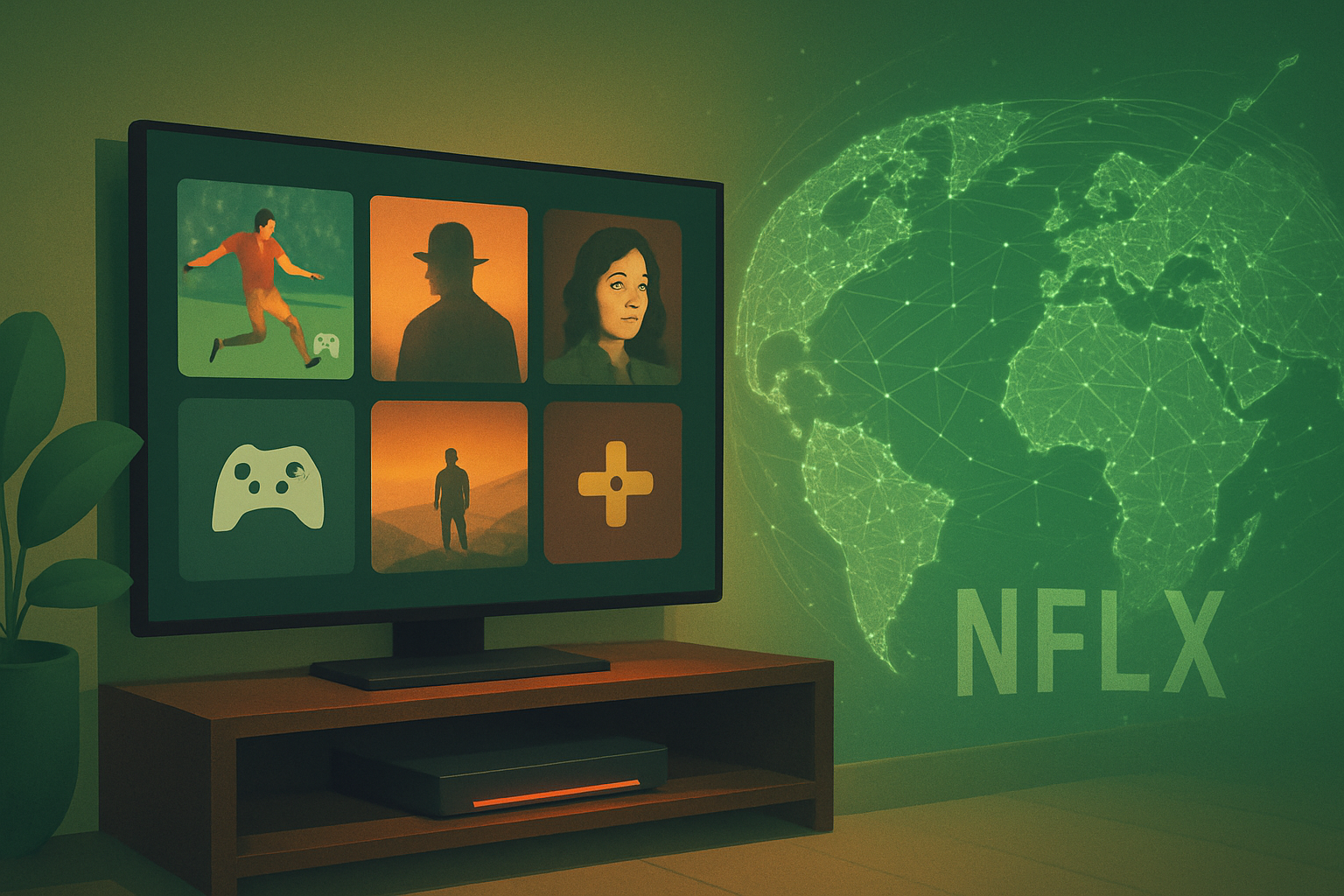
    As of March 10, 2026, the streaming landscape has evolved from a frantic race for subscribers into a disciplined battle for profitability and "share of time." At the center of this transformation stands Netflix, Inc. (NASDAQ: NFLX), a company that has successfully reinvented itself multiple times over three decades. No longer just a library of on-demand films and series, Netflix has matured into a diversified entertainment ecosystem spanning live sports, cloud gaming, immersive physical retail, and a high-margin advertising business.

    With a market capitalization hovering near $350 billion and a global reach exceeding 345 million paying members, Netflix remains the undisputed benchmark for the digital media age. This article examines the company’s strategic pivots, financial resilience, and the competitive hurdles it faces in a consolidating global market.

    Historical Background

    Founded in 1997 by Reed Hastings and Marc Randolph as a DVD-by-mail service, Netflix’s history is defined by its ability to cannibalize its own successful business models before competitors can. Its first major pivot in 2007—from physical discs to streaming—disrupted the home video industry and eventually led to the downfall of giants like Blockbuster.

    The second era began in 2013 with House of Cards, marking Netflix’s transition into an original content studio. However, the most critical period of transformation occurred between 2022 and 2025. Following a "streaming recession" in early 2022, where the company saw its first subscriber loss in a decade, Netflix executed a radical strategic shift. It abandoned its long-standing opposition to advertising, launched a massive crackdown on password sharing, and aggressively moved into live programming. By 2026, the company has completed its transition from a pure-play subscription service to a multi-revenue stream media titan.

    Business Model

    Netflix’s business model in 2026 rests on four primary pillars:

    • Streaming Video on Demand (SVOD): The core "Standard" and "Premium" tiers remain the largest revenue drivers, localized into dozens of languages.
    • Advertising (AVOD): The "Standard with Ads" tier has become the fastest-growing segment, attracting price-sensitive consumers and high-spending advertisers.
    • Live Events & Sports: Through multi-billion dollar deals for WWE and NFL games, Netflix has moved into "appointment viewing," creating high-value ad inventory.
    • Ancillary Ventures: This includes Netflix Games (a retention tool), Netflix House (physical retail and dining experiences), and consumer products/merchandise.

    By diversifying its income, Netflix has mitigated the "churn" associated with traditional streaming, ensuring that even if a user pauses their subscription, they might still engage via the ad-tier or physical experiences.

    Stock Performance Overview

    As of March 2026, Netflix remains a "Darling of Wall Street," though its valuation metrics have shifted to reflect its maturity. Following a 10-for-1 stock split in late 2025, the stock trades in the $85–$105 range (post-split).

    • 1-Year Performance: Up approximately 13.4%, outperforming many of its direct media peers as the ad-tier scaled faster than anticipated.
    • 5-Year Performance: Up ~94%, a remarkable recovery from the 2022 lows when the stock plummeted below $200 (pre-split).
    • 10-Year Performance: A staggering ~903% return, cementing its status as one of the best-performing large-cap stocks of the last decade.

    Investors now value Netflix less on raw subscriber additions and more on Average Revenue Per Member (ARM) and Free Cash Flow (FCF) growth.

    Financial Performance

    Netflix’s fiscal 2025 results showcased a company in peak operational form.

    • Revenue: Reached $45.2 billion in 2025, with projections for 2026 sitting between $51 billion and $52 billion.
    • Operating Margin: Expanded to 29.5% in 2025, with a target of 31.5% for 2026, driven by the high-margin nature of ad sales.
    • Free Cash Flow: Reported at $9.5 billion in 2025, nearly doubling from 2023 levels. This liquidity allowed the company to walk away from a potential $83 billion acquisition of Warner Bros. Discovery in early 2026, choosing instead to focus on organic growth and share buybacks.
    • Debt: Netflix maintains an investment-grade credit rating, with a disciplined debt-to-EBITDA ratio that remains the envy of debt-laden rivals like Disney or the newly merged Paramount-Max.

    Leadership and Management

    The "Co-CEO" model, once viewed with skepticism, has proven highly effective. Ted Sarandos, the creative architect, oversees the $17 billion+ annual content budget, while Greg Peters, the operational mind, has successfully scaled the ad-tech and gaming infrastructure.

    The board remains under the influential gaze of Reed Hastings, who serves as Executive Chairman. Recent key appointments include Dan Lin as Chairman of Netflix Film, who has steered the studio toward a "quality over quantity" approach, and Elizabeth Stone, Chief Product and Technology Officer, who is currently leading the integration of Generative AI into the platform’s recommendation and production workflows.

    Products, Services, and Innovations

    Innovation in 2026 is focused on the "Netflix Ecosystem."

    • Ad-Tech: In 2025, Netflix launched its proprietary ad-tech platform, moving away from its partnership with Microsoft (MSFT). This allows for hyper-targeted advertising based on viewing habits and household data.
    • Cloud Gaming: Netflix has officially rolled out its cloud gaming service to smart TVs, allowing members to play AAA titles like Grand Theft Auto and Red Dead Redemption using their smartphones as controllers.
    • Netflix House: These 100,000-square-foot permanent entertainment complexes in cities like Philadelphia and Dallas offer fans a way to "live" their favorite shows, featuring Squid Game challenges and themed dining at Netflix Bites.

    Competitive Landscape

    The "Streaming Wars" have entered a phase of consolidation. Netflix’s primary rivals in 2026 are:

    • YouTube (GOOGL): Netflix’s biggest competitor for "share of time." YouTube’s massive reach in user-generated content and short-form video remains a constant threat to long-form engagement.
    • Disney+ (DIS): While Disney dominates in franchise IP (Marvel, Star Wars), it continues to struggle with the transition from linear TV to full digital profitability.
    • Max-Paramount: Following the merger of Warner Bros. Discovery assets with Paramount-Skydance in early 2026, this entity represents Netflix’s most direct rival in prestige drama and library depth.

    Netflix’s competitive edge lies in its global production engine. It is the only streamer that can create a local hit in Korea (e.g., Squid Game) or Spain (e.g., Money Heist) and turn it into a global cultural phenomenon overnight.

    Industry and Market Trends

    The streaming industry in 2026 is defined by three macro trends:

    1. Bundling 2.0: Streamers are increasingly partnering with telcos and even rival platforms to offer "super-bundles" to reduce churn.
    2. The Live Pivot: With scripted content costs rising, platforms are turning to live sports and unscripted "event" television to keep users engaged daily.
    3. Local Content Quotas: Governments, particularly in the EU and India, are mandating that a significant percentage of content must be produced locally, forcing Netflix to shift from an "export" model to a "local-first" production strategy.

    Risks and Challenges

    Despite its dominance, Netflix faces significant headwinds:

    • Content Inflation: Even with a $20 billion budget, the cost of top-tier talent and sports rights (like the NFL) is escalating rapidly.
    • Regulatory Scrutiny: Increased focus on data privacy and local content quotas in Europe and Asia could increase operational costs.
    • Saturation: In North America and Western Europe, Netflix has reached near-peak penetration. Growth must now come from price hikes or lower-margin emerging markets like India and Southeast Asia.
    • AI Disruption: While AI can lower production costs, it also lowers the barrier to entry for new competitors to create high-quality content.

    Opportunities and Catalysts

    • Ad-Tier Scaling: Analysts project that by 2027, advertising could account for 15-20% of Netflix's total revenue.
    • FIFA World Cup 2026: Netflix’s partnership for a massive documentary series and mobile game around the 2026 World Cup in North America is expected to drive a surge in summer subscriptions.
    • Gaming Monetization: While games are currently "free" with subscriptions, the potential for in-game purchases or standalone gaming tiers remains a massive untapped revenue lever.

    Investor Sentiment and Analyst Coverage

    Wall Street sentiment remains overwhelmingly "Buy" or "Strong Buy." Analysts at firms like Goldman Sachs and Morgan Stanley have praised the company's "surgical execution" of the password-sharing crackdown. Institutional ownership remains high, with major positions held by Vanguard and BlackRock. Retail sentiment, tracked via social platforms, has improved as the "content drought" of the strike-impacted years (2023-2024) has been replaced by a consistent slate of blockbusters.

    Regulatory, Policy, and Geopolitical Factors

    Geopolitics remains a minefield for Netflix. In South Korea, the government is investigating whether Netflix's dominance is stifling local broadcasters. In India, strict new regulations regarding cultural and religious depictions have forced Netflix to be more conservative in its local originals. Meanwhile, in the European Union, the 30% local content quota is strictly enforced, compelling Netflix to maintain massive production hubs in Madrid, Paris, and Berlin.

    Conclusion

    Netflix enters mid-2026 as a significantly more complex and resilient company than it was just four years ago. By embracing advertising and live events, it has solved the "subscriber plateau" problem that once haunted its valuation. While the competition from YouTube and the newly merged Max-Paramount is formidable, Netflix’s data-driven approach to content and its growing ad-tech prowess provide a formidable moat.

    For investors, the key metrics to watch over the next 12 months will be the growth of the ad-supported monthly active users (MAUs) and the successful scaling of the cloud gaming initiative. If Netflix can continue to prove that it is not just a TV network, but a global entertainment utility, its stock likely has further room to run in the second half of the decade.


    This content is intended for informational purposes only and is not financial advice.