
Tag: Clean Energy

  • Lucid at a Crossroads: Efficiency, Scale, and the $1 Billion Saudi Lifeline of 2026

    Lucid at a Crossroads: Efficiency, Scale, and the $1 Billion Saudi Lifeline of 2026

    Today, April 14, 2026, Lucid Group, Inc. (NASDAQ: LCID) finds itself at a defining moment in its decade-plus journey. Once hailed as the "Tesla-killer" during the luxury EV euphoria of the early 2020s, the California-based automaker has evolved into a case study of high-stakes engineering versus the brutal realities of automotive manufacturing. With the announcement today of a fresh $1.05 billion capital infusion and a strategic partnership expansion with Uber Technologies, Lucid is attempting to pivot from a struggling luxury niche player to a diversified technology and mobility powerhouse. This article examines whether the "Saudi-backed" engineering marvel can finally bridge the gap between technical superiority and financial sustainability.

    Historical Background

    The story of Lucid began not as a car company, but as a battery technology firm called Atieva, founded in 2007 by Sam Weng and former Tesla executive Bernard Tse. For years, Atieva focused on developing high-performance battery packs and electric powertrains, notably becoming the sole battery supplier for Formula E racing—a pedigree that still informs Lucid’s engineering culture today.

    The company’s trajectory changed in 2016 when it rebranded as Lucid Motors and hired Peter Rawlinson, the former Chief Engineer of the Tesla Model S, as its CEO. Rawlinson’s mission was singular: to create a vehicle that surpassed the Model S in every efficiency metric. After a period of financial uncertainty, the Saudi Arabian Public Investment Fund (PIF) provided a $1 billion lifeline in 2018, followed by a high-profile SPAC merger in 2021 that valued the company at $24 billion. Despite early acclaim for the Lucid Air sedan, the company has spent the last four years navigating "production hell," supply chain disruptions, and a cooling global EV market.

    Business Model

    Lucid’s business model is currently undergoing a structural transformation. It operates through three primary revenue segments:

    1. Automotive Manufacturing: Direct-to-consumer sales of high-end luxury EVs. This remains the core of the brand identity but has been the primary driver of the company’s multi-billion dollar cash burn.
    2. Technology Licensing: A growing and higher-margin segment. Following a landmark deal with Aston Martin in 2023, Lucid has begun marketing its "Atlas" drive units and battery management systems to other OEMs.
    3. Mobility and Energy Services: A new frontier as of 2026. Through its 35,000-vehicle agreement with Uber for a robotaxi pilot, Lucid is seeking to monetize its efficiency lead by lowering the total cost of ownership for fleet operators.

    The company bypasses traditional dealerships, using a retail model similar to Apple or Tesla, focusing on "Lucid Studios" in affluent urban centers.

    Stock Performance Overview

    Investors in (NASDAQ: LCID) have endured a roller-coaster of volatility. After hitting highs during the post-SPAC enthusiasm, the stock entered a multi-year decline as delivery targets were repeatedly missed.

    Over the last 12 months, the stock has been under severe pressure, falling from approximately $25.00 in April 2025 to a 52-week low of $8.32 earlier this month—a decline of roughly 64%. This was driven by a cooling luxury market and concerns over dilution from repeated capital raises. However, today’s pre-market activity saw a 12% rally back toward the $10.00 mark, spurred by the PIF’s continued support and the Uber partnership. On a 5-year basis, the stock remains significantly below its debut levels, reflecting the "de-risking" the market has applied to pre-profitability EV startups.

    Financial Performance

    Lucid’s fiscal year 2025 results, released earlier this year, highlight the paradox of its growth. Revenue surged 68% year-over-year to $1.35 billion, supported by the initial production ramp of the Gravity SUV. However, the company reported an operating loss of $3.5 billion for the year.

    As of April 14, 2026, the company’s balance sheet has been bolstered by a $1.05 billion funding round, including $550 million in convertible preferred stock from the PIF and $200 million from Uber. Despite this, Lucid’s cash burn remains a central concern; the company used approximately $3.8 billion in free cash flow in 2025. Analysts estimate that the current liquidity of $4.6 billion provides a runway into late 2027, provided the mid-size platform launches on schedule.

    Leadership and Management

    A major leadership transition is currently underway. Lucid recently announced that Silvio Napoli, the former CEO of Schindler Group, will take over as permanent CEO effective tomorrow, April 15, 2026. Napoli succeeds interim CEO Marc Winterhoff, who had been stabilizing operations since late 2025.

    The move is seen as a strategic shift away from an engineering-first culture (led by former CEO Peter Rawlinson, who remains as Chief Technology Officer) toward one focused on manufacturing scale and global supply chain logistics. This governance change aims to reassure investors that Lucid can transition from a "boutique" manufacturer to a high-volume player.

    Products, Services, and Innovations

    Lucid’s product portfolio is built on the "efficiency moat." Its vehicles consistently lead the industry in miles-per-kWh, a metric that reduces battery weight and cost.

    • Lucid Air: The flagship sedan continues to be the efficiency benchmark, with 2026 models achieving over 520 miles of range.
    • Lucid Gravity: The company’s luxury SUV is currently scaling. Despite a minor recall in Q1 2026 related to supplier seatbelt components, the Gravity won the 2026 World Luxury Car of the Year and has a backlog of over 30,000 orders.
    • The Mid-Size Platform (Project Midsize): Anticipated for late 2026/early 2027, this platform (models "Cosmos" and "Earth") aims for a sub-$50,000 price point, utilizing the new Atlas drive unit.

    Competitive Landscape

    The competitive environment in 2026 is bifurcated. In the ultra-luxury space, Lucid competes with the Porsche Taycan and BMW i7, where it wins on tech but often loses on brand heritage and service infrastructure.

    In the high-volume luxury space, Lucid faces a formidable Tesla (NASDAQ: TSLA) and a resurgent Rivian (NASDAQ: RIVN). While Tesla dominates in software and charging, Lucid’s new partnership with Uber is a direct attempt to challenge the dominance of Tesla’s planned robotaxi fleet. Meanwhile, Chinese entrants like NIO and BYD are beginning to squeeze the European market, making Lucid’s expansion into Germany and the Middle East more difficult.

    Industry and Market Trends

    The "EV Winter" of 2024-2025 has transitioned into a more mature, albeit slower-growing, market in 2026. Key trends include:

    • The Flight to Efficiency: As government subsidies in some regions wane, consumers are prioritizing vehicles with higher range-to-cost ratios.
    • NACS Standardization: Lucid’s transition to the North American Charging Standard (NACS) is now complete, allowing its owners full access to the Tesla Supercharger network, removing a major hurdle for buyers.
    • The Robotaxi Pivot: Manufacturers are increasingly looking at autonomous fleets to offset the high depreciation of luxury EVs.

    Risks and Challenges

    Lucid faces three existential risks:

    1. Capital Intensity: Building cars is expensive. Despite the "Saudi Put," the risk of further shareholder dilution remains high until the company achieves positive gross margins, expected in late 2026.
    2. Software Maturation: While the hardware is world-class, Lucid has struggled with software glitches. Frequent OTA updates are necessary to keep pace with Tesla’s integrated ecosystem.
    3. Geopolitical Sensitivity: The heavy reliance on the Saudi PIF (which owns over 60% of the company) makes the stock sensitive to Middle Eastern geopolitics and potential shifts in Saudi Arabia’s Vision 2030 priorities.

    Opportunities and Catalysts

    The most significant catalyst on the horizon is the launch of the Cosmos mid-size SUV. This vehicle represents Lucid’s first true "mass market" attempt. If the company can maintain its 4.5+ miles-per-kWh efficiency at a $48,000 price point, it could disrupt the Model Y’s dominance.

    Additionally, the Uber partnership provides a guaranteed floor for production and a wealth of data for Lucid’s DreamDrive autonomous suite. Further licensing deals with legacy manufacturers—who are currently struggling to develop efficient EV powertrains in-house—could provide a high-margin revenue stream that requires no capital expenditure on factories.

    Investor Sentiment and Analyst Coverage

    Sentiment on Wall Street remains polarized. Institutional "bears" point to the high short interest (13.4%) and the persistent net losses. However, "bulls" argue that Lucid is effectively a sovereign-backed technology lab that happens to make cars.

    Major firms currently hold a "Hold" or "Speculative Buy" consensus. Institutional ownership remains dominated by the PIF, which provides a "floor" to the stock price but also limits liquidity and makes the stock less attractive to some ESG-focused funds concerned with governance structures.

    Regulatory, Policy, and Geopolitical Factors

    Lucid is a beneficiary of the refined Inflation Reduction Act (IRA) incentives in the U.S., though its high-end Air and Gravity models often exceed price caps for consumer credits. The company is leaning heavily into its Saudi Arabian manufacturing facility (AMP-2), which is central to the Kingdom’s goal of producing 500,000 EVs annually by 2030. Any changes in U.S. trade policy toward Saudi Arabia or shift in EV mandates could significantly impact Lucid's dual-continent strategy.

    Conclusion

    As of mid-April 2026, Lucid Group is no longer just a luxury car company; it is a technology firm fighting for scale. The path forward is narrow: it must successfully navigate the Gravity SUV ramp, finalize the mid-size platform, and continue to secure the backing of the PIF.

    For investors, Lucid remains a high-beta bet on the future of electric powertrain efficiency. The next 12 months will determine if Lucid can move beyond being an "engineering marvel" and become a financially viable mainstay of the global automotive landscape. The $1.05 billion infusion today buys time, but the "Earth" and "Cosmos" models must deliver the volume.


    This content is intended for informational purposes only and is not financial advice.

  • The Nitrogen Giant’s New Frontier: A Deep Dive into CF Industries (NYSE: CF)

    The Nitrogen Giant’s New Frontier: A Deep Dive into CF Industries (NYSE: CF)

    Today’s Date: April 1, 2026

    Introduction

    As of early 2026, the global industrial landscape is being redefined by two converging crises: food security and the decarbonization of heavy industry. Standing at the nexus of these forces is CF Industries Holdings, Inc. (NYSE: CF), a company that has evolved from a quiet agricultural cooperative into a global powerhouse of nitrogen production and a pioneer in the burgeoning low-carbon hydrogen economy. Once viewed by Wall Street as a cyclical commodity play tied strictly to corn planting seasons, CF Industries is now being re-evaluated as a strategic energy transition asset. With a stock price hovering near all-time highs and a aggressive pivot toward "blue ammonia," the company is navigating a transformative era under new leadership while facing fresh regulatory scrutiny.

    Historical Background

    Founded in 1946 as the Central Farmers Fertilizer Company, CF Industries began its journey as a federation of regional agricultural cooperatives. For nearly six decades, its primary mission was to provide a stable supply of nutrients to North American farmers. The company’s trajectory shifted permanently in 2005 when it transitioned to a publicly traded corporation on the New York Stock Exchange.

    A defining milestone occurred in 2010 with the $4.7 billion acquisition of Terra Industries, a move that consolidated the North American nitrogen market and gave CF the scale necessary to compete globally. Throughout the 2010s, the company capitalized on the "shale gale," investing billions to expand its capacity in the United States and Canada, effectively decoupling its cost structure from high-cost producers in Europe and Asia who rely on expensive liquefied natural gas (LNG).

    Business Model

    CF Industries operates on a fundamentally simple but powerful economic engine: the "nitrogen spread." By utilizing low-cost North American natural gas (Henry Hub) as its primary feedstock, the company produces anhydrous ammonia and its derivatives—urea, urea ammonium nitrate (UAN), and ammonium nitrate (AN).

    The company’s revenue is geographically concentrated in North America (approximately 70%), but its pricing is dictated by global marginal costs. When energy prices spike in Europe or China, CF’s fixed-cost advantage in the U.S. translates into massive margin expansion. In 2025, the company expanded its business model beyond traditional agriculture, formalizing a "Clean Energy" segment dedicated to selling ammonia as a zero-carbon fuel for power generation and maritime shipping.

    Stock Performance Overview

    As of April 1, 2026, CF Industries has been one of the standout performers in the S&P 500 Materials sector.

    • 1-Year Performance: The stock has surged approximately 72%, fueled by a "scarcity premium" as geopolitical conflicts in the Middle East disrupted global energy flows and nitrogen supply chains.
    • 5-Year Performance: Investors have seen a staggering 183% return, significantly outperforming the broader market as the post-2022 energy crisis highlighted the strategic importance of domestic nitrogen production.
    • 10-Year Performance: With a return of approximately 285%, CF has rewarded long-term shareholders through a combination of capital appreciation and a "cannibalistic" share repurchase program that has retired nearly a third of its outstanding shares over the last decade.

    Financial Performance

    CF’s 2025 fiscal year was nothing short of historic. The company reported net sales of $7.08 billion, a 22% increase over 2024. Net earnings reached $1.46 billion, or $8.97 per diluted share, driven by a sharp rebound in urea prices and efficient cost management.

    Crucially, the company generated $1.79 billion in free cash flow (FCF), representing a 63% conversion rate from its $2.89 billion Adjusted EBITDA. This cash-rich position allowed CF to continue its aggressive capital allocation strategy, repurchasing 16.6 million shares in 2025 alone. The company maintains a robust balance sheet with a net debt-to-EBITDA ratio well below 1.0x, providing a significant cushion for its upcoming "Blue Point" capital expenditures.

    Leadership and Management

    The start of 2026 marked a new era for CF Industries. On January 4, 2026, longtime CEO Tony Will retired, passing the mantle to Christopher D. Bohn. Bohn, who previously served as both CFO and COO, is widely regarded as the architect of the company’s clean energy strategy.

    Bohn’s leadership style is characterized by "disciplined pragmatism." This was evidenced in February 2026 when he made the difficult decision to scrap a high-profile 20MW green hydrogen pilot project, taking a $51 million write-down. Bohn argued that the economics of green hydrogen (using electrolysis) were not yet competitive with blue ammonia (using carbon capture), signaling to the market that CF would not chase "ESG trophies" at the expense of shareholder returns.

    Products, Services, and Innovations

    While traditional fertilizers remain the core revenue driver, CF’s innovation pipeline is now dominated by Blue Ammonia. This product is chemically identical to conventional ammonia but is produced using carbon capture and storage (CCS) to sequester the CO2 emissions.

    • Donaldsonville CCS: In partnership with Exxon Mobil Corporation (NYSE: XOM), CF began full-scale carbon sequestration at its Louisiana complex in mid-2025.
    • Blue Point JV: A $4 billion joint venture with JERA and Mitsui & Co. is currently in the early civil work phase, aimed at exporting blue ammonia to Japan to co-fire in coal plants—a major breakthrough in Asian decarbonization.

    Competitive Landscape

    CF Industries maintains a dominant position, particularly against its primary rivals:

    • Nutrien Ltd. (NYSE: NTR): While Nutrien is larger by total revenue due to its massive retail wing, its nitrogen margins are often diluted by its more volatile potash and phosphate segments.
    • The Mosaic Company (NYSE: MOS): Mosaic remains focused on phosphate and potash, leaving CF as the "pure play" leader in the nitrogen space.
    • Yara International (OTC: YARIY): CF’s most direct global competitor, Yara, continues to struggle with the structural disadvantage of European natural gas prices. As of early 2026, CF maintains a production cost advantage of approximately $300 per ton over its European peers.

    Industry and Market Trends

    The nitrogen market in 2026 is defined by a "bifurcated supply." Following the 2024-2025 escalations in the Middle East, Iranian urea exports—previously a major factor in global pricing—have been severely curtailed. Concurrently, China has maintained intermittent export bans to protect its domestic food security, keeping the global market in a state of perpetual tightness.

    Furthermore, the maritime industry’s shift toward ammonia as a bunkering fuel has created a new demand floor that didn't exist five years ago. Analysts estimate that by 2030, the non-agricultural demand for ammonia could grow by 20-30%, fundamentally altering the industry's cyclicality.

    Risks and Challenges

    Despite the bullish outlook, CF Industries faces significant headwinds:

    • Regulatory Scrutiny: In March 2026, the U.S. Department of Justice (DOJ) launched an antitrust investigation into the major fertilizer producers following a 40% spike in urea prices. Any evidence of price-fixing could result in heavy fines and reputational damage.
    • China’s Return: If China decides to flood the market with its 4-6 million metric tons of excess urea capacity in late 2026, global prices could collapse, squeezing CF’s margins.
    • Operational Execution: The "Blue Point" project is a massive capital undertaking. Any cost overruns or delays in CCS infrastructure would hurt the company’s transition timeline.

    Opportunities and Catalysts

    The primary growth lever for CF is the Section 45Q tax credit under the Inflation Reduction Act. The credit provides $85 per metric ton of CO2 sequestered. With the Donaldsonville facility now operational, CF is expected to capture nearly 2 million tons of CO2 annually. By 2027, these tax credits could contribute over $300 million to annual EBITDA as "pure profit."

    Additionally, a potential resolution to the conflict in Eastern Europe or the Middle East could lower natural gas prices further while fertilizer demand remains high, leading to a "Goldilocks" scenario for nitrogen producers.

    Investor Sentiment and Analyst Coverage

    Wall Street remains cautiously optimistic. As of April 2026, the consensus rating is a "Hold," though price targets have been steadily revised upward to the $145 range. Institutional ownership remains high, with Vanguard and BlackRock holding significant stakes. Hedge funds have recently increased their positions, viewing CF as a "low-beta" way to play both the energy transition and global food scarcity. Retail sentiment, tracked via social platforms, remains bullish, often citing the company's aggressive buybacks as a reason for confidence.

    Regulatory, Policy, and Geopolitical Factors

    Geopolitics is the invisible hand guiding CF’s stock price. The "America First" energy policies and the preservation of the Inflation Reduction Act’s subsidies are critical for the company’s blue ammonia projects. Any political shift in the 2026 mid-term elections that threatens the 45Q tax credits would be a major negative catalyst. Conversely, the implementation of carbon borders (CBAM) in Europe serves as a protective barrier, as CF’s low-carbon ammonia will be exempt from the heavy tariffs faced by higher-emission producers.

    Conclusion

    CF Industries (NYSE: CF) has successfully transitioned from a cyclical agricultural commodity producer to a foundational player in the global energy transition. Its structural cost advantage in North America remains its "moat," while its early-mover advantage in blue ammonia provides a multi-decade growth runway.

    However, investors must weigh these strengths against a looming DOJ investigation and the inherent volatility of the global nitrogen cycle. For the long-term investor, CF represents a rare combination of aggressive capital return, financial discipline, and a front-row seat to the decarbonization of the global economy. The key to the next 24 months will be the company’s ability to navigate regulatory waters while executing its ambitious "Blue Point" vision.


    This content is intended for informational purposes only and is not financial advice.

  • The Great Pivot: Can Plug Power’s Data Center Strategy Save the Hydrogen Pioneer?

    The Great Pivot: Can Plug Power’s Data Center Strategy Save the Hydrogen Pioneer?

    As of March 19, 2026, Plug Power Inc. (NASDAQ: PLUG) finds itself at a defining crossroads in its thirty-year history. Once the poster child of the green hydrogen revolution, the company has spent the last two years navigating a treacherous landscape of liquidity crunches, regulatory hurdles, and a fundamental shift in its corporate identity. After a tumultuous 2024 and 2025 that saw the stock plummet to historic lows, Plug Power is attempting a high-stakes pivot from an all-encompassing hydrogen producer to a specialized provider of power solutions for the burgeoning AI and data center industries. This feature examines whether Plug’s recent "Project Quantum Leap" strategy can finally deliver the elusive profitability that has escaped the company since its inception.

    Historical Background

    Founded in 1997 as a joint venture between DTE Energy and Mechanical Technology Inc., Plug Power spent its first two decades focused on the niche but practical application of hydrogen fuel cells for material handling. The company’s early breakthrough came in the mid-2010s when it secured cornerstone customers like Walmart and Amazon, who saw hydrogen-powered forklifts as a way to increase warehouse efficiency.

    The narrative changed dramatically in 2020-2021. Amidst a global push for decarbonization, Plug Power’s valuation skyrocketed, reaching a peak of approximately $75 per share in early 2021. CEO Andy Marsh envisioned a vertically integrated hydrogen ecosystem—producing the fuel, building the electrolyzers, and manufacturing the fuel cells. However, this ambitious expansion led to massive capital expenditures and a "going concern" warning in late 2023 that shook investor confidence to its core.

    Business Model

    Plug Power’s business model is a complex "well-to-wheel" ecosystem. It generates revenue through four primary segments:

    1. Equipment Sales: Selling fuel cell systems (GenDrive), hydrogen processing equipment, and electrolyzers.
    2. Fuel Delivery: Providing liquid hydrogen to customers through its growing network of production plants.
    3. Service and Power Purchase Agreements (PPAs): Maintaining equipment and providing long-term "power as a service" contracts.
    4. Asset Monetization (New for 2026): Leveraging its secured power rights and land for AI data center developers—a shift designed to generate immediate cash flow from assets originally intended for hydrogen production.

    Stock Performance Overview

    The performance of PLUG shares over the last decade is a study in extreme volatility:

    • 10-Year View: Long-term holders have endured a roller-coaster. The stock traded in the low single digits for years before the 2021 moonshot, followed by a 95% retracement.
    • 5-Year View: Dominated by the post-2021 collapse. The stock fell from the $70s to under $1.00 by May 2025.
    • 1-Year View: A modest recovery from the 2025 lows of $0.69. As of March 2026, shares are trading between $1.80 and $2.50, reflecting a market that is cautiously optimistic about the company’s survival but skeptical of its growth targets.

    Financial Performance

    Plug Power’s FY2025 results, released earlier this month, reflect a company entering a "stabilization phase."

    • Revenue: Total 2025 revenue hit $710 million, up nearly 13% year-over-year.
    • Margins: In a landmark moment, Plug reported its first positive gross margin in years during Q4 2025 (2.4%).
    • Net Losses: Despite the margin improvement, the company posted a staggering $1.6 billion net loss for 2025, largely due to $763 million in non-cash asset impairment charges as it shuttered several planned expansion projects.
    • Liquidity: With $368.5 million in unrestricted cash, the company’s runway is short. The suspension of the $1.66 billion DOE loan program in late 2025 has forced the company to rely on land sales and "at-the-market" equity offerings to stay afloat.

    Leadership and Management

    In a move to signal a new era of discipline, longtime CEO Andy Marsh transitioned to Executive Chairman in March 2026. The CEO mantle was taken up by Jose Luis Crespo, formerly the Chief Revenue Officer. Crespo is viewed as a "pragmatist" compared to Marsh’s "visionary" persona. His mandate is clear: prioritize EBITDAS (Earnings Before Interest, Taxes, Depreciation, Amortization, and Stock-based compensation) over total revenue growth. The board has also been refreshed with several members boasting backgrounds in traditional energy and infrastructure finance, moving away from the tech-heavy board of the 2021 era.

    Products, Services, and Innovations

    While hydrogen forklifts remain the bread and butter, Plug's R&D has shifted toward:

    • High-Power Stationary Fuel Cells: Aimed at providing backup and primary power for data centers where grid connection is delayed.
    • GenFreezer: A new line of liquid hydrogen-cooled refrigeration units for long-haul trucking.
    • PEM Electrolyzers: Plug remains a top-tier manufacturer of Proton Exchange Membrane (PEM) electrolyzers, though it has scaled back its internal production targets to focus on selling these units to third parties rather than owning the production plants.

    Competitive Landscape

    Plug faces intense competition across all fronts:

    • Electrolyzers: Competes with European giants like Nel ASA and ITM Power, as well as diversified industrials like Thyssenkrupp Nucera.
    • Stationary Power: Bloom Energy (NYSE: BE) remains a formidable rival in the fuel cell space, often boasting better efficiency and a more established path to profitability.
    • Hydrogen Production: Industrial gas giants like Air Liquide and Linde have deeper pockets and existing infrastructure, making them tough competitors as Plug tries to build out its own fuel network.

    Industry and Market Trends

    The "Hydrogen Economy" has been slower to materialize than many predicted in 2020. High interest rates have made capital-intensive green energy projects difficult to finance. However, the 2026 landscape is defined by the AI Power Crisis. With data centers projected to consume 10% of US electricity by 2030, the demand for off-grid or supplemental power has provided Plug with an unexpected lifeline—monetizing its existing power permits and land for data center builds.

    Risks and Challenges

    The risks remains elevated for PLUG:

    1. Liquidity: The company is still burning cash, and without a major capital partner, further dilution of shareholders is almost certain.
    2. Legal Hurdles: The Ortolani v. Plug Power Inc. class-action lawsuit filed this month alleges the company misled investors regarding the status of its DOE loan.
    3. Execution Risk: The pivot to data center power rights is a significant departure from its core competency in hydrogen.

    Opportunities and Catalysts

    • 45V Tax Credit Clarification: Finalized IRS rules on the Clean Hydrogen Production Tax Credit (45V) could still provide a massive tailwind if they allow for flexible "additionality" requirements.
    • Asset Sales: The $132.5 million deal with Stream Data Centers for the New York site could be the first of many such "monetization events."
    • EBITDAS Breakeven: Management’s target for Q4 2026 positive EBITDAS is the primary catalyst analysts are watching.

    Investor Sentiment and Analyst Coverage

    Sentiment remains deeply divided. "Hydrogen bulls" see the current valuation as a generational buying opportunity for a company that owns the most critical infrastructure in a future $11 trillion market. Conversely, "Value bears" view Plug as a perpetual capital destroyer that has failed to turn a profit despite billions in investment. Wall Street currently holds a "Hold" consensus, with price targets ranging from $1.00 to $5.00.

    Regulatory, Policy, and Geopolitical Factors

    The regulatory environment has been a double-edged sword. While the Inflation Reduction Act (IRA) provided the framework for growth, the "strictness" of the DOE’s loan conditions ultimately proved unworkable for Plug's distressed balance sheet in late 2025. Geopolitically, the race for hydrogen supremacy between the US and the EU continues to drive subsidies, but Plug's retreat from several international projects suggests its focus is now firmly domestic.

    Conclusion

    Plug Power’s journey to March 2026 has been one of painful adaptation. The dream of a global hydrogen empire has been scaled back in favor of a pragmatic survival strategy. By leveraging its infrastructure assets for the data center boom and finally achieving positive gross margins, Plug has bought itself time. However, the path to full profitability remains steep and fraught with legal and financial obstacles. For investors, PLUG is no longer a "clean energy play" but a high-risk turnaround story. The coming twelve months will determine if Plug Power becomes the backbone of a new energy era or a cautionary tale of overambition.


    This content is intended for informational purposes only and is not financial advice.

  • CF Industries (CF): The Architect of the Low-Carbon Nitrogen Economy

    CF Industries (CF): The Architect of the Low-Carbon Nitrogen Economy

    As of March 3, 2026, CF Industries Holdings, Inc. (NYSE: CF) stands at a unique crossroads of traditional heavy industry and the burgeoning green energy economy. Long recognized as a titan of the global agricultural sector, CF has spent the last decade evolving from a pure-play nitrogen fertilizer manufacturer into an essential architect of the low-carbon hydrogen economy. With global food security remaining a top-tier geopolitical priority and the industrial world racing to decarbonize, CF Industries has become a focal point for institutional investors seeking exposure to both the "Old Economy" (agriculture) and the "New Economy" (sustainable energy).

    This dual identity—the world’s largest producer of ammonia and a pioneer in carbon capture and sequestration (CCS)—has insulated the company from the volatility typically seen in the materials sector. As 2026 unfolds, the market’s gaze is fixed on CF’s ability to monetize its massive investments in "Blue" ammonia while maintaining its dominance in the North American fertilizer market.

    Historical Background

    The journey of CF Industries began in 1946 as the Central Farmers Fertilizer Company, a federation of regional agricultural cooperatives. For over half a century, its primary mission was to secure a reliable supply of plant nutrients for North American farmers. This cooperative model provided the foundation for what would eventually become a logistical and manufacturing powerhouse.

    The company underwent a profound transformation in 2002 when it demutualized, followed by a successful initial public offering (IPO) on the New York Stock Exchange in 2005. The defining moment in its modern history, however, occurred in 2010 with the $4.7 billion acquisition of Terra Industries. This high-stakes move consolidated the North American nitrogen market and vaulted CF into the position of the world’s largest nitrogen producer. Under the decade-long leadership of Tony Will, the company shifted its focus toward capitalizing on the North American shale gas revolution, using low-cost domestic natural gas to underprice global competitors.

    Business Model

    CF Industries operates a remarkably focused "pure-play" business model centered exclusively on the nitrogen value chain. Unlike its primary competitors, who are often diversified into potash or phosphate, CF bets entirely on nitrogen, which must be applied annually to crops like corn and wheat.

    The company’s revenue is derived from five primary segments:

    1. Anhydrous Ammonia: The foundational product for all nitrogen fertilizers and a potential fuel source for the shipping industry.
    2. Granular Urea: A solid fertilizer favored for its high nitrogen content and ease of transport.
    3. Urea Ammonium Nitrate (UAN): A liquid fertilizer that allows for precise application, dominant in the U.S. Midwest.
    4. Ammonium Nitrate (AN): Primarily used in specialized agricultural and industrial applications.
    5. Diesel Exhaust Fluid (DEF): An industrial product used to reduce NOx emissions in heavy-duty engines.

    The "secret sauce" of CF’s model is its geographic footprint. By concentrating its manufacturing in the United States, specifically at the massive Donaldsonville complex in Louisiana, CF enjoys access to the most affordable natural gas in the world, giving it a massive cost advantage over European and Asian producers who rely on expensive imported energy.

    Stock Performance Overview

    As of early March 2026, CF Industries has proven to be a top-tier performer within the S&P 500 Materials sector.

    • 1-Year Performance: The stock has climbed approximately 33.8% over the past twelve months, trading in a range of $96 to $105. This move has been driven by a combination of higher fertilizer prices and the successful certification of its first low-carbon ammonia batches.
    • 5-Year Performance: Investors who entered five years ago have seen a total return of ~129%. This period covers the company’s navigation through the 2021-2022 fertilizer supply shock and its subsequent aggressive share repurchase program.
    • 10-Year Performance: Over the past decade, CF has delivered a total return exceeding 280% (a CAGR of ~14.4%), significantly outperforming the broader materials index and providing substantial alpha through both capital appreciation and a growing dividend.

    Financial Performance

    Financial results for the fiscal year 2025 highlight a company with exceptional cash flow generation. CF reported net earnings of $1.46 billion ($8.97 per diluted share) on an adjusted EBITDA of $2.89 billion.

    Key financial metrics as of March 2026 include:

    • Margins: Despite a rise in natural gas feedstock costs (Henry Hub averaging ~$4.00/MMBtu in early 2026), CF maintains EBITDA margins above 45% due to high realized prices for nitrogen.
    • Capital Allocation: The company continues to be a "cannibal," having repurchased roughly 10% of its outstanding shares in 2024 and continuing that trend through 2025.
    • Asset Utilization: A record 97% utilization rate across its manufacturing plants demonstrates the operational efficiency that remains a hallmark of the CF management team.
    • Debt Profile: CF maintains a conservative balance sheet with a net debt-to-EBITDA ratio below 1.5x, providing the flexibility needed to fund massive capital projects like the Blue Point joint venture.

    Leadership and Management

    The start of 2026 marked a "Changing of the Guard" for CF Industries. Tony Will, the visionary CEO who led the company for 12 years and pivoted the firm toward clean energy, retired in January 2026.

    His successor, Christopher Bohn, took over as President and CEO. Bohn is a veteran insider, having previously served as both COO and CFO. His appointment has been well-received by the market, as it signals continuity of the company's "Clean Energy" strategy and its commitment to shareholder returns. Bohn’s immediate priority is the execution of the $4 billion Blue Point project and ensuring that the company’s carbon capture partnerships with ExxonMobil and 1PointFive (Occidental) deliver on their operational targets.

    Products, Services, and Innovations

    Innovation at CF is currently defined by the "decarbonization of the molecule." While traditional fertilizers remain the revenue engine, the future lies in Blue Ammonia.

    • Blue Point Project: This massive joint venture with JERA and Mitsui is set to break ground in 2026. It will utilize autothermal reforming (ATR) technology to produce ammonia with 95% fewer emissions than traditional methods.
    • Low-Carbon Certification: CF is now shipping certified low-carbon ammonia from its Donaldsonville facility, capturing approximately 2 million metric tons of CO2 annually.
    • Hydrogen Transition: While the company recently wrote down a small green hydrogen pilot in early 2026, it has doubled down on blue hydrogen (natural gas + CCS), which it views as the most economically viable path to scaling the hydrogen economy this decade.

    Competitive Landscape

    CF Industries occupies a dominant position in the North American market, but it faces competition from global giants:

    • Nutrien (NYSE: NTR): While Nutrien is the world’s largest producer by total volume, its diversification into potash and retail creates a different risk profile. CF’s pure-play nitrogen focus often leads to higher margins during nitrogen-specific bull cycles.
    • Yara International: The Norway-based giant is CF's primary rival in the clean ammonia space. However, Yara faces structural disadvantages due to the high and volatile cost of natural gas in Europe, making CF the more cost-competitive producer globally.
    • The Mosaic Company (NYSE: MOS): Primarily a phosphate and potash player, Mosaic competes with CF for farmer "wallet share" but does not offer the same nitrogen-based clean energy upside.

    Industry and Market Trends

    Several macro factors are converging to support CF’s valuation in 2026:

    1. Global Food Security: Geopolitical tensions in the Middle East and Eastern Europe have kept grain prices elevated, incentivizing farmers to maximize yields through intensive nitrogen application.
    2. Energy Arbitrage: As long as U.S. natural gas remains cheaper than the marginal cost of production in Europe and China, CF will continue to export high-margin product to international markets.
    3. Marine Fuel Transition: The shipping industry is increasingly eyeing ammonia as a zero-carbon fuel for long-haul vessels. CF is positioning itself to be the primary supplier for the first generation of ammonia-fueled cargo ships expected by 2028-2030.

    Risks and Challenges

    Despite its strong positioning, CF is not without risks:

    • Feedstock Volatility: Natural gas accounts for roughly 70% of the cost of producing ammonia. A sustained spike in U.S. Henry Hub prices would compress margins.
    • Project Execution: The $4 billion Blue Point project is a "bet the farm" initiative. Any significant cost overruns or technological failures in the ATR process could impair long-term growth.
    • Cyclicality: Nitrogen prices are inherently cyclical. A global bumper crop or a sudden drop in grain prices could lead to a rapid destocking of fertilizers.
    • Green Hydrogen Competition: If electrolyzer costs fall faster than expected, CF’s "Blue" (gas-based) strategy could be undercut by "Green" (renewable-based) competitors in the 2030s.

    Opportunities and Catalysts

    Looking ahead through 2026, several catalysts could drive the stock higher:

    • IRA 45Q/45V Credits: The U.S. Inflation Reduction Act provides substantial tax credits for carbon sequestration ($85/ton) and hydrogen production. These credits are expected to become a meaningful part of CF’s bottom line as CCS projects scale.
    • European CBAM: The EU’s Carbon Border Adjustment Mechanism (CBAM) will begin penalizing high-carbon imports. CF’s low-carbon ammonia will be exempt from these tariffs, giving it a massive advantage in the lucrative European market.
    • Shareholder Yield: With a robust buyback program in place, the continued reduction in share count serves as a floor for the stock price.

    Investor Sentiment and Analyst Coverage

    Wall Street remains broadly bullish on CF Industries, with a majority of analysts maintaining "Buy" or "Outperform" ratings as of March 2026. Analyst sentiment is bolstered by the company’s disciplined capital allocation and its "first-mover" advantage in clean ammonia. Hedge fund interest has also increased, as CF is increasingly viewed as a "Climate-Transition" play rather than just a commodity stock. Retail sentiment remains positive, driven by the company’s history of dividend growth and the perceived safety of the food security theme.

    Regulatory, Policy, and Geopolitical Factors

    The regulatory environment is the primary tailwind for CF. The clarity provided by the final rules for the 45V Hydrogen Tax Credit in 2025 has allowed CF to move forward with its capital expenditures with high confidence. Furthermore, the company’s strategic location on the U.S. Gulf Coast allows it to bypass many of the logistical bottlenecks facing global competitors. However, geopolitical instability in the Middle East remains a double-edged sword: while it raises global fertilizer prices, it also increases the cost of global shipping and insurance.

    Conclusion

    As of March 3, 2026, CF Industries represents a compelling intersection of agricultural necessity and energy transition. The company has successfully navigated the transition to a new leadership team while maintaining its status as the world’s most cost-efficient nitrogen producer.

    Investors should watch for two key milestones in the coming year: the official groundbreaking of the Blue Point facility and the volume of carbon-capture credits realized in the 2026 financial statements. While risks regarding natural gas prices and project execution remain, CF’s dominant market position and proactive pivot to low-carbon ammonia make it a formidable player in the global materials landscape. For those looking to hedge against food inflation while betting on the hydrogen future, CF Industries remains a cornerstone holding.


    This content is intended for informational purposes only and is not financial advice.
  • Mineral Sovereignty: The $1.6 Billion Bet on USA Rare Earth (USAR)

    Mineral Sovereignty: The $1.6 Billion Bet on USA Rare Earth (USAR)

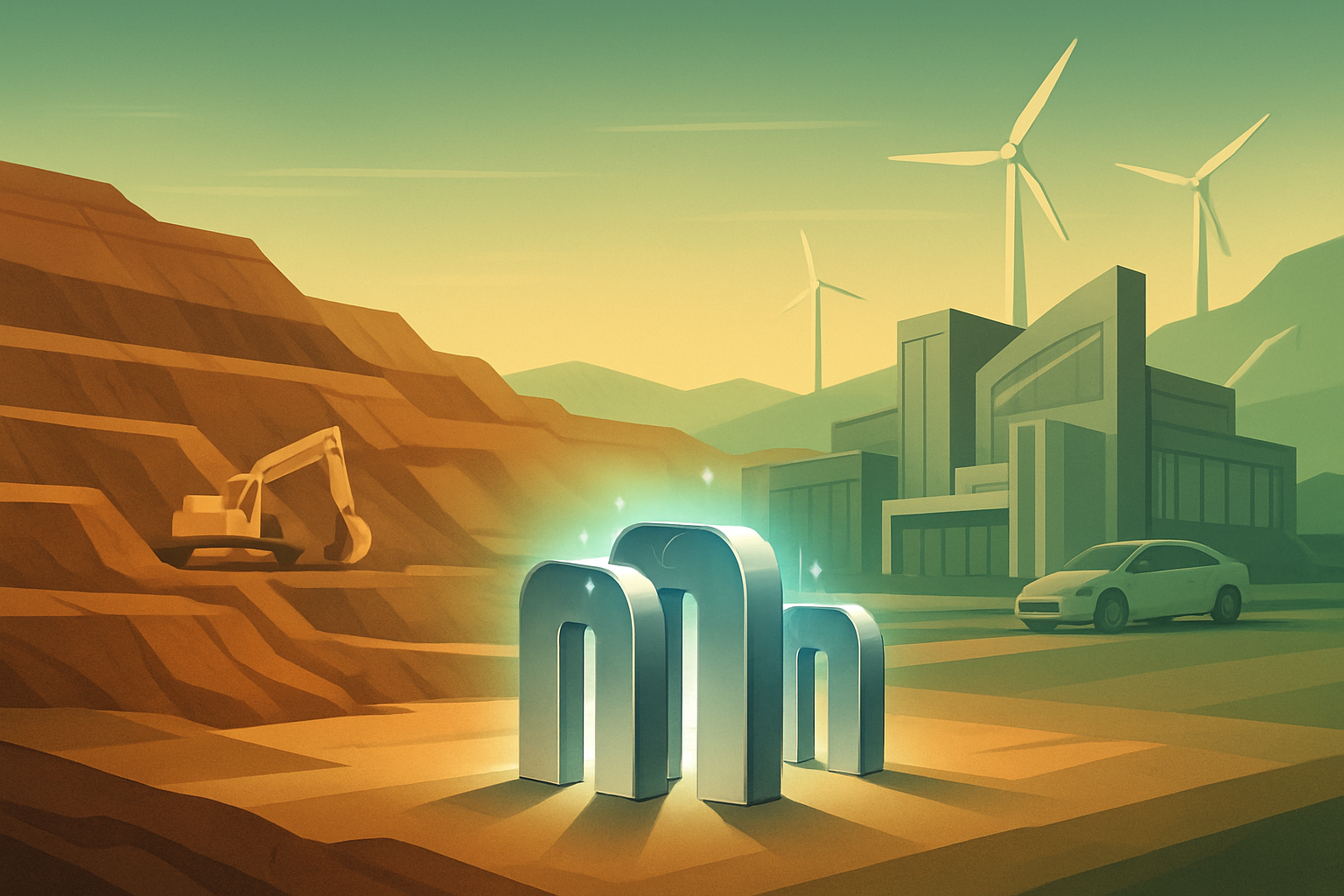
    As of January 26, 2026, the global race for mineral sovereignty has reached a fever pitch, and no company finds itself more squarely at the center of this geopolitical storm than USA Rare Earth, Inc. (Nasdaq: USAR). Once a speculative venture aiming to revive the American "mine-to-magnet" supply chain, USAR has evolved into a strategic national asset. Today's landmark announcement of a $1.6 billion U.S. government investment package—comprised of direct grants and senior secured loans—marks the largest federal intervention in the critical minerals sector since the Second World War.

    This capital infusion is not merely a corporate milestone; it is a decisive move by the U.S. Department of Commerce to break a decades-long Chinese monopoly on the rare earth elements (REEs) essential for electric vehicles (EVs), wind turbines, and advanced defense systems. With its flagship Round Top project in Texas and a newly commissioned magnet facility in Oklahoma, USA Rare Earth is attempting a feat of vertical integration that has eluded Western companies for thirty years. This feature explores the company's trajectory, its financial standing, and whether it can truly become the "Exxon of the Green Revolution."

    Historical Background

    The story of USA Rare Earth began with a recognition of the strategic vulnerability inherent in the global supply chain. Founded as a private entity, the company’s foundational move was the acquisition of an 80% interest in the Round Top Heavy Rare Earth and Critical Minerals Project in Sierra Blanca, Texas, in partnership with Texas Mineral Resources Corp (OTCQB: TMRC).

    Throughout the early 2020s, USAR focused on a "mine-to-magnet" philosophy, realizing that simply mining ore was insufficient if the processing and manufacturing capabilities remained in China. In 2020, the company purchased the equipment from the only neodymium-iron-boron (NdFeB) magnet plant in the U.S., which had been shuttered years prior, and began planning its revival.

    The company’s transformation accelerated in March 2025, when it successfully went public on the Nasdaq through a merger with Inflection Point Acquisition Corp. This IPO provided the necessary "dry powder" to scale its processing technologies and finalize the acquisition of Less Common Metals (LCM) in the UK and France, cementing USAR’s presence on both sides of the Atlantic.

    Business Model

    USA Rare Earth operates a uniquely vertically integrated business model designed to capture value at every stage of the REE lifecycle. Unlike traditional miners that sell raw concentrate to third-party refiners (often in China), USAR’s model is built on four pillars:

    1. Extraction: The Round Top deposit in Texas provides a massive, 130-year resource of heavy rare earths (Dysprosium, Terbium) and lithium.
    2. Processing & Separation: Utilizing proprietary Continuous Ion Exchange (CIX) technology, the company separates mixed rare earth oxides into high-purity individual elements at its Colorado facility.
    3. Metal & Alloy Production: Through its subsidiary LCM, the company converts these oxides into specialized metals and alloys.
    4. Magnet Manufacturing: The final and most lucrative stage occurs at its Stillwater, Oklahoma plant, where metals are transformed into sintered NdFeB magnets for industrial and automotive customers.

    By controlling the entire chain, USAR aims to eliminate "midstream leak" where domestic ore is shipped abroad for processing, thereby securing higher margins and ensuring supply chain transparency for Tier 1 OEMs.

    Stock Performance Overview

    Since its public debut in March 2025 at an initial price of $10.00 per share, USAR has experienced significant volatility, typical of the "Critical Mineral 2.0" era.

    • 1-Year Performance: In the past 12 months, the stock has risen 85%, buoyed by the completion of its Stillwater facility and today’s $1.6 billion government announcement.
    • Post-IPO Trajectory: After hitting a low of $7.50 in mid-2025 amid concerns over permitting delays, the stock staged a massive rally in late 2025 as the U.S. government intensified its "De-risking" policy toward China.
    • Current Valuation: As of January 26, 2026, USAR trades at approximately $18.40 per share, with a market capitalization of $3.3 billion. While the company is still pre-revenue from its mining operations, the market is pricing in the strategic "floor" provided by the U.S. government’s 16% potential equity stake.

    Financial Performance

    USAR’s balance sheet underwent a radical transformation today. Prior to the government deal, the company was burning approximately $45 million per quarter on capital expenditures and R&D.

    Key Financial Metrics (Estimated Jan 2026):

    • Cash Position: Post-investment, the company sits on roughly $1.9 billion in liquidity (including the $1.3 billion loan facility).
    • Government Stake: The U.S. government has secured warrants for up to 17.6 million shares, effectively making the taxpayer a major partner in the enterprise.
    • Projected Revenue: Analysts expect the first significant revenue from magnet sales to commence in H2 2026, with a massive ramp-up in 2028 when the Round Top mine comes online.
    • Debt-to-Equity: The $1.3 billion senior secured loan increases the company's leverage significantly, but the 15-year term and subsidized interest rates provide a manageable runway.

    Leadership and Management

    The leadership of USA Rare Earth was "industrialized" in late 2025 to prepare for the massive scale-up.

    • Barbara Humpton (CEO): The former CEO of Siemens USA (OTC: SIEGY) took the helm in October 2025. Her deep ties to the Department of Defense and Department of Energy were instrumental in securing the $1.6 billion federal package.
    • Thayer Smith (President): A veteran of the company’s early years, Smith remains the architect of the operational strategy. His focus is on the "technical de-risking" of the CIX separation technology and the mine build-out.
    • Board of Directors: The board includes former high-ranking officials from the U.S. Geological Survey and veterans from the automotive and defense sectors, reflecting the company’s dual role as a commercial entity and a national security asset.

    Products, Services, and Innovations

    The crown jewel of USAR’s innovation is its Continuous Ion Exchange (CIX) processing. Traditional solvent extraction is chemically intensive and environmentally taxing. CIX allows for the separation of rare earths with a much smaller footprint and lower water consumption, a critical factor for the arid West Texas climate.

    In Stillwater, Oklahoma, the company’s magnet facility utilizes advanced sintering techniques to produce magnets with high coercivity—meaning they can operate at the high temperatures required for EV motors without losing their magnetic properties. Furthermore, USAR is developing a "circular" magnet recycling program, allowing it to recover REEs from end-of-life electronics and reintroduce them into the manufacturing stream.

    Competitive Landscape

    USAR operates in a landscape dominated by three major forces:

    1. China (State-Owned Enterprises): China still controls over 85% of global rare earth processing. Their ability to flood the market and crash prices remains the primary external threat to USAR.
    2. MP Materials (NYSE: MP): The current domestic leader. While MP Materials has a head start in mining at Mountain Pass, USAR’s focus on heavy rare earths (Dysprosium/Terbium) differentiates it, as MP primarily produces light rare earths (Neodymium/Praseodymium).
    3. Lynas Rare Earths (ASX: LYC): The largest producer outside of China. USAR competes with Lynas for non-Chinese off-take agreements with European and American automakers.

    Industry and Market Trends

    The "Great Re-Shoring" is the dominant trend of 2026. As Western governments realize that the energy transition is impossible without REEs, industrial policy has replaced pure free-market dynamics.

    • EV Proliferation: Despite a plateau in some regions, the transition to permanent magnet motors in EVs continues to drive a 12% CAGR in NdFeB demand.
    • Geopolitical Bifurcation: The world is splitting into two mineral blocs. USAR is the flagship of the "Mineral Security Partnership" (MSP), an alliance of 14 countries aiming to build supply chains independent of Beijing.

    Risks and Challenges

    Investing in USAR is not without significant peril:

    • Execution Risk: Building a multi-billion-dollar mine and processing plant simultaneously is a Herculean task. Any delays at Round Top could starve the Oklahoma magnet plant of domestic feedstock.
    • Price Volatility: Rare earth prices are notoriously opaque and volatile. A sudden drop in prices orchestrated by Chinese state-owned firms could hurt USAR’s margins.
    • Regulatory Hurdles: Despite federal support, the Round Top project must navigate a complex web of environmental assessments and local permitting in Texas.

    Opportunities and Catalysts

    The primary catalyst is the Accelerated Mine Plan, which aims to bring Round Top into commercial production by 2028.

    • Defense Contracts: With the U.S. military moving toward a "China-free" supply chain for its F-35 fighter jets and Virginia-class submarines, USAR is perfectly positioned to secure high-margin defense off-take agreements.
    • Strategic Stockpiling: The U.S. government’s move to create a National Defense Stockpile of permanent magnets provides a guaranteed "buyer of last resort" for USAR’s production.

    Investor Sentiment and Analyst Coverage

    Wall Street sentiment has shifted from "skeptical" to "strategic." Goldman Sachs and Morgan Stanley have recently initiated coverage on USAR, with "Buy" ratings predicated on the company’s unique position as a government-backed monopoly-challenger.

    Institutional ownership has surged to 45%, with major positions held by BlackRock and the Vanguard Group. On retail forums, USAR is often discussed as a "generational hold," with investors betting on the long-term inevitability of mineral de-coupling from China.

    Regulatory, Policy, and Geopolitical Factors

    The $1.6 billion investment is part of a broader suite of policies including the Inflation Reduction Act (IRA) and the CHIPS and Science Act. These laws provide production tax credits (Section 45X) that essentially subsidize the manufacturing of magnets on U.S. soil.

    Geopolitically, the U.S. has signaled that it will use the "Defense Production Act Title III" to ensure that companies like USAR remain solvent even during periods of market manipulation. This "sovereign backstop" is perhaps the company’s greatest competitive advantage.

    Conclusion

    As of January 26, 2026, USA Rare Earth (Nasdaq: USAR) stands as a bold experiment in industrial policy. The $1.6 billion U.S. government investment has effectively "de-risked" the company’s capital structure, providing a bridge to 2028 when its domestic mining operations are slated to begin.

    For investors, USAR represents a high-stakes bet on the future of the American energy transition. While operational and geopolitical risks remain substantial, the company’s "mine-to-magnet" vertical integration and unprecedented federal backing make it the most significant player in the Western quest for mineral independence. Investors should closely watch the commissioning of the Stillwater plant in Q1 2026 and the progress of environmental permitting at Round Top as the next major indicators of success.


    This content is intended for informational purposes only and is not financial advice.