
Tag: Constellation Energy

  • The Energy-AI Nexus: A Deep Dive into Constellation Energy (CEG) as of April 2026

    The Energy-AI Nexus: A Deep Dive into Constellation Energy (CEG) as of April 2026

    Today’s Date: April 1, 2026

    Introduction

    As of early 2026, few companies sit at the intersection of heavy industry and the digital frontier as prominently as Constellation Energy (NASDAQ: CEG). Once considered a staid utility spin-off, the Baltimore-headquartered firm has transformed into the primary power broker for the artificial intelligence revolution. By providing the "firm," carbon-free electricity required by massive data center campuses, Constellation has redefined what it means to be an independent power producer. However, as the stock navigates a volatile 2026 following news of grid interconnection hurdles, investors are asking whether the "Energy-AI Nexus" narrative remains intact or if the company's valuation has outpaced the physical reality of the U.S. power grid.

    Historical Background

    Constellation’s modern story began on February 1, 2022, when it officially separated from Exelon Corporation (NASDAQ: EXC). While the company traces its corporate lineage back to 1816 and the Gas Light Company of Baltimore, the spin-off was a strategic maneuver to unlock value. Exelon retained the regulated utility businesses, while Constellation took the competitive generation fleet, including the largest fleet of nuclear power plants in the United States.

    Between 2022 and 2024, Constellation spent much of its time stabilizing its balance sheet and advocating for federal support for nuclear power. This advocacy bore fruit with the passage of the Inflation Reduction Act (IRA), which for the first time provided federal tax credits for existing nuclear facilities. This legislative win turned nuclear plants from "at-risk" assets into the crown jewels of the American energy transition.

    Business Model

    Constellation operates a dual-pronged business model that blends massive generation capacity with a sophisticated retail and marketing arm.

    • Generation: The core of the company is its generation fleet, dominated by nuclear power. Following the landmark $16.4 billion acquisition of Calpine Corporation in January 2026, Constellation’s portfolio now includes significant natural gas and geothermal assets. This diversification allows the company to provide "firming" services—balancing the constant output of nuclear with flexible gas generation to meet the variable needs of the grid.
    • Commercial & Industrial (C&I) Marketing: Constellation is the leading energy supplier to large businesses in the U.S., serving roughly 80% of the Fortune 100. Rather than just selling electrons, the company sells "carbon-free energy solutions," helping corporations like Microsoft, Google, and Meta meet their strict sustainability targets through long-term Power Purchase Agreements (PPAs).

    Stock Performance Overview

    The journey of CEG stock has been nothing short of parabolic.

    • 1-Year Performance: Over the last 12 months, the stock saw a meteoric rise to an all-time high of $413.00 in October 2025, driven by the announcement of the Microsoft-Three Mile Island deal. However, the first quarter of 2026 has been a period of cooling, with the stock trading at $275.00 as of April 1, 2026—a roughly 30% retreat from its peak.
    • 5-Year Performance: Since its 2022 spin-off at approximately $50, CEG has delivered a return of roughly 450%, vastly outperforming the Utilities Select Sector SPDR Fund (NYSE: XLU), which returned roughly 25% in the same period.
    • 10-Year Context: While the ticker CEG has only existed in its current form since 2022, the legacy of its assets reflects a shift from a decade of stagnation in the "shale gas era" to a premium valuation in the "clean energy era."

    Financial Performance

    In its most recent financial update on March 31, 2026, Constellation provided 2026 full-year earnings guidance that caught the market off-guard.

    • Earnings Per Share (EPS): The company guided for $11.00 to $12.00 per share for 2026. While this represents significant year-over-year growth, it fell slightly below the high-end analyst expectations of $11.60, contributing to the recent share price soft-spot.
    • Revenue and Margins: Revenue for 2025 reached $26.85 billion, with management projecting a climb toward $30 billion in 2026 following the full integration of Calpine. Adjusted operating margins have stabilized around 12-14%, though the company targets a 20% CAGR for base EPS through 2029.
    • Dividends and Buybacks: Management remains committed to a shareholder-friendly policy, maintaining a 10% annual dividend growth target and actively executing a multi-billion dollar share buyback program.

    Leadership and Management

    Joe Dominguez, President and CEO, is widely credited with the company’s pivot to the AI-energy trade. Dominguez has successfully positioned Constellation as a policy leader in Washington D.C., and a strategic partner to Silicon Valley. His leadership team is noted for its "capital-light" expansion strategy—using existing assets and long-term contracts rather than speculative new-builds to drive growth. The management's reputation for operational excellence in nuclear safety and reliability remains a core pillar of the company’s investment thesis.

    Products, Services, and Innovations

    Innovation at Constellation is focused on the reliability and tracking of carbon-free energy.

    • Crane Clean Energy Center (Three Mile Island): The most publicized project is the restart of the 835 MW Unit 1 reactor, dedicated entirely to Microsoft (NASDAQ: MSFT). This project represents a "new model" for funding nuclear life extensions through private corporate contracts.
    • Pink Hydrogen: At its Nine Mile Point facility, Constellation is pioneering "pink hydrogen" production using nuclear energy. This could serve as a future feedstock for decarbonizing heavy industry.
    • Hourly Matching: Constellation’s proprietary software allows customers to verify that their energy usage is matched by carbon-free generation every single hour of the day, a significantly higher standard than traditional annual offsets.

    Competitive Landscape

    Constellation faces competition from both traditional utilities and independent power producers (IPPs).

    • Vistra Corp (NYSE: VST): Vistra is CEG’s most direct rival. Following its acquisition of Energy Harbor, Vistra has its own substantial nuclear fleet. As of early 2026, Vistra trades at a slightly higher P/E multiple than CEG, as investors favor its mix of retail scale and nuclear assets in the Texas market.
    • NextEra Energy (NYSE: NEE): While NextEra is the leader in renewables, it lacks the massive "base-load" nuclear capacity that CEG offers. For AI data centers that require 99.9% uptime, CEG’s nuclear fleet is often preferred over NextEra’s solar and wind assets.
    • Public Service Enterprise Group (NYSE: PEG): PSEG is a strong regional player in the PJM (Mid-Atlantic) market with its own nuclear plants, but it lacks Constellation's national retail reach and aggressive M&A strategy.

    Industry and Market Trends

    The "Super-Cycle" of electricity demand is the dominant trend of 2026. After two decades of flat electricity demand in the U.S., the combination of AI data centers, domestic semiconductor manufacturing (CHIPS Act), and electric vehicle adoption has led to a projected 5-10% increase in load across major markets. This scarcity of reliable power has shifted the "power of the purse" from the buyers of electricity to the generators.

    Risks and Challenges

    Despite its strengths, Constellation is currently grappling with several headwinds:

    • Grid Interconnection Delays: In March 2026, reports emerged that PJM (the regional grid operator) is facing significant delays in connecting new large-scale projects to the grid. This has pushed back the expected full operational date of some data center tie-ins to 2030 or 2031, cooling the "near-term" hype.
    • Refueling Outages: In 2025, a higher volume of scheduled nuclear refueling outages impacted net income. While these are necessary for long-term operations, they introduce quarterly volatility.
    • Market Concentration: A significant portion of CEG’s growth narrative is tied to a few "hyperscaler" customers (Microsoft, Google, Meta). Any pullback in AI capital expenditure by these firms would directly impact Constellation’s PPA pipeline.

    Opportunities and Catalysts

    • Data Center On-Siting: The ultimate "holy grail" for Constellation is "behind-the-meter" data centers—placing data centers directly on the site of nuclear plants to bypass the congested public grid. If regulatory hurdles for these co-located projects are cleared in 2026, it could trigger a significant stock re-rating.
    • Uprates: Management is exploring "uprating" existing reactors—spending capital to increase the power output of current plants. This is often more cost-effective than building new generation.
    • Further Consolidation: Having integrated Calpine, Constellation remains a potential buyer for smaller renewable portfolios or distressed fossil-fuel assets that can be converted to "firming" capacity.

    Investor Sentiment and Analyst Coverage

    As of April 2026, Wall Street maintains a "Buy" or "Overweight" consensus on CEG, though the tone has shifted from "euphoric" to "rational."

    • Institutional Presence: Institutional ownership remains high at nearly 70%, with Vanguard and BlackRock holding the largest stakes.
    • Retail Sentiment: On social platforms, CEG is often discussed alongside "AI picks" like NVIDIA, reflecting its status as the "picks and shovels" play for the energy requirements of the GPU revolution.
    • Price Targets: Most analysts have lowered their near-term price targets to the $350–$380 range (down from $420+ in late 2025) to account for the grid-connection delays.

    Regulatory, Policy, and Geopolitical Factors

    The Inflation Reduction Act (IRA) is the bedrock of CEG's valuation. The nuclear Production Tax Credit (PTC) provides a price floor of roughly $40 to $43.75 per MWh (adjusted for inflation). This ensures that even if market power prices crash, Constellation's nuclear fleet remains profitable.

    Geopolitically, the push for "Energy Sovereignty" has benefited Constellation. The U.S. government’s focus on domestic nuclear fuel supply chains has reduced the company’s long-term reliance on imported uranium, particularly from Russia, mitigating a key supply chain risk that plagued the industry in 2022-2023.

    Conclusion

    Constellation Energy enters the second quarter of 2026 in a state of transition. The company has successfully evolved from a utility subsidiary to a primary infrastructure backbone for the AI economy. Its fleet of nuclear, gas, and geothermal assets is arguably the most valuable collection of non-regulated power assets in North America.

    However, the recent 30% pullback in share price serves as a reminder that the path to a carbon-free, AI-powered future is physically constrained by an aging electric grid. For the long-term investor, the current valuation of $275.00 may represent a compelling entry point into the "Energy-AI Nexus," provided they have the patience to wait for grid infrastructure to catch up with digital ambition. The key metrics to watch for the remainder of the year will be the progress of the Crane Clean Energy Center restart and the resolution of PJM interconnection queues.


    This content is intended for informational purposes only and is not financial advice.
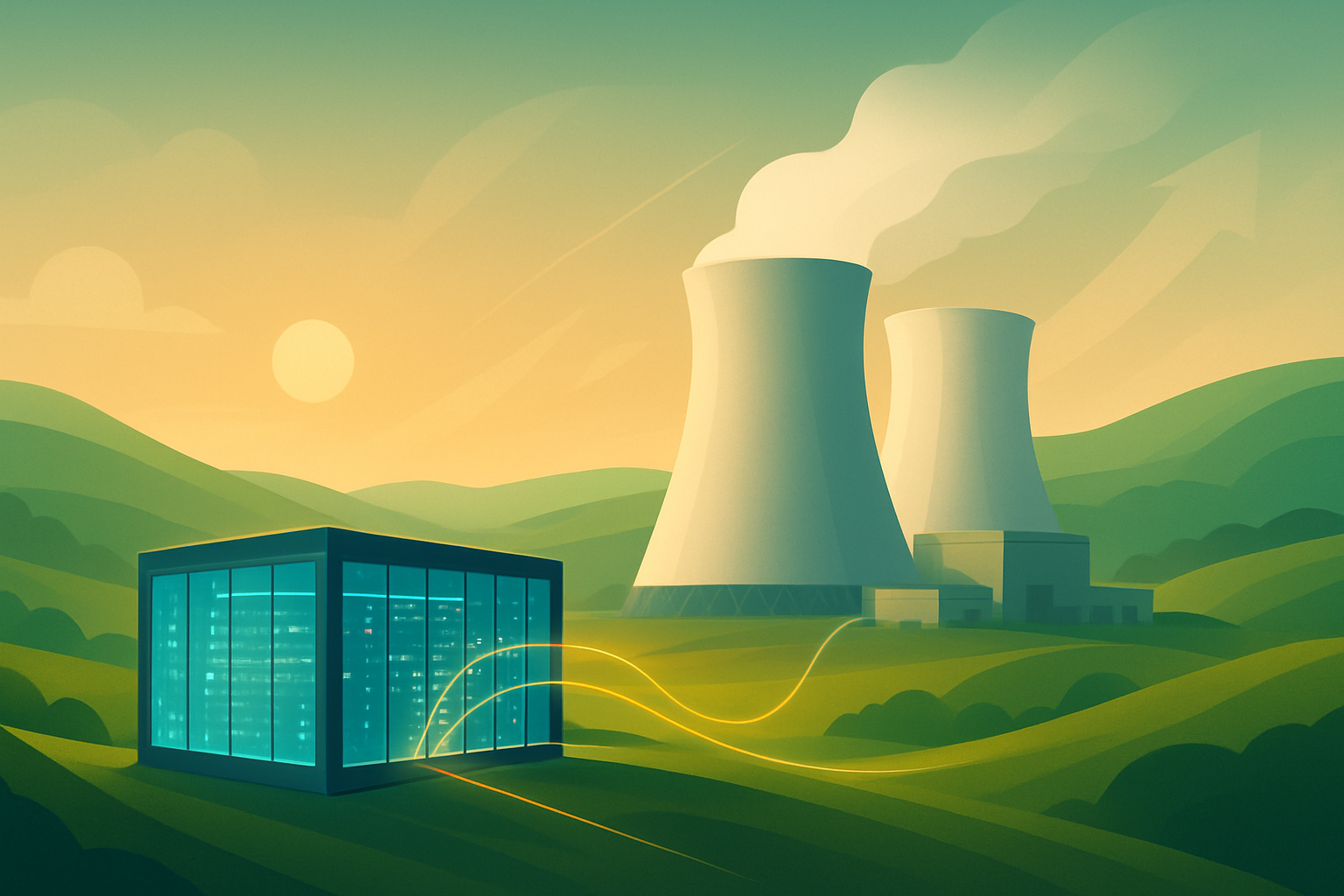
  • The Nuclear AI Powerhouse: A Deep-Dive into Constellation Energy (CEG)

    The Nuclear AI Powerhouse: A Deep-Dive into Constellation Energy (CEG)

    As of March 23, 2026, the global energy landscape is undergoing its most significant transformation since the Industrial Revolution. At the center of this shift—where artificial intelligence (AI) infrastructure meets the urgent demand for decarbonization—stands Constellation Energy Corporation (Nasdaq: CEG). Once considered a steady but unglamorous utility spinoff, Constellation has evolved into a high-growth "clean energy infrastructure" titan.

    With the largest nuclear fleet in the United States and a strategic focus on providing the "24/7 carbon-free energy" (CFE) required by Silicon Valley’s power-hungry data centers, CEG has become a bellwether for the modern energy transition. This article provides a deep-dive into the company’s history, its dominance in the nuclear sector, and the financial and regulatory catalysts that have made it a favorite among institutional investors.

    Historical Background

    Constellation Energy’s current form began on February 1, 2022, following its strategic spinoff from Exelon Corporation (Nasdaq: EXC). The separation was designed to liberate Constellation’s competitive power generation and retail businesses from the slower-growing, highly regulated "poles and wires" utility operations of Exelon.

    While the "Constellation" name has historical roots dating back to the 19th century in Baltimore, the 2022 debut marked a fresh start. Starting with a market capitalization of approximately $17 billion and a share price of roughly $53, the company set out to prove that carbon-free nuclear power was an undervalued asset in a net-zero world. Since then, the company has expanded its reach significantly, most notably through the 2025-2026 integration of Calpine, which boosted its total generating capacity to approximately 55,000 megawatts (MW).

    Business Model

    Constellation operates a unique, integrated "generation-to-retail" model. Unlike traditional utilities that are rewarded for building infrastructure, Constellation’s revenue is tied to its ability to generate and sell power efficiently in competitive markets.

    • Nuclear Generation: The bedrock of the company is its massive nuclear fleet, which produces roughly 10% of all carbon-free electricity in the U.S. These plants provide "baseload" power—electricity that runs 24/7—making them far more reliable for industrial users than intermittent wind or solar.
    • Retail Energy: Constellation is the leading retail supplier of electricity and natural gas in the U.S., serving approximately 2.5 million customers. This includes three-quarters of the Fortune 100.
    • Carbon-Free Focus: Approximately 90% of the company’s total output is carbon-free, sourced from nuclear, hydro, wind, and solar. This has allowed CEG to pioneer "24/7 CFE" products, which allow corporate clients to match their hourly electricity usage with carbon-free production.

    Stock Performance Overview

    The stock performance of CEG since its 2022 spinoff has been nothing short of spectacular, outpacing the broader S&P 500 by a wide margin.

    • Since Spinoff (Feb 2022 – March 2026): From its $53 debut, the stock saw a parabolic rise as the market began to price in the "AI power supercycle." As of late March 2026, the stock trades near $282.00, representing a roughly 430% gain in four years.
    • Recent Volatility: The stock hit an all-time high of $402.95 in October 2025. Since then, it has consolidated as investors balanced the excitement over data center deals with rising interest rates and regulatory debates regarding grid interconnection. Despite this pullback, its 5-year CAGR remains one of the highest in the energy sector.

    Financial Performance

    Constellation’s financial profile has shifted from "utility-like" to "growth-infrastructure," characterized by strong free cash flow and rising margins.

    • Earnings: For the full year 2025, CEG reported Adjusted Operating Earnings of $9.39 per share, a significant jump from 2024 levels.
    • Revenue & Margins: The company generated approximately $25.53 billion in trailing twelve-month (TTM) revenue. Its operating margin sits at roughly 9.6%, with a net margin of 9.1%.
    • Valuation: As of March 2026, CEG trades at a "nuclear premium." Its trailing P/E ratio is approximately 38.1x–44.5x, significantly higher than more fossil-fuel-heavy peers.
    • Balance Sheet: Management maintains a disciplined Debt-to-Equity ratio of 0.60, providing the flexibility to fund massive projects like the Three Mile Island restart.

    Leadership and Management

    The architect of Constellation’s rapid ascent is CEO Joseph Dominguez. A former mechanical engineer and attorney, Dominguez previously served as the CEO of ComEd and held high-ranking roles at Exelon.

    Dominguez is widely credited with three major strategic wins:

    1. Policy Advocacy: Successfully lobbying for the Inclusion of nuclear power in the Inflation Reduction Act (IRA).
    2. The AI Pivot: Recognizing early that hyperscalers (Microsoft, Google, Meta) would need nuclear power for their AI clusters.
    3. The "Crane" Project: Securing the landmark deal to restart Three Mile Island Unit 1, proving that mothballed nuclear assets could be brought back to life with corporate backing.

    Products, Services, and Innovations

    Beyond traditional power generation, Constellation is investing heavily in the future of energy technology:

    • Hydrogen Production: At its Nine Mile Point facility, CEG operates a 1.25 MW hydrogen pilot that produces 560 kg of "clean hydrogen" per day. This is a crucial step toward decarbonizing heavy industry.
    • Fusion Energy: In a forward-looking move, Constellation serves as the power marketer for Microsoft’s deal with Helion Energy, a fusion startup. This positions CEG as the grid-integrator for next-generation nuclear tech.
    • Small Modular Reactors (SMRs): CEG is actively exploring the deployment of SMRs at existing sites to increase capacity without the decade-long timelines of traditional large-scale reactors.

    Competitive Landscape

    While Constellation is the leader in the carbon-free space, it faces stiff competition from other Independent Power Producers (IPPs):

    • Vistra Corp (Nasdaq: VST): Vistra is the primary rival, having also moved aggressively into nuclear through its acquisition of Energy Harbor. Vistra typically trades at a lower valuation but offers a higher free cash flow yield.
    • NRG Energy (Nasdaq: NRG): More focused on the retail consumer market and natural gas, NRG is also attempting to capture the data center tailwind but lacks the pure-play nuclear "moat" of Constellation.
    • Talen Energy (Nasdaq: TLN): A smaller but agile competitor that set the market precedent by selling its Susquehanna data center campus to Amazon (AWS).

    Industry and Market Trends

    The "Energy-Tech Convergence" is the dominant trend of 2026. Data centers, which once accounted for a small fraction of grid demand, are now projected to double their consumption by 2030 due to generative AI training.

    This has led to a "Nuclear Renaissance." For decades, nuclear power was plagued by high costs and public skepticism. Today, because it is the only carbon-free source capable of 24/7 "baseload" operation, it is being treated as a strategic national asset. This shift has changed nuclear power plants from "liabilities" to "irreplaceable infrastructure."

    The PJM Factor: Capacity Markets

    A significant portion of Constellation's recent financial success stems from its performance in the PJM Interconnection capacity auctions. PJM is the regional transmission organization that coordinates the movement of wholesale electricity in 13 states and D.C.

    In the most recent 2026/2027 and 2027/2028 auctions, capacity prices cleared at record highs (up to $333/MW-day) due to supply tightness and the retirement of fossil-fuel plants. Because Constellation cleared nearly 18,000 MW in these auctions, it has secured approximately $2.2 billion in highly visible, high-margin revenue for the coming years, providing a "floor" for its earnings.

    Risks and Challenges

    Despite the bullish narrative, Constellation faces several significant risks:

    • Interconnection Bottlenecks: Regulators are increasingly concerned about "behind-the-meter" deals (where a data center connects directly to a power plant). There is ongoing litigation and regulatory debate over whether these deals unfairly shift grid maintenance costs onto residential ratepayers.
    • Operational Risk: Nuclear plants are complex and aging. Unexpected outages—such as the brief shutdowns seen in late 2025—can lead to massive costs as the company is forced to buy expensive power on the open market to fulfill its retail contracts.
    • Public and Political Backlash: As electricity prices rise for the average consumer, there is a risk of "windfall profit taxes" or unfavorable state-level legislation in key markets like Illinois or Pennsylvania.

    Opportunities and Catalysts

    The primary catalyst for Constellation in 2026 is the Crane Clean Energy Center (formerly Three Mile Island Unit 1).

    • The Microsoft Deal: Under a 20-year power purchase agreement, Microsoft will purchase 100% of the output from the restarted unit to power its data centers. This "bespoke" contract essentially bypasses volatile commodity prices, guaranteeing high-margin revenue for two decades.
    • M&A Potential: With its high stock price and strong balance sheet, CEG is frequently mentioned in rumors regarding further consolidation in the clean energy space or partnerships with SMR developers like TerraPower.

    Regulatory, Policy, and Geopolitical Factors

    The Inflation Reduction Act (IRA) remains the most important piece of policy for CEG. The act provides a nuclear Production Tax Credit (PTC) that effectively sets a floor price for nuclear power. This "safety net" has de-risked the entire nuclear industry, allowing CEG to invest in long-term projects like the TMI restart with confidence.

    Geopolitically, the push for energy independence has made nuclear power a matter of national security. As the U.S. looks to decouple from foreign energy dependencies, the domestic nuclear fleet—and Constellation as its custodian—gains further strategic value.

    Investor Sentiment and Analyst Coverage

    Wall Street remains largely bullish on CEG. As of early 2026, the consensus rating is a "Moderate Buy."

    • Institutional Giants: Vanguard, BlackRock, and State Street remain the largest holders. High-profile hedge funds like Coatue Management and Citadel have also increased their positions, viewing CEG as a "proxy" for AI infrastructure.
    • Analyst Targets: While firms like JPMorgan and Wells Fargo recently moderated their price targets to around $400–$460 to account for the 2025 rally, they still see substantial upside (40%+) from current levels. Analysts cite the "irreplaceable" nature of CEG's assets as a key reason for the premium valuation.

    Conclusion

    Constellation Energy (Nasdaq: CEG) has successfully navigated the transition from a traditional utility spinoff to a high-octane infrastructure play at the heart of the AI revolution. By leveraging the nation's largest nuclear fleet and securing landmark deals with the world's most powerful tech companies, it has redefined the value of carbon-free baseload power.

    While regulatory challenges regarding grid fairness and the operational risks of nuclear power remain, the company’s strong cash flow, strategic leadership under Joseph Dominguez, and the "safety net" of the Inflation Reduction Act provide a robust foundation. For investors, CEG is no longer just a power company; it is a critical component of the digital age’s backbone.


    This content is intended for informational purposes only and is not financial advice.