Tag: Data Centers

  • The Backbone of AI: A Deep Dive into Arista Networks (ANET) and the Ethernet Revolution

    The Backbone of AI: A Deep Dive into Arista Networks (ANET) and the Ethernet Revolution

    As of February 16, 2026, the financial markets are witnessing a pivotal moment in the infrastructure of artificial intelligence. While NVIDIA remains the face of AI compute, Arista Networks (NYSE: ANET) has emerged as the indispensable architect of the high-speed data highways that connect those chips. Following a blowout Q4 2025 earnings report last week, Arista’s stock surged by more than 10%, solidifying its position as a top-tier performer in the technology sector.

    Arista’s recent momentum is not merely a short-term spike; it represents a fundamental market shift. For years, the debate in AI data centers focused on InfiniBand—a proprietary networking technology dominated by NVIDIA—versus Ethernet. Today, the verdict is increasingly leaning toward Ethernet for massive-scale AI clusters, a domain where Arista is the undisputed leader. With its software-first approach and a client list that includes the world’s largest "Cloud Titans," Arista is navigating the AI revolution with surgical precision.

    Historical Background

    Arista Networks was founded in 2004 by three industry legends: Andy Bechtolsheim (the first investor in Google and co-founder of Sun Microsystems), David Cheriton (a billionaire Stanford professor), and Kenneth Duda. The company was born from a realization that legacy networking hardware was too rigid for the burgeoning era of cloud computing.

    In 2008, Jayshree Ullal, a former high-ranking executive at Cisco, joined as CEO. Under her leadership, Arista focused on a "software-driven" philosophy, building their entire product line around a single operating system called EOS (Extensible Operating System). This was a radical departure from competitors like Cisco, which managed multiple disparate operating systems. Arista went public in 2014, and over the subsequent decade, it evolved from a "Cisco killer" in the financial services niche into the primary networking supplier for the global hyperscale cloud market.

    Business Model

    Arista’s business model is built on high-performance switching and routing platforms, but its secret sauce is software. Unlike traditional hardware vendors that sell boxes, Arista sells a unified software environment.

    • Revenue Sources: The company generates roughly 85% of its revenue from product sales (switches and routers) and 15% from recurring service and software subscriptions.
    • Customer Base: Arista’s revenue is highly concentrated among "Cloud Titans"—specifically Microsoft and Meta Platforms. As of 2025, these two giants accounted for nearly 48% of Arista’s total revenue.
    • Segments: While high-speed data center switching remains the core, Arista has successfully expanded into "Campus" networking (enterprise offices) and "Cloud Adjacent" markets, providing a holistic networking stack from the data center to the edge.

    Stock Performance Overview

    Over the past decade, ANET has been one of the most consistent wealth-creators in the tech sector.

    • 10-Year Horizon: Investors who bought in early 2016 have seen gains exceeding 1,200%, vastly outperforming the S&P 500 and even most semiconductor indices.
    • 5-Year Horizon: The stock has benefited immensely from the post-pandemic digital acceleration and the AI boom, with a CAGR (Compound Annual Growth Rate) of approximately 45%.
    • Recent Performance: The 10% gain in early February 2026 pushed the stock to all-time highs, reflecting the market’s realization that Arista is capturing a larger share of the AI "back-end" network spend than previously anticipated.

    Financial Performance

    Arista’s financial health is a masterclass in operating leverage. In its Q4 2025 results, the company achieved a historic milestone: its first-ever $1 billion quarterly net income.

    • Revenue Growth: 2025 revenue hit $9.01 billion, a 28.6% increase year-over-year.
    • Profitability: The company maintains an enviable non-GAAP gross margin of 64.6% and an operating margin of 48.2%.
    • AI Trajectory: Most importantly, Arista doubled its AI networking revenue target for 2026 to $3.25 billion, up from an earlier forecast of $1.5 billion.
    • Balance Sheet: Arista remains debt-free with a cash hoard exceeding $6 billion, providing it with the flexibility to navigate supply chain fluctuations or pursue strategic acquisitions.

    Leadership and Management

    The stability of Arista’s leadership is a key pillar of investor confidence. CEO Jayshree Ullal has steered the company for nearly 18 years, making her one of the longest-tenured and most respected female CEOs in technology. She is flanked by CTO Kenneth Duda and Chairman Andy Bechtolsheim, ensuring the company remains at the bleeding edge of engineering.

    Management is known for its "under-promise and over-deliver" culture. They have historically been conservative with guidance, which often leads to the massive post-earnings "beats" that drive stock surges like the one seen last week.

    Products, Services, and Innovations

    Arista’s competitive advantage lies in its ability to handle the "east-west" traffic of modern data centers—the communication between servers—which has exploded with AI.

    • 800G Adoption: Arista is currently in the volume ramp phase of its 800-Gigabit Ethernet products. The 7800 R4 Spine, launched in late 2025, is the flagship modular chassis designed for massive AI clusters.
    • 1.6T Roadmap: During the February 2026 earnings call, management confirmed that 1.6-Terabit switching is "imminent," with production deployments expected by the end of 2026.
    • EOS and CloudVision: Arista’s software allows for "hitless" upgrades and deep telemetry, meaning data centers can be updated and monitored without downtime—a critical requirement for training trillion-parameter AI models.

    Competitive Landscape

    The networking market is currently a three-horse race, though each player occupies a different lane:

    1. NVIDIA (NVDA): While NVIDIA dominates the "front-end" network (connecting GPUs) with InfiniBand, it is aggressively pushing its Spectrum-X Ethernet platform to compete with Arista.
    2. Cisco (CSCO): The legacy incumbent is attempting to pivot to AI with its Silicon One architecture. However, Arista continues to win on performance and software simplicity in the hyperscale segment.
    3. White Box/Internal Solutions: Hyperscalers like Google sometimes design their own chips. Arista counters this by offering "disaggregated" software that can run on various silicon.

    Arista’s strength is its "Switzerland" status; it works with all silicon providers (Broadcom, NVIDIA, Intel) while providing a superior software layer.

    Industry and Market Trends

    The most significant trend favoring Arista is the Ethernet for AI movement. Historically, AI training used InfiniBand because it offered lower latency. However, as AI clusters grow to 50,000 or 100,000 GPUs, the management and reliability of Ethernet become superior. The Ultra Ethernet Consortium (UEC), of which Arista is a founding member, is standardizing Ethernet for AI, effectively eroding NVIDIA's InfiniBand moat.

    Furthermore, the rise of "Specialized AI Clouds"—providers like Oracle and xAI—has created a secondary tier of high-growth customers for Arista, reducing its over-reliance on just Microsoft and Meta.

    Risks and Challenges

    No investment is without risk, and Arista faces several headwinds:

    • Customer Concentration: Despite diversification efforts, nearly half of its revenue comes from two companies. A slowdown in capex at Meta or Microsoft would be catastrophic for ANET.
    • Supply Chain / Memory: CEO Jayshree Ullal recently referred to high-bandwidth memory and advanced silicon as "the new gold." Shortages in these components can delay Arista’s product deliveries.
    • NVIDIA’s Bundling: NVIDIA has the power to bundle its GPUs with its own networking gear, potentially freezing Arista out of some deployments.

    Opportunities and Catalysts

    • 1.6T Cycle: The upcoming transition from 800G to 1.6T in late 2026 and 2027 represents a massive replacement cycle that will drive revenue growth for several years.
    • Enterprise AI: While hyperscalers are the current focus, Fortune 500 companies are just beginning to build their private AI clouds. Arista’s "Campus" business is well-positioned to capture this enterprise spend.
    • M&A Potential: With over $6 billion in cash, Arista could acquire specialized AI software or cybersecurity firms to further expand its margin profile and platform stickiness.

    Investor Sentiment and Analyst Coverage

    Following the February 2026 surge, analyst sentiment has reached a fever pitch. Major firms including Bank of America and Wells Fargo have raised their price targets to the $185–$190 range. Analysts are particularly impressed by Arista’s "operating leverage," noting that the company is growing its bottom line significantly faster than its headcount or R&D spend.

    Institutional ownership remains high, with heavyweights like Vanguard and BlackRock maintaining large positions. Retail sentiment is also bullish, as Arista is increasingly viewed as the safest way to play the AI infrastructure "arms race" without the volatility of the chipmakers.

    Regulatory, Policy, and Geopolitical Factors

    As a hardware company, Arista is sensitive to geopolitical tensions.

    • Manufacturing: While Arista uses contract manufacturers globally, it has been diversifying its supply chain away from China to Southeast Asia and Mexico to mitigate tariff risks.
    • CHIPS Act: Federal incentives for domestic semiconductor and hardware manufacturing provide a favorable tailwind for Arista’s R&D efforts in the United States.
    • Export Controls: Tightening restrictions on high-end AI networking gear being sold to China could limit Arista’s long-term total addressable market in that region, though current demand in the West remains more than sufficient.

    Conclusion

    Arista Networks (NYSE: ANET) stands at the nexus of the most significant technological shift of the decade. Its recent 10% stock gain is a reflection of a company that has successfully transitioned from a cloud disruptor to an AI titan.

    Investors should view Arista as a premium-priced, high-quality play on AI infrastructure. While the valuation is high, it is backed by world-class margins, a clean balance sheet, and a leadership team that has proven its ability to out-engineer and out-maneuver much larger rivals. As the world moves toward 1.6T networking and 100,000-GPU clusters, Arista’s "Ethernet-first" vision is no longer just a strategy—it is the industry standard.


    This content is intended for informational purposes only and is not financial advice. As of February 16, 2026, the author holds no position in the securities mentioned.


  • The Architecture of AI: A Deep-Dive into Vertiv Holdings (VRT) Following Record 2026 Results

    The Architecture of AI: A Deep-Dive into Vertiv Holdings (VRT) Following Record 2026 Results

    Today, February 11, 2026, the equity markets witnessed a defining moment in the artificial intelligence (AI) infrastructure cycle as Vertiv Holdings Co. (NYSE: VRT) released its fourth-quarter and full-year 2025 financial results. Long positioned as the "plumbing" of the digital age, Vertiv has transitioned into the premier architect of the AI era. With a staggering 252% year-over-year surge in organic orders and a backlog that now towers at $15 billion, the company has cemented its status as a critical beneficiary of the generative AI boom. This article explores the company’s evolution from a legacy industrial division to a high-growth technology powerhouse, analyzing the catalysts that have propelled its stock to historic highs.

    Historical Background

    The lineage of Vertiv traces back to 1946 with the founding of Liebert Corporation, a pioneer in precision cooling for mainframe computers. For decades, the business operated as a cornerstone of Emerson Electric (NYSE: EMR) under the banner of Emerson Network Power. However, in 2016, as Emerson sought to streamline its portfolio, the division was sold to Platinum Equity for $4 billion and rebranded as Vertiv.

    The company’s modern era began in February 2020, just as the global pandemic underscored the necessity of robust digital infrastructure. Vertiv went public via a merger with a Special Purpose Acquisition Company (SPAC) backed by Goldman Sachs (NYSE: GS) and David Cote, the legendary former CEO of Honeywell (NASDAQ: HON). Since its market debut, Vertiv has shed its "old economy" industrial image, aggressively pivoting toward the high-density cooling and power needs of modern data centers.

    Business Model

    Vertiv’s business model is centered on providing the "physical layer" for the world’s most mission-critical digital environments. The company generates revenue through three primary segments:

    1. Critical Infrastructure & Solutions: Accounting for approximately 78% of revenue, this segment includes power management (uninterruptible power supplies, high-voltage DC architectures) and thermal management (precision air and liquid cooling).
    2. Services & Spares: Representing roughly 22% of revenue, this is a high-margin, recurring stream that provides maintenance, remote monitoring, and performance optimization for its massive installed base.
    3. Integrated Rack Solutions: This includes server racks and power distribution units (rPDUs) designed to house the increasingly heavy and energy-hungry hardware used in AI training.

    Its customer base is a "who’s who" of the technology world, including hyperscalers like Microsoft (NASDAQ: MSFT), Alphabet (NASDAQ: GOOGL), and Meta Platforms (NASDAQ: META), alongside major colocation providers.

    Stock Performance Overview

    As of today’s market open on February 11, 2026, VRT shares are trading near $229.00, marking a roughly 15% jump on the back of today’s earnings report.

    • 1-Year Performance: The stock has appreciated by over 60%, significantly outperforming the S&P 500 as investors realized the depth of the AI-driven cooling demand.
    • 5-Year Performance: Since its 2020 SPAC merger, Vertiv has delivered a return exceeding 1,000%, a performance that rivals many of the "Magnificent Seven" tech giants.
    • Market Cap Growth: From a modest $5 billion valuation at the time of its SPAC merger, Vertiv’s market capitalization has ballooned as it transitioned from a cyclical industrial play to a structural growth leader.

    Financial Performance

    Today’s financial release was a "beat and raise" of historic proportions. For Q4 2025, Vertiv reported net sales of $2.88 billion, a 23% increase year-over-year. Adjusted diluted EPS came in at $1.36, comfortably ahead of the $1.30 consensus.

    More important to long-term investors was the 2026 guidance. Vertiv projects net sales between $13.25 billion and $13.75 billion for the upcoming year, with adjusted EPS between $5.97 and $6.07. The company’s free cash flow generation has also hit a record $1.89 billion for the full year 2025, providing the "dry powder" necessary for its aggressive R&D and M&A strategy.

    Leadership and Management

    The transformation of Vertiv is inextricably linked to its leadership. CEO Giordano (Gio) Albertazzi, who took the helm in early 2023, has been lauded for implementing the "Vertiv Operating System" (VOS). This framework has driven operational excellence, margin expansion, and a culture of accountability that was arguably lacking in the company’s early years post-spin-off.

    Supporting Albertazzi is Executive Chairman David Cote, whose presence provides institutional credibility and a focus on long-term value creation. Under this duo, Vertiv has shifted from a "reactive" equipment supplier to a "proactive" solutions partner, engaging with customers years ahead of their planned data center deployments.

    Products, Services, and Innovations

    Innovation at Vertiv is currently focused on one major hurdle: the heat generated by AI GPUs. As high-performance chips from NVIDIA (NASDAQ: NVDA) and Advanced Micro Devices (NASDAQ: AMD) move toward higher power densities, traditional air cooling is becoming obsolete.

    Vertiv’s Coolant Distribution Units (CDUs) and Direct-to-Chip (D2C) liquid cooling systems are now the industry standard. Today, the company also confirmed the finalization of its $1 billion acquisition of PurgeRite, a specialist in the mechanical flushing and filtration of liquid cooling loops. This move ensures that Vertiv can offer a "turnkey" thermal solution, mitigating the risks of contamination in high-stakes AI environments.

    Competitive Landscape

    Vertiv operates in a consolidated market dominated by the "Big Three":

    1. Schneider Electric (EPA: SU): The global leader in electrical distribution with a strong software ecosystem. Vertiv often competes with Schneider on large-scale hyperscale bids.
    2. Eaton (NYSE: ETN): A formidable competitor in power quality and electrical components.
    3. Legrand (EPA: LR): A key rival in the rack and PDU space.

    Vertiv’s competitive edge lies in its pure-play focus on the data center and its deep engineering expertise in thermal management, where Schneider and Eaton have broader industrial exposures.

    Industry and Market Trends

    The "AI Infrastructure Supercycle" is the primary macro driver. Data center power requirements, which used to be measured in kilowatts per rack, are now reaching 100kW+ for AI clusters. This shift necessitates a complete overhaul of power and cooling architectures.

    Furthermore, the trend toward "Edge AI"—where inference happens closer to the end-user—is creating a secondary market for modular, "plug-and-play" data centers, a segment where Vertiv’s Liebert heritage gives it a significant advantage.

    Risks and Challenges

    Despite the stellar performance, Vertiv faces notable risks:

    • Execution Risk: Managing a $15 billion backlog is a monumental task. Any hiccups in manufacturing or supply chain components (particularly power semiconductors) could lead to order cancellations.
    • Customer Concentration: A significant portion of revenue is derived from a handful of hyperscalers. If Microsoft or Meta were to pause their capital expenditures, Vertiv would feel an immediate impact.
    • Valuation: Trading at a forward P/E of roughly 40x for 2026, Vertiv is priced for perfection. Any deviation from its growth trajectory could trigger a sharp valuation reset.

    Opportunities and Catalysts

    The primary catalyst remains the "liquid cooling tipping point." As NVIDIA’s Blackwell architecture and future generations become the standard, liquid cooling will shift from a niche requirement to a mandatory component for nearly all new data centers.

    Additionally, Vertiv’s global expansion, including a massive new facility in Johor, Malaysia, targets the booming Southeast Asian market, where data center growth is expected to outpace North America over the next five years.

    Investor Sentiment and Analyst Coverage

    Wall Street remains overwhelmingly bullish. Following today’s earnings, several top-tier analysts raised their price targets toward the $260–$280 range. Institutional ownership is high at nearly 90%, with Vanguard, BlackRock (NYSE: BLK), and Fidelity among the largest holders. The sentiment in the "retail" market is equally fervent, with Vertiv frequently cited as the premier "picks and shovels" play for the AI era.

    Regulatory, Policy, and Geopolitical Factors

    Energy efficiency mandates are becoming a tailwind for Vertiv. Both the EU and various US states are implementing stricter Power Usage Effectiveness (PUE) reporting requirements. Vertiv’s high-efficiency thermal products help operators meet these mandates.

    Geopolitically, the company has strategically diversified its manufacturing footprint across 24 locations worldwide. This "local for local" strategy minimizes the impact of potential trade tariffs between the US and China and helps customers comply with increasing "data sovereignty" laws that require local infrastructure.

    Conclusion

    Vertiv Holdings Co. has evolved from a legacy industrial division into an indispensable pillar of the global AI economy. Today’s blockbuster earnings and the massive $15 billion backlog confirm that the demand for AI-ready infrastructure is not just a trend, but a generational shift in computing. While the stock’s valuation demands flawless execution, the company’s leadership in liquid cooling and its strategic alignment with the world’s largest tech companies position it as a core holding for investors seeking exposure to the physical foundations of intelligence. Investors should watch the company’s ability to convert its record backlog into revenue throughout 2026 as the ultimate barometer of its success.


    This content is intended for informational purposes only and is not financial advice.

  • The Backbone of AI: A Comprehensive Research Feature on Credo Technology Group (CRDO)

    The Backbone of AI: A Comprehensive Research Feature on Credo Technology Group (CRDO)

    Date: February 10, 2026

    Introduction

    As the artificial intelligence revolution enters its third year of explosive infrastructure deployment, the industry's focus has shifted from the raw compute power of GPUs to the "connectivity bottleneck"—the challenge of moving massive amounts of data between thousands of processors without overwhelming power grids. At the heart of this transition is Credo Technology Group Holding Ltd (NASDAQ: CRDO), a company that has rapidly transformed from a niche semiconductor IP provider into a vital architect of the modern AI data center.

    By specializing in high-speed, low-power connectivity solutions, Credo has positioned itself as an indispensable partner to hyperscalers like Amazon and Microsoft. Today, as the industry navigates the move from 400G to 800G and prepares for the 1.6T (Terabit) era, Credo stands as a pure-play infrastructure stock that bridges the gap between electrical efficiency and extreme performance.

    Historical Background

    Founded in 2008 by semiconductor veterans Bill Brennan, Lawrence Cheng, and Job Lam, Credo’s origins are rooted in the rigorous engineering culture of Silicon Valley’s chip giants, most notably Marvell Technology. For its first decade, the company operated largely behind the scenes, perfecting its proprietary Serializer/Deserializer (SerDes) technology—the "secret sauce" that allows data to be transmitted serially at incredible speeds.

    The pivotal moment in Credo’s history came between 2018 and 2020. Recognizing that traditional copper cables were reaching their physical limits and that optical solutions were too expensive and power-hungry for short distances, the leadership pivoted toward a product-led model. They developed the Active Electrical Cable (AEC), a hybrid solution that integrated Credo’s chips directly into the cabling. This innovation allowed the company to go public on the NASDAQ in January 2022, just as the first whispers of the generative AI boom began to reshape global markets.

    Business Model

    Credo operates a high-margin, hardware-centric business model centered on three core pillars:

    1. Active Electrical Cables (AEC): This is Credo’s "hero" product line. AECs are thick copper cables with integrated Digital Signal Processors (DSPs) that boost signal integrity, allowing for reliable data transmission at distances of 1 to 7 meters. They are roughly 50% more power-efficient than optical alternatives.
    2. Optical Digital Signal Processors (DSPs): For longer distances requiring fiber optics, Credo sells standalone DSPs (such as the Dove and Seagull series) to transceiver manufacturers. These chips are essential for 400G, 800G, and the emerging 1.6T networking standards.
    3. SerDes IP & Chiplets: Credo continues to leverage its foundational technology by licensing SerDes IP to other semiconductor firms and providing "chiplets" for high-performance computing (HPC) environments.

    The customer base is heavily concentrated among "Hyperscalers" (Amazon, Microsoft, Google) and Tier-1 AI infrastructure providers, who prioritize energy efficiency and reliability above all else.

    Stock Performance Overview

    Since its IPO in early 2022 at approximately $10 per share, CRDO has experienced a volatile but ultimately rewarding trajectory. The stock faced a significant hurdle in 2023 when a major customer (later revealed to be Microsoft) adjusted its spending, causing a temporary price collapse.

    However, 2024 and 2025 proved to be "breakout years." Driven by the massive networking requirements of NVIDIA’s Blackwell architecture and similar AI clusters, CRDO’s stock price surged from the mid-$20s in early 2024 to its current levels near $215. This represents a more than 700% gain over a two-year horizon, outperforming even some of the high-flying semiconductor giants as investors recognized Credo's unique positioning in the AI networking stack.

    Financial Performance

    Credo’s financial profile has reached a critical "inflection point." In Fiscal Year 2025 (ending May 2025), the company reported a massive 126% year-over-year revenue surge to $436.8 million, achieving its first full year of GAAP profitability since its IPO.

    The momentum has only intensified in the current fiscal year. For Q2 FY2026 (ended October 2025), Credo reported revenue of $268 million—a staggering 272% increase compared to the same quarter the previous year. With gross margins holding steady above 60% and a robust cash position, analysts now project that Credo could exceed $1.2 billion in annual revenue for the full fiscal year 2026. This rapid scaling has allowed the company to fund aggressive R&D without diluting shareholders.

    Leadership and Management

    CEO Bill Brennan has been the architect of Credo’s commercial success since 2014. His "system-level" strategy—designing not just the chip, but the entire cable or module architecture—is widely credited with Credo’s high reliability ratings.

    The management team is notable for its deep technical pedigree; CTO Lawrence Cheng and COO Job Lam are co-founders who remain deeply involved in the engineering roadmap. The board of directors includes heavyweights with backgrounds at Cisco, Intel, and Marvell, providing a high level of governance and strategic oversight as the company matures from a startup to a multi-billion-dollar enterprise.

    Products, Services, and Innovations

    Innovation is Credo's primary defensive moat. Recent highlights include:

    • ZeroFlap 1.6T Technology: Launched in late 2025, ZeroFlap addresses "link flapping"—the rapid disconnects that can crash an AI training run. By using predictive telemetry, Credo's 1.6T DSPs can anticipate and prevent these failures.
    • Active LED Cables (ALC): Following the strategic acquisition of Hyperlume, Credo introduced ALCs. These use MicroLED technology to extend the reach of energy-efficient cables to 30 meters, potentially replacing expensive optical transceivers for "row-scale" networking in data centers.
    • 800G DSP Roadmap: Credo’s Screaming Eagle and Seagull DSPs are currently the industry standard for 800G optical modules, offering the lowest power consumption per gigabit in the market.

    Competitive Landscape

    Credo operates in an environment dominated by giants, yet it has carved out a defensible niche.

    • Marvell (NASDAQ: MRVL) & Broadcom (NASDAQ: AVGO): These are the incumbents. While Broadcom and Marvell dominate the high-end switch and optical markets, Credo competes by being more specialized and agile in the AEC segment.
    • Astera Labs (NASDAQ: ALAB): Often viewed as Credo's closest peer, Astera Labs focuses on PCIe Retimers (connecting GPUs to CPUs). While their products are complementary, the two are increasingly competing for "socket share" in the server rack as both move into holistic connectivity solutions.

    Industry and Market Trends

    The "800G Cycle" is currently in full swing, but the industry is already looking toward 1.6T. As AI clusters scale from 10,000 GPUs to 100,000+ GPUs, the thermal and power constraints of traditional optics are becoming unsustainable. This trend plays directly into Credo’s hands, as their AECs and ALCs provide a pathway to denser, cooler, and more cost-effective rack architectures. Furthermore, the push for "sovereign AI" clouds in Europe and Asia is creating a broader, more diversified customer base for Credo's technology.

    Risks and Challenges

    Despite its success, Credo faces significant risks:

    • Customer Concentration: A massive portion of Credo’s revenue still comes from a handful of hyperscalers. If Amazon or Microsoft were to shift their connectivity strategy or develop in-house alternatives, Credo’s revenue would be severely impacted.
    • Optical vs. Electrical: If the cost and power consumption of optical transceivers drop faster than expected, the competitive advantage of Credo’s AECs could erode.
    • Supply Chain: Like all semiconductor firms, Credo is vulnerable to bottlenecks in advanced packaging and foundry capacity, largely concentrated in East Asia.

    Opportunities and Catalysts

    The primary catalyst for 2026 is the mass-market adoption of 1.6T connectivity. As next-generation AI accelerators are deployed, the demand for Credo’s ZeroFlap and 1.6T DSPs is expected to hit a new peak. Additionally, the expansion into the PCIe and CXL (Compute Express Link) markets represents a significant "TAM" (Total Addressable Market) expansion, potentially putting Credo in direct competition with Astera Labs for a larger slice of the data center pie.

    Investor Sentiment and Analyst Coverage

    Wall Street sentiment remains overwhelmingly bullish. As of early February 2026, major firms including Barclays, JPMorgan, and Needham maintain "Buy" or "Overweight" ratings on CRDO. Price targets currently range from $220 to $250, reflecting confidence in the company’s ability to sustain triple-digit growth. Institutional ownership has risen steadily, with hedge funds and large asset managers viewing CRDO as a "must-own" infrastructure play alongside NVIDIA and Arista Networks.

    Regulatory, Policy, and Geopolitical Factors

    Regulatory headwinds have eased recently following the early 2026 settlement of a patent dispute with 3M Company, which had previously cast a shadow over Credo’s AEC technology. However, geopolitical risks remain. The company is navigating a complex landscape of U.S. export controls and potential tariffs on technology imports. Credo has proactively diversified its manufacturing footprint to mitigate these risks, though any escalation in U.S.-China trade tensions could still disrupt its supply chain or increase costs.

    Conclusion

    Credo Technology Group (NASDAQ: CRDO) has successfully transitioned from a specialized IP licensor to a powerhouse in AI data center connectivity. Its dominance in the Active Electrical Cable market, combined with a cutting-edge roadmap in 1.6T optical DSPs, makes it a critical component of the global AI infrastructure. While customer concentration and geopolitical sensitivities remain valid concerns, the company’s fundamental growth—highlighted by its recent shift to profitability and triple-digit revenue expansion—positions it as a premier growth stock for the AI era. For investors, the key will be monitoring the upcoming Q3 FY2026 results to see if the 1.6T transition is accelerating as quickly as the "800G boom" did.


    This content is intended for informational purposes only and is not financial advice.

  • The Connectivity Powerhouse: A Deep Dive into Astera Labs (ALAB) and the Future of AI Fabrics

    The Connectivity Powerhouse: A Deep Dive into Astera Labs (ALAB) and the Future of AI Fabrics

    Today’s Date: January 28, 2026

    Introduction

    In the high-stakes arms race of Artificial Intelligence (AI) infrastructure, the spotlight often falls on the "brains" of the operation—the high-performance GPUs and TPUs produced by the likes of Nvidia and AMD. However, as AI clusters scale from thousands to hundreds of thousands of interconnected processors, a new bottleneck has emerged: data movement. Enter Astera Labs (Nasdaq: ALAB), a company that has rapidly become the premier "plumber" of the modern AI data center. Specializing in semiconductor-based connectivity solutions, Astera Labs provides the critical circuitry that ensures data moves seamlessly between processors, memory, and storage. With a recent report highlighting a robust 28.8% earnings growth projection for the coming fiscal cycle, Astera Labs is no longer just a promising startup; it is an architectural cornerstone of the global AI expansion.

    Historical Background

    Founded in 2017 in Santa Clara, California, Astera Labs was the brainchild of former Texas Instruments executives Jitendra Mohan, Sanjay Gajendra, and Casey Morrison. The founders recognized early on that the transition to cloud computing and the burgeoning field of AI would create massive "connectivity bottlenecks." While processing power was increasing exponentially, the physical channels through which data traveled were failing to keep pace.

    The company spent its early years in stealth mode, perfecting its first-generation Aries Smart DSP Retimers. Unlike traditional analog components, Astera’s digital-first approach allowed for greater flexibility and diagnostic capabilities. The company’s defining moment came with its Initial Public Offering (IPO) on March 20, 2024. Debuting on the Nasdaq at $36.00, the stock quickly became a barometer for the health of the AI infrastructure market. By early 2026, Astera has evolved from a component vendor to a systems-level innovator, recently bolstered by strategic acquisitions in photonics to address the next generation of optical interconnects.

    Business Model

    Astera Labs operates a fabless semiconductor model, focusing its capital on Research and Development (R&D) and design while outsourcing the physical fabrication of its chips to leading foundries like TSMC. This asset-light model allows the company to maintain high margins and pivot quickly as industry standards evolve.

    The company’s revenue is primarily derived from the sale of integrated circuits (ICs) and hardware modules to three core customer groups:

    1. Hyperscalers: Major cloud service providers like Amazon (AWS), Microsoft (Azure), and Google (GCP).
    2. AI Infrastructure OEMs: Companies like Dell, HPE, and Supermicro that build the server racks housing AI chips.
    3. Component Integrators: Partners who incorporate Astera’s technology into Active Electrical Cables (AECs) and other networking hardware.

    Crucially, Astera supplements its hardware with the COSMOS (Connectivity System Management and Optimization Software) suite, a software layer that allows data center operators to monitor link health and performance in real-time, creating a "sticky" ecosystem that is difficult for competitors to displace.

    Stock Performance Overview

    Since its IPO in early 2024, Astera Labs (ALAB) has been a standout performer in the semiconductor sector.

    • 1-Year Performance (2025–2026): Over the past 12 months, the stock has rallied approximately 65%, driven by the massive ramp-up of the Scorpio fabric switch line and the widespread adoption of PCIe 6.0 standards.
    • Performance Since IPO: From its initial $36.00 price, ALAB has surged to trade in the $185–$205 range as of late January 2026, occasionally hitting all-time highs as hyperscaler CapEx remains resilient.
    • Volatility: While the long-term trend has been upward, the stock has experienced significant pullbacks—often 15–20%—during periods of broader market rotation out of "expensive" growth stocks. Its high valuation multiples make it sensitive to even minor shifts in interest rate expectations.

    Financial Performance

    The fiscal health of Astera Labs is characterized by hyper-growth and an increasingly efficient bottom line.

    • Earnings Growth: The company has delivered a standout 28.8% year-over-year earnings growth for the most recent period, a figure that highlights its ability to convert top-line revenue into net profit even while scaling operations.
    • Revenue: For FY 2025, revenue reached approximately $830 million, a staggering increase from the $116 million reported in 2023.
    • Margins: Astera boasts "best-in-class" non-GAAP gross margins consistently above 70%, with operating margins expanding to 41.7% in late 2025.
    • Cash Flow: The company maintains a fortress balance sheet with over $800 million in cash and cash equivalents, allowing it to fund acquisitions like aiXscale Photonics (January 2026) without diluting shareholders significantly.

    Leadership and Management

    The leadership at Astera Labs is widely regarded as one of its greatest competitive advantages.

    • Jitendra Mohan (CEO): A visionary leader with deep technical expertise in high-speed interface design. His focus on "future-proofing" the company’s roadmap has allowed Astera to stay 12–18 months ahead of larger competitors.
    • Sanjay Gajendra (President & COO): The commercial engine of the company, Gajendra has been instrumental in securing multi-year design wins with the "Big Three" hyperscalers.
    • Casey Morrison (Chief Product Officer): As the architect of the product definitions, Morrison’s ability to anticipate the transition from PCIe 5.0 to 6.0 and the rise of CXL has been pivotal.
    • Governance: The board was recently strengthened by the appointment of veteran semiconductor executives, signaling a shift from a "startup" mindset to a mature, large-cap governance structure.

    Products, Services, and Innovations

    Astera Labs categorizes its offerings into the "Intelligent Connectivity Platform":

    • Aries (Smart DSP Retimers): The industry standard for signal integrity. As signals degrade over high-speed PCIe 5.0/6.0 links, Aries chips "clean" and re-transmit the data, ensuring zero-loss communication between GPUs.
    • Taurus (Ethernet Smart Cable Modules): These modules enable high-speed 800G Ethernet connectivity within the rack, offering a more cost-effective and energy-efficient solution than optical alternatives for short distances.
    • Leo (CXL Memory Controllers): Leo addresses the "memory wall" by allowing CPUs and GPUs to pool and share memory resources via the Compute Express Link (CXL) protocol.
    • Scorpio (Smart Fabric Switches): Launched in volume in early 2026, the Scorpio line marks Astera’s entry into the $20 billion switching market, facilitating "scale-up" fabrics for massive AI clusters.
    • aiXscale Photonics: A new division focused on the 2027/2028 roadmap for co-packaged optics and photonic interconnects.

    Competitive Landscape

    Astera Labs occupies a unique niche, but it is increasingly being challenged by semiconductor giants:

    • Broadcom (Nasdaq: AVGO): The primary threat. Broadcom’s dominance in Ethernet switching and its custom silicon (XPUs) give it massive leverage. Broadcom is aggressively pushing its "Scale-Up Ethernet" as an alternative to the PCIe/UALink fabrics championed by Astera.
    • Marvell Technology (Nasdaq: MRVL): A formidable rival in the optical DSP and AEC space. Marvell's 2025 acquisition of XConn Technologies was a direct shot at Astera’s CXL and PCIe switching leadership.
    • Credo Technology (Nasdaq: CRDO): Competes directly with the Taurus line in the Active Electrical Cable (AEC) market.
    • Nvidia (Nasdaq: NVDA): While Nvidia is a key partner (Astera's retimers are used in H100/B200 systems), Nvidia’s proprietary NVLink technology serves as a "walled garden" that competes with the open-standard solutions Astera provides.

    Industry and Market Trends

    The "AI Infrastructure 2.0" wave is the primary tailwind for Astera Labs.

    • The Shift to PCIe 6.0: The industry is currently transitioning to PCIe 6.0, which doubles the bandwidth of its predecessor. This transition requires more sophisticated retimers, favoring Astera’s advanced DSP-based architecture.
    • Memory Pooling (CXL): As LLMs (Large Language Models) grow, the ability to access vast amounts of memory becomes critical. CXL adoption is moving from the "testing" phase to "mass deployment" in 2026.
    • Rack-Scale Disaggregation: Data centers are moving toward disaggregated architectures where compute, memory, and storage are separate pools connected by high-speed fabrics—a trend that plays directly into Astera’s product strengths.

    Risks and Challenges

    Despite its stellar growth, Astera Labs faces several headwinds:

    • Customer Concentration: A significant portion of revenue comes from a handful of hyperscalers. If one major cloud provider reduces its CapEx or shifts to an internal "in-house" connectivity solution, Astera’s top line could suffer.
    • Valuation: Trading at a forward Price-to-Sales (P/S) ratio of approximately 25x, the stock is "priced for perfection." Any delay in the Scorpio switch ramp-up or an earnings miss could lead to a sharp correction.
    • Cyclicality: While AI demand currently seems insatiable, the semiconductor industry is historically cyclical. A "digestion period" in AI spending remains a medium-term risk.

    Opportunities and Catalysts

    • Scorpio Ramp-Up: The Q1 and Q2 2026 production volumes for the Scorpio fabric switch will be the most significant catalyst for the stock this year. Success here could re-rate the company from a "component" provider to a "systems" company.
    • UALink Consortium: Astera is a key member of the Ultra Accelerator Link (UALink) consortium, which aims to create an open alternative to Nvidia’s NVLink. Widespread adoption of UALink would expand Astera's Total Addressable Market (TAM).
    • Automotive AI: As autonomous driving systems require high-speed data movement within the vehicle, Astera has begun exploring long-term partnerships in the automotive sector.

    Investor Sentiment and Analyst Coverage

    Wall Street sentiment remains overwhelmingly "Bullish."

    • Analyst Ratings: As of late January 2026, 18 out of 23 analysts covering the stock have a "Strong Buy" or "Outperform" rating.
    • Price Targets: The average price target stands at $199.15, with some aggressive bulls like Citigroup forecasting $275.00 based on the Scorpio rollout.
    • Institutional Ownership: Large institutions, including Vanguard and BlackRock, have significantly increased their positions over the last four quarters, seeing ALAB as a essential "core holding" for AI exposure.

    Regulatory, Policy, and Geopolitical Factors

    Astera Labs is subject to the complex web of global trade regulations:

    • Export Controls: U.S. restrictions on high-end AI chips to China affect Astera indirectly. While Astera doesn't sell "compute" chips, its connectivity silicon is often bundled with restricted GPUs, limiting its potential market in certain geographies.
    • CHIPS Act: The company has benefitted from the broader "onshoring" trend encouraged by the CHIPS and Science Act, as U.S.-based hyperscalers prioritize secure, domestic supply chains for their most sensitive AI infrastructure.
    • Standardization Bodies: Astera’s heavy involvement in the CXL and PCIe SIG (Special Interest Groups) gives it a seat at the table when global technical standards are written, providing a "moat" through policy influence.

    Conclusion

    Astera Labs (Nasdaq: ALAB) has successfully navigated the transition from a specialized startup to a dominant force in the AI connectivity market. Its impressive 28.8% earnings growth is a testament to its operational excellence and its strategic position at the heart of the AI data center. While challenges from giants like Broadcom and the inherent risks of a high-valuation stock persist, Astera’s technical lead in PCIe 6.0 and its foray into fabric switching with Scorpio suggest that the company's growth story is far from over. For investors, the key will be watching the execution of the Scorpio ramp-up and the continued resilience of hyperscaler spending. In the "gold rush" of AI, Astera Labs isn't just selling picks and shovels—it's building the high-speed highway that makes the entire mine possible.


    This content is intended for informational purposes only and is not financial advice.

  • Marvell Technology (MRVL): The Architect of the AI Connectivity Boom Amidst Geopolitical Volatility

    Marvell Technology (MRVL): The Architect of the AI Connectivity Boom Amidst Geopolitical Volatility

    As of January 19, 2026, the semiconductor landscape has bifurcated into two distinct narratives: the race for raw compute power and the desperate struggle for connectivity to feed it. While NVIDIA (NASDAQ: NVDA) captured the world's imagination with its GPUs, Marvell Technology (NASDAQ: MRVL) has emerged as the essential architect behind the "plumbing" of the AI revolution.

    Marvell is currently at the center of a major secular shift. As cloud hyperscalers—Amazon, Google, and Microsoft—look to reduce their multi-billion-dollar dependency on off-the-shelf silicon, they are turning to custom application-specific integrated circuits (ASICs). Marvell, through its industry-leading custom silicon platform and high-speed optical networking portfolio, has become the primary partner for this transition. However, as 2026 begins, the company faces a complex macroeconomic backdrop defined by aggressive trade tariffs and a volatile geopolitical climate that threatens the very supply chains its growth depends on.

    Historical Background

    Founded in 1995 by Dr. Sehat Sutardja, Weili Dai, and Pantas Sutardja, Marvell began as a high-performance storage company. For nearly two decades, it was a dominant force in hard disk drive (HDD) and solid-state drive (SSD) controllers, powering the storage boom of the early 2000s. However, by the mid-2010s, the company was plagued by stagnant growth, internal governance issues, and a series of accounting investigations that led to a complete leadership overhaul in 2016.

    The arrival of Matt Murphy as CEO in 2016 marked the "New Marvell" era. Murphy executed a ruthless pivot, divesting from low-margin consumer electronics and mobile businesses to focus exclusively on data infrastructure. Through a series of high-stakes acquisitions—Cavium in 2018 for networking, Avera Semiconductor in 2019 for custom design, and Inphi in 2021 for high-speed optics—Marvell transformed from a commodity storage player into a high-end infrastructure powerhouse.

    Business Model

    Marvell operates as a fabless semiconductor company, meaning it designs its chips but outsources the capital-intensive manufacturing to foundries like Taiwan Semiconductor Manufacturing Company (TSMC). Its revenue model is now heavily weighted toward the Data Center segment, which as of early 2026, accounts for over 70% of total sales.

    The business is structured around three core pillars:

    1. Optical Connectivity: Selling Digital Signal Processors (DSPs) and Laser Drivers that allow data to move between servers at light speed.
    2. Custom ASICs: Partnering with cloud giants to build proprietary AI accelerators (XPUs). This is a "sticky" business with multi-year design cycles and guaranteed revenue ramps.
    3. Networking & Storage: Providing high-performance switches (Teralynx) and storage controllers that manage the flow and retention of data across the enterprise and cloud.

    Stock Performance Overview

    Marvell’s stock history reflects its dramatic transformation. Over a 10-year horizon, the stock has outperformed the broader S&P 500, driven by the Murphy turnaround and the pivot to AI. In the 5-year window, the stock surged as the Inphi acquisition proved to be a masterstroke, positioning Marvell as a direct play on the "optical bottleneck" in AI clusters.

    However, the 1-year performance heading into 2026 has been a roller coaster. After reaching a peak of approximately $127 in early 2025, the stock experienced a sharp correction in the final quarter of 2025. This was driven by two factors: a broader "AI digestion" phase among cloud providers and the re-emergence of trade tariff fears. As of today, January 19, 2026, the stock trades in the $80–$85 range, reflecting a "geopolitical risk premium" that has suppressed its valuation despite record fundamental earnings.

    Financial Performance

    Marvell’s Q3 FY2026 earnings (reported in December 2025) showcased the sheer scale of the AI ramp. The company posted record quarterly revenue of $2.075 billion, a 37% increase year-over-year.

    Key metrics highlight the company’s operating leverage:

    • Gross Margins: Non-GAAP gross margins have expanded to 59.7%, a significant improvement from the low-50s seen during the storage era, thanks to the high-value nature of custom AI silicon.
    • Data Center Revenue: This segment grew over 90% year-over-year, offsetting weakness in carrier (5G) and enterprise networking markets which remain in a cyclical trough.
    • Balance Sheet: While the company carries roughly $4 billion in debt from its M&A spree, its robust free cash flow generation and cash position of over $1 billion provide ample stability.

    Leadership and Management

    CEO Matt Murphy is widely regarded as one of the most effective operators in the semiconductor industry. His strategy of "best-in-class" acquisitions has been flawlessly executed, with the integration of Inphi and Cavium exceeding initial synergy targets. Under his leadership, Marvell has built a reputation for disciplined R&D spending, focusing only on markets where it can achieve a #1 or #2 position.

    The leadership team was further strengthened in late 2025 with the appointment of new heads of "Sovereign AI" initiatives, signaling a strategic move to capture government-funded technology projects outside of the traditional US/China axis.

    Products, Services, and Innovations

    Marvell’s current innovation pipeline is focused on the 1.6 Terabit (1.6T) transition. As AI models like GPT-5 and its successors require exponentially more bandwidth, the industry is moving from 800G to 1.6T optical interconnects. Marvell’s "Ara" 3nm DSP is the current gold standard for this transition, offering significant power efficiency gains.

    Furthermore, Marvell’s work in Silicon Photonics and Co-Packaged Optics (CPO) is aiming to solve the "power wall" in data centers. By integrating optical components directly into the chip package, Marvell is reducing the energy required to move data by up to 30%, a critical factor for hyperscalers facing strict energy limits.

    Competitive Landscape

    The primary rival for Marvell is Broadcom (NASDAQ: AVGO). The two companies exist in a functional duopoly for high-end custom ASICs and networking silicon.

    • Broadcom's Edge: Broadcom has a larger scale, a broader software portfolio (via VMware), and a deeper partnership with Google for their TPUs.
    • Marvell’s Edge: Marvell is often seen as the more "flexible" partner for hyperscalers like Amazon (AWS) and Microsoft, who may find Marvell’s pure-play focus more aligned with their needs. Marvell has recently won significant design slots for Amazon's Trainium 2 and Microsoft's Maia AI chips.

    Industry and Market Trends

    The dominant trend in 2026 is Memory Disaggregation and the rise of CXL (Compute Express Link). As AI workloads become too large for a single GPU's memory, Marvell’s CXL switching technology allows clusters of GPUs to share a massive, centralized pool of memory. This "fabric-centric" computing model is expected to be the next major growth driver for Marvell beyond 2026.

    Additionally, the trend of Sovereign AI—where nations like Saudi Arabia, the UAE, and Japan invest in domestic AI infrastructure—is creating a new class of customers for Marvell’s custom silicon services.

    Risks and Challenges

    The most pressing risk for Marvell in early 2026 is its China exposure. Historically, Marvell has derived over 40% of its revenue from China. While it has aggressively worked to diversify its customer base toward US hyperscalers, the Chinese market remains a critical outlet for its traditional networking and storage products.

    Operational risks also exist in the execution of the custom ASIC business. Unlike off-the-shelf chips, custom designs have zero "shelf life." If a hyperscaler changes its architecture mid-cycle, or if there is a delay in the 3nm or 2nm manufacturing ramps at TSMC, Marvell could face significant revenue gaps.

    Opportunities and Catalysts

    The primary catalyst for 2026 is the full production ramp of custom AI silicon for two major hyperscalers. Analysts expect these "design wins" to contribute billions in incremental revenue over the next 24 months.

    Moreover, the anticipated recovery of the Carrier (5G) and Enterprise Networking markets in late 2026 could provide a "second engine" of growth. These segments have been in a post-pandemic slump for two years; any signs of a cyclical rebound would lead to significant earnings beats.

    Investor Sentiment and Analyst Coverage

    Wall Street remains largely bullish on Marvell’s technology but cautious on its valuation multiples due to the "Tariff Discount." The consensus rating is a "Strong Buy," with many analysts pointing to Marvell as the most leveraged play on AI connectivity.

    Institutional ownership remains high, with major funds like Vanguard and BlackRock maintaining large positions. However, retail sentiment has been more volatile, frequently reacting to daily headlines regarding US-China trade relations.

    Regulatory, Policy, and Geopolitical Factors

    The "Elephant in the Room" for 2026 is the US trade policy. The return of aggressive tariffs (potentially 10% baseline on all imports and 60%+ on China-related goods) has forced Marvell to accelerate its supply chain migration.

    While Marvell is fabless, its assembly and testing have historically been centered in Asia. The company is now rapidly expanding its footprint in Vietnam, Malaysia, and India to mitigate the impact of US-China decoupling. Furthermore, while the CHIPS Act provides incentives for domestic manufacturing, the benefits for fabless design firms like Marvell are indirect, primarily serving to ensure that their foundry partners (TSMC/Intel) have US-based capacity.

    Conclusion

    Marvell Technology enters 2026 as a formidable infrastructure titan, having successfully transitioned from a storage company to a cornerstone of the AI era. Its dominance in optical networking and its burgeoning custom ASIC business provide a clear path to high-margin growth as the world builds out the next generation of data centers.

    However, investors must weigh these stellar fundamentals against a backdrop of geopolitical uncertainty. The "Tariff War" of 2025-2026 has introduced a level of supply chain complexity and cost that was unseen a decade ago. For those who believe that the AI build-out is a multi-year secular trend that transcends trade barriers, Marvell represents one of the most compelling growth stories in the semiconductor sector. The key for 2026 will be whether Marvell can maintain its "design win" momentum while successfully navigating the minefield of global trade policy.


    This content is intended for informational purposes only and is not financial advice.

  • The AI Industrial Giant: A Deep-Dive Research Feature on Super Micro Computer (SMCI)

    The AI Industrial Giant: A Deep-Dive Research Feature on Super Micro Computer (SMCI)

    The date is January 14, 2026. After a tumultuous two-year period defined by stratospheric growth, governance crises, and a fundamental shift in the economics of data centers, Super Micro Computer, Inc. (NASDAQ: SMCI) stands at a critical crossroads. Once the darling of the AI boom, then the target of intense regulatory scrutiny, the San Jose-based server specialist has transitioned into a new phase of its corporate life: the era of the "AI Industrial Giant."

    Introduction

    Super Micro Computer (NASDAQ: SMCI) remains one of the most polarizing and essential names in the global technology infrastructure. As of early 2026, the company serves as the primary physical architect for the generative AI revolution, providing the high-density server racks required to house NVIDIA (NASDAQ: NVDA) Blackwell and Vera Rubin GPUs.

    The story of SMCI over the last 18 months has been one of survival and scale. After narrowly avoiding a Nasdaq delisting in early 2025 and navigating a bruising audit transition, the company has stabilized its operations. However, the investment thesis has shifted significantly. No longer viewed as a high-margin "software-like" growth play, SMCI is now recognized as a high-volume, low-margin hardware utility—a "picks and shovels" provider that has sacrificed short-term profitability to capture a dominant share of the burgeoning liquid-cooling market.

    Historical Background

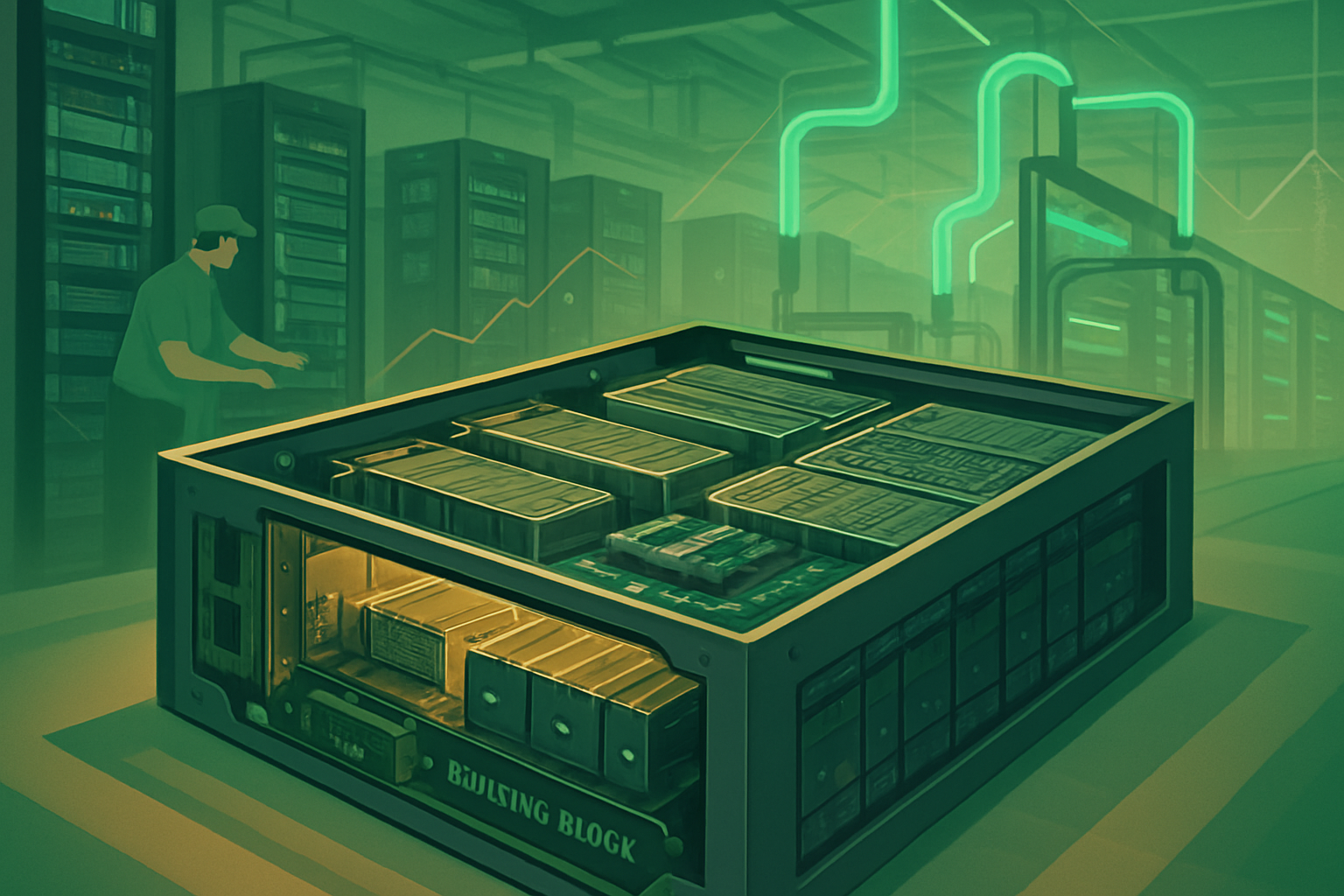
    Founded in 1993 by Charles Liang and his wife, Sara Liu, Super Micro began as a humble motherboard and chassis manufacturer in Silicon Valley. From its inception, the company differentiated itself through a "Building Block Solutions" philosophy—a modular approach to server design that allowed for rapid customization.

    While competitors like Dell Technologies (NYSE: DELL) and Hewlett Packard Enterprise (NYSE: HPE) focused on enterprise services and standardized hardware, Liang stayed focused on engineering-led "green computing." This focus on thermal efficiency proved prophetic. When the AI explosion began in late 2022, SMCI was the only vendor capable of integrating thousands of power-hungry GPUs into cohesive, energy-efficient racks at the speed required by hyperscalers like Meta and xAI.

    Business Model

    SMCI’s business model revolves around the design, manufacture, and sale of high-performance server and storage solutions based on open architecture. Its revenue is primarily derived from three segments:

    1. AI and High-Performance Computing (HPC): This segment now accounts for over 70% of total revenue, comprising full-rack solutions integrated with NVIDIA, AMD, and Intel AI accelerators.
    2. Enterprise and Cloud: Traditional data center servers and storage arrays.
    3. Edge and IoT: Emerging ruggedized servers for localized processing.

    The company utilizes a "Twin-Server" and multi-node architecture that allows for higher density than traditional rack designs. Most importantly, SMCI has vertically integrated its manufacturing, with massive facilities in San Jose, Taiwan, and Malaysia, allowing it to move from chip arrival to finished rack delivery in as little as a few weeks.

    Stock Performance Overview

    The stock performance of SMCI is a study in extreme volatility.

    • 10-Year View: Long-term shareholders remain the big winners. Even after the 2024 correction, the stock is up over 1,500% from its 2016 levels.
    • The 2024-2025 Roller Coaster: Following a 10-for-1 stock split in late 2024, the shares hit a nadir in the $15-$18 range (post-split) amid fears of accounting fraud and the resignation of its auditor, Ernst & Young.
    • Early 2026 Status: As of mid-January 2026, the stock has stabilized in the $32.00 to $36.00 range. The market has priced in the "governance discount," but the stock has found a floor thanks to record-breaking revenue and a massive $13 billion order backlog.

    Financial Performance

    In its most recent fiscal reporting for 2025, SMCI showcased a "growth at all costs" financial profile.

    • Revenue: Reached an all-time high of approximately $22.4 billion, a staggering leap from the $14.9 billion reported in FY2024.
    • Margins: This is the primary point of contention for analysts. Gross margins, which once sat near 18%, have compressed to 9.1% in the latest quarter. SMCI has intentionally lowered prices to ward off competition from Dell and HPE.
    • Debt and Liquidity: To fund the purchase of expensive GPUs, SMCI secured a $2.0 billion revolving credit facility in late 2025. While debt has increased, the company's cash flow from operations has finally turned positive as inventory turnover improved.

    Leadership and Management

    Founder and CEO Charles Liang remains the driving force behind the company. Despite calls for his resignation during the 2024 audit crisis, Liang’s deep engineering knowledge and relationship with NVIDIA’s Jensen Huang made him arguably "too essential to fire."

    To appease regulators and investors, the board underwent a significant overhaul in 2025. The appointment of Scott Angel, a former Deloitte veteran, as an independent director and the hiring of a new CFO (expected to be finalized by Q1 2026) have helped restore some institutional confidence. However, the leadership remains heavily centralized under Liang, which continues to be a point of concern for governance-focused investors.

    Products, Services, and Innovations

    SMCI’s "crown jewel" in 2026 is its Direct Liquid Cooling (DLC) technology. As GPU power consumption has climbed toward 1,000W-1,200W per chip with the Blackwell and Rubin architectures, traditional air cooling has reached its physical limits.

    SMCI has moved from being a server company to a "thermal management" company. Its DLC-2 racks can reduce data center power consumption for cooling by up to 40%. By January 2026, SMCI is producing roughly 5,000 racks per month, with nearly 45% of those being liquid-cooled—the highest ratio in the industry.

    Competitive Landscape

    The competition has intensified as the "AI Server Land Grab" matures.

    • Dell Technologies (NYSE: DELL): Dell has leveraged its superior enterprise sales force to claw back market share, particularly with Fortune 500 companies that require high-touch support.
    • Hewlett Packard Enterprise (NYSE: HPE): HPE has focused on the "Sovereign AI" market, winning large government contracts in Europe and the Middle East.
    • ODM Direct: Hyperscalers like Microsoft and Google are increasingly designing their own servers and using Asian ODMs (Original Design Manufacturers) like Quanta and Foxconn to build them, bypassing SMCI for their internal silicon needs.

    Industry and Market Trends

    The "Power Wall" is the defining trend of 2026. Data centers are no longer constrained by chip availability, but by the availability of electricity. SMCI's focus on energy efficiency aligns perfectly with this constraint. Additionally, the market is shifting from Training (building models) to Inference (running models). This favors SMCI’s modular architecture, which can be quickly reconfigured for lower-latency inference tasks.

    Risks and Challenges

    Despite its recovery, SMCI faces three significant risks:

    1. Regulatory Overhang: The Department of Justice (DOJ) probe initiated in late 2024 remains open. While the company’s special committee found no fraud, a potential fine or mandated structural change remains a "black swan" risk.
    2. NVIDIA Dependency: SMCI’s fortunes are inextricably linked to NVIDIA’s product cycle. Any delay in the Vera Rubin launch or a shift in NVIDIA's "preferred partner" status would be catastrophic.
    3. Commoditization: As Dell and HPE scale their AI offerings, SMCI may find it impossible to raise margins, permanently capping its valuation multiple.

    Opportunities and Catalysts

    • Vera Rubin Launch: The upcoming transition to the Rubin platform in late 2026 provides another "first-to-market" window for SMCI.
    • Sovereign AI Expansion: SMCI’s new Malaysia facility is strategically positioned to capture demand from Southeast Asian nations building domestic AI clusters.
    • Edge AI: The launch of ruggedized, liquid-cooled edge servers for hospitals and autonomous factories represents a new, higher-margin revenue stream.

    Investor Sentiment and Analyst Coverage

    Sentiment remains "cautiously optimistic" but disciplined. Wall Street analysts have largely moved SMCI from "Growth" to "Value/Cyclical" categories. Hedge fund ownership, which saw a mass exodus in late 2024, has partially returned as the 10-K filings were normalized. Retail sentiment remains high, driven by SMCI’s continued status as a high-beta play on the AI sector.

    Regulatory, Policy, and Geopolitical Factors

    Geopolitics are a double-edged sword for SMCI. U.S. export controls on high-end GPUs to China have limited a historically strong market for the company. Conversely, the "CHIPS Act" and various domestic manufacturing incentives in the U.S. and Taiwan have provided subsidies that help offset the costs of SMCI’s localized production model.

    Conclusion

    As of January 14, 2026, Super Micro Computer has successfully weathered the storm of 2024, proving that its engineering prowess and manufacturing speed are too valuable for the AI ecosystem to lose. It has transitioned from a speculative rocket ship into a foundational utility of the digital age.

    For investors, the 2026 version of SMCI requires a different mindset: the days of 1,000% annual gains are likely over, replaced by a story of volume, execution, and thermal efficiency leadership. The key metric to watch over the coming year will not be revenue growth—which remains robust—but the stabilization of gross margins. If SMCI can prove it can maintain its 10-12% market share without further eroding its profitability, it will likely see a re-rating of its current valuation.


    This content is intended for informational purposes only and is not financial advice.