Tag: Defense Tech

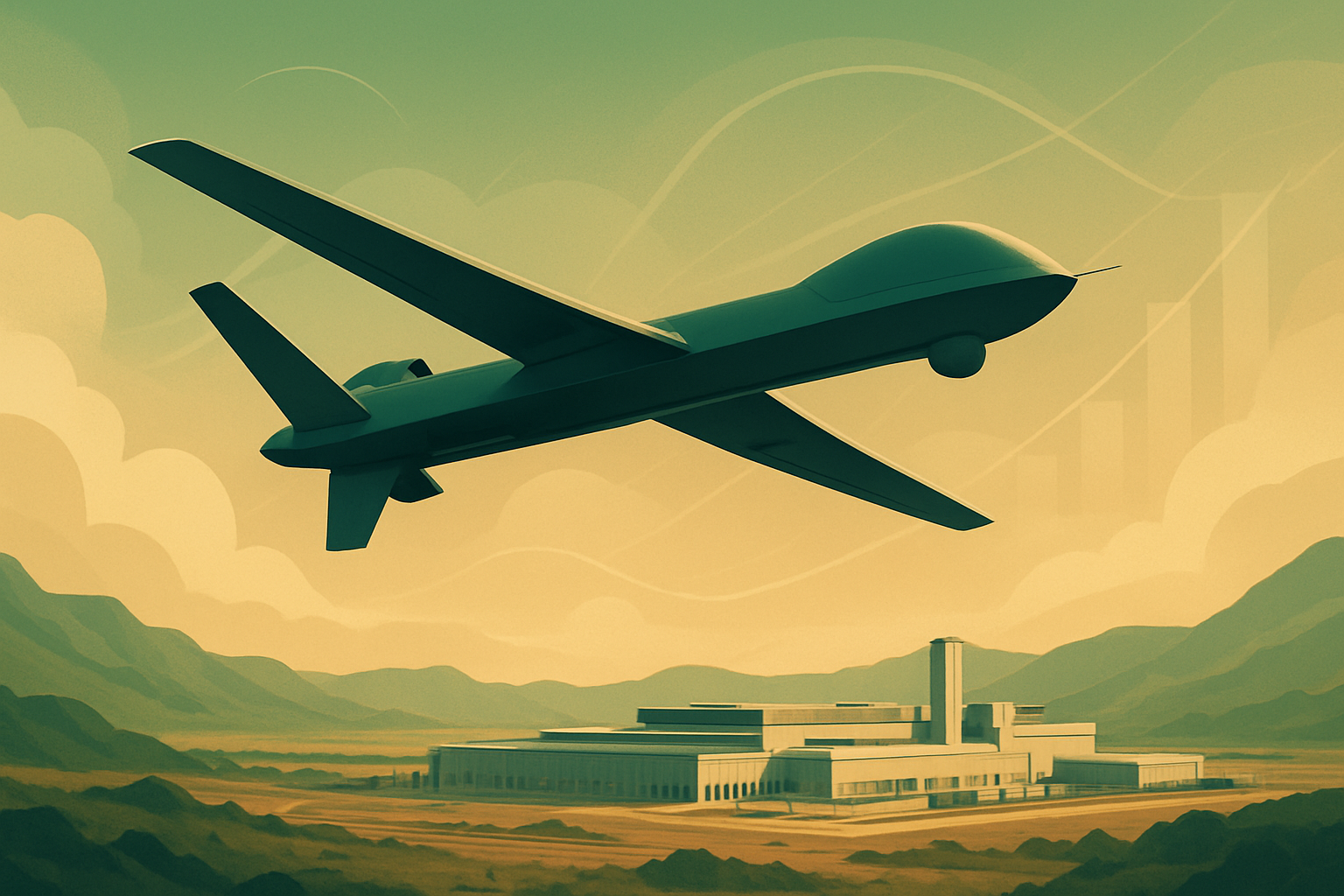
  • The Generational Shift: A Comprehensive Research Feature on AeroVironment (AVAV)

    The Generational Shift: A Comprehensive Research Feature on AeroVironment (AVAV)

    Date: March 25, 2026

    Introduction

    In the rapidly evolving landscape of modern warfare, few companies have captured the zeitgeist of "attritable" defense technology like AeroVironment, Inc. (NASDAQ: AVAV). Once a niche aerospace firm known for experimental solar planes and small surveillance drones, AeroVironment has transformed into a cornerstone of the Pentagon’s 21st-century strategy. As of early 2026, the company sits at a critical juncture: it is transitioning from a specialized hardware manufacturer into a diversified defense technology titan. This transformation has been accelerated by the high-profile performance of its loitering munitions in global conflicts and a massive strategic acquisition that has fundamentally altered its financial profile.

    Historical Background

    Founded in 1971 by the legendary Dr. Paul MacCready, a visionary aeronautical engineer, AeroVironment’s DNA was originally rooted in high-efficiency flight. The company first gained worldwide fame for the Gossamer Condor and Gossamer Albatross—the first successful human-powered aircraft. This legacy of efficiency and lightweight design eventually pivoted toward the military.

    In the late 1980s and 1990s, AeroVironment pioneered the Small Unmanned Aircraft System (SUAS) category, creating the Pointer, Raven, and Wasp. For decades, these systems were the "eyes in the sky" for U.S. infantry. The true historical pivot, however, occurred in the early 2010s with the development of the Switchblade "suicide drone," which combined surveillance with lethal precision, effectively creating a new category of weapon: the loitering munition.

    Business Model

    AeroVironment’s business model has historically relied on the sale of small-to-medium Unmanned Aircraft Systems (UAS) and Tactical Missile Systems (TMS) to the U.S. Department of Defense (DoD) and allied nations. However, following the 2025 acquisition of BlueHalo, the company now operates under two primary pillars:

    1. Autonomous Systems (AxS): This segment accounts for approximately 68% of revenue. It includes the legacy UAS fleet (Puma, Raven, JUMP 20) and the TMS division, which produces the Switchblade 300 and 600 series.
    2. Space, Cyber, and Directed Energy (SCDE): This newer, high-growth segment focuses on satellite communications (BADGER system), RF electronic warfare (Titan series), and laser-based weapon systems (LOCUST).

    The company derives its revenue from a mix of multi-year production contracts, research and development (R&D) grants, and increasingly, long-term service and maintenance agreements for deployed systems.

    Stock Performance Overview

    The stock performance of AVAV has been a rollercoaster of high-growth optimism and tactical corrections over the last decade.

    • 10-Year Horizon: Investors have seen a significant appreciation as the company moved from a small-cap player to a mid-cap defense leader, benefiting from the global shift toward unmanned systems.
    • 5-Year Horizon: The stock surged post-2022 following the onset of the Ukraine conflict, which served as a real-world showcase for the Switchblade series.
    • 1-Year Horizon (March 2025 – March 2026): Performance has been extremely volatile. The stock hit an all-time high of $409.83 in October 2025 following the BlueHalo merger announcement. However, as of late March 2026, the stock has corrected by nearly 50%, trading in the $195–$215 range. This decline is largely attributed to integration challenges and the cancellation of a significant Space Force contract.

    Financial Performance

    AeroVironment is currently navigating a period of massive revenue growth accompanied by margin pressure. For the fiscal year ending in 2026, the company issued revised revenue guidance of $1.85 billion to $1.95 billion. While this represents a staggering year-over-year increase from FY2025 (~$820 million), the growth is inorganic, fueled by the BlueHalo acquisition.

    Profitability has taken a temporary hit. In Q3 FY2026, AVAV reported a net loss of $156 million, primarily due to a $151.3 million non-cash goodwill impairment charge related to its Space unit. Gross margins have compressed to 27%, down from historical levels of 40%, as the company integrates lower-margin service contracts and deals with the overhead of its expanded operations.

    Leadership and Management

    CEO Wahid Nawabi has been the architect of AeroVironment’s aggressive expansion. Since taking the helm, he has overseen an eightfold increase in revenue. Nawabi’s strategy—dubbed "The Generational Shift"—aims to position AVAV as the agile, high-tech alternative to "Big Prime" contractors like Boeing or Lockheed Martin.

    In February 2026, long-time CFO Kevin McDonnell announced his retirement, effective July 2026. While the transition is planned, the departure of a veteran financial head during a complex merger integration has introduced a layer of uncertainty for institutional investors.

    Products, Services, and Innovations

    The crown jewel of the product line remains the Switchblade 600, a loitering munition capable of destroying heavy armor from miles away. Innovation is currently focused on:

    • Replicator 1.1 Systems: AVAV is a primary participant in the Pentagon's "Replicator" initiative, which seeks to field thousands of low-cost, autonomous systems to counter near-peer adversaries.
    • BADGER and Titan: Through BlueHalo, AVAV now offers sophisticated RF-jamming (Counter-UAS) and phased-array satellite antennas.
    • AI Integration: The company is heavily investing in "Autonomy at the Edge," enabling drones to operate in GPS-denied environments—a critical requirement for modern electronic warfare.

    Competitive Landscape

    The defense tech sector has bifurcated. AeroVironment faces pressure from two sides:

    1. Agile Newcomers: Anduril Industries is the most significant competitor. With its "Arsenal-1" mega-factory and recent $20 billion Army enterprise agreement, Anduril is challenging AVAV’s ability to scale production at the speed of software.
    2. Traditional Primes: Lockheed Martin (NYSE: LMT) and RTX Corporation (NYSE: RTX) have accelerated their own loitering munition programs. However, AVAV maintains a "battle-proven" advantage, with years of performance data that newer systems lack.

    Industry and Market Trends

    The primary trend driving the industry is the shift toward "attritable" systems—weapons that are cheap enough to be lost in combat but effective enough to change the outcome. The U.S. Department of Defense's Replicator initiative is the formalization of this trend. Additionally, the move toward Counter-UAS (C-UAS) technology is a massive tailwind, as the threat from small drones to naval and ground forces has reached a fever pitch.

    Risks and Challenges

    • Integration Risk: The BlueHalo acquisition was massive. Integrating disparate corporate cultures and accounting systems while maintaining production speed is a significant operational hurdle.
    • Contract Volatility: The recent termination of the Space Force SCAR contract highlights the binary risk of government procurement.
    • Supply Chain: Scaling to meet the demand for 14,400 Switchblades a year requires a flawless global supply chain for chips and sensors, which remains vulnerable to geopolitical shocks.

    Opportunities and Catalysts

    • FreedomWerx Facility: A new manufacturing plant in Salt Lake City is slated to go online in late 2026, which will triple the production capacity of the Switchblade line.
    • Replicator 2.0: While Replicator 1.0 focused on offensive drones, Replicator 2.0 focuses on Counter-UAS. AVAV’s Titan and LOCUST systems are prime candidates for this multi-billion dollar funding pool.
    • International Sales: As more NATO countries look to modernize their tactical arsenals, Foreign Military Sales (FMS) represent a largely untapped long-term revenue stream.

    Investor Sentiment and Analyst Coverage

    Wall Street is currently divided on AVAV. Bulls point to the record $1.1 billion funded backlog and the strategic importance of the company to U.S. defense. Bears, however, are wary of the compressed margins and the "show me" nature of the BlueHalo integration. Institutional ownership remains high, but recent quarterly misses have led to a more cautious "Hold" or "Sector Perform" consensus among several top-tier analysts.

    Regulatory, Policy, and Geopolitical Factors

    Geopolitics is the primary driver of AVAV’s valuation. The ongoing need to backfill U.S. stockpiles sent to Ukraine and the focus on the Indo-Pacific theater keep demand high. However, strict ITAR (International Traffic in Arms Regulations) controls limit the company's ability to sell its most advanced systems to certain international markets, creating a ceiling on commercial-style global scaling.

    Conclusion

    AeroVironment stands at the epicenter of a revolution in military technology. It has successfully moved from the periphery of defense to the center of the Pentagon’s most ambitious autonomous programs. While the stock’s recent correction reflects the "growing pains" of a $5 billion company trying to act like a $50 billion one, the fundamental demand for its products has never been higher. For investors, the key metrics to watch in the coming year will be margin stabilization and the successful ramp-up of the Salt Lake City facility. AeroVironment is no longer just a drone company; it is a test case for whether an agile innovator can survive and thrive as a major defense prime.


    This content is intended for informational purposes only and is not financial advice.

  • AeroVironment (AVAV): Navigating the Growing Pains of a Defense Tech Giant

    AeroVironment (AVAV): Navigating the Growing Pains of a Defense Tech Giant

    Today’s Date: March 12, 2026

    Introduction

    AeroVironment, Inc. (NASDAQ: AVAV) has long been the poster child for the "democratization of the skies." For decades, it dominated the niche for small, hand-launched tactical drones. However, following its Q3 FY2026 earnings report on March 10, the company finds itself at a critical crossroads. Despite a massive 143% year-over-year surge in revenue, AeroVironment missed consensus analyst expectations for both the top and bottom lines, leading to a sharp ~6.3% decline in share price.

    The current focus on AVAV is driven by a paradox: the company has never seen higher demand—boasting a record $1.1 billion funded backlog—yet it is struggling with the "growing pains" of scaling into a full-spectrum defense prime. This deep dive explores whether the recent sell-off is a temporary setback in a secular growth story or a sign of deeper structural challenges as the company integrates its massive BlueHalo acquisition and faces stiff competition from "Silicon Valley" defense startups.

    Historical Background

    Founded in 1971 by the legendary aeronautical engineer Paul MacCready, AeroVironment began not as a weapons manufacturer, but as a laboratory for human-powered and solar-powered flight. MacCready’s Gossamer Condor won the first Kremer prize in 1977, proving that human-powered flight was possible. This heritage of extreme efficiency and lightweight engineering became the DNA of the company’s military transition.

    In the late 1980s and 1990s, the company pivoted toward the U.S. military’s growing interest in Unmanned Aircraft Systems (UAS). The breakthrough came with the Raven, a small drone that could be carried in a backpack and hand-launched by a single soldier. The conflicts in Iraq and Afghanistan cemented AeroVironment’s role as the primary provider of "organic" surveillance for the infantry. The 2010s saw the development of the Switchblade, a "loitering munition" (kamikaze drone) that redefined precision strikes on the modern battlefield. Today, the company has transformed from a hardware vendor into a multi-domain defense technology firm.

    Business Model

    AeroVironment’s business model has shifted significantly over the last 24 months. While historically reliant on selling drone "units," the company now operates across two primary pillars:

    1. Autonomous Systems (68% of Revenue): This includes the legacy UAS (Unmanned Aircraft Systems) and LMS (Loitering Munition Systems). Revenue here is derived from hardware sales, long-term maintenance contracts, and training services.
    2. Space, Cyber, and Directed Energy: Formed largely through the May 2025 acquisition of BlueHalo, this segment focuses on high-end defense tech including laser weapon systems, satellite communications, and "electronic warfare" (EW).

    The customer base is heavily concentrated in the U.S. Department of Defense (DoD), which accounts for roughly 70-75% of sales, with the remainder coming from over 50 allied international governments.

    Stock Performance Overview

    Despite the recent 6.3% post-earnings dip, AVAV’s long-term trajectory remains impressive:

    • 1-Year Performance: Up approximately 70%, driven by the global realization of drone importance in the Ukraine and Taiwan Strait contexts.
    • 5-Year Performance: Up ~124%, representing a solid 14.7% CAGR. The stock saw a massive rerating following the 2022 invasion of Ukraine.
    • 10-Year Performance: Up a staggering 761%, vastly outperforming the S&P 500.

    However, the stock is currently trading nearly 47% below its 52-week high, reflecting a valuation "reset" as investors move from rewarding growth-at-any-cost to demanding margin stability.

    Financial Performance

    The Q3 FY2026 results released on March 10 were a tale of two cities. Revenue hit $408 million—a record—but missed the $484 million consensus. Adjusted EPS came in at $0.64, missing the $0.72 target.

    Crucially, gross margins compressed to 27%, down from 40% a year prior. This was attributed to a higher mix of lower-margin service revenue from the BlueHalo integration and a $151.3 million goodwill impairment charge in the Space unit. Management subsequently lowered FY2026 revenue guidance to $1.85B–$1.95B. While the company remains cash-flow positive, the "lumpy" nature of government defense contracts continues to inject volatility into its quarterly reports.

    Leadership and Management

    CEO Wahid Nawabi has been at the helm since 2016 and is credited with the company’s aggressive M&A strategy. Under his leadership, AVAV has moved from a "niche" player to a "disruptive prime" competitor to giants like Lockheed Martin.

    However, the leadership team is facing a transition. Long-time CFO Kevin McDonnell announced his retirement for July 2026. For investors, this creates a period of "execution risk" as the company looks for a new financial steward to manage the complex balance sheet post-BlueHalo.

    Products, Services, and Innovations

    AeroVironment’s product portfolio is the gold standard in tactical UAS:

    • Switchblade 300/600: These loitering munitions are the company’s "stars." They are being scaled to a production rate of 1,200 units per month.
    • Puma AE/LE: The workhorse of maritime and land surveillance, benefiting from a massive $874 million IDIQ contract.
    • LOCUST Laser System: A directed-energy weapon designed to shoot down enemy drones at a fraction of the cost of traditional missiles.
    • JUMP 20: A vertical take-off and landing (VTOL) drone that eliminates the need for runways.

    The company’s R&D focus is currently on "autonomy in contested environments," ensuring drones can fly and strike even when GPS and radio signals are jammed.

    Competitive Landscape

    The competitive environment has shifted from traditional defense primes (like Northrop Grumman and RTX) to agile, software-first startups.

    • Anduril Industries: The most formidable threat. Anduril’s "Lattice OS" software and its recent $30.5 billion valuation allow it to compete for the same "low-cost attritable" contracts that AVAV targets.
    • The "Big Primes": Lockheed Martin (NYSE: LMT) and General Atomics have recently entered the small-drone space with their own loitering munition prototypes.
    • Kratos Defense (NASDAQ: KTOS): Competes in the high-speed jet drone market, though AVAV remains the leader in small tactical systems.

    Industry and Market Trends

    Three macro trends are defining the sector:

    1. The "Replicator" Initiative: The Pentagon’s plan to field thousands of cheap, autonomous systems to counter China’s mass. AVAV is a primary beneficiary.
    2. Attrition-Based Warfare: Modern conflict has shown that expensive platforms (tanks, ships) are vulnerable to cheap drones. This shift favors AVAV’s product price points.
    3. Electronic Warfare (EW): As jamming becomes standard, the "intelligence" of the drone’s software is becoming more important than its airframe.

    Risks and Challenges

    • The "Lumpy" Revenue Trap: Government contract timing is notoriously unpredictable, leading to quarters like the recent Q3 miss.
    • Integration Risk: BlueHalo was a massive acquisition. Melding the two corporate cultures and tech stacks remains a work in progress.
    • Supply Chain: Reliance on specialized sensors and batteries makes the company vulnerable to global semiconductor shortages and regional instability.
    • Space Force Shift: The U.S. Space Force recently moved the SCAR program from sole-source to competitive bidding, which led to AVAV’s $151 million impairment charge.

    Opportunities and Catalysts

    • Backlog Conversion: With $1.1 billion in the funded backlog, the revenue "miss" in Q3 is largely a matter of when, not if, the money arrives.
    • International NATO Expansion: As European nations rush to modernize, AVAV is seeing record interest for the Switchblade 600.
    • New Facility: The upcoming Salt Lake City manufacturing plant is expected to triple production capacity by late 2026.

    Investor Sentiment and Analyst Coverage

    Wall Street remains divided. Bulls point to the record backlog and the "essential" nature of AVAV’s tech in modern warfare. Bears point to the compressed margins and the "Defense Tech" premium the stock trades at compared to more profitable legacy primes.
    Institutional ownership remains high (~85%), with major positions held by BlackRock and Vanguard, signaling long-term confidence in the sector.

    Regulatory, Policy, and Geopolitical Factors

    Geopolitics is the ultimate tailwind for AVAV. The ongoing conflict in Ukraine has acted as a multi-year live-fire demonstration of their products. Furthermore, the U.S. government’s ITAR (International Traffic in Arms Regulations) acts as a high barrier to entry, protecting AVAV from Chinese and other foreign drone competitors in the Western market. However, any shift toward a "de-escalation" policy in global hotspots could dampen the immediate urgency for rapid drone procurement.

    Conclusion

    AeroVironment is currently suffering from a "success crisis." It has transitioned from a small, high-margin niche provider to a large-scale defense prime with lower, more complex margins. The 6.3% drop following the earnings miss reflects the market’s realization that this transition will be bumpy.

    Investors should watch the Q4 FY2026 results closely for signs of margin stabilization. If AVAV can prove it can successfully integrate BlueHalo and convert its $1.1 billion backlog into high-margin revenue, the current dip may look like a generational buying opportunity. However, with Anduril breathing down their neck, execution—not just innovation—is now the name of the game.


    This content is intended for informational purposes only and is not financial advice.

  • Palantir (PLTR) 2026: The Rise of the Logic Layer and the Agentic AI Revolution

    Palantir (PLTR) 2026: The Rise of the Logic Layer and the Agentic AI Revolution

    Today’s Date: March 5, 2026

    Introduction

    As we enter the first quarter of 2026, Palantir Technologies Inc. (NYSE: PLTR) has transformed from a controversial, secretive data-mining firm into what many analysts now call the "Operating System of the Modern Enterprise." Once defined primarily by its classified government work, Palantir has spent the last two years riding the crest of the "Agentic AI" wave—moving beyond simple chatbots to systems that autonomously execute operational decisions. With its recent relocation of headquarters to Miami and a record-breaking fiscal 2025 under its belt, the company stands at a critical juncture for investors. This article evaluates Palantir’s transition from a high-growth speculative play to a foundational component of the global AI infrastructure.

    Historical Background

    Palantir’s origins are rooted in the "PayPal Mafia." Founded in May 2003 by Peter Thiel, Alex Karp, Stephen Cohen, Joe Lonsdale, and Nathan Gettings, the company was born from a realization that PayPal’s fraud-detection algorithms could help the U.S. intelligence community prevent another 9/11. Named after the palantíri (seeing stones) from J.R.R. Tolkien’s The Lord of the Rings, the company’s mission was "Intelligence Augmentation"—using software to make human analysts more effective rather than replacing them.

    Early funding from the CIA’s venture arm, In-Q-Tel, provided the firm with the technical "seal of approval" needed to scale within the Department of Defense (DoD). For over a decade, Palantir operated in the shadows, with its flagship platform, Gotham, rumored to have played a role in the 2011 operation to locate Osama bin Laden. In 2020, Palantir executed a Direct Public Offering (DPO) and moved its headquarters from Silicon Valley to Denver, signaling a cultural break from the tech establishment.

    Business Model

    Palantir operates a high-margin software-as-a-service (SaaS) model, though its deployment process is significantly more intensive than standard cloud software. The company’s revenue is split between two primary segments:

    • Government: Long-term, multi-year contracts with defense and intelligence agencies (e.g., U.S. Army, NHS, DGSI).
    • Commercial: Enterprise-level software for Fortune 500 companies in energy, manufacturing, and finance.

    The core of Palantir’s current sales strategy is its "Bootcamp" model. Launched with the Artificial Intelligence Platform (AIP) in 2023, these five-day intensive workshops allow potential clients to build real-world AI workflows on their own data. This has drastically shortened sales cycles, leading to a "land and expand" effect where 75% of bootcamp participants typically convert into paying customers.

    Stock Performance Overview

    Since its 2020 DPO at a reference price of $7.25, PLTR has been a high-beta favorite for both retail and institutional investors.

    • 5-Year Horizon: The stock has seen extreme volatility, crashing from 2021 highs of $35 to lows of $6 in late 2022. However, the 2023-2025 AI rally, fueled by AIP, drove the stock back to record highs.
    • 1-Year Horizon: Over the past twelve months, the stock has outperformed the Nasdaq 100 by over 40%, buoyed by its inclusion in the S&P 500 on September 23, 2024.
    • 10-Year Context: While the company has not yet been public for ten years, its pre-IPO valuation history suggests a long-term compounding effect for early private investors, despite significant dilution from stock-based compensation (SBC) in its early public years.

    Financial Performance

    Palantir’s FY 2025 results, released last month, stunned Wall Street.

    • Revenue: Total revenue reached $4.48 billion in 2025, up 56% year-over-year.
    • Profitability: The company achieved its 13th consecutive quarter of GAAP profitability. GAAP Net Income for 2025 was a record $1.63 billion, representing a 36% net margin.
    • Rule of 40: Palantir’s "Rule of 40" score (Revenue Growth + Adjusted Operating Margin) hit an unprecedented 127% in Q4 2025.
    • Valuation: Despite these strong numbers, the stock remains expensive by historical standards, trading at a forward Price-to-Earnings (P/E) ratio of approximately 185x as of early 2026.

    Leadership and Management

    CEO Alex Karp, a PhD in social theory, remains one of the most unique and polarizing leaders in tech. His focus on Western defense and philosophical approach to AI ethics has created a fiercely loyal internal culture.

    • Strategic Shift: In February 2026, Karp and Chairman Peter Thiel announced the relocation of the corporate headquarters to Miami, Florida. The move was a direct response to Colorado’s restrictive AI regulations (SB205), which Karp labeled as "innovation-killing overreach."
    • Stability: The core leadership team, including CTO Shyam Sankar and President Stephen Cohen, has remained remarkably stable, providing a consistency of vision rarely seen in the high-turnover software sector.

    Products, Services, and Innovations

    Palantir’s competitive moat is built on four pillars:

    1. Gotham: The "Warfighter’s OS," used for battlefield intelligence and counter-terrorism.
    2. Foundry: The "Enterprise OS," which creates a "Digital Twin" of an entire organization.
    3. Apollo: An orchestration engine that allows Palantir to deploy and update software in highly secure or "air-gapped" environments (satellites, drones, oil rigs).
    4. AIP (Artificial Intelligence Platform): The newest pillar, which uses Large Language Models (LLMs) to interact with the Palantir Ontology. The Ontology is the company's secret sauce—a semantic layer that maps raw data to real-world objects and actions, ensuring AI models don't "hallucinate" and instead execute logic based on actual business rules.

    Competitive Landscape

    In 2026, Palantir sits in a unique "Logic Layer" of the AI stack.

    • Hyperscalers (Microsoft (MSFT), Amazon (AMZN), Google (GOOGL)): These companies provide the infrastructure (Azure/AWS) and productivity tools (Copilots). Palantir partners with them for hosting but competes for the high-level decision-making logic within the enterprise.
    • Niche AI (C3.ai (AI)): While C3.ai offers turnkey apps, Palantir’s Foundry is more customizable and scalable for complex, massive-scale data environments.
    • Data Storage (Snowflake (SNOW)): Snowflake is where data lives; Palantir is where data acts. The two are increasingly viewed as complementary rather than direct rivals.

    Industry and Market Trends

    The "Sovereign AI" trend has become a major tailwind in 2026. Nations are increasingly seeking their own localized AI capabilities that do not rely on foreign cloud providers. Palantir has leaned into this by signing multi-billion dollar framework deals with the UK and France. Furthermore, the shift from "Generative AI" (creating content) to "Agentic AI" (executing tasks) has favored Palantir’s Ontology-driven approach.

    Risks and Challenges

    • Valuation Trap: With a P/S ratio near 70x, any slight miss in revenue growth could lead to a 30-50% correction.
    • Geopolitical Friction: Palantir’s vocal support for Western interests has effectively barred it from markets like China and some Middle Eastern nations, limiting its total addressable market (TAM).
    • Regulatory Backlash: The EU AI Act continues to create hurdles for Palantir’s predictive policing and surveillance contracts in Europe.

    Opportunities and Catalysts

    • Healthcare Expansion: Following a massive NHS contract win in late 2024, Palantir is now aggressively pursuing the U.S. hospital system, aiming to use Foundry to manage patient flow and resource allocation.
    • $10 Billion U.S. Army Deal: The ongoing execution of the 10-year framework signed in 2025 provides a high-margin revenue floor for the next decade.
    • Edge AI: As more AI is deployed on hardware (drones/satellites), Palantir’s Apollo platform is becoming an essential "deployment layer" that few others can replicate.

    Investor Sentiment and Analyst Coverage

    Wall Street remains divided. Bulls like Dan Ives of Wedbush continue to call Palantir the "Messiah of AI," setting price targets as high as $260. Conversely, value-oriented analysts maintain "Underperform" ratings, citing the stock’s extreme premium over other SaaS companies. Retail sentiment remains "diamond-handed," with a dedicated community of investors who view Palantir as a multi-decade holding similar to early Microsoft or Amazon.

    Regulatory, Policy, and Geopolitical Factors

    The regulatory environment in 2026 is a tale of two worlds. In the U.S., a shift toward deregulation and "AI Supremacy" policy has accelerated Palantir’s defense contracts. However, at the state level (Colorado) and international level (EU), new laws targeting "algorithmic discrimination" have forced the company to pivot its operations. The move to Florida is a strategic play to align with a more business-friendly jurisdiction as the federal government prepares to define national AI standards.

    Conclusion

    Palantir Technologies Inc. is no longer a "story stock"—it is a financial juggernaut with an "iconic" Rule of 40 profile. For investors in 2026, the question is not whether the technology works, but whether the current valuation has already priced in a decade of perfection. Palantir’s ability to create a "Digital Twin" of an organization via its Ontology remains a unique moat. While regulatory hurdles and geopolitical limitations persist, the company’s dominance in the U.S. defense sector and its accelerating commercial "bootcamp" engine make it a formidable force. Investors should watch for continued GAAP margin expansion and the successful scaling of its "Agentic AI" workflows as the primary indicators of sustained growth.


    This content is intended for informational purposes only and is not financial advice.

  • The Software Fortress: A Comprehensive Analysis of Palantir Technologies (PLTR) in 2026

    The Software Fortress: A Comprehensive Analysis of Palantir Technologies (PLTR) in 2026

    As of February 10, 2026, Palantir Technologies (NYSE: PLTR) has transitioned from a controversial, niche "black box" of the intelligence community to one of the most influential forces in the global enterprise software and Artificial Intelligence (AI) sectors. Long regarded with skepticism by Wall Street for its unconventional leadership and heavy reliance on government contracts, the company has silenced critics through a multi-year run of GAAP profitability and the successful monetization of its Artificial Intelligence Platform (AIP). Today, Palantir stands as a cornerstone of the S&P 500, serving as the "operating system" for both modern warfare and the modern Fortune 500.

    Historical Background

    Founded in 2003 by Peter Thiel, Alex Karp, Stephen Cohen, Joe Lonsdale, and Nathan Gettings, Palantir was born in the wake of the September 11 attacks. Its initial mission was to provide the U.S. intelligence community with software capable of finding "needles in haystacks" to prevent terrorism. Early funding came from the CIA’s venture arm, In-Q-Tel, which helped cement its reputation as a secretive defense contractor.

    For its first decade, the company focused almost exclusively on the public sector with its Gotham platform. However, the 2016 launch of Foundry marked a pivotal shift toward the commercial sector, aiming to solve data silo problems for massive corporations. Following its Direct Public Offering (DPO) in September 2020, Palantir faced a turbulent period of high stock-based compensation and fluctuating growth before the 2023 generative AI boom provided the ultimate catalyst for its current dominance.

    Business Model

    Palantir’s business model revolves around the central thesis that most organizations do not have a "data problem," but an "integration and decision problem." The company operates through two primary segments:

    1. Government: Serving defense, intelligence, and healthcare agencies worldwide. This remains a high-moat, long-cycle business with multi-year, multi-billion dollar contracts.
    2. Commercial: Focusing on large-scale enterprises in finance, energy, manufacturing, and retail.

    Unlike traditional SaaS companies that rely on a large "army" of sales representatives, Palantir utilizes a high-intensity "bootcamp" strategy. This allows potential customers to build live AI workflows on their own data within five days, drastically reducing the sales cycle and increasing conversion rates. Revenue is typically generated through multi-year subscriptions, though recent "Agentic AI" modules have introduced more granular, usage-based components.

    Stock Performance Overview

    The journey for PLTR shareholders has been one of extreme volatility followed by sustained institutional accumulation.

    • 1-Year Performance: Over the last 12 months, the stock has risen approximately 65%, driven by the massive scale-up of U.S. commercial revenue.
    • 5-Year Performance: Since 2021, the stock has experienced a massive "U-shaped" recovery. After bottoming out near $6.00 in late 2022, it surged to an all-time high of $207.18 in late 2025 before consolidating.
    • Long-Term Horizon: From its DPO price of $10, long-term investors have seen nearly a 15x return as of February 2026, outperforming the majority of the Nasdaq-100 and software-focused ETFs.

    Financial Performance

    Palantir’s 2025 fiscal year results, released recently, confirmed its status as a financial powerhouse.

    • Revenue: Total FY 2025 revenue reached $4.475 billion, a 56% year-over-year increase.
    • Profitability: The company reported its 13th consecutive quarter of GAAP net income, totaling $1.625 billion for the year.
    • Efficiency: Management’s "Rule of 40" score reached a staggering 127% in Q4 2025, a testament to its ability to grow rapidly while maintaining high operating margins (currently at 50% on an adjusted basis).
    • Valuation: Despite these strengths, the stock remains expensive, trading at high multiples of earnings and sales, reflecting the market's expectation of continued 50%+ growth through 2027.

    Leadership and Management

    CEO Alex Karp remains the company's most vocal and visible leader. His eccentric, philosophical style and staunch defense of Western democratic values have become synonymous with the Palantir brand. Alongside Karp, CTO Shyam Sankar and CRO Ryan Taylor have been instrumental in the recent "bootcamp" pivot, moving the company away from its "consultancy-heavy" roots toward a scalable, product-first organization.

    The board, still chaired by co-founder Peter Thiel, remains stable, though some governance critics have pointed to the super-voting share structure that gives the founders perpetual control—a structure that has become less of a focus as the company continues to deliver record profits.

    Products, Services, and Innovations

    Palantir’s product suite is now unified under the "AIP" umbrella:

    • AIP (Artificial Intelligence Platform): The core engine that allows organizations to deploy Large Language Models (LLMs) and "Agentic AI" across their private networks securely.
    • Gotham: The premier platform for defense and intelligence, used for everything from battlefield management in Ukraine to counter-terrorism.
    • Foundry: The "operating system" for the enterprise, allowing companies to create a "digital twin" of their entire operation.
    • Apollo: The continuous delivery software that allows Palantir’s platforms to run in the most disconnected, "edge" environments (e.g., on satellites or inside tanks).
    • Agentic AI: The 2025 innovation that allows AI "agents" to autonomously execute tasks, such as re-routing supply chains or processing insurance claims, rather than simply generating text.

    Competitive Landscape

    By early 2026, Palantir’s competition has split into two camps:

    • Data Rivals: Companies like Snowflake (NYSE: SNOW) and Databricks compete for data storage and processing. However, Palantir has carved a niche as the "Intelligence Layer" that sits on top of these data stores, often forming partnerships rather than direct competition.
    • Defense Rivals: Traditional "Primes" like Lockheed Martin (NYSE: LMT) and Raytheon (RTX) are both partners and competitors. Palantir’s agility in software gives it an edge, but the legacy firms still hold the keys to major hardware platforms. The rise of Anduril Industries as a "software-first" hardware firm presents a unique, modern competitive threat in the defense tech space.

    Industry and Market Trends

    The current macro environment is dominated by two trends that favor Palantir:

    1. Sovereign AI: Governments are increasingly seeking "sovereign" AI capabilities—AI that they control entirely, without relying on foreign-hosted clouds. Palantir’s history of high-security deployments makes it the default choice for these initiatives.
    2. Military Modernization: As geopolitical tensions remain high in Eastern Europe and the Indo-Pacific, the "software-defined battlefield" is no longer a concept but a requirement, driving demand for Palantir’s TITAN and Gotham systems.

    Risks and Challenges

    Despite its recent success, Palantir is not without risks:

    • Concentration: While commercial revenue is growing, a large portion of its business still depends on a few massive government contracts.
    • Valuation Risk: With a P/E ratio significantly higher than the software average, any slowdown in the AIP adoption rate could lead to a sharp correction.
    • Data Privacy Backlash: The company continues to face scrutiny over privacy, most notably in the UK with the NHS contract, which remains a political lightning rod.
    • Stock-Based Compensation (SBC): Although GAAP profitable, the company still uses significant SBC to retain talent, which can lead to shareholder dilution.

    Opportunities and Catalysts

    • $10 Billion Army Deal: The 2025 Army enterprise agreement is just beginning to scale, providing a massive multi-year revenue floor.
    • Agentic AI Upsell: The transition from "chatting with data" to "autonomous agents" allows Palantir to charge based on the value or volume of tasks completed, potentially increasing Average Revenue Per User (ARPU).
    • S&P 500 Inclusion: Having joined the index in 2024, the stock now benefits from consistent institutional buying and inclusion in major ETFs.

    Investor Sentiment and Analyst Coverage

    Investor sentiment has shifted from "cautious" to "frenzied" over the past 24 months. Wall Street analysts, many of whom maintained "Sell" ratings in 2023, have largely capitulated, with the majority now holding "Buy" or "Strong Buy" ratings. Retail investors—the self-titled "Palantirians"—remain a powerful force, often acting as a support floor during market pullbacks. Institutional ownership has notably climbed from 35% to over 60% in early 2026.

    Regulatory, Policy, and Geopolitical Factors

    Palantir is uniquely sensitive to geopolitics. Its "Western-first" stance has won it favor in Washington and London but effectively bans it from competing in China and several other emerging markets. On the regulatory front, the company is positioning itself as a leader in "Ethical AI," advocating for frameworks that keep humans "in the loop" for lethal decisions—a policy stance that helps mitigate the risk of restrictive AI regulations.

    Conclusion

    Palantir Technologies has entered 2026 as a reformed titan of the tech world. By successfully bridging the gap between secretive government work and mass-market commercial AI, it has achieved a level of "indispensability" that few software firms ever reach. For investors, the story is no longer about whether the company can make a profit, but how fast it can scale its AI agents across the global economy. While its premium valuation requires a high degree of execution, the company's $10 billion backlog and record-breaking "Rule of 40" scores suggest that Palantir is only just beginning its era of dominance.


    This content is intended for informational purposes only and is not financial advice.