Tag: Diamondback Energy

  • The Permian Juggernaut: A Comprehensive Research Feature on Diamondback Energy (FANG)

    The Permian Juggernaut: A Comprehensive Research Feature on Diamondback Energy (FANG)

    As of April 13, 2026, the American energy landscape is defined by a shift from the frantic growth of the "Shale 2.0" era toward a period of industrial-scale consolidation and manufacturing-style efficiency. At the center of this evolution stands Diamondback Energy, Inc. (NASDAQ: FANG). Once a mid-sized independent explorer, Diamondback has transformed into a dominant "Permian Juggernaut" following its massive 2024 merger with Endeavor Energy Resources. Today, it serves as the benchmark for operational excellence in the Midland Basin, providing a high-yield, low-cost alternative to the global integrated majors. With a focus on capital discipline and aggressive shareholder returns, Diamondback has become a staple for institutional and retail investors seeking exposure to the most prolific oil field in North America.

    Historical Background

    Diamondback Energy’s rise is a quintessential Permian success story. Founded in 2007 and headquartered in Midland, Texas, the company was built on the premise that a focused, pure-play operator could outperform diversified giants by mastering a single geography. Diamondback went public in 2012, raising $216 million at a time when horizontal drilling and hydraulic fracturing were revolutionizing the U.S. energy sector.

    Over the next decade, Diamondback pursued an aggressive "roll-up" strategy, acquiring smaller operators to assemble a massive, contiguous acreage position. Key milestones included the $9.2 billion acquisition of Energen in 2018 and the acquisitions of QEP Resources and Guidon Energy in 2021. However, the most defining moment in the company’s history occurred in September 2024, when it closed its $26 billion merger with Endeavor Energy Resources. This deal combined the two largest private and public pure-play Permian companies, creating a fortress-like position that critics and fans alike call the "King of the Midland Basin."

    Business Model

    Diamondback’s business model is characterized by geographic singularity and operational vertical integration. Unlike its peers that diversify into international offshore or renewable projects, Diamondback remains almost entirely focused on the Permian Basin, specifically the Midland and Delaware Basins of West Texas and New Mexico.

    Revenue Sources:
    The company generates revenue primarily through the sale of crude oil, natural gas, and natural gas liquids (NGLs). As of 2026, the company produces nearly 1 million barrels of oil equivalent per day (MBOE/d).

    Segments and Subsidiaries:

    • Exploration & Production (E&P): The core engine of the company, focused on drilling and completing horizontal wells.
    • Midstream & Minerals: Through its ownership in Viper Energy, Inc. (NASDAQ: VNOM), Diamondback controls the mineral rights under its acreage, providing a high-margin royalty stream that lowers its overall breakeven costs.
    • Water Management: The company owns extensive infrastructure for sourcing, transporting, and recycling water, which is a critical operational and environmental component of modern fracking.

    Stock Performance Overview

    Over the past decade, FANG has been one of the top performers in the energy sector, often decoupling from broader commodity price volatility through superior cost management.

    • 1-Year Performance: In the past 12 months leading up to April 2026, the stock has risen approximately 28%, significantly outperforming the Energy Select Sector SPDR Fund (XLE).
    • 5-Year Performance: Investors who held FANG through the post-pandemic recovery have seen returns exceeding 150%, fueled by the transition to a "returns-first" capital allocation model.
    • 10-Year Performance: Since 2016, Diamondback has evolved from a $10 billion mid-cap to a $50 billion+ large-cap powerhouse. Notable moves occurred in late 2024 following the Endeavor merger, which re-rated the stock as a "must-own" for large-cap value funds.

    As of today, April 13, 2026, FANG shares are trading near $192, reflecting a strong start to the year.

    Financial Performance

    Diamondback’s financial profile in 2026 is a study in cash flow generation. Following the integration of Endeavor’s high-margin assets, the company’s 2025 fiscal year was record-breaking.

    • Revenue and Cash Flow: In 2025, Diamondback generated approximately $8.8 billion in net cash from operations and $5.9 billion in Adjusted Free Cash Flow (FCF).
    • Shareholder Returns: The company maintains a policy of returning 50% of its FCF to stockholders. In February 2026, it raised its base dividend to $4.20 per share annually, supplemented by variable dividends and aggressive share buybacks.
    • Debt and Valuation: Following the $26 billion Endeavor deal, net debt peaked near $18 billion. Through disciplined divestitures and FCF allocation, Diamondback has reduced this to $14.6 billion as of early 2026, with a clear path to $10 billion by year-end. Trading at a Forward P/E of roughly 9.5x, FANG remains attractively valued compared to the broader S&P 500.

    Leadership and Management

    The leadership of Diamondback has undergone a planned and successful transition. Long-time CEO Travis Stice, who led the company from its IPO through its most transformative mergers, stepped down in May 2025. He now serves as Non-Executive Chairman.

    The current CEO, Kaes Van’t Hof, took the helm in May 2025 after serving as President and CFO. Van’t Hof is widely regarded as one of the sharpest financial minds in the oil patch. He is credited with designing the "Variable Dividend" framework that many other shale companies eventually adopted. Under his leadership, the strategy has shifted from "growth at any cost" to "sustainable industrial scale," emphasizing capital efficiency and data-driven drilling decisions.

    Products, Services, and Innovations

    Diamondback’s "product" is a barrel of oil produced at the lowest possible cost. Their competitive edge lies in their technical innovation:

    • Simul-Frac & Trim-Frac: Diamondback is a leader in simultaneous fracturing, where two wells are completed at once using a single fleet. This has reduced completion times by 20-30%.
    • AI and Digital Twins: In 2026, Diamondback is increasingly using AI to optimize well spacing. This prevents "well interference," where a new well (the child) negatively impacts the production of an older well (the parent).
    • Deep Horizon Exploration: To extend its runway, the company has recently begun exploring deeper formations such as the Barnett and Woodford zones within the Permian, diversifying its inventory beyond the traditional Wolfcamp and Bone Spring plays.

    Competitive Landscape

    The Permian Basin has become a land of giants. Diamondback’s primary competitors are:

    1. ExxonMobil (NYSE: XOM): Which acquired Pioneer Natural Resources in 2024 to become the Permian's top producer.
    2. Chevron (NYSE: CVX): A massive incumbent with legacy acreage and significant midstream assets.
    3. Occidental Petroleum (NYSE: OXY): A fierce competitor in the Delaware Basin with a focus on carbon capture.
    4. ConocoPhillips (NYSE: COP): Known for its high-quality acreage and low decline rates.

    Diamondback’s advantage is its agility and its "Permian-only" focus. While Exxon must worry about global refining and chemicals, Diamondback’s management team spends 100% of its time optimizing a single basin.

    Industry and Market Trends

    The shale sector in 2026 is facing a "Permian Plateau." Most of the easy-to-reach Tier 1 acreage has been drilled, leading to a scramble for secondary inventory and secondary recovery techniques.

    • Consolidation: The industry has shifted from hundreds of small operators to a handful of massive firms. This has brought "manufacturing-style" consistency to oil production.
    • Energy for AI: A burgeoning trend in 2026 is the role of natural gas in powering the AI revolution. Diamondback is uniquely positioned to supply natural gas to the growing number of data centers being built in Texas, providing a stable domestic market for its gas production.

    Risks and Challenges

    • Commodity Price Volatility: Despite low breakevens, a sustained drop in WTI oil prices below $50/bbl would pressure the variable dividend and slow debt reduction.
    • Inventory Depletion: While Diamondback has a 10-12 year runway of high-quality wells, the long-term question of "what comes next?" persists.
    • Environmental & Social Governance (ESG): Increasingly stringent methane leak regulations and water disposal rules in Texas pose operational challenges and potential cost increases.
    • Technological Plateau: If AI-driven productivity gains do not materialize as expected, the company may face rising service costs without offsetting efficiency.

    Opportunities and Catalysts

    • M&A Synergies: The company is currently on track to realize over $550 million in annual synergies from the Endeavor merger. Any over-performance here would be a direct boost to FCF.
    • Debt Milestone: Reaching the $10 billion net debt target in late 2026 is expected to trigger a significant increase in the share buyback program.
    • Natural Gas Pivot: If Texas successfully expands its gas-to-power infrastructure for the tech sector, Diamondback’s historically "disadvantaged" gas assets could see a massive valuation re-rating.

    Investor Sentiment and Analyst Coverage

    Wall Street remains overwhelmingly bullish on Diamondback. Out of 26 major analysts tracking the stock in April 2026, 22 maintain "Buy" or "Strong Buy" ratings.

    • Institutional Holdings: BlackRock and Vanguard remain top shareholders, viewing FANG as a "proxy" for the Permian Basin.
    • Retail Sentiment: Retail investors have been drawn to the transparency of the variable dividend, which provides a direct link between high oil prices and cash-in-pocket.
    • Bear Case: The few skeptics point to the company's premium valuation relative to smaller peers, suggesting that much of the "Endeavor magic" is already priced in.

    Regulatory, Policy, and Geopolitical Factors

    The regulatory environment in 2026 is a balancing act. While the federal government has eased some land-use restrictions to ensure domestic energy security, the EPA has tightened "Ozone" and "Methane" standards. Diamondback has mitigated this through its "Circle of Excellence" sustainability program, focusing on electrified drilling rigs and 100% water recycling.

    Geopolitically, the continued instability in the Middle East and Eastern Europe has kept a floor under oil prices, benefiting domestic producers like Diamondback that offer a "safe haven" for energy capital.

    Conclusion

    Diamondback Energy (NASDAQ: FANG) represents the "new era" of American oil. By 2026, it has successfully transitioned from a high-growth explorer to a disciplined, cash-generating machine. Its merger with Endeavor has given it the scale to compete with the global majors, while its nimble management team continues to extract more value from every acre than almost any other operator in the Permian.

    For investors, the FANG thesis is simple: it is a high-yield play on the world's best oil field. While risks regarding inventory depletion and commodity prices remain, Diamondback’s fortress balance sheet and industry-leading cost structure provide a significant margin of safety. As the company marches toward its debt targets in late 2026, the potential for even higher shareholder returns makes it a central pillar of any energy-focused portfolio.


    This content is intended for informational purposes only and is not financial advice.

  • The Royalty King of the Permian: A Deep Dive into Viper Energy (VNOM) in 2026

    The Royalty King of the Permian: A Deep Dive into Viper Energy (VNOM) in 2026

    As of April 3, 2026, the energy landscape has shifted from a frantic race for production to a disciplined hunt for cash flow and scale. At the epicenter of this evolution stands Viper Energy, Inc. (Nasdaq: VNOM), a company that has recently completed a massive transformation to become the premier "pure-play" royalty vehicle in North America’s most prolific oil field.

    Following a series of aggressive acquisitions in 2025, including the landmark merger with Sitio Royalties and the strategic drop-downs from its parent, Diamondback Energy (Nasdaq: FANG), Viper has transitioned from a mid-sized royalty owner to a diversified powerhouse. With a business model that bypasses the capital-heavy burdens of drilling while reaping the rewards of high oil prices, Viper is increasingly viewed by analysts not just as an energy stock, but as a high-yield "real estate" play on the Permian Basin.

    Historical Background

    Viper Energy was born out of the shale revolution. Formed by Diamondback Energy in 2014, the company was initially structured as a Master Limited Partnership (MLP) to house Diamondback’s mineral and royalty interests. Its primary purpose was to provide a low-risk, high-yield vehicle for investors who wanted exposure to the Permian Basin without the operational risks of an exploration and production (E&P) firm.

    Over the last decade, Viper’s story has been one of calculated expansion. In 2018, it converted from an MLP to a taxable corporation to attract a broader base of institutional investors. However, the most significant chapters were written in 2024 and 2025. During this period, Viper moved to consolidate the fragmented mineral rights market, culminating in the 2025 merger with Sitio Royalties. By early 2026, Viper streamlined its portfolio further, divesting non-Permian assets to focus entirely on its core competency: the Midland and Delaware Basins.

    Business Model

    Viper’s business model is elegantly simple: it owns the land, but it doesn't do the work. As a mineral and royalty interest owner, Viper holds perpetual title to the oil and gas beneath the surface. When an operator like Diamondback Energy or Occidental Petroleum (NYSE: OXY) drills a well on Viper’s acreage, Viper is entitled to a fixed percentage of the production (the "royalty") without having to pay a single dollar toward the cost of drilling, fracking, or maintaining the well.

    This "asset-light" approach creates a massive structural advantage:

    • Zero Capital Expenditure: While E&Ps must spend billions on rigs and pipe, Viper’s capital requirements are virtually zero.
    • Top-Line Revenue: Royalties are paid off the "gross" production, meaning Viper is protected from the rising costs of labor and equipment (inflation) that plague traditional oil companies.
    • High Margins: Because the company has few expenses beyond general and administrative (G&A) costs and taxes, its EBITDA margins frequently exceed 90%.

    Stock Performance Overview

    Over the past decade, VNOM has outperformed many of its E&P peers by offering a combination of growth and income.

    • 1-Year Performance: In the past 12 months, the stock has seen significant volatility but upward momentum, trading around $45.50 as of today. This follows a period of consolidation after reaching all-time highs near $53 in late 2024.
    • 5-Year Performance: On a five-year horizon, Viper has been a standout performer, fueled by the post-pandemic recovery in oil prices and its aggressive consolidation strategy. Investors who held through the 2025 merger have benefited from a significantly expanded production base.
    • 10-Year Performance: Since its early years as a Diamondback-led MLP, the stock has matured into a blue-chip royalty name. Early investors have seen their yield-on-cost grow substantially as the company transitioned to a more aggressive dividend-return model.

    Financial Performance

    Viper’s financial health in early 2026 reflects its recent scaling. In 2025, the company generated approximately $1.4 billion in total revenue, a 62% increase over the prior year. While GAAP earnings showed a technical loss in late 2025 due to a one-time non-cash impairment of $360 million—related to the accounting of Diamondback "drop-down" assets—the underlying cash flow tells a different story.

    As of Q1 2026, Viper is generating between $3.50 and $4.32 per share in free cash flow, assuming WTI prices remain in the $60–$75 range. In February 2026, the company demonstrated its financial strength by increasing its annual base dividend by 15% to $1.52 per share. With a debt-to-EBITDA ratio stabilized near 1.0x following a $670 million asset divestiture in early 2026, the balance sheet is positioned for further opportunistic buybacks.

    Leadership and Management

    The leadership at Viper is a "who’s who" of Permian Basin expertise. CEO Kaes Van’t Hof, who took the helm in February 2025, also serves as a top executive at Diamondback Energy. This "dual-hat" leadership ensures that Viper is perfectly aligned with its largest operator.

    Van’t Hof is widely credited with shifting Viper toward its "100% Return Model," a policy where the company aims to return nearly all cash available for distribution to shareholders through dividends and buybacks. Alongside President Austen Gilfillian, the management team has maintained a reputation for capital discipline and aggressive, yet accretive, M&A.

    Products, Services, and Innovations

    While Viper does not produce "products" in the traditional sense, its "innovation" lies in its data-driven approach to mineral acquisition. By leveraging Diamondback’s proprietary drilling data, Viper can identify high-value mineral tracts before they are fully de-risked by the market.

    Furthermore, Viper has innovated in its corporate structure. By being a "pure-play" Permian operator, it offers investors a transparent, liquid way to own Permian real estate. In 2025, the company also began implementing advanced satellite and AI-driven monitoring to track operator activity on its acreage in real-time, ensuring every barrel of royalty oil is accounted for and paid on time.

    Competitive Landscape

    Viper operates in an increasingly crowded but lucrative space. Its primary competitors include:

    • Texas Pacific Land Corporation (NYSE: TPL): The "gold standard" of royalty companies, TPL owns massive acreage in the Permian. However, TPL often trades at a significant premium to Viper.
    • Black Stone Minerals (NYSE: BSM): A more diversified royalty company with assets across the U.S. While larger in terms of total acreage, BSM lacks the concentrated Permian focus that attracts institutional investors to Viper.
    • Kimbell Royalty Partners (NYSE: KRP): A smaller player that has struggled to match the scale and parent-company alignment that Viper enjoys.

    Viper’s competitive edge is its relationship with Diamondback. Having a "front-row seat" to the drilling schedule of a major operator allows Viper to forecast its cash flows with a precision that its competitors cannot match.

    Industry and Market Trends

    The broader energy sector in 2026 is characterized by "consolidation fever." As the best acreage in the Permian Basin becomes increasingly concentrated in the hands of a few major players (ExxonMobil, Chevron, Diamondback), royalty companies must also scale up to remain relevant.

    There is also a growing trend toward "energy utilities." Investors are moving away from the high-growth, high-burn E&P models of the 2010s and toward steady, predictable yield. Viper’s transition to a 100% Permian pure-play aligns perfectly with this trend, positioning the stock as a staple for income-seeking portfolios.

    Risks and Challenges

    Despite its strengths, Viper is not without risks:

    • Commodity Price Sensitivity: While Viper has no drilling costs, its revenue is directly tied to the price of oil. A significant global downturn in crude prices would immediately impact distributions.
    • Operator Risk: Viper is heavily reliant on Diamondback Energy and other Permian operators to continue drilling. If Diamondback were to shift its capital to a different basin or reduce activity, Viper’s production growth would stall.
    • Regulatory Scrutiny: Increased environmental regulations in Texas or New Mexico regarding fracking or water disposal could slow down drilling activity on Viper’s land.

    Opportunities and Catalysts

    The primary catalyst for VNOM in 2026 is its "100% Cash Return" strategy. If the company continues to hit its production targets of 120,000–132,000 BOE/d, the sheer volume of cash being returned to shareholders could lead to a significant re-rating of the stock price.

    Additionally, the integration of the Endeavor assets—acquired via Diamondback—is expected to provide a tailwind of high-margin production growth through the end of 2026. Any further M&A in the Permian that consolidates mineral rights under Viper’s umbrella would likely be viewed favorably by the market.

    Investor Sentiment and Analyst Coverage

    Wall Street remains broadly bullish on Viper. Of the 17 analysts covering the stock as of April 2026, 15 maintain a "Buy" or "Strong Buy" rating. The average price target of $53.33 suggests a double-digit upside from current levels, even before accounting for dividends.

    Institutional ownership remains high, with major funds seeing Viper as a way to play the "long Permian" trade without the operational complexities of a traditional oil company. Retail sentiment is similarly positive, focused largely on the company's consistent dividend increases.

    Regulatory, Policy, and Geopolitical Factors

    The geopolitical landscape in 2026 remains tense, with supply constraints in the Middle East providing a floor for global oil prices. Domestically, energy policy continues to be a battleground, but the Permian Basin remains the most "friendly" environment for American oil production.

    Viper’s assets are primarily located in Texas and New Mexico. While Texas remains highly supportive of oil and gas, New Mexico has seen tighter environmental regulations on federal lands. Fortunately for Viper, a significant portion of its acreage is on private or state land, insulating it from some of the harshest federal policy shifts.

    Conclusion

    Viper Energy, Inc. represents the "new era" of the American oil patch. By shedding its non-core assets and focusing exclusively on the Permian Basin, the company has transformed itself into a high-margin, dividend-generating machine.

    While investors must remain mindful of commodity price volatility and the company's deep ties to Diamondback Energy, the "royalty advantage" is difficult to ignore. In a world where cash flow is king, Viper is arguably one of the most efficient ways to play the ongoing dominance of American energy. For those looking for exposure to the Permian without the headaches of the drilling rig, Viper remains a compelling, battle-tested option.


    This content is intended for informational purposes only and is not financial advice.
  • The Permian Powerhouse: A Deep-Dive into Diamondback Energy (FANG) in 2026

    The Permian Powerhouse: A Deep-Dive into Diamondback Energy (FANG) in 2026

    As of April 2, 2026, the landscape of the American energy sector has undergone a seismic shift, driven by a wave of consolidation that has transformed the Permian Basin into a domain of titans. At the center of this transformation is Diamondback Energy, Inc. (NASDAQ: FANG), a company that has evolved from a small, private-equity-backed upstart into the premier independent "pure-play" operator in the United States. Following its landmark $26 billion acquisition of Endeavor Energy Resources in late 2024, Diamondback has entered a new era of scale, efficiency, and shareholder-focused capital allocation. This feature explores how Diamondback is navigating the complexities of the 2026 energy market, its leadership transition, and its status as a bellwether for the Permian Basin.

    Historical Background

    Founded in December 2007 in Midland, Texas, Diamondback Energy began its journey as a venture backed by Wexford Capital. From its inception, the company’s strategy was unconventional: a singular, "pure-play" focus on the Permian Basin at a time when many peers were diversifying globally. Diamondback went public on the NASDAQ on October 12, 2012, under the ticker "FANG"—a name that originally referenced the tooth of a rattlesnake, echoing the rugged West Texas environment.

    The company’s history is defined by a series of high-stakes, "acquire and exploit" maneuvers. Key milestones include the $9.2 billion acquisition of Energen in 2018, which solidified its Midland Basin footprint, and the subsequent acquisitions of FireBird Energy and Lario Oil & Gas in early 2023. However, no event in the company’s history matches the scale of the September 2024 merger with Endeavor Energy Resources. This deal effectively turned the "last great independent" Permian operator into a juggernaut, doubling Diamondback’s inventory of high-quality drilling sites and securing its position as a dominant force in the lower 48.

    Business Model

    Diamondback’s business model is built on the principle of being a "low-cost manufacturer" of hydrocarbons. Unlike diversified supermajors, Diamondback operates exclusively within the Midland and Delaware Basins of the Permian. This geographic focus allows for immense logistical advantages, including shared infrastructure and a deep understanding of local geology.

    The company generates revenue primarily through the sale of oil, natural gas, and natural gas liquids (NGLs). Following the Endeavor integration, Diamondback’s production capacity has surged to over 815,000 barrels of oil equivalent per day (boe/d). A critical component of its model is its ownership interest in Viper Energy, Inc. (NASDAQ: VNOM), which owns mineral and royalty interests. This structure provides Diamondback with a unique cash flow stream and a competitive advantage in land acquisition and management.

    Stock Performance Overview

    Diamondback’s stock performance has been a masterclass in cyclical resilience and growth. Over the past decade (2016–2026), the stock has delivered a total return of approximately 250%, significantly outperforming broader energy benchmarks.

    • 1-Year Performance: In the past 12 months leading up to April 2026, FANG shares have risen roughly 28%. This outperformance was driven by the market’s realization that the synergies from the Endeavor merger—initially estimated at $550 million annually—were being realized faster than anticipated.
    • 5-Year Performance: Long-term investors have seen a total return of approximately 242% since early 2021, a period characterized by the post-pandemic recovery in energy demand and Diamondback’s aggressive expansion.
    • 10-Year Performance: Since 2016, a $10,000 investment would have grown into roughly $35,000, illustrating the company’s ability to compound value through multiple oil price cycles.

    Financial Performance

    In the fiscal year 2025, Diamondback reported a transformative financial profile. Total revenue reached approximately $15.0 billion, a record for the company, reflecting the full-year contribution of the Endeavor assets. While 2025 net margins were temporarily pressured by a $3.7 billion non-cash impairment related to year-end asset valuations in a moderate-price environment, the underlying cash flow generation remained robust.

    The company’s debt profile is a key focus for 2026. Following the Endeavor deal, consolidated net debt stood at $14.6 billion. Management has been aggressive in using excess free cash flow to deleverage, with a long-term target of reaching sub-$10 billion in net debt. Crucially, Diamondback maintains a "fixed-plus-variable" dividend policy, committing to return at least 50% of free cash flow to shareholders. In February 2026, the company increased its annual base dividend to $4.20 per share, underscoring its commitment to capital discipline.

    Leadership and Management

    The year 2025 marked a significant leadership transition for Diamondback. Travis Stice, the long-time architect of the company’s growth, stepped down as CEO in May 2025 to become Executive Chairman. He was succeeded by Kaes Van’t Hof, the former President and CFO.

    Van’t Hof is widely respected on Wall Street for his financial acumen and operational transparency. Under his leadership, the strategy has shifted from the "growth at all costs" era to a focus on "returns on capital." Van’t Hof’s management style is characterized by a "no-nonsense" approach to costs and a focus on maximizing the value of every molecule produced. The board of directors remains heavily aligned with shareholders, with executive compensation tightly linked to ESG goals and total shareholder returns.

    Products, Services, and Innovations

    While Diamondback is an oil and gas producer, it views itself as an industrial operator driven by technology. The company’s competitive edge lies in its "Simul-Frac" and "Trim-Frac" drilling techniques, which allow for the simultaneous completion of multiple wells, drastically reducing time-to-production and lowering breakeven costs.

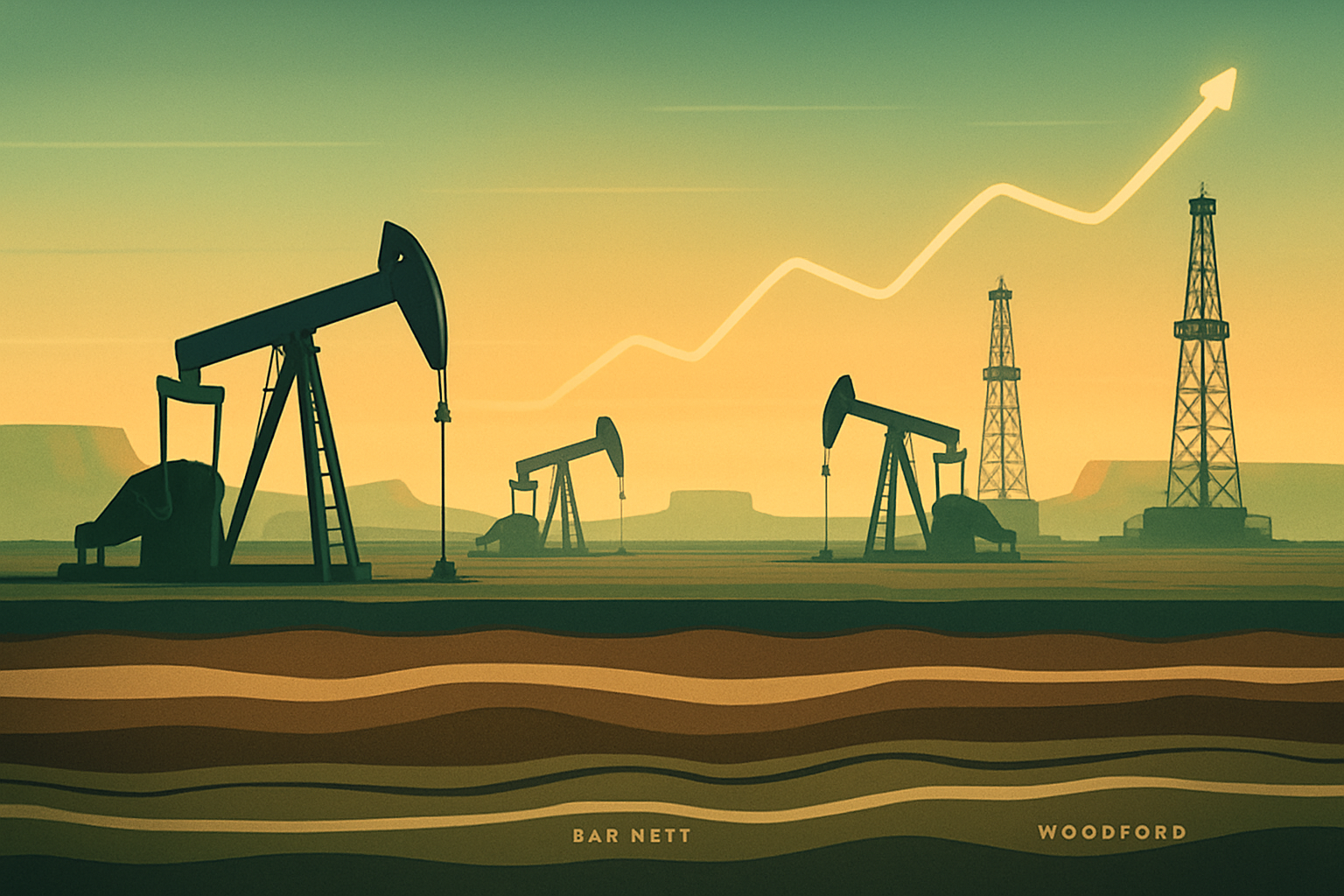
    In 2026, Diamondback is increasingly focusing on "inventory depth" through innovation. The company has allocated over $100 million in 2026 to explore deeper shale layers, specifically the Barnett and Woodford formations in the Midland Basin. If successful, these "deeper zones" could add years of tier-1 drilling inventory to an already vast portfolio. Additionally, through its interest in midstream infrastructure, Diamondback has innovated in "produced water" recycling, significantly reducing its reliance on fresh water for hydraulic fracturing.

    Competitive Landscape

    Diamondback operates in the most competitive oil patch in the world. Its primary rivals are no longer small independents, but global giants. Following the massive consolidation of 2024, the "Big Three" of the Permian consist of:

    1. ExxonMobil (NYSE: XOM): Following its merger with Pioneer Natural Resources, Exxon is the largest producer in the basin.
    2. Chevron (NYSE: CVX): A dominant player with high capital efficiency and extensive midstream assets.
    3. Diamondback Energy (NASDAQ: FANG): Now the third-largest producer, maintaining an edge through its "pure-play" agility and lower overhead compared to the supermajors.

    Occidental Petroleum (NYSE: OXY), following its CrownRock acquisition, also remains a fierce competitor for acreage and labor in the Midland Basin.

    Industry and Market Trends

    The Permian Basin in 2026 is defined by two major trends: consolidation and "gas takeaway" constraints. As the basin matures, the easy oil has been found, forcing operators to focus on operational efficiency and horizontal lateral lengths of three miles or more.

    A macro driver for 2026 is the pricing at the Waha gas hub. Due to a surge in associated gas production and limited pipeline capacity, natural gas prices in the Permian have frequently turned negative. Diamondback has mitigated this by securing firm long-haul takeaway capacity, ensuring its gas reaches higher-priced markets on the Gulf Coast or in Mexico, a strategy that separates the winners from the losers in the current environment.

    Risks and Challenges

    Despite its strong position, Diamondback faces several headwinds:

    • Commodity Price Volatility: Like all E&Ps, Diamondback is a price-taker. A global economic slowdown or an OPEC+ supply surge could compress margins.
    • Regulatory Scrutiny: Federal methane regulations and state-level restrictions on produced water disposal (due to seismicity concerns) have increased compliance costs.
    • Waha Basis Risk: Continued pipeline bottlenecks could force production curtailments if gas cannot be moved out of the basin.
    • Inventory Quality: As the "best" zones are drilled, there is long-term concern about the productivity of secondary "Tier 2" acreage.

    Opportunities and Catalysts

    • Synergy Realization: Every dollar saved in the Endeavor integration flows directly to the bottom line. Analysts are watching for further "capital efficiency" beats in late 2026.
    • Deleveraging: As the debt-to-EBITDA ratio falls toward 1.0x, the company is expected to pivot more aggressively toward share buybacks.
    • Deeper Formations: Success in the Barnett and Woodford shales could trigger a significant re-rating of the stock as investors price in a longer production runway.
    • M&A Potential: While currently a buyer, Diamondback’s high-quality asset base makes it a perpetual target for a supermajor looking to dominate the Permian.

    Investor Sentiment and Analyst Coverage

    Wall Street maintains a "Strong Buy" consensus on FANG. Analysts from firms like Mizuho, Citi, and Goldman Sachs have set price targets ranging from $190 to $230 for the 2026 fiscal year. Institutional ownership remains high, with major funds like BlackRock and Vanguard holding significant stakes, attracted by the company’s disciplined return of capital. Retail sentiment is generally positive, with Diamondback often cited in "dividend growth" and "energy value" forums as a top-tier pick for income-seeking investors.

    Regulatory, Policy, and Geopolitical Factors

    Geopolitical instability in 2026 has kept a floor under oil prices, benefiting Diamondback’s domestic operations. Domestically, the regulatory environment is a mix of challenge and opportunity. While the current administration has tightened methane standards, there is a growing recognition of the Permian’s role in global energy security. Diamondback’s ESG-linked compensation—where 25% of executive pay is tied to emissions and safety targets—has helped it navigate the regulatory landscape and maintain favor with ESG-conscious institutional investors.

    Conclusion

    Diamondback Energy (NASDAQ: FANG) stands in 2026 as a testament to the power of focus and disciplined execution. By remaining a pure-play Permian operator and successfully integrating the massive Endeavor acquisition, the company has secured a seat at the table with the world’s largest energy giants.

    For investors, Diamondback offers a balanced proposition: the security of a massive, high-quality asset base combined with an aggressive shareholder return framework. While risks regarding gas pricing and regulatory shifts remain, the company’s low breakeven costs and superior inventory depth provide a significant margin of safety. As the Permian continues to consolidate, Diamondback’s role as the basin’s leading independent operator makes it a critical stock to watch for anyone tracking the future of American energy.


    This content is intended for informational purposes only and is not financial advice.
  • Permian Juggernaut: A Deep-Dive into Diamondback Energy’s (FANG) Q4 2025 Performance

    Permian Juggernaut: A Deep-Dive into Diamondback Energy’s (FANG) Q4 2025 Performance

    As of February 23, 2026, the energy sector’s eyes are fixed on Midland, Texas. Diamondback Energy (NASDAQ: FANG), the undisputed heavyweight champion of Permian Basin independent producers, has just released its fourth-quarter 2025 earnings. In a market defined by fluctuating crude prices and a fierce industry-wide mandate for capital discipline, Diamondback stands as a case study in scale and operational efficiency. Following its transformative $26 billion acquisition of Endeavor Energy Resources in late 2024, Diamondback has pivoted from an aggressive growth engine into a "Permian Juggernaut" that prioritizes free cash flow and debt reduction. Today’s earnings report confirms whether the company’s "Yellow Light" strategy—a cautious approach to production growth in a volatile price environment—is delivering the premium returns investors have come to expect.

    Historical Background

    Diamondback Energy’s ascent is one of the most remarkable stories in the American shale revolution. Founded in 2007 with backing from Wexford Capital and led by CEO Travis Stice, the company began with a modest acreage position in the Permian Basin. Its 2012 initial public offering (IPO) marked the beginning of a decade-long land grab.

    Unlike many of its peers who overextended during the "shale boom," Diamondback became known for its "drill-to-earn" rather than "drill-to-grow" philosophy. Key transformations included the 2018 acquisition of Energen for $9.2 billion and the 2021 acquisition of QEP Resources. However, the defining moment in the company’s history occurred in February 2024, when it announced the merger with Endeavor Energy Resources. This deal effectively ended the "consolidation era" of the Midland Basin, creating a pure-play independent operator capable of competing with integrated majors like ExxonMobil (NYSE: XOM) and Chevron (NYSE: CVX).

    Business Model

    Diamondback Energy operates a streamlined, high-margin business model focused exclusively on the Permian Basin, primarily within the Midland and Delaware sub-basins. Its revenue is derived from the exploration, development, and production of oil, natural gas, and natural gas liquids (NGLs).

    A unique facet of Diamondback’s model is its subsidiary structure, notably Viper Energy (NASDAQ: VNOM). Through Viper, Diamondback owns mineral interests and royalties, providing a high-margin revenue stream that is decoupled from the high capital expenditures (CapEx) of drilling operations. Additionally, the company maintains significant midstream interests, which it has recently begun to monetize or optimize to fund debt reduction. By controlling the "full stack" of the Permian value chain—from minerals to midstream—Diamondback minimizes third-party bottlenecks and maximizes its realized price per barrel.

    Stock Performance Overview

    Diamondback has historically been a top performer in the energy sector. As of February 23, 2026, FANG is up approximately 12.5% year-to-date, significantly outperforming the broader S&P 500 energy index.

    • 1-Year Performance: The stock has seen a steady climb as the market gained confidence in the Endeavor integration, rising roughly 22% over the past 12 months.
    • 5-Year Performance: Since the post-pandemic recovery of 2021, FANG has seen a meteoric rise, benefiting from the global energy crunch and its own disciplined capital allocation, yielding returns in excess of 250%.
    • 10-Year Performance: Long-term shareholders have seen the stock weather the 2014-2016 and 2020 price crashes, ultimately emerging as a "blue-chip" shale play with a compound annual growth rate that rivals tech-sector performance.

    Financial Performance

    In the Q4 2025 results released today, Diamondback reported adjusted earnings per share (EPS) of $2.08, landing within the projected range of $2.00 to $2.11. Total revenue for the quarter reached $3.28 billion, reflecting a softer realized oil price environment (averaging $65/bbl WTI) compared to the previous year.

    The company’s focus remains on the balance sheet. Following the Endeavor deal, Diamondback’s consolidated debt peaked near $18 billion; as of today’s report, that figure has been whittled down to $16.24 billion. Management reaffirmed its goal of reaching a $10 billion net debt target by the end of 2026. Free cash flow (FCF) remains robust, supporting a base dividend of $1.00 per share per quarter ($4.00 annualized), supplemented by opportunistic share buybacks from an authorized $8.0 billion program.

    Leadership and Management

    The leadership team, headed by CEO Travis Stice and President Kaes Van’t Hof, is widely regarded as one of the best in the E&P (Exploration & Production) space. Stice has been the steady hand since the IPO, while Van’t Hof is often credited as the architect of the company’s sophisticated financial and M&A strategies.

    The management team is known for its transparency and alignment with shareholders. They were among the first in the industry to tie executive compensation to environmental, social, and governance (ESG) metrics and free cash flow generation rather than simple production growth. Their reputation for "operational excellence" is backed by some of the lowest cash operating costs in the Permian Basin.

    Products, Services, and Innovations

    Diamondback’s "product" is high-quality light sweet crude, but its "innovation" is in the process. The company has pioneered "continuous pumping" techniques and ultra-long lateral wells (exceeding 15,000 feet) that significantly lower the breakeven cost of each barrel.

    In 2025, Diamondback expanded its use of AI-driven drilling analytics to optimize well spacing and frac design, reducing "parent-child" well interference—a common problem in the Permian where new wells underperform due to proximity to older ones. Furthermore, Diamondback’s investment in "Deep Blue" midstream assets and water recycling infrastructure has allowed it to reuse over 90% of its produced water, a critical cost-saver and environmental advantage in the arid West Texas climate.

    Competitive Landscape

    Diamondback occupies a unique "Goldilocks" position. It is large enough to achieve the economies of scale enjoyed by majors like ExxonMobil (which recently integrated Pioneer Natural Resources) and Chevron, yet small enough to remain nimble.

    • Strengths: Lowest-in-class breakeven costs (estimated under $40/bbl WTI) and a decade-plus of "top-tier" drilling inventory.
    • Weaknesses: Unlike Exxon or Chevron, Diamondback lacks downstream (refining) assets. This makes it more vulnerable to fluctuations in the price of crude oil compared to integrated companies that can hedge production with refining margins.

    Industry and Market Trends

    The "Shale 4.0" era is defined by maturity. The industry has moved away from the "growth at all costs" mantra of 2010–2019. Current trends include:

    1. Consolidation: The Permian is now dominated by a handful of massive players.
    2. Inventory Concerns: Analysts are increasingly focused on how many years of "Tier 1" (highest quality) acreage companies have left. Diamondback’s Endeavor acquisition was a strategic move to secure another 15+ years of such inventory.
    3. Natural Gas Glut: With the Permian producing record amounts of associated gas, Diamondback has had to navigate low regional gas prices, relying on firm transport agreements to move product to the Gulf Coast for export.

    Risks and Challenges

    Despite its strong position, Diamondback faces several headwinds:

    • Commodity Price Volatility: A global slowdown or a surge in OPEC+ production could push WTI below $60, squeezing the margins necessary for the company’s aggressive debt-reduction plan.
    • Regulatory Risk: The EPA’s tightening rules on methane emissions and potential restrictions on federal land leasing (though Diamondback is primarily on private land) present ongoing compliance costs.
    • Execution Risk: While the Endeavor integration has been smooth so far, any operational hiccups in combining such massive legacy systems could impact the projected $550 million in annual synergies.

    Opportunities and Catalysts

    The primary catalyst for 2026 is the potential for a "credit upgrade." As Diamondback approaches its $10 billion debt target, credit rating agencies may move the company higher into investment-grade territory, lowering its cost of capital.
    Another opportunity lies in the LNG (Liquefied Natural Gas) export boom. As new export terminals come online on the Texas coast in 2026 and 2027, Diamondback’s associated gas—previously a byproduct—could become a significant profit center if regional price differentials narrow.

    Investor Sentiment and Analyst Coverage

    Wall Street remains overwhelmingly bullish. Of the 32 analysts covering FANG, a vast majority hold "Strong Buy" ratings. The consensus view is that Diamondback is the "cleanest" way to play the Permian Basin. Institutional ownership remains high, with heavyweights like Vanguard and BlackRock holding significant stakes. Retail sentiment is similarly positive, bolstered by the company’s consistent dividend hikes and the transparency of its shareholder return framework.

    Regulatory, Policy, and Geopolitical Factors

    Geopolitical instability in the Middle East and Eastern Europe continues to provide a "risk premium" that supports oil prices, benefiting domestic producers like Diamondback. Domestically, the 2026 policy landscape is focused on infrastructure. The completion of new pipelines out of the Permian (such as the BANGL expansion) is crucial for Diamondback to avoid localized price discounts. Furthermore, the company’s proactive stance on reducing routine flaring has largely shielded it from the most aggressive ESG-related regulatory pressures.

    Conclusion

    Diamondback Energy’s Q4 2025 earnings report marks a milestone in its journey to becoming the premier American independent oil producer. By successfully absorbing Endeavor, the company has secured a dominant, high-quality inventory that should last well into the 2030s. While lower commodity prices compared to 2024 have moderated earnings growth, the company’s laser focus on debt reduction and capital efficiency provides a safety net for investors. For those looking for exposure to the "engine room" of American energy, Diamondback remains a formidable contender, provided they can stomach the inherent volatility of the oil markets.


    This content is intended for informational purposes only and is not financial advice.