Tag: DoorDash

  • The New Era of Local Commerce: A Deep Dive into DoorDash (DASH) and the Global Tariff Shock

    The New Era of Local Commerce: A Deep Dive into DoorDash (DASH) and the Global Tariff Shock

    As of February 24, 2026, DoorDash (NYSE: DASH) has transitioned from a Silicon Valley delivery darling into a global titan of local commerce. While its origins are rooted in the simple delivery of restaurant meals, the DoorDash of 2026 is a multi-faceted logistics and advertising powerhouse. However, this evolution faces a new and formidable challenge: the "Global Tariff Shock" of 2025-2026. With trade tensions reshaping the cost of hardware and consumer goods, DoorDash finds itself at a crossroads—balancing record profitability with a macro-economic environment that threatens the discretionary spending of its core user base.

    Historical Background

    Founded in 2013 by Stanford students Tony Xu, Stanley Tang, Andy Fang, and Evan Moore, DoorDash began as "PaloAltoDelivery.com." The founders personally delivered the first orders to understand the friction points of the merchant-dasher-consumer triad. By 2018, DoorDash had overtaken Grubhub (NASDAQ: JET) in US market share, a lead it never relinquished.

    The company’s 2020 IPO marked a turning point, providing the capital necessary to expand beyond food. Key milestones include the 2022 acquisition of Finnish delivery firm Wolt, which opened the doors to Europe and Central Asia, and the blockbuster 2025 acquisition of Deliveroo. These moves transformed DoorDash into a truly international platform, setting the stage for the unified global tech stack initiative currently underway in 2026.

    Business Model

    DoorDash operates a high-velocity, three-sided marketplace:

    • Marketplace: The core platform connecting consumers with over 600,000 merchants. Revenue is generated via commissions from merchants and service fees from consumers.
    • DashPass: A subscription service that provides $0 delivery fees. By 2026, DashPass has become the company's primary retention engine, with members spending significantly more than non-members.
    • Advertising & Retail Media: DoorDash now allows brands to purchase "sponsored listings" and display ads. This high-margin segment is a critical driver of the company’s recent shift toward GAAP profitability.
    • New Verticals (Grocery & Retail): Expanding into non-restaurant categories like alcohol, flowers, and beauty products.
    • Drive: A white-label fulfillment service where merchants use DoorDash’s logistics network for orders placed on their own websites.

    Stock Performance Overview

    Over the past year, DASH has outperformed the broader S&P 500, buoyed by the 2025 realization of GAAP net income. However, the five-year horizon tells a story of significant volatility, including the "post-pandemic hangover" of 2022 and the subsequent recovery driven by disciplined cost management.

    While the stock reached all-time highs in late 2025 following the Deliveroo acquisition, early 2026 has seen a slight pullback. Investors are currently weighing the company's "investment year" guidance—meant to unify its global tech platforms—against the backdrop of rising global tariffs which have introduced uncertainty into the consumer tech sector.

    Financial Performance

    DoorDash reported a stellar fiscal year 2025, with revenue reaching $13.7 billion, a substantial increase from $10.7 billion in 2024. For Q4 2025, the company posted:

    • Revenue: $4.0 billion (up 38% YoY).
    • GAAP Net Income: $935 million for the full year, a massive swing from the $123 million reported in 2024.
    • Adjusted EBITDA: $780 million in Q4, representing 2.6% of Gross Order Value (GOV).
    • Free Cash Flow: DoorDash continues to generate robust cash flow, ending 2025 with a healthy balance sheet that includes over $4 billion in cash and short-term investments.

    The 2026 outlook is more cautious, with Q1 Adjusted EBITDA projected between $675M and $775M as the company reinvests heavily in international integration.

    Leadership and Management

    CEO Tony Xu remains the architect of DoorDash’s "relentless execution" culture. Under his leadership, the company has maintained a flat organizational structure and a unique "Dash" requirement, where corporate employees must complete one delivery per month.

    The management team, including CFO Ravi Inukonda, has been praised by Wall Street for their "under-promise and over-deliver" approach to financial guidance. The board’s strategy in 2026 focuses on "System-Building for Local Commerce," aiming to make DoorDash the default infrastructure for any item moving within a city.

    Products, Services, and Innovations

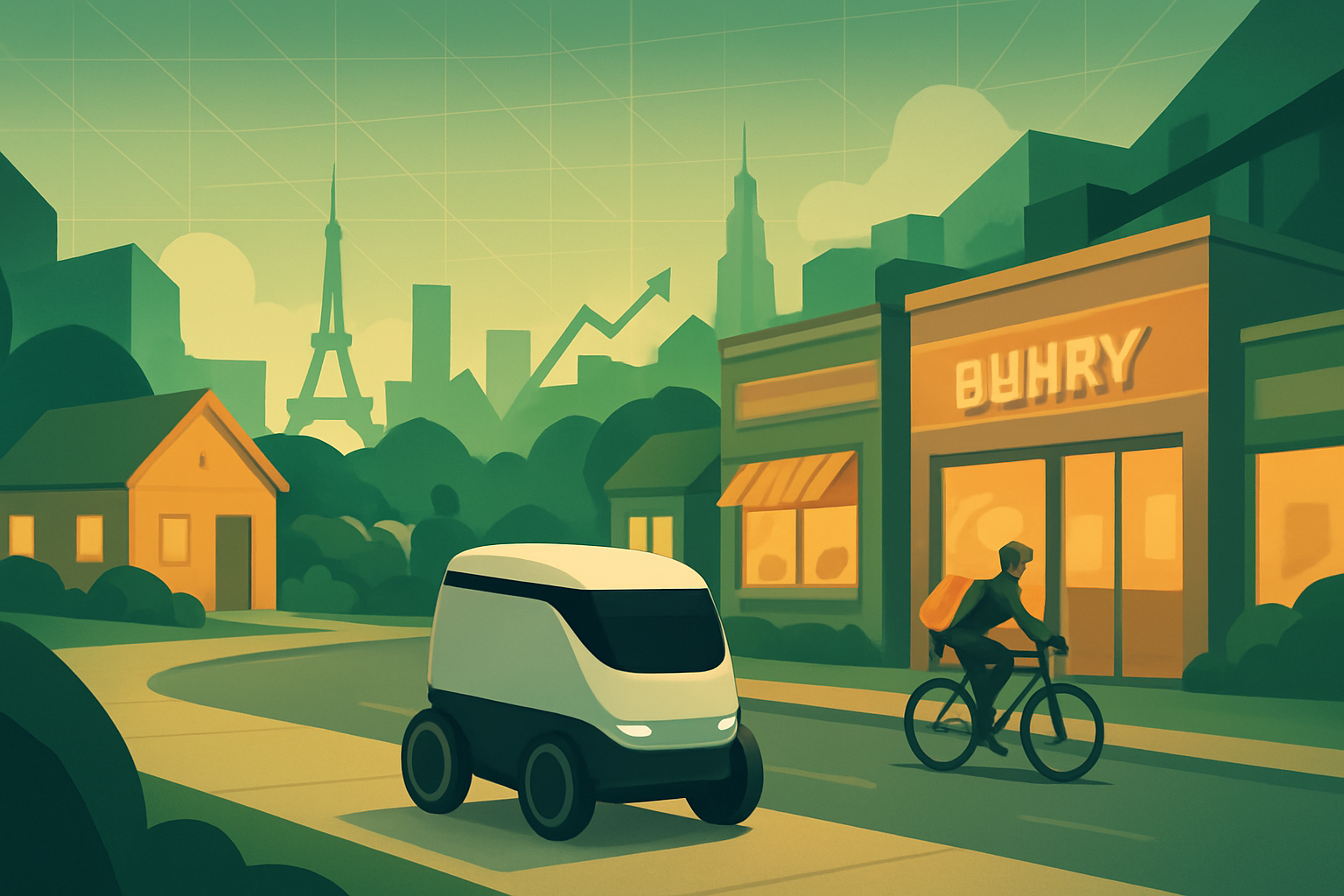
    The most significant innovation in 2026 is the "DoorDash Dot," an autonomous sidewalk robot designed for short-distance, small-basket deliveries. This technology aims to solve the "unit economics" problem of delivering a single coffee or convenience item.

    Additionally, the company is rolling out its Unified Global Tech Stack, which merges the back-end systems of DoorDash, Wolt, and Deliveroo. This will allow for seamless cross-border logistics and a centralized advertising platform that can reach consumers in London, Helsinki, and New York with a single campaign.

    Competitive Landscape

    DoorDash maintains a dominant position in the US, holding an estimated 57% to 67% market share. Its primary rival, Uber (NYSE: UBER), holds 23-25% through Uber Eats.

    The competitive battleground has shifted to "New Verticals." While DoorDash leads in suburban food delivery, Uber Eats is leveraging its cross-platform "Uber One" membership to gain ground in urban grocery segments. Meanwhile, Grubhub has retreated to a niche focus on campus dining after its acquisition by Wonder Foods. In Europe, DoorDash faces fierce competition from local champions like Just Eat Takeaway and Delivery Hero, though the Deliveroo acquisition has given DASH a formidable lead in the UK and Middle East.

    Industry and Market Trends

    The "Anywhere Economy" is the defining trend of 2026. Consumers now expect every local merchant—from boutiques to hardware stores—to offer same-day delivery. This has forced a consolidation of logistics providers, as only the largest players have the density to make the economics work.

    Furthermore, the rise of Retail Media Networks (RMNs) has turned delivery apps into search engines. DoorDash is capitalizing on this by transforming its app into a high-intent shopping destination, competing directly with Amazon (NASDAQ: AMZN) for local search dominance.

    Risks and Challenges: The Tariff Shock

    The primary headwind in 2026 is the impact of global tariffs. With effective US tariff rates reaching 13-17% following recent trade disputes, the "discretionary dollar" is under pressure.

    • Consumer Inflation: Tariffs have added an estimated $1,300 to $2,400 in annual costs for the average US household. This "ancillary inflation" reduces the frequency of luxury services like food delivery.
    • Hardware Costs: The rollout of "DoorDash Dot" robots and merchant tablets is becoming more expensive due to tariffs on imported electronics, aluminum, and steel.
    • Operational Pressure: Rising costs for vehicle parts and fuel—exacerbated by trade-related energy disruptions—increase the "Dasher pay" required to keep the fleet active, squeezing the company's take rate.

    Opportunities and Catalysts

    Despite the macro challenges, several catalysts remain:

    • Grocery Profitability: Management expects the grocery and retail segments to turn profit-positive by the second half of 2026.
    • Advertising Scale: DoorDash is on track to hit $2.6 billion in high-margin advertising revenue by 2027.
    • Autonomous Efficiency: If the "DoorDash Dot" rollout is successful, it could significantly lower the cost-per-delivery in high-density urban areas, insulating the company from rising labor costs.

    Investor Sentiment and Analyst Coverage

    Wall Street remains generally bullish on DASH, viewing it as the "best-in-class" operator in local logistics. However, institutional investors are closely monitoring the 2026 "investment cycle." Analysts from major banks have expressed concern that the unification of the global tech stack might distract management from domestic competition with Uber. Retail sentiment remains positive, though there is "chatter" regarding the potential impact of labor regulation in the European markets acquired via Deliveroo.

    Regulatory, Policy, and Geopolitical Factors

    DoorDash faces a complex regulatory map in 2026. In the US, the debate over "worker classification" (Independent Contractor vs. Employee) continues at the state level. In the EU, the Platform Work Directive poses a structural risk to margins if Deliveroo and Wolt are forced to reclassify their couriers.

    Geopolitically, the company is navigating a world of "fragmented trade." The focus on supply chain resilience has forced DoorDash to seek domestic or "friend-shored" alternatives for its hardware needs, a move that is strategically sound but operationally expensive in the short term.

    Conclusion

    As of February 2026, DoorDash stands as a titan of the local commerce industry, having successfully navigated the transition to profitability. Its market share in the US is commanding, and its international expansion has provided it with a massive total addressable market.

    However, the "Global Tariff Shock" represents a significant test of the company's resilience. Investors should watch closely to see if DoorDash can maintain its delivery frequency in a higher-inflation environment and if its autonomous delivery investments can offset the rising costs of traditional logistics. While the 2026 "investment year" may lead to short-term margin pressure, the long-term vision of a unified, ad-supported, global delivery platform remains a compelling narrative for the "anywhere economy."


    This content is intended for informational purposes only and is not financial advice.

  • DoorDash (DASH): The Operating System for Local Commerce in 2026

    DoorDash (DASH): The Operating System for Local Commerce in 2026

    As of February 19, 2026, DoorDash, Inc. (NASDAQ: DASH) has evolved far beyond its origins as a third-party restaurant delivery service. Once viewed as a high-growth but profit-bleeding "gig economy" experiment, the company enters 2026 as the undisputed heavyweight of local commerce. With a dominant market share and a successful pivot into grocery, retail, and advertising, DoorDash has silenced critics who doubted the long-term viability of the delivery business model. Today, the company is increasingly viewed as a logistics and data powerhouse—the "operating system for local trade"—connecting millions of consumers with nearly any physical product in their zip code in under an hour.

    Historical Background

    Founded in 2013 by Stanford students Tony Xu, Stanley Tang, Andy Fang, and Evan Moore, DoorDash began as "Palo Alto Delivery." The founders personally delivered the first orders to understand the pain points of local merchants. By focusing on suburban markets that its early rival Grubhub ignored, DoorDash rapidly gained ground.

    The company’s trajectory changed forever during the COVID-19 pandemic, which pulled forward years of consumer adoption. DoorDash went public in December 2020 in one of the year’s most anticipated IPOs. Since then, the company has pursued aggressive horizontal and geographic expansion. Key milestones include the $8 billion acquisition of Finnish delivery platform Wolt in 2022, which provided a European foothold, and the late 2025 acquisition of Deliveroo, which solidified its position as a global leader in the logistics space.

    Business Model

    DoorDash operates a three-sided marketplace consisting of consumers, merchants (restaurants, grocers, retailers), and "Dashers" (independent delivery couriers). Its revenue streams are diversified across four primary pillars:

    1. Marketplace Core: Commissions from merchants and service fees from consumers on every order.
    2. DashPass: A high-margin subscription service that provides members with $0 delivery fees. As of early 2026, DashPass remains a critical loyalty driver and a predictable recurring revenue stream.
    3. Advertising & Promotions: A burgeoning high-margin business where merchants pay for sponsored listings and "Featured" placement. This segment reached a $1 billion annual run-rate in late 2024 and continues to be a primary driver of EBITDA expansion.
    4. Drive (White-Label Logistics): DoorDash provides the fulfillment backbone for merchants’ own websites and apps, allowing brands like Chipotle or Macy’s to offer delivery without managing their own fleets.

    Stock Performance Overview

    The performance of DASH stock has been a story of resilience. After a volatile period following its 2020 IPO and a significant drawdown during the tech rout of 2022, the stock began a sustained recovery in 2023. Over the past five years, DoorDash has outperformed many of its pandemic-era peers.

    In 2024 and 2025, the stock saw a massive re-rating as the company achieved GAAP profitability and demonstrated that its grocery and retail segments could scale efficiently. Year-over-year, the stock is up approximately 35%, reflecting investor confidence in management's ability to maintain high double-digit revenue growth while expanding margins.

    Financial Performance

    DoorDash’s financial profile has undergone a dramatic transformation. In fiscal year 2024, the company hit a historic milestone: its first full year of GAAP profitability, reporting a net income of $123 million.

    As we look at the figures for 2025 and projections for 2026:

    • Revenue: Reached $13.72 billion in 2025, a significant jump fueled by the Deliveroo acquisition and high "New Vertical" adoption. Analysts project revenue to approach $17.84 billion by the end of 2026.
    • Adjusted EBITDA: Management has successfully optimized the cost of delivery. Adjusted EBITDA for 2025 hovered near $2.8 billion, with 2026 targets aiming for further expansion through automation.
    • Free Cash Flow (FCF): The company generated $1.8 billion in FCF in 2025, providing a massive war chest for R&D and further M&A.
    • Valuation: While still trading at a premium compared to traditional retail, its Price-to-Sales and EV/EBITDA multiples have stabilized as the "path to profit" is no longer a question, but a reality.

    Leadership and Management

    CEO Tony Xu has earned a reputation for disciplined execution and a long-term "founder-led" mindset. Unlike many tech CEOs who focused solely on growth at any cost, Xu transitioned the company toward operational efficiency ahead of the market curve in 2022.

    The management team was further bolstered by the integration of Wolt CEO Miki Kuusi, who now oversees international operations. The board is recognized for its strong governance and focus on shareholder value, evidenced by strategic share buyback programs initiated in 2024-2025 to offset dilution from stock-based compensation.

    Products, Services, and Innovations

    Innovation in 2026 is centered on "The Everything Store." DoorDash has moved aggressively into:

    • Grocery and Retail: Now the #1 third-party marketplace for U.S. grocery volume, partnering with giants like Kroger and Wegmans.
    • AI Integration: In early 2026, DoorDash launched a ChatGPT-powered "Meal to Cart" feature, allowing users to plan a week of meals via AI and have the entire grocery list populated and delivered in one click.
    • Autonomous Logistics: DoorDash is scaling its own autonomous delivery platform, using a hybrid of sidewalk robots for dense urban cores and drone delivery for suburban medicine and small-item retail, significantly lowering the "cost per drop."

    Competitive Landscape

    DoorDash maintains a dominant 67-68% share of the U.S. food delivery market. Its primary rival, Uber Eats (owned by Uber Technologies, Inc. (NYSE: UBER)), holds approximately 24% and competes fiercely through its "Uber One" cross-platform loyalty program.

    Grubhub, once a leader, has seen its share dwindle to single digits (~8%) and was sold to Wonder Foods in early 2025 at a fraction of its former valuation. Meanwhile, Instacart (Maplebear Inc. (NASDAQ: CART)) remains the primary challenger in the grocery space, though DoorDash’s superior logistics density and larger user base have allowed it to capture significant market share from the grocery-first incumbent.

    Industry and Market Trends

    The "On-Demand Economy" has shifted from a luxury to a utility. Three key trends define the sector in 2026:

    1. Convenience as a Commodity: Consumers now expect sub-30-minute delivery for non-food items, ranging from hardware (Home Depot) to apparel (Old Navy).
    2. Ads-as-a-Service: Like Amazon, delivery platforms have become massive advertising networks, as brands realize the value of appearing at the "point of purchase" on a mobile device.
    3. Consolidation: The high cost of technology and logistics has led to a "winner-take-most" market, favoring players like DoorDash with the scale to amortize R&D costs.

    Risks and Challenges

    Despite its dominance, DoorDash faces significant hurdles:

    • Labor Costs: Continuous upward pressure on gig worker wages in markets like New York City and Seattle threatens to compress margins.
    • Consumer Sensitivity: In an environment of fluctuating macro conditions, higher service fees to offset regulatory costs can lead to "fee fatigue," resulting in lower order volumes.
    • Execution Risk: Integrating large acquisitions like Deliveroo while simultaneously building a grocery business and an autonomous fleet is a massive operational undertaking.

    Opportunities and Catalysts

    • International Profitability: As Wolt and Deliveroo are fully integrated into the "Dash" tech stack, international margins are expected to catch up to North American levels.
    • Advertising Upside: If DoorDash can increase its ad revenue to 4-5% of Gross Order Value (GOV), it would represent a massive high-margin windfall.
    • Retail Partnerships: Deepening ties with big-box retailers for "last-mile-as-a-service" offers a revenue stream that doesn't depend on consumer-facing marketing spend.

    Investor Sentiment and Analyst Coverage

    Wall Street sentiment toward DASH is currently "Strong Buy" or "Outperform" across most major institutions. Analysts cite the company's clear leadership in the U.S. and its successful diversification into grocery as the primary reasons for optimism. Hedge fund activity in late 2025 showed increased positioning by growth-oriented funds, who view DoorDash not just as a delivery company, but as a dominant player in the broader e-commerce landscape.

    Regulatory, Policy, and Geopolitical Factors

    Regulation remains the primary "wild card." In 2024 and 2025, cities like Seattle and New York implemented aggressive minimum pay laws for delivery workers. In Seattle, this led to a $4.99 "Regulatory Response Fee," which briefly cooled demand.

    At a national level, the debate over worker classification (1099 vs. W-2) continues to simmer, though DoorDash has successfully navigated this by advocating for "portable benefits" models that preserve flexibility while providing some security. Geopolitically, the expansion into Europe and Asia brings exposure to varying labor laws and digital services taxes.

    Conclusion

    As of early 2026, DoorDash has successfully transitioned from a specialized food delivery app into a diversified logistics titan. By dominating the U.S. market, achieving GAAP profitability, and aggressively expanding into grocery and advertising, the company has built a multi-layered moat that is difficult for competitors to breach.

    Investors should watch for two key milestones in 2026: the successful integration of Deliveroo’s technology and the point at which the grocery segment becomes economic-profit positive. While regulatory headwinds and labor costs remain persistent threats, DoorDash's scale, technological edge, and leadership stability position it as a foundational stock in the modern digital economy.


    This content is intended for informational purposes only and is not financial advice.

  • DoorDash (DASH) Deep Dive: Dominance, Diversification, and the Deliveroo Integration

    DoorDash (DASH) Deep Dive: Dominance, Diversification, and the Deliveroo Integration

    As of today, February 17, 2026, DoorDash (NASDAQ: DASH) stands as the undisputed titan of the North American delivery landscape, commanding a market share that has effectively sidelined its domestic competition. With its Q4 2025 earnings report scheduled for release tomorrow, investors and analysts are bracing for what could be a watershed moment for the company. Once viewed as a pandemic-era beneficiary whose growth would inevitably stall, DoorDash has instead transformed into a diversified logistics and advertising powerhouse. This research feature explores the company’s evolution from a Stanford dormitory project to a global platform poised to redefine the "everything delivery" category.

    Historical Background

    Founded in 2013 by Tony Xu, Stanley Tang, Andy Fang, and Evan Moore, DoorDash began its journey as "Palo Alto Delivery." The founders, then students at Stanford University, personally delivered the first orders to understand the logistical pain points of local merchants. Their insight was simple but profound: while pizza and Chinese food had delivery infrastructure, the vast majority of local businesses did not.

    By late 2013, the company rebranded as DoorDash and began a rapid expansion across the United States. Its 2020 IPO was one of the most anticipated of the decade, occurring at the height of the COVID-19 pandemic when delivery services became a societal lifeline. Since then, the company has transitioned through multiple phases: from aggressive market share acquisition to operational efficiency, and most recently, into a multi-vertical global platform through the landmark acquisitions of Wolt (2022) and Deliveroo (2025).

    Business Model

    DoorDash operates a three-sided marketplace connecting merchants, consumers, and "Dashers" (delivery drivers). Its revenue model is diversified across several streams:

    • Marketplace Commissions: Percentage-based fees charged to merchants for every order.
    • Service and Delivery Fees: Fees paid by consumers for logistics and platform usage.
    • DashPass Subscription: A $9.99/month loyalty program that offers $0 delivery fees, driving high order frequency.
    • Advertising (DoorDash Ads): A high-margin segment where merchants and brands pay for sponsored listings and performance marketing.
    • White-Label Logistics (Drive): Providing delivery infrastructure for businesses’ own websites and apps.

    The company has successfully moved beyond prepared food into grocery, convenience, alcohol, and retail, effectively increasing the total addressable market (TAM) and order density per geographic zone.

    Stock Performance Overview

    Since its December 2020 IPO at $102 per share, DASH has experienced significant volatility.

    • 1-Year Performance: Over the past 12 months, the stock has rallied approximately 45%, buoyed by resilient consumer spending and the successful integration of international assets.
    • 5-Year Performance: After peaking near $250 in late 2021 and subsequently crashing below $50 during the 2022 growth-stock selloff, the stock has staged a remarkable recovery. Currently trading near $265, long-term investors from the IPO have seen a 160% gain, significantly outperforming the broader tech indices over the same period.
    • 10-Year Context: While the company has not yet been public for 10 years, its trajectory from a private startup to a $100B+ market cap entity represents one of the most successful scaling stories in recent Silicon Valley history.

    Financial Performance

    DoorDash enters the final stretch of its 2025 fiscal year in its strongest financial position to date.

    • Revenue: FY 2025 revenue is estimated between $12.8B and $13.3B, a 25% year-over-year increase.
    • Earnings Expectations (Q4 2025): Consensus estimates for tomorrow’s report suggest revenue of ~$4.0B and EPS between $0.58 and $1.29.
    • Margins: Adjusted EBITDA margins have expanded to approximately 3.0% of Gross Order Value (GOV). The advertising business, which reached a $1 billion annual run-rate in late 2024, is the primary engine behind this margin expansion.
    • Gross Order Value (GOV): Management has guided for a combined merchant sales and Dasher earnings figure to exceed $100 billion by the end of 2026.

    Leadership and Management

    CEO and co-founder Tony Xu remains the driving force behind DoorDash’s "relentless execution" culture. Xu is widely respected by Wall Street for his disciplined approach to capital allocation and his ability to maintain a founder-led innovation pace at a massive scale.

    The leadership team, including CFO Ravi Inukonda, has shifted its focus from growth-at-all-costs to sustainable GAAP profitability. The board of directors is composed of seasoned veterans from the technology and retail sectors, ensuring a balanced perspective as the company expands into physical logistics and advertising.

    Products, Services, and Innovations

    DoorDash’s "Innovation Pipeline" is currently focused on three pillars:

    1. New Verticals: DashMart, the company’s owned-and-operated dark stores, and partnerships with retailers like The Home Depot (NYSE: HD) and Lowe’s (NYSE: LOW).
    2. Advertising Platform: Utilizing deep consumer data to offer "off-platform" performance marketing via the 2025 Symbiosys acquisition.
    3. Autonomous Delivery: Through "DoorDash Dot," the company’s internal R&D unit, and a partnership with Waymo, DoorDash is testing autonomous sidewalk robots and self-driving vehicles to reduce long-term labor costs.

    Competitive Landscape

    DoorDash’s dominance in the U.S. is unprecedented:

    • DoorDash: 67% market share.
    • Uber Eats (NYSE: UBER): 23% market share.
    • Grubhub (owned by JET): <10% market share.

    While Uber remains a formidable rival with a global footprint and its own "One" subscription, DoorDash has maintained its lead by focusing more deeply on suburban markets and building superior logistics for non-restaurant categories like grocery. Internationally, the acquisition of Deliveroo in late 2025 has given DoorDash a critical foothold in the UK and UAE, directly challenging Uber Eats on a global stage.

    Industry and Market Trends

    The delivery sector is undergoing a massive consolidation phase. Small players are being absorbed, and the "Big Two" (DoorDash and Uber) are moving toward a duopoly in most Western markets. Key trends include:

    • The Convergence of Retail and Delivery: Consumers increasingly expect 30-minute delivery for everything from batteries to dog food.
    • AI-Native Platforms: DoorDash is rolling out an AI-native global tech stack in 2026 to personalize the "discovery" phase of shopping.
    • Shift to Subscription: DashPass (26 million subscribers) is becoming the standard for frequent users, creating a high barrier to entry for new competitors.

    Risks and Challenges

    Despite its dominance, DoorDash faces significant headwinds:

    • Regulatory Labor Costs: Cities like New York and Seattle have implemented minimum wage floors for gig workers, which has forced DoorDash to raise consumer fees, potentially impacting order volume.
    • Consumer Sentiment: In an inflationary environment, delivery remains a discretionary expense. Any significant macro downturn could lead to "DashPass" cancellations and lower order frequency.
    • Integration Risk: The $3.9 billion Deliveroo acquisition is still in its early stages; any failure to realize synergies could weigh on 2026 earnings.

    Opportunities and Catalysts

    • Deliveroo Synergy: If DoorDash can successfully port its advertising platform to Deliveroo’s 7 million active users, EBITDA could see a massive lift in 2026.
    • Grocery Penetration: Grocery delivery remains under-penetrated compared to restaurants. DoorDash’s new "Inventory Strategy" via DashMart Fulfillment could unlock this segment.
    • Advertising Maturity: Analysts project ad revenue to reach $2.6 billion by 2027, which would likely lead to a re-rating of the stock as a "platform" company rather than just a logistics firm.

    Investor Sentiment and Analyst Coverage

    Wall Street maintains a "Strong Buy" consensus on DASH, with a median price target of $278. Institutional ownership is high, with major positions held by Vanguard, BlackRock, and T. Rowe Price. Retail sentiment on platforms like Reddit and X (formerly Twitter) remains cautiously optimistic, with many traders viewing the upcoming earnings as a potential "breakout" event that could push the stock toward $300.

    Regulatory, Policy, and Geopolitical Factors

    The regulatory environment is the company’s most volatile factor.

    • United States: State-level battles over "independent contractor" status continue, though the 2024-2025 period saw more compromise-based legislation (like California’s Prop 22 model).
    • European Union: The EU Platform Work Directive, set for full enforcement in December 2026, could force a reclassification of workers in several European markets, significantly increasing operational costs. DoorDash is actively lobbying for a "third category" of worker that preserves flexibility while offering benefits.

    Conclusion

    As DoorDash prepares to report its Q4 2025 results tomorrow, the company is no longer just a food delivery app—it is a global logistics infrastructure layer. Its 67% U.S. market share provides a massive moat, and its pivot into high-margin advertising is beginning to bear fruit in the bottom line. However, the shadow of European regulatory changes and the complexity of the Deliveroo integration remain the primary hurdles for 2026. For investors, the focus should remain on DashPass retention and the pace of advertising growth; if these remain strong, DoorDash appears well-positioned to maintain its leadership in the "on-demand economy."


    This content is intended for informational purposes only and is not financial advice.