
Tag: Energy Technology

  • The Grid’s Last Stand: Generac Holdings (GNRC) and the High-Voltage Pivot to AI Infrastructure

    The Grid’s Last Stand: Generac Holdings (GNRC) and the High-Voltage Pivot to AI Infrastructure

    Date: February 12, 2026

    Introduction

    As the American power grid enters a period of unprecedented strain, few companies sit at the intersection of climate resilience and digital infrastructure as prominently as Generac Holdings (NYSE: GNRC). Long synonymous with the hum of backup generators in suburban driveways, Generac is undergoing a profound metamorphosis in early 2026. No longer just a hardware manufacturer, the company has repositioned itself as an "energy technology" leader, pivoting from purely reactive standby power to an integrated ecosystem of smart home energy management and high-stakes data center infrastructure.

    The stock is currently a focal point for Wall Street as it navigates a post-pandemic correction that saw shares retreat from 2021 highs, only to find a new, more robust growth engine in the artificial intelligence (AI) boom. As of today, February 12, 2026, Generac is proving that the "Electrification of Everything" requires more than just a stable grid—it requires the decentralized resilience that Generac has spent six decades perfecting.

    Historical Background

    Generac’s story began in 1959 in a barn in Wales, Wisconsin. Founded by Robert Kern with just $7,500 in capital, the company initially served as the primary manufacturer for Sears, Roebuck and Co.’s portable generators under the Craftsman brand. However, Kern’s most significant innovation came in 1989 when Generac introduced the first gaseous-fueled automatic home standby (HSB) generator. This product effectively created the residential backup power category, transforming a niche industrial tool into an essential appliance for homeowners.

    After a period of private equity ownership under CCMP Capital starting in 2006, Generac went public on the New York Stock Exchange in February 2010 (NYSE: GNRC). Under the leadership of Aaron Jagdfeld, who became CEO in 2008, the company has evolved through aggressive acquisitions—including ecobee, Enbala, and Pika Energy—moving beyond internal combustion engines into software, battery storage, and grid services.

    Business Model

    Generac operates through two primary segments: Residential and Commercial & Industrial (C&I).

    • Residential (Approx. 60% of Revenue): This segment includes the legacy home standby generators where Generac maintains a dominant ~75% market share. It also encompasses the "Clean Energy" suite: PWRcell battery storage, solar inverters, and ecobee smart thermostats. The model is shifting toward a recurring services framework where these devices participate in Virtual Power Plants (VPPs).
    • Commercial & Industrial (Approx. 40% of Revenue): This segment provides backup power for hospitals, telecommunications, and—most crucially in 2026—hyperscale data centers. Generac sells both gaseous and diesel-powered units, focusing on modularity and rapid deployment.

    Revenue is primarily driven by a vast distribution network of over 8,000 independent dealers, which provides a significant competitive moat compared to direct-to-consumer models like Tesla (NASDAQ: TSLA).

    Stock Performance Overview

    Generac’s stock chart tells a tale of extreme cycles.

    • 10-Year Performance: Since early 2016, GNRC has delivered a staggering total return of approximately 510%, outperforming the S&P 500 significantly despite its volatility.
    • 5-Year Performance: The stock remains roughly 32% below its late 2021 all-time highs. The post-COVID "pull-forward" of demand led to a painful multi-year digestion period as interest rates rose and residential solar markets cooled.
    • 1-Year Performance: Over the last 12 months, the stock has surged over 50%. This rally, culminating in a +17.8% single-day jump on February 11, 2026, reflects investor excitement over the company’s burgeoning data center backlog and a stabilization of the residential market.

    Financial Performance

    In its most recent reporting cycle ending in late 2025, Generac posted annual revenue of $4.21 billion. While this was a slight decline from 2024 due to a "low outage" weather environment, the underlying quality of earnings has improved.

    AI-Generated 2026 Earnings Estimates:

    • Projected Revenue: $4.85 billion (+15% YoY).
    • Projected Adjusted EBITDA Margin: 18.5% (up from 17% in 2025).
    • Estimated EPS: $7.85 per share.
    • Free Cash Flow: Expected to reach $350M+ as inventory levels normalize.

    The company’s balance sheet remains healthy, supported by a newly authorized $500 million share repurchase program as of February 2026, signaling management’s belief that the stock remains undervalued relative to its industrial-tech peers.

    Leadership and Management

    CEO Aaron Jagdfeld is one of the longest-tenured leaders in the sector, having been with Generac since 1994. He is credited with the "Powering a Smarter World" strategy, which moved the company into the energy technology space.

    The board of directors, led by Jagdfeld and Lead Director Bennett Morgan (formerly of Polaris (NYSE: PII)), is notable for its industrial expertise. While the company faced some criticism in 2022-2023 for its handling of the solar-storage transition and warranty issues, the management team has regained investor trust by streamlining operations and successfully tapping into the AI infrastructure trade in 2025.

    Products, Services, and Innovations

    Generac’s current product portfolio is designed to bridge the gap between "off-grid" and "smart-grid."

    • PWRcell 2 MAX: Launched in 2025, this battery system offers 11.5 kW of continuous power, allowing homeowners to run heavy loads (like central A/C) entirely on stored energy.
    • ecobee Smart Home: Beyond thermostats, ecobee now acts as the central command for the home’s energy. It can automatically shed non-essential loads when a storm is approaching or when electricity prices peak.
    • Data Center Megawatt Units: Generac has innovated in "Modular Power Systems" (MPS), allowing data centers to add backup capacity in increments. This is a direct challenge to the large-scale diesel incumbents.

    Competitive Landscape

    Generac faces a bifurcated competitive field:

    • Traditional Rivals: In the home standby market, Kohler (private) remains the primary competitor, though it lacks Generac's scale and software ecosystem. Cummins (NYSE: CMI) competes heavily in the industrial space.
    • Energy Tech Rivals: In solar and storage, Generac battles Enphase Energy (NASDAQ: ENPH) and Tesla (NASDAQ: TSLA). While Tesla leads in battery market share, Generac’s advantage is its ability to offer a "Triple Threat" solution: Solar + Battery + Generator, all integrated through a single software platform.

    Industry and Market Trends

    Three macro trends are currently favoring Generac:

    1. Grid Fragility: The U.S. electrical grid is aging while demand is spiking. This "gap" creates a permanent tailwind for backup solutions.
    2. AI Data Center Boom: AI training requires massive, uninterrupted power. The urgency of these builds has led data center operators to seek more modular, quickly-deployable power units—Generac’s specialty.
    3. Virtual Power Plants (VPPs): Utilities are increasingly paying homeowners to use their batteries and generators to stabilize the grid. Generac’s Concerto™ platform is at the forefront of this monetization.

    Risks and Challenges

    Despite the optimism, risks remain:

    • Interest Rate Sensitivity: High rates make financing for residential solar and generators more expensive for consumers.
    • Weather Dependency: Generac’s residential sales are still highly correlated with "major power outage events" (hurricanes, ice storms). A mild weather year can lead to inventory bloat.
    • Execution Risk in Clean Energy: The transition to solar/storage has been rocky, with previous product reliability issues (SnapRS) lingering in some investors' minds.

    Opportunities and Catalysts

    • Data Center Backlog: Generac enters 2026 with a $400 million backlog in C&I products specifically for data centers. Converting this to revenue is the primary near-term catalyst.
    • Electrification of Heat: As more homes move to heat pumps and EVs, the "penalty" for a power outage increases, potentially expanding the HSB market penetration from ~6% of U.S. homes to over 10% by 2030.

    Investor Sentiment and Analyst Coverage

    The current sentiment on Wall Street is "Cautiously Bullish." Most analysts have a "Moderate Buy" or "Outperform" rating on GNRC, with price targets ranging between $210 and $235. Institutional ownership remains high (~85%), with recent filings showing increased positions from tech-focused growth funds who now view Generac as an "AI Picks and Shovels" play rather than just a cyclical industrial.

    Regulatory, Policy, and Geopolitical Factors

    The Inflation Reduction Act (IRA) continues to be a massive tailwind. The 30% Investment Tax Credit (ITC) for battery storage and solar inverters has been extended through 2032 under "tech-neutral" guidelines. Furthermore, Generac’s emphasis on domestic manufacturing (Wisconsin and South Carolina) allows it to qualify for "Made in America" bonuses, providing a pricing advantage over imports from China.

    Conclusion

    Generac Holdings (NYSE: GNRC) is a company in the midst of a successful second act. While its roots are in the internal combustion engine, its future lies in being the "Energy Orchestrator" for a digital world. The pivot toward the data center market in 2025-2026 has fundamentally changed the stock's narrative, providing a growth floor that is less dependent on hurricane seasons.

    For investors, Generac offers a unique way to play the AI infrastructure boom and the decarbonization of the home simultaneously. However, the path will likely remain volatile, dictated by the speed of grid upgrades and the macro-economic environment. As of February 2026, Generac is no longer just waiting for the lights to go out—it is building the tech to keep them on.


    This content is intended for informational purposes only and is not financial advice.

  • Energy Technology’s New Guard: A Deep Dive into Baker Hughes (BKR) and the Q4 Breakthrough

    Energy Technology’s New Guard: A Deep Dive into Baker Hughes (BKR) and the Q4 Breakthrough

    As of January 26, 2026, the energy sector is undergoing a profound metamorphosis, and perhaps no company exemplifies this shift better than Baker Hughes (NASDAQ: BKR). Long categorized as a member of the "Big Three" oilfield service providers, the Houston-based firm has spent the last five years aggressively shedding its skin to emerge as a diversified energy technology powerhouse.

    The company is currently the talk of Wall Street following a stellar Q4 2025 earnings report released just yesterday. With a significant beat on the bottom line and a record-breaking multi-billion dollar backlog, Baker Hughes has decoupled itself from the traditional cyclicality of the oil patch. Its recent success is driven not just by drilling, but by providing the critical infrastructure for the global liquefied natural gas (LNG) buildout and—more surprisingly—the massive power requirements of the artificial intelligence (AI) data center boom.

    Historical Background

    The lineage of Baker Hughes is a tapestry of American industrial history. The company was formed in 1987 by the merger of two legends in the oil industry: Baker International (founded by Reuben C. Baker, who invented the casing shoe) and Hughes Tool Company (founded by Howard Hughes Sr., who revolutionized drilling with the sharp-coned rotary bit).

    The most transformative and tumultuous chapter began in 2017, when General Electric (NYSE: GE) merged its Oil & Gas division with Baker Hughes to create "Baker Hughes, a GE company" (BHGE). The partnership was intended to marry big-iron machinery with GE’s digital "Predix" platform. However, GE’s own internal financial struggles forced a premature unwinding. By 2020, Baker Hughes regained its independence, dropping the "GE" from its name and beginning a strategic pivot. Under the leadership of CEO Lorenzo Simonelli, the "New Baker Hughes" was designed to be leaner, more digitally focused, and centered around the global energy transition rather than just barrel-per-day production.

    Business Model

    Baker Hughes operates through two streamlined segments: Oilfield Services & Equipment (OFSE) and Industrial & Energy Technology (IET).

    1. Oilfield Services & Equipment (OFSE): This remains the foundation of the company, providing drilling services, subsea equipment, and well construction. However, the focus has shifted toward high-margin, production-related services rather than high-risk exploration.
    2. Industrial & Energy Technology (IET): This is the growth engine. IET encompasses gas technology (turbines and compressors), industrial power, and "New Energy" (hydrogen, CCUS, and geothermal).

    What makes the BKR model unique among its peers is its role as a "toll-keeper." Whether a client is building an LNG export terminal in Qatar or an AI data center in Virginia, they often require the specific turbine and compression technology that only Baker Hughes and a handful of global rivals can provide.

    Stock Performance Overview

    Over the last five years, Baker Hughes has been a standout performer in the energy sector.

    • 1-Year Performance: The stock has seen a total return of approximately 32%, significantly outperforming the broader S&P 500 energy sector. It reached an all-time high of $54.46 in late January 2026.
    • 5-Year Performance: Investors have enjoyed a dominant 21.7% Compound Annual Growth Rate (CAGR). Since early 2021, the stock has nearly tripled in value as the market re-rated the company from a "commodity service" firm to a "tech-industrial" firm.
    • 10-Year Performance: A more modest 9.6% CAGR reflects the "lost decade" of oil (2014–2020). However, the recovery since the 2020 reorganization has been one of the most successful turnarounds in the industrial space.

    Financial Performance

    The Q4 2025 earnings report served as a powerful validation of the "Horizon Two" strategy.

    • Earnings Beat: Baker Hughes reported an adjusted diluted EPS of $0.78, handily beating the $0.72 consensus estimate.
    • Revenue: Revenue held steady at $7.4 billion, but the quality of that revenue improved as high-margin IET sales grew to represent a larger portion of the pie.
    • The Backlog: The "crown jewel" of the report was the total company backlog, which reached a historic $35.9 billion. This provides a multi-year visibility into revenue that few competitors can match.
    • Cash Flow: The company generated a record $2.7 billion in free cash flow (FCF) for the full year 2025, enabling a consistent dividend growth policy and opportunistic share buybacks.

    Leadership and Management

    Lorenzo Simonelli, Chairman and CEO, has been the architect of the company’s modernization. His tenure began during the GE merger, and he successfully navigated the complex separation while simultaneously restructuring the company into its current dual-segment form.

    Simonelli is widely respected for his "Energy Technology" vision, which emphasized decarbonization long before it was trendy in the oil patch. The management team’s strategy is currently focused on reaching 20% EBITDA margins in the IET segment by 2028—a goal that analysts now view as conservative given the recent performance.

    Products, Services, and Innovations

    Baker Hughes has moved beyond drill bits into advanced engineering.

    • NovaLT™ Turbines: These turbines are the industry standard for efficiency. Crucially, they have been validated to run on 100% hydrogen, making them "future-proof" for customers transitioning away from natural gas.
    • AI and Digitalization: The Cordant and Leucipa platforms use AI to optimize production and monitor asset health. This software-as-a-service (SaaS) approach provides recurring revenue and high margins.
    • Data Center Power: The most recent innovation is the deployment of "behind-the-meter" power solutions. As AI data centers outstrip the capacity of the traditional power grid, Baker Hughes is selling its turbines to tech companies to generate their own on-site, reliable power.

    Competitive Landscape

    While Baker Hughes is often grouped with SLB (NYSE: SLB) and Halliburton (NYSE: HAL), the overlap is shrinking.

    • SLB: Remains the leader in high-end offshore and international drilling technology.
    • Halliburton: Still the king of North American hydraulic fracturing.
    • Baker Hughes: Has carved out a unique niche in the gas value chain and industrial power. Its closest competitors in the IET segment are no longer just oil companies, but industrial giants like Siemens Energy and Mitsubishi Heavy Industries.

    Baker Hughes’ competitive edge lies in its installed base: once a turbine is installed in an LNG plant, the high switching costs and lucrative decades-long service contracts create a significant "moat."

    Industry and Market Trends

    Three macro trends are currently favoring Baker Hughes:

    1. The Golden Age of Gas: Natural gas is increasingly viewed as the essential "bridge fuel" for the energy transition. This drives demand for BKR’s compression and LNG technology.
    2. AI Power Demand: The International Energy Agency (IEA) has highlighted the massive electricity needs of AI. BKR’s ability to provide quick-to-deploy, gas-fired power is a direct beneficiary.
    3. Decarbonization Infrastructure: Governments are subsidizing Carbon Capture, Utilization, and Storage (CCUS). Baker Hughes’ participation in projects like the Sweetwater Carbon Storage Hub positions them at the center of this new industry.

    Risks and Challenges

    Despite the current optimism, BKR is not without risks:

    • Commodity Price Volatility: While less exposed than in the past, a sustained collapse in oil prices (e.g., below $50/barrel) would still lead to reduced capital expenditures from its OFSE customers.
    • Geopolitical Instability: Much of BKR's growth comes from the Middle East and LNG projects. Conflict in the Persian Gulf or trade wars could disrupt supply chains or project timelines.
    • Pace of the Energy Transition: If the transition to hydrogen or carbon capture takes longer than expected, the "New Energy" segment may struggle to reach profitability milestones.

    Opportunities and Catalysts

    • Data Center Expansion: Analysts estimate that data center power could represent a $1 billion+ annual opportunity for BKR by 2027.
    • Hydrogen Economy: The NEOM project in Saudi Arabia is a massive catalyst for BKR’s hydrogen compression technology.
    • Shareholder Returns: With nearly $3 billion in FCF, the potential for a significant dividend hike or a new multi-billion dollar buyback program in 2026 is high.

    Investor Sentiment and Analyst Coverage

    Sentiment is overwhelmingly bullish. Following the Q4 beat, several major investment banks, including Goldman Sachs and J.P. Morgan, raised their price targets on BKR, with some analysts suggesting the stock could reach $65 by year-end 2026. Institutional ownership remains high, with hedge funds increasingly treating BKR as an "industrial tech" play rather than a "commodity energy" play.

    Regulatory, Policy, and Geopolitical Factors

    The Inflation Reduction Act (IRA) in the U.S. continues to act as a tailwind, providing tax credits for the CCUS and hydrogen projects where BKR provides the technology. Globally, carbon pricing mechanisms in Europe are forcing industrial companies to upgrade to the high-efficiency turbines BKR sells. However, the company must navigate shifting U.S. policy regarding LNG export permits, which remains a focal point for the 2026 political landscape.

    Conclusion

    Baker Hughes has successfully navigated a decade of disruption to emerge as a vital "toll-keeper" for the modern energy era. By diversifying into industrial technology and AI power solutions, it has insulated itself from the worst of the oil market’s volatility while maintaining a foot in the door of the lucrative LNG and decarbonization sectors.

    For investors, the massive $35.9 billion backlog and the shift toward higher-margin technology segments provide a compelling narrative of growth and stability. While geopolitical risks remain, Baker Hughes is currently one of the most well-positioned companies to profit from the dual demands of energy security and the energy transition.


    This content is intended for informational purposes only and is not financial advice.
  • Baker Hughes: The Great Pivot From Oilfields to Energy Technology

    Baker Hughes: The Great Pivot From Oilfields to Energy Technology

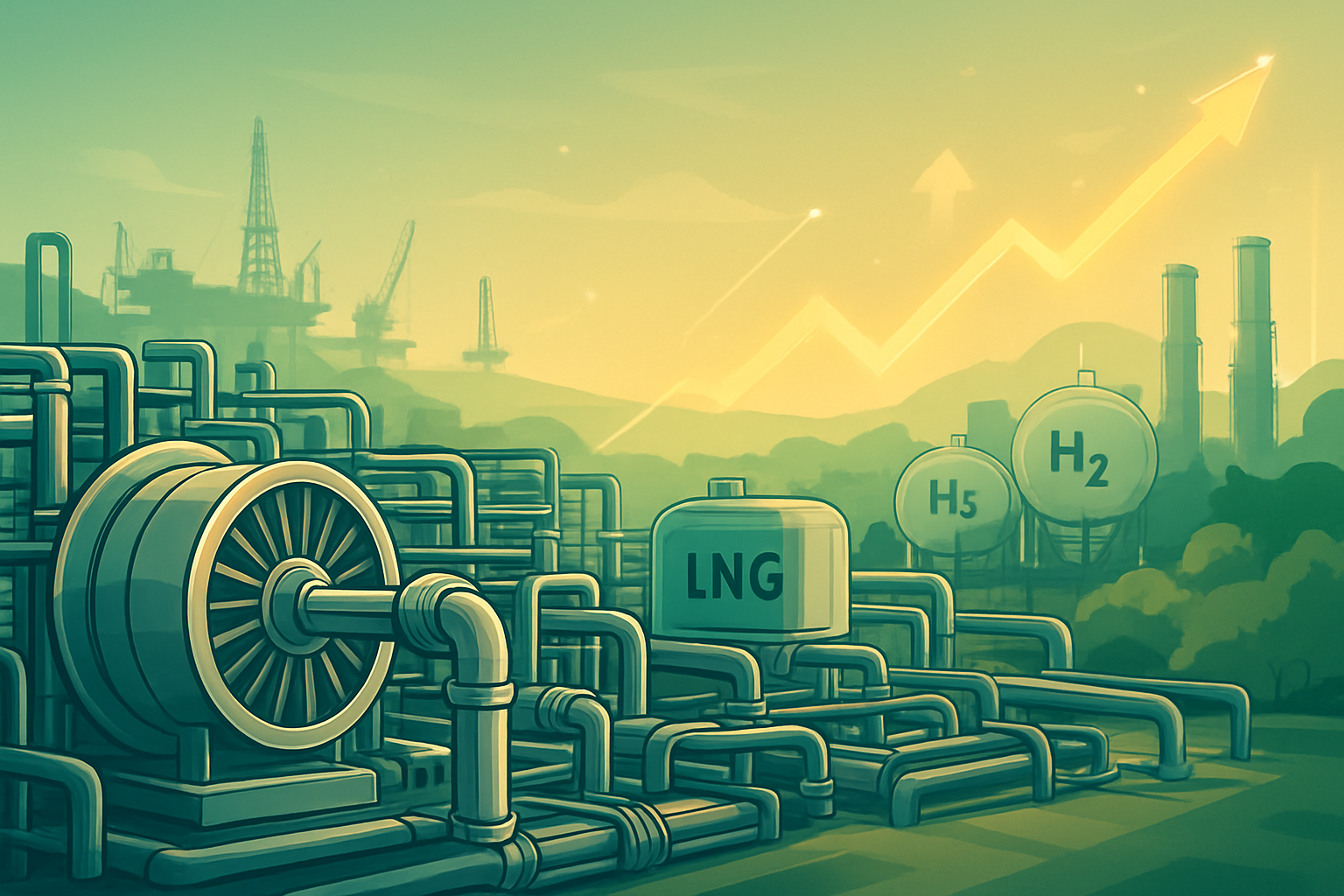
    In the rapidly evolving landscape of global energy, few companies have undergone a more profound metamorphosis than Baker Hughes (NASDAQ: BKR). Once a stalwart of the traditional oilpatch, synonymous with drilling bits and heavy machinery, Baker Hughes has successfully rebranded and restructured itself as a premier "energy technology" firm. As of early 2026, the company stands at the intersection of a dual-track global energy strategy: supporting the continued necessity of fossil fuels through efficiency while aggressively scaling the infrastructure for a low-carbon future.

    With a market capitalization that has seen significant appreciation over the last 24 months, Baker Hughes is no longer just a proxy for oil prices. Instead, it has become a bellwether for the "all-of-the-above" energy transition, capturing massive backlogs in Liquefied Natural Gas (LNG) and emerging as a surprise player in the power-hungry world of AI data centers.

    Historical Background

    The lineage of Baker Hughes traces back to the early 20th century, defined by two of the most iconic names in industrial history: Reuben Baker and Howard Hughes Sr. In 1909, Hughes Sr. developed the sharp-edged rotary rock bit, which revolutionized the drilling industry, while Baker developed the casing shoe. For nearly a century, these innovations formed the bedrock of the company’s identity.

    The modern era, however, was forged through a period of intense corporate turbulence. In 2017, General Electric (GE) merged its Oil & Gas division with Baker Hughes, creating a massive entity intended to dominate the sector. The marriage was short-lived and fraught with strategic friction as GE faced its own internal financial crises. By 2019, GE began a multi-year divestment process, leading to the birth of the "New Baker Hughes." By 2023, the company had achieved full independence from GE, allowing CEO Lorenzo Simonelli to shed the "service company" label and pivot toward the broader industrial and energy technology markets we see today.

    Business Model

    Baker Hughes operates through a streamlined two-segment structure designed to balance steady cash flow with high-growth potential:

    1. Oilfield Services & Equipment (OFSE): This segment remains the company's traditional engine, providing products and services for onshore and offshore drilling and production. While North American shale has matured into a steady-state "maintenance" market, Baker Hughes has shifted its focus to high-margin international and offshore markets, particularly in Brazil, the Middle East, and Guyana.
    2. Industrial & Energy Technology (IET): This is the strategic heart of the "New Baker Hughes." It includes turbomachinery, process solutions, and "New Energy" ventures (Hydrogen, Carbon Capture, and Digital). This segment is characterized by a high-moat engineering culture; for instance, the company holds an estimated 90% market share in the specialized turbomachinery required for LNG liquefaction.

    Stock Performance Overview

    Over the past year, BKR has been a standout performer in the energy sector. As of mid-January 2026, the stock is trading near its 52-week high of $51.62, representing a 12-month gain of approximately 19%.

    The five-year view (2021–2026) illustrates a remarkable recovery from the COVID-19 lows, during which the stock plummeted below $13. Since then, the stock has outperformed its primary peers, Halliburton (NYSE: HAL) and Schlumberger (NYSE: SLB), largely because of its lower sensitivity to volatile U.S. shale drilling activity and its higher exposure to the "LNG super-cycle" and industrial technology.

    Financial Performance

    The fiscal year 2025 was a landmark for Baker Hughes. The company reported annual revenue of approximately $27.8 billion, a 9% year-over-year increase. More importantly, the focus on margin expansion is bearing fruit. Adjusted EBITDA margins for the IET segment reached the 20% target in late 2025, up from roughly 17% two years prior.

    Capital discipline has become a hallmark of the current management. In 2025, the company returned over $1.5 billion to shareholders through dividends and buybacks. The dividend was recently raised to $0.23 per share quarterly, a move that signals management’s confidence in the stability of its massive $32 billion backlog.

    Leadership and Management

    CEO Lorenzo Simonelli has been the architect of Baker Hughes’ modern identity. Known for his disciplined "Horizon 1, 2, and 3" strategy, Simonelli has successfully navigated the company through the complex GE divestiture while maintaining a focus on structural cost-outs.

    His leadership team was further strengthened in 2024 and 2025 with key appointments aimed at capturing industrial adjacencies. The promotion of Maria Claudia Borras to an expanded growth role highlights the company’s push into non-traditional sectors like providing power solutions for the tech industry—a move that has been widely lauded by governance experts for its forward-thinking nature.

    Products, Services, and Innovations

    The company’s R&D efforts are currently concentrated on two main pillars: LNG efficiency and "New Energy."

    • LNG Turbomachinery: Baker Hughes provides the massive compressors and turbines that turn natural gas into liquid for transport. Their latest generation of turbines is more efficient and can be phased into running on hydrogen.
    • CarbonEdge: Launched as a digital "CO2-as-a-service" platform, this allows customers to track and manage the entire carbon capture, utilization, and storage (CCUS) lifecycle.
    • AI Power Solutions: A surprising growth driver in 2025 has been the NovaLT gas turbines. These are being used by large technology firms to provide on-site, dispatchable power for AI data centers, bypassing the bottlenecked national electric grids.

    Competitive Landscape

    Baker Hughes occupies a unique middle ground. While Schlumberger (SLB) remains the "gold standard" for digital oilfield technology and deepwater services, and Halliburton (HAL) dominates in hydraulic fracturing and U.S. land services, Baker Hughes has essentially carved out a new category.

    Its primary competition in the IET space is Siemens Energy, yet Baker Hughes has maintained a competitive edge in LNG due to its long-standing relationships with national oil companies (NOCs) and its integrated service model. By diversifying away from pure oilfield services, BKR has lowered its "beta" relative to crude oil prices compared to its rivals.

    Industry and Market Trends

    The "Age of Gas" remains the dominant macro driver for Baker Hughes. Despite the global push for renewables, natural gas is increasingly viewed as the essential transition fuel, particularly in Europe and Asia. This has led to a sustained period of Final Investment Decisions (FIDs) for LNG projects globally.

    Additionally, the "industrialization of energy" is a trend Baker Hughes is riding. As industries like steel and cement seek to decarbonize, they require the specialized compression and carbon capture technology that Baker Hughes provides, effectively expanding the company’s addressable market beyond the energy sector.

    Risks and Challenges

    The path forward is not without hurdles.

    • Geopolitical Sensitivity: With a large portion of the backlog tied to international projects, political instability in the Middle East or shifts in U.S. LNG export policies can cause project delays.
    • Execution Risk: Managing a record $32 billion backlog requires flawless execution. Any supply chain disruptions or cost overruns in the turbomachinery segment could impact margins.
    • U.S. Shale Slowdown: While BKR is less exposed than its peers, a significant downturn in U.S. drilling would still weigh on the OFSE segment’s profitability.

    Opportunities and Catalysts

    The biggest catalyst for 2026 remains the potential for "New Energy" orders to move from the pilot phase to large-scale commerciality. Specifically, the expansion into hydrogen-ready turbines for data centers represents a multi-billion dollar opportunity that was barely on the radar three years ago.

    Furthermore, the $13.6 billion acquisition of Chart Industries in 2025 is expected to yield significant synergies in 2026, as the combined entity can now offer a fully integrated cryogenic and compression solution for both LNG and hydrogen value chains.

    Investor Sentiment and Analyst Coverage

    Wall Street sentiment is currently "Moderate Buy," with a leaning toward "Strong Buy" among energy tech specialists. Analysts from Citi and Barclays have recently raised their price targets to the $54–$61 range, citing the "re-rating" of BKR from a service company to an industrial tech firm. Institutional ownership remains high, with major funds increasing their positions in late 2025 as the company’s ESG profile improved due to its carbon-mitigation technologies.

    Regulatory, Policy, and Geopolitical Factors

    The regulatory environment is a double-edged sword. In the United States, the Inflation Reduction Act (IRA) continues to provide a tailwind for the company’s carbon capture and hydrogen initiatives through tax credits. Conversely, global climate policies like those emerging from COP30 put pressure on the OFSE side of the business to reduce emissions.

    Geopolitically, the company benefits from Europe’s permanent shift away from Russian pipeline gas toward global LNG. However, any trade frictions that impact the global flow of industrial components could pose a risk to their manufacturing hubs in Italy and the U.S.

    Conclusion

    As of January 16, 2026, Baker Hughes represents a compelling case study in corporate reinvention. By successfully distancing itself from the cyclical volatility of the oilfield and repositioning itself as an essential provider of energy infrastructure and technology, the company has managed to capture growth in both traditional and "new" energy markets.

    For investors, Baker Hughes offers a "tech-oil" hybrid profile: it provides the steady dividends of a traditional energy giant combined with the growth catalysts of a decarbonization tech firm. While risks regarding project execution and global macro-stability remain, the company’s record backlog and dominant position in the LNG supply chain suggest that its transition is not just a marketing pivot, but a fundamental and profitable structural shift.


    This content is intended for informational purposes only and is not financial advice.