
Tag: Energy

  • The Landlord of the Permian: A Deep Dive into Texas Pacific Land Corporation (NYSE: TPL)

    The Landlord of the Permian: A Deep Dive into Texas Pacific Land Corporation (NYSE: TPL)

    As of February 17, 2026, Texas Pacific Land Corporation (NYSE: TPL) stands as one of the most unique and profitable entities in the American energy landscape. Often described as a "land bank" or a "perpetual royalty machine," TPL has recently captured the market's attention with a significant 5.08% stock gain on February 13, 2026. This surge, bringing the stock to approximately $432.30, comes at a time when the company is pivoting from a traditional oil and gas landlord into a critical player in digital infrastructure. With its massive footprint in the Permian Basin and a balance sheet that remains the envy of the S&P 500, TPL is currently at the center of a convergence between old-world energy and new-world artificial intelligence.

    Historical Background

    TPL’s story is rooted in the 19th-century expansion of the American West. Founded in 1888, the Texas Pacific Land Trust was created following the bankruptcy of the Texas and Pacific Railway Company. To compensate bondholders, approximately 3.5 million acres of land were placed into a liquidating trust. For over a century, the Trust’s primary mandate was to slowly sell off this land and distribute the proceeds to shareholders.

    However, the "Shale Revolution" of the early 2010s fundamentally changed TPL's trajectory. The "worthless" scrublands of West Texas were discovered to sit atop the heart of the Permian Basin, specifically the Delaware and Midland sub-basins. On January 11, 2021, after a highly publicized proxy battle led by major shareholders like Horizon Kinetics, the Trust officially converted into a Delaware C-Corporation. This structural shift allowed for more aggressive capital allocation, share buybacks, and a modernization of corporate governance that has paved the way for its current multi-billion dollar valuation.

    Business Model

    TPL operates an incredibly efficient, asset-light business model divided into three primary segments:

    1. Oil & Gas Royalties: This is the company’s crown jewel. TPL owns approximately 207,000 net royalty acres. Crucially, TPL does not drill wells or operate machinery. Instead, it collects a "top-line" percentage of all oil and gas produced on its land by major operators like Chevron and ExxonMobil.
    2. Water Services and Operations: Through its subsidiary, Texas Pacific Water Resources (TPWR), the company manages the full lifecycle of water in the oilfield—from sourcing fresh water for hydraulic fracturing to the disposal and recycling of "produced water."
    3. Surface Leases & Easements (SLEM): TPL leverages its ownership of roughly 880,000 surface acres to charge fees for pipeline rights-of-way, power lines, and well pads.

    In 2025 and 2026, a fourth pillar has emerged: Digital Infrastructure. TPL is now leasing vast tracts of land for AI-focused data centers, capitalizing on the Permian’s unique combination of available land and proximity to energy production.

    Stock Performance Overview

    TPL has been a historic "compounder" for long-term investors. As of today, February 17, 2026, the performance metrics are as follows:

    • 1-Year Return: ~ –5.5% (The stock has faced volatility following a peak in early 2025, but is currently in a recovery phase).
    • 5-Year Return: ~ +243% (Reflecting the massive growth since its 2021 corporate conversion).
    • 10-Year Return: ~ +3,470% (A staggering return fueled by the maturity of the Permian Basin).

    The recent 5% spike is viewed by many as a technical breakout, signaling renewed confidence in the company’s ability to monetize its surface acres beyond traditional energy uses.

    Financial Performance

    The financial profile of TPL is characterized by margins that are virtually unmatched in the public markets.

    • EBITDA Margins: Consistently range between 80% and 86%, as the company has minimal capital expenditures (CapEx) for its royalty business.
    • Revenue: Q3 2025 revenue was reported at $203.1 million, with annual 2024 revenue totaling $705.8 million.
    • Debt: The company maintains zero long-term debt, providing it with an "antifragile" balance sheet during commodity price downturns.
    • Cash Flow: Free cash flow generation remains robust, with $428 million generated in 2024 (a 72% year-over-year increase), much of which is returned to shareholders through special dividends and buybacks.

    Leadership and Management

    Under the leadership of CEO Tyler Glover, a Midland native, TPL has transitioned from a passive trust to an active corporate entity. Glover’s strategy has focused on maximizing the value of the "whole acre"—ensuring that every square foot produces revenue from minerals, water, and surface rights simultaneously.

    The board of directors, which saw significant turnover during the 2021 conversion, now includes Murray Stahl, the CEO of Horizon Kinetics. While the relationship between the board and its activist shareholders was once litigious, the current alignment has focused on aggressive share repurchases and long-term land value preservation.

    Products, Services, and Innovations

    TPL's primary "product" is its royalty interest, which provides perpetual exposure to the lowest-cost oil and gas basin in the world. However, innovation in 2026 is coming from Texas Pacific Water Resources. The company has implemented advanced water recycling technologies that reduce the environmental impact of fracking while increasing TPL’s margins on "produced water" management.

    Furthermore, the recent partnership with Bolt Data & Energy to develop AI data center campuses represents a pivot toward becoming a diversified infrastructure play. By providing the land and potentially the natural gas power for these centers, TPL is positioning itself at the intersection of energy and technology.

    Competitive Landscape

    While other royalty companies exist—such as Viper Energy (NASDAQ: VNOM) and Kimbell Royalty Partners (NYSE: KRP)—TPL is unique because it owns both the minerals and the surface. Most competitors only own one or the other. This dual ownership gives TPL "gatekeeper" status in the Permian; an operator cannot build a road, lay a pipe, or drill a well on TPL land without paying the company at multiple stages of the process.

    Industry and Market Trends

    The macro environment in 2026 is defined by Permian Consolidation. Major acquisitions (Exxon-Pioneer, Chevron-Hess) have placed more of TPL’s acreage into the hands of "Super Majors." For TPL, this is a net positive: these companies have the balance sheets to drill through economic cycles, ensuring a steady stream of royalty checks regardless of short-term price fluctuations.

    Additionally, the rising power demand for AI data centers has created a "land grab" for sites that have access to energy infrastructure, a trend TPL is perfectly positioned to exploit.

    Risks and Challenges

    Despite its strengths, TPL is not without risk:

    • Commodity Prices: Revenue is directly tied to the price of West Texas Intermediate (WTI) and natural gas. TPL does not hedge its production.
    • Regulatory/Seismic Risks: Increased seismic activity in West Texas has led to stricter regulations from the Texas Railroad Commission regarding saltwater disposal. Any shutdown of disposal wells could impact TPL’s water revenue.
    • Concentration: Nearly all of TPL’s assets are located in a single geographic region (the Permian Basin), making it vulnerable to localized regulatory changes or infrastructure bottlenecks.

    Opportunities and Catalysts

    The primary catalyst for the recent 5% gain is the rumored interest from Alphabet (Google) and other tech giants in utilizing TPL land for "behind-the-meter" power and data center projects. These projects would allow TPL to diversify its income away from volatile oil prices and into stable, long-term infrastructure leases.

    Further royalty acquisitions, such as the $474 million Midland Basin purchase in late 2025, show that the company is willing to use its massive cash pile to grow its core royalty base.

    Investor Sentiment and Analyst Coverage

    Wall Street sentiment remains "Moderately Bullish." Analysts from firms like KeyBanc and Texas Capital have recently raised their price targets, citing the "data center optionality" as a hidden value play. Institutional ownership remains high at over 60%, with Horizon Kinetics continuing to accumulate shares at levels above $400, signaling that the company’s largest insiders believe the stock remains undervalued.

    Regulatory, Policy, and Geopolitical Factors

    TPL benefits from Texas’s business-friendly regulatory environment and the state's role as the primary driver of U.S. energy independence. However, federal policies regarding methane emissions and carbon taxes remain a point of monitoring. In a 2026 geopolitical climate focused on energy security, TPL’s role as a provider of American hydrocarbons and now, digital infrastructure, places it in a favorable strategic position.

    Conclusion

    Texas Pacific Land Corporation remains a one-of-a-kind asset in the financial markets. It offers the stability of a debt-free balance sheet and the upside of a high-growth tech play through its new data center initiatives. While its performance will always be somewhat tethered to the price of crude oil, its evolving business model is designed to extract value from the Permian Basin in ways its predecessors could never have imagined. For investors, the key to TPL is not just the oil under the ground, but the strategic value of the ground itself.


    This content is intended for informational purposes only and is not financial advice.
  • Powering the Silicon Heartland: A Deep Dive into American Electric Power (AEP)

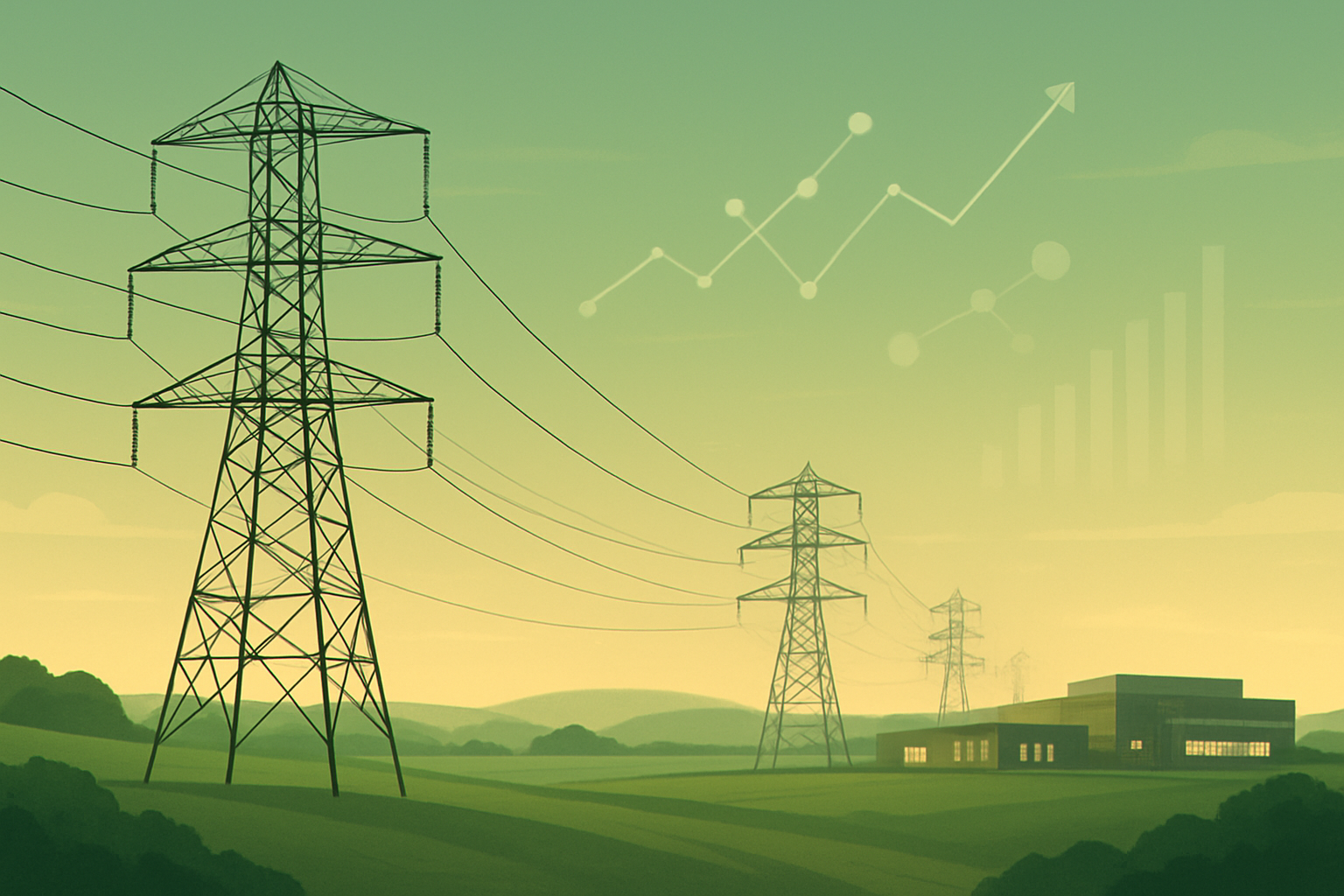
    Powering the Silicon Heartland: A Deep Dive into American Electric Power (AEP)

    Date: February 12, 2026

    Introduction

    As the global economy pivots toward artificial intelligence and high-density computing, the role of the traditional utility has been fundamentally reimagined. Once considered "widow-and-orphan" stocks—safe, slow-growing, and predictable—American Electric Power (NASDAQ: AEP) has transformed into a high-growth infrastructure play at the center of the "Silicon Heartland." With a massive service territory spanning 11 states, AEP is currently navigating a historic surge in power demand driven by data centers, domestic manufacturing, and the ongoing energy transition. Today, AEP stands as one of the largest electric utilities in the U.S., serving over 5.6 million customers and operating the nation’s largest transmission network.

    Historical Background

    Founded in 1906 as American Gas and Electric (AG&E), the company was a pioneer in the "super-power" concept of interconnected electrical systems. Under the legendary leadership of Philip Sporn in the mid-20th century, AEP became a technological leader in coal-fired generation and high-voltage transmission. For decades, it was defined by its massive coal fleet in the Ohio River Valley. However, the 21st century forced a radical transformation. Following the Clean Air Act and shifting economics, AEP began a multi-decade transition away from coal, spinning off competitive assets and refocusing on regulated transmission and distribution. This "back to basics" journey reached a new milestone in 2024 with the appointment of Bill Fehrman, who has centered the company’s strategy on operational reliability and meeting the explosive demand of the AI era.

    Business Model

    AEP operates through a decentralized structure of seven regulated operating companies, including AEP Ohio, AEP Texas, and Appalachian Power. Its business model is almost entirely regulated, meaning its rates and returns are set by state commissions, providing a stable and predictable revenue stream.

    • Transmission and Distribution: AEP owns more than 40,000 miles of transmission lines—the largest system in the U.S.—and 225,000 miles of distribution lines. This infrastructure is the "toll road" of the electric grid.
    • Generation: While transitioning, AEP still manages a diverse portfolio of ~25,000 MW, including natural gas, nuclear (Cook Plant), coal, and rapidly growing wind and solar assets.
    • Revenue Segments: The bulk of earnings comes from the Vertically Integrated Utilities and the Transmission Holding Co., which benefits from high-return investments in grid modernization.

    Stock Performance Overview

    Over the past year, AEP has outperformed the broader S&P 500 Utilities index, driven by its exposure to the data center boom in Ohio and Texas.

    • 1-Year Performance: The stock has risen approximately 18%, recently reaching a price of $121 per share.
    • 5-Year Performance: AEP has provided a steady total return of roughly 45%, largely driven by consistent dividend growth and capital appreciation as interest rates stabilized in 2025.
    • 10-Year Performance: Long-term investors have seen the stock double in value when dividends are reinvested, reflecting a compounded annual growth rate (CAGR) that exceeds many of its slower-growing regional peers.

    Financial Performance

    In its full-year 2025 earnings report released today, AEP delivered results that underscore its "Utility Super-Cycle" narrative.

    • 2025 Operating EPS: $5.97 per share, up from $5.62 in 2024.
    • Revenue: $21.88 billion, a 10.9% increase year-over-year.
    • Capital Expenditure (CapEx): The company executed $11.5 billion in capital projects in 2025, with a massive $72 billion plan slated for the 2026-2030 period.
    • Valuation: Trading at a forward P/E ratio of approximately 19.5x, AEP carries a slight premium over the industry average (17x), which analysts attribute to its high-growth load profile.
    • AI-Generated 2026 Estimates: For the fiscal year 2026, analysts and AI models project an Operating EPS range of $6.15 to $6.45, supported by new rate cases and a 15% projected increase in commercial load.

    Leadership and Management

    CEO Bill Fehrman, former head of Berkshire Hathaway Energy, has brought a "no-nonsense" operational culture to AEP since August 2024. His strategy has been to decentralize authority, giving local presidents more autonomy to deal with state regulators. This shift has successfully mended strained relationships in states like West Virginia and Ohio. Under Fehrman, AEP has moved away from "corporate-led" decarbonization targets toward "customer-led" reliability, a move that has resonated well with institutional investors seeking pragmatic management during a period of grid instability.

    Products, Services, and Innovations

    Innovation at AEP is currently focused on grid-edge technology and "behind-the-meter" solutions for industrial giants.

    • Bloom Energy Partnership: In early 2026, AEP expanded its deployment of solid oxide fuel cells (1,000 MW deal) to provide immediate, reliable power to data centers that cannot wait for traditional grid connections.
    • Smart Grid & Hardening: The company is investing billions in automated restoration systems and "hardened" transmission structures to combat increasingly volatile weather patterns.
    • EV Infrastructure: AEP remains a leader in public charging infrastructure pilots across the Midwest, preparing for a long-term shift in residential demand.

    Competitive Landscape

    AEP competes for capital against other "mega-utilities" like NextEra Energy (NYSE: NEE), Duke Energy (NYSE: DUK), and Dominion Energy (NYSE: D).

    • Strengths: AEP’s transmission footprint is unmatched, giving it a unique "first-mover" advantage in connecting new generation to demand centers.
    • Weaknesses: Compared to NextEra, AEP has a larger legacy coal fleet, which creates higher regulatory and environmental compliance costs. However, its concentration in high-growth "Silicon Heartland" regions like Columbus, Ohio, currently gives it a superior demand outlook.

    Industry and Market Trends

    The utility sector is entering a "Golden Age" of demand growth. After two decades of flat electricity demand, the trifecta of AI data centers, electric vehicle (EV) adoption, and the "re-shoring" of American manufacturing has created a scramble for power.

    • The Data Center Surge: Data centers now account for nearly 10% of total demand in some of AEP’s territories.
    • Electrification: The push to electrify heating and transport is expected to double total grid load by 2050, requiring a massive build-out of transmission infrastructure—AEP’s specialty.

    Risks and Challenges

    Despite the bullish outlook, several risks remain:

    • Regulatory Friction: In Ohio, the Public Utilities Commission (PUCO) recently implemented a "take-or-pay" tariff for data centers to protect residential users. While this secures revenue for AEP, it could slow the pace of new data center construction if costs become prohibitive.
    • Interest Rate Sensitivity: As a capital-intensive business with significant debt, AEP’s margins are sensitive to shifts in the federal funds rate.
    • Coal Liability: Delaying the retirement of coal plants to ensure reliability (as seen in West Virginia) risks potential litigation from environmental groups and higher carbon-tax liabilities in the future.

    Opportunities and Catalysts

    • Columbus Load Growth: AEP Ohio projects up to 15 GW of new load growth by 2030, a figure that was unthinkable five years ago.
    • Rate Base CAGR: The company expects a 10% annual growth in its rate base through 2030, which should translate directly to bottom-line growth.
    • M&A Potential: While AEP is currently focused on organic growth, its strong balance sheet makes it a potential consolidator for smaller regional utilities struggling with the energy transition.

    Investor Sentiment and Analyst Coverage

    Wall Street has largely embraced the "New AEP."

    • Ratings: Currently, AEP holds 14 "Buy" ratings, 6 "Hold" ratings, and 0 "Sell" ratings among major firms.
    • Institutional Moves: There has been a notable increase in positions from infrastructure-focused funds and ESG funds that recognize AEP's "balanced" approach to the transition.
    • Retail Sentiment: On retail platforms, AEP is frequently cited as a "top AI play that isn't a tech stock," reflecting a growing awareness of the infrastructure required to power the digital age.

    Regulatory, Policy, and Geopolitical Factors

    The Inflation Reduction Act (IRA) continues to be a tailwind, providing tax credits for AEP’s $9 billion renewable energy pipeline. Furthermore, the 2025 PUCO ruling in Ohio—requiring data centers to sign 12-year contracts and pay for 85% of their energy subscription even if unused—is a landmark policy. This "Data Center Tariff" provides AEP with a level of revenue certainty that is virtually unprecedented in the utility sector, effectively de-risking billions in new infrastructure spend.

    Conclusion

    American Electric Power has successfully navigated the transition from a 20th-century coal giant to a 21st-century digital infrastructure backbone. Under the "Back to Basics" leadership of Bill Fehrman, the company has prioritized reliability and state-level regulatory alignment, positioning itself to capture the massive demand surge from the AI revolution.

    For investors, AEP offers a compelling hybrid profile: the safety and dividends of a regulated utility combined with the growth prospects of a tech infrastructure play. While regulatory hurdles and interest rate volatility remain the primary risks, the company’s massive $72 billion capital plan and "take-or-pay" contracts suggest that AEP is well-powered for the decade ahead. Investors should watch the upcoming 2026 rate case filings and the progress of the Southeast Columbus Area Improvement Project as key indicators of continued momentum.


    Disclaimer: This content is intended for informational purposes only and is not financial advice.

  • Deep-Dive Research Feature: Halliburton (HAL) and the New Energy Cycle

    Deep-Dive Research Feature: Halliburton (HAL) and the New Energy Cycle

    In the shifting landscape of global energy, few companies serve as a more accurate barometer for the industry's health than Halliburton. As of January 16, 2026, the oilfield services giant finds itself at a critical juncture, balancing the transition toward digital efficiency with the harsh realities of a volatile crude market and a persistent "higher-for-longer" interest rate environment.

    Introduction

    Halliburton (NYSE: HAL) enters 2026 as a leaner, more technologically focused entity than at any point in its century-long history. While the broader energy sector has faced significant headwinds over the past twelve months—characterized by a projected global oil surplus and a cautious capital expenditure (CAPEX) environment—Halliburton remains a dominant force in hydraulic fracturing and well completion. The company is currently in focus for its aggressive pivot toward capital discipline, recently slashing its 2026 capital budget to prioritize free cash flow. This strategic "reset" comes as investors weigh the company's significant North American exposure against its growing international footprint and the macroeconomic pressures of interest rate volatility.

    Historical Background

    Founded in 1919 by Erle P. Halliburton, the company began as a modest oil-well cementing operation in Duncan, Oklahoma. Its early success was rooted in the patented "Jet Mixer," a device that revolutionized how cement was handled at the wellhead. Over the following decades, Halliburton transformed through both organic innovation and massive consolidations.

    The 1998 acquisition of Dresser Industries—a deal that included the engineering and construction firm Brown & Root—solidified its position as a global diversified service provider. Throughout the late 20th and early 21st centuries, the company became synonymous with the "shale revolution," perfecting the techniques required for horizontal drilling and high-intensity hydraulic fracturing. Despite navigating controversies during the early 2000s regarding government contracts and its role in the Deepwater Horizon incident, the company has consistently rebuilt its reputation as a premier engineering and logistics partner for the world’s largest energy producers.

    Business Model

    Halliburton’s revenue is generated through two primary segments that cater to the upstream oil and gas lifecycle:

    • Completion and Production (C&P): This is the company's primary profit engine, typically accounting for approximately 60% of total revenue. It includes hydraulic fracturing (fracking), cementing, and artificial lift systems. The C&P segment is highly sensitive to rig counts and well completion activity, particularly in U.S. shale basins like the Permian.
    • Drilling and Evaluation (D&E): This segment focuses on wellbore placement, drilling fluids, and sophisticated subsurface modeling. D&E tends to be more technically intensive and carries higher barriers to entry, often providing more resilient margins during periods of price volatility compared to the more commoditized fracking market.

    The company serves a global customer base ranging from national oil companies (NOCs) like Saudi Aramco to independent North American shale producers.

    Stock Performance Overview

    As of mid-January 2026, Halliburton’s stock price has mirrored the cyclical nature of the energy markets:

    • 1-Year Performance: The stock has seen a total return of approximately 18% over the last year. While it lagged behind refining stocks like Valero Energy (NYSE: VLO) for much of 2025, a late-year stabilization in oil prices helped HAL recover from its December lows.
    • 5-Year Performance: HAL has delivered an impressive return of over 60% compared to its 2020 lows. This recovery was fueled by the post-pandemic energy crunch and the company's successful debt-reduction campaign.
    • 10-Year Performance: On a decade-long horizon, however, the performance is more muted (~22% total return). This reflects the structural shift in the industry from "growth at all costs" to "returns-focused" models, as the stock remains well below its 2014 highs of $74.00.

    Financial Performance

    Halliburton's latest financial results (Q3 2025) showcased a resilient business model despite a cooling North American market. The company reported revenue of $5.6 billion, slightly exceeding analyst expectations. Adjusted earnings per share (EPS) came in at $0.58, beating the consensus of $0.50.

    Crucially, for 2026, management has announced a plan to slash capital expenditures by 30%, targeting roughly $1 billion for the year. This move is designed to maximize free cash flow (FCF), which has become the primary metric for investor satisfaction in the oilfield services (OFS) space. Halliburton currently maintains a long-term debt load of approximately $7.54 billion, with a debt-to-capitalization ratio of 41%—a significantly improved position compared to the previous decade.

    Leadership and Management

    CEO Jeff Miller, who has led the company since 2017, has been the architect of "Halliburton 4.0." His strategy focuses on integrating digital technologies, automation, and data analytics to drive down costs for operators. Miller is widely respected for his focus on "value over volume," frequently opting to idle fracking equipment rather than accept contracts with sub-par margins.

    The leadership team was recently bolstered by the promotion of Casey Maxwell to President of the Western Hemisphere, signaling a continued focus on operational efficiency in the Americas. Under Miller’s governance, Halliburton has shifted its reputation from a pure-play service provider to a technology-centric partner focused on sustainable cash returns.

    Products, Services, and Innovations

    Innovation at Halliburton is currently centered on the "Digital Well Program" and automated fracturing. Key recent developments include:

    • e-Redline and Zeus: Electric fracturing fleets that significantly reduce carbon emissions and operational noise, making them more attractive for ESG-conscious producers.
    • Logix: An automated drilling platform that uses real-time data to optimize well placement, reducing the time spent on the rig.
    • Carbon Capture & Storage (CCS): The company has begun offering specialized services for well integrity and monitoring in the growing CCS market, leveraging its century of experience in cementing.

    Competitive Landscape

    Halliburton operates within a "Big Three" oligopoly alongside SLB (NYSE: SLB), formerly Schlumberger, and Baker Hughes (NYSE: BKR).

    • SLB: Remains the larger, more internationally focused rival with a dominant share of the deepwater and offshore markets.
    • Baker Hughes: Has successfully pivoted toward being an "energy technology company," with significant exposure to the global LNG (Liquefied Natural Gas) infrastructure boom.
    • Halliburton's Edge: Halliburton remains the undisputed leader in North American completions. While its competitors have diversified more aggressively into non-oil sectors, Halliburton’s "lean into oil" strategy makes it the purest play on crude oil cycles among the majors.

    Industry and Market Trends

    The OFS industry in 2026 is defined by a "North American drag." While international and offshore drilling remain robust, U.S. land activity has plateaued due to industry consolidation among E&P companies. This consolidation has given producers more pricing power, forcing service companies like Halliburton to find efficiencies through digital transformation. Additionally, the global market is currently navigating a projected 3.8 million barrel surplus in 2026, which continues to cap significant upside for service demand.

    Risks and Challenges

    • Interest Rate Pressure: With over $7 billion in debt, Halliburton is sensitive to interest rate hikes. "Higher-for-longer" rates increase interest expenses and discourage capital-heavy drilling projects among smaller clients.
    • Oil Price Volatility: Any significant drop in crude prices (below $60/bbl) would likely lead to a rapid pullback in North American completion activity, Halliburton’s most profitable segment.
    • Regulatory Environment: Stricter methane regulations and potential federal leasing bans in the U.S. remain persistent regulatory risks that could stifle future domestic growth.

    Opportunities and Catalysts

    • International Expansion: High-margin work in the Middle East and Latin America (specifically Brazil and Guyana) offers a hedge against U.S. slowdowns.
    • Venezuela Re-entry: As U.S. sanctions policy evolves in 2026, Halliburton is uniquely positioned to restart operations in Venezuela, where it maintains significant historical infrastructure.
    • Digital Subscription Revenue: The shift toward selling software and data services (SaaS) provides a higher-margin, less cyclical revenue stream than traditional iron-based services.

    Investor Sentiment and Analyst Coverage

    Wall Street currently maintains a "Moderate Buy" consensus on HAL. While analysts at Piper Sandler have expressed a "neutral" outlook due to North American headwinds, others like Susquehanna see the current $32–$33 price range as an attractive entry point for the next cycle, with price targets as high as $36.00. Institutional ownership remains high, with giants like Vanguard and BlackRock maintaining significant stakes, reflecting a belief in the company's long-term cash-flow generation capability.

    Regulatory, Policy, and Geopolitical Factors

    Geopolitics continues to provide a "risk premium" for Halliburton. Tensions in the Middle East and the Strait of Hormuz have kept oil prices from collapsing despite the global surplus, supporting the company's international margins. Furthermore, the 2026 geopolitical landscape is heavily influenced by OPEC+ production strategies; the group’s plan to gradually bring 2 million barrels per day back to the market by year-end remains a shadow over the sector, potentially putting downward pressure on prices.

    Conclusion

    Halliburton remains a high-beta, high-reward play within the energy services sector. On January 16, 2026, the company stands out for its disciplined management and technological leadership in hydraulic fracturing. However, the headwinds of a cooling North American market and the broader energy sector sell-off cannot be ignored. Investors should keep a close eye on the Q4 2025 earnings release scheduled for January 21, specifically looking for updates on free cash flow generation and the success of their cost-cutting initiatives. For those seeking exposure to an eventual rebound in oilfield activity, Halliburton offers a sophisticated, returns-focused vehicle, provided one can stomach the inherent volatility of the crude cycle.


    This content is intended for informational purposes only and is not financial advice.