
Tag: ENPH

  • The Green Renaissance: Enphase Energy (ENPH) and the 2026 Clean Energy Sector Surge

    The Green Renaissance: Enphase Energy (ENPH) and the 2026 Clean Energy Sector Surge

    As of March 6, 2026, the clean energy sector is experiencing a significant resurgence, propelled by a unique confluence of stabilizing interest rates, aggressive domestic manufacturing incentives, and an unprecedented surge in electricity demand driven by artificial intelligence (AI) infrastructure. At the heart of this "Green Renaissance" stands Enphase Energy, Inc. (NASDAQ: ENPH).

    Once the darling of the post-pandemic ESG boom, Enphase weathered a grueling 2023–2024 cyclical downturn characterized by high interest rates and regulatory shifts in California (NEM 3.0). However, entering 2026, the company has successfully pivoted from a residential solar component supplier to a diversified global leader in home energy management and commercial microinverter technology. With its stock moving in tight sympathy with a broader sector rally—up roughly 40% over the last six months—Enphase is once again a focal point for institutional investors seeking high-margin exposure to the energy transition.

    Historical Background

    Founded in 2006 by Raghu Belur and Martin Fornage in Petaluma, California, Enphase Energy fundamentally changed the solar industry by introducing the world’s first microinverter system. Unlike traditional "string" inverters, which manage power for an entire array of panels, Enphase’s microinverters convert power at the individual panel level, maximizing efficiency and reliability.

    The company’s history is one of near-catastrophe and brilliant recovery. By 2017, Enphase was on the brink of bankruptcy due to intense competition and pricing pressure. The arrival of CEO Badri Kothandaraman marked a turning point. Under his "high-quality, low-cost" operational philosophy, Enphase streamlined its manufacturing, focused on premium software-integrated hardware, and achieved one of the most remarkable turnarounds in the technology sector, seeing its market cap grow from under $100 million to over $40 billion at its 2022 peak.

    Business Model

    Enphase operates a vertically integrated hardware and software ecosystem. Its core business revolves around the Enphase Energy System, which integrates solar generation, battery storage, and energy management into a single cloud-based platform.

    • Microinverters: The primary revenue driver, sold to distributors and installers. These devices are renowned for their "burst mode" technology and high reliability.
    • Energy Storage: The IQ Battery line provides homeowners with backup power and the ability to "time-shift" energy use to avoid peak utility rates.
    • Software and Services: Enphase generates recurring-style revenue through its Enlighten monitoring platform and grid services, where it aggregates residential batteries into "Virtual Power Plants" (VPPs) to support utilities during peak demand.
    • Commercial and EV Charging: In 2025, Enphase expanded aggressively into the 480V commercial market and bidirectional EV charging, creating new B2B and automotive revenue streams.

    Stock Performance Overview

    The performance of ENPH over the last decade has been a volatile journey of "extreme alpha."

    • 10-Year Horizon: Investors who held from 2016 have seen gains exceeding 3,000%, despite the massive drawdowns of 2023.
    • 5-Year Horizon: The stock reached an all-time high near $340 in late 2022 before crashing below $80 in 2024 as the residential solar market stalled. The recovery into 2026 has been steady, with the stock currently consolidating in the $120–$150 range.
    • 1-Year Horizon: ENPH has outperformed the S&P 500 significantly in the last 12 months, driven by the sector-wide rally in clean energy stocks and successful product launches in the commercial space.

    Financial Performance

    Enphase’s Q4 2025 earnings report, released in early 2026, signaled a definitive end to its inventory correction phase.

    • Revenue: Q4 revenue reached $343.3 million, with full-year 2025 revenue totaling $1.47 billion.
    • Earnings per Share (EPS): Non-GAAP EPS for Q4 came in at $0.71, beating consensus estimates of $0.58.
    • Margins: Gross margins have remained resilient in the 40% range, a testament to the company’s pricing power and the benefits of the Inflation Reduction Act (IRA) manufacturing tax credits.
    • Debt and Liquidity: As of March 2026, the company is managing the repayment/refinancing of its $632.5 million convertible notes. With $1.51 billion in cash on hand, liquidity remains robust.

    Leadership and Management

    CEO Badri Kothandaraman continues to be highly regarded by Wall Street for his disciplined operational execution. His focus on "First Principles" thinking has allowed Enphase to maintain high margins even during volume downturns. The leadership team is characterized by a "no-nonsense" approach to guidance, often preferring to under-promise and over-deliver—a strategy that has helped rebuild investor trust after the volatility of 2023.

    Products, Services, and Innovations

    The 2026 product lineup represents a technological leap:

    • IQ9 Microinverter: Utilizing Gallium Nitride (GaN) technology, the IQ9 offers higher power density and 97.5% efficiency. It is the company’s spearhead into the commercial market.
    • IQ Battery 5G: The fifth-generation battery features a modular design that reduces installation time by 50% and significantly lowers the cost per kilowatt-hour.
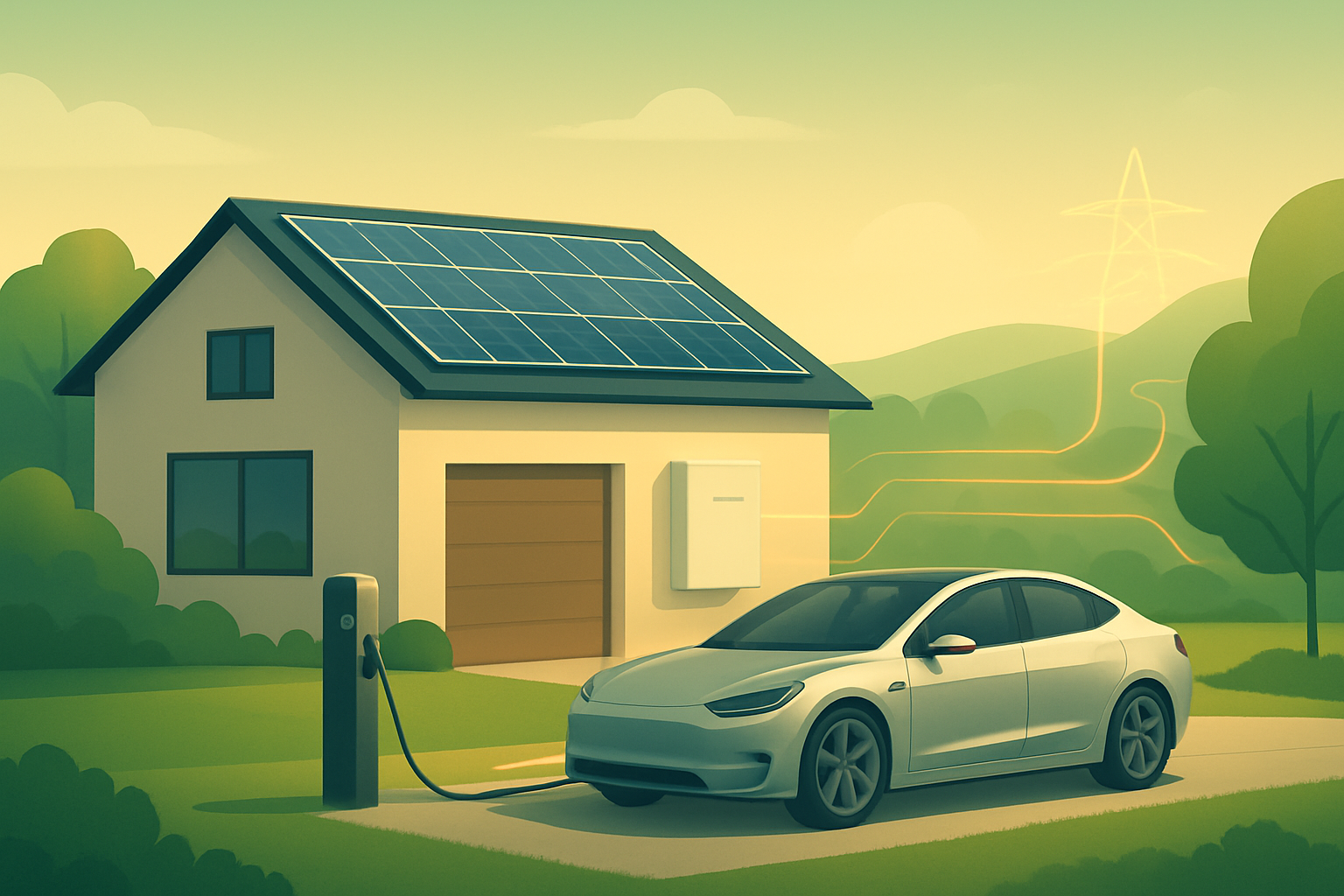
    • Bidirectional Charging: This allows an Electric Vehicle (EV) to power a home during an outage, turning the car into a massive mobile battery. This innovation has deepened Enphase's footprint in the burgeoning "smart home" ecosystem.

    Competitive Landscape

    Enphase faces a "two-front war" in 2026.

    • Tesla (NASDAQ: TSLA): Tesla’s Powerwall 3, which includes an integrated string inverter, is a formidable competitor on price and brand recognition. Tesla currently leads the storage market with a ~60% share.
    • SolarEdge Technologies (NASDAQ: SEDG): Once a neck-and-neck rival, SolarEdge has struggled with inventory gluts in Europe. Enphase has successfully gained market share in the premium European residential segment at SolarEdge’s expense.
    • Competitive Edge: Enphase’s "no single point of failure" architecture remains its primary advantage. If one microinverter fails, the rest of the system keeps producing—a reliability claim Tesla’s centralized systems cannot match.

    Industry and Market Trends

    Three macro trends are currently lifting Enphase:

    1. AI Power Demand: The growth of AI data centers has strained global grids, leading to a shift toward "distributed energy." Businesses are increasingly installing Enphase commercial systems to ensure energy security.
    2. Domestic Manufacturing: New "Foreign Entity of Concern" (FEOC) rules in the U.S. have penalized companies relying on Chinese components, giving Enphase (which has ramped up U.S. production) a significant competitive and tax advantage.
    3. Electrification: The steady transition to heat pumps and EVs is doubling average household electricity consumption, making solar-plus-storage an economic necessity rather than a luxury.

    Risks and Challenges

    Despite the rally, risks remain:

    • Policy Volatility: The "Policy Cliff" of July 2026, where certain U.S. tax incentive deadlines loom, could cause a "pull-forward" of demand followed by a sharp drop.
    • Interest Rate Sensitivity: While rates have stabilized, any return to a "higher-for-longer" environment would immediately hurt residential solar affordability.
    • Lithium Pricing: While battery costs have fallen, any supply chain shock in lithium or cobalt could squeeze margins on the IQ Battery line.

    Opportunities and Catalysts

    • The 480V Commercial Rollout: If the IQ9 captures even 10% of the small-to-medium commercial market by 2027, it could double Enphase’s current revenue base.
    • V2H Integration: As more automakers adopt bidirectional standards, Enphase is positioned to become the "operating system" of the garage.
    • M&A Potential: With over $1.5 billion in cash, Enphase is rumored to be looking at software acquisitions in the grid-balancing and predictive AI space.

    Investor Sentiment and Analyst Coverage

    Investor sentiment has shifted from "bearish exhaustion" in 2024 to "cautious optimism" in 2026.

    • Wall Street: Currently holds a "Moderate Buy" consensus. High-side price targets of $185 reflect the potential of the commercial business, while low-side targets of $110 account for potential policy shifts.
    • Short Interest: Remains relatively high at 15–20%. Many analysts believe a sustained break above $160 could trigger a massive short squeeze, further fueling the sector rally.

    Regulatory, Policy, and Geopolitical Factors

    The regulatory environment in 2026 is dominated by the One Big Beautiful Bill Act (OBBBA), a legislative successor to the IRA. This bill has tightened domestic content requirements, which favors Enphase’s U.S.-based manufacturing strategy. Geopolitically, the push for energy independence in Europe continues to provide a tailwind, though local European competitors are beginning to lobby for their own protectionist tariffs against both U.S. and Chinese firms.

    Conclusion

    Enphase Energy in 2026 is a far more resilient company than it was during the peak of the 2022 solar hype. By diversifying into commercial markets, adopting GaN technology, and securing its domestic supply chain, it has justified its premium valuation in a crowded field.

    For investors, the current sympathy rally in clean energy stocks provides a strong tailwind, but the "Enphase story" remains one of execution. The key metrics to watch over the next 12 months will be the adoption rate of the IQ9 in the commercial sector and the company's ability to maintain 40%+ gross margins as it competes head-to-head with Tesla’s aggressive pricing. In a world increasingly desperate for reliable, decentralized power, Enphase remains a high-quality—if expensive—play on the future of the grid.


    This content is intended for informational purposes only and is not financial advice.
  • Powering the Future: A Deep-Dive Analysis of Enphase Energy (ENPH) in 2026

    Powering the Future: A Deep-Dive Analysis of Enphase Energy (ENPH) in 2026

    As of February 5, 2026, Enphase Energy, Inc. (NASDAQ: ENPH) stands at a pivotal crossroads in the global energy transition. Once the undisputed "darling" of the solar sector during the early 2020s, the Fremont, California-based company is currently navigating the aftermath of a massive industry-wide inventory correction and a significant shift in the California regulatory landscape.

    Enphase is renowned for revolutionizing the solar industry with its microinverter technology, which converts direct current (DC) from solar panels into alternating current (AC) at the individual module level. Today, the company is no longer just a component manufacturer; it has evolved into a comprehensive energy management firm. With a focus on integrating solar, battery storage, and electric vehicle (EV) charging into a single, AI-optimized ecosystem, Enphase remains a critical bellwether for the health of the residential and small commercial renewable energy markets.

    Historical Background

    Founded in 2006 by Raghu Belur and Martin Fornage, Enphase Energy was born out of a desire to solve the "single point of failure" inherent in traditional string inverters. If a central string inverter failed, the entire solar array went dark; Enphase’s microinverter allowed each panel to operate independently, increasing reliability and energy harvest.

    The company’s journey has not been without existential threats. By 2016, Enphase was nearing bankruptcy due to intense price competition and high operational costs. The appointment of Badri Kothandaraman as CEO in 2017 marked a historic turning point. Under his "30/20/10" operating philosophy—targeting 30% gross margins, 20% operating expenses, and 10% operating income—the company achieved a remarkable turnaround. Between 2019 and 2022, Enphase became one of the top-performing stocks in the S&P 500, fueled by the global push for decarbonization and a robust housing market.

    Business Model

    Enphase operates a hardware-enabled software model. Its primary revenue streams include:

    1. Microinverters: The core of the business, currently transitioning to the IQ9 generation. These are sold to distributors and large installers.
    2. Energy Storage: The IQ Battery line (including the high-performance 5P model) provides home backup and helps homeowners manage "Time of Use" (TOU) utility rates.
    3. EV Charging: Following the acquisition of ClipperCreek, Enphase integrated EV charging into its home energy system, creating a "pull-through" effect for its other products.
    4. Software and Services: The Enlighten cloud platform provides monitoring and energy management for both installers and homeowners, creating a sticky ecosystem.

    The company focuses heavily on the "prosumer" segment—homeowners who produce and consume their own power—and is increasingly targeting the small commercial market (3-phase systems).

    Stock Performance Overview

    The performance of ENPH has been a study in high-beta volatility:

    • 1-Year Performance: Over the past year (Feb 2025 – Feb 2026), the stock has seen a moderate recovery of approximately 15%, following a brutal 2023–2024 period where it lost more than 60% of its value from all-time highs.
    • 5-Year Performance: On a 5-year horizon, the stock remains net positive, though far below its $330+ peaks seen in late 2022. The 5-year CAGR reflects the explosive growth of 2021 offset by the "interest rate reset" of 2023.
    • 10-Year Performance: Long-term shareholders who entered during the 2016 lows have seen legendary returns, exceeding 2,000% as the company moved from penny-stock status to a multi-billion-dollar market leader.

    Financial Performance

    In its most recent fiscal reporting for 2025, Enphase demonstrated resilience despite a challenging macro environment.

    • Revenue: 2025 total revenue landed at approximately $1.47 billion, a modest recovery from the $1.33 billion reported in 2024.
    • Margins: Management has successfully defended margins using the Inflation Reduction Act (IRA) 45X production tax credits. Non-GAAP gross margins have remained impressively stable in the 46%–50% range.
    • Balance Sheet: Enphase maintains a strong cash position (approx. $1.5 billion), providing a buffer against cyclical downturns.
    • Recent Earnings (Q4 2025): The company reported a "demand pull-forward" in Q4 2025 as customers rushed to install systems before the expiration of the U.S. residential solar tax credit on December 31, 2025.

    Leadership and Management

    CEO Badri Kothandaraman remains one of the most respected executives in the clean-tech space. Known for his disciplined "lean" management style and technical transparency during earnings calls, he has built a culture of execution.

    In February 2026, leadership took the proactive step of reducing the global workforce by 6% to align expenses with the "demand hangover" expected in early 2026. This move was viewed by analysts as a sign of management's commitment to maintaining profitability even during revenue contractions.

    Products, Services, and Innovations

    Innovation is the primary moat for Enphase.

    • Gallium Nitride (GaN) Transition: The company is currently moving its entire portfolio to GaN technology, which allows for smaller, more efficient, and lighter power electronics.
    • IQ9 Microinverters: Shipped in late 2025 and early 2026, the IQ9 series supports higher-power 600W+ panels, maintaining Enphase’s lead in power density.
    • Bi-directional Charging: One of the most anticipated products for 2026 is the IQ Bi-directional EV Charger, which allows an electric vehicle to power a home (V2H) or sell power back to the grid (V2G).
    • AI Integration: Enphase has begun deploying AI-driven forecasting to help homeowners decide when to charge their batteries or EVs based on weather patterns and utility pricing.

    Competitive Landscape

    Enphase operates in a duopoly in the U.S. residential market alongside SolarEdge Technologies (NASDAQ: SEDG). While SolarEdge uses a "power optimizer" approach, Enphase’s microinverter architecture is often preferred for its reliability and ease of installation.

    However, new threats have emerged:

    • Tesla (NASDAQ: TSLA): Tesla’s Powerwall and in-house string inverters compete on price and brand recognition.
    • Chinese Entrants: Companies like Huawei and Hoymiles are aggressively expanding in Europe and Latin America, offering lower-cost alternatives to Enphase’s premium pricing.
    • Standardization: As solar panels become more powerful, some manufacturers are integrating microinverters directly into the panels (AC Modules), a segment Enphase continues to dominate through partnerships.

    Industry and Market Trends

    The "Solar 2.0" era is defined by the transition from simple generation to complex management.

    • NEM 3.0 Impact: California’s shift to Net Billing has drastically reduced the value of exporting solar power to the grid. This has transformed the market from "solar-only" to "solar-plus-storage." Enphase has capitalized on this, with battery attachment rates in California exceeding 50% in late 2025.
    • Interest Rates: High borrowing costs for residential solar loans were the primary headwind in 2024. As rates began a slow descent in late 2025, the "payback period" for solar systems became more attractive again.

    Risks and Challenges

    • Regulatory Cliff: The expiration of the 30% federal tax credit at the end of 2025 creates a significant "demand vacuum" for the first half of 2026.
    • Inventory Management: Enphase struggled with an inventory glut in 2023. While largely resolved, any further miscalculation of global demand could lead to more write-downs.
    • European Softness: Unlike the U.S., the European market has remained sluggish through 2025 due to falling natural gas prices, which makes the ROI on solar less compelling for homeowners.

    Opportunities and Catalysts

    • V2H/V2G: If Enphase can successfully scale its bi-directional EV charger in 2026, it transforms every EV into a home battery, significantly expanding the company's addressable market.
    • Small Commercial Expansion: The launch of the IQ9N-3P for the 480V commercial market opens doors to offices, warehouses, and small factories, a segment where Enphase currently has low penetration.
    • M&A Potential: With $1.5 billion in cash, Enphase is well-positioned to acquire smaller software or grid-services firms to bolster its virtual power plant (VPP) capabilities.

    Investor Sentiment and Analyst Coverage

    Sentiment is currently "cautiously optimistic." Wall Street analysts have largely moved away from the "Sell" ratings seen in early 2024.

    • Goldman Sachs and RBC Capital recently issued upgrades with price targets in the $45–$55 range, citing a bottoming out of the residential cycle.
    • Institutional Ownership: Major firms like Vanguard and BlackRock remain top holders, suggesting long-term confidence in the company’s role in the energy transition.
    • Retail Sentiment: Enphase remains a popular "growth" stock among retail investors, though the chatter has shifted from "moonshot" expectations to a focus on steady cash flow and GaN innovation.

    Regulatory, Policy, and Geopolitical Factors

    The Inflation Reduction Act (IRA) remains the most significant tailwind for Enphase. By manufacturing microinverters in the U.S. (via contract partners), Enphase collects significant tax credits that bolster its bottom line.

    Geopolitically, the company faces risks related to its supply chain. While it has diversified manufacturing to India and Mexico, it still relies on global semiconductor supply chains that could be disrupted by trade tensions or new tariffs.

    Conclusion

    Enphase Energy enters 2026 as a leaner, more diversified company than it was during the "solar gold rush" of 2022. While the 2026 "demand hangover" from the tax credit expiration poses a near-term challenge to revenue growth, the company’s structural advantages—high margins, a massive cash pile, and a first-mover advantage in GaN technology—remain intact.

    For investors, the key will be monitoring the adoption of the IQ9 platform and the success of the bi-directional EV charger. If Enphase can prove that it can own the "home energy hub," it will likely reclaim its status as a premier growth engine in the renewable energy sector.


    This content is intended for informational purposes only and is not financial advice.

  • Enphase Energy (ENPH): Navigating the Solar Reset and the AI Power Revolution

    Enphase Energy (ENPH): Navigating the Solar Reset and the AI Power Revolution

    As of January 16, 2026, Enphase Energy, Inc. (NASDAQ: ENPH) stands at a critical crossroads between its legacy as a residential solar pioneer and its future as a cornerstone of the global electrification and AI-driven energy transition. Once the darling of the "green premium" investment era, Enphase has spent the last 24 months navigating a brutal "reset" in the solar sector.

    The company is currently in focus not just for its core microinverter technology, but for its strategic pivot into addressing the power crunch of the AI era. With hyperscalers struggling to secure grid capacity for massive data centers, Enphase’s distributed energy resources (DERs) and next-generation Gallium Nitride (GaN) power electronics are emerging as unlikely but essential solutions to the energy demands of high-performance computing.

    Historical Background

    Founded in 2006 by Raghu Belur and Martin Fornage in Petaluma, California, Enphase Energy revolutionized the solar industry by introducing the first commercially successful microinverter. Unlike traditional "string" inverters—which are prone to system-wide failure if a single panel is shaded—Enphase’s microinverters operate on each panel individually, maximizing efficiency and safety.

    The company’s journey has been a "phoenix from the ashes" narrative. By 2016, Enphase was on the brink of bankruptcy due to intense competition and high costs. The appointment of Badri Kothandaraman as CEO in 2017, alongside an investment from semiconductor legend T.J. Rodgers, sparked a historic turnaround. The company refocused on "operational excellence," aggressive cost-cutting, and high-margin product innovation (the IQ series), leading to a multi-year bull run that saw its market capitalization peak in late 2022.

    Business Model

    Enphase operates a high-margin, capital-light business model focused on a vertically integrated home energy ecosystem. Its revenue is derived from three primary segments:

    1. Microinverters: The IQ series of microinverters remains the core revenue driver. These convert DC power from solar panels into AC power for home use or grid export.
    2. Energy Storage: The IQ Battery (AC-coupled) allows homeowners to store excess solar energy. This segment has become vital following regulatory shifts (like NEM 3.0) that de-prioritize grid export.
    3. Software and Services: This includes the Enphase App and the Enlighten monitoring platform, which use AI to optimize energy usage, and Grid Services, where Enphase aggregates residential systems into "Virtual Power Plants" (VPPs) to sell capacity back to utilities.

    The company sells primarily through a vast network of thousands of third-party installers, though it has increasingly moved toward "whole-home" solutions that include EV chargers and smart load controllers.

    Stock Performance Overview

    The stock performance of Enphase (ENPH) has been a tale of two extremes:

    • 10-Year Horizon: Investors who bought in 2016 have seen returns exceeding 3,000%, even after the recent correction, cementing its status as one of the best-performing energy stocks of the decade.
    • 5-Year Horizon: The stock peaked near $336 in late 2022. Since then, it has faced a punishing drawdown. As of early 2026, the stock trades in the $32.00–$37.00 range—an 85% decline from its all-time high.
    • 1-Year Horizon: The last 12 months have been defined by a "basing" pattern. While the stock has stabilized from its 2024 lows, it has struggled to regain momentum as the market digests the expiration of key tax credits and the impact of higher-for-longer interest rates.

    Financial Performance

    Enphase’s late 2025 financial results reflect a company aggressively managing a "U-shaped" recovery. In Q3 2025, revenue reached $410.4 million, beating expectations but remaining significantly below 2022 levels.

    A hallmark of Enphase's financials is its industry-leading gross margins, which hovered near 48% (GAAP) in late 2025, bolstered by Inflation Reduction Act (IRA) manufacturing credits. However, management has guided for a seasonally soft Q1 2026, with revenue potentially dipping to $250 million due to the expiration of the 25D residential solar tax credit and soft demand in European markets. Despite the volatility, Enphase maintains a "fortress" balance sheet with approximately $1.5 billion in cash and equivalents.

    Leadership and Management

    CEO Badri Kothandaraman continues to lead the company with a focus on rigorous execution. His reputation among analysts remains high for his transparency and ability to maintain margins during downturns. The board, chaired by Steven Gomo, remains technically oriented, with T.J. Rodgers providing a strong influence on R&D strategy.

    In 2025, the leadership team expanded its focus to include "aggregated grid flexibility," signaling a shift from a consumer hardware company to a grid-infrastructure partner. While Kothandaraman’s operational focus is respected on Wall Street, internal sentiment in early 2026 suggests a high-pressure environment as the company races to defend its market share against Tesla.

    Products, Services, and Innovations

    Enphase’s current competitive edge lies in its IQ9 Microinverter, launched in late 2025. This product utilizes Gallium Nitride (GaN) technology, which allows for smaller, more efficient, and cooler-running power electronics.

    Key innovations include:

    • AI Data Center Support: Enphase has proposed the "Jensen Cake" strategy, where hyperscalers subsidize residential solar-plus-storage in proximity to data centers to "unlock" grid capacity.
    • Bidirectional EV Charging: Expected in mid-2026, this will allow electric vehicles to act as home backup batteries, further integrating the EV into the Enphase ecosystem.
    • IQ Battery 5P: A high-power battery capable of starting heavy appliances (like A/C units) off-grid, a key requirement for the growing microgrid market.

    Competitive Landscape

    The landscape has evolved from a duopoly with SolarEdge Technologies (NASDAQ: SEDG) to a fierce three-way battle involving Tesla, Inc. (NASDAQ: TSLA) and value-tier Chinese manufacturers.

    • Tesla: The Powerwall 3, with its integrated hybrid inverter, has been a major disruptor. Tesla’s aggressive pricing and brand ecosystem have eroded Enphase’s market share in the U.S. "solar-plus-storage" segment.
    • SolarEdge: After a restructuring in 2024, SolarEdge’s "Nexus" platform is attempting to reclaim the premium market with a simplified installation model.
    • Chinese Entrants: Companies like Hoymiles and APsystems are successfully capturing the budget-conscious segment with lower-cost microinverters, particularly in emerging markets and Europe.

    Industry and Market Trends

    The solar industry is currently navigating a "post-subsidy" world. In California, the shift from NEM 2.0 to NEM 3.0 has slashed export credits by 75%, effectively ending the "solar-only" market and forcing a pivot to expensive battery storage.

    Simultaneously, the AI energy crunch has become a primary macro driver. As data centers consume more of the traditional grid’s capacity, distributed energy (solar on every roof) is no longer just a "green" initiative—it is becoming a grid stability necessity. This trend favors Enphase’s microgrid-capable technology over simpler string inverter systems.

    Risks and Challenges

    • Policy Volatility: The expiration of the 25D tax credit in early 2026 has created a "demand cliff" that the company is currently navigating.
    • Interest Rates: As a high-ticket consumer purchase often financed by debt, residential solar remains highly sensitive to Federal Reserve policy.
    • Market Share Erosion: Tesla’s vertically integrated approach (solar + battery + car + charger) is a formidable threat to Enphase’s "open" ecosystem.
    • Geopolitical Risks: Ongoing reciprocal tariffs and trade tensions with China affect both the supply chain and the competitive pricing of components.

    Opportunities and Catalysts

    • The AI Edge: If Enphase can successfully position its GaN microinverters for small-scale "edge" data centers or commercial AI hubs, it opens a massive new Total Addressable Market (TAM).
    • European Recovery: While currently soft, the long-term energy security mandates in the EU remain a tailwind for decentralized energy.
    • VPP Participation: As utilities struggle with peak demand, Enphase's ability to coordinate thousands of home batteries via AI could turn the company into a "Software-as-a-Service" (SaaS) style utility partner.

    Investor Sentiment and Analyst Coverage

    Analyst sentiment as of January 2026 is "cautiously optimistic" but divided. Major firms like Goldman Sachs and Northland have labeled ENPH a "Top Pick for the Recovery," citing its valuation (which has compressed significantly) and its high margins.

    But hedge fund positioning remains light compared to the 2020-2022 period, as institutional investors wait for evidence that the "bottom" in California demand has truly been reached. Retail sentiment is mixed, with long-term "bag holders" hoping for a return to $100+ and newer value-oriented investors viewing the current $30 range as a generational entry point.

    Regulatory, Policy, and Geopolitical Factors

    The Inflation Reduction Act (IRA) remains the lifeblood of Enphase’s domestic manufacturing. The "45X" manufacturing tax credits have allowed Enphase to maintain high margins even as hardware prices fluctuate. However, the 2026 geopolitical climate—marked by potential shifts in U.S. administration and trade policy—introduces uncertainty regarding the longevity of these subsidies. Additionally, European "Right to Repair" and grid-connection mandates are forcing Enphase to continuously update its software compliance across dozens of jurisdictions.

    Conclusion

    Enphase Energy in early 2026 is a company that has been humbled by the markets but remains technically superior. It is no longer a "growth at any cost" stock; it is now a cyclical technology play with a high-margin floor and significant optionality in the AI and grid-services space.

    Investors should watch the mid-2026 launch of bidirectional EV charging and the Q1 2026 earnings call for signs that the residential market has finally bottomed. While the "easy money" of the early solar boom is gone, Enphase's transition into a critical component of the AI-powered grid makes it a compelling, albeit high-risk, candidate for a long-term recovery play.


    This content is intended for informational purposes only and is not financial advice