
Tag: Equity Research

  • Samsara Inc. (IOT): The Digital Backbone of the Physical World – 2026 Research Feature

    Samsara Inc. (IOT): The Digital Backbone of the Physical World – 2026 Research Feature

    As of March 9, 2026, the intersection of physical infrastructure and digital intelligence has become one of the most resilient frontiers in the technology sector. Standing at the forefront of this convergence is Samsara Inc. (NYSE: IOT), a company that has successfully transitioned from a high-growth "unicorn" to a sustainably profitable leader in the Industrial Internet of Things (IoT) space.

    Samsara’s "Connected Operations Cloud" has become an essential utility for the world’s most foundational industries—transportation, construction, logistics, and utilities—which represent over 40% of global GDP. While many software-as-a-service (SaaS) firms have struggled with the "normalization" of growth post-pandemic, Samsara has maintained a remarkably durable growth trajectory. With a recent surge in its stock price following a landmark Q4 FY2026 earnings report, the company is now a primary case study for how "Physical AI" can drive operational efficiency and safety in the real world.

    Historical Background

    Samsara’s story is rooted in a rare combination of serial entrepreneurship and technical vision. Founded in 2015 by Sanjit Biswas and John Bicket, the company was born from the duo’s previous success at Meraki, a cloud-managed networking firm they sold to Cisco Systems, Inc. (NASDAQ: CSCO) for $1.2 billion in 2012.

    The founders recognized that while the digital world was saturated with data, the "physical world"—trucks, warehouses, heavy machinery, and field workers—remained largely offline and invisible to management. Leveraging their experience in cloud-managed hardware, they launched Samsara with the mission of bringing transparency to these complex operations.

    The company scaled rapidly, moving from basic GPS tracking to sophisticated AI-driven safety cameras and integrated workflow apps. Samsara went public on the New York Stock Exchange in December 2021. By early 2026, it has matured into a multi-billion dollar enterprise, processing more than 25 trillion data points annually and establishing itself as a dominant player in the industrial technology stack.

    Business Model

    Samsara operates on a high-margin, subscription-based model. Unlike traditional hardware companies, 98% of Samsara’s revenue is derived from its cloud software subscriptions. The hardware—which includes IoT gateways, high-definition AI dash cams, and specialized sensors—serves as the critical "on-ramp" for data into the Connected Operations Cloud.

    The business is segmented into three primary pillars:

    1. Video-Based Safety: AI-powered cameras that monitor driver behavior and provide real-time coaching, significantly reducing accidents and insurance costs.
    2. Vehicle Telematics: Real-time GPS tracking and vehicle diagnostics that optimize fuel consumption and route efficiency.
    3. Apps and Driver Workflows: Digital tools that replace paper-based processes for inspections, compliance, and maintenance scheduling.

    Samsara’s customer base is increasingly dominated by large enterprises. By early 2026, nearly 3,000 customers contributed more than $100,000 in annual recurring revenue (ARR), reflecting a successful move up-market into the world's largest logistics and construction fleets.

    Stock Performance Overview

    The journey of IOT stock has been a rollercoaster reflecting broader market sentiment toward growth technology.

    • 1-Year Performance: Over the past twelve months, the stock has been a standout performer in the mid-cap tech space. After hitting a 52-week low of $31.40 in late 2025 during a sector-wide rotation, the stock surged nearly 20% in early March 2026, closing at approximately $35.36 following its Q4 earnings "triple-beat."
    • 5-Year Performance: Since its IPO in late 2021, the stock has matured. While it initially faced the "IPO hangover" and the 2022 tech bear market, investors who held through the volatility have seen the company’s valuation re-rate as it proved its path to profitability.
    • 10-Year Outlook: As a company founded in 2015, its full decade-long history as a public entity hasn't been written yet, but its current trajectory suggests it is being positioned as a "compounder" rather than a speculative play.

    Financial Performance

    Samsara’s financial health reached a critical inflection point in the fiscal year ending January 2026.

    • Revenue and ARR: The company reported an ARR of $1.89 billion for Q4 FY2026, representing 30% year-over-year growth. This indicates that despite a more cautious spending environment in some industrial sectors, the demand for efficiency-driving software remains high.
    • Profitability: In a milestone event, Samsara reported its first-ever GAAP profitability in Q3 FY2026. By Q4, it sustained this with a GAAP operating margin of 2% and a robust non-GAAP operating margin of 21%.
    • Cash Flow: Samsara has become a reliable generator of cash, with adjusted free cash flow margins sitting at ~14% in early 2026.
    • Valuation: Despite these improvements, Samsara remains "expensive" by traditional metrics, trading at a high double-digit price-to-sales multiple. Bulls argue the valuation is justified by the company's "Rule of 40" performance (Growth % + Profitability % > 40).

    Leadership and Management

    The leadership at Samsara is characterized by stability and a long-term "founder-led" mindset. CEO Sanjit Biswas and CTO John Bicket remain the driving forces behind the company's product strategy.

    Biswas is highly regarded for his ability to articulate the "Physical AI" vision, moving beyond simple tracking to predictive insights. The management team has been credited with disciplined execution, particularly in managing the transition from aggressive "growth at all costs" to the "efficient growth" model demanded by investors over the last two years. Governance remains a strength, with a board that includes veterans from major enterprise software and industrial giants.

    Products, Services, and Innovations

    Samsara’s competitive edge lies in its innovation pipeline, which has expanded the platform's utility beyond the vehicle cabin.

    • Physical AI: The core of their 2026 strategy is using computer vision and large data models to automate safety. Their AI dash cams now automatically detect nuanced behaviors like "distracted driving" and provide verbal coaching without human intervention.
    • New Hardware (2025-2026): Recent launches include the Samsara Wearable, designed for frontline worker safety in warehouses, and the Asset Tag XS, a tiny, high-value tool tracker.
    • Data Moat: With over 25 trillion data points, Samsara’s machine learning models are becoming increasingly accurate, creating a barrier to entry for smaller competitors who lack the scale of data needed to train sophisticated AI.

    Competitive Landscape

    The market for industrial IoT is competitive but fragmented.

    • Direct Rivals: Samsara competes with Geotab, a leader in open-source telematics, and Motive (formerly KeepTruckin), which focuses heavily on AI safety.
    • Legacy Players: Traditional firms like Trimble Inc. (NASDAQ: TRMB) and Verizon Communications Inc. (NYSE: VZ) (via Verizon Connect) have massive legacy customer bases but have been perceived as slower to innovate on the cloud software and AI front.
    • Samsara’s Advantage: The company’s "single pane of glass" philosophy—where everything from safety to fuel to maintenance is in one dashboard—is its primary differentiator. Industry surveys in late 2025 placed Samsara at the top of the pack for customer satisfaction (84%).

    Industry and Market Trends

    Three macro trends are currently favoring Samsara:

    1. The Rise of Agentic AI: Moving from "telling me what happened" to "doing something about it." Samsara’s software is increasingly automating workflows, like automatically scheduling a maintenance appointment when a sensor detects an engine fault.
    2. Physical World Digitization: Organizations are under pressure to digitize to combat rising labor and fuel costs. "Physical AI" is seen as a primary tool for "doing more with less."
    3. Insurance Inflation: Commercial insurance premiums have skyrocketed. Companies are adopting Samsara’s dash cams primarily to lower premiums and exonerate drivers in "nuclear verdict" lawsuits.

    Risks and Challenges

    Investing in Samsara is not without risk:

    • Industrial Slowdown: A decline in heavy-duty truck sales (which saw a 20% dip in late 2025) can slow the adoption of new hardware, potentially impacting the top-of-funnel for new subscriptions.
    • Complex Sales Cycles: As Samsara targets larger enterprises, sales cycles have lengthened from 3–6 months to 9–12 months, making quarterly results more sensitive to individual "mega-deal" timing.
    • Valuation Compression: If the broader market pivots away from high-multiple growth stocks, IOT could face significant downward pressure regardless of its fundamental performance.

    Opportunities and Catalysts

    • International Expansion: Currently, approximately 15% of new business comes from outside the United States. Expansion into Europe and Mexico represents a massive untapped market.
    • Data Monetization: There is significant potential for Samsara to partner with insurance companies to offer "pay-how-you-drive" policies using their proprietary safety data.
    • Regulatory Compliance: New environmental regulations, such as California’s Clean Truck Check (CTC) mandates, are driving fleets toward Samsara’s specialized compliance tools.

    Investor Sentiment and Analyst Coverage

    Wall Street sentiment toward IOT is generally bullish, categorized as a "Moderate Buy."

    • Analyst Views: Firms like The Goldman Sachs Group, Inc. (NYSE: GS) and Wells Fargo & Company (NYSE: WFC) have highlighted the company's rare combination of growth and expanding GAAP margins. Price targets for 2026 hover in the $45.00–$46.00 range.
    • Institutional Holdings: The stock has seen increasing interest from large institutional players and hedge funds who view it as a premier "picks and shovels" play for the modernization of the industrial economy.

    Regulatory, Policy, and Geopolitical Factors

    The regulatory environment is a tailwind for Samsara.

    • CARB Compliance: California’s Air Resources Board (CARB) has implemented strict emissions monitoring (Clean Truck Check). Samsara’s platform provides the automated reporting required, making it a "must-have" for any fleet operating in the state.
    • EU AI Act: In Europe, strict data privacy and AI transparency laws are forcing companies to use vetted, compliant platforms like Samsara rather than unproven local startups.
    • Safety Mandates: Global trends toward mandating Electronic Logging Devices (ELDs) and speed-limiting software continue to expand the total addressable market for telematics.

    Conclusion

    Samsara Inc. has evolved from a niche telematics provider into the operating system for the physical world. As of March 2026, the company’s ability to generate GAAP profit while maintaining 30% growth is a testament to the essential nature of its platform.

    For investors, the central question remains valuation versus durability. While the stock trades at a premium, Samsara’s deep integration into the workflows of the world’s largest industries provides a "stickiness" that few SaaS companies can match. Looking forward, the continued expansion into international markets and the deeper integration of "Agentic AI" will be the primary catalysts to watch. In an era where physical efficiency is non-negotiable, Samsara appears well-positioned to remain a cornerstone of the industrial technology landscape.


    This content is intended for informational purposes only and is not financial advice.
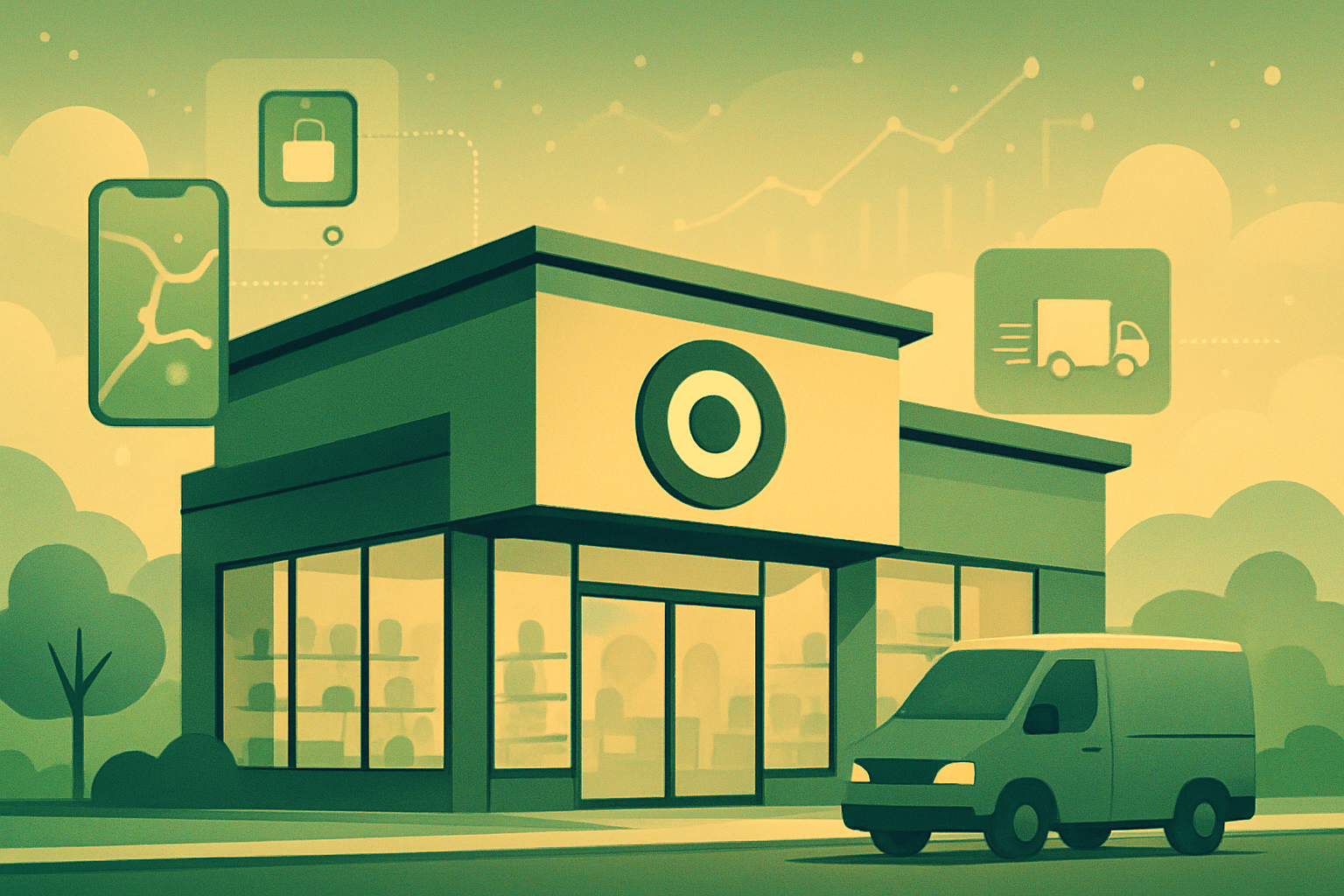
  • The ‘Tar-zhay’ Transition: A Comprehensive Analysis of Target Corporation (TGT) in 2026

    The ‘Tar-zhay’ Transition: A Comprehensive Analysis of Target Corporation (TGT) in 2026

    Date: March 3, 2026

    Introduction

    Target Corporation (NYSE: TGT) has long held a unique position in the American retail landscape, bridging the gap between the utilitarian bulk of big-box discounters and the aspirational curation of specialty boutiques. Often referred to by its affectionate nickname "Tar-zhay," the company has built a brand identity centered on "cheap-chic"—high-design products at accessible price points. However, as of early 2026, Target finds itself at a critical juncture. After navigating the volatile "homebody economy" of the early 2020s and a subsequent period of inventory and margin contraction, the company is now undergoing a significant leadership transition. With a new CEO at the helm and a shifting macroeconomic backdrop, investors are closely watching whether Target can reclaim its premium valuation or if it will remain shadowed by the logistical dominance of larger rivals.

    Historical Background

    Target’s roots trace back to 1902 when George Dayton founded Goodfellow Dry Goods in Minneapolis. The company evolved into the Dayton-Hudson Corporation, a department store powerhouse. It wasn't until 1962—the same year Walmart and Kmart were founded—that the first Target store opened in Roseville, Minnesota, as a discount offshoot.

    Throughout the 1980s and 90s, Target distinguished itself through "design for all" partnerships with high-end designers like Michael Graves, which cemented its reputation for style. The 2000s saw the company divest its department store assets (Marshall Field’s and Mervyn’s) to focus entirely on the Target brand. A pivotal moment came in 2014 when Brian Cornell took the CEO role following a massive data breach and a failed expansion into Canada. Under Cornell’s "stores-as-hubs" strategy, Target successfully integrated its physical footprint with its digital platform, a move that proved visionary during the 2020-2021 pandemic boom.

    Business Model

    Target operates as a general merchandise retailer through more than 1,900 stores across the United States. Its revenue model is diversified across five core categories: Beauty & Household Essentials, Food & Beverage, Home Furnishings & Decor, Hardlines (electronics, toys), and Apparel & Accessories.

    A cornerstone of Target’s business model is its "Owned Brands" portfolio. Brands like Good & Gather, Cat & Jack, and Threshold generate approximately 30% of total sales. These private labels offer higher margins than national brands and foster intense customer loyalty. Furthermore, Target has pioneered the "store-within-a-store" concept, partnering with premium brands like Ulta Beauty, Starbucks, and Disney to drive foot traffic and basket size.

    Stock Performance Overview

    As of March 2, 2026, Target’s stock was trading at approximately $113.17. The performance history reflects a roller-coaster decade for shareholders:

    • 1-Year Performance: Down roughly 9%. The stock has been weighed down by sluggish comparable sales and the costs associated with upgrading store security and supply chain automation.
    • 5-Year Performance: Down nearly 35%. This steep decline highlights the "hangover" effect from the stock’s all-time high of over $232 in late 2021. The market has repriced TGT as growth in discretionary spending cooled.
    • 10-Year Performance: Up 83.6%. Investors who held through the decade have seen nearly a doubling of value, largely driven by the company’s digital transformation and the success of its omnichannel fulfillment (Drive Up, Shipt).

    Financial Performance

    Fiscal Year 2025 was a year of stabilization for Target. The company reported total revenue of $104.8 billion, a slight year-over-year decrease of 1.7%. Comparable sales dipped 2.6%, reflecting a consumer base that remains cautious about non-essential purchases.

    Despite the top-line pressure, Target maintained a healthy gross margin rate of 27.9%. While merchandising markdowns to clear excess seasonal inventory pressured margins, these were partially offset by the high-margin growth of its advertising arm. Net income for 2025 stood at $4.091 billion, with GAAP Earnings Per Share (EPS) of $8.13. The company enters 2026 with a sharpened focus on cost discipline and inventory management to protect the bottom line.

    Leadership and Management

    A new era began on February 1, 2026, as Michael Fiddelke stepped into the CEO role. Fiddelke, a 20-year Target veteran and former COO/CFO, succeeded Brian Cornell, who transitioned to the role of Executive Chair of the Board.

    Cornell is credited with saving Target from obsolescence during the mid-2010s, but the market is now looking to Fiddelke to navigate a more complex era defined by AI integration and rising "retail shrink." Fiddelke is viewed as a disciplined operational leader. His strategy for 2026, described as "back-to-basics," emphasizes merchandising authority and leveraging technology to reduce friction in the guest experience.

    Products, Services, and Innovations

    Target continues to innovate in the "Retail Media" space. Its advertising division, Roundel, has become a major profit engine, generating nearly $2 billion in annual value by 2026. This allows Target to monetize its vast first-party shopper data, selling targeted ad placements to consumer-packaged goods (CPG) companies.

    In terms of services, Target Circle 360—the company’s revamped loyalty and subscription program—has seen steady adoption. It competes directly with Amazon Prime and Walmart+, offering unlimited same-day delivery via Shipt. On the product front, the company continues to refresh its grocery offerings, adding over 600 new items to its Good & Gather label in 2025 to capture more "frequent trip" shoppers.

    Competitive Landscape

    Target occupies a precarious middle ground in a retail world dominated by scale:

    • Walmart (WMT): The undisputed price leader. With over $675 billion in domestic sales, Walmart has successfully attracted higher-income shoppers who are "trading down," putting pressure on Target’s core demographic.
    • Amazon (AMZN): The logistics titan. While Target’s e-commerce is robust (~1.9% US market share), it pales in comparison to Amazon’s 37.6%. Amazon’s speed remains the gold standard.
    • Costco (COST): A major rival for high-income suburban families. Costco’s membership model provides a level of recurring revenue and loyalty that Target is still trying to replicate with its loyalty tiers.

    Industry and Market Trends

    In 2026, the retail sector is defined by two major shifts: Retail Media and Omnichannel 2.0. Retailers are no longer just selling products; they are becoming media platforms. Target’s ability to grow Roundel is essential for offsetting the thin margins of grocery and essentials.

    Additionally, the "Stores-as-Hubs" model has matured. Nearly 97% of Target’s online orders are fulfilled by its physical stores. This reduces shipping costs and delivery times, but it requires a sophisticated labor and tech stack to manage inventory in real-time across thousands of locations.

    Risks and Challenges

    The most prominent operational risk for Target is Inventory Shrink. In 2025, the company reported losses of approximately $500 million due to organized retail crime and shoplifting. This has led to controversial but necessary measures, such as limiting self-checkout to 10 items or fewer and locking up high-theft categories like beauty products.

    Furthermore, Target is highly sensitive to discretionary spending. Unlike Walmart, which derives more than half of its sales from groceries, Target leans heavily on home decor, apparel, and electronics. If the US economy experiences a cooling period in mid-2026, Target’s "cheap-chic" items are often the first to be cut from consumer budgets.

    Opportunities and Catalysts

    • Operational Efficiency: Under CEO Michael Fiddelke, Target is investing heavily in AI-driven supply chain tools to predict demand more accurately and reduce the need for margin-killing markdowns.
    • Grocery Expansion: By expanding its owned-brand food labels, Target aims to move from a "discretionary destination" to a weekly necessity, increasing the frequency of store visits.
    • Market Share Recovery: If inflation continues to stabilize, the "aspirational" shopper—who may have traded down to dollar stores or Walmart in 2024—may return to Target for the curated experience they prefer.

    Investor Sentiment and Analyst Coverage

    Wall Street sentiment on Target is currently Neutral/Hold. Analysts have a median price target of $105.00–$107.00, suggesting the stock may be slightly overextended at its current $113 level. While institutional investors appreciate Target’s dividend history and Roundel’s growth, there is a "wait and see" attitude regarding the leadership transition and the company's ability to stem the tide of inventory shrink.

    Regulatory, Policy, and Geopolitical Factors

    The regulatory environment in 2026 presents several hurdles. The "One Big Beautiful Bill Act" (OBBBA), signed in late 2025, has introduced changes to tax structures for hourly workers ("No Tax on Tips/Overtime"), which may help Target’s labor retention but also complicates payroll compliance.

    More concerning are the new trade tariffs enacted in early 2026. Because Target imports a significant portion of its apparel and electronics, these tariffs could force the company to either raise prices (risking customer loss) or absorb the costs (hurting margins). Additionally, the FTC is increasing scrutiny on subscription models like Target Circle 360, requiring more transparent "easy-to-cancel" features.

    Conclusion

    Target Corporation enters the mid-2020s as a leaner, more technologically integrated version of its former self, yet it faces an uphill battle against the sheer scale of Walmart and Amazon. The success of the "Fiddelke era" will depend on the company’s ability to balance its "cheap-chic" identity with the cold realities of retail security and macro-inflationary pressures.

    For investors, Target remains a high-quality retail play with a formidable private-label engine and a burgeoning media business. However, the stock’s performance in 2026 will likely hinge on whether it can prove that its stores are safe, its inventory is protected, and its "Owned Brands" can keep the American consumer coming back even when their wallets are tight.


    This content is intended for informational purposes only and is not financial advice.

  • Spotify (SPOT) Deep Dive: From Disruptor to Audio Utility (2026 Research Report)

    Spotify (SPOT) Deep Dive: From Disruptor to Audio Utility (2026 Research Report)

    On February 11, 2026, Spotify Technology S.A. (NYSE: SPOT) finds itself at the center of the global financial stage. Following a blowout Q4 2025 earnings report released yesterday, the stock surged nearly 15%, catapulting the company's market capitalization to a staggering $98 billion. For years, the narrative surrounding Spotify was one of a "growth-at-all-costs" disruptor that struggled to translate user scale into bottom-line profits. Today, that narrative has shifted decisively.

    Spotify is no longer just a music streaming platform; it has evolved into a diversified "audio utility" spanning music, podcasts, audiobooks, and live events. With a newly minted Co-CEO structure and record-high gross margins, the Stockholm-founded giant is demonstrating that it can successfully navigate the transition from a tech underdog to a highly profitable media powerhouse.

    Historical Background

    Founded in 2006 by Daniel Ek and Martin Lorentzon in Stockholm, Sweden, Spotify was born out of a desire to solve the music industry's rampant piracy problem. Launched officially in 2008, it offered a legal alternative to file-sharing sites like Napster and LimeWire, eventually arriving in the U.S. market in 2011.

    The company's journey has been defined by its ability to convince major record labels—Universal, Sony, and Warner—to license their catalogs for a revenue-sharing model. In 2018, Spotify bypassed the traditional IPO process in favor of a Direct Public Offering (DPO) on the New York Stock Exchange, a move that signaled its unconventional approach to corporate finance. Over the last decade, the company transitioned from music-only to a "Total Audio" strategy, spending billions on podcast studios like Gimlet and The Ringer, and later acquiring audiobook platform Findaway.

    Business Model

    Spotify operates a "Freemium" model, which acts as a massive funnel for customer acquisition. Its revenue is derived from two primary segments:

    1. Premium Subscribers: This is the core engine, generating approximately 87% of total revenue as of late 2025. Users pay a monthly fee for ad-free listening, offline downloads, and higher-quality audio.
    2. Ad-Supported Users: This segment provides limited access to music and podcasts for free, monetized via audio, video, and display advertising. While lower margin, it serves as the primary entry point for users in emerging markets.

    Underpinning these segments is Spotify’s "Two-Sided Marketplace," where it provides data and promotional tools (like Marquee and Discovery Mode) to artists and labels. This allows Spotify to monetize its influence over user tastes while simultaneously reducing its effective content costs through favorable promotional deals.

    Stock Performance Overview

    The stock performance of SPOT has been a rollercoaster of volatility and eventual vindication.

    • 1-Year Performance: Over the past twelve months, the stock has risen over 80%, fueled by aggressive cost-cutting measures and the successful rollout of audiobook integration.
    • 5-Year Performance: Looking back to 2021, the stock suffered a massive "post-pandemic" correction in 2022, dropping below $80 as investors fled unprofitable tech. Since then, it has staged a multi-year recovery, recently surpassing its all-time highs from the early 2020s.
    • Long-Term Trend: Since its 2018 DPO at an opening price of $165.90, the stock has delivered a compounded annual growth rate that significantly outperforms the S&P 500, though with much higher beta.

    Financial Performance

    In the 2025 fiscal year, Spotify silenced skeptics by achieving a sustained annual operating profit of €2.2 billion ($2.5 billion). Key metrics from the latest February 2026 report include:

    • Monthly Active Users (MAUs): 751 million, an 11% year-over-year increase.
    • Gross Margin: A record 33.1%, up from historical levels of 25-26%. This expansion is attributed to the "break-even" status of the podcasting unit and the higher margins found in the Marketplace business.
    • Free Cash Flow: Spotify remains highly cash-generative, utilizing its capital to fund a $510 million share buyback program completed in late 2025.
    • Valuation: Despite the recent price surge, the company trades at a forward P/E ratio that reflects its new status as a profitable growth stock rather than a speculative tech play.

    Leadership and Management

    A major shift in leadership occurred on January 1, 2026. Founder Daniel Ek transitioned to the role of Executive Chairman, focusing on long-term engineering vision and capital allocation. The day-to-day operations are now handled by Co-CEOs Alex Norström and Gustav Söderström.

    • Norström (Co-CEO): Oversees the business, subscriber growth, and international expansion.
    • Söderström (Co-CEO): Leads product, R&D, and the company’s massive pivot toward Artificial Intelligence.
    • Christian Luiga (CFO): Credited with the "efficiency era" at Spotify, Luiga’s focus on financial discipline has been instrumental in the company’s recent margin expansion.

    Products, Services, and Innovations

    Spotify’s product roadmap for 2026 is heavily anchored in AI Personalization. Its "AI DJ" has become one of the most used features on the platform, and the new "Prompt-to-Playlist" tool allows users to generate complex playlists via natural language queries.

    • Lossless Audio: Finally rolled out in late 2025, Spotify Hi-Fi (now branded as Spotify Lossless) is included in all Premium tiers to remain competitive with Apple.
    • The "Music Pro" Add-on: Currently in beta, this $5-6/month add-on offers "superfan" perks, including AI-powered remixing tools and early access to concert tickets.
    • Video Integration: A strategic partnership with Netflix, announced in late 2025, has integrated video podcasts and behind-the-scenes "Storyline" content directly into the Spotify interface, challenging YouTube's dominance in the video-audio space.

    Competitive Landscape

    Spotify holds a global market share of approximately 32% in the music streaming space. Its primary rivals are deep-pocketed tech giants:

    • Apple Music (NYSE: AAPL): Holds roughly 12% market share. Apple’s advantage is its hardware ecosystem and high-resolution spatial audio offerings.
    • YouTube Music (NASDAQ: GOOGL): With 10% share, YouTube is a formidable competitor among Gen-Z users who value user-generated content and remixes.
    • Amazon Music (NASDAQ: AMZN): Primarily a bundle play for Prime members, competing on price and convenience.

    Spotify’s competitive edge remains its superior discovery algorithms and its "pure-play" focus. Unlike Apple or Amazon, Spotify’s survival depends entirely on the audio experience, which has led to a more intuitive and personalized user interface.

    Industry and Market Trends

    The audio industry in 2026 is moving toward "Hyper-Personalization" and "Platformization."

    • The Decline of Passive Listening: Platforms are moving away from simple "search and play" toward "curated experiences" where the platform predicts what a user wants before they even know it.
    • The Creator Economy: Spotify is increasingly moving "upstream," providing tools that allow artists to sell merch, tickets, and "exclusive access" directly to their top 1% of listeners, bypassing traditional intermediaries.

    Risks and Challenges

    Despite the current euphoria, Spotify faces significant hurdles:

    • Content Costs: While margins have improved, Spotify still pays out roughly 70% of its music revenue to rights holders. Any breakdown in negotiations with major labels like Universal Music Group (UMG) could be catastrophic.
    • AI Saturation: The rise of AI-generated music presents a copyright minefield. If the platform becomes flooded with "fake" songs, it could alienate both human artists and listeners.
    • Regulatory Scrutiny: As Spotify grows, it faces increased antitrust scrutiny in the EU and US regarding its influence over the music industry and its competitive practices in the podcasting space.

    Opportunities and Catalysts

    • Audiobook Growth: Spotify has only just begun to monetize its audiobook vertical. The ability to cross-sell books to its 290 million Premium subscribers represents a multi-billion dollar opportunity.
    • Advertising Technology: The Spotify Audience Network (SPAN) allows for more targeted podcast ads. As ad-tech matures, Spotify could see its ad-supported margins rival those of its premium segment.
    • Emerging Markets: Regions like Southeast Asia and Africa remain significantly under-penetrated, offering a long runway for MAU growth.

    Investor Sentiment and Analyst Coverage

    Wall Street sentiment is overwhelmingly bullish following the February 2026 earnings beat.

    • Analyst Ratings: Currently, the consensus is a "Strong Buy," with several analysts raising price targets to the $525-$550 range.
    • Hedge Fund Interest: Recent filings show increased positions from major institutional players who view Spotify as the "Netflix of Audio"—a company that has finally reached the scale necessary for sustained cash flow generation.
    • Retail Sentiment: On social media platforms and retail trading forums, Spotify is often cited as a "top-tier compounder," with investors praising Daniel Ek’s transition to Chairman as a sign of corporate maturity.

    Regulatory, Policy, and Geopolitical Factors

    Geopolitics and regulation play a critical role in Spotify's strategy. The EU’s Digital Markets Act (DMA) has been a boon for Spotify, forcing Apple to allow third-party app stores and more flexible payment options on the iOS platform. This has reduced the "Apple Tax" that previously ate into Spotify's margins.
    However, the company faces local content laws in markets like France and Canada, which require platforms to promote a certain percentage of domestic music, complicating the platform's global algorithm-led discovery model.

    Conclusion

    Spotify Technology S.A. has successfully navigated its "growing pains." By early 2026, the company has proven that its business model is not only scalable but also highly profitable. The transition to a Co-CEO structure, the stabilization of the podcasting business, and the successful integration of audiobooks have created a diversified revenue stream that makes the company more resilient than ever before.

    For investors, the key will be watching whether Spotify can maintain its gross margin trajectory while fending off the "bundling" power of Apple and Google. With a massive lead in user data and a relentless focus on AI-driven innovation, Spotify is no longer just a streaming service—it is the indispensable utility of the global audio economy.


    This content is intended for informational purposes only and is not financial advice. Disclosure: As of 2/11/2026, the market conditions are subject to rapid change.