Tag: EV

  • Tesla’s Pivot to Physical AI: A 2026 Deep Dive into the Future of TSLA

    Tesla’s Pivot to Physical AI: A 2026 Deep Dive into the Future of TSLA

    Date: April 14, 2026

    Introduction

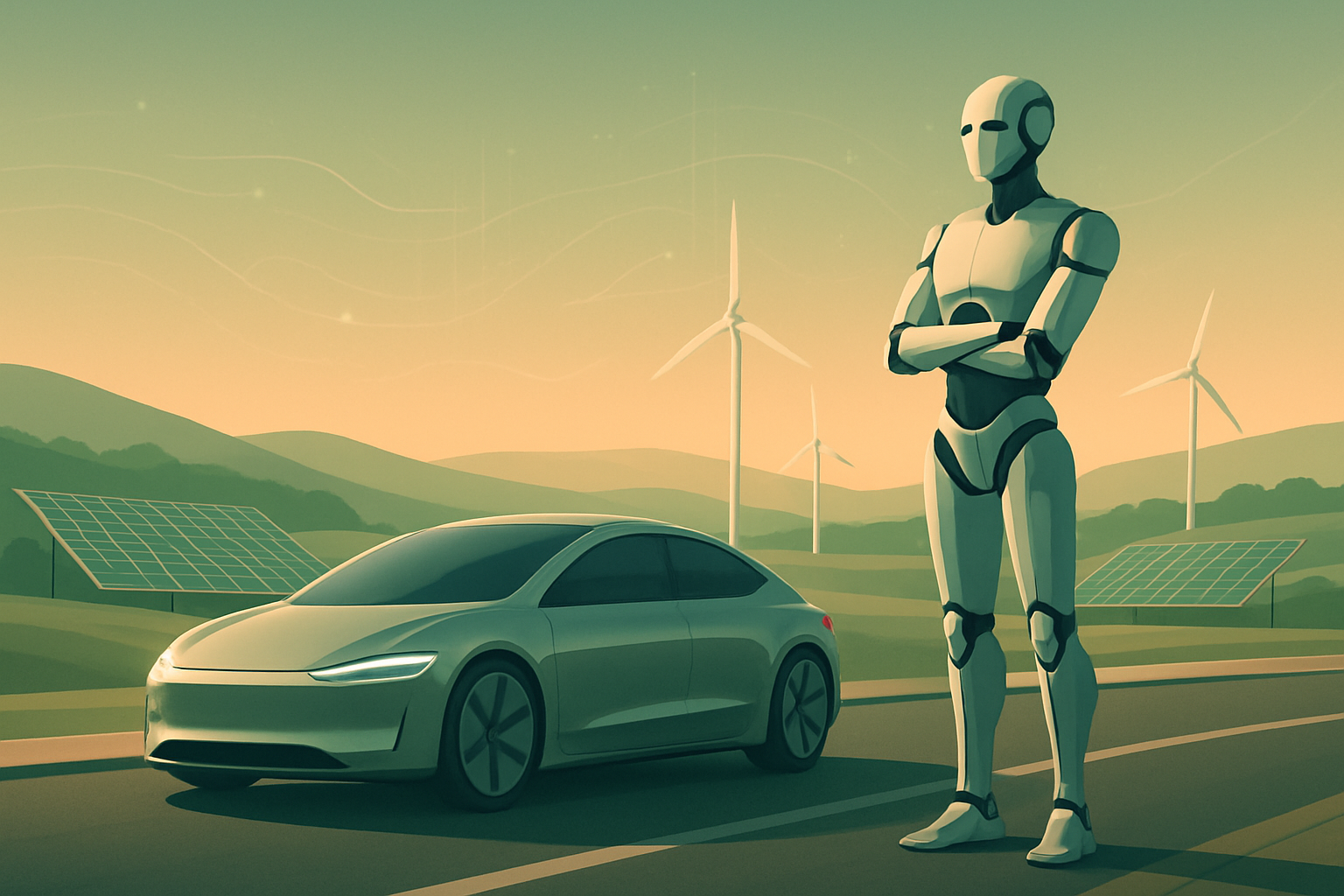
    As of April 14, 2026, Tesla, Inc. (NASDAQ: TSLA) finds itself at a defining crossroads that will determine its identity for the next decade. No longer viewed strictly through the lens of an automotive manufacturer, the Austin-based company is in the midst of a radical pivot toward "Physical AI"—a strategic shift that prioritizes autonomous transport and humanoid robotics over high-volume consumer vehicle sales. With the recent commencement of Cybercab mass production and the transition of its Fremont factory into a dedicated robotics hub, Tesla is attempting to bridge the gap between a cooling electric vehicle (EV) market and the multi-trillion-dollar promise of the "Age of Autonomy." This article explores the company’s current standing, its volatile financial trajectory, and the high-stakes innovations that define its 2026 outlook.

    Historical Background

    Tesla’s journey from a niche Silicon Valley startup to a global industrial titan is one of the most storied in corporate history. Founded in 2003 by Martin Eberhard and Marc Tarpenning—and later spearheaded by Elon Musk—the company’s mission was to prove that electric cars could be superior to gasoline-powered vehicles.

    The 2008 Roadster set the stage, but it was the 2012 Model S that revolutionized the industry, proving EVs could be luxury symbols of high performance. Following the "production hell" of the Model 3 in 2017-2018, which nearly bankrupted the firm, Tesla achieved unprecedented scale, reaching profitability and S&P 500 inclusion in 2020. By 2023, the Model Y became the best-selling vehicle globally, of any fuel type. However, as the 2020s progressed, Tesla shifted its focus from the "Master Plan Part 3" goal of 20 million vehicles per year to a more concentrated bet on artificial intelligence, leading to the pivotal 2026 production launch of the Cybercab.

    Business Model

    Tesla’s business model is a vertically integrated ecosystem that spans three primary pillars:

    1. Automotive & Autonomy: While vehicle sales (Model 3, Model Y, Cybertruck) still generate the bulk of revenue, the model has shifted toward high-margin software. This includes Full Self-Driving (FSD) subscriptions and the nascent Tesla Network, an autonomous ride-hailing platform.
    2. Energy Generation and Storage: This segment has become Tesla’s fastest-growing engine. Through the Megapack (for utilities) and Powerwall (for homes), Tesla provides the infrastructure for a renewable grid. In Q1 2026, this segment achieved record deployments of 8.8 GWh.
    3. Services and Robotics: This includes the global Supercharger network—now widely adopted as the industry standard (NACS)—and the emerging Optimus program. Tesla aims to sell labor in the form of humanoid robots, moving the company into the $40 trillion global labor market.

    Stock Performance Overview

    Tesla remains one of the most polarizing and volatile stocks on the NASDAQ.

    • 1-Year Performance: Over the past 12 months, TSLA has traded in a wide range between $350 and $430. After hitting an all-time high of $498.83 in late 2025 following a successful "unsupervised" Robotaxi pilot, the stock retreated in early 2026 due to a Q1 delivery miss.
    • 5-Year Performance: Investors who held through the 2021-2022 volatility have seen significant gains, driven by the scaling of Giga Texas and Giga Berlin and the energy segment's maturation.
    • 10-Year Performance: Tesla remains one of the best-performing stocks of the decade, with a total return exceeding 1,500%, drastically outperforming the S&P 500 and the broader automotive sector.

    Financial Performance

    In the fiscal year 2025, Tesla reported total revenue of $94.8 billion. However, Q1 2026 results released in April showed signs of a "delivery plateau." Tesla delivered 358,023 vehicles, a 6.3% year-over-year increase but a sequential decline that fell short of analyst expectations.

    • Margins: Automotive gross margins have stabilized at approximately 20.1% as of Q4 2025, despite aggressive price cuts to maintain market share against Chinese competitors.
    • Balance Sheet: Tesla maintains a fortress balance sheet with over $30 billion in cash and cash equivalents and minimal debt, allowing it to self-fund the massive R&D required for the Optimus and Cybercab programs.
    • Valuation: With a P/E ratio still significantly higher than traditional automakers, the market is pricing Tesla as a software/AI company rather than a hardware manufacturer.

    Leadership and Management

    Elon Musk continues to serve as CEO, though his attention is split between Tesla, SpaceX, xAI, and X. This "key-man risk" remains a primary concern for institutional investors. However, the operational leadership has solidified under CFO Vaibhav Taneja and Tom Zhu, who oversees global production.
    The board of directors remains under scrutiny regarding Musk’s 2024 pay package and governance, but the strategic pivot to AI has largely aligned the leadership team toward a singular goal: achieving Level 5 autonomy and scaling Optimus Gen 3.

    Products, Services, and Innovations

    Tesla’s current portfolio is undergoing its most significant transition since 2017:

    • Cybercab (Robotaxi): Mass production began at Giga Texas in April 2026. This steering-wheel-less vehicle is the centerpiece of Tesla’s future, designed for an internal ride-sharing network.
    • Model 2 (Project Redwood): A $25,000 compact SUV is currently in pilot production, utilizing the "Unboxed" manufacturing process to reduce costs by 50%.
    • FSD v14.3: Released in early April 2026, this version utilizes a ground-up Machine Learning Intermediate Representation (MLIR) rewrite, significantly reducing latency and improving complex urban navigation.
    • Optimus Gen 3: Now in mass production at the repurposed Fremont facility, thousands of these bots are currently being "hired" internally for Tesla’s battery lines, with external commercial sales slated for late 2026.

    Competitive Landscape

    Tesla faces a two-front war in the competitive landscape:

    • The China Challenge: BYD (OTCPK: BYDDY) remains Tesla's most formidable volume rival, consistently challenging for the title of the world's top EV seller. Xiaomi and Huawei have also entered the premium EV space with high-tech software integrations.
    • Legacy Transformation: In the U.S. and Europe, legacy giants like Ford (NYSE: F) and Volkswagen (OTC: VWAGY) have pulled back on pure EV targets in favor of hybrids, leaving Tesla to dominate the shrinking but still critical pure-EV segment.
    • AI Competitors: In the robotics and autonomy space, Tesla competes with Waymo (Alphabet) and specialized robotics firms like Boston Dynamics, though Tesla’s advantage lies in its massive real-world data set and manufacturing scale.

    Industry and Market Trends

    The "Age of Autonomy" is the defining trend of 2026. Global EV adoption has slowed in some Western markets due to high interest rates and the expiration of subsidies, but the demand for energy storage and autonomous systems is accelerating. Furthermore, the convergence of Large Language Models (LLMs) with physical robotics—embodied by Tesla’s integration of xAI’s "Grok"—is creating a new category of "embodied AI" that is attracting massive venture and institutional capital.

    Risks and Challenges

    • Margin Compression: Continuous price wars in the EV space threaten the high margins that once justified Tesla’s premium valuation.
    • Regulatory Scrutiny: FSD remains under intense investigation by the NHTSA in the U.S., and any high-profile autonomous accidents could stall the Cybercab rollout.
    • Execution Risk: Moving from prototype to mass production of a humanoid robot (Optimus) is an unprecedented industrial challenge.
    • Geopolitical Tensions: Tesla’s heavy reliance on its Shanghai Gigafactory makes it vulnerable to shifting U.S.-China trade policies and potential tariffs.

    Opportunities and Catalysts

    • Robotaxi Fleet: A successful launch of the Tesla Network could transform the company into a high-margin service provider similar to Uber or Airbnb, but with much higher take rates.
    • FSD Licensing: Several legacy automakers are reportedly in talks to license Tesla’s FSD software, which would provide a pure-profit revenue stream.
    • Energy Storage Dominance: As the world transitions to renewables, the Megapack business could eventually rival the automotive segment in total revenue.
    • EU Expansion: The recent approval of FSD for public use in the Netherlands marks the beginning of a massive new market for Tesla’s software in Europe.

    Investor Sentiment and Analyst Coverage

    Wall Street remains deeply divided on Tesla.

    • The Bulls: Analysts at firms like ARK Invest maintain a price target exceeding $2,000 (pre-split adjusted), viewing Tesla as the dominant player in a multi-trillion dollar autonomous transport market.
    • The Bears: Skeptics point to the 50,000-unit production-delivery gap in Q1 2026 as proof that Tesla is a "busted growth story" in the automotive sector, currently overvalued for its unproven AI promises.
    • Retail Influence: Tesla remains a favorite among retail investors, who hold a significant portion of the float and often provide a "floor" for the stock price during downturns.

    Regulatory, Policy, and Geopolitical Factors

    Tesla’s operations are heavily influenced by global policy. In the U.S., the expiration of federal EV tax credits in late 2025 has created a headwind for domestic sales. Conversely, the Inflation Reduction Act (IRA) continues to provide massive subsidies for Tesla’s battery manufacturing in Nevada and Texas. In Europe, new environmental mandates and the rollout of FSD-friendly regulations are providing tailwinds, while in China, Tesla must navigate strict data-security laws to keep its FSD systems operational.

    Conclusion

    Tesla in April 2026 is a company in the middle of its most ambitious transformation yet. By sunsetting legacy models like the S and X to make room for Optimus and Cybercab, Elon Musk is doubling down on a future where Tesla provides the "brains" and "bodies" of the autonomous economy.

    For investors, the path forward is binary: those who view Tesla as a car company see a stock that is dangerously overvalued amidst slowing demand and rising competition. However, those who view it as an AI and robotics platform see a company that is just beginning its most profitable chapter. The key metrics to watch over the coming months will be the progress of the "Unboxed" manufacturing process for the $25,000 model and the real-world performance of the first Cybercab fleets.


    This content is intended for informational purposes only and is not financial advice.
  • The Terafab Pivot: Inside Tesla’s $25 Billion Bet on AI and the Million-Mile Battery

    The Terafab Pivot: Inside Tesla’s $25 Billion Bet on AI and the Million-Mile Battery

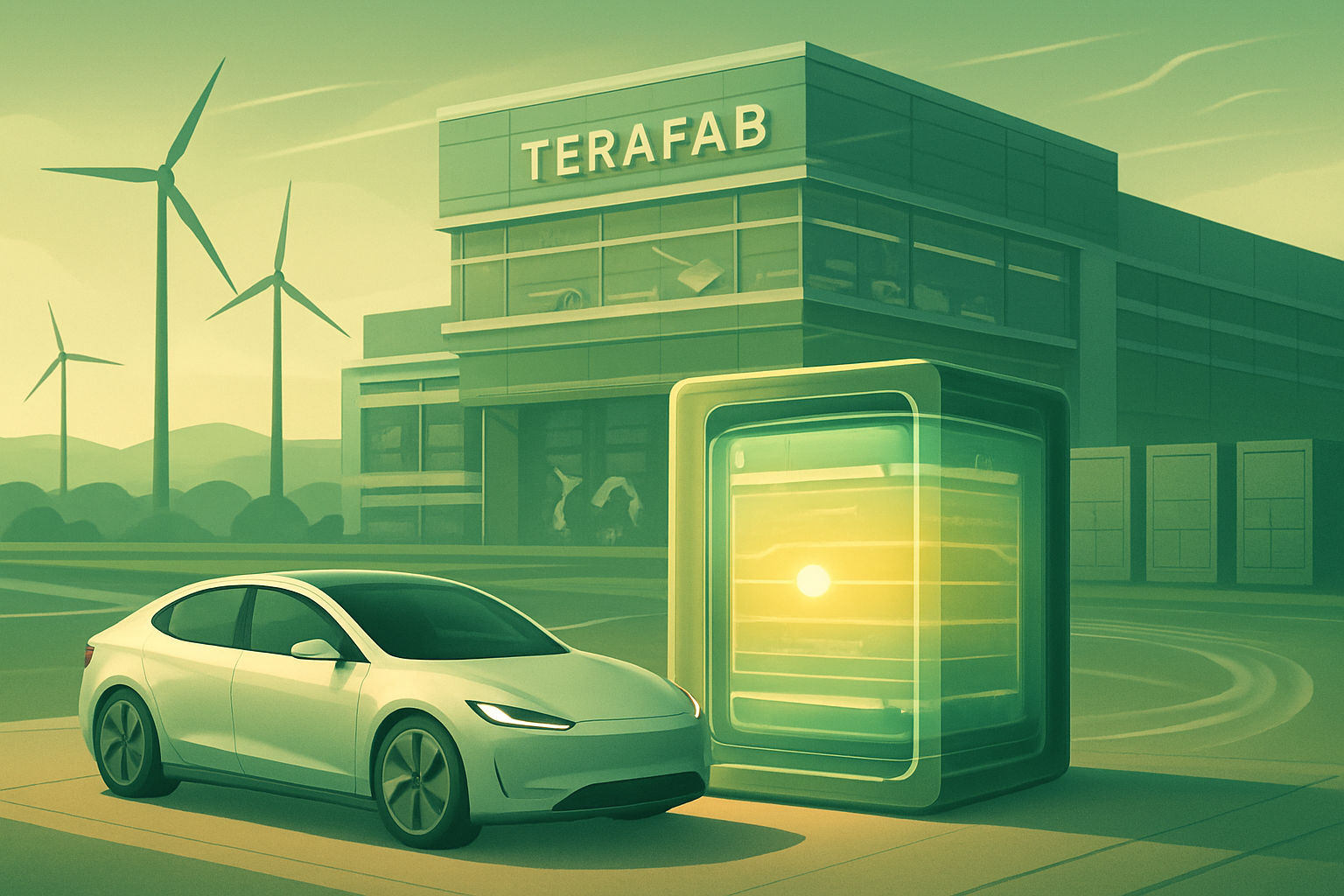
    As of today, March 26, 2026, Tesla, Inc. (NASDAQ: TSLA) stands at perhaps the most critical inflection point in its two-decade history. Long heralded as the vanguard of the electric vehicle (EV) revolution, the company has spent the last 24 months aggressively pivoting away from being "just a car company." With the official ground-breaking of the $25 billion "Terafab" project in Austin and the widespread commercialization of the long-rumored "Million-Mile Battery," Tesla is attempting to reinvent itself as the foundational infrastructure layer for the global AI and autonomous economy.

    This article examines the structural shifts within Tesla, analyzing whether its massive capital expenditures in semiconductor fabrication and battery longevity can offset a cooling global EV market and intense competition from the East.

    Historical Background

    Founded in 2003 and led by Elon Musk since its early rounds of funding, Tesla’s journey has been defined by "master plans" that seemed impossible at inception. From the niche Roadster to the mass-market success of the Model 3 and Model Y, Tesla successfully broke the century-old barrier to entry in the automotive industry.

    However, the period between 2021 and 2024 saw the company mature from a high-growth disruptor into a global incumbent. The "Great EV Slowdown" of 2024 forced a strategic reassessment, leading to the 2025 "Pivot to Intelligence." Today, in 2026, Tesla is no longer defined by how many cars it delivers, but by the compute power it controls and the durability of the energy ecosystem it provides.

    Business Model

    Tesla’s revenue mix has undergone a radical transformation over the last fiscal year. While Automotive Sales still represent the largest share of the top line, the margin profile has shifted toward Services and Energy.

    1. Automotive: Sales of Model 3, Y, S, X, and the Cybertruck. The upcoming "Model 2" (Cybercab) platform is expected to drive the next volume wave.
    2. Energy Generation & Storage: This segment—comprising Megapack and Powerwall—has become the company’s fastest-growing business, buoyed by the 2025 global grid-stability crisis.
    3. Services & FSD: Tesla now operates a high-margin recurring revenue model through its "Unsupervised FSD" subscriptions and Supercharger licensing.
    4. Silicon & AI (The Terafab Initiative): A new revenue stream involving the sale and licensing of custom AI5 and D3 chips, produced in-house to bypass the traditional semiconductor supply chain.

    Stock Performance Overview

    Tesla’s stock performance has been a tale of two eras.

    • 10-Year View: Investors who held from 2016 have seen astronomical gains, though the 2021–2024 period was marked by extreme volatility and a significant "lost 30 months" where the stock traded sideways or down.
    • 5-Year View: Since March 2021, the stock has weathered the 2022 tech wreck and the 2024 margin compression. It bottomed near $100 in early 2023 and peaked at nearly $500 in late 2025.
    • 1-Year View: Over the last 12 months, TSLA is up roughly 12%, currently trading at $385.95. The market is currently pricing in the success of the Terafab project while discounting the temporary slowdown in car deliveries.

    Financial Performance

    Tesla’s FY 2025 results, released in January 2026, reflected the "growing pains" of its AI transition.

    • Revenue: $94.82 billion (a 3% YoY decline, the first significant contraction in a decade).
    • Net Income: $3.79 billion (down 46% YoY), driven by the massive $25 billion R&D and CAPEX commitment to the Terafab facility.
    • Automotive Gross Margin: 16.4% (excluding credits). This is a far cry from the 25%+ margins seen in 2021, reflecting price wars with BYD and Xiaomi.
    • Cash Position: Despite heavy spending, Tesla maintains a robust $28 billion cash pile, providing a significant buffer against macroeconomic headwinds.

    Leadership and Management

    Elon Musk remains the polarizing figurehead of the company, though his time is now split between Tesla, SpaceX, and xAI. Critics argue that Musk’s "multi-CEO" lifestyle creates execution risk, but proponents point to the synergy between xAI’s large language models and Tesla’s FSD v13 as evidence of a unified "AI Empire."

    The board, led by Robyn Denholm, has faced increased scrutiny regarding governance and Musk’s 2024 pay package re-approval, yet the leadership team's ability to execute on the "dry electrode" battery breakthrough has largely silenced calls for a leadership change in the near term.

    Products, Services, and Innovations

    The Million-Mile Battery

    The 4680 Gen-3 cell is now in mass production. Utilizing a revolutionary dry-coating process, these cells boast 10,000+ charge cycles. In practical terms, this allows a Tesla Semi or a Model Y to travel over 1,000,000 miles before the battery capacity drops below 80%. This has effectively killed the "battery degradation" narrative that plagued the industry for a decade.

    The $25B Terafab

    Located adjacent to Giga Texas, the Terafab is a joint venture aimed at producing 2nm AI chips. This facility is Tesla’s "Declaration of Independence" from third-party chipmakers like Nvidia. By 2027, every Tesla vehicle and Optimus robot will run on proprietary silicon designed and manufactured within this ecosystem.

    Competitive Landscape

    Tesla no longer holds the title of the world’s largest BEV manufacturer. That crown was officially claimed by BYD (SZSE: 002594) in late 2025. BYD’s dominance in the sub-$20,000 market has forced Tesla to compete on "intelligence" rather than price.

    Furthermore, Xiaomi (HKG: 1810) has emerged as a formidable "tech-native" rival in China, capturing significant market share from the Model 3. Meanwhile, legacy players like Ford and GM have largely retreated to Plug-in Hybrids (PHEVs), leaving Tesla to fight a two-front war against Chinese manufacturing efficiency and Silicon Valley software speed.

    Industry and Market Trends

    The "EV Era" has transitioned into the "Autonomy Era." In 2026, consumer interest has shifted from range and charging speed (mostly solved by the Million-Mile Battery) to software utility. The rise of "Robotaxi" networks in major metropolitan areas has begun to depress private car ownership, a trend Tesla is betting on heavily with its upcoming Cybercab launch in H2 2026.

    Risks and Challenges

    • Execution Risk: The Terafab is a massive bet. Any delays in 2nm chip yields could leave Tesla with billions in stranded assets.
    • Geopolitical Friction: The "pause" of Giga Mexico due to trade tensions highlights Tesla’s vulnerability to shifting U.S.-China relations.
    • Margin Compression: Until the "Model 2" achieves scale, Tesla’s automotive margins remain under pressure from lower-cost competitors.

    Opportunities and Catalysts

    • FSD Europe Expansion: The expected UN R-171 approval in April 2026 will open the European market to Supervised FSD, potentially unlocking billions in high-margin software revenue.
    • Optimus Integration: The second-generation Optimus bot is currently being trialed on Tesla’s own assembly lines. Successful internal deployment could lead to external sales by 2027.
    • Model 2 Launch: Scheduled for later this year, the "Unboxed" manufacturing process for the $25,000 Tesla is the most anticipated product launch since the Model 3.

    Investor Sentiment and Analyst Coverage

    Wall Street is currently divided. "Bulls" see the Terafab and Million-Mile Battery as the keys to a $3 trillion valuation, viewing Tesla as a tech utility. "Bears" focus on the declining car sales and the heavy CAPEX, labeling Tesla as an overvalued industrial stock. Institutional ownership remains high at 44%, though retail "HODLers" still account for a significant portion of the daily volume, often driven by Musk’s social media activity.

    Regulatory, Policy, and Geopolitical Factors

    Tesla’s expansion into India (Giga India) is a strategic move to diversify away from China. However, the company remains at the mercy of the "Battery Passport" regulations in the EU and shifting EV tax credit policies in the United States. The 2026 regulatory environment is increasingly focused on data privacy and the safety of "Unsupervised" autonomous systems, presenting a new hurdle for FSD deployment.

    Conclusion

    Tesla in 2026 is a company in the middle of a high-stakes skin-graft. It is shedding its skin as a high-volume automaker to reveal an underlying skeleton of AI, semiconductors, and long-life energy storage. The $25 billion Terafab and the Million-Mile Battery are not just product updates; they are the pillars of a new business model.

    For investors, the next 12 to 18 months will be telling. If Tesla can successfully launch the $25,000 "Model 2" while scaling its internal chip production, it will likely solidify its position as the apex predator of the 21st-century economy. However, if the automotive slowdown persists and the AI bets take longer to monetize, the current $1.44 trillion valuation may face a harsh correction.


    This content is intended for informational purposes only and is not financial advice. As of March 26, 2026, the author has no position in TSLA.
  • The Great Inflection: A Deep Dive into NIO Inc.’s 2026 Pivot to Profitability and Volume Growth

    The Great Inflection: A Deep Dive into NIO Inc.’s 2026 Pivot to Profitability and Volume Growth

    As of March 24, 2026, the global electric vehicle (EV) landscape has undergone a tectonic shift, and perhaps no company exemplifies this transformation more than NIO Inc. (NYSE: NIO). Once characterized by high cash burn and skepticism from Wall Street, NIO has emerged in early 2026 as a maturing multi-brand automotive powerhouse.

    The company is currently in the spotlight following a series of record-breaking monthly deliveries and a historic financial pivot: the achievement of its first-ever quarterly net profit in late 2025. With its flagship luxury brand now complemented by the mass-market "Onvo" and the urban-centric "Firefly," NIO is no longer just a premium niche player. It is a diversified volume contender challenging the dominance of established giants like Tesla and BYD, while fending off aggressive new entrants from the consumer electronics world.

    Historical Background

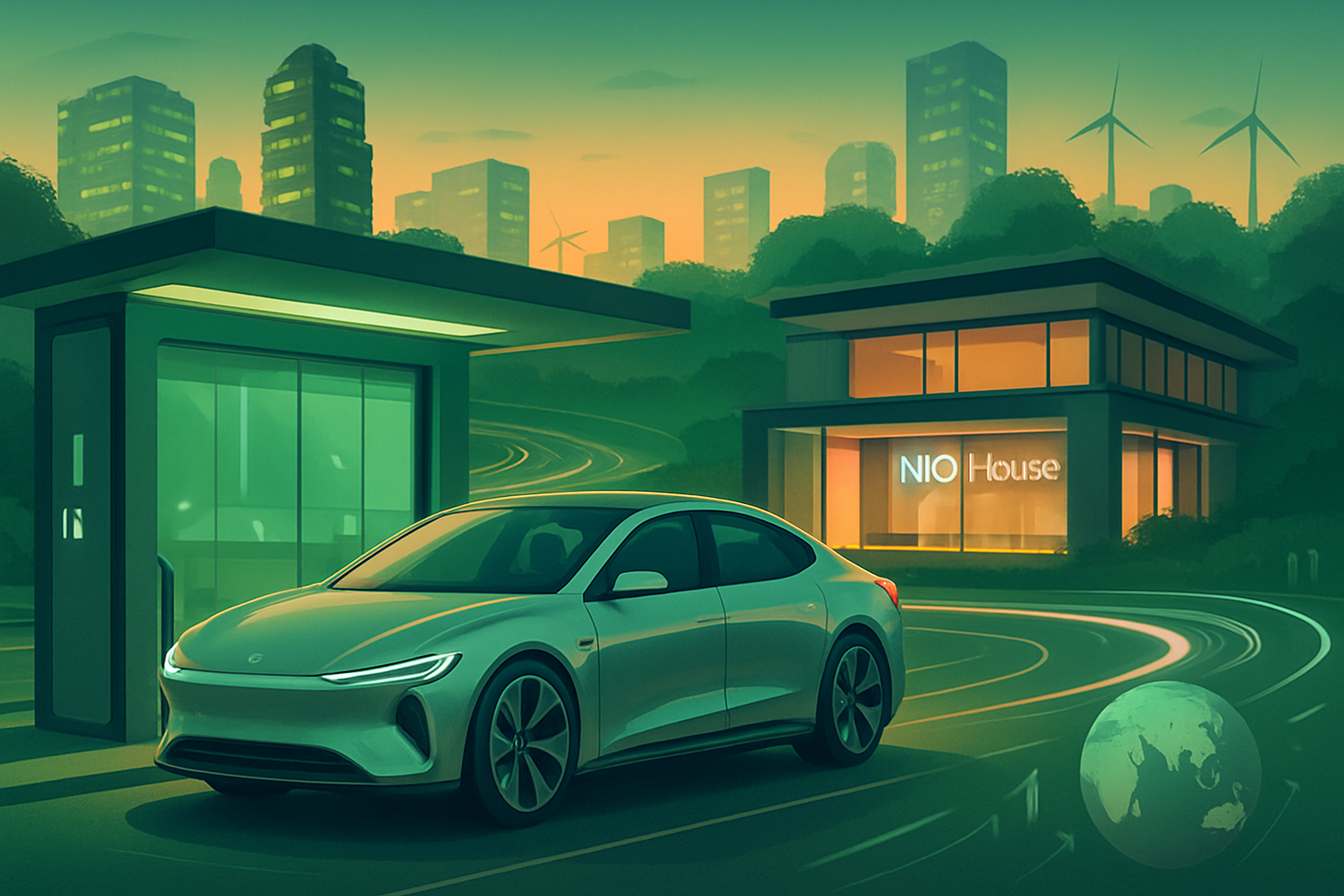
    Founded in 2014 by serial entrepreneur William Li—often dubbed "the Elon Musk of China"—NIO began with a vision of "Blue Sky Coming." The company’s early years were marked by a focus on "User Experience," launching the EP9 supercar to set Nürburgring records and establishing "Nio Houses"—lavish clubhouses for owners.

    However, the journey was nearly cut short. In early 2020, facing a liquidity crisis, NIO was rescued by a $1 billion investment from state-owned entities in Hefei, a move now known as the "Hefei Miracle." This lifeline allowed NIO to scale its ES8 and ES6 SUVs and pioneer the Battery-as-a-Service (BaaS) model. Between 2021 and 2024, NIO navigated the "valley of death" of high R&D spending, eventually securing a transformative $2.2 billion investment from CYVN Holdings, an investment vehicle primarily owned by the Abu Dhabi government. This capital injection in late 2023 and 2024 provided the runway for the multi-brand strategy that is defining its 2026 success.

    Business Model

    NIO operates on a unique "User Enterprise" model that extends far beyond vehicle sales. Its revenue streams are diversified across:

    • Vehicle Sales: Premium luxury EVs (NIO brand), mass-market family vehicles (Onvo), and compact urban EVs (Firefly).
    • Battery-as-a-Service (BaaS): A subscription model where customers buy the car without the battery, lowering the upfront cost and paying a monthly fee for battery swaps.
    • Power Solutions: Revenue from its massive battery swap network and public charging services.
    • NIO Life: A lifestyle brand selling everything from apparel to home goods, fostering deep brand loyalty.

    By 2026, the company has successfully transitioned to a "horizontal" business model, opening its proprietary battery swap architecture to external partners (The Swap Alliance), effectively turning its infrastructure into a utility.

    Stock Performance Overview

    The stock performance of NIO (NYSE: NIO) over the last decade has been a study in volatility.

    • 10-Year Perspective: Since its 2018 IPO, the stock has swung from under $2 during the 2020 crisis to an all-time high of $66 in 2021, before retreating as the "EV bubble" burst.
    • 5-Year Perspective: The period from 2021 to 2026 saw a long, painful consolidation. The stock bottomed near $3.00 in mid-2024 amid intense price wars.
    • 1-Year Perspective: Over the past 12 months, the stock has recovered significantly. Following the late-2025 announcement of profitability and record deliveries, NIO has climbed from the $4 range to its current level of approximately $5.92 as of late March 2026. This 45%+ gain in a year reflects a shift in investor sentiment from "survival mode" to "growth mode."

    Financial Performance

    NIO’s financial profile in early 2026 is the healthiest it has ever been. In its most recent full-year 2025 report, the company recorded total revenue of RMB 87.49 billion ($12.51 billion), a 33% year-over-year increase.

    • Profitability: For the first time, NIO reported a net profit of RMB 282.7 million in Q4 2025.
    • Margins: Vehicle margins surged to 18.1% in Q4 2025, up from 13.1% a year prior. This improvement is attributed to the scaling of the NT3.0 platform and lower battery costs.
    • Cash Reserves: NIO ended 2025 with RMB 45.9 billion ($6.6 billion) in cash and equivalents, providing ample liquidity for the continued rollout of its Generation 5.0 Swap Stations.

    Leadership and Management

    William Li continues to lead as Chairman and CEO, maintaining a reputation for long-term vision and resilience. Lihong Qin, the President and co-founder, remains the operational architect of the "NIO House" strategy.
    The board’s composition has become more international following the CYVN investment, with stronger representation from Middle Eastern institutional interests. This shift has professionalized NIO’s governance, moving away from the "startup" chaos of the early 2020s toward a more disciplined, global corporate structure.

    Products, Services, and Innovations

    NIO’s competitive edge lies in its technological vertical integration:

    • NT 3.0 Platform: The third-generation platform powers all 2026 models, featuring a centralized computing architecture and 900V high-voltage systems.
    • Battery Swap 5.0: Launched in early 2026, these stations can perform a swap in under 108 seconds and are compatible with various car brands within the NIO alliance.
    • Semi-Solid State Battery: NIO’s 150kWh pack is now in mass production, offering a range of over 1,000km (620 miles), a feat few competitors have matched.
    • NAD (NIO Autonomous Driving): The NOP+ (Navigate on Pilot) system now operates in virtually all urban scenarios in China, powered by four NVIDIA Orin chips providing 1,016 TOPS of computing power.

    Competitive Landscape

    The Chinese EV market in 2026 is a "battle of the giants."

    • The Big Three: BYD (OTC: BYDDF) dominates the low-to-mid market, while Tesla (NASDAQ: TSLA) maintains a strong but aging presence. NIO has carved out the "premium BEV" (Battery Electric Vehicle) niche.
    • Tech Entrants: Xiaomi (HKG: 1810) and Huawei’s HIMA alliance are NIO’s most direct "tech" rivals. Xiaomi’s 2026 delivery targets of 550,000 units put immense pressure on NIO’s mass-market Onvo brand.
    • Traditional OEMs: Geely and GAC have narrowed the tech gap, though they lack NIO's dedicated battery-swap moat.

    Industry and Market Trends

    By 2026, the "Price War" that plagued 2023-2024 has transitioned into a "Value War." Consolidation is the dominant trend, with smaller players being absorbed by giants.
    A significant macro driver is the shift toward "smart power." As the Chinese grid faces pressure, NIO’s battery swap stations are increasingly being used for "Vehicle-to-Grid" (V2G) services, providing frequency regulation and earning the company energy-trading revenue.

    Risks and Challenges

    Despite recent triumphs, NIO faces formidable hurdles:

    1. Geopolitical Friction: European anti-subsidy duties (currently at 20.7% for NIO) and the total lockout from the U.S. market limit its global total addressable market.
    2. Execution Risk: Managing three distinct brands (NIO, Onvo, Firefly) simultaneously is an immense operational challenge that could dilute management focus or strain the supply chain.
    3. Infrastructure Costs: The battery swap network requires constant capital expenditure. If the "Swap Alliance" fails to gain widespread adoption from other OEMs, NIO could find itself with a "stranded asset."

    Opportunities and Catalysts

    • Middle East Expansion: Through NIO MENA, headquartered in Abu Dhabi, NIO is launching regional-specific models in 2026. The Middle East represents a high-margin, high-growth opportunity with fewer trade barriers than the West.
    • Firefly Launch: The debut of the sub-RMB 200,000 Firefly brand in international markets could unlock the European "mass-market" segment that is currently underserved by premium brands.
    • M&A Potential: With its large cash pile and standardized tech, NIO is a likely candidate to acquire smaller, struggling EV brands to expand its manufacturing footprint.

    Investor Sentiment and Analyst Coverage

    Wall Street has shifted from "Sell" to "Cautiously Bullish" in 2026. Firms like HSBC and Nomura have recently upgraded the stock to "Buy," citing the 2025 profitability milestone as a "proof of concept." Institutional ownership has stabilized, with major positions held by CYVN Holdings, Tencent, and Baillie Gifford. Retail sentiment remains high, driven by the "Nio-phile" community, though the discourse has matured from speculative hype to a focus on monthly delivery consistency.

    Regulatory, Policy, and Geopolitical Factors

    Regulatory tailwinds in China remain strong, with New Energy Vehicle (NEV) purchase tax exemptions extended through the end of 2025 and new "trade-in" subsidies launched in 2026. However, NIO must navigate a complex regulatory web in the EU, where data privacy laws and "Carbon Footprint" requirements for batteries are becoming more stringent. The company's decision to build a "closed-loop" battery recycling system in 2025 was a proactive move to stay compliant with these emerging ESG mandates.

    Conclusion

    As we look at NIO on March 24, 2026, the company stands as a testament to the power of strategic persistence. By doubling down on battery swapping and user experience, it has built a moat that even the largest tech giants find difficult to replicate.

    The move into profitability in late 2025 marked the end of NIO's "startup phase" and the beginning of its era as a global automotive industrial group. While geopolitical risks and intense domestic competition remain, NIO’s record deliveries and multi-brand strategy suggest that the "Blue Sky" William Li envisioned over a decade ago may finally be clearing. For investors, the focus for the remainder of 2026 will be on the ramp-up of the Firefly brand and the scaling of the "Swap Alliance" partners—factors that will determine if NIO can move from a $6 stock back toward its former double-digit glory.


    This content is intended for informational purposes only and is not financial advice.

  • The Hybrid Pivot: Analyzing Honda’s Strategic Retreat and the India Gambit

    The Hybrid Pivot: Analyzing Honda’s Strategic Retreat and the India Gambit

    On March 12, 2026, Honda Motor Co., Ltd. (NYSE: HMC; TYO: 7267) sent shockwaves through the automotive industry by announcing the immediate cancellation of three major North American electric vehicle (EV) models originally slated for 2027 and 2028 production. This decision was accompanied by a significant revision of the company’s consolidated financial forecasts, marking one of the most aggressive strategic pivots in the company’s 78-year history.

    Once considered a latecomer to the battery-electric race that was desperately trying to catch up, Honda has now officially signaled a "Pragmatic Realignment." By slashing its North American EV pipeline and reallocating billions in capital toward its high-margin hybrid lineup and the burgeoning Indian market, Honda is betting that the "EV-only" future is arriving much later than regulators and competitors anticipated. This article provides a deep-dive analysis of Honda’s new trajectory, the financial implications of its March 12 decision, and what this means for investors in the "New Mobility" era.

    Historical Background

    Honda’s identity has always been rooted in engineering independence. Founded in 1948 by Soichiro Honda and Takeo Fujisawa, the company began as a manufacturer of auxiliary engines for bicycles. By the 1960s, it had become the world’s largest motorcycle manufacturer, a title it holds to this day.

    The company’s entry into the automotive world was defined by the CVCC (Compound Vortex Controlled Combustion) engine in the 1970s, which allowed the Honda Civic to meet stringent U.S. Clean Air Act standards without a catalytic converter. This "engineering first" culture led to the creation of iconic nameplates like the Accord and the launch of Acura—the first Japanese luxury brand—in 1986. Historically, Honda has avoided the massive cross-shareholding structures (keiretsu) common in Japan, preferring to maintain its autonomy, a trait that has both fueled its innovation and, at times, isolated it from the massive scale advantages of rivals like Toyota.

    Business Model

    Honda operates a diversified mobility business model built on four primary pillars:

    1. Automobiles (approx. 63% of revenue): Known for the Civic, CR-V, and Accord, this segment is currently undergoing a massive shift from internal combustion engines (ICE) to the e:HEV hybrid system.
    2. Motorcycles (approx. 19% of revenue): This is Honda’s "cash engine." With dominant market shares in Southeast Asia, India, and Brazil, the motorcycle segment typically accounts for over 50% of the group’s operating profit, providing the liquidity needed to fund automotive R&D.
    3. Power Products (Life Creation): This includes portable generators, outboard marine engines, and lawn equipment. Honda is currently electrifying this segment to align with global sustainability trends.
    4. Aero and Other: Centered on the HondaJet and GE Honda Aero Engines. While a small portion of revenue, it serves as a high-tech incubator for aerodynamics and materials science.

    Stock Performance Overview

    As of mid-March 2026, HMC stock has shown resilience despite the volatility of the broader auto sector.

    • 1-Year Performance: HMC has outperformed the S&P 500 Auto Index, gaining 12% as investors cheered the company’s focus on high-margin hybrids during the global "EV winter" of 2025.
    • 5-Year Performance: The stock has seen a 45% appreciation, largely driven by the record-breaking profitability of its motorcycle division and a disciplined buyback program.
    • 10-Year Performance: On a decade-long horizon, Honda has lagged behind tech-centric rivals like Tesla but has remained a staple for value investors, offering a consistent dividend yield ranging between 3% and 4.5%.

    The March 12 announcement led to a 4.2% jump in the stock price in Tokyo, as the market reacted positively to the "rationalization" of the EV strategy, which many feared would burn excessive cash.

    Financial Performance

    In the revised forecast issued on March 12, 2026, Honda adjusted its FY2026 outlook:

    • Operating Profit: Revised upward by 8% to ¥1.25 trillion. While the cancellation of EV models led to a one-time impairment charge of ¥110 billion, the reduction in planned CAPEX for 2026-2027 more than offset the loss.
    • Revenue: Expected to remain flat at ¥21.5 trillion, as lower EV volumes are replaced by higher-margin hybrid sales.
    • Margins: Automotive operating margins, which had dipped to 4.1% during the peak of EV R&D spending in 2024, are now projected to recover to 5.8% by year-end 2026.
    • Cash Flow: Free cash flow remains robust, supported by the motorcycle division, which continues to see 15%+ margins in emerging markets.

    Leadership and Management

    CEO Toshihiro Mibe, who took the helm in 2021, has transitioned from being an "EV Crusader" to a "Strategic Realist." Mibe, an engineer by training who previously led Honda R&D, initially pushed for a 100% EV/FCV (Fuel Cell Vehicle) lineup by 2040.

    However, his recent shift emphasizes "The Bridge Strategy." Mibe’s leadership is now characterized by capital discipline. The March 12 decision is seen as his signature move—acknowledging that while the destination remains electric, the path must be profitable. CFO Shinji Aoyama has also been instrumental in redirecting investment toward India, identifying it as the "next North America" for Honda’s scale.

    Products, Services, and Innovations

    The centerpiece of Honda’s current innovation is the e:HEV hybrid system. Unlike traditional hybrids, the e:HEV uses the electric motor to drive the vehicle most of the time, with the engine acting as a generator.

    • The "0 Series": While three models were cancelled, Honda is still proceeding with its flagship "0 Series" EV for 2026, which features a low-profile design and "thin" battery technology.
    • Solid-State Batteries: Honda continues to operate a pilot production line for all-solid-state batteries, aiming for mid-to-late 2020s implementation.
    • Hydrogen (FCEV): Honda remains one of the few global players (alongside Toyota and Hyundai) committed to hydrogen, recently launching the CR-V e:FCEV in select markets.

    Competitive Landscape

    Honda finds itself in a "pincer movement" between legacy giants and new entrants:

    • Toyota (TM): The primary rival. Toyota’s early and aggressive bet on hybrids has paid off, and Honda is now effectively following the Toyota playbook to protect its margins.
    • Tesla (TSLA): Tesla remains the cost leader in EVs. Honda’s decision to cancel models is an admission that it cannot currently match Tesla’s "Unboxed" manufacturing costs in the North American EV segment.
    • Chinese OEMs (BYD, Xiaomi): In the ASEAN and Indian markets, Chinese manufacturers are Honda’s biggest threat. To counter this, Honda is leveraging its 6,000+ motorcycle touchpoints in India to build an EV charging and service ecosystem.

    Industry and Market Trends

    The "Great EV Slowdown" of 2025-2026 has redefined the industry. Consumer anxiety over charging infrastructure and high interest rates have cooled demand for $50,000+ EVs.

    • The Hybrid Resurgence: Hybrids are no longer seen as "transitional" but as a long-term consumer preference.
    • The Rise of India: India has surpassed Japan as the world's third-largest auto market. Honda’s pivot recognizes that the next 100 million middle-class consumers will come from Delhi and Mumbai, not Detroit or Munich.

    Risks and Challenges

    • Regulatory Backlash: In the U.S. and EU, strict emissions targets remain. If Honda’s hybrid pivot isn't "green" enough, it faces billions in potential fines.
    • Software Lag: Honda continues to struggle with "Software-Defined Vehicle" (SDV) capabilities compared to Tesla and Chinese rivals.
    • The "China Exit": Honda’s sales in China have cratered (down 25% year-on-year in 2025). The company must manage a painful downsizing of its Chinese joint ventures.

    Opportunities and Catalysts

    • India’s "Activa" Moment for Cars: Honda’s brand equity in India (via the Activa scooter) is unparalleled. If it can translate this to its upcoming "Elevate" SUV series and small EVs, it could dominate the market.
    • Sony-Honda Mobility (Afeela): The joint venture with Sony provides a high-margin, tech-forward "halo" brand that could redefine Honda’s digital interior experience.
    • Aero Profitability: The HondaJet Echelon, set for 2028 certification, could turn the Aero segment into a meaningful profit contributor.

    Investor Sentiment and Analyst Coverage

    Wall Street sentiment has shifted from "Neutral" to "Overweight" following the March 12 announcement.

    • Goldman Sachs: Noted that Honda’s "return to capital discipline is a major de-risking event."
    • Morgan Stanley: Highlighted the India strategy as a "hidden gem" in Honda’s valuation.
    • Retail Sentiment: On platforms like Reddit and X, Honda is praised for its "reliability" and for "not forcing EVs," which resonates with a large segment of the North American car-buying public.

    Regulatory, Policy, and Geopolitical Factors

    • U.S. Inflation Reduction Act (IRA): Honda’s pivot to hybrids complicates its eligibility for some U.S. tax credits, which favor full EVs.
    • India’s PLI Scheme: Honda is a major beneficiary of India’s Production-Linked Incentive (PLI) scheme for advanced chemistry cells and automotive manufacturing.
    • Trade Tensions: As a Japanese company with a massive U.S. footprint, Honda is sensitive to any changes in the USMCA (United States-Mexico-Canada Agreement) rules regarding parts sourcing.

    Conclusion

    Honda’s decision on March 12, 2026, represents a "Great Recalibration." By sacrificing the optics of being an "EV leader" in the short term, the company is fortifying its balance sheet for the long haul.

    For investors, Honda offers a unique profile: the stability and cash flow of a dominant global motorcycle business, combined with a high-margin hybrid automotive strategy and a high-growth "call option" on the Indian market. While the risks of lagging in software and pure-EV technology remain, Honda’s management has proven they are willing to make the hard choices necessary to preserve shareholder value. In the volatile race to 2030, Honda has chosen the path of the marathon runner over the sprinter—a move that may ultimately prove to be the most "electrifying" decision of all.


    This content is intended for informational purposes only and is not financial advice.

    Finterra Editorial Team
    © 2026 Finterra Financial Media Group. All rights reserved.

  • The Intelligence Pivot: Li Auto’s Race to Reclaim the Premium Crown Through AI

    The Intelligence Pivot: Li Auto’s Race to Reclaim the Premium Crown Through AI

    As the global automotive industry navigates the "second half" of the electric vehicle (EV) revolution—transitioning from electrification to intelligent automation—Li Auto (Nasdaq: LI) finds itself at a critical juncture. Once the undisputed darling of the Chinese "New Forces," the company entered 2026 coming off a humbling 2025 that saw its delivery momentum challenged by the "Huawei effect" and a brutal domestic price war.

    Today, the narrative surrounding Li Auto has shifted. It is no longer just a manufacturer of range-extended family SUVs; it has rebranded itself as an AI powerhouse. With the full rollout of its end-to-end (E2E) autonomous driving large model and the integration of Vision-Language-Action (VLA) architecture, Li Auto is betting that "Silicon over Steel" will be the catalyst for its 2026 recovery.

    Historical Background

    Li Auto was founded in 2015 by Li Xiang, a serial entrepreneur who previously founded the successful automotive portal Autohome. Unlike its peers NIO and XPeng, which bet heavily on pure Battery Electric Vehicles (BEVs), Li Auto took a contrarian path by championing Extended-Range Electric Vehicles (EREVs).

    The company’s first model, the Li ONE, launched in 2019, solved the "range anxiety" that plagued early Chinese EV adopters by using a small gasoline engine to charge the battery. This pragmatic approach allowed Li Auto to reach profitability faster than any of its rivals. By 2023, the company had established a dominant lead in the premium family SUV segment, culminating in a record-breaking 2024 where it delivered over 500,000 vehicles and became the first emerging Chinese brand to reach 1 million cumulative sales.

    Business Model

    Li Auto’s business model is built on three pillars: Product Definition, Vertical Integration, and Extended Range Dominance.

    The company targets "premium family users," designing vehicles with features like "refrigerator-color TV-large sofa" configurations that have since become industry standards in China. Revenue is primarily derived from vehicle sales, supplemented by a growing software-as-a-service (SaaS) component through its AD Max autonomous driving subscriptions.

    In 2025, the company diversified its model into two streams:

    1. The L-Series (EREV): The high-margin bread and butter, including the L6, L7, L8, and flagship L9.
    2. The i-Series (BEV): A high-risk, high-reward push into pure electric power, led by the futuristic (and polarizing) Li MEGA MPV and the newly launched i6 and i8 SUVs.

    Stock Performance Overview

    Since its IPO on the Nasdaq in July 2020 at $11.50 per share, Li Auto’s stock (Nasdaq: LI) has been a volatile performer, reflective of the broader "China ADR" sentiment and the intense competition in the NEV (New Energy Vehicle) sector.

    • 1-Year Performance: The stock has struggled over the past 12 months, down approximately 14% as of early 2026, primarily due to a 2025 delivery miss and margin compression.
    • 5-Year Performance: Despite recent headwinds, long-term investors from the 2020-2021 era have seen significant gains, with the stock outperforming peers like NIO and XPeng due to Li Auto’s superior path to profitability and cash flow management.
    • 10-Year Performance: N/A (The company has been public for less than 6 years).

    Financial Performance

    The 2025 fiscal year was a "test of fire" for Li Auto’s balance sheet. After a stellar 2024 with 144.5 billion RMB in revenue and over 8 billion RMB in net income, 2025 saw a contraction.

    Preliminary data for FY 2025 suggests total revenue of approximately 113.1 billion RMB, an 18.8% year-over-year decline. Gross margins, which once sat comfortably above 21%, dipped to the 15-17% range in late 2025 as the company was forced to offer aggressive discounts to counter Huawei’s AITO M9. However, Li Auto maintains one of the strongest cash positions in the industry, with over 90 billion RMB in reserves, providing a massive "war chest" for its 2,560 TOPS in-house silicon development.

    Leadership and Management

    Li Xiang remains the visionary force behind the company. Often compared to Elon Musk for his product-centric obsession and active social media presence, Li has successfully cultivated a "product manager" culture within the firm.

    In 2025, the leadership team was reinforced with top-tier AI talent from global semiconductor firms to lead the "M-Project"—Li Auto’s in-house chip division. The governance reputation remains high among institutional investors who view Li Auto as the most "operationally disciplined" of the Chinese EV startups.

    Products, Services, and Innovations

    The core of the Li Auto 2026 thesis is the AI Driver Large Model. Moving away from traditional perception/planning modules, Li Auto has deployed a "One Model" end-to-end architecture.

    • MindVLA: This system unifies a 2.2-billion parameter Vision-Language Model (VLM) that allows the car to "reason." It can interpret complex scenarios, such as a traffic officer's hand signals or the intent of a pedestrian standing near a puddle.
    • M100 Silicon: The 2026 models are the first to feature the M100 in-house chip, capable of 2,560 TOPS. This allows for localized processing of the VLA model without relying on cloud latency.
    • Livis Chassis: The new 800V active chassis system in the 2026 L9 flagship allows for a "magic carpet" ride quality that uses AI to predict road irregularities 500 meters ahead.

    Competitive Landscape

    The competitive environment in 2026 is dominated by the "War of the Large Models."

    • AITO (Huawei): Currently Li Auto’s fiercest rival. Huawei’s ADS 4.0 system is considered the benchmark in China. The AITO M9 outsold the Li L9 for several months in 2025, forcing Li Auto into the current AI-first pivot.
    • Tesla (Nasdaq: TSLA): With FSD (Full Self-Driving) now officially operational in China, Tesla remains a formidable threat, though Li Auto’s LiDAR-integrated systems are currently performing with fewer interventions in dense urban "village-in-city" scenarios.
    • BYD (OTC: BYDDY): While BYD dominates the mass market, its premium brands (Yangwang and Fangchengbao) are beginning to nibble at Li Auto’s high-end market share.

    Industry and Market Trends

    The Chinese NEV market has entered a "survival of the fittest" phase. NEV penetration in China has crossed 50%, meaning growth is no longer about converting internal combustion engine (ICE) users, but about stealing market share from other EV players.

    The primary trend in 2026 is the "de-coupling" of hardware and software value. While the car's body is becoming a commodity, the "digital soul"—the AI model—is where the premium margin now resides. Li Auto’s move to make its AD Max hardware standard across its updated L-series reflects this shift.

    Risks and Challenges

    • Hardware Saturation: There is a risk that the "family SUV" design language has reached its limit, as evidenced by the delivery slowdown in 2025.
    • BEV Adoption: The Li MEGA’s slow start suggests that Li Auto’s brand power may not translate as easily to pure electric vehicles as it did to EREVs.
    • The "Huawei Shadow": Huawei’s massive ecosystem and R&D budget (exceeding 100 billion RMB annually) pose an existential threat to independent manufacturers like Li Auto.

    Opportunities and Catalysts

    • 2026 Recovery Target: Management has set a 550,000-unit delivery target for 2026. Reaching this would signal a definitive V-shaped recovery.
    • Overseas Expansion: Li Auto has historically focused solely on China. In 2026, the first "International Edition" models are expected to launch in the Middle East and Central Asia, opening a new growth lever.
    • AI Monetization: If the MindVLA system proves superior, Li Auto could potentially license its software stack to other Tier-2 manufacturers.

    Investor Sentiment and Analyst Coverage

    Wall Street remains cautiously optimistic. While firms like Morgan Stanley have praised Li Auto’s "relentless execution," others remain wary of the 2025 margin dip.

    Institutional ownership remains high, with major positions held by the likes of Baillie Gifford and BlackRock. Retail sentiment in China, often a precursor to stock movement, has improved following the successful Jan 2026 rollout of the "One Model" software update, which significantly improved urban navigation performance.

    Regulatory, Policy, and Geopolitical Factors

    Li Auto operates in a complex regulatory web. While the Chinese government continues to support the NEV transition through "Trade-in" subsidies, the company faces significant hurdles abroad.

    The 2026 geopolitical climate remains tense, with EU and US tariffs effectively locking Li Auto out of those markets for the foreseeable future. This has forced the company to double down on the domestic "Smart City" initiatives, aligning its AI development with China’s national "Vehicle-Road-Cloud" integration standards.

    Conclusion

    Li Auto enters February 2026 as a company in the midst of a profound transformation. The "delivery momentum" that once seemed effortless is now something it must fight for with every software update and every new BEV launch.

    The success of the new AI driver large model rollout is not just a feature—it is the company’s new foundation. If Li Auto can prove that its VLA architecture offers a safer, more human-like driving experience than Huawei or Tesla, it will likely reclaim its spot as the premium leader. However, the margin for error is razor-thin. For investors, the "watch items" for the remainder of 2026 are clear: quarterly gross margin stabilization and the reception of the new i-series SUVs in a saturated market.


    This content is intended for informational purposes only and is not financial advice. Today's Date: February 9, 2026.
  • Tesla, Inc. (TSLA): The Great Metamorphosis from EV Giant to AI Powerhouse

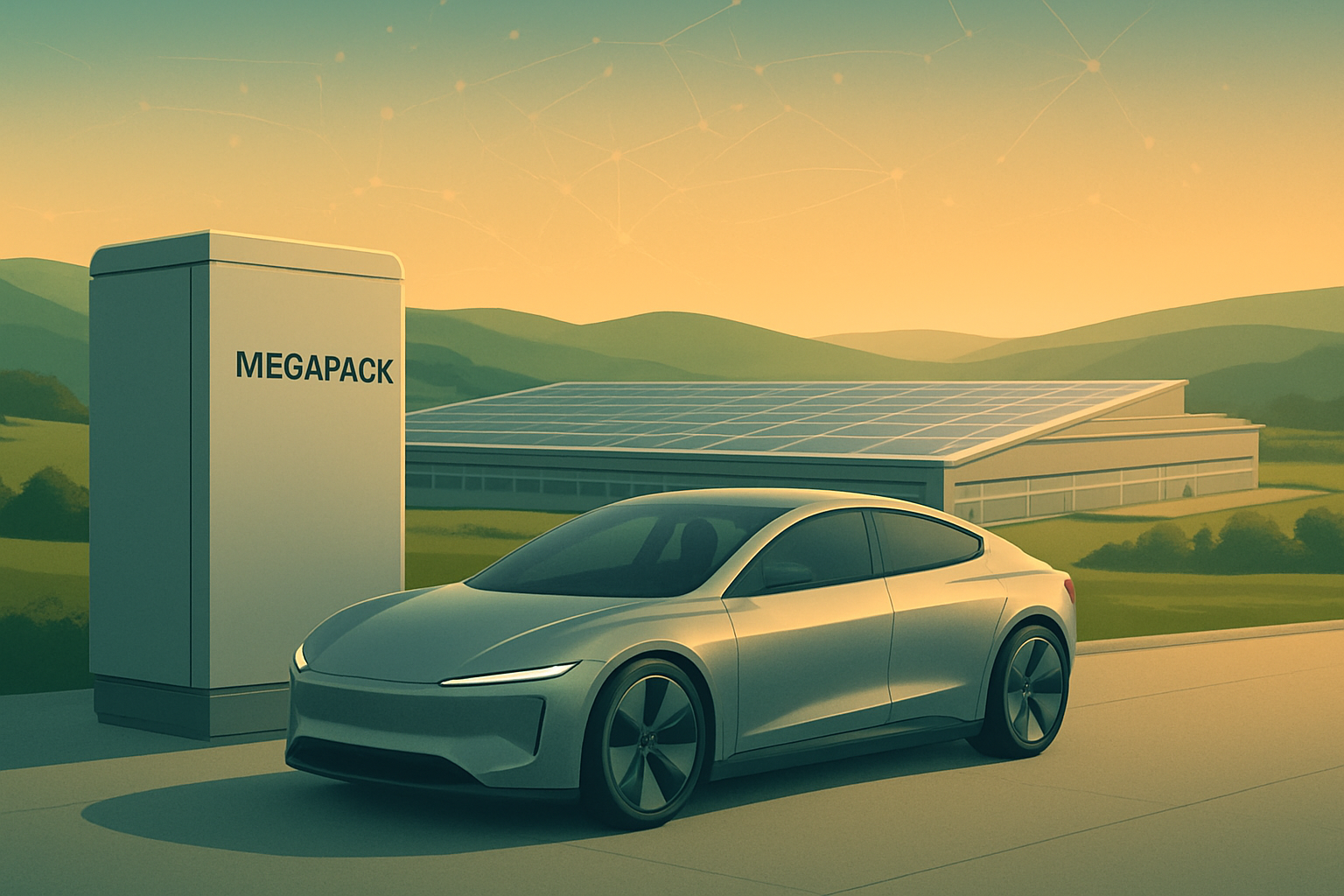
    Tesla, Inc. (TSLA): The Great Metamorphosis from EV Giant to AI Powerhouse

    As of January 28, 2026, Tesla, Inc. (NASDAQ: TSLA) finds itself at the most critical juncture in its 23-year history. Once the undisputed leader of the global electric vehicle (EV) revolution, the Austin-based titan is currently navigating a fundamental identity shift. The narrative has pivoted from scaling vehicle production to a high-stakes bet on artificial intelligence, autonomous transport, and energy storage. While Tesla’s market capitalization remains at a staggering $1.4 trillion—dwarfing all other automakers combined—the underlying business is undergoing a painful transformation. With vehicle delivery growth slowing and competition from China reaching a fever pitch, the focus of the investment community has shifted entirely to the upcoming rollout of the "Cybercab" and the realization of "Unsupervised" Full Self-Driving (FSD).

    Historical Background

    Founded in 2003 by Martin Eberhard and Marc Tarpenning—and later revolutionized by Elon Musk—Tesla's journey has been defined by audacity. From the launch of the original Roadster in 2008 to the "production hell" of the Model 3 in 2017-2018, the company has survived multiple brushes with bankruptcy to become the most valuable automaker in history.

    Tesla's "Master Plan" has been the roadmap for this journey. Part 1 focused on expensive low-volume cars to fund affordable high-volume cars. Part Deux emphasized autonomy and energy. Part 3, released in 2023, focused on a "sustainable energy economy." However, by late 2025, it became clear that Tesla was entering its fourth phase: a total convergence of automotive hardware with robotics and neural network-based AI. The company’s ability to scale Giga Shanghai and Giga Berlin has proven its manufacturing prowess, but the historical narrative is now shifting from the "car company" of the 2010s to the "AI powerhouse" of the late 2020s.

    Business Model

    Tesla operates a vertically integrated business model that spans multiple industries. Its primary revenue segments include:

    1. Automotive Sales & Leasing: Though growth has tempered, the Model Y and Model 3 remain the world’s top-selling EVs. Revenue is also derived from regulatory credits sold to other automakers.
    2. Energy Generation & Storage: This has become Tesla’s fastest-growing segment. Through products like the Megapack and Powerwall, Tesla provides grid-scale and residential energy solutions. In 2025, this segment deployed a record 46.7 GWh of storage.
    3. Services & Other: This includes the global Supercharger network (now largely opened to non-Tesla vehicles), vehicle insurance, and aftermarket repairs.
    4. Software (FSD): A high-margin recurring revenue stream via monthly subscriptions or one-time purchases of Tesla's autonomous driving suite.

    The hallmark of Tesla’s model is its direct-to-consumer sales, bypassing traditional dealerships, and its "unboxed" manufacturing process designed to drastically reduce costs.

    Stock Performance Overview

    Tesla’s stock performance continues to be a polarizing "tale of two tapes." As of January 28, 2026, the stock is trading near $432 per share.

    • 1-Year Performance: TTM returns sit at approximately 8.5%. The stock saw significant volatility throughout 2025, dipping into the $200s due to earnings misses before a massive rally in Q4 fueled by Robotaxi excitement.
    • 5-Year Performance: Investors have seen a roughly 50% return, a figure tempered by the massive correction in 2022 and the stagnation of 2024.
    • 10-Year Performance: Tesla remains a "generational" winner, with a 10-year return exceeding 3,300%. An investment of $10,000 in January 2016 would be worth over $340,000 today.

    The current valuation reflects a "future-dated" premium, as Tesla's Price-to-Earnings (P/E) ratio sits at an eye-watering 287x, suggesting the market is pricing in near-total dominance of the future autonomous taxi market.

    Financial Performance

    The fiscal year 2025 was widely characterized as a "bridge year." The financial data reveals the strain of Tesla's transition:

    • Deliveries & Revenue: Full-year 2025 deliveries reached 1.63 million vehicles, an 8.6% decline from 2024. This contraction was driven by high interest rates and the aging of the Model 3/Y lineup.
    • Margins: Automotive gross margins (excluding credits) hovered around 16.5%, down from the 25%+ peaks of 2022. The aggressive price wars in China and the U.S. have significantly dented the "Apple-like" margins Tesla once enjoyed.
    • Energy Storage: The star performer of 2025. Revenue from energy exceeded $12 billion, with the segment reaching higher operating margins than the automotive division for the first time.
    • Cash Position: Tesla maintains a fortress balance sheet with over $30 billion in cash and investments, allowing it to fund a projected $11 billion in 2026 CapEx for its "Cortex" AI supercluster.

    Leadership and Management

    Elon Musk remains the central figure, serving as CEO, "Technoking," and chief strategist. However, 2024 and 2025 saw a notable "brain drain" of senior talent. The departures of Drew Baglino (Powertrain), David Lau (Software), and Pete Bannon (Hardware) have raised concerns about executive stability.

    To counter these worries, Tesla added John R. "Jack" Hartung to the board in June 2025, bringing disciplined financial oversight. Despite the executive churn, Musk’s focus has narrowed intensely on the "Optimus" humanoid robot and the "Cybercab" project, often leading to a culture of high-intensity, mission-driven work that attracts top-tier AI talent from Silicon Valley.

    Products, Services, and Innovations

    Tesla’s product roadmap is currently in its most ambitious phase:

    • The Cybercab: A purpose-built, steering-wheel-less autonomous vehicle. Initial production is slated for April 2026 at Giga Texas.
    • The Affordable Model (NV-91): Often called the "Model 2," this $25,000 vehicle is expected to begin volume production by mid-2026. It utilizes the "unboxed" manufacturing method, which treats the car like Lego-like modules to speed up assembly.
    • FSD v13/v14: Tesla's software has moved to a purely "end-to-end" neural network, removing millions of lines of human-written code. The company is currently testing "Unsupervised" FSD in Texas and California.
    • Optimus: Tesla’s humanoid robot is already performing basic tasks in its factories. Musk has guided for external sales to begin in late 2026 or 2027.

    Competitive Landscape

    The competitive environment has shifted from "Tesla vs. The World" to "Tesla vs. China."

    • BYD (SZSE: 002594): In 2025, BYD officially dethroned Tesla as the world's largest BEV manufacturer by volume, delivering 2.26 million units. BYD’s vertical integration in battery production gives it a cost advantage that Tesla is struggling to match.
    • Xiaomi (HKEX: 1810): The smartphone giant has become a massive threat. Its SU7 sedan outsold the Model 3 in China in 2025, offering superior tech integration at a lower price point.
    • Legacy OEMs: Ford (NYSE: F) and GM (NYSE: GM) have pulled back on EV targets, pivoting to hybrids. This has left Tesla with less competition in the U.S. but more pressure to defend its market share against cheaper, more varied Chinese imports globally.

    Industry and Market Trends

    The EV industry is currently grappling with a "trough of disillusionment." High entry prices and "range anxiety" have cooled demand among the early majority. However, the shift toward Software-Defined Vehicles (SDVs) is the dominant trend for 2026.

    Additionally, the Energy Storage market is entering a hyper-growth phase as global power grids struggle to handle renewable energy intermittency. Tesla’s Megapack is currently the industry standard, and with the Lathrop and Shanghai Megafactories at full tilt, Tesla is arguably more of a grid-infrastructure company than a car company in the current macro climate.

    Risks and Challenges

    • Execution Risk: Tesla has a history of missed timelines. Any delay in the April 2026 Cybercab launch could lead to a massive stock de-rating.
    • Regulatory Hurdles: "Unsupervised" FSD requires a patchwork of state and federal approvals. While Texas is friendly, other jurisdictions remain skeptical of camera-only (vision) autonomy.
    • China Exposure: With nearly 40% of its production and a significant portion of its profits tied to China, Tesla is highly vulnerable to geopolitical tensions and the ongoing price war initiated by BYD.
    • Valuation Paradox: Trading at 287x earnings while car sales are shrinking creates a precarious "perfection-priced" environment.

    Opportunities and Catalysts

    • The Robotaxi Network: If Tesla successfully launches a ride-hailing app (the "Tesla Network"), it could unlock trillions in high-margin software revenue.
    • FSD Licensing: Musk has hinted at ongoing talks with major OEMs to license FSD. A single deal could validate Tesla’s software as the "Windows" of autonomous driving.
    • Federal AV Act: Rumors of a federal U.S. mandate for autonomous vehicle standards in late 2026 could provide the regulatory "green light" Tesla needs to scale nationally.
    • Energy Margin Expansion: As battery cell costs fall, the Megapack business is expected to maintain 25%+ margins, providing a stable cash floor for the more volatile AI projects.

    Investor Sentiment and Analyst Coverage

    Wall Street is fundamentally divided on TSLA:

    • The Bulls (e.g., Wedbush): Focus on the "sum of the parts" valuation. They argue that the AI/Robotics business alone is worth $1 trillion, and the auto business is merely the "delivery mechanism."
    • The Bears (e.g., Wells Fargo): Argue that Tesla is a "growth company without growth" in its core business. They point to the 16% decline in Q4 2025 deliveries as evidence that the "EV bubble" has popped.
    • Retail Sentiment: Remains fiercely loyal. Tesla continues to be one of the most widely held stocks by retail investors, often buoying the price during institutional sell-offs.

    Regulatory, Policy, and Geopolitical Factors

    The geopolitical landscape for 2026 is fraught with difficulty. In the United States, policy shifts regarding EV tax credits (IRA) and potential tariffs on Chinese components remain fluid. Globally, the European Union's anti-subsidy probe into Chinese EVs has inadvertently benefited Tesla’s made-in-Germany vehicles, but the company faces rising labor pressure in Nordic countries.

    In China, Tesla remains the only foreign automaker with a wholly-owned factory, but the "data security" concerns surrounding FSD testing have led to periodic bans of Tesla vehicles from government sites—a trend that must be reversed for FSD to succeed in the world’s largest car market.

    Conclusion

    Tesla enters 2026 as a company in the midst of a metamorphosis. Its days as a high-growth "hyper-scaler" of mass-market cars are, for now, on hiatus. The 2025 delivery contraction serves as a sobering reminder that the transition to electric mobility is not a linear path.

    However, by aggressively pivoting to AI and energy storage, Tesla has managed to maintain a valuation that defies traditional automotive logic. Investors must decide if they are buying a car company—in which case TSLA is wildly overvalued—or if they are buying the world’s most advanced robotics lab. The next 12 months, headlined by the April 2026 Cybercab launch, will determine which side of that debate is correct. For now, Tesla remains a high-beta, high-reward play on the future of autonomy, requiring a stomach for volatility and a long-term belief in the "Master Plan."


    This content is intended for informational purposes only and is not financial advice. Today's date: January 28, 2026.