Tag: Fastenal

  • Fastenal Company (FAST): The Digital Transformation of an Industrial Giant

    Fastenal Company (FAST): The Digital Transformation of an Industrial Giant

    As of April 14, 2026, the industrial distribution sector remains a critical barometer for the global economy. At the center of this sector is Fastenal Company (Nasdaq: FAST), a company that has successfully evolved from a local fastener shop into a multi-billion-dollar technology-driven supply chain partner. In an era where "just-in-case" inventory has replaced "just-in-time" philosophies, Fastenal’s role as an "embedded" service provider makes it more relevant than ever. This article examines Fastenal’s current market position, its ongoing leadership transition, and its strategic pivot toward a "Digital First" future.

    Historical Background

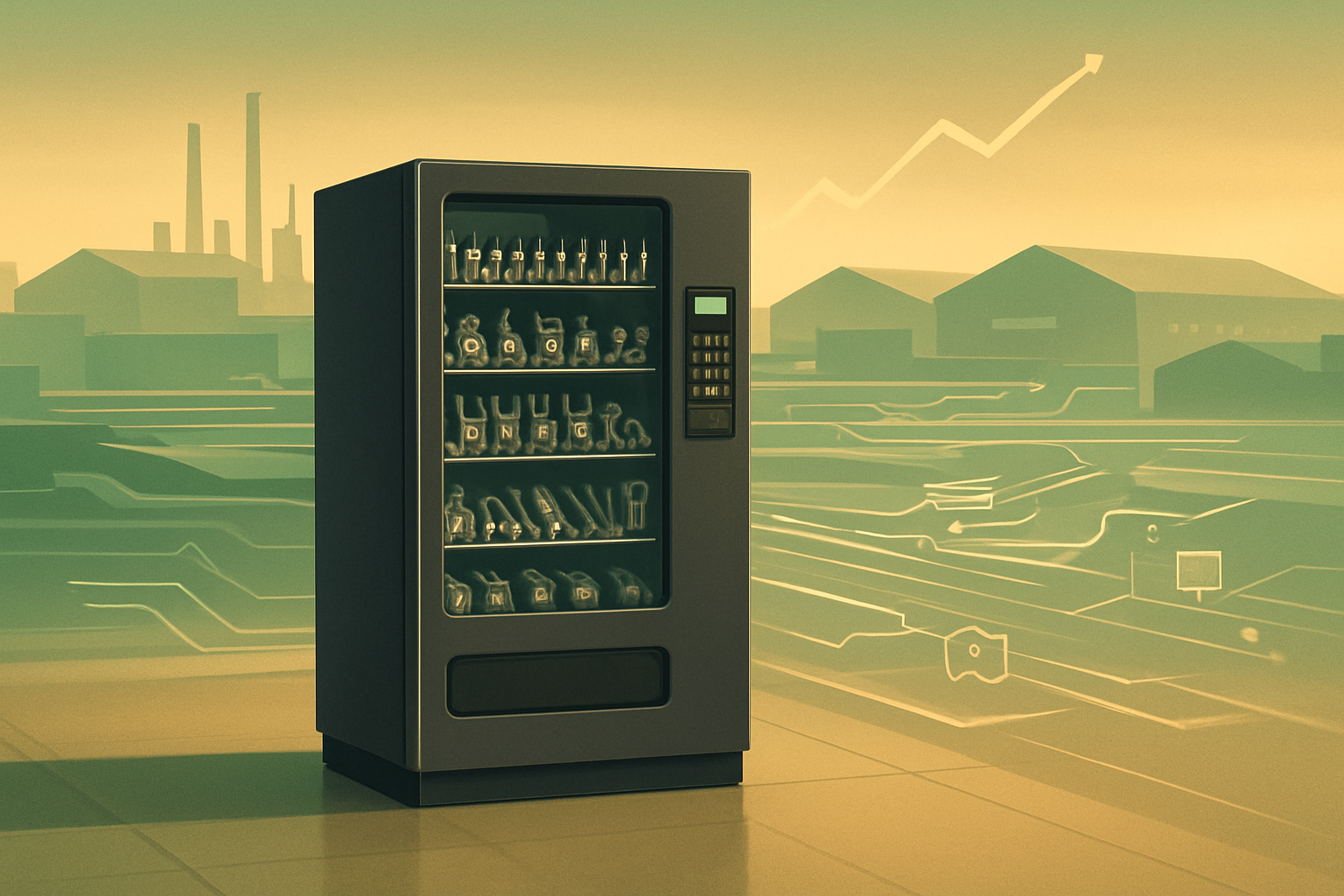
    Founded in 1967 by Bob Kierlin and four friends in Winona, Minnesota, Fastenal began with a modest $30,000 in capital and a single retail location. Kierlin’s original vision was a unique one: dispensing nuts and bolts via vending machines—a concept that was decades ahead of its time and initially failed due to the mechanical limitations of the 1960s.

    Instead, Fastenal grew through a traditional "branch" model, expanding aggressively across the United States. It went public in 1987, and by the 1990s, it had diversified its product line beyond fasteners into tools, safety supplies, and janitorial products. The company’s defining transformation, however, occurred in the late 2000s and early 2010s, when technology finally caught up to Kierlin’s original vending machine vision. This led to the launch of Fastenal Managed Inventory (FMI), a move that fundamentally altered the company's relationship with its customers.

    Business Model

    Fastenal’s business model is centered on the distribution of industrial and construction supplies, but its competitive advantage lies in how it delivers those products. The company generates revenue through three primary channels:

    1. FMI (Fastenal Managed Inventory): Utilizing industrial vending machines and "smart bins" at customer sites, Fastenal automates the replenishment process. By Q1 2026, FMI devices accounted for 44.9% of total revenue.
    2. Onsite Locations: These are dedicated mini-warehouses located directly inside a customer's facility, staffed by Fastenal employees. These locations represent approximately 40% of revenue and create high customer "stickiness."
    3. Traditional Branches and E-Commerce: While Fastenal is consolidating its physical branch footprint into larger regional hubs, its digital e-commerce presence (including EDI and web ordering) now accounts for over 61% of total net sales.

    The customer base is highly diverse, spanning manufacturing, non-residential construction, and government sectors, which helps insulate the company from sector-specific downturns.

    Stock Performance Overview

    Fastenal has long been a favorite of long-term "compounder" investors. As of mid-April 2026, the stock’s performance reflects a history of consistent growth:

    • 1-Year Performance: FAST shares are up approximately 29.9% over the past year. This growth was spurred by a 2-for-1 stock split in May 2025 and a strong manufacturing rebound in late 2025.
    • 5-Year Performance: Investors have seen a total return of roughly 118% (including dividends). The stock moved from a split-adjusted $25 in 2021 to nearly $50 today.
    • 10-Year Performance: Delivering a CAGR of approximately 37%, Fastenal has significantly outperformed the broader S&P 500 Industrials index, driven by its industry-leading operating margins and disciplined capital allocation.

    Financial Performance

    Fastenal’s Q1 2026 results, released on April 13, 2026, illustrate a company maintaining efficiency in a volatile macro environment.

    • Revenue: Q1 revenue hit $2.20 billion, a 12.4% year-over-year increase.
    • Earnings: EPS came in at $0.30, matching analyst expectations.
    • Margins: Operating margins remain healthy at 20.3%. However, gross margins have faced slight compression, currently at 44.6%, down from 45.1% a year ago. This is largely due to the "price/cost" lag—where the cost of goods rises due to inflation faster than Fastenal can adjust contract pricing for its largest customers.
    • Valuation: Trading at a P/E multiple of roughly 42x, Fastenal continues to command a premium valuation compared to its peers, reflecting its superior profitability profile.

    Leadership and Management

    The most significant development for Fastenal in 2026 is its leadership transition. Dan Florness, who has served as CEO since 2016 and presided over the company’s massive digital expansion, has announced his retirement effective July 16, 2026.

    Florness will be succeeded by Jeffery Watts, the current President and Chief Sales Officer. Watts is a 30-year veteran of the company, a move that signals "continuity of culture." The management team is highly regarded for its decentralized decision-making process, which empowers local managers to tailor service to their specific markets.

    Products, Services, and Innovations

    Fastenal’s product catalog includes hundreds of thousands of SKUs, but its real "product" is supply chain efficiency.

    • FMI Technology: The latest generation of FMI devices features AI-driven predictive analytics that alert customers to potential shortages before they occur.
    • Digital Footprint: Fastenal has transitioned away from being a "catalog company" to a "data company." By integrating its inventory systems directly with customer ERPs (Enterprise Resource Planning), it reduces procurement costs for clients.
    • Market Density Strategy: The company is currently investing in massive automated distribution centers, such as its new 900,000 sq. ft. Georgia hub, to increase fulfillment speed while lowering per-unit shipping costs.

    Competitive Landscape

    Fastenal operates in a highly fragmented market but competes primarily with two other public giants:

    1. W.W. Grainger, Inc. (NYSE: GWW): The revenue leader in the space. Grainger focuses on an "Endless Assortment" model via its Zoro and MonotaRO platforms. While Grainger has higher total sales, Fastenal typically boasts higher operating margins (20.3% vs. GWW's ~15.8%).
    2. MSC Industrial Direct Co. (NYSE: MSM): A specialist in metalworking. MSC has struggled more than Fastenal in the 2025-2026 period, facing headwinds in the manufacturing sector that have kept its margins in the high single digits.

    Fastenal’s "Onsite" model acts as a powerful moat, making it difficult for competitors to displace them once they are physically embedded in a customer’s factory.

    Industry and Market Trends

    The industrial distribution sector is undergoing three major shifts in 2026:

    • Digitalization: The shift from branch-based sales to e-commerce and automated vending is no longer optional. Fastenal’s 60%+ digital mix places it at the forefront of this trend.
    • Reshoring: The "Manufacturing Renaissance" in North America, driven by government incentives and a desire to de-risk supply chains from Asia, has created sustained demand for industrial supplies.
    • Sustainability: Large enterprise customers are increasingly requiring their suppliers to provide carbon-neutral shipping and "green" product alternatives.

    Risks and Challenges

    Despite its strengths, Fastenal faces several headwinds:

    • Margin Compression: The shift toward "Large Account" customers—while providing volume—carries lower gross margins. Managing this mix without eroding profitability is a constant challenge.
    • Inflationary Pressure: Ongoing tariffs and raw material costs create a "price-to-cost" gap that can squeeze margins in the short term.
    • Cyclicality: Fastenal is heavily exposed to the manufacturing and non-residential construction sectors. A broader macro slowdown or a housing market collapse could sharply impact fastener volumes.

    Opportunities and Catalysts

    • Market Density: By closing smaller branches and consolidating into larger hubs, Fastenal is significantly improving its logistics efficiency, which could lead to operating margin expansion in late 2026 and 2027.
    • International Expansion: While primarily a North American player, Fastenal has significant "white space" to grow its Onsite model in European and Asian manufacturing hubs.
    • M&A Potential: With a strong cash flow and a debt-to-equity ratio well below industry averages, Fastenal is well-positioned to acquire smaller, specialized distributors to add new product lines.

    Investor Sentiment and Analyst Coverage

    Wall Street remains cautious but respectful of Fastenal’s execution. The consensus rating currently sits at Hold, primarily due to valuation concerns. With a P/E near 42x, analysts at firms like Baird and Barclays suggest the stock is "priced for perfection." However, institutional ownership remains high, with major funds like Vanguard and BlackRock maintaining significant positions, drawn by Fastenal’s reliable dividend growth and high Return on Invested Capital (ROIC).

    Regulatory, Policy, and Geopolitical Factors

    Fastenal is sensitive to trade policy. As a significant importer of steel products, any changes in tariffs on Chinese or European steel directly impact its cost structure. Additionally, the company has ramped up its compliance with new Scope 3 carbon reporting requirements, as detailed in its 2025 ESG Report. The company’s "Silver Medal" rating from EcoVadis has made it a preferred supplier for ESG-conscious corporations.

    Conclusion

    Fastenal Company (Nasdaq: FAST) remains a premier industrial bellwether. Its transition from a traditional hardware distributor to a high-tech, "embedded" supply chain partner has allowed it to maintain industry-leading margins and a robust competitive moat. While the upcoming CEO transition in July 2026 and current margin pressures from inflation warrant a watchful eye, the company’s "Digital First" strategy and Onsite expansion provide a clear path for continued growth. For investors, Fastenal offers a blend of stability and technological innovation, provided they are willing to pay the premium price the market currently demands.


    This content is intended for informational purposes only and is not financial advice.

  • The Blue Team’s Digital Pivot: A Deep Dive into Fastenal’s Industrial Dominance

    The Blue Team’s Digital Pivot: A Deep Dive into Fastenal’s Industrial Dominance

    In the world of industrial distribution, few names command as much respect for operational consistency as Fastenal Company (NASDAQ: FAST). Known colloquially as the "Blue Team," Fastenal has transitioned from a small-town fastener shop in Winona, Minnesota, to a high-tech supply chain powerhouse. As of April 13, 2026, the company stands at a critical crossroads: navigating a post-reshoring manufacturing boom while undergoing its first CEO transition in a decade. With a business model increasingly "embedded" within customer facilities through industrial vending and Onsite locations, Fastenal is no longer just selling nuts and bolts; it is selling efficiency. This article explores how a company built on frugality and local service has become a bellwether for the modern American industrial economy.

    Historical Background

    Fastenal’s story began on November 28, 1967, when Bob Kierlin and four partners—the "Fastenal Five"—opened a 1,000-square-foot storefront with just $30,000 in capital. Kierlin’s original vision was to sell fasteners through custom vending machines, a concept decades ahead of its time. When the hardware of the 1960s failed to meet his requirements, the company pivoted to a traditional retail model, focusing on high-demand local inventory and unparalleled speed.

    The company went public on August 1, 1987, at $9 per share. Despite the infamous market crash later that year, Fastenal’s IPO was a success, providing the fuel for a massive national expansion. Throughout the 1990s and early 2000s, Fastenal blanketed North America with thousands of small-town branches, often entering markets where national competitors wouldn't venture. However, the most significant historical shift occurred in 2008 and 2014, when the company revisited Kierlin’s original vending dream and launched the "Onsite" program, moving the business from the street corner to the factory floor.

    Business Model

    Fastenal operates a high-touch, technology-driven distribution model centered on three primary pillars:

    1. Onsite Locations: Instead of expecting customers to come to a retail branch, Fastenal puts a "branch" inside the customer’s facility. As of late 2024, Onsite locations (over 2,000) officially outnumbered traditional public branches. These sites are dedicated to single large customers, providing immediate inventory and technical support.
    2. Fastenal Managed Inventory (FMI): This is the company’s technological moat. It includes the FASTVend industrial vending machines and FASTBin infrared/RFID smart bins. These devices track usage in real-time, automate replenishment, and reduce customer consumption by 20–30%.
    3. Digital Footprint: Fastenal has aggressively pushed toward a "Digital Footprint," which includes e-commerce, EDI, and FMI technology. By early 2026, over 66% of the company's revenue is generated through these digital channels, significantly higher than the 10% seen a decade ago.

    Stock Performance Overview

    Fastenal has long been a "dividend aristocrat" in spirit, if not yet in official tenure.

    • 1-Year Performance: As of April 2026, the stock has climbed approximately 29.9% over the past twelve months, buoyed by the 2025 "Manufacturing Renaissance" and a successful 2-for-1 stock split in May 2025.
    • 5-Year Performance: The stock has nearly doubled, up roughly 96.6%. Investors who held through the supply chain volatility of the early 2020s were rewarded as Fastenal’s "local-first" inventory strategy proved more resilient than catalog-based competitors.
    • 10-Year Performance: Over the last decade, FAST has delivered an average annual total return of approximately 37%, consistently outperforming the S&P 500 Industrial Sector. Notable moves were seen today, April 13, 2026, with the stock experiencing a 6% pullback following a "cautious" forward outlook in the Q1 earnings report, despite beating revenue estimates.

    Financial Performance

    Fastenal’s financial profile is defined by high margins and an exceptionally clean balance sheet.

    • Earnings & Revenue: For the fiscal year 2025, Fastenal reported record net sales of $8.20 billion, an 8.7% increase year-over-year. Net income reached $1.26 billion. In its latest Q1 2026 report, revenue hit $2.20 billion, a 12.4% surge over the previous year.
    • Margins: Operating margins remain robust at 20.3% as of Q1 2026. While gross margins have seen slight compression (44.6%) due to a higher mix of large "National Account" customers who receive volume pricing, this has been offset by lower operating expenses from consolidated branches.
    • Dividends & Debt: The company recently raised its quarterly dividend to $0.24 per share, marking 13 consecutive years of increases. With a debt-to-equity ratio of just 3.2% and a Return on Invested Capital (ROIC) of 31.0%, Fastenal remains one of the most financially disciplined companies in the Russell 1000.

    Leadership and Management

    The "Blue Team" is currently undergoing its most significant leadership change in years. Daniel Florness, who joined in 1996 and became CEO in 2016, is the architect of the company’s digital transformation. Florness is known for his "Winona-style" frugality and a management philosophy of radical decentralization.

    In December 2025, the board announced that Florness will step down on July 16, 2026. He will be succeeded by Jeffery Watts, currently the President and Chief Sales Officer. Watts is a 30-year Fastenal veteran, signaling a "continuity of culture" strategy. Investors generally view this internal promotion as a sign that the company’s trajectory toward Onsites and automation will remain unchanged.

    Products, Services, and Innovations

    While fasteners still represent about 25% of sales, Fastenal has diversified into a massive array of MRO (Maintenance, Repair, and Operations) supplies, safety equipment, and metalworking tools.

    • Innovation Pipeline: Fastenal’s recent focus has been on "Edge AI" in its vending machines. These machines can now predict tool failure by analyzing usage patterns, alerting factory managers to replace a drill bit or cutting tool before it breaks on the production line.
    • Supply Chain Automation: The company has invested heavily in "native case handling" robotics within its 15 North American distribution centers, allowing for faster pallet-to-bin replenishment and maintaining its competitive advantage in local delivery speed.

    Competitive Landscape

    The industrial distribution market is a "clash of titans" with four distinct philosophies:

    • W.W. Grainger (NYSE: GWW): The leader in broad-line MRO and digital efficiency. Grainger wins on assortment and the ease of its web interface.
    • Amazon Business: The disruptor. Amazon dominates "tail-spend" (unplanned, low-volume purchases) but has historically struggled to provide the on-the-ground technical service that Fastenal offers.
    • MSC Industrial Direct (NYSE: MSM): The specialist in metalworking. MSC is Fastenal’s closest rival in technical expertise but lacks the massive "vending footprint."
    • Fastenal's Edge: Its physical proximity. By being inside the factory (Onsite), Fastenal effectively locks out competitors from the most critical daily transactions.

    Industry and Market Trends

    The "U.S. Manufacturing Renaissance" is the primary macro driver in 2026. Driven by policies like the "One Big Beautiful Bill Act" (OBBBA), over $3 trillion in reshoring investments have flowed into domestic semiconductor, EV battery, and aerospace facilities. This "just-in-case" inventory model favors distributors with physical infrastructure near these new gigafactories. Furthermore, a persistent labor shortage of 500,000 manufacturing workers has made Fastenal’s automated vending and inventory management solutions a "must-have" for labor-strapped plant managers.

    Risks and Challenges

    • Cyclicality: Fastenal is highly sensitive to the Purchasing Managers' Index (PMI). Any downturn in industrial production directly impacts SKU velocity.
    • Margin Pressure: As Fastenal wins more "National Accounts" (large multi-site companies), its gross margins naturally face pressure because these large clients demand lower prices.
    • Leadership Transition Risk: While Jeff Watts is a veteran, any change at the top introduces the risk of cultural drift or strategic misalignment during the transition period in July 2026.

    Opportunities and Catalysts

    • Onsite Expansion: Management believes the market can support over 4,000 Onsite locations, nearly double the current count. Each new Onsite represents a captured revenue stream.
    • International Growth: While 80%+ of revenue is North American, Fastenal’s European and Asian footprints are growing at a faster clip than its domestic base, providing a long-term runway for expansion.
    • M&A Potential: With virtually no debt and nearly $1 billion in annual free cash flow, Fastenal is well-positioned to acquire smaller, niche distributors in specialized fields like electrical or fluid power.

    Investor Sentiment and Analyst Coverage

    Wall Street remains generally "Overweight" on Fastenal, though the current valuation (trading at roughly 28x forward earnings) often draws skepticism from value-oriented analysts. Institutional ownership remains high at over 80%, with major holdings by Vanguard and BlackRock. Retail sentiment on platforms like FinTwit (X) often focuses on Fastenal as a "Sleep Well At Night" (SWAN) stock due to its dividend consistency and fortress balance sheet.

    Regulatory, Policy, and Geopolitical Factors

    The 2025 "Liberation Day Tariffs" on imported industrial components have made domestic supply chain reliability paramount. Fastenal’s extensive private trucking fleet (one of the largest in the U.S.) allows it to bypass many of the common logistical hurdles that plague competitors relying on third-party carriers. Additionally, new environmental regulations requiring "Carbon Footprint Tracking" for industrial supplies favor Fastenal’s digital platform, which can provide customers with detailed reports on the origin and environmental impact of every bolt and safety glove.

    Conclusion

    Fastenal Company (NASDAQ: FAST) is a testament to the power of "local" in a globalized world. By embedding itself within the customer’s four walls through technology and a dedicated "Blue Team," it has created a moat that is difficult for even the largest digital disruptors to cross. While the stock faces immediate volatility following its April 13 earnings report and the impending CEO transition, its underlying fundamentals—31% ROIC, zero debt, and a 66% digital sales mix—suggest that the company is better prepared for the 2030s than almost any other industrial peer. For the long-term investor, Fastenal remains a bedrock play on the continued revitalization of North American manufacturing.


    This content is intended for informational purposes only and is not financial advice.