Tag: FSLR

  • First Solar (FSLR): The AI-Driven Evolution of a Renewable Giant

    First Solar (FSLR): The AI-Driven Evolution of a Renewable Giant

    Today’s Date: March 6, 2026

    Introduction

    In the volatile world of renewable energy, few names command the same level of institutional respect and strategic intrigue as First Solar (NASDAQ: FSLR). Long regarded as a "policy play" due to its heavy reliance on domestic manufacturing incentives, the company underwent a radical re-rating in mid-2024 that forever changed its market narrative. On May 22, 2024, the stock experienced a historic 19% single-day surge, a move that signaled First Solar’s emergence not just as a green energy provider, but as a critical infrastructure backbone for the Artificial Intelligence (AI) revolution. As we stand in early 2026, First Solar remains the largest solar manufacturer in the Western Hemisphere, leveraging a unique technological moat and a sold-out order book to navigate a complex macroeconomic and geopolitical landscape.

    Historical Background

    First Solar’s journey began not in a Silicon Valley garage, but in the glass-manufacturing hub of Toledo, Ohio. Founded in 1990 by physicist Harold McMaster as Solar Cells, Inc., the company’s foundational bet was on Cadmium Telluride (CdTe) thin-film technology. McMaster, a pioneer in tempered glass, believed that solar panels could be manufactured using a continuous, high-speed process similar to flat glass production, rather than the batch-processing required for traditional crystalline silicon.

    The company took a decisive turn in 1999 when it was acquired by True North Partners, an investment firm led by the Walton family of Walmart (NYSE: WMT). Rebranded as First Solar, the firm went public in 2006 (NASDAQ: FSLR). Over the next two decades, First Solar survived the "Solar Winter" of the early 2010s—a period that saw dozens of U.S. solar firms go bankrupt due to a flood of cheap, subsidized silicon panels from China. First Solar survived by pivoting away from the residential rooftop market to focus exclusively on utility-scale projects and by relentlessly refining its proprietary CdTe technology.

    Business Model

    First Solar’s business model is characterized by deep vertical integration and a niche focus on utility-scale solar. Unlike most competitors who assemble modules from third-party cells and polysilicon, First Solar controls its entire production process—from raw materials to finished panels—under one roof, typically in less than four hours.

    Revenue Sources:

    • Module Sales: The vast majority of revenue comes from the sale of its Series 6 and Series 7 thin-film modules to utility-scale project developers and independent power producers (IPPs).
    • Sustainability & Recycling: A secondary but growing segment involves end-of-life panel recycling, a key requirement for many ESG-focused corporate buyers.

    By exiting the Engineering, Procurement, and Construction (EPC) business in 2019, the company streamlined its operations to become a pure-play manufacturer, resulting in higher margins and a cleaner balance sheet.

    Stock Performance Overview

    First Solar has been a storied performer, though its path has been anything but linear.

    • 1-Year Performance (2025–2026): The stock has traded in a wide range, stabilizing after the massive 2024 "AI-hype" run-up. While it faced volatility in late 2025 due to grid interconnection delays, it has outperformed the broader Invesco Solar ETF (NYSEARCA: TAN).
    • 5-Year Performance: FSLR has been one of the top performers in the clean energy space, significantly outstripping residential-focused peers like Enphase Energy (NASDAQ: ENPH) and SolarEdge (NASDAQ: SEDG), largely due to its insulation from the high-interest-rate environment that crushed the residential sector.
    • 10-Year Performance: Long-term shareholders have seen the stock evolve from a $40 range-bound entity into a triple-digit powerhouse, fueled by the passing of the Inflation Reduction Act (IRA) in 2022.

    Financial Performance

    For the fiscal year 2025, First Solar solidified its position as a cash-flow machine.

    • Revenue & Earnings: 2025 revenue reached approximately $5.1 billion, with net income surging to $1.65 billion. This translated to a diluted EPS of roughly $15.40, a significant jump from 2023 levels.
    • The 45X Factor: A critical component of this profitability is the Section 45X Advanced Manufacturing Production Credit. In 2025 alone, First Solar accrued nearly $1.5 billion in tax credits. Critics argue these credits mask underlying manufacturing costs, but for investors, they represent a guaranteed, multi-year cash tailwind.
    • Balance Sheet: The company ended 2025 with a net cash position of approximately $2.4 billion, providing ample liquidity to fund its multi-billion dollar expansion projects in Alabama and Louisiana.

    Leadership and Management

    CEO Mark Widmar, who took the helm in 2016, is widely credited with First Solar’s modern success. His strategy of "fortifying the moat" involved making the difficult decision to scrap the Series 4 production lines in favor of the larger Series 6 format, a move that initially hurt earnings but ultimately saved the company.

    Under Widmar’s leadership, the management team has focused on transparency and "under-promising and over-delivering." The board of directors maintains a strong emphasis on governance, particularly in light of the Walton family’s significant historical ownership, ensuring that the company’s long-term capital allocation remains disciplined.

    Products, Services, and Innovations

    First Solar’s primary product is the Series 7 module, designed specifically for the U.S. market.

    • CdTe Advantage: Unlike crystalline silicon (c-Si) panels, First Solar’s thin-film modules have a superior temperature coefficient, meaning they lose less efficiency as they get hotter—a major advantage in desert utility sites.
    • Innovation Pipeline: The company is currently investing heavily in Perovskite tandem cells. By layering Perovskite (a high-efficiency material) onto their existing CdTe technology, First Solar aims to break the 25% efficiency barrier, which would bring thin-film performance into direct competition with the highest-grade silicon panels.
    • Low Carbon Footprint: Because their manufacturing is less energy-intensive than refining polysilicon, First Solar modules have the lowest carbon footprint and water usage in the industry.

    Competitive Landscape

    The solar industry is a battlefield between First Solar’s thin-film and the global dominance of crystalline silicon.

    • The Chinese Giants: Companies like JinkoSolar (NYSE: JKS), LONGi, and Trina Solar dominate global market share. However, they face significant hurdles in the U.S. market due to the Uyghur Forced Labor Prevention Act (UFLPA) and high anti-dumping duties.
    • Competitive Edge: First Solar’s edge is not necessarily price, but "bankability" and supply chain security. U.S. developers like NextEra Energy (NYSE: NEE) often pay a premium for FSLR panels to avoid the risk of their shipments being seized at the border or being subject to retroactive tariffs.

    Industry and Market Trends

    The most significant trend of the last two years has been the AI-Solar Nexus. As tech giants like Alphabet (NASDAQ: GOOGL) and Microsoft (NASDAQ: MSFT) build out massive AI data centers, their power requirements have skyrocketed. Because these "hyperscalers" have 24/7 carbon-neutral goals, they are contracting for solar power at an unprecedented scale.

    Furthermore, "Domestic Content" has become the industry's buzzword. Federal incentives now reward developers for using components made in America, a trend that has funneled almost all high-margin demand directly to First Solar's doorstep.

    Risks and Challenges

    Despite its strengths, First Solar is not without significant risks:

    • Policy Dependency: The IRA’s 45X credits are the company's lifeblood. Any legislative shift or successful legal challenge to these subsidies could slash First Solar's profitability overnight.
    • Grid Bottlenecks: While demand for panels is high, the "interconnection queue"—the time it takes to connect a solar farm to the power grid—has stretched to over five years in some regions. This prevents developers from deploying the panels they have already ordered.
    • Technology Risk: If silicon-based manufacturers achieve a massive breakthrough in efficiency or cost reduction, First Solar’s CdTe technology could become obsolete.

    Opportunities and Catalysts

    • The AI Data Center Boom: As of 2026, the demand from data centers is projected to grow by 15% CAGR. First Solar’s ability to provide high-volume, domestic modules makes it the preferred partner for "Big Tech" energy infrastructure.
    • Expansion in India: First Solar’s 3.3 GW facility in Tamil Nadu, India, is a key growth lever, allowing the company to tap into one of the world’s fastest-growing energy markets while diversifying away from U.S. policy risk.
    • M&A Potential: With a massive cash pile, First Solar is well-positioned to acquire smaller technology firms in the Perovskite or energy storage space.

    Investor Sentiment and Analyst Coverage

    Current investor sentiment is "cautiously bullish." The 19% surge in May 2024, triggered by optimistic notes from UBS and Piper Sandler, set a high bar. As of early 2026, the consensus rating is a Moderate Buy, with a median price target of $256.

    While hedge funds have largely maintained their positions, retail sentiment has cooled slightly from the 2024 peaks as investors grapple with the reality of grid delays. However, institutional ownership remains high, as FSLR is seen as a necessary "anchor tenant" in any ESG or infrastructure-themed portfolio.

    Regulatory, Policy, and Geopolitical Factors

    First Solar sits at the heart of the U.S.-China trade war.

    • Tariffs: The company benefits from Section 301 and 201 tariffs that protect domestic manufacturers from subsidized imports.
    • AD/CVD Rulings: In late 2025, the U.S. Department of Commerce upheld new anti-dumping duties against solar cells from Southeast Asia, further tightening the supply of cheap alternatives and boosting First Solar’s pricing power.
    • Geopolitics: As a U.S.-based company with almost no reliance on Chinese polysilicon, First Solar is the primary beneficiary of the "de-risking" trend in global energy supply chains.

    Conclusion

    First Solar has evolved from a niche solar manufacturer into a strategic national asset. The May 2024 surge was more than a fluke; it was the market’s realization that the transition to an AI-driven economy requires a massive, reliable, and domestic energy supply chain.

    For investors, First Solar offers a unique profile: a high-margin manufacturer with a multi-year backlog and a fortified technological moat. However, the heavy reliance on government subsidies (IRA) and the looming threat of grid interconnection delays require a disciplined approach. As we move further into 2026, the key for First Solar will be its ability to convert its massive backlog into operational reality while maintaining its technological lead through the next generation of Perovskite innovation.


    This content is intended for informational purposes only and is not financial advice.
  • The 2026 Reset: Analyzing First Solar’s 13.6% Slide Amid Soft Guidance

    The 2026 Reset: Analyzing First Solar’s 13.6% Slide Amid Soft Guidance

    On February 26, 2026, the renewable energy sector was jolted by a sharp correction in the valuation of its domestic champion. First Solar, Inc. (NASDAQ: FSLR), the largest solar manufacturer in the Western Hemisphere, saw its shares plummet 13.6% in a single trading session. The catalyst was not a failure of past performance—indeed, the company reported record-breaking 2025 results—but rather a surprisingly conservative outlook for the 2026 fiscal year.

    As the primary beneficiary of U.S. industrial policy over the last three years, First Solar has long been the "safe bet" for investors seeking exposure to the energy transition without the geopolitical baggage of Chinese supply chains. However, the recent guidance suggests that even the most protected domestic players are not immune to global pricing pressures, shifting trade dynamics, and the complexities of scaling massive industrial capacity. This article explores the factors behind the "2026 Reset" and what it means for the future of American solar manufacturing.

    Historical Background

    First Solar’s journey began in 1999 in Tempe, Arizona, born from the conviction that thin-film technology could eventually outperform traditional crystalline silicon (c-Si). Unlike the majority of the industry, which relies on polysilicon, First Solar pioneered the use of Cadmium Telluride (CdTe). This decision defined the company’s trajectory, allowing it to bypass the volatile polysilicon supply chain that eventually became dominated by Chinese manufacturers.

    In the late 2000s, First Solar became the first company to lower solar manufacturing costs to under $1 per watt. However, the 2010s were a period of intense struggle as a glut of subsidized Chinese silicon panels flooded the market, pushing many Western firms into bankruptcy. First Solar survived by pivoting away from the residential market to focus exclusively on utility-scale projects and by relentlessly upgrading its technology—transitioning from the small-form Series 4 modules to the large-format, high-efficiency Series 6 and Series 7 models that dominate its portfolio today.

    Business Model

    First Solar operates a fully integrated, high-throughput manufacturing model. Unlike competitors who might assemble modules from purchased cells, First Solar transforms raw glass into a finished solar panel in a single continuous process lasting roughly four hours.

    The company’s revenue is generated through two primary streams:

    1. Module Sales: Direct sales of Series 6 and Series 7 modules to utility-scale developers and independent power producers.
    2. Tax Credit Monetization: Under Section 45X of the Inflation Reduction Act (IRA), First Solar receives significant production tax credits for every component manufactured in the U.S. In 2025, the company became a leader in the secondary market for these credits, selling them to third-party corporates to generate immediate non-dilutive cash flow.

    Its customer base is primarily composed of large-scale energy developers who value First Solar’s "bankability" and its immunity to the Uyghur Forced Labor Prevention Act (UFLPA) restrictions that have hampered silicon-based competitors.

    Stock Performance Overview

    Over the long term, First Solar has been a standout performer in the volatile clean-tech space.

    • 10-Year Horizon: Investors have seen significant appreciation, driven by the company’s survival through the "solar winter" of the mid-2010s and its emergence as a policy favorite.
    • 5-Year Horizon: The stock experienced a massive rerating following the passage of the IRA in 2022, climbing from the $70 range to highs exceeding $300 in 2025 as the market priced in billions of dollars in future tax credits.
    • 1-Year Horizon: Prior to the February 2026 drop, the stock had been trading near all-time highs. The 13.6% decline represents the largest one-day sell-off since the early days of the pandemic, wiping out nearly $4 billion in market capitalization as investors adjusted their growth expectations for the 2026-2027 period.

    Financial Performance

    The Q4 2025 earnings report, released on February 24, 2026, was a tale of two realities. For the full year 2025, First Solar posted record net sales of $5.2 billion and a GAAP EPS of $14.21. However, the focus shifted immediately to the 2026 guidance.

    Management projected 2026 revenue between $4.9 billion and $5.2 billion, significantly below the $6.1 billion consensus. The "miss" was attributed to a combination of lower Average Selling Prices (ASPs) and the strategic underutilization of international plants. Despite the top-line softness, the company’s balance sheet remains fortress-like, with over $2 billion in cash and a projected $2.1 billion in Section 45X credits expected to be recognized in 2026. This "tax-credit floor" provides a level of earnings stability that few other solar firms can match, even in a down year.

    Leadership and Management

    CEO Mark Widmar, who has led the company since 2016, is widely credited with the "U.S.-First" strategy that saved the firm from the price wars of the last decade. Widmar has been an outspoken advocate for trade enforcement, often testifying before Congress on the need for domestic supply chain security.

    Alongside CFO Alex Bradley, the management team has earned a reputation for disciplined capital allocation. Rather than chasing every incremental increase in demand, they have focused on "booking to fill" their capacity years in advance. However, the recent 13.6% stock drop has put Widmar under pressure to prove that his strategy of ignoring the low-cost silicon market can hold up when global prices for those competing panels drop to historic lows.

    Products, Services, and Innovations

    First Solar’s competitive edge lies in its Series 7 modules. These thin-film panels are optimized for utility-scale applications, offering better temperature coefficients (performance in heat) and higher spectral response than silicon in humid conditions.

    Innovation highlights for 2026 include:

    • Iberia Parish Facility: The newly opened $1.1 billion Louisiana plant uses advanced AI and deep learning for real-time defect detection, significantly increasing yield.
    • Next-Gen Tandem Cells: First Solar is investing heavily in R&D for "tandem" cells, which layer different semiconductor materials to break the efficiency limits of single-junction technology.
    • Patent Enforcement: In late 2025, First Solar began aggressively litigating its TOPCon (Tunnel Oxide Passivated Contact) patents against several silicon manufacturers, a move that could potentially create a new licensing revenue stream.

    Competitive Landscape

    The primary competition does not come from other thin-film companies, but from massive Chinese silicon conglomerates like JinkoSolar, Trina Solar, and LONGi. These firms have benefited from economies of scale and integrated supply chains in Asia, allowing them to offer panels at prices that often undercut the cost of production in the West.

    First Solar’s defense is its "differentiation." Because its CdTe technology uses no polysilicon, it is the only major manufacturer entirely exempt from UFLPA-related border detentions. Furthermore, in the U.S. market, First Solar holds a significant market share lead in the utility segment, aided by the "Domestic Content" bonus credits available to developers who use American-made components.

    Industry and Market Trends

    The solar industry in 2026 is grappling with a paradox: demand for clean energy is at an all-time high, driven by the massive power needs of AI data centers, yet the manufacturing sector is facing a severe margin crunch.

    Global overcapacity, particularly in China, has led to a "race to the bottom" in pricing. While First Solar is somewhat insulated by its long-term contracts (often booked 2-3 years out), the overall market environment has forced a downward adjustment in the pricing of new contracts being signed for 2027 and 2028. Additionally, the "electrification of everything" has strained the U.S. power grid, leading to interconnection delays that have slowed the deployment of some of First Solar’s largest projects.

    Risks and Challenges

    The 13.6% drop highlights several critical risks:

    1. Tariff Headwinds: First Solar expects $125 million to $135 million in tariff impacts in 2026, primarily on specialized glass and other imported components.
    2. Strategic Underutilization: To avoid new tariffs and policy shifts, the company is intentionally running its Southeast Asian factories at lower rates, which increases the per-unit cost of the modules produced there.
    3. Policy Volatility: While the IRA is currently law, political shifts in Washington D.C. create uncertainty regarding the longevity of the 45X credits and the strictness of "Foreign Entity of Concern" (FEOC) rules.
    4. Technological Leapfrogging: If silicon manufacturers continue to increase efficiency while lowering costs, the "performance gap" that justifies First Solar’s premium pricing could narrow.

    Opportunities and Catalysts

    Despite the soft guidance, several catalysts remain:

    • South Carolina Expansion: The new finishing line in Gaffney, SC, set for Q4 2026, will add 3.7 GW of capacity and optimize logistics for East Coast projects.
    • Data Center Demand: The "AI boom" has led tech giants like Microsoft and Google to sign massive multi-year procurement deals for renewable energy to power their GPU clusters.
    • Trade Enforcement: If the International Trade Commission (ITC) rules in favor of First Solar in its ongoing patent and anti-dumping cases, it could effectively raise the floor for module prices in the U.S. market.

    Investor Sentiment and Analyst Coverage

    Following the February guidance, Wall Street sentiment has shifted from "unbridled optimism" to "cautious realism." Several major investment banks downgraded the stock from "Overweight" to "Neutral," citing the 2026 revenue gap.

    However, institutional ownership remains high. Hedge funds and ESG-focused funds continue to view FSLR as a core holding because of its transparent supply chain and low carbon footprint compared to silicon. Retail sentiment, as measured by social media chatter, has been more volatile, with many investors expressing frustration over the company’s inability to capitalize on high energy demand with higher prices.

    Regulatory, Policy, and Geopolitical Factors

    In 2026, the regulatory environment is dominated by the "One Big Beautiful Bill" (OBBBA) policy framework, which has tightened the definitions for "Foreign Entities of Concern." These rules are designed to prevent Chinese-owned companies from accessing U.S. tax credits, even if they build factories on American soil.

    This geopolitical "moat" is First Solar’s greatest asset. As long as U.S. policy remains focused on "de-risking" from China, First Solar will remain a vital strategic asset for the U.S. government. However, the cost of this protection is a higher-cost domestic manufacturing base that must constantly innovate to stay competitive.

    Conclusion

    The 13.6% decline in First Solar’s stock is a sobering reminder that even the leaders of the energy transition face a difficult path to sustained profitability. The "soft" 2026 guidance reflects a company in transition—moving from the rapid expansion phase of 2023-2025 into a more mature, but also more challenging, competitive landscape.

    For long-term investors, the core thesis remains intact: First Solar is a technologically unique, policy-protected, and financially stable giant in a sector that is essential to the 21st-century economy. However, the "2026 Reset" suggests that the easy gains from the IRA tailwinds have been priced in. Moving forward, the company’s success will depend less on Washington's support and more on its ability to drive manufacturing efficiencies and defend its technological moats against a global tide of low-cost competition.


    This content is intended for informational purposes only and is not financial advice.
  • The 2026 Guidance Cliff: A Deep Dive into First Solar’s Strategic Pivot and Analyst Downgrades

    The 2026 Guidance Cliff: A Deep Dive into First Solar’s Strategic Pivot and Analyst Downgrades

    As of February 26, 2026, the solar energy landscape is grappling with a paradox of record-breaking installations and severe corporate guidance shifts. At the center of this storm is First Solar, Inc. (NASDAQ: FSLR), the largest solar manufacturer in the Western Hemisphere. Long considered the "darling" of the U.S. renewable sector due to its unique thin-film technology and heavy insulation from Chinese supply chains, First Solar recently sent shockwaves through the market.

    Following its Q4 2025 earnings release, the company issued a fiscal year 2026 outlook that fell significantly short of Wall Street expectations. This "guidance cliff" has triggered a wave of analyst downgrades and a sharp re-evaluation of the company’s near-term growth trajectory. While First Solar remains a titan of industry with a multi-billion dollar backlog, the combination of domestic policy shifts, grid interconnection bottlenecks, and strategic manufacturing underutilization has forced a sober reassessment of its premium valuation.

    Historical Background

    First Solar’s journey began in 1999, born from the vision of inventor Harold McMaster and the financial backing of the Walton family (of Walmart fame). Unlike the vast majority of the industry, which utilizes crystalline silicon (c-Si) to capture sunlight, First Solar bet the house on Cadmium Telluride (CdTe) thin-film technology.

    The company went public in 2006 and quickly became a high-flyer during the initial solar boom. However, the 2010s were a period of intense transformation. As Chinese manufacturers flooded the market with low-cost silicon panels, First Solar was forced to pivot away from the residential market to focus almost exclusively on utility-scale projects. Under the leadership of Mark Widmar, who took the helm in 2016, the company underwent a massive technological overhaul—transitioning from its legacy Series 4 modules to the high-efficiency Series 6 and the vertically integrated Series 7, cementing its place as a cornerstone of U.S. energy independence.

    Business Model

    First Solar operates a highly differentiated business model within the PV (photovoltaic) industry. Its primary revenue source is the design, manufacture, and sale of CdTe solar modules for large-scale utility projects.

    Key pillars of its model include:

    • Vertical Integration: Unlike silicon-based competitors who often rely on a complex global supply chain of polysilicon, wafers, and cells, First Solar’s manufacturing process is vertically integrated. A single factory can turn a sheet of glass into a completed solar module in under four hours.
    • Utility-Scale Focus: The company does not cater to rooftop residential solar, focusing instead on 100MW+ projects for utilities and independent power producers.
    • Tax Credit Monetization: Under the Inflation Reduction Act (IRA), First Solar benefits from Section 45X Advanced Manufacturing Production Credits. These credits, which provide incentives for domestically produced components, have become a vital part of the company's profitability and cash flow strategy.

    Stock Performance Overview

    Over the last decade, FSLR has been a barometer for the renewable energy sector's volatility.

    • 10-Year Horizon: Investors who held through the mid-2010s saw a period of stagnation followed by a massive breakout in 2022-2024 as federal climate policy took hold.
    • 5-Year Horizon: The stock benefited immensely from the IRA tailwinds, peaking in mid-2024. However, the performance has been marred by cyclicality and policy "fears."
    • 1-Year Horizon: The past 12 months have been particularly grueling. After reaching highs near $300 in 2024, the stock has faced a series of pullbacks. The most recent blow—a 15% plunge following the February 2026 guidance—has left the stock trading significantly lower year-over-year, as the market prices in a "flat" growth year for 2026.

    Financial Performance

    First Solar’s 2025 fiscal year was, on paper, its strongest ever. The company reported record net sales of $5.22 billion and a record net income of $1.53 billion ($14.21 per share). However, the market looks forward, not backward.

    The 2026 guidance provided on February 24, 2026, projected revenue between $4.9 billion and $5.2 billion. This was a "staggering miss" compared to the $6.1 billion analysts had projected. Furthermore, while GAAP EPS is expected to remain high ($18-$20) due to the influx of Section 45X tax credits, the underlying gross margins—stripping away those government incentives—were guided to just 7%. This suggests that the core business of selling panels is facing significant pricing and cost pressure, even if the bottom line is protected by federal subsidies.

    Leadership and Management

    Mark Widmar, CEO since 2016, is widely respected for his "discipline over market share" mantra. Alongside CFO Alexander Bradley, Widmar has navigated First Solar through multiple trade wars and technological shifts.

    The current management strategy is focused on "fortifying the moat." This involves aggressively expanding U.S. capacity to 14 GW by the end of 2026, with major facilities in Alabama, Louisiana, and South Carolina. Management’s decision to purposely underutilize Southeast Asian facilities to 20% capacity in 2026 is a controversial but tactical move to manage trade risks and avoid the dumping of product into a low-price global market.

    Products, Services, and Innovations

    The flagship of the First Solar fleet is the Series 7 module. Manufactured in the U.S., these modules are optimized for the North American market, offering better temperature coefficients and lower degradation than standard silicon panels.

    Innovation is now shifting toward Perovskites. Through the acquisition of the Swedish firm Evolar, First Solar is developing "tandem" cells that combine CdTe with perovskite layers to break theoretical efficiency limits. By 2026, R&D spending has remained a priority, even as the company scales back production volume, indicating a long-term bet on staying technologically superior to commodity silicon.

    Competitive Landscape

    The competitive environment for First Solar is divided into two camps:

    1. Crystalline Silicon (c-Si) Giants: Companies like JinkoSolar Holding Co., Ltd. (NYSE: JKS), LONGi, and Canadian Solar Inc. (NASDAQ: CSIQ) dominate global volume. These firms have benefited from a massive collapse in polysilicon prices, allowing them to sell panels at record lows, which pressures First Solar’s pricing.
    2. Domestic Entrants: Newer domestic manufacturers incentivized by the IRA are beginning to sprout up, though none possess First Solar’s scale or integrated thin-film advantage.

    First Solar’s primary edge remains its "Non-China" supply chain, which appeals to developers worried about forced labor regulations (UFLPA) and trade tariffs.

    Industry and Market Trends

    Three major trends are currently defining the sector in early 2026:

    • The AI Power Surge: Data centers for Artificial Intelligence have created a massive, urgent demand for 24/7 carbon-free energy. This has kept demand for First Solar’s utility-scale modules high, despite the "soft" revenue guidance.
    • Grid Interconnection Crisis: A significant portion of First Solar's backlog is stuck in "interconnection queues." In some regions, it takes 5-7 years for a solar farm to get a grid connection, which is directly delaying the revenue recognition for FSLR.
    • The "Anti-Dumping" Cycle: Renewed AD/CVD (Anti-Dumping and Countervailing Duties) investigations into Southeast Asian imports have created a volatile pricing floor, making it difficult for developers to finalize project financing.

    Risks and Challenges

    The risks facing First Solar have intensified in the 2026 outlook:

    • Guidance Miss and Credibility: Missing consensus revenue by over $1 billion for the upcoming year has damaged management's credibility with short-term investors.
    • Manufacturing Underabsorption: By running SE Asian plants at only 20% capacity, the company incurs high fixed costs per unit, which "eats" the profit margins of the modules it does produce.
    • Policy Reversal: With a shifting political climate in Washington, there is constant anxiety regarding the potential repeal or modification of the Inflation Reduction Act’s tax credits, which currently represent the bulk of First Solar's operating income.

    Opportunities and Catalysts

    Despite the gloom of the recent downgrade, several catalysts remain:

    • Backlog Conversion: First Solar maintains a contracted backlog of approximately 50 GW. If permitting reform or grid upgrades accelerate, this "coiled spring" of revenue could be released faster than the current guidance suggests.
    • Perovskite Commercialization: Any breakthrough in tandem-cell efficiency could distance First Solar even further from commodity silicon competitors.
    • Trade Protections: If the U.S. government implements even stricter tariffs on foreign-made silicon, First Solar’s domestic "Series 7" modules will become the only viable option for many U.S. developers, regardless of price.

    Investor Sentiment and Analyst Coverage

    Following the February 2026 guidance, sentiment has turned "cautiously bearish."

    • Baird and BMO Capital Markets downgraded the stock to "Neutral" and "Market Perform," respectively, citing the "2026 Cliff."
    • HSBC slashed its price target, noting that the "friction" in shipment volumes is more persistent than previously thought.
    • Institutional Sentiment: While long-term institutional holders (like BlackRock and Vanguard) remain anchored in the stock due to its ESG profile and domestic importance, hedge funds have increasingly used FSLR as a "policy trade," shorting the stock on news of regulatory uncertainty.

    Regulatory, Policy, and Geopolitical Factors

    The geopolitical landscape is First Solar's biggest tailwind and its biggest headache.

    • Section 45X: This remains the "lifeblood" of the company’s current earnings.
    • Trade Tariffs: New 15% tariffs on certain imports and the "Foreign Entity of Concern" (FEOC) rules have complicated the global trade of solar components. First Solar is positioned to benefit from these rules in the long run, but the short-term result is market paralysis as developers wait for clarity.
    • Permitting Reform: Proposed federal legislation to fast-track energy project approvals is the "holy grail" for First Solar, as it would solve the grid bottleneck issue.

    Conclusion

    First Solar finds itself at a crossroads in early 2026. On one hand, it is a financially robust, technologically unique manufacturer with a "moat" built on federal policy and domestic scale. On the other, the "soft" 2026 guidance has revealed that the company is not immune to the broader infrastructure and trade headwinds affecting the global energy transition.

    For investors, the current period represents a transition from "growth at any cost" to "execution and navigation." The massive gap between analyst expectations and company guidance suggests that 2026 will be a "reset year." Those who believe in the long-term necessity of a domestic solar supply chain and the AI-driven demand for power may see the current pullback as an entry point. However, the reliance on government subsidies and the uncertainty of grid connectivity mean that First Solar remains a high-beta play in a sector that is increasingly sensitive to the whims of Washington.


    This content is intended for informational purposes only and is not financial advice. Today's date: 2/26/2026.
  • First Solar (FSLR): The Titan of Thin-Film and the Future of American Energy

    First Solar (FSLR): The Titan of Thin-Film and the Future of American Energy

    As of January 22, 2026, First Solar, Inc. (NASDAQ: FSLR) stands as the undisputed titan of the American renewable energy sector. While the broader solar industry has often been characterized by extreme cyclicality and intense price competition from overseas, First Solar has carved out a unique, high-margin fortress. Today, the company is in the spotlight not just as a solar panel manufacturer, but as a critical infrastructure play for the artificial intelligence (AI) revolution. With data centers consuming unprecedented amounts of electricity, First Solar’s "Made in America" thin-film modules have become the gold standard for tech giants seeking carbon-free power. This deep dive explores how a company once considered a niche alternative to silicon has become a cornerstone of both U.S. industrial policy and the global energy transition.

    Historical Background

    Founded in 1999 in Tempe, Arizona, First Solar’s journey is one of technological defiance. While 95% of the global solar market consolidated around crystalline silicon (c-Si) technology, First Solar bet its future on Cadmium Telluride (CdTe) thin-film semiconductors.

    In its early years, the company was primarily known for large-scale utility projects, often acting as both the manufacturer and the developer (EPC). However, the mid-2010s brought a period of painful restructuring. Facing a deluge of low-cost Chinese silicon imports, First Solar made the radical decision to exit the project development business and pivot to a pure-play manufacturing model. This transformation, accelerated under current leadership, focused on scaling its proprietary technology and aggressively reshoring its supply chain to the United States—a move that looked risky a decade ago but proved visionary following the passage of the Inflation Reduction Act (IRA) in 2022.

    Business Model

    First Solar’s business model is built on three pillars: technological differentiation, vertical integration, and a focus on the utility-scale market.

    • Non-Silicon Advantage: By using CdTe, First Solar avoids the volatile polysilicon supply chain. Its manufacturing process transforms a sheet of glass into a finished solar module in roughly four hours, significantly faster than the multi-stage silicon manufacturing process.
    • Vertical Integration: Unlike many competitors who assemble components from various global suppliers, First Solar controls the entire production process within a single facility. This reduces logistics costs and ensures traceability—a key requirement for complying with U.S. labor and trade laws.
    • Customer Base: The company sells almost exclusively to utility-scale developers and "hyperscalers" (Amazon, Google, Microsoft). These customers value First Solar for its long-term reliability and the "domestic content" bonuses they receive on federal tax credits by using U.S.-made hardware.

    Stock Performance Overview

    Over the past decade, FSLR has evolved from a volatile "green tech" speculative play into a disciplined industrial powerhouse.

    • 10-Year Horizon: Investors who held FSLR through the mid-2010s experienced significant turbulence, but those who entered during the 2020-2022 pivot have seen multi-bagger returns.
    • 5-Year Horizon: The stock has outperformed the Invesco Solar ETF (TAN) by a wide margin, driven by the realization that First Solar is insulated from the pricing wars affecting silicon-based peers.
    • 1-Year Horizon: As of January 2026, the stock is trading in the $240–$280 range, up approximately 45% year-over-year. The rally in late 2025 was fueled by the "AI energy crunch" narrative, as investors re-rated the stock from a "utility supplier" to an "AI infrastructure beneficiary."

    Financial Performance

    The 2025 fiscal year was the most profitable in First Solar’s history. In its most recent quarterly reports leading into 2026, the company showcased:

    • Revenue Growth: Q3 2025 net sales hit $1.6 billion, nearly double the previous year, with full-year 2026 revenue projected to surpass $6.3 billion.
    • Margins: Gross margins have expanded to a staggering 45%+. This is largely due to the Section 45X Advanced Manufacturing Production Credits, which provide roughly $0.17 per watt in direct subsidies for U.S.-made modules.
    • Backlog: The company boasts a contracted backlog of 54.5 GW, extending through 2030. Essentially, First Solar has already "sold" its entire production capacity for the next four years.
    • Cash Position: With a robust balance sheet and minimal debt, the company has begun monetizing its tax credits, selling over $1.5 billion in credits to third parties to fund its multi-billion dollar expansion in Alabama and Louisiana.

    Leadership and Management

    CEO Mark Widmar, who took the helm in 2016, is widely regarded as the architect of First Solar’s modern success. Widmar’s strategy has been defined by "selective growth"—refusing to compete in the low-margin residential market and instead doubling down on the U.S. utility sector.

    Under Widmar’s leadership, the management team has maintained a reputation for conservative guidance and operational excellence. Recently, the board has authorized a more aggressive stance on Intellectual Property (IP), filing patent infringement suits against Chinese competitors. This signals a shift from a defensive posture to an offensive one, protecting the company’s "thin-film moat" in the global market.

    Products, Services, and Innovations

    The cornerstone of the company’s 2026 portfolio is the Series 7 module.

    • Series 7 Features: Optimized for the U.S. market, the Series 7 offers 20% efficiency—a record for thin-film technology. It features a unique galvanized steel back-rail that slashes installation time and reduces the amount of steel required for racking, lowering the total "Balance of System" (BOS) cost for developers.
    • R&D Pipeline: First Solar continues to invest heavily in tandem cells—combining CdTe with perovskites—to push efficiency beyond 25% in the coming years. Its dedicated R&D center in Lake Township, Ohio, is the largest of its kind in the Western Hemisphere.

    Competitive Landscape

    The global solar market is currently split into two camps: First Solar and "the rest."

    • The Rest: Massive Chinese firms like JinkoSolar, LONGi, and Trina Solar dominate the global silicon market. They benefit from massive scale but suffer from overcapacity, razor-thin margins, and intensifying trade barriers in the U.S. and Europe.
    • The First Solar Advantage: In the U.S. market, First Solar is essentially in a league of its own. High anti-dumping duties (some exceeding 500%) on Southeast Asian imports have priced out many silicon competitors. Furthermore, First Solar’s modules perform better in high-heat environments (like the U.S. Southwest), giving them a technical edge in real-world energy yield.

    Industry and Market Trends

    The dominant trend of early 2026 is the "AI Power Crunch."
    The rapid expansion of AI data centers has created a massive, inelastic demand for 24/7 carbon-free energy. Hyperscalers are no longer just looking for the cheapest solar panels; they are looking for "de-risked" supply chains. First Solar’s ability to provide high-volume, domestic, ESG-compliant modules makes them the preferred partner for firms like Amazon and Microsoft. This has led to a shift in the market where solar is increasingly viewed as a "must-have" industrial input rather than a discretionary green investment.

    Risks and Challenges

    Despite its dominance, First Solar is not without risks:

    • Policy Risk: The primary concern in 2026 is the potential for shifts in U.S. energy policy. While the IRA’s Section 45X credits are popular for creating "Red State" jobs, any repeal or significant modification would immediately impact First Solar’s bottom line.
    • Raw Material Supply: While First Solar avoids polysilicon, it is dependent on Tellurium, a rare byproduct of copper mining. Any disruption in global copper production could affect Tellurium pricing.
    • Technology Leapfrogging: While CdTe is currently superior in many utility applications, a breakthrough in low-cost, high-efficiency silicon (like next-gen TOPCon) could eventually close the gap.

    Opportunities and Catalysts

    • Direct-Supply Agreements: Reports in early 2026 suggest First Solar is negotiating direct, multi-year supply deals with major chipmakers and data center operators, moving away from traditional middle-man developers.
    • International Expansion: The new facility in India (Tamil Nadu) provides a beachhead in one of the world’s fastest-growing energy markets, offering a hedge against U.S. policy changes.
    • Tax Credit Monetization: The ability to sell tax credits for cash provides First Solar with a "self-funding" mechanism for its future factories, reducing the need for dilutive equity raises.

    Investor Sentiment and Analyst Coverage

    Wall Street is currently "Overweight" on FSLR, with many analysts reclassifying it as a "Growth" stock rather than "Value." Institutional ownership remains high, with major funds like BlackRock and Vanguard viewing it as a core ESG and infrastructure holding. Retail sentiment is also bullish, driven by the stock’s inclusion in "AI Infrastructure" thematic ETFs. Analyst price targets as of January 2026 average around $285, with some bulls calling for $320 if the company secures more direct-to-hyperscale contracts.

    Regulatory, Policy, and Geopolitical Factors

    The geopolitical environment is First Solar’s strongest tailwind. The U.S.-China trade war has only intensified, with bipartisan support for "decoupling" critical energy infrastructure from Chinese influence. The "Domestic Content" bonus under the IRA provides an additional 10% tax credit to project owners who use American-made components, a requirement that is nearly impossible to meet without First Solar modules. This regulatory "moat" is perhaps the most significant barrier to entry for any competitor attempting to challenge First Solar’s U.S. dominance.

    Conclusion

    As we look at the energy landscape on January 22, 2026, First Solar (NASDAQ: FSLR) has successfully transitioned from a solar pioneer to an American industrial icon. By betting on a unique technology and a domestic supply chain, the company has insulated itself from the commodity traps that have ensnared its global rivals. With a multi-year backlog and a pivotal role in powering the AI-driven future, First Solar is no longer just a "green energy" stock—it is a strategic asset. Investors should remain mindful of political risks regarding the IRA, but the company’s operational momentum and technological moat suggest that its "Golden Era" is only just beginning.


    This content is intended for informational purposes only and is not financial advice. Today's Date: January 22, 2026.
  • First Solar (FSLR): The AI-Driven Energy Powerhouse of 2026

    First Solar (FSLR): The AI-Driven Energy Powerhouse of 2026

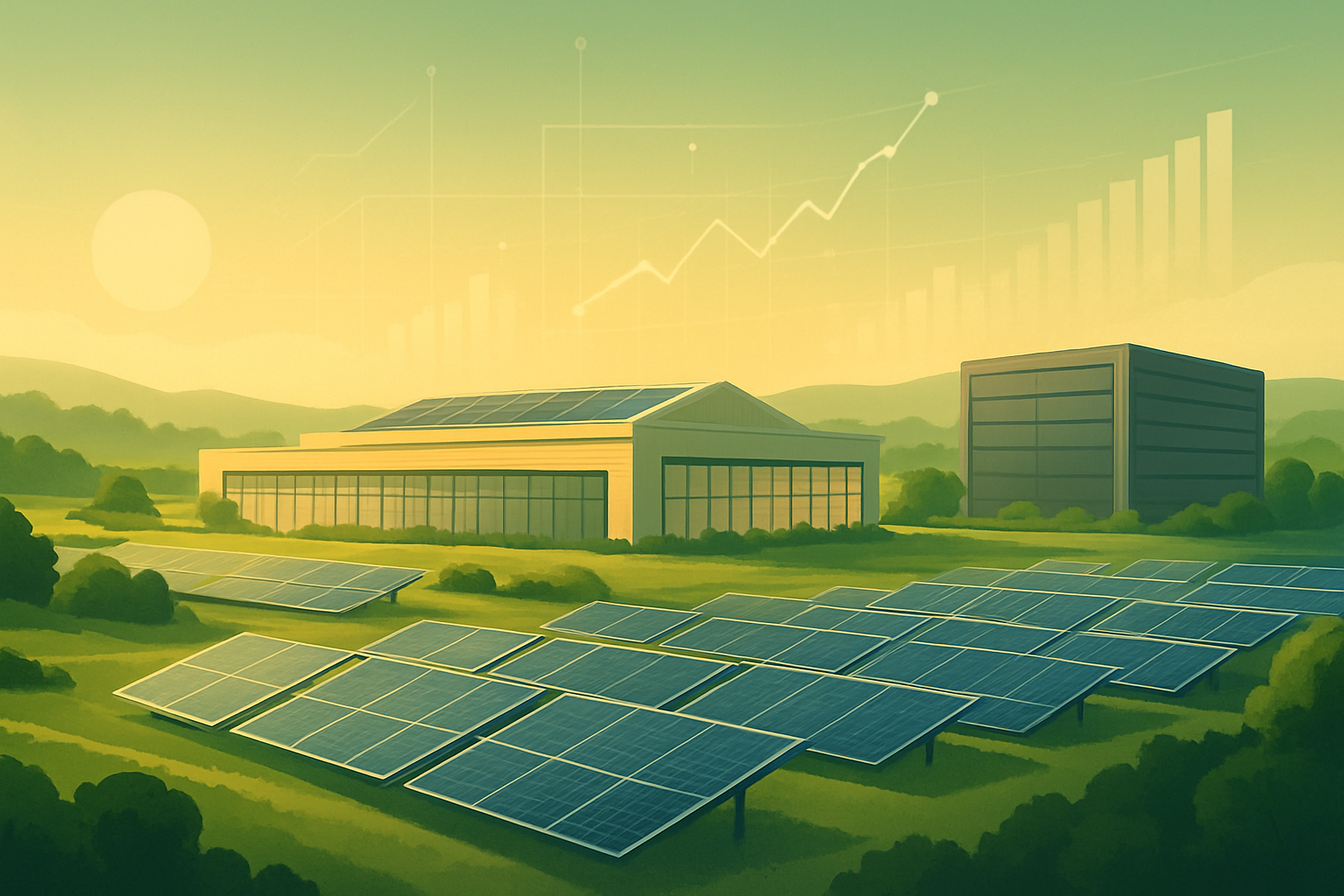
    As of January 16, 2026, the global energy transition has entered a transformative new phase where "Clean Tech" and "Artificial Intelligence" are no longer separate sectors, but deeply symbiotic industries. At the center of this convergence is First Solar, Inc. (NASDAQ: FSLR), a company that has evolved from a niche solar manufacturer into a cornerstone of American industrial strategy.

    The recent surge in investor interest, punctuated by a significant price target hike from UBS, underscores a fundamental shift in how the market values First Solar. No longer viewed simply through the lens of decarbonization, the company is now being re-rated as a critical infrastructure play for the AI era.

    Historical Background

    The story of First Solar begins with the "Glass Genius" of Ohio, Harold McMaster. An inventor with over 100 patents, McMaster founded Solar Cells Inc. (SCI) in 1990. While the rest of the world focused on silicon, McMaster bet on Cadmium Telluride (CdTe), a semiconductor that could be deposited in a thin film on glass.

    In 1999, the company was acquired by True North Partners, an investment firm led by Michael Ahearn and backed by the Walton family. Rebranded as First Solar, the company went public on the NASDAQ in 2006. By 2009, it achieved a historic milestone: becoming the first solar manufacturer to reduce production costs to below $1.00 per watt.

    The mid-2010s were a period of "creative destruction." In 2016, under the leadership of then-new CEO Mark Widmar, the company made the bold decision to skip its "Series 5" product entirely to accelerate the development of "Series 6." This strategic pivot transformed First Solar from a company that built solar farms (EPC services) into a pure-play technology and manufacturing powerhouse.

    Business Model

    First Solar’s business model is built on vertical integration and technological differentiation. Unlike its competitors, who assemble modules from silicon cells often sourced from multiple suppliers, First Solar transforms a sheet of glass into a finished solar module in a single integrated process that takes roughly four hours.

    Revenue Sources:

    • Module Sales: The vast majority of revenue comes from the sale of Series 6 and Series 7 modules to utility-scale developers and independent power producers.
    • Tax Credit Monetization: Under the IRA, the company earns significant "45X" manufacturing credits, which it has successfully monetized to fund further expansion.

    The company focuses exclusively on the utility-scale market, avoiding the volatile residential rooftop sector. This allows for long-term supply agreements and a massive order backlog that currently stretches into the late 2020s.

    Stock Performance Overview

    Over the last decade (2016–2026), FSLR has been a barometer for the health of the domestic solar industry.

    • 10-Year Horizon: A decade ago, the stock struggled near $30–$50 as it restructured. Investors who held through the 2016 pivot have seen the stock rise nearly 500%.
    • 5-Year Horizon: The 2022 passage of the IRA served as a massive "step-change," moving the stock from the $70 range to consistent levels above $150.
    • 1-Year Horizon: Entering 2026, FSLR has shown remarkable strength, trading between $230 and $270. This recent rally was sparked by the realization that AI power demand would require domestic solar at a scale never before seen.

    Financial Performance

    First Solar’s recent financial results reflect a company in its "golden era" of profitability.

    • Revenue Growth: Revenue climbed from $4.21 billion in 2024 to an estimated $5.55 billion in 2025. Consensus for 2026 sits at approximately $6.3 billion.
    • Earnings Power: Earnings per share (EPS) have seen explosive growth. From $12.02 in 2024, projections for 2026 reach as high as $26.00 per share.
    • Margins: Gross margins have expanded to a sector-leading 40%–45%, largely due to the Section 45X tax credits, which provide roughly $0.17 per watt for domestic manufacturing.
    • Backlog: As of January 2026, the company boasts a contracted backlog of over 50 gigawatts (GW), meaning nearly all production through 2029 is already sold.

    Leadership and Management

    CEO Mark Widmar has been at the helm since 2016 and is widely regarded as one of the most effective executives in the renewable space. Widmar’s strategy has been defined by "discipline over growth." He resisted the urge to follow the industry into silicon and instead doubled down on CdTe technology.

    The leadership team is noted for its strong relationship with Washington. Widmar has been a vocal advocate for American energy independence, helping shape the policy environment that now protects the company from foreign subsidized competition. The board of directors remains focused on "capacity management," ensuring that the company does not over-expand during cyclical peaks.

    Products, Services, and Innovations

    The flagship product is the Series 7 module. Launched in late 2023 and scaled through 2025, the Series 7 represents a major leap forward:

    • Bifacial Technology: The Series 7 is natively bifacial, meaning it captures sunlight on both the front and back, increasing energy yield by up to 15% in certain environments.
    • Mounting Innovation: It features an integrated back-rail system that reduces installation time and costs for large-scale developers.
    • CuRe Technology: First Solar has introduced "Copper Replacement" (CuRe) technology, which improves the long-term stability and degradation rates of the modules.

    Looking ahead, the company’s R&D center in Ohio is working on Perovskite-CdTe tandems, a "next-generation" solar cell that could push efficiency well beyond 25%, potentially rendering current silicon technologies obsolete.

    Competitive Landscape

    The solar industry is a geopolitical battlefield. First Solar’s primary competitors are the "Big Four" Chinese silicon giants: Jinko Solar, Trina Solar, JA Solar, and LONGi.

    However, First Solar occupies a "protected moat" for several reasons:

    1. Technology: By using CdTe instead of Silicon, they have zero exposure to the Xinjiang polysilicon supply chain, which is subject to U.S. import bans (UFLPA).
    2. Trade Policy: New AD/CVD (Anti-Dumping and Countervailing Duties) petitions filed in 2025 against Chinese-linked manufacturers in Southeast Asia have further insulated First Solar's pricing power.
    3. Customer Preference: U.S. utility companies and tech hyperscalers are increasingly prioritizing "supply chain security" and "domestic content," where First Solar has no equal.

    Industry and Market Trends

    The dominant trend of 2025–2026 is the AI Power Crunch. Data centers are projected to consume nearly 10% of total U.S. electricity by 2030. Because Microsoft, Amazon, and Google have committed to 100% renewable energy, they cannot simply pull power from the coal-heavy grid. They need new, utility-scale solar projects.

    Furthermore, the "electrification of everything"—from EVs to heat pumps—continues to drive structural demand for solar. In this environment, the bottleneck is no longer demand, but rather the supply of reliable, domestically produced modules.

    Risks and Challenges

    Despite the bullish narrative, First Solar is not without risks:

    • Political Risk: While the IRA is law, a change in U.S. administration or a shift in Congressional priorities could lead to efforts to repeal or dilute the 45X tax credits.
    • Technical Limits: CdTe technology currently has lower theoretical efficiency limits compared to the most advanced silicon cells (like TOPCon or HJT).
    • Execution Risk: The company is managing a massive multi-state expansion. Any delays in the Alabama or Louisiana ramps could impact 2026 earnings.
    • Pricing Pressure: If global silicon prices crash significantly, even with tariffs, First Solar may face pressure to lower its premium pricing.

    Opportunities and Catalysts

    • UBS Price Target Hike: Recently, UBS analysts increased their price target to $285, specifically citing First Solar as an "AI beneficiary." This has prompted a rotation of "growth" capital into the stock.
    • Louisiana Capacity: The Iberia Parish facility, which opened in late 2025, is expected to reach full capacity by mid-2026, providing a significant boost to volume.
    • Data Center Partnerships: Rumors of direct-supply agreements with major tech hyperscalers could serve as a major "de-risking" event for the stock’s long-term valuation.

    Investor Sentiment and Analyst Coverage

    Wall Street is currently "overwhelmingly bullish" on FSLR. As of January 2026, the stock holds a "Strong Buy" consensus. Institutional ownership is high, at approximately 87%, led by giants like Vanguard and BlackRock.

    Investor chatter has shifted from "Will they survive the Chinese onslaught?" to "How many more factories can they build?" Retail sentiment is also rising, as the "AI Infrastructure" tag makes the company more appealing to a broader range of investors beyond the traditional "green" or "ESG" funds.

    Regulatory, Policy, and Geopolitical Factors

    The geopolitical environment remains First Solar’s strongest tailwind. The U.S. government’s focus on "de-risking" from China has made First Solar a "national champion" of sorts.

    Furthermore, the Domestic Content Bonus within the IRA incentivizes developers to use U.S.-made modules to earn an additional 10% tax credit. Because First Solar is the only manufacturer that can provide a fully domestic, thin-film solution at scale, it effectively controls the market for these bonus-eligible projects.

    Conclusion

    First Solar (NASDAQ: FSLR) has successfully transitioned from a specialized solar manufacturer to a vital component of the modern energy-industrial complex. By January 2026, the company has proven that its CdTe technology is not just a viable alternative to silicon, but a strategic asset in an era of AI-driven power demand and geopolitical fragmentation.

    With a sold-out backlog, industry-leading margins protected by the IRA, and a clear path toward 14 GW of domestic capacity, the bull case for First Solar remains compelling. While political shifts and technological competition are ever-present risks, the "straight line" from AI data centers to First Solar’s production lines suggests that the company’s recent price target hikes from firms like UBS may only be the beginning of its next phase of growth. Investors should watch the ramp-up of the Louisiana facility and any potential "AI-exclusive" supply deals as the next major catalysts for the stock.


    This content is intended for informational purposes only and is not financial advice