Date: January 28, 2026
Introduction
The paradox of the "perfect report" met its match on Wall Street today. GE Vernova (NYSE: GEV), the energy-focused powerhouse spun off from the historic General Electric conglomerate, released a fiscal year 2025 earnings report that, by most traditional metrics, was a resounding triumph. The company blew past analyst estimates for earnings per share (EPS), raised its 2026 revenue guidance to a staggering $45 billion, and reported a backlog that has swelled to $150 billion.
Yet, as the opening bell rang on January 28, 2026, shares of GEV tumbled by 3.3%. This decline, while seemingly minor in the context of the stock’s meteoric 450% rise since its April 2024 debut, serves as a fascinating case study in market expectations. Investors are currently weighing the company's vital role in the "AI Power Supercycle" against a valuation that leaves almost no room for execution errors, particularly within its struggling Wind segment. This deep dive explores why the world’s "architect of the grid" is facing a momentary chill despite a scorching hot performance.
Historical Background
The story of GE Vernova is effectively the second act of the most famous industrial narrative in American history. Born from the remains of Thomas Edison’s General Electric, the company represents the culmination of a decade-long restructuring led by former GE CEO Larry Culp.
On April 2, 2024, General Electric completed its historic "split into three," spinning off GE Vernova as an independent, pure-play energy company. This move was designed to untether the energy business—encompassing power generation, renewable energy, and grid orchestration—from the aerospace and healthcare divisions. Historically, the "Power" segment was GE’s crown jewel before falling into a deep malaise in the late 2010s due to overcapacity and a mismanaged shift toward renewables. GE Vernova’s mission since the spin-off has been to reclaim that legacy by positioning itself as the indispensable partner for a global economy that is simultaneously electrifying, decarbonizing, and demanding unprecedented amounts of power for artificial intelligence.
Business Model
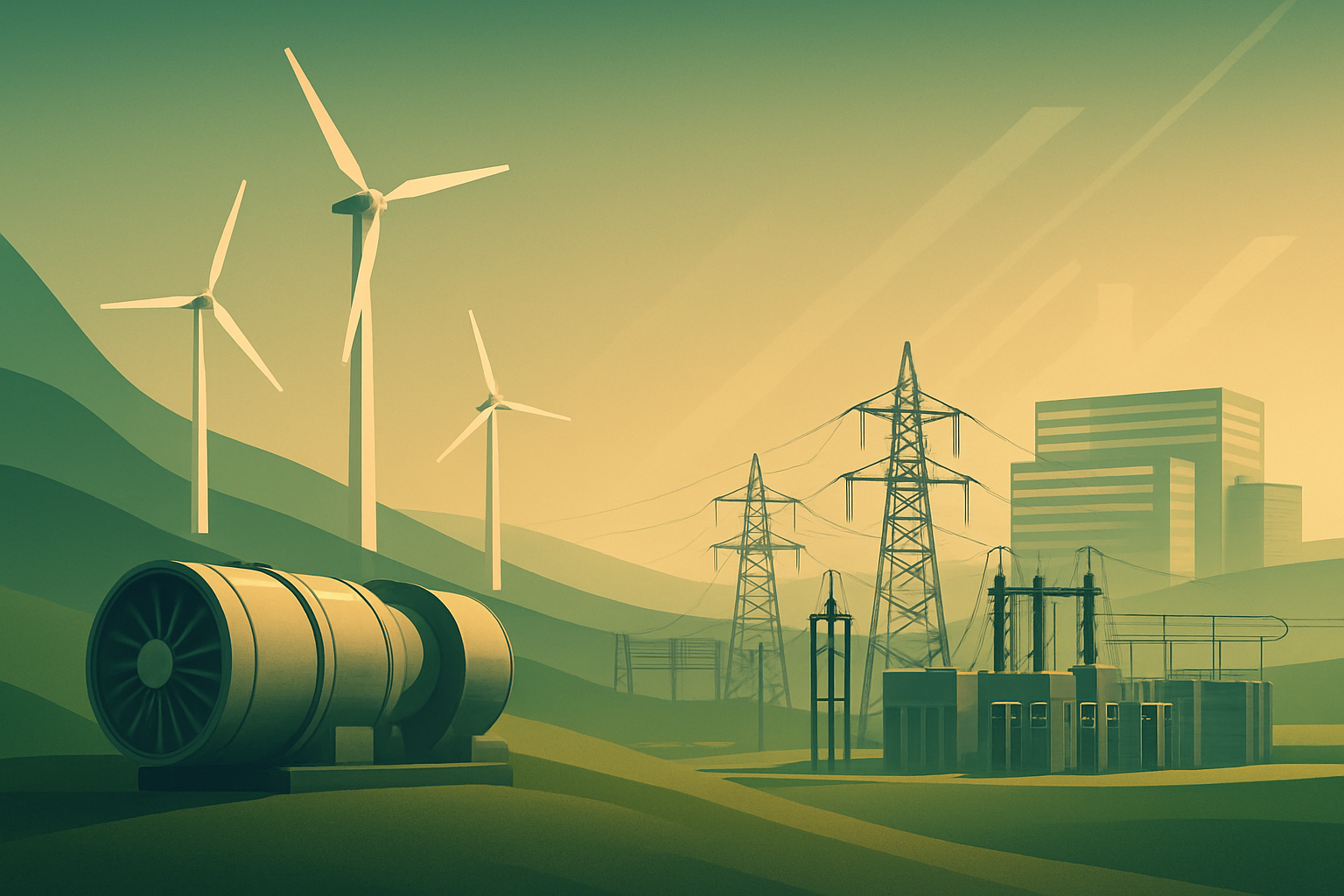
GE Vernova operates a high-moat, capital-intensive business model organized into three distinct but synergistic segments:
- Power: The "Cash Cow." This segment includes gas, nuclear, hydro, and steam power. It generates high-margin recurring revenue through long-term service agreements (LTSAs). As of late 2025, gas power services remain the primary profit driver.
- Electrification: The "Growth Engine." This segment provides the hardware (transformers, switchgear) and software (grid orchestration) necessary to connect power sources to the end-user. It is the primary beneficiary of the global push to modernize aging electrical grids.
- Wind: The "Work in Progress." Comprising both onshore and offshore wind turbine manufacturing. While essential for the company’s green credentials, this segment has been plagued by high costs and project delays.
The company’s customer base spans from massive national utilities to "Hyperscaler" tech giants like Amazon (NASDAQ: AMZN) and Microsoft (NASDAQ: MSFT), who are now bypassing traditional grid delays by purchasing power generation equipment directly.
Stock Performance Overview
Since its inception as a standalone entity in April 2024, GEV has been one of the top performers in the industrial sector.
- 1-Year Performance: Over the last 12 months, the stock has defied gravity, driven by the realization that AI data centers require 24/7 "baseload" power that only gas and nuclear can currently provide at scale.
- Since Spin-off: From an initial trading price near $120 in April 2024, GEV surged to over $700 by early 2026.
- Notable Moves: The 3.3% drop today represents one of the few significant pullbacks in an otherwise relentless upward trajectory. Historically, GEV has traded with high beta relative to the S&P 500, reflecting its status as a high-growth "tech-adjacent" industrial.
Financial Performance
The numbers released today for the full year 2025 were, on the surface, spectacular:
- Revenue: $38.1 billion, representing a 9% organic increase.
- Free Cash Flow (FCF): $3.7 billion, more than double the 2024 levels.
- Earnings per Share: Reported at $13.39 for Q4, though this was heavily influenced by a one-time $2.9 billion tax benefit.
- Order Backlog: $150 billion, up nearly 26% year-over-year.
Despite these figures, the 3.3% share tumble was triggered by "light" EBITDA margins in the Wind segment and a "sell the news" reaction from institutional investors. With the stock trading at a trailing P/E ratio exceeding 100x, the market is demanding perfection. The 2026 guidance raise to $44–$45 billion in revenue was strong, but some analysts suggested that the "AI premium" was already fully priced into the shares.
Leadership and Management
CEO Scott Strazik has earned a reputation as an "operational hawk." Unlike previous GE eras characterized by growth-at-any-cost, Strazik has implemented a "Lean" methodology, focusing on disciplined underwriting. Under his leadership, GE Vernova has walked away from low-margin wind projects, choosing instead to focus on profitability.
A key leadership shift occurred recently with the promotion of Eric Gray to CEO of the Power segment. Gray, who successfully turned around the Gas Power business, is now tasked with integrating nuclear and hydro into a singular, high-margin power engine. This stability in leadership contrasts sharply with the executive turnover seen at rivals like Siemens Energy (OTC: SMNEY).
Products, Services, and Innovations
GE Vernova’s competitive edge lies in its "heavy-duty" technology:
- HA-Class Gas Turbines: The world’s largest and most efficient gas turbines, which are increasingly being modified to run on hydrogen blends.
- Aeroderivative Turbines: Based on jet engine technology, these units can start up in minutes, making them the preferred choice for data centers needing rapid backup or supplemental power.
- Grid Orchestration Software: GEV is a leader in software that helps utilities manage the complex influx of intermittent renewable energy onto the grid.
- Nuclear (SMRs): The company’s BWRX-300 Small Modular Reactor (SMR) is a leading contender in the race to provide carbon-free baseload power to industrial sites.
Competitive Landscape
GE Vernova competes in a consolidated global market:
- In Gas Power: Mitsubishi Power and Siemens Energy remain the primary rivals. GEV currently holds a leading market share in the high-efficiency "H-Class" turbine market.
- In Wind: Vestas (OTC: VWDRY) and Goldwind are formidable competitors. GEV has struggled to match Vestas’ profitability in onshore wind, though its Haliade-X offshore turbine remains a technological (if financially volatile) marvel.
- In Electrification: Schneider Electric (OTC: SBGSY) and ABB (NYSE: ABB) are the giants. However, GEV’s vertical integration—from the turbine that makes the power to the transformer that delivers it—is a unique selling proposition.
Industry and Market Trends
The "AI Power Supercycle" is the dominant trend of 2026. Data centers are projected to account for nearly one-third of all new gas power transactions in the U.S. This shift has turned GEV from a "cyclical industrial" into a "secular growth" story. Furthermore, the global "Electrification of Everything"—from EVs to heat pumps—is placing a strain on the grid that requires exactly the type of high-voltage transformers and grid software GEV produces.
Risks and Challenges
The 3.3% drop today highlights the primary risk: Valuation. At current levels, GEV is priced as a high-growth tech company, not a manufacturer of 500-ton turbines.
- Wind Segment Volatility: The segment is still projected to lose $400 million in EBITDA in 2026. Offshore projects like Vineyard Wind 1 continue to face logistical and regulatory hurdles.
- Execution Risk: With a $150 billion backlog, the challenge is no longer finding customers, but building the products fast enough. Any supply chain hiccup could lead to massive liquidated damages.
- Concentration: A significant portion of the growth is tied to the capital expenditures of a few "Hyperscaler" tech companies.
Opportunities and Catalysts
- Data Center Direct Deals: GEV’s recent 1 GW deal for aeroderivative units shows a path toward bypassing slow utility interconnections by selling directly to tech firms.
- Prolec GE Acquisition: Closing in February 2026, the full acquisition of this transformer joint venture will allow GEV to capture more margin in the booming data center equipment market.
- Nuclear Resurgence: As governments realize that wind and solar cannot power AI 24/7, the push for SMRs provides a massive long-term tailwind.
Investor Sentiment and Analyst Coverage
Wall Street remains overwhelmingly "Bullish" on GEV, with many analysts referring to it as the "NVIDIA of the Power Grid." However, the sentiment is shifting from "Buy at any price" to "Watch the margins." Institutional ownership is high, with major funds like BlackRock and Vanguard holding significant stakes. Retail sentiment remains positive, though the high share price (~$700+) has sparked rumors of a potential stock split in mid-2026 to increase liquidity.
Regulatory, Policy, and Geopolitical Factors
The U.S. Inflation Reduction Act (IRA) remains a massive tailwind, providing tax credits for wind production and domestic manufacturing. However, geopolitical tensions remain a risk, particularly regarding the supply chain for rare earth minerals used in wind turbine magnets. Furthermore, as energy security becomes a matter of national defense, GEV’s "Made in America" footprint for its gas and nuclear technology provides a significant moat against international competitors.
Conclusion
GE Vernova’s 3.3% share tumble on the heels of a "beat and raise" earnings report is not a signal of fundamental weakness, but rather a symptom of its own success. The company has successfully transitioned from a troubled segment of a dying conglomerate to the central player in the global energy transition.
For investors, the key will be watching the Wind segment’s path to profitability and the company’s ability to convert its massive $150 billion backlog into cash. While the current valuation is demanding, GE Vernova’s position as the primary "architect of the grid" suggests that today’s dip may be little more than a brief pause in a multi-year secular growth story.
Disclaimer: This content is intended for informational purposes only and is not financial advice.