Tag: Gig Economy

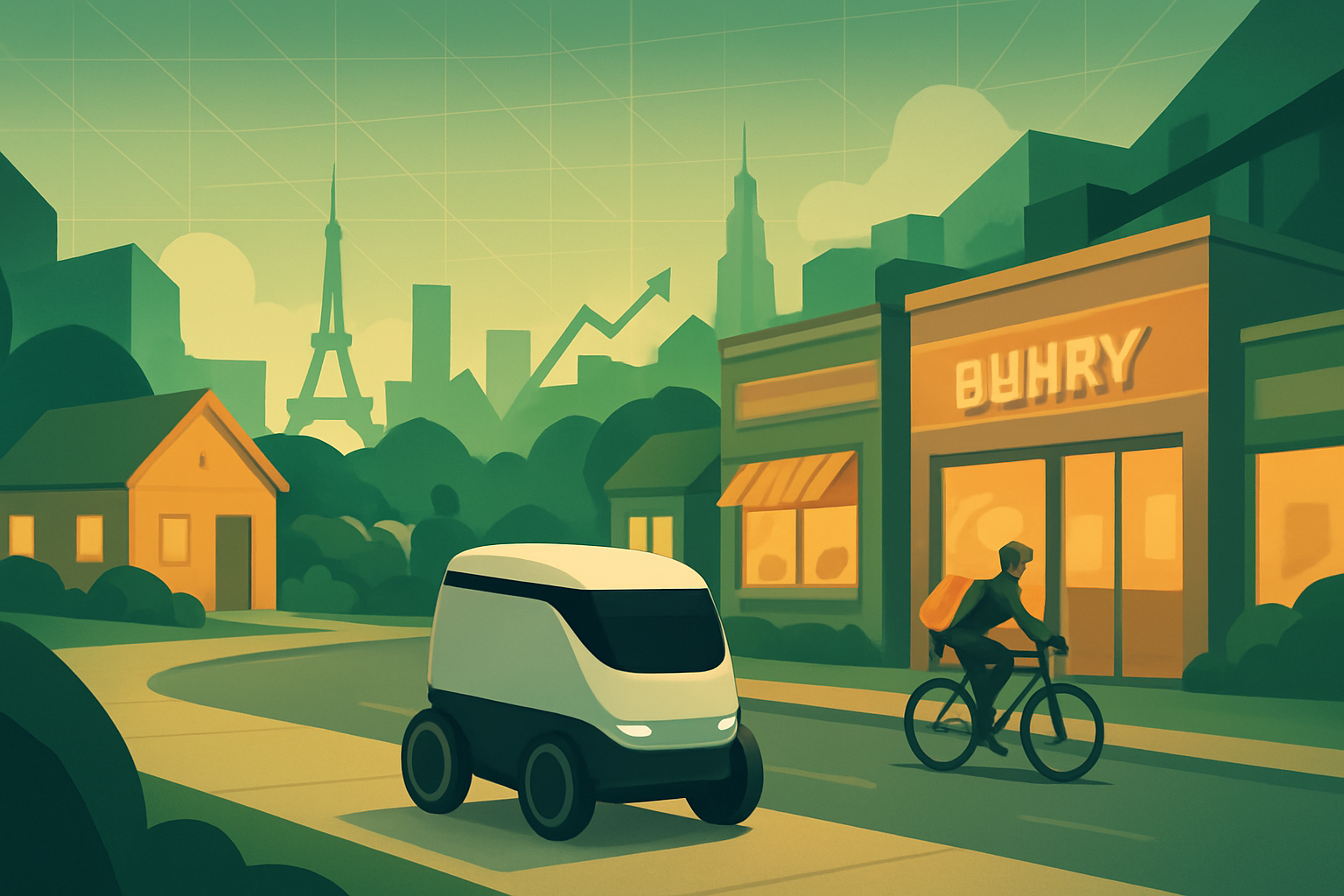
  • The New Era of Local Commerce: A Deep Dive into DoorDash (DASH) and the Global Tariff Shock

    The New Era of Local Commerce: A Deep Dive into DoorDash (DASH) and the Global Tariff Shock

    As of February 24, 2026, DoorDash (NYSE: DASH) has transitioned from a Silicon Valley delivery darling into a global titan of local commerce. While its origins are rooted in the simple delivery of restaurant meals, the DoorDash of 2026 is a multi-faceted logistics and advertising powerhouse. However, this evolution faces a new and formidable challenge: the "Global Tariff Shock" of 2025-2026. With trade tensions reshaping the cost of hardware and consumer goods, DoorDash finds itself at a crossroads—balancing record profitability with a macro-economic environment that threatens the discretionary spending of its core user base.

    Historical Background

    Founded in 2013 by Stanford students Tony Xu, Stanley Tang, Andy Fang, and Evan Moore, DoorDash began as "PaloAltoDelivery.com." The founders personally delivered the first orders to understand the friction points of the merchant-dasher-consumer triad. By 2018, DoorDash had overtaken Grubhub (NASDAQ: JET) in US market share, a lead it never relinquished.

    The company’s 2020 IPO marked a turning point, providing the capital necessary to expand beyond food. Key milestones include the 2022 acquisition of Finnish delivery firm Wolt, which opened the doors to Europe and Central Asia, and the blockbuster 2025 acquisition of Deliveroo. These moves transformed DoorDash into a truly international platform, setting the stage for the unified global tech stack initiative currently underway in 2026.

    Business Model

    DoorDash operates a high-velocity, three-sided marketplace:

    • Marketplace: The core platform connecting consumers with over 600,000 merchants. Revenue is generated via commissions from merchants and service fees from consumers.
    • DashPass: A subscription service that provides $0 delivery fees. By 2026, DashPass has become the company's primary retention engine, with members spending significantly more than non-members.
    • Advertising & Retail Media: DoorDash now allows brands to purchase "sponsored listings" and display ads. This high-margin segment is a critical driver of the company’s recent shift toward GAAP profitability.
    • New Verticals (Grocery & Retail): Expanding into non-restaurant categories like alcohol, flowers, and beauty products.
    • Drive: A white-label fulfillment service where merchants use DoorDash’s logistics network for orders placed on their own websites.

    Stock Performance Overview

    Over the past year, DASH has outperformed the broader S&P 500, buoyed by the 2025 realization of GAAP net income. However, the five-year horizon tells a story of significant volatility, including the "post-pandemic hangover" of 2022 and the subsequent recovery driven by disciplined cost management.

    While the stock reached all-time highs in late 2025 following the Deliveroo acquisition, early 2026 has seen a slight pullback. Investors are currently weighing the company's "investment year" guidance—meant to unify its global tech platforms—against the backdrop of rising global tariffs which have introduced uncertainty into the consumer tech sector.

    Financial Performance

    DoorDash reported a stellar fiscal year 2025, with revenue reaching $13.7 billion, a substantial increase from $10.7 billion in 2024. For Q4 2025, the company posted:

    • Revenue: $4.0 billion (up 38% YoY).
    • GAAP Net Income: $935 million for the full year, a massive swing from the $123 million reported in 2024.
    • Adjusted EBITDA: $780 million in Q4, representing 2.6% of Gross Order Value (GOV).
    • Free Cash Flow: DoorDash continues to generate robust cash flow, ending 2025 with a healthy balance sheet that includes over $4 billion in cash and short-term investments.

    The 2026 outlook is more cautious, with Q1 Adjusted EBITDA projected between $675M and $775M as the company reinvests heavily in international integration.

    Leadership and Management

    CEO Tony Xu remains the architect of DoorDash’s "relentless execution" culture. Under his leadership, the company has maintained a flat organizational structure and a unique "Dash" requirement, where corporate employees must complete one delivery per month.

    The management team, including CFO Ravi Inukonda, has been praised by Wall Street for their "under-promise and over-deliver" approach to financial guidance. The board’s strategy in 2026 focuses on "System-Building for Local Commerce," aiming to make DoorDash the default infrastructure for any item moving within a city.

    Products, Services, and Innovations

    The most significant innovation in 2026 is the "DoorDash Dot," an autonomous sidewalk robot designed for short-distance, small-basket deliveries. This technology aims to solve the "unit economics" problem of delivering a single coffee or convenience item.

    Additionally, the company is rolling out its Unified Global Tech Stack, which merges the back-end systems of DoorDash, Wolt, and Deliveroo. This will allow for seamless cross-border logistics and a centralized advertising platform that can reach consumers in London, Helsinki, and New York with a single campaign.

    Competitive Landscape

    DoorDash maintains a dominant position in the US, holding an estimated 57% to 67% market share. Its primary rival, Uber (NYSE: UBER), holds 23-25% through Uber Eats.

    The competitive battleground has shifted to "New Verticals." While DoorDash leads in suburban food delivery, Uber Eats is leveraging its cross-platform "Uber One" membership to gain ground in urban grocery segments. Meanwhile, Grubhub has retreated to a niche focus on campus dining after its acquisition by Wonder Foods. In Europe, DoorDash faces fierce competition from local champions like Just Eat Takeaway and Delivery Hero, though the Deliveroo acquisition has given DASH a formidable lead in the UK and Middle East.

    Industry and Market Trends

    The "Anywhere Economy" is the defining trend of 2026. Consumers now expect every local merchant—from boutiques to hardware stores—to offer same-day delivery. This has forced a consolidation of logistics providers, as only the largest players have the density to make the economics work.

    Furthermore, the rise of Retail Media Networks (RMNs) has turned delivery apps into search engines. DoorDash is capitalizing on this by transforming its app into a high-intent shopping destination, competing directly with Amazon (NASDAQ: AMZN) for local search dominance.

    Risks and Challenges: The Tariff Shock

    The primary headwind in 2026 is the impact of global tariffs. With effective US tariff rates reaching 13-17% following recent trade disputes, the "discretionary dollar" is under pressure.

    • Consumer Inflation: Tariffs have added an estimated $1,300 to $2,400 in annual costs for the average US household. This "ancillary inflation" reduces the frequency of luxury services like food delivery.
    • Hardware Costs: The rollout of "DoorDash Dot" robots and merchant tablets is becoming more expensive due to tariffs on imported electronics, aluminum, and steel.
    • Operational Pressure: Rising costs for vehicle parts and fuel—exacerbated by trade-related energy disruptions—increase the "Dasher pay" required to keep the fleet active, squeezing the company's take rate.

    Opportunities and Catalysts

    Despite the macro challenges, several catalysts remain:

    • Grocery Profitability: Management expects the grocery and retail segments to turn profit-positive by the second half of 2026.
    • Advertising Scale: DoorDash is on track to hit $2.6 billion in high-margin advertising revenue by 2027.
    • Autonomous Efficiency: If the "DoorDash Dot" rollout is successful, it could significantly lower the cost-per-delivery in high-density urban areas, insulating the company from rising labor costs.

    Investor Sentiment and Analyst Coverage

    Wall Street remains generally bullish on DASH, viewing it as the "best-in-class" operator in local logistics. However, institutional investors are closely monitoring the 2026 "investment cycle." Analysts from major banks have expressed concern that the unification of the global tech stack might distract management from domestic competition with Uber. Retail sentiment remains positive, though there is "chatter" regarding the potential impact of labor regulation in the European markets acquired via Deliveroo.

    Regulatory, Policy, and Geopolitical Factors

    DoorDash faces a complex regulatory map in 2026. In the US, the debate over "worker classification" (Independent Contractor vs. Employee) continues at the state level. In the EU, the Platform Work Directive poses a structural risk to margins if Deliveroo and Wolt are forced to reclassify their couriers.

    Geopolitically, the company is navigating a world of "fragmented trade." The focus on supply chain resilience has forced DoorDash to seek domestic or "friend-shored" alternatives for its hardware needs, a move that is strategically sound but operationally expensive in the short term.

    Conclusion

    As of February 2026, DoorDash stands as a titan of the local commerce industry, having successfully navigated the transition to profitability. Its market share in the US is commanding, and its international expansion has provided it with a massive total addressable market.

    However, the "Global Tariff Shock" represents a significant test of the company's resilience. Investors should watch closely to see if DoorDash can maintain its delivery frequency in a higher-inflation environment and if its autonomous delivery investments can offset the rising costs of traditional logistics. While the 2026 "investment year" may lead to short-term margin pressure, the long-term vision of a unified, ad-supported, global delivery platform remains a compelling narrative for the "anywhere economy."


    This content is intended for informational purposes only and is not financial advice.

  • DoorDash (DASH): The Operating System for Local Commerce in 2026

    DoorDash (DASH): The Operating System for Local Commerce in 2026

    As of February 19, 2026, DoorDash, Inc. (NASDAQ: DASH) has evolved far beyond its origins as a third-party restaurant delivery service. Once viewed as a high-growth but profit-bleeding "gig economy" experiment, the company enters 2026 as the undisputed heavyweight of local commerce. With a dominant market share and a successful pivot into grocery, retail, and advertising, DoorDash has silenced critics who doubted the long-term viability of the delivery business model. Today, the company is increasingly viewed as a logistics and data powerhouse—the "operating system for local trade"—connecting millions of consumers with nearly any physical product in their zip code in under an hour.

    Historical Background

    Founded in 2013 by Stanford students Tony Xu, Stanley Tang, Andy Fang, and Evan Moore, DoorDash began as "Palo Alto Delivery." The founders personally delivered the first orders to understand the pain points of local merchants. By focusing on suburban markets that its early rival Grubhub ignored, DoorDash rapidly gained ground.

    The company’s trajectory changed forever during the COVID-19 pandemic, which pulled forward years of consumer adoption. DoorDash went public in December 2020 in one of the year’s most anticipated IPOs. Since then, the company has pursued aggressive horizontal and geographic expansion. Key milestones include the $8 billion acquisition of Finnish delivery platform Wolt in 2022, which provided a European foothold, and the late 2025 acquisition of Deliveroo, which solidified its position as a global leader in the logistics space.

    Business Model

    DoorDash operates a three-sided marketplace consisting of consumers, merchants (restaurants, grocers, retailers), and "Dashers" (independent delivery couriers). Its revenue streams are diversified across four primary pillars:

    1. Marketplace Core: Commissions from merchants and service fees from consumers on every order.
    2. DashPass: A high-margin subscription service that provides members with $0 delivery fees. As of early 2026, DashPass remains a critical loyalty driver and a predictable recurring revenue stream.
    3. Advertising & Promotions: A burgeoning high-margin business where merchants pay for sponsored listings and "Featured" placement. This segment reached a $1 billion annual run-rate in late 2024 and continues to be a primary driver of EBITDA expansion.
    4. Drive (White-Label Logistics): DoorDash provides the fulfillment backbone for merchants’ own websites and apps, allowing brands like Chipotle or Macy’s to offer delivery without managing their own fleets.

    Stock Performance Overview

    The performance of DASH stock has been a story of resilience. After a volatile period following its 2020 IPO and a significant drawdown during the tech rout of 2022, the stock began a sustained recovery in 2023. Over the past five years, DoorDash has outperformed many of its pandemic-era peers.

    In 2024 and 2025, the stock saw a massive re-rating as the company achieved GAAP profitability and demonstrated that its grocery and retail segments could scale efficiently. Year-over-year, the stock is up approximately 35%, reflecting investor confidence in management's ability to maintain high double-digit revenue growth while expanding margins.

    Financial Performance

    DoorDash’s financial profile has undergone a dramatic transformation. In fiscal year 2024, the company hit a historic milestone: its first full year of GAAP profitability, reporting a net income of $123 million.

    As we look at the figures for 2025 and projections for 2026:

    • Revenue: Reached $13.72 billion in 2025, a significant jump fueled by the Deliveroo acquisition and high "New Vertical" adoption. Analysts project revenue to approach $17.84 billion by the end of 2026.
    • Adjusted EBITDA: Management has successfully optimized the cost of delivery. Adjusted EBITDA for 2025 hovered near $2.8 billion, with 2026 targets aiming for further expansion through automation.
    • Free Cash Flow (FCF): The company generated $1.8 billion in FCF in 2025, providing a massive war chest for R&D and further M&A.
    • Valuation: While still trading at a premium compared to traditional retail, its Price-to-Sales and EV/EBITDA multiples have stabilized as the "path to profit" is no longer a question, but a reality.

    Leadership and Management

    CEO Tony Xu has earned a reputation for disciplined execution and a long-term "founder-led" mindset. Unlike many tech CEOs who focused solely on growth at any cost, Xu transitioned the company toward operational efficiency ahead of the market curve in 2022.

    The management team was further bolstered by the integration of Wolt CEO Miki Kuusi, who now oversees international operations. The board is recognized for its strong governance and focus on shareholder value, evidenced by strategic share buyback programs initiated in 2024-2025 to offset dilution from stock-based compensation.

    Products, Services, and Innovations

    Innovation in 2026 is centered on "The Everything Store." DoorDash has moved aggressively into:

    • Grocery and Retail: Now the #1 third-party marketplace for U.S. grocery volume, partnering with giants like Kroger and Wegmans.
    • AI Integration: In early 2026, DoorDash launched a ChatGPT-powered "Meal to Cart" feature, allowing users to plan a week of meals via AI and have the entire grocery list populated and delivered in one click.
    • Autonomous Logistics: DoorDash is scaling its own autonomous delivery platform, using a hybrid of sidewalk robots for dense urban cores and drone delivery for suburban medicine and small-item retail, significantly lowering the "cost per drop."

    Competitive Landscape

    DoorDash maintains a dominant 67-68% share of the U.S. food delivery market. Its primary rival, Uber Eats (owned by Uber Technologies, Inc. (NYSE: UBER)), holds approximately 24% and competes fiercely through its "Uber One" cross-platform loyalty program.

    Grubhub, once a leader, has seen its share dwindle to single digits (~8%) and was sold to Wonder Foods in early 2025 at a fraction of its former valuation. Meanwhile, Instacart (Maplebear Inc. (NASDAQ: CART)) remains the primary challenger in the grocery space, though DoorDash’s superior logistics density and larger user base have allowed it to capture significant market share from the grocery-first incumbent.

    Industry and Market Trends

    The "On-Demand Economy" has shifted from a luxury to a utility. Three key trends define the sector in 2026:

    1. Convenience as a Commodity: Consumers now expect sub-30-minute delivery for non-food items, ranging from hardware (Home Depot) to apparel (Old Navy).
    2. Ads-as-a-Service: Like Amazon, delivery platforms have become massive advertising networks, as brands realize the value of appearing at the "point of purchase" on a mobile device.
    3. Consolidation: The high cost of technology and logistics has led to a "winner-take-most" market, favoring players like DoorDash with the scale to amortize R&D costs.

    Risks and Challenges

    Despite its dominance, DoorDash faces significant hurdles:

    • Labor Costs: Continuous upward pressure on gig worker wages in markets like New York City and Seattle threatens to compress margins.
    • Consumer Sensitivity: In an environment of fluctuating macro conditions, higher service fees to offset regulatory costs can lead to "fee fatigue," resulting in lower order volumes.
    • Execution Risk: Integrating large acquisitions like Deliveroo while simultaneously building a grocery business and an autonomous fleet is a massive operational undertaking.

    Opportunities and Catalysts

    • International Profitability: As Wolt and Deliveroo are fully integrated into the "Dash" tech stack, international margins are expected to catch up to North American levels.
    • Advertising Upside: If DoorDash can increase its ad revenue to 4-5% of Gross Order Value (GOV), it would represent a massive high-margin windfall.
    • Retail Partnerships: Deepening ties with big-box retailers for "last-mile-as-a-service" offers a revenue stream that doesn't depend on consumer-facing marketing spend.

    Investor Sentiment and Analyst Coverage

    Wall Street sentiment toward DASH is currently "Strong Buy" or "Outperform" across most major institutions. Analysts cite the company's clear leadership in the U.S. and its successful diversification into grocery as the primary reasons for optimism. Hedge fund activity in late 2025 showed increased positioning by growth-oriented funds, who view DoorDash not just as a delivery company, but as a dominant player in the broader e-commerce landscape.

    Regulatory, Policy, and Geopolitical Factors

    Regulation remains the primary "wild card." In 2024 and 2025, cities like Seattle and New York implemented aggressive minimum pay laws for delivery workers. In Seattle, this led to a $4.99 "Regulatory Response Fee," which briefly cooled demand.

    At a national level, the debate over worker classification (1099 vs. W-2) continues to simmer, though DoorDash has successfully navigated this by advocating for "portable benefits" models that preserve flexibility while providing some security. Geopolitically, the expansion into Europe and Asia brings exposure to varying labor laws and digital services taxes.

    Conclusion

    As of early 2026, DoorDash has successfully transitioned from a specialized food delivery app into a diversified logistics titan. By dominating the U.S. market, achieving GAAP profitability, and aggressively expanding into grocery and advertising, the company has built a multi-layered moat that is difficult for competitors to breach.

    Investors should watch for two key milestones in 2026: the successful integration of Deliveroo’s technology and the point at which the grocery segment becomes economic-profit positive. While regulatory headwinds and labor costs remain persistent threats, DoorDash's scale, technological edge, and leadership stability position it as a foundational stock in the modern digital economy.


    This content is intended for informational purposes only and is not financial advice.

  • The Digital Labor Architect: An In-Depth Research Report on Upwork Inc. (UPWK)

    The Digital Labor Architect: An In-Depth Research Report on Upwork Inc. (UPWK)

    As of February 10, 2026, the landscape of work has fundamentally shifted. The "gig economy," once a buzzword for side hustles, has matured into a sophisticated global marketplace for high-end digital talent. At the epicenter of this transformation is Upwork Inc. (NASDAQ: UPWK).

    Once viewed as a simple platform for connecting small businesses with freelance writers or designers, Upwork has spent the last two years navigating a radical evolution. Faced with the dual pressures of generative AI and a fluctuating macroeconomic environment, the company has pivoted from a high-growth marketplace to a high-margin, enterprise-ready infrastructure provider. Today, Upwork is in focus not just for its role in the labor market, but for its resilience in the face of technological disruption and its aggressive transition toward profitability and shareholder returns.

    Historical Background

    Upwork’s story began at the dawn of the internet age. Its DNA is formed from two pioneers: Elance, founded in 1998, and oDesk, founded in 2003. For over a decade, these two platforms competed for dominance in the nascent remote work sector. In 2013, they announced a "merger of equals," forming Elance-oDesk, which was later rebranded as Upwork in 2015 to unify the user experience.

    The company went public on the Nasdaq in October 2018 at $15 per share. While the IPO was a milestone, the COVID-19 pandemic served as the ultimate accelerant. As the world moved home in 2020, Upwork’s platform became a critical utility, driving the stock to all-time highs above $60 in early 2021. However, the subsequent years were defined by a "post-pandemic hangover" and a massive technological pivot as the rise of Large Language Models (LLMs) threatened the very nature of many freelance tasks.

    Business Model

    Upwork operates a multi-faceted revenue model that has been significantly streamlined over the past 24 months.

    1. Marketplace Revenue: This is the core of the business. Upwork charges a flat 10% service fee to freelancers across all contracts, a simplification from its previous tiered structure. On the client side, the company generates revenue through transaction fees and payment processing.
    2. Ads and Subscriptions: A growing revenue driver includes "Connects"—digital tokens that freelancers use to bid on projects—and the "Freelancer Plus" subscription tier, which provides enhanced visibility and tools.
    3. Enterprise Solutions (Lifted): Following the 2025 launch of its subsidiary Lifted, Upwork now offers comprehensive managed services, compliance tools, and "Employer of Record" (EOR) capabilities. This allows Fortune 500 companies to hire and manage large-scale contingent workforces while mitigating legal risks.
    4. Managed Services: For large, complex projects, Upwork acts as the prime contractor, providing a white-glove experience for corporate clients.

    Stock Performance Overview

    Upwork’s stock performance has been a roller coaster of volatility and recovery.

    • 1-Year Performance (2025-2026): Over the last 12 months, UPWK has seen a stabilization, rising roughly 25% from its 2024 lows to settle in the $18.00 range.
    • 5-Year Performance: On a five-year horizon, the stock remains significantly below its 2021 peak of $60, reflecting the broad "revaluation" of growth-stage tech companies and the cooling of the pandemic-era remote work frenzy.
    • 10-Year Performance: Since its IPO, the stock has traded in a wide range, but early investors have seen periods of significant outperformance followed by deep corrections, underscoring the platform’s sensitivity to interest rates and labor market cycles.

    Financial Performance

    By February 2026, Upwork’s financial profile has shifted from "growth-at-all-costs" to "disciplined profitability."

    In the most recent fiscal year (2025), Upwork reported record revenues of $787.8 million, representing a modest 2% year-over-year growth. However, the real story lies in the margins. Adjusted EBITDA surged 35% to $225.6 million, with EBITDA margins reaching a record 29%.

    While the number of active clients slightly declined to approximately 785,000, the Gross Services Volume (GSV) per active client rose to over $5,100. This indicates that while Upwork may be shedding low-value users, it is successfully capturing larger, more complex, and longer-duration projects from high-value enterprise clients. The company’s focus on cash flow allowed it to complete a major $136 million share repurchase program in late 2025.

    Leadership and Management

    Upwork is led by CEO Hayden Brown, who took the helm in early 2020. Brown has been the architect of the company’s AI strategy and its pivot toward enterprise solutions.

    Management faced a significant challenge in late 2024 when Engine Capital, an activist investor, disclosed a 3.5% stake and publicly criticized the company's execution and R&D spending. This pressure acted as a catalyst for the "efficiency era" at Upwork, leading to headcount reductions and a more focused product roadmap. The leadership team’s ability to appease activist demands while maintaining morale and innovation has been a key theme of the 2025-2026 period.

    Products, Services, and Innovations

    The year 2025 was the "Year of AI" for Upwork. The company introduced Uma (Upwork Mindful Assistant), a proprietary AI agent that acts as a matchmaker, project manager, and creative collaborator.

    • Uma-Powered Search: Clients can now describe complex project needs in natural language, and Uma provides a curated shortlist of talent along with summaries of their past performance.
    • AI Action Items: For ongoing projects, Upwork’s platform automatically generates meeting transcripts and task lists, reducing administrative friction.
    • The Enterprise Suite: Launched in mid-2025, this suite allows large organizations to manage both 1099 contractors and W-2 employees in a single, compliant dashboard, leveraging the Ascen and Bubty acquisitions.

    Competitive Landscape

    Upwork operates in a highly competitive and evolving arena:

    • Fiverr (NYSE: FVRR): The primary marketplace rival, which focuses more on "productized" gigs. Upwork distinguishes itself by targeting more complex, long-term engagements.
    • LinkedIn (Microsoft): A major threat, leveraging its social network to expand into freelance services.
    • Toptal: Competes at the ultra-high end of the talent pool, specifically for software engineers and finance professionals.
    • The AI Threat: Small, nimble AI startups that automate specific tasks (like copy generation or basic coding) compete with the individual freelancers on the platform.

    Upwork’s competitive edge remains its massive data set of successful project outcomes and its "trust and safety" infrastructure, which is difficult for newcomers to replicate.

    Industry and Market Trends

    Three primary trends are defining the freelance industry in 2026:

    1. Talent Access over Acquisition: Corporations are shifting from hiring full-time employees to "on-demand" talent models to stay agile in a rapidly changing economy.
    2. The AI Tailwind: Contrary to early fears that AI would kill freelancing, AI has become a massive source of work. Companies are hiring specialized talent to implement LLMs and build custom AI workflows.
    3. Gen Z Dominance: Younger generations increasingly prioritize autonomy and location independence, ensuring a steady supply of high-quality talent for the digital marketplace.

    Risks and Challenges

    Despite its profitability, Upwork faces significant headwinds:

    • Macro Sensitivity: A slowdown in corporate spending directly impacts Gross Services Volume.
    • AI Displacement: While high-end work is growing, lower-tier tasks (entry-level writing, basic data entry) are being automated, which could shrink the platform's user base over time.
    • Regulatory Scrutiny: Changes in independent contractor classification laws (like AB5 in California or DOL rules) remain a persistent threat to the marketplace model.

    Opportunities and Catalysts

    • Enterprise Expansion: The newly formed Lifted subsidiary has the potential to tap into multi-billion dollar corporate contingent labor budgets.
    • International Growth: Emerging markets represent a vast, untapped supply of skilled workers who can offer cost-competitive services to Western firms.
    • M&A Potential: With a strong cash position and a lower valuation than some SaaS peers, Upwork could be an attractive acquisition target for a larger HR tech player or a professional social network.

    Investor Sentiment and Analyst Coverage

    Current investor sentiment is "cautiously optimistic." Wall Street analysts generally hold a "Buy" or "Strong Buy" rating, with many focusing on the company’s attractive valuation—trading at roughly 12x forward earnings as of early 2026.

    Hedge funds have shown renewed interest following the 2025 share repurchases, though institutional investors remain focused on whether Upwork can return to double-digit revenue growth in late 2026 and 2027. Retail sentiment on platforms like Reddit and X (formerly Twitter) remains mixed, with some users concerned about the rising cost of "Connects" and competition from AI.

    Regulatory, Policy, and Geopolitical Factors

    The regulatory environment for Upwork saw a significant shift in 2025. Following a change in U.S. administration, the Department of Labor (DOL) paused several of the more restrictive independent contractor rules that had been proposed in 2024. This has provided much-needed legal clarity for the platform.

    Geopolitically, the rise of remote work has become a tool for "digital diplomacy," though conflicts in Eastern Europe and parts of the Middle East have occasionally disrupted talent pools. Upwork’s diversified global presence acts as a hedge against localized geopolitical risks.

    Conclusion

    Upwork Inc. enters 2026 as a leaner, more profitable, and more technologically advanced company than it was during the peak of the pandemic. By successfully integrating AI into its core marketplace and aggressively pursuing enterprise clients through its "Lifted" subsidiary, management has navigated the most turbulent period in the company’s history.

    For investors, Upwork represents a unique value proposition: a tech platform with significant free cash flow and a dominant market position, trading at a reasonable valuation. The key question for the remainder of 2026 will be whether the company can translate its operational efficiency into meaningful revenue acceleration. As the definition of "work" continues to evolve, Upwork’s ability to remain the central hub for global digital talent will determine its long-term viability in the age of automation.


    This content is intended for informational purposes only and is not financial advice.

  • The Evolution of a Giant: A Deep-Dive into Uber Technologies (UBER) in 2026

    The Evolution of a Giant: A Deep-Dive into Uber Technologies (UBER) in 2026

    Date: February 5, 2026

    Introduction

    Once the poster child for the "growth at all costs" era of Silicon Valley, Uber Technologies (NYSE: UBER) has completed a metamorphosis that few industry observers thought possible a decade ago. Today, Uber is no longer just a ride-hailing app; it has evolved into a global logistics powerhouse and an indispensable "everything app" for physical movement. With a massive push into high-margin advertising and a strategic pivot toward becoming the premier marketplace for autonomous vehicles (AVs), Uber is entering 2026 as a structurally profitable enterprise with significant free cash flow. This article explores how Uber transitioned from a controversial startup to an S&P 500 stalwart and what the future holds for investors.

    Historical Background

    Founded in 2009 as UberCab by Travis Kalanick and Garrett Camp, the company’s early years were defined by aggressive global expansion and frequent regulatory skirmishes. Under Kalanick’s leadership, Uber pioneered the gig economy but also faced a series of cultural and legal crises that culminated in his resignation in 2017.

    The arrival of Dara Khosrowshahi as CEO in 2017 marked the beginning of "Uber 2.0." Khosrowshahi focused on repairing the brand’s reputation, divesting from cash-burning moonshots like Elevate (flying taxis) and ATG (in-house autonomous driving), and steering the company toward GAAP profitability. The 2019 IPO was initially underwhelming, but the COVID-19 pandemic inadvertently accelerated the growth of Uber Eats, proving the resilience of the dual-platform (Mobility and Delivery) model.

    Business Model

    Uber operates a multi-sided marketplace that connects consumers with service providers across four primary segments:

    • Mobility: The core ride-sharing business, which remains the primary driver of gross bookings.
    • Delivery (Uber Eats): A global leader in food, grocery, and retail delivery.
    • Freight: A digital brokerage connecting shippers with carriers, increasingly leveraging autonomous trucking.
    • Advertising: A rapidly growing, high-margin segment that leverages Uber's first-party data to show targeted ads across the Mobility and Delivery apps.

    The glue holding these segments together is Uber One, a cross-platform subscription service that incentivizes loyalty and increases "share of wallet" among the company’s most frequent users.

    Stock Performance Overview

    As of February 5, 2026, Uber’s stock is trading around $73.80.

    • 1-Year Performance: The stock is up approximately 14.2% over the last twelve months. While it reached an all-time high near $100 in late 2025, it has seen a healthy correction in early 2026 as investors digest the latest earnings report.
    • 5-Year Performance: UBER has gained roughly 25.8% since early 2021, significantly outperforming many of its "unprofitable tech" peers from that era.
    • Since IPO (2019): While the initial years post-IPO were rocky, the stock has delivered a Compound Annual Growth Rate (CAGR) of approximately 7.3%. For long-term holders, the story has transitioned from speculative volatility to a more predictable, large-cap growth trajectory.

    Financial Performance

    Uber’s full-year 2025 results, released on February 4, 2026, highlight its newfound financial discipline.

    • Revenue & Bookings: FY 2025 revenue hit $52.02 billion, supported by record gross bookings of $193 billion (up 22% YoY).
    • Profitability: The company reported an Adjusted EBITDA of $8.7 billion. Most impressively, Uber generated $9.8 billion in Free Cash Flow (FCF) in 2025, a 42% increase from the prior year.
    • Margins: Take rates in both Mobility and Delivery have stabilized, and the high-margin Advertising segment (now $2 billion+ in annualized revenue) is significantly accretive to the bottom line.
    • Valuation: Despite the price appreciation, Uber’s focus on FCF has kept its valuation multiples more grounded than in previous years, though it still trades at a premium to traditional logistics companies.

    Leadership and Management

    CEO Dara Khosrowshahi remains at the helm, widely credited with the successful turnaround. In early 2026, the company announced a key leadership transition with Balaji Krishnamurthy taking over as CFO. Krishnamurthy is expected to double down on capital returns, as evidenced by the recently authorized $1.5 billion share repurchase program. The board of directors has also been praised for its governance improvements, moving far away from the "founder-controlled" era.

    Products, Services, and Innovations

    Uber’s current focus is on the "Autonomous Pivot." Rather than building its own self-driving cars, Uber has positioned itself as the essential demand layer for others.

    • Waymo Partnership: Now live in multiple U.S. cities, allowing users to hail a Waymo robotaxi directly through the Uber app.
    • Waabi Partnership: A $1 billion deal signed in early 2026 to bring 25,000 robotaxis to the platform.
    • Uber One: Now boasts 46 million members who account for 40% of all bookings.
    • Family Sharing: A new feature launched in late 2025 that allows households to share a single Uber One membership, further deepening ecosystem lock-in.

    Competitive Landscape

    Uber has successfully consolidated its lead in its primary markets.

    • Vs. Lyft (NASDAQ: LYFT): Uber has effectively "won" the U.S. ride-share war, holding a 76% market share. Lyft continues to struggle with scale and is frequently cited as an acquisition target.
    • Vs. DoorDash (NASDAQ: DASH): DoorDash remains the U.S. food delivery leader (approx. 58% share), but Uber Eats is more globally diversified and benefits from the cross-pollination of its ride-share users.
    • Regional Rivals: Uber faces stiff competition from players like Grab in Southeast Asia and GoTo in Indonesia, though it often manages these through strategic equity stakes rather than direct operational warfare.

    Industry and Market Trends

    The "Marketplace vs. Fleet Owner" trend is the most critical macro shift. As autonomous vehicle technology matures, the industry is splitting between companies that own the hardware (Tesla, Waymo) and the marketplace that provides the customers (Uber). Uber’s strategy is to be the "OS for movement," regardless of who owns the vehicle or whether it has a human driver.

    Risks and Challenges

    Despite its success, Uber faces several headwinds:

    • Regulatory Scrutiny: The EU Platform Work Directive (deadline late 2026) could force a reclassification of some contractors to employees, increasing costs.
    • Investment Volatility: Uber holds large stakes in companies like Didi and Grab. Revaluations of these assets can cause significant "paper" swings in net income, as seen in the $1.6 billion non-cash headwind in Q4 2025.
    • AV Disruption: If a competitor like Tesla (NASDAQ: TSLA) successfully launches a proprietary "Cybercab" network that bypasses third-party apps, Uber's marketplace dominance could be challenged.

    Opportunities and Catalysts

    • Advertising Scaling: Analysts believe the advertising business could reach $5 billion by 2028.
    • Autonomous Trucking: Uber Freight is uniquely positioned to benefit from Aurora’s autonomous semi-trucks, potentially revolutionizing long-haul logistics.
    • Share Buybacks: The shift to a massive FCF-positive profile allows Uber to return significant value to shareholders for the first time in its history.

    Investor Sentiment and Analyst Coverage

    Sentiment remains largely bullish, with Wall Street admiring the "FCF machine" Uber has become. Institutional ownership is high, and the company's inclusion in the S&P 500 has solidified it as a "must-own" in the tech/industrial hybrid space. However, some analysts remain cautious about the "lumpy" nature of net income due to equity investment revaluations.

    Regulatory, Policy, and Geopolitical Factors

    In the United States, the re-election of Donald Trump in 2025 has led to a more deregulatory environment at the federal level, which is generally viewed as a tailwind for gig-economy platforms. However, local regulations in states like California and New York continue to push for higher minimum wages for drivers. Globally, Uber's exit from high-risk markets and its shift toward localized partnerships has reduced its geopolitical risk profile compared to five years ago.

    Conclusion

    Uber Technologies has successfully transitioned from a chaotic startup to a disciplined, cash-generating titan. By shifting from a hardware developer to an autonomous vehicle facilitator and a high-margin advertiser, the company has insulated itself from some of the highest-risk aspects of the transportation industry. For investors, the key will be watching how Uber manages the final "autonomous transition" and whether it can maintain its 20%+ growth rates as it matures. Uber is no longer a bet on the future of taxis; it is a bet on the digital infrastructure of global commerce and movement.


    This content is intended for informational purposes only and is not financial advice.