As of April 9, 2026, the global energy landscape is undergoing a profound transformation. After years of focus on the "energy transition," the market has been gripped by a sudden and sharp return of the "energy shock premium." Geopolitical instability in the Middle East, coupled with the effective closure of key maritime corridors, has sent Brent crude soaring past $110 per barrel. In this climate of scarcity and security, Chevron Corporation (NYSE: CVX) has emerged as a cornerstone of the defensive-growth portfolio.
Chevron is currently in focus not just for its legacy of oil and gas production, but for its strategic evolution. With the successful integration of Hess Corporation in mid-2025 and a decisive pivot toward "advantaged" assets in the Western Hemisphere, Chevron has positioned itself to profit from higher-for-longer commodity prices while maintaining a "fortress" balance sheet. This article explores why Chevron is increasingly viewed as the premier play for investors seeking to hedge against global volatility.
Historical Background
Chevron’s journey is a microcosm of the American energy industry. Founded in the wake of the 1879 discovery at Pico Canyon, California, the company eventually became Standard Oil of California (Socal) after the landmark 1911 antitrust breakup of John D. Rockefeller’s empire. Throughout the 20th century, the company was a pioneer in international exploration, notably discovering oil in Saudi Arabia in the 1930s.
The modern Chevron was forged through a series of massive consolidations designed to achieve global scale. This included the 1984 acquisition of Gulf Oil, the 2001 merger with Texaco (NYSE: TX), and the 2005 purchase of Unocal. More recently, under the leadership of CEO Mike Wirth, the company has doubled down on its "Americas-first" strategy, acquiring Noble Energy in 2020, PDC Energy in 2023, and the transformative $53 billion acquisition of Hess Corporation, which closed in July 2025. Today, Chevron is moving its technical and corporate heart from San Ramon, California, to Houston, Texas, a symbolic shift finalized in late 2024 to align with the energy capital of the world.
Business Model
Chevron operates as a vertically integrated energy major, divided into two primary segments, while incubating a third growth engine:
- Upstream (Exploration & Production): This is the company’s primary engine, accounting for the vast majority of its earnings. Chevron focuses on high-margin, low-breakeven assets. Key pillars include the Permian Basin, where production reached a record 1 million barrels of oil equivalent per day (boe/d) in late 2025, and the Stabroek Block in Guyana. Through its Hess acquisition, Chevron holds a 30% stake in Guyana, one of the world's most prolific offshore oil discoveries in decades.
- Downstream (Refining & Chemicals): Chevron operates massive refining complexes (such as those in El Segundo, CA, and Pascagoula, MS) and markets fuel under the Chevron and Texaco brands. It also owns a 50% stake in Chevron Phillips Chemical Company, a joint venture with Phillips 66 (NYSE: PSX).
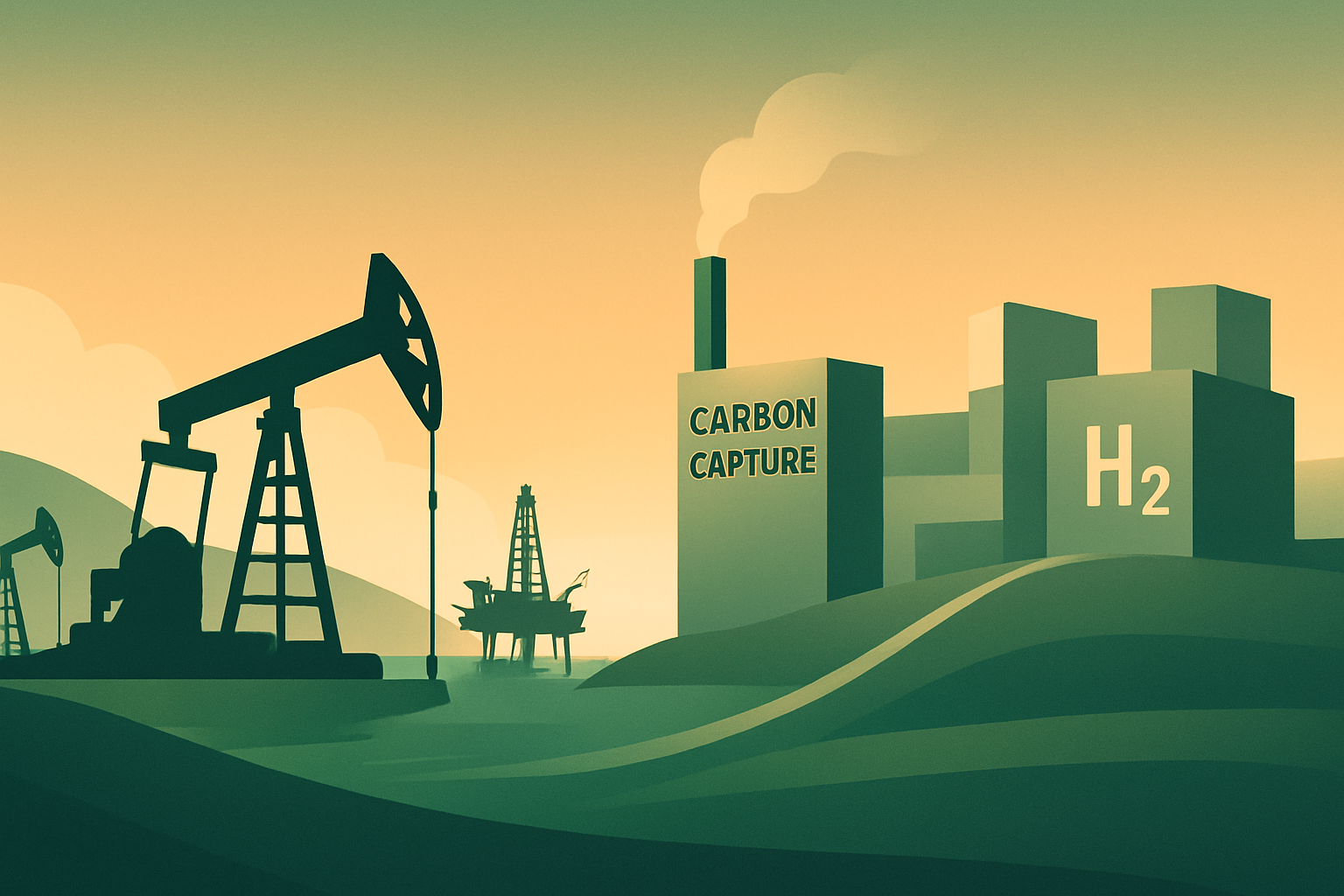
- New Energies: Established to target the energy transition, this segment focuses on industrial decarbonization, blue hydrogen (Project Labrador), and carbon capture and storage (CCS) through the Bayou Bend hub.
Stock Performance Overview
Over the past year, Chevron has been one of the standout performers in the S&P 500. As of April 2026, the stock has rallied approximately 42% over the preceding 12 months. Much of this gain was realized in the first quarter of 2026 as the "energy shock" materialized and the Hess merger benefits began to hit the bottom line.
Looking at longer horizons:
- 5-Year Performance: The stock has delivered a total return of approximately 138%, vastly outperforming the broader market during a period of high inflation and rising interest rates.
- 10-Year Performance: Chevron has provided a total return of roughly 225% (including dividends), solidifying its reputation as a reliable compounder. The stock’s resilience during the 2020 pandemic crash and its subsequent recovery have made it a favorite among institutional "value" investors.
Financial Performance
Chevron’s 2025 fiscal year was a masterclass in capital discipline. The company reported a full-year revenue of $189 billion. While net income of $12.4 billion was slightly impacted by one-time integration costs related to the Hess merger, the underlying cash flow remained exceptionally strong.
- Cash Flow from Operations (CFFO): Reached $33.9 billion in 2025, providing ample coverage for capital expenditures and shareholder returns.
- Dividends: In early 2026, Chevron announced its 39th consecutive annual dividend increase, raising the quarterly payout to $1.78 per share (yielding ~3.7%).
- Buybacks: The company returned a record $12.1 billion to shareholders through share repurchases in 2025, demonstrating management's commitment to returning excess cash.
- Valuation: Despite the stock's recent run-up, CVX trades at a P/E ratio that remains competitive with its peer group, particularly given its lower debt-to-equity ratio compared to European majors.
Leadership and Management
Chevron’s strategy is steered by Chairman and CEO Mike Wirth, who has held the helm since 2018. Wirth is widely regarded as one of the most disciplined leaders in the energy sector. His tenure is defined by "Pragmatic Discipline"—a focus on capital efficiency over volume growth.
Wirth famously walked away from a bidding war for Anadarko Petroleum in 2019, choosing a $1 billion breakup fee over overpaying—a move that was later vindicated when oil prices crashed in 2020. Currently, the leadership team is executing a restructuring plan aimed at achieving $3 billion to $4 billion in structural cost savings by the end of 2026, which includes a modernization of the global workforce and a reduction in administrative overhead.
Products, Services, and Innovations
While oil and gas remain the core, Chevron is leaning into technological innovation to maintain its competitive edge:
- Triple-Frac Technology: In the Permian Basin, Chevron has pioneered "Triple-Frac" drilling, which allows for simultaneous fracturing of three wells, significantly reducing costs and time-to-production.
- AI and Digital Twins: The company uses AI-driven "digital twins" of its refineries to optimize maintenance and energy consumption, leading to a 5-10% improvement in operational efficiency.
- Sustainable Aviation Fuel (SAF): Chevron has converted a portion of its refining capacity to produce SAF, positioning it to capture the growing demand from the aviation industry to decarbonize.
- Bayou Bend CCS: This project is one of the largest carbon capture and storage developments in the United States, designed to sequester millions of tonnes of CO2 annually for industrial clients.
Competitive Landscape
Chevron operates in a "supermajor" tier alongside ExxonMobil (NYSE: XOM), Shell (NYSE: SHEL), BP (NYSE: BP), and TotalEnergies (NYSE: TTE).
- Vs. ExxonMobil: While Exxon is larger by market cap and has a significant lead in Guyana, Chevron is often viewed as having a more "shareholder-friendly" payout policy and a cleaner balance sheet.
- Vs. European Peers: Unlike Shell and BP, which aggressively pivoted toward retail renewables before scaling back in 2025, Chevron remained steadfast in its fossil-fuel-centric strategy. This consistency has allowed Chevron to capture higher margins during the 2026 energy shock while rivals were busy re-reorganizing their portfolios.
Industry and Market Trends
The "Energy Shock of 2026" has rewritten the industry playbook. Three major trends are currently driving the sector:
- Supply Insecurity: Geopolitical tensions have reminded global economies that energy security is paramount. This has shifted the narrative from "energy transition" to "energy addition," where renewables and fossil fuels must grow together.
- AI Power Demand: An unexpected tailwind for natural gas has been the massive power requirements of AI data centers. Chevron has recently secured deals to provide natural gas-fired electricity for Texas-based data clusters, treating "electrons as a product."
- Capital Discipline: Investors no longer reward production growth; they reward free cash flow. This collective industry discipline has kept supply tight even as prices rise.
Risks and Challenges
Despite the current tailwinds, Chevron faces significant headwinds:
- Litigation Risk: Chevron is a primary target of "Climate Superfund" litigation in several U.S. states. These lawsuits seek billions in damages to pay for infrastructure upgrades related to climate change.
- Regulatory Friction: In California, the company faces extreme regulatory pressure, including new refining margins caps and environmental mandates, which have prompted Chevron to begin the long-term wind-down of its California-based refining assets.
- Commodity Volatility: The current "shock premium" could dissipate if geopolitical tensions ease or if a global recession curtails demand. Every $1/bbl move in Brent crude impacts Chevron's annual profit by approximately $400 million.
Opportunities and Catalysts
Several near-term catalysts could drive the stock further:
- Guyana Production Ramps: As the Stabroek Block targets 1.2 million boe/d by 2027, Chevron’s 30% stake will become a massive source of low-breakeven cash flow.
- Permian Efficiency: If Chevron can continue to lower its breakeven cost in the Permian (currently near $40/bbl), it can remain highly profitable even if oil prices retreat.
- Hydrogen Tax Credits: The full implementation of 45V tax credits could turn Chevron’s blue hydrogen projects from R&D initiatives into significant profit centers.
Investor Sentiment and Analyst Coverage
Wall Street remains largely bullish on Chevron. As of April 2026, approximately 70% of analysts covering the stock have a "Buy" or "Strong Buy" rating. Hedge fund interest in CVX has remained high, with several prominent value funds increasing their stakes in late 2025 as a hedge against inflation.
Retail sentiment is also strong, driven by Chevron’s "Dividend Aristocrat" status. In an era of high interest rates, a 3.7% growing yield backed by a fortress balance sheet is viewed as a "bond alternative" with equity upside.
Regulatory, Policy, and Geopolitical Factors
Geopolitics is currently the single largest driver of Chevron’s valuation. The instability in the Middle East has placed a premium on Chevron’s Western Hemisphere assets (Permian, Gulf of Mexico, Guyana, Canada).
On the policy front, the U.S. domestic environment remains polarized. While federal incentives like the Inflation Reduction Act (IRA) provide support for Chevron’s CCS and hydrogen projects, state-level regulations in the Northeast and California create an increasingly difficult operating environment for traditional oil and gas. Chevron’s move to Houston is seen as a strategic "vote with its feet" against restrictive state policies.
Conclusion
Chevron Corporation stands today at the intersection of traditional energy dominance and a pragmatic future. The return of the "energy shock premium" in 2026 has validated the company’s disciplined, oil-heavy strategy, rewarding shareholders with record payouts and stock price appreciation.
While the legal and regulatory risks associated with the energy transition remain formidable, Chevron’s high-quality asset base—specifically in the Permian and Guyana—provides a safety margin that few of its peers can match. For investors, Chevron is no longer just an oil company; it is a vital hedge against a volatile world, offering a rare combination of yield, safety, and participation in the indispensable global energy market.
This content is intended for informational purposes only and is not financial advice.