
Tag: Honda

  • The Great Reset: Honda’s (HMC) Strategic Pivot and the ¥2.5 Trillion Reality Check

    The Great Reset: Honda’s (HMC) Strategic Pivot and the ¥2.5 Trillion Reality Check

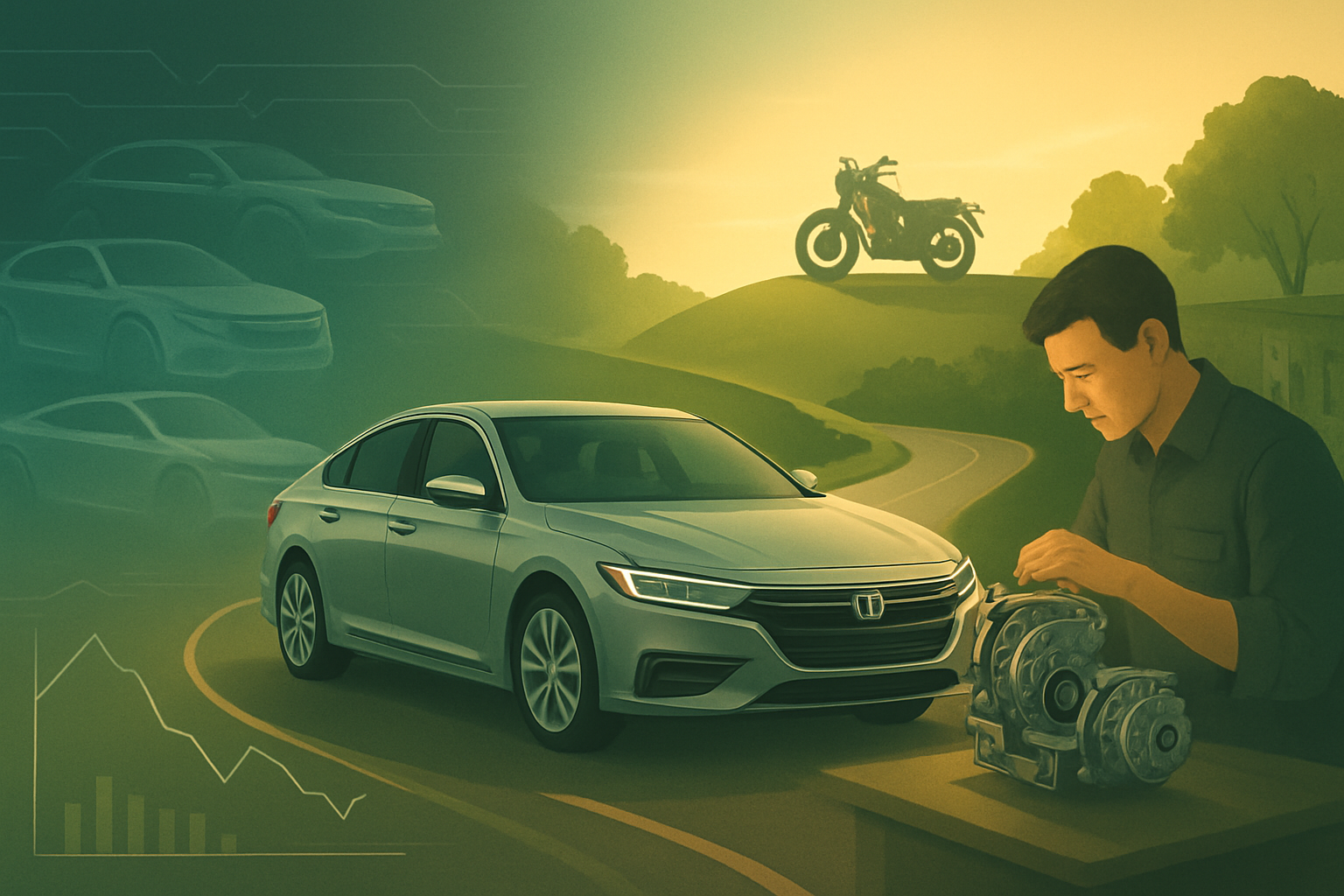
    As of today, March 19, 2026, Honda Motor Co., Ltd. (NYSE: HMC) finds itself at the center of a profound strategic realignment. Once a pioneer of fuel-efficient internal combustion engines and a vocal proponent of an all-electric future, the Japanese industrial giant has spent the first quarter of 2026 executing what analysts are calling the "Great Reset." After a decade of chasing the "EV dream," Honda has pivoted back toward its roots in high-efficiency hybrids and motorcycle dominance, a move signaled by a massive ¥2.5 trillion ($15.7 billion) impairment charge announced just last week.

    For investors, Honda represents a complex case study in corporate pragmatism versus visionary risk. While its automotive division grapples with the high costs of transitioning technologies, its motorcycle and power products divisions remain global cash cows. This article explores whether Honda’s strategic retreat is a sign of weakness or a calculated maneuver to survive a volatile decade for the global mobility industry.

    Historical Background

    The story of Honda is one of engineering obsession and technical defiance. Founded in 1948 by Soichiro Honda—a man who preferred grease-stained overalls to executive suits—the company began by motorized bicycles in a war-torn Japan. By the 1960s, Honda had become the world’s largest motorcycle manufacturer, a title it still holds today.

    The company’s leap into the automotive world was equally audacious. In the 1970s, while Detroit struggled with the U.S. Clean Air Act, Honda developed the CVCC (Compound Vortex Controlled Combustion) engine. This innovation allowed the Honda Civic to meet strict emission standards without a catalytic converter, cementing the brand’s reputation for efficiency and reliability. Over the decades, Honda expanded into luxury with the Acura brand, power equipment, and even aviation with the HondaJet, always maintaining a culture of "The Power of Dreams" and independent engineering.

    Business Model

    Honda operates a diversified industrial ecosystem. Its revenue is derived from four primary segments:

    1. Motorcycles: The undisputed crown jewel. Honda holds nearly 40% of the global motorcycle market share. This segment is characterized by high margins (18%+ EBITDA) and massive volume, particularly in Southeast Asia and India.
    2. Automobiles: The largest revenue contributor, though currently facing margin pressure. Honda focuses on the "mass-premium" segment with global pillars like the Civic, Accord, and CR-V.
    3. Power Products: This includes everything from generators and outboard marine engines to the newly launched ProZision commercial electric lawn mowers.
    4. Financial Services: Honda provides financing to dealers and customers, acting as a critical support pillar for vehicle sales.
    5. HondaJet: A niche but prestigious segment representing the company’s technological pinnacle in light business aviation.

    Stock Performance Overview

    The performance of HMC stock reflects a company in a state of prolonged transition. As of March 19, 2026, the stock is trading at approximately $25.51.

    • 1-Year Performance: Down 16.06%. The stock has been punished by the market following the March 2026 announcement of massive write-downs and the cancellation of North American EV programs.
    • 5-Year Performance: Down 11.87%. Honda has largely traded sideways to down, failing to capture the "EV premium" that benefited companies like Tesla or the "Value Rally" that boosted Toyota.
    • 10-Year Performance: Down 1.93%. For long-term ADR holders, Honda has significantly underperformed the S&P 500, essentially acting as a dividend-paying value play rather than a growth vehicle.

    Financial Performance

    Honda’s financial narrative in 2026 is dominated by the "Big Write-Down." For FY 2025/2026, the company reported consolidated sales of ¥21.7 trillion ($136 billion), a record high driven by motorcycle sales and favorable currency tailwinds. However, the bottom line tells a different story.

    Honda issued a shock profit warning in early March 2026, projecting a net loss of between ¥270 billion and ¥570 billion ($1.7B – $3.6B). This is primarily due to ¥2.5 trillion in expenses related to the cancellation of the "0 Series" EV development in North America and a retreat from non-competitive joint ventures in China.

    Despite these losses, the company maintains a resilient free cash flow of ¥760 billion (pre-write-down), and its motorcycle division continues to deliver record operating profits. The debt-to-equity ratio remains high at 103.6%, reflecting the heavy capital requirements of the last three years of R&D.

    Leadership and Management

    CEO Toshihiro Mibe, who took the helm in 2021, is currently the most scrutinized man in the Japanese auto industry. Mibe initially gained fame for committing Honda to be 100% electric by 2040. However, his "Great Reset" of March 2026 shows a leader willing to admit miscalculations.

    The management team is now pivoting toward "Pragmatic Realism." The new strategy focuses on India and Southeast Asia as the primary growth engines, while downsizing the ambitious EV targets for North America in favor of a hybrid-first lineup. This governance shift has been met with a mix of relief from value investors and disappointment from ESG-focused funds.

    Products, Services, and Innovations

    While Honda has scaled back its North American EV ambitions, it remains an innovation powerhouse.

    • Hybrid Power: Honda’s dual-motor hybrid system is now standard across most of its North American lineup. Management aims for 2.2 million hybrid sales annually by 2030.
    • AFEELA (Sony Honda Mobility): The high-tech sedan remains in pre-production. While it showcases Honda's manufacturing and Sony’s software/entertainment prowess, it is increasingly viewed as a "halo" project rather than a volume driver.
    • Solid-State Batteries: Honda continues to invest heavily in its pilot line for all-solid-state batteries, viewing this as the "true" technological bridge that will make EVs viable in the late 2020s.
    • Two-Wheeler Electrification: Honda is currently building the world’s largest electric two-wheeler plant in India, aiming to dominate the transition of the "bottom of the pyramid" to clean energy.

    Competitive Landscape

    Honda is currently fighting a multi-front war:

    • The Hybrid Rivalry: Toyota remains the gold standard. While Honda’s hybrids are technically advanced, Toyota’s massive scale allows for better pricing power.
    • The China Threat: BYD and other Chinese manufacturers have eroded Honda’s market share in China, once a major profit center. This loss of competitiveness in China was a primary driver for the 2026 write-downs.
    • The Software Gap: Tesla and Chinese rivals are currently leading in software-defined vehicles (SDVs). Honda’s partnership with Sony is a direct attempt to close this gap.

    Industry and Market Trends

    The global automotive market in 2026 is characterized by "EV Fatigue" in the West and "Hyper-Competition" in the East. High interest rates and the expiration of early-adopter subsidies have cooled demand for pure battery-electric vehicles (BEVs) in the U.S. and Europe. Conversely, hybrid demand has skyrocketed as consumers seek reliability and fuel economy without "range anxiety." Honda’s shift back to hybrids aligns with this macro trend, though it risks falling behind if the BEV market suddenly accelerates again.

    Risks and Challenges

    • Technological Lag: By canceling the 0 Series, Honda risks being viewed as a "laggard" in the race for next-generation platforms.
    • Currency Volatility: As a major exporter, Honda is highly sensitive to the value of the Yen. Any significant strengthening of the Yen could further erode its thin automotive margins.
    • Geopolitical Squeeze: Honda’s heavy reliance on the U.S. market leaves it vulnerable to shifts in trade policy, particularly regarding the Inflation Reduction Act (IRA) and potential new tariffs on hybrid components.

    Opportunities and Catalysts

    • The India Gambit: India is poised to be Honda’s next great frontier. With a growing middle class and a clear path toward two-wheeler electrification, Honda’s established presence there is a massive competitive advantage.
    • Balance Sheet Cleansing: The 2026 write-downs, while painful, allow Honda to enter 2027 with a cleaner balance sheet and lower fixed costs.
    • Hydrogen Potential: Honda remains a leader in fuel cell technology, recently launching its CR-V e:FCEV. If the heavy-duty and commercial sectors shift toward hydrogen, Honda is perfectly positioned.

    Investor Sentiment and Analyst Coverage

    Investor sentiment is currently "cautiously skeptical." Following the mid-March strategic pivot, several major firms, including Morgan Stanley and CLSA, downgraded HMC to "Equalweight" or "Hold."

    The consensus among analysts is that while Honda is making the "right" long-term decision by cutting its losses in the EV space, the short-term pain of the ¥2.5 trillion write-down makes the stock a "wait-and-see" play. Retail chatter on platforms like X and Reddit shows a growing appreciation for Honda's reliability but a frustration with its stagnant stock price.

    Regulatory, Policy, and Geopolitical Factors

    Honda’s pivot was largely forced by the "unpredictable" regulatory environment in the United States. Changes to IRA eligibility and the cooling of ZEV (Zero Emission Vehicle) mandates in certain states made the massive investment in North American EV plants look increasingly risky.

    Furthermore, the escalating trade tensions between the West and China have forced Honda to "de-risk" its supply chain, a costly process that involves moving battery production away from Chinese-linked suppliers and toward domestic Japanese or U.S.-based partners.

    Conclusion

    Honda Motor Co., Ltd. (NYSE: HMC) enters the mid-point of 2026 as a company that has chosen reality over rhetoric. By taking a massive financial hit now to cancel underperforming EV projects, CEO Toshihiro Mibe is betting that the future belongs to those who dominate the hybrid and motorcycle markets today.

    For the value investor, Honda is an intriguing prospect: a global leader in engine technology and motorcycles, trading at a depressed valuation with a "cleansed" balance sheet. For the growth investor, however, the lack of a clear, high-volume EV path remains a major deterrent. Investors should watch for the performance of the motorcycle division in India and the initial reception of the AFEELA sedan in late 2026 as the next key indicators of Honda’s trajectory.


    This content is intended for informational purposes only and is not financial advice.

  • The Hybrid Pivot: Analyzing Honda’s Strategic Retreat and the India Gambit

    The Hybrid Pivot: Analyzing Honda’s Strategic Retreat and the India Gambit

    On March 12, 2026, Honda Motor Co., Ltd. (NYSE: HMC; TYO: 7267) sent shockwaves through the automotive industry by announcing the immediate cancellation of three major North American electric vehicle (EV) models originally slated for 2027 and 2028 production. This decision was accompanied by a significant revision of the company’s consolidated financial forecasts, marking one of the most aggressive strategic pivots in the company’s 78-year history.

    Once considered a latecomer to the battery-electric race that was desperately trying to catch up, Honda has now officially signaled a "Pragmatic Realignment." By slashing its North American EV pipeline and reallocating billions in capital toward its high-margin hybrid lineup and the burgeoning Indian market, Honda is betting that the "EV-only" future is arriving much later than regulators and competitors anticipated. This article provides a deep-dive analysis of Honda’s new trajectory, the financial implications of its March 12 decision, and what this means for investors in the "New Mobility" era.

    Historical Background

    Honda’s identity has always been rooted in engineering independence. Founded in 1948 by Soichiro Honda and Takeo Fujisawa, the company began as a manufacturer of auxiliary engines for bicycles. By the 1960s, it had become the world’s largest motorcycle manufacturer, a title it holds to this day.

    The company’s entry into the automotive world was defined by the CVCC (Compound Vortex Controlled Combustion) engine in the 1970s, which allowed the Honda Civic to meet stringent U.S. Clean Air Act standards without a catalytic converter. This "engineering first" culture led to the creation of iconic nameplates like the Accord and the launch of Acura—the first Japanese luxury brand—in 1986. Historically, Honda has avoided the massive cross-shareholding structures (keiretsu) common in Japan, preferring to maintain its autonomy, a trait that has both fueled its innovation and, at times, isolated it from the massive scale advantages of rivals like Toyota.

    Business Model

    Honda operates a diversified mobility business model built on four primary pillars:

    1. Automobiles (approx. 63% of revenue): Known for the Civic, CR-V, and Accord, this segment is currently undergoing a massive shift from internal combustion engines (ICE) to the e:HEV hybrid system.
    2. Motorcycles (approx. 19% of revenue): This is Honda’s "cash engine." With dominant market shares in Southeast Asia, India, and Brazil, the motorcycle segment typically accounts for over 50% of the group’s operating profit, providing the liquidity needed to fund automotive R&D.
    3. Power Products (Life Creation): This includes portable generators, outboard marine engines, and lawn equipment. Honda is currently electrifying this segment to align with global sustainability trends.
    4. Aero and Other: Centered on the HondaJet and GE Honda Aero Engines. While a small portion of revenue, it serves as a high-tech incubator for aerodynamics and materials science.

    Stock Performance Overview

    As of mid-March 2026, HMC stock has shown resilience despite the volatility of the broader auto sector.

    • 1-Year Performance: HMC has outperformed the S&P 500 Auto Index, gaining 12% as investors cheered the company’s focus on high-margin hybrids during the global "EV winter" of 2025.
    • 5-Year Performance: The stock has seen a 45% appreciation, largely driven by the record-breaking profitability of its motorcycle division and a disciplined buyback program.
    • 10-Year Performance: On a decade-long horizon, Honda has lagged behind tech-centric rivals like Tesla but has remained a staple for value investors, offering a consistent dividend yield ranging between 3% and 4.5%.

    The March 12 announcement led to a 4.2% jump in the stock price in Tokyo, as the market reacted positively to the "rationalization" of the EV strategy, which many feared would burn excessive cash.

    Financial Performance

    In the revised forecast issued on March 12, 2026, Honda adjusted its FY2026 outlook:

    • Operating Profit: Revised upward by 8% to ¥1.25 trillion. While the cancellation of EV models led to a one-time impairment charge of ¥110 billion, the reduction in planned CAPEX for 2026-2027 more than offset the loss.
    • Revenue: Expected to remain flat at ¥21.5 trillion, as lower EV volumes are replaced by higher-margin hybrid sales.
    • Margins: Automotive operating margins, which had dipped to 4.1% during the peak of EV R&D spending in 2024, are now projected to recover to 5.8% by year-end 2026.
    • Cash Flow: Free cash flow remains robust, supported by the motorcycle division, which continues to see 15%+ margins in emerging markets.

    Leadership and Management

    CEO Toshihiro Mibe, who took the helm in 2021, has transitioned from being an "EV Crusader" to a "Strategic Realist." Mibe, an engineer by training who previously led Honda R&D, initially pushed for a 100% EV/FCV (Fuel Cell Vehicle) lineup by 2040.

    However, his recent shift emphasizes "The Bridge Strategy." Mibe’s leadership is now characterized by capital discipline. The March 12 decision is seen as his signature move—acknowledging that while the destination remains electric, the path must be profitable. CFO Shinji Aoyama has also been instrumental in redirecting investment toward India, identifying it as the "next North America" for Honda’s scale.

    Products, Services, and Innovations

    The centerpiece of Honda’s current innovation is the e:HEV hybrid system. Unlike traditional hybrids, the e:HEV uses the electric motor to drive the vehicle most of the time, with the engine acting as a generator.

    • The "0 Series": While three models were cancelled, Honda is still proceeding with its flagship "0 Series" EV for 2026, which features a low-profile design and "thin" battery technology.
    • Solid-State Batteries: Honda continues to operate a pilot production line for all-solid-state batteries, aiming for mid-to-late 2020s implementation.
    • Hydrogen (FCEV): Honda remains one of the few global players (alongside Toyota and Hyundai) committed to hydrogen, recently launching the CR-V e:FCEV in select markets.

    Competitive Landscape

    Honda finds itself in a "pincer movement" between legacy giants and new entrants:

    • Toyota (TM): The primary rival. Toyota’s early and aggressive bet on hybrids has paid off, and Honda is now effectively following the Toyota playbook to protect its margins.
    • Tesla (TSLA): Tesla remains the cost leader in EVs. Honda’s decision to cancel models is an admission that it cannot currently match Tesla’s "Unboxed" manufacturing costs in the North American EV segment.
    • Chinese OEMs (BYD, Xiaomi): In the ASEAN and Indian markets, Chinese manufacturers are Honda’s biggest threat. To counter this, Honda is leveraging its 6,000+ motorcycle touchpoints in India to build an EV charging and service ecosystem.

    Industry and Market Trends

    The "Great EV Slowdown" of 2025-2026 has redefined the industry. Consumer anxiety over charging infrastructure and high interest rates have cooled demand for $50,000+ EVs.

    • The Hybrid Resurgence: Hybrids are no longer seen as "transitional" but as a long-term consumer preference.
    • The Rise of India: India has surpassed Japan as the world's third-largest auto market. Honda’s pivot recognizes that the next 100 million middle-class consumers will come from Delhi and Mumbai, not Detroit or Munich.

    Risks and Challenges

    • Regulatory Backlash: In the U.S. and EU, strict emissions targets remain. If Honda’s hybrid pivot isn't "green" enough, it faces billions in potential fines.
    • Software Lag: Honda continues to struggle with "Software-Defined Vehicle" (SDV) capabilities compared to Tesla and Chinese rivals.
    • The "China Exit": Honda’s sales in China have cratered (down 25% year-on-year in 2025). The company must manage a painful downsizing of its Chinese joint ventures.

    Opportunities and Catalysts

    • India’s "Activa" Moment for Cars: Honda’s brand equity in India (via the Activa scooter) is unparalleled. If it can translate this to its upcoming "Elevate" SUV series and small EVs, it could dominate the market.
    • Sony-Honda Mobility (Afeela): The joint venture with Sony provides a high-margin, tech-forward "halo" brand that could redefine Honda’s digital interior experience.
    • Aero Profitability: The HondaJet Echelon, set for 2028 certification, could turn the Aero segment into a meaningful profit contributor.

    Investor Sentiment and Analyst Coverage

    Wall Street sentiment has shifted from "Neutral" to "Overweight" following the March 12 announcement.

    • Goldman Sachs: Noted that Honda’s "return to capital discipline is a major de-risking event."
    • Morgan Stanley: Highlighted the India strategy as a "hidden gem" in Honda’s valuation.
    • Retail Sentiment: On platforms like Reddit and X, Honda is praised for its "reliability" and for "not forcing EVs," which resonates with a large segment of the North American car-buying public.

    Regulatory, Policy, and Geopolitical Factors

    • U.S. Inflation Reduction Act (IRA): Honda’s pivot to hybrids complicates its eligibility for some U.S. tax credits, which favor full EVs.
    • India’s PLI Scheme: Honda is a major beneficiary of India’s Production-Linked Incentive (PLI) scheme for advanced chemistry cells and automotive manufacturing.
    • Trade Tensions: As a Japanese company with a massive U.S. footprint, Honda is sensitive to any changes in the USMCA (United States-Mexico-Canada Agreement) rules regarding parts sourcing.

    Conclusion

    Honda’s decision on March 12, 2026, represents a "Great Recalibration." By sacrificing the optics of being an "EV leader" in the short term, the company is fortifying its balance sheet for the long haul.

    For investors, Honda offers a unique profile: the stability and cash flow of a dominant global motorcycle business, combined with a high-margin hybrid automotive strategy and a high-growth "call option" on the Indian market. While the risks of lagging in software and pure-EV technology remain, Honda’s management has proven they are willing to make the hard choices necessary to preserve shareholder value. In the volatile race to 2030, Honda has chosen the path of the marathon runner over the sprinter—a move that may ultimately prove to be the most "electrifying" decision of all.


    This content is intended for informational purposes only and is not financial advice.

    Finterra Editorial Team
    © 2026 Finterra Financial Media Group. All rights reserved.

  • Honda’s Great Reset: $15 Billion Pivot and the End of the EV Euphoria

    Honda’s Great Reset: $15 Billion Pivot and the End of the EV Euphoria

    By Financial Research Desk
    Date: March 12, 2026

    Introduction

    As of March 12, 2026, the automotive world is witnessing a seismic shift in strategy from one of its most storied institutions. Honda Motor Co., Ltd. (NYSE: HMC) has long been synonymous with engineering excellence and fuel-efficient reliability. However, today the company stands at a crossroads, making headlines for a dramatic strategic pivot that has sent shockwaves through the markets. By canceling three flagship electric vehicle (EV) models and forecasting massive losses for the 2026 fiscal year, Honda is effectively signaling the end of its "all-in" EV euphoria. This deep-dive research article explores how a company once at the forefront of the hybrid revolution is now navigating a treacherous "EV winter" and what this means for investors and the future of mobility.

    Historical Background

    Founded in 1948 by the visionary engineer Soichiro Honda and the astute businessman Takeo Fujisawa, Honda’s journey began with auxiliary engines for bicycles. By 1959, it had become the world's largest motorcycle manufacturer, a title it still holds today. The company’s automotive breakthrough came in 1972 with the Civic, which introduced the CVCC engine—the first to meet stringent U.S. Clean Air Act standards without a catalytic converter.

    Honda’s history is defined by a "challenger spirit." It was the first Japanese automaker to manufacture cars in the United States (1982) and the first to launch a dedicated luxury brand, Acura (1986). In 1999, it beat its rivals to the North American market with the Insight, the first hybrid vehicle sold on the continent. This legacy of independent, engine-focused engineering has been both Honda’s greatest strength and, more recently, a source of friction as the industry shifted toward software-defined electric platforms.

    Business Model

    Honda operates a diversified mobility business divided into four primary segments:

    1. Automobiles (approx. 65% of revenue): The core segment, driven by global best-sellers like the Civic, Accord, and CR-V.
    2. Motorcycles (approx. 17% of revenue): Honda’s "crown jewel" in terms of profitability. With a global market share nearing 40%, this segment provides the cash flow necessary to fund R&D in other areas.
    3. Financial Services (approx. 15% of revenue): A steady source of income through retail lending, leasing, and insurance.
    4. Power Products and Others (approx. 3% of revenue): Including lawnmowers, marine engines, generators, and the HondaJet aviation business.

    The "Honda Way" has traditionally focused on internal combustion engine (ICE) efficiency and high-quality manufacturing, often preferring in-house development over large-scale mergers or acquisitions.

    Stock Performance Overview

    As of today, March 12, 2026, the performance of Honda (HMC) reflects a period of significant volatility and structural repricing.

    • 1-Year Performance: Down approximately 6.2%. The stock has struggled to regain its 2024 highs of nearly $35, currently trading near $27.54.
    • 5-Year Performance: The NYSE ADR has seen a decline of roughly 7.4%. While the Tokyo-listed shares (TYO: 7267) have fared better due to a weakening Yen, the dollar-denominated return for U.S. investors has been stagnant.
    • 10-Year Performance: Down nearly 18%. Over the last decade, Honda has significantly underperformed the S&P 500, as investors favored high-growth tech and pure-play EV stocks over traditional Japanese "value" industrials.

    The recent announcement of model cancellations has led to a sharp intraday dip, as the market digests the scale of the impending write-downs.

    Financial Performance

    Honda’s financial outlook for FY2026 has been drastically revised. The company now expects to record ¥2.5 trillion ($15.7 billion) in total expenses and write-downs related to its strategic "re-pivoting."

    • Earnings Revision: Previously forecasting a ¥300 billion profit, Honda now anticipates a net loss of between ¥270 billion and ¥570 billion for the fiscal year ending March 31, 2026.
    • Debt-to-Equity: Currently stands at approximately 103.6%, reflecting the capital-intensive nature of its transition.
    • Valuation: Despite the losses, Honda trades at a low Price-to-Sales (P/S) ratio of roughly 0.28x, indicating that the market is valuing its massive revenue stream with extreme caution.
    • Cash Flow: Free cash flow remains a bright spot at approximately ¥760 billion (pre-write-down), largely supported by the high margins of the motorcycle division.

    Leadership and Management

    Under the leadership of CEO Toshihiro Mibe, Honda initially committed to an aggressive 100% electrification goal by 2040. However, the "reality check" of 2026 has seen a more pragmatic approach take hold.

    • Toshihiro Mibe (CEO): An engineer by trade, Mibe is now tasked with managing the retreat without losing the company's innovative soul.
    • Noriya Kaihara (EVP & Chief Transformation Officer): Kaihara has become the public face of the strategic shift, emphasizing "profitability over pure volume" in the EV space.
    • Eiji Fujimura (CFO): Responsible for the "kitchen sink" approach to the FY2026 financials, ensuring that all losses are accounted for now to provide a cleaner slate for 2027.

    The board’s reputation for conservative governance is being tested as it navigates these massive write-offs.

    Products, Services, and Innovations

    The news of the day is the cancellation of three specific EV models that were intended to lead Honda’s charge in North America:

    1. Honda 0 Series Saloon: A futuristic, low-profile flagship sedan.
    2. Honda 0 Series SUV: A high-tech utility vehicle meant for the premium market.
    3. Acura RSX EV: A performance crossover intended to revive a beloved enthusiast nameplate.

    Despite these cancellations, Honda is not exiting innovation. The company is doubling down on next-generation hybrids and hydrogen fuel cell (FCEV) technology. Its collaboration with General Motors (NYSE: GM) on hydrogen fuel cells remains active, and the "Honda 0" philosophy—Thin, Light, and Wise—is being redirected toward more affordable hybrid applications.

    Competitive Landscape

    Honda faces a pincer movement in the global market:

    • The Hybrid King: Toyota Motor Corp (NYSE: TM) remains the dominant player, having correctly predicted the longevity of hybrids, thus avoiding the massive EV write-downs Honda is currently enduring.
    • The EV Titans: Tesla (NASDAQ: TSLA) and BYD (HKG: 1211) have achieved scale and software integration that Honda admits it has struggled to match. In China, Honda’s market share has eroded as local consumers favor the digital-first experience of BYD.
    • The Domestic Rivals: Nissan and Subaru are also navigating similar pivots, but Honda’s motorcycle division gives it a diversified revenue "moat" that its automotive-only rivals lack.

    Industry and Market Trends

    The "EV Winter" of 2025–2026 has been characterized by three main trends:

    1. Demand Fatigue: High interest rates and a lack of charging infrastructure have cooled consumer appetite for BEVs.
    2. The Hybrid Resurgence: Consumers are flocking back to hybrids as a "bridge" technology, a trend Honda aims to capitalize on by aiming for 2.2 million hybrid sales by 2030.
    3. Software-Defined Everything: The vehicle is no longer just an engine; it is a computer. Honda is racing to overhaul its digital architecture to compete with "smart" vehicles from China and Silicon Valley.

    Risks and Challenges

    • Operational Risk: The ¥2.5 trillion write-down is a massive hit to the balance sheet that could limit future R&D spending.
    • Regulatory Risk: If global emission standards (like Euro 7) tighten faster than Honda’s hybrid tech can accommodate, the company faces heavy fines.
    • Competitiveness in China: Honda’s inability to keep pace with Chinese tech integrated into vehicles could lead to a permanent loss of market share in the world’s largest auto market.
    • Tariff Exposure: Increasing trade friction between the U.S. and Japan poses a risk to Honda’s export-heavy model.

    Opportunities and Catalysts

    • Motorcycle Dominance: The 2-wheeler segment remains a "money printer" for Honda, especially in emerging markets like India and Southeast Asia.
    • Hybrid Expansion: A rapid pivot to hybrids could capture the current wave of consumer demand that Tesla cannot address.
    • Hydrogen Potential: If heavy-duty transport shifts toward hydrogen, Honda’s long-standing FCEV research could yield significant licensing or product revenue.
    • M&A or Partnerships: The current crisis may force Honda to form deeper alliances with other Japanese automakers to share development costs.

    Investor Sentiment and Analyst Coverage

    Analyst sentiment is currently "Hold" across most major desks. Following the March 12 announcement:

    • Ratings: Out of 8 major analysts, 6 maintain a "Hold," citing the uncertainty of the FY2026 turnaround.
    • Price Targets: The average target has drifted toward $25.00, reflecting concerns over near-term losses.
    • Institutional Sentiment: Large funds are watching the motorcycle division's resilience. If the motorcycle profits remain high, institutional "value seekers" may begin to accumulate HMC as a turnaround play later in 2026.

    Regulatory, Policy, and Geopolitical Factors

    The external environment has been a major driver of Honda’s retreat:

    • U.S. Policy Shift: The One Big Beautiful Bill Act (OBBBA) of 2025 effectively ended federal EV tax credits, replacing them with interest deductions for U.S.-made cars. This destroyed the business case for Honda’s planned EV imports.
    • Trade Barriers: A 10% global surcharge (Section 122) and a 15% reciprocal tariff between the U.S. and Japan have squeezed margins on imported parts and vehicles.
    • Euro 7 Standards: Beginning in November 2026, these new European rules will require strict compliance on non-exhaust emissions (brakes/tires), adding cost to every vehicle Honda sells in the EU.

    Conclusion

    Honda Motor Co.’s announcement on March 12, 2026, marks the end of an era of EV idealism and the beginning of a period of hard-nosed realism. The cancellation of flagship EV models and the projection of massive losses for FY2026 are painful, but they may represent a necessary "cleansing" of the balance sheet. By focusing on its high-margin motorcycle business and its proven hybrid technology, Honda is attempting to weather the "EV Winter" better than those who are purely reliant on battery power.

    For investors, HMC is currently a "wait-and-see" value proposition. The key to its recovery lies in whether it can successfully transition its legendary engineering prowess into the software and hybrid-first reality of the late 2020s. The road ahead is steep, but if history is any guide, Honda’s "challenger spirit" is most visible when its back is against the wall.


    This content is intended for informational purposes only and is not financial advice.