Tag: HVAC

  • The Cold Standard: How AAON is Powering the AI and Electrification Revolution (2026 Analysis)

    The Cold Standard: How AAON is Powering the AI and Electrification Revolution (2026 Analysis)

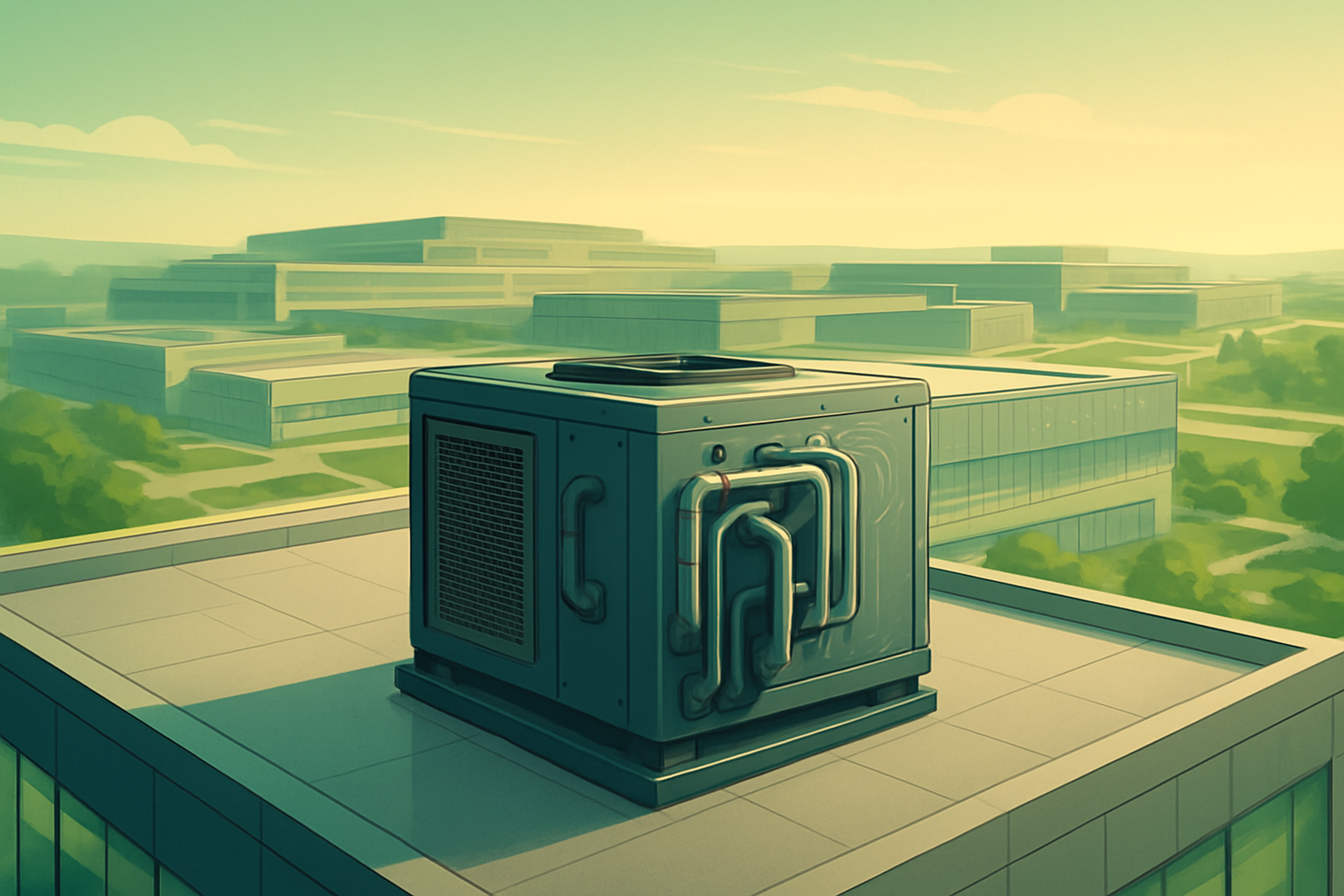
    As of March 2, 2026, the industrial landscape is being reshaped by two massive tailwinds: the unprecedented demand for AI-capable data centers and the global push toward building electrification. At the intersection of these trends stands AAON, Inc. (Nasdaq: AAON), a premium manufacturer of semi-custom heating, ventilation, and air conditioning (HVAC) equipment. While the broader industrial sector has faced headwinds from fluctuating interest rates and cooling construction starts, AAON has emerged as a high-growth outlier, distinguished by its technical specialization and a record-breaking multi-billion-dollar backlog. This feature explores how a company once known for niche commercial rooftop units has transformed into a critical infrastructure provider for the digital age.

    Historical Background

    AAON’s story began in 1988 when Norman Asbjornson, a visionary engineer, acquired the air conditioning division of the John Zink Company in Tulsa, Oklahoma. From the outset, Asbjornson’s philosophy was to bridge the gap between mass-produced, "cookie-cutter" units and expensive, fully custom engineering. By focusing on semi-customization, AAON allowed customers to select high-end features—such as double-wall construction and high-efficiency coils—without the lead times of a bespoke build.

    Over the decades, the company expanded its footprint, moving into a massive headquarters in Tulsa and later acquiring facilities in Longview, Texas. A pivotal moment occurred in late 2021 with the acquisition of BASX Solutions, a move that gave AAON a dominant foothold in high-density cooling for data centers and cleanrooms. Today, AAON is no longer just a regional player but a global benchmark for HVAC durability and efficiency.

    Business Model

    AAON operates a vertically integrated manufacturing model that is unique in the HVAC industry. Unlike many competitors who assemble components sourced from third parties, AAON designs and manufactures its own coils, cabinets, and control systems. This integration allows for tighter quality control and faster innovation cycles.

    The company’s revenue is primarily derived from the sale of:

    • Rooftop Units: Highly configurable systems for schools, retail, and hospitals.
    • Data Center Solutions: Modular "packaged mechanical rooms" and liquid cooling systems under the BASX brand.
    • Air Handling Units: Custom-engineered systems for laboratories and pharmaceutical facilities.
    • Condensing Units and Chillers: Focused on high-efficiency performance.

    AAON serves the "Owner-Direct" market, targeting institutional clients who prioritize the Total Cost of Ownership (TCO). By building units that last 25–30 years (compared to the industry average of 15–20), AAON commands a premium price point.

    Stock Performance Overview

    As of early March 2026, AAON’s stock has been a standout performer for long-term investors:

    • 1-Year Performance: The stock has risen approximately 32% over the last 12 months, significantly outperforming the S&P 500. This rally was fueled by the rapid monetization of its data center backlog.
    • 5-Year Performance: AAON has delivered a Compound Annual Growth Rate (CAGR) of roughly 12.8%. While it faced a volatile 2025 due to margin compression, the long-term trend remains firmly upward.
    • 10-Year Performance: AAON has been a "multibagger," with a 10-year total return CAGR of approximately 16%. It has consistently beaten "The Big Three" rivals in total shareholder return over the decade.

    Financial Performance

    Financial results for the fiscal year ending December 2025 highlighted a company in a massive scaling phase.

    • Net Sales: Hit a record $1.44 billion in 2025, up 20.1% year-over-year.
    • Backlog: The company enters 2026 with a staggering $1.83 billion backlog, a 110.9% increase from the previous year, driven largely by data center demand.
    • Margins and EPS: GAAP diluted EPS for 2025 was $1.29, a decline from 2024’s $2.02. This dip was attributed to "growing pains"—specifically a $100 million investment in a new ERP system and temporary inefficiencies as the 787,000 sq. ft. Memphis facility ramped up production.
    • Valuation: Trading at a forward P/E of approximately 80x, AAON is priced for perfection, reflecting high expectations for its data center vertical.

    Leadership and Management

    The current narrative at AAON is one of a successful leadership baton-pass. In May 2025, long-time CEO Gary Fields stepped down, transitioning into a role as Special Advisor to the Board. Fields is credited with modernizing the company’s sales force and spearheading the BASX acquisition.

    He was succeeded by Dr. Matt Tobolski, the co-founder of BASX. Tobolski’s appointment signals AAON’s commitment to technical leadership in the data center space. His background in structural engineering and high-performance cooling has been well-received by institutional investors, who view him as the right leader to navigate the complex engineering requirements of AI infrastructure.

    Products, Services, and Innovations

    Innovation is AAON’s primary defensive moat. Key recent developments include:

    • Liquid Cooling (BASX): With AI chips generating immense heat, traditional air cooling is reaching its limits. AAON’s BASX brand is a leader in direct-to-chip and immersion cooling technologies.
    • Alpha Class Heat Pumps: These "cold climate" heat pumps are revolutionary, maintaining 100% heating capacity at temperatures as low as 5°F. This makes them a viable solution for decarbonizing buildings in northern climates where traditional heat pumps fail.
    • A2L Refrigerant Transition: AAON was one of the first in the industry to complete the transition to low-Global Warming Potential (GWP) refrigerants like R-454B, ensuring compliance with EPA mandates ahead of schedule.

    Competitive Landscape

    AAON competes in a market dominated by massive conglomerates, yet it maintains a distinct advantage:

    • The Big Three: Trane Technologies (NYSE: TT), Carrier Global (NYSE: CARR), and Johnson Controls (NYSE: JCI) dominate the high-volume, residential, and light commercial markets.
    • Lennox International (NYSE: LII): A strong competitor in the retail and commercial space.

    AAON’s edge lies in flexibility. While Trane or Carrier may require a 500-unit order for a custom configuration, AAON will build a single, semi-custom unit with the same level of precision. In the data center market, AAON/BASX is increasingly viewed as a superior alternative to the standard offerings from larger peers due to their modular, "plug-and-play" mechanical rooms.

    Industry and Market Trends

    The "Electrification of Everything" is a primary macro driver. As municipalities ban natural gas hookups in new construction, the demand for AAON’s high-efficiency heat pumps has skyrocketed. Furthermore, the AI boom has created a "land grab" for data center space. Because cooling accounts for nearly 40% of a data center’s energy consumption, AAON’s energy-efficient systems are no longer a luxury—they are a financial necessity for operators like Amazon, Google, and Microsoft.

    Risks and Challenges

    Despite the growth, AAON faces significant hurdles:

    • Valuation Risk: At 80x earnings, any delay in backlog conversion or a miss in quarterly guidance can lead to sharp sell-offs.
    • Operational Execution: Integrating a new ERP system and scaling a massive new facility in Memphis simultaneously is a complex task that pressured margins in late 2025.
    • Cyclicality: While data centers are booming, the broader non-residential construction market is sensitive to interest rates and economic slowdowns.

    Opportunities and Catalysts

    • Margin Recovery: As the Memphis facility reaches full capacity in 2026 and the ERP transition costs subside, analysts expect gross margins to return to the 30% range.
    • AI Infrastructure Billions: Continued spending by hyperscalers on AI data centers provides a multi-year runway for the BASX division.
    • Expansion in Services: There is significant potential for AAON to expand its high-margin replacement parts and services business as its installed base grows.

    Investor Sentiment and Analyst Coverage

    Wall Street maintains a "Moderate Buy" consensus on AAON. Analysts are generally enamored with the company’s "moat" and its exposure to secular growth themes (AI and Decarbonization). However, some cautious voices point to the high P/E ratio as a reason for a "Hold" rating until margin expansion is proven. Institutional ownership remains high, with significant stakes held by Vanguard and BlackRock, reflecting the stock's status as a high-quality industrial compounder.

    Regulatory, Policy, and Geopolitical Factors

    Regulatory tailwinds are currently in AAON’s favor. The Inflation Reduction Act (IRA) provides tax credits for high-efficiency HVAC installations and heat pump adoption. Additionally, the EPA’s phasedown of HFC refrigerants has forced a massive industry-wide redesign. AAON’s proactive approach to these changes has allowed it to gain market share while legacy competitors struggle with inventory transitions.

    Conclusion

    As of March 2, 2026, AAON, Inc. stands at a crossroads of innovation and execution. It has successfully pivoted from a regional HVAC manufacturer to a critical enabler of the AI revolution and the green energy transition. While its high valuation and recent margin pressures require a disciplined eye from investors, the company's $1.8 billion backlog and leadership in liquid cooling suggest that its growth story is far from over. For those willing to pay a premium for quality, AAON remains one of the most compelling narratives in the industrial sector.


    This content is intended for informational purposes only and is not financial advice.

  • Carrier Global (CARR): A Pure-Play Climate Powerhouse Navigating the AI and Electrification Era

    Carrier Global (CARR): A Pure-Play Climate Powerhouse Navigating the AI and Electrification Era

    As of January 23, 2026, Carrier Global Corporation (NYSE: CARR) stands at a pivotal crossroads. Over the last 24 months, the Florida-based climate giant has executed one of the most aggressive portfolio overhauls in the industrial sector, shedding its legacy conglomerate skin to emerge as a streamlined, "pure-play" leader in sustainable climate and energy solutions. This transformation, marked by the massive €12 billion acquisition of Viessmann Climate Solutions and over $10 billion in divestitures, has fundamentally changed the company’s risk profile and growth potential.

    While 2025 proved to be a "reset year" characterized by residential headwinds in North America, Carrier enters 2026 with a simplified balance sheet, a dominant position in the European heat pump market, and a rapidly expanding role in the artificial intelligence (AI) revolution through high-density data center cooling.

    Historical Background

    The legacy of Carrier is synonymous with the history of modern air conditioning itself. In 1902, Willis Carrier designed the first modern air-conditioning system to solve a humidity problem at a printing plant in Brooklyn. This invention spawned a global industry, and Carrier Engineering Corp. was formed in 1915.

    For decades, Carrier operated as a cornerstone subsidiary of United Technologies Corporation (UTC). However, in April 2020, amidst the global pandemic, UTC completed the spin-off of Carrier as an independent, publicly-traded entity. Since then, CEO David Gitlin has steered the company through a series of "un-diversification" phases, aiming to undo the complexities of the conglomerate era and focus on the high-margin, high-growth intersection of climate control and energy efficiency.

    Business Model

    Following its 2024-2025 restructuring, Carrier's business model is now concentrated on Climate Solutions. It operates through three primary lenses:

    1. Residential HVAC: Providing heating and cooling for homes globally, with a massive new footprint in Europe via the Viessmann brand.
    2. Commercial HVAC: Large-scale systems for office buildings, hospitals, and most critically, data centers. This segment has become the company's primary growth engine.
    3. Services & Aftermarket: A recurring revenue stream driven by digital platforms like Abound and Lynx, which provide predictive maintenance and energy optimization for building owners.

    By divesting its Fire & Security and Commercial Refrigeration units, Carrier has shifted its revenue mix toward sectors with higher regulatory tailwinds (decarbonization) and lower cyclical volatility.

    Stock Performance Overview

    Since its debut on the NYSE in 2020 at approximately $12 per share, CARR has been a standout performer among industrial stocks, though recent years have seen increased volatility:

    • 1-Year Performance: The stock faced pressure in 2025, returning approximately -21% as the market grappled with "distributor destocking" and a sluggish North American housing market.
    • 5-Year Performance: Despite the 2025 dip, long-term investors remain in the green, with the stock having more than tripled from its 2020 lows.
    • Recent Momentum: As of January 22, 2026, the stock is trading near $57.44, stabilizing after hitting an all-time high of $81.01 in late 2024. The current valuation reflects a transition from "growth-at-any-cost" to a focus on execution and margin expansion.

    Financial Performance

    Carrier’s Q3 2025 results, released in late 2025, highlighted the "tale of two markets" currently defining the company.

    • Revenue: Reported at $5.6 billion, down 7% year-over-year, largely due to a 30% volume decline in North American residential HVAC.
    • Earnings: Adjusted EPS of $0.67 beat analyst estimates by over 13%, showcasing strong cost-containment and operational efficiency.
    • Balance Sheet: Carrier successfully utilized $10 billion in divestiture proceeds to reduce net debt by over $5 billion.
    • Shareholder Returns: The company completed a significant portion of its $5 billion share repurchase program in 2025, signaling management’s confidence in the intrinsic value of the newly formed "pure-play" entity.

    Leadership and Management

    CEO David Gitlin has earned a reputation as one of the most disciplined operators in the industrial space. His commitment to the Carrier transformation was underscored in 2024 when he reportedly declined consideration for the Boeing CEO role to see the Viessmann integration through.

    Supported by CFO Patrick Goris, Gitlin has implemented an "aerospace-style" management system, focusing on rigorous KPIs, margin expansion, and a "say-do" ratio that has historically bolstered investor confidence. The leadership team was further strengthened by retaining key talent from Viessmann, ensuring the European expansion remains culturally and operationally aligned.

    Products, Services, and Innovations

    Innovation at Carrier is currently focused on two frontiers: Electrification and Digitalization.

    • Heat Pumps: Through Viessmann, Carrier is a leader in residential heat pumps, which are essential for Europe's goal to phase out gas boilers.
    • Data Center Cooling: Carrier has pivoted aggressively toward liquid cooling and high-efficiency chillers to support AI-driven data centers. This infrastructure requires significantly more cooling capacity than traditional cloud computing.
    • Abound Platform: This digital "operating system" for buildings allows customers to track indoor air quality, energy usage, and carbon footprints, turning hardware sales into long-term service relationships.

    Competitive Landscape

    Carrier operates in a "Big Three" environment in the North American market alongside Trane Technologies (NYSE: TT) and Johnson Controls (NYSE: JCI).

    • Trane Technologies: Generally trades at a premium multiple due to its consistent execution and higher margins.
    • Johnson Controls: While a rival in smart buildings, JCI remains more diversified in fire and security—the very sectors Carrier exited.
    • Daikin Industries: The Japanese giant remains the global volume leader, but Carrier’s acquisition of Viessmann gives it a technological edge in the premium European segment.

    Industry and Market Trends

    The "megatrends" favoring Carrier are robust. The global push for Net Zero buildings is forcing a replacement cycle for aging, inefficient HVAC systems. Furthermore, the AI Infrastructure Build-out is creating a "gold rush" for cooling solutions. As chips run hotter, the demand for Carrier’s specialized chillers and liquid-to-chip cooling technology is expected to outpace general GDP growth for the remainder of the decade.

    Risks and Challenges

    Investors must weigh the following risks:

    • Integration Risk: While the Viessmann deal is strategically sound, integrating a €12 billion European entity involves cultural and regulatory complexities.
    • Macroeconomic Sensitivity: High interest rates continue to dampen new home construction and major commercial retrofits.
    • Geopolitical Exposure: Carrier’s significant footprint in Europe makes it sensitive to the continent's energy prices and economic health.

    Opportunities and Catalysts

    • 2026 "Clean" Financials: 2026 marks the first year where Carrier’s financial statements will be free from the noise of "discontinued operations," allowing for easier year-over-year growth comparisons.
    • Service Revenue Growth: Management aims to double its service revenue by 2027, which carries significantly higher margins than equipment sales.
    • Unlocking Buybacks: With the bulk of debt reduction completed, more free cash flow can be diverted to dividends and aggressive buybacks.

    Investor Sentiment and Analyst Coverage

    Wall Street remains cautiously optimistic. Many analysts see Carrier as a "show-me" story for 2026. While the portfolio transformation is complete, the market is waiting for evidence that the Residential HVAC market has bottomed out. Institutional ownership remains high, with major funds seeing Carrier as a prime "ESG" and "AI Infrastructure" play.

    Regulatory, Policy, and Geopolitical Factors

    Carrier is a direct beneficiary of government policy. In the U.S., the Inflation Reduction Act (IRA) provides significant tax credits for high-efficiency heat pumps and commercial energy upgrades. In Europe, the Green Deal and various national-level bans on fossil-fuel boilers act as a mandatory catalyst for Carrier’s Viessmann products. Additionally, the global phase-down of HFC refrigerants (via the AIM Act) creates a "forced" replacement cycle as older units become more expensive to maintain.

    Conclusion

    Carrier Global’s journey from a UTC subsidiary to a focused climate powerhouse is largely complete. By shedding lower-margin businesses and betting heavily on European electrification and global data center cooling, Carrier has positioned itself at the center of the most important industrial trends of the 2020s.

    Investors watching the stock in 2026 should focus on two metrics: the pace of the residential recovery and the expansion of the "Services" revenue mix. While 2025 was a year of pruning and preparation, 2026 is set to be the year where Carrier must prove that its leaner, more focused structure can deliver the premium valuation its management believes it deserves.


    This content is intended for informational purposes only and is not financial advice.