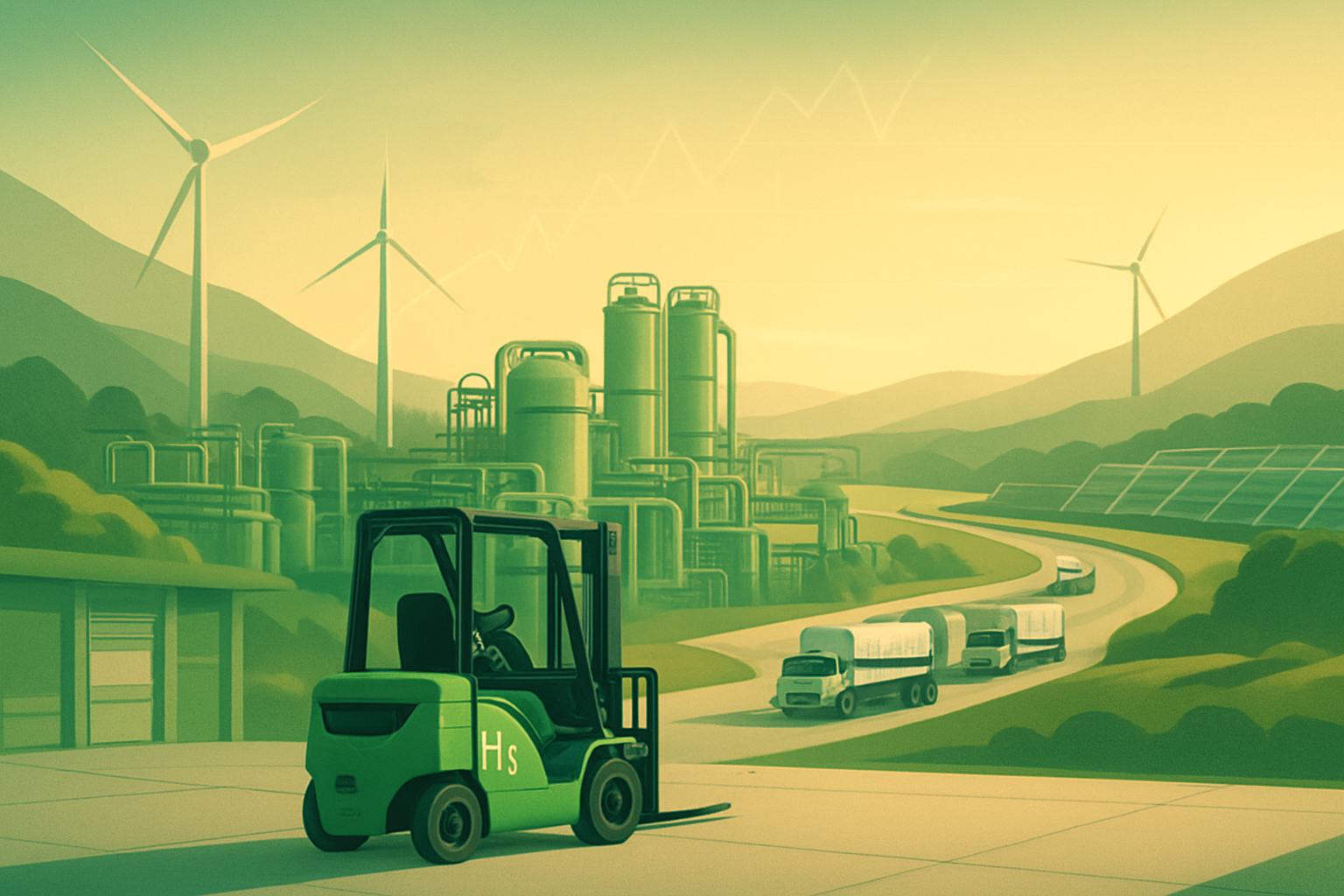
Tag: Hydrogen Economy

  • The Power Behind the Processing: A Deep Dive into Bloom Energy (BE) in 2026

    The Power Behind the Processing: A Deep Dive into Bloom Energy (BE) in 2026

    As of April 14, 2026, the global energy landscape is defined by a singular, overwhelming challenge: the insatiable power demand of Artificial Intelligence. In this high-stakes environment, Bloom Energy Corporation (NYSE: BE) has emerged as a critical infrastructure titan. Once viewed as a speculative clean-tech play, Bloom has successfully repositioned itself as the primary solution for the "grid gap"—the multi-year delay in traditional utility connections that threatens to stall the AI revolution.

    By providing on-site, modular power that can be deployed in months rather than years, Bloom Energy has transformed from a fuel cell manufacturer into a strategic partner for the world’s largest hyperscalers and industrial giants. With a market capitalization now exceeding $50 billion and a backlog pushing toward $20 billion, the company stands at the intersection of energy security, technological innovation, and the global transition to a low-carbon economy.

    Historical Background

    Bloom Energy’s story began far from the data centers of Northern Virginia. Founded in 2001 by Dr. KR Sridhar, the company’s core technology—Solid Oxide Fuel Cell (SOFC)—was originally developed for NASA’s Mars exploration program. The goal was to create a device that could produce oxygen on Mars and fuel for the return trip; Sridhar eventually realized the process could be reversed to generate clean, reliable electricity on Earth.

    After years in "stealth mode," Bloom launched publicly in 2010 with a star-studded list of early adopters including Google and Walmart. The company went public on the New York Stock Exchange in July 2018. The early years of its public life were marked by volatility as the company struggled with high manufacturing costs and a reliance on natural gas. However, the mid-2020s marked a radical transformation. By 2024, the "AI-Energy Nexus" became the company's primary tailwind, shifting the focus from simple backup power to essential, primary baseload generation for high-density computing.

    Business Model

    Bloom Energy’s business model is built on three distinct pillars that cater to the modern demand for "Energy-as-a-Service" (EaaS):

    1. Product Sales: The core of the business remains the Bloom Energy Server. These modular "Bloom Boxes" generate electricity through an electrochemical process without combustion. They are increasingly sold in massive multi-hundred-megawatt configurations to data centers and industrial hubs.
    2. Service and Maintenance: Given the 20-to-25-year lifespan of the fuel cells, Bloom generates recurring high-margin revenue through long-term service agreements (LTSAs). This segment provides a predictable cash flow buffer against the lumpy nature of hardware sales.
    3. Hydrogen and Electrolyzers: A more recent addition is the Solid Oxide Electrolyzer (SOEC). This technology allows Bloom to pivot into the hydrogen economy, selling equipment that produces "green" hydrogen for industrial processes and heavy shipping.

    The company has also perfected its financing model through partnerships like the early 2026 $5 billion deal with Brookfield, allowing customers to pay for power over time rather than incurring massive upfront capital expenditures.

    Stock Performance Overview

    Bloom Energy’s stock performance has been a roller coaster for long-term holders, though the recent trend has been decisively upward.

    • 1-Year Performance (2025–2026): Over the last 12 months, BE has outperformed the S&P 500 significantly, rising nearly 85%. This surge was driven by a string of "gigawatt-scale" announcements with Oracle and American Electric Power.
    • 5-Year Performance (2021–2026): The five-year view shows a compound annual growth rate (CAGR) of approximately 22%. The stock spent much of 2022-2023 in a lull before the AI-driven re-rating of 2024 and 2025.
    • 10-Year Performance: Since 2018 (IPO), the stock has moved from the $15–$25 range to its current trading price between $166 and $203.

    While the volatility remains high compared to traditional utilities, Bloom is no longer traded as a "penny-stock" alternative energy name, but rather as a growth-tech infrastructure staple.

    Financial Performance

    The fiscal year 2025 was a watershed moment for Bloom Energy. For the first time in its history, the company achieved meaningful GAAP operating income.

    • Revenue: FY 2025 revenue hit a record $2.02 billion, a 37.3% year-over-year increase.
    • Margins: Gross margins have expanded to the 28-30% range as manufacturing efficiencies at the Fremont and Delaware facilities have taken hold.
    • Backlog: The company enters Q2 2026 with a $20 billion backlog, providing unprecedented visibility into future revenue.
    • Liquidity: Bolstered by the Brookfield financing partnership and a successful convertible note issuance in 2025, Bloom maintains a robust cash position to fund its transition from 1 GW to 2 GW of annual manufacturing capacity by the end of 2026.
    • Earnings: Estimates for Q1 2026 suggest an EPS of $0.09 to $0.13, reinforcing the trend of consistent profitability.

    Leadership and Management

    Founder and CEO Dr. KR Sridhar remains the visionary heart of the company. In the early 2020s, Sridhar was criticized by some analysts for "over-promising," but his focus on the data center market has largely vindicated his long-term strategy.

    The leadership team was significantly strengthened in 2024 and 2025 with the addition of executives from the semiconductor and utility sectors, reflecting Bloom's shift toward high-density power for chips. The board’s governance reputation has improved as the company moved away from the complex "special purpose vehicle" accounting that clouded its early years, opting for more transparent reporting standards that have earned the trust of institutional "long-only" funds.

    Products, Services, and Innovations

    The technological moat around Bloom Energy is built on its high-temperature Solid Oxide chemistry.

    • SOFC Energy Servers: The current 2026 generation of servers is "800V DC-ready," allowing them to plug directly into AI server racks. This eliminates the 10-15% energy loss typical of AC-to-DC conversion in traditional data centers.
    • The Electrolyzer (SOEC): Bloom’s electrolyzer is currently the most efficient on the market, operating at 80% electrical-to-hydrogen efficiency when paired with industrial waste heat.
    • Carbon Capture Integration: In 2025, Bloom launched a pilot project that integrates carbon capture directly into the fuel cell exhaust, potentially making its natural gas-powered units "carbon neutral" even before a full transition to hydrogen.

    Competitive Landscape

    Bloom faces competition on two fronts: traditional power providers and other clean-tech firms.

    • The Grid: Bloom’s biggest "competitor" is the local utility. In regions like Northern Virginia or West Texas, where the grid is overtaxed, Bloom wins by default because it can provide power years faster than the utility.
    • Hydrogen Rivals: Plug Power (NASDAQ: PLUG) and Ballard Power Systems (NASDAQ: BLDP) are major competitors in the hydrogen space. However, Bloom’s SOFC technology is generally considered superior for stationary baseload power, while Plug dominates the mobility (forklift/trucking) sector.
    • Traditional Back-up: Companies like Generac (NYSE: GNRC) compete in the backup space, but Bloom is increasingly viewed as a primary power source rather than just an emergency fail-safe.

    Industry and Market Trends

    The "AI-Energy Nexus" is the dominant trend of 2026. As AI models move from training to inference, the demand for "always-on" power has surpassed the capacity of many national grids. This has led to a shift toward "Microgrids" and "Distributed Generation"—precisely where Bloom specializes.

    Furthermore, the "reshoring" of industry to the United States (the "New Industrialization") has created clusters of factories that require massive power in rural areas where the grid is weak. Bloom’s modularity allows these factories to scale power capacity as they build out their production lines.

    Risks and Challenges

    Despite the current euphoria, Bloom is not without significant risks:

    1. Fuel Price Volatility: Most Bloom servers still run on natural gas. While they can run on hydrogen or biogas, a spike in natural gas prices can narrow the "spark spread," making Bloom's power more expensive than grid power.
    2. Execution and Scaling: Attempting to double manufacturing capacity in a single year (2026 target) is a massive operational risk. Any quality control issues could be catastrophic for its reputation among hyperscalers.
    3. Equity Dilution: To fund its massive growth, Bloom has historically relied on issuing stock and convertible debt, which continues to be a point of contention for some retail investors.

    Opportunities and Catalysts

    • The Oracle Expansion: The April 2026 master agreement with Oracle for up to 2.8 GW of capacity is a transformative catalyst that could provide a revenue floor for years.
    • Marine Shipping: Bloom is currently trialing SOFC units on large cargo ships to replace diesel generators, a multi-billion dollar addressable market that is barely tapped.
    • Hydrogen Hubs: As the U.S. "Hydrogen Hubs" become operational in 2026-2027, Bloom's electrolyzer business is expected to see a secondary surge in orders.

    Investor Sentiment and Analyst Coverage

    Wall Street sentiment has undergone a dramatic "re-rating" in the last 18 months. Once treated as a high-risk "ESG" stock, Bloom is now covered by data center and industrial analysts.

    • Ratings: The consensus is a "Moderate Buy." Out of 32 analysts, 13 have a "Strong Buy" rating.
    • Institutional Moves: There has been a notable increase in ownership from "Quality" and "Growth" funds (e.g., BlackRock, Vanguard, and specialized infrastructure funds), moving away from the more flighty retail-dominated base of 2021.
    • Price Targets: Median targets sit around $156, though "bull case" scenarios from firms like China Renaissance have pushed as high as $207 following the latest Oracle news.

    Regulatory, Policy, and Geopolitical Factors

    The regulatory environment in 2026 is dominated by the "One Big Beautiful Bill" (OBBB), the massive 2025 legislative overhaul that refined the incentives of the 2022 Inflation Reduction Act. Bloom has successfully navigated these changes by reshoring its entire supply chain, ensuring it meets the strict 2026 Foreign Entity of Concern (FEOC) rules to qualify for maximum tax credits.

    However, the looming July 4, 2026, deadline for "commencing construction" on several federal hydrogen projects remains a key date for investors to watch, as any delays could jeopardize certain tax credit eligibilities.

    Conclusion

    Bloom Energy (NYSE: BE) has reached a critical inflection point. In 2026, the company is no longer a "future" story; it is a "now" story. By solving the immediate power crisis facing the AI industry, Bloom has secured a place as a foundational player in the modern economy.

    For investors, the case for Bloom is a bet on the continued decoupling of power generation from the traditional centralized grid. While risks regarding fuel costs and execution remain, the company’s massive backlog, newfound profitability, and "poster child" status in the AI-Energy Nexus make it one of the most compelling, albeit high-beta, stories in the industrial tech sector today.


    This content is intended for informational purposes only and is not financial advice. Note: Current date is April 14, 2026.


  • The Power Bridge: A Deep Dive into Bloom Energy (NYSE: BE) in the AI Era

    The Power Bridge: A Deep Dive into Bloom Energy (NYSE: BE) in the AI Era

    Today, April 1, 2026, the global energy conversation has shifted from "if" we can decarbonize to "how fast" we can power the next industrial revolution. At the heart of this transition stands Bloom Energy (NYSE: BE), a company that spent two decades as a clean-tech curiosity before finding its stride as the indispensable "power bridge" for the artificial intelligence (AI) era. As the electrical grid groans under the weight of massive data center clusters and the intermittent nature of renewables, Bloom’s solid-oxide technology has moved from the periphery to the center of the world's most critical infrastructure.

    Historical Background

    Bloom Energy’s story began not in a Silicon Valley garage, but in the laboratory of NASA’s Ames Research Center. Founder and CEO Dr. K.R. Sridhar was originally tasked with developing technology to sustain life on Mars—creating oxygen for breathing and hydrogen for fuel. When the Mars mission was scaled back, Sridhar realized his "reverse electrolysis" process could solve Earth’s energy challenges.

    Founded in 2001 as Ion America and rebranded as Bloom Energy in 2006, the company emerged from stealth mode in 2010 with high-profile backing from Kleiner Perkins. For years, the "Bloom Box" was a status symbol for early corporate adopters like Google and eBay. However, the path was not always smooth. The company faced a decade of skepticism regarding its path to profitability and the cost-competitiveness of its fuel cells compared to cheap grid power. It was only during the mid-2020s that the convergence of hydrogen subsidies and the AI power crunch finally vindicated the company’s long-term vision.

    Business Model

    Bloom Energy operates an integrated energy business model focused on "behind-the-meter" power generation. Its primary revenue comes from the sale and installation of its Energy Servers—solid oxide fuel cell (SOFC) systems that convert fuel into electricity without combustion.

    The company utilizes a diversified revenue stream:

    • Product Sales: Large-scale hardware sales to utilities, data centers, and industrial manufacturers.
    • Services: Long-term operation and maintenance (O&M) contracts that provide recurring revenue over 10-to-20-year lifespans.
    • Electricity as a Service (EaaS): Financing models where customers pay for the power generated rather than the equipment itself, lowering the barrier to entry.
    • Electrolyzer Segment: A rapidly growing business line selling high-efficiency hydrogen production units to heavy industries like steel and chemicals.

    Stock Performance Overview

    The journey for Bloom Energy shareholders has been a masterclass in volatility. Looking back over the last decade, the stock spent much of its early public life (post-2018 IPO) oscillating between $10 and $30 as investors weighed its high growth against persistent losses.

    However, the 5-year view from 2021 to 2026 tells a story of transformation. After a significant downturn in 2023 caused by rising interest rates, the stock began a sustained rally in late 2024. This move was triggered by a series of massive contract wins in the data center sector and the first signals of GAAP profitability. Over the 1-year horizon leading into April 2026, the stock has outperformed the broader clean-energy indices by nearly 40%, as markets began valuing it more like an AI infrastructure play than a speculative green-tech firm.

    Financial Performance

    Fiscal years 2024 and 2025 marked a historic inflection point for Bloom. In 2024, the company hit record revenues of $1.65 billion. By the end of 2025, Bloom officially silenced its critics by reporting its first full year of positive GAAP net income, with revenues surpassing the $2.1 billion mark.

    Key financial metrics as of early 2026 include:

    • Gross Margins: These have expanded to approximately 32%, up from the low 20s in earlier years, thanks to manufacturing automation at the Fremont and Newark facilities.
    • Backlog: Bloom enters Q2 2026 with a record $14.5 billion backlog, providing high visibility into future revenue.
    • Balance Sheet: While the company maintains a manageable level of debt, its cash position has stabilized, allowing it to self-fund most of its current R&D without further equity dilution.

    Leadership and Management

    Dr. K.R. Sridhar remains the visionary force as CEO, maintaining a reputation for technical brilliance and long-term strategic patience. Under his leadership, the management team was strengthened in 2024 and 2025 with the addition of veterans from the semiconductor and utility sectors, reflecting the company’s shift toward serving high-tech infrastructure. Governance has also improved; once criticized for a "growth-at-all-costs" mentality, the board now emphasizes disciplined capital allocation and margin expansion, which has been well-received by institutional investors.

    Products, Services, and Innovations

    Bloom’s technological "moat" lies in its Solid Oxide Fuel Cell (SOFC) and Electrolyzer (SOEC) platforms.

    • Series 10 Energy Server: The current flagship product offers unmatched fuel flexibility, capable of running on natural gas, biogas, or 100% hydrogen. This "future-proofs" the hardware for customers who want to use gas today but transition to zero-carbon hydrogen tomorrow.
    • The Electrolyzer Breakthrough: Bloom’s SOEC is a market leader in efficiency. Because it operates at high temperatures, it requires significantly less electricity to produce hydrogen than the PEM (Proton Exchange Membrane) electrolyzers used by many competitors, especially when integrated with industrial waste heat.
    • Microgrids: Bloom has perfected the "Island Mode" configuration, allowing data centers to disconnect from the grid entirely during outages or peak demand, ensuring "six nines" (99.9999%) reliability.

    Competitive Landscape

    Bloom competes in a crowded but increasingly segmented landscape.

    • Plug Power (NASDAQ: PLUG): While Plug dominates the mobile fuel cell market (forklifts and logistics), Bloom has largely won the battle for stationary, large-scale power.
    • Cummins (NYSE: CMI): Through its Accelera brand, Cummins is a formidable industrial rival. However, Bloom’s 20-year lead in SOFC technology provides an efficiency advantage in high-temperature applications.
    • Traditional Utilities: Paradoxically, the aging electrical grid is Bloom’s biggest "competitor" and its greatest lead generator. As utilities struggle to upgrade aging wires, Bloom’s onsite power becomes the only viable solution for companies that cannot wait five years for a grid connection.

    Industry and Market Trends

    Three macro trends are currently favoring Bloom Energy:

    1. The AI Power Gap: The explosion of generative AI has created an insatiable demand for 24/7 "baseload" power that wind and solar alone cannot meet.
    2. Grid Fragility: Climate-driven weather events and aging infrastructure have made onsite "microgrids" a necessity rather than a luxury for mission-critical industries.
    3. Decarbonization Mandates: Global corporations are under intense pressure to meet 2030 Net Zero goals, driving demand for hydrogen-ready power solutions.

    Risks and Challenges

    Despite its recent successes, Bloom is not without risk.

    • Fuel Price Volatility: While the servers are efficient, they currently run primarily on natural gas. A spike in gas prices can squeeze the operational economics for customers.
    • Regulatory Sensitivity: Much of the recent hydrogen momentum is tied to the Inflation Reduction Act (IRA). Any political shift that threatens these tax credits could slow adoption.
    • Technology Execution: Scaling the electrolyzer business requires a flawless manufacturing ramp-up. Any delays in stack replacements or reliability issues could damage the brand’s reputation.

    Opportunities and Catalysts

    The primary catalyst for 2026 is the expansion into the maritime and international utility markets. Bloom’s recent partnership with South Korean industrial giants continues to yield massive orders, and the shipping industry is beginning to eye Bloom’s SOFCs as a way to replace dirty bunker fuel. Near-term, the market is watching for an announcement of a major "Hydrogen Hub" project where Bloom would serve as the primary technology provider, which could further validate its electrolyzer efficiency at scale.

    Investor Sentiment and Analyst Coverage

    As of April 2026, Wall Street has largely re-rated Bloom Energy. Previously viewed as a volatile "momentum stock," it is now increasingly covered by industrial and AI-infrastructure analysts. Approximately 75% of analysts currently hold a "Buy" or "Outperform" rating. Institutional ownership has surged, with major funds seeing Bloom as a "picks and shovels" play for the AI revolution. Retail sentiment remains cautiously optimistic, though tempered by memories of the sector’s previous boom-and-bust cycles.

    Regulatory, Policy, and Geopolitical Factors

    The Inflation Reduction Act (IRA) remains the most significant tailwind. Specifically, Section 45V (the Hydrogen Production Tax Credit) and Section 48 (the Investment Tax Credit) have effectively subsidized the transition to hydrogen, making Bloom’s technology commercially viable years earlier than projected. Geopolitically, as Europe and Asia seek to reduce reliance on imported fossil fuels, Bloom’s "fuel agnostic" servers offer a strategic path toward energy independence.

    Conclusion

    Bloom Energy (NYSE: BE) has successfully navigated the "Valley of Death" that claims so many clean-tech pioneers. By April 2026, the company has transformed itself into a profitable, high-growth engine of the modern economy. While challenges regarding fuel costs and policy shifts remain, the fundamental imbalance between AI-driven power demand and a failing electrical grid has created a "perfect storm" for Bloom’s onsite energy solutions. Investors should watch for continued margin expansion and the successful scaling of the hydrogen electrolyzer segment as the next markers of long-term value creation.


    This content is intended for informational purposes only and is not financial advice.

  • The Quantum Leap: A Deep-Dive into Plug Power’s (PLUG) High-Stakes Pivot in 2026

    The Quantum Leap: A Deep-Dive into Plug Power’s (PLUG) High-Stakes Pivot in 2026

    Today, March 5, 2026, marks a watershed moment for Plug Power Inc. (NASDAQ: PLUG). For over a decade, the company was the ultimate "story stock"—a visionary leader in the hydrogen economy that consistently traded future promises for present capital. However, following the release of its fiscal year 2025 results and the official commencement of Jose Luis Crespo’s tenure as CEO this week, the narrative has shifted.

    The "growth-at-all-costs" era has been unceremoniously buried. In its place is a leaner, more defensive organization focused on "Project Quantum Leap"—a desperate but disciplined sprint toward cash-flow positivity. As the broader clean energy sector grapples with a shifting federal landscape and the suspension of multi-billion dollar loan programs, Plug Power finds itself at its most critical crossroads since its 1997 founding.

    Historical Background

    Plug Power began its journey in 1997 as a joint venture between DTE Energy and Mechanical Technology Inc. Its early mission was simple: develop fuel cells for stationary power. For years, the company struggled to find a commercial foothold until it pivoted to the material handling industry. By replacing lead-acid batteries in forklifts with hydrogen fuel cells, Plug found its first real product-market fit, signing giants like Amazon (NASDAQ: AMZN) and Walmart (NYSE: WMT).

    Under the long-term leadership of Andy Marsh, who served as CEO from 2008 until March 2026, the company transformed from a niche equipment provider into an aspiring vertically integrated "green hydrogen" titan. The company’s trajectory was defined by aggressive acquisitions (United Hydrogen, Giner ELX, Applied Cryo Technologies) and a bold plan to build a nationwide network of hydrogen production plants. This ambition culminated in the 2021 "green energy craze," which saw PLUG shares soar before a grueling multi-year correction as execution lagged behind the visionary rhetoric.

    Business Model

    Plug Power operates a vertically integrated hydrogen ecosystem. Its revenue streams are divided into several key segments:

    1. GenDrive: Fuel cell systems that power electric vehicles, primarily forklifts.
    2. GenFuel: The sale and delivery of liquid hydrogen, including the infrastructure (storage tanks and dispensers) required to support it.
    3. GenCare: Ongoing maintenance and service contracts for the fuel cell fleets and hydrogen infrastructure.
    4. Electrolyzers: The sale of PEM (Proton Exchange Membrane) electrolyzer stacks used by third parties to produce hydrogen from water and electricity.
    5. Cryogenic Equipment: Following the acquisition of Applied Cryo Technologies, Plug sells specialized trailers and storage solutions for liquid hydrogen.

    The company’s "end-to-end" model aims to control the entire value chain—from the machines that produce hydrogen to the vehicles that consume it.

    Stock Performance Overview

    The performance of PLUG stock over the last decade has been a study in extreme volatility.

    • 10-Year Horizon: Investors who held through the 2021 peak saw gains of over 1,500%, only to see the vast majority of those gains evaporate by 2024.
    • 5-Year Horizon: The stock remains down significantly from its five-year highs, reflecting the market’s pivot from valuing "TAM" (Total Addressable Market) to valuing "EBITDA" (Earnings Before Interest, Taxes, Depreciation, and Amortization).
    • 1-Year Horizon: 2025 was a year of stabilization. After hitting a multi-year low in late 2024 amid "going concern" warnings, the stock saw a modest recovery in 2025 as the company achieved its first positive quarterly gross margin. However, shares remain under pressure as the market digests the loss of the $1.66 billion DOE loan disbursement.

    Financial Performance

    Plug Power’s 2025 fiscal year results, released late last month, highlight a company in the midst of a painful restructuring.

    • Revenue: The company reported $709.9 million for 2025, a 12.9% increase over 2024. While growth slowed compared to previous years, management noted that this was a deliberate result of walking away from low-margin contracts.
    • Margins: In a landmark achievement, Plug reported a positive quarterly gross margin of 2.4% in Q4 2025. This was a monumental shift from the -122.5% margin recorded just one year prior.
    • Net Loss: The bottom line remains troubled, with a net loss of $1.63 billion for the year. However, investors were encouraged to see that $763 million of this was due to one-time impairment charges related to the abandonment of the New York and Texas plant expansions.
    • Cash Position: Plug ended 2025 with $368.5 million in unrestricted cash. While significantly lower than in years past, the "burn rate" has been slashed by nearly 30% through the sale of non-core assets.

    Leadership and Management

    On March 2, 2026, Jose Luis Crespo officially took the reins as CEO. Crespo, the former Chief Revenue Officer, is widely viewed as the "operational" counterweight to Andy Marsh’s "visionary" style. Marsh has moved to the role of Executive Chairman, ensuring continuity but signaling that the era of aggressive capital expenditure is over.

    Crespo’s primary mandate is "Project Quantum Leap"—a strategy focused on pricing power, asset monetization, and operational excellence. The resignation of former President Sanjay Shrestha in late 2025 further consolidated power under Crespo, who is now tasked with proving that the company’s operational plants (Georgia, Tennessee, and Louisiana) can generate consistent profit without federal subsidies.

    Products, Services, and Innovations

    Plug remains a global leader in PEM Electrolyzer technology. Its 5MW containerized electrolyzer system is currently the industry standard for rapid deployment. In 2025, the company made significant strides in its GenDrive 3.0 architecture, which reduces the use of expensive precious metals like iridium and platinum, potentially lowering the cost of fuel cells by 20%.

    Furthermore, Plug’s liquid hydrogen plant in Woodbine, Georgia, has become a showcase for the company’s cryogenic innovation, successfully liquefying hydrogen at scale with a level of purity that meets the stringent requirements of the electronics and aerospace industries.

    Competitive Landscape

    Plug Power faces a dual-front battle. In the stationary power and data center market, Bloom Energy (NYSE: BE) has emerged as a formidable rival, recently securing massive contracts with AI data center operators. Unlike Plug, Bloom’s solid-oxide fuel cell technology is optimized for "always-on" base load power.

    In the heavy-duty transport sector, Ballard Power Systems (NASDAQ: BLDP) remains a key competitor, particularly in Europe and China. While Ballard has a cleaner balance sheet, Plug’s vertical integration—owning the fuel production—gives it a theoretical advantage in "total cost of ownership" for customers, provided it can produce hydrogen cheaply enough.

    Industry and Market Trends

    The hydrogen sector is currently bifurcated. While the industrial demand for hydrogen in steel manufacturing and heavy shipping is growing, the "green" (electrolytic) hydrogen market has been slowed by high interest rates and regulatory uncertainty.

    A significant trend in 2026 is the pivot toward Blue Hydrogen (hydrogen produced from natural gas with carbon capture), which has found more favor under current federal policy. Plug, which is almost exclusively committed to "Green" (electrolytic) hydrogen, is now having to compete in a market where the definition of "clean" is being broadened to include fossil-fuel-derived alternatives.

    Risks and Challenges

    The risks facing Plug Power are substantial:

    1. Liquidity Risk: With under $400 million in cash and a still-negative operating cash flow, the company may need further dilutive capital raises if its margin improvements stall.
    2. Regulatory/Political Risk: The "One Big Beautiful Bill Act" (OBBA) of 2025 has created significant uncertainty regarding the 45V production tax credit, which Plug was counting on to reach break-even.
    3. Litigation: The company is currently defending multiple securities class action lawsuits alleging management misled investors regarding the status of the $1.66 billion DOE loan, which was paused by the current administration.
    4. Execution Risk: Moving from a "builder" to an "operator" requires a different cultural DNA, and any technical failures at its operational plants could be catastrophic for its remaining liquidity.

    Opportunities and Catalysts

    Despite the challenges, several catalysts could re-rate the stock:

    • Asset Monetization: The recent sale of the New York plant site for $132.5 million proved that Plug’s infrastructure has "scrap value" that exceeds its current book valuation in some cases.
    • European Expansion: Europe’s "Hydrogen Bank" auctions and more stable subsidy regimes offer a growth path that is less dependent on U.S. political shifts.
    • 2026 Profitability Guidance: If Jose Luis Crespo can guide the company to a full-year positive gross margin in 2026, it would validate the "Quantum Leap" strategy and likely trigger a short squeeze.

    Investor Sentiment and Analyst Coverage

    Investor sentiment remains deeply divided. "Bulls" see a company that has finally matured, with its most expensive construction projects behind it and a leadership team focused on the bottom line. "Bears," however, point to the $2.1 billion loss in 2024 and the $1.6 billion loss in 2025 as evidence of a broken business model that cannot survive without massive government intervention.

    Wall Street ratings are currently a "Hold" consensus, with a wide dispersion in price targets reflecting the "binary" nature of the company’s future.

    Regulatory, Policy, and Geopolitical Factors

    The geopolitical landscape for hydrogen is complex. While the U.S. has pulled back on direct green hydrogen subsidies, the European Union’s CBAM (Carbon Border Adjustment Mechanism) is creating a premium for green hydrogen products. Plug’s ability to pivot its sales focus toward the EU and parts of Asia (specifically Korea, through its SK Group partnership) will be a critical factor in its 2026 performance.

    Conclusion

    Plug Power enters the second quarter of 2026 as a significantly different company than it was two years ago. The departure of Andy Marsh as CEO marks the end of the "Visionary Expansion" era and the beginning of the "Operational Survival" era.

    With positive gross margins finally within reach and a new CEO at the helm who is focused on fiscal discipline, Plug has a narrow but viable path to becoming a sustainable business. However, with the loss of federal loan support and a dwindling cash pile, the margin for error has reached zero. For investors, PLUG remains a high-beta bet on the survival of the green hydrogen dream in a world that has grown increasingly skeptical of its costs.


    This content is intended for informational purposes only and is not financial advice.

  • The Hydrogen Crossroads: A Deep Dive into Plug Power (PLUG) in 2026

    The Hydrogen Crossroads: A Deep Dive into Plug Power (PLUG) in 2026

    Plug Power Inc. (NASDAQ: PLUG) is currently in the midst of the most significant transition in its nearly 30-year history. After years of aggressive capital expenditure aimed at building a nationwide green hydrogen network, the company has shifted its focus from "growth at all costs" to "pathway to profitability." This change comes at a time of immense pressure: the stock is trading near multi-year lows, regulatory hurdles regarding tax credits have stiffened, and a high-stakes leadership transition is taking place this month.

    As of early 2026, the company is no longer just a story about fuel cells for forklifts; it is a complex infrastructure play involving massive electrolyzer deployments, cryogenic liquid hydrogen transport, and a burgeoning attempt to power the AI-driven data center boom. Investors are watching closely to see if the company can finally achieve a positive gross margin and navigate the legal and financial complexities surrounding its federal loan guarantees.

    Historical Background

    Founded in 1997 as a joint venture between DTE Energy and Mechanical Technology Inc., Plug Power spent its first two decades primarily focused on proton exchange membrane (PEM) fuel cells. Its early claim to fame was the GenDrive system, which replaced lead-acid batteries in electric lift trucks for high-volume warehouses operated by giants like Amazon (NASDAQ: AMZN) and Walmart (NYSE: WMT).

    The company’s modern era began in earnest around 2019–2020, when CEO Andy Marsh pivoted the strategy toward a "Green Hydrogen Ecosystem." The goal was to control the entire value chain: producing the hydrogen via electrolyzers, transporting it, and selling the fuel cells that consume it. This vision sent the stock skyrocketing in 2021, fueled by a $1.6 billion investment from South Korea’s SK Group and a global fervor for decarbonization. However, the subsequent years were characterized by "growing pains"—supply chain bottlenecks, skyrocketing costs of natural gas, and delays in scaling its domestic production plants.

    Business Model

    Plug Power’s business model is structured around four primary pillars, designed to provide a "turnkey" solution for the hydrogen economy:

    1. Applications (Fuel Cells): Selling GenDrive units for material handling and GenSure stationary power units for backup power in telecommunications and data centers.
    2. Energy (Hydrogen Production): Building and operating green hydrogen production plants to sell liquid hydrogen to customers.
    3. Infrastructure (Electrolyzers): Manufacturing and selling the PEM electrolyzers required for others to produce their own green hydrogen.
    4. Services and Delivery: Providing maintenance for fuel cell fleets and operating a fleet of cryogenic trailers for hydrogen logistics.

    The revenue mix has shifted significantly. While material handling was once 90% of the business, electrolyzer sales and hydrogen fuel delivery now represent the primary growth engines, albeit with significantly higher capital requirements.

    Stock Performance Overview

    The five-year chart for PLUG is a study in market volatility. From a pandemic-era peak of over $60 in early 2021, the stock entered a protracted decline as the "higher for longer" interest rate environment squeezed capital-intensive growth stocks.

    • 1-Year Performance: Over the past 12 months, the stock has remained under intense pressure, recently trading around $1.79. It saw a brief "AI-energy" rally in late 2025, reaching $4.58, before crashing back down due to concerns over the Department of Energy (DOE) loan status.
    • 5-Year Performance: The stock is down approximately 90% from its March 2021 levels, reflecting the massive dilution from secondary offerings and the persistent lack of GAAP profitability.
    • 10-Year Performance: Long-term holders have experienced a "round trip," with the stock returning to levels seen in the mid-2010s after the massive 2020–2021 bubble burst.

    Financial Performance

    Plug Power’s financials for the fiscal year 2025 reflect a company in "survival and stabilization" mode.

    • Revenue: FY 2025 revenue is estimated at approximately $700 million, a modest recovery from the $628.8 million reported in 2024 but still well below the optimistic multi-billion dollar projections made earlier in the decade.
    • Margins: Gross margins remain the company’s "Achilles' heel." While they improved from a disastrous negative 92% in mid-2024 to roughly negative 30-40% in late 2025, the company has yet to reach the break-even point on a consolidated basis.
    • Liquidity: In response to a "going concern" warning in late 2023, the company initiated a $275 million liquidity plan in 2025, which included the sale of its "Project Gateway" site in New York. As of Q1 2026, the company continues to rely on ATM (at-the-market) equity offerings and asset monetization.

    Leadership and Management

    The headline story for March 2026 is the leadership transition. Andy Marsh, the architect of Plug’s grand hydrogen vision, is stepping down from the CEO role to become Executive Chairman. He is succeeded by Jose Luis Crespo, the former Chief Revenue Officer.

    Crespo is viewed by the board as an "execution-first" leader, tasked with reigning in the visionary spending of the Marsh era. His mandate, under the banner of "Project Quantum Leap," includes a 15% reduction in the global workforce and a strict prioritization of projects that can deliver immediate cash flow. This shift in governance is intended to reassure institutional investors who have grown weary of missed targets.

    Products, Services, and Innovations

    Innovation at Plug Power has recently centered on the AI Data Center market. As tech giants seek carbon-free "always-on" power for massive GPU clusters, Plug has optimized its stationary fuel cell stacks to provide megawatt-scale backup and primary power.

    On the production side, the company’s PEM electrolyzer technology remains a market leader in North America. Its Georgia plant, now producing 15 tons per day (TPD), serves as a "blueprint" for future facilities. However, the innovation pipeline is currently constrained by R&D budget cuts as the company focuses on refining existing designs.

    Competitive Landscape

    Plug Power faces a "two-front war" in the competitive landscape:

    • Stationary Power: Bloom Energy (NYSE: BE) has emerged as a formidable rival, particularly in the data center space, where its solid-oxide fuel cells (SOFC) are often preferred for their high efficiency.
    • Heavy Duty & Transit: Ballard Power Systems (NASDAQ: BLDP) remains a dominant force in hydrogen-powered buses and rail.
    • Electrolyzers: In Europe and Asia, firms like Nel ASA and ITM Power provide stiff competition for large-scale industrial decarbonization projects.

    Industry and Market Trends

    The hydrogen sector in 2026 is grappling with the reality of "incremental decarbonization." The initial hype of replacing all natural gas with hydrogen has faded, replaced by a focus on "hard-to-abate" sectors: heavy steel manufacturing, chemical production, and long-haul logistics.

    Macro trends, including high capital costs and a shift in political winds, have slowed the "green hydrogen" rollout. Furthermore, the global supply chain for PEM components (like iridium and platinum) remains a bottleneck, though Plug has made strides in vertical integration to mitigate these risks.

    Risks and Challenges

    The risks facing Plug Power are significant:

    1. Regulatory Uncertainty: The status of the $1.66 billion DOE loan guarantee is currently the subject of intense speculation and legal challenges.
    2. Litigation: A 2026 securities class action lawsuit (Ortolani v. Plug Power Inc.) alleges the company misled investors regarding its ability to access federal funding.
    3. Liquidity: Despite recent asset sales, the company’s cash burn remains a concern. Without a clear path to positive cash flow in 2026, further dilutive equity raises may be necessary.
    4. Operational Delays: Suspension of activities at major sites like the Texas "Project Limestone" plant has raised doubts about the company’s ability to meet its 2030 production targets.

    Opportunities and Catalysts

    Despite the challenges, several catalysts could spark a recovery:

    • AI Power Demand: If Plug can secure a major, multi-year contract with a "Hyperscaler" for data center power, it would validate its stationary power strategy.
    • Operational Milestones: The commissioning of the New York (Genesee County) plant, expected to produce 74 TPD, would nearly triple the company’s internal hydrogen supply.
    • Execution under Crespo: If the new CEO can deliver even one quarter of positive gross margin, it would likely trigger a significant re-rating of the stock.

    Investor Sentiment and Analyst Coverage

    Wall Street sentiment is currently "cautiously skeptical," with a consensus Hold rating. Analysts are split: roughly 20% maintain "Buy" ratings based on the long-term hydrogen tailwinds, while 30% have "Sell" or "Underperform" ratings due to liquidity fears.

    Regulatory, Policy, and Geopolitical Factors

    The regulatory environment has become more complex with the passage of the One Big, Beautiful Bill Act (OBBBA) of 2025, which moved up several decarbonization deadlines but also tightened the criteria for the 45V Clean Hydrogen Tax Credit. The "Three Pillars" of hydrogen policy—incrementality, temporal matching, and geographic correlation—remain a hurdle.

    Conclusion

    As of March 2, 2026, Plug Power is a company caught between two worlds. One world is the "Visionary Era" of the past decade, characterized by bold dreams and aggressive spending. The other is the "Execution Era" currently being ushered in by CEO Jose Luis Crespo, where the focus has narrowed to survival, cost-cutting, and the data center opportunity.

    For investors, PLUG remains a high-risk, high-reward "binary" play. If the company can navigate its legal challenges and capitalize on the insatiable energy needs of the AI sector, its current valuation may look like a generational entry point. However, until the company demonstrates it can produce hydrogen and fuel cells at a profit, it remains a speculative bet.


    This content is intended for informational purposes only and is not financial advice.