
Tag: KBH

  • The Built-to-Order Blueprint: Analyzing KB Home’s Strategic Pivot in 2026

    The Built-to-Order Blueprint: Analyzing KB Home’s Strategic Pivot in 2026

    Date: March 25, 2026

    Introduction

    As the U.S. housing market navigates a complex landscape of persistent mortgage rates and tight inventory, KB Home (NYSE: KBH) stands at a pivotal crossroads. Historically known as the pioneer of the "Built-to-Order" (BTO) model, the company has spent the last year recalibrating its operations following a period of post-pandemic volatility. Today, KB Home is in focus not just for its unique consumer-centric business model, but for a significant leadership transition and its industry-leading commitment to sustainable construction. With a fresh CEO at the helm and a strategic return to its customization roots, KBH is testing whether individual choice can outpace the high-volume "spec" building strategies of its larger peers.

    Historical Background

    Founded in 1957 by Eli Broad and Donald Kaufman in Detroit, Michigan, KB Home—then known as Kaufman & Broad—was born from a vision to provide affordable, high-quality housing for the post-World War II generation. The company’s trajectory changed in 1961 when it became the first homebuilder to go public on a national exchange. By the late 1960s, it expanded into the California market, which remains its primary revenue driver today. Over the decades, the company transformed from a regional builder into a national powerhouse, eventually rebranding as KB Home in 2001. Throughout its history, KBH has been a pioneer, notably becoming one of the first major builders to exit the French market (spinning off Kaufman & Broad S.A.) to focus purely on domestic growth and capital efficiency.

    Business Model

    The KB Home business model is defined by its "Built-to-Order" (BTO) philosophy. Unlike many competitors who build "spec" homes (houses built before a buyer is secured), KB Home focuses on the personalization of the home-buying experience.

    • Revenue Sources: Revenue is primarily generated through home deliveries across four geographic regions: West Coast, Southwest, Central, and Southeast.
    • The Design Studio: Central to the model is the KB Home Design Studio, where buyers select everything from flooring and cabinets to smart home integrations. This personalization allows KBH to capture higher margins on upgrades, which typically range from 250 to 500 basis points higher than the base home price.
    • Customer Base: The company predominantly targets first-time and first move-up buyers, who represented approximately 72% of its customer base in recent years. By offering a entry-level price point with the ability to "build your own," KBH captures a demographic that values individuality without the luxury price tag.

    Stock Performance Overview

    As of March 2026, KBH stock is trading in the low $50s, reflecting a period of consolidation after a volatile few years.

    • 1-Year Performance: The stock is down approximately 10% year-over-year, largely due to a 5% tumble following the March 2026 earnings miss and broader concerns about high mortgage rates (averaging 6.8% in early 2026).
    • 5-Year Performance: Looking back to 2021, the stock has shown resilience, rising from the mid-$40s during the post-pandemic housing surge. While it has not reached the record highs seen in late 2024, it has significantly outperformed its 2022 lows.
    • 10-Year Performance: Long-term investors have seen substantial gains. From a trading price of roughly $15 in 2016, KBH has more than tripled, driven by disciplined land acquisition and a focus on debt reduction.

    Financial Performance

    KB Home’s Q1 2026 earnings (ending February 28, 2026) revealed the challenges of a "cooling" market.

    • Revenue and EPS: The company reported $1.08 billion in revenue, a 23% year-over-year decline. Earnings per share (EPS) came in at $0.52, missing the Wall Street consensus of $0.55.
    • Margins: Gross margins compressed to 15.3%, down from over 20% in early 2025. This was attributed to higher land costs and the necessary use of mortgage rate buydowns to entice buyers.
    • Valuation: Despite the earnings miss, KBH remains attractive to value investors with a Price-to-Earnings (P/E) ratio of approximately 8.7x, suggesting the market may be underpricing its long-term BTO recovery.
    • Guidance: For the full year 2026, management has guided for housing revenue between $4.80 billion and $5.50 billion.

    Leadership and Management

    On March 1, 2026, KB Home officially entered the "McGibney Era." Robert McGibney, a 25-year company veteran and former COO, took the reigns as President and CEO from Jeffrey Mezger, who now serves as Executive Chairman.

    • Strategy: McGibney’s early tenure has focused on "Operational Excellence." His primary goal is to reduce build cycle times from 120 days to 108 days, reclaiming efficiency lost during the supply chain crisis.
    • Governance: The leadership team is praised for its conservative capital allocation. Even during the current margin squeeze, KB Home repurchased $50 million in stock in the first quarter of 2026, signaling confidence in the company's intrinsic value.

    Products, Services, and Innovations

    Innovation at KB Home is synonymous with sustainability and digitalization.

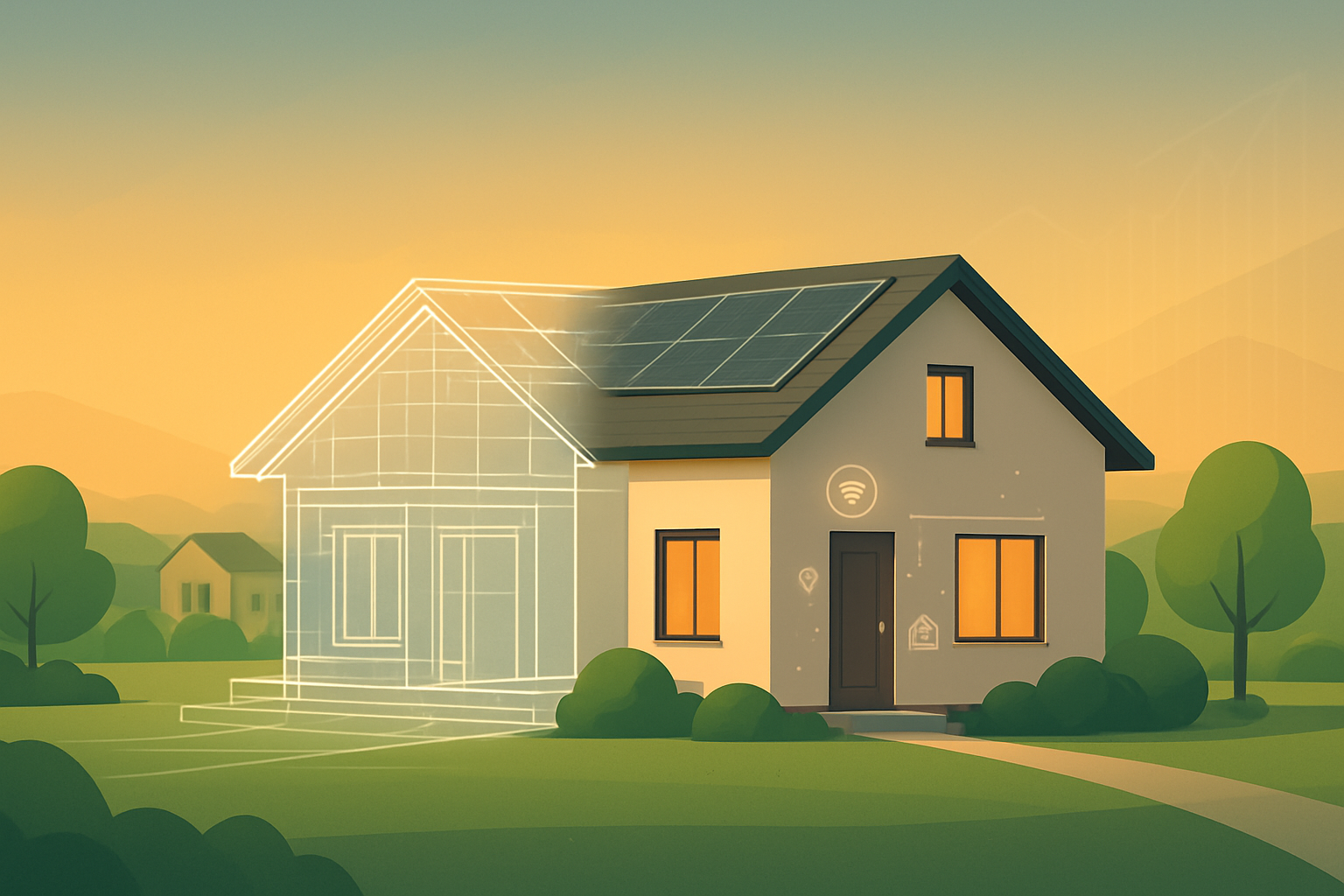
    • Sustainability: KBH is the national leader in ENERGY STAR certified homes. In 2026, they expanded their "ZeroHouse 3.0" initiative, offering DOE-certified "Zero Energy Ready" homes that can potentially offset all annual energy costs via solar technology.
    • Water Conservation: The company continues to pioneer the EPA WaterSense program, integrating greywater recycling in drought-prone markets like California and Arizona.
    • Digital Sales: Over 40% of customer interactions now begin virtually, with 2026 seeing the launch of an AI-driven "Virtual Design Studio" that allows buyers to visualize their home upgrades in real-time 3D before visiting a physical location.

    Competitive Landscape

    KB Home operates in a crowded field dominated by giants like D.R. Horton (NYSE: DHI) and Lennar (NYSE: LEN).

    • D.R. Horton: Known as the "Spec King," DHI focuses on high-volume, pre-built inventory. KBH competes by offering "choice" at a similar price point.
    • Lennar: Lennar’s "Everything’s Included" model simplifies the process by including most upgrades in the base price. KBH’s BTO model appeals to the buyer who wants to pay only for what they choose.
    • Market Share: While KBH holds a roughly 2.1% national market share (placing it in the top 10), its influence is outsized in specific high-growth Western markets.

    Industry and Market Trends

    The 2026 housing market is defined by "The Inventory Paradox." While existing home inventory remains at historic lows—as homeowners refuse to trade their 3% mortgages for current 6.5%+ rates—new home construction has become the only viable option for many.

    • Demographics: The "Millennial Peak" is still driving demand, as the largest cohort of the generation reaches prime home-buying age.
    • Sun Belt Migration: Population shifts toward the Southeast and Southwest continue to benefit KBH’s geographic footprint.
    • Labor and Materials: While lumber prices have stabilized, skilled labor remains in short supply, pressuring build times across the industry.

    Risks and Challenges

    • Interest Rate Sensitivity: As a builder for first-time buyers, KBH is highly sensitive to mortgage rates. A sustained period above 7% could drastically reduce the pool of qualified buyers.
    • Geographic Concentration: With 34% of revenue coming from California, the company is exposed to that state’s complex regulatory environment and potential economic slowdowns.
    • Margin Compression: The transition back to a 75% BTO mix takes time. During this transition, the company is carrying the costs of both spec inventory and BTO backlog, putting pressure on short-term profitability.

    Opportunities and Catalysts

    • The BTO Pivot: If McGibney can successfully push the BTO mix back to its 70-75% target by late 2026, analysts expect a rebound in gross margins as high-margin design studio sales kick in.
    • Undersupply: The U.S. remains millions of housing units short of demand. Any softening of mortgage rates in late 2026 or 2027 could lead to a massive surge in KBH’s order book.
    • M&A Potential: As a mid-sized player with a clean balance sheet, KBH remains a perpetual candidate for consolidation or a strategic acquirer of smaller regional builders.

    Investor Sentiment and Analyst Coverage

    Wall Street maintains a "Hold" consensus on KBH as of late March 2026.

    • Institutional Moves: Hedge funds have maintained steady positions, though some institutional selling occurred following the Q1 earnings miss.
    • Price Targets: The average 12-month price target stands at $62.00, suggesting a potential upside of nearly 20% if the company meets its year-end delivery targets.
    • Retail Chatter: Retail investors remain divided, with "value" bulls pointing to the low P/E ratio and "macro" bears worrying about the broader economy.

    Regulatory, Policy, and Geopolitical Factors

    • Zoning and Land Use: Federal and state initiatives to ease zoning restrictions (particularly in California) could unlock more affordable land for builders like KBH.
    • Climate Policy: New 2026 building codes in several Western states mandate higher energy efficiency. KBH’s existing leadership in ENERGY STAR construction gives it a "compliance cushion" that other builders may struggle to reach.
    • Fed Policy: Every word from the Federal Reserve regarding interest rate cuts is a potential catalyst for the housing sector.

    Conclusion

    KB Home enters the mid-2020s as a resilient, albeit currently challenged, player in the American housing story. Its "Built-to-Order" model offers a compelling value proposition in a market where buyers are increasingly selective. While the recent leadership change and Q1 earnings miss have created near-term headwinds, the company’s underlying fundamentals—low valuation, sustainability leadership, and disciplined capital management—suggest a firm foundation. For investors, the "McGibney Era" will be defined by one metric: the ability to protect margins while scaling the personalization model that has been KB Home’s signature for nearly 70 years.


    This content is intended for informational purposes only and is not financial advice.
  • Building Through the Cycle: A Deep-Dive Analysis of KB Home (NYSE: KBH) in 2026

    Building Through the Cycle: A Deep-Dive Analysis of KB Home (NYSE: KBH) in 2026

    As of March 23, 2026, the American housing market stands at a critical juncture. After years of volatile mortgage rates and a persistent inventory "lock-in" effect, the role of new home construction has never been more vital to the national economy. At the center of this narrative is KB Home (NYSE: KBH), one of the nation’s largest and most established homebuilders. Currently navigating a significant leadership transition and a shifting macroeconomic landscape, KB Home is in focus for its unique "Built-to-Order" business model and its industry-leading commitment to sustainability. This article explores the company's evolution, its financial resilience in a high-interest-rate environment, and the challenges it faces as it enters a new era under CEO Robert McGibney.

    Historical Background

    Founded in 1957 by Donald Kaufman and Eli Broad in Detroit, Michigan, the company originally known as Kaufman & Broad was born from a simple yet revolutionary idea: providing affordable, high-quality housing for the post-war generation. The duo initially focused on the Detroit suburbs before expanding aggressively into California and international markets like France and Canada (businesses they later divested to focus on the U.S. Sun Belt).

    In 1969, Kaufman & Broad made history by becoming the first homebuilder to be listed on the New York Stock Exchange. Over the following decades, the company survived multiple housing cycles, including the stagflation of the 1970s and the devastating 2008 financial crisis. Rebranded as KB Home in 2001, the firm has delivered more than 700,000 homes to date, cementing its legacy as a foundational pillar of the American residential landscape.

    Business Model

    KB Home differentiates itself through its Built-to-Order (BTO) model. While many competitors like D.R. Horton (NYSE: DHI) and Lennar (NYSE: LEN) focus on "spec" homes—pre-built houses sold near completion—KB Home allows buyers to participate in the creation of their home from the ground up.

    The BTO process involves three primary pillars:

    1. Selection: Buyers choose a homesite and a floor plan.
    2. Personalization: Customers visit a KB Home Design Studio to select everything from flooring and cabinetry to smart home features and lighting.
    3. Affordability: Despite the customization, KB Home targets the entry-level and first move-up segments. Approximately 60-65% of its buyers are first-time homeowners, a demographic that remains the most resilient even in high-rate environments due to life-stage necessities (marriage, growing families).

    Stock Performance Overview

    As of March 2026, KBH’s stock performance reflects a decade of steady recovery and recent resilience:

    • 1-Year Performance: The stock has seen a modest 8% increase over the past 12 months, trailing the broader S&P 500 as investors weighed higher-for-longer interest rates against the company’s strong earnings beats.
    • 5-Year Performance: Since 2021, KBH has returned approximately 85%, significantly outperforming many traditional retail and manufacturing sectors. The stock benefited from the post-pandemic housing boom and a successful pivot toward higher-margin regions.
    • 10-Year Performance: Looking back to 2016, when shares traded near $15, the stock has seen a roughly 500% appreciation. This long-term growth underscores the successful deleveraging of the balance sheet and the operational efficiency improvements implemented over the last decade.

    Financial Performance

    In its most recent fiscal reporting, KB Home demonstrated robust financial health despite a cooling broader market. For the 2025 fiscal year, the company reported housing revenues of approximately $6.4 billion.

    • Margins: Housing gross margins have stabilized in the 21% to 23% range. While down from the historic peaks of 2022, they remain significantly higher than pre-pandemic levels due to better cost controls and the high-margin nature of Design Studio upgrades.
    • Earnings per Share (EPS): For the trailing twelve months, diluted EPS stood at $8.15.
    • Balance Sheet: The company maintains over $1.1 billion in liquidity. Most impressively, management has used excess cash to aggressively return value to shareholders, completing over $500 million in share repurchases in late 2025 and early 2026.
    • Valuation: KBH continues to trade at a compelling valuation relative to its peers, often hovering near a Price-to-Book (P/B) ratio of 1.1x and a forward P/E of roughly 8x, suggesting that the market still discounts the cyclical risks of the housing sector.

    Leadership and Management

    March 1, 2026, marked the end of an era and the beginning of another for KB Home. Jeffrey Mezger, who served as CEO since 2006, transitioned to the role of Executive Chairman. Mezger is widely credited with guiding KB Home through the Great Recession and transforming it into an ESG leader.

    Robert McGibney, a 25-year veteran of the company, succeeded Mezger as President and CEO. McGibney’s appointment has been viewed favorably by analysts, as he rose through the ranks from division management to COO. His strategy is expected to double down on "operational excellence"—using technology to reduce "cycle times" (the time it takes to build a home) and further integrating the BTO model with digital sales tools.

    Products, Services, and Innovations

    KB Home’s competitive edge is increasingly defined by its KB Smart Home and Sustainability initiatives:

    • Energy Efficiency: The company is the perennial leader in ENERGY STAR certified homes. By 2026, nearly every KB home is built to surpass local energy codes, often featuring solar integration and advanced insulation that can save homeowners thousands in annual utility costs.
    • Smart Home Ecosystem: Through a partnership with Google (NASDAQ: GOOGL), new homes come standard with mesh Wi-Fi networks, Nest thermostats, and integrated security.
    • Wellness: The company has pioneered "wellness-focused" homes, incorporating MERV-13 air filtration systems and antimicrobial materials, a trend that gained massive traction following the COVID-19 pandemic.

    Competitive Landscape

    KB Home operates in a highly fragmented industry but competes primarily against national giants:

    • D.R. Horton (NYSE: DHI): The "volume king" focuses on low-cost spec homes. KBH competes by offering more choice (BTO) at a similar price point.
    • Lennar (NYSE: LEN): Known for its "Everything’s Included" model, Lennar simplifies the process but offers less customization than KB Home.
    • PulteGroup (NYSE: PHM): A major rival in the move-up segment, focusing on premium locations and lifestyle communities.

    KB Home’s market share sits at approximately 2%, concentrated in high-growth states like Texas, Arizona, Florida, and California. Its primary weakness remains its lower scale relative to Horton and Lennar, which gives the latter more leverage with suppliers.

    Industry and Market Trends

    The "New Normal" for 2026 is characterized by three trends:

    1. Inventory Shortage: Even with rates around 6.5%, the U.S. remains millions of units short of housing demand. This creates a "floor" for home prices.
    2. The Rise of the Sun Belt: Migration patterns continue to favor the Southeast and Southwest, where KB Home has its strongest land positions.
    3. Digitization of the Sale: Over 40% of KB Home’s initial customer interactions now occur through virtual tours and digital design tools before a buyer ever sets foot in a model home.

    Risks and Challenges

    • Interest Rate Sensitivity: Higher mortgage rates remain the biggest threat to affordability. If rates spike back toward 8%, KB Home’s core first-time buyer demographic could be priced out.
    • Regulatory Costs: New energy codes (IECC 2021) taking effect in 2026 add significant "sticks and bricks" costs—potentially $20,000 to $30,000 per unit—which must either be passed to the consumer or absorbed into margins.
    • Labor Shortages: The chronic lack of skilled electricians, plumbers, and framers continues to inflate wages and extend construction timelines.

    Opportunities and Catalysts

    • Mortgage Buy-downs: KB Home’s captive financing arm, KBHS Home Loans, allows the company to offer mortgage rate buy-downs. This has been a powerful tool to convert "window shoppers" into buyers in a high-rate environment.
    • Consolidation: With a strong balance sheet, KB Home is well-positioned to acquire smaller regional builders who may be struggling with high capital costs.
    • Millennial/Gen Z Wave: The largest demographic cohort in U.S. history is currently entering the 30-40 age range—the "sweet spot" for first-time home buying.

    Investor Sentiment and Analyst Coverage

    Wall Street sentiment on KBH is currently "Cautiously Optimistic." Institutional ownership remains high, with firms like Vanguard and BlackRock holding significant stakes. Analysts generally praise the company’s capital allocation (dividends and buybacks) but remain wary of how long the company can maintain margins if it has to increase buyer incentives to move inventory. The consensus price target among major investment banks sits around $85.00, suggesting a balanced risk-reward profile.

    Regulatory, Policy, and Geopolitical Factors

    Government policy plays a massive role in KB Home’s operations:

    • Zoning Reform: There is a growing national movement to relax "exclusionary zoning," which could allow KB Home to build higher-density, more affordable housing in previously restricted areas.
    • Supply Chain Resilience: While the extreme disruptions of 2021-2022 have faded, tariffs on Canadian lumber and Chinese electronics continue to impact the "cost-to-build" equation.
    • Climate Policy: Federal tax credits for energy-efficient builders (like the 45L credit) provide a significant tailwind for KB Home given its existing focus on ENERGY STAR homes.

    Conclusion

    As we look at KB Home in March 2026, the company presents a narrative of transition and technical leadership. While the "Golden Age" of ultra-low mortgage rates is in the rearview mirror, KB Home has proven that its Built-to-Order model can thrive even when the wind is in its face. By focusing on the first-time buyer, maintaining a disciplined balance sheet, and leading the industry in sustainable innovation, KB Home remains a bellwether for the American dream of homeownership. For investors, the key will be watching how new CEO Robert McGibney manages margin pressures against the rising costs of regulatory compliance in the coming fiscal year.


    This content is intended for informational purposes only and is not financial advice.