
Tag: Larry Ellison

  • The Oracle Transformation: From Legacy Database to AI Hyperscale Powerhouse

    The Oracle Transformation: From Legacy Database to AI Hyperscale Powerhouse

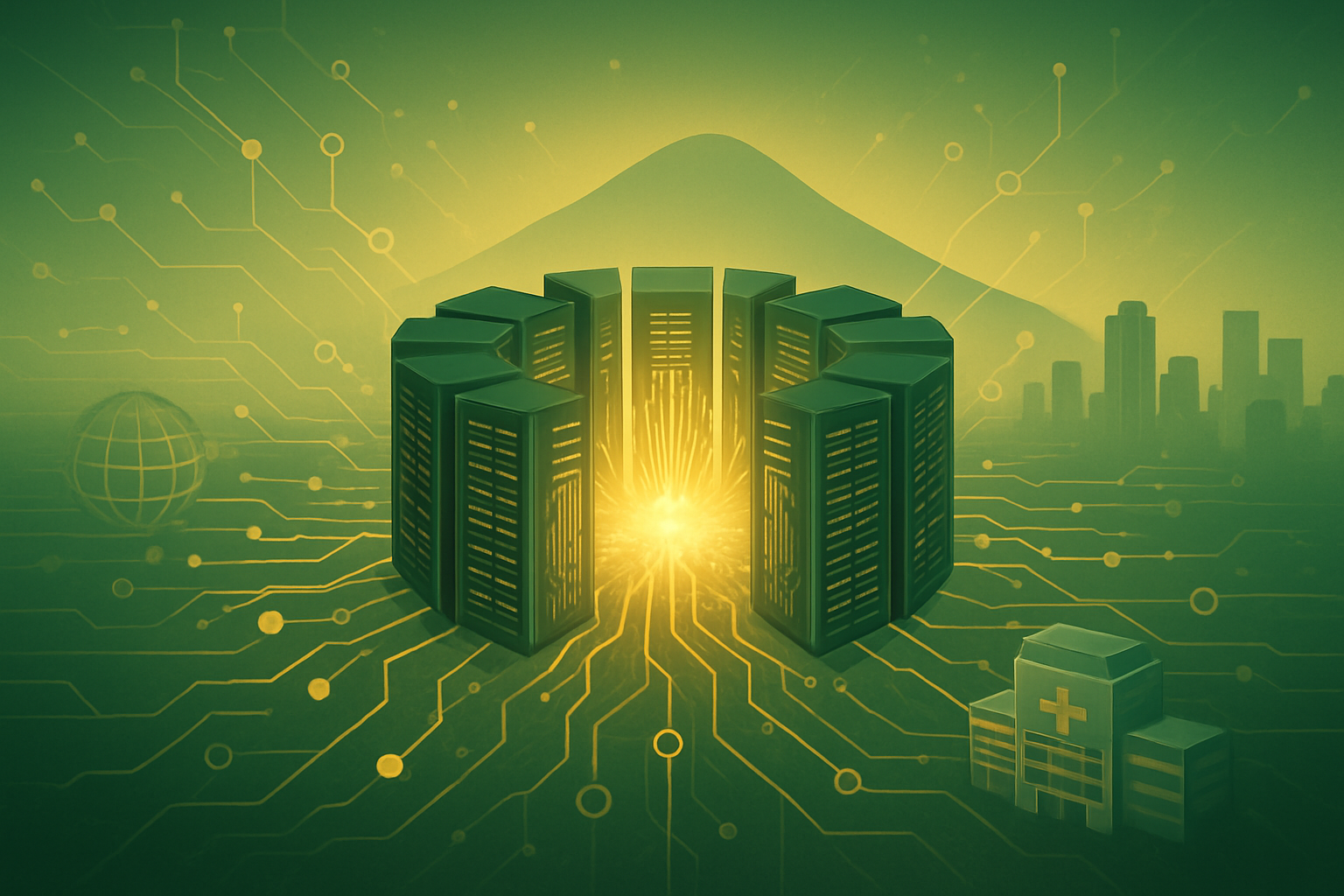
    As of April 15, 2026, Oracle Corporation (NYSE: ORCL) has fundamentally reinvented itself. Long pigeonholed as a legacy provider of on-premise databases, the Austin-based giant is now a primary architect of the artificial intelligence (AI) era. In the last 24 months, Oracle has moved from the periphery of the cloud conversation to the center, becoming the "fourth hyperscaler" alongside Amazon, Microsoft, and Google. Today, the company is defined not just by its dominance in database management, but by its massive "AI factories"—data centers packed with thousands of GPUs that power the next generation of large language models (LLMs) for companies like OpenAI and Meta. This transformation has brought both record-breaking backlogs and a new level of volatility to its stock, as investors weigh the potential of a $500 billion-plus order book against the massive capital intensity required to build the future.

    Historical Background

    Founded in 1977 as Software Development Laboratories (SDL) by Larry Ellison, Bob Miner, and Ed Oates, Oracle’s early journey was centered on a contract for the CIA to build a relational database management system (RDBMS). Renamed Oracle Systems Corporation in 1982, the company pioneered the SQL-based database market, surviving the "database wars" of the 1990s and an accounting scandal in the early 90s that nearly bankrupted the firm.

    Under Ellison’s long tenure, Oracle became an acquisition machine, famously executing hostile takeovers of PeopleSoft and acquiring major players like Siebel Systems and Sun Microsystems. For decades, Oracle's strategy was "lock-in": once a company’s data was in an Oracle database, it stayed there. However, the rise of cloud computing in the 2010s initially caught Oracle off guard, as Amazon Web Services (AWS) began to peel away customers. The last decade has been a relentless race to pivot from selling perpetual software licenses to cloud subscriptions, a transition that culminated in the launch of Oracle Cloud Infrastructure (OCI) Gen2.

    Business Model

    Oracle’s business model is currently in the final stages of a total migration to the cloud. Its revenue is derived from four primary segments:

    1. Cloud Services and License Support: This is the company's largest and most profitable segment, encompassing Oracle Cloud Infrastructure (OCI) and Software-as-a-Service (SaaS) applications like Fusion ERP (Enterprise Resource Planning) and NetSuite.
    2. Cloud License and On-Premise License: Selling traditional software licenses, a declining but still high-margin legacy business.
    3. Hardware: Providing engineered systems like Exadata, designed to run Oracle software with peak performance.
    4. Services: Consulting and support, significantly bolstered by the $28 billion acquisition of Cerner in 2022.

    The modern Oracle model thrives on the "multi-cloud" strategy. Rather than forcing customers to choose only Oracle, the company has partnered with rivals to embed Oracle databases directly into Microsoft Azure and Google Cloud environments, ensuring that its core product remains the industry standard regardless of the infrastructure choice.

    Stock Performance Overview

    The last decade for ORCL has been a study in a "second-act" growth story.

    • 10-Year View: Investors who held ORCL through the transition have seen a total return of approximately 337%. The stock moved from a stagnant "value" range in the 2010s to a high-octane growth trajectory starting in 2023.
    • 5-Year View: Shares have outperformed the broader S&P 500, yielding returns of roughly 110%. This was driven by the realization that Oracle's OCI was faster and cheaper for AI workloads than its larger competitors.
    • 1-Year View: The past 12 months have been highly volatile. After reaching a record high of $346 in late 2025, the stock experienced a significant correction as the market grew wary of the company’s massive capital expenditure (CapEx) targets. As of April 15, 2026, the stock has stabilized around $163, trading at a forward P/E of approximately 21x.

    Financial Performance

    Oracle's financial profile has shifted from a high-margin, low-growth steady state to a high-growth, high-reinvestment phase.

    • Revenue Growth: In the most recent quarter (Q3 FY26), Oracle reported $17.2 billion in revenue, a 22% increase year-over-year—the fastest growth in nearly two decades.
    • Cloud Momentum: OCI revenue surged 84% in the most recent quarter, reaching $4.9 billion.
    • Backlog (RPO): Perhaps the most stunning metric is Oracle’s Remaining Performance Obligations (RPO), which reached $553 billion in early 2026. This reflects long-term contracts for AI infrastructure that have yet to be recognized as revenue.
    • Profitability: While operating margins remain healthy at roughly 42% (non-GAAP), free cash flow has been pressured by a planned $50 billion CapEx spend for FY2026 to build out global AI data centers.

    Leadership and Management

    The 2025-2026 period marked a generational leadership shift at Oracle.

    • The Transition: Longtime CEO Safra Catz, who provided the financial discipline for Oracle’s cloud pivot, stepped down in late 2025 to become Executive Vice Chair.
    • Co-CEOs: Oracle is now led by Co-CEOs Clay Magouyrk and Mike Sicilia. Magouyrk, the architect of OCI, represents the technical future of the company, while Sicilia, who led the Industries and Health divisions, focuses on the vertical integration of Oracle’s software into sectors like healthcare and retail.
    • The Visionary: Larry Ellison remains Executive Chairman and CTO. At nearly 82, Ellison is more active than ever, personally negotiating multi-billion dollar GPU clusters and overseeing the design of Oracle’s "AI Factories."
    • New CFO: Hilary Maxson joined in early 2026 to manage the complex task of balancing massive infrastructure investments with debt obligations.

    Products, Services, and Innovations

    Oracle’s competitive edge currently lies in its "Gen2 Cloud" architecture. Unlike legacy cloud providers whose networks were built for the general-purpose web, OCI was designed with a flat, non-blocking network that is ideally suited for the massive data transfers required by AI training.

    • Autonomous Database: Oracle’s flagship software now uses machine learning to self-patch, self-tune, and self-repair, reducing human error and labor costs.
    • AI Infrastructure: Oracle is one of the largest buyers of NVIDIA (NASDAQ: NVDA) Blackwell GPUs. Its OCI Superclusters allow startups and tech giants to train models with lower latency and higher cost-efficiency than AWS.
    • Oracle Health: The company is currently deploying its "Clinical AI Agent," a tool that uses generative AI to listen to doctor-patient consultations and automatically update Electronic Health Records (EHR), directly addressing the "burnout" crisis in healthcare.

    Competitive Landscape

    Oracle faces the "Big Three" hyperscalers: Amazon (NASDAQ: AMZN) AWS, Microsoft (NASDAQ: MSFT) Azure, and Alphabet (NASDAQ: GOOGL) Google Cloud.

    • Strengths: Oracle is widely considered the most cost-effective platform for database-heavy workloads and AI training. Its "multi-cloud" openness is a strategic advantage; by letting customers run Oracle software on Azure, it prevents customers from migrating off Oracle entirely.
    • Weaknesses: Despite its growth, Oracle’s total cloud market share remains in the high single digits, dwarfed by AWS and Azure’s massive ecosystems. It also lacks the developer-mindshare that rivals have cultivated for decades.

    Industry and Market Trends

    The "Sovereign Cloud" movement is a major tailwind for Oracle. Governments in the EU, Middle East, and Asia are increasingly demanding that their data reside within their borders and be managed by local entities. Oracle’s "Alloy" platform allows partners to become their own cloud providers using Oracle's technology, positioning the company as the preferred partner for nationalized cloud initiatives. Additionally, the shift toward "Distributed Cloud"—where the cloud comes to the customer's data center rather than vice-versa—plays directly into Oracle’s hardware and software strengths.

    Risks and Challenges

    • Capital Intensity: Building data centers is expensive. With $50 billion in CapEx for 2026, any slowdown in AI demand could leave Oracle with massive, underutilized assets and high depreciation costs.
    • Debt Load: Oracle’s total debt remains high (exceeding $140 billion), leaving it sensitive to interest rate fluctuations and credit rating pressures.
    • Cerner Integration: While progressing, the transformation of the legacy Cerner business into a modern cloud entity has been slower and more expensive than initially forecasted, with ongoing scrutiny over major contracts like the U.S. Veterans Affairs system.

    Opportunities and Catalysts

    • AI Monetization: As the $553 billion backlog begins to convert into revenue, Oracle could see a dramatic acceleration in EPS growth.
    • The "Database@Everywhere" Expansion: If Oracle successfully expands its partnerships to include AWS (the last remaining major holdout for a deep database partnership), it would effectively capture the entire enterprise database market.
    • Healthcare Transformation: If the Clinical AI Agent sees mass adoption, Oracle Health could become the dominant operating system for the global healthcare industry, a multi-trillion dollar market.

    Investor Sentiment and Analyst Coverage

    Wall Street is currently "cautiously bullish." Analysts at firms like Guggenheim and Goldman Sachs have maintained "Buy" ratings, citing the unprecedented visibility provided by the company's RPO backlog. However, some value-oriented analysts have shifted to the sidelines, concerned that the stock’s 2025 surge pulled forward several years of growth. Institutional ownership remains high, with major positions held by Vanguard and BlackRock, while retail sentiment is often tied to Larry Ellison’s public prognostications about the future of AI.

    Regulatory, Policy, and Geopolitical Factors

    Oracle is heavily impacted by global data privacy laws (GDPR) and the emerging AI Act in the EU. Because Oracle operates "Sovereign Clouds," it is often viewed more favorably by regulators than its more centralized competitors. However, the company’s massive contracts with the U.S. government (including the Department of Defense) make it a target for political debate regarding government spending on big tech. Geopolitically, Oracle's expansion into regions like Saudi Arabia and Japan provides growth but exposes the company to local regulatory shifts and trade tensions.

    Conclusion

    Oracle Corporation has successfully navigated the most difficult transition in its 50-year history. By leveraging its legacy database dominance to build a specialized, high-performance AI cloud, it has secured a seat at the table of the AI revolution. For investors, the thesis is straightforward but not without risk: Oracle offers unparalleled revenue visibility through its massive $553 billion backlog, but it is currently betting the balance sheet on the permanence of the AI boom. As we move through 2026, the key for ORCL will be execution—converting that backlog into profit while managing the transition to a new leadership team.


    This content is intended for informational purposes only and is not financial advice.
  • Oracle’s AI Renaissance: A Deep Dive into the Newest Hyperscaler (ORCL)

    Oracle’s AI Renaissance: A Deep Dive into the Newest Hyperscaler (ORCL)

    Date: March 12, 2026

    Introduction

    In the rapidly evolving landscape of enterprise technology, few narratives are as compelling as the reinvention of Oracle (NYSE: ORCL). Long considered a "legacy" database provider, Oracle has spent the last three years executing a pivot that has silenced its detractors and positioned it at the epicenter of the generative AI revolution. Today’s Q3 FY2026 results represent a "watershed moment" for the Austin-based giant. With total revenue surging 22% to $17.2 billion and Oracle Cloud Infrastructure (OCI) revenue growing a staggering 84% year-over-year, the company has officially entered the ranks of the "hyperscalers."

    Oracle is no longer just a software vendor; it has become a primary architect of the physical and logical infrastructure required to train the world’s most advanced AI models. This research feature explores how Oracle transformed its "Gen2" cloud into a high-performance engine for AI, the strategic leadership transition that defined 2025, and the massive $553 billion backlog that provides multi-year visibility into its future.

    Historical Background

    Oracle’s journey began in 1977 as Software Development Laboratories (SDL), founded by Larry Ellison, Bob Miner, and Ed Oates. The company’s first major contract was a project for the CIA, code-named "Oracle." By the 1980s, Oracle had revolutionized the database market with the first commercial relational database (RDBMS), eventually dominating the sector for decades.

    Throughout the 1990s and 2000s, Oracle expanded through aggressive acquisitions, including PeopleSoft, Siebel Systems, and Sun Microsystems. However, the early 2010s were marked by a slow response to the rise of cloud computing. Critics argued that Oracle was "late to the cloud," stuck in a legacy model of on-premise licensing. This narrative began to shift in 2018 with the launch of Oracle Cloud Infrastructure (OCI) Gen2, a complete architectural rebuild designed specifically for high-performance computing and enterprise-grade security.

    Business Model

    Oracle operates a multi-faceted business model that has successfully transitioned from one-time license sales to high-margin recurring subscriptions. Its revenue streams are now categorized into four primary segments:

    1. Cloud Services (SaaS/PaaS/IaaS): The fastest-growing segment, encompassing applications like ERP (Fusion, NetSuite) and the OCI infrastructure layer.
    2. Cloud License and On-Premise License: Higher-margin software licenses that allow customers to run Oracle databases in their own data centers or specialized environments.
    3. Hardware: High-end servers and storage systems, including the Exadata database machine.
    4. Services: Consulting and support for large-scale enterprise deployments.

    The core of Oracle's modern strategy is the "Cloud within a Cloud" approach, where Oracle places its database hardware directly inside rival data centers (AWS, Azure, Google Cloud) to capture workloads that were previously unreachable.

    Stock Performance Overview

    Over the past decade, Oracle’s stock has evolved from a steady dividend-payer to a high-growth momentum play.

    • 10-Year Horizon: A story of two halves. The 2016-2021 period saw steady but unspectacular growth as the market discounted Oracle’s cloud potential.
    • 5-Year Horizon: The stock began outperforming the S&P 500 significantly starting in 2023, as the AI-training capabilities of OCI Gen2 became widely recognized.
    • 1-Year Horizon (2025-2026): Driven by the "Stargate" AI data center partnership and massive growth in Remaining Performance Obligations (RPO), the stock has reached all-time highs, with a 1-year return exceeding 65% as of March 2026.

    Financial Performance

    The Q3 FY2026 results released today highlight a massive scale-up in Oracle’s financial engine.

    • Total Revenue: $17.2 billion, a 22% increase year-over-year.
    • OCI Revenue: $4.9 billion, growing at 84%. This is the sixth consecutive quarter of accelerating infrastructure growth.
    • Non-GAAP EPS: $1.79, beating analyst estimates by $0.12.
    • Total RPO (Backlog): A record $553 billion, up 325% over two years, fueled by massive AI training contracts with OpenAI and sovereign government cloud deals.
    • Valuation: While the P/E ratio has expanded significantly from its historical range of 15x-18x to over 35x today, bulls argue the $553B backlog justifies a "hyperscaler premium."

    Leadership and Management

    In September 2025, Oracle underwent its most significant leadership shift in a decade. Long-time CEO Safra Catz, who provided the financial discipline and centralization that stabilized Oracle during its cloud transition, stepped down to become Executive Vice Chair.

    The company returned to a co-CEO model, appointing Clay Magouyrk (former OCI head) and Mike Sicilia (former Applications head). This move signaled a shift from "financial optimization" to "product-led growth." Larry Ellison remains the dominant figure as Chairman and CTO, personally spearheading the design of the "Stargate" AI cluster and the company’s pivot to "Data Center as a Product."

    Products, Services, and Innovations

    Oracle’s competitive edge lies in its "Gen2" cloud architecture and its focus on automation.

    • OCI Gen2: Unlike first-generation clouds, OCI Gen2 uses a non-blocking network and off-box virtualization, making it significantly faster and cheaper for massive AI training workloads.
    • Autonomous Database: A self-driving, self-repairing database that utilizes machine learning to automate tuning and security, drastically reducing operational costs for enterprises.
    • HeatWave GenAI: An integrated service that allows developers to run generative AI queries directly against their data without moving it, a major advantage for security-conscious firms.
    • Cerner (Oracle Health): The integration of Cerner has moved toward a native OCI-based EHR (Electronic Health Record) system featuring an "AI Clinical Agent" to reduce physician burnout.

    Competitive Landscape

    Oracle competes in the "Hyperscaler Big Four" alongside Amazon Web Services (AWS), Microsoft Azure, and Google Cloud Platform (GCP).

    • Strengths: Oracle wins on price-performance for high-scale database workloads and AI training. Its "multi-cloud" openness (putting Oracle hardware in Azure/AWS) has turned competitors into partners.
    • Weaknesses: Oracle still lags in developer ecosystem size and the sheer breadth of generic cloud services (e.g., serverless, IoT) compared to AWS.
    • Market Share: While Oracle’s overall cloud market share remains fourth, it has captured an estimated 35% of the new AI training workload market in 2025.

    Industry and Market Trends

    Three macro trends are currently driving Oracle's growth:

    1. The Industrialization of AI: Enterprises are moving from "experimental AI" to "industrial AI," requiring massive, dedicated clusters that Oracle specializes in building.
    2. Sovereign Cloud: Governments increasingly demand that their data reside within their borders on isolated infrastructure. Oracle’s "Dedicated Region" and "Alloy" products allow nations to run their own Oracle Cloud.
    3. Decentralized Data: As data becomes too large to move, the cloud is moving to the data. Oracle’s strategy of placing data centers inside corporate facilities and partner clouds aligns with this shift.

    Risks and Challenges

    Despite the recent success, Oracle faces significant headwinds:

    • Debt Load: To fund its massive expansion, Oracle’s non-current debt has climbed above $120 billion. High interest rates make this debt more expensive to service.
    • Capex Intensity: Oracle’s planned FY2026 capital expenditure of $35B–$50B is unprecedented for the company and has led to negative free cash flow in several recent quarters.
    • Cerner Execution: While the VA (Veterans Affairs) contract is slated to restart in April 2026, any further technical delays or political pushback could hurt Oracle’s credibility in the massive healthcare sector.
    • Reliance on Ellison: At age 81, Larry Ellison remains the visionary heart of the company. Any sudden leadership change would create significant uncertainty.

    Opportunities and Catalysts

    • Stargate AI Cluster: The completion of the world’s largest AI supercomputing cluster in partnership with OpenAI and Microsoft remains the primary near-term catalyst.
    • Healthcare AI: If the "AI Clinical Agent" achieves broad adoption in 2026, Oracle Health could transform from a low-margin legacy acquisition into a high-margin AI software business.
    • Sovereign Growth: With over 20 nations currently in negotiations for "Sovereign Cloud" regions, Oracle has a unique opportunity to become the "National Security Cloud" of choice for the G20.

    Investor Sentiment and Analyst Coverage

    Wall Street sentiment has shifted from skeptical to overwhelmingly bullish over the last 18 months. Major institutions like BlackRock and Vanguard have increased their positions, and hedge funds have treated ORCL as a "proxy play" for AI infrastructure alongside Nvidia.

    • Analyst Ratings: Currently, 72% of analysts covering Oracle have a "Buy" or "Outperform" rating.
    • Target Prices: Consensus price targets hover around $360, with "blue-sky" scenarios reaching as high as $420 following the Q3 report.
    • Retail Chatter: Social sentiment reflects a shift in perception—retail investors who once viewed Oracle as "boring" now track its data center expansion and GPU cluster sizes with the same fervor as they do Nvidia's.

    Regulatory, Policy, and Geopolitical Factors

    Oracle operates in a complex regulatory environment:

    • Data Sovereignty: Laws like the EU Data Act and China’s data security regulations favor Oracle’s "Dedicated Region" strategy, which allows for local data residency.
    • Antitrust: While most antitrust focus remains on Google and Amazon, Oracle’s dominance in the database market remains under periodic scrutiny from the FTC and EU regulators.
    • Government Contracts: The $10 billion JWCC (Joint Warfighting Cloud Capability) contract with the DoD remains a stable revenue pillar, though it subjects Oracle to intense federal oversight and political shifts.

    Conclusion

    Oracle’s Q3 FY2026 results confirm that the company has successfully shed its legacy skin to emerge as a powerhouse of the AI era. By doubling down on infrastructure that others were slow to build and embracing a multi-cloud strategy that its rivals initially resisted, Larry Ellison has orchestrated perhaps the greatest "Act II" in corporate history.

    However, for investors, the path forward is not without peril. The transition has required an enormous amount of debt and capital expenditure that has strained free cash flow. The "hyperscaler" valuation Oracle now enjoys leaves little room for execution errors, particularly in the delicate integration of Cerner and the high-stakes build-out of its AI clusters.

    Investors should closely monitor the April 2026 restart of the VA EHR contract and the company’s ability to manage its debt-to-EBITDA ratio as the massive $553B backlog begins to convert into recognized revenue. For now, Oracle stands as a testament to the idea that in technology, relevance is not given—it is built, one data center at a time.


    This content is intended for informational purposes only and is not financial advice.

  • The AI Utility Transition: A Comprehensive Research Feature on Oracle Corporation (ORCL)

    The AI Utility Transition: A Comprehensive Research Feature on Oracle Corporation (ORCL)

    Date: February 10, 2026

    Introduction

    As of early 2026, Oracle Corporation (NYSE: ORCL) has evolved far beyond its origins as a provider of relational databases. Today, it stands as a pivotal "AI infrastructure utility," providing the foundational computing power and data architecture for the generative AI revolution. Following a massive surge in market capitalization through 2024 and 2025, Oracle is currently at a critical crossroads. While its cloud backlog has reached record heights, the company is navigating a complex transition involving a massive capital expenditure cycle and a strategic leadership handoff. This report examines the current state of Oracle, its aggressive pivot to the cloud, and the risks and rewards facing investors in this new era of sovereign AI and hyper-scale infrastructure.

    Historical Background

    Oracle’s journey began in 1977 when Larry Ellison, Bob Miner, and Ed Oates secured a contract from the CIA to build a relational database, codenamed "Oracle." For decades, the company dominated the on-premise software market, becoming synonymous with the enterprise data center.

    The early 2000s were defined by an aggressive acquisition strategy, as Oracle spent billions to acquire rivals like PeopleSoft, Siebel Systems, and Sun Microsystems. However, the company was initially slow to embrace the cloud, famously dismissed by Ellison in 2008 as a "passing fad." This delay allowed rivals like Amazon Web Services (AWS) and Microsoft Azure to seize an early lead.

    The real transformation began in 2018 with the launch of Oracle Cloud Infrastructure (OCI) Gen 2. By redesigning its cloud from the ground up to handle high-performance database workloads, Oracle inadvertently created a platform perfectly suited for the massive parallel processing required by artificial intelligence. By 2025, Oracle had completed its pivot from a legacy vendor to a modern cloud titan.

    Business Model

    Oracle’s business model has shifted from one-time perpetual license sales to a recurring, high-margin subscription model. As of early 2026, over 75% of Oracle’s revenue is derived from cloud services.

    1. Infrastructure (IaaS): OCI is Oracle's fastest-growing segment. It provides the physical foundations—data centers, specialized networking, and GPU clusters—for customers to build and run applications.
    2. Applications (SaaS): Oracle remains a leader in enterprise resource planning (ERP) through Fusion ERP and NetSuite. These applications are now being augmented with "Agentic AI," allowing for autonomous business processes in finance and HR.
    3. Database Services: The flagship Oracle Database remains a core profit engine. Oracle's "Multi-Cloud" strategy, which involves placing its hardware directly inside AWS and Azure data centers, has turned former competitors into distribution channels.
    4. Industry-Specific Solutions: With the 2022 acquisition of Cerner, Oracle has leaned heavily into vertical markets, particularly healthcare, aiming to modernize electronic health records (EHR) via the cloud.

    Stock Performance Overview

    Oracle’s stock has experienced high volatility over the past decade, reflecting its late-stage transition to the cloud.

    • 10-Year Horizon: A decade ago, ORCL traded near $35. The stock saw steady growth through the late 2010s but truly accelerated during the 2021-2024 period as OCI gained traction.
    • 5-Year Horizon: Over the last five years, Oracle outperformed the S&P 500, driven by the AI boom. In 2024 alone, the stock gained over 60%.
    • 1-Year Horizon: After reaching an all-time high of $345.72 in late 2025, the stock has recently undergone a significant correction. As of February 2026, shares are trading in the $145–$158 range. This drawdown is largely attributed to investor anxiety over the company’s massive $25 billion bond issuance and the high costs associated with building out dozens of new "gigascale" data centers.

    Financial Performance

    For the fiscal year ending in 2025, Oracle reported total revenue of $57.4 billion. However, the true story lies in the forward-looking metrics.

    In its Q2 FY2026 results (December 2025), Oracle reported:

    • Total Revenue: $16.1 billion, a 14% year-over-year increase.
    • Cloud Revenue: $8.0 billion, up 34% as AI demand surged.
    • Remaining Performance Obligations (RPO): A record $523 billion. This massive backlog represents contracted future revenue, much of it tied to multi-year AI infrastructure deals.

    Despite strong growth, margins have come under pressure due to the heavy Capital Expenditure (CapEx) required to purchase NVIDIA GPUs and build data center capacity. The company carries approximately $175 billion in total debt, a figure that has become a point of contention for value-oriented investors.

    Leadership and Management

    A major theme for Oracle in early 2026 is its recent leadership transition. In late 2025, Safra Catz, who served as CEO for over a decade and was instrumental in Oracle’s financial discipline, moved to the role of Executive Vice Chair.

    Larry Ellison remains the visionary heart of the company as Chairman and Chief Technology Officer (CTO). The day-to-day operations are now led by two Co-CEOs:

    • Clay Magouyrk: The architect of OCI, overseeing engineering and infrastructure.
    • Mike Sicilia: A specialist in vertical applications, focusing on healthcare and global sales.

    This dual-leadership model is designed to balance technical infrastructure innovation with industry-specific software growth, though it remains in its early testing phase.

    Products, Services, and Innovations

    Oracle’s current innovation pipeline is focused almost entirely on AI scalability.

    • OCI Zettascale: Unveiled in late 2025, this architecture allows for the creation of massive AI supercomputers by connecting tens of thousands of GPUs across high-speed RDMA networks.
    • Database 26ai: The latest iteration of Oracle’s flagship database includes native vector search capabilities, allowing enterprises to store and query the data used to train Large Language Models (LLMs) more efficiently.
    • Agentic AI Integration: Oracle has begun deploying AI "agents" across its SaaS portfolio, enabling autonomous medical scribing in clinical settings and predictive maintenance in supply chains.

    Competitive Landscape

    Oracle occupies a unique "silver medalist" position in the cloud market. While it lacks the total market share of AWS, Microsoft Azure, or Google Cloud, it has carved out a dominant niche in high-performance computing.

    • AWS/Azure/Google: Oracle competes by offering lower data egress fees and specialized "RDMA" networking, which is significantly faster for AI training than the standard Ethernet used by some competitors.
    • NVIDIA Partnership: Oracle has positioned itself as the "preferred cloud" for NVIDIA’s own internal development, giving it a perceived hardware advantage in terms of availability and integration.

    Industry and Market Trends

    The "Sovereign AI" trend is a significant macro driver for Oracle. Nations are increasingly seeking to build their own AI clouds within their borders to maintain data sovereignty. Oracle’s "Cloud at Customer" and "Dedicated Region" offerings allow governments to run a full OCI region inside their own data centers, a capability Oracle has pioneered more aggressively than its rivals.

    Additionally, the industry is moving toward multi-cloud interoperability. Oracle’s decision to allow its database services to run natively on rival clouds acknowledges that the future of enterprise IT is heterogeneous.

    Risks and Challenges

    Investing in Oracle in 2026 comes with distinct risks:

    • High Leverage: The $175 billion debt load is substantial. If interest rates remain elevated or if the AI "payoff" takes longer than expected, servicing this debt could eat into free cash flow.
    • Concentration Risk: A significant portion of OCI’s growth is driven by a handful of "whale" clients, including OpenAI, Meta, and NVIDIA. Any shift in their spending could disproportionately impact Oracle’s top line.
    • Execution Risk: Building the world’s largest AI clusters (projects like "Stargate") involves immense logistical challenges regarding power, cooling, and hardware reliability.
    • Valuation: Despite the recent pullback, Oracle still trades at a premium compared to its historical averages, requiring continued high-double-digit cloud growth to justify its price.

    Opportunities and Catalysts

    • The OpenAI Contract: In late 2025, Oracle reportedly secured a landmark $300 billion, multi-year infrastructure deal with OpenAI, solidifying its status as a primary training ground for future LLMs.
    • Healthcare Modernization: If the new Co-CEOs can successfully migrate the legacy Cerner customer base to the OCI-based "Millennium" platform, it would unlock a massive, high-margin revenue stream.
    • Sovereign Cloud Expansion: Oracle’s ability to deploy "cloud regions" in small, secure configurations makes it the frontrunner for government and defense contracts globally.

    Investor Sentiment and Analyst Coverage

    Wall Street is currently divided on Oracle. The consensus rating is a "Moderate Buy," but the recent stock price decline has led several prominent analysts to downgrade the stock to "Hold."

    • Bulls argue that the $523 billion RPO is an unprecedented "safety net" that guarantees years of growth.
    • Bears point to the massive CapEx-to-Free-Cash-Flow ratio, worrying that Oracle is spending too much on "shovels" in an AI gold rush that may eventually cool.

    Regulatory, Policy, and Geopolitical Factors

    Oracle remains at the center of several geopolitical hotspots. Its partnership with TikTok (via Project Texas) to host U.S. user data continues to be a subject of intense regulatory scrutiny. Furthermore, as Oracle becomes a critical provider for healthcare data, it faces potential anti-trust inquiries regarding data portability and market dominance in the clinical software space.

    On the positive side, U.S. government incentives for domestic high-tech infrastructure and "Buy American" policies for cloud services provide a favorable tailwind for Oracle’s public sector business.

    Conclusion

    Oracle Corporation enters the second half of the decade as a transformed entity. By leveraging its legacy database dominance into a high-performance AI infrastructure business, it has secured a place at the table with the world’s largest technology firms. However, the transition has come at the cost of high debt and immense capital requirements.

    For investors, Oracle represents a high-conviction bet on the physical infrastructure of AI. The massive $523 billion backlog provides a clear roadmap for growth, but the stock’s performance will ultimately depend on management’s ability to execute on its data center buildouts and manage its significant leverage. In the "AI utility" era, Oracle is no longer just a software company—it is the foundation upon which the next generation of computing is being built.


    This content is intended for informational purposes only and is not financial advice.

  • The Stargate Pivot: A Deep Dive into Oracle’s $175 Billion AI Infrastructure Bet

    The Stargate Pivot: A Deep Dive into Oracle’s $175 Billion AI Infrastructure Bet

    As of February 9, 2026, Oracle Corporation (NYSE: ORCL) has completed one of the most audacious pivots in corporate history. Once regarded as a "legacy" database vendor struggling to catch the cloud wave, Oracle has reinvented itself as a high-intensity infrastructure utility for the artificial intelligence (AI) era. The company is no longer just selling software; it is building the physical and digital foundations—massive data centers and specialized high-speed networks—required to train the world’s largest large language models (LLMs). This article explores Oracle’s transformation, its massive capital expenditure (CapEx) cycle, and the "multi-cloud" strategy that has redefined its competitive standing.

    Historical Background

    Founded in 1977 by Larry Ellison, Bob Miner, and Ed Oates, Oracle began with a contract for the CIA to build a relational database management system (RDBMS) codenamed "Oracle." Throughout the 1980s and 90s, the company dominated the enterprise database market, becoming the backbone of global finance and logistics.

    The early 2000s were defined by a massive acquisition spree, including PeopleSoft, Siebel Systems, and NetSuite, which cemented Oracle’s position in Enterprise Resource Planning (ERP). However, the mid-2010s saw Oracle struggle to adapt to the cloud, trailing behind Amazon Web Services (AWS) and Microsoft Azure. It wasn't until the launch of Oracle Cloud Infrastructure (OCI) Gen 2 in 2018 that the company found its footing, leveraging its database expertise to create a cloud platform optimized for high-performance computing (HPC) and AI workloads.

    Business Model

    Oracle’s business model has shifted from high-margin upfront license sales to a recurring revenue model centered on four pillars:

    1. Cloud Infrastructure (IaaS): Providing the compute, storage, and networking (OCI) that powers AI startups and enterprise applications.
    2. Cloud Applications (SaaS): Industry-leading suites like Fusion ERP, NetSuite, and Oracle Cerner (Healthcare).
    3. Database & Middleware: Offering the flagship Oracle Database as a cloud service or through traditional licenses.
    4. Hardware & Services: High-performance systems like Exadata, designed to run Oracle software with maximum efficiency.

    A key differentiator in its current model is the "Cloud for Clouds" strategy, where Oracle hosts its services within rival data centers, prioritizing accessibility over exclusivity.

    Stock Performance Overview

    The stock’s performance has been a tale of two eras. Over the 10-year horizon, Oracle has returned approximately 365%, outperforming the broader S&P 500 as it successfully transitioned to a cloud-first model. On a 5-year basis, the stock is up roughly 142%, buoyed by the rapid adoption of OCI.

    However, the 1-year performance tells a more volatile story. As of February 2026, the stock is down approximately 20.18% from its 2025 highs. After peaking near $345 in late 2025 on AI euphoria, the stock corrected to its current level near $142.82 (as of Feb 6, 2026). This correction was driven by investor anxiety over the company’s massive "funding gap"—the result of historic CapEx spending that has yet to fully convert into free cash flow.

    Financial Performance

    Oracle’s recent financials reflect a company in a high-growth, high-investment phase. In Q2 FY2026, revenue reached $16.1 billion, a 14% increase year-over-year. OCI revenue alone surged 66% to $4.1 billion, making it the fastest-growing major cloud provider in percentage terms.

    However, the balance sheet has become a point of contention. To fund its "Stargate" project—a $500 billion AI supercomputer initiative in partnership with OpenAI and SoftBank—Oracle’s total debt has ballooned to approximately $175 billion. The company raised over $50 billion in new financing in late 2025. Consequently, Free Cash Flow (FCF) turned negative to -$13.1 billion on a trailing twelve-month basis, as capital expenditures for FY2026 were revised upward to a staggering $50 billion.

    Leadership and Management

    September 2025 marked a watershed moment for Oracle leadership. Safra Catz, the long-time CEO credited with Oracle’s financial discipline, transitioned to Executive Vice Chair. In her place, Oracle appointed Co-CEOs Clay Magouyrk (the architect of OCI) and Mike Sicilia (the head of industry-specific applications).

    Larry Ellison remains the company’s guiding light as Chairman and CTO. At over 80 years old, Ellison’s influence is arguably stronger than ever; he is the primary visionary behind Oracle’s pivot to AI infrastructure and its "sovereign cloud" initiatives. The new leadership structure suggests a shift toward an engineering-heavy culture focused on technical dominance in the AI stack.

    Products, Services, and Innovations

    The crown jewel of Oracle’s current lineup is OCI Gen 2, which uses a non-blocking "flat" network architecture that is uniquely suited for the massive data transfers required by GenAI training.

    Innovations to watch include:

    • HeatWave GenAI: An integrated database service that allows customers to bring LLMs directly to their data without moving it to a separate vector database.
    • Sovereign Cloud: Region-specific cloud instances that comply with local data privacy and residency laws, a major selling point for European and Middle Eastern governments.
    • Oracle Database@Azure/Google/AWS: These integrations allow Oracle’s proprietary Exadata hardware to sit physically inside competitor data centers, providing the low latency required for high-speed database operations.

    Competitive Landscape

    While Oracle’s market share in Cloud IaaS remains modest at approximately 3%, it is punching well above its weight in the AI niche. It competes with Amazon (AWS), Microsoft (Azure), and Google Cloud (GCP).

    Oracle’s competitive edge lies in its "performance-per-dollar" for AI workloads. By utilizing RDMA (Remote Direct Memory Access) networking, Oracle can link thousands of NVIDIA Blackwell GPUs more efficiently than some of its larger rivals. Its "multi-cloud" deals have effectively turned its biggest competitors into its biggest distributors, a move that has neutralized the threat of customers leaving Oracle’s database ecosystem for "cloud-native" alternatives.

    Industry and Market Trends

    The dominant trend of 2026 is the industrialization of AI. Large enterprises are moving past the "experimentation" phase of GenAI and into the "production" phase, which requires massive, stable infrastructure.

    Additionally, Sovereign Cloud has emerged as a critical trend. Governments are increasingly wary of storing sensitive national data in US-based hyperscale clouds. Oracle’s ability to build "disconnected" clouds—data centers that are not connected to the public internet—has made it the preferred partner for national security and government projects globally.

    Risks and Challenges

    The risks facing Oracle are primarily financial and concentrated:

    • Debt and Leverage: With $175 billion in debt, Oracle is highly sensitive to interest rate fluctuations and credit rating downgrades.
    • Tenant Dependency: A significant portion of Oracle’s OCI growth is driven by a handful of "whale" clients like OpenAI, Meta, and TikTok. If these entities shift their workloads or reduce spending, Oracle could be left with expensive, underutilized capacity.
    • Execution Risk: The "Stargate" project is one of the most complex engineering feats ever attempted. Any delays in power delivery or GPU procurement could stall revenue growth.

    Opportunities and Catalysts

    The primary catalyst for Oracle is its Remaining Performance Obligation (RPO), which hit a record $523 billion in early 2026. This represents a massive backlog of signed contracts that have not yet been recognized as revenue. As Oracle brings its 4.5 gigawatts of new data center capacity online, this backlog should theoretically convert into high-margin revenue.

    Furthermore, the integration of Cerner into the OCI stack offers a multi-billion dollar opportunity to modernize the healthcare industry using AI-driven clinical digital assistants, a market Oracle is uniquely positioned to dominate.

    Investor Sentiment and Analyst Coverage

    Wall Street is currently divided on Oracle. Bullish analysts point to the $523B RPO and set price targets near $295, viewing the current dip as a generational buying opportunity. They argue that Oracle is building the "railroads" of the AI age.

    Bearish analysts are concerned about the "funding gap" and the transition to a new Co-CEO structure during such a volatile period. They view the negative free cash flow as a red flag, fearing that the AI infrastructure bubble may burst before Oracle can pay down its massive debt load.

    Regulatory, Policy, and Geopolitical Factors

    Oracle faces a complex regulatory environment. In the US, it remains a critical government contractor, which provides a steady revenue floor but subjects it to intense scrutiny. Globally, the company must navigate the European Union’s evolving AI Act and data sovereignty laws.

    Geopolitically, Oracle’s relationship with TikTok (hosting its US data) remains a point of political friction. However, its expansion into the Middle East and Southeast Asia through sovereign cloud deals has largely been viewed as a geopolitical win, aligning the company with the "data nationalism" trend.

    Conclusion

    Oracle Corporation has successfully shed its "legacy" skin to become a central player in the AI infrastructure race. By embracing a multi-cloud strategy and spending aggressively to build specialized AI capacity, Larry Ellison has positioned the company as an indispensable utility for the next decade of computing.

    However, for investors, Oracle is no longer the "safe" value stock it once was. It is now a high-beta, high-leverage bet on the permanence of the AI revolution. The coming 12 to 24 months will be a test of execution: can Oracle bring its massive data centers online and convert its record-breaking backlog into cash fast enough to service its debt? For those who believe in the AI "supercycle," Oracle offers perhaps the most direct exposure to the physical infrastructure of the future.


    This content is intended for informational purposes only and is not financial advice.