
Tag: LNG

  • The Atlantic Margin Transition: A Deep Dive into Kosmos Energy (KOS) in 2026

    The Atlantic Margin Transition: A Deep Dive into Kosmos Energy (KOS) in 2026

    As of March 2, 2026, Kosmos Energy Ltd. (NYSE/LSE: KOS) stands at a pivotal crossroads in its twenty-three-year history. Once the darling of frontier oil exploration, the company is now navigating a complex transition from a high-growth, high-expenditure explorer to a disciplined, cash-flow-focused producer. This transformation comes at a time of immense volatility in global energy markets, where the dual pressures of energy security and the energy transition have placed a premium on low-cost, lower-carbon transition fuels like Liquefied Natural Gas (LNG).

    Kosmos has recently dominated headlines following its fiscal year 2025 earnings release, which highlighted both the immense potential of its world-class West African assets and the lingering shadows of a heavy debt burden. With major projects like Greater Tortue Ahmeyim (GTA) finally moving into a steady production phase, investors are closely watching to see if the "Kosmos 2.0" strategy can deliver the promised shareholder returns or if the company will remain shackled by its balance sheet.

    Historical Background

    Founded in 2003 by a team of industry veterans backed by private equity firms Warburg Pincus and Blackstone, Kosmos Energy made a name for itself through audacious frontier exploration. Its crowning achievement came in 2007 with the discovery of the massive Jubilee Field offshore Ghana, one of the largest West African oil finds of the decade. This discovery not only put Ghana on the map as a significant oil producer but also established Kosmos as a top-tier deepwater explorer.

    The company went public in 2011, listing on the New York Stock Exchange. Over the following decade, Kosmos diversified its portfolio, expanding into the U.S. Gulf of Mexico through the acquisition of Deep Gulf Energy in 2018 and making significant gas discoveries offshore Senegal and Mauritania. These gas finds eventually formed the basis of the Greater Tortue Ahmeyim project, marking the company’s strategic shift toward LNG. However, the journey has not been without turbulence; the collapse of oil prices in 2014 and 2020, coupled with the capital-intensive nature of deepwater development, forced several rounds of restructuring and strategic pivots.

    Business Model

    Kosmos Energy operates as a pure-play deepwater exploration and production (E&P) company. Its business model is built on three core geographical pillars:

    1. Ghana: The company’s "cash cow," anchored by the Jubilee and TEN fields. These assets provide steady oil production and high-margin cash flows.
    2. U.S. Gulf of Mexico: A portfolio focused on infrastructure-led exploration (ILX). By targeting prospects near existing subsea infrastructure, Kosmos can bring new discoveries online quickly and at a lower cost.
    3. Senegal and Mauritania: The company’s long-term growth engine, centered on the Greater Tortue Ahmeyim LNG project.

    Unlike diversified "supermajors," Kosmos focuses exclusively on the Atlantic Margin. Its revenue is derived almost entirely from the sale of crude oil and natural gas, with a growing percentage of its future revenue expected to come from long-term LNG supply contracts.

    Stock Performance Overview

    The stock performance of Kosmos Energy has been a rollercoaster for long-term investors. As of March 2, 2026, the stock is trading around $2.33, reflecting a significant recovery from its 52-week lows but still well below historical highs.

    • 1-Year Performance: Down approximately 17%. The stock suffered in mid-2025 due to a credit downgrade and delays in the GTA project but rallied in early 2026 as production targets were met.
    • 5-Year Performance: Down approximately 32%. Investors who bought in during the 2021 recovery have largely seen their gains erased by the capital-intensive nature of the company’s recent growth phase.
    • 10-Year Performance: Down over 50%. Since 2016, the stock has struggled to return to the $5.00–$6.00 range, largely due to dilutive capital raises and a debt-heavy balance sheet that has weighed on valuation multiples.

    Financial Performance

    Kosmos Energy's full-year 2025 results, released today, present a stark contrast between operational success and accounting realities.

    • Revenue: FY 2025 revenue stood at $1.29 billion, a decline from the $1.68 billion seen in 2024, partly due to asset divestments and lower realized prices in the first half of the year.
    • Net Income/Loss: The company reported a significant net loss of $699.8 million for 2025. This was driven by $322 million in non-cash impairments in the fourth quarter, notably write-offs related to the Yakaar-Teranga project in Senegal and the Winterfell-4 well in the Gulf of Mexico.
    • Debt and Liquidity: Net debt remains the company’s primary financial hurdle, sitting at roughly $3.0 billion. With a leverage ratio of 4.6x, the company is under pressure to deleverage. However, management has pointed to a liquidity cushion of $342 million and expects free cash flow to accelerate in 2026 as GTA Phase 1 reaches full capacity.

    Leadership and Management

    Andrew Inglis, Chairman and CEO since 2014, has steered Kosmos through its most challenging decade. A former BP executive, Inglis has been credited with shifting the company’s focus from wildcat exploration to disciplined development. His current "Winning with Gas" strategy is central to the company’s identity.

    The management team is currently focused on "Operational Excellence." In early 2026, the strategy emphasizes high-margin production over volume-at-all-costs. While Inglis has faced criticism for the high debt levels accumulated during the development of GTA, his supporters point to his success in securing a life-extending license for the Jubilee field in Ghana through 2040 as a masterclass in government relations.

    Products, Services, and Innovations

    Kosmos’s primary "product" is the delivery of energy through two main streams:

    • Low-Cost Oil: Jubilee Southeast and the Gulf of Mexico provide high-quality crude that is easily refined and fetches premium pricing.
    • Transition Gas: The GTA project is an engineering marvel, utilizing a Floating Liquefied Natural Gas (FLNG) vessel to process gas from deepwater reservoirs.

    Innovation at Kosmos is largely focused on subsea tie-back technology. In the Gulf of Mexico, the company uses advanced seismic imaging to identify "near-field" opportunities that can be connected to existing platforms, minimizing environmental footprint and maximizing returns. In West Africa, the company is pioneering cross-border resource sharing between Senegal and Mauritania, a first for the region.

    Competitive Landscape

    Kosmos occupies a unique niche. It is too large to be considered a "junior" explorer but lacks the massive balance sheet of supermajors like Shell (NYSE: SHEL) or TotalEnergies (NYSE: TTE).

    • The Independent Challenge: In the Gulf of Mexico, Kosmos competes with companies like Occidental Petroleum (NYSE: OXY) for acreage. Its edge lies in its agility and technical focus on specific geological trends.
    • The West Africa Dynamic: In West Africa, Kosmos often partners with BP (NYSE: BP). While this provides technical and financial support, it also means Kosmos has less control over project timelines. Its competitive weakness is its higher cost of capital compared to these integrated giants.

    Industry and Market Trends

    The global E&P sector in 2026 is defined by several macro drivers:

    1. Energy Security: European demand for non-Russian gas continues to drive interest in West African LNG.
    2. Capital Discipline: Investors are no longer rewarding production growth; they are demanding dividends and buybacks, a trend Kosmos is struggling to join due to its debt.
    3. The Rise of Gas: Natural gas is increasingly viewed as the essential bridge fuel, which bodes well for Kosmos’s massive gas reserves in the Mauritania-Senegal basin.

    Risks and Challenges

    The "bear case" for Kosmos is centered on three main risks:

    • Financial Leverage: With a 4.6x leverage ratio, Kosmos has little room for error. Any significant drop in oil prices below $65/bbl could severely strain its ability to service debt.
    • Project Execution: The GTA project has seen multiple delays over the years. While Phase 1 is now online, any technical failure in the FLNG unit would be catastrophic for the 2026 cash flow projections.
    • Asset Concentration: A significant portion of the company’s value is tied to just three regions. Political instability or regulatory changes in Ghana or Senegal could have an outsized impact on the stock.

    Opportunities and Catalysts

    Conversely, the "bull case" is supported by several near-term catalysts:

    • Deleveraging via Divestment: The pending $220 million sale of assets in Equatorial Guinea to Panoro Energy is a major step toward cleaning up the balance sheet.
    • GTA Phase 2: A Final Investment Decision (FID) on GTA Phase 2 could significantly increase the value of the Mauritania-Senegal core.
    • Jubilee Growth: The J74 well in Ghana, which recently came online at 13,000 bopd, suggests that the Jubilee field still has significant upside potential.

    Investor Sentiment and Analyst Coverage

    Wall Street remains cautious but intrigued. The consensus rating is currently a "Hold," with a median price target of $2.53.

    • Institutional Support: Despite its volatility, Kosmos maintains high institutional ownership (over 95%). Firms like BlackRock and Invesco view it as a high-leverage play on a recovery in energy prices and the successful execution of LNG strategies.
    • Retail Sentiment: On social media and retail platforms, sentiment is mixed. Many "value" investors see the current sub-$3 price as an entry point into a company with 500 million barrels of oil equivalent (mmboe) in reserves, while others fear the "debt trap."

    Regulatory, Policy, and Geopolitical Factors

    Operating in West Africa requires a high degree of geopolitical savvy.

    • Senegal: Following the 2025 elections, the new administration has pushed for greater "local content" and a review of existing contracts. Kosmos’s exit from the Yakaar-Teranga block was seen by some as a tactical retreat to maintain better relations on the core GTA project.
    • U.S. Policy: In the Gulf of Mexico, regulatory shifts regarding leasing and environmental permits under the current U.S. administration remain a headwind for long-term planning, although Kosmos’s focus on existing infrastructure mitigates some of this risk.

    Conclusion

    Kosmos Energy (NYSE: KOS) enters 2026 as a company that has finished its "heavy lifting" but has yet to reap the rewards. The successful ramp-up of GTA Phase 1 and the stabilization of production in Ghana provide the clearest path to value creation the company has had in years. However, the $3 billion debt mountain remains a formidable obstacle.

    For investors, Kosmos represents a high-risk, high-reward bet on two things: the continued strength of the LNG market and management’s ability to execute a rigorous deleveraging plan. If Kosmos can successfully reduce its leverage below 3.0x by the end of 2026, the stock could see a significant re-rating. Until then, it remains a "show-me" story that requires patience and a high tolerance for volatility.


    This content is intended for informational purposes only and is not financial advice.

  • Cheniere Energy (LNG) 2026 Research Feature: The King of U.S. Exports Faces a Shifting Global Tide

    Cheniere Energy (LNG) 2026 Research Feature: The King of U.S. Exports Faces a Shifting Global Tide

    As of February 26, 2026, Cheniere Energy, Inc. (NYSE: LNG) stands as a titan of the global energy transition, representing the largest producer of liquefied natural gas in the United States and the second-largest operator globally. Following its latest Q4 and Full-Year 2025 earnings report, released today, the company finds itself at a critical juncture. While Cheniere has successfully navigated the volatility of the post-2022 energy crisis, it now faces a shifting landscape defined by a potential global supply glut, evolving geopolitical alliances, and a renewed U.S. regulatory environment that has aggressively pivoted toward fossil fuel export expansion.

    Historical Background

    Cheniere’s journey is one of the most dramatic "pivot" stories in corporate history. Founded by Charif Souki in 1996, the company originally intended to build regasification terminals to import natural gas into a supposedly resource-scarce America. However, the unconventional shale revolution of the late 2000s rendered this model obsolete almost overnight.

    Under heavy debt and facing potential bankruptcy, the company pivoted to exports. In 2016, Cheniere’s Sabine Pass terminal became the first facility to export LNG from the lower 48 states. A leadership transition in 2016 saw Jack Fusco take the helm, shifting the company’s focus from aggressive, speculative growth to operational excellence and disciplined capital allocation. By 2026, this transformation has culminated in a dual-hub powerhouse (Sabine Pass and Corpus Christi) that serves as the backbone of U.S. energy diplomacy.

    Business Model

    Cheniere operates a robust, fee-based business model that insulates it from much of the commodity price volatility that plagues traditional upstream oil and gas firms.

    1. Liquefaction Services: The core of the business involves taking natural gas from the U.S. pipeline grid, cooling it to -260°F, and loading it onto specialized tankers.
    2. Long-Term Contracts: Approximately 85-90% of Cheniere’s production is sold under 15-to-20-year Sale and Purchase Agreements (SPAs). These contracts typically include a fixed liquefaction fee plus a price based on the Henry Hub benchmark, ensuring steady cash flow regardless of global LNG spot prices.
    3. Marketing & Trading: Cheniere’s integrated marketing arm, Cheniere Marketing, manages the remaining 10-15% of volumes, allowing the company to capture "arbitrage" profits when spot prices in Europe or Asia significantly exceed U.S. domestic prices.

    Stock Performance Overview

    Cheniere has been a standout performer for long-term investors, shifting from a speculative "growth" play to a "total return" powerhouse.

    • 1-Year Performance: Over the past twelve months, the stock has seen a moderate increase of ~12%, cooling off from the parabolic moves of 2024 but outperforming the broader S&P 500 Energy sector.
    • 5-Year Performance: Investors from February 2021 have seen their holdings nearly triple, as the stock surged from the $60 range to its current level of $220.12. This period included a massive rally in 2022 following the Russian invasion of Ukraine.
    • 10-Year Performance: A decade-long view shows a CAGR exceeding 15%, driven by the successful commissioning of nine total "trains" (liquefaction units) across its two primary sites.

    Financial Performance

    In its Q4 2025 earnings report released on February 26, 2026, Cheniere reported Annual Revenue of $19.98 billion and Net Income of $2.3 billion for the final quarter.

    • Earnings per Share (EPS): Q4 Adjusted EPS came in at $2.87, slightly below analyst expectations due to higher maintenance CapEx and narrowing spot margins as global supply increased.
    • Cash Flow: The company generated a staggering $4.85 billion in Distributable Cash Flow (DCF) for the full year 2025.
    • Debt & Dividends: Cheniere has aggressively paid down debt, achieving an investment-grade balance sheet. The quarterly dividend was recently increased by 10%, reflecting management’s confidence in long-term contract stability.

    Leadership and Management

    Jack Fusco, President and CEO since 2016, is widely credited with the "corporatization" of Cheniere. His strategy—dubbed the "20/20 Vision"—focused on completing existing projects and returning capital to shareholders. Fusco’s leadership is characterized by a "low-drama, high-execution" approach that contrasts sharply with the company’s early years. The board remains highly regarded for its governance, particularly in aligning executive compensation with environmental, social, and governance (ESG) metrics, specifically methane emission reductions.

    Products, Services, and Innovations

    Cheniere’s primary "product" is cold energy, but its innovations lie in project design and environmental tracking:

    • Midscale Trains: At Corpus Christi Stage 3, Cheniere pioneered the use of "midscale" liquefaction trains. These smaller units are more efficient to build and offer more operational flexibility than the massive traditional trains.
    • Carbon Emissions Monitoring (C.E.M.): In response to European demand for "green LNG," Cheniere now provides "Cargo Emissions Tags" for every shipment, utilizing satellite and sensor data to verify the methane intensity of the gas from the wellhead to the water.
    • CCUS Exploration: The company is actively researching Carbon Capture, Utilization, and Sequestration (CCUS) at its sites to further lower the carbon footprint of its exports.

    Competitive Landscape

    While Cheniere is the domestic leader, the competitive landscape is intensifying:

    • Global Rivals: QatarEnergy is currently undergoing a massive expansion of its North Field, which will provide some of the world’s lowest-cost LNG by late 2026.
    • Domestic Rivals: Venture Global LNG and the Golden Pass LNG project (a joint venture between ExxonMobil and QatarEnergy) are Cheniere’s fiercest U.S. competitors.
    • Market Share: As of early 2026, Cheniere maintains roughly 50% of U.S. export capacity and 11% of global supply. Its primary advantage is its "brownfield" expansion capability—it is cheaper for Cheniere to add a train to an existing site than for a competitor to build a new terminal from scratch.

    Industry and Market Trends

    The LNG sector in 2026 is defined by a "looming wall of supply."

    1. The Supply Wave: Between late 2025 and 2027, over 100 million tonnes per annum (MTPA) of new global capacity is expected to come online. This has led to a transition from a "seller's market" to a "buyer's market."
    2. Asia’s Resurgence: While Europe was the story of 2022-2024, the focus has shifted back to South and Southeast Asia (Vietnam, Philippines, Thailand) as these nations replace coal with natural gas.
    3. Short-Term vs. Long-Term: There is a growing trend of "flexible" contracts, though Cheniere continues to prioritize the 20-year fixed-fee model to secure financing for its Stage 4 and 5 expansions.

    Risks and Challenges

    Despite its dominance, Cheniere faces significant headwinds:

    • Global Oversupply: If too much capacity comes online simultaneously in 2026-2027, spot prices could collapse, hurting Cheniere’s marketing margins.
    • European Decarbonization: The EU’s "REPowerEU" plan includes a long-term goal to move away from all fossil fuels. Cheniere risks its biggest customers potentially not renewing contracts in the 2040s.
    • Operational Risk: Concentrating almost all assets in the U.S. Gulf Coast leaves the company vulnerable to increasingly severe hurricane seasons, which can disrupt exports for weeks at a time.

    Opportunities and Catalysts

    • Corpus Christi Stage 3: This project is 95% complete as of February 2026. Bringing these seven new trains fully online ahead of schedule in late 2026 would provide a massive boost to cash flow.
    • New Administration Policy: The early 2025 executive shift in the U.S. has expedited permitting for Sabine Pass Stage 5 (Trains 7-9). A Final Investment Decision (FID) on these units in late 2026 would be a major catalyst.
    • Emerging Market SPAs: Cheniere’s recent long-term deal with Taiwan’s CPC highlights the continued appetite for U.S. energy security in the Pacific.

    Investor Sentiment and Analyst Coverage

    Wall Street remains generally "Bullish" on Cheniere (LNG), viewing it as the "safest" way to play the LNG macro-theme.

    • Ratings: Approximately 85% of analysts covering the stock have a "Buy" or "Strong Buy" rating.
    • Institutional Ownership: Major firms like Vanguard, BlackRock, and State Street remain top holders, attracted by the stable dividend and massive share buyback programs.
    • Retail Chatter: On retail platforms, the sentiment is focused on the "income play" aspect of the stock, with many investors viewing it as a quasi-utility due to its predictable cash flows.

    Regulatory, Policy, and Geopolitical Factors

    The geopolitical landscape for Cheniere has fundamentally shifted in the last year.

    • Regulatory Thaw: The 2025 repeal of the "LNG Export Pause" has removed a major overhang on the stock, allowing Cheniere to move forward with Stage 4 and 5 permit applications with high confidence.
    • Energy as Diplomacy: U.S. policy now explicitly uses Cheniere’s exports as a diplomatic tool to counter Russian influence in Europe and provide an alternative to Chinese-backed energy projects in Southeast Asia.
    • China Trade Tension: Retaliatory tariffs from China continue to be a "wildcard" risk, though Cheniere has successfully diversified its contract base to mitigate this exposure.

    Conclusion

    As of February 26, 2026, Cheniere Energy remains the gold standard for LNG infrastructure. The latest earnings report confirms that while the "easy money" from the 2022 price spikes has normalized, the company’s core business of liquefaction-for-a-fee is more robust than ever.

    Investors should keep a close eye on the Corpus Christi Stage 3 completion dates and the Final Investment Decision for Sabine Pass Stage 5. While a global supply glut in late 2026 poses a risk to spot margins, Cheniere’s long-term contracts and industry-leading cost structure provide a significant margin of safety. For the long-term investor, Cheniere represents a high-quality, infrastructure-backed entry into the global shift toward a more gas-intensive energy mix.


    This content is intended for informational purposes only and is not financial advice. Today's Date: 2/26/2026.

  • The LNG King: Inside Cheniere Energy’s Record-Breaking 2025 and the ’30/30′ Vision

    The LNG King: Inside Cheniere Energy’s Record-Breaking 2025 and the ’30/30′ Vision

    As of February 26, 2026, Cheniere Energy (NYSE: LNG) stands as the undisputed titan of the American liquefied natural gas (LNG) sector. At a time when global energy security remains at the forefront of geopolitical discourse, Cheniere’s role as the primary bridge between North American shale abundance and energy-hungry markets in Europe and Asia has never been more critical. The company recently released its full-year 2025 earnings, showcasing record-breaking production and a refined capital allocation strategy that has solidified its status as a "blue chip" of the energy transition. With its massive Sabine Pass and Corpus Christi facilities operating at peak efficiency, Cheniere is no longer a speculative infrastructure play; it is a cash-flow powerhouse defining the modern energy landscape.

    Historical Background

    Founded in 1996 by Charif Souki, Cheniere Energy’s journey is one of the most dramatic pivots in corporate history. Originally envisioned as an importer of LNG to address a perceived domestic gas shortage, the company spent billions constructing receiving terminals in the mid-2000s. However, the American "Shale Revolution" fundamentally inverted the market, leaving Cheniere with massive, stranded assets.

    Under Souki’s bold vision, the company pivoted to liquefaction and export—a move many doubted at the time. In 2016, Cheniere’s Sabine Pass facility became the first to export LNG from the lower 48 states. While Souki was eventually ousted in favor of more conservative management led by Jack Fusco, his foundational gamble transformed the U.S. into a global energy superpower. Over the last decade, Cheniere has evolved from a construction-heavy developer into a premier operator, consistently delivering projects on time and under budget.

    Business Model

    Cheniere operates what is often described as a "toll-road" business model. The company buys natural gas from the U.S. pipeline network, cools it into liquid form (LNG) at its terminals, and loads it onto specialized tankers for global delivery.

    Its revenue is primarily underpinned by long-term Sale and Purchase Agreements (SPAs) that typically span 15 to 25 years. These contracts are largely "take-or-pay," meaning customers must pay a fixed liquefaction fee regardless of whether they take the LNG. This structure provides Cheniere with highly predictable cash flows, insulating it from the extreme volatility of natural gas prices. Most contracts are indexed to the Henry Hub price plus a fixed fee, while newer Integrated Production Marketing (IPM) deals allow the company to capture global gas price spreads (like JKM or TTF) directly.

    Stock Performance Overview

    Over the past decade, Cheniere (NYSE: LNG) has significantly outperformed the broader energy sector (XLE).

    • 10-Year View: Investors who held through the initial export phase have seen massive returns as the company transitioned from negative earnings to massive profitability.
    • 5-Year View: Between 2021 and early 2026, the stock surged from approximately $60 to its current level of ~$230. This growth was fueled by the post-pandemic energy crunch and the 2022 European energy crisis, which highlighted the strategic value of U.S. LNG.
    • Recent Performance: In 2025, the stock posted a 14% gain, recovering from a period of consolidation in 2024. As of February 2026, Cheniere’s market capitalization sits at approximately $48 billion, reflecting its maturity as an investment-grade entity.

    Financial Performance

    Cheniere’s FY 2025 earnings report, released today, underscores its financial dominance:

    • Revenue: Reached $19.98 billion in 2025, a significant jump from $15.70 billion in 2024.
    • Net Income: The company reported $5.33 billion in net income for the full year.
    • Adjusted EBITDA: A record $6.94 billion, driven by 670 cargoes exported—the highest in the company's history.
    • Cash Flow: Distributable Cash Flow (DCF) for 2025 was $5.29 billion.
    • Valuation: Despite the price surge, the stock remains attractive to value investors due to its disciplined capital allocation, trading at a reasonable multiple of its projected 2030 cash flows.

    Leadership and Management

    CEO Jack Fusco, who joined in 2016, is widely credited with instilling the operational discipline and financial rigor that the company once lacked. Under his leadership, Cheniere has prioritized "capital allocation 2.0," focusing on debt reduction, share buybacks, and sustainable dividends.

    In the latest earnings call, Fusco announced the completion of the "20/20 Vision" (deploying $20 billion in capital) and introduced the "30/30" target: aiming for a run-rate DCF of $30 per share by 2030. The management team is highly regarded on Wall Street for its transparency and its ability to execute complex engineering projects like the Corpus Christi Stage 3 expansion ahead of schedule.

    Products, Services, and Innovations

    Cheniere’s core "product" is liquefaction capacity, but the company has increasingly focused on the carbon intensity of its supply chain.

    • OCM (Occasional Cargo Monitoring): Cheniere provides "Cargo Emissions Tags" to customers, utilizing satellite and ground sensors to quantify the methane intensity of each LNG cargo. This transparency is a key competitive advantage in the European market, where environmental regulations are tightening.
    • Midscale Trains: Unlike the massive "mega-trains" used in Qatar, Cheniere’s Corpus Christi Stage 3 uses midscale liquefaction technology, which allows for more modular construction and operational flexibility.

    Competitive Landscape

    Cheniere faces competition from domestic rivals like Sempra (NYSE: SRE) and Venture Global, as well as international giants like QatarEnergy.

    • Domestic: Venture Global has been an aggressive disruptor, though it has faced legal disputes with European buyers. Sempra remains a formidable peer with its Port Arthur project.
    • Global: Qatar is currently undergoing a massive North Field expansion, aiming to reach 126 million tonnes per annum (mtpa). While Qatar is the low-cost producer, Cheniere’s advantage lies in the destination flexibility of its contracts—U.S. LNG can be rerouted to wherever prices are highest, whereas Qatari contracts often have rigid destination clauses.

    Industry and Market Trends

    The "Golden Age of Gas" remains in full swing. Following the 2022 invasion of Ukraine, Europe has shifted permanently away from Russian pipeline gas, making U.S. LNG the region's primary baseload fuel. Simultaneously, emerging economies in Asia, led by China, India, and Vietnam, are switching from coal to gas to meet emissions targets. This dual-demand pull has created a structural supply deficit that Cheniere is uniquely positioned to fill through the end of the decade.

    Risks and Challenges

    • Regulatory Uncertainty: The 2024 Department of Energy (DOE) "pause" on new export permits caused jitters in the industry. While Cheniere’s current projects were largely insulated, future expansions like Sabine Pass Stage 5 still face a complex federal approval process.
    • Natural Gas Price Volatility: While the "toll-road" model protects fees, extreme Henry Hub price spikes can occasionally squeeze margins on IPM deals.
    • Methane Regulations: Potential "methane taxes" in the U.S. or import levies in the EU could increase the cost of American LNG relative to cleaner or closer sources.

    Opportunities and Catalysts

    The primary catalyst for Cheniere is the Corpus Christi Stage 3 expansion. As of February 2026, the project is over 90% complete, with Train 5 having produced its first LNG this month.

    • Contracting Success: In early 2026, Cheniere signed a 25-year deal with CPC Corporation (Taiwan) for 1.2 mtpa, demonstrating continued appetite for long-term U.S. supply.
    • Capital Returns: The Board recently authorized a new $10 billion share repurchase program through 2030, signaling immense confidence in future cash generation.

    Investor Sentiment and Analyst Coverage

    Wall Street sentiment remains overwhelmingly bullish. Analysts view Cheniere as a "core" energy holding due to its investment-grade balance sheet (BBB+ by S&P) and visible growth through 2030. Institutional ownership is high, with major positions held by Vanguard, BlackRock, and energy-focused hedge funds. Retail sentiment is also positive, often citing the company’s increasing dividends—now at $2.24 per share annualized—as a reason for long-term holding.

    Regulatory, Policy, and Geopolitical Factors

    Geopolitics are the wind in Cheniere’s sails. The company has become an unofficial arm of U.S. "energy diplomacy." As the U.S. government seeks to strengthen ties with allies in Eastern Europe and the Indo-Pacific, Cheniere’s LNG exports serve as a tangible alternative to adversarial energy dependencies. However, the company must navigate a divided political landscape at home, where environmental advocates continue to push for stricter limits on fossil fuel infrastructure.

    Conclusion

    Cheniere Energy’s 2025 performance proves that the company has mastered the art of the LNG "toll road." By combining massive operational scale with disciplined capital management, Jack Fusco has turned a once-risky infrastructure bet into a cornerstone of the global energy transition. For investors, the "30/30" vision provides a clear roadmap for value creation over the next five years. While regulatory hurdles and competitive pressures from Qatar remain, Cheniere’s early-mover advantage and decarbonization innovations like OCM make it the premier vehicle for exposure to the global LNG super-cycle. Watch for the full commercialization of Corpus Christi Stage 3 in late 2026 as the next major milestone in the Cheniere growth story.


    This content is intended for informational purposes only and is not financial advice.

  • Deep Dive: Shell (SHEL) Faces 5% Slide as Q4 Earnings Miss Sparks Market Recalibration

    Deep Dive: Shell (SHEL) Faces 5% Slide as Q4 Earnings Miss Sparks Market Recalibration

    Today’s Date: February 6, 2026

    Introduction

    As of February 6, 2026, the global energy markets are recalibrating their expectations for the "Supermajors" after a turbulent start to the earnings season. At the center of this storm is Shell PLC (NYSE: SHEL), the London-based energy giant that has long served as a bellwether for the integrated oil and gas sector.

    Following the release of its fourth-quarter and full-year 2025 financial results on February 5, 2026, Shell’s stock experienced a sharp 5% decline, erasing billions in market capitalization in a matter of hours. The decline was fueled by a double-whammy: a significant earnings miss relative to analyst expectations and a sobering outlook for its chemical and trading divisions. Despite a pivot toward "value over volume" under the current leadership, the market's reaction highlights the ongoing tension between traditional hydrocarbon profitability and the costly, uncertain path of the global energy transition.

    Historical Background

    Shell’s history is one of the most storied in the industrial world, beginning with a small London shop selling sea shells in the 1830s. Marcus Samuel’s enterprise eventually evolved into an oil transport business, which in 1907 merged with the Royal Dutch Petroleum Company to form the Royal Dutch Shell Group. For over a century, the company operated under a unique dual-headed structure with headquarters in both London and The Hague.

    In early 2022, Shell underwent its most significant corporate transformation in decades, simplifying its structure into a single UK-incorporated entity, moving its tax residence to London, and dropping "Royal Dutch" from its name. This move was designed to accelerate shareholder returns and increase the speed of decision-making. Historically, Shell has been a pioneer in Liquefied Natural Gas (LNG) and deepwater exploration, but it has also faced immense scrutiny, ranging from the Brent Spar controversy in the 1990s to landmark climate litigation in the Netherlands in 2021.

    Business Model

    Shell operates as an integrated energy company, meaning it controls every stage of the energy value chain—from exploration and production to refining, trading, and retail. As of 2026, the business is organized into six primary segments:

    1. Integrated Gas: The company's "crown jewel," encompassing its vast LNG portfolio and GTL (gas-to-liquids) plants.
    2. Upstream: Focused on the exploration and extraction of crude oil and natural gas, with a strategic emphasis on high-margin deepwater assets in Brazil and the U.S. Gulf of Mexico.
    3. Marketing: This includes the world’s largest mobility network (gas stations), lubricants, and business-to-business fuel sales.
    4. Chemicals & Products: This segment manages the refining and chemical manufacturing complexes. It is currently the most challenged part of the portfolio due to overcapacity in the global chemicals market.
    5. Renewables & Energy Solutions (R&ES): This division handles power generation from wind and solar, hydrogen production, and carbon capture and storage (CCS).
    6. Corporate: Centralized functions, including treasury and insurance.

    Stock Performance Overview

    Over the last decade, Shell’s stock performance has been a roller coaster defined by macro cycles and corporate restructuring.

    • 1-Year Performance: Leading up to the February 2026 slide, SHEL had been trading in a narrow range, struggling to keep pace with U.S.-based peers like ExxonMobil (NYSE: XOM). The recent 5% drop has pushed the 1-year return into slightly negative territory.
    • 5-Year Performance: Looking back to 2021, the stock has recovered significantly from the pandemic-induced lows. Investors who entered during the 2020-2021 period have seen substantial gains driven by the post-COVID energy demand surge and Shell’s aggressive share buyback programs.
    • 10-Year Performance: On a decade-long horizon, Shell has underperformed the S&P 500, reflecting the broader "lost decade" for energy stocks during the transition toward ESG-centric investing and the 2014-2016 oil price crash. However, its dividend yield remains one of the most attractive in the FTSE 100.

    Financial Performance

    The Q4 2025 earnings report, released yesterday, was the primary catalyst for the current sell-off. Shell reported adjusted earnings of $3.3 billion, significantly lower than the $3.5 billion analysts had forecasted.

    • Revenue: Q4 revenue stood at $64.09 billion, a 3.3% decline year-over-year.
    • Profitability Drags: The miss was attributed to a "rocky" oil trading performance—a segment that usually provides a "black box" of high-margin profits for Shell. Furthermore, the Chemicals sub-segment reported a loss of $589 million for the quarter as global margins for plastics and industrial chemicals plummeted to $140/tonne.
    • Cash Flow: Cash flow from operations (CFFO) remained relatively healthy at $9.4 billion, but it was not enough to offset concerns about the company's narrowing margins in a $65/bbl oil environment.
    • Shareholder Returns: In a bid to soothe investors, Shell maintained its $3.5 billion share buyback program for Q1 2026 and raised its dividend by 4% to $0.372 per share, though the market largely looked past this toward the operational misses.

    Leadership and Management

    CEO Wael Sawan, who took the helm in early 2023, has established a reputation for "ruthless" capital discipline. Sawan’s strategy, dubbed "More Value with Less Emissions," has involved cutting thousands of jobs, selling off underperforming renewable projects, and focusing purely on the highest-return assets.

    In February 2026, Sawan further streamlined the management team, reducing the Executive Committee to eight members and integrating technical divisions directly into business lines. This governance shift aims to eliminate bureaucracy, but critics argue it may marginalize the long-term technical expertise needed for the energy transition.

    Products, Services, and Innovations

    Shell’s competitive edge in 2026 remains its LNG leadership. With global gas demand expected to remain high through the 2030s as a "bridge fuel," Shell’s ability to liquefy and transport gas from Qatar, Australia, and North America is unparalleled.

    On the innovation front, Shell is leaning heavily into Carbon Capture and Storage (CCS) and Hydrogen. Rather than building vast wind farms (a strategy they have largely pulled back from), they are focusing on "decarbonizing the customer." This includes developing specialized lubricants for electric vehicle (EV) drivetrains and building high-speed charging hubs at existing retail sites.

    Competitive Landscape

    Shell continues to face a valuation gap compared to its American rivals, ExxonMobil (NYSE: XOM) and Chevron (NYSE: CVX). While the U.S. giants have doubled down on domestic shale (Permian Basin) and high-growth areas like Guyana, Shell’s portfolio is more geographically dispersed and subject to stricter European regulatory pressures.

    Within Europe, Shell is in a tight race with BP (NYSE: BP) and TotalEnergies (NYSE: TTE). While BP has recently echoed Shell’s pivot back toward oil and gas, TotalEnergies has been more consistent in its dual-track approach of growing both hydrocarbons and renewables, often earning a higher "ESG premium" from European institutional investors.

    Industry and Market Trends

    The energy sector in 2026 is defined by "The Great Recalibration." After the initial rush toward renewables in 2020-2022, companies are realizing that the transition will take longer and require more natural gas than previously thought.

    • Supply Chain Pressures: Inflation in offshore wind and solar components has made many "green" projects economically unviable without massive subsidies.
    • Cyclicality: We are currently in a mid-cycle lull for oil prices ($60-$70 range), which tests the "break-even" points of the Supermajors. Shell’s current break-even is estimated at $40/bbl, providing a safety net, but narrowing the "excess" cash available for massive buybacks.

    Risks and Challenges

    • Operational Execution: The Q4 2025 miss in trading and chemicals suggests that despite cost-cutting, Shell’s complex portfolio is still prone to earnings volatility.
    • Litigation and Activism: Shell remains a primary target for climate litigation. While it won a significant appeal in the Netherlands recently, the threat of "legal ESG" remains a persistent overhang on the stock price.
    • Nigeria Onshore: Although Shell has sought to exit its onshore operations in Nigeria due to theft and environmental spills, the transition remains fraught with legal and regulatory hurdles that could delay the realization of cash from these sales.

    Opportunities and Catalysts

    • LNG Demand Growth: Any geopolitical tightening of gas supplies (particularly in Europe or Asia) serves as a massive tailwind for Shell's Integrated Gas segment.
    • Cost Efficiency: Shell has already achieved $5.1 billion in structural cost savings by the end of 2025. If they hit their new $7 billion target by 2028, the expanded margins could lead to a significant re-rating of the stock.
    • M&A Potential: With a strengthened balance sheet, Shell is well-positioned to acquire smaller, pure-play gas or deepwater companies that are currently undervalued by the market.

    Investor Sentiment and Analyst Coverage

    Following the February 5 earnings report, Wall Street sentiment is best described as "cautious but constructive."

    • Bulls argue that the 5% dip is an overreaction and that Shell’s 4% dividend hike and commitment to buybacks make it a "yield play" with significant upside if oil prices recover.
    • Bears point to the trading miss as evidence that the company's internal controls or market-sensing abilities may be slipping under the new leaner management structure.
    • Institutional Moves: There has been a notable shift of capital toward Shell from European pension funds that had previously divested from oil, as the "energy security" narrative replaces "ESG-only" mandates.

    Regulatory, Policy, and Geopolitical Factors

    The regulatory environment in 2026 is increasingly bifurcated. In the UK and EU, Shell faces potential "windfall taxes" if energy prices spike again, alongside strict carbon floor pricing. Conversely, in the U.S. and emerging markets, Shell is finding a more welcoming environment for its LNG and deepwater investments.

    Geopolitically, Shell is highly sensitive to stability in the Middle East and the South China Sea. Any disruption to global shipping lanes directly impacts its trading margins—as evidenced by the volatility seen in the Q4 report.

    Conclusion

    The 5% drop in Shell’s stock on February 5-6, 2026, serves as a stark reminder that even for a global titan, the margin for error is slim. The earnings miss in the Chemicals and Trading sectors overshadowed a year of significant structural progress and cost-cutting.

    For investors, the central question is whether Shell can truly bridge the gap between being a "legacy" oil company and a "future-proof" energy provider. Under Wael Sawan, the company has chosen a path of financial pragmatism. While this might disappoint climate activists, it is a strategy designed to maximize cash flow for shareholders. The current dip may represent a buying opportunity for those who believe in the longevity of natural gas, but the volatility in its trading and chemical arms suggests that the road to $80+ per share will be anything but a straight line. Investors should closely watch the Q1 2026 trading update for signs that the recent operational hiccups have been corrected.


    This content is intended for informational purposes only and is not financial advice.

  • Energy Technology’s New Guard: A Deep Dive into Baker Hughes (BKR) and the Q4 Breakthrough

    Energy Technology’s New Guard: A Deep Dive into Baker Hughes (BKR) and the Q4 Breakthrough

    As of January 26, 2026, the energy sector is undergoing a profound metamorphosis, and perhaps no company exemplifies this shift better than Baker Hughes (NASDAQ: BKR). Long categorized as a member of the "Big Three" oilfield service providers, the Houston-based firm has spent the last five years aggressively shedding its skin to emerge as a diversified energy technology powerhouse.

    The company is currently the talk of Wall Street following a stellar Q4 2025 earnings report released just yesterday. With a significant beat on the bottom line and a record-breaking multi-billion dollar backlog, Baker Hughes has decoupled itself from the traditional cyclicality of the oil patch. Its recent success is driven not just by drilling, but by providing the critical infrastructure for the global liquefied natural gas (LNG) buildout and—more surprisingly—the massive power requirements of the artificial intelligence (AI) data center boom.

    Historical Background

    The lineage of Baker Hughes is a tapestry of American industrial history. The company was formed in 1987 by the merger of two legends in the oil industry: Baker International (founded by Reuben C. Baker, who invented the casing shoe) and Hughes Tool Company (founded by Howard Hughes Sr., who revolutionized drilling with the sharp-coned rotary bit).

    The most transformative and tumultuous chapter began in 2017, when General Electric (NYSE: GE) merged its Oil & Gas division with Baker Hughes to create "Baker Hughes, a GE company" (BHGE). The partnership was intended to marry big-iron machinery with GE’s digital "Predix" platform. However, GE’s own internal financial struggles forced a premature unwinding. By 2020, Baker Hughes regained its independence, dropping the "GE" from its name and beginning a strategic pivot. Under the leadership of CEO Lorenzo Simonelli, the "New Baker Hughes" was designed to be leaner, more digitally focused, and centered around the global energy transition rather than just barrel-per-day production.

    Business Model

    Baker Hughes operates through two streamlined segments: Oilfield Services & Equipment (OFSE) and Industrial & Energy Technology (IET).

    1. Oilfield Services & Equipment (OFSE): This remains the foundation of the company, providing drilling services, subsea equipment, and well construction. However, the focus has shifted toward high-margin, production-related services rather than high-risk exploration.
    2. Industrial & Energy Technology (IET): This is the growth engine. IET encompasses gas technology (turbines and compressors), industrial power, and "New Energy" (hydrogen, CCUS, and geothermal).

    What makes the BKR model unique among its peers is its role as a "toll-keeper." Whether a client is building an LNG export terminal in Qatar or an AI data center in Virginia, they often require the specific turbine and compression technology that only Baker Hughes and a handful of global rivals can provide.

    Stock Performance Overview

    Over the last five years, Baker Hughes has been a standout performer in the energy sector.

    • 1-Year Performance: The stock has seen a total return of approximately 32%, significantly outperforming the broader S&P 500 energy sector. It reached an all-time high of $54.46 in late January 2026.
    • 5-Year Performance: Investors have enjoyed a dominant 21.7% Compound Annual Growth Rate (CAGR). Since early 2021, the stock has nearly tripled in value as the market re-rated the company from a "commodity service" firm to a "tech-industrial" firm.
    • 10-Year Performance: A more modest 9.6% CAGR reflects the "lost decade" of oil (2014–2020). However, the recovery since the 2020 reorganization has been one of the most successful turnarounds in the industrial space.

    Financial Performance

    The Q4 2025 earnings report served as a powerful validation of the "Horizon Two" strategy.

    • Earnings Beat: Baker Hughes reported an adjusted diluted EPS of $0.78, handily beating the $0.72 consensus estimate.
    • Revenue: Revenue held steady at $7.4 billion, but the quality of that revenue improved as high-margin IET sales grew to represent a larger portion of the pie.
    • The Backlog: The "crown jewel" of the report was the total company backlog, which reached a historic $35.9 billion. This provides a multi-year visibility into revenue that few competitors can match.
    • Cash Flow: The company generated a record $2.7 billion in free cash flow (FCF) for the full year 2025, enabling a consistent dividend growth policy and opportunistic share buybacks.

    Leadership and Management

    Lorenzo Simonelli, Chairman and CEO, has been the architect of the company’s modernization. His tenure began during the GE merger, and he successfully navigated the complex separation while simultaneously restructuring the company into its current dual-segment form.

    Simonelli is widely respected for his "Energy Technology" vision, which emphasized decarbonization long before it was trendy in the oil patch. The management team’s strategy is currently focused on reaching 20% EBITDA margins in the IET segment by 2028—a goal that analysts now view as conservative given the recent performance.

    Products, Services, and Innovations

    Baker Hughes has moved beyond drill bits into advanced engineering.

    • NovaLT™ Turbines: These turbines are the industry standard for efficiency. Crucially, they have been validated to run on 100% hydrogen, making them "future-proof" for customers transitioning away from natural gas.
    • AI and Digitalization: The Cordant and Leucipa platforms use AI to optimize production and monitor asset health. This software-as-a-service (SaaS) approach provides recurring revenue and high margins.
    • Data Center Power: The most recent innovation is the deployment of "behind-the-meter" power solutions. As AI data centers outstrip the capacity of the traditional power grid, Baker Hughes is selling its turbines to tech companies to generate their own on-site, reliable power.

    Competitive Landscape

    While Baker Hughes is often grouped with SLB (NYSE: SLB) and Halliburton (NYSE: HAL), the overlap is shrinking.

    • SLB: Remains the leader in high-end offshore and international drilling technology.
    • Halliburton: Still the king of North American hydraulic fracturing.
    • Baker Hughes: Has carved out a unique niche in the gas value chain and industrial power. Its closest competitors in the IET segment are no longer just oil companies, but industrial giants like Siemens Energy and Mitsubishi Heavy Industries.

    Baker Hughes’ competitive edge lies in its installed base: once a turbine is installed in an LNG plant, the high switching costs and lucrative decades-long service contracts create a significant "moat."

    Industry and Market Trends

    Three macro trends are currently favoring Baker Hughes:

    1. The Golden Age of Gas: Natural gas is increasingly viewed as the essential "bridge fuel" for the energy transition. This drives demand for BKR’s compression and LNG technology.
    2. AI Power Demand: The International Energy Agency (IEA) has highlighted the massive electricity needs of AI. BKR’s ability to provide quick-to-deploy, gas-fired power is a direct beneficiary.
    3. Decarbonization Infrastructure: Governments are subsidizing Carbon Capture, Utilization, and Storage (CCUS). Baker Hughes’ participation in projects like the Sweetwater Carbon Storage Hub positions them at the center of this new industry.

    Risks and Challenges

    Despite the current optimism, BKR is not without risks:

    • Commodity Price Volatility: While less exposed than in the past, a sustained collapse in oil prices (e.g., below $50/barrel) would still lead to reduced capital expenditures from its OFSE customers.
    • Geopolitical Instability: Much of BKR's growth comes from the Middle East and LNG projects. Conflict in the Persian Gulf or trade wars could disrupt supply chains or project timelines.
    • Pace of the Energy Transition: If the transition to hydrogen or carbon capture takes longer than expected, the "New Energy" segment may struggle to reach profitability milestones.

    Opportunities and Catalysts

    • Data Center Expansion: Analysts estimate that data center power could represent a $1 billion+ annual opportunity for BKR by 2027.
    • Hydrogen Economy: The NEOM project in Saudi Arabia is a massive catalyst for BKR’s hydrogen compression technology.
    • Shareholder Returns: With nearly $3 billion in FCF, the potential for a significant dividend hike or a new multi-billion dollar buyback program in 2026 is high.

    Investor Sentiment and Analyst Coverage

    Sentiment is overwhelmingly bullish. Following the Q4 beat, several major investment banks, including Goldman Sachs and J.P. Morgan, raised their price targets on BKR, with some analysts suggesting the stock could reach $65 by year-end 2026. Institutional ownership remains high, with hedge funds increasingly treating BKR as an "industrial tech" play rather than a "commodity energy" play.

    Regulatory, Policy, and Geopolitical Factors

    The Inflation Reduction Act (IRA) in the U.S. continues to act as a tailwind, providing tax credits for the CCUS and hydrogen projects where BKR provides the technology. Globally, carbon pricing mechanisms in Europe are forcing industrial companies to upgrade to the high-efficiency turbines BKR sells. However, the company must navigate shifting U.S. policy regarding LNG export permits, which remains a focal point for the 2026 political landscape.

    Conclusion

    Baker Hughes has successfully navigated a decade of disruption to emerge as a vital "toll-keeper" for the modern energy era. By diversifying into industrial technology and AI power solutions, it has insulated itself from the worst of the oil market’s volatility while maintaining a foot in the door of the lucrative LNG and decarbonization sectors.

    For investors, the massive $35.9 billion backlog and the shift toward higher-margin technology segments provide a compelling narrative of growth and stability. While geopolitical risks remain, Baker Hughes is currently one of the most well-positioned companies to profit from the dual demands of energy security and the energy transition.


    This content is intended for informational purposes only and is not financial advice.
  • Baker Hughes: The Great Pivot From Oilfields to Energy Technology

    Baker Hughes: The Great Pivot From Oilfields to Energy Technology

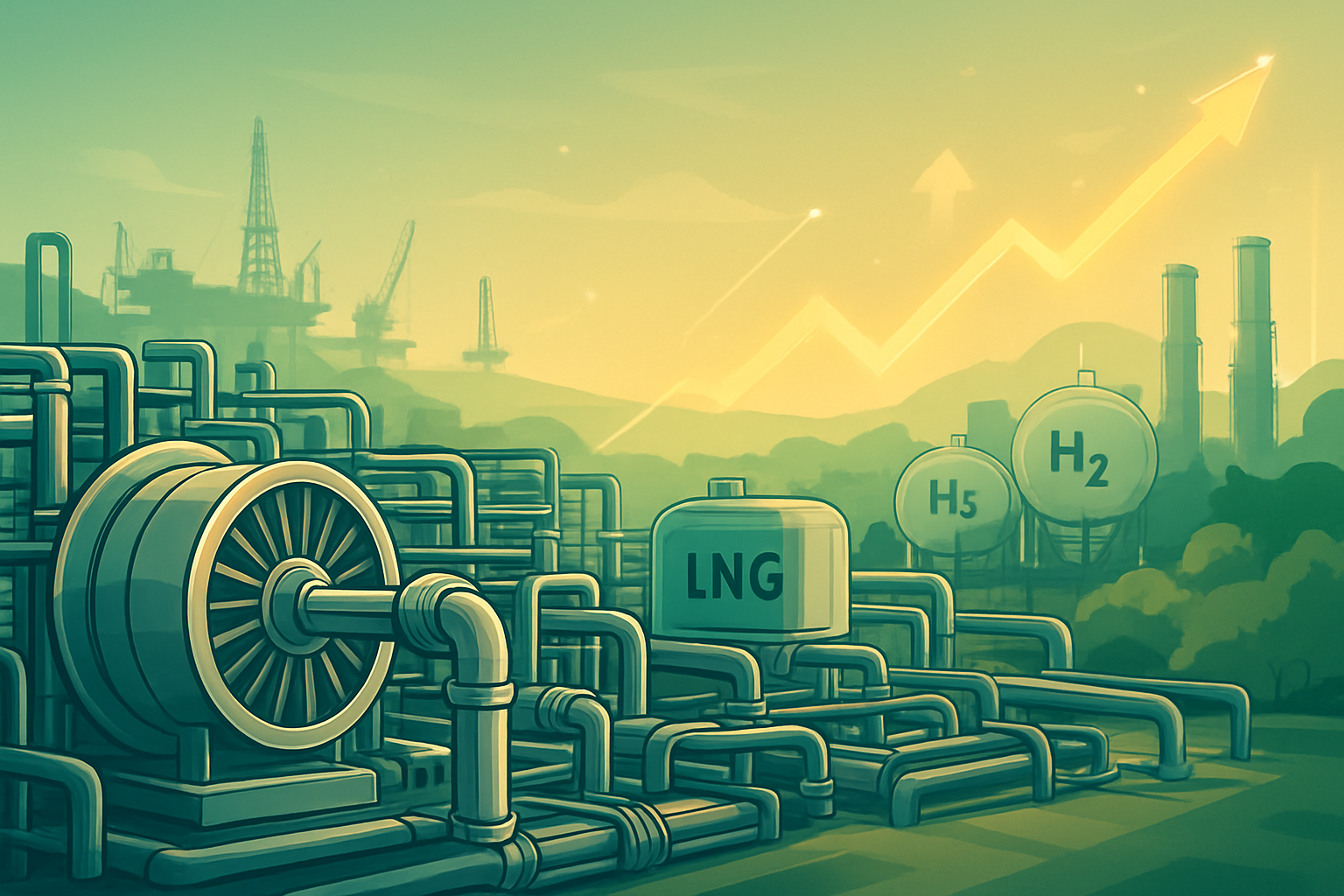
    In the rapidly evolving landscape of global energy, few companies have undergone a more profound metamorphosis than Baker Hughes (NASDAQ: BKR). Once a stalwart of the traditional oilpatch, synonymous with drilling bits and heavy machinery, Baker Hughes has successfully rebranded and restructured itself as a premier "energy technology" firm. As of early 2026, the company stands at the intersection of a dual-track global energy strategy: supporting the continued necessity of fossil fuels through efficiency while aggressively scaling the infrastructure for a low-carbon future.

    With a market capitalization that has seen significant appreciation over the last 24 months, Baker Hughes is no longer just a proxy for oil prices. Instead, it has become a bellwether for the "all-of-the-above" energy transition, capturing massive backlogs in Liquefied Natural Gas (LNG) and emerging as a surprise player in the power-hungry world of AI data centers.

    Historical Background

    The lineage of Baker Hughes traces back to the early 20th century, defined by two of the most iconic names in industrial history: Reuben Baker and Howard Hughes Sr. In 1909, Hughes Sr. developed the sharp-edged rotary rock bit, which revolutionized the drilling industry, while Baker developed the casing shoe. For nearly a century, these innovations formed the bedrock of the company’s identity.

    The modern era, however, was forged through a period of intense corporate turbulence. In 2017, General Electric (GE) merged its Oil & Gas division with Baker Hughes, creating a massive entity intended to dominate the sector. The marriage was short-lived and fraught with strategic friction as GE faced its own internal financial crises. By 2019, GE began a multi-year divestment process, leading to the birth of the "New Baker Hughes." By 2023, the company had achieved full independence from GE, allowing CEO Lorenzo Simonelli to shed the "service company" label and pivot toward the broader industrial and energy technology markets we see today.

    Business Model

    Baker Hughes operates through a streamlined two-segment structure designed to balance steady cash flow with high-growth potential:

    1. Oilfield Services & Equipment (OFSE): This segment remains the company's traditional engine, providing products and services for onshore and offshore drilling and production. While North American shale has matured into a steady-state "maintenance" market, Baker Hughes has shifted its focus to high-margin international and offshore markets, particularly in Brazil, the Middle East, and Guyana.
    2. Industrial & Energy Technology (IET): This is the strategic heart of the "New Baker Hughes." It includes turbomachinery, process solutions, and "New Energy" ventures (Hydrogen, Carbon Capture, and Digital). This segment is characterized by a high-moat engineering culture; for instance, the company holds an estimated 90% market share in the specialized turbomachinery required for LNG liquefaction.

    Stock Performance Overview

    Over the past year, BKR has been a standout performer in the energy sector. As of mid-January 2026, the stock is trading near its 52-week high of $51.62, representing a 12-month gain of approximately 19%.

    The five-year view (2021–2026) illustrates a remarkable recovery from the COVID-19 lows, during which the stock plummeted below $13. Since then, the stock has outperformed its primary peers, Halliburton (NYSE: HAL) and Schlumberger (NYSE: SLB), largely because of its lower sensitivity to volatile U.S. shale drilling activity and its higher exposure to the "LNG super-cycle" and industrial technology.

    Financial Performance

    The fiscal year 2025 was a landmark for Baker Hughes. The company reported annual revenue of approximately $27.8 billion, a 9% year-over-year increase. More importantly, the focus on margin expansion is bearing fruit. Adjusted EBITDA margins for the IET segment reached the 20% target in late 2025, up from roughly 17% two years prior.

    Capital discipline has become a hallmark of the current management. In 2025, the company returned over $1.5 billion to shareholders through dividends and buybacks. The dividend was recently raised to $0.23 per share quarterly, a move that signals management’s confidence in the stability of its massive $32 billion backlog.

    Leadership and Management

    CEO Lorenzo Simonelli has been the architect of Baker Hughes’ modern identity. Known for his disciplined "Horizon 1, 2, and 3" strategy, Simonelli has successfully navigated the company through the complex GE divestiture while maintaining a focus on structural cost-outs.

    His leadership team was further strengthened in 2024 and 2025 with key appointments aimed at capturing industrial adjacencies. The promotion of Maria Claudia Borras to an expanded growth role highlights the company’s push into non-traditional sectors like providing power solutions for the tech industry—a move that has been widely lauded by governance experts for its forward-thinking nature.

    Products, Services, and Innovations

    The company’s R&D efforts are currently concentrated on two main pillars: LNG efficiency and "New Energy."

    • LNG Turbomachinery: Baker Hughes provides the massive compressors and turbines that turn natural gas into liquid for transport. Their latest generation of turbines is more efficient and can be phased into running on hydrogen.
    • CarbonEdge: Launched as a digital "CO2-as-a-service" platform, this allows customers to track and manage the entire carbon capture, utilization, and storage (CCUS) lifecycle.
    • AI Power Solutions: A surprising growth driver in 2025 has been the NovaLT gas turbines. These are being used by large technology firms to provide on-site, dispatchable power for AI data centers, bypassing the bottlenecked national electric grids.

    Competitive Landscape

    Baker Hughes occupies a unique middle ground. While Schlumberger (SLB) remains the "gold standard" for digital oilfield technology and deepwater services, and Halliburton (HAL) dominates in hydraulic fracturing and U.S. land services, Baker Hughes has essentially carved out a new category.

    Its primary competition in the IET space is Siemens Energy, yet Baker Hughes has maintained a competitive edge in LNG due to its long-standing relationships with national oil companies (NOCs) and its integrated service model. By diversifying away from pure oilfield services, BKR has lowered its "beta" relative to crude oil prices compared to its rivals.

    Industry and Market Trends

    The "Age of Gas" remains the dominant macro driver for Baker Hughes. Despite the global push for renewables, natural gas is increasingly viewed as the essential transition fuel, particularly in Europe and Asia. This has led to a sustained period of Final Investment Decisions (FIDs) for LNG projects globally.

    Additionally, the "industrialization of energy" is a trend Baker Hughes is riding. As industries like steel and cement seek to decarbonize, they require the specialized compression and carbon capture technology that Baker Hughes provides, effectively expanding the company’s addressable market beyond the energy sector.

    Risks and Challenges

    The path forward is not without hurdles.

    • Geopolitical Sensitivity: With a large portion of the backlog tied to international projects, political instability in the Middle East or shifts in U.S. LNG export policies can cause project delays.
    • Execution Risk: Managing a record $32 billion backlog requires flawless execution. Any supply chain disruptions or cost overruns in the turbomachinery segment could impact margins.
    • U.S. Shale Slowdown: While BKR is less exposed than its peers, a significant downturn in U.S. drilling would still weigh on the OFSE segment’s profitability.

    Opportunities and Catalysts

    The biggest catalyst for 2026 remains the potential for "New Energy" orders to move from the pilot phase to large-scale commerciality. Specifically, the expansion into hydrogen-ready turbines for data centers represents a multi-billion dollar opportunity that was barely on the radar three years ago.

    Furthermore, the $13.6 billion acquisition of Chart Industries in 2025 is expected to yield significant synergies in 2026, as the combined entity can now offer a fully integrated cryogenic and compression solution for both LNG and hydrogen value chains.

    Investor Sentiment and Analyst Coverage

    Wall Street sentiment is currently "Moderate Buy," with a leaning toward "Strong Buy" among energy tech specialists. Analysts from Citi and Barclays have recently raised their price targets to the $54–$61 range, citing the "re-rating" of BKR from a service company to an industrial tech firm. Institutional ownership remains high, with major funds increasing their positions in late 2025 as the company’s ESG profile improved due to its carbon-mitigation technologies.

    Regulatory, Policy, and Geopolitical Factors

    The regulatory environment is a double-edged sword. In the United States, the Inflation Reduction Act (IRA) continues to provide a tailwind for the company’s carbon capture and hydrogen initiatives through tax credits. Conversely, global climate policies like those emerging from COP30 put pressure on the OFSE side of the business to reduce emissions.

    Geopolitically, the company benefits from Europe’s permanent shift away from Russian pipeline gas toward global LNG. However, any trade frictions that impact the global flow of industrial components could pose a risk to their manufacturing hubs in Italy and the U.S.

    Conclusion

    As of January 16, 2026, Baker Hughes represents a compelling case study in corporate reinvention. By successfully distancing itself from the cyclical volatility of the oilfield and repositioning itself as an essential provider of energy infrastructure and technology, the company has managed to capture growth in both traditional and "new" energy markets.

    For investors, Baker Hughes offers a "tech-oil" hybrid profile: it provides the steady dividends of a traditional energy giant combined with the growth catalysts of a decarbonization tech firm. While risks regarding project execution and global macro-stability remain, the company’s record backlog and dominant position in the LNG supply chain suggest that its transition is not just a marketing pivot, but a fundamental and profitable structural shift.


    This content is intended for informational purposes only and is not financial advice.