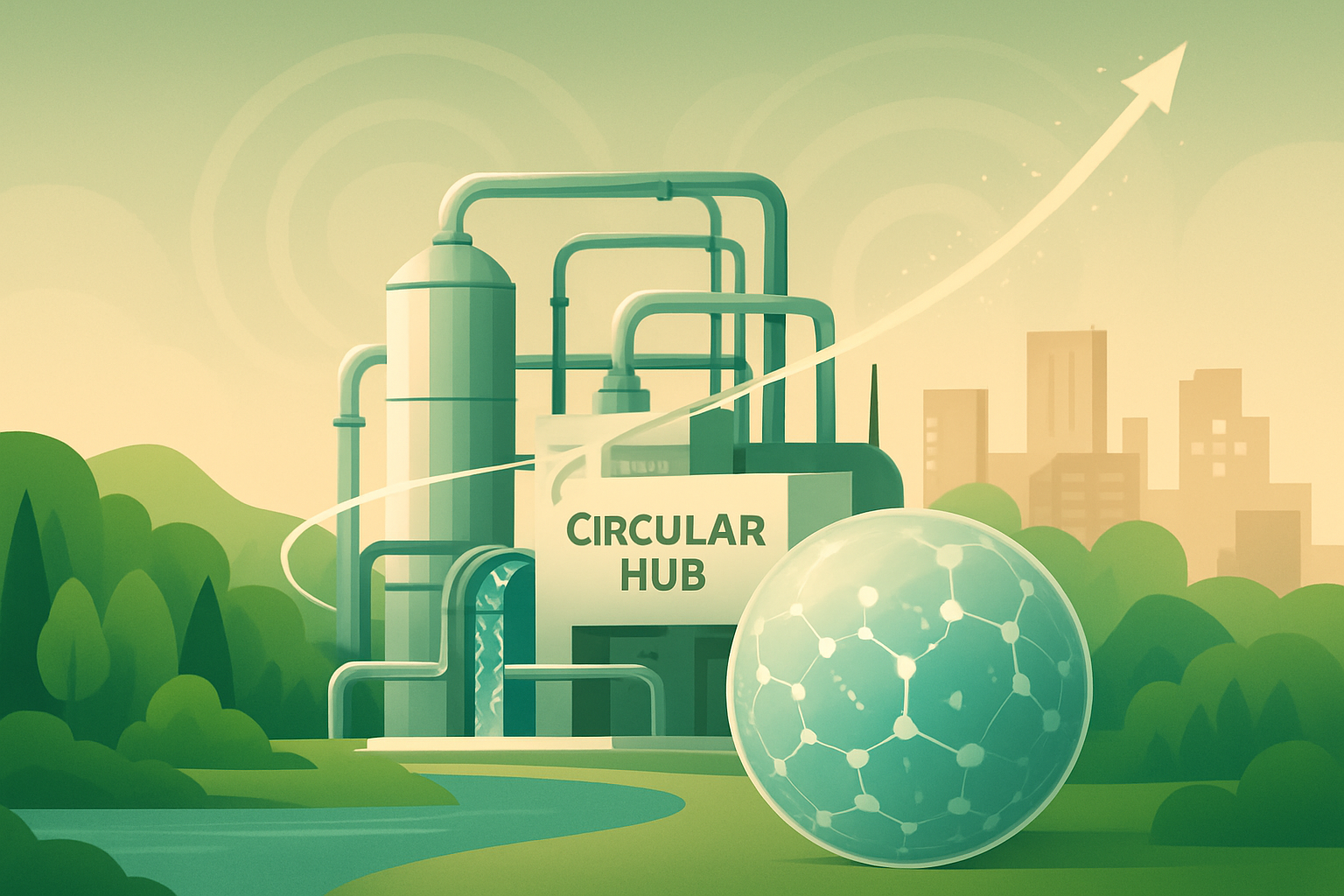
Tag: LyondellBasell

  • The Green Alchemy: A Deep-Dive into LyondellBasell’s (LYB) Global Transformation

    The Green Alchemy: A Deep-Dive into LyondellBasell’s (LYB) Global Transformation

    Today’s Date: April 2, 2026

    Introduction

    As the global materials industry grapples with the dual pressures of decarbonization and volatile feedstock costs, LyondellBasell Industries N.V. (NYSE: LYB) stands at a pivotal crossroads. Once regarded as the quintessential "cash-cow" of the North American petrochemical sector, the company has spent the last three years executing an aggressive transformation. Known for its massive footprint in polyolefins and its historic reliance on U.S. shale gas advantages, LyondellBasell is now rebranding itself as a leader in the circular economy. This deep-dive examines how the company survived a cyclical trough in 2025, restructured its refining portfolio, and is now betting its future on advanced chemical recycling technology.

    Historical Background

    The story of LyondellBasell is one of the most dramatic "phoenix from the ashes" narratives in corporate history. The company was forged in December 2007 through the $12.7 billion acquisition of Houston-based Lyondell Chemical Company by Basell AF S.C.A., a global polyolefin leader owned by Leonard Blavatnik’s Access Industries.

    The timing was catastrophic. The merger, financed with heavy debt, coincided with the 2008 financial crisis and a spike in oil prices. By January 2009, the combined entity filed for Chapter 11 bankruptcy. However, what followed was a masterclass in reorganization. The company emerged in April 2010 with a lean cost structure, shed billions in debt, and capitalized on the then-nascent U.S. shale boom. For the next decade, LYB became a darling of value investors, characterized by disciplined capital allocation and one of the highest dividend yields in the S&P 500.

    Business Model

    LyondellBasell operates through a multi-segmented structure that spans the entire value chain of plastic and chemical production. As of early 2026, the company’s revenue streams are categorized into:

    • Olefins & Polyolefins (O&P) – Americas: This is the company’s engine room, utilizing low-cost natural gas liquids (NGLs) from U.S. shale to produce ethylene, polyethylene (PE), and polypropylene (PP).
    • Olefins & Polyolefins – Europe, Asia, International (EAI): Similar production lines but with a higher exposure to naphtha-based feedstocks and volatile European energy prices.
    • Intermediates & Derivatives (I&D): Focuses on propylene oxide (PO), styrene, and oxyfuels (gasoline additives).
    • Advanced Polymer Solutions (APS): A segment dedicated to high-margin specialty compounds and engineered plastics for the automotive, medical, and electronics sectors.
    • Technology: This segment licenses LyondellBasell’s industry-leading chemical process technologies and sells catalysts, providing a high-margin, asset-light revenue stream.

    Notably, the company completed its exit from the Refining segment in 2025, closing its storied Houston refinery to focus capital on higher-growth "green" initiatives.

    Stock Performance Overview

    Over the past decade, LYB has been a textbook example of a cyclical stock.

    • 10-Year Horizon: Investors have seen a total return that largely mirrors the broader chemical sector, though punctuated by high dividend payouts.
    • 5-Year Horizon: The stock reached a significant peak in early 2024 at approximately $91, followed by a sharp decline in 2025 as the industry faced a "perfect storm" of overcapacity in China and high interest rates.
    • 1-Year Horizon: Since April 2025, the stock has staged a recovery. After hitting a multi-year low of ~$45 in late 2025, the shares have rebounded to the $78.00–$80.00 range as of today, April 2, 2026. This 70% recovery from the trough reflects investor confidence in the company’s "Value Enhancement Program" and the successful divestiture of non-core European assets.

    Financial Performance

    The 2025 fiscal year was challenging for LYB, with revenues dipping to approximately $30.2 billion and EBITDA margins compressing to 8.3%. However, the Q1 2026 earnings report signaled a turnaround.

    Key metrics to note:

    • EBITDA: Projected to return to the $4.0 billion range for 2026 as demand for sustainable materials begins to command a premium.
    • The Dividend Pivot: In a controversial but strategically sound move in February 2026, management cut the quarterly dividend from $1.25 to $0.69. This reduced the yield from a "trap-like" 10% to a more sustainable 3.5%, freeing up $1.8 billion in annual cash flow for capital expenditures in recycling technology.
    • Valuation: Currently trading at an EV/EBITDA multiple of roughly 7.5x, LYB remains "cheap" compared to specialty chemical peers like BASF (ETR: BAS), but the market is starting to re-rate the stock as it moves away from pure commodities.

    Leadership and Management

    Peter Vanacker, who assumed the CEO role in mid-2022, has been the architect of the "New LyondellBasell." Coming from Neste—a pioneer in renewable fuels—Vanacker brought a "sustainability-first" mindset that was initially met with skepticism by traditionalist shareholders.

    Under his leadership, the company launched the Value Enhancement Program (VEP), which has delivered over $1.1 billion in recurring annual EBITDA through operational efficiencies and digitalization. Vanacker’s strategy focuses on "Asset Pruning"—selling off low-margin units in Europe—and reinvesting in the "Houston Hub" and "Cologne Hub" to create integrated, low-carbon industrial clusters.

    Products, Services, and Innovations

    LyondellBasell’s innovation pipeline is currently dominated by its Circulen family of products:

    1. CirculenRecover: Mechanically recycled polymers.
    2. CirculenRevive: Polymers made using advanced (molecular) recycling.
    3. CirculenRenew: Bio-based polymers derived from renewable wastes like used cooking oil.

    The crown jewel of their R&D is MoReTec, a proprietary catalytic chemical recycling technology. Unlike traditional pyrolysis, MoReTec allows the company to turn hard-to-recycle plastic waste back into virgin-quality feedstock with significantly lower energy intensity. The first commercial-scale plant, MoReTec-1 in Wesseling, Germany, is scheduled for full commissioning later this year.

    Competitive Landscape

    LYB remains the global leader in Polypropylene (PP) production and a top-three player in Polyethylene (PE). Its primary rivals include:

    • Dow Inc. (NYSE: DOW): Competes head-to-head in the Americas; Dow is also heavily invested in circularity but lacks LYB’s proprietary MoReTec technology.
    • Westlake Corporation (NYSE: WLK): A leaner competitor that focuses on North American cost advantages but has less global reach in licensing.
    • SABIC: The Saudi giant remains the most formidable competitor in terms of feedstock costs, though LYB’s licensing business (Technology segment) actually counts many of SABIC's partners as customers.

    Industry and Market Trends

    The chemical industry is entering a "post-commodity" era. As of 2026, three major trends are defining the market:

    1. Plastic Taxes: Germany and other EU nations have implemented taxes on non-recycled plastic packaging, creating a massive demand pull for LYB’s Circulen line.
    2. Regionalization: The "shale advantage" of the U.S. remains intact, but global supply chains are regionalizing. LYB’s decision to exit certain European assets and double down on its Gulf Coast hubs aligns with this trend.
    3. Feedstock Flexibility: Companies that can pivot between gas, naphtha, and recycled "py-oil" are winning on margin resilience.

    Risks and Challenges

    Despite the recent stock recovery, several risks loom:

    • Oversupply: Large-scale capacity additions in China continue to depress global margins for standard-grade polyethylene.
    • Execution Risk: The pivot to circularity requires billions in CapEx. If the MoReTec-1 plant encounters technical delays in late 2026, investor sentiment could sour quickly.
    • Macro Sensitivities: As a producer of materials for cars and construction, LYB is highly sensitive to global GDP growth and interest rates. A potential recession in late 2026 remains a "bear case" scenario.

    Opportunities and Catalysts

    • The Houston Hub: Repurposing the 700-acre Houston refinery site into a circular economy hub could unlock massive value. Plans include a massive plastic waste sorting facility and a second MoReTec plant.
    • M&A Potential: With a strengthened balance sheet following the dividend cut, LYB is rumored to be looking at bolt-on acquisitions in the Advanced Polymer Solutions (APS) space to further reduce cyclicality.
    • Green Premium: If regulators continue to mandate recycled content, the "green premium" for Circulen products could significantly expand EBITDA margins beyond 2026.

    Investor Sentiment and Analyst Coverage

    Wall Street is currently cautiously optimistic, with a consensus "Overweight" rating. Institutional investors, including Vanguard and BlackRock, have noted the company’s improved ESG profile. Hedge fund activity in Q4 2025 showed a notable "bottom-fishing" trend, where funds accumulated LYB shares during the dividend-cut-induced sell-off, betting on the long-term structural turnaround. Retail sentiment remains mixed, with some income-oriented investors still mourning the 2026 dividend reduction.

    Regulatory, Policy, and Geopolitical Factors

    The EU Packaging and Packaging Waste Regulation (PPWR) is the single most important policy driver for LYB today. It mandates high levels of recycled content by 2030, effectively legislating a market for LYB’s new product lines. In the U.S., potential federal plastic regulations and EPA emissions mandates for chemical plants continue to pose a compliance burden, though LYB’s early retirement of its refinery has mitigated some of this regulatory risk compared to more integrated peers.

    Conclusion

    LyondellBasell in 2026 is no longer the company it was in 2010. By slashing its dividend, exiting the refining business, and betting the balance sheet on the MoReTec recycling technology, management has made a high-stakes play to lead the "green" chemical revolution. While the stock's recovery from its 2025 lows is encouraging, the true test will come in the next 18 months as the first commercial-scale recycling plants go online. For the patient investor, LYB offers a unique combination of a proven low-cost North American core and an emerging "green" growth story. However, those seeking the ultra-high yields of the past must look elsewhere; this is now a story of capital appreciation and industrial transformation.


    This content is intended for informational purposes only and is not financial advice.
  • LyondellBasell (LYB) Deep Dive: Navigating the 2026 Recalibration and the Future of Circular Plastics

    LyondellBasell (LYB) Deep Dive: Navigating the 2026 Recalibration and the Future of Circular Plastics

    On February 23, 2026, LyondellBasell (NYSE: LYB) stands at a critical crossroads. Once celebrated as a high-yield dividend powerhouse of the petrochemical sector, the company has spent the early months of 2026 aggressively restructuring its identity. Today’s market developments—including a major recalibration of its 2030 sustainability targets and a significant shift in capital allocation—signal a definitive end to the "business as usual" era for the London-incorporated giant. Under the leadership of CEO Peter Vanacker, LyondellBasell is attempting to pivot from a volume-driven plastics manufacturer to a high-margin, circular-economy leader, navigating one of the most challenging global chemical cycles in decades.

    Historical Background

    The modern LyondellBasell was forged through the 2007 merger of the American company Lyondell Chemical and the European giant Basell Polyolefins. However, the timing of the $12.7 billion deal, heavily financed by debt on the eve of the 2008 financial crisis, forced the company into Chapter 11 bankruptcy in 2009. Emerging in 2010 as a leaner entity, LYB spent the next decade as a cash-flow juggernaut, leveraging low-cost U.S. shale gas to dominate the polyethylene and polypropylene markets. By the early 2020s, however, mounting pressure from plastic waste regulations and a global push for decarbonization necessitated a second major transformation, leading to the 2022 appointment of Peter Vanacker and the launch of the "Value Through Sustainability" strategy.

    Business Model

    LyondellBasell operates as one of the world's largest plastics, chemicals, and refining companies. Its revenue is derived from three primary segments:

    1. Olefins and Polyolefins (O&P): The company’s bread and butter, producing ethylene, polyethylene, and polypropylene across the Americas and EAI (Europe, Asia, and International).
    2. Intermediates and Derivatives (I&D): Manufacturing propylene oxide, oxyfuels, and related products used in everything from insulation to automotive parts.
    3. Advanced Polymer Solutions (APS): Producing specialized plastic compounds for the aerospace, medical, and electronics sectors.
      In 2024, the company officially added Circular and Low-Carbon Solutions (CLCS) as a distinct segment, focusing on its "Circulen" brand of recycled and renewable-based polymers.

    Stock Performance Overview

    As of February 23, 2026, LYB stock is reacting to a turbulent 12-month period characterized by sector-wide overcapacity. Over the 1-year horizon, the stock has trailed the S&P 500, pressured by weak margins in Europe and China. On a 5-year basis, the stock has provided a moderate total return, though much of that was historically driven by its high dividend yield. Over the 10-year period, LYB has remained a staple for value investors, though it has struggled to break out of its cyclical trading range as the market grapples with the long-term viability of virgin plastics.

    Financial Performance

    The financial landscape for LYB in early 2026 remains constrained. The company reported a net loss of $738 million for the full year 2025, a result of nearly $1.3 billion in asset write-downs and a 45% compression in industry margins. In a move that shocked income-seeking investors today, February 23, the board announced a "dividend recalibration," cutting the quarterly payout by approximately 50% to $0.69 per share. This move is designed to preserve $800 million in annual cash flow to fund the company's "Cash Improvement Plan," which aims to find $1.3 billion in cumulative savings by the end of 2026.

    Leadership and Management

    CEO Peter Vanacker has doubled down on his "Value Through Sustainability" mantra, despite the fiscal headwinds. His leadership has been defined by "rationalizing" the portfolio—essentially selling off low-margin assets to fund higher-tech recycling platforms. The management team is currently focused on the "Step Up" program, a cultural and operational shift aimed at increasing agility. While some analysts have criticized the recent dividend cut, the board remains supportive of Vanacker’s view that the company must "innovate or evaporate" in a post-carbon economy.

    Products, Services, and Innovations

    Innovation at LYB is currently centered on MoReTec, its proprietary catalytic pyrolysis technology. This process breaks down hard-to-recycle plastic waste back into molecular feedstocks with a yield exceeding 80%.

    • MoReTec-1: The first commercial-scale plant in Wesseling, Germany, is slated for a mid-2026 startup.
    • Circulen Brand: This product family is split into CirculenRecover (mechanical recycling), CirculenRevive (advanced recycling via MoReTec), and CirculenRenew (bio-based feedstocks).
      These innovations are designed to command a price premium over virgin plastics, catering to consumer-packaged-goods companies facing strict ESG mandates.

    Competitive Landscape

    LYB competes in a crowded field of giants, including Dow (NYSE: DOW), BASF (BASFY), and Saudi Basic Industries Corp (SABIC). While Dow remains a leader in North American cost-advantage, and BASF maintains a massive integrated "Verbund" footprint in Europe, LYB’s competitive edge is shifting toward its recycling technology and its strategic retreat from high-cost European assets. However, the company remains vulnerable to the aggressive capacity expansions of state-backed chemical firms in China and the Middle East.

    Industry and Market Trends

    The global chemical industry in 2026 is grappling with a "double whammy" of overcapacity and decarbonization costs. The supply glut of polyethylene from new plants in Asia has depressed global prices. Simultaneously, the "green premium"—the extra amount customers are willing to pay for recycled plastic—has been slower to materialize than expected. Consequently, many firms, including LYB, are shifting from aggressive growth to "capital discipline," prioritizing balance sheet health over market share.

    Risks and Challenges

    The most pressing risk for LyondellBasell is the successful commercialization of MoReTec. If the technology fails to scale efficiently at the Wesseling plant in mid-2026, the company’s "Circular" strategy could falter. Furthermore, regulatory risks remain high; if governments fail to mandate recycled content in packaging, the demand for LYB’s premium-priced Circulen products may not meet targets. Lastly, the company’s heavy exposure to the automotive and construction sectors makes it highly sensitive to global interest rate movements and macroeconomic slowdowns.

    Opportunities and Catalysts

    Several catalysts could drive a re-rating of LYB in late 2026:

    • The Houston Hub: The conversion of the former Houston Refinery site into a circularity hub, featuring the proposed MoReTec-2 plant, represents a massive future revenue stream.
    • European Divestments: The pending sale of European assets to AEQUITA, expected to close in Q2 2026, will shed roughly $400 million in annual fixed costs.
    • Saudi Expansion: The 1.5 million ton cracker in Jubail (a JV with Sipchem) is expected to provide high-margin growth by leveraging low-cost feedstock.

    Investor Sentiment and Analyst Coverage

    Sentiment is currently "cautious to neutral." Wall Street analysts have largely maintained "Hold" ratings following the dividend cut, waiting for proof that the saved capital will be effectively deployed into the CLCS segment. Institutional investors are closely watching the "recalibrated" 2030 sustainability goals—now targeting 800,000 metric tons of circular polymers per year, down from the original 2 million—to see if this more realistic target improves execution.

    Regulatory, Policy, and Geopolitical Factors

    Geopolitical tensions continue to impact LYB's global supply chain. The EU Green Deal and the upcoming UN Global Plastic Treaty are the primary regulatory drivers, pushing for higher recycling rates. In the U.S., the company benefits from Inflation Reduction Act (IRA) incentives for low-carbon technologies, which are helping to subsidize the MoReTec-2 development in Texas. However, potential trade tariffs and regional conflicts remain wildcards for energy costs and feedstock prices.

    Conclusion

    LyondellBasell’s "Recalibration Day" on February 23, 2026, marks a painful but perhaps necessary pivot for the company. By slashing its dividend and lowering its 2030 sustainability targets, management is choosing survival and long-term modernization over short-term investor gratification. For the patient investor, LYB offers a high-stakes play on the future of circular plastics. The coming twelve months—particularly the mid-2026 startup of MoReTec-1—will determine whether LyondellBasell emerges as the green leader of the chemical industry or remains a victim of the sector's volatile cycles.


    This content is intended for informational purposes only and is not financial advice.

  • The Circular Pivot: A Comprehensive Research Deep-Dive into LyondellBasell (LYB) as of February 2026

    The Circular Pivot: A Comprehensive Research Deep-Dive into LyondellBasell (LYB) as of February 2026

    Date: February 20, 2026

    Introduction

    As the global petrochemical industry navigates one of its most challenging cyclical troughs in a decade, LyondellBasell Industries N.V. (NYSE: LYB) stands as a company in the midst of a profound identity shift. Long regarded as a "cash cow" of the plastics world, the Houston and London-based giant is currently pivoting from a traditional fossil-fuel-dependent model to a future-focused "Circular and Low Carbon Solutions" leader. However, as of February 2026, this transition is being tested by harsh macroeconomic realities: overcapacity in Asian markets, high energy costs in Europe, and a recent credit warning from S&P Global that has put the company’s legendary dividend reliability into the spotlight. This research feature examines whether LYB is a value trap in a declining industry or a disciplined innovator preparing for the next great materials upcycle.

    Historical Background

    The story of LyondellBasell is a classic tale of industrial ambition, near-collapse, and ultimate resurrection. The company in its current form was born in December 2007 through the $12.7 billion acquisition of Lyondell Chemical Company by Basell Polyolefins. The timing was catastrophic; the merger saddled the new entity with over $20 billion in debt just as the 2008 global financial crisis decimated demand. By January 2009, the company’s U.S. operations were forced into Chapter 11 bankruptcy.

    What followed is often cited as one of the most successful corporate turnarounds in history. Under the leadership of Jim Gallogly, the company emerged from bankruptcy in 2010 with a lean cost structure and a strategic focus on cost-advantaged U.S. shale gas. Throughout the 2010s, LYB transformed into a dividend powerhouse, consistently delivering double-digit returns on invested capital and becoming a staple for income-seeking investors.

    Business Model

    LyondellBasell’s business model is historically built on four pillars, though a fifth—Sustainability—is rapidly becoming the core.

    • Olefins & Polyolefins (O&P): Split into Americas and EAI (Europe, Asia, International) segments, this is the company’s largest revenue driver. It turns ethane and propane into ethylene and polyethylene—the building blocks of everything from milk jugs to medical tubing.
    • Intermediates & Derivatives (I&D): LYB is a world leader in Propylene Oxide (PO) and its derivatives, used in furniture foams, coatings, and automotive parts.
    • Advanced Polymer Solutions (APS): A specialty segment focused on high-performance compounds for the automotive and healthcare industries.
    • Technology: A high-margin segment that licenses LYB’s proprietary manufacturing processes to other chemical companies globally.

    In 2025, the company fundamentally altered this model by permanently closing its Houston refinery, marking an exit from the volatile fuels business to focus entirely on chemicals and sustainable materials.

    Stock Performance Overview

    Over the last decade, LYB has been a story of two halves. From 2016 to 2021, the stock was a steady performer, often trading in a range of $80 to $110, supported by a high dividend yield (frequently 4-5%). However, the post-pandemic era has brought volatility.

    • 1-Year Performance: The stock has faced significant pressure, down roughly 15% as of early 2026, underperforming the broader S&P 500 as chemical margins collapsed.
    • 5-Year Performance: Performance has been essentially flat, with total returns saved only by the consistent dividend payouts.
    • 10-Year Performance: While the stock has provided capital appreciation since the mid-2010s, it has lagged behind pure-play technology and high-growth sectors, reflecting its status as a mature, cyclical value play.

    Financial Performance

    The fiscal year 2025 was a "trough" year for LyondellBasell. While the company reported revenues of approximately $30.2 billion—a sharp decline from the $40+ billion levels seen in 2023—much of this was due to planned divestitures and the closure of the Houston refinery.

    • Earnings: Net income for 2025 showed a reported loss of $738 million due to one-time impairment charges related to European asset reviews, though adjusted net income remained positive at $563 million.
    • Cash Flow: A bright spot remains the company’s cash conversion. Despite the downturn, LYB generated $2.3 billion in operating cash in 2025, maintaining a 95% cash conversion rate.
    • Valuation: Trading at a forward P/E of roughly 12x, the stock looks inexpensive historically, but investors are currently pricing in the risk of a dividend cut following the S&P "CreditWatch Negative" placement on February 18, 2026.

    Leadership and Management

    Since mid-2022, CEO Peter Vanacker has been the architect of the "new" LyondellBasell. Vanacker, formerly the CEO of Finnish renewable fuels leader Neste, was brought in specifically to spearhead the company’s green transition.
    His "Core, Value, and Stepping Up" strategy is a three-pronged approach:

    1. Core: Investing in high-growth, low-cost regions like Saudi Arabia (via the NATPET stake).
    2. Value: A Value Enhancement Program targeting $1.5 billion in recurring EBITDA by 2028 through operational efficiency.
    3. Stepping Up: The goal to produce 2 million metric tons of recycled and renewable polymers by 2030.
      Vanacker is generally respected by analysts for his transparency, though he is currently under pressure to prove that the "Value Enhancement" can offset the cyclical downturn.

    Products, Services, and Innovations

    Innovation at LYB is currently centered on the "Circulen" brand.

    • CirculenRevive: Uses advanced "molecular" recycling to return plastic waste to its basic chemical state, allowing it to be reused for high-grade applications like food packaging.
    • CirculenRenew: Produced from renewable feedstocks such as used cooking oil.
    • MoReTec Technology: This is LYB’s proprietary catalytic pyrolysis technology. The company is currently building its first industrial-scale MoReTec plant in Wesseling, Germany (MoReTec-1), with plans for a much larger MoReTec-2 facility at the former Houston refinery site. This technology is seen as the company's "moat" in the emerging circular economy.

    Competitive Landscape

    LYB competes in a "clash of giants" against Dow Inc. (NYSE: DOW) and BASF SE.

    • Vs. Dow: Both companies are struggling with Chinese overcapacity. However, LYB has historically maintained higher cash conversion rates and moved more aggressively to exit the refining business than its peers.
    • Vs. BASF: While BASF is significantly larger by revenue, it is heavily exposed to high energy costs in Germany. LYB’s strategic review of its European assets and its focus on U.S. Gulf Coast advantage gives it a more favorable cost profile in the current environment.

    Industry and Market Trends

    The chemical sector in 2026 is grappling with two massive shifts:

    1. The China Oversupply: Massive capacity additions in China have turned a traditional export market into a self-sufficient competitor, depressing global margins for polyethylene and polypropylene.
    2. Decarbonization: Regulators and consumers are increasingly demanding "green" plastics. This has created a bifurcated market where traditional plastics trade as low-margin commodities, while certified recycled plastics command a "green premium."

    Risks and Challenges

    • Feedstock Volatility: While LYB benefits from low-cost U.S. natural gas liquids (NGLs), any narrowing of the spread between oil and gas prices hurts its competitive advantage over European and Asian naphtha-based crackers.
    • Regulatory Backlash: The UN Plastic Treaty and various regional bans on single-use plastics pose a long-term threat to volume growth.
    • Financial Leverage: With a recent credit watch warning, the company must balance its $1.5 billion EBITDA growth targets with the need to protect its investment-grade rating and its dividend.

    Opportunities and Catalysts

    • Cyclical Recovery: If global interest rates continue to stabilize in 2026, a recovery in the construction and automotive sectors would immediately boost LYB’s high-margin APS and I&D segments.
    • MoReTec-1 Startup: The scheduled mid-2026 startup of the Wesseling plant will be a major "proof of concept" for the company’s recycling technology.
    • Portfolio Pruning: Continued divestiture of non-core European assets could unlock significant value and strengthen the balance sheet.

    Investor Sentiment and Analyst Coverage

    As of February 2026, Wall Street is largely in a "wait and see" mode. The consensus rating is a "Hold/Neutral," with a median price target of $51.00.

    • Institutional Sentiment: Large asset managers (Vanguard, BlackRock) remain major holders, drawn by the ESG improvements (MSCI AA rating).
    • Retail Sentiment: Retail investors are primarily concerned with the dividend. Any sign of a payout reduction would likely trigger a significant retail sell-off.

    Regulatory, Policy, and Geopolitical Factors

    Geopolitics continues to play a massive role in LYB’s outlook. The U.S. Inflation Reduction Act (IRA) provides potential tailwinds for the company’s low-carbon hydrogen and carbon capture initiatives. Conversely, the "Green Deal" in Europe is forcing a rapid—and expensive—decarbonization of the company’s EAI assets. The outcome of the UN Plastic Treaty negotiations in late 2025/early 2026 remains a "wildcard" that could dictate the future of plastic production caps.

    Conclusion

    LyondellBasell (NYSE: LYB) enters the second quarter of 2026 as a company at a crossroads. It has successfully shed its refining skin and is building a technological lead in circular chemistry, yet it remains tethered to a punishing global commodity cycle. For value investors, the current suppressed share price and high yield offer a compelling entry point—provided one believes in the "Value Enhancement" strategy and a recovery in global demand by 2027. However, the short-term outlook is clouded by credit concerns and overcapacity. Investors should closely watch the MoReTec-1 startup and the management’s commentary on dividend sustainability in the coming quarters.


    This content is intended for informational purposes only and is not financial advice.