
Tag: McCormick

  • McCormick & Company (MKC): The Birth of a Global Flavor Powerhouse via Unilever Merger

    McCormick & Company (MKC): The Birth of a Global Flavor Powerhouse via Unilever Merger

    On March 31, 2026, the global food industry witnessed a seismic shift. McCormick & Company (NYSE: MKC), a Maryland-based stalwart long synonymous with the spice rack, announced a definitive agreement to merge with Unilever’s (NYSE: UL) global foods division. This $44.8 billion transaction—structured as a Reverse Morris Trust—is not merely a corporate consolidation; it is the birth of a "Global Flavor Powerhouse."

    For years, McCormick has been transitioning from a pure-play spice merchant into a comprehensive condiments and flavor solutions giant. By bringing legendary brands like Hellmann’s and Knorr under the same roof as Frank’s RedHot and French’s, McCormick is positioning itself to dominate the "center of the plate" and the "side of the plate" alike. As investors digest the news of this massive $15.7 billion cash outlay and the subsequent equity swap, the stock has become the focal point of Wall Street’s consumer staples discourse.

    Historical Background

    Founded in 1889 by Willoughby M. McCormick in a Baltimore cellar, the company began by selling flavors and extracts door-to-door. By the mid-20th century, it had established itself as the premier name in American spices. However, the true transformation began in the last decade.

    McCormick’s modern history is defined by aggressive, strategic M&A. In 2017, the company shocked the market with a $4.2 billion acquisition of Reckitt Benckiser’s food division, bringing French’s Mustard and Frank’s RedHot into the fold. This move pivoted the company toward the high-margin, high-growth "condiments and sauces" category. Subsequent acquisitions of Cholula Hot Sauce (2020) and FONA International (2020) further diversified its portfolio into hot sauces and technical flavor solutions for the food and beverage industry. Today's Unilever deal represents the culmination of this "flavor-first" strategy, scaling the business to a projected $20 billion in annual revenue.

    Business Model

    McCormick operates through two primary segments:

    1. Consumer Segment: This division sells spices, herbs, condiments, and sauces directly to retail consumers under brands like McCormick, Old Bay, and Zatarain’s. Post-merger, this segment will expand massively with the addition of Hellmann’s (the world's #1 mayonnaise) and Knorr (a leader in soups and seasonings).
    2. Flavor Solutions: This B2B segment provides customized flavorings, seasonings, and coatings to the entire food industry—from multinational food manufacturers to quick-service restaurants (QSRs).

    The business model relies on "flavoring calories." As consumers move toward healthier, whole foods, McCormick provides the flavor that makes those calories palatable, insulating it from some of the health-trend risks facing ultra-processed food manufacturers.

    Stock Performance Overview

    Over the last decade, McCormick has been a darling of defensive investors, though recent years have been volatile.

    • 10-Year Performance: MKC has historically outperformed the S&P 500 Food & Beverage Index, driven by consistent dividend growth and margin expansion.
    • 5-Year Performance: The stock faced headwinds following the post-pandemic "normalization" of at-home cooking. Prior to today’s announcement, shares had struggled with inflation-linked margin compression.
    • 1-Year Performance: Leading into March 2026, MKC traded near a 52-week low of $51.29, down significantly year-to-date. However, the Unilever announcement sparked an immediate ~5.5% rally, with shares trading around $56.66.

    Financial Performance

    The Q1 2026 earnings report, also released today, underscores a company in transition.

    • Revenue: Net sales hit $1.87 billion, a 16.7% increase year-over-year, bolstered significantly by the full integration of the McCormick de Mexico joint venture.
    • Earnings: Adjusted EPS of $0.66 beat analyst estimates of $0.60. Reported EPS soared to $3.77 due to a non-cash gain from the Mexico JV remeasurement.
    • The Debt Load: The elephant in the room is the $15.7 billion cash payment to Unilever. While McCormick has a history of rapid deleveraging (as seen after the RB Foods deal), its debt-to-EBITDA ratio will be closely watched by credit rating agencies through 2027.
    • Dividends: McCormick remains a "Dividend Aristocrat," marking 40 consecutive years of increases, with a current yield of approximately 3.6%.

    Leadership and Management

    Brendan M. Foley, who took the helm as CEO in September 2023 and later became Chairman, is the architect of this new era. Foley has focused on "disciplined execution" and high-growth categories. His leadership during the integration of the Mexico JV (acquired for $750 million in January 2026) served as a pilot for the much larger Unilever integration. Foley’s team is regarded as one of the best in the CPG (Consumer Packaged Goods) space for operational efficiency and M&A integration, a reputation that will be put to the ultimate test over the next 18 months.

    Products, Services, and Innovations

    McCormick’s R&D efforts are increasingly focused on "Clean Label" and "Health & Wellness." The company holds numerous patents in flavor encapsulation and sodium reduction technology.

    • Current Pipeline: Focus is on "Quick Prep" meals and "Global Flavors," catering to Gen Z’s preference for bold, international tastes (e.g., Harissa, Chimichurri, and Gochujang).
    • The Unilever Synergy: The acquisition of Knorr provides McCormick with a massive global platform for dehydrated stocks and soups, while Maille offers a premium entry point into the high-end mustard market.

    Competitive Landscape

    McCormick competes in a fragmented landscape:

    • Direct Rivals: Kraft Heinz (KHC) in condiments, Conagra Brands (CAG) in seasonings, and Nestlé (NSRGY) in global food solutions.
    • Private Label: The "Great Value" and "Kirkland Signature" brands represent a constant threat to McCormick’s core spice business, especially during inflationary periods where consumers trade down.
    • The Moat: McCormick’s competitive advantage lies in its "Category Management" expertise. It doesn't just sell spices; it manages the entire spice aisle for major retailers, making it an indispensable partner for companies like Walmart and Kroger.

    Industry and Market Trends

    The "Flavor" industry is currently driven by three macro trends:

    1. Premiumization: Consumers are willing to pay more for authentic, high-quality ingredients.
    2. Health-Conscious Flavoring: As consumers cut sugar and fat, spices and hot sauces (which are low-calorie) become the primary tools for taste.
    3. Supply Chain Fragility: Volatility in the Middle East and parts of Asia has made sourcing black pepper, vanilla, and cinnamon more expensive and complex, favoring large players with diversified sourcing networks.

    Risks and Challenges

    • Integration Risk: Merging a $20 billion combined entity is fraught with cultural and operational hurdles.
    • Leverage: The $15.7 billion cash outlay increases interest expense at a time when rates remain historically elevated compared to the last decade.
    • Regulatory Scrutiny: Antitrust regulators in the US and EU will likely look closely at the mustard and mayonnaise markets, where the combined company will hold significant market share (French’s/Maille and Hellmann’s).

    Opportunities and Catalysts

    • Emerging Markets: The Unilever foods business has a massive footprint in Latin America and Southeast Asia, areas where McCormick has historically been underrepresented.
    • The "Condimentization" of Food: The trend of "putting hot sauce on everything" continues to grow among younger demographics, providing a long runway for the Cholula and Frank’s brands.
    • Cost Synergies: Management anticipates significant "back-office" and supply chain synergies, which could drive margin expansion starting in late 2027.

    Investor Sentiment and Analyst Coverage

    Analyst sentiment is currently "Cautiously Optimistic." While the strategic fit of the Unilever brands is praised, the price tag and debt have given some pause.

    • Wall Street Ratings: Currently sitting at a "Moderate Buy" consensus.
    • Valuation: Some analysts, including those from InvestingPro, suggest the stock is fundamentally undervalued, with a fair value estimate closer to $72.
    • Institutional Moves: There has been a recent uptick in institutional buying as the stock hit its 52-week lows, suggesting that "smart money" was anticipating a major catalyst.

    Regulatory, Policy, and Geopolitical Factors

    The deal is structured as a Reverse Morris Trust to minimize tax liabilities, but it remains subject to rigorous government oversight.

    • Antitrust: The US Department of Justice (DOJ) may require divestitures in specific condiment categories to prevent a monopoly.
    • Geopolitics: McCormick’s global sourcing makes it sensitive to trade policy. Any escalation in trade tensions between the US and key spice-producing nations could impact COGS (Cost of Goods Sold).

    Conclusion

    McCormick & Company’s bold move to acquire Unilever’s foods division marks the beginning of a new chapter for the 137-year-old firm. By doubling down on its "flavor" identity, McCormick is betting that the future of food lies not in the bulk calories themselves, but in the brand-name sauces and seasonings that define the eating experience.

    For investors, MKC represents a classic "buy and hold" Dividend Aristocrat with a new, high-growth engine attached. While the debt-funded nature of the Unilever deal adds a layer of risk, McCormick’s history of successful integration and its dominant market position suggest a favorable long-term outlook. Investors should watch for regulatory approval milestones and initial synergy targets as the company prepares to close this transformative deal in 2027.


    This content is intended for informational purposes only and is not financial advice. Data as of 3/31/2026.
  • The Flavor of the Future: Inside Unilever’s $44.8 Billion Foods Merger with McCormick

    The Flavor of the Future: Inside Unilever’s $44.8 Billion Foods Merger with McCormick

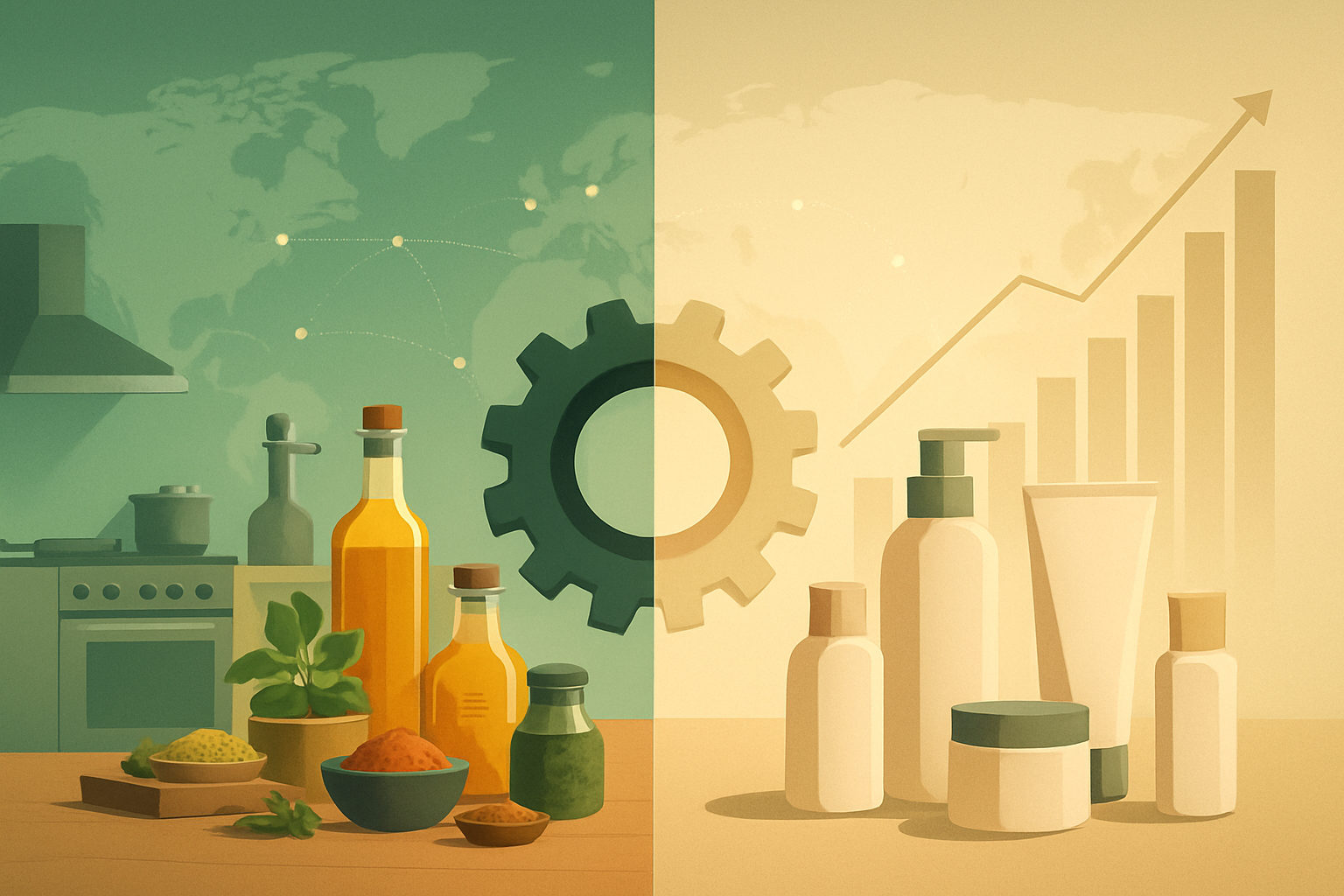
    The consumer staples landscape was reshaped today, March 31, 2026, by a transaction of staggering scale. In a move that finalizes the multi-year transformation of one of the world’s most iconic conglomerates, Unilever PLC (NYSE: UL) and McCormick & Company (NYSE: MKC) have officially announced a definitive agreement to merge Unilever’s global Foods division with McCormick.

    Valued at $44.8 billion and structured as a tax-efficient Reverse Morris Trust (RMT), the deal creates a $60 billion global "flavor powerhouse." For Unilever, this marks the end of an era and the birth of a leaner, higher-growth enterprise focused on Beauty and Personal Care. For McCormick, it represents a bold—and potentially risky—bet on dominating the global pantry.

    Historical Background

    Unilever’s history is rooted in the 1929 merger of British soapmaker Lever Brothers and Dutch margarine producer Margarine Unie. For nearly a century, this dual-headed giant operated with a philosophy of "vitality," selling everything from tea and soup to detergent and deodorant.

    The company’s trajectory shifted significantly in the 2010s. Under former CEOs Paul Polman and Alan Jope, Unilever prioritized sustainability but faced criticism for lagging sales growth and a bloated middle-management structure. The entry of activist investor Nelson Peltz (Trian Partners) in 2022 catalyzed a more aggressive approach to portfolio pruning. The 2024 "Growth Action Plan" (GAP) initiated by Hein Schumacher provided the blueprint for the divestitures we see today, turning a conglomerate into a focused health and beauty leader.

    Business Model

    Following the completion of the McCormick merger, Unilever’s business model will shift toward high-margin, high-innovation categories. The company will operate through three primary segments:

    1. Beauty & Wellbeing: Including prestige brands like Dermalogica and mass-market giants like Dove and Vaseline.
    2. Personal Care: Focusing on deodorants (Rexona, Axe) and oral care.
    3. Home Care: Centered on sustainable cleaning solutions (OMO, Cif).

    McCormick, meanwhile, will absorb Unilever’s Nutrition unit (excluding India, Nepal, and Portugal). This unit generates over €12 billion in annual turnover, anchored by the €5 billion Knorr brand. The combined "Flavor Solutions" model will provide McCormick with unparalleled scale in both retail (B2C) and industrial foodservice (B2B) channels.

    Stock Performance Overview

    Unilever’s stock performance over the last decade has been a tale of two halves:

    • 10-Year Horizon: UL has largely underperformed the S&P 500 and rivals like Procter & Gamble (NYSE: PG), hampered by slow volume growth and the operational complexity of its foods business.
    • 5-Year Horizon: The stock remained range-bound during the early 2020s but began to decouple from its laggard status in 2024 as the "Growth Action Plan" took hold.
    • 1-Year Horizon: Leading up to March 31, 2026, UL shares have gained 18%, outperforming the consumer staples sector as investors cheered the ice cream spinoff and anticipated the McCormick deal.

    McCormick (MKC) has seen higher volatility, with its stock price recovering in late 2025 after a post-pandemic slump, driven by strong earnings in its Flavor Solutions segment.

    Financial Performance

    In the fiscal year 2025, Unilever reported a turnover of €50.5 billion with an underlying sales growth of 3.5%. Crucially, the operating margin improved to 20.0%, a key target of the Schumacher/Fernandez era.

    The $44.8 billion merger provides Unilever with approximately $15.7 billion in cash, which the company intends to use for:

    • Debt Reduction: Moving toward a more conservative leverage ratio.
    • Share Buybacks: A planned €4 billion program to reward patient shareholders.
    • Strategic Acquisitions: Targeting high-growth "Clean Beauty" and "Wellness" brands in North America and Asia.

    Leadership and Management

    The architect of the current deal is Fernando Fernandez, who ascended to the CEO role in early 2025. Unlike his predecessors, Fernandez has been described as a "pragmatic operator" with little patience for underperforming units. His leadership team has replaced nearly 25% of the top 200 managers since taking office, focusing on a "performance-driven" culture.

    At McCormick, CEO Brendan Foley has been praised for his vision in transforming a spice company into a comprehensive "flavor solutions" partner for the world’s largest restaurant chains and food manufacturers.

    Products, Services, and Innovations

    The merger unites a formidable portfolio of "Category Captains":

    • Unilever Contribution: Knorr (bouillon and meal starters), Hellmann’s (mayonnaise), and various regional culinary brands.
    • McCormick Contribution: French’s Mustard, Frank’s RedHot, Cholula, and the core McCormick spices.

    Innovation is expected to focus on "Natural and Clean Label" ingredients and digital "flavor-pairing" technologies. McCormick’s R&D pipeline in 2026 is heavily weighted toward salt and sugar reduction technologies, which will now be applied across the vast Knorr product line to meet global health regulations.

    Competitive Landscape

    The "New Unilever" will compete head-to-head with Procter & Gamble (NYSE: PG) and L’Oréal (OTC: LRLCY) in the beauty space. In the foods arena, the combined McCormick-Unilever unit will face off against Nestlé S.A. (OTC: NSRGY) and Kraft Heinz (NASDAQ: KHC).

    The primary competitive advantage of the McCormick-Unilever merger is distribution scale. McCormick gains access to Unilever’s massive footprint in emerging markets, particularly in Latin America and Southeast Asia, where Knorr is already a household staple.

    Industry and Market Trends

    Three macro trends are driving this transaction:

    1. Premiumization: Consumers are willing to pay more for high-quality condiments and specialized seasonings, even as they trade down in other categories.
    2. Portfolio Simplification: Institutional investors are penalizing conglomerates. "Pure-play" companies in the FMCG (Fast-Moving Consumer Goods) sector currently command a 15-20% valuation premium.
    3. Away-from-Home Growth: As global travel and dining out remain resilient, the foodservice (B2B) flavor market is growing at twice the rate of retail grocery.

    Risks and Challenges

    The primary risk is Integration Complexity. Merging two global supply chains of this size is a multi-year endeavor. Analysts point to the 2015 Kraft-Heinz merger as a cautionary tale of how cost-cutting in a mega-merger can stifle brand equity.

    Operational risks also include:

    • Brand Cannibalization: Ensuring that newly combined condiment lines don't compete against each other for the same shelf space.
    • Input Cost Volatility: The combined entity will have massive exposure to agricultural commodities like palm oil, soybean oil, and spice crops, which are increasingly impacted by climate change.

    Opportunities and Catalysts

    The $44.8 billion deal is expected to generate $600 million in annual cost synergies by 2029. Near-term catalysts for investors include:

    • Closing of the Deal: Expected in Q4 2026, pending regulatory approval.
    • Margin Expansion: If Unilever can successfully pivot to its 20%+ margin beauty business, a further valuation re-rating is likely.
    • Emerging Market Acceleration: Using Unilever’s "Go-to-Market" infrastructure to launch McCormick spices in Indonesia and Brazil.

    Investor Sentiment and Analyst Coverage

    Wall Street remains cautiously optimistic. BofA Securities recently issued a "Buy" rating on both UL and MKC, citing the "unbeatable strategic logic" of the deal. Conversely, Bernstein has maintained a "Market Perform" rating, questioning if McCormick is paying too high a premium (estimated at 13.8x EBITDA) for the Unilever unit.

    Institutional ownership has seen a notable rotation. While value-oriented funds have taken profits, "event-driven" hedge funds have entered the fray, betting on the success of the RMT structure.

    Regulatory, Policy, and Geopolitical Factors

    The deal faces significant scrutiny from the U.S. Federal Trade Commission (FTC) and the UK’s Competition and Markets Authority (CMA). The primary concern is "horizontal overlap" in the condiments category. To gain approval, the companies may be forced to divest certain niche brands where their combined market share exceeds 70%.

    Geopolitically, the exclusion of Unilever’s Indian operations (Hindustan Unilever) from the deal was a strategic necessity, as the Indian government’s strict FDI (Foreign Direct Investment) rules and the high growth of that unit made it too valuable for Unilever to relinquish.

    Conclusion

    The $44.8 billion merger of Unilever Foods and McCormick is a watershed moment for the consumer staples sector. It represents a definitive choice by Unilever to abandon the "conglomerate" model in favor of a specialized beauty and personal care focus. For McCormick, it is an aggressive leap toward global dominance in flavor.

    Investors should watch the regulatory approval process closely over the coming months. While the strategic rationale is sound, the execution will require navigating complex global supply chains and shifting consumer tastes. As of March 2026, the market has signaled its approval, but the true test will be whether this "flavor powerhouse" can deliver on its promise of $600 million in synergies without losing the soul of its heritage brands.


    This content is intended for informational purposes only and is not financial advice