
Tag: NVIDIA

  • The Architect of AI Infrastructure: A Deep Dive into Super Micro Computer (SMCI)

    The Architect of AI Infrastructure: A Deep Dive into Super Micro Computer (SMCI)

    As of January 26, 2026, the landscape of high-performance computing has been irrevocably altered by the rise of generative artificial intelligence. At the heart of this transformation sits Super Micro Computer, Inc. (NASDAQ: SMCI), a company that has experienced one of the most volatile and high-stakes corporate journeys in modern Silicon Valley history. Once a niche manufacturer of server motherboards, Supermicro—as it is commonly known—ascended to become the primary infrastructure backbone of the AI revolution, only to face a near-existential crisis involving accounting integrity and governance in late 2024.

    Today, SMCI remains a critical partner to chip giant Nvidia (NASDAQ: NVDA), providing the complex, liquid-cooled racks necessary to power the world’s most advanced Large Language Models (LLMs). While its market cap has stabilized after the turbulence of the past two years, the company serves as a primary case study in the "AI arms race"—demonstrating both the incredible rewards of first-mover innovation and the profound risks of rapid, unchecked scaling.

    Historical Background

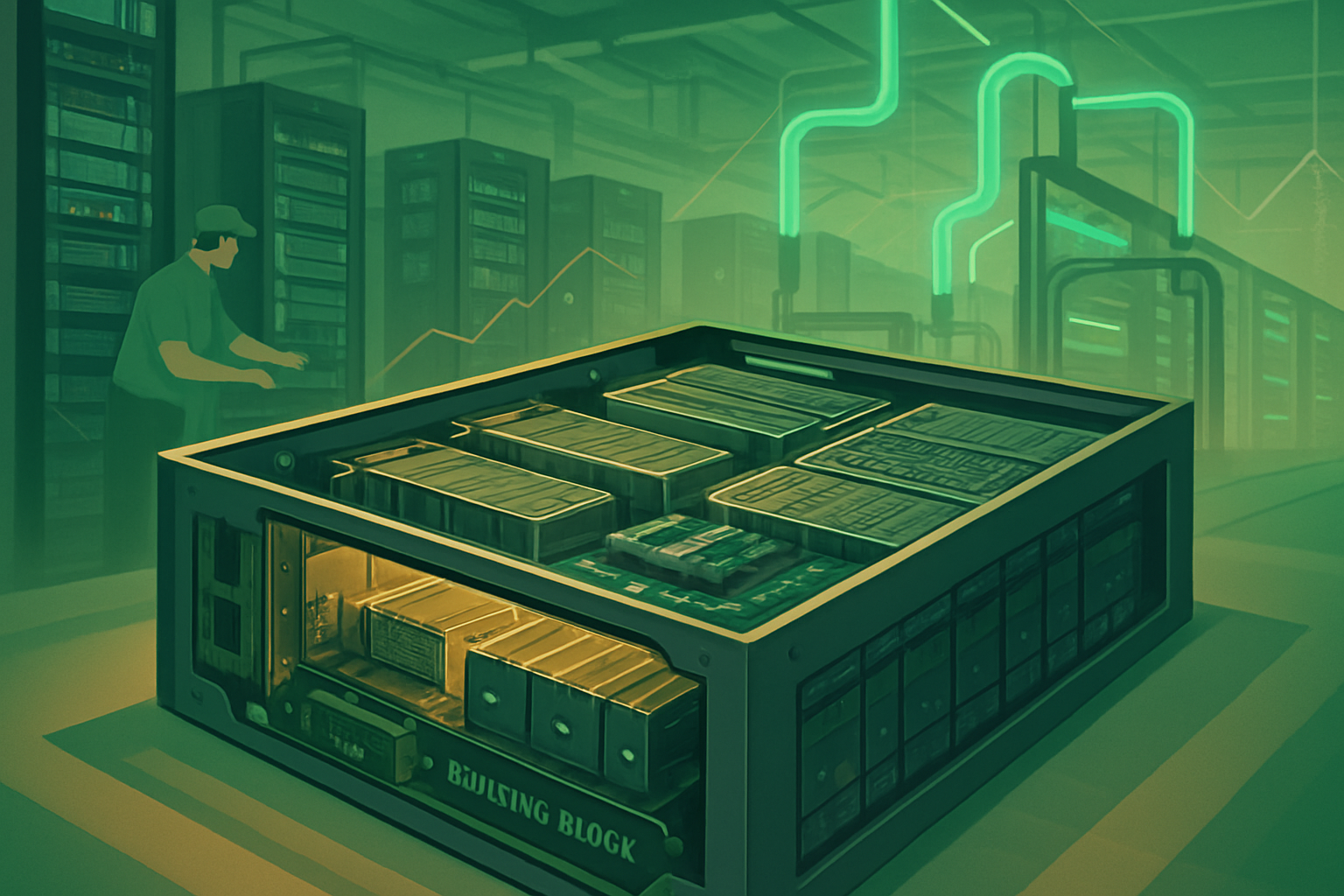
    Founded in September 1993 by Charles Liang, his wife Sara Liu, and Wally Liaw, Supermicro was born out of a commitment to engineering-led hardware design. Based in San Jose, California, the company initially gained traction by focusing on high-end, high-efficiency motherboards. Liang’s core philosophy was "Building Block Solutions"—a modular approach to server design that allowed customers to swap components like motherboards, chassis, and power supplies to create highly customized systems.

    This modularity proved prophetic. As data centers moved away from generic "one-size-fits-all" servers toward specialized workloads, Supermicro was able to adapt faster than its larger, more bureaucratic competitors. However, the company’s history has also been marked by regulatory friction. In 2018, SMCI was delisted from the Nasdaq for failing to file financial statements on time following a prior accounting scandal. It eventually regained its listing in 2020 after an SEC settlement, but the "delisting" shadow would return to haunt the company just a few years later.

    Business Model

    Supermicro operates primarily as a Total IT Solution provider. Unlike traditional hardware vendors that sell individual boxes, SMCI sells complete rack-scale systems. Its revenue is derived from three main segments:

    • Server and Storage Systems: High-density servers optimized for AI, Cloud, and Enterprise workloads.
    • Subsystems and Accessories: Individual components sold to other OEMs and DIY data center operators.
    • Services: Deployment, maintenance, and software management for large-scale data center fleets.

    The company’s competitive edge lies in its "first-to-market" capability. Because Supermicro’s engineering teams work in close proximity to Nvidia, Advanced Micro Devices (NASDAQ: AMD), and Intel (NASDAQ: INTC), they are often able to ship servers featuring the latest silicon weeks—or even months—before competitors. Their customer base spans from massive "hyperscalers" like Meta and Google to burgeoning AI startups and sovereign wealth funds building national AI clouds.

    Stock Performance Overview

    The stock performance of SMCI over the last decade is a tale of extreme "alpha" and harrowing drawdowns.

    • 10-Year Horizon: Investors who held from 2016 through early 2026 have seen massive gains, driven by the shift from traditional data centers to AI-intensive infrastructure.
    • 5-Year Horizon: This period captures the meteoric rise of 2023-2024, where the stock surged over 1,000% as revenue doubled annually. Following a 10-for-1 stock split in late 2024, the shares faced a brutal correction during the "governance crisis" of 2024-2025.
    • 1-Year Horizon: Entering 2026, the stock has staged a "compliance recovery." After bottoming out in late 2024 following the resignation of auditor Ernst & Young, shares have steadily trended upward as the company filed its delayed 10-K and proved it could maintain revenue growth despite margin pressure.

    Financial Performance

    In the fiscal year 2025, Supermicro reported a staggering $22.4 billion in revenue, a massive jump from the $14.99 billion recorded in 2024. Projections for fiscal 2026 suggest revenue could reach between $36 billion and $40 billion, as the demand for Nvidia’s "Rubin" architecture begins to ramp up.

    However, the "bottom line" tells a more nuanced story. Gross margins, which once hovered around 15-18%, have compressed to the 9.3% to 9.5% range as of early 2026. This is the result of two factors: aggressive pricing to win back skeptical customers after the 2024 accounting scare, and increased competition from Dell Technologies (NYSE: DELL) and Hewlett Packard Enterprise (NYSE: HPE). Despite the margin squeeze, the company remains cash-flow positive, though its debt levels increased in 2025 to fund the massive inventory required for high-density liquid-cooled racks.

    Leadership and Management

    The identity of Supermicro remains inseparable from its founder, Charles Liang. Liang is revered as a technical visionary but has faced significant criticism regarding corporate governance. The 2024 crisis, sparked by a Hindenburg Research report and the subsequent resignation of Ernst & Young, forced a major overhaul of the leadership team.

    To stabilize the ship, the board appointed Kenneth Cheung as Chief Accounting Officer and added independent directors with deep auditing backgrounds, including Scott Angel, a former Deloitte partner. While Liang remains CEO and Chairman, the 2026 iteration of Supermicro features a much more robust "checks and balances" system, designed to move the company away from its "family-run" reputation toward institutional-grade transparency.

    Products, Services, and Innovations

    Innovation at SMCI is currently defined by Direct Liquid Cooling (DLC). As AI chips like the Nvidia Blackwell and Rubin consume upwards of 1,000 watts per GPU, traditional air cooling is no longer viable. Supermicro’s DLC solutions allow for much higher server density, reducing the physical footprint and power consumption of data centers.

    The company has also expanded its "AI Data Center in a Box" offering—delivering fully integrated, pre-tested racks that include networking, storage, and compute, ready to be plugged into a power source. Their R&D is currently focused on "Green Computing" metrics, specifically Power Usage Effectiveness (PUE), which has become a key selling point for ESG-conscious cloud providers.

    Competitive Landscape

    The "Goldilocks" period where SMCI had the AI server market largely to itself has ended.

    • Dell Technologies: Has successfully used its massive enterprise sales force and captive financing arm to claw back market share, notably winning large contracts from Elon Musk’s xAI.
    • HPE: Following its acquisition of Juniper Networks, HPE has integrated high-end networking with its AI servers, providing a "full stack" competition to SMCI.
    • ODM Direct: Companies like Foxconn and Quanta continue to compete on price for the absolute largest hyperscale orders.

    SMCI’s primary advantage remains its speed. Its ability to iterate hardware designs in weeks rather than quarters allows it to capture the "early adopter" premium in every new chip cycle.

    Industry and Market Trends

    The primary trend driving SMCI is the shift from "General Purpose" to "Accelerated" computing. As of 2026, it is estimated that over 60% of all new data center spend is directed toward AI infrastructure. Furthermore, the global shortage of power is making liquid cooling—SMCI’s specialty—a necessity rather than a luxury.

    However, a "cyclicality" risk is emerging. After three years of frantic buying, some analysts warn of a "digestion period" where hyperscalers may slow their capital expenditures to ensure they can monetize the AI software they are building.

    Risks and Challenges

    Despite its recovery, SMCI faces several formidable risks:

    1. Internal Controls: While the company avoided delisting in 2025, its new auditor, BDO USA, noted "material weaknesses" in internal controls over financial reporting. Investors remain wary of any further accounting "surprises."
    2. Margin War: With Dell and HPE aggressively discounting to gain share, SMCI may find it difficult to return to the 15%+ gross margins of the past.
    3. Nvidia Dependency: A significant portion of SMCI’s value proposition relies on its allocation of Nvidia GPUs. Any shift in Nvidia’s "preferred partner" status would be catastrophic.
    4. Geopolitical Risk: With manufacturing hubs in Taiwan and the U.S., any escalation in cross-strait tensions could disrupt its tightly wound supply chain.

    Opportunities and Catalysts

    • The Rubin Cycle: The upcoming launch of Nvidia’s Rubin platform in late 2026 represents the next major revenue catalyst.
    • Sovereign AI: Governments in the Middle East and Asia are building domestic AI clouds, often preferring SMCI’s "plug-and-play" rack solutions over traditional enterprise vendors.
    • Edge AI: As AI moves from massive data centers to "the edge" (factories, hospitals, autonomous vehicles), SMCI’s modular small-form-factor servers present a significant growth opportunity.

    Investor Sentiment and Analyst Coverage

    Sentiment on SMCI in early 2026 is "cautiously optimistic" but polarized. "Bull" analysts point to the company’s 40%+ revenue growth and its role as an indispensable partner in the AI ecosystem. "Bear" analysts point to the compressed margins and the "governance discount"—the fact that the stock trades at a lower P/E ratio (currently ~13x) compared to its growth rate, due to lingering trust issues. Hedge fund positioning has shifted from "momentum chasing" to "valuation-based," with many institutional investors waiting for several consecutive quarters of "clean" audits before returning in size.

    Regulatory, Policy, and Geopolitical Factors

    SMCI is currently navigating a Department of Justice (DOJ) probe into its past accounting practices, a legacy of the late 2024 turmoil. While the company’s internal committee found "no evidence of fraud," the federal investigation remains a persistent "black cloud." Additionally, SMCI must comply with evolving U.S. export controls on high-end AI servers to China, which has historically been a significant market for its component business.

    Conclusion

    Super Micro Computer, Inc. stands today as a survivor of the first great AI boom. It has transitioned from a high-flying, perhaps loosely governed "growth at all costs" firm into a massive industrial powerhouse that essentially manufactures the "engines" of the modern world.

    For investors, SMCI represents a "high-beta" play on the future of intelligence. If the company can maintain its lead in liquid cooling and keep its governance house in order, it is poised to remain a primary beneficiary of the AI era. However, the days of "easy money" and astronomical margins have likely passed, replaced by a grueling, high-volume battle for dominance in the global data center.

    Investors should watch the upcoming FY 2026 Q3 earnings call for updates on the "Rubin" allocation and any final resolution regarding the DOJ investigation.


    This content is intended for informational purposes only and is not financial advice.

  • The Architecture of AI Supremacy: A Deep Dive into Nvidia (NVDA) in 2026

    The Architecture of AI Supremacy: A Deep Dive into Nvidia (NVDA) in 2026

    As of January 26, 2026, NVIDIA Corp (NASDAQ: NVDA) stands not merely as a semiconductor company, but as the foundational architect of the global artificial intelligence economy. Over the past three years, the company has undergone a transformation unparalleled in corporate history, evolving from a graphics card manufacturer into a vertically integrated "AI Factory" provider.

    Nvidia is currently in focus due to its aggressive expansion into the cloud infrastructure space—most notably through its multi-billion dollar strategic alliance with CoreWeave (NASDAQ: CRWV)—and the recent launch of its Rubin architecture at CES 2026. With a market capitalization fluctuating around the $3.5 trillion mark, Nvidia’s influence over global indices and the broader technological landscape has never been more profound. This deep-dive examines how Nvidia has secured its moat through strategic investments and hardware supremacy while navigating an increasingly complex regulatory and competitive environment.

    Historical Background

    Founded in 1993 by Jensen Huang, Chris Malachowsky, and Curtis Priem, Nvidia began with a vision to bring 3D graphics to the gaming and multimedia markets. The company’s early years were marked by the release of the RIVA TNT and the GeForce 256, the latter of which was marketed as the world's first GPU (Graphics Processing Unit).

    The pivotal moment in Nvidia’s history occurred in 2006 with the launch of CUDA (Compute Unified Device Architecture). By allowing researchers to use GPUs for general-purpose parallel processing, Jensen Huang made a high-stakes bet that accelerated computing would eventually supersede traditional CPUs for complex tasks. For nearly a decade, Wall Street questioned this strategy as CUDA yielded little revenue; however, the emergence of deep learning in the early 2010s—specifically the success of AlexNet—validated Huang’s vision. By the time the generative AI boom arrived in late 2022, Nvidia had a decade-long head start in software and hardware integration, positioning it to capture over 80% of the AI accelerator market.

    Business Model

    Nvidia’s business model in 2026 is defined by Jensen Huang’s "Five-Layer Cake" strategy: Energy, Chips, Cloud Infrastructure, Models, and Applications. This vertical integration ensures that Nvidia is not just selling a commodity, but an entire ecosystem.

    1. Data Center (The Engine): Representing over 85% of total revenue, this segment sells the H200, Blackwell, and Rubin GPUs alongside high-speed networking (Infiniband and Spectrum-X).
    2. Strategic Cloud Partnerships (CoreWeave): Unlike traditional vendors, Nvidia has invested heavily in "neoclouds" like CoreWeave. By providing these companies with priority access to hardware, Nvidia bypasses the bargaining power of "Big Tech" hyperscalers (like Amazon and Google) who are developing their own internal chips.
    3. Software and Services (NIMs): Nvidia Inference Microservices (NIMs) provide a recurring revenue stream by allowing enterprises to deploy AI models optimized for Nvidia hardware through a subscription model.
    4. Gaming and Professional Visualization: While no longer the primary driver, these segments provide a stable foundation of cash flow and R&D synergy.

    Stock Performance Overview

    Nvidia has been the defining stock of the 2020s. Over the last 10 years, the stock has returned over 4,200%, vastly outperforming the S&P 500 and the Nasdaq-100.

    • 1-Year Performance: The stock has seen a 45% increase since January 2025, largely driven by the successful ramp-up of the Blackwell architecture and the announcement of the Rubin platform.
    • The 2024 Split: A 10-for-1 stock split in June 2024 increased liquidity and retail participation, leading to a massive rally that briefly made Nvidia the most valuable company in the world.
    • The 2025 "DeepSeek" Correction: In early 2025, the stock faced a 22% drawdown following the rise of DeepSeek, a model that demonstrated high-level AI capabilities with significantly less compute. This sparked a "valuation reset," which Nvidia eventually overcame by proving that high-end compute demand for frontier models remained insatiable.

    Financial Performance

    Nvidia’s financial results for Fiscal Year 2025 were nothing short of historic. The company reported annual revenue of $130.5 billion, a 114% increase year-over-year.

    • Profitability: Net income for FY2025 reached $72.9 billion. Gross margins stabilized at a staggering 75%, reflecting the immense pricing power Nvidia holds over its Blackwell GB200 systems, which retail for upwards of $3 million per rack.
    • Cash Flow: Free cash flow exceeded $60 billion in 2025, allowing the company to aggressively fund its $2 billion follow-on investment in CoreWeave and expand its share buyback program.
    • Valuation: As of January 2026, NVDA trades at a forward P/E ratio of approximately 38x. While high by historical standards, it is down from the 60x+ peaks of 2023, as earnings growth has largely kept pace with share price appreciation.

    Leadership and Management

    Jensen Huang remains the longest-tenured founder-CEO in the tech industry, and his leadership style is central to Nvidia’s "flat" organizational structure. Nvidia famously has no middle managers; instead, Huang has dozens of direct reports, fostering a culture of "speed of light" execution.

    The leadership team, including CFO Colette Kress, has been lauded for its masterful management of the supply chain during the 2023-2025 shortage. In 2026, the board’s focus has shifted toward "Sovereign AI," with Huang acting as a quasi-diplomat, meeting with heads of state in Japan, the UK, and the UAE to encourage national-level investments in Nvidia-powered data centers.

    Products, Services, and Innovations

    The transition from the Blackwell architecture (2024-2025) to the Rubin platform (2026) marks a shift toward extreme energy efficiency.

    • Rubin (R100): Launched in early 2026, the Rubin GPU utilizes HBM4 (High Bandwidth Memory) and is paired with the "Vera" CPU. It is designed to reduce the power consumption of AI inference by up to 10x compared to the previous generation.
    • NVLink 72-Core Systems: Nvidia has moved from selling individual chips to selling entire liquid-cooled racks. This "system-as-a-chip" approach makes it nearly impossible for competitors to swap out Nvidia GPUs for rival hardware without redesigning the entire data center.
    • Omniverse: Nvidia’s industrial metaverse platform is now being used by major automakers (BMW, Mercedes) to create "digital twins" of factories, representing a growing revenue stream in the industrial AI sector.

    Competitive Landscape

    Nvidia currently holds roughly 80-85% of the high-end AI chip market. However, the landscape is diversifying:

    • AMD (NASDAQ: AMD): The Instinct MI350 series has emerged as a viable alternative for companies seeking to avoid "Nvidia lock-in." AMD’s open-source ROCm software is slowly closing the gap with CUDA, though it still lags in developer mindshare.
    • Hyperscaler Silicon: Google (TPU v7) and Amazon (Trainium 3) have successfully moved a portion of their internal workloads to their own chips. While this limits Nvidia’s "wallet share" within those companies, it has not yet stopped the hyperscalers from buying every Nvidia chip they can procure.
    • Specialized Clouds: By backing CoreWeave, Nvidia has created a "loyalist" cloud tier that exclusively uses Nvidia hardware, effectively neutralizing the threat of hyperscaler internal silicon.

    Industry and Market Trends

    The "AI Factory" is the dominant trend of 2026. Data centers are no longer viewed as cost centers but as generative engines.

    1. Shift to Inference: In 2023-2024, the market was focused on "training" models. In 2026, the focus has shifted to "inference" (running the models). This benefits Nvidia’s specialized software stack and networking, which handle the high-speed data movement required for real-time AI.
    2. Energy Constraints: The scarcity of power has become the primary bottleneck for AI growth. Nvidia’s focus on performance-per-watt with the Rubin architecture is a direct response to this macro constraint.

    Risks and Challenges

    Despite its dominance, Nvidia faces three primary risks:

    1. Antitrust Scrutiny: The US Department of Justice and the EU have launched investigations into Nvidia’s "bundling" practices, specifically whether the company penalizes customers who use competing chips or networking.
    2. The "Efficiency" Risk: As demonstrated by the DeepSeek shock in 2025, there is a risk that software breakthroughs could make massive GPU clusters less necessary, potentially leading to a "compute glut."
    3. Geopolitical Volatility: With 20-25% of revenue historically tied to China, ongoing export restrictions (and potential retaliatory measures from Beijing) remain a persistent threat to the top line.

    Opportunities and Catalysts

    • Sovereign AI: Nations are increasingly treating AI compute as a matter of national security. Nvidia’s contracts with governments to build localized AI clouds could represent a multi-billion dollar opportunity outside of traditional Big Tech.
    • The CoreWeave IPO: Following CoreWeave’s successful 2025 IPO, Nvidia’s equity stake has appreciated significantly, providing both a financial cushion and a locked-in customer for its 2026-2027 chip cycles.
    • Edge AI: The integration of Rubin-class architecture into high-end PCs and robotics (Project GR00T) offers a pathway to dominate the physical AI market as humanoid robots begin early-stage deployments in factories.

    Investor Sentiment and Analyst Coverage

    Wall Street sentiment remains "Strong Buy" across the majority of major banks (Goldman Sachs, Morgan Stanley, JP Morgan), though price targets have become more grounded in 2026. The narrative has shifted from "How many chips can they make?" to "How much software revenue can they generate?"

    Institutional ownership remains high (over 65%), with major positions held by Vanguard, BlackRock, and Fidelity. Hedge funds have recently pivoted toward "Nvidia + Energy" trades, pairing long positions in NVDA with investments in nuclear and grid infrastructure providers.

    Regulatory, Policy, and Geopolitical Factors

    The geopolitical landscape is the "X-factor" for Nvidia. In 2025, the US Bureau of Industry and Security (BIS) tightened controls on the export of Blackwell-class chips to Middle Eastern hubs, citing concerns over "trans-shipment" to China.

    Furthermore, China’s SAMR (State Administration for Market Regulation) has become increasingly aggressive in auditing Nvidia’s domestic operations. Any escalation in the "Chip Wars" could force Nvidia to bifurcate its supply chain, a move that would be both costly and logistically complex.

    Conclusion

    As we stand in early 2026, Nvidia remains the undisputed king of the AI era. Its strategic investment in CoreWeave has proven to be a masterstroke, securing a dedicated channel for its hardware and insulating the company against the self-serving interests of the larger hyperscalers.

    While the "DeepSeek" correction of 2025 reminded investors that the path to AI supremacy is not a straight line, Nvidia’s fundamental financial strength and relentless 12-month innovation cycle have allowed it to maintain its lead. For investors, the key metrics to watch in 2026 will be the adoption rate of the Rubin platform and the growth of recurring software revenue. While regulatory risks loom, Nvidia’s position at the center of the world’s most important technological shift makes it a cornerstone of the modern digital economy.


    This content is intended for informational purposes only and is not financial advice.

  • The Backbone of the AI Era: A Deep Dive into CoreWeave (CRWV) and the $2 Billion NVIDIA Infusion

    The Backbone of the AI Era: A Deep Dive into CoreWeave (CRWV) and the $2 Billion NVIDIA Infusion

    As of January 26, 2026, the global computing landscape is no longer defined by the general-purpose cloud services of the past decade. Instead, a new tier of "AI Hyperscalers" has emerged, led by the meteoric rise of CoreWeave (Nasdaq: CRWV). Today, the company finds itself at the center of the financial world following a landmark $2 billion strategic investment from NVIDIA (Nasdaq: NVDA). This capital injection, priced at a significant premium to its recent trading range, underscores CoreWeave’s position as the primary physical backbone for the generative AI revolution.

    Once a niche player in the cryptocurrency mining space, CoreWeave has transformed into a critical piece of global infrastructure. In less than three years, it has scaled from a specialized provider for visual effects to the preferred partner for the world’s most ambitious AI labs, including OpenAI and Meta. This article explores the company’s evolution, its high-leverage business model, and the unique, symbiotic relationship it shares with the world’s most valuable semiconductor company.

    Historical Background

    CoreWeave’s journey began not in a Silicon Valley incubator, but in a garage in 2017. Founded as Atlantic Crypto by former commodities traders Michael Intrator, Brian Venturo, and Brannin McBee, the company was initially focused on large-scale Ethereum mining. At its peak in 2018, it was one of the largest miners in North America, utilizing thousands of NVIDIA GPUs.

    The "crypto winter" of 2018–2019 proved to be a turning point. Realizing that their massive inventory of GPUs was underutilized by volatile mining rewards, the founders pivoted to cloud computing. Rebranding as CoreWeave in 2019, they began renting out "compute" to industries with high-performance requirements, such as visual effects (VFX) and 3D rendering. This early transition allowed them to build a specialized, GPU-native software stack that legacy cloud providers—whose data centers were built primarily for web hosting and CPUs—lacked.

    When the generative AI wave hit in late 2022, CoreWeave was perfectly positioned. Unlike Amazon Web Services (AWS) or Microsoft Azure, which had to retrofit massive general-purpose data centers, CoreWeave was building "high-density" clusters designed from the ground up for the thermal and power demands of massive AI training.

    Business Model

    CoreWeave operates on a GPU-as-a-Service (GPUaaS) model. It positions itself as an "Altscaler" (alternative hyperscaler), offering specialized infrastructure that is often more efficient than traditional cloud providers.

    Key revenue sources include:

    • On-Demand and Reserved Instances: Renting out NVIDIA’s most advanced chips, including the H100, H200, and the new Blackwell GB300 NVL72 series.
    • Bare Metal Infrastructure: Providing customers with direct access to hardware without the "virtualization tax" (software layers that can slow down performance), which is a major draw for AI labs performing massive LLM (Large Language Model) training.
    • Strategic Colocation: Managing specialized data centers that focus on extreme power density, often exceeding 100kW per rack.

    The company’s customer base is concentrated but high-value. By 2025, CoreWeave had secured massive long-term contracts with industry titans. Its backlog is anchored by a $22.4 billion commitment from OpenAI and a multi-billion dollar agreement with Meta to support their Llama-series development.

    Stock Performance Overview

    Since its highly anticipated IPO on March 28, 2025, CoreWeave (CRWV) has been one of the market’s top-performing technology stocks.

    • IPO Price: $40.00 per share.
    • 1-Year Performance (Trailing): The stock has surged approximately 125% from its IPO price, currently trading near $90.00 as of late January 2026.
    • Notable Moves: The stock saw a 20% jump today following the news of NVIDIA’s $2 billion direct investment. It also experienced significant volatility in late 2025 following its $9 billion acquisition of Core Scientific, which investors initially viewed as high-risk due to the debt involved.

    The stock’s trajectory has mirrored the "AI 2.0" trade—shifting from chipmakers like NVIDIA to the infrastructure providers that deploy those chips at scale.

    Financial Performance

    CoreWeave’s financial profile is characterized by explosive top-line growth coupled with massive capital intensity.

    • Revenue Growth: In fiscal year 2025, CoreWeave reported revenue of $8.2 billion, a staggering increase from $1.9 billion in 2024.
    • Margins: Gross margins remain healthy at roughly 45%, but net income has fluctuated near the break-even point. In Q3 2025, the company reported a net loss of $110 million, primarily due to the depreciation of its massive hardware fleet and interest payments on its debt.
    • Backlog: The most bullish metric for investors is the company’s $55.6 billion revenue backlog, representing multi-year, non-cancelable contracts from the world's leading AI companies.
    • Debt and Liquidity: CoreWeave is heavily leveraged. It has pioneered the use of "GPU-backed loans," where its inventory of NVIDIA chips serves as collateral for billions in financing. While innovative, this strategy leaves the company sensitive to interest rate fluctuations.

    Leadership and Management

    The company is led by its co-founder and CEO, Michael Intrator. A former hedge fund manager, Intrator’s financial acumen has been central to CoreWeave’s ability to secure billions in specialized debt financing—a critical advantage in a capital-intensive industry.

    • Brian Venturo (Chief Strategy Officer): The technical visionary of the group. Venturo’s early decision to pivot away from crypto mining to GPU cloud is widely credited as one of the most successful pivots in modern tech history.
    • Nitin Agrawal (CFO): A veteran of Google Cloud and AWS, Agrawal was recruited to professionalize CoreWeave’s financial reporting ahead of the 2025 IPO.
    • Brannin McBee (Chief Development Officer): McBee leads the company’s real estate and power acquisition strategy, which has become the primary bottleneck for AI growth in 2026.

    The leadership team is regarded as aggressive and highly specialized, with a reputation for moving faster than the bureaucratic "Big Tech" incumbents.

    Products, Services, and Innovations

    CoreWeave’s competitive edge lies in its GPU-Native Software Stack. While legacy clouds struggle with legacy code and general-purpose storage, CoreWeave’s platform is optimized specifically for NVIDIA’s InfiniBand networking and CUDA software.

    Key Innovations:

    • Blackwell Integration: CoreWeave was the first cloud provider to deploy NVIDIA’s Blackwell architecture at scale in late 2025.
    • CoreWeave Kubernetes Service: A purpose-built orchestration layer that allows AI researchers to deploy thousands of GPUs in seconds, a process that can take hours on legacy platforms.
    • Liquid Cooling Standards: By 2026, CoreWeave has set new industry standards for liquid-to-chip cooling, allowing them to pack more compute power into smaller data center footprints.

    Competitive Landscape

    CoreWeave competes in a "David vs. Goliath" environment, though the lines are increasingly blurred.

    • Hyperscaler Rivals (AWS, Azure, GCP): These giants have infinite capital but are often hampered by their own internal AI priorities and a "generalist" focus.
    • The "Neoclouds": Competitors like Lambda Labs and Together AI offer similar GPU-centric services, but CoreWeave’s massive lead in power capacity and NVIDIA's direct backing has given it a dominant market share in this sub-sector.
    • In-House Hardware: A looming threat comes from Google and Amazon’s internal AI chips (TPUs and Trainium). However, as long as NVIDIA's CUDA remains the industry standard, CoreWeave’s NVIDIA-centric model remains protected.

    Industry and Market Trends

    The AI market in 2026 is defined by the "Power Wall." The primary constraint on AI growth is no longer chip availability, but the availability of electricity and high-density data center space. CoreWeave’s 2025 acquisition of Core Scientific was a strategic masterstroke, converting former crypto-mining sites with massive electrical permits into AI "factories."

    Furthermore, there is a trend toward sovereign AI. Governments in Europe and the Middle East are increasingly looking to build their own AI infrastructure. CoreWeave has capitalized on this by opening data centers in Norway and the UK, catering to data residency requirements.

    Risks and Challenges

    Despite its success, CRWV faces significant risks:

    • Concentration Risk: The company is almost entirely dependent on NVIDIA. Any supply chain disruption or a shift in NVIDIA’s preferred partner status would be catastrophic.
    • High Leverage: With billions in debt, CoreWeave is vulnerable if the "AI bubble" bursts or if customer demand for LLM training slows down significantly.
    • Infrastructure Delays: The company is currently facing several class-action lawsuits from shareholders related to delays in the build-out of its Texas and Illinois data centers, which allegedly impacted 2025 revenue projections.
    • Regulatory Scrutiny: As a dominant AI infrastructure provider, CoreWeave is increasingly under the microscope of the FTC regarding its close relationship with NVIDIA and potential anti-competitive practices.

    Opportunities and Catalysts

    • NVIDIA’s $2B Investment: Today's investment is more than just cash; it is a signal that NVIDIA views CoreWeave as its "Cloud Arm," ensuring CRWV remains the first in line for future chip generations.
    • Edge AI Expansion: As inference (running AI models) becomes more prevalent than training, CoreWeave has the opportunity to expand its footprint to "edge" data centers.
    • S&P 500 Inclusion: With a market cap now exceeding $50 billion, CRWV is a prime candidate for S&P 500 inclusion in 2026, which would trigger massive institutional buying.

    Investor Sentiment and Analyst Coverage

    Wall Street is largely bullish on CRWV, viewing it as the "purest play" on AI infrastructure.

    • Analyst Ratings: Currently, 18 analysts cover the stock, with 14 "Buy" ratings and 4 "Hold" ratings.
    • Hedge Fund Interest: Several high-profile hedge funds have built significant positions, viewing the company’s $56 billion backlog as a guaranteed revenue stream.
    • Retail Sentiment: On social media platforms like X and Reddit, CoreWeave is often discussed as the "Next NVIDIA," though more conservative investors warn of its high valuation (trading at roughly 10x 2026 projected revenue).

    Regulatory, Policy, and Geopolitical Factors

    The regulatory landscape for AI is tightening. The AI Safety Act of 2025 in the U.S. requires infrastructure providers like CoreWeave to report when customers are using massive amounts of compute to train potentially dangerous models. Compliance costs are rising, but CoreWeave’s specialized focus allows it to implement these "compute-governance" features more natively than its larger rivals.

    Geopolitically, the U.S.-China "chip war" remains a double-edged sword. While export controls limit CoreWeave’s ability to expand into Chinese markets, they also solidify the value of its domestic GPU inventory, as high-end AI chips become the "new oil."

    Conclusion

    CoreWeave (CRWV) has successfully navigated the transition from a garage-based crypto miner to a cornerstone of the global AI economy. Today’s $2 billion investment from NVIDIA is a resounding vote of confidence, effectively cementing the company’s status as the world’s leading AI hyperscaler.

    For investors, the case for CoreWeave is built on its massive, multi-year backlog and its unique hardware-software integration. However, the company’s high debt load and its absolute reliance on NVIDIA’s ecosystem remain significant risks. As we move further into 2026, the key metric to watch will be CoreWeave’s ability to convert its $56 billion backlog into profitable operations while managing the immense power and cooling requirements of the Blackwell era.


    This content is intended for informational purposes only and is not financial advice. As of January 26, 2026, the author holds no position in CRWV.

  • The Great Silicon Rivalry: How AMD’s MI350/MI400 Roadmap is Challenging Nvidia’s AI Dominance

    The Great Silicon Rivalry: How AMD’s MI350/MI400 Roadmap is Challenging Nvidia’s AI Dominance

    Today’s Date: January 19, 2026

    Introduction

    As we enter 2026, the global computing landscape is defined by a singular, relentless race for artificial intelligence dominance. At the heart of this struggle is Advanced Micro Devices (NASDAQ: AMD), a company that has successfully transitioned from a perennial underdog in the PC market to a primary architect of the AI-driven future. While Nvidia (NASDAQ: NVDA) currently holds the throne of the generative AI era, AMD has emerged as the only credible, high-scale alternative capable of challenging the green giant’s silicon monopoly.

    Through a combination of strategic acquisitions and a punishingly fast hardware roadmap—highlighted by the MI350 and the upcoming MI400 series—AMD is no longer just "catching up." It is defining its own architectural path, focusing on memory capacity and open-source software to win over the world’s largest hyperscalers. This feature explores AMD's evolution into a systems leader and its potential to reshape the AI economy.

    Historical Background

    The story of AMD is one of the most storied "comeback" narratives in corporate history. Founded in 1969 by Jerry Sanders and a group of Fairchild Semiconductor alumni, AMD spent much of its first four decades in the shadow of Intel (NASDAQ: INTC). The company functioned primarily as a second-source manufacturer of microprocessors, often fighting bitter legal battles over intellectual property.

    By the early 2010s, AMD was on the brink of bankruptcy, suffering from high debt and uncompetitive products like the "Bulldozer" architecture. The turning point arrived in 2014 when Dr. Lisa Su took the helm as CEO. Su pivoted the company toward high-performance computing, launching the "Zen" architecture in 2017. Zen restored AMD's competitiveness in the PC and server markets, allowing it to systematically erode Intel's market share. This regained financial stability provided the R&D war chest necessary for the 2022 acquisition of Xilinx, which transformed AMD into an adaptive and AI-centric powerhouse.

    Business Model

    AMD operates through four primary business segments, each catering to a specific pillar of the modern compute economy:

    1. Data Center: The company’s crown jewel, comprising EPYC server processors and Instinct AI accelerators. This segment is the primary engine of revenue growth as enterprises and cloud providers build "AI Factories."
    2. Client: Includes Ryzen processors for desktops and laptops. AMD has capitalized on the "AI PC" trend by integrating Neural Processing Units (NPUs) directly into its consumer chips.
    3. Gaming: Encompasses Radeon graphics cards and semi-custom chips for consoles like the PlayStation 5 and Xbox Series X. While cyclical, this segment provides steady cash flow.
    4. Embedded: Formed largely from the Xilinx acquisition, this segment serves industrial, automotive, and aerospace markets with adaptive SoCs and FPGAs.

    AMD’s business model has shifted from selling individual chips to providing full "rack-scale" systems, particularly after its late-2025 integration of ZT Systems.

    Stock Performance Overview

    AMD has been a top performer in the semiconductor space, reflecting its successful strategic pivot. As of mid-January 2026, the stock is trading near $231.83.

    • 1-Year Performance: Up approximately 90.87%, significantly outperforming the broader S&P 500 as investors priced in the rapid ramp of MI300 and MI350 sales.
    • 5-Year Performance: Up 145%. The stock saw a massive surge during the post-pandemic digital transformation and the 2023-2024 AI explosion.
    • 10-Year Performance: A staggering 1,940% gain. For long-term shareholders, AMD has been a generational wealth creator, rising from a "penny stock" valuation of roughly $11 in early 2016 to its current triple-digit status.

    Financial Performance

    AMD’s 2025 fiscal year was a record-breaking period. In the third quarter of 2025, the company reported revenue of $9.2 billion, a 36% increase year-over-year.

    • Data Center Revenue: Reached a record $4.3 billion in Q3 2025, fueled by the MI325X launch.
    • Margins: Non-GAAP gross margins expanded to 54%, a critical metric that shows AMD is gaining pricing power in the premium AI chip market.
    • AI Outlook: Management has guided for a data center AI revenue CAGR of 80% through 2027.
    • Balance Sheet: AMD remains financially disciplined with over $10 billion in cash and short-term investments, balanced by manageable debt following the ZT Systems acquisition.

    Leadership and Management

    Dr. Lisa Su remains one of the most respected CEOs in the technology sector. Her "execution-first" philosophy has replaced AMD’s historical reputation for over-promising and under-delivering.

    Key members of the leadership team include:

    • Victor Peng: Former Xilinx CEO, now leading the AI strategy and software integration.
    • Mark Papermaster: CTO, responsible for the multi-generational Zen and CDNA architectural roadmaps.
    • Jean Hu: CFO, who has overseen the company’s margin expansion and strategic capital allocation.

    The board’s strategy currently focuses on "System-Level Innovation"—integrating silicon, software, and networking into a single vertical stack.

    Products, Services, and Innovations

    AMD’s competitive edge currently rests on its chiplet architecture, which allows it to mix and match different silicon components to maximize performance and yield.

    • Instinct MI350 Series: Built on the CDNA 4 architecture, the MI350 features 288GB of HBM3e memory. It is designed to offer a 35x improvement in inferencing performance compared to the previous generation, specifically targeting large-scale LLM deployment.
    • Instinct MI400 Series: Slated for a 2026/2027 rollout, the MI400 is expected to utilize HBM4 memory with a staggering 19.6 TB/s of bandwidth. This chip is AMD's "Nvidia-killer," designed to leapfrog Nvidia’s Rubin architecture in memory-intensive tasks.
    • ROCm Software Stack: AMD’s open-source software has reached near-parity with Nvidia’s CUDA for the most common AI frameworks (PyTorch and TensorFlow), lowering the "software moat" that once protected Nvidia.
    • Helios Platform: Leveraging ZT Systems’ expertise, AMD now offers a full rack-scale AI system, competing directly with Nvidia’s GB200 NVL72.

    Competitive Landscape

    The primary battle is between AMD and Nvidia (NASDAQ: NVDA). While Nvidia maintains a lead in raw training performance and developer ecosystem mindshare, AMD has carved out a niche as the "open" alternative with superior memory capacity.

    • Nvidia: Remains the market leader with its Blackwell and upcoming Rubin architectures. Its InfiniBand networking and CUDA software create a powerful "lock-in" effect.
    • Intel: Its Gaudi 3 and subsequent Falcon Shores chips represent a threat in the mid-range AI market, though Intel continues to struggle with manufacturing execution compared to AMD's fabless model.
    • Cloud Service Providers (CSPs): Companies like Amazon (NASDAQ: AMZN) and Google (NASDAQ: GOOGL) are developing their own internal silicon (Trainium/TPUs). However, most still require third-party GPUs like AMD’s to support their external cloud customers.

    Industry and Market Trends

    The "Second Source" movement is the most significant trend benefiting AMD. Hyperscalers like Meta and Microsoft are desperate to avoid a single-vendor monopoly. This has created a "pull" for AMD products, where customers are actively helping AMD optimize its software stack to ensure a competitive market.

    Additionally, the industry is shifting from purely "training" large models to "inference" (running them). AMD’s high-memory-capacity chips are particularly well-suited for inference, which is expected to become the larger part of the AI market by 2027.

    Risks and Challenges

    • Nvidia’s Software Moat: While ROCm has improved, CUDA remains the industry standard. Many legacy enterprise applications are still optimized exclusively for Nvidia.
    • Supply Chain Concentration: AMD relies almost entirely on TSMC (NYSE: TSM) for advanced 3nm and 2nm manufacturing. Any disruption in Taiwan would be catastrophic.
    • Valuation: Trading at a high price-to-earnings multiple, AMD has "priced in" a significant amount of future AI success. Any missed earnings or product delays could result in sharp volatility.

    Opportunities and Catalysts

    • MI400 Launch: The formal unveiling of MI400 specifications in late 2026 could serve as a major catalyst if it outperforms Nvidia’s Rubin.
    • ZT Systems Integration: Successfully selling full-rack systems (Helios) could significantly increase AMD’s average selling price (ASP) and total addressable market.
    • Networking Expansion: The Pensando acquisition gives AMD a foothold in high-performance networking, a critical component of AI clusters where Nvidia’s Spectrum-X currently dominates.

    Investor Sentiment and Analyst Coverage

    Wall Street remains overwhelmingly bullish on AMD. As of January 2026, over 80% of analysts covering the stock maintain a "Buy" or "Strong Buy" rating. Institutional ownership remains high, with major players like Vanguard and BlackRock increasing their positions throughout 2025. Retail sentiment is also strong, often viewing Dr. Lisa Su as a "rockstar" executive who can navigate complex technical hurdles.

    Regulatory, Policy, and Geopolitical Factors

    • Export Controls: The U.S. Department of Commerce continues to tighten restrictions on AI chip exports to China. AMD has had to develop "China-lite" versions of its chips, but future restrictions remain a persistent threat to revenue.
    • Sovereign AI: Governments in Europe and the Middle East are increasingly looking to build their own AI infrastructure. AMD’s "open" approach (ROCm) is often more attractive to these nations than Nvidia’s proprietary ecosystem.
    • CHIPS Act: AMD benefits indirectly from the U.S. CHIPS Act as its manufacturing partners (TSMC, Samsung) build domestic capacity in Arizona and Texas.

    Conclusion

    Advanced Micro Devices has successfully navigated the most difficult transition in its history. By the start of 2026, it has proven that it is more than just a low-cost alternative to Intel or a runner-up to Nvidia. Through the MI350 and MI400 roadmap, AMD is positioning itself as the "performance-per-dollar" leader in the AI era.

    Investors should watch for the successful integration of ZT Systems and the continued adoption of ROCm by developers. While Nvidia remains a formidable incumbent, the market's demand for a "second source" has given AMD an open door. Under Dr. Lisa Su’s leadership, AMD isn't just walking through that door—it is aiming to own the room.


    This content is intended for informational purposes only and is not financial advice.

  • Nvidia (NVDA): The $5 Trillion Engine of the AI Era (2026 Deep Dive)

    Nvidia (NVDA): The $5 Trillion Engine of the AI Era (2026 Deep Dive)

    Date: January 19, 2026

    Introduction

    As of January 2026, NVIDIA Corp. (NASDAQ: NVDA) stands not just as a semiconductor manufacturer, but as the foundational infrastructure provider for the modern global economy. Now valued at a staggering $4.8 trillion, Nvidia’s journey from a niche graphics card maker to the world’s most influential technology company is complete. In early 2026, the market's focus has shifted from the initial "AI land grab" to the "deployment and inference" phase. With the Blackwell architecture currently in peak production and the highly anticipated Rubin platform on the horizon, Nvidia remains the primary barometer for global artificial intelligence sentiment.

    Historical Background

    Founded in 1993 by Jensen Huang, Chris Malachowsky, and Curtis Priem in a San Jose Denny’s, Nvidia’s original mission was to bring 3D graphics to the gaming and multimedia markets. The launch of the GeForce 256 in 1999—the world’s first GPU—redefined the industry. However, the company’s true transformation began in 2006 with the release of CUDA (Compute Unified Device Architecture). By allowing researchers to use GPUs for general-purpose computing, Nvidia laid the groundwork for the deep learning revolution. The 2012 "AlexNet" breakthrough, which used Nvidia GPUs to dominate an image recognition contest, served as the catalyst for the current AI era, pivoting the company's focus toward the data center.

    Business Model

    Nvidia operates a "full-stack" accelerated computing model. While it is known for its silicon, its business model integrates hardware, networking (via the Mellanox acquisition), and software (CUDA, AI Enterprise, and NIMs).

    • Data Center (90% of Revenue): This segment provides the AI factories of the world, including GPUs like the H200 and Blackwell series, alongside high-speed networking solutions like InfiniBand and Spectrum-X Ethernet.
    • Gaming (~8% of Revenue): The GeForce RTX line remains the gold standard for PC gaming and creative professionals, now increasingly utilized for "local" AI tasks on AI PCs.
    • Professional Visualization: Serves the design and digital twin markets through the Omniverse platform.
    • Automotive: Focuses on the DRIVE platform for autonomous vehicle development, representing a long-term growth lever.

    Stock Performance Overview

    Nvidia’s stock performance has been nothing short of historic.

    • 10-Year Horizon: Investors who held NVDA through the last decade have seen returns exceeding 35,000%, fueled by the transition from gaming to crypto-mining and finally to generative AI.
    • 5-Year Horizon: The stock has seen a parabolic move since the launch of ChatGPT in late 2022, with multiple stock splits (the most notable being the 10-for-1 split in 2024) making the shares accessible to retail investors.
    • 1-Year Performance: In 2025, NVDA rose approximately 85%, outperforming the S&P 500 and the Philadelphia Semiconductor Index (SOX) as the "Blackwell" cycle exceeded even the most bullish expectations.

    Financial Performance

    In early 2026, Nvidia is concluding a record-breaking Fiscal Year 2026.

    • Revenue Growth: Analysts project total FY2026 revenue to hit $215 billion, a massive leap from the $130.5 billion reported in FY2025.
    • Margins: Gross margins remain exceptionally high at approximately 74-75%, a testament to the company’s pricing power and the scarcity of its Blackwell systems.
    • Valuation: Despite its massive market cap, NVDA trades at a forward P/E ratio of approximately 35x, which many analysts argue is "fair" given its projected earnings growth of over 50% for the upcoming year.
    • Cash Flow: The company generates tens of billions in free cash flow, much of which is being directed toward aggressive share buybacks and R&D.

    Leadership and Management

    Co-founder and CEO Jensen Huang remains the face of Nvidia and the broader AI movement. Known for his "no-one-on-one" management style and a "flat" organizational structure, Huang has successfully navigated the company through several near-death experiences (most notably in the late 90s). His vision for "Sovereign AI"—the idea that every nation needs its own AI infrastructure—has opened up a multi-billion-dollar market of state-sponsored data centers. The management team is highly regarded for its execution, particularly in managing the complex supply chains involving TSMC and HBM (High Bandwidth Memory) suppliers.

    Products, Services, and Innovations

    Nvidia’s product lifecycle has accelerated to a one-year cadence.

    • Blackwell (B200/GB200): The current flagship, offering a 30x performance increase for LLM inference compared to the H100. The "GB200 NVL72" rack has become the unit of measure for modern data centers.
    • Rubin Architecture: Announced at CES 2026, the Rubin platform (R100) is scheduled for 2H 2026. It will feature the Vera CPU and HBM4 memory, targeting the next generation of "Agentic AI."
    • Software & NIMs: Nvidia Inference Microservices (NIMs) are designed to make it easy for enterprises to deploy AI, creating a recurring software revenue stream that analysts estimate could reach $5 billion annually by 2027.

    Competitive Landscape

    While Nvidia maintains an estimated 90% share of the AI accelerator market, the competition is intensifying:

    • Advanced Micro Devices (NASDAQ: AMD): The Instinct MI450, launched in late 2025, has gained traction among "Tier 2" cloud providers looking for a more cost-effective alternative with massive HBM4 capacity.
    • Intel Corp (NASDAQ: INTC): With its Falcon Shores architecture and "Panther Lake" processors, Intel is competing aggressively for the "AI PC" and sovereign AI markets.
    • Custom Silicon (ASICs): Hyperscalers like Google (TPU) and Amazon (Trainium/Inferentia) continue to develop their own chips to reduce dependency on Nvidia, though they remain among Nvidia’s largest customers.

    Industry and Market Trends

    The "AI Summer" of 2023-2024 has evolved into the "Inference Era" of 2025-2026. The focus has shifted from training massive models (like GPT-5) to running trillions of smaller, specialized "agents" that perform real-world tasks. This shift favors Nvidia’s high-bandwidth systems. Furthermore, the "Sovereign AI" trend—nations building their own localized AI infrastructure—has become a primary driver of demand, decoupling Nvidia’s growth from just the "Big Tech" hyperscalers.

    Risks and Challenges

    Despite its dominance, Nvidia faces several significant risks:

    • Supply Chain Concentration: The company is heavily reliant on TSMC for fabrication and SK Hynix/Micron/Samsung for HBM memory. Any disruption in the Taiwan Strait would be catastrophic.
    • Concentration Risk: A handful of customers (Microsoft, Meta, Amazon, Google) still account for a large portion of revenue. Any "capex digestion" period by these giants would hit Nvidia’s top line.
    • Technical Complexity: As chips reach the physical limits of silicon, cooling and power delivery (liquid cooling) have become major engineering bottlenecks.

    Opportunities and Catalysts

    • The Rubin Launch: The transition to the Rubin architecture in late 2026 provides a clear catalyst for another upgrade cycle.
    • Automotive AI: As Level 3 and Level 4 autonomous driving systems move closer to mass adoption, Nvidia’s DRIVE platform could see a breakout year in 2026.
    • Enterprise AI: The vast majority of Fortune 500 companies are only now beginning to move AI projects from "pilot" to "production," creating a long tail of demand.

    Investor Sentiment and Analyst Coverage

    Wall Street remains overwhelmingly "Buy" rated on NVDA. Institutional ownership is at record highs, with hedge funds frequently using NVDA as their primary vehicle for AI exposure. While "retail chatter" on platforms like X and Reddit remains high, the volatility that characterized the stock in 2023 has lessened as it has become a staple of institutional portfolios and index funds.

    Regulatory, Policy, and Geopolitical Factors

    Geopolitics remains the most volatile variable for Nvidia in early 2026.

    • Trade Restrictions: Under the current U.S. administration’s policy updated in January 2026, Nvidia faces strict "volume caps" on exports to China, limiting sales to 50% of the volume sold to U.S. customers.
    • Tariffs: A new 25% tariff on certain semiconductor exports and imports has added cost pressure, though Nvidia has largely been able to pass these costs onto customers.
    • China’s Domestic Rise: Companies like Huawei and Biren are rapidly improving their domestic AI chips, threatening Nvidia’s long-term presence in the Chinese market, which once accounted for 20-25% of revenue and is now under 10%.

    Conclusion

    Nvidia enters the 2026 fiscal year-end in a position of unprecedented strength. While the "easy money" of the early AI hype has been made, the company’s transition to a one-year product cycle and its pivot toward software and networking have deepened its competitive moat. For investors, the key factors to watch in the coming months will be the production ramp of Blackwell Ultra, the first benchmarks of the Rubin architecture, and the evolving trade relationship between the U.S. and China. Nvidia is no longer just a chip company; it is the central processing unit of the global digital economy.


    This content is intended for informational purposes only and is not financial advice.

  • NVIDIA (NVDA) 2026 Deep Dive: From the $5 Trillion Peak to the Rubin Era

    NVIDIA (NVDA) 2026 Deep Dive: From the $5 Trillion Peak to the Rubin Era

    The following research feature provides a comprehensive look at NVIDIA Corporation as of January 16, 2026.

    Introduction

    As we enter 2026, few companies in history have commanded the global stage like NVIDIA Corporation (NASDAQ: NVDA). Once a niche provider of graphics cards for PC gamers, NVIDIA has transformed into the primary architect of the "Intelligence Age." In October 2025, the company achieved a historic milestone, becoming the first corporation to reach a $5 trillion market capitalization, briefly displacing tech titans Apple and Microsoft as the most valuable company in the world.

    Today, NVIDIA sits at a critical juncture. The "AI Gold Rush" of 2023 and 2024 has matured into a phase of "Sustainable AI Infrastructure." With its Blackwell architecture now in full-scale deployment and the newly announced Vera Rubin platform on the horizon, NVIDIA is no longer just selling chips; it is selling the complete "AI Factory." This article explores the company’s recent fiscal triumphs, the impact of its strategic stock split, and the complex geopolitical landscape it navigates as it enters its fourth decade.

    Historical Background

    NVIDIA was founded in 1993 by Jensen Huang, Chris Malachowsky, and Curtis Priem over a meal at a Denny’s restaurant in San Jose, California. The trio’s initial vision was to bring 3D graphics to the gaming and multimedia markets. This journey was nearly short-lived; the company’s first product, the NV1, was a commercial failure that almost led to bankruptcy.

    The turning point came in 1999 with the release of the GeForce 256, marketed as the world's first GPU (Graphics Processing Unit). This innovation shifted computing tasks from the CPU to the GPU, revolutionizing the gaming industry. However, the most pivotal moment in NVIDIA’s history occurred in 2006 with the launch of CUDA (Compute Unified Device Architecture). CUDA allowed developers to use GPUs for general-purpose parallel processing, opening the door for scientific research, data analysis, and, eventually, deep learning.

    For over a decade, NVIDIA’s investment in CUDA was viewed with skepticism by Wall Street, as it required immense R&D spending without immediate revenue. That patience was rewarded in the early 2010s when the "Big Bang" of AI occurred, as researchers discovered that NVIDIA’s parallel processing power was uniquely suited for training neural networks. By 2022, with the launch of ChatGPT and the subsequent explosion in generative AI, NVIDIA’s decades of preparation met an unprecedented global demand.

    Business Model

    NVIDIA operates a high-margin, hardware-software integrated business model that focuses on accelerated computing. The company’s revenue is categorized into four primary segments:

    1. Data Center: The undisputed crown jewel, accounting for over 85% of total revenue. This segment includes sales of AI accelerators (H100, H200, B200), networking hardware (Mellanox InfiniBand), and enterprise software (NVIDIA AI Enterprise).
    2. Gaming: The company’s original core business, providing GeForce RTX GPUs for PCs and laptops. While overshadowed by AI, it remains a multi-billion dollar segment driven by the "prosumer" market and the growth of e-sports.
    3. Professional Visualization: Serving the design and manufacturing sectors through RTX workstation GPUs and the Omniverse platform, which enables industrial digitalization and "digital twins."
    4. Automotive and Robotics: A high-growth segment focused on the DRIVE platform for autonomous vehicles and the recently emphasized "Physical AI" through Project GR00T and Jetson Thor.

    NVIDIA’s competitive advantage lies in its "full-stack" approach. It doesn't just sell silicon; it provides the interconnects (NVLink), the networking (Spectrum-X), and the software libraries (cuDNN, TensorRT) that make the hardware useful. This ecosystem creates a massive "moat," making it difficult for customers to switch to competing hardware without rewriting their entire software stack.

    Stock Performance Overview

    NVIDIA’s stock performance over the last decade has been nothing short of legendary. To put its growth into perspective:

    • 10-Year Performance: An investment in NVDA ten years ago has yielded returns exceeding 25,000%, dwarfing the broader Nasdaq-100 and S&P 500.
    • 5-Year Performance: The stock is up approximately 1,100%, driven by the acceleration of cloud computing and the 2023 generative AI breakout.
    • 1-Year Performance (as of Jan 2026): Over the past 12 months, the stock has gained roughly 38.85%. While slower than the triple-digit gains of 2023, this reflects a "normalization" phase as investors look for sustained earnings growth rather than speculative expansion.

    In June 2024, NVIDIA executed a 10-for-1 stock split. At the time, shares were trading above $1,200. The split brought the share price down to the $120 range, significantly increasing liquidity and accessibility for retail investors and employees. Since that split, the stock has reached an all-time intraday high of $212.21 (October 2025), solidifying its position as a retail favorite and a staple in institutional portfolios.

    Financial Performance

    NVIDIA’s financial results for Fiscal Year 2025 (ended January 2025) and the preliminary projections for FY2026 illustrate a company experiencing vertical growth.

    • Revenue: For FY2025, NVIDIA reported a staggering $130.5 billion in revenue, a 114% increase year-over-year. As of January 16, 2026, analysts project full-year FY2026 revenue to cross the $200 billion threshold.
    • Margins: Gross margins have stabilized at a remarkable 73-75%. This level of profitability is almost unheard of in hardware manufacturing and highlights NVIDIA’s pricing power.
    • Earnings Per Share (EPS): Following the 10-for-1 split, EPS has continued to beat consensus estimates quarterly. In Q3 FY2026, NVIDIA reported a record net income of $31.9 billion.
    • Cash Flow: The company maintains a "fortress balance sheet" with over $50 billion in cash and cash equivalents, allowing for aggressive R&D and opportunistic share buybacks.

    Leadership and Management

    CEO and co-founder Jensen Huang remains the face and driving force of NVIDIA. Huang is widely regarded as one of the most effective tech CEOs of the 21st century, known for his signature leather jacket and his ability to anticipate market shifts a decade in advance.

    Under Huang’s leadership, NVIDIA maintains a unique organizational structure that lacks traditional middle management, favoring a "flat" hierarchy that encourages rapid communication and innovation. The executive team, including CFO Colette Kress, has been lauded for its disciplined capital allocation and its success in managing complex supply chain dynamics during the "chip wars" of the 2020s.

    Products, Services, and Innovations

    The transition from 2025 to 2026 has been marked by the shift from the Hopper (H100/H200) era to the Blackwell era.

    • Blackwell (B200/GB200): After resolving early yield issues in late 2024, Blackwell has become the standard for large-scale AI. The GB200 NVL72 system, which connects 72 GPUs into a single massive unit, has been adopted by every major cloud provider.
    • Vera Rubin Architecture: Announced at CES 2026, the Rubin platform is scheduled for late 2026 deployment. It will utilize HBM4 (High Bandwidth Memory 4) and 3nm process technology, focusing on power efficiency—a critical concern as data centers face electricity shortages.
    • Software and Services: NVIDIA’s software revenue is becoming a larger part of the story. NVIDIA AI Enterprise provides the "operating system" for AI, generating recurring revenue through per-GPU licensing fees.

    Competitive Landscape

    While NVIDIA remains dominant, the competitive field is more crowded in 2026 than ever before.

    • Advanced Micro Devices (NASDAQ: AMD): AMD’s MI325X and the newly released MI355X have gained significant traction. With higher memory capacities in certain configurations, AMD has captured roughly 10-12% of the data center GPU market, positioning itself as the primary alternative for cost-conscious buyers.
    • Hyperscale Custom Silicon: Amazon (AWS), Google, and Meta have significantly ramped up production of their own internal AI chips (Trainium, TPU, MTIA). While these companies remain NVIDIA's largest customers, they use their internal silicon for specific, high-volume workloads to reduce their "NVIDIA tax."
    • Intel (NASDAQ: INTC): Intel continues to struggle for relevance in the high-end AI training market but has found some success in the "Edge AI" and AI PC segments with its Gaudi accelerators and Lunar Lake processors.

    Industry and Market Trends

    Three major trends are currently shaping NVIDIA's market:

    1. Sovereign AI: Nations are increasingly viewing AI computing power as a national security asset. Countries like Japan, Saudi Arabia, and the UK are building domestic "AI Factories" using NVIDIA hardware, a segment that contributed over $20 billion to NVIDIA's FY2026 revenue.
    2. Inference vs. Training: The market is shifting from "training" models (building them) to "inference" (using them to answer queries). This requires a different kind of compute profile, which Blackwell was specifically designed to dominate.
    3. Physical AI and Robotics: The focus is moving from chatbots to robots that interact with the physical world. NVIDIA’s Project GR00T foundation model for humanoid robots is being integrated into hardware by dozens of robotics startups.

    Risks and Challenges

    Despite its success, NVIDIA faces formidable challenges:

    • Customer Concentration: A small handful of "Hyperscalers" (Microsoft, Meta, Google, Amazon) account for nearly half of NVIDIA’s data center revenue. If these companies pause their spending or shift more heavily to internal silicon, NVIDIA’s growth could stall.
    • Supply Chain Vulnerability: NVIDIA is heavily reliant on TSMC for fabrication and SK Hynix/Samsung for HBM memory. Any disruption in the Taiwan Strait or manufacturing bottlenecks could severely impact delivery timelines.
    • Energy Constraints: The massive power consumption of Blackwell-based data centers is causing grid strain globally. Regulatory or physical limits on data center expansion could throttle the total addressable market (TAM).

    Opportunities and Catalysts

    • The Rubin Cycle: The upcoming launch of the Vera Rubin architecture in late 2026 provides a clear catalyst for another upgrade cycle.
    • Automotive Integration: As Level 3 and Level 4 autonomous driving features become standard in luxury EVs, NVIDIA’s DRIVE Thor chip is poised to become a central component of the modern car.
    • Enterprise AI: Beyond the tech giants, the "next wave" of AI adoption is coming from traditional Fortune 500 companies (Healthcare, Finance, Retail) that are just beginning to integrate AI into their core operations.

    Investor Sentiment and Analyst Coverage

    Sentiment among Wall Street analysts remains overwhelmingly bullish, though more cautious regarding valuation than in 2024.

    • Price Targets: Current analyst price targets for NVDA range from $185 on the conservative end to $250 on the aggressive end, with a consensus around $230.
    • Institutional Ownership: Large institutions (Vanguard, BlackRock) remain the largest holders, while hedge funds have begun to rotate some profits into "AI-adjacent" sectors like utilities and power infrastructure.
    • Retail Chatter: NVDA remains a top-searched ticker on retail platforms, though the conversation has shifted from "How high can it go?" to "Is the growth sustainable?"

    Regulatory, Policy, and Geopolitical Factors

    The geopolitical landscape remains the most volatile variable for NVIDIA.

    • The "Chip Tax" Policy: In late 2025, the U.S. government shifted its stance on China exports. Under a new "Monetized Competition" framework, NVIDIA is permitted to sell older-generation chips (like the H200) to approved Chinese firms, but must pay a 25% revenue-sharing fee to the U.S. Treasury on those sales.
    • Export Restrictions: Cutting-edge architectures like Blackwell and Rubin remain strictly prohibited for export to China and several other regions, limiting NVIDIA’s access to the world’s second-largest economy.
    • Antitrust Scrutiny: Regulators in the EU and the U.S. continue to investigate NVIDIA’s dominance, particularly focusing on whether the company uses its software ecosystem and hardware supply to disadvantage competitors.

    Conclusion

    NVIDIA has successfully navigated the transition from a hardware component manufacturer to the essential infrastructure provider of the 21st century. Its $5 trillion valuation reflects its role as the "toll booth" for the artificial intelligence economy.

    As of January 16, 2026, the investment case for NVIDIA rests on its ability to execute the Blackwell rollout flawlessly and its successful pivot into "Physical AI" and robotics. While competition from AMD and custom internal silicon is intensifying, NVIDIA’s software moat and relentless innovation cycle (now on a one-year cadence) keep it several steps ahead. For investors, the key will be watching for signs of spending fatigue among its largest customers and monitoring the evolving regulatory "Chip Tax" landscape. NVIDIA is no longer a speculative play; it is the cornerstone of the global technological ecosystem.


    This content is intended for informational purposes only and is not financial advice.
  • The AI Industrial Giant: A Deep-Dive Research Feature on Super Micro Computer (SMCI)

    The AI Industrial Giant: A Deep-Dive Research Feature on Super Micro Computer (SMCI)

    The date is January 14, 2026. After a tumultuous two-year period defined by stratospheric growth, governance crises, and a fundamental shift in the economics of data centers, Super Micro Computer, Inc. (NASDAQ: SMCI) stands at a critical crossroads. Once the darling of the AI boom, then the target of intense regulatory scrutiny, the San Jose-based server specialist has transitioned into a new phase of its corporate life: the era of the "AI Industrial Giant."

    Introduction

    Super Micro Computer (NASDAQ: SMCI) remains one of the most polarizing and essential names in the global technology infrastructure. As of early 2026, the company serves as the primary physical architect for the generative AI revolution, providing the high-density server racks required to house NVIDIA (NASDAQ: NVDA) Blackwell and Vera Rubin GPUs.

    The story of SMCI over the last 18 months has been one of survival and scale. After narrowly avoiding a Nasdaq delisting in early 2025 and navigating a bruising audit transition, the company has stabilized its operations. However, the investment thesis has shifted significantly. No longer viewed as a high-margin "software-like" growth play, SMCI is now recognized as a high-volume, low-margin hardware utility—a "picks and shovels" provider that has sacrificed short-term profitability to capture a dominant share of the burgeoning liquid-cooling market.

    Historical Background

    Founded in 1993 by Charles Liang and his wife, Sara Liu, Super Micro began as a humble motherboard and chassis manufacturer in Silicon Valley. From its inception, the company differentiated itself through a "Building Block Solutions" philosophy—a modular approach to server design that allowed for rapid customization.

    While competitors like Dell Technologies (NYSE: DELL) and Hewlett Packard Enterprise (NYSE: HPE) focused on enterprise services and standardized hardware, Liang stayed focused on engineering-led "green computing." This focus on thermal efficiency proved prophetic. When the AI explosion began in late 2022, SMCI was the only vendor capable of integrating thousands of power-hungry GPUs into cohesive, energy-efficient racks at the speed required by hyperscalers like Meta and xAI.

    Business Model

    SMCI’s business model revolves around the design, manufacture, and sale of high-performance server and storage solutions based on open architecture. Its revenue is primarily derived from three segments:

    1. AI and High-Performance Computing (HPC): This segment now accounts for over 70% of total revenue, comprising full-rack solutions integrated with NVIDIA, AMD, and Intel AI accelerators.
    2. Enterprise and Cloud: Traditional data center servers and storage arrays.
    3. Edge and IoT: Emerging ruggedized servers for localized processing.

    The company utilizes a "Twin-Server" and multi-node architecture that allows for higher density than traditional rack designs. Most importantly, SMCI has vertically integrated its manufacturing, with massive facilities in San Jose, Taiwan, and Malaysia, allowing it to move from chip arrival to finished rack delivery in as little as a few weeks.

    Stock Performance Overview

    The stock performance of SMCI is a study in extreme volatility.

    • 10-Year View: Long-term shareholders remain the big winners. Even after the 2024 correction, the stock is up over 1,500% from its 2016 levels.
    • The 2024-2025 Roller Coaster: Following a 10-for-1 stock split in late 2024, the shares hit a nadir in the $15-$18 range (post-split) amid fears of accounting fraud and the resignation of its auditor, Ernst & Young.
    • Early 2026 Status: As of mid-January 2026, the stock has stabilized in the $32.00 to $36.00 range. The market has priced in the "governance discount," but the stock has found a floor thanks to record-breaking revenue and a massive $13 billion order backlog.

    Financial Performance

    In its most recent fiscal reporting for 2025, SMCI showcased a "growth at all costs" financial profile.

    • Revenue: Reached an all-time high of approximately $22.4 billion, a staggering leap from the $14.9 billion reported in FY2024.
    • Margins: This is the primary point of contention for analysts. Gross margins, which once sat near 18%, have compressed to 9.1% in the latest quarter. SMCI has intentionally lowered prices to ward off competition from Dell and HPE.
    • Debt and Liquidity: To fund the purchase of expensive GPUs, SMCI secured a $2.0 billion revolving credit facility in late 2025. While debt has increased, the company's cash flow from operations has finally turned positive as inventory turnover improved.

    Leadership and Management

    Founder and CEO Charles Liang remains the driving force behind the company. Despite calls for his resignation during the 2024 audit crisis, Liang’s deep engineering knowledge and relationship with NVIDIA’s Jensen Huang made him arguably "too essential to fire."

    To appease regulators and investors, the board underwent a significant overhaul in 2025. The appointment of Scott Angel, a former Deloitte veteran, as an independent director and the hiring of a new CFO (expected to be finalized by Q1 2026) have helped restore some institutional confidence. However, the leadership remains heavily centralized under Liang, which continues to be a point of concern for governance-focused investors.

    Products, Services, and Innovations

    SMCI’s "crown jewel" in 2026 is its Direct Liquid Cooling (DLC) technology. As GPU power consumption has climbed toward 1,000W-1,200W per chip with the Blackwell and Rubin architectures, traditional air cooling has reached its physical limits.

    SMCI has moved from being a server company to a "thermal management" company. Its DLC-2 racks can reduce data center power consumption for cooling by up to 40%. By January 2026, SMCI is producing roughly 5,000 racks per month, with nearly 45% of those being liquid-cooled—the highest ratio in the industry.

    Competitive Landscape

    The competition has intensified as the "AI Server Land Grab" matures.

    • Dell Technologies (NYSE: DELL): Dell has leveraged its superior enterprise sales force to claw back market share, particularly with Fortune 500 companies that require high-touch support.
    • Hewlett Packard Enterprise (NYSE: HPE): HPE has focused on the "Sovereign AI" market, winning large government contracts in Europe and the Middle East.
    • ODM Direct: Hyperscalers like Microsoft and Google are increasingly designing their own servers and using Asian ODMs (Original Design Manufacturers) like Quanta and Foxconn to build them, bypassing SMCI for their internal silicon needs.

    Industry and Market Trends

    The "Power Wall" is the defining trend of 2026. Data centers are no longer constrained by chip availability, but by the availability of electricity. SMCI's focus on energy efficiency aligns perfectly with this constraint. Additionally, the market is shifting from Training (building models) to Inference (running models). This favors SMCI’s modular architecture, which can be quickly reconfigured for lower-latency inference tasks.

    Risks and Challenges

    Despite its recovery, SMCI faces three significant risks:

    1. Regulatory Overhang: The Department of Justice (DOJ) probe initiated in late 2024 remains open. While the company’s special committee found no fraud, a potential fine or mandated structural change remains a "black swan" risk.
    2. NVIDIA Dependency: SMCI’s fortunes are inextricably linked to NVIDIA’s product cycle. Any delay in the Vera Rubin launch or a shift in NVIDIA's "preferred partner" status would be catastrophic.
    3. Commoditization: As Dell and HPE scale their AI offerings, SMCI may find it impossible to raise margins, permanently capping its valuation multiple.

    Opportunities and Catalysts

    • Vera Rubin Launch: The upcoming transition to the Rubin platform in late 2026 provides another "first-to-market" window for SMCI.
    • Sovereign AI Expansion: SMCI’s new Malaysia facility is strategically positioned to capture demand from Southeast Asian nations building domestic AI clusters.
    • Edge AI: The launch of ruggedized, liquid-cooled edge servers for hospitals and autonomous factories represents a new, higher-margin revenue stream.

    Investor Sentiment and Analyst Coverage

    Sentiment remains "cautiously optimistic" but disciplined. Wall Street analysts have largely moved SMCI from "Growth" to "Value/Cyclical" categories. Hedge fund ownership, which saw a mass exodus in late 2024, has partially returned as the 10-K filings were normalized. Retail sentiment remains high, driven by SMCI’s continued status as a high-beta play on the AI sector.

    Regulatory, Policy, and Geopolitical Factors

    Geopolitics are a double-edged sword for SMCI. U.S. export controls on high-end GPUs to China have limited a historically strong market for the company. Conversely, the "CHIPS Act" and various domestic manufacturing incentives in the U.S. and Taiwan have provided subsidies that help offset the costs of SMCI’s localized production model.

    Conclusion

    As of January 14, 2026, Super Micro Computer has successfully weathered the storm of 2024, proving that its engineering prowess and manufacturing speed are too valuable for the AI ecosystem to lose. It has transitioned from a speculative rocket ship into a foundational utility of the digital age.

    For investors, the 2026 version of SMCI requires a different mindset: the days of 1,000% annual gains are likely over, replaced by a story of volume, execution, and thermal efficiency leadership. The key metric to watch over the coming year will not be revenue growth—which remains robust—but the stabilization of gross margins. If SMCI can prove it can maintain its 10-12% market share without further eroding its profitability, it will likely see a re-rating of its current valuation.


    This content is intended for informational purposes only and is not financial advice.

  • NVIDIA (NVDA) 2026 Deep-Dive: Analyst Sentiment and the Road to Rubin

    NVIDIA (NVDA) 2026 Deep-Dive: Analyst Sentiment and the Road to Rubin

    Date: January 14, 2026
    Sector: Technology / Semiconductors
    Company: NVIDIA Corporation (NASDAQ: NVDA)

    Introduction

    As we enter 2026, NVIDIA Corporation (NASDAQ: NVDA) stands not merely as a semiconductor manufacturer, but as the foundational architect of the "Intelligence Age." What began as a niche provider of graphics cards for PC gamers has morphed into a $4 trillion (estimated market cap) behemoth that dictates the pace of global technological evolution. Today, NVIDIA is the single most watched ticker on Wall Street, acting as a barometer for the health of the entire Artificial Intelligence (AI) ecosystem.

    With the company’s crucial Q4 Fiscal Year 2026 earnings report scheduled for late February, investor attention is laser-focused on one question: Can NVIDIA continue to exceed the gravity-defying expectations it has set for itself? As the world shifts from the "build-out" phase of AI training to the "deployment" phase of AI inference, NVIDIA’s ability to maintain its 70%+ gross margins while ramping up its next-generation Blackwell and Rubin architectures will determine the trajectory of the broader market in 2026.

    Historical Background

    Founded in 1993 by Jensen Huang, Chris Malachowsky, and Curtis Priem in a Silicon Valley Denny’s, NVIDIA’s early focus was solving the "3D graphics problem" for the gaming market. The release of the GeForce 256 in 1999—marketed as the world's first GPU—set the company on a path toward specialized parallel processing.

    The true pivot occurred in 2006 with the launch of CUDA (Compute Unified Device Architecture). By allowing researchers to use GPUs for general-purpose computing, Huang effectively "placed a bet on a market that didn't exist yet." This foresight paid off a decade later when the deep learning revolution began, as GPUs proved to be exponentially more efficient than traditional CPUs for training neural networks. Over the last three years (2023–2025), NVIDIA has undergone its most radical transformation yet, evolving from a component supplier into a provider of "AI Factories"—integrated systems of chips, networking, and software.

    Business Model

    NVIDIA’s revenue model has undergone a seismic shift in concentration. As of early 2026, the business is structured across four primary segments, with one clearly dominating the ledger:

    1. Data Center: Representing approximately 88% of total revenue, this segment includes the sale of GPU clusters (Hopper, Blackwell, and now Rubin), networking equipment (InfiniBand and Spectrum-X Ethernet), and the "NVIDIA AI Enterprise" software suite.
    2. Gaming: Once the flagship, gaming is now a high-margin legacy business providing stable cash flow through GeForce RTX GPUs for PCs and handheld consoles.
    3. Professional Visualization: Catering to architects and designers through the RTX workstation line and the Omniverse platform for digital twins.
    4. Automotive and Robotics: A high-growth frontier focusing on the "NVIDIA DRIVE" platform for autonomous vehicles and the "Isaac" platform for humanoid robotics (Physical AI).

    NVIDIA's genius lies in its "full-stack" approach. By locking developers into the CUDA software ecosystem, the company creates a moat that makes switching to rival hardware both technically difficult and prohibitively expensive.

    Stock Performance Overview

    NVIDIA’s stock performance has been nothing short of historic. Following the 10-for-1 stock split in mid-2024, the shares have continued their upward march, driven by consistent earnings beats and raises.

    • 1-Year Performance: Over the past 12 months, NVDA has surged approximately 45%, outperforming the S&P 500 significantly as the Blackwell chip ramp-up proved more lucrative than initially modeled.
    • 5-Year Performance: Investors who held through the 2022 crypto-driven downturn have seen gains exceeding 1,000%, as the "AI gold rush" replaced gaming as the primary growth driver.
    • 10-Year Performance: For long-term holders, the return is nearly 30,000%, a testament to the compounding power of a company that successfully anticipated the most significant architectural shift in computing history.

    Financial Performance

    Heading into the February earnings call, NVIDIA’s balance sheet remains one of the strongest in the corporate world.

    • Revenue Growth: Analysts are projecting FY2026 total revenue to surpass $215 billion, a staggering jump from the $60.9 billion reported just two years ago.
    • Margins: Gross margins have stabilized in the 74-76% range. While the high cost of HBM4 (High Bandwidth Memory) for the upcoming Rubin chips poses a slight headwind, NVIDIA's pricing power remains unmatched.
    • Cash Flow: The company generated over $60 billion in free cash flow (FCF) in 2025, much of which is being returned to shareholders through aggressive buybacks and used for R&D to maintain its two-year lead over competitors.
    • Valuation: Despite the price appreciation, NVDA trades at a forward P/E ratio of roughly 32x. While "expensive" by traditional standards, many analysts argue this is reasonable given the projected 40% year-over-year earnings growth.

    Leadership and Management

    CEO Jensen Huang remains the face and primary driver of NVIDIA. His signature leather jacket has become a symbol of the company's "relentless execution." Huang’s strategy of "one-year release cycles" (accelerated from the traditional two-year cycle) has kept competitors in a perpetual state of catching up.

    The management team, including CFO Colette Kress, has been lauded for its operational discipline—specifically in navigating the complex supply chain constraints involving TSMC and SK Hynix. The board of directors is highly regarded for its governance, though some critics point to "key-man risk" given how central Huang’s vision is to the company’s identity.

    Products, Services, and Innovations

    The focus for 2026 is the Rubin Architecture. Officially announced at the start of this year, Rubin (the successor to Blackwell) introduces the Vera CPU and utilizes HBM4 memory.

    • Blackwell (Current Powerhouse): The GB200 systems are currently shipping in volume, offering 30x the performance of the H100 for LLM inference workloads.
    • Networking (Spectrum-X): NVIDIA is rapidly taking market share in the Ethernet space, proving that its networking gear is just as essential as its GPUs for scaling AI clusters.
    • Software (NVIDIA AI Enterprise): This is the "hidden" revenue stream. As companies move models into production, they pay per-GPU licenses for NVIDIA’s optimized software stacks, creating a recurring, high-margin revenue tail.

    Competitive Landscape

    NVIDIA currently holds an estimated 90% share of the data center AI chip market. However, the "encirclement" strategy by rivals is intensifying:

    • Traditional Rivals: AMD (NASDAQ: AMD) has seen success with its MI325X and MI350 series, particularly with customers looking for a "second source" to avoid NVIDIA's premium pricing.
    • Cloud Service Providers (CSPs): Amazon (AWS), Google (GCP), and Microsoft (Azure) are developing their own internal silicon (Trainium, TPU, and Maia). While these are used for internal workloads, NVIDIA remains the preferred choice for the CSPs' external cloud customers.
    • AI Startups: Companies like Groq and Cerebras are targeting niche "low-latency" inference markets, though they lack NVIDIA’s massive software ecosystem.

    Industry and Market Trends

    The narrative in 2026 is shifting from Training to Inference. In 2023 and 2024, the world focused on building models (GPT-4, Llama 3). Now, the focus is on running those models for billions of users. Inference requires different power and latency profiles, and NVIDIA’s Blackwell architecture was specifically designed to dominate this transition.

    Furthermore, "Physical AI" is the new frontier. NVIDIA is positioning itself as the brain of the robotics industry, with its Thor chips powering humanoid robots and autonomous factories.

    Risks and Challenges

    No company is without risk, and NVIDIA faces several:

    • Concentration Risk: A handful of "Hyper-scalers" (Microsoft, Meta, etc.) account for nearly 50% of NVIDIA’s revenue. If these companies enter a "CapEx digestion" phase—pausing their spending to prove ROI—NVIDIA’s revenue could take a hit.
    • Supply Chain: Dependence on TSMC (Taiwan Semiconductor Manufacturing Co.) for 3nm and 2nm production remains a single point of failure.
    • Cyclicality: Historically, the semiconductor industry is highly cyclical. While AI feels different, a macro-economic recession could still dampen the pace of AI infrastructure investment.

    Opportunities and Catalysts

    The most significant near-term catalyst is the February Earnings Report, where NVIDIA will likely provide FY2027 guidance.

    • Sovereign AI: Nations like Saudi Arabia, Japan, and India are now building their own domestic AI clouds to ensure data "sovereignty." This opens a multi-billion dollar market outside of the traditional US tech giants.
    • Edge AI: The integration of AI chips into smartphones, PCs, and industrial equipment (The "Edge") represents a massive secondary market for NVIDIA's lower-power architectures.

    Investor Sentiment and Analyst Coverage

    Wall Street remains overwhelmingly "Buy" rated on NVDA. As of mid-January 2026, consensus price targets hover around $260, with "bull-case" scenarios reaching as high as $310.

    • Institutional Sentiment: Large hedge funds have largely maintained their core positions, though some have "trimmed around the edges" to manage portfolio concentration.
    • Retail Chatter: NVDA continues to be the most discussed stock on social media platforms, with retail sentiment remaining highly optimistic ahead of the Blackwell volume shipment data expected in the February report.

    Regulatory, Policy, and Geopolitical Factors

    NVIDIA is navigating a geopolitical minefield:

    1. China Export Controls: The US Department of Commerce continues to tighten restrictions on high-end AI chips. NVIDIA has successfully launched compliant "H20" variants, but domestic Chinese competitors (like Huawei) are gaining ground in that region.
    2. Antitrust Scrutiny: Both the US Department of Justice (DOJ) and the European Commission are investigating NVIDIA’s business practices, specifically focusing on whether the company "bundles" its networking hardware with its GPUs to stifle competition.
    3. China SAMR Probe: In late 2025, China's market regulator launched an investigation into NVIDIA’s past acquisitions, creating uncertainty regarding its remaining business in the world's second-largest economy.

    Conclusion

    NVIDIA enters its February earnings period at a crossroads of unprecedented success and heightened scrutiny. The company has moved beyond being a "chip maker" to become the indispensable utility of the digital age. For investors, the focus should not be on whether NVIDIA is "expensive," but on whether its pace of innovation—moving from Blackwell to Rubin—can stay ahead of the inevitable normalization of the AI build-out.

    While regulatory headwinds and "CapEx digestion" by big tech are valid concerns, the emergence of Sovereign AI and Physical AI suggests that NVIDIA’s runway remains long. Expect the February earnings call to be a defining moment for the stock, as Jensen Huang attempts to convince the world that the AI revolution is still in its early innings.


    This content is intended for informational purposes only and is not financial advice.

  • The Resilience of the AI Backbone: A Deep Dive into Super Micro Computer, Inc. (SMCI)

    The Resilience of the AI Backbone: A Deep Dive into Super Micro Computer, Inc. (SMCI)

    As of January 14, 2026, the landscape of the artificial intelligence (AI) infrastructure market has shifted from the euphoric "gold rush" of 2023–2024 into a more calculated, mature phase of industrialization. At the center of this transformation is Super Micro Computer, Inc. (NASDAQ: SMCI), a company that has experienced one of the most volatile journeys in modern corporate history. From its meteoric rise as an AI darling to the harrowing accounting controversies of late 2024, and its subsequent stabilization in 2025, Supermicro remains a critical, albeit controversial, pillar of the global data center ecosystem.

    Introduction

    Super Micro Computer, Inc. is currently at a crossroads. Just over a year ago, the company was fighting for its survival amidst auditor resignations and delisting threats. Today, it has emerged as a high-volume leader in the deployment of liquid-cooled AI "factories." However, the narrative has shifted from pure growth to a grueling battle for profitability. As investors weigh the company's technical dominance in Direct Liquid Cooling (DLC) against its razor-thin margins and lingering regulatory shadows, SMCI remains a bellwether for the health of the AI hardware sector.

    Historical Background

    Founded on November 1, 1993, by Charles Liang, his wife Sara Liu, and Wally Liaw, Supermicro began its journey in the heart of Silicon Valley, San Jose. From its inception, the company differentiated itself through a "Building Block Solutions" philosophy. Unlike competitors who sold rigid, pre-configured servers, Liang pioneered a modular approach that allowed customers to mix and match motherboards, power supplies, and chassis to meet specific workload needs.

    In the early 2000s, while the industry focused solely on raw performance, Supermicro leaned into "Green Computing." This focus on energy efficiency—initially a niche marketing angle—proved prophetic. As data centers became the largest consumers of electricity in the world, Supermicro’s expertise in power optimization became its greatest competitive advantage, eventually paving the way for its leadership in the AI era.

    Business Model

    Supermicro operates as a total rack-scale provider. Its revenue model is built on three primary pillars:

    1. Server and Storage Systems: High-performance hardware optimized for AI, Cloud, and Edge computing.
    2. Building Block Components: Selling individual modular parts to other OEMs and integrators.
    3. Services and Software: Post-deployment support, management software, and security updates.

    The company’s "Plug-and-Play" (PnP) rack-scale integration is its crown jewel. Instead of shipping individual servers, Supermicro delivers fully integrated 19-inch or 21-inch racks, pre-tested and ready for immediate deployment in hyperscale data centers. This model significantly reduces lead times for customers like Tier-2 Cloud Service Providers (CSPs) and sovereign AI initiatives.

    Stock Performance Overview

    The stock performance of SMCI is a tale of two extremes. Over a 10-year horizon, the stock has delivered legendary returns, fueled by its transition from a commodity server maker to an AI infrastructure giant. However, the 1-year performance reflects a stabilizing, yet cautious market.

    In early 2024, the stock soared to adjusted highs (pre-split) that made it one of the top performers in the S&P 500. Following a 10-for-1 forward stock split on October 1, 2024, the stock faced a catastrophic decline in late 2024 due to the resignation of its auditor, Ernst & Young, and a subsequent short-seller report. Throughout 2025, the stock staged a "compliance rally," recovering much of its lost ground as it filed delinquent reports and avoided delisting. As of January 14, 2026, the stock is trading in the $28.00–$30.00 range, significantly lower than its 2024 peaks but healthily above its 2024 lows.

    Financial Performance

    For Fiscal Year 2025 (ended June 2025), Supermicro reported a staggering $22 billion in revenue, representing roughly 50% year-over-year growth. However, this growth has come at a cost. The most notable financial trend in 2025 has been margin compression. Gross margins, which once sat comfortably at 15–17%, have dipped to the 9.3%–11.2% range.

    This "Margin War" is driven by aggressive pricing strategies meant to defend market share against incumbents. For the current Fiscal Year 2026, management has set an ambitious revenue target of $33B–$36B, though analysts remain skeptical about the company's ability to maintain bottom-line profitability while scaling so aggressively.

    Leadership and Management

    Founder and CEO Charles Liang remains the driving force behind the company’s technical vision. Known for his "hands-on" engineering approach, Liang is often credited with the company’s speed-to-market. However, the governance crisis of late 2024 forced a restructuring of the leadership team.

    The company appointed a new CFO following recommendations from a Special Committee investigation into accounting practices. While the board has been bolstered with new independent directors to satisfy Nasdaq requirements and investor concerns, the "founder-centric" nature of the company continues to draw scrutiny from institutional governance watchdogs.

    Products, Services, and Innovations

    Supermicro’s competitive edge lies in its Direct Liquid Cooling (DLC) technology. As NVIDIA (NASDAQ: NVDA) chips like the Blackwell and the upcoming Vera Rubin platforms push power consumption toward 1,200W+ per GPU, traditional air cooling is no longer viable.

    Currently, Supermicro holds an estimated 70% market share in the DLC rack segment. Their latest product, the Blackwell-ready NVL72 rack, allows for massive AI training clusters to operate with significantly lower energy overhead. The company’s ability to manufacture these at scale—producing upwards of 5,000 to 6,000 racks per month—is a feat of engineering and logistics that few can match.

    Competitive Landscape

    The "Land Grab" phase of 2023 has evolved into a "Battle of the Titans." Supermicro faces intense competition from:

    • Dell Technologies (NYSE: DELL): Dell has leveraged its superior global supply chain and enterprise relationships to reclaim significant market share in late 2024 and 2025.
    • Hewlett Packard Enterprise (NYSE: HPE): Following its acquisition of Juniper Networks, HPE has focused on "Private AI" and networking-heavy deployments, carving out a niche SMCI has struggled to penetrate.
    • Asian ODMs: Companies like Quanta and Foxconn remain formidable competitors for high-volume, low-margin hyperscale business.

    Industry and Market Trends

    The dominant trend in 2026 is the rise of Sovereign AI and Edge AI. Nations are now building their own domestic AI capacity to ensure data residency and security. Supermicro’s modular design is particularly well-suited for these mid-scale, specialized deployments. Furthermore, the global power crisis has made energy efficiency the primary metric for data center success, favoring Supermicro’s liquid-cooling expertise.

    Risks and Challenges

    Investors cannot ignore the significant risks associated with SMCI:

    • Internal Controls: While the company avoided delisting, the shadow of the 2024 accounting controversy remains. An ongoing Department of Justice (DOJ) probe into accounting irregularities continues to hang over the stock.
    • Customer Concentration: A significant portion of revenue is tied to a few large CSPs. If these customers rotate their spending or build their own hardware, SMCI’s revenue could crater.
    • Margin Erosion: The current price war with Dell and HPE may lead to a "race to the bottom" where Supermicro grows revenue but fails to generate meaningful free cash flow.

    Opportunities and Catalysts

    Despite the risks, several catalysts could propel the stock forward:

    • NVIDIA Rubin Launch: As a lead partner for the upcoming Vera Rubin platform, Supermicro is poised to capture the first wave of upgrades in late 2026.
    • Expansion of DLC: If liquid cooling becomes the standard for all data centers—not just AI—Supermicro’s addressable market expands ten-fold.
    • Resolution of DOJ Probe: A final settlement or "no-action" letter from the DOJ would likely trigger a significant re-rating of the stock as the "governance discount" evaporates.

    Investor Sentiment and Analyst Coverage

    Sentiment remains deeply divided. On one hand, retail investors remain bullish on the company’s "essential" role in the AI stack. On the other, institutional sentiment is cautious. Just yesterday, on January 13, 2026, Goldman Sachs initiated coverage with a "Sell" rating and a $26 price target, citing the ongoing margin war as a structural headwind that the market has yet to fully price in.

    Regulatory, Policy, and Geopolitical Factors

    Supermicro is heavily impacted by U.S. export controls. As the U.S. government tightens restrictions on AI chip shipments to China and other "adversarial" nations, Supermicro must navigate a complex web of compliance. Additionally, the company is under constant pressure to diversify its manufacturing footprint away from Taiwan to mitigate geopolitical risks, leading to recent expansions in its Malaysia and San Jose facilities.

    Conclusion

    Super Micro Computer, Inc. is a company that has mastered the technical complexities of the AI era but continues to struggle with the complexities of being a transparent, blue-chip public entity. For the aggressive investor, the current price levels offer a way to play the indispensable liquid-cooling trend at a discount compared to more "stable" peers. However, the ongoing DOJ investigation and the brutal margin environment mean that SMCI is not for the faint of heart. As we look toward the rest of 2026, the key for Supermicro will be proving that it can deliver not just the fastest servers, but also a sustainable and transparent bottom line.


    This content is intended for informational purposes only and is not financial advice.

  • MediaTek’s Flagship Pivot: Decoding the 2026 Outlook for the Silicon Giant

    MediaTek’s Flagship Pivot: Decoding the 2026 Outlook for the Silicon Giant

    As of January 7, 2026, the global semiconductor landscape is defined by the race for "Agentic AI"—the ability for devices to not only process data but to act as autonomous agents. At the heart of this transition stands MediaTek Inc. (TPE: 2454), a company that has successfully shed its reputation as a "budget" alternative to become a titan of the premium chip market. This research feature explores MediaTek’s current standing, its multi-billion dollar pivot into flagship silicon, and its burgeoning alliance with NVIDIA that is reshaping the automotive and data center sectors.

    Historical Background

    Founded in 1997 as a spin-off from United Microelectronics Corporation (UMC), MediaTek’s journey began in Hsinchu Science Park, Taiwan. Under the leadership of Ming-Kai (MK) Tsai, the company initially focused on chipsets for optical drives and DVD players. MediaTek’s "disruptor" DNA emerged early when it revolutionized the mobile phone market in the mid-2000s by providing "turnkey solutions"—software and hardware packages that allowed small manufacturers to produce functional mobile phones at a fraction of the cost.

    The last decade has seen MediaTek undergo a radical transformation. Moving from 2G/3G feature phones to 5G smartphones, the company launched its "Dimensity" brand in 2019, marking its entry into high-performance computing. By 2021, MediaTek became the world’s largest smartphone SoC (System-on-Chip) vendor by volume, a title it has fought to retain while simultaneously moving up the value chain into the premium and flagship segments once dominated exclusively by Qualcomm and Apple.

    Business Model

    MediaTek operates a fabless semiconductor model, designing advanced integrated circuits while outsourcing fabrication to world-class foundries like TSMC. Its revenue is diversified across three primary pillars:

    1. Mobile Communications: This remains the core driver, encompassing the Dimensity series for smartphones. In 2025, the company successfully expanded its flagship revenue to over $3 billion, proving it can compete in the $600+ "premium-plus" device category.
    2. Smart Edge: This segment includes IoT, Wi-Fi 7 connectivity chips (the Filogic line), power management ICs, and silicon for smart TVs and tablets. MediaTek is currently a global leader in Wi-Fi and digital TV silicon.
    3. Mixed-Signal/ASIC & Automotive: This is the high-growth frontier. Through its Dimensity Auto platform and custom AI silicon (ASIC) services, MediaTek is leveraging its IP to enter the automotive cockpit and data center infrastructure markets, often in partnership with other tech giants.

    Stock Performance Overview

    MediaTek’s stock (TPE: 2454) has reflected its transition from a volume-player to a value-player. As of early January 2026, the stock trades around 1,485 TWD.

    • 1-Year Performance: A modest gain of ~8.8%. While the mobile market recovered in 2025, the stock faced periodic volatility due to the high capital intensity of shifting to 2nm nodes.
    • 5-Year Performance: An impressive ~85.2% return. This period captures the success of the Dimensity 9000 series and the company’s re-rating as a high-end chip designer.
    • 10-Year Performance: A stellar ~513.6% return, significantly outperforming the broader Taiwan Weighted Index and many global peers. This long-term growth highlights MediaTek’s ability to catch successive technology waves—from 4G to 5G and now to Edge AI.

    Financial Performance

    Financial results for late 2025 indicate a company in strong health. In Q3 2025, MediaTek reported revenue of 142.10 billion TWD (~$4.4 billion USD), a 7.8% year-over-year increase.

    Key metrics as of early 2026:

    • Gross Margin: Stable at 48.1%, reflecting higher pricing power from flagship chips.
    • Net Income: 25.22 billion TWD for the most recent quarter.
    • Cash Flow: Robust cash generation allows for a consistent dividend policy, a key attraction for institutional investors in the Taiwan market.
    • Valuation: Trading at a forward P/E that remains competitive compared to Qualcomm, suggesting that the market has yet to fully price in the long-term potential of its automotive and ASIC divisions.

    Leadership and Management

    The "Twin Towers" of MediaTek’s leadership are Chairman MK Tsai and Vice Chairman/CEO Rick Tsai.

    Rick Tsai, a former CEO of TSMC, joined MediaTek in 2017 and is widely credited with the "flagship pivot." His deep understanding of the foundry business allowed MediaTek to secure early access to TSMC’s most advanced nodes (4nm, 3nm, and now 2nm). His strategy focuses on "execution excellence"—ensuring that MediaTek chips are not just cheaper, but often more power-efficient than competitors. The management team is highly regarded for its technical depth and disciplined capital allocation.

    Products, Services, and Innovations

    Innovation at MediaTek is currently centered on the Dimensity 9500, built on TSMC’s 3nm (N3P) process. This chip features an "All Big Core" architecture that prioritizes raw performance for generative AI tasks.

    Key 2026 innovations include:

    • Dimensity Agentic AI Engine (DAE): A software-hardware stack that allows smartphones to run sophisticated AI agents that can manage emails, schedule meetings, and edit photos autonomously on-device.
    • Wi-Fi 7 (Filogic 880/380): MediaTek has captured nearly 15% of the Wi-Fi 7 market, providing the backbone for the next generation of home and enterprise networking.
    • 2nm Tape-Out: MediaTek recently confirmed the successful tape-out of its first 2nm chip, the Dimensity 9600, positioning it to launch 2nm silicon in late 2026.

    Competitive Landscape

    MediaTek operates in one of the most competitive industries on Earth.

    • Qualcomm (NASDAQ: QCOM): The primary rival. While Qualcomm holds a lead in the US market and ultra-premium segments, MediaTek has overtaken it in volume globally and is closing the gap in benchmarks with the Dimensity 9000 series.
    • Apple (NASDAQ: AAPL): A competitor in the sense that its in-house A-series chips set the performance bar. MediaTek’s goal is to offer Android OEMs silicon that matches or beats Apple’s performance-per-watt.
    • NVIDIA (NASDAQ: NVDA): Once a potential threat, NVIDIA is now a key partner. MediaTek is integrating NVIDIA GPUs into its automotive chips, creating a "best-of-both-worlds" solution for car manufacturers.

    Industry and Market Trends

    The semiconductor industry in 2026 is driven by two "Super Cycles":

    1. Edge AI: Moving AI processing from the cloud to the device. This reduces latency and improves privacy, playing directly into MediaTek’s strengths in mobile and IoT.
    2. Automotive Electronification: As cars become "computers on wheels," the demand for cockpit SoCs (for infotainment) and ADAS (Advanced Driver Assistance Systems) is skyrocketing. MediaTek’s partnership with NVIDIA targets this high-margin transition.

    Risks and Challenges

    Despite its momentum, MediaTek faces several headwinds:

    • Foundry Costs: The jump to 2nm wafers is significantly more expensive than previous generations, which could compress margins if the cost cannot be fully passed to OEMs.
    • China Concentration: A large portion of MediaTek’s mobile revenue comes from Chinese brands like Xiaomi, Vivo, and Oppo. Any significant downturn in the Chinese consumer economy or increased domestic chip self-sufficiency (e.g., from Huawei/HiSilicon) poses a risk.
    • Geopolitical Sensitivity: Being headquartered in Taiwan, MediaTek is at the center of US-China trade tensions, though it has navigated these complexities skillfully so far.

    Opportunities and Catalysts

    • NVIDIA Collaboration: Beyond automotive, the prospect of MediaTek and NVIDIA co-developing an ARM-based PC chip to challenge Apple’s M-series remains a major potential catalyst for 2026.
    • ASIC Expansion: Large hyper-scalers (Google, Amazon, Meta) are increasingly designing their own chips. MediaTek’s ASIC business helps these companies bring their designs to life, providing a stable, high-margin revenue stream.
    • Global Expansion: Growth in India and Southeast Asia, where 5G penetration is still increasing, provides a long-term volume floor for the company.

    Investor Sentiment and Analyst Coverage

    Analyst sentiment remains predominantly bullish, with a consensus "Buy" rating. However, the tone has shifted toward "selective optimism" as of early 2026. While analysts at firms like Goldman Sachs praise the flagship progress, others at JPMorgan have expressed caution regarding the R&D spend required for the 2nm transition. The average price target sits around 1,585 TWD, implying roughly 7% upside from current levels, with dividends providing additional total return support.

    Regulatory, Policy, and Geopolitical Factors

    MediaTek must constantly balance its operations within the framework of global trade laws. While it benefits from Taiwan’s "Silicon Shield," it is also subject to US export controls on advanced AI technology. Furthermore, global initiatives like the US and EU CHIPS Acts are shifting the manufacturing landscape; while MediaTek is fabless, the geographic diversification of its partners (like TSMC building in Arizona) affects its supply chain resilience.

    Conclusion

    MediaTek has evolved from a provider of low-cost components into a vanguard of the AI era. Its ability to successfully challenge the status quo in the flagship smartphone market, while simultaneously building a future in automotive and custom AI silicon, makes it a critical player to watch in 2026. Investors should weigh the company’s impressive execution and strong dividend yield against the rising costs of advanced manufacturing and the ever-present geopolitical risks of the Taiwan Strait. For those betting on the "AI at the Edge" revolution, MediaTek remains an indispensable piece of the puzzle.


    This content is intended for informational purposes only and is not financial advice.