Tag: Palantir

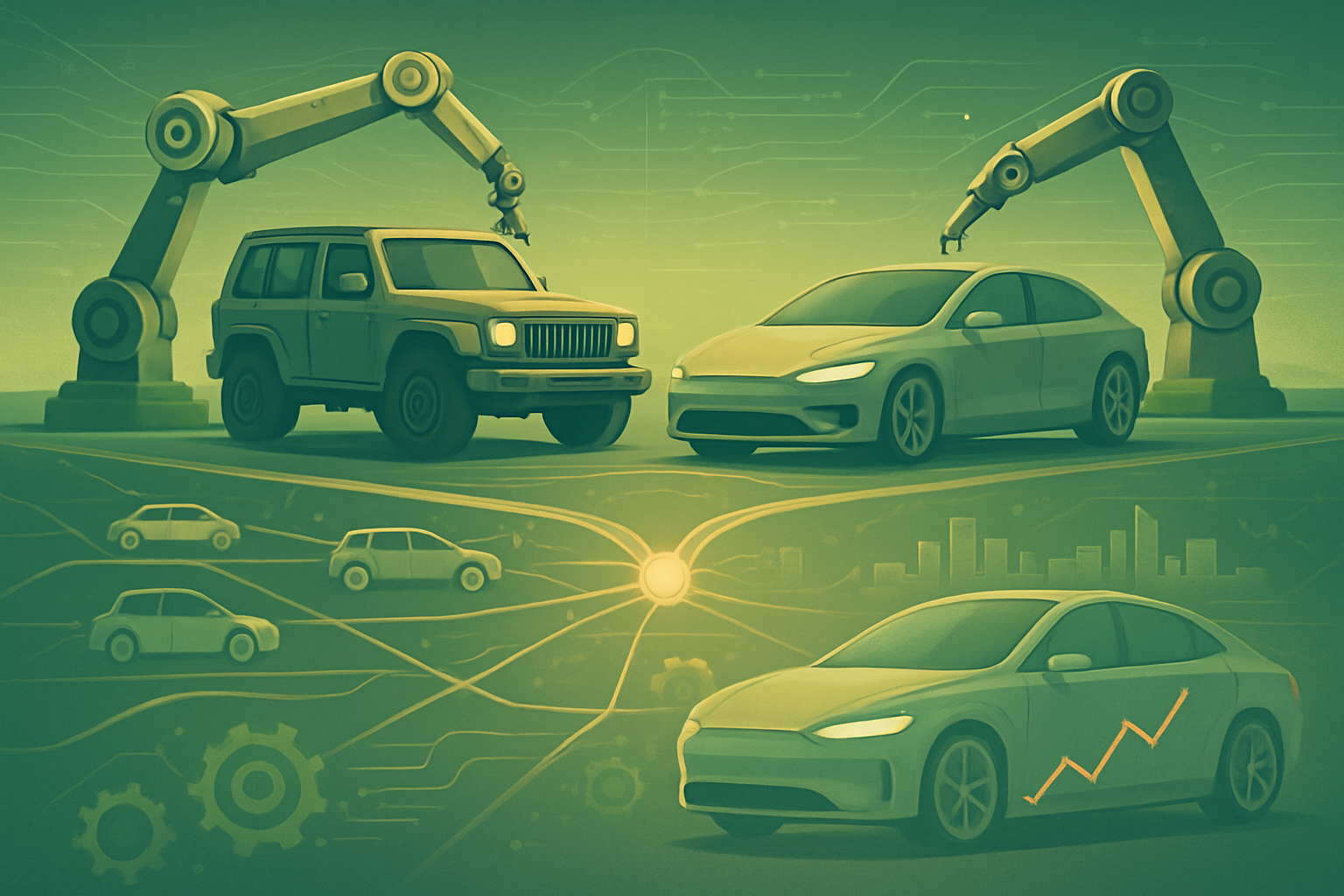
  • Industrial Intelligence: Stellantis’ High-Stakes AI Pivot with Palantir

    Industrial Intelligence: Stellantis’ High-Stakes AI Pivot with Palantir

    Date: March 30, 2026

    Introduction

    As the automotive industry navigates a "Darwinian" transition from internal combustion engines to software-defined mobility, Stellantis N.V. (NYSE: STLA) finds itself at a critical crossroads. Once hailed as the ultimate efficiency machine following the 2021 merger of PSA and FCA, the company spent 2025 weathering a perfect storm of bloated inventories, executive turnover, and a cooling global EV market. However, a central pillar of its recovery strategy is now coming into sharp focus: a deepened, multi-year strategic alliance with Palantir Technologies Inc. (NYSE: PLTR).

    On this day, March 30, 2026, the two companies announced a five-year expansion of their partnership, centered on the deployment of Palantir’s Artificial Intelligence Platform (AIP). This integration is no longer just an IT upgrade; it is an industrial survival strategy designed to transform Stellantis into a data-first enterprise capable of managing 14 iconic brands through the most volatile supply chain environment in a century.

    Historical Background

    The story of Stellantis began on January 16, 2021, with the 50-50 cross-border merger of the French PSA Group and the Italian-American Fiat Chrysler Automobiles. The merger was born out of necessity, aimed at achieving €5 billion in annual synergies to fund the crushing costs of electrification. Under the early leadership of Carlos Tavares, the architect of the deal, Stellantis quickly became the world’s fourth-largest automaker by volume, housing a portfolio that spans from the rugged Jeep and Ram trucks to the elegant Maserati and mass-market staples like Peugeot and Fiat.

    While the first three years of the merger saw record profits and high margins, the honeymoon ended in 2024. Aggressive cost-cutting and a focus on high-margin vehicles led to a buildup of unsold inventory in the United States and a loss of market share in Europe. By late 2024, the internal friction led to the sudden resignation of Carlos Tavares, marking the end of an era and the beginning of a massive strategic "reset" that continues today.

    Business Model

    Stellantis operates a massive, multi-brand ecosystem designed to cover every segment of the global automotive market. Its revenue is primarily derived from vehicle sales, spare parts, and increasingly, software-as-a-service (SaaS) features within its "connected" fleet.

    The business is organized into several key regions:

    • North America: The profit engine, dominated by Jeep and Ram.
    • Enlarged Europe: The volume core, led by Peugeot, Citroën, Fiat, and Opel/Vauxhall.
    • Middle East & Africa, South America, and China: Growth regions where the company maintains a localized manufacturing footprint.

    The core of the current business model is "Platform Sharing." Stellantis utilizes four global BEV-native platforms (STLA Small, Medium, Large, and Frame) that can support various propulsion systems—hybrid, electric, and internal combustion—allowing the company to pivot production based on regional demand.

    Stock Performance Overview

    The performance of STLA stock since its 2021 debut has been a "tale of two halves."

    • 2021–2023: Shares performed robustly, reaching all-time highs near $25 in early 2024 as the market rewarded Tavares’ efficiency gains and the company’s massive dividend yields.
    • 2024–2025: A precipitous decline followed. Shares plummeted over 40% in 2024 as profit warnings surfaced. The slide continued into early 2026 following the announcement of a massive €22.3 billion net loss for the 2025 fiscal year.
    • Current Standing: As of March 30, 2026, STLA is trading around $6.71, hovering near its 52-week low. For investors, the stock has transitioned from a growth-and-income play to a deep-value turnaround story, trading at a P/E ratio that suggests extreme market skepticism regarding its long-term recovery.

    Financial Performance

    The fiscal year 2025 was a year of reckoning for Stellantis. On February 26, 2026, the company reported:

    • Net Revenue: €153.5 billion, a 2% decline YoY.
    • Net Loss: A staggering €22.3 billion, largely due to a one-time €25.4 billion strategic charge. This charge was taken to "reset" the North American product lineup and write down legacy EV investments that no longer aligned with the new "Freedom of Choice" strategy.
    • Cash Flow: While operational cash flow remained positive at €10.2 billion, the heavy restructuring costs have put a temporary freeze on the aggressive share buyback programs of years past.
    • Balance Sheet: Despite the net loss, Stellantis maintains a strong liquidity position of over €45 billion, providing the runway needed for its 2026–2027 product offensive.

    Leadership and Management

    Following the departure of Carlos Tavares in December 2024, Stellantis entered a period of leadership transition. The company is currently steered by an interim executive committee led by Chairman John Elkann, a scion of the Agnelli family.

    The day-to-day strategic shift is being spearheaded by Antonio Filosa, who serves as the Chief Operating Officer for North America and CEO of Jeep. Filosa’s management style is seen as more collaborative and market-responsive than Tavares’ "top-down" efficiency model. The board is currently in the final stages of a global search for a permanent CEO, with an announcement expected before the May 2026 Investor Day.

    Products, Services, and Innovations

    The cornerstone of Stellantis' innovation is the integration of Palantir Technologies Inc. (NYSE: PLTR) Foundry and AIP platforms. This partnership has evolved into a comprehensive "Digital Twin" of the entire Stellantis enterprise.

    Key AI-driven innovations include:

    1. Supply Chain Resiliency: Using Palantir AIP to simulate thousands of "what-if" scenarios, allowing the company to reroute parts and adjust production schedules in real-time to avoid the assembly line stoppages that plagued 2024.
    2. Predictive Quality: By analyzing billions of data points from connected vehicles, Stellantis now identifies potential part failures months before they lead to recalls, significantly reducing warranty costs.
    3. The "Freedom of Choice" Fleet: Launching in 2026 is a new wave of vehicles across the STLA Large and Frame platforms. These include the new electric Ram 1500 REV and a series of "Multi-Energy" Jeep models that allow consumers to choose between hybrid and pure electric powertrains on the same vehicle architecture.

    Competitive Landscape

    Stellantis faces a two-front war. In North America, it competes with General Motors (NYSE: GM) and Ford Motor Company (NYSE: F) for dominance in the high-margin truck and SUV segments. In Europe and China, it faces intense pressure from Volkswagen AG (OTC: VWAGY) and the rising tide of Chinese automakers like BYD Company Limited (OTC: BYDDY) and Xiaomi (HKG: 1810).

    Unlike Tesla, Inc. (NASDAQ: TSLA), which has a vertical integration advantage in software, Stellantis is using the Palantir partnership to "out-data" its legacy peers. While GM and Ford have struggled with software bugs in their EV lineups, Stellantis is banking on its modular platform strategy to remain more flexible and cost-effective than its competitors.

    Industry and Market Trends

    The automotive industry in 2026 is defined by several macro shifts:

    • The Hybrid Resurgence: As pure EV adoption growth slowed in 2025, consumers have flocked to Plug-in Hybrids (PHEVs). Stellantis, once criticized for its slow EV rollout, now finds its hybrid-heavy portfolio perfectly positioned for this shift.
    • Software-Defined Vehicles (SDV): Cars are increasingly judged by their digital interfaces rather than their engines. Stellantis’ "SmartCockpit" project, powered by AI, aims to generate €20 billion in annual software-driven revenue by 2030.
    • Inventory Normalization: After the post-pandemic "supply shock," the industry has returned to a buyer's market, forcing OEMs to use AI tools for precision marketing and demand forecasting.

    Risks and Challenges

    The path to recovery is fraught with risks:

    • Labor Relations: Stellantis remains in a delicate dance with the United Auto Workers (UAW) in the US and unions in Italy/France. Continued plant "optimizations" could trigger further strikes.
    • Execution Risk: Transitioning 14 brands onto four new platforms while integrating a new AI infrastructure is a massive logistical undertaking.
    • Geopolitical Friction: Trade wars between the EU/US and China over EV subsidies could disrupt the global supply chain, particularly for battery materials.

    Opportunities and Catalysts

    • May 2026 Investor Day: This is the most anticipated event of the year. Management is expected to unveil a revised "Dare Forward 2030" plan, likely highlighting the efficiency gains from the Palantir AIP integration.
    • New CEO Announcement: A high-profile hire could provide the market with the confidence needed to re-rate the stock.
    • Margin Recovery: If the inventory "reset" of 2025 succeeds, Stellantis could see a sharp rebound in North American margins by H2 2026.

    Investor Sentiment and Analyst Coverage

    Current analyst sentiment is cautious but intrigued. The consensus rating on STLA is "Hold," with many analysts waiting for evidence that the 2025 losses were indeed a "one-time" event. Institutional investors have noted the "deep value" nature of the stock, while retail chatter on social platforms remains divided between those fearful of further declines and those eyeing the high potential for a recovery toward $10–$12.

    Palantir's involvement is a major "bull case" for tech-focused analysts, who see Stellantis as the primary case study for how a legacy industrial giant can successfully use AI to close the gap with tech-native competitors like Tesla.

    Regulatory, Policy, and Geopolitical Factors

    Stellantis must navigate a complex regulatory web. In the EU, tightening CO2 emission standards continue to push the company toward electrification. In the US, the outcome of the 2024 and 2025 policy shifts regarding the Inflation Reduction Act (IRA) has made domestic battery production critical.

    The company is heavily invested in "ACC" (Automotive Cells Company), its battery joint venture with Mercedes-Benz and TotalEnergies, which aims to secure a localized supply chain and insulate the company from Asian geopolitical risks.

    Conclusion

    Stellantis is a company in the midst of a radical metamorphosis. The massive losses of 2025 were a painful but perhaps necessary correction to a "merger-first" strategy that prioritized short-term cost-cutting over long-term market health. By doubling down on its partnership with Palantir and shifting toward a "Freedom of Choice" product strategy, Stellantis is betting that data-driven agility will be the ultimate competitive advantage.

    For investors, the current valuation offers a high-risk, high-reward entry point. If the AI-powered efficiency gains and the 2026 product wave take hold, Stellantis could emerge as the most resilient legacy automaker of the decade. However, the margin for error has never been thinner. The next 12 months will determine whether Stellantis is a titan in decline or a phoenix ready for its next ascent.


    This content is intended for informational purposes only and is not financial advice.

  • The Operating System of the AI Era: A Deep Dive into Palantir’s Expansion with Stellantis and Bain

    The Operating System of the AI Era: A Deep Dive into Palantir’s Expansion with Stellantis and Bain

    As of March 30, 2026, the global economy finds itself in the "implementation phase" of the Artificial Intelligence revolution. While 2023 and 2024 were defined by the speculative frenzy surrounding Large Language Models (LLMs), 2026 is defined by operational utility—the ability of enterprises to actually move the needle on their bottom lines using AI. At the center of this transition is Palantir Technologies (NYSE: PLTR).

    Once a shadowy defense contractor known for its work with the CIA, Palantir has undergone a radical transformation into a commercial powerhouse. This week, the company dominated headlines with the announcement of a massive five-year renewal and expansion of its partnership with Stellantis (NYSE: STLA) and a strategic deepening of its "force multiplier" alliance with Bain & Company. These moves signal a new era for Palantir: one where its Artificial Intelligence Platform (AIP) is no longer just an experimental tool but the fundamental operating system for the world’s most complex industrial and consulting ecosystems.

    Historical Background

    Founded in 2003 by Peter Thiel, Alex Karp, and others, Palantir was born from the "PayPal Mafia" with a specific mission: to provide the U.S. intelligence community with the data-integration tools necessary to prevent another 9/11. For the first decade of its existence, the company operated in near-total secrecy, building "Gotham" for government counter-terrorism.

    The pivot to the commercial sector began in earnest with the launch of "Foundry," a platform designed to solve the "data silo" problem for large enterprises. Palantir went public via a direct listing in September 2020, a move that invited intense scrutiny of its unconventional governance and reliance on government contracts. However, the 2023 launch of AIP—which integrated generative AI with Palantir’s proprietary "Ontology"—marked the company’s definitive transformation from a specialized software provider to a mainstream enterprise titan.

    Business Model

    Palantir’s business model has evolved from a high-touch, engineer-heavy consultancy model to a scalable software-as-a-service (SaaS) architecture. It operates through four primary platforms:

    • Gotham: Primarily for government/defense, enabling users to identify patterns hidden deep within datasets.
    • Foundry: The commercial operating system that creates a "digital twin" of an organization.
    • Apollo: The continuous delivery system that manages and deploys software across environments.
    • AIP (Artificial Intelligence Platform): The newest and fastest-growing segment, allowing LLMs to interact with private data in a secure, governed manner.

    The company generates revenue through multi-year subscriptions. Crucially, the "Bootcamp" sales model introduced in 2023 has significantly lowered customer acquisition costs, allowing clients to achieve "time-to-value" in days rather than months.

    Stock Performance Overview

    Palantir’s journey on the public markets has been a volatile odyssey. After debuting at around $10 in 2020, the stock became a "meme stock" darling in 2021, only to collapse during the 2022 tech rout as investors fled non-profitable growth companies.

    However, the 2024–2025 period saw a dramatic recovery. Following its inclusion in the S&P 500 and consecutive quarters of GAAP profitability, PLTR has outperformed the broader Nasdaq significantly. Over the past five years, the stock has delivered a compounded annual growth rate (CAGR) exceeding 35%, driven by the explosion in commercial revenue. As of today, March 30, 2026, the stock is trading near record highs, buoyed by the "AIP tailwind" and the massive contract expansions with Stellantis and Bain.

    Financial Performance

    Palantir’s recent financial results reflect a company hitting its stride. For the full year 2025, Palantir reported total revenue of $4.48 billion, a 56% increase year-over-year. The standout metric was U.S. Commercial Revenue, which surged 109% to $1.465 billion.

    Key financial highlights for Q4 2025 include:

    • Net Income (GAAP): $609 million, marking its seventh consecutive quarter of GAAP profitability.
    • Rule of 40 Score: An astounding 127% (combining revenue growth and profit margin).
    • Cash Reserves: A "war chest" of $7.2 billion with zero debt, providing immense flexibility for potential M&A or further R&D.
    • Guidance: For FY 2026, the company has guided for revenue of approximately $7.2 billion, suggesting that the growth acceleration is far from over.

    Leadership and Management

    CEO Alex Karp remains one of the most distinctive figures in Silicon Valley. A PhD in social theory, Karp has eschewed traditional tech "bro" culture in favor of a philosophy-driven approach to software. His strategy centers on "defending the West" and providing "sovereign" software solutions that don't compromise ethics for profit.

    The leadership team has been strengthened recently with a focus on scaling the sales force, moving away from the "software sells itself" mantra of the early 2010s. The board, still influenced by co-founder Peter Thiel, remains focused on long-term technological dominance rather than short-term quarterly smoothing.

    Products, Services, and Innovations

    The current "star" of the portfolio is AIP. Unlike standalone chatbots, AIP allows companies to build "agents" that can actually execute business processes.

    The expansion with Stellantis highlights a new innovation: "Commodity Cognition." By using AIP, Stellantis has moved beyond simple supply chain tracking to an automated decision-making engine. If a parts shortage is detected in a Mediterranean port, the Palantir-powered system doesn't just alert a human; it analyzes logistics costs, production schedules, and market demand to autonomously re-route the supply chain. This move from "insight" to "action" is the hallmark of Palantir’s 2026 innovation pipeline.

    Competitive Landscape

    Palantir operates in a unique space between pure-play data warehouses like Snowflake (NYSE: SNOW) and cloud giants like Microsoft (NASDAQ: MSFT) or Amazon (NASDAQ: AMZN).

    While Snowflake focuses on data storage and SQL-based analytics, Palantir focuses on the "Ontology"—the semantic layer that explains how data relates to the real world. Microsoft’s Azure AI tools are more modular, requiring significant internal development. Palantir’s edge remains its "out-of-the-box" capability for complex, messy, and highly regulated industries. However, the rise of "agentic" AI from startups like Anthropic and OpenAI’s enterprise wing remains a competitive threat that Palantir must monitor.

    Industry and Market Trends

    The "Agentic AI" trend is the dominant macro driver in 2026. Enterprises are no longer satisfied with AI that can write emails; they want AI that can manage a factory floor. This plays directly into Palantir’s strengths.

    Furthermore, the "reshoring" of manufacturing to the U.S. and Europe has created a desperate need for operational efficiency. In a high-interest-rate environment, the "marginal gains" provided by software-driven efficiency are often the difference between a profitable quarter and a loss.

    Risks and Challenges

    Despite the optimism, Palantir faces significant risks:

    • Valuation: With a P/E ratio hovering around 230x, the stock is "priced for perfection." Any slight deceleration in growth could trigger a massive sell-off.
    • Concentration: While the commercial sector is growing, a large portion of revenue still comes from a handful of massive "whale" contracts like Stellantis.
    • Ethical Scrutiny: Palantir’s involvement in military and border enforcement remains a flashpoint for critics, potentially limiting its talent pool or causing ESG-focused institutional investors to divest.

    Opportunities and Catalysts

    The Bain & Company partnership is perhaps the largest untapped catalyst. By training over 1,500 Bain consultants to deploy Palantir software, the company has essentially outsourced its sales and implementation to one of the world’s most prestigious consulting firms. This "force multiplier" effect allows Palantir to reach the C-suite of the Fortune 500 without the overhead of a massive internal sales department.

    The upcoming Q2 2026 earnings report is expected to show the first full quarter of impact from the Stellantis renewal, which analysts believe could lead to a significant guidance raise.

    Investor Sentiment and Analyst Coverage

    Wall Street sentiment has shifted from skeptical to "cautiously bullish." UBS recently raised its price target to $200, citing Palantir’s "asymmetrical advantage" in the enterprise AI market.

    Retail sentiment remains high, with the "Palantirian" community on platforms like X and Reddit providing a strong floor for the stock. However, institutional ownership has also increased, signaling that the "smart money" is finally buying into Karp’s long-term vision of Palantir as the "essential infrastructure of the modern world."

    Regulatory, Policy, and Geopolitical Factors

    Geopolitics continues to be a tailwind for Palantir. As global tensions rise, the demand for "sovereign AI"—AI that is built and hosted within the borders of a nation or an alliance—has skyrocketed. Palantir’s steadfast commitment to Western interests has made it the partner of choice for the U.S. Department of Defense and its allies.

    Furthermore, the EU AI Act and similar regulations in the U.S. play into Palantir’s hands. The company’s platforms were built from the ground up with data privacy and auditability in mind, making compliance easier for its clients compared to those using "black box" AI models.

    Conclusion

    The expanded partnerships with Stellantis and Bain & Company, announced this week, are more than just contract renewals; they are a validation of Palantir’s entire strategic pivot. By integrating AIP into the very fabric of global manufacturing and management consulting, Palantir is cementing its position as the indispensable backbone of the AI era.

    For investors, Palantir remains a high-risk, high-reward proposition. The valuation is undeniably steep, but the growth in U.S. commercial revenue and the efficiency of the "Bootcamp" model suggest a company that is finally scaling its legendary technology. As we move further into 2026, the question is no longer whether Palantir’s software works—it’s how much of the global economy it will eventually run.


    This content is intended for informational purposes only and is not financial advice.

  • GE Aerospace: The AI-Powered Sovereign of the Skies – A Deep Dive into the Pure-Play Transition

    GE Aerospace: The AI-Powered Sovereign of the Skies – A Deep Dive into the Pure-Play Transition

    As of March 13, 2026, the industrial landscape has been fundamentally reshaped by the emergence of GE Aerospace (NYSE: GE) as a standalone, pure-play aviation titan. Once the crown jewel of a sprawling global conglomerate, GE Aerospace now stands alone, commanding a market valuation that reflects its undisputed leadership in propulsion and services. The company is currently in the spotlight following its landmark expansion of an AI partnership with Palantir Technologies (NYSE: PLTR), aimed at revolutionizing US Air Force readiness through predictive maintenance and digital twins. With a record $190 billion backlog and operating margins that lead the industry, GE Aerospace has become the definitive case study in corporate transformation and the high-stakes "super-cycle" of global flight.

    Historical Background

    The story of GE Aerospace is inextricably linked to the history of flight itself. Founded on the legacy of Thomas Edison’s General Electric, the aviation division began in 1917 when the U.S. government sought a company to develop a "turbosupercharger" for the nascent liberty engine. Over the next century, GE powered the first American jet engine in 1942 and dominated the widebody era with the CF6.

    However, the early 21st century saw the broader GE conglomerate stumble under the weight of over-expansion and financial complexity. The turning point arrived in 2018 with the appointment of Larry Culp as CEO—the first outsider to lead the company. Culp initiated a radical "de-conglomeration" strategy, spinning off GE HealthCare (NASDAQ: GEHC) in 2023 and GE Vernova (NYSE: GEV) in April 2024. This left GE Aerospace as the sole successor to the GE ticker, a lean entity focused entirely on the aerospace engine and systems market.

    Business Model

    GE Aerospace operates a high-moat business model centered on two primary segments: Commercial Engines & Services and Defense & Systems.

    • Commercial Engines & Services: This is the company’s primary engine of growth. Through its joint venture CFM International (with Safran), GE produces the LEAP engine, the workhorse for the Boeing 737 MAX and Airbus A320neo families.
    • The "Aftermarket Moat": Crucially, GE’s business model is "razor-and-blade." While engines are often sold at narrow margins, the long-term service agreements (MRO – Maintenance, Repair, and Overhaul) generate approximately 70% of commercial revenue. With an installed base of over 44,000 commercial engines, this creates a recurring, high-margin revenue stream that spans decades.
    • Defense & Systems: GE provides propulsion for a vast array of military aircraft, including the F-18 (F414 engines) and the Black Hawk helicopter (T700 engines).

    Stock Performance Overview

    The stock performance of GE has undergone a dramatic re-rating.

    • 1-Year Performance: Over the past 12 months, GE Aerospace shares have surged approximately 65%, reaching an all-time high of ~$348 in early March 2026. This outperformance is attributed to the "pure-play" premium and better-than-expected cash flow.
    • 5-Year Performance: Investors who held through the 2021-2024 transformation have seen a total return exceeding 250%, as the company shed debt and focused on its core aviation strengths.
    • 10-Year Performance: On a decade-long horizon, the stock shows the "V-shaped" recovery of a lifetime—recovering from the depths of the 2018 liquidity crisis to become a top performer in the S&P 500 industrials sector.

    Financial Performance

    In the fiscal year 2025, GE Aerospace demonstrated formidable financial health. Adjusted revenue reached $42.3 billion, a 21% year-over-year increase. More impressively, operating margins expanded to 21.4%, significantly outpacing peers.

    • Free Cash Flow (FCF): The company generated $7.7 billion in FCF in 2025, representing over 100% conversion of net income.
    • 2026 Guidance: For the current year, management has guided for an operating profit between $9.9 billion and $10.3 billion, with FCF projected to reach as high as $8.4 billion.
    • Valuation: Trading at roughly 44x forward earnings, the stock commands a premium. Analysts argue this is justified by the visibility of the $190 billion backlog, which effectively secures the next five to seven years of revenue.

    Leadership and Management

    CEO Larry Culp is widely credited with one of the most successful turnarounds in American corporate history. His management philosophy, branded as "FLIGHT DECK," is a proprietary lean operating system that emphasizes decentralized decision-making and rigorous waste elimination.

    • Board and Governance: The board has been streamlined to include deep aerospace and defense expertise.
    • Capital Allocation: Under Culp, GE has transitioned from a company struggling with debt to one that returned nearly 90% of its free cash flow to shareholders in 2025 through aggressive buybacks and a growing dividend.

    Products, Services, and Innovations

    GE Aerospace’s innovation pipeline is currently focused on two frontiers: AI integration and sustainable propulsion.

    • The Palantir Partnership: In March 2026, the company expanded its tie-up with Palantir Technologies. Using Palantir’s AIP, GE now provides the US Air Force with a "TrueChoice Defense" digital ecosystem. This allows for real-time tracking of engine health across the globe, predicting parts failures before they occur and dramatically increasing the "readiness" of military fleets.
    • Engine Programs: The LEAP engine remains the volume leader, while the GE9X (for the Boeing 777X) represents the pinnacle of widebody efficiency.
    • RISE Program: In collaboration with Safran, the RISE (Revolutionary Innovation for Sustainable Engines) program is testing open-fan architectures that aim to reduce fuel consumption and CO2 emissions by more than 20% compared to today’s most efficient engines.

    Competitive Landscape

    GE’s primary competition comes from RTX Corporation (NYSE: RTX), specifically its Pratt & Whitney division, and Rolls-Royce (LSE: RR).

    • GE vs. RTX: GE has gained significant ground in the narrowbody market as RTX’s Pratt & Whitney division struggled with durability issues in its Geared Turbofan (GTF) engines. GE’s LEAP engine is currently perceived as the more reliable "workhorse" of the industry.
    • GE vs. Rolls-Royce: While Rolls-Royce is a formidable competitor in the widebody segment, GE’s exclusive position on the 777X gives it a structural advantage in the next generation of long-haul aviation.

    Industry and Market Trends

    The aerospace sector is currently experiencing a "super-cycle." A combination of post-pandemic travel demand, an aging global fleet, and a shift toward fuel-efficient narrowbody aircraft has created a massive demand for new engines and maintenance services. However, the industry remains hampered by a fragile global supply chain, with persistent bottlenecks in castings and forgings that GE is attempting to mitigate through direct $100 million investments into its supplier base.

    Risks and Challenges

    Despite its dominance, GE Aerospace faces notable risks:

    • Supply Chain Fragility: Any disruption in the complex web of titanium and specialized alloy suppliers could stall engine deliveries.
    • Boeing Dependency: As a primary engine provider for Boeing, GE is sensitive to any further delays in the 777X certification or production rate fluctuations for the 737 MAX.
    • R&D Costs: Developing the next generation of hybrid-electric and open-fan engines requires multi-billion dollar investments with long payoff horizons.

    Opportunities and Catalysts

    • MRO Growth: As the LEAP engine fleet matures, the volume of "shop visits" is expected to surge by 30-40% through 2027, driving massive service revenue.
    • Defense Expansion: Increased geopolitical tensions have led to a resurgence in defense spending. GE’s involvement in the FLRAA (Future Long-Range Assault Aircraft) and next-gen fighter programs provides a strong tailwind.
    • AI Monetization: The Palantir partnership could eventually be scaled to commercial airlines, creating a new high-margin software-as-a-service (SaaS) revenue stream for engine health management.

    Investor Sentiment and Analyst Coverage

    Wall Street sentiment remains overwhelmingly bullish. Major institutional investors, including Vanguard and BlackRock, have increased their stakes following the GE Vernova spin-off. Analysts from Goldman Sachs and J.P. Morgan have maintained "Buy" ratings, citing the "unrivaled visibility" of the company's cash flow. While some retail investors express caution regarding the high P/E multiple, the prevailing narrative is that GE Aerospace is a "compounder" rather than a cyclical play.

    Regulatory, Policy, and Geopolitical Factors

    GE Aerospace is heavily influenced by government policy.

    • Emissions Standards: Tightening ICAO and EU emissions standards are forcing airlines to retire older jets and purchase GE’s newer, more efficient models.
    • Defense Policy: As a top-tier US defense contractor, GE benefits from the "Buy American" provisions and increased NATO defense budgets.
    • China Trade: GE has a significant presence in China through its joint ventures; any escalation in US-China trade tensions remains a significant geopolitical "wildcard."

    Conclusion

    GE Aerospace has successfully navigated its metamorphosis from a troubled conglomerate to the premier pure-play engine maker of the 21st century. By integrating cutting-edge AI from Palantir into its maintenance and defense protocols, it has moved beyond being a hardware manufacturer to becoming a data-driven services powerhouse. While the valuation is high, it is backed by a $190 billion backlog and an "aftermarket moat" that few companies on earth can replicate. For investors, the key factors to watch in the coming quarters will be the 777X entry-into-service and the continued expansion of the "FLIGHT DECK" lean model to combat supply chain headwinds. In 2026, GE Aerospace is not just a part of the aviation industry—it is the engine that drives it.


    This content is intended for informational purposes only and is not financial advice.

  • The Sovereign Intelligence Grid: Inside Nvidia’s Record $68B Quarter and the Palantir Alliance

    The Sovereign Intelligence Grid: Inside Nvidia’s Record $68B Quarter and the Palantir Alliance

    As of today, March 13, 2026, the global technology landscape is no longer just "AI-integrated"—it is AI-native. At the epicenter of this industrial revolution stands Nvidia Corp. (NASDAQ: NVDA), a company that has transcended its origins in PC gaming to become the primary architect of the world’s digital infrastructure. Nvidia’s recent fourth-quarter earnings report sent shockwaves through the financial markets, posting a staggering record revenue of $68.1 billion, driven by the insatiable demand for "Sovereign AI" and the global transition to agentic reasoning systems.

    With the much-anticipated GTC 2026 conference only days away, the focus has shifted from simple hardware dominance to a sophisticated software-and-services ecosystem. The launch of the Nemotron 3 large language model (LLM) family and a landmark March 2026 partnership with Palantir Technologies (NASDAQ: PLTR) have signaled a new era where compute and intelligence are treated as national security assets. This research feature dives deep into the engine of the "Intelligence Age," analyzing how Nvidia transformed from a chipmaker into a global sovereign power.

    Historical Background

    Founded in April 1993 by Jensen Huang, Chris Malachowsky, and Curtis Priem, Nvidia began with a vision to bring 3D graphics to the gaming and multimedia markets. The company’s first major breakthrough came in 1999 with the invention of the Graphics Processing Unit (GPU), the GeForce 256, which offloaded complex calculations from the CPU.

    However, the true "big bang" for Nvidia occurred in 2006 with the release of CUDA (Compute Unified Device Architecture). By allowing researchers to use GPUs for general-purpose mathematical modeling, Nvidia inadvertently laid the groundwork for the modern AI era. While rivals like Intel (NASDAQ: INTC) focused on traditional processing, Nvidia spent two decades building a software moat that made its hardware indispensable for deep learning. The 2012 "AlexNet" moment—where Nvidia GPUs were used to win a major image recognition contest—validated Huang’s long-term bet, setting the stage for the company to capture nearly 90% of the AI data center market by 2025.

    Business Model

    Nvidia operates as a vertically integrated platform company, selling far more than just "silicon." Its business model is built on four primary pillars:

    1. Data Center (The Core): Accounting for roughly 88% of total revenue, this segment sells high-end GPU clusters (H100, B200, and the upcoming Rubin series) along with networking equipment (InfiniBand and Spectrum-X).
    2. Sovereign AI & Software: A rapidly growing segment that includes Nvidia AI Enterprise, a "software operating system" for AI. The recent partnership with Palantir falls into this category, focusing on providing turnkey AI "factories" for governments.
    3. Gaming and Creative Design: While no longer the primary driver, the GeForce line remains a multi-billion dollar business, now enhanced by AI-driven DLSS (Deep Learning Super Sampling) technology.
    4. Automotive and Robotics: Centered on the Thor and Orin platforms, this segment targets the future of autonomous machines and humanoid robotics (Project GR00T).

    Nvidia’s "flywheel" effect is driven by the fact that once an organization builds its AI models on CUDA, the cost and complexity of switching to a competitor become prohibitively high.

    Stock Performance Overview

    Nvidia’s stock performance over the last decade is nothing short of legendary.

    • 10-Year Horizon: Investors who held NVDA from 2016 have seen gains exceeding 35,000%, as the company successfully pivoted from a niche gaming supplier to the backbone of the global economy.
    • 5-Year Horizon: The 2021-2026 period saw the stock undergo multiple splits to remain accessible to retail investors, with the market capitalization briefly surpassing $4 trillion in early 2026.
    • 1-Year Horizon: Over the past 12 months, the stock has risen 92%, fueled by the transition from "Experimental AI" to "Production AI" and the successful rollout of the Blackwell architecture.

    Despite periodic volatility and "bubble" warnings, Nvidia’s ability to consistently beat even the most aggressive earnings estimates has turned every major dip into a buying opportunity for institutional giants.

    Financial Performance

    The Q4 fiscal 2026 results released in late February solidified Nvidia's status as a financial juggernaut:

    • Revenue: A record $68.1 billion for the quarter, representing a 74% year-over-year increase.
    • Gross Margins: Held steady at a remarkable 75.4%, demonstrating immense pricing power despite increasing competition.
    • Net Income: For the full fiscal year, Nvidia generated over $120 billion in profit, more than the total annual revenue of many Fortune 500 companies.
    • Cash Flow: Operating cash flow reached a record high, allowing the company to aggressively fund R&D (approx. $15B annually) and return capital through massive share buybacks.

    Valuation metrics, such as the Forward P/E ratio, remain surprisingly grounded relative to growth, often hovering between 35x and 42x as earnings growth continues to outpace share price appreciation.

    Leadership and Management

    Nvidia’s strategy is steered by Co-founder and CEO Jensen Huang, arguably the most influential figure in modern technology. Huang’s leadership is defined by "first-principles thinking" and a willingness to bet the company on unproven markets years before they materialize.

    The management team is noted for its stability, with many key executives having tenures exceeding 15 years. This "flat" organizational structure allows for rapid pivots. Governance is generally viewed as strong, though Huang’s total control over the company’s vision means that "key person risk" is a permanent consideration for investors.

    Products, Services, and Innovations

    Nvidia’s innovation cycle has shifted from a two-year "Tick-Tock" rhythm to an annual release cadence to stay ahead of the curve.

    • Nemotron 3: Launched in early 2026, the Nemotron 3 family (Ultra, Super, and Nano) uses a hybrid Mamba-Transformer architecture. It is designed for "Agentic AI"—software that can reason through complex tasks autonomously rather than just generating text.
    • Rubin Architecture: Teased for a late 2026 release, the Rubin platform (succeeding Blackwell) is expected to utilize HBM4 (High Bandwidth Memory) and 3nm process technology, focusing specifically on reducing the power consumption of AI inference.
    • NVLink 6: A revolutionary interconnect technology that allows tens of thousands of GPUs to act as a single, massive computer, effectively making the "data center the new unit of compute."

    Competitive Landscape

    While Nvidia holds a dominant lead, the competitive field is intensifying:

    • Advanced Micro Devices (NASDAQ: AMD): The MI400 series has gained traction among tier-2 cloud providers and specific enterprise niches due to its open-source ROCm software stack.
    • Custom Silicon (ASICs): Hyperscalers like Google (NASDAQ: GOOGL) and Amazon (NASDAQ: AMZN) are increasingly using their own chips (TPU and Trainium) for internal workloads to reduce reliance on Nvidia.
    • Intel: After years of struggle, Intel’s Gaudi 4 accelerators have found a footing in the "cost-conscious" AI market, though they still lack the software ecosystem of CUDA.

    Nvidia’s competitive edge remains its full-stack approach—integrating hardware, networking, and software into a seamless environment.

    Industry and Market Trends

    Two major trends are currently defining the market:

    1. Sovereign AI: Nations are no longer willing to host their critical data on foreign clouds. Governments in France, Japan, and India are building national "AI Factories" using Nvidia hardware to ensure data sovereignty.
    2. Physical AI (Robotics): The shift from digital AI (chatbots) to physical AI (humanoids and autonomous factories). Nvidia’s Omniverse platform has become the standard for "digital twins," allowing companies to simulate entire factories before building them.

    Risks and Challenges

    Despite its dominance, Nvidia faces significant headwinds:

    • Geopolitical Friction: US-led export controls on high-end silicon to China remain a major drag on potential revenue, forcing Nvidia to create "lite" versions of its chips for the Chinese market.
    • Supply Chain Concentration: Nvidia is heavily dependent on TSMC (NYSE: TSM) for fabrication and SK Hynix for HBM memory. Any conflict in the Taiwan Strait would be catastrophic.
    • Energy Constraints: The sheer power required to run "Rubin-class" data centers is straining global power grids, potentially leading to regulatory caps on data center expansion.

    Opportunities and Catalysts

    The March 2026 partnership with Palantir is a significant near-term catalyst. By combining Palantir’s AIP (Artificial Intelligence Platform) with Nvidia’s Nemotron 3 and compute stack, the two companies are creating a "National Security OS." This partnership targets the multi-billion dollar defense and government infrastructure market, providing a recurring revenue stream that is less cyclical than commercial cloud CapEx.

    The upcoming GTC 2026 event is also expected to be a major mover, with rumors suggesting the unveiling of "Project Feynman"—a 1nm-class architecture aimed at achieving Artificial General Intelligence (AGI) levels of compute.

    Investor Sentiment and Analyst Coverage

    Wall Street remains overwhelmingly bullish. Of the 65 analysts covering NVDA, 58 carry a "Strong Buy" or "Buy" rating. Institutional ownership stands at 68%, with heavyweights like BlackRock and Vanguard consistently increasing their positions.

    Retail sentiment is equally high, often driven by the "Jensen Effect"—Huang’s charismatic keynotes that have turned technical hardware specifications into mainstream cultural events. However, some "contrarian" analysts warn that the current CapEx levels of big tech firms are unsustainable, suggesting a potential "air pocket" in demand by 2027.

    Regulatory, Policy, and Geopolitical Factors

    Nvidia is increasingly caught in the middle of a "Silicon Cold War." The U.S. government views Nvidia’s technology as a strategic asset, leading to heightened oversight of international sales. Conversely, the rise of "Sovereign AI" policies in the EU and Asia provides a regulatory tailwind, as governments provide subsidies and incentives for local companies to purchase Nvidia-based infrastructure.

    Antitrust scrutiny is also rising. Regulators in the EU and the US are closely monitoring Nvidia’s software licensing practices to ensure that CUDA doesn't unfairly lock out hardware competitors.

    Conclusion

    As we look toward the remainder of 2026, Nvidia (NASDAQ: NVDA) occupies a position of power rarely seen in corporate history. The Q4 revenue of $68.1 billion is not just a financial metric; it is a testament to the fact that the global economy is being rebuilt on Nvidia's silicon.

    While supply chain risks and geopolitical tensions remain the "sword of Damocles" hanging over the stock, the company’s pivot into Sovereign AI and its strategic alliance with Palantir provide a robust roadmap for growth. For investors, the key will be watching the GTC 2026 announcements: if Nvidia can prove that "Agentic AI" will drive the next wave of productivity, the current valuation may still be the ground floor of a much larger skyscraper.


    This content is intended for informational purposes only and is not financial advice. Disclosure: At the time of writing, the author may hold positions in the securities mentioned.

  • Palantir (PLTR) 2026: The Rise of the Logic Layer and the Agentic AI Revolution

    Palantir (PLTR) 2026: The Rise of the Logic Layer and the Agentic AI Revolution

    Today’s Date: March 5, 2026

    Introduction

    As we enter the first quarter of 2026, Palantir Technologies Inc. (NYSE: PLTR) has transformed from a controversial, secretive data-mining firm into what many analysts now call the "Operating System of the Modern Enterprise." Once defined primarily by its classified government work, Palantir has spent the last two years riding the crest of the "Agentic AI" wave—moving beyond simple chatbots to systems that autonomously execute operational decisions. With its recent relocation of headquarters to Miami and a record-breaking fiscal 2025 under its belt, the company stands at a critical juncture for investors. This article evaluates Palantir’s transition from a high-growth speculative play to a foundational component of the global AI infrastructure.

    Historical Background

    Palantir’s origins are rooted in the "PayPal Mafia." Founded in May 2003 by Peter Thiel, Alex Karp, Stephen Cohen, Joe Lonsdale, and Nathan Gettings, the company was born from a realization that PayPal’s fraud-detection algorithms could help the U.S. intelligence community prevent another 9/11. Named after the palantíri (seeing stones) from J.R.R. Tolkien’s The Lord of the Rings, the company’s mission was "Intelligence Augmentation"—using software to make human analysts more effective rather than replacing them.

    Early funding from the CIA’s venture arm, In-Q-Tel, provided the firm with the technical "seal of approval" needed to scale within the Department of Defense (DoD). For over a decade, Palantir operated in the shadows, with its flagship platform, Gotham, rumored to have played a role in the 2011 operation to locate Osama bin Laden. In 2020, Palantir executed a Direct Public Offering (DPO) and moved its headquarters from Silicon Valley to Denver, signaling a cultural break from the tech establishment.

    Business Model

    Palantir operates a high-margin software-as-a-service (SaaS) model, though its deployment process is significantly more intensive than standard cloud software. The company’s revenue is split between two primary segments:

    • Government: Long-term, multi-year contracts with defense and intelligence agencies (e.g., U.S. Army, NHS, DGSI).
    • Commercial: Enterprise-level software for Fortune 500 companies in energy, manufacturing, and finance.

    The core of Palantir’s current sales strategy is its "Bootcamp" model. Launched with the Artificial Intelligence Platform (AIP) in 2023, these five-day intensive workshops allow potential clients to build real-world AI workflows on their own data. This has drastically shortened sales cycles, leading to a "land and expand" effect where 75% of bootcamp participants typically convert into paying customers.

    Stock Performance Overview

    Since its 2020 DPO at a reference price of $7.25, PLTR has been a high-beta favorite for both retail and institutional investors.

    • 5-Year Horizon: The stock has seen extreme volatility, crashing from 2021 highs of $35 to lows of $6 in late 2022. However, the 2023-2025 AI rally, fueled by AIP, drove the stock back to record highs.
    • 1-Year Horizon: Over the past twelve months, the stock has outperformed the Nasdaq 100 by over 40%, buoyed by its inclusion in the S&P 500 on September 23, 2024.
    • 10-Year Context: While the company has not yet been public for ten years, its pre-IPO valuation history suggests a long-term compounding effect for early private investors, despite significant dilution from stock-based compensation (SBC) in its early public years.

    Financial Performance

    Palantir’s FY 2025 results, released last month, stunned Wall Street.

    • Revenue: Total revenue reached $4.48 billion in 2025, up 56% year-over-year.
    • Profitability: The company achieved its 13th consecutive quarter of GAAP profitability. GAAP Net Income for 2025 was a record $1.63 billion, representing a 36% net margin.
    • Rule of 40: Palantir’s "Rule of 40" score (Revenue Growth + Adjusted Operating Margin) hit an unprecedented 127% in Q4 2025.
    • Valuation: Despite these strong numbers, the stock remains expensive by historical standards, trading at a forward Price-to-Earnings (P/E) ratio of approximately 185x as of early 2026.

    Leadership and Management

    CEO Alex Karp, a PhD in social theory, remains one of the most unique and polarizing leaders in tech. His focus on Western defense and philosophical approach to AI ethics has created a fiercely loyal internal culture.

    • Strategic Shift: In February 2026, Karp and Chairman Peter Thiel announced the relocation of the corporate headquarters to Miami, Florida. The move was a direct response to Colorado’s restrictive AI regulations (SB205), which Karp labeled as "innovation-killing overreach."
    • Stability: The core leadership team, including CTO Shyam Sankar and President Stephen Cohen, has remained remarkably stable, providing a consistency of vision rarely seen in the high-turnover software sector.

    Products, Services, and Innovations

    Palantir’s competitive moat is built on four pillars:

    1. Gotham: The "Warfighter’s OS," used for battlefield intelligence and counter-terrorism.
    2. Foundry: The "Enterprise OS," which creates a "Digital Twin" of an entire organization.
    3. Apollo: An orchestration engine that allows Palantir to deploy and update software in highly secure or "air-gapped" environments (satellites, drones, oil rigs).
    4. AIP (Artificial Intelligence Platform): The newest pillar, which uses Large Language Models (LLMs) to interact with the Palantir Ontology. The Ontology is the company's secret sauce—a semantic layer that maps raw data to real-world objects and actions, ensuring AI models don't "hallucinate" and instead execute logic based on actual business rules.

    Competitive Landscape

    In 2026, Palantir sits in a unique "Logic Layer" of the AI stack.

    • Hyperscalers (Microsoft (MSFT), Amazon (AMZN), Google (GOOGL)): These companies provide the infrastructure (Azure/AWS) and productivity tools (Copilots). Palantir partners with them for hosting but competes for the high-level decision-making logic within the enterprise.
    • Niche AI (C3.ai (AI)): While C3.ai offers turnkey apps, Palantir’s Foundry is more customizable and scalable for complex, massive-scale data environments.
    • Data Storage (Snowflake (SNOW)): Snowflake is where data lives; Palantir is where data acts. The two are increasingly viewed as complementary rather than direct rivals.

    Industry and Market Trends

    The "Sovereign AI" trend has become a major tailwind in 2026. Nations are increasingly seeking their own localized AI capabilities that do not rely on foreign cloud providers. Palantir has leaned into this by signing multi-billion dollar framework deals with the UK and France. Furthermore, the shift from "Generative AI" (creating content) to "Agentic AI" (executing tasks) has favored Palantir’s Ontology-driven approach.

    Risks and Challenges

    • Valuation Trap: With a P/S ratio near 70x, any slight miss in revenue growth could lead to a 30-50% correction.
    • Geopolitical Friction: Palantir’s vocal support for Western interests has effectively barred it from markets like China and some Middle Eastern nations, limiting its total addressable market (TAM).
    • Regulatory Backlash: The EU AI Act continues to create hurdles for Palantir’s predictive policing and surveillance contracts in Europe.

    Opportunities and Catalysts

    • Healthcare Expansion: Following a massive NHS contract win in late 2024, Palantir is now aggressively pursuing the U.S. hospital system, aiming to use Foundry to manage patient flow and resource allocation.
    • $10 Billion U.S. Army Deal: The ongoing execution of the 10-year framework signed in 2025 provides a high-margin revenue floor for the next decade.
    • Edge AI: As more AI is deployed on hardware (drones/satellites), Palantir’s Apollo platform is becoming an essential "deployment layer" that few others can replicate.

    Investor Sentiment and Analyst Coverage

    Wall Street remains divided. Bulls like Dan Ives of Wedbush continue to call Palantir the "Messiah of AI," setting price targets as high as $260. Conversely, value-oriented analysts maintain "Underperform" ratings, citing the stock’s extreme premium over other SaaS companies. Retail sentiment remains "diamond-handed," with a dedicated community of investors who view Palantir as a multi-decade holding similar to early Microsoft or Amazon.

    Regulatory, Policy, and Geopolitical Factors

    The regulatory environment in 2026 is a tale of two worlds. In the U.S., a shift toward deregulation and "AI Supremacy" policy has accelerated Palantir’s defense contracts. However, at the state level (Colorado) and international level (EU), new laws targeting "algorithmic discrimination" have forced the company to pivot its operations. The move to Florida is a strategic play to align with a more business-friendly jurisdiction as the federal government prepares to define national AI standards.

    Conclusion

    Palantir Technologies Inc. is no longer a "story stock"—it is a financial juggernaut with an "iconic" Rule of 40 profile. For investors in 2026, the question is not whether the technology works, but whether the current valuation has already priced in a decade of perfection. Palantir’s ability to create a "Digital Twin" of an organization via its Ontology remains a unique moat. While regulatory hurdles and geopolitical limitations persist, the company’s dominance in the U.S. defense sector and its accelerating commercial "bootcamp" engine make it a formidable force. Investors should watch for continued GAAP margin expansion and the successful scaling of its "Agentic AI" workflows as the primary indicators of sustained growth.


    This content is intended for informational purposes only and is not financial advice.

  • Palantir Technologies (PLTR): The Sovereign AI Powerhouse and the Future of Enterprise Operating Systems

    Palantir Technologies (PLTR): The Sovereign AI Powerhouse and the Future of Enterprise Operating Systems

    In the rapidly evolving landscape of enterprise technology, few companies have commanded as much intrigue, controversy, and market enthusiasm as Palantir Technologies Inc. (NYSE: PLTR). Once dismissed as a "black box" government contractor shrouded in secrecy, Palantir has reinvented itself as the foundational operating system for the modern AI-driven enterprise. As of today, March 3, 2026, the company stands at a pivotal valuation inflection point, having successfully bridged the gap between national security and global commerce.

    Introduction

    Palantir Technologies is currently one of the most scrutinized and celebrated companies in the technology sector. Following its inclusion in the S&P 500 in late 2024 and a subsequent multi-year rally driven by the explosive adoption of its Artificial Intelligence Platform (AIP), Palantir has transitioned from a niche data tool for intelligence agencies into a ubiquitous enterprise powerhouse. The company’s relevance has never been higher, as geopolitical tensions and the corporate race for generative AI dominance have made Palantir’s "Ontology"-based software a critical infrastructure component for both governments and Fortune 500 companies alike.

    Historical Background

    Founded in May 2003 and operational by 2004, Palantir was born from a specific vision held by Peter Thiel and a core group of "PayPal Mafia" alumni, including Alex Karp, Stephen Cohen, Joe Lonsdale, and Nathan Gettings. The core thesis was that the fraud-detection algorithms developed at PayPal could be repurposed to identify terrorist networks and financial crimes in a post-9/11 world.

    For much of its first decade, Palantir operated in the shadows, fueled by early funding from the CIA’s venture arm, In-Q-Tel. Its early milestones included the development of Palantir Gotham, which became the gold standard for counter-terrorism and investigative analysis. The company famously went public via a Direct Public Offering (DPO) in September 2020. Since then, it has navigated a transformation from a "consultancy-heavy" firm to a scalable software giant, catalyzed by the 2023 launch of AIP.

    Business Model

    Palantir operates a dual-engine business model categorized into two primary segments: Government and Commercial.

    • Government Segment: This remains the company’s bedrock, providing mission-critical software to the U.S. Department of Defense, intelligence agencies, and allied nations. Revenue is derived from long-term, high-value contracts for platforms like Gotham and the "Maven Smart System."
    • Commercial Segment: This is the company’s primary growth engine. Through Palantir Foundry and AIP, the company helps private sector firms—ranging from Airbus to Cleveland Clinic—integrate disparate data sources into a unified "Ontology."

    The company has moved away from traditional lengthy sales cycles toward a high-velocity "Bootcamp" model. These intensive 1-to-5-day sessions allow potential customers to build live AI agents using their own data, significantly shortening the time-to-value and accelerating contract closures.

    Stock Performance Overview

    Palantir’s journey on the public markets has been a volatile one. Since its 2020 DPO at a reference price of $7.25, the stock has experienced three distinct eras:

    1. The 2021 Meme Rally: Shares peaked near $45 during the retail-driven tech frenzy.
    2. The 2022 Tech Slump: Amid rising interest rates and skepticism over profitability, the stock bottomed out near $6.00 in late 2022.
    3. The AI Renaissance (2024-2025): Driven by sustained GAAP profitability and the AIP rollout, the stock surged over 300% in 2024 and reached an all-time high of approximately $207.52 in late 2025.

    As of early March 2026, the stock is trading around $145.00, reflecting a cooling period from its late-2025 highs but maintaining a market capitalization exceeding $325 billion.

    Financial Performance

    Palantir’s financial profile has improved dramatically over the last 24 months. For the fiscal year ending December 2025, the company reported:

    • Total Revenue: $4.475 billion, a 56% increase year-over-year.
    • Net Income (GAAP): $1.625 billion, representing a significant expansion in profit margins.
    • Cash Reserves: Palantir maintains a fortress balance sheet with over $5 billion in cash and zero debt.
    • Rule of 40: The company achieved a record "Rule of 40" score (the sum of revenue growth and profit margin) of 127% in late 2025, a figure rarely seen in the software-as-a-service (SaaS) industry.

    The company’s valuation remains high by traditional metrics, with a forward P/E ratio that reflects aggressive growth expectations for the 2026-2027 period.

    Leadership and Management

    CEO Alex Karp remains the philosophical and strategic heart of the company. A Ph.D. in social theory, Karp’s eccentric leadership style and "anti-Silicon Valley" stance have garnered a cult-like following among retail investors. Chairman Peter Thiel provides the strategic and political guiding hand, while President Stephen Cohen oversees the technical architecture and corporate culture.

    The management team is known for its "mission-first" approach, often prioritizing long-term national security and client success over short-term quarterly appeasement, a stance that has historically polarized Wall Street but built immense brand loyalty.

    Products, Services, and Innovations

    Palantir’s product suite is designed to be the "central nervous system" of an organization:

    • AIP (Artificial Intelligence Platform): The flagship offering that integrates Large Language Models (LLMs) with Palantir’s proprietary Ontology, allowing for secure, "grounded" AI deployment.
    • Gotham: Tailored for the defense and intelligence sectors, focusing on target identification and situational awareness.
    • Foundry: The commercial data integration platform that enables enterprises to manage complex supply chains and operational workflows.
    • Apollo: The continuous delivery system that allows Palantir’s software to run across any environment, from public clouds to edge devices on the battlefield.

    The recent innovation of "AI Agents" within AIP has allowed customers to automate complex decision-making processes, marking a shift from data visualization to autonomous orchestration.

    Competitive Landscape

    Palantir occupies a unique position, often describing itself as having "no direct competitors." However, it battles for market share in several arenas:

    • Snowflake (NYSE: SNOW): While Snowflake focuses on data storage and querying, Palantir often sits on top of Snowflake to provide the application layer.
    • C3.ai (NYSE: AI): A more direct competitor in enterprise AI applications, though Palantir is generally viewed as a more robust, "hard-tech" solution for complex, large-scale deployments.
    • Big Tech (Microsoft, AWS): Microsoft (NASDAQ: MSFT) and Amazon (NASDAQ: AMZN) offer broad AI and data suites. Palantir competes as a "platform-agnostic" layer that prevents vendor lock-in, a key selling point for "Sovereign AI" initiatives.

    Industry and Market Trends

    Three macro trends are currently driving Palantir's tailwinds:

    1. Sovereign AI: Nations are increasingly seeking to build independent AI capabilities that don't rely on foreign data centers. Palantir’s ability to deploy on-premise or in secure, national clouds has made it the partner of choice for allied governments.
    2. The Shift from "Chat" to "Agents": The market has moved past simple chatbots to AI agents that can execute tasks. Palantir’s Ontology is uniquely suited for this, as it provides the structured data environment AI needs to take action without hallucinating.
    3. Digitization of Warfare: Modern conflicts, such as those in Ukraine and the Middle East, have proven that software is now as important as hardware in defense, a trend Palantir pioneered.

    Risks and Challenges

    Despite its success, Palantir faces significant headwinds:

    • Valuation Premium: Trading at over 100x earnings, any slowdown in growth could lead to a sharp contraction in share price.
    • Stock-Based Compensation (SBC): While declining as a percentage of revenue, Palantir’s historical reliance on SBC has been a point of contention regarding shareholder dilution.
    • Concentration Risk: A significant portion of revenue still comes from a small number of massive government contracts.
    • Ethical Scrutiny: The company’s work with immigration and defense agencies continues to draw fire from civil liberties groups, potentially complicating recruitment and international expansion in more progressive markets.

    Opportunities and Catalysts

    Several near-term catalysts could drive further growth:

    • Healthcare Expansion: Palantir has made significant inroads into hospital bed management and pharmaceutical R&D, a sector with massive untapped potential.
    • Sovereign AI Partnerships: New contracts with European and Middle Eastern governments to build national AI infrastructures.
    • M&A Potential: With over $5 billion in cash, Palantir is well-positioned to acquire smaller, specialized AI startups to bolster its IP portfolio.

    Investor Sentiment and Analyst Coverage

    Investor sentiment remains divided but largely bullish. Retail investors, often calling themselves "Palantirians," have been a stabilizing force for the stock. On Wall Street, the narrative has shifted from "expensive consultancy" to "essential AI infrastructure." Citigroup recently raised its price target to $260.00, citing the scalability of the Bootcamp model, while more bearish analysts at other firms maintain lower targets based on P/E multiple concerns.

    Regulatory, Policy, and Geopolitical Factors

    Palantir is deeply intertwined with global geopolitics. Its software has been a "force multiplier" for Ukraine in the conflict against Russia and is utilized in target identification and aid coordination in the Middle East. These roles make Palantir a beneficiary of increased defense spending but also expose it to the risks of shifting political administrations. Domestically, the company is a vocal proponent of "patriotic tech," often aligning itself with U.S. national interests to secure high-level policy support.

    Conclusion

    Palantir Technologies has successfully transitioned from a secretive startup into a cornerstone of the global AI economy. By solving the most difficult problem in AI—how to make models useful in a messy, real-world data environment—it has created a moat that is difficult for competitors to breach. While its valuation remains a hurdle for value-oriented investors, its operational performance and role in the "Sovereign AI" movement suggest that Palantir is no longer a speculative bet, but a strategic asset in the modern digital landscape. Investors should closely monitor the conversion rates of its AIP Bootcamps and any shifts in U.S. defense procurement as key indicators of its long-term trajectory.


    This content is intended for informational purposes only and is not financial advice.

  • The AI Operating System of the West: A 2026 Deep Dive into Palantir Technologies (PLTR)

    The AI Operating System of the West: A 2026 Deep Dive into Palantir Technologies (PLTR)

    As of March 2, 2026, Palantir Technologies (NYSE: PLTR) has evolved from a secretive Silicon Valley data firm into the definitive "AI Operating System" for the Western world. Once viewed with skepticism by Wall Street due to its heavy reliance on government defense contracts and a complex "black box" business model, the company has spent the last 24 months rewriting its narrative. Driven by the explosive adoption of its Artificial Intelligence Platform (AIP), Palantir enters 2026 as a cornerstone of the S&P 500, boasting record GAAP profitability and a commercial business that is rapidly outpacing its foundational government sector. In a global economy defined by the "AI divide," Palantir has positioned itself as the bridge between raw data and actionable intelligence.

    Historical Background

    Founded in 2003 by Peter Thiel, Alex Karp, Stephen Cohen, Joe Lonsdale, and Nathan Gettings, Palantir was born from the wreckage of the September 11 attacks. Its early mission was singular: to provide the U.S. intelligence community with the software necessary to "connect the dots" across disparate data sources. Funded early on by In-Q-Tel, the CIA’s venture capital arm, the company spent nearly two decades operating in the shadows of the defense and counter-terrorism sectors.

    The transition to the public markets via a direct listing in September 2020 marked a turning point. While its flagship product, Gotham, served the military, its commercial platform, Foundry, began to gain traction in industries like aviation, energy, and healthcare. However, the true transformation occurred in 2023 with the launch of AIP. By early 2026, the company’s history is no longer viewed as that of a "consultancy masquerading as software," but as a pioneer in operationalizing large language models (LLMs) for high-stakes decision-making.

    Business Model

    Palantir’s business model is built on three pillars: Gotham, Foundry, and AIP, all unified by a unique "Ontology" layer. The company operates a "land and expand" strategy, though it has recently optimized this via high-velocity "AIP Bootcamps."

    Revenue is primarily subscription-based, derived from multi-year contracts with government agencies and Fortune 500 corporations. The company categorizes its business into two main segments:

    • Government: Focused on defense, intelligence, and civil agencies (e.g., U.S. Army, NHS, NATO).
    • Commercial: Serving private sector giants in manufacturing, finance, and logistics.

    A key differentiator in Palantir’s model is its focus on "sovereignty." Unlike horizontal AI providers, Palantir allows clients to keep their data in private clouds or on-premise, applying AI models locally—a feature that has become a competitive necessity in 2026’s heightened regulatory environment.

    Stock Performance Overview

    The journey of PLTR stock has been a masterclass in market volatility.

    • Post-IPO to 2022: After a meteoric rise to nearly $40 in 2021, the stock cratered to the $6.00 range in late 2022 as rising interest rates punished "unprofitable" tech firms.
    • The 2024-2025 Surge: The "AIP Revolution" triggered a massive re-rating. In 2024, the stock gained over 300%. By November 2025, it reached an all-time high of approximately $207.
    • Current Standing (March 2, 2026): After a period of consolidation in early 2026, the stock is trading near $137.00. With a market capitalization exceeding $320 billion, PLTR is no longer a speculative play but a high-growth institutional staple, having been a member of the S&P 500 for over 18 months.

    Financial Performance

    Palantir’s FY 2025 results solidified its status as a financial powerhouse.

    • Revenue: The company reported $4.475 billion for FY 2025, a 56% year-over-year increase.
    • Profitability: 2025 marked the third consecutive year of GAAP profitability, with a net income of $1.625 billion.
    • Margins: Adjusted operating margins reached a staggering 50%, with Q4 2025 peaking at 57%.
    • Cash Position: With $7.2 billion in cash and zero debt, Palantir maintains one of the cleanest balance sheets in the software industry.
    • The Rule of 40: Palantir’s "Rule of 40" score (growth rate + profit margin) hit 127% in late 2025, placing it in the top tier of all global SaaS companies.

    Leadership and Management

    CEO Alex Karp remains the philosophical and strategic heart of the company. Known for his unorthodox leadership style and "Western-first" ideology, Karp has successfully steered the company through several PR storms regarding data privacy and military ethics.
    Supporting Karp are CTO Shyam Sankar and CRO Ryan Taylor, who have been instrumental in pivoting the sales motion from high-touch consulting to the scalable "Bootcamp" model. Despite some investor concern regarding executive stock sales (under 10b5-1 plans) in early 2026, the management team is widely viewed as visionary and deeply aligned with the company’s long-term "sovereign AI" mission.

    Products, Services, and Innovations

    Innovation at Palantir is currently centered on AIP (Artificial Intelligence Platform). AIP’s genius lies in its ability to take "raw" LLMs (like OpenAI’s GPT-4 or Anthropic’s Claude) and ground them in a company's private data via the Palantir Ontology.

    • AIP Bootcamps: These have replaced traditional sales cycles, allowing customers to build functional AI use cases in under five days.
    • Apollo: The continuous delivery software that allows Palantir to deploy its platforms across any environment, from the cloud to the "tactical edge" (e.g., inside a drone or a tank).
    • Mixed Reality Integration: By 2026, Palantir has expanded its partnerships with hardware providers to offer "Immersive Command and Control" for both battlefield and factory floor management.

    Competitive Landscape

    In 2026, the competitive landscape has shifted from rivalry to "co-opetition."

    • Snowflake (NYSE: SNOW) and Databricks: While these firms compete for data storage and engineering, a 2025 partnership with Databricks has turned Palantir into the "analytical layer" that sits atop the Databricks Lakehouse.
    • Microsoft (NASDAQ: MSFT) and AWS: These giants provide the infrastructure, but Palantir’s "Impact Level 6" (IL6) security clearance gives it an untouchable moat in the highest echelons of government and defense.
    • C3.ai (NYSE: AI): Once a direct rival, C3.ai has largely moved toward smaller-scale industrial IoT, leaving Palantir to dominate the "Enterprise Operating System" niche.

    Industry and Market Trends

    Three major trends are currently driving Palantir's tailwinds:

    1. Sovereign AI: Nations are increasingly demanding AI that resides within their borders and adheres to local laws. Palantir’s decentralized architecture is the gold standard for this.
    2. The Military AI Arms Race: Global instability has led to a surge in defense spending focused on "algorithmic warfare," where Palantir is the primary beneficiary.
    3. Real-Time Supply Chain Optimization: The post-pandemic era taught corporations that "static" data is useless; Palantir’s ability to provide a live "Digital Twin" of a global supply chain is now a standard requirement for Fortune 500 logistics.

    Risks and Challenges

    Despite its success, Palantir faces significant hurdles:

    • Valuation Premium: Trading at a high multiple of sales, any slowdown in AIP adoption could lead to a sharp stock correction.
    • Geopolitical Sensitivity: Its "Western-first" stance effectively bars it from the Chinese market and creates friction in some neutral European and Middle Eastern regions.
    • Key Person Risk: The company’s identity is inextricably linked to Alex Karp; any transition in leadership would be a major volatility event.
    • Labor Market Constraints: Finding engineers capable of deploying Palantir’s complex stack remains a bottleneck for growth.

    Opportunities and Catalysts

    • Health Care Expansion: Following its massive £240M deal with the UK's NHS in 2025, Palantir is eyeing similar national-scale health data contracts in the U.S. and Asia.
    • S&P 500 Momentum: Continued institutional buying and inclusion in major ETFs provide a floor for the stock price.
    • Defense "Megadeals": Rumors of a new 10-year, $10 billion "Framework Agreement" with the U.S. Department of Defense in mid-2026 could serve as a major near-term catalyst.

    Investor Sentiment and Analyst Coverage

    Wall Street is currently divided into two camps. The "Bulls" see Palantir as the "Nvidia of Software," arguing its Ontology is a platform that cannot be replicated. The "Bears" caution that the current $320B+ market cap factors in decades of growth, leaving little room for error.
    Institutional ownership has surged to over 50%, with major moves from hedge funds like Renaissance Technologies and ARK Invest. Retail sentiment remains intensely positive, fueled by a dedicated community that views Palantir as a "generational holding."

    Regulatory, Policy, and Geopolitical Factors

    In early 2026, the U.S. passed the "Federal AI Deployment Act," which earmarked over $1 billion specifically for the integration of AI into government workflows. Palantir is the primary beneficiary of this legislation.
    However, the company faces ongoing scrutiny in the European Union over the "AI Act," which could challenge its data-scraping capabilities and transparency. Furthermore, its role in NATO’s "Maven Smart System" for AI warfighting has made it a focal point for geopolitical tension between the West and the BRICS nations.

    Conclusion

    Palantir Technologies has reached a state of maturity that few predicted at the time of its 2020 listing. By merging the mission-critical security of defense software with the hyper-scalability of modern AI, it has built a moat that is both deep and wide. As of March 2026, the company stands as a high-margin, highly profitable leader of the AI revolution. While its valuation requires a "perfection" narrative, its fundamental performance—particularly the 100%+ growth in U.S. commercial revenue—suggests that the Palantir era is only just beginning. Investors should watch for the upcoming Q1 2026 earnings report and any updates regarding large-scale healthcare or defense contract renewals as signs of continued momentum.


    This content is intended for informational purposes only and is not financial advice.

  • The AI Operating System: Deciphering Palantir’s Path to $150 and Beyond

    The AI Operating System: Deciphering Palantir’s Path to $150 and Beyond

    Date: February 27, 2026

    Introduction

    In the high-stakes arena of enterprise software, few names evoke as much fervor as Palantir Technologies (NYSE: PLTR). Today, the company stands at a pivotal juncture, solidified by a landmark initiation of coverage from Rosenblatt Securities. Analyst John McPeake’s "Buy" rating and a staggering $150 price target have sent ripples through the financial markets, framing Palantir not merely as a data analytics firm, but as the "market-disrupting leader" of the AI revolution.

    As we navigate early 2026, the narrative surrounding Palantir has shifted from a secretive government contractor to the primary architect of the modern enterprise's "AI brain." With a projected 70% revenue growth for the fiscal year 2026 and an unprecedented expansion in margin leverage, Palantir is proving that its idiosyncratic approach to software—once dismissed as unscalable—is precisely what the "Agentic AI" era demands.

    Historical Background

    Palantir’s journey began in 2003, born from the vision of Peter Thiel, Alex Karp, and a small group of PayPal alumni. Its inception was fueled by a singular, controversial goal: to apply the fraud-detection methodologies used at PayPal to the world’s most complex security challenges. Early backing from In-Q-Tel, the CIA’s venture arm, cemented its reputation as a "black box" operator within the intelligence community.

    For its first decade, Palantir focused almost exclusively on the public sector with its Gotham platform, aiding in counter-terrorism, disaster relief, and military intelligence. However, the 2016 launch of Foundry marked a transformative pivot. Foundry was designed to translate the "ontological" data mapping used in high-stakes defense into a commercial setting, allowing global enterprises to build digital twins of their operations. The company went public via a direct listing in September 2020, but it wasn't until the 2023 release of the Artificial Intelligence Platform (AIP) that Palantir truly broke the sound barrier of the commercial market.

    Business Model

    Palantir operates a unique high-touch, high-margin business model centered on four core platforms: Gotham, Foundry, Apollo, and AIP. Unlike traditional SaaS providers that offer modular tools, Palantir provides an "Operating System for the Modern Enterprise."

    The revenue model follows a "Bootstrap, Expand, and Scale" philosophy. Palantir often begins with intensive, low-cost "Bootcamps"—a strategy that has revolutionized its sales cycle. These 5-day workshops allow potential customers to build actual workflows using their own data. Once the value is proven, customers enter multi-year contracts that scale in both price and scope as more data sources are integrated into the Palantir "Ontology."

    The business is divided into two primary segments:

    1. Government: Serving the U.S. and its allies with mission-critical defense and intelligence software.
    2. Commercial: Providing Fortune 500 companies with the infrastructure to orchestrate AI agents and manage complex supply chains.

    Stock Performance Overview

    The stock’s trajectory has been a masterclass in market volatility and eventual validation. Following its 2020 listing, PLTR became a "meme stock" darling, peaking in early 2021 before a long, painful drawdown as the market soured on high-growth, unprofitable tech.

    However, the tide turned in late 2023. Palantir’s inclusion in the S&P 500 in September 2024 served as a fundamental re-rating event. Over the last two years (2024-2026), the stock has outperformed the broader Nasdaq 100 by over 300%. The move from $15 to current levels above $100 reflects a shift from speculative "story stock" to a fundamental "growth compounding" beast. The Rosenblatt $150 target suggests there is still significant alpha to be captured as institutional weighting continues to rise.

    Financial Performance

    Palantir’s recent financial results are nothing short of extraordinary. As of the latest reporting cycles leading into 2026, the company has maintained 14 consecutive quarters of GAAP profitability.

    Metric 2024 (Actual) 2025 (Actual) 2026 (Analyst Est.)
    Total Revenue $2.87B $4.48B $7.20B
    Revenue Growth 29% 56% 70%
    Adj. FCF Margin 40% 51% 55%+
    GAAP Net Income $462M $1.63B $2.5B+

    The most striking figure is the 70% revenue growth estimate for 2026. This acceleration is driven by the massive expansion of the U.S. Commercial segment (up 137% YoY in recent quarters) and the ramp-up of the $10 billion U.S. Army Enterprise Agreement.

    Leadership and Management

    CEO Alex Karp remains the philosophical and strategic heart of Palantir. His leadership style—unapologetically pro-Western, intellectually rigorous, and focused on "outcomes over optics"—has created a unique corporate culture. Karp’s refusal to follow the standard Silicon Valley playbook has allowed Palantir to maintain a lean, engineer-led organization.

    Supporting Karp is CTO Shyam Sankar, the architect of the "Forward Deployed Engineer" (FDE) model, and Ryan Taylor, who has spearheaded the commercial sales acceleration. The management team’s focus has recently shifted toward "Agentic AI," positioning Palantir as the platform that doesn't just predict the future but executes actions autonomously based on those predictions.

    Products, Services, and Innovations

    The crown jewel of Palantir’s current portfolio is AIP (Artificial Intelligence Platform). In 2026, AIP has evolved beyond a mere interface for Large Language Models (LLMs). It now functions as the orchestration layer for "Agentic AI."

    • The Ontology: This remains Palantir’s moat. It is a digital representation of a business’s logic, assets, and processes. Unlike a data lake, which is just storage, the Ontology provides context, allowing AI agents to understand what they are looking at and how it affects the business.
    • AIP Bootcamps: These have become the industry's most effective sales tool, boasting a 70-75% conversion rate.
    • Apollo: The unsung hero, Apollo ensures that Palantir’s software can be deployed anywhere—from a secure government cloud to a disconnected laptop in a combat zone—with automated updates and zero downtime.

    Competitive Landscape

    While many categorize Palantir with Snowflake (NYSE: SNOW) or Databricks, the comparison is increasingly irrelevant. Snowflake excels at data storage (the "warehouse"), and Databricks at data science (the "lakehouse"). Palantir sits on top of these, acting as the "Decision Intelligence" layer.

    The real competition comes from the internal IT departments of mega-corps trying to "build their own" AI platforms using AWS or Microsoft Azure tools. However, Palantir’s speed-to-value remains its biggest advantage. Projects that take internal teams 18 months to build are often delivered in weeks via Palantir’s AIP.

    Industry and Market Trends

    Three macro trends are propelling Palantir forward in 2026:

    1. Agentic AI: The shift from AI that "talks" to AI that "does." Enterprises are desperate for agents that can autonomously re-route supply chains or manage liquidity.
    2. Sovereign AI: Governments are increasingly wary of relying on foreign AI models. Palantir’s "Western AI" positioning has made it the partner of choice for "Sovereign AI" initiatives in the UK, Germany, and the Middle East.
    3. Modern Warfare: The war in Ukraine and other global tensions have proven that software-defined warfare is no longer optional. Palantir is the literal operating system of this new era.

    Risks and Challenges

    Despite the optimism, Palantir is not without risks:

    • Valuation: Trading at over 40x forward sales, the stock is "priced for perfection." Any slight miss in guidance could trigger a violent de-leveraging.
    • Stock-Based Compensation (SBC): While decreasing as a percentage of revenue, SBC remains a point of contention for value-oriented investors concerned about dilution.
    • Contract Concentration: The $10B Army deal is a massive win, but it also increases dependency on a single customer’s budget cycles and political whims.

    Opportunities and Catalysts

    The primary catalyst for the $150 price target is the scale of the AIP Bootcamp Flywheel. If Palantir can maintain its 70% conversion rate while scaling the number of bootcamps by 5x, the 2026 revenue targets may actually prove conservative.

    Additionally, the expansion into the Healthcare sector (via the UK’s NHS and U.S. hospital networks) represents a multibillion-dollar untapped market. As hospitals move toward "Smart Operating Rooms" and automated patient flow, Palantir’s Foundry platform is becoming the gold standard for medical logistics.

    Investor Sentiment and Analyst Coverage

    The "Wall Street Consensus" on Palantir has undergone a radical transformation. Once the most polarizing stock on the Street, the majority of analysts have moved to the "Buy" camp. Institutional ownership has doubled since 2024, as the company’s GAAP profitability and S&P 500 status made it eligible for a wider range of mandates. Retail sentiment remains intensely bullish, with a dedicated "Palantir community" that views the stock as a generational opportunity similar to Amazon in the early 2000s.

    Regulatory, Policy, and Geopolitical Factors

    Palantir is uniquely tied to the geopolitical landscape. As the "Arsenal of Democracy," the company benefits from increased defense spending in the U.S. and NATO. However, this also makes it a target for regulatory scrutiny in regions with different privacy standards, such as the EU.

    The company’s focus on "Ethical AI"—building platforms with baked-in data lineage and privacy controls—is its primary defense against regulatory pushback. In a world where AI safety is a top policy priority, Palantir’s long history of handling "Secret" and "Top Secret" data gives it a significant compliance edge.

    Conclusion

    Palantir Technologies has successfully navigated the "trough of disillusionment" to emerge as the defining software company of the AI era. With Rosenblatt’s $150 price target and a clear path to 70% growth in 2026, the company is demonstrating the power of high-leverage margin expansion.

    Investors should watch the conversion rates of AIP bootcamps and the continued scaling of the U.S. Commercial segment as the primary indicators of health. While the valuation is undoubtedly rich, Palantir is currently the only company providing a comprehensive, secure, and actionable "Ontology" for the enterprise. In the race to build the world’s first truly autonomous businesses, Palantir isn't just a participant—it’s the architect.


    This content is intended for informational purposes only and is not financial advice.

  • The Software Fortress: A Comprehensive Analysis of Palantir Technologies (PLTR) in 2026

    The Software Fortress: A Comprehensive Analysis of Palantir Technologies (PLTR) in 2026

    As of February 10, 2026, Palantir Technologies (NYSE: PLTR) has transitioned from a controversial, niche "black box" of the intelligence community to one of the most influential forces in the global enterprise software and Artificial Intelligence (AI) sectors. Long regarded with skepticism by Wall Street for its unconventional leadership and heavy reliance on government contracts, the company has silenced critics through a multi-year run of GAAP profitability and the successful monetization of its Artificial Intelligence Platform (AIP). Today, Palantir stands as a cornerstone of the S&P 500, serving as the "operating system" for both modern warfare and the modern Fortune 500.

    Historical Background

    Founded in 2003 by Peter Thiel, Alex Karp, Stephen Cohen, Joe Lonsdale, and Nathan Gettings, Palantir was born in the wake of the September 11 attacks. Its initial mission was to provide the U.S. intelligence community with software capable of finding "needles in haystacks" to prevent terrorism. Early funding came from the CIA’s venture arm, In-Q-Tel, which helped cement its reputation as a secretive defense contractor.

    For its first decade, the company focused almost exclusively on the public sector with its Gotham platform. However, the 2016 launch of Foundry marked a pivotal shift toward the commercial sector, aiming to solve data silo problems for massive corporations. Following its Direct Public Offering (DPO) in September 2020, Palantir faced a turbulent period of high stock-based compensation and fluctuating growth before the 2023 generative AI boom provided the ultimate catalyst for its current dominance.

    Business Model

    Palantir’s business model revolves around the central thesis that most organizations do not have a "data problem," but an "integration and decision problem." The company operates through two primary segments:

    1. Government: Serving defense, intelligence, and healthcare agencies worldwide. This remains a high-moat, long-cycle business with multi-year, multi-billion dollar contracts.
    2. Commercial: Focusing on large-scale enterprises in finance, energy, manufacturing, and retail.

    Unlike traditional SaaS companies that rely on a large "army" of sales representatives, Palantir utilizes a high-intensity "bootcamp" strategy. This allows potential customers to build live AI workflows on their own data within five days, drastically reducing the sales cycle and increasing conversion rates. Revenue is typically generated through multi-year subscriptions, though recent "Agentic AI" modules have introduced more granular, usage-based components.

    Stock Performance Overview

    The journey for PLTR shareholders has been one of extreme volatility followed by sustained institutional accumulation.

    • 1-Year Performance: Over the last 12 months, the stock has risen approximately 65%, driven by the massive scale-up of U.S. commercial revenue.
    • 5-Year Performance: Since 2021, the stock has experienced a massive "U-shaped" recovery. After bottoming out near $6.00 in late 2022, it surged to an all-time high of $207.18 in late 2025 before consolidating.
    • Long-Term Horizon: From its DPO price of $10, long-term investors have seen nearly a 15x return as of February 2026, outperforming the majority of the Nasdaq-100 and software-focused ETFs.

    Financial Performance

    Palantir’s 2025 fiscal year results, released recently, confirmed its status as a financial powerhouse.

    • Revenue: Total FY 2025 revenue reached $4.475 billion, a 56% year-over-year increase.
    • Profitability: The company reported its 13th consecutive quarter of GAAP net income, totaling $1.625 billion for the year.
    • Efficiency: Management’s "Rule of 40" score reached a staggering 127% in Q4 2025, a testament to its ability to grow rapidly while maintaining high operating margins (currently at 50% on an adjusted basis).
    • Valuation: Despite these strengths, the stock remains expensive, trading at high multiples of earnings and sales, reflecting the market's expectation of continued 50%+ growth through 2027.

    Leadership and Management

    CEO Alex Karp remains the company's most vocal and visible leader. His eccentric, philosophical style and staunch defense of Western democratic values have become synonymous with the Palantir brand. Alongside Karp, CTO Shyam Sankar and CRO Ryan Taylor have been instrumental in the recent "bootcamp" pivot, moving the company away from its "consultancy-heavy" roots toward a scalable, product-first organization.

    The board, still chaired by co-founder Peter Thiel, remains stable, though some governance critics have pointed to the super-voting share structure that gives the founders perpetual control—a structure that has become less of a focus as the company continues to deliver record profits.

    Products, Services, and Innovations

    Palantir’s product suite is now unified under the "AIP" umbrella:

    • AIP (Artificial Intelligence Platform): The core engine that allows organizations to deploy Large Language Models (LLMs) and "Agentic AI" across their private networks securely.
    • Gotham: The premier platform for defense and intelligence, used for everything from battlefield management in Ukraine to counter-terrorism.
    • Foundry: The "operating system" for the enterprise, allowing companies to create a "digital twin" of their entire operation.
    • Apollo: The continuous delivery software that allows Palantir’s platforms to run in the most disconnected, "edge" environments (e.g., on satellites or inside tanks).
    • Agentic AI: The 2025 innovation that allows AI "agents" to autonomously execute tasks, such as re-routing supply chains or processing insurance claims, rather than simply generating text.

    Competitive Landscape

    By early 2026, Palantir’s competition has split into two camps:

    • Data Rivals: Companies like Snowflake (NYSE: SNOW) and Databricks compete for data storage and processing. However, Palantir has carved a niche as the "Intelligence Layer" that sits on top of these data stores, often forming partnerships rather than direct competition.
    • Defense Rivals: Traditional "Primes" like Lockheed Martin (NYSE: LMT) and Raytheon (RTX) are both partners and competitors. Palantir’s agility in software gives it an edge, but the legacy firms still hold the keys to major hardware platforms. The rise of Anduril Industries as a "software-first" hardware firm presents a unique, modern competitive threat in the defense tech space.

    Industry and Market Trends

    The current macro environment is dominated by two trends that favor Palantir:

    1. Sovereign AI: Governments are increasingly seeking "sovereign" AI capabilities—AI that they control entirely, without relying on foreign-hosted clouds. Palantir’s history of high-security deployments makes it the default choice for these initiatives.
    2. Military Modernization: As geopolitical tensions remain high in Eastern Europe and the Indo-Pacific, the "software-defined battlefield" is no longer a concept but a requirement, driving demand for Palantir’s TITAN and Gotham systems.

    Risks and Challenges

    Despite its recent success, Palantir is not without risks:

    • Concentration: While commercial revenue is growing, a large portion of its business still depends on a few massive government contracts.
    • Valuation Risk: With a P/E ratio significantly higher than the software average, any slowdown in the AIP adoption rate could lead to a sharp correction.
    • Data Privacy Backlash: The company continues to face scrutiny over privacy, most notably in the UK with the NHS contract, which remains a political lightning rod.
    • Stock-Based Compensation (SBC): Although GAAP profitable, the company still uses significant SBC to retain talent, which can lead to shareholder dilution.

    Opportunities and Catalysts

    • $10 Billion Army Deal: The 2025 Army enterprise agreement is just beginning to scale, providing a massive multi-year revenue floor.
    • Agentic AI Upsell: The transition from "chatting with data" to "autonomous agents" allows Palantir to charge based on the value or volume of tasks completed, potentially increasing Average Revenue Per User (ARPU).
    • S&P 500 Inclusion: Having joined the index in 2024, the stock now benefits from consistent institutional buying and inclusion in major ETFs.

    Investor Sentiment and Analyst Coverage

    Investor sentiment has shifted from "cautious" to "frenzied" over the past 24 months. Wall Street analysts, many of whom maintained "Sell" ratings in 2023, have largely capitulated, with the majority now holding "Buy" or "Strong Buy" ratings. Retail investors—the self-titled "Palantirians"—remain a powerful force, often acting as a support floor during market pullbacks. Institutional ownership has notably climbed from 35% to over 60% in early 2026.

    Regulatory, Policy, and Geopolitical Factors

    Palantir is uniquely sensitive to geopolitics. Its "Western-first" stance has won it favor in Washington and London but effectively bans it from competing in China and several other emerging markets. On the regulatory front, the company is positioning itself as a leader in "Ethical AI," advocating for frameworks that keep humans "in the loop" for lethal decisions—a policy stance that helps mitigate the risk of restrictive AI regulations.

    Conclusion

    Palantir Technologies has entered 2026 as a reformed titan of the tech world. By successfully bridging the gap between secretive government work and mass-market commercial AI, it has achieved a level of "indispensability" that few software firms ever reach. For investors, the story is no longer about whether the company can make a profit, but how fast it can scale its AI agents across the global economy. While its premium valuation requires a high degree of execution, the company's $10 billion backlog and record-breaking "Rule of 40" scores suggest that Palantir is only just beginning its era of dominance.


    This content is intended for informational purposes only and is not financial advice.

  • Palantir Technologies (PLTR): The “Operating System” of the Agentic AI Era

    Palantir Technologies (PLTR): The “Operating System” of the Agentic AI Era

    The era of "big data" has officially transitioned into the era of "actionable AI," and no company embodies this shift more prominently than Palantir Technologies (NYSE: PLTR). As of February 5, 2026, Palantir has evolved from a secretive, Silicon Valley outlier into a cornerstone of the S&P 500 and a primary engine for both national security and corporate efficiency. Following a blockbuster fiscal year 2025, the company finds itself at a critical juncture where its controversial reputation is being outpaced by its undeniable financial performance.

    Historical Background

    Founded in 2003 by Peter Thiel, Alex Karp, Joe Lonsdale, Stephen Cohen, and Nathan Gettings, Palantir was born out of the lessons learned at PayPal in detecting fraud. The founders envisioned a platform that could assist the U.S. intelligence community in connecting disparate data points to prevent terrorism. Early funding came from In-Q-Tel, the venture arm of the CIA.

    For its first decade, Palantir operated in relative shadows, developing its flagship product, Gotham, for government use. Key milestones included its reported role in the hunt for Osama bin Laden and its expansion into the commercial sector with the launch of Foundry in 2015. After years of remaining private, Palantir went public via a direct listing on the New York Stock Exchange in September 2020. The company’s trajectory changed again in 2023 with the release of AIP, which allowed it to ride the massive wave of interest in Large Language Models (LLMs).

    Business Model

    Palantir’s business model is built on long-term, high-value software subscriptions rather than traditional consulting or hardware sales. It operates through two primary segments:

    • Government: Provides Gotham and AIP to defense and intelligence agencies globally. This segment is characterized by "sticky" multi-year contracts and a deep integration into the sovereign "kill chain" of the U.S. and its allies.
    • Commercial: Serves Fortune 500 companies via Foundry and AIP. This segment has become the company's primary growth engine, particularly in the U.S. market.

    A key innovation in their business model is the "Bootcamp" strategy. Rather than traditional sales cycles, Palantir hosts intensive workshops where potential clients can build live applications on their own data in days rather than months. This has drastically lowered customer acquisition costs and accelerated the "time-to-value" for complex AI deployments.

    Stock Performance Overview

    As of February 2026, PLTR is trading near its all-time highs, hovering between $157.00 and $161.00.

    • 1-Year Performance: The stock has seen a meteoric rise of over 120% in the last 12 months, driven by the explosive growth of AIP and consecutive quarters of "beat and raise" earnings.
    • 5-Year Performance: Looking back to 2021, the stock has traveled a volatile "U-shaped" path. After crashing during the 2022 tech sell-off, it bottomed out near $6 before embarking on its current multi-year rally.
    • Post-IPO History: Since its 2020 direct listing, Palantir has outperformed the broader S&P 500, though with significantly higher beta (volatility).

    Financial Performance

    Palantir’s FY 2025 results, reported on February 2, 2026, showcased a company hitting its "S-curve" of growth.

    • Revenue: Total FY 2025 revenue reached $4.475 billion, a 56% increase year-over-year.
    • Profitability: The company reported its 13th consecutive quarter of GAAP profitability, with a total FY net income of approximately $1.8 billion.
    • Margins: Adjusted operating margins have expanded to 35%, benefiting from the highly scalable nature of AIP.
    • Guidance: For FY 2026, management has projected revenue of $7.18 billion to $7.20 billion, implying an accelerated growth rate of over 60%.
    • Cash Position: With over $4 billion in cash and no debt, the company maintains one of the strongest balance sheets in the software sector.

    Leadership and Management

    The leadership remains anchored by CEO Alex Karp, whose idiosyncratic style—ranging from philosophy-laden shareholder letters to a focus on "Western values"—has made him a polarizing but effective figure. Peter Thiel remains the Chairman of the Board, providing a strategic bridge to the broader tech and political landscapes. Other key executives include Shyam Sankar (CTO) and Ryan Taylor (CRO), who have been credited with the successful rollout of the bootcamp sales model. The management team is known for its "mission-driven" culture, which has helped the company retain top engineering talent despite intense competition from the likes of Google and OpenAI.

    Products, Services, and Innovations

    Palantir’s current product suite is designed to be the "operating system" for the modern enterprise:

    • AIP (Artificial Intelligence Platform): The flagship offering that integrates LLMs with a customer’s private data, allowing for "agentic AI" (autonomous agents that can execute tasks, not just answer questions).
    • Foundry: A data integration platform that creates a "digital twin" of a company’s operations.
    • Gotham: The defense-focused platform used for battlefield situational awareness and intelligence analysis.
    • Apollo: The continuous delivery system that allows Palantir software to run in any environment, from the cloud to the "edge" (e.g., on a drone or satellite).
    • Innovation Pipeline: Recently, the company launched "Chain Reaction," a suite of tools specifically for autonomous AI agents in supply chain and logistics.

    Competitive Landscape

    Palantir occupies a unique niche. While it competes with cloud providers like Microsoft (MSFT) and Amazon (AMZN), it often sits on top of their infrastructure.

    • Direct Rivals: These include Snowflake (SNOW) and Databricks in the data warehousing space, and C3.ai (AI) in the enterprise AI space.
    • Competitive Edge: Palantir’s primary advantage is its "ontology"—the ability to model real-world objects and their relationships, rather than just rows and columns of data. This makes it far more effective for complex operational decision-making than traditional BI (Business Intelligence) tools.

    Industry and Market Trends

    Three major trends are favoring Palantir in 2026:

    1. Sovereign AI: Governments are increasingly seeking AI capabilities that they control entirely, avoiding reliance on consumer-facing black-box models.
    2. Military Digitization: Modern warfare (as seen in recent conflicts) has shifted toward software-defined defense, where data processing speed equals survival.
    3. Agentic AI Shift: The industry is moving from "Chatbots" to "Agents" that can actually perform work—a transition that aligns perfectly with Palantir’s existing workflow automation tools.

    Risks and Challenges

    Despite the momentum, risks remain:

    • Valuation: Trading at a P/E ratio exceeding 200x, Palantir is priced for perfection. Any slight miss in quarterly guidance could lead to significant drawdowns.
    • Customer Concentration: While commercial growth is high, a large portion of revenue still comes from a few massive government contracts.
    • Political Risk: The company’s close ties to the U.S. government and its vocal stance on geopolitical issues can make it a target for regulatory scrutiny or public backlash, especially in Europe.

    Opportunities and Catalysts

    • Federal Expansion: Under the current administration, Palantir has secured massive new contracts with the U.S. Army ($10 billion over 10 years) and ICE ($30 million).
    • The "DOGE" Effect: Palantir's tools for identifying government waste and streamlining operations have placed it at the center of new federal efficiency initiatives.
    • Healthcare and Energy: These sectors are emerging as the next frontiers for Foundry, with massive potential in drug discovery and grid management.

    Investor Sentiment and Analyst Coverage

    Wall Street is deeply divided. Bulls, like Dan Ives (Wedbush), call Palantir the "Messi of AI," citing its unique ability to monetize AI. Bears argue that the company is a "glorified consultancy" with an unsustainable valuation. However, the sentiment has shifted significantly toward the "Bull" camp since the S&P 500 inclusion, with institutional ownership rising from 35% in 2023 to over 60% in early 2026. Retail interest remains exceptionally high, with a dedicated community often referred to as "Palantirians."

    Regulatory, Policy, and Geopolitical Factors

    Palantir is a "geopolitical" stock. Its software is integral to the security of the U.S. and its allies (the "Five Eyes"). This provides a moat but also creates risks.

    • U.S. Policy: The company is currently a major beneficiary of the U.S. push to outpace China in "Algorithms of War."
    • EU Regulation: The EU AI Act poses a potential challenge to Palantir’s expansion in Europe, as the company must navigate strict transparency and data privacy requirements that may conflict with its proprietary "black-box" heritage.

    Conclusion

    As of February 5, 2026, Palantir Technologies has successfully transitioned from an enigma to an essential. Its ability to convert the "hype" of generative AI into high-margin, GAAP-profitable revenue has silenced many of its early critics. While its valuation remains eye-watering for traditional value investors, its role as the "operating system for the modern world" appears more secure than ever. For investors, the key will be watching whether the company can maintain its 50%+ growth trajectory as it scales toward a $10 billion annual revenue run-rate. Palantir is no longer just a data company; it is a bet on the very future of how institutions—both public and private—will function in an AI-dominated era.


    This content is intended for informational purposes only and is not financial advice.