
Tag: Precision Agriculture

  • Water Scarcity and Road Safety: A Deep Dive into Lindsay Corporation (NYSE: LNN)

    Water Scarcity and Road Safety: A Deep Dive into Lindsay Corporation (NYSE: LNN)

    As of April 2, 2026, Lindsay Corporation (NYSE: LNN) finds itself at a critical juncture. Long known as a stalwart of the "Great Plains" agricultural scene, the Omaha-based manufacturer has evolved into a sophisticated global player operating at the intersection of food security and transportation efficiency. However, the company’s recent Q2 2026 earnings report, released today, has sent a ripple of caution through the markets. Despite its dual-moat business model—comprising the world-renowned Zimmatic irrigation systems and the unique RoadZipper moveable barrier technology—the firm is currently navigating a complex environment defined by sluggish commodity prices and shifting global credit markets.

    Historical Background

    Lindsay’s journey began in 1955 in the small town of Lindsay, Nebraska. Founded by Paul Zimmerer and his sons, the company started as a local farm equipment repair shop. Its transformation was sparked by the development of the Zimmatic center pivot irrigation system, a technology that allowed farmers to irrigate circular fields automatically, dramatically increasing yields in arid regions.

    By the 1970s and 80s, Lindsay had expanded its footprint across the United States. It transitioned to the public markets in 1987 (NASDAQ) and eventually moved to the New York Stock Exchange in 1997. Over the decades, Lindsay diversified its portfolio, most notably through the acquisition of barrier and road safety technologies, which formed the bedrock of its Infrastructure segment. Today, the company is no longer just a "steel and pivot" manufacturer but an ag-tech leader with operations spanning North America, South America, and Europe.

    Business Model

    Lindsay Corporation operates a bifurcated business model designed to balance the cyclical nature of agriculture with the steadier, project-based revenue of infrastructure.

    1. Irrigation Segment (~85% of Revenue): This is the company's primary engine. It manufactures mechanized irrigation systems (center pivots and laterals) under the Zimmatic brand. More importantly for modern investors, this segment has shifted toward a software-heavy model. Their FieldNET platform provides remote monitoring and control, while their Smart Pivot AI-driven system helps farmers optimize water and energy use.
    2. Infrastructure Segment (~15% of Revenue): This segment provides specialized transportation safety products. The crown jewel is the RoadZipper System, a barrier-transfer machine that reconfigures highway lanes in real-time to manage traffic flow. This segment also includes crash cushions and road-marking products under the Snoline and Barrier Systems brands.

    Stock Performance Overview

    Over the last decade, LNN has been a story of extreme peaks and consolidation.

    • 10-Year View: From early 2016 to April 2026, the stock has risen from roughly $75 to its current level near $117.70. While this represents a solid ~56% gain, it has underperformed the broader S&P 500 significantly during the same period.
    • 5-Year View: The stock has faced a difficult stretch, down approximately 28% from its 2021 highs. After peaking at nearly $175 in late 2022 due to a post-pandemic commodities boom, the share price has steadily eroded as interest rates rose and net farm income stabilized at lower levels.
    • 1-Year View: The stock is down approximately 8% year-over-year. Today's earnings miss triggered a 3.5% intraday drop, as investors reacted to lower-than-expected unit volumes.

    Financial Performance

    In the fiscal year 2025, Lindsay reported total revenue of $676.4 million, an 11% increase over FY 2024. Diluted EPS grew 12% to $6.78. However, the Q2 2026 results released on April 2, 2026, show a deceleration.

    Quarterly revenue came in at $157.7 million, missing analyst estimates. Net income for the quarter fell to $12.0 million, with EPS of $1.15—well below the $1.70 consensus estimate. The company attributed this miss to lower unit sales in the irrigation segment and the timing of large infrastructure projects. Despite the quarterly volatility, Lindsay maintains a remarkably strong balance sheet with low long-term debt and an active $150 million share buyback program, of which $55.5 million was completed in the first half of FY 2026.

    Leadership and Management

    Under the leadership of CEO Randy Wood, who took the helm in early 2021, Lindsay has pursued a "Value Transformation" strategy. Wood, a veteran who previously led the Irrigation segment, has prioritized shifting the company from a hardware manufacturer to a Tech-as-a-Service (TaaS) provider.

    The management team has been lauded for its fiscal discipline, keeping operating margins in the 12-13% range even during downturns. However, some critics suggest the company has been overly cautious with its cash pile, only recently accelerating buybacks as the stock price languished.

    Products, Services, and Innovations

    Lindsay’s competitive edge lies in its R&D and digital integration.

    • Precision Agriculture: The Smart Pivot system is their latest breakthrough. Unlike traditional pivots, the Smart Pivot uses on-machine sensors and AI to detect crop health and potential mechanical failures before they happen.
    • Infrastructure Safety: In early 2026, the company introduced the AlphaGuard barrier system, designed to meet new, more stringent international safety standards.
    • RoadZipper Leasing: Lindsay has increasingly moved toward a leasing model for RoadZipper, which creates higher-margin, recurring revenue streams compared to one-time hardware sales.

    Competitive Landscape

    The primary rival for Lindsay is Valmont Industries (NYSE: VMI). Valmont is the larger player, with its Valley brand controlling an estimated 40%+ of the global mechanized irrigation market compared to Lindsay’s ~30%. While Valmont offers greater scale and diversification into utility poles and solar structures, Lindsay is often viewed as the more "pure-play" ag-tech and road safety company.

    Other competitors include private firms like Reinke and T-L Irrigation, which often compete on price at the regional level. In the infrastructure space, Lindsay competes with Trinity Industries (NYSE: TRN) and Arcosa (NYSE: ACA) in the crash cushion and barrier market.

    Industry and Market Trends

    Two major macro trends define Lindsay’s outlook in 2026:

    1. Water Scarcity: Global freshwater supplies are under unprecedented pressure. This is driving "forced" adoption of precision irrigation. In regions like the High Plains Aquifer in the U.S. and the Mato Grosso in Brazil, regulatory caps on water usage are making Lindsay’s FieldNET tools a necessity rather than a luxury.
    2. Infrastructure Stimulus: The U.S. Infrastructure Investment and Jobs Act (IIJA) continues to fund "Safe Streets and Roads for All" grants. As states prioritize congestion relief without building new lanes, the RoadZipper’s "moveable barrier" solution remains a top-tier choice for urban planners.

    Risks and Challenges

    • Commodity Volatility: Farmer capital expenditure (CAPEX) is highly correlated with the prices of corn, soybeans, and wheat. Current price weakness in the grain markets has caused many growers to defer new equipment purchases.
    • Brazilian Credit Markets: Brazil has become Lindsay’s most important international growth market, but high local interest rates and tighter credit availability for farmers have slowed sales in the current fiscal year.
    • Geopolitical and Regulatory Risks: Changes to the "Waters of the United States" (WOTUS) definition and stricter water-permitting laws in California and internationally could impact the total acreage available for mechanized irrigation.

    Opportunities and Catalysts

    • MENA Region Growth: Lindsay is currently executing an $80 million project in the Middle East and North Africa (MENA) region. Success here could lead to additional national-level food security contracts in desert climates.
    • The "Replacement Cycle": Thousands of center pivots installed in the 1990s and early 2000s are reaching the end of their 25-year lifespan. This "replacement cycle" provides a baseline of demand that is less sensitive to commodity prices than new field development.
    • M&A Potential: With a strong cash position, Lindsay is well-positioned to acquire smaller ag-tech startups to bolster its AI and sensor capabilities.

    Investor Sentiment and Analyst Coverage

    Investor sentiment currently reflects a "wait and see" approach. Institutional ownership remains high at 98%, signaling that long-term funds (BlackRock, Vanguard, T. Rowe Price) view LNN as a stable industrial anchor.

    Following the April 2nd earnings miss, Wall Street analyst ratings are largely held at "Hold" or "Moderate Buy." While the consensus price target was near $140 prior to the announcement, many analysts are expected to revise targets downward toward the $125 range until there is clearer evidence of a recovery in Brazilian sales and domestic unit volume.

    Regulatory, Policy, and Geopolitical Factors

    The geopolitical landscape of 2026 is heavily focused on "Food Sovereignty." Governments in the Middle East and parts of Asia are increasingly subsidizing the purchase of high-tech irrigation to reduce their reliance on imported grains. Lindsay is a direct beneficiary of these subsidies. Domestically, the company must navigate an evolving ESG reporting environment, where its products—specifically those that save water and reduce carbon emissions in transportation—are viewed favorably by institutional ESG mandates.

    Conclusion

    Lindsay Corporation remains a fundamentally sound company with a dominant position in two essential niches: water management and road safety. While the Q2 2026 earnings miss highlights the persistent headwinds of commodity cycles and interest rate pressures, the long-term thesis remains intact.

    For investors, the key will be watching the adoption rate of "Smart Pivot" technology and the company's ability to convert one-off hardware sales into high-margin recurring revenue. In a world of increasing water scarcity and urban congestion, Lindsay's solutions are more relevant than ever—even if the stock price is currently undergoing a period of recalibration.


    This content is intended for informational purposes only and is not financial advice.
  • The Green Tech Moat: A Deep-Dive Research Article on Deere & Co (DE) vs Caterpillar (CAT)

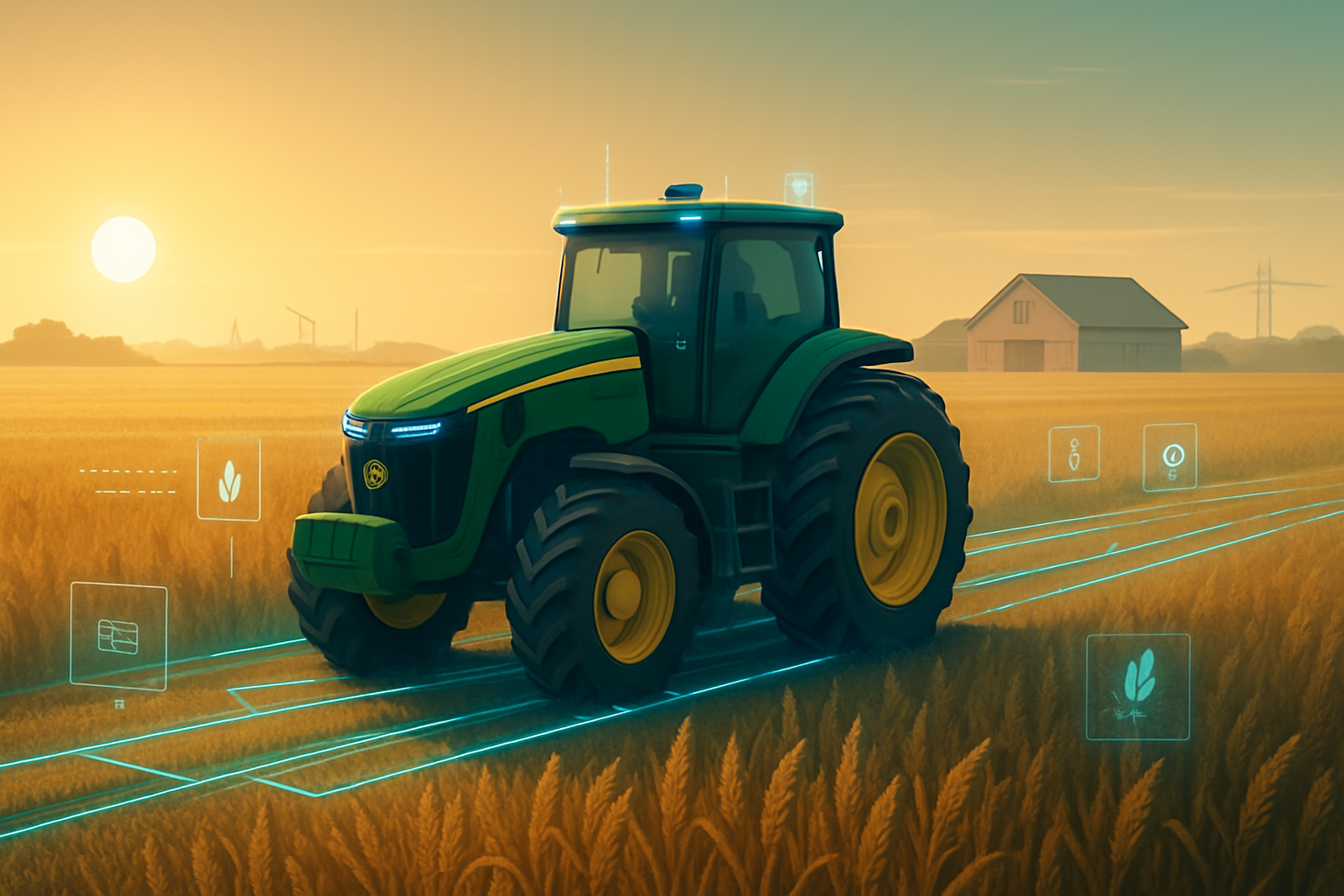
    The Green Tech Moat: A Deep-Dive Research Article on Deere & Co (DE) vs Caterpillar (CAT)

    Today’s Date: March 30, 2026

    Introduction

    As the global economy navigates a complex transition toward automation and sustainable productivity, few companies embody the intersection of heavy industry and high technology quite like Deere & Co (NYSE: DE). Known colloquially as "John Deere," the company is currently at a critical juncture. While the broader agricultural sector is weathering a cyclical "trough" in 2026, Deere’s strategic pivot toward a software-centric business model has decoupled its valuation from traditional equipment manufacturers. This feature explores how Deere is positioning itself against its primary rival, Caterpillar (NYSE: CAT), and why its "Smart Industrial" strategy is redefining what it means to be an industrial powerhouse in the late 2020s.

    Historical Background

    The story of Deere & Co begins in 1837 with a single blacksmith, John Deere, who invented the self-scouring steel plow. This innovation solved the "sticky soil" problem of the American Midwest and laid the foundation for a reputation of reliability. For nearly a century, Deere was defined by iron and steel. However, the company’s history is a series of well-timed transformations. In 1918, it entered the motorized era by acquiring the Waterloo Gasoline Engine Company, producing the iconic "Waterloo Boy" tractor.

    By the mid-20th century, Deere diversified into construction and forestry, providing a vital hedge against agricultural volatility. The most profound shift, however, began in the 2010s with the acquisition of Blue River Technology. This marked the transition from a manufacturer of "dumb iron" to a provider of "smart machines," effectively turning tractors into mobile data centers capable of seeing, thinking, and acting autonomously.

    Business Model

    Deere operates through four primary segments, each playing a specific role in its "Smart Industrial" ecosystem:

    1. Production & Precision Ag: The flagship segment focusing on large-scale grain, cotton, and sugar farmers. It is the primary engine for Deere’s high-margin technology integration.
    2. Small Ag & Turf: Serves mid-sized farms, dairy/livestock producers, and the professional landscaping/residential market.
    3. Construction & Forestry: A global provider of earthmoving, roadbuilding, and timber harvesting equipment. This segment frequently competes with Caterpillar and Komatsu (OTC: KMTUY).
    4. Financial Services: Primarily finances sales and leases of Deere equipment, providing a stable stream of interest income and fostering customer loyalty.

    Deere’s revenue model is increasingly shifting toward "Lifecycle Solutions," aiming for 10% of total revenue to be recurring by 2030 through software subscriptions and data services.

    Stock Performance Overview

    As of late March 2026, Deere’s stock performance tells a tale of two cycles. Over the 10-year horizon, Deere has delivered an annualized total return of approximately 23.9%, comfortably outperforming the S&P 500’s 13.5%. However, over the 1-year horizon, Deere’s 21.8% return has lagged significantly behind Caterpillar’s triple-digit surge (108.9%).

    The disparity is driven by sector exposure: Caterpillar has benefited immensely from the AI-driven data center boom, which spiked demand for large-scale power generators and construction equipment. Conversely, Deere has been managing a downturn in the agricultural cycle as lower commodity prices (corn and soybeans) temporarily dampened farmer demand for high-horsepower machinery.

    Financial Performance

    In its latest Q1 2026 earnings report (ended February 1, 2026), Deere reported revenue of $9.61 billion. While this was a 13% increase year-over-year, net income fell to $656 million ($2.42 per share) due to higher manufacturing costs and a mix shift toward lower-margin small equipment.

    Compared to Caterpillar, Deere maintains a superior Gross Margin (32.6% vs CAT’s 28.6%), reflecting its ability to command premium pricing for its integrated technology. However, Deere carries a higher Debt-to-Equity ratio of 2.38, largely due to its massive financial services arm, compared to Caterpillar’s 2.03. Deere’s Return on Equity (ROE) of 20.5% remains healthy, though it currently trails Caterpillar’s ROE of ~45.8%, which has been boosted by the infrastructure and energy supercycle.

    Leadership and Management

    Under CEO John May, who took the helm in 2019, Deere has doubled down on its "Smart Industrial" operating model. May’s strategy focuses on "Leap Ambitions"—linking financial targets to sustainable outcomes. His leadership team has restructured the company around "Production Systems" rather than individual product lines, forcing engineers to think about the entire farm ecosystem. This approach has earned May a reputation as a visionary leader who is willing to disrupt Deere’s own traditional manufacturing culture to win the software race.

    Products, Services, and Innovations

    Innovation is Deere’s primary competitive moat. Key offerings in 2026 include:

    • See & Spray™ Ultimate: Using computer vision and AI to distinguish weeds from crops, allowing for targeted herbicide application that reduces chemical usage by up to 90%.
    • Autonomous 8R Tractor: A fully autonomous machine that allows farmers to monitor field operations from a smartphone, addressing chronic labor shortages in the agricultural sector.
    • Operations Center: A cloud platform managing over 300 million "engaged acres" globally. This data-rich ecosystem provides farmers with predictive analytics, making the "Deere ecosystem" as sticky as Apple’s iOS.

    Competitive Landscape

    Deere remains the dominant force in the U.S. large-tractor market with a share exceeding 60%. However, its rivals are pursuing distinct strategies:

    • CNH Industrial (NYSE: CNHI): Pursues an "Open Platform" strategy, allowing its technology (via Raven Industries) to be used on competitors' equipment—a direct contrast to Deere’s "closed" integrated model.
    • AGCO Corp (NYSE: AGCO): Focuses on "Retrofit Strategy," selling precision kits that farmers can bolt onto older machines, offering a lower-cost entry point into high-tech farming.
    • Komatsu: Remains a formidable challenger in Construction & Forestry, particularly in the mining sector where its autonomous haulage systems are industry-leading.

    Industry and Market Trends

    The agricultural equipment industry is currently at the "bottom" of a cyclical trough. High interest rates in 2024 and 2025 led to a buildup of used equipment inventory. However, analysts believe the replacement cycle is nearing its start. Furthermore, the "Precision Ag" trend is no longer optional; as input costs (seeds, fertilizer, fuel) remain volatile, farmers are forced to adopt technology like Deere’s to maintain profitability, making Deere’s tech more "needs-based" than "wants-based."

    Risks and Challenges

    The most significant headwind for Deere is the ongoing "Right to Repair" movement. In 2025, a federal judge allowed an FTC antitrust lawsuit to proceed, alleging Deere holds a monopoly on repair services. If forced to open its proprietary diagnostic software further, Deere could lose a portion of its high-margin parts and services revenue. Additionally, Deere’s heavy reliance on the U.S. agricultural economy makes it vulnerable to shifts in global grain trade and potential climate-related crop failures.

    Opportunities and Catalysts

    Looking toward the second half of 2026, the primary catalyst for Deere is the anticipated recovery of the large-ag market. Furthermore, the company’s expansion into autonomous construction equipment offers a new growth frontier. If Deere can successfully apply its "See & Spray" vision technology to construction—identifying underground utilities or optimizing earthmoving—it could challenge Caterpillar’s dominance in the "Smart Site" space.

    Investor Sentiment and Analyst Coverage

    Wall Street remains "cautiously optimistic" on Deere. Roughly 65% of analysts maintain a Buy rating, citing the company’s ability to maintain high margins even during downturns. Institutional ownership remains high at ~75%, with major stakes held by Vanguard, BlackRock, and Bill Gates’ Cascade Investment LLC. The prevailing sentiment is that while Caterpillar is the play for the "Infrastructure/Energy" cycle, Deere is the superior play for the "Automation/AgTech" decade.

    Regulatory, Policy, and Geopolitical Factors

    Geopolitics play a massive role in Deere’s fortunes. U.S. farm subsidies and trade policies regarding Chinese grain imports directly impact the purchasing power of Deere’s core customers. Furthermore, new EPA guidance issued in February 2026 clarified that manufacturers cannot use the Clean Air Act to prevent farmers from making their own repairs, adding another layer of pressure to Deere’s traditional service model.

    Conclusion

    Deere & Co is no longer just a tractor company; it is a technology company that happens to paint its products green. While Caterpillar currently enjoys the limelight of the infrastructure and AI-power boom, Deere is quietly building a data moat that may prove more durable over the long term. For investors, the current cyclical bottom in agriculture represents a potential entry point for a company that has successfully combined 19th-century reliability with 21st-century AI. The key watchpoints for the remainder of 2026 will be the outcome of the FTC repair trial and the pace of autonomous fleet adoption.


    This content is intended for informational purposes only and is not financial advice.

  • Iron Meets Silicon: A Deep-Dive into the Future of Deere & Company (NYSE: DE)

    Iron Meets Silicon: A Deep-Dive into the Future of Deere & Company (NYSE: DE)

    As of March 17, 2026, Deere & Company (NYSE: DE) stands at a pivotal crossroads between its 189-year heritage as a blacksmith-founded manufacturer and its future as a global technology powerhouse. Often synonymous with the rugged "green and yellow" tractors seen across the American heartland, the company has spent the last decade aggressively re-engineering its identity. Today, Deere is less about the "iron" and more about the "silicon." In an era defined by labor shortages, climate volatility, and thinning farm margins, Deere’s evolution into a "Smart Industrial" leader is no longer a strategic choice—it is the central pillar of its survival and growth. This deep-dive explores how the world’s largest agricultural machinery company is navigating a cyclical downturn by betting on autonomous systems, satellite connectivity, and high-margin recurring software revenue.

    Historical Background

    The story of Deere & Company began in 1837 when John Deere, a blacksmith in Grand Detour, Illinois, noticed that local farmers were struggling to plow the thick, sticky Midwestern soil with traditional iron plows. His invention of the self-scouring steel plow revolutionized American agriculture and laid the foundation for an industrial empire. Incorporated in 1868, the company survived the Great Depression and multiple world wars by consistently innovating.

    The 20th century was marked by the 1918 acquisition of the Waterloo Boy tractor company, which transitioned Deere from an implement maker to a power-machinery leader. By the 1950s, the company expanded into construction and forestry, creating a diversified industrial base. However, the most significant transformation began in 2017 with the acquisition of Blue River Technology. This $305 million deal signaled to the market that Deere’s future would be built on computer vision, machine learning, and artificial intelligence, rather than just horsepower and steel.

    Business Model

    Deere & Company operates through four primary business segments, each integrated into a centralized "Smart Industrial" operating model:

    1. Production & Precision Ag: The flagship segment, focusing on large-scale grain, cotton, and sugar production. It delivers high-horsepower tractors and combines integrated with precision technology.
    2. Small Ag & Turf: Serves mid-sized farms, livestock producers, and the professional landscaping/turf market. This segment is increasingly focused on electrification and smaller autonomous units.
    3. Construction & Forestry: Provides a broad range of earthmoving and timber-harvesting equipment. This segment has benefited significantly from global infrastructure tailwinds in 2025 and 2026.
    4. Financial Services: Primarily finances sales and leases of new and used equipment. It remains a critical profit driver, managing a multi-billion dollar portfolio of retail notes and revolving credit.

    Stock Performance Overview

    Over the last decade, Deere has transitioned from being valued as a cyclical industrial stock to receiving a valuation premium more typical of a technology company.

    • 10-Year Performance: As of March 2026, the stock has delivered a staggering 733.4% return, vastly outperforming the broader S&P 500. This reflects the market’s realization of the "Tech-as-a-Service" potential in agriculture.
    • 5-Year Performance: The stock is up approximately 64.7%. This period saw the 2021–2023 "super-cycle" in farm equipment, followed by a necessary correction in 2024.
    • 1-Year Performance: A robust 25.3% recovery. After bottoming out in late 2024 due to high interest rates and lower commodity prices, the stock has rallied in early 2026 as investors anticipate the next technology-led replacement cycle.

    Financial Performance

    The fiscal year 2025 was a "reset year" for Deere. After record-breaking profits in 2023, the company saw net income pull back to $5.027 billion on total revenue of $45.68 billion. This decline of nearly 29% from peak levels was widely expected by analysts as the post-pandemic equipment boom normalized.

    However, the Q1 2026 results released recently have changed the narrative. Deere reported a "beat-and-raise" quarter, with earnings per share (EPS) of $2.42, surpassing the consensus estimate of $2.02. This was driven by surprising resilience in the Construction & Forestry segment and higher-than-expected take-rates for its "See & Spray" technology. For the full year 2026, management has raised its net income guidance to between $4.5 billion and $5.0 billion, suggesting the cyclical trough is firmly in the rearview mirror.

    Leadership and Management

    Under the leadership of CEO John May, who took the helm in 2019, Deere has doubled down on its "Leap Ambitions." These are a set of aggressive operational and sustainability goals for 2026 and 2030. May is widely respected for his ability to bridge the gap between traditional manufacturing and high-tech software development.

    Key pillars of May’s strategy include:

    • Recurring Revenue: Aiming for 10% of total revenue to come from software and subscription fees by 2030.
    • Connectivity: Reaching 500 million "engaged acres" connected to the John Deere Operations Center by late 2026.
    • Autonomy: Launching fully autonomous production systems for major row crops by the end of the decade.

    Products, Services, and Innovations

    Deere’s R&D pipeline is currently the most advanced in the heavy machinery industry. Key innovations include:

    • Autonomous 8R Tractor: A fully driverless tractor that utilizes six pairs of stereo cameras and AI to navigate fields, detect obstacles, and process data without an operator in the cab.
    • See & Spray™ Ultimate: A computer-vision system that distinguishes between weeds and crops in real-time, applying herbicide only where needed. This can reduce chemical usage by up to 67%, providing an immediate ROI for farmers.
    • Starlink Partnership: In 2024, Deere signed a landmark deal with SpaceX to equip machinery with Starlink satellite terminals. This solves the "connectivity gap" in rural areas, allowing tractors to upload and download massive datasets in real-time even in the most remote corners of the globe.

    Competitive Landscape

    While Deere remains the dominant force in North America, the competitive landscape is intensifying in the race for autonomy:

    • CNH Industrial (NYSE: CNHI): Following its acquisition of Raven Industries, CNHI has become Deere’s most direct rival in precision technology. They focus on "open" platforms that can work across different brands.
    • AGCO Corporation (NYSE: AGCO): AGCO is pursuing a "retrofit" strategy through its Precision Planting brand, allowing farmers to add advanced technology to older machines at a lower entry price.
    • Caterpillar (NYSE: CAT): In the construction sector, Caterpillar remains the gold standard. While Deere is a strong secondary player, Caterpillar’s massive $51 billion backlog in early 2026 highlights the intense competition for global infrastructure projects.

    Industry and Market Trends

    The "Smart Industrial" shift is occurring against a complex macro backdrop. In March 2026, corn and soybean prices have stabilized (around $4.31 and $11.33 per bushel, respectively), but they remain well below the peaks of 2022. This "tight margin" environment actually favors Deere’s technology; when farmers can’t rely on high crop prices, they must rely on efficiency.

    Additionally, labor shortages in rural areas are reaching a crisis point. This has turned autonomous machinery from a "luxury" into a "necessity" for many large-scale operations. Meanwhile, high interest rates, though moderating, continue to pressure equipment financing, favoring Deere’s robust Financial Services arm which can offer flexible lending terms to maintain market share.

    Risks and Challenges

    Despite its technological lead, Deere faces several headwinds:

    • Right to Repair: The company continues to face legal and regulatory pressure regarding its proprietary diagnostic software. Critics argue that Deere’s restrictions force farmers into expensive dealership repairs. Recent 2026 EPA and FTC guidance may eventually force a more open software ecosystem, potentially impacting service margins.
    • Cyclicality: Deere cannot fully escape the 5–7 year agricultural cycle. A prolonged global recession or a collapse in grain demand would severely impact the Production & Precision Ag segment.
    • Geopolitics and Tariffs: As a global exporter, Deere is highly sensitive to trade tensions. The company has estimated that steel and aluminum tariffs could add up to $1.2 billion in pre-tax costs in 2026 if current trade disputes are not resolved.

    Opportunities and Catalysts

    • The "SaaS" Pivot: If Deere successfully reaches its goal of 10% recurring revenue from software, it will fundamentally change its valuation multiple, moving it closer to a "tech" P/E ratio.
    • Emerging Markets: Precision agriculture is still in its infancy in South America and parts of Asia. Deere’s Starlink partnership is a key catalyst for growth in these regions where cellular infrastructure is lacking.
    • Infrastructure Spend: Continued government spending on green energy and infrastructure in the U.S. and Europe provides a solid floor for the Construction & Forestry division.

    Investor Sentiment and Analyst Coverage

    Wall Street sentiment as of March 2026 remains a "Moderate Buy." Most analysts are encouraged by Deere’s ability to maintain operating margins in the 18–19% range even during a cyclical trough—a feat that was unheard of in previous decades.

    The average price target among major firms like Goldman Sachs and Morgan Stanley sits at approximately $645.00, representing significant upside from current levels. Institutional ownership remains high, with major funds viewing Deere as a core "quality" industrial play that offers exposure to the unavoidable trend of agricultural automation.

    Regulatory, Policy, and Geopolitical Factors

    The regulatory environment is a double-edged sword for Deere. On one hand, government incentives for "climate-smart" agriculture—such as carbon credits and subsidies for precision spraying—directly drive demand for Deere’s high-tech implements.

    On the other hand, the company must navigate increasingly strict emissions regulations and the aforementioned "Right to Repair" legislation. Furthermore, as a major consumer of high-grade steel and a manufacturer with a global footprint, Deere remains a bellwether for the impact of deglobalization and regional trade blocs on industrial profit margins.

    Conclusion

    Deere & Company is no longer a simple equipment manufacturer; it is a data and robotics company that happens to build very large machines. As of March 2026, the company has successfully navigated the post-pandemic "hangover" and is emerging with a leaner, more tech-centric business model.

    For investors, the key will be watching the adoption rates of the Autonomous 8R and the growth of software subscriptions. If Deere can prove that its "Leap Ambitions" are more than just marketing jargon, the stock’s decade of outperformance may only be the beginning. However, the path is fraught with cyclical risks and regulatory hurdles that require a disciplined, long-term perspective. In the high-stakes game of global food security, Deere has positioned itself as the indispensable platform upon which the future of farming will be built.


    This content is intended for informational purposes only and is not financial advice.