
Tag: QSR Industry

  • Domino’s Pizza (DPZ) Deep Dive: 2026 Earnings Analysis and the “Hungry for MORE” Era

    Domino’s Pizza (DPZ) Deep Dive: 2026 Earnings Analysis and the “Hungry for MORE” Era

    On this Monday, February 23, 2026, the global leader in pizza delivery finds itself in an enviable but high-stakes position. As Domino’s Pizza, Inc. (NYSE: DPZ) releases its fourth-quarter and full-year 2025 earnings report this morning, the market is closely watching to see if the "Hungry for MORE" strategy—launched by CEO Russell Weiner in late 2023—is delivering the long-term compounding growth investors have come to expect.

    Domino’s has evolved from a humble Michigan storefront into a global technology powerhouse that happens to sell pizza. Today, with over 22,000 stores globally and a dominant 18% share of the U.S. pizza market, DPZ is the quintessential "all-weather" stock, often thriving in inflationary environments by leveraging its massive scale and value-driven menu.

    Historical Background

    The Domino’s story is one of the most celebrated turnarounds in corporate history. Founded in 1960 by Tom Monaghan and his brother James, the company pioneered the 30-minute delivery guarantee. However, by 2008, the brand was in crisis; the stock price had cratered to $3 per share, and consumer sentiment was at an all-time low.

    The inflection point arrived in 2010 under CEO Patrick Doyle. In a move of "radical transparency," Domino’s launched a self-deprecating ad campaign admitting their pizza tasted "like cardboard." They completely overhauled their core recipe and simultaneously pivoted to a "tech-first" philosophy. This dual focus on product quality and digital convenience fueled a 1,500% stock price increase over the following decade, outperforming almost every major tech titan of the 2010s.

    Business Model

    Domino’s operates an asset-light, high-margin franchising model that is remarkably resilient. Approximately 99% of its global stores are owned by independent franchisees. This allows the corporate entity to collect steady royalty fees (5.5% in the U.S.) while shifting the capital expenditure of store openings to partners.

    Crucially, Domino’s is vertically integrated through its supply chain. The company generates over 60% of its total revenue by selling dough, toppings, and equipment to its franchisees. This ensures product consistency across thousands of locations and provides Domino’s with immense purchasing power. To keep franchisees profitable, the company shares 50% of the supply chain’s pre-tax profits back with them, a symbiotic relationship that remains a key competitive advantage.

    Stock Performance Overview

    Domino’s has been a legendary "alpha" generator for shareholders.

    • 10-Year Horizon (2016-2026): Investors who bought a decade ago have seen a total return CAGR of approximately 14%, significantly outpacing the S&P 500.
    • 5-Year Horizon: The stock navigated the post-pandemic "delivery hangover" of 2022 by aggressively expanding into third-party aggregators, leading to a strong recovery in 2024 and 2025.
    • 1-Year Performance: Over the past twelve months, DPZ has outperformed the broader QSR (Quick Service Restaurant) index by 8%, buoyed by its successful integration with UberEats and DoorDash.

    Financial Performance (Q4 2025 Results)

    In today’s earnings release (February 23, 2026), Domino’s reported a robust finish to the 2025 fiscal year:

    • EPS: $5.12, beating analyst estimates of $4.98.
    • Revenue: Grew 5.8% year-over-year to $1.52 billion for the quarter.
    • Same-Store Sales: U.S. comparable sales rose 3.7%, driven largely by higher order counts rather than just price increases.
    • Dividends: The Board of Directors declared a 15% increase in the quarterly dividend to $1.99 per share, marking the 14th consecutive year of dividend hikes.
    • Valuation: Trading at a forward P/E of 22.5x, the stock remains reasonably priced relative to its historical 5-year average of 28x.

    Leadership and Management

    CEO Russell Weiner, who took the helm in 2022, has been the primary architect of the "Hungry for MORE" plan. Weiner, formerly the Chief Marketing Officer, is credited with the 2010 turnaround marketing and has brought a renewed focus on "incremental" growth. Under his leadership, the management team has successfully navigated the shift toward third-party delivery platforms while maintaining the brand's proprietary delivery network. The board is highly regarded for its disciplined capital allocation, prioritizing share buybacks and dividends while maintaining a manageable, though sizable, debt load.

    Products, Services, and Innovations

    Innovation at Domino’s extends beyond toppings. In 2025, the company saw massive success with its New York Style Pizza and Parmesan Stuffed Crust, products designed to win over customers from premium local pizzerias.
    On the technology front, Domino’s recently completed the rollout of its AI-Powered "DOM" Voice Assistant across all U.S. stores, which now handles nearly 25% of phone orders, freeing up staff to focus on food preparation. Furthermore, the company's "Fortress Strategy"—opening stores closer to customers to reduce delivery times—has brought average delivery times under 22 minutes nationwide.

    Competitive Landscape

    Domino’s remains the clear "Big Slice" of the pizza industry.

    • Pizza Hut (NYSE: YUM): While Pizza Hut has modernized its digital interface, it continues to struggle with its legacy of large, expensive dine-in assets.
    • Papa John’s (NASDAQ: PZZA): Despite its "Better Ingredients" branding, Papa John's has struggled to match Domino’s technological scale and value-tier pricing.
    • Third-Party Delivery: While companies like DoorDash were once seen as threats, Domino’s has turned them into partners. By the end of 2025, aggregator orders accounted for roughly 5% of total U.S. sales, providing a new funnel of "incremental" customers who previously didn't use the Domino's app.

    Industry and Market Trends

    The QSR sector in 2026 is defined by two major trends: labor automation and the "value wars." With wage floor increases across several U.S. states, Domino’s has invested heavily in automated kitchen equipment and electric delivery vehicle (EV) fleets to lower operational costs. Additionally, as consumers become more price-sensitive in the current macro environment, Domino’s "Emergency Pizza" and tiered loyalty rewards programs have proven essential in maintaining high order frequency.

    Risks and Challenges

    Despite its dominance, Domino’s faces notable headwinds:

    • Interest Rate Sensitivity: The company carries approximately $5 billion in debt. With $1.3 billion maturing in 2027, the prospect of refinancing at higher rates remains a concern for some analysts.
    • Commodity Volatility: While 2025 saw a stabilization in wheat and dairy prices, any geopolitical shock to global food supply chains would immediately pressure margins.
    • Labor Costs: Persistent pressure for higher minimum wages in key markets like California and New York continues to challenge the unit economics for individual franchisees.

    Opportunities and Catalysts

    The primary growth levers for 2026 and beyond are international.

    • China (DPC Dash): Domino’s is on track to hit 1,500 stores in China by the end of 2026, tapping into an exploding middle-class demand for western-style delivery.
    • India (Jubilant FoodWorks): India remains Domino’s largest market outside the U.S., with a "fortressing" strategy that aims to reach 4,000 stores by 2027.
    • UberEats Expansion: The partnership with UberEats is still in its early innings internationally, offering a massive untapped channel for global growth.

    Investor Sentiment and Analyst Coverage

    Wall Street remains largely "Overweight" on DPZ. Following this morning’s earnings beat, several major banks raised their price targets to the $485-$505 range. Institutional ownership remains high, with giants like Vanguard and BlackRock holding significant stakes. Sentiment among retail investors is equally positive, frequently citing the company’s "tech-company-disguised-as-pizza" moat.

    Regulatory, Policy, and Geopolitical Factors

    Domino’s must navigate a complex web of franchising regulations. In the U.S., proposed "joint-employer" rules remain a point of contention, as they could potentially increase the corporate parent's liability for franchisee labor practices. Geopolitically, the company’s aggressive expansion in China makes it sensitive to U.S.-China trade relations, though its "local partner" model (DPC Dash) provides some insulation from direct regulatory interference.

    Conclusion

    Domino’s Pizza enters 2026 as a masterclass in operational efficiency and brand resilience. Today’s Q4 2025 earnings report confirms that the company has successfully transitioned from a "walled garden" to a savvy partner of third-party aggregators without sacrificing its core identity. While debt refinancing and labor costs remain the primary "bear cases" to monitor, the company's aggressive international expansion and technological lead make it a formidable competitor. For investors, DPZ continues to offer a compelling mix of defensive stability and tech-driven growth—truly a stock that delivers.


    This content is intended for informational purposes only and is not financial advice.
  • Golden Arches, Digital Future: A Deep Dive into McDonald’s (MCD) Following 2026 Performance Surge

    Golden Arches, Digital Future: A Deep Dive into McDonald’s (MCD) Following 2026 Performance Surge

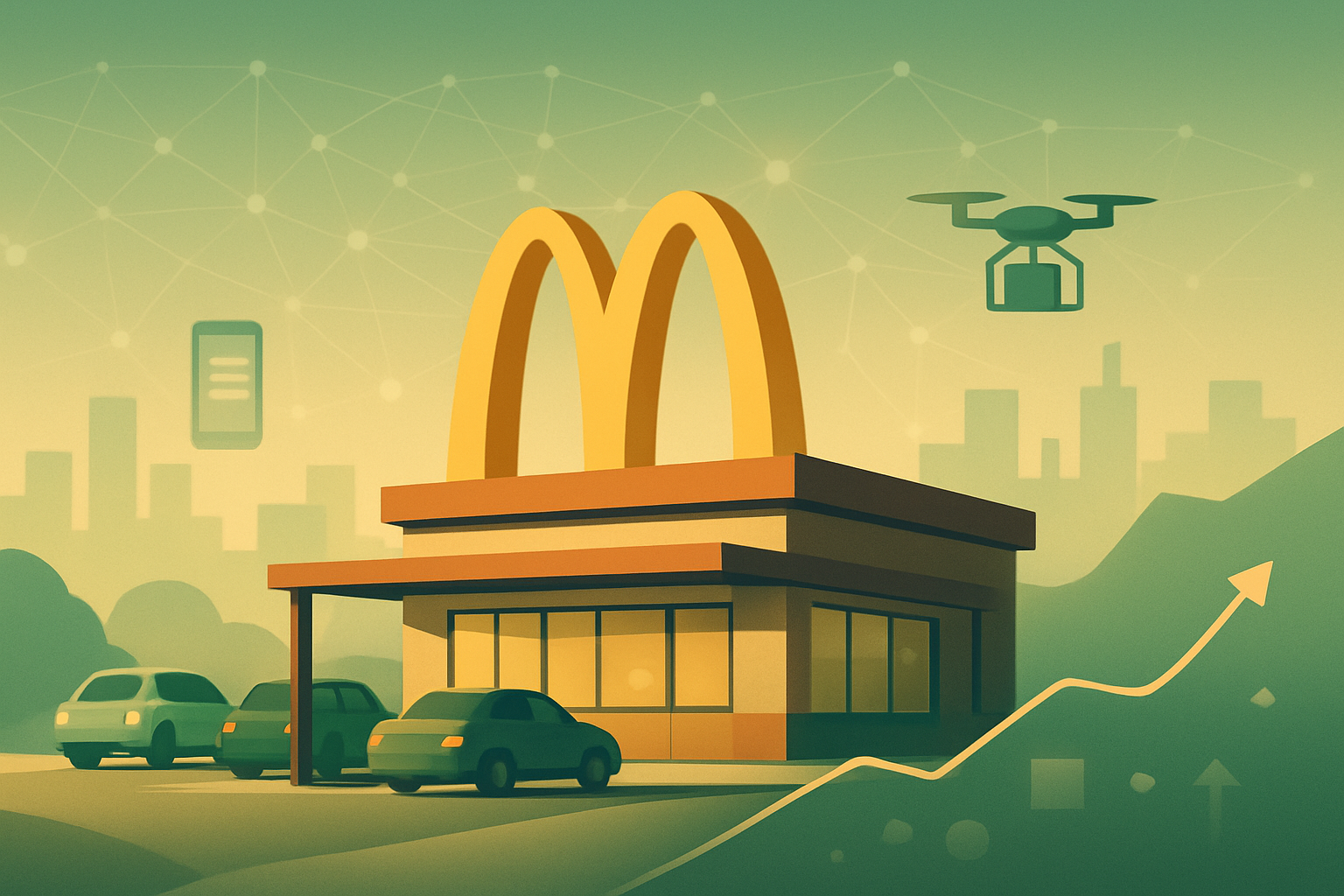
    As of February 11, 2026, McDonald’s Corporation (NYSE: MCD) has once again asserted its dominance in the global Quick Service Restaurant (QSR) sector. Following a blockbuster Q4 2025 earnings report released this morning, the company’s stock has surged to an all-time high, driven by a record-breaking expansion of its digital ecosystem and the successful global rollout of its "Big Arch" burger platform. While the broader market has grappled with interest rate volatility and shifting consumer habits, McDonald’s has leveraged its massive scale and "Accelerating the Arches" strategy to capture a larger share of the "value" and "craveable" markets. This deep dive examines the pillars of the Golden Arches’ current success and the hurdles that lie ahead in an increasingly automated world.

    Historical Background

    The McDonald’s story is a foundational piece of American corporate lore. Founded in 1940 by Richard and Maurice McDonald in San Bernardino, California, the original restaurant revolutionized the industry with its "Speedee Service System." However, the modern behemoth was truly born when Ray Kroc, a milkshake mixer salesman, joined the company in 1954 and eventually bought out the brothers in 1961.

    Kroc’s genius lay in the "three-legged stool" philosophy: a balance between McDonald’s employees, franchisees, and suppliers. Over the decades, the company transformed from a simple burger stand into a global cultural icon, navigating the "Burger Wars" of the 1980s, the "Super Size Me" health backlash of the early 2000s, and the digital transformation of the 2020s. Today, it stands as one of the world’s most recognizable brands, operating in over 100 countries.

    Business Model

    McDonald’s operates a unique and highly profitable business model that is often misunderstood as purely a food service operation. In reality, it is a massive real estate and franchising enterprise. As of early 2026, approximately 95% of its restaurants are owned and operated by independent franchisees.

    The company generates revenue through three primary channels:

    1. Rent: McDonald’s typically owns or holds long-term leases on the land and buildings where its restaurants operate, charging franchisees rent based on a percentage of sales.
    2. Royalties: Franchisees pay a percentage of their monthly sales for the right to use the McDonald’s brand and systems.
    3. Company-Operated Sales: Revenue from the small percentage of stores the corporation runs itself.

    This "asset-light" model ensures high operating margins (consistently in the mid-to-high 40% range) and provides a steady, predictable cash flow that protects the company during economic downturns.

    Stock Performance Overview

    McDonald’s has long been a darling of defensive-minded investors. As of February 11, 2026, the stock’s performance reflects a "flight to quality" trend:

    • 1-Year Performance: Up approximately 18%, significantly outperforming the S&P 500's consumer discretionary sector, largely due to the successful recovery from the late-2024 E. coli scare and the "Value Menu 2.0" success.
    • 5-Year Performance: Up roughly 65%, driven by the massive acceleration of digital sales which now account for nearly 45% of total systemwide revenue.
    • 10-Year Performance: The stock has more than tripled, reflecting its status as a "Dividend Aristocrat" that consistently returns capital to shareholders through buybacks and annual dividend increases.

    Financial Performance

    In the Q4 2025 earnings report released today, McDonald's posted results that cleared the high bar set by Wall Street:

    • Revenue: Reached $7.1 billion for the quarter, a 6% year-over-year increase.
    • Comparable Sales: Global "comps" grew by 4.8%, with the U.S. market leading the way at 5.2% due to high demand for the "Big Arch" burger and "Best Burger" quality initiatives.
    • Earnings Per Share (EPS): Reported at $3.25, beating analyst estimates of $3.10.
    • Digital Momentum: MyMcDonald’s Rewards has reached a staggering 180 million active users globally, driving personalized offers that have increased visit frequency by 12% in key demographics.

    The company’s balance sheet remains robust, although debt levels have ticked up slightly to fund the most aggressive physical expansion in the company's history—targeting 50,000 restaurants globally by 2027.

    Leadership and Management

    Under the leadership of CEO Chris Kempczinski, McDonald’s has pursued a disciplined, tech-forward strategy. Since taking the helm in 2019, Kempczinski has navigated the COVID-19 pandemic, geopolitical tensions in Europe and the Middle East, and a major 2024 food safety incident.

    The management team is currently focused on the "Accelerating the Arches 2.0" framework, which prioritizes:

    • Marketing Excellence: Leveraging "Fan Truths" and global icons.
    • Core Menu Innovation: Scaling chicken (McCrispy) and large-form burgers (Big Arch).
    • The 4Ds: Digital, Delivery, Drive-Thru, and Development.

    Products, Services, and Innovations

    McDonald’s is no longer just "burgers and fries." Recent innovations have defined its 2025-2026 growth:

    • The Big Arch: This larger, premium burger was launched globally to compete with "better-burger" chains like Five Guys. Its success in late 2025 has been a major tailwind.
    • CosMc’s: While still in a controlled pilot phase, the beverage-led CosMc's concept has provided invaluable data on high-margin, customizable drinks, many of which are now being integrated into the main McDonald’s menu to rival Starbucks (NASDAQ: SBUX).
    • AI Integration: Today’s earnings highlighted the full rollout of generative AI for drive-thru ordering across 8,000 U.S. locations, which has reduced wait times by an average of 15 seconds per car.

    Competitive Landscape

    McDonald’s remains the undisputed leader in the QSR space, but it faces a multi-front war:

    • Value Rivals: Burger King (NYSE: QSR) and Wendy’s (NASDAQ: WEN) have aggressively marketed "value bundles," forcing McDonald’s to maintain a permanent "Value Menu 2.0" to protect traffic.
    • The Coffee War: In the afternoon "slump" hours, McDonald’s competes fiercely with Starbucks and Dutch Bros (NYSE: BROS) for beverage sales.
    • Fast Casual: Chains like Chipotle (NYSE: CMG) continue to pull away higher-income diners, though McDonald's "Big Arch" is a direct attempt to win those customers back.

    Industry and Market Trends

    Several macro trends are shaping the McDonald’s of 2026:

    • Digitalization: The shift from kiosks to mobile app dominance is nearly complete. Data is the new oil for McDonald’s, allowing for hyper-personalized marketing.
    • Automation: Faced with rising labor costs, McDonald's has leaned heavily into "back-of-house" automation, including automated fryers and drink dispensers.
    • Health and Wellness: The widespread use of GLP-1 weight-loss drugs (like Ozempic) has shifted some consumer preferences toward smaller portions and higher protein, prompting McDonald’s to expand its chicken and "Snack Wrap" offerings.

    Risks and Challenges

    Despite the current rally, several risks loom:

    • Labor Costs: Minimum wage hikes, particularly the $20/hour standard in California and its subsequent "contagion" to other states, continue to pressure franchisee margins.
    • Value Fatigue: To maintain traffic, McDonald's must keep prices low, but persistent food-away-from-home inflation makes it difficult to maintain "value" pricing without eroding profit.
    • Geopolitical Exposure: As a global brand, McDonald's remains vulnerable to international conflicts. Continued headwinds in the Middle East and a cooling Chinese economy remain significant drags on International Developmental Licensed (IDL) market performance.

    Opportunities and Catalysts

    • The 50k Goal: The expansion toward 50,000 stores by 2027 represents a massive play for market share in underserved regions.
    • Loyalty Monetization: With 180 million users, McDonald’s is transitioning from a restaurant to a data company, with the potential to monetize its first-party data through retail media networks.
    • Chicken Dominance: Management believes the "chicken" category still has significant room to grow, with plans to launch new McCrispy variations in late 2026.

    Investor Sentiment and Analyst Coverage

    Wall Street remains overwhelmingly positive on McDonald’s. Following today’s news, several analysts raised their price targets to the $350-$360 range. Institutional ownership remains high at over 70%, with major funds viewing MCD as a "safe haven" during periods of economic uncertainty. Retail sentiment is also buoyed by the company’s strong dividend yield and brand resilience.

    Regulatory, Policy, and Geopolitical Factors

    McDonald’s is currently navigating a complex regulatory environment:

    • Antitrust and Franchising: Regulatory bodies in the U.S. and EU are increasingly scrutinizing the relationship between franchisors and franchisees, potentially impacting how McDonald's dictates labor and pricing policies.
    • Sustainability Mandates: New EU packaging regulations have forced McDonald's to accelerate its transition to reusable and compostable materials, a costly but necessary move to maintain its European market share.

    Conclusion

    McDonald’s (NYSE: MCD) enters the mid-point of 2026 in a position of undeniable strength. By successfully pivoting back to its "value" roots while simultaneously building a world-class digital and data ecosystem, the company has effectively "moated" its business against both traditional rivals and new health-conscious trends. For investors, the takeaway from today’s earnings is clear: McDonald’s is no longer just a fast-food company—it is a tech-enabled real estate giant with a global reach that few can match. While labor costs and geopolitical tensions remain "yellow flags," the Golden Arches have rarely looked more resilient.


    This content is intended for informational purposes only and is not financial advice.