Tag: Research

  • Applied Materials (AMAT): The AI Giga-Cycle Architect Surges on Q1 Beat

    Applied Materials (AMAT): The AI Giga-Cycle Architect Surges on Q1 Beat

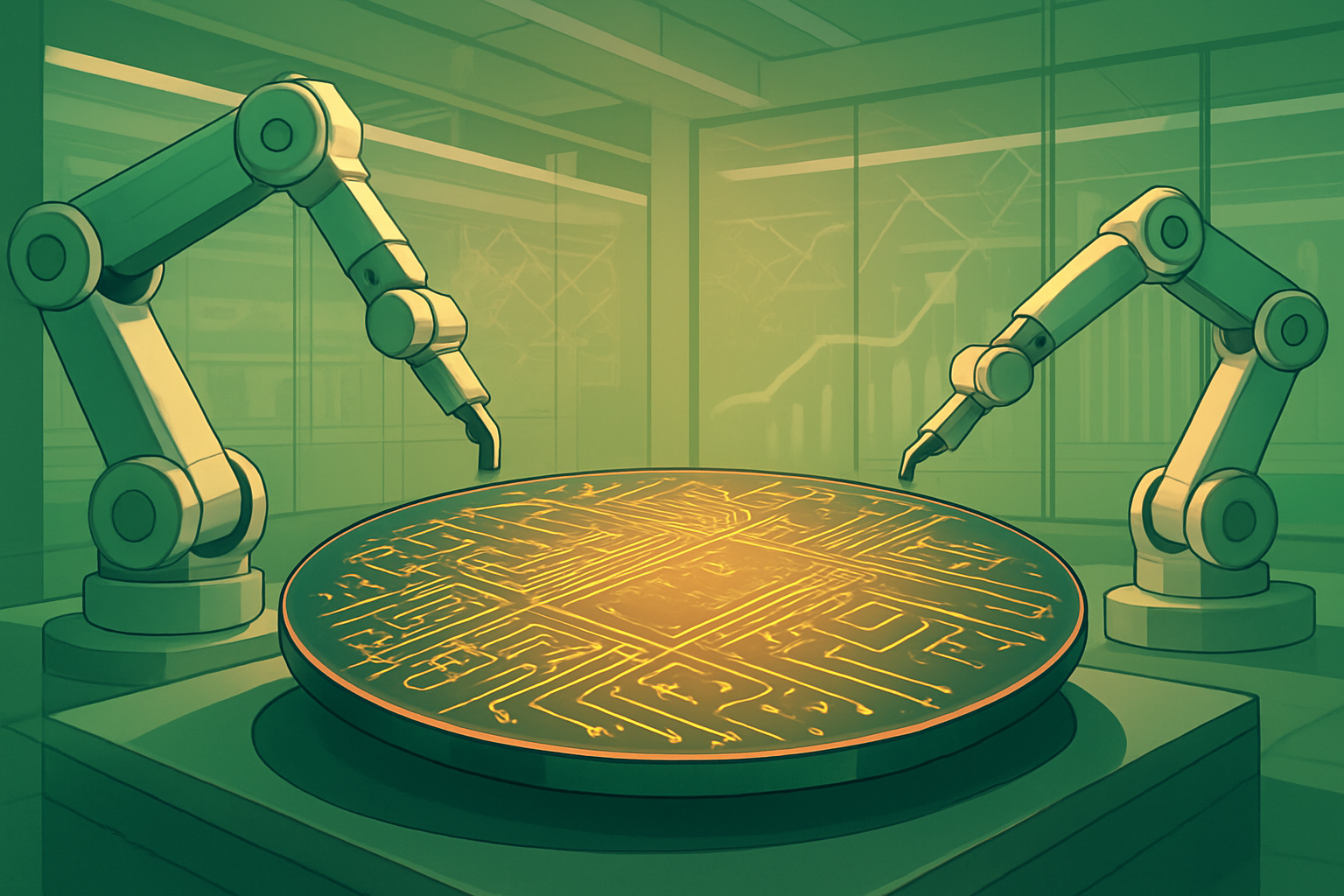
    On February 17, 2026, the semiconductor industry received a resounding confirmation of the "AI Giga-cycle" as Applied Materials, Inc. (Nasdaq: AMAT) saw its shares surge over 8% in early trading. The rally followed a dominant Q1 2026 earnings report that exceeded Wall Street’s most optimistic forecasts. As the world’s largest provider of semiconductor manufacturing equipment, Applied Materials is no longer viewed merely as a cyclical hardware vendor but as the foundational architect of the artificial intelligence era. With the rapid adoption of High Bandwidth Memory (HBM) and the transition to 2nm logic chips, AMAT has positioned itself at the epicenter of a multi-year capital expenditure wave, making it a critical focus for institutional and retail investors alike.

    Historical Background

    Founded on November 10, 1967, in Santa Clara, California, by Michael A. McNeilly and a small team of engineers, Applied Materials began its journey in the nascent days of the Silicon Valley revolution. While the company initially struggled with financial stability, its trajectory changed under the legendary leadership of James C. Morgan, who took the helm in 1976. Morgan shifted the focus toward a broad portfolio of semiconductor fabrication tools, a strategy that eventually allowed AMAT to become the "supermarket" of the industry. Over the decades, the company survived multiple industry downturns by diversifying into displays and solar energy, though it has recently refocused its core energy on the "Materials-to-Systems" strategy. Today, under CEO Gary Dickerson, the company has transitioned from selling individual machines to providing integrated "PPACt" (Power, Performance, Area-Cost, and Time-to-market) solutions.

    Business Model

    Applied Materials operates through a highly diversified and synergistic business model comprised of three main reporting segments:

    • Semiconductor Systems (~73% of Revenue): This is the core engine, providing tools for chemical vapor deposition (CVD), physical vapor deposition (PVD), etch, and chemical mechanical planarization (CMP). These tools are essential for the "wafer fab" process where transistors and wiring are built.
    • Applied Global Services (AGS) (~22% of Revenue): A high-margin, recurring revenue segment that provides maintenance, software, and upgrades for the massive global installed base of AMAT machines. This segment provides a "cushion" during cyclical downturns.
    • Display and Adjacent Markets (~5% of Revenue): Focused on equipment for high-end OLED and LCD screens. While historically volatile, this segment has seen a resurgence in 2026 as OLED technology migrates from smartphones to laptops and tablets.

    Stock Performance Overview

    The 8% post-earnings surge is a continuation of a long-term bull run for AMAT:

    • 1-Year Performance: The stock has climbed approximately 42% over the past 12 months, significantly outperforming the S&P 500 as AI infrastructure spending accelerated.
    • 5-Year Performance: Investors have seen a gain of over 140%, driven by the global chip shortage of 2021-2022 and the subsequent AI-led recovery starting in late 2023.
    • 10-Year Performance: AMAT has been a "multibagger," returning over 1,100% since 2016. This growth reflects the transition of semiconductors from a niche component of PCs to the "new oil" powering the global economy.

    Financial Performance

    In its Q1 2026 report, Applied Materials posted revenue of $7.01 billion, beating the consensus estimate of $6.92 billion. Key financial highlights include:

    • Gross Margin: Reached a record 49.1%, up 40 basis points year-over-year, aided by a higher mix of advanced AI-related equipment.
    • Earnings Per Share (EPS): Reported at $2.24, well above the anticipated $2.08.
    • Balance Sheet: The company remains cash-rich, allowing for aggressive R&D and a $252 million settlement in early 2026 that resolved a years-long DOJ investigation into legacy export compliance.
    • Valuation: Despite the price surge, AMAT trades at a forward P/E of approximately 22x, which many analysts consider attractive given its dominant market share in "inflection technologies" like Gate-All-Around (GAA) transistors.

    Leadership and Management

    Gary Dickerson, CEO since 2013, is widely credited with the company’s current operational excellence. Under his "Materials-to-Systems" vision, AMAT has moved closer to chipmakers like Nvidia (Nasdaq: NVDA) and Taiwan Semiconductor Manufacturing Company (NYSE: TSM) to co-optimize chip designs. The management team is known for its discipline and long-term planning, exemplified by the $5 billion "EPIC Center" in Silicon Valley—the world’s largest collaborative R&D facility. This proactive investment strategy has allowed AMAT to anticipate industry shifts, such as the move toward 3D chip stacking and hybrid bonding, years before they became mainstream.

    Products, Services, and Innovations

    Innovation is the primary moat for Applied Materials. The company holds thousands of patents and leads in several critical categories:

    • Endura® PVD Platform: The industry standard for creating the microscopic metal wiring that connects transistors.
    • Kinex™ Hybrid Bonding: A breakthrough technology for High Bandwidth Memory (HBM). As AI models grow larger, memory chips must be stacked vertically; Kinex allows these stacks to be joined with unprecedented precision, reducing heat and increasing speed.
    • Centura® Sculptor®: A tool that works alongside extreme ultraviolet (EUV) lithography machines from ASML (Nasdaq: ASML) to refine and pattern the smallest features of 2nm chips.
    • PROVision™ Metrology: A high-resolution e-beam system that "sees" through layers of a chip to detect defects that are invisible to optical systems.

    Competitive Landscape

    While AMAT is the most diversified player, it faces stiff competition in specific niches:

    • Lam Research (Nasdaq: LRCX): AMAT’s fiercest rival in Etch and Deposition. While Lam has a strong lead in NAND memory etch, AMAT has been aggressively taking share in the logic and DRAM sectors.
    • KLA Corporation (Nasdaq: KLAC): The leader in process control and inspection. AMAT’s expansion into e-beam metrology is a direct challenge to KLA’s dominance.
    • ASML: While often grouped together, AMAT and ASML are largely complementary. ASML "draws" the circuit patterns (lithography), while AMAT "builds" them (deposition/etch/CMP).

    Industry and Market Trends

    The "AI Giga-cycle" is the dominant trend of 2026. Data centers are now consuming up to 70% of global memory output to support AI training. This has triggered a massive capital expenditure cycle for DRAM and HBM. Furthermore, the industry is transitioning from FinFET transistors to Gate-All-Around (GAA) architectures. This transition requires 20-30% more "materials engineering" steps—a direct benefit for AMAT, as its tools are needed for every one of those additional steps.

    Risks and Challenges

    Despite the current euphoria, several risks remain:

    • Geopolitical Friction: The ongoing "Chip War" between the U.S. and China remains a volatile factor. While AMAT has resolved some legal hurdles, further export restrictions on advanced tools could impact its massive Chinese customer base.
    • Cyclicality: Historically, the semiconductor equipment industry is prone to "boom and bust" cycles. While AI provides a strong floor, a global recession could dampen demand for consumer electronics, impacting the broader chip market.
    • Complexity Lag: As chipmaking becomes exponentially more difficult at 2nm and below, any delay in customer roadmaps could push out equipment orders.

    Opportunities and Catalysts

    • The 2nm Ramp: As leading foundries like TSMC and Samsung move to high-volume 2nm production in late 2026, AMAT expects a multi-billion dollar revenue tailwind.
    • Advanced Packaging: The shift toward "chiplets"—where multiple small chips are packaged together—is a major growth area. AMAT’s packaging business has doubled in the last two years and is expected to grow another 25% in 2026.
    • M&A Potential: With a pristine balance sheet, AMAT is well-positioned to acquire smaller software or specialty materials companies to bolster its "Systems-to-Materials" portfolio.

    Investor Sentiment and Analyst Coverage

    Wall Street remains overwhelmingly bullish. Following the Q1 earnings beat, several top-tier analysts raised their price targets to the $280-$300 range. Institutional ownership remains high, with major funds like Vanguard and BlackRock holding significant stakes. Sentiment among retail investors has also surged, as AMAT is increasingly viewed as a "safer" way to play the AI boom compared to the more volatile chip designers.

    Regulatory, Policy, and Geopolitical Factors

    Applied Materials is a primary beneficiary of the U.S. CHIPS and Science Act and similar European incentives. These government policies are driving the construction of new "fabs" (factories) in the U.S. and Europe, all of which require AMAT’s equipment. However, compliance remains a heavy burden; the company spends millions annually on trade compliance and monitoring to navigate the complex web of global export controls.

    Conclusion

    Applied Materials has proven that it is the indispensable architect of the modern digital world. The 8% stock surge following the Q1 2026 earnings is more than a short-term reaction; it is a recognition of the company’s pivotal role in the AI transition. While geopolitical risks and industry cyclicality are ever-present, AMAT’s dominance in materials engineering and its early leadership in HBM and 2nm technologies provide a formidable moat. For investors, the takeaway is clear: as long as the world demands faster, smarter, and more efficient chips, the road to the future will be paved with Applied Materials’ technology.


    This content is intended for informational purposes only and is not financial advice.

  • The Renaissance of Big Blue: A Deep-Dive into IBM’s 2026 AI and Hybrid Cloud Dominance

    The Renaissance of Big Blue: A Deep-Dive into IBM’s 2026 AI and Hybrid Cloud Dominance

    Date: February 12, 2026

    Introduction

    Once dismissed as a "legacy tech" giant struggling to find its footing in the cloud era, International Business Machines Corporation (NYSE: IBM) has effectively completed one of the most significant pivots in corporate history. As of early 2026, the company formerly known primarily for its hardware mainframes has re-emerged as a high-margin powerhouse in hybrid cloud and generative AI. Today, Big Blue is no longer just a defensive dividend play; it is a central orchestrator of the multi-cloud world, leveraged by enterprises to govern and deploy AI at scale. With the integration of strategic acquisitions like HashiCorp and the explosive growth of its watsonx platform, IBM has successfully transitioned from a laggard to a leader in the enterprise technology stack.

    Historical Background

    Founded in 1911 as the Computing-Tabulating-Recording Company (CTR) and renamed IBM in 1924, the company’s history is a mirror of the computing age itself. From the early punch-card tabulators to the 1964 launch of the System/360 mainframe—which revolutionized business computing—IBM dominated the 20th century. However, the late 20th and early 21st centuries proved challenging. While IBM helped pioneer the PC, it famously missed the initial transition to public cloud services, ceding ground to newcomers like Amazon (NASDAQ: AMZN) and Microsoft (NASDAQ: MSFT).

    The modern era of IBM began in earnest in 2020 when Arvind Krishna took over as CEO. Krishna spearheaded the $34 billion acquisition of Red Hat (completed in 2019) and the subsequent spin-off of Kyndryl (NYSE: KD), IBM's lower-margin managed infrastructure services business. This structural reset allowed the company to focus exclusively on the two most critical vectors of modern technology: Hybrid Cloud and Artificial Intelligence.

    Business Model

    IBM’s business model in 2026 is built on three distinct but symbiotic pillars:

    1. Software (45% of Revenue): This is the crown jewel. It includes Red Hat, the open-source hybrid cloud platform, and the watsonx AI and data platform. Software carries the highest margins and provides the recurring revenue that has fueled IBM’s recent valuation re-rating.
    2. Consulting: Serving as the "boots on the ground," IBM Consulting helps enterprises implement complex AI and cloud strategies. In an era of "AI confusion," this segment acts as a high-touch sales engine for IBM's software products.
    3. Infrastructure: While no longer the primary driver, IBM's Z-Series mainframes and storage solutions remain critical for highly regulated industries like banking and government, providing steady cash flow and a platform for hybrid cloud integration.

    Stock Performance Overview

    The last five years have seen a remarkable shift in IBM’s stock trajectory.

    • 1-Year Performance: Over the past 12 months, IBM has outperformed the S&P 500, rising over 28% as the market recognized the company's AI-driven margin expansion.
    • 5-Year Performance: Investors who bought into Krishna's vision in 2021 have seen their shares more than double, a stark contrast to the flat performance of the previous decade.
    • 10-Year Performance: On a decade-long horizon, IBM still carries the "weight" of its 2015-2020 stagnation, but recent gains have brought its total return, including dividends, back into a competitive range with major tech benchmarks.

    Financial Performance

    IBM's 2025 fiscal year was its most profitable in over a decade.

    • 2025 Revenue: $67.54 billion (up 7.6% year-over-year).
    • Net Income: $10.59 billion, a 75.9% increase from 2024.
    • Free Cash Flow (FCF): A decade-high $14.7 billion.
    • AI-Generated Estimates for 2026:
      • Projected Revenue: ~$71.2 billion (assuming 5.5% growth).
      • Projected EPS (Non-GAAP): $10.78 – $13.60.
      • FCF Guidance: IBM has officially guided for $15.7 billion in free cash flow for 2026, signaling robust capital return potential.

    Leadership and Management

    Arvind Krishna remains at the helm, widely credited with transforming IBM's culture into one of technical excellence and "speed over perfection." His leadership team, including CFO James Kavanaugh, has been lauded for disciplined capital allocation. The board has also been refreshed with leaders from the software and semiconductor industries, reflecting the company’s focus on the "stack" rather than just the "service."

    Products, Services, and Innovations

    IBM’s 2026 product lineup is dominated by three major innovations:

    • watsonx & Granite 4.0: The latest iteration of IBM’s AI models are specifically designed for the enterprise. Unlike consumer-facing LLMs, Granite models are "sovereign," meaning they can run entirely within a client’s private data center, ensuring data privacy and regulatory compliance.
    • HashiCorp Integration: Following the 2025 acquisition, IBM has integrated Terraform into its cloud suite, making it the industry standard for managing multi-cloud infrastructure.
    • Quantum Advantage: In early 2026, IBM announced that its "Nighthawk" quantum processor achieved "Quantum Advantage" for specific financial modeling tasks, moving the technology from the realm of science fiction to commercial utility.

    Competitive Landscape

    IBM occupies a unique "Middle Ground" in the tech ecosystem.

    • VS. Hyperscalers (AWS, Azure, GCP): While the Big Three own the public cloud, IBM wins when clients want a hybrid approach—using multiple clouds plus on-premise servers. Red Hat OpenShift is the industry's leading platform for this "agnostic" approach.
    • VS. AI Pure Plays (OpenAI, Anthropic): IBM doesn't compete for the most "creative" AI. Instead, it competes on AI governance and trust, helping banks and healthcare providers ensure their AI isn't hallucinating or leaking sensitive data.

    Industry and Market Trends

    Two macro trends are currently favoring IBM:

    1. Sovereign AI: Governments and highly regulated sectors are moving away from centralized AI models hosted in the U.S. and toward models they can "own" and run locally. IBM’s hybrid-first approach fits this trend perfectly.
    2. Infrastructure as Code (IaC): As cloud environments become more complex, the need for automated management (via HashiCorp and Red Hat) has become an essential utility for modern IT.

    Risks and Challenges

    Despite its success, IBM faces several headwinds:

    • Consulting Macro-Sensitivity: IBM Consulting is vulnerable to global economic slowdowns. If enterprises tighten their belts, large-scale digital transformation projects are often the first to be paused.
    • Legacy Drag: A portion of IBM’s revenue still comes from "legacy" maintenance contracts which are slowly declining, requiring the high-growth segments to grow even faster to compensate.
    • Execution Risk in Quantum: The commercialization of quantum computing is in its infancy. If the expected ROI for clients doesn't materialize by 2027, the stock may lose its "innovation premium."

    Opportunities and Catalysts

    • M&A Potential: With over $15 billion in annual FCF, IBM is well-positioned to acquire niche AI or cybersecurity firms throughout 2026.
    • Mainframe Refresh: 2026 is expected to be a "cycle year" for a new Z-Series mainframe, which typically provides a multi-quarter boost to infrastructure revenue and high-margin maintenance contracts.

    Investor Sentiment and Analyst Coverage

    Wall Street sentiment has shifted from "Neutral" to "Moderate Buy" over the last 18 months. Institutional ownership has increased as hedge funds began viewing IBM as a reasonably priced alternative to the "expensive" Magnificent Seven.

    • Median Price Target: $330.07.
    • Dividend: With a current yield of approximately 2.5% and 31 years of consecutive increases, IBM remains a "Dividend Aristocrat" favorite for income-focused portfolios.

    Regulatory, Policy, and Geopolitical Factors

    IBM is a major beneficiary of the global push for AI regulation. As a vocal advocate for "responsible AI," the company’s watsonx.governance tool helps clients comply with the EU AI Act and emerging U.S. federal guidelines. Geopolitically, IBM's focus on "sovereign" clouds allows it to operate in regions that are increasingly wary of data being transferred to foreign public cloud providers.

    Conclusion

    As of February 2026, IBM has successfully shed its skin. The company has moved from being a provider of "yesterday’s hardware" to "tomorrow’s infrastructure." For investors, IBM represents a unique hybrid: it offers the safety of a high-yield dividend and a robust balance sheet, combined with the growth potential of a leading AI and quantum platform. While risks in the consulting segment and the competitive pressure from hyperscalers remain, IBM’s focus on the "governed enterprise" has carved out a profitable and defensible niche. In the 2026 tech landscape, Big Blue is back, and this time, it’s digital-first, AI-driven, and highly relevant.


    This content is intended for informational purposes only and is not financial advice.

  • SoFi’s Maturation Rally: Deep-Diving the 12% Gain and the Future of the Fintech Super-App

    SoFi’s Maturation Rally: Deep-Diving the 12% Gain and the Future of the Fintech Super-App

    Today’s Date: January 28, 2026

    Introduction

    In the final week of January 2026, the financial markets have recalibrated their expectations for the fintech sector, and no company sits more squarely in the spotlight than SoFi Technologies, Inc. (NASDAQ: SOFI). Over the last five trading days, SoFi shares have surged by 12.4%, a move that analysts are calling a "maturation rally." While the stock has faced historical volatility since its 2021 market debut, the recent momentum reflects a fundamental shift in investor perception: SoFi is no longer just a high-growth student loan refinancer; it has evolved into a highly profitable, technologically dominant "Super-App" that is successfully challenging the hegemony of traditional bulge-bracket banks.

    This 12% gain comes on the heels of several key catalysts, including the successful integration of its agentic AI features and anticipation of the company’s Q4 2025 earnings report, scheduled for January 30. As the company nears its two-year anniversary of sustained GAAP profitability, the current market fervor highlights SoFi's unique position at the intersection of banking stability and tech-scale growth.

    Historical Background

    SoFi’s journey began in 2011 at the Stanford Graduate School of Business. Founded by Mike Cagney, Dan Macklin, James Finnigan, and Ian Brady, the company—originally short for "Social Finance"—sought to disrupt the student loan market through a peer-to-peer model. By matching alumni with current students, SoFi created a community-based lending ecosystem that undercut the exorbitant rates of traditional lenders.

    However, the road to maturity was not without turbulence. In 2017, a leadership crisis led to the departure of co-founder Mike Cagney, prompting a search for a more institutional hand to guide the firm. Enter Anthony Noto in 2018. Formerly the COO of Twitter and a veteran of Goldman Sachs, Noto pivoted the company toward a "one-stop-shop" financial services strategy.

    A pivotal moment arrived in June 2021, when SoFi went public via a merger with Social Capital Hedosophia Holdings Corp. V, a SPAC led by Chamath Palihapitiya. This was followed by the landmark 2022 acquisition of Golden Pacific Bancorp, which granted SoFi a national bank charter—the "Holy Grail" for fintechs—allowing it to hold deposits and significantly lower its cost of capital.

    Business Model

    SoFi operates under what CEO Anthony Noto calls the "Financial Services Productivity Loop" (FSPL). This model is designed to acquire customers through low-cost, high-frequency "top-of-funnel" products and then cross-sell them into high-margin lending and investment products. The business is divided into three core segments:

    1. Lending: This remains the foundation of the firm, offering student loan refinancing, personal loans, and home mortgages. By targeting high-FICO (740+), high-income earners, SoFi maintains a premium credit profile compared to its peers.
    2. Financial Services: This high-growth segment includes SoFi Money (checking/savings), SoFi Invest, SoFi Credit Card, and SoFi Relay (a wealth-tracking tool). In late 2025, this segment became the primary driver of new member growth, accounting for over 55% of the company's adjusted net revenue.
    3. Technology Platform: Through its subsidiaries Galileo and Technisys, SoFi provides the "plumbing" for other financial institutions globally. This "AWS of Fintech" allows SoFi to generate high-margin, recurring B2B revenue, insulating it from the cyclical nature of consumer lending.

    Stock Performance Overview

    Over the last five years, SOFI has been a study in market sentiment shifts. After hitting highs near $28 shortly after its SPAC debut, the stock languished in the mid-single digits during the 2022-2023 interest rate hiking cycle. However, 2025 proved to be a recovery year.

    From a 52-week high of $32.73 in November 2025, the stock saw a brief 20% pullback in December due to a $1.5 billion capital raise intended to fortify the balance sheet for 2026. The recent 12% five-day surge marks a rebound from those lows, as investors look past the short-term dilution toward a robust 2026 outlook. On a 1-year basis, the stock is up roughly 45%, significantly outperforming the broader KBW Bank Index and the Fintech Select Sector.

    Financial Performance

    SoFi’s financial trajectory has turned from speculative to foundational. In its Q3 2025 earnings, the company reported adjusted net revenue of $961.6 million, a 38% increase year-over-year. More importantly, it posted a net income of $139 million, a staggering leap from the $5 million reported in the same quarter of 2024.

    Current analysts expect Q4 2025 revenue to approach the $1 billion threshold for the first time in company history. The company’s net interest margin (NIM) has remained resilient above 5%, thanks to its bank charter which allows it to utilize its $25 billion+ deposit base to fund loans rather than relying on expensive warehouse credit lines. For the full year 2026, the street is modeling earnings per share (EPS) between $0.60 and $0.85, signaling a period of accelerated earnings power.

    Leadership and Management

    Anthony Noto’s leadership is often cited as SoFi’s "X-factor." His military background (West Point) and experience at the highest levels of finance (Goldman Sachs) and tech (Twitter) have fostered a culture of extreme accountability and execution. Under Noto, SoFi has avoided the "growth at all costs" trap that ensnared rivals like Upstart (NASDAQ: UPST) or LendingClub (NYSE: LC).

    The management team has been lauded for its transparency and strategic foresight, particularly the decision to aggressively pursue the bank charter early on. This governance reputation has earned SoFi a "valuation premium" among institutional investors who view Noto as one of the most capable operators in the modern financial sector.

    Products, Services, and Innovations

    SoFi continues to outpace traditional banks in R&D and product velocity. In late 2025, the company launched two breakthrough features:

    • Cash Coach (AI-Powered): An agentic AI tool that uses machine learning to analyze a member's total financial picture. It proactively suggests moving idle cash from low-yield external accounts into SoFi's high-yield accounts or alerts users to "optimal" times to refinance debt based on real-time market rates.
    • SoFi Pay (Lightning Network): In October 2025, SoFi integrated the Bitcoin Lightning Network to facilitate instant, near-zero-cost international remittances, starting with a corridor to Mexico.
    • Small Business Marketplace: Expanding beyond consumer finance, SoFi now offers a digital marketplace for small business loans, partnering with firms like Blue Owl Capital to provide capital-light lending options.

    Competitive Landscape

    SoFi competes on two fronts: traditional banking and digital-native fintechs.

    • Traditional Banks: Giants like JPMorgan Chase (NYSE: JPM) and Bank of America (NYSE: BAC) have the scale but lack the integrated UX and high-yield incentives that attract SoFi’s younger, tech-savvy demographic.
    • Digital Rivals: Ally Financial (NYSE: ALLY) remains a formidable competitor in the high-yield savings space, while NuBank (NYSE: NU) provides a global growth comparison. However, SoFi’s "Technology Platform" segment (Galileo) gives it a unique B2B revenue stream that neither Ally nor NuBank possesses at a similar scale.

    Industry and Market Trends

    The "Year of Agentic Finance" has been the dominant theme of 2026. The industry is moving away from passive apps toward autonomous financial agents that can manage a user's money without constant manual input. SoFi’s early adoption of these technologies has allowed it to capture a larger share of "wallet time" from Gen Z and Millennial users. Additionally, the stabilizing interest rate environment has provided a "Goldilocks" backdrop for lending—high enough to maintain healthy net interest income, but low enough to keep default rates manageable.

    Risks and Challenges

    Despite the recent rally, SoFi faces several headwinds:

    1. Credit Quality: While SoFi targets high-income borrowers, a prolonged macro downturn could eventually weigh on personal loan and credit card delinquency rates.
    2. Dilution: The $1.5 billion capital raise in late 2025 was a reminder to investors that SoFi remains a capital-intensive business as it scales its balance sheet.
    3. Regulatory Scrutiny: As SoFi becomes a larger player, it faces increased oversight from the OCC and the Federal Reserve, particularly regarding its "Bank-as-a-Service" partnerships via Galileo.

    Opportunities and Catalysts

    The most immediate catalyst is the January 30 Q4 earnings call. A beat-and-raise scenario could push the stock toward its 52-week high of $32. Beyond earnings, several long-term levers exist:

    • S&P 500 Inclusion: With consistent GAAP profitability now established, SoFi is a prime candidate for S&P 500 inclusion in late 2026, which would trigger massive institutional buying.
    • International Expansion: Using the Technisys infrastructure, SoFi has the potential to expand its consumer app into Latin America and Europe, following the footprint of its B2B business.

    Investor Sentiment and Analyst Coverage

    Sentiment among retail investors remains bullish, with SoFi consistently ranking as a top-searched ticker on social platforms. However, the more significant shift is occurring in the institutional space. In late 2025, several major hedge funds increased their positions, viewing SoFi as a "quality" play in a crowded fintech field. Wall Street ratings currently sit at a "Moderate Buy," with an average price target of $29.00, though several analysts have recently revised targets toward $35.00 following the 12% rally.

    Regulatory, Policy, and Geopolitical Factors

    The regulatory environment for SoFi is currently advantageous. Having secured its bank charter, it is "grandfathered in" as a regulated entity at a time when the SEC and CFPB are cracking down on unlicensed "shadow banks." Furthermore, the resumption of student loan interest in previous years has fully normalized, making the "student loan cliff" a risk of the past. Geopolitically, the company's focus on the Bitcoin Lightning Network for remittances positions it to benefit from global shifts toward decentralized cross-border payment rails.

    Conclusion

    SoFi Technologies has successfully navigated the "Valley of Death" that claimed many of its 2021 SPAC peers. The recent 12.4% five-day gain is more than just a technical bounce; it is a validation of Anthony Noto’s long-term vision of a vertically integrated financial powerhouse.

    By combining the regulatory safety of a bank with the high-margin, scalable tech of a software company, SoFi has built a moat that is increasingly difficult for traditional incumbents to cross. While risks regarding credit normalization and capital management remain, SoFi’s transition into a profitable, AI-driven innovator suggests that its journey from a student loan startup to a global financial leader is only in its middle innings. For investors, the upcoming Jan 30 earnings will be the next critical test of whether this 12% rally is the start of a new bull run or a peak in a maturing cycle.


    This content is intended for informational purposes only and is not financial advice.

  • The Great Brown Pivot: Can UPS Automate Its Way Back to Growth?

    The Great Brown Pivot: Can UPS Automate Its Way Back to Growth?

    By [Financial Research Team]
    Published: January 28, 2026

    Introduction

    As of January 28, 2026, United Parcel Service, Inc. (NYSE: UPS) finds itself at a defining crossroads. For over a century, "Big Brown" has been the reliable heartbeat of global commerce, but the last five years have tested the limits of its legacy model. Following a post-pandemic "hangover" characterized by cooling e-commerce demand and a massive 2023 labor contract that spiked operating costs, the company has spent the last 24 months in a state of radical transformation.

    Under the "Better, Not Bigger" mantra of CEO Carol Tomé, UPS is no longer chasing every package. Instead, it is intentionally shrinking its low-margin business—most notably its relationship with Amazon.com, Inc. (NASDAQ: AMZN)—to pivot toward high-yield sectors like healthcare and small-to-medium businesses (SMBs). With its latest earnings report released yesterday, investors are now asking: Has the massive downsizing and automation push finally set the stage for a sustainable recovery?

    Historical Background

    Founded in 1907 in a Seattle basement as the American Messenger Company, UPS began with a $100 loan and a few bicycles. Founders Claude Ryan and Jim Casey initially focused on delivering telephone messages and telegraphs. As the automobile age dawned, the company pivoted to retail delivery for department stores, eventually renaming itself United Parcel Service in 1919.

    Throughout the 20th century, UPS became an icon of operational efficiency. It expanded to "common carrier" rights in the 1950s, allowing it to compete directly with the U.S. Postal Service (USPS), and launched its air service in 1988. The company's 1999 IPO was one of the largest of the decade, signaling its transition into a global logistics powerhouse. However, the rise of e-commerce in the 2010s fundamentally changed the math for UPS, shifting the mix from high-margin business-to-business (B2B) deliveries to high-density, low-margin residential deliveries.

    Business Model

    UPS operates through three primary segments, each undergoing a strategic overhaul:

    1. U.S. Domestic Package: The core engine, accounting for the majority of revenue. It provides time-definite delivery of letters and packages.
    2. International Package: Offers delivery services to more than 220 countries and territories. Historically a high-margin segment, it has recently been pressured by cooling global trade.
    3. Supply Chain Solutions: Includes freight forwarding, truckload brokerage, and the rapidly growing UPS Healthcare. This segment is the "secret weapon" in the 2026 strategy, focusing on complex, cold-chain logistics for biologics and pharmaceuticals.

    The company's primary customers range from individual consumers and small businesses to global enterprises. Its current strategy prioritizes the "Digital Access Program" (DAP) for SMBs, which offers integrated shipping and technology solutions.

    Stock Performance Overview

    The performance of UPS stock reflects a period of intense volatility and structural transition:

    • 1-Year Performance (-19.2%): The past year has been punishing as the market digested the costs of the "Fit to Serve" program and the closure of dozens of sorting facilities.
    • 5-Year Performance (-32%): Since its pandemic-era peaks, the stock has struggled to regain its footing, hampered by the 2023 Teamsters labor contract which significantly raised wage floors.
    • 10-Year Performance (+2.4%): Over a decade, price appreciation has been essentially flat. However, for long-term income investors, the story is better: UPS has maintained an aggressive dividend policy, with the yield currently hovering near 6%, providing a total return that outperforms the raw price chart.

    As of late January 2026, the stock is trading around $107, far below its 2022 highs but showing signs of a base formation.

    Financial Performance

    UPS reported its full-year 2025 results on January 27, 2026. The numbers highlight a company that is successfully "shrinking to grow":

    • FY 2025 Revenue: $88.7 billion, a slight decline from the previous year, reflecting the intentional "glide-down" of Amazon volumes.
    • Adjusted Operating Margin: 9.8%, a significant improvement from the mid-2024 lows, suggesting that cost-cutting is beginning to stick.
    • Earnings Per Share (EPS): $7.16 for the full year.
    • 2026 Guidance: Management expects revenue to rise to $89.7 billion with margins expanding toward 10% as the one-time costs of facility closures and severance packages from 2025 fade.

    The company's debt levels remain manageable, though capital expenditure remains high as it pours billions into hub automation.

    Leadership and Management

    CEO Carol Tomé, who came out of retirement from The Home Depot, Inc. (NYSE: HD) in 2020, remains the architect of the current strategy. Her "Better, Not Bigger" approach was initially met with skepticism but is now seen as a necessary correction to the "volume at any cost" era.

    Supporting Tomé is a leadership team focused on "Network of the Future." They have successfully consolidated the management layer, eliminating 14,000 management positions in 2025 under the "Fit to Serve" initiative. While Tomé’s tenure has been marked by difficult layoffs, she is credited with maintaining a disciplined capital allocation strategy and securing the lucrative USPS air cargo contract.

    Products, Services, and Innovations

    Innovation at UPS today is less about the "brown trucks" and more about the "brains" behind them.

    • Automation: By early 2026, 63% of UPS hub volume is processed through automated sites. The company aims for 400 fully automated buildings by 2028.
    • UPS Healthcare: Following the $1.6 billion acquisition of Andlauer Healthcare Group, UPS has built a massive cold-chain network capable of handling -122°F shipments for the latest biologics.
    • ORION: The On-Road Integrated Optimization and Navigation (ORION) software continues to be a competitive edge, using AI to shave millions of miles off driver routes annually.
    • Sustainability: UPS has reached 40% alternative fuel usage in ground operations, deploying thousands of electric vehicles (EVs) from Arrival and other manufacturers.

    Competitive Landscape

    The competitive environment in 2026 is a "three-front war":

    • The Volume Threat: Amazon Logistics (NASDAQ: AMZN) has surpassed UPS in total U.S. package volume, holding roughly 28% of the market. However, Amazon remains largely focused on its own ecosystem.
    • The Efficiency Rival: FedEx Corp. (NYSE: FDX) is currently undergoing "One FedEx," a massive merger of its Express and Ground networks. This makes FedEx a more agile, lower-cost competitor than it was two years ago.
    • The Price Leader: DHL and regional carriers continue to pressure UPS on the international and "final mile" fronts.

    UPS’s defense is its revenue share. While it has less volume than Amazon, it holds the highest U.S. revenue share (37%) because it handles the "difficult" packages—medical equipment, industrial parts, and SMB shipments—that command higher prices.

    Industry and Market Trends

    Three macro trends are currently shaping the logistics sector:

    1. De-Risking Supply Chains: Companies are moving manufacturing away from China toward Mexico and Southeast Asia ("Nearshoring"). UPS is investing heavily in the US-Mexico border to capture this trade flow.
    2. The "Medicalization" of Logistics: As healthcare moves toward home-based care and personalized medicine, the demand for specialized, high-security delivery is skyrocketing.
    3. Just-In-Case Inventory: The shift from "Just-in-Time" to "Just-in-Case" means warehouses are fuller, increasing the demand for UPS's Supply Chain Solutions and warehousing services.

    Risks and Challenges

    Despite the transformation, UPS faces significant headwinds:

    • Labor Friction: The relationship with the Teamsters union remains tense. In early 2026, a dispute emerged over a "Driver Voluntary Severance Plan," which the union claims violates the 2023 contract.
    • Energy Volatility: While the EV fleet is growing, UPS is still highly sensitive to diesel and jet fuel prices.
    • The "Amazon Cliff": While UPS is intentionally reducing its Amazon volume, the loss of that massive base puts immense pressure on the SMB and Healthcare segments to fill the revenue gap.

    Opportunities and Catalysts

    • USPS Air Cargo: Having replaced FedEx as the primary air cargo provider for the USPS in late 2024 and fully onboarded in 2025, UPS now has a stable, high-volume baseline for its airline.
    • SMB Growth: The Digital Access Program (DAP) is expected to generate $4 billion in revenue in 2026, proving that small businesses are willing to pay for UPS's reliability.
    • M&A Potential: With a solid balance sheet, UPS is a prime candidate for further acquisitions in European and Asian healthcare logistics firms.

    Investor Sentiment and Analyst Coverage

    Wall Street is "cautiously optimistic" as of January 2026. The consensus rating is a Hold/Buy (7.4/10).

    • Bulls argue that the automation "Network of the Future" will lead to massive margin expansion in 2027 and beyond, and that the 6% dividend yield is a safe floor.
    • Bears (like Morgan Stanley, with a $75 price target) worry that the labor costs are a permanent drag and that Amazon’s logistics expansion will eventually eat into the B2B sector.

    Regulatory, Policy, and Geopolitical Factors

    Geopolitics are a major variable for UPS in 2026. The removal of the U.S. de minimis exemption—which allowed low-value imports (mainly from China) to enter duty-free—has complicated the business models of e-commerce giants like Temu and Shein. While this reduces total volume, it allows UPS to charge higher fees for customs brokerage and compliance. Furthermore, new 2026 tariffs on semiconductors and AI-related hardware have slowed some high-tech freight volumes but increased the value of the shipments that do move.

    Conclusion

    United Parcel Service in 2026 is a company mid-metamorphosis. It has shed the "growth at any cost" mindset that defined the early e-commerce era, choosing instead to become a leaner, highly automated, and specialized logistics partner.

    The success of the "Better, Not Bigger" strategy now rests on execution. If UPS can successfully integrate its 2026 automation goals and resolve its latest labor disputes without a work stoppage, it may finally break out of its decade-long stock price stagnation. For now, it remains a high-yielding value play for patient investors who believe that in the world of global trade, the "Big Brown" machine is still the most efficient way to move the world forward.


    This content is intended for informational purposes only and is not financial advice.

  • The Great Pivot: Analyzing Tesla’s Transformation from Automaker to AI Powerhouse (2026 Research Report)

    The Great Pivot: Analyzing Tesla’s Transformation from Automaker to AI Powerhouse (2026 Research Report)

    As of January 23, 2026, Tesla, Inc. (NASDAQ: TSLA) stands at a crossroads that few could have predicted just eighteen months ago. Once viewed strictly as a high-growth electric vehicle (EV) manufacturer, the company has spent the last year aggressively rebranding itself as an artificial intelligence and robotics conglomerate. This transformation was ignited by the pivotal Q3 2024 earnings report, which saw a surprising expansion in automotive margins and a record-breaking performance in the energy sector.

    Today, Tesla is no longer just fighting for market share in the sedan and SUV segments; it is vying for dominance in autonomous transport, humanoid robotics, and distributed energy storage. With a market capitalization hovering around $1.4 trillion, the "Elon Musk premium" remains as contentious as ever, as the company balances maturing automotive hardware with the speculative upside of its "unsupervised" Full Self-Driving (FSD) and Optimus initiatives.

    Historical Background

    Founded in 2003 by Martin Eberhard and Marc Tarpenning, with Elon Musk joining shortly thereafter as the lead investor, Tesla's journey has been defined by "production hell" and radical pivots. The 2008 release of the Roadster proved that EVs could be aspirational. However, it was the Model S (2012) and the mass-market Model 3 (2017) that truly disrupted the global automotive industry.

    The company's history is characterized by a "master plan" approach: start with low-volume, high-price vehicles to fund high-volume, lower-priced offerings. Over the last decade, Tesla scaled from a niche California automaker to a global titan with "Gigafactories" in Nevada, New York, Shanghai, Berlin, and Texas. The late 2010s saw the company teetering on the edge of bankruptcy during the Model 3 ramp, only to emerge as the world's most valuable automaker by 2020. The 2021-2023 period saw rapid expansion, but by 2024, the narrative shifted from growth at all costs to efficiency, cost reduction, and the pursuit of general AI.

    Business Model

    Tesla’s business model is vertically integrated to a degree rarely seen in modern manufacturing. It generates revenue through three primary segments:

    1. Automotive: The core revenue driver, encompassing the sale and lease of the Model 3, Y, S, X, and Cybertruck. This includes regulatory credits sold to other manufacturers—a high-margin "pure profit" stream that has historically propped up earnings.
    2. Energy Generation and Storage: This segment has become the company’s most consistent growth engine. It involves the production and installation of the Powerwall (residential), Megapack (utility-scale), and solar products.
    3. Services and Other: This includes FSD software subscriptions, Supercharger network access, insurance, and vehicle service. This segment is critical for Tesla’s long-term goal of shifting toward a high-margin software-as-a-service (SaaS) model.

    By owning its sales channels (direct-to-consumer) and much of its supply chain, Tesla captures margins that traditional OEMs often lose to dealerships and third-party suppliers.

    Stock Performance Overview

    Tesla's stock remains one of the most volatile large-cap equities in the world.

    • 1-Year Performance: Over the past twelve months (Jan 2025 – Jan 2026), TSLA has seen a gain of approximately 7%, though this masks a roller-coaster ride that saw the stock dip to $320 in early 2025 before peaking at $485 in late December 2025.
    • 5-Year Performance: Investors who held since early 2021 have seen a roughly 100% gain, though the path was marred by the 2022 tech wreck and 2024's "valuation reset."
    • 10-Year Performance: TSLA has been a legendary performer, returning over 1,500% to long-term shareholders who navigated the various production crises and controversies.

    The current trading range of $430–$450 reflects a market that has priced in the success of the automotive business but remains skeptical of the multi-trillion-dollar valuations Musk attributes to Robotaxis and Optimus.

    Financial Performance

    The Q3 2024 earnings report served as a financial "restoration" for Tesla. Following a period of declining margins due to aggressive price cuts, Tesla reported an automotive gross margin (ex-credits) of 17.1%. This was achieved through a relentless focus on lowering the "cost per vehicle," which hit a record low of approximately $35,100.

    In the most recent 2025 fiscal year, Tesla showed:

    • Revenue Growth: While automotive revenue slowed to single digits in mid-2025, the Energy segment grew by over 50% year-over-year, achieving gross margins of 30.5%.
    • Debt and Cash Flow: Tesla maintains a fortress-like balance sheet with over $30 billion in cash and negligible debt. Free cash flow remains positive, though heavily reinvested into AI compute (Dojo and Nvidia H100/H200 clusters).
    • Valuation: Trading at a forward P/E ratio of approximately 75x, Tesla remains significantly more expensive than rivals like Toyota (NYSE: TM) or BYD (OTC: BYDDF), reflecting its status as an "AI play" rather than a traditional car company.

    Leadership and Management

    Elon Musk remains the singular face of Tesla. While his focus is split between SpaceX, X (formerly Twitter), and xAI, his influence on Tesla’s engineering culture is undeniable. However, the management team has seen significant turnover. The 2024 departure of Drew Baglino (SVP Powertrain) was viewed as a blow to the "engineering soul" of the company.

    By early 2026, the leadership has transitioned. The new guard consists largely of AI and software engineers rather than automotive manufacturing veterans. This reflects Musk’s directive that Tesla is "not an auto company" but a "robotics and AI company." Governance remains a concern for institutional investors, particularly regarding Musk’s controversial compensation packages and his board's perceived lack of independence.

    Products, Services, and Innovations

    Tesla’s current lineup is spearheaded by the Model Y, which remains the world’s best-selling vehicle. The Cybertruck has moved past its initial production hurdles, achieving a run rate of 125,000 units by mid-2025, though its high price point ($50k-$100k) has limited it to a premium-niche role.

    The true innovation pipeline is focused on:

    • Robotaxi (Cybercab): Launched as a pilot in Austin in June 2025, this dedicated autonomous vehicle has no steering wheel.
    • Full Self-Driving (FSD): Now in version 13.x, FSD has moved to "end-to-end neural networks," significantly improving its ability to handle complex urban environments.
    • Optimus: Approximately 1,000 Optimus bots are currently deployed in Tesla's own factories, performing simple battery sorting and logistics tasks. This is the "alpha test" for what Musk claims will be a multi-billion unit market.

    Competitive Landscape

    The competitive landscape in 2026 is bifurcated. In China, BYD (OTC: BYDDF) has surpassed Tesla in total EV volume, offering a wider range of affordable models. In the West, traditional OEMs like Ford (NYSE: F) and General Motors (NYSE: GM) have significantly scaled back their EV ambitions, focusing instead on hybrids, which has ironically allowed Tesla to regain market share in the pure-EV space.

    Tesla’s primary competitive edge is its Supercharger network—now the industry standard (NACS) in North America—and its massive data moat for training AI models. Rivals struggle to match Tesla’s software integration and its ultra-low manufacturing costs.

    Industry and Market Trends

    The "EV Winter" of 2024 gave way to a "Hybrid Spring" in 2025, but Tesla resisted the hybrid trend, betting entirely on the transition to autonomy. Macro drivers include the continued fall in battery metal prices (Lithium, Nickel), which has benefited Tesla’s margins. However, the cyclical nature of high-interest rates in the U.S. continues to put pressure on monthly car payments, forcing Tesla to offer aggressive financing incentives (as low as 0.99% APR) throughout 2025 to sustain volume.

    Risks and Challenges

    Tesla faces several existential and operational risks:

    1. Execution Risk: The valuation is tied to FSD and Optimus. If full autonomy is not achieved within the next 24 months, a massive valuation reset is likely.
    2. Regulatory Scrutiny: The NHTSA continues to investigate FSD-related accidents. In January 2026, a high-profile case regarding "unsupervised" mode has created a legal bottleneck for the Robotaxi rollout.
    3. Key Person Risk: Musk’s involvement in politics and other ventures creates a distraction risk and potential brand erosion among certain demographics.
    4. Chinese Geopolitics: Tesla’s dependence on Giga Shanghai makes it vulnerable to escalating trade tensions between Washington and Beijing.

    Opportunities and Catalysts

    • The $25,000 EV: Rumors of a "Model 2" or "Model Q" have evolved into the "Model 3/Y Standard" variants, but a dedicated sub-$30k platform remains the holy grail for global volume.
    • Licensing FSD: Tesla is in late-stage talks with a major legacy automaker (rumored to be a Japanese or German OEM) to license its FSD software, which would create a high-margin recurring revenue stream.
    • Energy Arbitrage: As more Megapacks are deployed, Tesla is beginning to act as a distributed utility, selling software to manage grid stability.

    Investor Sentiment and Analyst Coverage

    Wall Street remains deeply divided.

    • Bulls: Analysts like Dan Ives (Wedbush) maintain price targets in the $600 range, arguing that Tesla is an "AI and Robotics play" that should not be valued on P/E multiples but on "sum-of-the-parts" for its software and energy businesses.
    • Bears: Traditional analysts, such as those at JP Morgan, maintain targets as low as $150, citing the slow-down in vehicle delivery growth (which saw its first-ever annual decline in 2025) and the "unrealistic" timeline for Optimus commercialization.

    Retail sentiment remains high, with a loyal "X-based" investor community that views every dip as a buying opportunity.

    Regulatory, Policy, and Geopolitical Factors

    The regulatory landscape in early 2026 is dominated by the Inflation Reduction Act (IRA). Tesla remains the primary beneficiary of battery production credits in the U.S. However, new "Foreign Entity of Concern" (FEOC) rules have complicated its supply chain for Chinese-sourced materials.

    In Europe, the imposition of tariffs on Chinese-made EVs (including those from Giga Shanghai) has forced Tesla to shift more production to Giga Berlin. Geopolitically, Tesla is walking a tightrope between its massive manufacturing footprint in China and its reliance on U.S. government subsidies and defense-adjacent AI development.

    Conclusion

    Tesla enters 2026 as a company in the middle of a high-stakes metamorphosis. The Q3 2024 margin expansion proved that the automotive core is still healthy and capable of generating the cash flow needed to fund Elon Musk’s grander visions. However, the "Great Pivot" to AI and robotics has fundamentally changed the investment thesis.

    Investors must now decide if they are buying a car company that is slightly overvalued or a robotics company that is vastly undervalued. The success of the Austin Robotaxi pilot and the ability to bring a truly affordable EV to market will be the defining themes of the coming year. While the risks are substantial, Tesla’s ability to defy the skeptics—and its own past—remains its most enduring characteristic.


    This content is intended for informational purposes only and is not financial advice.

  • The Sentinel of the AI Supercycle: A Deep-Dive into Palantir’s Path to Global Dominance

    The Sentinel of the AI Supercycle: A Deep-Dive into Palantir’s Path to Global Dominance

    As we navigate the opening weeks of 2026, few companies command the same level of polarized fascination as Palantir Technologies Inc. (NYSE: PLTR). Once dismissed as a "black box" government consultancy, Palantir has undergone a radical metamorphosis over the last three years. Today, it stands as the de facto operating system for modern warfare and the primary architect of "Agentic AI" for the global commercial enterprise.

    With the stock consolidating after a historic 2025 rally and the company’s Artificial Intelligence Platform (AIP) reaching a critical mass of adoption, this report examines the fundamental drivers, financial milestones, and geopolitical factors that define Palantir’s current trajectory.

    Introduction

    Palantir (NYSE: PLTR) has transitioned from a specialized tool for the intelligence community into a foundational pillar of the global AI infrastructure. In 2024 and 2025, the narrative around the company shifted from "will it be profitable?" to "how high can its margins scale?" This shift was fueled by the explosion of its Artificial Intelligence Platform (AIP) and a sequence of massive "Prime-style" defense contracts that have repositioned Palantir as a peer to legacy defense giants. As of January 19, 2026, the company is no longer just a software provider; it is an orchestrator of institutional logic, helping both Fortune 500 CEOs and military commanders make real-time decisions in an increasingly fragmented world.

    Historical Background

    The Palantir story began in 2003, born from the "PayPal Mafia." Founded by Peter Thiel, Alex Karp, Joe Lonsdale, Stephen Cohen, and Nathan Gettings, the company’s initial mission was to apply the fraud-detection principles used at PayPal to the fight against global terrorism.

    Rejected by traditional Silicon Valley venture capitalists who found the business model too opaque or controversial, Palantir found its first champion in In-Q-Tel, the CIA’s venture capital arm. This early partnership allowed the company to develop Palantir Gotham, its flagship platform for the intelligence community. Throughout the 2010s, the company expanded into the commercial sector with Palantir Metropolis (now Foundry), helping banks and industrial giants manage complex data. The company's 2020 direct listing marked its transition into the public eye, setting the stage for the hyper-growth cycle triggered by the generative AI boom of 2023.

    Business Model

    Palantir’s business model is centered on the concept of an "Ontology"—a digital twin of an organization’s data and operations that allows AI to function not just as a chatbot, but as an active participant in decision-making. The revenue is split into two primary segments:

    • Government: Long-term, multi-year contracts with the US Department of Defense (DoD), NHS (UK), and various intelligence agencies. This segment provides a "recession-proof" floor for revenue.
    • Commercial: High-growth contracts with large enterprises (e.g., Panasonic, Airbus, BP). This segment has seen a massive acceleration due to the "bootcamp" sales model, which allows customers to see results in days rather than months.

    The company operates four core platforms: Gotham (Defense/Intel), Foundry (Commercial Operations), Apollo (Software Deployment), and AIP (The AI orchestration layer).

    Stock Performance Overview

    The journey of PLTR stock has been nothing short of a rollercoaster.

    • The Early Volatility (2020-2022): After listing at $10, the stock peaked at $45 in early 2021 before crashing to a low of $6.00 in 2022 amidst rising interest rates.
    • The AI Supercycle (2023-2025): The introduction of AIP in 2023 served as a "zero-to-one" moment. By late 2024, Palantir was added to the S&P 500, a milestone that triggered massive institutional buying.
    • Current Standing (Early 2026): In November 2025, the stock hit an all-time high of $207.52. As of mid-January 2026, the stock is consolidating in the $170–$195 range, reflecting a market capitalization exceeding $400 billion.

    Financial Performance

    Palantir’s 2025 fiscal year was a landmark for "profitable scaling."

    • Revenue: Reported full-year 2025 revenue reached approximately $4.4 billion, representing a 53% year-over-year increase.
    • Profitability: Palantir has now maintained GAAP profitability for over three consecutive years. In Q3 2025, the company reported a record 33% GAAP operating margin.
    • The Rule of 40: Palantir achieved a Rule of 40 score of 114% in late 2025 (combining revenue growth and free cash flow margin), a metric rarely seen in the software-as-a-service (SaaS) industry.
    • Cash Reserves: The company remains debt-free with a "war chest" of over $6.4 billion in cash and US Treasuries, positioning it for potential M&A in 2026.

    Leadership and Management

    CEO Alex Karp remains the primary visionary and public face of the company. Known for his unconventional communication style and staunch "pro-Western" ideology, Karp has successfully cultivated a mission-driven culture that prioritizes national security and institutional integrity over Silicon Valley norms.

    Under his leadership, Palantir has avoided the "consultancy trap" by pivoting to a product-led growth model. Key lieutenants like COO Shyam Sankar and CTO Shyam Sankar have been instrumental in scaling the "bootcamp" strategy and securing "prime" status in defense procurement, effectively allowing Palantir to compete directly with companies like Lockheed Martin.

    Products, Services, and Innovations

    The crown jewel of 2026 is AIP (Artificial Intelligence Platform). While 2024 was defined by basic LLM integration, 2025 saw the rise of Agentic AI—autonomous software agents that execute complex workflows.

    • Agentic Orchestration: AIP now allows companies to deploy "agents" that can autonomously manage supply chain disruptions, hospital staffing, or energy grids.
    • TITAN & Maven: In the government sector, Palantir’s role in Project Maven and the TITAN (Tactical Intelligence Targeting Access Node) ground stations has solidified its position as the "brain" of the US Army’s AI-defined battlefield.
    • ShipOS: A recent $446M contract with the US Navy has introduced "ShipOS," a platform designed to modernize the Maritime Industrial Base using AI-driven logistics and maintenance.

    Competitive Landscape

    By 2026, the competitive landscape has evolved into a "co-opetition" model with cloud hyperscalers.

    • Snowflake (NYSE: SNOW): Once a fierce rival, Palantir and Snowflake entered a strategic partnership in late 2025. Palantir’s AIP now runs natively on Snowflake’s Data Cloud, with Snowflake handling data storage while Palantir handles the "operational logic."
    • C3.ai (NYSE: AI): Palantir has largely distanced itself from C3.ai, which has struggled with slower deployment cycles and lower conversion rates compared to Palantir’s bootcamp model.
    • The Moat: Palantir’s primary competitive advantage is its IL6/IL5 and FedRAMP High certifications, which create an almost insurmountable barrier for newer AI startups seeking to enter the high-stakes defense and intelligence markets.

    Industry and Market Trends

    The "Defense Supercycle" is the dominant macro trend of 2026. As geopolitical tensions remain high, Western governments are aggressively reallocating budgets toward "AI-first" defense infrastructure. Simultaneously, the commercial world is moving beyond "AI experimentation" into "AI industrialization," where the focus is on displacing human labor costs with autonomous software agents—a trend Palantir is perfectly positioned to capture.

    Risks and Challenges

    Despite its success, Palantir faces significant headwinds:

    • Valuation: Trading at over 100x Price-to-Sales (P/S) in late 2025, the stock is priced for perfection. Any slight miss in earnings could trigger a significant correction.
    • NHS Adoption: The £330 million contract with the UK’s National Health Service (NHS) has faced local resistance over data privacy. As of early 2026, only about 15% of NHS trusts are actively "live" on the platform.
    • Insider Selling: Frequent share sales by top executives remain a point of contention for retail investors, though management argues these are pre-planned 10b5-1 transactions.

    Opportunities and Catalysts

    • The "Golden Dome": The Trump administration’s $175B missile defense initiative is a massive 2026 catalyst. Palantir is expected to play a central role in the sensor-to-shooter data integration for this project.
    • Pricing Model Shift: Rumors suggest Palantir may shift from "per-seat" pricing to "per-outcome" or "labor-as-a-service" pricing. This would allow Palantir to capture a percentage of the labor costs saved by its AI agents, potentially leading to an explosion in Average Revenue Per User (ARPU).
    • M&A Potential: With $6.4B in cash, Palantir is rumored to be looking at acquiring niche "Agentic AI" startups to further bolster AIP’s autonomous capabilities.

    Investor Sentiment and Analyst Coverage

    Sentiment in early 2026 remains a battleground.

    • The Bulls: Analysts at Citigroup and Truist recently raised price targets to the $225-$235 range, citing the "unprecedented" 114% Rule of 40 score.
    • The Bears: Skeptics argue that Palantir is a "glorified consultancy" and that its government growth is lumpy and unpredictable.
    • Institutional Shift: Since S&P 500 inclusion, institutional ownership has surged, with Vanguard and BlackRock significantly increasing their stakes in the second half of 2025.

    Regulatory, Policy, and Geopolitical Factors

    The regulatory environment is a tale of two continents.

    • United States: Recent executive orders have focused on fast-tracking AI for defense and pre-empting state-level AI regulations. This "Winning the AI Race" policy framework is a direct tailwind for Palantir.
    • European Union: The EU AI Act, which enters full application in August 2026, categorizes Palantir’s law enforcement tools as "High-Risk." However, Palantir has cleverly marketed AIP as a compliance tool to help other companies navigate these very regulations.

    Conclusion

    Palantir (NYSE: PLTR) enters 2026 as one of the most consequential companies of the decade. It has successfully bridged the gap between highly customized government work and scalable commercial software. While its valuation remains a hurdle for value-oriented investors, its dominance in the "Agentic AI" space and its deepening "moat" within the US defense apparatus make it a primary beneficiary of the current technological and geopolitical climate. For investors, the key metric to watch in 2026 will be the conversion rate of AIP bootcamps into multi-year enterprise agreements and the rollout of the "Golden Dome" defense project.


    This content is intended for informational purposes only and is not financial advice. Today's Date: January 19, 2026.